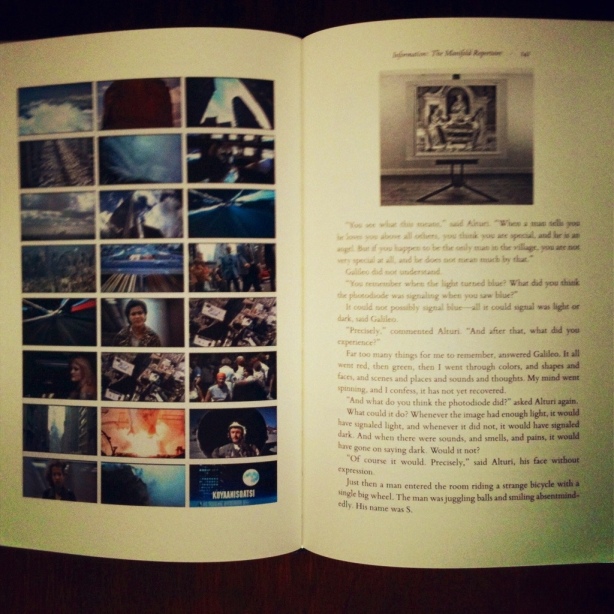
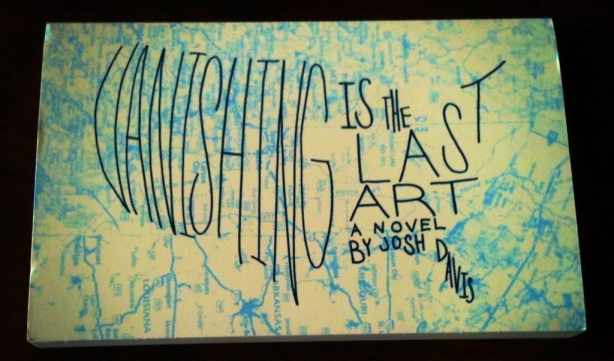
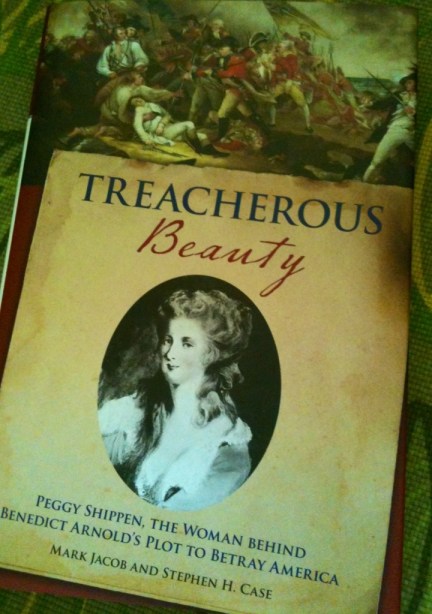
Rivalry: A Geisha’s Tale (Book Acquired, 8.06.2012)

20120809-104953.jpg

I haven’t read any of Nagai Kafu’s 1917 novel Rivalry: A Geisha’s Tale (new in paperback from Columbia University Press in translation from Stephen Snyder) because my wife immediately took it and started reading it. I think she’s almost finished with it. I can only assume it involves some kind of rivalry, probably between geisha. I’ll ask her (the following is a more or less an accurate transcription of wife’s comments to me from the kitchen as she prepared some kind of corn salad):

Um, it’s about this geisha, who, when she was like 17, 18 became a geisha, then got married and moved out to the country, this is like in her early 20s, and after a couple of years her husband died, so she went back to Tokyo back to her old geisha house and ran into one of her former, um, clients, and he fell in love with her like immediately so they started a relationship but she fell in love with an actor, but then, I’m not finished with it, but the client found out about the affair, so he’s going to patronize this rival geisha. Which I guess is why, Rivalry.

Do you like it?

I mean, it’s what you’d expect from a geisha book, I mean it’s about a geisha. It’s a good geisha story.

My wife reports she’s about half way through it and wants to find out how it will end.

Unknown Pleasures (I Riff a Bit on Marcel Proust’s Swann’s Way)

20120809-105603.jpg

1. I was an undergrad in college when I first tried to read Marcel Proust. It was one of those things I did on my own, which is another way of saying that none of his writing was ever assigned to me; neither do I recall any of his writings even appearing in any of the anthologies I was assigned in high school; neither do I recall any of his writings appearing in any of the anthologies I’ve used as a teacher.

2. My initial interest in Proust, late in high school, when the name alone seemed so damn romantic, was aroused, like most people I’ll bet, by the fact that this guy basically wrote one long book, a book that seemed to have at least three names, not counting the names of the individual books and book-length chapters in those individual books.

3. But, like I said, I didn’t try to read Proust until college when I checked out the first volume from the university library. I think it might have actually been a compendium of two or more books that make up the Recherche. Anyway, I can’t recall much, except that I slugged it out through that interminable first chapter, “Combray,” getting absolutely nothing out of it.

4. Since then I’ve read a lot about Proust and his writing, enough to perhaps understand that my first foray into Swann’s Way was probably not from the best angle. I was into decidedly different stuff then—lots of the American postmodernists, English and Irish modernists, etc.—and Proust’s modernism was totally lost on me.

5. Re: Point 4: Perhaps a better way to put it would be to borrow Harold Bloom’s notion that strong/strange writers so assimilate their readers that the readers can no longer see the strangeness/strength. I was assimilated.

6. Wandering through the used book store I frequent, I spotted Lydia Davis’s translation of Swann’s Way and snapped it up, not because of any real interest in trying Proust again but because of a fannish devotion to Davis, or the idea that Davis would make Proust accessible.

7. (A brief fantasy I had as my hand hovered over the book, before my hand touched the book:

I imagined that Davis had turned Swann’s Way into a series of her own vignettes, that she had parsed and ventriloquized Proust, that her translation would be akin to “Ten Stories from Flaubert.”

This is not the case).

8. (While I’m being parenthetical: This riff started as a “books acquired” post, a post where I take a lousy photograph to document a new book that somehow arrives at Biblioklept World Headquaters. But I read so much of Swann’s Way that the original idea riffed out into this thing. Actually, go ahead and skip Point 8, if you haven’t already. Sorry).

9. The day after buying Davis’s translation I read “Combray” over two short airline trips.

10. Or should it be Combray?—it seems like a self-contained novel.

11. The opening paragraphs of “Combray” are an amazing and strange meditation on sleeping, or rather going to sleep, filled with wonderful little digressions. They are a simultaneously alienating and inviting way to open a book.

Proust writes—

Sometimes, as Eve was born from one of Adam’s ribs, a woman was born during my sleep from a cramped position of my thigh. Formed from the pleasure I was on the point of enjoying, she, I imagined, was the one offering it to me. My body, which felt in hers my own warmth, would try to find itself inside her, I would wake up.

Such a lovely set of images.

I marked it and moved on without trying to figure out exactly what it might mean.

12. Other moments are more lucid, penetrating, insightful:

Even the very simple act that we call “seeing a person we know” is in part an intellectual one. We fill the physical appearance of the individual we see with all the notions we have about him, and of the total picture that we form for ourselves, these notions certainly occupy the greater part.

“Combray” is full of these wonderful, subtle moments, and it includes some of the finest passages on reading and the transformative powers and pleasures of reading that I’ve encountered.

13. The phrase “unknown pleasures” pops out early in the book—is this where Joy Division got the album name?

14. Proust seems to hit on the idea of unknown pleasures again and again, speculative pleasures, idealized pleasures.

15. Introduced to the writer Bergotte by Swann and Bloch, the young narrator muses:

One of these passages by Bergotte, the third or fourth that I had isolated from the rest, filled me with a joy that could not be compared to the joy I had discovered in the first one, a joy I felt I was experiencing  in a deeper, vaster, more unified region of myself, from which all obstacles and partitions had been removed.

The passage concludes with the narrator deciding that he has accessed the “‘ideal passage’ by Bergotte,” an idealization through which he finds his mind “enlarged.”

16. Cataloging the meditations on unknown pleasures in the book would take forever though, and I’m just riffing here.

17. (Although I do love and will thus bring up a late passage where the narrator longs to walk in the woods with “a peasant girl,” one like a “local plant” (!), through which he will access new and individual and unknown pleasures, “Obscurely awaited, immanent and hidden. . . “).

18. Stray note: Swann is described as having a “Bressant-style” haircut, which the end notes describe as “a crew cut in front and longer in the back.” Is this not known colloquially as a mullet? Am I to understand that Swann sports a Kentucky waterfall?

19. Proust’s greatest strength in “Combray” seems to be his ability to move from the physical to the metaphysical, from object to memory. And then back again.

20. An empty statement: The writing is beautiful.

21.  Still, there’s something irksome about the narrator (Marcel?): I stopped writing “mama’s boy” in the margin after the third such notation.

22. Re: Point 21: Is this why I never stuck it out with Proust? Is this why, despite acknowledging “The writing is beautiful,” I am not particularly inclined to see what happens next? (And next and next and next . . .)

23. Re: Point 22: I think here of Cormac McCarthy’s assertion in a 1992 New York Times interview that Proust is “not literature” because it doesn’t “deal with issues of life and death.” McCarthy’s quote may or may not be out of context (not here; here it’s in perfectly sound context. I’m talking about proper context in the interview, which is to say that he may or may not have been riffing off the cuff).

24. Okay, from the McCarthy interview:

 His list of those whom he calls the “good writers” — Melville, Dostoyevsky, Faulkner — precludes anyone who doesn’t “deal with issues of life and death.” Proust and Henry James don’t make the cut. “I don’t understand them,” he says. “To me, that’s not literature. A lot of writers who are considered good I consider strange.”

25. Maybe I bring it up because I’ve read so much of McCarthy and the heroes on his list above and find them so compelling, find the protagonists and antagonists so compelling, and while Proust’s narrator is hardly repellent, I find myself occasionally wanting to give him a wedgie.

26. (Never having had the desire to give Ishmael a wedgie, or the underground man a wedgie, or Lucas Beauchamp a wedgie, or Cornelius Suttree a wedgie).

27. Okay. The sentiment I’ve just expressed seems cruel.

28. The same sensitivity I find occasionally overbearing in the narrator is exactly what makes so many of the passages and insights in the text so extraordinary.

29. The narrator is some kind of specialized receptive organic instrument, a psyche keenly attuned to the physical world who mediates that world through emotion, memory, psychological projection—language.

30. The narrator is some kind of membrane but also a self, his articulations winding from reader to self through memory to the natural world, to its phenomena, and back through desire, thought, anticipation, idealization, all back through memory again, back to the reader again. And if tracing these articulations is exhausting, the process also undeniably yields unknown pleasures.
Three Strong Women (Book Acquired, 7.24.2012)


20120724-194511.jpg

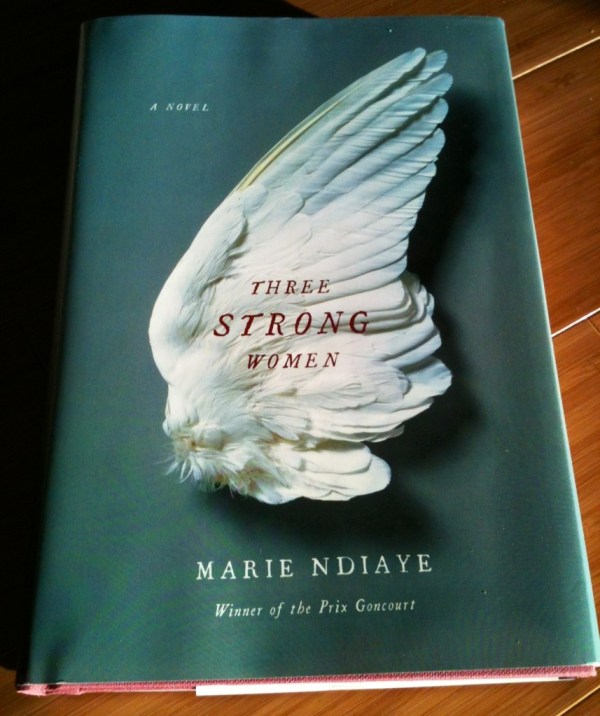
Marie NDiaye’s novel Three Strong Women won the Prix Goncourt in 2009 and is now published in English translation (John Fletcher) from Random House. Their blurb:

In this new novel, the first by a black woman ever to win the coveted Prix Goncourt, Marie NDiaye creates a luminous narrative triptych as harrowing as it is beautiful.

This is the story of three women who say no: Norah, a French-born lawyer who finds herself in Senegal, summoned by her estranged, tyrannical father to save another victim of his paternity; Fanta, who leaves a modest but contented life as a teacher in Dakar to follow her white boyfriend back to France, where his delusional depression and sense of failure poison everything; and Khady, a penniless widow put out by her husband’s family with nothing but the name of a distant cousin (the aforementioned Fanta) who lives in France, a place Khady can scarcely conceive of but toward which she must now take desperate flight.

With lyrical intensity, Marie NDiaye masterfully evokes the relentless denial of dignity, to say nothing of happiness, in these lives caught between Africa and Europe. We see with stunning emotional exactitude how ordinary women discover unimagined reserves of strength, even as their humanity is chipped away. Three Strong Women admits us to an immigrant experience rarely if ever examined in fiction, but even more into the depths of the suffering heart.


Heretic Queen (Book Acquired, 7.23.2012)


20120724-194358.jpg

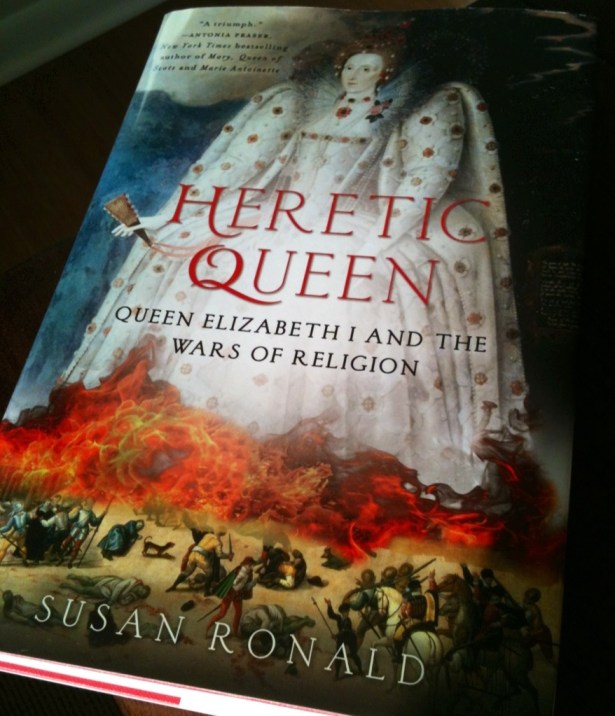
Susan Ronald’s Heretic Queen is new in hardback from Macmillan. Their blurb:

Elizabeth’s 1558 coronation procession was met with an extravagant outpouring of love. Only twenty-five years old, the young queen saw herself as their Protestant savior, aiming to provide the nation with new hope, prosperity, and independence from the foreign influence that had plagued her sister Mary’s reign. Given the scars of the Reformation, Elizabeth would need all of the powers of diplomacy and tact she could summon.


Extravagant, witty, and hot-tempered, Elizabeth was the ultimate tyrant. Yet at the outset, in religious matters, she was unfathomably tolerant for her day. “There is only one Christ, Jesus, one faith,” Elizabeth once proclaimed. “All else is a dispute over trifles.” Heretic Queen is the highly personal, untold story of how Queen Elizabeth I secured the future of England as a world power. Susan Ronald paints the queen as a complex character whose apparent indecision was really a political tool that she wielded with great aplomb.


Fletcher Hanks/Gilbert Sorrentino (Books Acquired, 7.12.2012)

20120716-124509.jpg

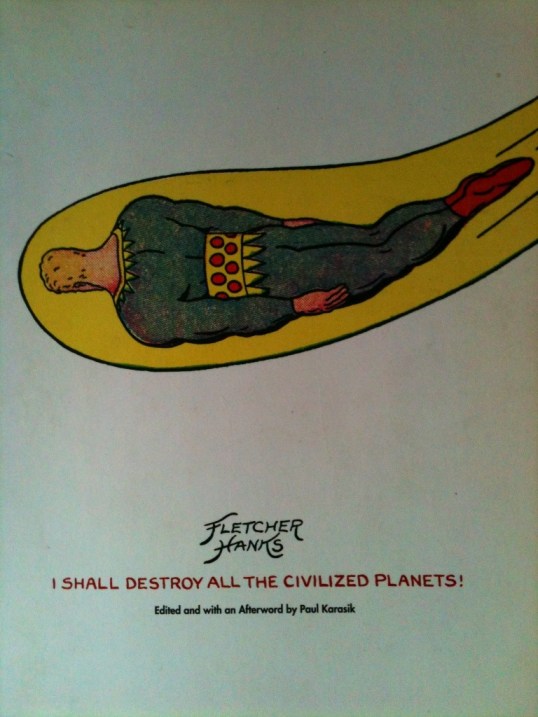
I’ve been wanting to get my mitts on this Fletcher Hanks collection since I first read about it in The Believer five years ago. Finally came across a used copy in pristine shape.

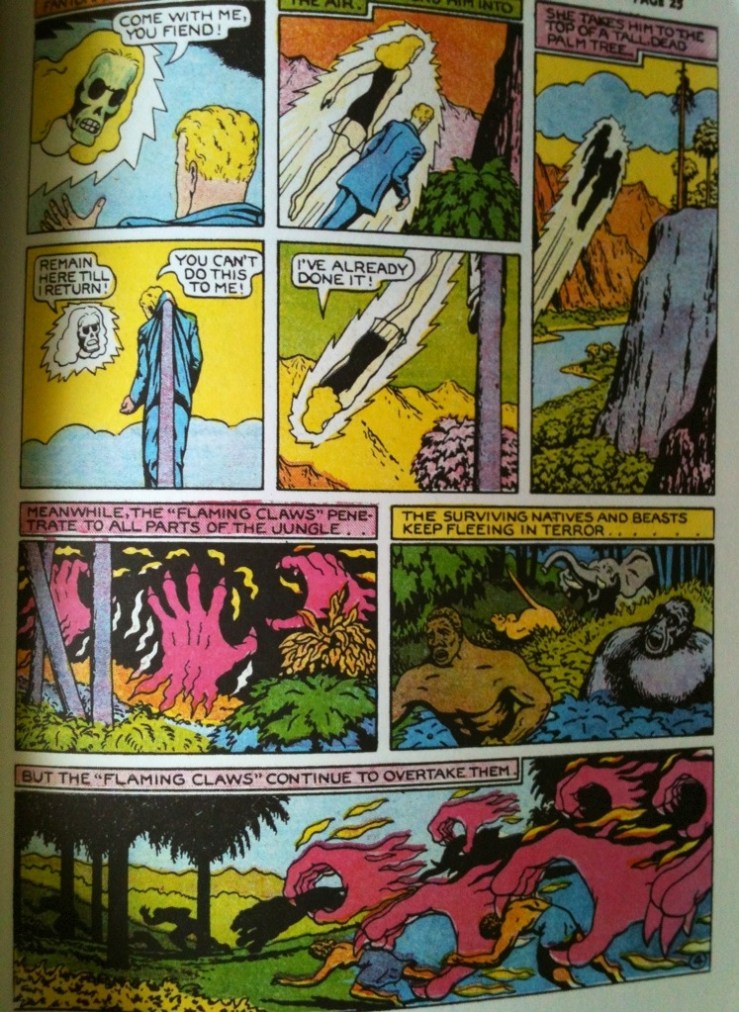
It’s really, really fucking weird. Sample page; full write-up forthcoming:

20120716-124542.jpg

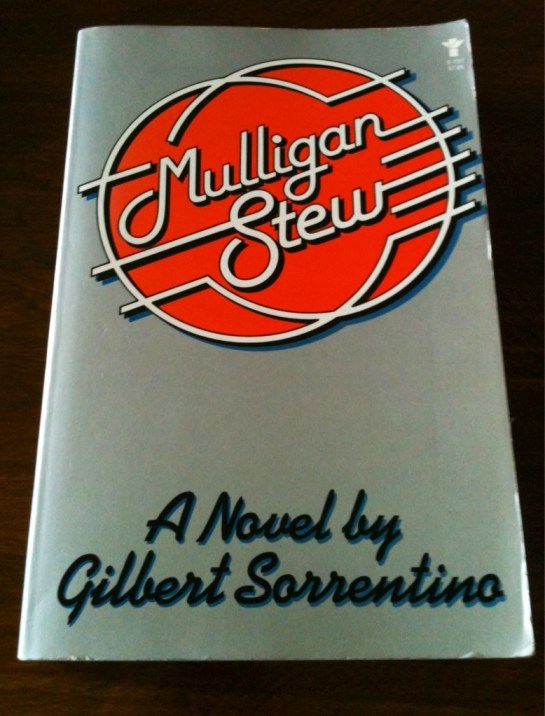
I’ve been itching to read Gilbert Sorrentino’s Mulligan Stew for a while. This copy may or may not be a first edition paperback—the rejection letters in the front are on a different type of paper than the rest of the novel (color/stock). It’s a big book—I’m finishing up a rereading of 2666, so maybe this one will jump in front of Georges Perec’s Life: A User’s Manual. Thoughts?

20120716-124550.jpg

Moby Dick (Unhyphenated Kids Book Acquired 6.30.2012)

20120716-124132.jpg

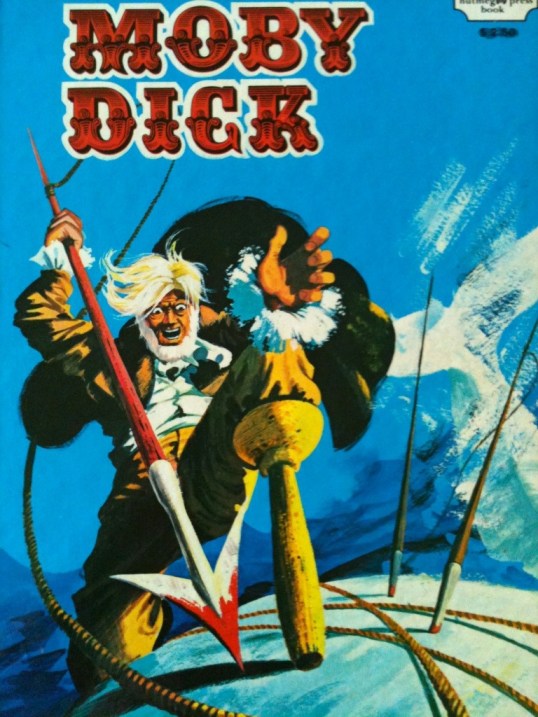
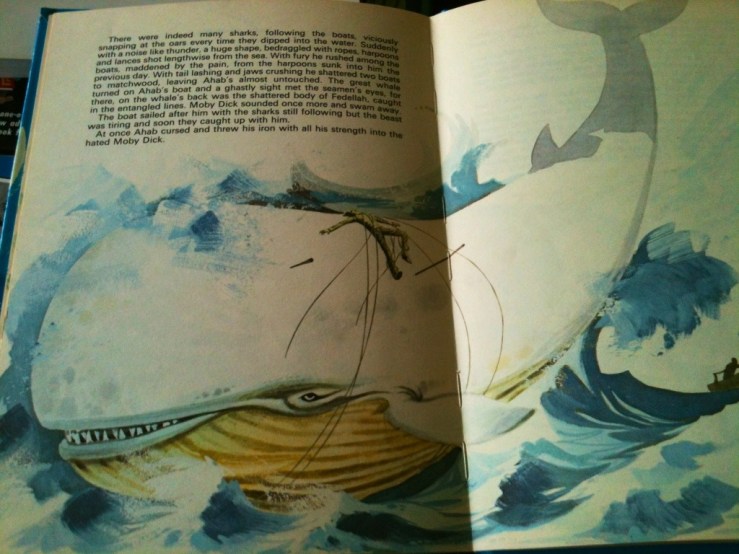
I picked this one up a few weeks ago to add to a small collection of Moby-Dick adaptations. It’s especially weird: I can’t find the name of an illustrator or author anywhere (it doesn’t even mention Herman Melville!). The adaptation is also kinda weird, lingering on the gold piece scene. Anyway. Some of the pics are cool, I guess.

20120716-124139.jpg

Paul Auster’s Winter Journal (Book Acquired Some Time Over the July 4th Holiday)

20120711-100349.jpg

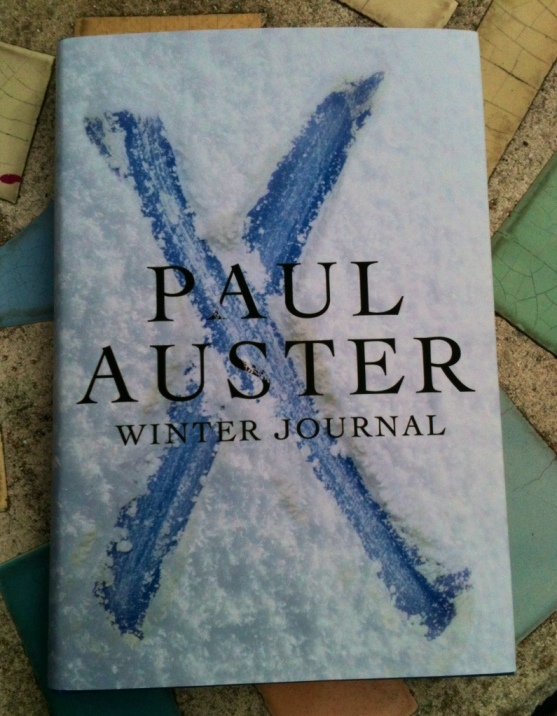
I was pleasantly surprised to find Paul Auster’s forthcoming memoir Winter Journal in the mail after being away for a week. I had mixed feelings about Auster’s last novel Sunset Park, but I dig his nonfiction, and I opened Winter Journal randomly to an episode where the adolescent Auster loses his virginity to a hooker in a passage that’s both tender and funny, so this one seems promising. (It’s also written entirely in the second person pronoun).

Publisher Henry Holt’s blurb:

Facing his sixty-third winter, internationally acclaimed novelist Paul Auster sits down to write a history of his body and its sensations—both pleasurable and painful.

Thirty years after the publication of The Invention of Solitude, in which he wrote so movingly about fatherhood, Auster gives us a second unconventional memoir in which he writes about his mother’s life and death. Winter Journal is a highly personal meditation on the body, time, and memory, by one of our most intellectually elegant writers.

Dougal Dixon’s Man After Man (Book Acquired 6.30.2012)

20120710-095416.jpg

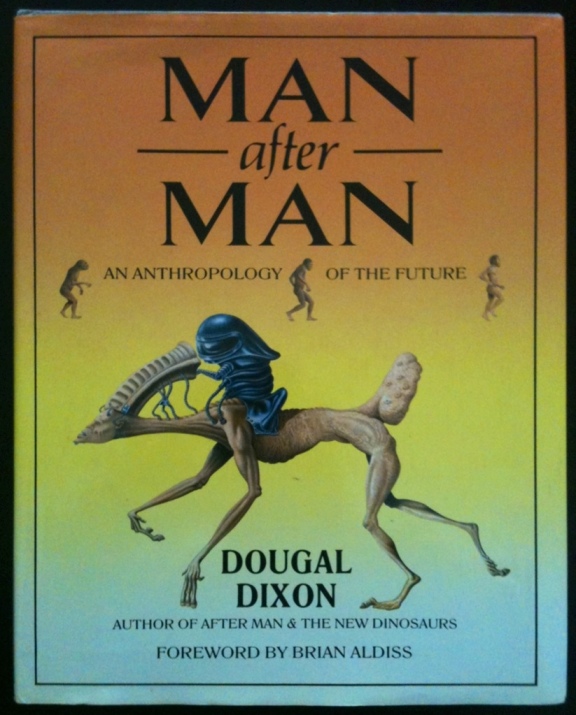
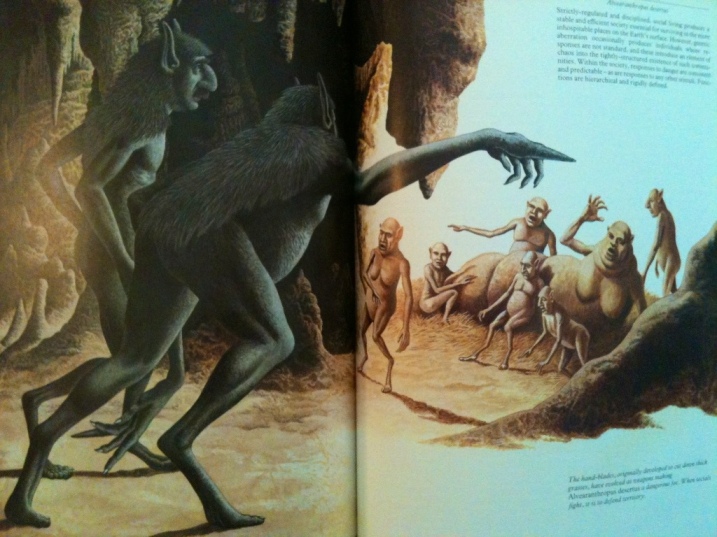
I found a first edition hardback copy of Dougal Dixon’s cult book Man After Man not quite two weeks ago when I was browsing books for my cousins’ kids, who I would see over the July 4th holiday. I’ve possessed an illicit digital copy of Man After Man for a few years, but it’s not nearly as fun as the real thing. As its subtitle attests, Dixon’s book is an anthropology of the future, a sort of speculative sci-fi textbook that imagines a future-history of genetically engineered humanity. The illustrations by Philip Hood (who deserves bigger billing) are especially weird and wonderful. Some samples below.

20120710-094738.jpg

20120710-094752.jpg

20120710-094800.jpg

20120710-094806.jpg

McSweeney’s #4 (Box of Books Acquired 6.14.2012)

20120626-095248.jpg

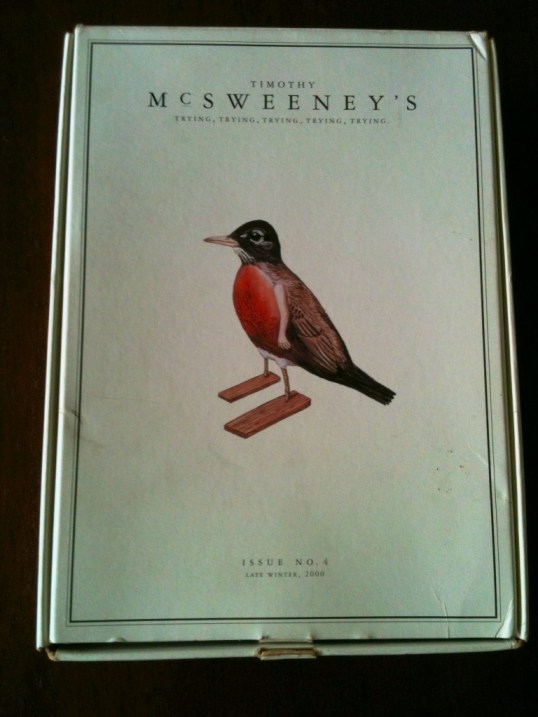
The novelist John Warner (The Funny Man), in an act of incredible kindness, sent me a copy of McSweeney’s #4, which he helped to put out years ago. In one of our emails, John offers the following:

It could be the best issue ever, a kind of platonic ideal of the McSweeney’s aesthetic before people started saying that things had a McSweeney’s aesthetic, a more innocent time if you will. My memory is that we were selling them at a live event at the Ethiopian Diamond restaurant in Chicago that we set up to help promote Neal Pollack’s book, and somehow the leftovers wound up in my trunk and I’ve been hauling them place to place ever since. . .

It’s a sort of fun artifact of the early/carefree days of McSweeney’s before Dave was DAVE, and the whole thing was still very haphazard.

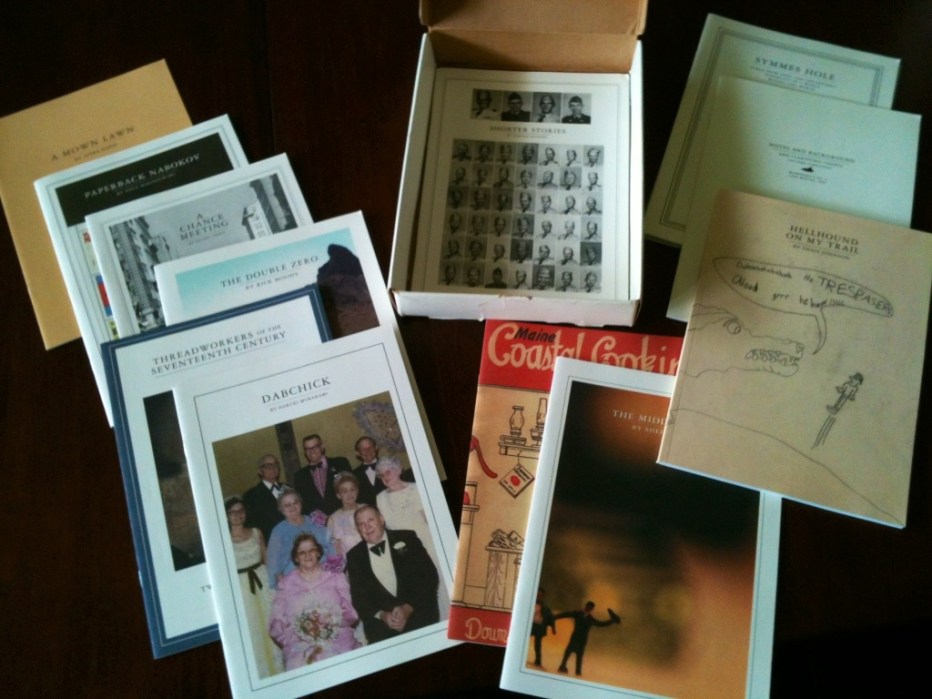
It’s difficult to overstate the range of writers here: Lydia Davis, Jonathan Lethem, George Saunders, Rick Moody, Haruki Murakami, a three-act play by Denis Johnson, and much, much more:

20120626-100530.jpg

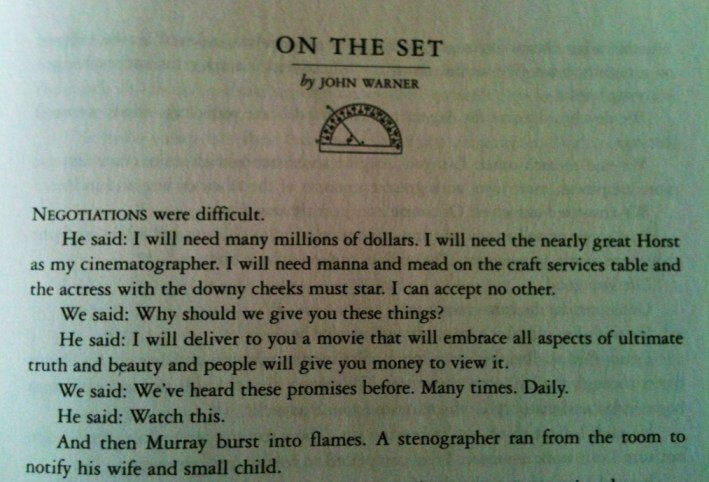
 There are also many short stories, including “On the Set” by John Warner, his second published story:

20120626-100545.jpg

It’s wonderfully absurd.

To read something hilarious and absurd and ultimately kind of touching, read John’s interview with critic Kevin Morris, who hated The Funny Man.

The Age of Miracles (Book Acquired, 6.08.2012)

20120622-180358.jpg

The design folks at Random House has been killing it lately with good hardback designs that integrate dust jackets in handsome ways. Check out what’s under the jacket for The Age of Miracles 

20120622-180407.jpg

I know I should write about what’s in the book, but, jeez, I hate dust jackets so much, so when the designers do something cool or innovative, it’s worth remarking on.

So, what’s in Karen Thompson Walker’s (much buzzed about) debut? Here’s the pub’s copy:

On a seemingly ordinary Saturday in a California suburb, Julia and her family awake to discover, along with the rest of the world, that the rotation of the earth has suddenly begun to slow. The days and nights grow longer and longer, gravity is affected, the environment is thrown into disarray. Yet as she struggles to navigate an ever-shifting landscape, Julia is also coping with the normal disasters of everyday life—the fissures in her parents’ marriage, the loss of old friends, the hopeful anguish of first love, the bizarre behavior of her grandfather who, convinced of a government conspiracy, spends his days obsessively cataloging his possessions. As Julia adjusts to the new normal, the slowing inexorably continues.

Walker’s book has been compared to The Lovely Bones by the publishers (Kakutani compares it favorably as well in her gushy review) as well as Margaret Atwood. I dunno. First 20 pages were not for me. It’s likely the book’s not for me.

Charles Frazier’s Nightwoods (Book Acquired, 6.14.2012)

20120622-100218.jpg

Charles Frazier’s Nightwoods, new in trade paperback. From Randy Boyagoda’s NY Times review:

“Nightwoods,” Frazier’s new novel, is a departure from its predecessors in some respects. It’s set in the early 1960s rather than the 19th century, and it involves no literary or historical elements of comparable grandeur and gravity. Indeed, based on its premise, the new book feels remarkably stripped down: a young woman named Luce, the caretaker of an old lodge in small-town North Carolina, becomes the guardian of the twin children of her murdered sister. In turn, she must defend them from Bud, their former stepfather, who killed their mother while they watched, and who believes the traumatized children know the location of some stolen money. As a setup, this promises suspense and mystery, to which Frazier adds family tension (when Luce’s lawman-cum-drug-addict father buddies up with Bud) and romance (after the shy, handsome grandson of the lodge’s deceased owner visits his inheritance and falls for Luce).

Magic Shows! (Lapham’s Quarterly, Summer 2012 — Book Acquired 6.11.2012)

20120611-155347.jpg

20120611-155353.jpg

Charles Olson/Conrad Aiken (Books Acquired, 6.09.2012)

20120611-143045.jpg

Charles Olson’s Selected Writing (New Directions): In all seriousness, why don’t more publishers go for simple covers like this one? Love it.

A scribbling:

20120611-143050.jpg

Also, had to pick up something by Conrad Aiken after reading about his influence on Malcolm Lowry:

20120611-143056.jpg

Books Acquired, 6.02.2012 (Comix + Angela Carter)

20120611-142705.jpg

Little Lit: Strange Stories for Strange Kids is a collection of comix (and other oddities) for kids, edited by Art Spiegelman and his wife artist/publisher Françoise Mouly. I saw at random and picked it up for my daughter, whose birthday was the next day. She loves, loves, loves this book, spending hours poring over all its weird images and picture games. Cover is by the great Charles Burns; there are also comics by Spiegelman, the late great Maurice Sendak—

20120611-142717.jpg

—a weird search picture by Martin Handford (here’s a detail)—-

20120611-142725.jpg

—and comics by other notables like David Sedaris, Paul Auster, Claude Ponti, Jules Feiffer, and Kim Deitch. The endpapers — “Strange Cartoon Lessons” are by Kaz:

20120611-142742.jpg

I also picked up Burning Your Boats, which collects all of Angela Carter’s short stories:

20120611-142812.jpg

I was looking for her dystopian novel The Passion of New Eve, but no go. Of course, I couldn’t pass up this volume, which comprises four collections, as well as early and uncollected stuff.

Siri Hustvedt’s Living, Thinking, Looking (Book Acquired, 5.15.2012)

20120606-120223.jpg

The whole point of these books acquired posts is to try to document interesting stuff that comes in before it winds up in my pile for months (to put things in perspective, I got a reader copy of Adam Johnson’s The Orphan Master’s Son back in January, and have finally gotten around to reading it just now). I usually spend a week or two looking over the book, maybe  publish a blurb or an excerpt of the book along with a photo, and then file it in one of three stacks — now, later, or never. Anyway, Siri Hustvedt’s new collection of essays Living, Thinking, Looking ended up never getting stacked anywhere, because I kept going back to it, poking into her essays on Goya, Gerhard Richter, Freud, reading her riff on sleeping, which somehow synthesizes Macbeth and Nabokov and REM science, pausing over her consideration of the Bush admin’s rhetoric. I haven’t finished the book but I will. Hustvedt combines her keen intellect with a range of ideas to explore her subjects (primarily, if the title didn’t tip you, living, thinking, looking). There’s a lot of lit here, a lot of psych, and plenty of art. Good stuff.

The Abdication (Book/Ero(t)icomic Epic Aquired, Sometime Last Week)

20120606-120115.jpg

Rainer J. Hanshe’s The Abdication. Started this one the yesterday. Very weird, very cool. More thoughts to come, but here’s the blurb:

Spring 2032: an enigmatic bandleader named Triboulet arrives by helicopter in Rome, where his carnivalesque troupe awaits with a legion of animals and unruly kids. When provoking states of joyous panic through their ritualistic frenzies, the troupe’s arrival proves restorative, for the world is beset with famines, plagues, and religious conflicts, which Triboulet seeks to neutralize with freeing laughter. As he and his troupe begin constructing strange edifices in the Eternal City, sacred sites around the world suffer terrible, often beguiling forms of vandalism, and rumors abound that the Christ has actually finally returned.
Although radical Islamic sects claim responsibility for the vandalism, the culprits remain unknown: is it the Jihadists, anarcho-atheist intellectuals, or eco-terrorists? Religious and political authorities grow leery of the troupe and suspicious of Triboulet, whose true identity remains a mystery. The very future of the world is at stake, and while touring Israel during Christmas, Triboulet and his raucous band of pranksters bear witness to the world’s pivotal crossing into a new reality.
Albert Camus noted that ‘the metaphysics of the worst’ expresses itself in a literature of damnation and argued that ‘we have still not yet found the exit’ from such literature. With his second novel, Hanshe has found the way out, offering in fact something not only promising, but astounding, a pathway that is into a new reality, into a ‘physics of the best.’ The Abdication is a true ero(t)icomic epic.

David Markson’s Malcolm Lowry Study (Book Acquired, 6.05.2012)

20120607-133715.jpg

Yet another Markson book with a hideous cover. The cover for Markson’s study of Lowry’s Under the Volcano is truly terrible though: it looks like a fucking diet book or something. Great work, Barnes & Noble! Obviously I’ll shed the dust jacket; here’s what’s underneath:

20120607-133722.jpg

Much better. Anyway, what really counts is what’s inside, of course. I could probably have used this last year when I was reading Under the Volcano, but I feel I handled it okay. I’m more interested in Markson, and even more interested in Markson’s relationship with Lowry, chronicled in a brief chapter in the back that I’ve already read and will report on in more detail in the future.