Robert S. Stickley’s A Bended Circuity (Book acquired, 27 Nov. 2023)


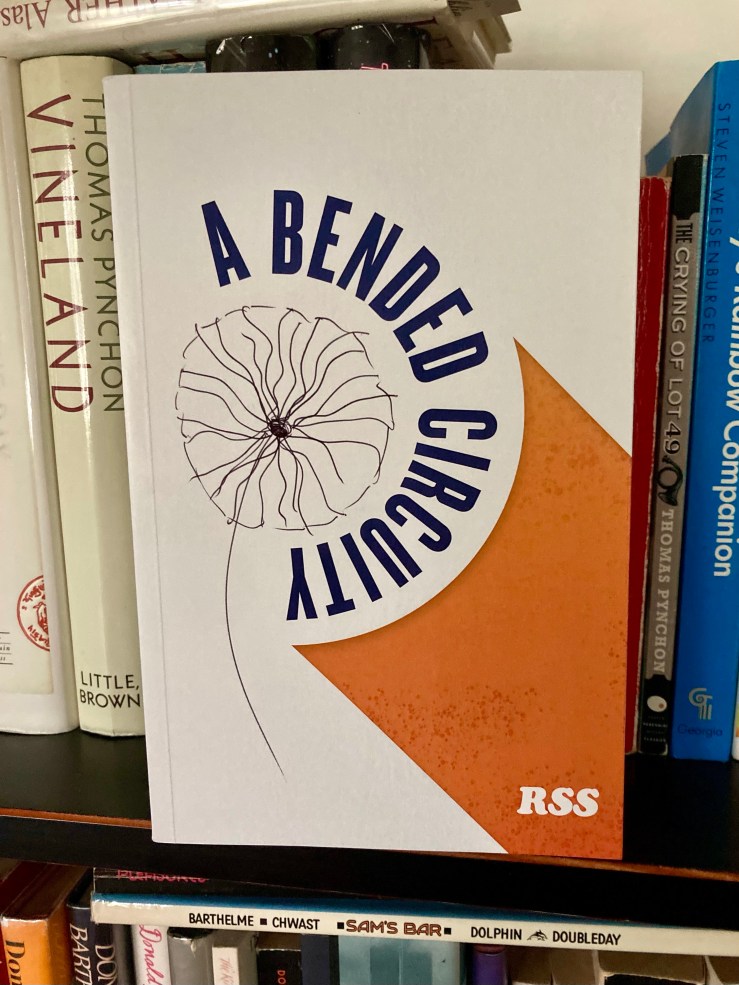
After hearing some positive murmurs praising its erudite maximalism and general zaniness, I caved and bought a copy of Robert S. Stickley’s 2020 novel A Bended Circuity. My copy arrived with a ballpoint flower and the front page signed with a scrawled “R S S.” I can’t really find anything about Big Box Publishing, the purported publisher of this edition, but I do know that the copies of the European reprint at Corona Samizdat sold out pretty quickly. (They have a second printing under way).

Here is the copy from the back of my edition:

There are screams in the night. Interlopers are afoot, have taken hold. Wildfires are burning the countryside and the gentry are running for cover. Fortunes are at stake. The South will not sleep.

A Bended Circuity opens on a midsummer’s afternoon with preparations being made for a soirée at the glamorous Hobcaw Barony. But not all goes according to plan. We soon find Charleston abruptly aroused from her slumber by the playful first smites of an unknown enemy waging a heinous prank war.

Calling his confederates to arms, one Bradley Pinçnit — heir to Marigold Manor and writer for revived southern mouthpiece, The Mercury — afternoon with preparations being made for a soirée at the glamorous Hobcaw Barony. But not all goes according to plan. We soon find Charleston abruptly aroused from her slumber by the playful first smites of an unknown enemy waging a heinous prank war.

Calling his confederates to arms, one Bradley Pinçnit — heir to Marigold Manor and writer for revived southern mouthpiece, The Mercury – organizes and helms a “Junto of Condign Men” then drives them to action. Offsetting her husband’s violent movement is Gabuirdine Lee, a housewife struggling to find her voice as the din of war encompasses her.

Ciphered into everything — the new roadways, the scars of the people, the tracts torn through ravaged plantations — there emerges one clear symbol: The Red Radical. Following the hints offered up by this cryptic motif, an army is mustered and pointed toward north so as to seek justice for the pernicious acts being committed upon an old way of life. But the army will first have to get out of its own way if it is to stand a chance of making it out of the South.

Read the W.A.S.T.E. Mailing List review of A Bended Circuity if you like.


Blog about some books acquired, mid-November 2023

Top to bottom:

I am a huge fan of Atticus Lish’s 2014 novel Preparation for the Next Life, and I’m a fan of indie Tyrant Books, but I’d never heard of his 2011 collection of doodles, Life Is With People. The book wasn’t even shelved properly yet, and I was initially attracted to its strange pink and black cover. It turned out the bookseller who checked out my purchases that day (the Lish and some books for my son) had brought the Lish in; his interest in it was in Lish-as-son-of-Lish. We chatted about Barry Hannah a bit and I recommended he read Hob Broun, which I recommend to anyone who expresses admiration for Hannah or Father Lish.

Here is one of the cartoons from Lish’s collection:

This particular cartoon is probably my favorite in the collection, as I find it the most relatable.

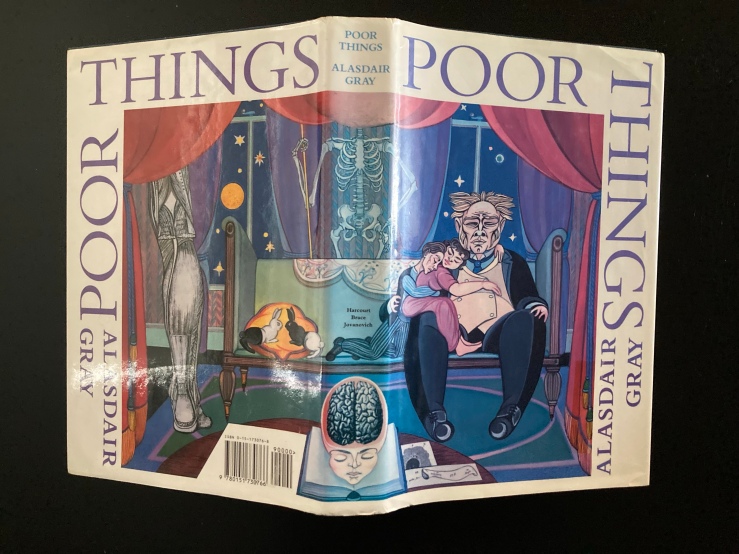
In a lovely bit of serendipity, I happened upon a first edition hardback copy of Alasdair Gray’s 1992 novel Poor Things. The previous day, I had pulled out my paperback copy to reread it in anticipation of Yorgos Lanthimos film adaptation. I ended up reading the old paperback copy, already somewhat battered, highlighted (not mine!) and dogeared (mine…), and had initially planned to trade it in toward future hardback editions of books I already own, which seems like my mission these days, but my son expressed his desire to read the novel, so it’s his I guess.

The book sans jacket is gorgeous too:

I finished Poor Things before Thanksgiving, and should have Something on it on this blog in the next week or so.

I’ve brought my son up a few times in my riff—most of these November bookstore trips were in his company; twice because he showed his art at one of the bookstore’s location, and once (the most recent, the Gray acquisition) because he’s reading like a maniac. I’m frankly jealous of how he’s reading right now—fast, somewhat indiscriminately, but with designs on reading what he calls “You know, the classics.” Initially he was reading old mass market paperbacks of mine — Kurt Vonnegut, Albert Camus, John Gardner — but he wanted his own copies (“I need to start my own little library, right?”).

I couldn’t pass up the first editions of Gass’s Middle C or Powers’ The Gold Bug Variations. I knew that I no longer had a paperback copy of The Gold Bug Variations, having loaned it to a colleague years ago who moved to Norway in the middle of a semester, leaving her history department scrambling to cover classes. Maybe it’s in Norway. I did think I had a copy of Gass’s Middle C, but I must’ve checked it out from the library or lost it, or maybe it’s shelved behind other books. I’ll shelve it by The Tunnel, a reminder that I need to take one more shot at that beast. And if that one shot is not sufficient, another shot I will take…

Thurston Moore’s memoir Sonic Life (Book acquired, 27 Oct. 2023)

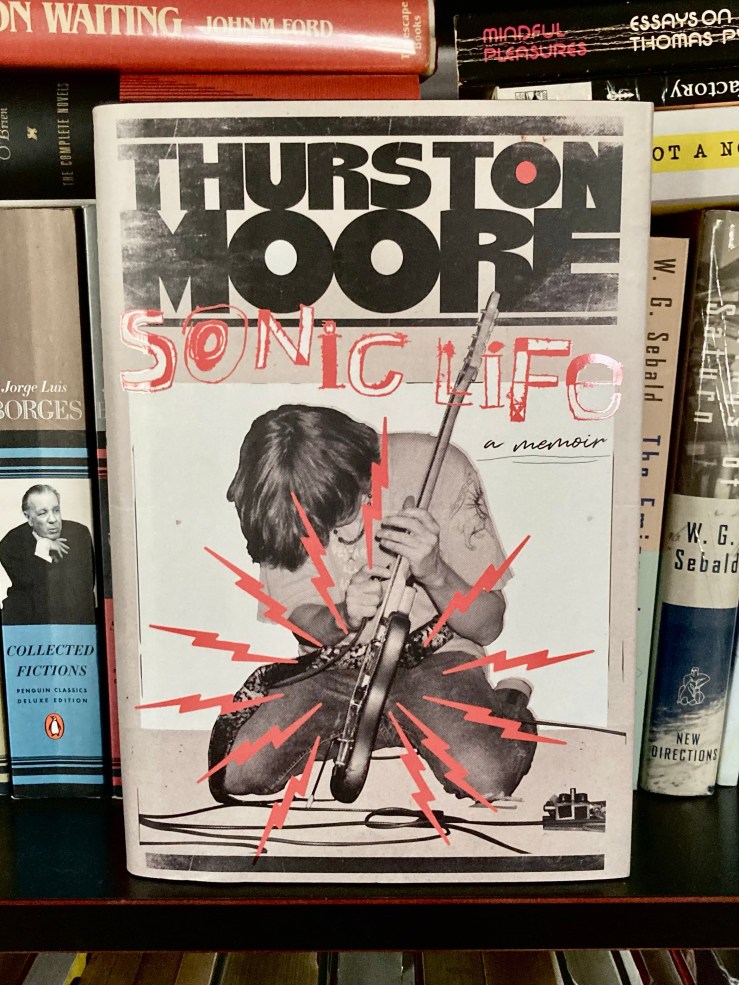
I picked up Thurston Moore’s mammoth memoir Sonic Life yesterday afternoon, started reading it, and kept reading it. I was a huge Sonic Youth fan in my youth, introduced to the band in 1991 via a decent soundtrack to a mediocre film called Pump Up the Volume. Throughout the nineties and early 2000s, I bought all the Sonic Youth records I could get my hands on, and repeatedly watched their 1991 tour diary film The Year Punk Broke more times than I could count. Thurston Moore was a goofy avant hipster, ebullient, verbose, annoying, and endearing, the nexus of a band that were themselves a nexus of nascent bands and artists. (In his chapter on Sonic Youth in his 2001 history Our Band Could Be Your Life, Michael Azerrad repeatedly argues that DGC Records signed the band so that they would reel in the indie groups that majors wanted so badly after Nirvana et al. exploded.) When Thurston Moore and his wife and bandmate Kim Gordon separated in 2011, essentially ending Sonic Youth, I recall being strangely emotionally impacted, like my punk god parents were getting divorced. While I didn’t expect or want dishy answers from Gordon’s 2015 memoir Girl in a Band, I was still disappointed in the book, finding it cold and ultimately dull. So far, Moore’s memoir is richer, denser, sprawls more. It’s written in an electric rapid fire style loaded with phrasing that wouldn’t be out of place in the lyrics of an old SY track. I ended up reading the first 150 or so of the pages last night and this morning, soaking up Moore’s detailed account of the end of the New York punk rock scene and the subsequent birth of  No Wave. Moore’s intense love of music is what comes through most strongly. Chapter titles take their names from song titles or song lyrics, and I’ve started to put together a playlist, which I’ll add to as I read:
 

Gerald Murnane’s Inland (Beautiful book acquired some time last week, like maybe 11 Oct. 2023)

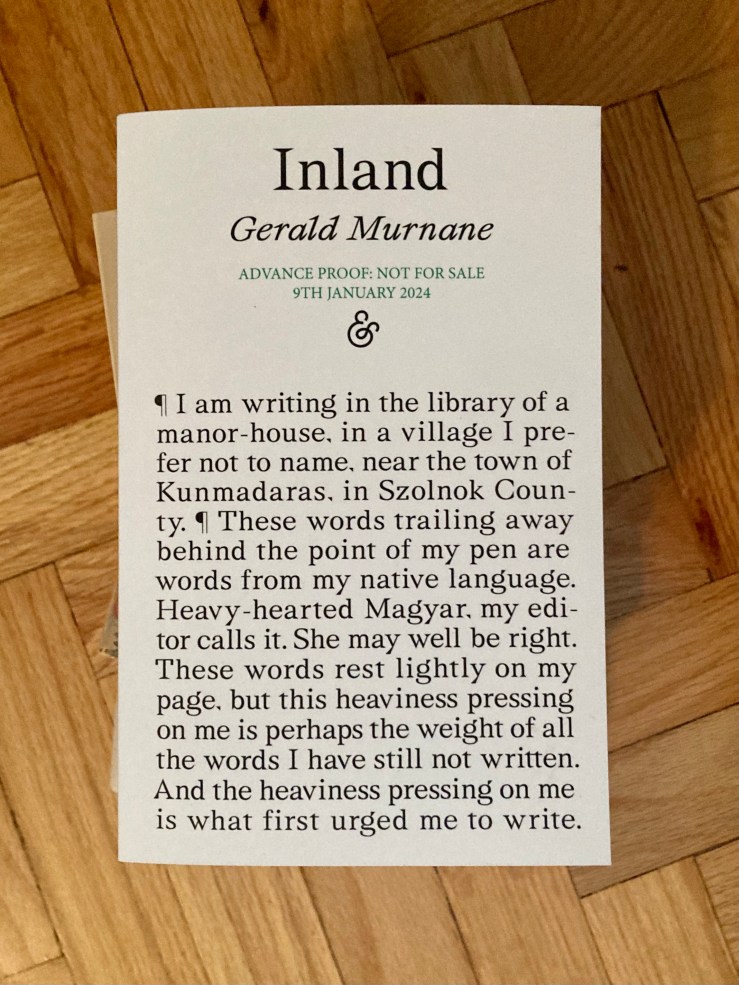
I love the new And Other Stories covers that just start, and I’m psyched on their edition of Gerald Murnane’s 1988 novel Inland. Their blurb:

Inland is a work which gathers in emotional power as it moves across the grasslands of its narrator’s imagination – from Szolnok County on the great plains of Hungary where a man writes in the library of his manor house, to the Institute of Prairie Studies in Tripp County, South Dakota, where the editor of the journal Hinterland receives his writing, to the narrator’s own native district in Melbourne County, between Moonee Ponds and the Merri, where he recalls the constant displacements of his childhood. ‘No thing in the world is one thing,’ he declares; ‘some places are many more than one place.’ These overlapping worlds are bound by recurring motifs – fish pond, fig-tree, child-woman, the colours white, red and green – and by deep feelings of intimacy and betrayal, which are brought to full expression as the book moves to its close.

My review closer to publication; in the meantime, read an excerpt.

Read one-time Biblioklept contributor Ryan Chang on Inland back in 2013.

Books acquired, 13 Oct. 2023

I couldn’t pass on a used copy of the second edition of Steven Weisenburger’s A Gravity’s Rainbow Companion even though it ate up most of my trade credit. I used the first edition of the Companion when I reread Gravity’s Rainbow about eight years ago and then gave it to a friend I had been encouraging to read GR. He still hasn’t read it.

I also picked up a hardcover first edition of Cormac McCarthy’s The Road and a pristine 1946 hardback edition of Joyce’s Ulysses. I’ll probably trade in the Gabler edition of Ulysses I have, but I think I’m too sentimental to let go of the copy of The Road I read in the hospital over a few days when my daughter was born.

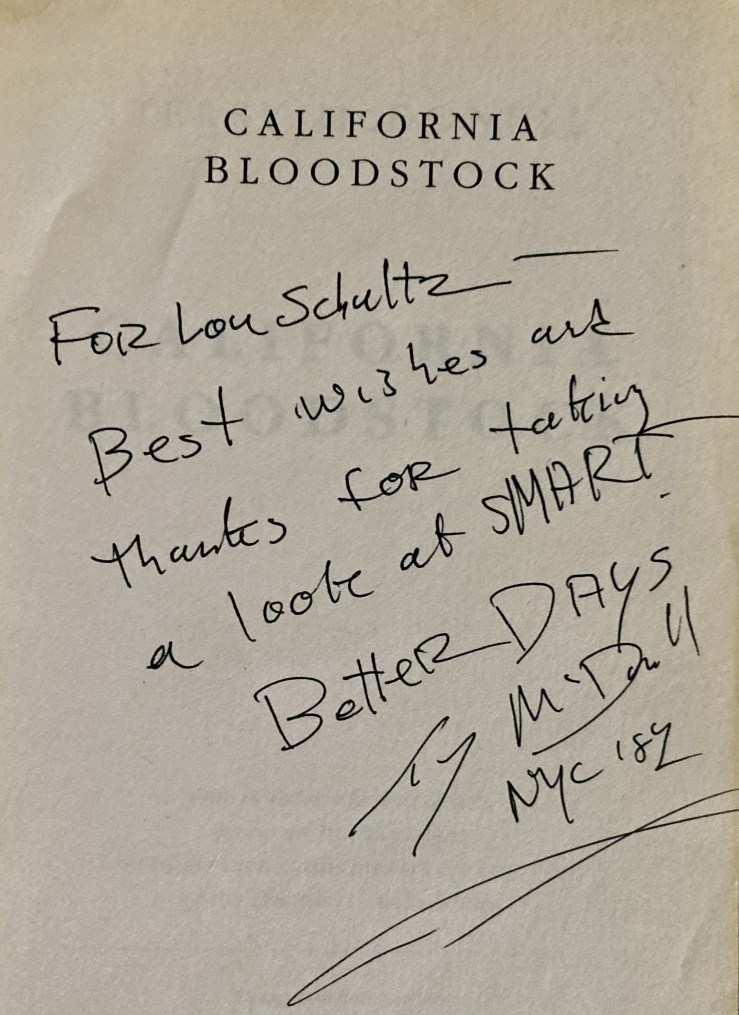
I’m a big fan of Vintage Contemporaries, but I’d never seen Terry McDonell’s California Bloodstock. I pulled it out because of its spine, and found the cover intriguing–it reminded me of these weird paintings that hang in a decrepit hotel in St. Augustine Beach that we stay at for a few nights every year. The blurb from H.S. Thompson didn’t hurt either.


I opened it to find that the novel is inscribed:

Anyone know Lou Schultz? Or what SMART might be?

Walter Kempowski’s An Ordinary Youth (Book acquired, 2 Oct. 2023)

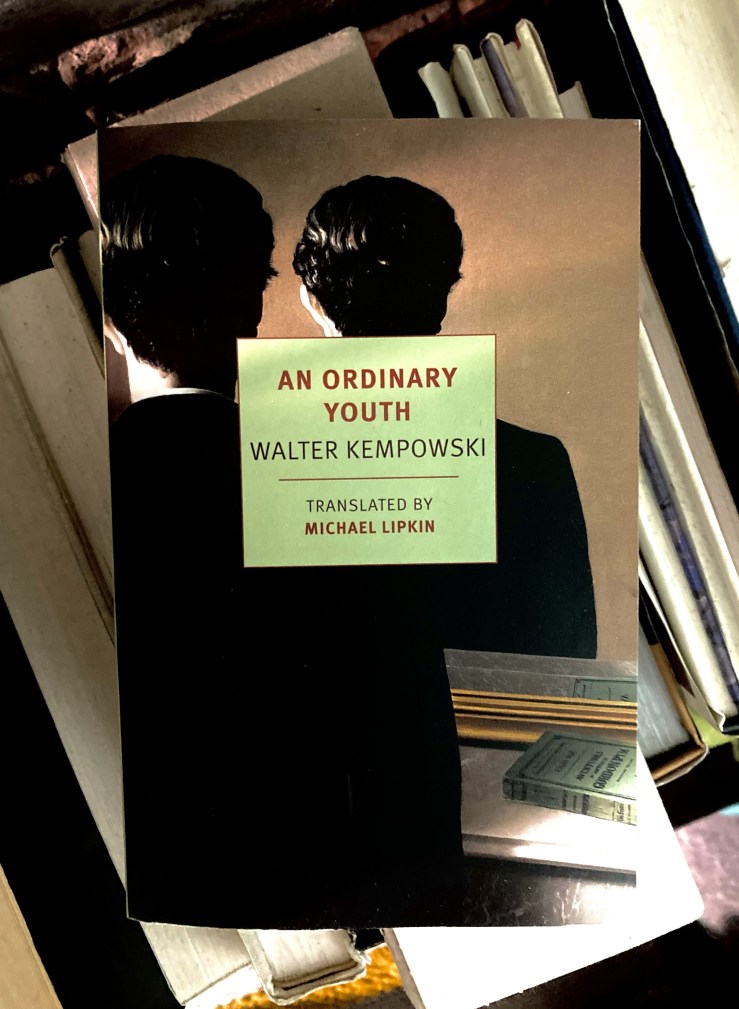
Walter Kempowski’s An Ordinary Youth gets its first published English translation thanks to Michael Lipkin. The book is new in print from NYRB. Their blurb—

An Ordinary Youth is a novel drawn directly from the author’s boyhood in Nazi Germany. Nine-year-old Walter’s family is moving house when the novel opens, but Walter’s main concerns are his tin soldiers and his older brother’s jazz records, his father’s fluctuating moods, and his mother’s ministrations and anxieties. While Walter is absorbed by his private life, the extraordinary accumulation of contemporary idioms that accompany his point of view—dialogue, song, literary quotations, commercials, and political slogans—tell a different story.  Through this echo chamber of voices, Kempowski shows a hugely turbulent and murderously intolerant nation racing toward disaster. An immediate bestseller when it was first published in Germany in 1971 (as Tadellöser & Wolff) and the best known of Kempowski’s novels in Germany, An Ordinary Youth is now available in English for the first time.

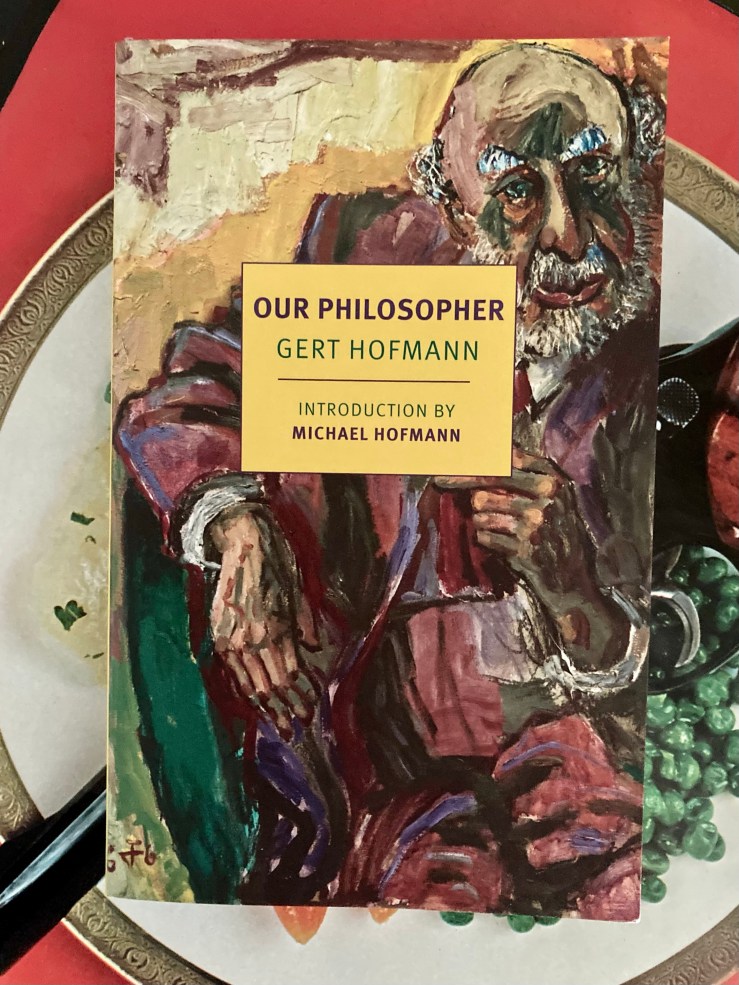
Gert Hofmann’s Our Philosopher (Book acquired, 13 Sept. 2023)

Gert Hofmann’s 1986 novel Veilchenfeld is forthcoming in the U.S. in an English translation by Eric Mace-Tessler, The new edition is from NYRB. Their back cover copy:

The time is the 1930s. Our philosopher is Herr Veilchenfeld, a renowned thinker and distinguished professor, who, after his sudden dismissal from the university, has retired to live quietly in a country town in the east of Germany. Our narrator is Hans, a clever and inquisitive boy. He relates a mix of things he witnesses himself and things he hears about from his father, the town doctor, who sees all sorts of people as he makes his rounds, even Veilchenfeld, with his troubled heart. Veilchenfeld is in decline, it’s true—he keeps ever more to himself—but the town is in ever better shape. After the defeat of the Great War and the subsequent years of poverty, things are looking up. The old, worn people are heartened to see it. The young are exhilarated. It is up to them to promote and patrol this new uplifting reality—to make it safe from the likes of Veilchenfeld, whose very existence is an affront to it. And so the doctor listens, and young Hans looks on.

And novelist Ian McEwan’s blurb:

The best novel I’ve read that describes events through the eyes of a child is little known and a minor masterpiece….Hans, the son of a small-town doctor, watches as the life of his fascinating neighbor, Professor Veilchenfeld, unravels and is then destroyed…In this learned old man, Hofmann condenses the industrialized extermination of millions…To recount it through the limited and fragmented understanding of an innocent child was an inspired authorial choice.

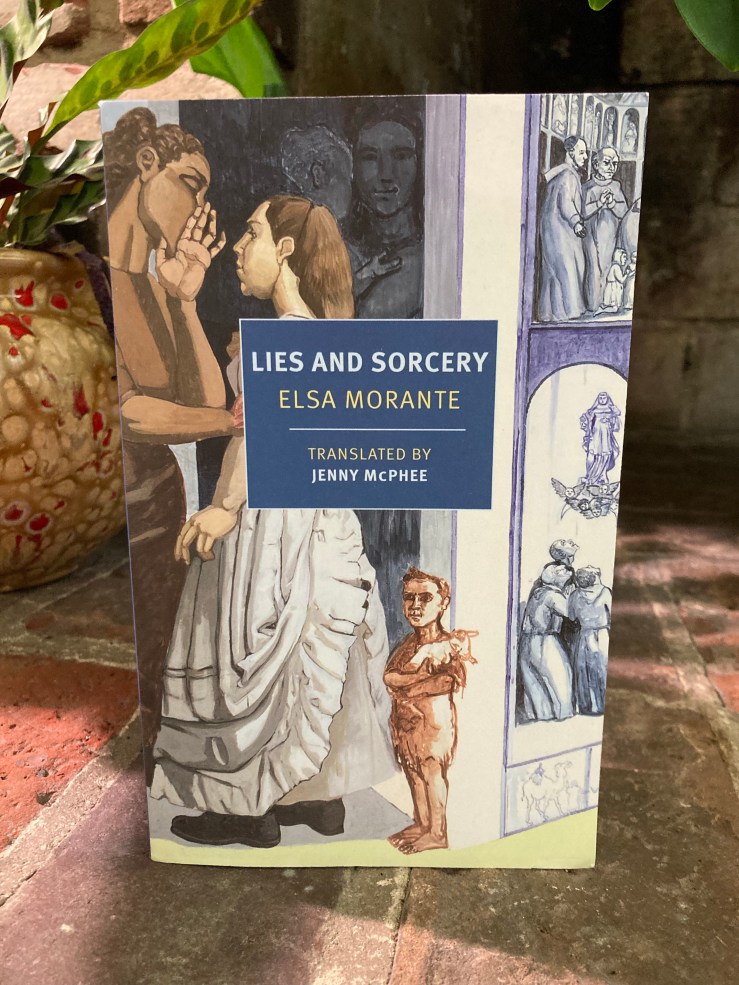
Elsa Morante’s Lies and Sorcery (Book acquired, 31 Aug. 2023)


NYRB is publishing a new translation of Elsa Morante’s Lies and Sorcery by Jenny McPhee.

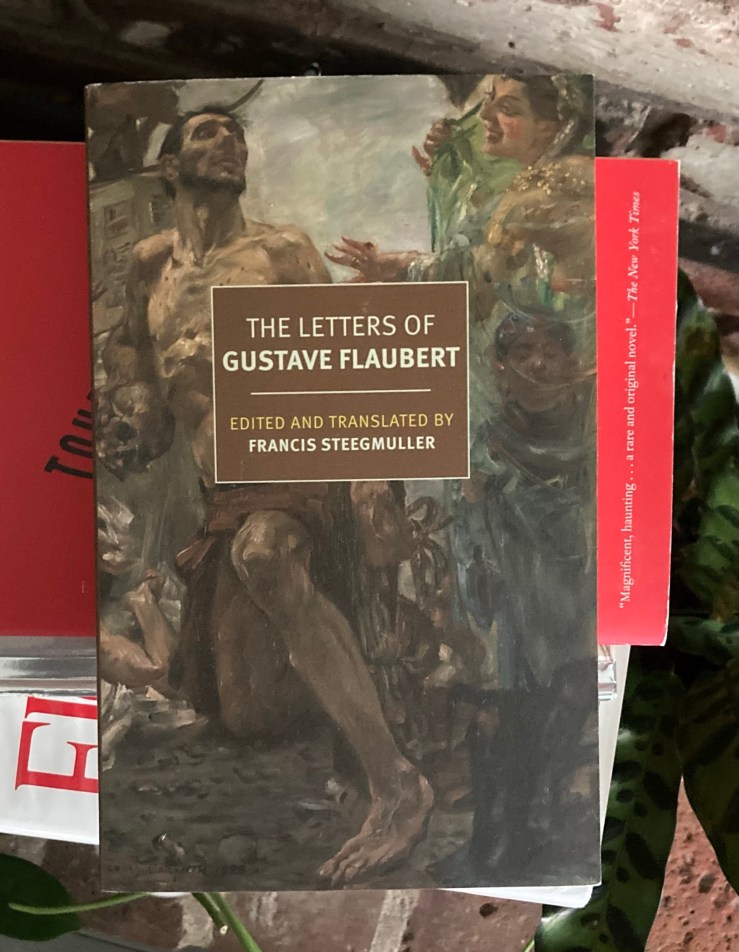
The Letters of Gustave Flaubert (Book acquired, 26 Aug. 2023)

NYRB has a new one-volume edition of Francis Steegmuller’s translation of Flaubert’s letters. Their blurb:

Here we have Flaubert’s youthful, sensual outpourings to his mistress, the poet Louise Colet, and, as he advances, still unknown, into his thirties, the wrestle to write Madame Bovary. We hear, too, of his life-changing trip to Egypt, as described to family and friends, and then there are lively exchanges with Baudelaire, with the influential critic Sainte-Beuve, and with Guy de Maupassant, his young protégé. Flaubert’s letters to George Sand reveal her as the great confidante of his later years.

Steegmuller’s book, a classic in its own right, is both a splendid life of Flaubert in his own words and the ars poetica of the master who laid the foundations for modern writers from James Joyce to Lydia Davis. Originally issued in two volumes, the book appears here for the first time under a single cover.

Rainer J. Hanshe’s Closing Melodies (Book acquired, 8 Aug. 2023)

Rainer J. Hanshe’s enormous, strange tome Closing Melodies is new from Contra Mundum. Their description:

As the 19th century comes to a close, Friedrich Nietzsche and Vincent van Gogh unknowingly traverse proximate geographical terrain, nearly circling one another like close but distant stars as the philosopher wanders between Nizza, Sils Maria, and Torino, and the painter wanders between Paris, Arles, and Saint-Rémy. In the midst of their philosophical and artistic pursuits, simultaneously, the Eiffel Tower, symbol of artistic progress and industrialization, begins to rise in Paris amidst clamors of protest and praise.

Through intertwining letters written to (& sometimes by) friends, family, and others, the philosopher and painter are brought into ever-greater proximity as we witness their daily personal and artistic struggles. Woven between and interrupting this panoply of voices are a series of intervals, short illuminating blasts, like a camera’s exploding flash powder, of artistic, scientific, political, and other events spanning 1888 to 1890, drawing Nietzsche and Van Gogh in and out of the wider expanses of history.

As construction of the Eiffel Tower comes to completion in Paris and Elisabeth Förster, the sister of the philosopher of the will to power, tries to found a utopic race colony in South America, the lives of Nietzsche and Van Gogh come to their terrible denouements. Her brother now a full-fledged zombie, the former queen of Nueva Germania seizes the reins of his living corpse and rides him into the future.

With no deus ex machina in sight, and none possible, WWI and the terrors and the beauties of the 20th century crack the horizon.

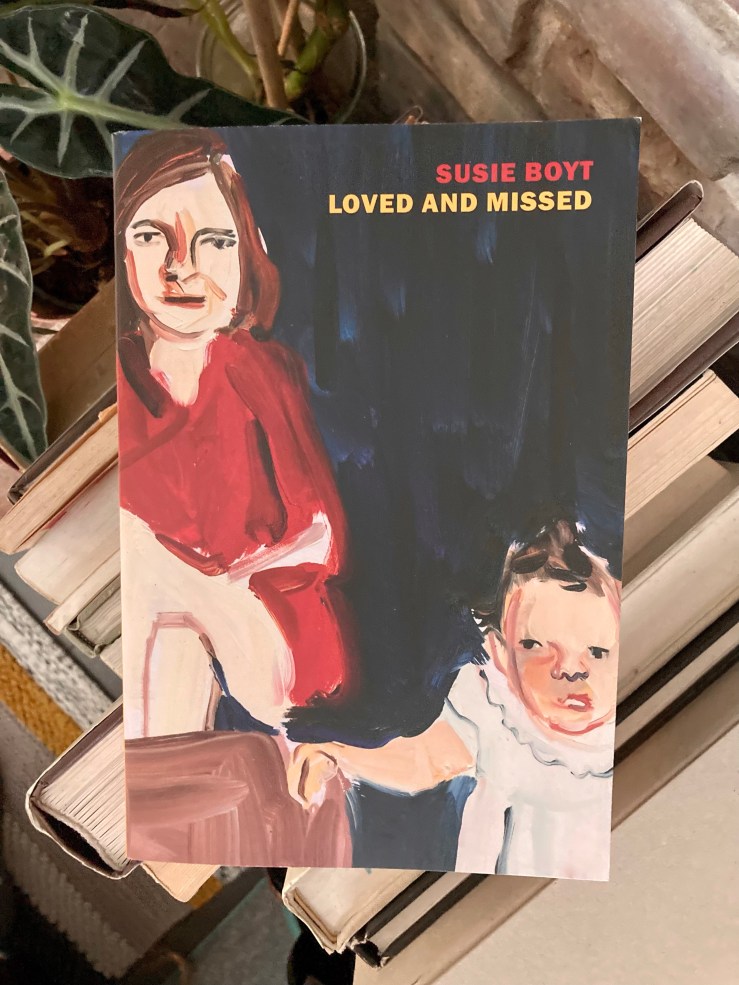
Susie Boyt’s Loved and Missed (Book acquired, 5 Aug. 2023)

Loved and Missed is the seventh novel by British author Susie Boyt, but the first to be published here in the States. Publisher NYRB’s blurb:

Ruth is a woman who believes in and despairs of the curative power of love. Her daughter, Eleanor, who is addicted to drugs, has just had a baby, Lily. Ruth adjusts herself in ways large and small to give to Eleanor what she thinks she may need—nourishment, distance, affection—but all her gifts fall short. After someone dies of an overdoes in Eleanor’s apartment, Ruth hands her daughter an envelope of cash and takes Lily home with her, and Lily, as she grows, proves a compensation for all of Ruth’s past defeats and disappointment. Love without fear is a new feeling for her, almost unrecognizable. Will it last?

Gary Amdahl’s Across My Big Brass Bed (Book acquired, early May 2023)

Gary Amdahl’s 2014 novel Across My Big Brass Bed is getting a new printing from corona\samizdat. A review copy arrived at Biblioklept World Headquarters a day or two before a short vacation, and I almost tucked it into my backpack for the plane, but I knew that the novel’s paragraphless flow would not work for me if I were around other humans, let alone in a big metal plastic carbon fiber thing forty thousand feet in the etc.

So I set it aside, and then picked it up this afternoon.

The novel (subtitled “An Intellectual Autobiography in Twenty-four Hours”) begins: “I drove, aimlessly but alertly, fighting traffic.” It’s the early 1960s in the Twin Cities, and our narrator seems to be coming into consciousness, by which I might mean earliest memories, or really just new language-and-concept acquisition: “President John Fitzgerald Kennedy had just been—new word—assassinated.” A few sentences later, our narrator cracked me up with this mordant zinger:

“Whatever it meant to be human, President Kennedy could no longer manage it.”

Yikes! The first chapter ends with our hero successfully assisting a group of pedestrians in their crossing of the street in his new professional capacity of an elected Crossing Guard of Madison Elementary. I loved the pages I read today.

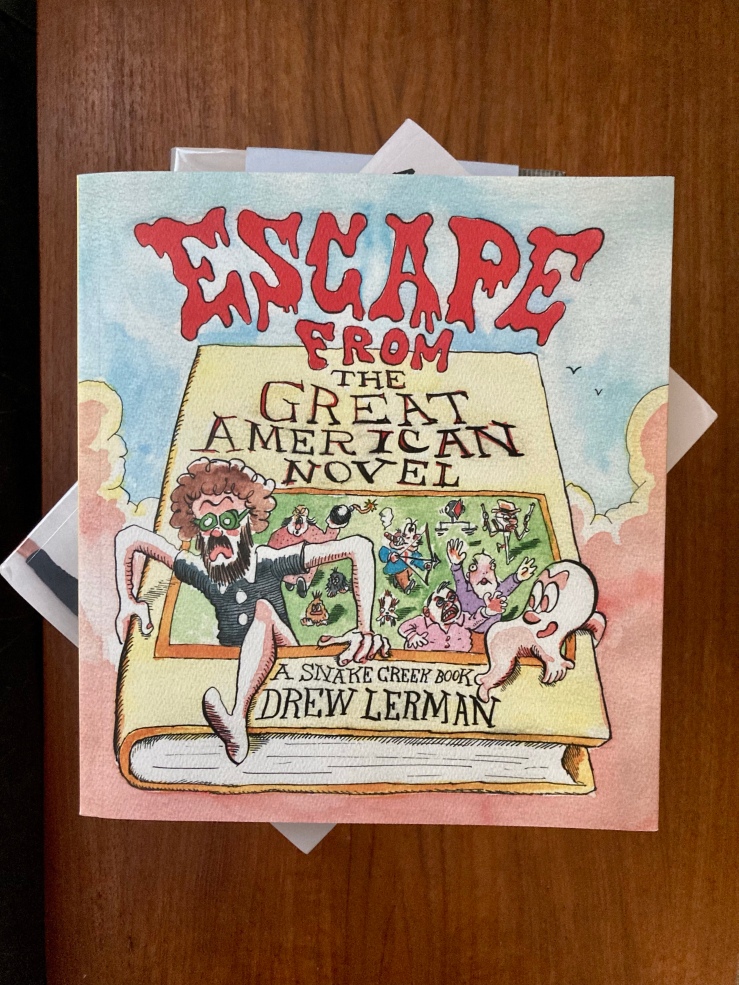
Drew Lerman’s Escape from the Great American Novel (Book acquired, end of April 2023)

I’ve long been a fan of Drew Lerman’s Snake Creek strip, and eagerly look forward to each new collection. The latest is Escape from the Great American Novel, which I’ve tried not to read all at once. I should have a full review in the next few weeks, but so far, Great Stuff—Escape is funny, erudite without being precious, and soulful. It also shows an expansion of Lerman’s narrative development (without sacrificing the kind of gags and send ups that one wants out of a great strip).

Here’s publisher Radiator Comics’ description:

Escape from the Great American Novel by Drew Lerman follows best friends, Roy and Dav, as they find themselves on opposite sides of a battle between apocalyptic oil barons and bomb-chucking anarchists. But Dav just wants to write the Great American Novel, while Roy wonders what the big deal is—after all, their world is only another fiction.

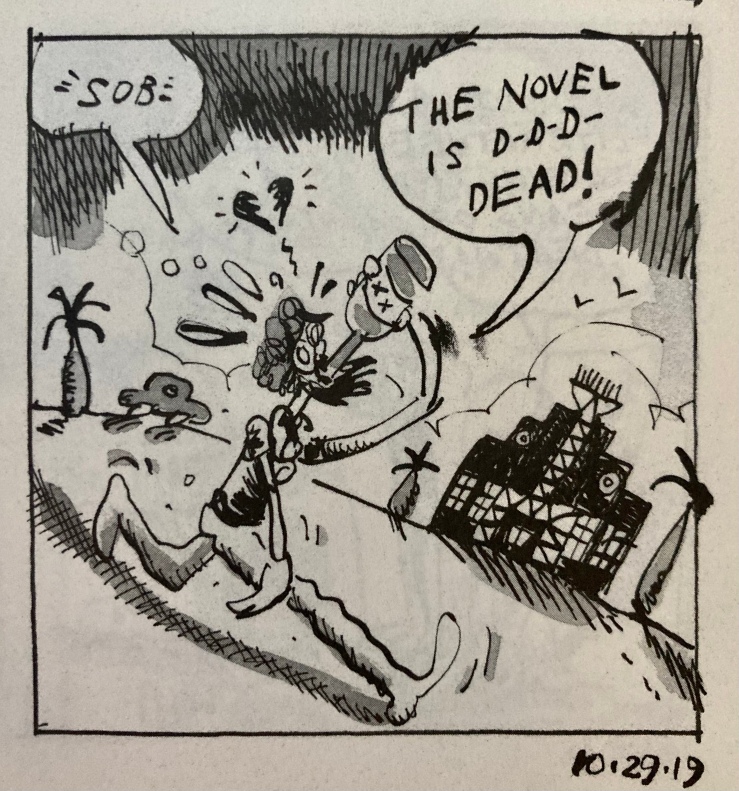
And here’s a nice little throwaway Gaddis gag:

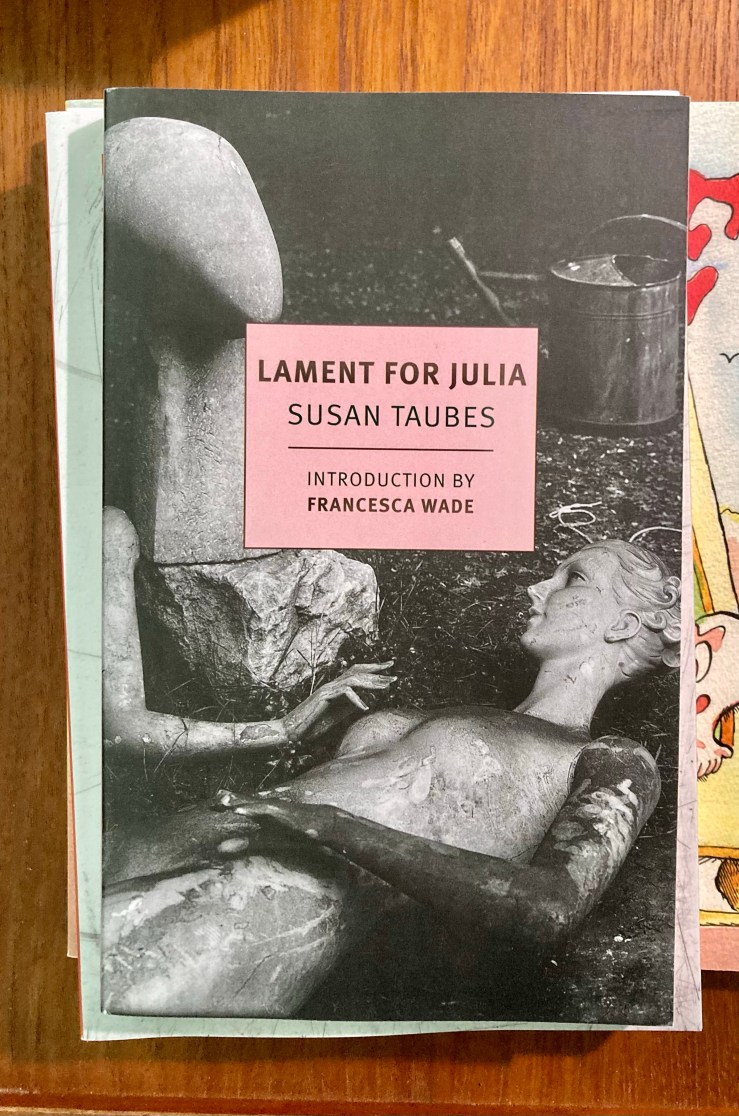
Susan Taubes’ Lament for Julia (Book acquired, 18 April 2023)

Susan Taubes’ Lament for Julia collects the eponymous posthumous novella with a handful of Taubes’ stories. The book is out this summer from NYRB. Their blurb–

Susan Taubes’s novella “Lament for Julia” is the story of a young woman coming of age in the twentieth century as seen through the eyes of a sexless spirit who supposes himself to be charged with her oversight.

What is this spirit? An operator from on high (though hardly holy), a narrative I, and a guiding presence that is more than a bit of a voyeur, who remains entirely unknown to Julia herself. About her, the spirit knows both a good deal and very little, since Julia’s emotional and physical and sexual being are all baffling, if also fascinating, to an entity that is pure mind.

The I and Julia are a mismatched couple, set up for failure from the start, it seems, even if they do somehow manage to deal in their different ways with childhood and Mother and Father Klopps and ugly pink outfits and dances and crushes for a while. After which come love and marriage, not necessarily in that order, at which point things really start to go wrong.

Unpublished during Taubes’s lifetime, “Lament for Julia” appears here with a selection of her stories. A brilliant metaphorical exploration of a woman’s double consciousness that is also a masterpiece of the grotesque, it is a novel like no other, a book, as Samuel Beckett wrote to his French publisher, “full of erotic touches of an emphatic sort [and] raw language,” the product of an “authentic talent,” adding, “I shall reread it.”

Eileen Chang’s Written on Water (Book acquired, 18 April 2023)

NYRB has a book of Eileen Chang’s essays out this summer. Titled Written on Water, the collection is translated and edited by Andrew F. Jones, with an afterword with Jones’s co-editor Nicole Huang. NYRB’s blurb:

Eileen Chang is one of the most celebrated and influential modern Chinese novelists and cultural critics of the twentieth century. First published in 1944, and just as beloved as her fiction in the Chinese-speaking world, Written on Water collects Chang’s reflections on art, literature, war, urban culture, and her own life as a writer and woman, set amid the sights and sounds of wartime Shanghai and Hong Kong. In a style at once meditative and vibrant, Chang writes of friends, colleagues, and teachers turned soldiers or wartime volunteers, and her own experiences as a part-time nurse. She also reflects on Chinese cinema, the aims of the writer, and the popularity of the Peking Opera. Chang engages the reader with her sly and sophisticated humor, conversational voice, and intense fascination with the subtleties of everyday life. In her examination of Shanghainese food, culture, and fashions, she not only reveals but also upends prevalent attitudes toward women, presenting a portrait of a daring and cosmopolitan woman bent on questioning pieties and enjoying the pleasures of modernity, even as the world convulses in war and a revolution looms.

James Grieve’s translation of Proust’s Swann’s Way (Book acquired, 19 March 2023)

This May, NYRB will publish a “new” translation of the first volume of Marcel Proust’s longassed novel In Search of Lost Time.

The translation, by James Grieve, is not actually new. It’s actually like half a century old.

The NYRB jacket copy states that “James Grieve began his career as a translator of Proust in the early 1970s, driven by his dismay at how many readers deemed In Search of Lost Time to be too difficult for them to take on. Grieve’s artful and celebrated version of Swann’s Way—only now available outside his native Australia—shows that this is hardly the case.” 

I was unfamiliar with Grieve’s translation. As I admitted on Twitter, I’m not really a Proust Guy. I read Lydia Davis’s translation of Swann’s Way a decade ago, and thought it was Okay and decided it was also Enough. Many, many people replied to my tweet that C.K. Scott Moncrieff’s translation was the way to go. Author and translator Daniel Mendelsohn told me that I’d “read the wrong translation!”  — but I’m okay with that.

Here is the I-guess famous opening line of Moncrieff’s 1922 translation:

For a long time I used to go to bed early.

Here is the Modern Library’s 1992 translation, crediting Moncrieff and Terence Kilmartin, revised by D.J. Enright:

For a long time I would go to bed early.

Here is Lydia Davis’s translation (2002) of the opening line:

For a long time, I went to bed early.

And here is James Grieve’s translation:

Time was when I always went to bed early.

There were a lot of opinions on Grieve’s rendering of this particular line floating around Twitter.

I have no dog in this race, but the voicing here strikes me as, I dunno, very, uh, colloquial? Almost like Huck Finn or something?

Proust’s original, by the way:

Longtemps, je me suis couché de bonne heure.

I muddled my way through a few years of college French, and have no real strong opinions here, but the phrase bonne heure is the most interesting to me. When I read it in French, I read it as something like, “a good hour,” or “the right time.”

Translation is about feeling and tone and vibe and mood as much it is about (the attempt for) precision, so I suppose each translator brings their own sense of the narrator’s voice to their translation, a voice that may or may not sync with what those other translators, the readers, hear in their mind’s ear.

The Letters of William Gaddis (Book acquired, 1 Feb. 2023)

Ten years ago, Dalkey Archive published The Letters of William Gaddis. Edited and introduced by Steven Moore, Letters functions as an ersatz autobiography or a one-sided epistolary autobiographical novel. As a public-facing author, Gaddis was hardly a Pynchon or Salinger, but, in a 1986 Paris Review interview, he did stick by the hero of his first novel The Recognitions, contending,

What’s any artist but the dregs of his work[?]: I gave that line to Wyatt thirty-odd years ago and as far as I’m concerned it’s still valid,

Wyatt, and Gaddis, wanted to know “what people want from the man they didn’t get from his work.” The Letters offers some answers—close to 700 pages of them in the new NYRB edition of the book that includes “over two dozen new letters and photographs.”

Portrait of William Gaddis, Julian Schnabel, 1987

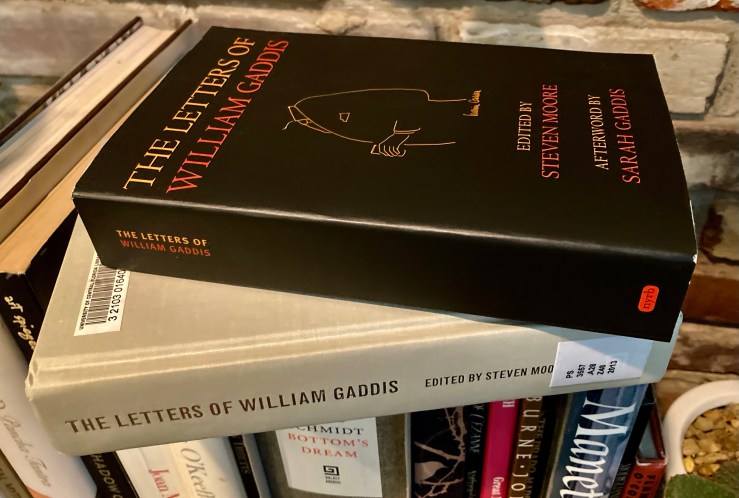
I first read The Letters of William Gaddis slowly between 2014 and 2019 as an e-book (both legit and samizdat). Moore organized the collection around Gaddis’s five books, and I found myself often distracted, opening up the the volumes to find parallels between life and art (or moments where WG outright stole from reality). I’d never actually held the Dalkey edition, but I wanted to get a comparison, so I asked my librarian to engage in some hot library on library action, and I now have the University of Central Florida’s copy in my possession. The hardback volume is missing the jacket, which featured Julian Schnabel’s 1987 portrait of Gaddis on the cover.

The new NYRB edition, perhaps more appropriately, features Gaddis’s self-portrait as cover art. The black, gold, and red, as well as the extra-large dimensions (by NYRB standards) match the NYRB versions of The Recognitions and J.R. It’s longer and a bit smaller than the hardback Dalkey, but the print is about the same size.

I’ve decided to cover the book at my own pace; I’ve reread the first two sections, “Growing Up,” and “The Recognitions,” which covers 1930-1955. I remembered pretty much all of it, and my judgments remain the same: Gaddis is an unrepentant mama’s boy, his sweet ma Edith is the early hero of the book, quick to send money and books. Angry Young Man Gaddis is more Otto than Wyatt, but he can sling sentences with the best of them—and that’s the joy of The Letters: the writing is really, really good.

Like I said though, I’ll cover the volume at my own pace. I’ve got notes prepped for the first two sections, and I aim to get those blogs out sooner than later. In the meantime, here’s the publisher’s blurb, almost certainly Moore’s writing, updated just a tad from the Dalkey:

Now recognized as one of the giants of postwar American fiction, William Gaddis shunned the spotlight during his life, which makes this collection of his letters a revelation. Beginning in 1930 when Gaddis was at boarding school and ending in September 1998, a few months before his death, these letters function as a kind of autobiography, and also reveal the extent to which he drew upon events in his life for his fiction. Here we see him forging his first novel, The Recognitions (1955), while living in Mexico, fighting in a revolution in Costa Rica, and working in Spain, France, and North Africa. Over the next twenty years he struggles to find time to write the National Book Award–winning J R (1975) amid the complications of work and family; deals with divorce and disillusionment before reviving his career with Carpenter’s Gothic (1985); then teaches himself enough about the law to produce A Frolic of His Own(1994). Resuming his lifelong obsession with mechanization and the arts, he finishes a last novel, Agapē Agape (published in 2002), as he lies dying.

This newly revised edition includes clarifying notes by Gaddis scholar Steven Moore, as well as an afterword by the author’s daughter, Sarah Gaddis.