The Anatomy of Violence (Book Acquired, Some Time Last Week)

IMG_5191

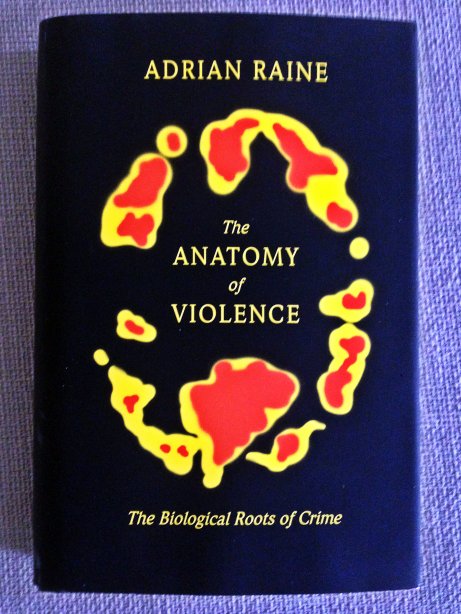
Adrian Raine’s The Anatomy of ViolencePublisher Random House’s blurb:

Why do some innocent kids grow up to become cold-blooded serial killers? Is bad biology partly to blame? For more than three decades Adrian Raine has been researching the biological roots of violence and establishing neurocriminology, a new field that applies neuroscience techniques to investigate the causes and cures of crime. In The Anatomy of Violence, Raine dissects the criminal mind with a fascinating, readable, and far-reaching scientific journey into the body of evidence that reveals the brain to be a key culprit in crime causation.Raine documents from genetic research that the seeds of sin are sown early in life, giving rise to abnormal physiological functioning that cultivates crime. Drawing on classical case studies of well-known killers in history—including Richard Speck, Ted Kaczynski, and Henry Lee Lucas—Raine illustrates how impairments to brain areas controlling our ability to experience fear, make good decisions, and feel guilt predispose us to violence. He contends that killers can actually be coldhearted: something as simple as a low resting heart rate can give rise to violence. But arguing that biology is not destiny, he also sketches out provocative new biosocial treatment approaches that can change the brain and prevent violence.

Finally, Raine tackles the thorny legal and ethical dilemmas posed by his research, visualizing a futuristic brave new world where our increasing ability to identify violent offenders early in life might shape crime-prevention policies, for good and bad. Will we sacrifice our notions of privacy and civil rights to identify children as potential killers in the hopes of helping both offenders and victims? How should we punish individuals with little to no control over their violent behavior? And should parenting require a license? The Anatomy of Violence offers a revolutionary appraisal of our understanding of criminal offending, while also raising provocative questions that challenge our core human values of free will, responsibility, and punishment.

Storm Kings (Book Acquired Some Time Last Month)

20130414-153718.jpg

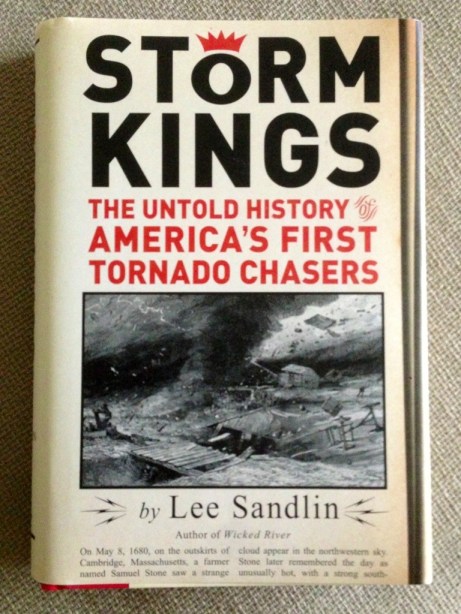
I liked Lee Sandlin’s last book Wicked River, so I took interest when a reader copy of his  new book Storm Kings: The Untold History of America’s First Tornado Chasers showed up at Biblioklept World Headquarters a few months ago. I have no special interest in tornadoes or meteorology, but so far Storm Kings has intrigued me into reading more.

20130414-153724.jpg

Publisher Random House’s blurb:

From the acclaimed author of Wicked River comes Storm Kings, a riveting tale of supercell tornadoes and the quirky, pioneering, weather-obsessed scientists whose discoveries created the science of modern meteorology.

While tornadoes have occasionally been spotted elsewhere, only the central plains of North America have the perfect conditions for their creation. For the early settlers the sight of a funnel cloud was an unearthly event. They called it the “Storm King,” and their descriptions bordered on the supernatural: it glowed green or red, it whistled or moaned or sang. In Storm Kings, Lee Sandlin explores America’s fascination with and unique relationship to tornadoes. From Ben Franklin’s early experiments to the “great storm war” of the nineteenth century to heartland life in the early twentieth century, Sandlin re-creates with vivid descriptions some of the most devastating storms in America’s history, including the Tri-state Tornado of 1925 and the Peshtigo “fire tornado,” whose deadly path of destruction was left encased in glass.

Drawing on memoirs, letters, eyewitness testimonies, and archives, Sandlin brings to life the forgotten characters and scientists who changed a nation—including James Espy, America’s first meteorologist, and Colonel John Park Finley, who helped place a network of weather “spotters” across the country. Along the way, Sandlin details the little-known but fascinating history of the National Weather Service, paints a vivid picture of the early Midwest, and shows how successive generations came to understand, and finally coexist with, the spiraling menace that could erase lives and whole towns in an instant.

20130414-153731.jpg

The Red Chamber (Book Acquired, Some Time Like Two Weeks Ago Maybe)

20130414-153312.jpg

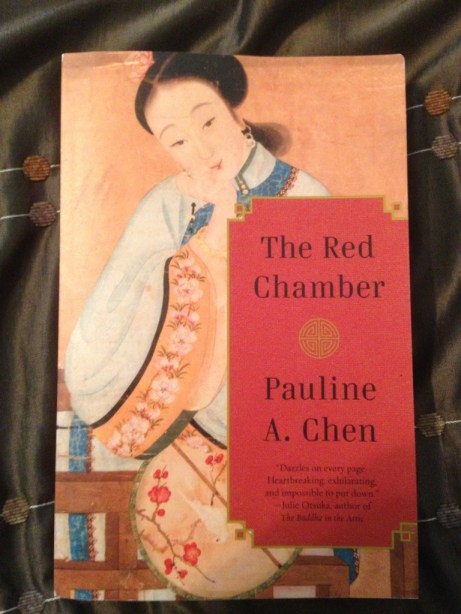
A review copy of Pauline A. Chen’s The Red Chamber arrived at Biblioklept World Headquarters like maybe two weeks ago, but my wife snapped it up immediately and then I neglected to look at it until today. Publisher Random House’s blurb:

In eighteenth-century China, the beautiful orphan Daiyu leaves her home in the provinces to seek shelter with her mother’s family in Beijing. At Rongguo Mansion, she is drawn into a world of sumptuous feasts, silken robes, and sparkling jewels—as well as a complex web of secret rivalries and intrigues that threatens to trap her at every turn. When she falls in love with Baoyu, the family’s brilliant, unpredictable heir, she finds the forces of the family and convention arrayed against her, and must risk everything to follow her heart.

Based on the epic Dream of the Red Chamber—one of the most famous love stories in Chinese literature—this novel recasts a timeless tale for Western audiences to discover.


Lydia Davis/Denis Johnson/Curzio Malaparte (Books Acquired, 4.06.2013)

20130408-201552.jpg

Purged the books pictured in the lower right-hand corner and picked up a few: Curzio Malaparte’s Kaputt, which has intrigued me for awhile now, Denis Johnson’s Fiskadoroin the Vintage Contemporaries edition no less!—and Lydia Davis’s novel The End of the Story, which I somehow haven’t read yet. Hypothesis: Lydia Davis and Denis Johnson may be America’s greatest living novelists (?).


Paperback Island (Lovely and Vibrant Book Acquired, 4.05.2013)

20130405-161009.jpg

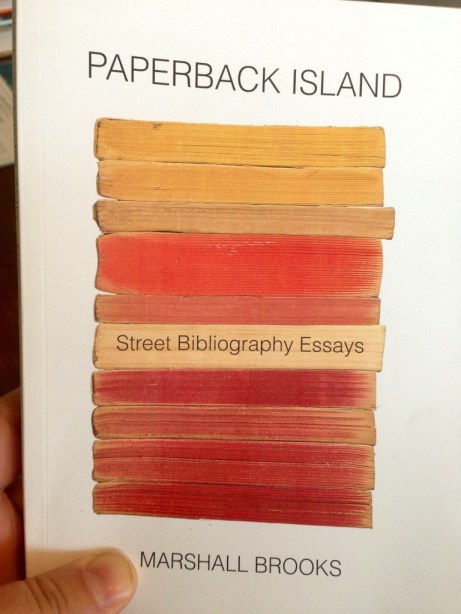
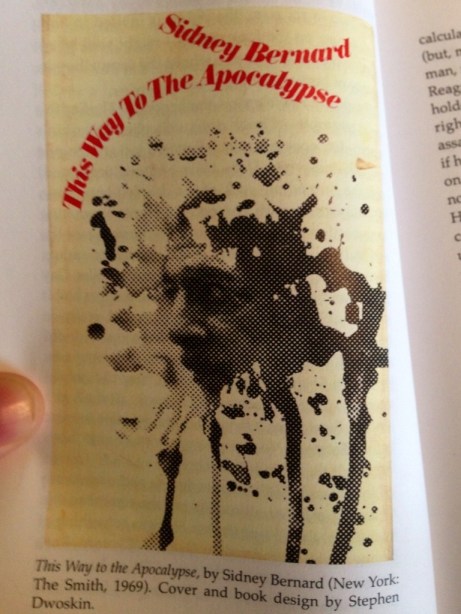
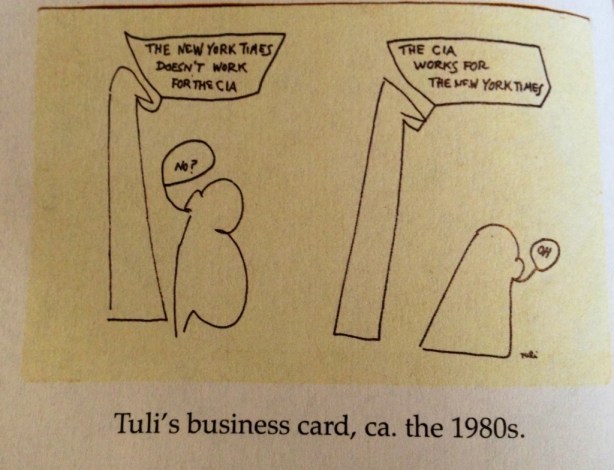
Marshall Brook’s memoir-in-essays, Paperback Island arrived at Biblioklept World Headquarters today. Brooks’s book snagged me into an hour of reading I hadn’t planned on doing, even from the preface (I usually skim or skip prefaces, but Brooks’s hooked me—he opens at Tuli Kupferberg’s funeral and then talks about reading a book that required him to actually stay in the author’s apartment). There’s an opening memoir about an adolescent friendship that revolves around books; this essay could easily tread into schmaltz but instead intrigues and foregrounds what comes next. The following essay, “Sid,” is about Sidney Bernard’s book This Way to the Apocalypse, which I now want to read.

20130405-161019.jpg

This is followed by a piece on Tuli Kupferberg, whose funeral seems to serve as a galvanizing force throughout the essays. Anyway, I kept reading, and this is obviously not a review, just an enthusiastic entry on the blog, a sort of, yes, this is a beautiful, perhaps melancholy, but beautiful book, a book about books, writers, libraries…full review to come.

20130405-161013.jpg


The Wild Beasts of Wuhan (Book Acquired, 3.21.2013)

20130322-135238.jpg

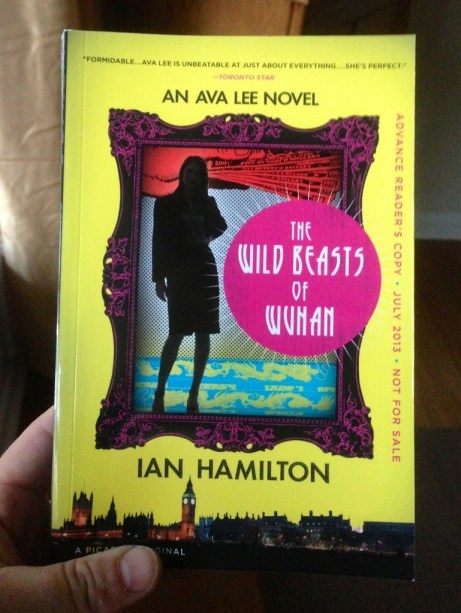
It took me a few minutes to figure out the title of Ian Hamilton’s latest Ava Lee novel, The Wild Beasts of Wuhan—something about the font I guess. The book is out this June from Picador. Blurb from Hamilton’s site:

In The Wild Beasts of Wuhan, Uncle and Ava are summoned by Wong Changxing, “The Emperor of Hubei” and one of the most powerful men in China, when he discovers that the Fauvist paintings he recently acquired are in fact forgeries.

Ava uncovers a ring of fraudulent art dealers and follows their twisted trail to Denmark, the Faroe Islands, Dublin, London, and New York. But the job is further complicated by Wong’s second wife, the cunning and seductive May Ling, who threatens to interfere in Ava’s investigation.

Will Ava find the perpetrators and get the Wongs’ money back? Or will May Ling get to them first…


Evan Lavender-Smith’s Avatar (Book Acquired, 3.22.2013)

20130322-131801.jpg

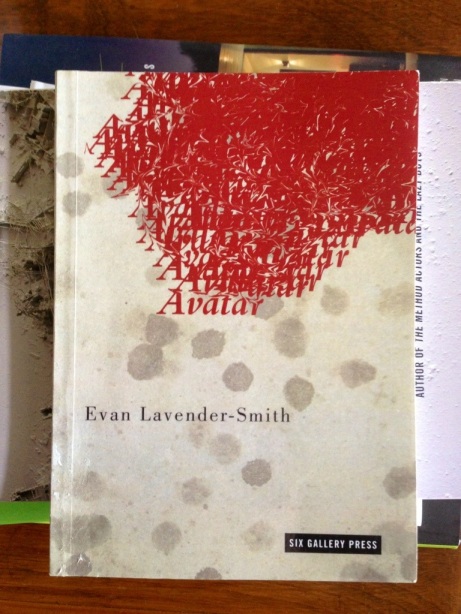
Came home to Evan Lavender-Smith’s Avatar in the mail. Loved his book From Old NotebooksWhat is Avatar about? I asked Evan and he told me. This was in an interview we did that will run next week here on this very blog. Here’s a sample:

Biblioklept: I haven’t read your novel Avatar—can you tell us a little bit about it?

ELS: It’s a monologue spoken or thought by someone floating in the depths of space who can see only two points of light, two stars in the distance, one in front and one behind. The speaker/thinker has apparently been stuck in this condition for a very long time, having spent much of that time — hundreds, thousands, maybe millions of years — trying to puzzle out how he/she arrived in such an awful situation, what it means to be there, what to think about next, etc. It’s very different than From Old Notebooks in most respects — a number of people who liked From Old Notebooks told me they didn’t care for Avatar, and some people who liked Avatar told me they weren’t crazy about From Old Notebooks — but I believe they share at least one main concern, which is an attempt to come up with a formal analog that would describe a figure for thought, to formally systemize and to abstract or maybe almost to allegorize thought within the context of a book. Ulysses is probably my all-time favorite novel, and one of the things I love best about it is how its method of interior monologue functions, to my reading, both as this bizarre formal contrivance — people don’t really think like that at all, don’t rely so heavily on words to think, at least I don’t — and as a beautiful linguistic or formal analog to real human thought. In both From Old Notebooks and Avatar, I believe I was trying to do something along those lines, to come up with a way for a book to develop its own peculiar grammar or system of thought quite distinct from real human thought and at the same time have that grammar somehow formally or abstractly correspond to the ebbs and tides and the fits and starts and the beauty and boring repetition of how a mind really thinks; to develop over the course of a book a formal figure for thought that both does and doesn’t resemble thought as we encounter it in our day-to-day lives.

Peanuts/Borges/mbv (Books and an LP Acquired, 3.19.2013)

20130319-175104.jpg

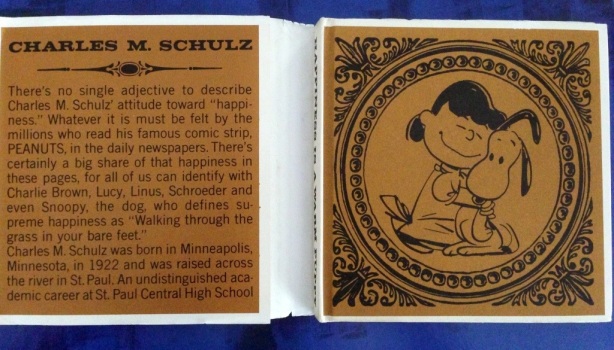
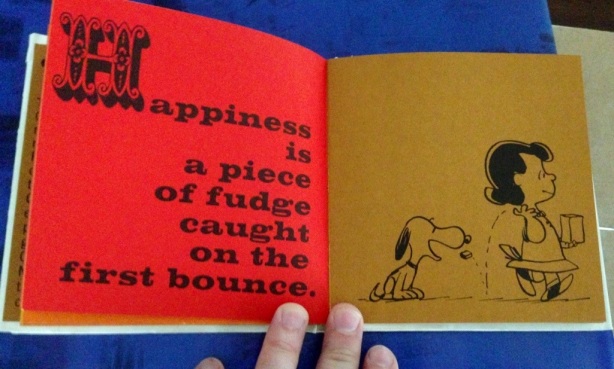
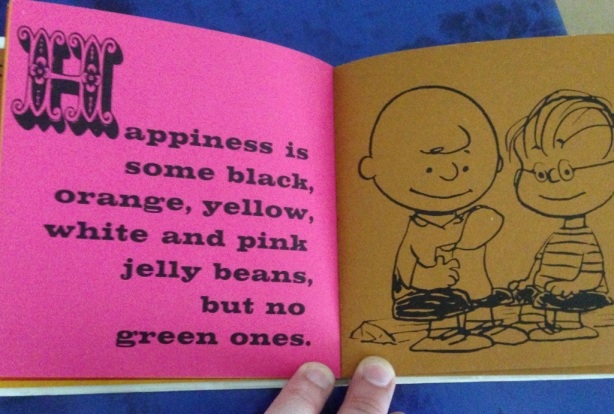
Found this hardback first edition of Charles M. Schulz’s Happiness Is a Warm Puppy, a kids book printed on heavy stock colored paper with bold litho images and letters. The cover is a bit rough but the book itself seems untouched. It’s a first edition from 1962.

20130319-175111.jpg

20130319-175122.jpg

20130319-175117.jpg

Also picked up this collection of short essays by Jorge Luis Borges:

20130319-175128.jpg

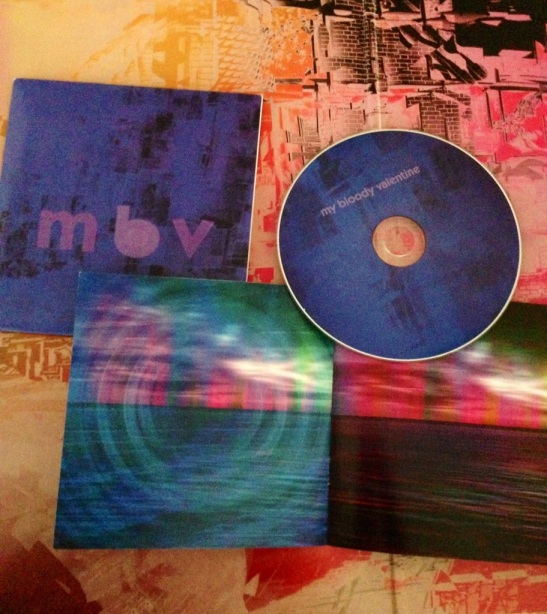
And came home to find the new My Bloody Valentine Record I bought six weeks ago (and likely paid too much for, including overseas shipping, but hey, I’ll shop smarter next time they put out an LP):

20130319-175134.jpg


In the House Upon the Dirt Between the Lake and the Woods (Book Acquired 3.08.2013)

20130308-110107.jpg

I was happy to get an advance copy of Matt Bell’s forthcoming novel In the House upon the Dirt Between the Lake and the Woods, because I like titles with lots of prepositions. No, actually, Bell’s novella-in-vignette’s Cataclysm Baby was one of my favorite new books of 2012. Here’s the pub blurb for House:

In this epic, mythical debut novel, a newly-wed couple escapes the busy confusion of their homeland for a distant and almost-uninhabited lakeshore. They plan to live there simply, to fish the lake, to trap the nearby woods, and build a house upon the dirt between where they can raise a family. But as their every pregnancy fails, the child-obsessed husband begins to rage at this new world: the song-spun objects somehow created by his wife’s beautiful singing voice, the giant and sentient bear that rules the beasts of the woods, the second moon weighing down the fabric of their starless sky, and the labyrinth of memory dug into the earth beneath their house.

This novel, from one of our most exciting young writers, is a powerful exploration of the limits of parenthood and marriage—and of what happens when a marriage’s success is measured solely by the children it produces, or else the sorrow that marks their absence.

You can read my interview with Matt here and excerpts from House at Matt’s site.

Benjamin Black’s Vengeance (Book Acquired, 3.06.2013)

20130308-110039.jpg

Vengeance, the latest in Benjamin Black’s Quirke series. From Janet Maslin’s New York Times review last year:

Vengeance” once again leads Quirke into his favorite kind of trouble: “yet another morass of human cupidity and deceit,” involving the deaths of powerful men and the foxy insolence of their glamorous widows. It breaks no new ground.

But why should Benjamin Black tamper with a winning formula? The crimes aren’t graphic or even terribly central. And the detecting questions don’t count for much. The books are far more notable for malaise, atmospherics, sexual chemistry and vast amounts of swirling tobacco smoke and mind-muddling alcohol, without which justice could apparently never prevail.

Vengeance is new in trade paperback from Picador.


Graveland (Book Acquired, 2.28.2013)

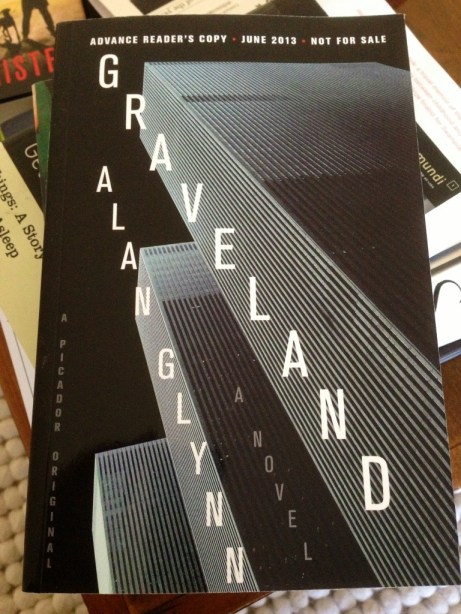
20130308-110013.jpg

Graveland, a thriller from Alan Glynn, comes out this summer. Here’s publisher Picador’s blurb:

On a bright Saturday morning, a Wall Street investment banker is shot dead while jogging in Central Park. Later that same night, one of the savviest hedge-fund managers in the city is gunned down outside a restaurant. Are these killings a coordinated terrorist attack, or just a coincidence? Investigative journalist Ellen Dorsey has a hunch they’re neither, and her obsessive attention to detail leads her to an unexpected conclusion. Days later, when an attempt is made on the life of another CEO, the story blows wide open—and Ellen’s theory is confirmed. Racing to stay ahead of the curve, she soon encounters Frank Bishop, a recession-hit architect, whose daughter’s disappearance is tied to the murders.

Set deep in a shadow world of crooked business deals and radical politics, Alan Glynn’s Graveland is a mind-blowing thriller.

Anti Lebanon (Book Acquired, 3.07.2013)

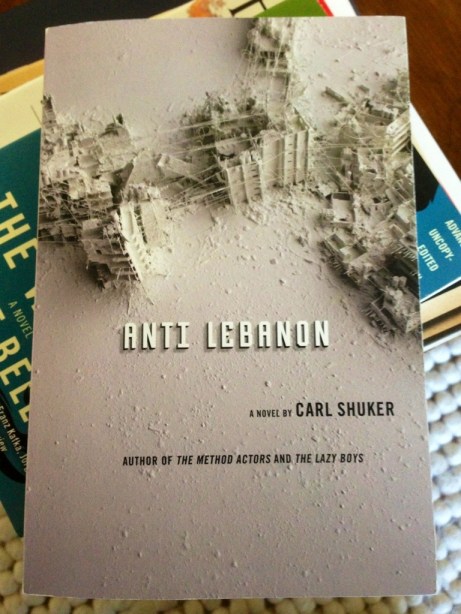
20130308-110219.jpg

Dipped into this one this morning—first chapter—and so far so good: Carl Shuker’s Anti Lebanon is simultaneously weird and very readable, a mix that reminds me very much of William Gibson. Great cover too. Full review to come, but for now, here’s publisher Counterpoint Press’s blurb:

It is the Arab Spring and the fate of the Christians of the Middle East is uncertain. The many Christians of Lebanon are walking a knife-edge, their very survival in their ancestral refuge in doubt, as the Lebanese government becomes Hezbollah-dominated, while Syria convulses with warring religious factions. Anti Lebanon is a cross-genre political thriller and horror story embedded within these recent events, featuring a multiethnic Christian family living out the lingering after-effects of Lebanon’s civil war as it struggles to deal with its phantoms, its ghosts, and its vampires.

Leon Elias is a young and impoverished Lebanese man whose older sister had joined a Christian militia and has been killed. He becomes caught up in the recent “little war” in Beirut, when the Shi’a resistance/militia Hezbollah takes over most of the city. In this milieu—the emptied streets of Christian east Beirut, the old shell-scarred sandstone villas, the echoing gunfire—he becomes involved, only partly by choice, in the theft of a seriously valuable piece of artisanal jewelry, and is bitten—like a vampire—by its Armenian maker.

Events take a ghostly and mysterious turn as the factions jostling for power in Beirut begin to align against him and his family, and he is forced to flee the sullied beauty of that wonderful and pitiful country, in this story of love and loss, of the civil war and the Arabization of the “Switzerland of the Middle East,” and of contemporary vampires—beings addicted to violence, lies, and baser primal drives.

Carl Shuker is a remarkable writer. A storyteller in the tradition of Celine and J. G. Ballard, no one alive writes better sentences. Anti Lebanon will delight his fans and entrance anyone new to his fine work.


Georges Perec (Books Acquired, Some Time Last Week)

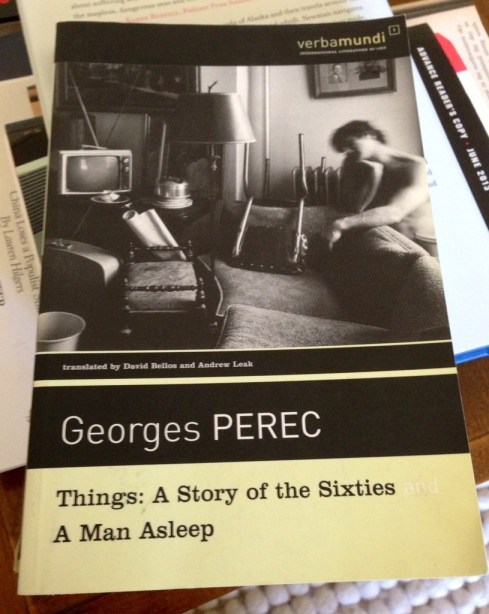
20130304-154911.jpg

I picked up Georges Perec’s twofer Things and A Man Asleep last Friday at the used bookstore. I was there looking for something else. The Perec was not even shelved under “P.” I found it laid on a table. The good people at Melville House also sent me a copy of Perec’s La Boutique Obscure last week, which I do not photograph here because it is an ebook. I read a big chunk of Obscure this week and will do some kind of write-up sometime soon, but here’s David Auerbach’s review at the LA Review of Books in the meantime.

Still Points North (Book Acquired, 3.02.2013)

20130304-154858.jpg

Still Points North is Leigh Newman’s new memoir about growing up in Alaska. Publisher Random House’s blurb:

Part adventure story, part love story, part homecoming, Still Points North is a page-turning memoir that explores the extremes of belonging and exile, and the difference between how to survive and knowing how to truly live.

Growing up in the wilds of Alaska, seven-year-old Leigh Newman spent her time landing silver salmon, hiking glaciers, and flying in a single-prop plane. But her life split in two when her parents unexpectedly divorced, requiring her to spend summers on the tundra with her “Great Alaskan” father and the school year in Baltimore with her more urbane mother.

Navigating the fraught terrain of her family’s unraveling, Newman did what any outdoorsman would do: She adapted. With her father she fished remote rivers, hunted caribou, and packed her own shotgun shells. With her mother she memorized the names of antique furniture, composed proper bread-and-butter notes, and studied Latin poetry at a private girl’s school. Charting her way through these two very different worlds, Newman learned to never get attached to people or places, and to leave others before they left her. As an adult, she explored the most distant reaches of the globe as a travel writer, yet had difficulty navigating the far more foreign landscape of love and marriage.

In vivid, astonishing prose, Newman reveals how a child torn between two homes becomes a woman who both fears and idealizes connection, how a need for independence can morph into isolation, and how even the most guarded heart can still long for understanding. Still Points North is a love letter to an unconventional Alaskan childhood of endurance and affection, one that teaches us that no matter where you go in life, the truest tests of courage are the chances you take, not with bears and blizzards, but with other people.


New Books from Akashic (Books Acquired, 2.15.2013)

A passel of unsolicited reader copies arrived in the middle of February, including a trio of strange birds from Akashic Books. Preston L. Allen’s Every Boy Should Have a Man seems especially (and wonderfully) weird. First, there’s that title, which is, you know, strange, and then the blurb:
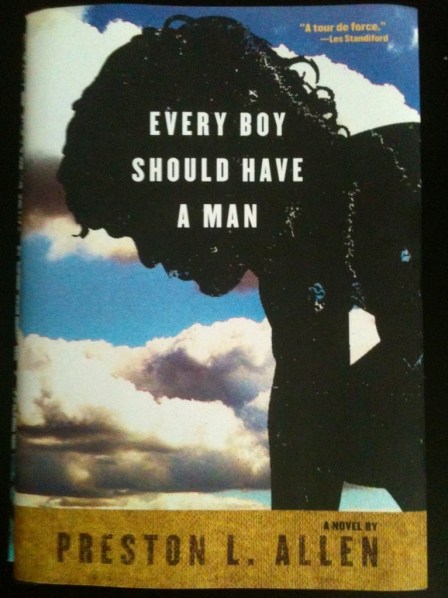
20130224-140946.jpgA riveting, poignant satire of societal ills, with an added dose of fantasy, Every Boy Should Have a Man takes place in a post-human world where creatures called oafs keep humanlike “mans” as beloved pets. One day, a poor boy oaf brings home a man whom he hides under his bed in the hopes his parents won’t find out. When the man is discovered, the boy admits it is not his—but the boy is no delinquent. Despite the accusations being hurled at him, he’s telling the truth when he says he found the man aimlessly wandering in the bramble. Nevertheless, he must return the man to his rightful owner. But when the heartbroken boy comes home from school one afternoon, he finds wrapped up in red ribbon a female man with a note around her neck: Every boy should have a man. You’re a fine son. Love, Dad.

Thus begins Every Boy Should Have a Man, Preston L. Allen’s picaresque journey into uncharted territory in earth, sky, and firmament. With echoes of Margaret Atwood and Jack and the Beanstalk, Jonathan Swift’s Gulliver’s Travels and Octavia Butler’s Kindred, it traces the story of the boy and his three “mans,” Brown Skin who is not his, the tragic Red Sleeves who has no voice, and her quick-witted daughter Red Locks whose epic journey takes her from the backbreaking drudgery of the mines to the perils of the battlefield to the savagery of cannibalism.

Oafs and mans each gain insight and understanding into one another’s worlds, and the worlds that touch theirs—ultimately showing that oafs and mans alike share a common “humanity.” Filled with surprising twists and turns, the novel is in part a morality tale that takes on many of today’s issues including poverty, the environment, sexism, racism, war, and religion, all in lighthearted King James prose.

Seems to have shades of Fantastic Planet — but “in lighthearted King James prose”!

Next up, The Roving Tree, the first novel from Elsi Augustave, which seems like it might be happily at home on a contemporary postcolonial studies syllabus:
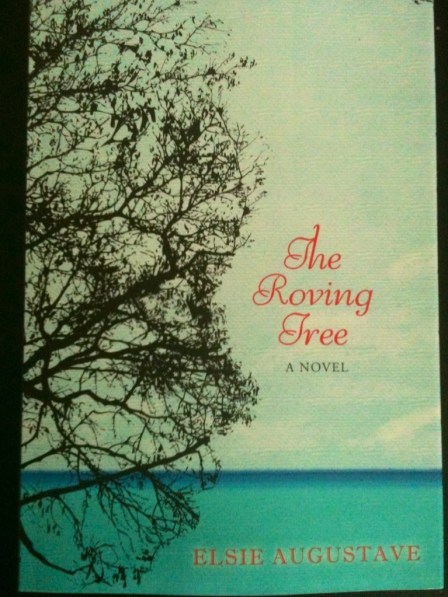
20130224-141000.jpgElsie Augustave’s debut novel, The Roving Tree, explores multiple themes: separation and loss, rootlessness, the impact of class privilege and color consciousness, and the search for cultural identity. The central character, Iris Odys, is the offspring of Hagathe, a Haitian maid, and Brahami, a French-educated mulatto father who cares little about his child.

Hagathe, who had always dreamt of a better life for her child, is presented with the perfect opportunity when Iris is five years old. Adopted by a white American couple, an anthropologist and art gallery owner, Iris is transported from her tiny remote Haitian village, Monn Neg, to an American suburb.

The Roving Tree illuminates how imperfectly assimilated adoptees struggle to remember their original voices and recapture their personal histories and cultural legacy. Set between two worlds, suburban America and Haiti under the oppressive regime of Papa Doc’s Tanton Macoutes, the novel offers a unique literary glimpse into the deeply entrenched class discrimination and political repression of Haiti during the Duvalier era, along with the subtle but nonetheless dangerous effects of American racism.

Told from beyond the grave, Iris seamlessly shares her poignant and pivotal life experiences. The Roving Tree, underscored by the spiritual wisdom of Haitian griots, offers insightful revelations of the importance of significant relationships with family and friends. Years later, we see how these elements are transformative to Iris’s intense love affair, and her personal and professional growth. Universal truths resonate beyond the pages of this work.

Also on the colonial-historical tip: Anthony C. Winkler’s The Family Mansion:
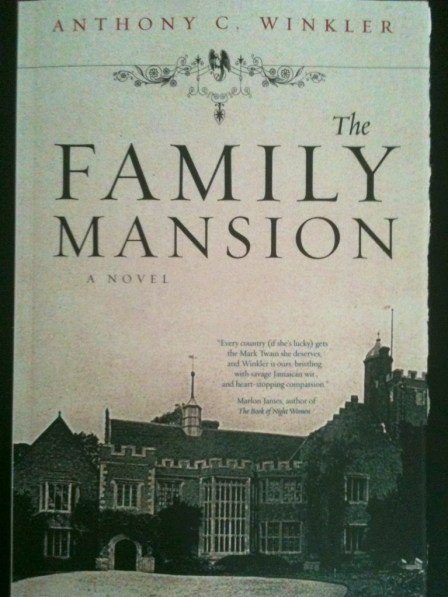
20130224-141035.jpgThe Family Mansion is a historical novel that tells the story of Hartley Fudges, whose personal destiny unfolds against the backdrop of 19th-century British culture, a time when English society was based upon the strictest subordination and stratification of the classes. As the second son of a hereditary duke and his father’s favorite, Hartley, under different circumstances, might have inherited the inside track to his father’s estate and titles. But the English law of succession was rigidly dictated by the principle of male primogeniture, with all the property, assets, titles, and debts devolving to the firstborn son and his issue, leaving nothing for the other sons.

Like many second sons, Hartley decides to migrate to Jamaica at the age of twenty-three. This at first seems sensible: in the early 1800s Jamaica was far and away the richest and most opulent of all the crown colonies, and the single greatest producer of sugar in the world. But for all its fabulous wealth, Jamaica was a difficult and inhospitable place for an immigrant. The mortality rate for new immigrants was over 50% for the first year of residence. Some immigrant groups fared even worse. The island’s white population that ran the lucrative sugarcane industry was outnumbered 10-to-1 by the largely enslaved black population. Slave revolts were common with brutal reprisals such as the decapitation of ringleaders and nailing the severed heads to trees.

The complex saga of Hartley’s life is revealed in vivid scenes that depict the vicissitudes of 19th-century English and Jamaican societies. Aside from violent slave revolts, newcomers had to survive the nemesis of the white man in the tropics—namely, yellow fever. With Hartley’s point of view as its primary focus, the narrative transports readers to exotic lands, simultaneously exploring the brutality of England’s slavery-based colonization.

Akashic, a label I was ignorant of up until now, seems to be publishing some pretty cool stuff.
 

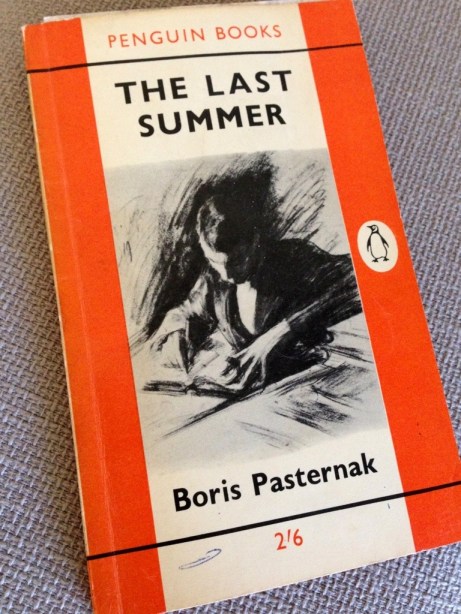
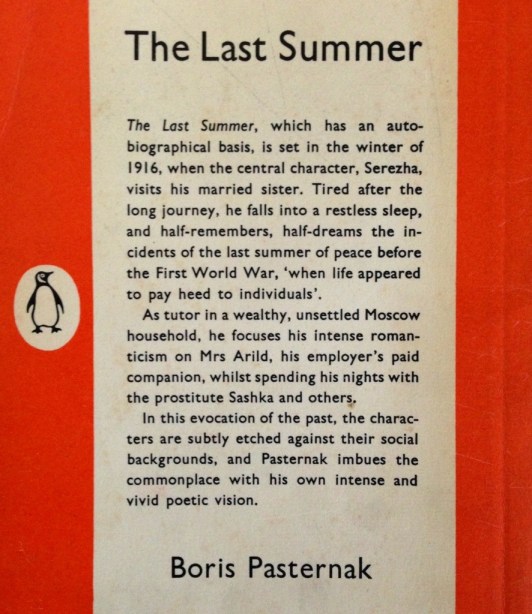
Pasternak’s The Last Summer, Another Lovely Penguin (Book Acquired Some Time in February, 2013)

20130302-105825.jpg

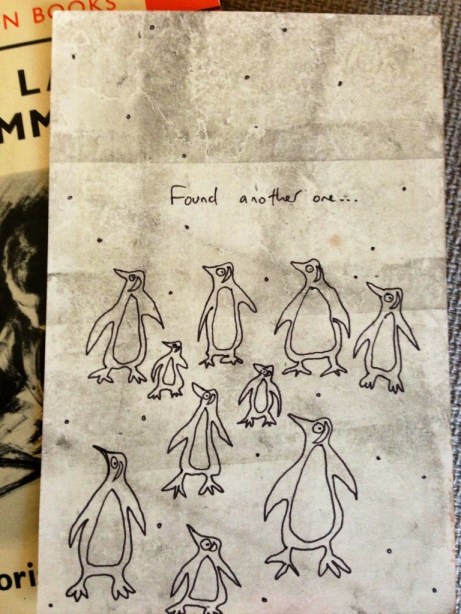
Big thanks again to Ryan Mihaly for sending me another Penguin edition. This time, Ryan sent me Boris Pasternak’s The Last Summer. (Ryan writes reviews of merit at Flying Object, btw). Ryan also sent me a bookmark he illustrated himself:

20130302-105835.jpg

Lovely. Blurb:

20130302-111434.jpg

My Pet Serial Killer (Book Acquired, Some Time in January 2013)

20130213-170558.jpg

Okay: So I’ve been meaning to get to this one for awhile, but my review stack has just been too big.

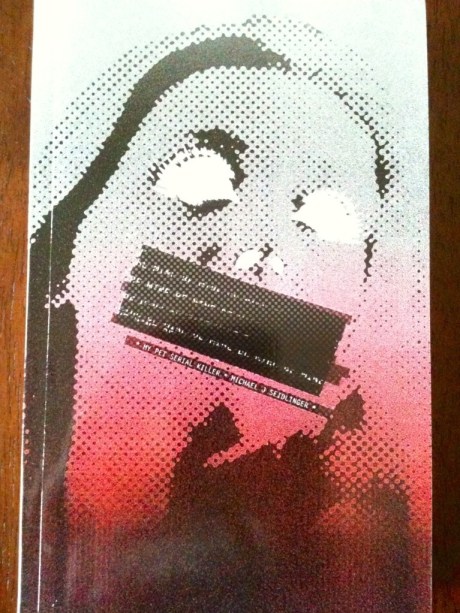
Anyway, Michael J. Siedlinger’s My Pet Serial Killer is pretty weird stuff so far, but also compelling and very readable.

At Word Riot, Edward J. Rathke gave the book a favorable review, writing:

My Pet Serial Killer is a psychological thriller as pickup game as college days romance as media study as violent porn as metahorror as the most bizarre and cruelest master/slave relationship I can remember reading since John Fowles’ The Collector. Claire Wilkinson, a forensics graduate student, plays the pickup game but she searches for a very specific kind of lover: a serial killer. She finds her Gentleman Killer, tears him apart, and rebuilds him, hoping to mold the greatest serial killer ever, causing a media frenzy, and furthering her own academic career. Twisted without being overly violent, haunting without the ghosts, Claire is a narrator and protagonist that we race along with, burning through pages at a dizzying rate only to see what she does next.

20130213-170606.jpg

The book also got a good write-up at HTML Giant, which declared “Seidlinger is the sickest of the fucks. Few can compare.”