One of the better autobiographical notes I’ve ever read

1563_001

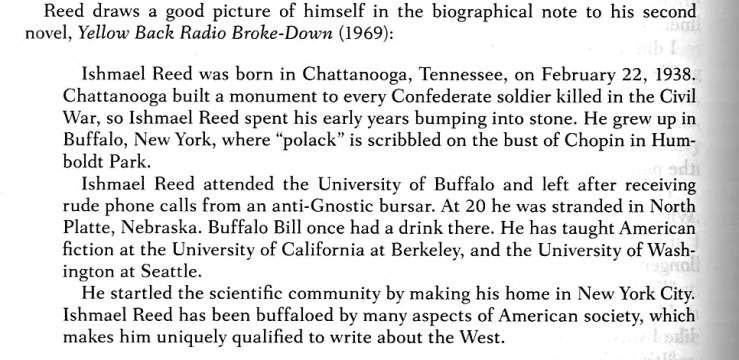
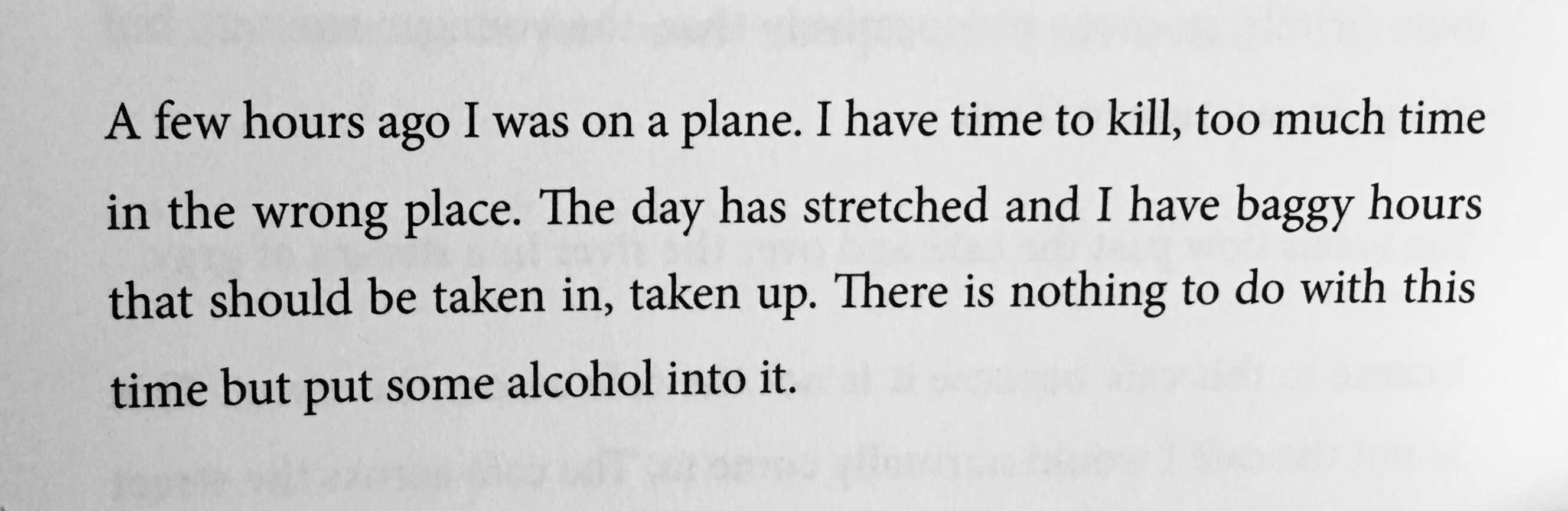
One of the better autobiographical notes I’ve read. This comes from The Norton Anthology of American Literature, Vol. E (8th ed.); my copy of Yellow Back Radio Broke-Down unfortunately doesn’t actually include this note.

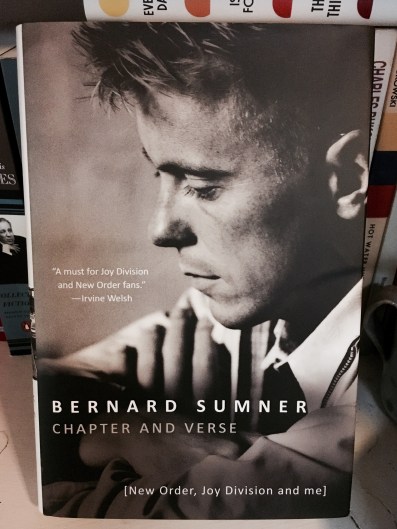
Bernard Sumner’s memoir, Chapter and Verse (Book acquired sometime in November of 2015)

IMG_0971

This afternoon, I finally got into Bernard Sumner’s memoir Chapter and Verse: New Order, Joy Division and Me. Actually, I obviously flicked through it when it showed up, looking at the glossy pictures, dabbling here and there (somehow read not one but two anecdotes about Seal (?)), and then reading the book’s first appendix, a transcript of a recording of Sumner’s hypnotizing Ian Curtis (excuse that mangled clause). The book has a U.S. Hardcover release from Thomas Dunne; their blurb:

Founding member and guitarist of Joy Division and the lead singer of New Order, Bernard Sumner has been famous over the years for his reticence. Until now . . .

An integral part of the Manchester, UK, music scene since the late 1970s, his is the definitive version of the events that created two of the most influential bands of all time.

Chapter and Verse includes a vivid and illuminating account of Bernard Sumner’s childhood, the early days of Joy Division, the band’s enormous critical and popular success, and the subsequent tragic death of Ian Curtis. Sumner describes the formation of New Order, takes us behind the scenes at the birth of classics such as “Blue Monday,” and gives his firsthand account of the ecstasy and the agony of the Haçienda days.

Sometimes moving, often hilarious, and occasionally completely out of control, this is a tale populated by some of the most colorful and creative characters in music history, such as Ian Curtis, Tony Wilson, Rob Gretton, and Martin Hannett. Others have told parts of the story, in film and book form. Now, for the first time, Bernard Sumner gives you chapter and verse.

Three Books

IMG_0950

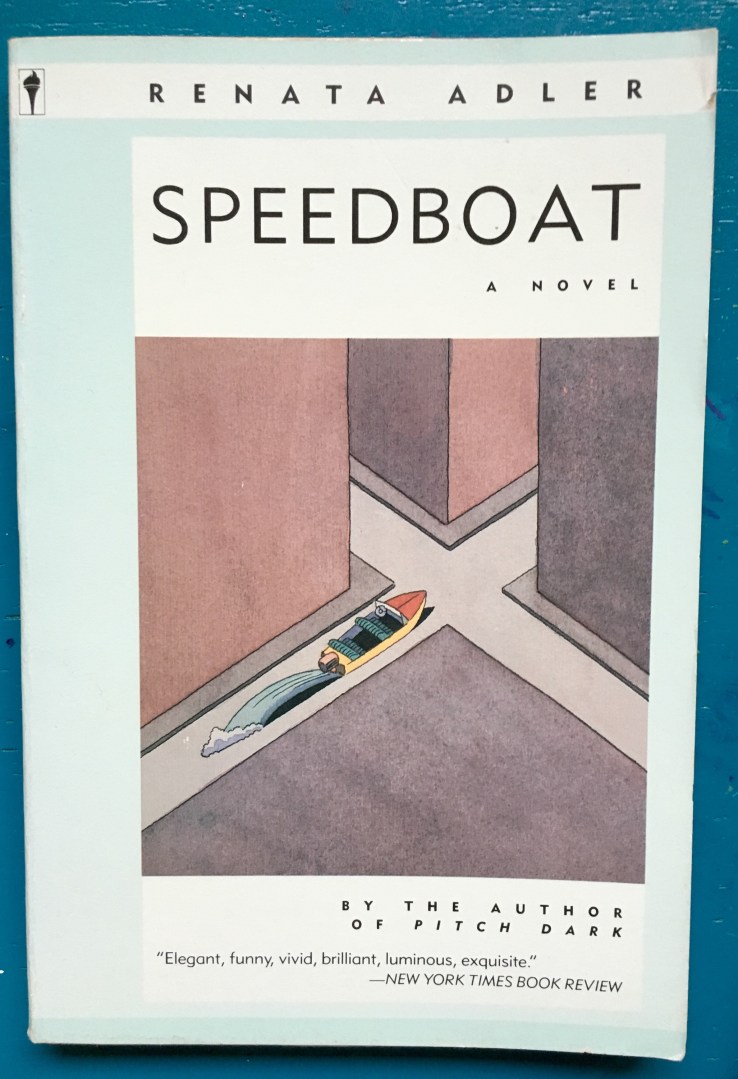
Speedboat by Renata Adler. 1988 trade paperback edition by Perennial Fiction Library (Harper & Row). No designer credited, but the cover illustration is by Steve Guarnaccia. A strange and funny (anti-)novel.

IMG_0953

The Uses of Literature by Italo Calvino (trans. Patrick Creagh). 1986 trade paperback by Harvest/HBJ. Design by Kaelin Chappell, with a cover illustration by Saul Steinberg. A book to never finish.


IMG_0951

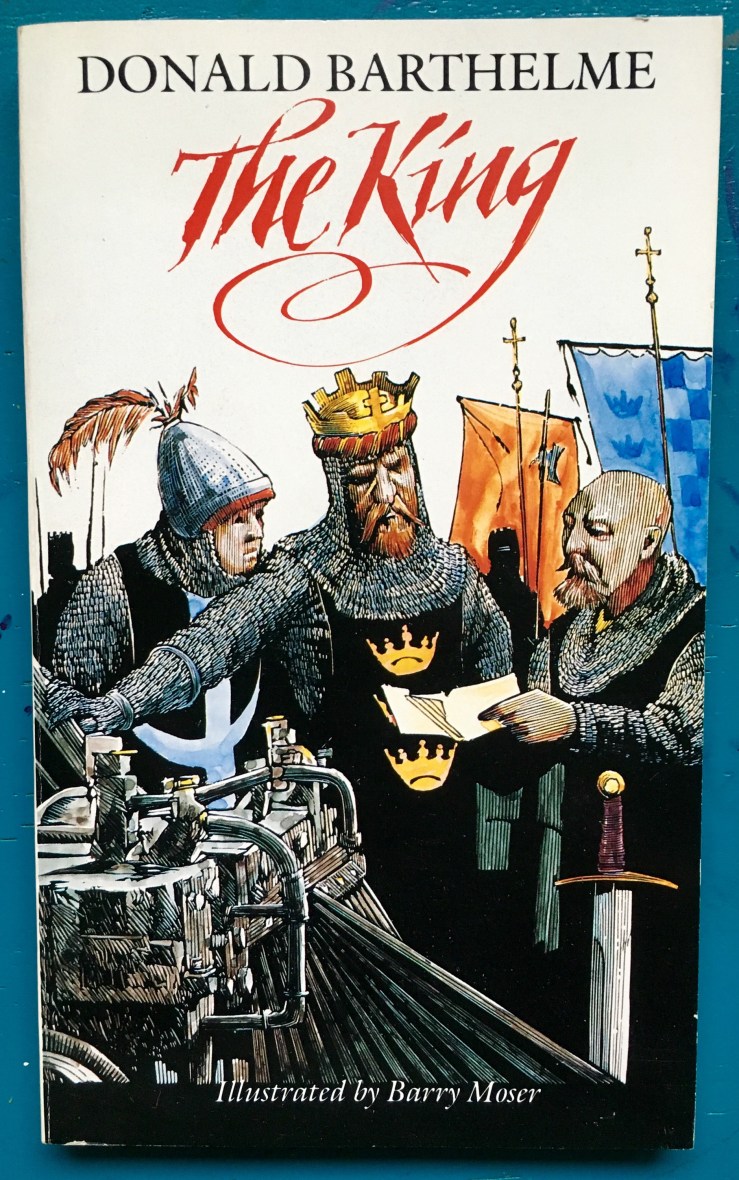
The King by Donald Barthelme. Features wood engravings by Barry Moser. 1990 trade paperback by Harper and Row. No designer credited, but surely Moser had a hand, no? This is the only Barthelme novel I haven’t read. Every time I pick it up I think, But then there will be no more. Fool. One can always reread.

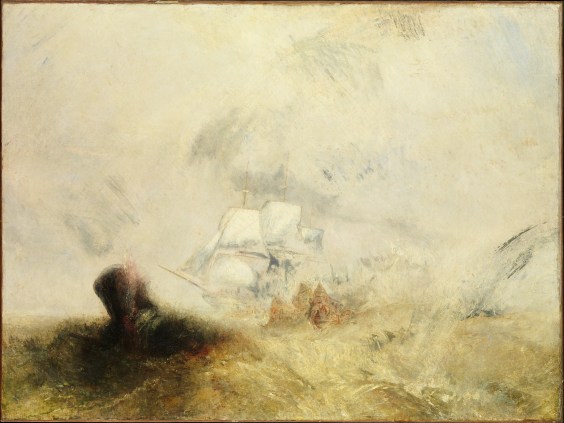
…it was here that Melville saw the work of JMW Turner

DP169567.jpg
Whalers, JMW Turner

It is clear from Melville’s journal, one of only two such surviving documents, that his mind was already playing with these ideas. Late at night, he “turned flukes” down Oxford Street as if he were being followed by a great whale, and thought he saw “blubber rooms” in the butcheries of the Fleet Market. And when he saw Queen Victoria riding past in a carriage, he joked that the young man sitting beside her was the Prince of Whales. London – which itself had only lately been a whaling port – was stirring up the ghosts of his past.

Perhaps most importantly, it was here that Melville saw the work of J M W Turner, a clear visual influence on his book-to-be. Turner had painted a series of whaling scenes for Elhanan Bicknell, whose British whaling company was based in the Elephant and Castle; parts of Moby-Dick would read like commentaries to those tempestuous, brutally poetic canvases, not least the painting that greets Ishmael at the Spouter-Inn, “a boggy, soggy, squitchy picture” of “a black mass . . . floating in a nameless yeast . . . an exasperated whale”. It is all the more intriguing to note how Melville’s Anglophilia was the yeast out of which this great American novel emerged – especially given that the book failed spectacularly in his homeland and it was left to British writers to recognise first its wilful, prophetic genius.

Read the rest of Philip Hoare’s essay “White Whale in the Big Smoke: How the Geography of London Inspired Moby-Dick” at the New Statesmen.

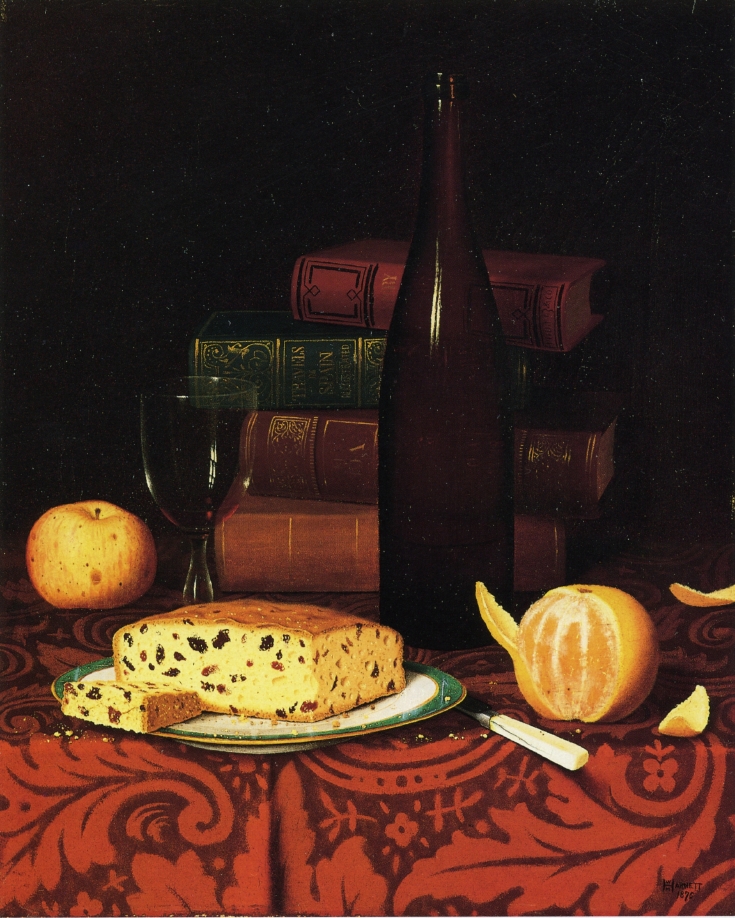
Still Life with Raisin Cake, Fruit and Wine — William Michael Harnett

still-life-with-raisin-cake-fruit-and-wine-1876

Bolaño Beyond

roberto-bolanoOn Avenida Juárez, across from the Alameda in Mexico City, sits an unassuming little bookstore, three steps below street level. It was here at the Librería del Sótano where Roberto Bolaño would buy novels or poetry books or, when he was short on cash (which was often), just pocket them. For centuries Latin American literature belonged not to those passionate, young biblioklepts like Bolaño but to affluent property owners who dabbled in writing the way they might take up equestrianism or falconry. Some time in the 1960s the roles reversed and the middle class became the seedbed of national literature. Bookstores, libraries, and the literary life prevailed in the cultural scene of Mexico City and Buenos Aires just as much as they did in Paris, New York, or London. This bibliophilia, this bibliomania, this passion for the literary life binds the world together in a global industry that sadly still remains separated by language barriers and a lack of curiosity.

Serious readers are omnivorous. They want to read everything great. The best translated fiction, emerging writers, overlooked classics, small-press finds, public intellectuals of the moment, mind-bending poetry—it all goes down the hatch. The problem, of course, is that no one can read everything. Selecting which books to read requires discernment, a degree of happenstance, and an iterative process that ideally sharpens the discernment itself with each volume digested.

Read the rest of Matt Bucher’s essay “Beyond Bolaño and Beyond” at Full Stop.

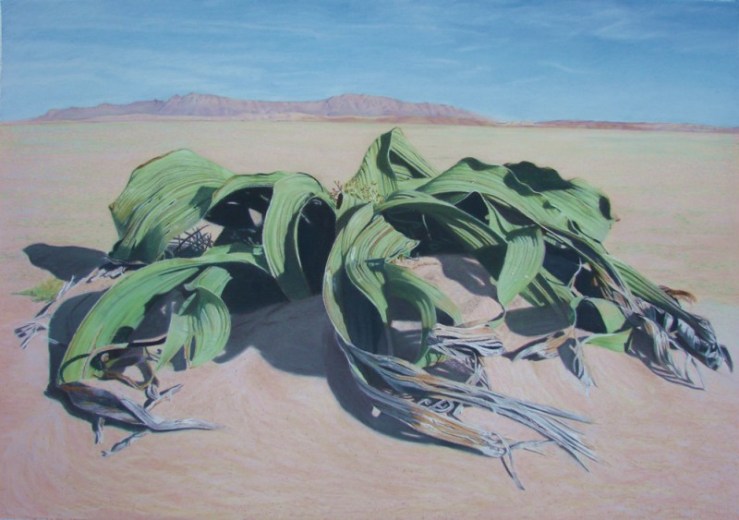
A daily diet of morning mist – from Bruce Chatwin’s The Songlines


Welwitchia-Louise Nienaber.jpg

It was nonsense, Dr Vrba continued, to study the emergence of man in a vacuum, without pondering the fate of other species over the same time-scale. The fact was that around 2.5 million, just as man took his spectacular ‘jump’, there was a ‘tremendous churning over of species’.

‘All hell’, she said, ‘broke loose among the antelopes.’

Everywhere in eastern Africa, the more sedentary browsers gave way to ‘brainier’ migratory grazers.  The basis for a sedentary existence was simply no longer there.

‘And sedentary species,’ she said, ‘like sedentary genes, are terribly successful for a while, but in the end they are self-destructive.’

In arid country, resources are never stable from one year to the next. A stray thunderstorm may make a temporary oasis of green, while only a few miles off the land remains parched and bare. To survive in drought, therefore, any species must adopt one of two stratagems: to allow for the worst and dig in; to open itself to the world and move.

Some desert seeds lie dormant for decades. Some desert rodents only stir from their burrows at night. The weltwitchia, a spectacular, strap-leaved plant of the Namib Desert, lives for thousands of years on its daily diet of morning mist. But migratory animals must move – or be ready to move.

Elizabeth Vrba said, at some point in the conversation, that antelopes are stimulated to migrate by lightning.

‘So’, I said, ‘are the Kalahari Bushmen. They also “follow” the lightning. For where the lightning has been, there will be water, greenery and game.’

From Bruce Chatwin’s novel/memoir/travelogue The Songlines. The image is Welwitschia by Louise Nienaber.

Three Books

IMG_0829-2

Usually, these Three Books posts come from my own library (with scans of the covers and not photos). Today’s post features books from my uncle’s library (my family stayed with my aunt and uncle for the Thanksgiving week and had a marvelous time—thanks for asking). Anyway, my uncle had a tremendous early influence on the books I read—he turned me on to Kurt Vonnegut and Hunter S. Thompson, for example.

Anyway, above:

The Garden of Eden by Ernest Hemingway. 1986 hardback by Collier. Ruth Kolbert is credited with design; the cover painting is Woman with a Basket by Juan Gris. I reviewed the novel here.IMG_0830-2

Slapstick by Kurt Vonnegut. 1976  first edition hardback by Delacorte. Design credited to Joel Schick.
IMG_0831-2

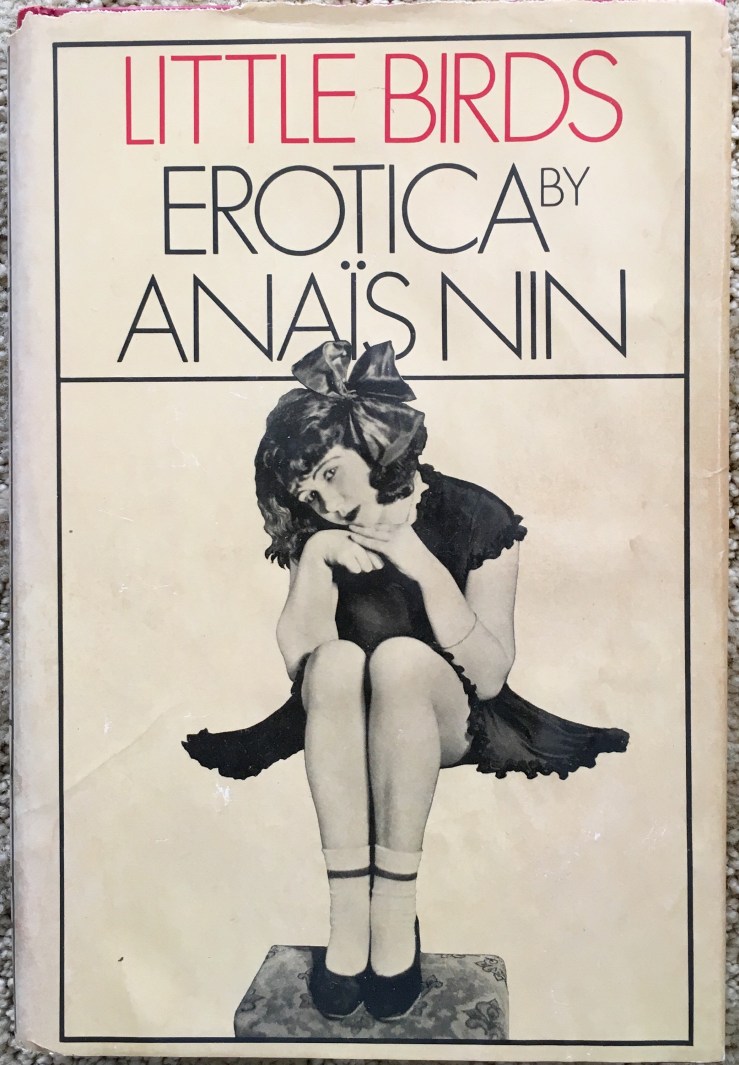
Little Birds by Anaïs Nin. 1979 hardback by Harcourt Brace Jovanovich. Jacket design by Milton Glaser; photo credited to Richard Merkin. I surreptitiously read Little Birds—this particular copy of Little Birds—over and over again one summer that I stayed at my aunt and uncle’s. I reread the first three tales in the volume again. Good times.

Riff on recent reading

I can’t seem to muster language lately, to make the words do what I want them to do.

I’ve read a number of excellent (or really good) books in the past few months and haven’t been able to write more than the first few sentences of an ostensible “review” before giving up…mostly because those first few sentences usually resemble the kind of boring moaning dithering whining I’m doing now.

There were the two red books by Anne Carson: Autobiography of Red and Red Doc>.  BLCKDGRD sent them to me back in September and I wolfed them down. Autobiography is the superior volume (which is saying something because Red Doc> is grand stuff too). What is it? What is Autobiography of Red? A novel? A poem? A history? An essay? Shall I get bogged down in description? No? Instead, let me be clear:

What I want to think/feel when I read is, How is this possible? How is this allowed?

–which is what I thought/felt reading Autobiography of Red.

From Autobiography of Red:
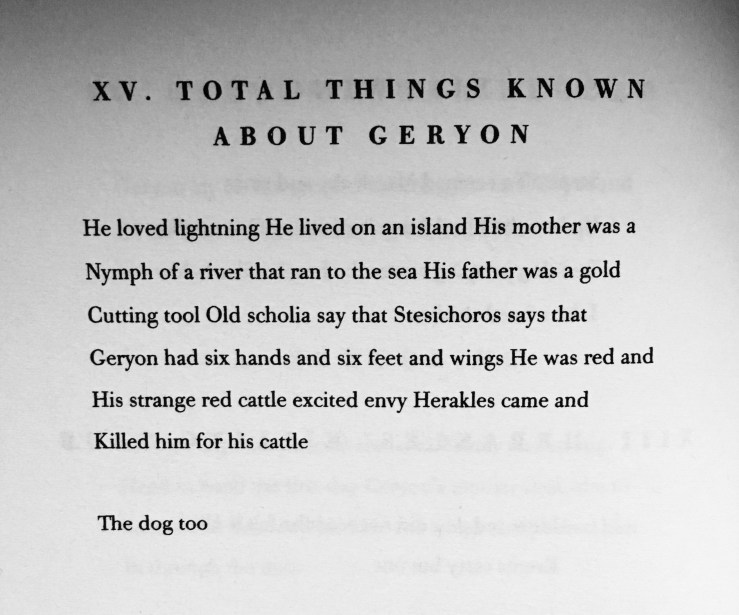

What else, what else?

Okay, so after the Carson I did manage a review Kazuo Ishiguro’s fantasy novel The Buried Giant—why did a review come out so much easier than anything on Carson, or, say, The Free-Lance Pall Bearers by Ishmael Reed (which I read after the Ishiguro)? Ishiguro’s book was familiar territory, fairly easy to describe—the Carson novel-poems and Reed’s picaresque performance are wholly different animals than the conventional novel.

The Free-Lance Pall Bearers by Ishmael Reed is, I hate to say, dazzling. I know what a lazy term that is, but the novella is just that—it dazzles. It zips. It zings and zounds and skips and scatters, and just when you think you have a handle on its allegorical outlines, it sticks out its tongue and jeers at you. The Free-Lance Pall Bearers is a mirthful and merciless satire on the USA written in a howling vernacular and set in an outhouse. It’s abject, picaresque, volatile, hysterical (in several of the senses of that word). I will relieve myself from summarizing the plot and instead offer this image of its perfect epigraphs:


Okay and so then I read Joanna Walsh’s collection Vertigo. The stories here hum together, evoking consciousness—consciousness’s anxieties, desires, its imaginative consolations. It deserves a full proper review (or just take my word and buy it from The Dorothy Project), but in the meantime, a wonderful passage from “Half the World Over”:
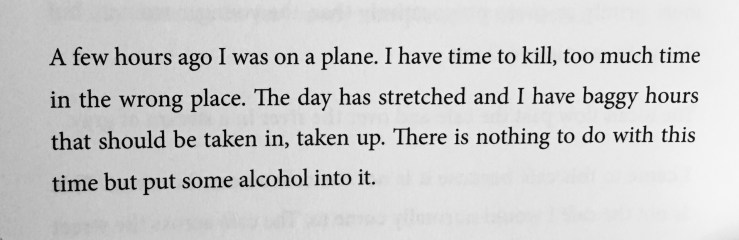

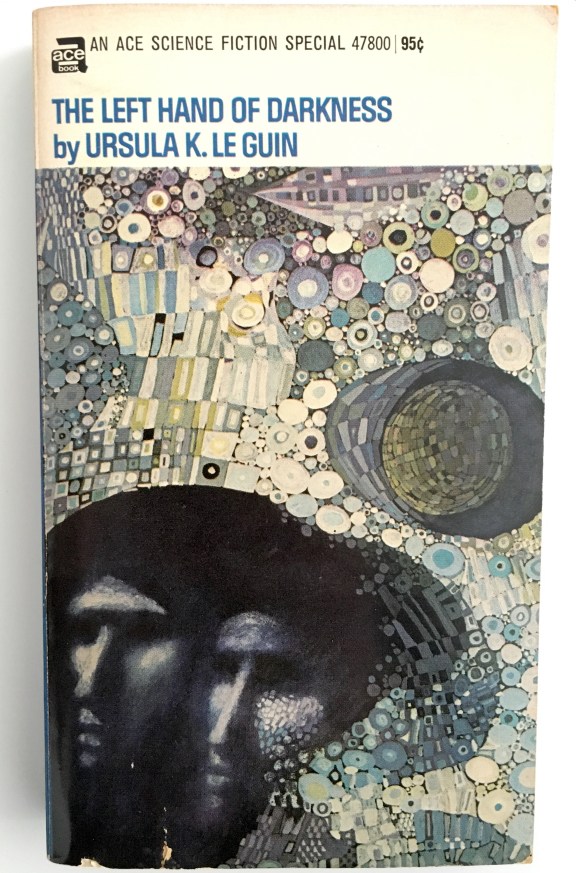
I also read two more by Le Guin: Rocannon’s World (I hope to have an exchange on it with the novelist Adam Novy posted some time in the not-too-distant future), The Dispossessed, which I’ve read three times.

Also: Paul Kirchner’s The Bus 2, which, again, full review in the not-so-far-off-future. But until then, a sample:

04

Li Ang’s The Lost Garden (Book acquired, 11.20.2015)

IMG_0669

Li Ang’s novel The Lost Garden is new in English translation by Sylvia Li-chun Lin with Howard Goldblatt. Publisher Columbia University Press’s blurb:

In this eloquent and atmospheric novel, Li Ang further cements her reputation as one of our most sophisticated contemporary Chinese-language writers. The Lost Garden moves along two parallel lines. In one, we relive the family saga of Zhu Yinghong, whose father, Zhu Zuyan, was a gentry intellectual imprisoned for dissent in the early days of Chiang Kai-shek’s rule. After his release, Zhu Zuyan literally walled himself in his Lotus Garden, which he rebuilt according to his own desires.

Forever under suspicion, Zhu Zuyan indulged as much as he could in circumscribed pleasures, though they drained the family fortune. Eventually everything belonging to the household had to be sold, including the Lotus Garden. The second storyline picks up in modern-day Taipei as Zhu Yinghong meets Lin Xigeng, a real estate tycoon and playboy. Their cat-and-mouse courtship builds against the extravagant banquets and decadent entertainments of Taipei’s wealthy businessmen. Though the two ultimately marry, their high-styled romance dulls over time, forcing them on a quest to rediscover enchantment in the Lotus Garden. An expansive narrative rich with intimate detail, The Lost Garden is a moving portrait of the losses incurred as we struggle to hold on to our passions.

A planet spoiled by the human species (Ursula K. Le Guin)

My world, my Earth, is a ruin. A planet spoiled by the human species. We multiplied and gobbled and fought until there was nothing left, and then we died. We controlled neither appetite nor violence; we did not adapt. We destroyed ourselves. But we destroyed the world first. There are no forests left on my Earth. The air is grey, the sky is grey, it is always hot. It is habitable, it is still habitable, but not as this world is. This is a living world, a harmony. Mine is a discord. You Odonians chose a desert; we Terrans made a desert. . . . We survive there as you do. People are tough! There are nearly a half billion of us now. Once there were nine billion. You can see the old cities still everywhere. The bones and bricks go to dust, but the little pieces of plastic never do—they never adapt either. We failed as a species, as a social species. We are here now, dealing as equals with other human societies on other worlds, only because of the charity of the Hainish. They came; they brought us help. They built ships and gave them to us, so we could leave our ruined world. They treat us gently, charitably, as the strong man treats the sick one. They are a very strange people, the Hainish; older than any of us; infinitely generous. They are altruists. They are moved by a guilt we don’t even understand, despite all our crimes. They are moved in all they do, I think, by the past, their endless past. Well, we had saved what could be saved, and made a kind of life in the ruins, on Terra, in the only way it could be done: by total centralization. Total control over the use of every acre of land, every scrap of metal, every ounce of fuel. Total rationing, birth control, euthanasia, universal conscription into the labor force. The absolute regimentation of each life toward the goal of racial survival. We had achieved that much, when the Hainish came. They brought us . . . a little more hope. Not very much. We have outlived it. . . . We can only look at this splendid world, this vital society, this Urras, this Paradise, from the outside. We are capable only of admiring it, and maybe envying it a little. Not very much.

From Ursula K. Le Guin’s 1974 novel The Dispossessed.

Separating Fighting Swans — Stanley Spencer

Even pain counts (Ursula K. Le Guin)

Fulfillment, Shevek thought, is a function of time. The search for pleasure is circular, repetitive, atemporal. The variety seeking of the spectator, the thrill hunter, the sexually promiscuous, always ends in the same place. It has an end. It comes to the end and has to start over. It is not a journey and return, but a closed cycle, a locked room, a cell.Outside the locked room is the landscape of time, in which the spirit may, with luck and courage, construct the fragile, makeshift, improbable roads and cities of fidelity: a landscape inhabitable by human beings.

It is not until an act occurs within the landscape of the past and the future that it is a human act. Loyalty, which asserts the continuity of past and future, binding time into a whole, is the root of human strength; there is no good to be done without it.

So, looking back on the last four years, Shevek saw them not as wasted, but as part of the edifice that he and Takver were building with their lives. The thing about working with time, instead of against it, he thought, is that it is not wasted. Even pain counts.

From Ursula K. Le Guin’s 1974 novel The Dispossessed.

Three Books

lotr1

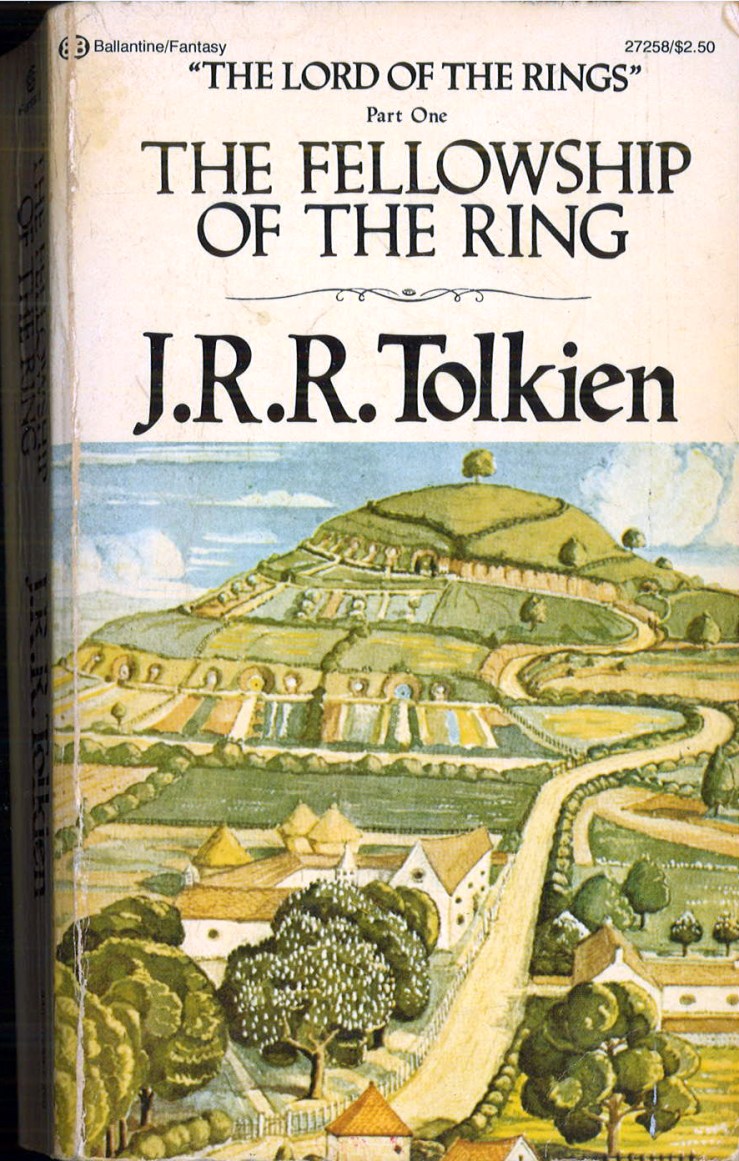
The Fellowship of the Ring by J.R.R. Tolkien.Sixty-second printing of a mass market paperback Ballantine Books edition (1977). No designer is credited, but the cover painting, titled, The Hills: Hobbiton-across-the-Water, is by Tolkien. All three books were a gift from my aunt.

lotr2

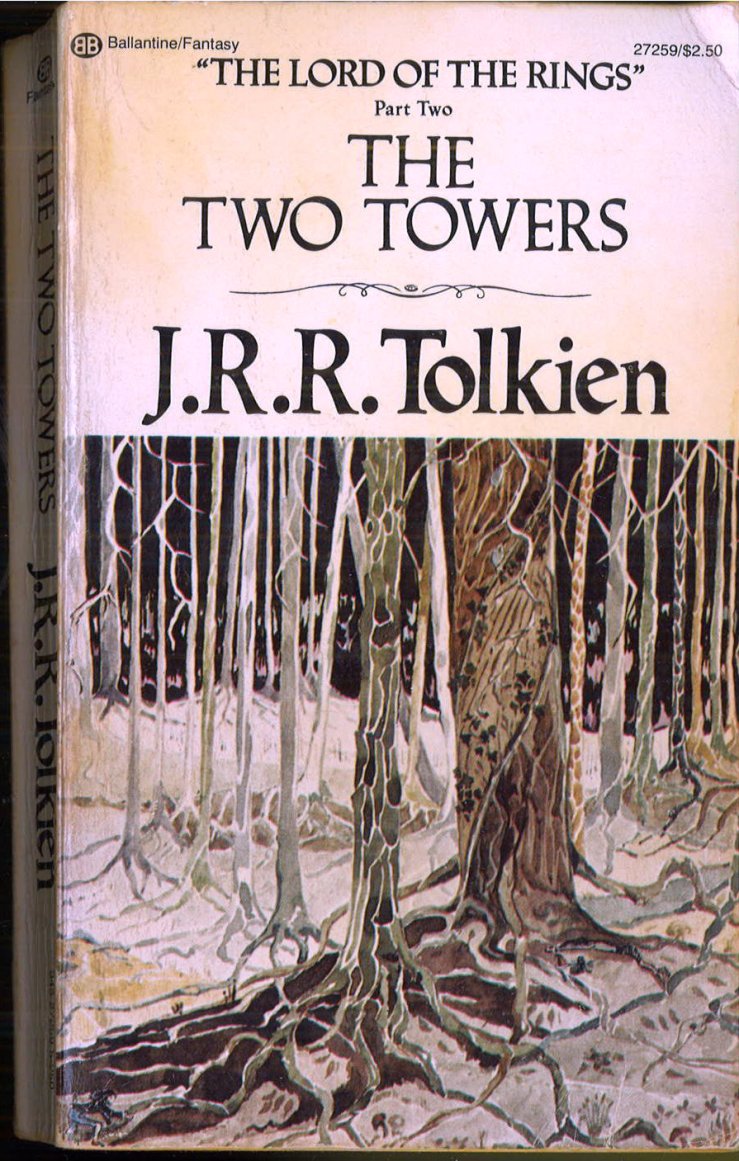
The Two Towers by J.R.R. Tolkien.Sixtieth printing of a mass market paperback Ballantine Books edition (1978). No designer is credited; cover painting by Tolkien.

lotr3

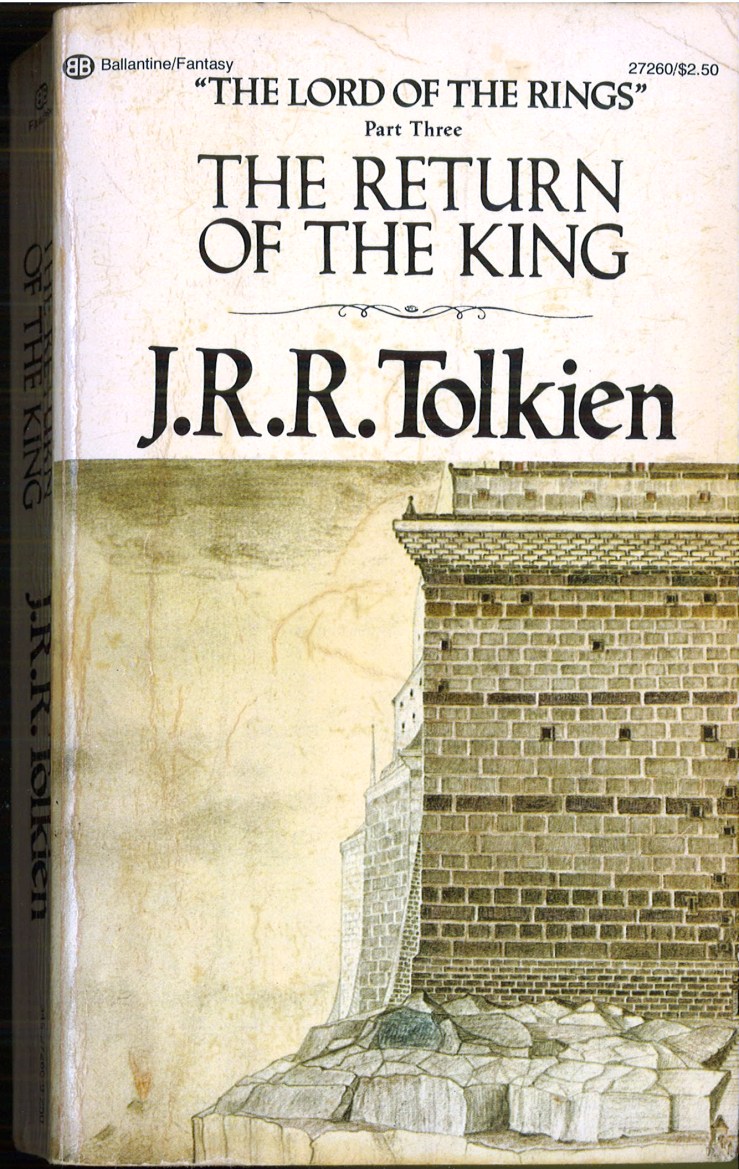
The Return of the King by J.R.R. Tolkien. Fifty-sixth printing of a mass market paperback Ballantine Books edition (1977). No designer is credited; cover painting by Tolkien.

Reading Girl with Cat — Leonor Fini

la-fille-au-chat.jpg

Le Guin, Stapledon, and the Brothers Strugatski (Books acquired, 11.13.2015)

IMG_0592

I like to think I know my way around the labyrinthine used bookstore I frequently frequent, but I somehow missed the “Ls” of the Sci-Fi/Fantasy section and wound up in Misc S. I was headed to the “Ls” to pick up another Ursula K. Le Guin novel, after having finished Rocannon’s Worlthis afternoon. (I was looking not-so-specifically for The Word for World Is Forest, which my bookshop somehow didn’t have). Anyway, my eye was drawn to the Penguin edition of Olaf Stapledon’s Star Maker (above), which was one of those yeah, I know, I need to read it books. I also saw another one by the Strugatski bros, which I picked up, even though I still haven’t read Hard to Be a God.
IMG_0593

I couldn’t resist this hardback edition of Three Hainish Novels, an Ursula K. Le Guin omnibus, which collects Rocannon’s World with Planet of Exile and City of Illusion. I haven’t read the other two, but I’ll get to them after a rereading of The Dispossessed. IMG_0595

Selections from One-Star Amazon Reviews of Virginia Woolf’s Mrs. Dalloway

[Editorial note: The following citations come from one-star Amazon reviews Virginia Woolf’s novel Mrs. DallowayI’ve preserved the reviewers’ original punctuation and spelling. More one-star Amazon reviews.].


I had been warned about Woolf

written, I believe, to impress rather than to relate.

I don’t appreciate her writing and keep coming back for more

I may not be giving it a fair review since I only made it to page 65

pages and pages of surreal metaphors that go on for 10 paragraphs

Woolf had a huge obsession with semi-colons

The book just does not make any sense

I really liked the movie “the Hours”

nonsensical semi-flashbacks

Groundbreaking prose?

I tried, I really did

describing nothing

Written by a lesbian

Kind of like F. Scott Fitzgerald’s works

DO read “The Hours”, you will be impressed

I kept losing track of which character was musing about nothing

I suppose Woolf is considered a genius since she was apparently a cavalier writer of her generation

Let us listen to an old farty woman stream her consciousness to us to hear, pointless thoughts that go nowhere

I’m grateful that contemporary writers can at least string together 2 sentences that follow one another in a logical sequence

Lets burn every sentence she ever penned to end all the unneccesary suffering that curious readers have to go through when they first pick up “Mrs. Dalloway.”

My suggestion: just watch The Hours – you’ll get all the beauty and none of the confusion

the person responsible, Virginia Wolf, has been dead for quite some time now

i have no interest in reading about that lifestyle

am stuck in her growling semicolons

slower than a tortoise

ramblings of a lunatic

As bad as Faulkner

So much language

dreadfully boring

run-on sentences

“literary” drivel

terribly written

so many words

and never getting to a plot

Stream of conscience you say?

I normally enjoy stream of consciousness

The narrative reads like the inner thoughts of a sugar crazed autistic kid with ADD in the middle of a carnival

everyone i know who likes this book only does so because he or she was told by some professor that it’s supposed to be good and can provide no evidence to confirm it

This book certainly shows the depravity of man and a self-centered life and the meaningless found amongst those who think of none but themselves.

The absence of spacing to differentiate between each character’s thought process makes for unnecessary confusion

I really liked the idea of the story taking place over the course of one day

THIS BOOK IS WORSE THAN AIDS!

meandering and repetetive

will suffice as kindling

The party! The party!

VW was mentally-ill

“Dense”

put me off

definitley not a fun read

pretty gross hair and stuff on it/ in it

I had had to read it, or was supposed to

haven’t been able to get past the first chapter

lovely idea, virginia and i applaud you for your creativity

I felt like I was reading some writing student’s homework assignment

The Hours is better, despite its inspiration

this story line is too depressing for me

Descriptions were beaten to death

Not one thing uplifting

I am an avid reader!

the book failed

hyphens