
Tag: Books
Robinson Crusoe and His Man Friday — John Charles Dollman

The Readers — Alberto Magnelli

Riff on Not Writing
1. Let’s start with this: This is for me, this is not for you.
2. The above statement is not a very inviting invitation to the audience, is it? Sorry. Look. I have the Writer’s Block. The blockage. The being-stuckness. Etc.
3. Writer’s block, for me anyway, is not the inability to write. It’s more like some kind of inertia, some kind of anxiety, some little whisper of doom, hopelessness about the futility of shaping feelings into ideas and ideas into words. (That last phrase is, I believe, a paraphrase of Robert Frost’s definition of poetry).
4. Anyway, sometimes it’s best just to write—and write with the intention to make the writing public, to publish it (even on a blog!)—to put something (the publishing, that is) at stake.
5. (And so I’ve done this before).
6. I’ve read or audited nearly a dozen books this year that I’ve failed to write about on this site. Ostensibly, at some point, writing about books was like, the mission of Biblioklept, which maybe that mission has been swallowed up by some other mission, some non-mission, some other goal or telos or whatever.
7. But you see there are some books I’ve read or audited that I really, really want to write about! (Sorry for this dithering but hey wait why am I apologizing I already said that this is for me this is not for you did I not?).
8. These books are:
Enormous Changes at the Last Minute by Grace Paley
Leaving the Sea by Ben Marcus
Every Day Is for the Thief by Teju Cole
Concrete by Thomas Bernhard
Middle C by William H. Gass
Save Me the Waltz by Zelda Fitzgerald
Goings in Thirteen Sittings by Gordon Lish
Not quite half a dozen books of poetry by Tom Clark
The majority of Donald Barthelme.
9. (I am also reading half a dozen books right now, even though I made a vow years ago not to do that).
10. A common theme to some of the books listed in point 8: The difficulty of words to mean, the toxic power of language, the breakdown of communication.
Interior with a Reading Lady — Vilhelm Hammershoi

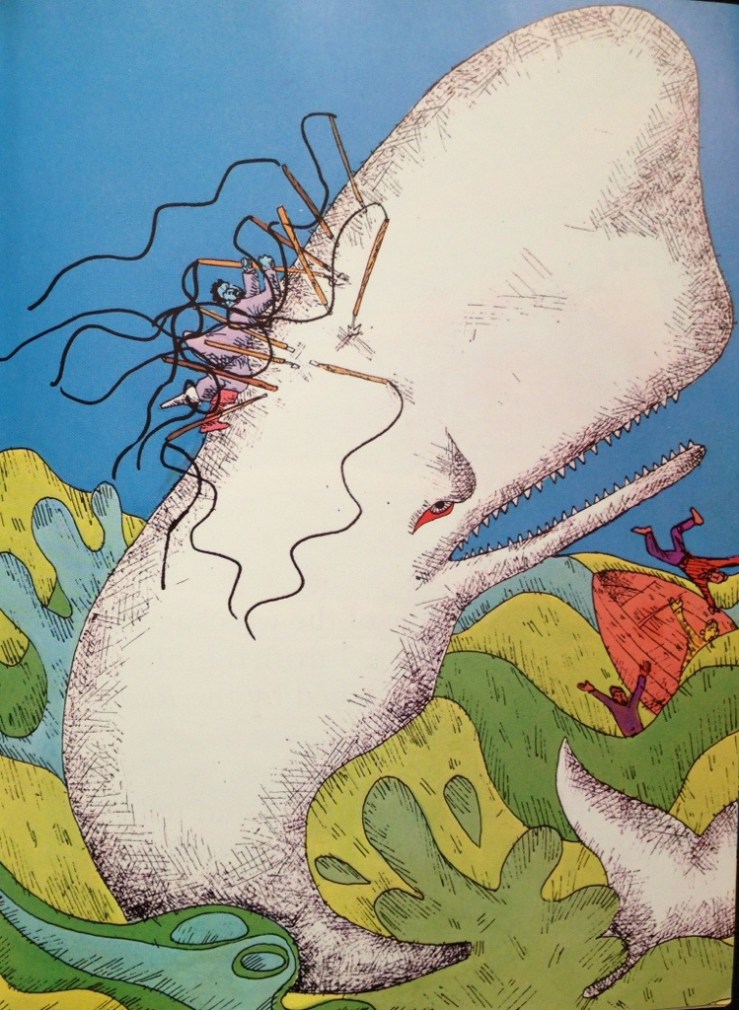
Another Moby-Dick (Book Acquired, 3.29.2014)
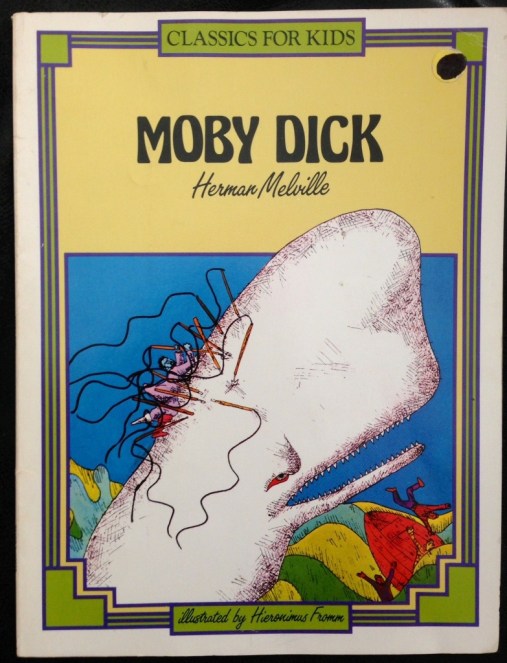
At the bookstore today with my youngest child, I couldn’t resist yet another copy of Moby-Dick, despite the many several editions already in our home.
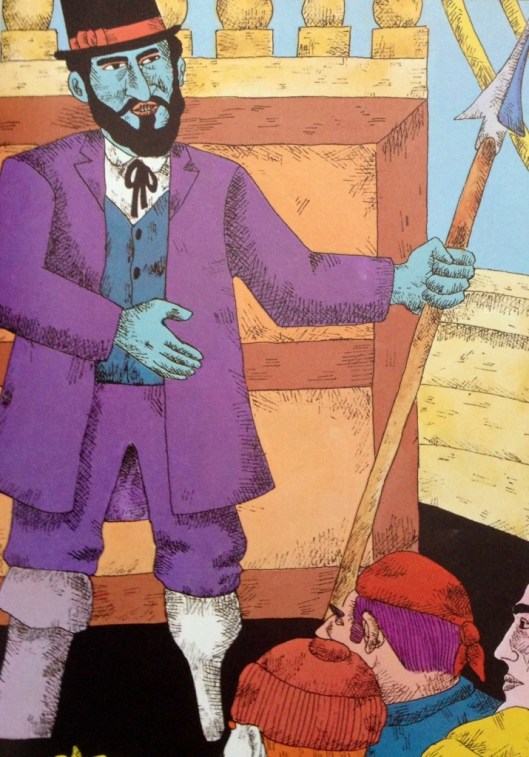
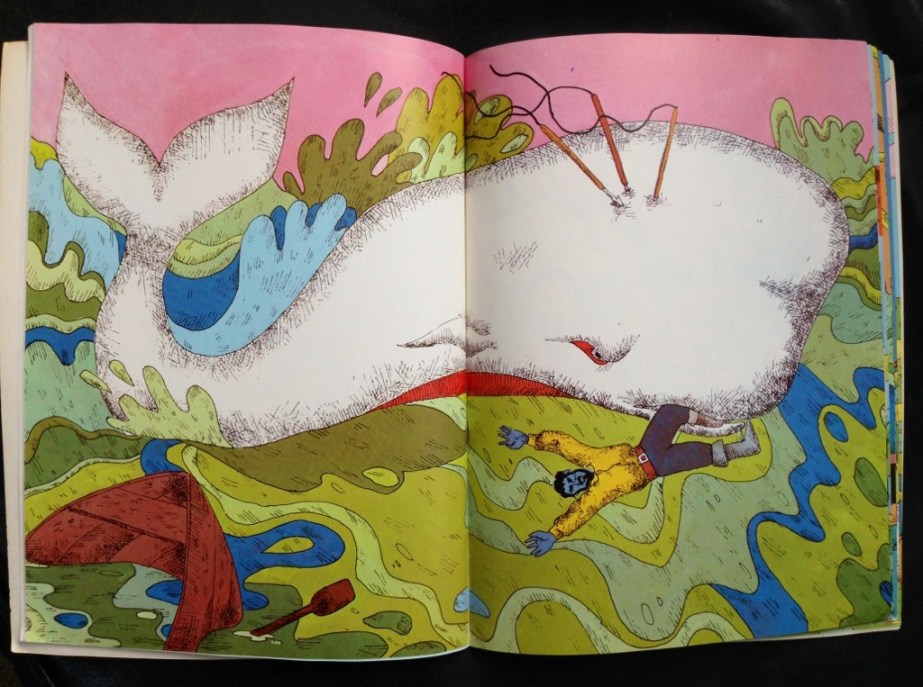
Just love Hieronimus Fromm’s vivid illustrations here.
Theory (Pessoa)

Gottfried Keller — Valerio Adami

Will Oldham on Bonnie “Prince” Billy (Book Acquired 3.01.2014)
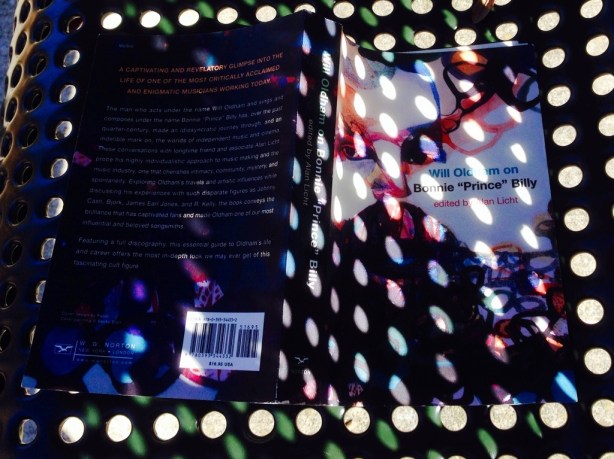
Earlier this month, my good friend sent me Will Oldham on Bonnie “Prince” Billy, a book-length interview between Oldham and musician Alan Licht. In the book, Oldham parses his identity from Bonnie “Prince” Billy, the character he’s been performing (in different versions) for over a decade now. The book is fascinating stuff and strangely personal/weird for me—reading his oral history is bizarre, I guess, because I remember it all happening. Like, I remember buying the 7″s he talks about making; I remember puzzling over the early Palace LPs, trying to glean meaning from the covers, the personnel. Palace—Oldham—B”P”B—soundtracked so much of my high school and college days that I inevitably had a falling out with him/them/it—or maybe that’s not the right word…what is the term for the emotional intensity we feel toward certain albums, certain records imprinted in the back of our souls? (I used a line from “For the Mekons et al” for my Senior yearbook quote but the fucking yearbook staff fucked it up. But fuck a yearbook anyway). Ease Down the Road was the last Oldham record that I let get to me; intellectually, I realize that the stuff he did after is somehow superior—tighter, richer even—but it couldn’t sink in, I wouldn’t let it sink in, too many too-good memories already there, I don’t know. I saw him on the Superwolf tour; he deepthroated the mic during an R. Kelly cover, and after the show my wife remarked that he would never be welcome as a guest in our home. I thought that seemed harsh. I tried—years later, reading this book—to explain that it was just a character. No dice.
Thanks Nick.
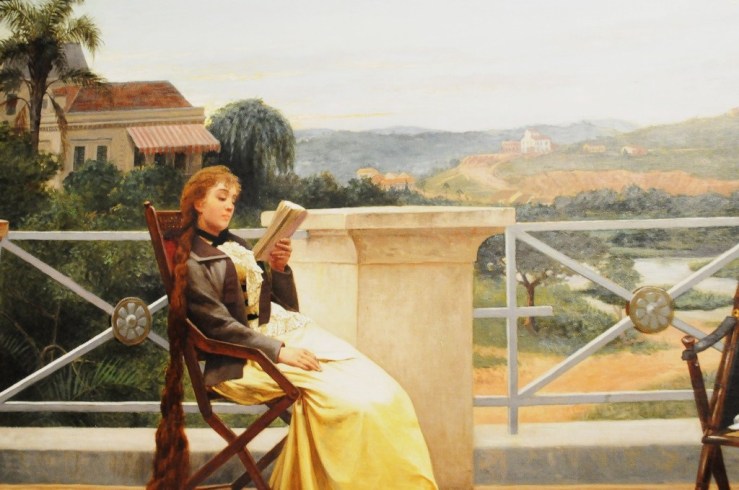
Reading — Jose Ferraz de Almeida Junior
A Hermit Praying — Gerrit Dou

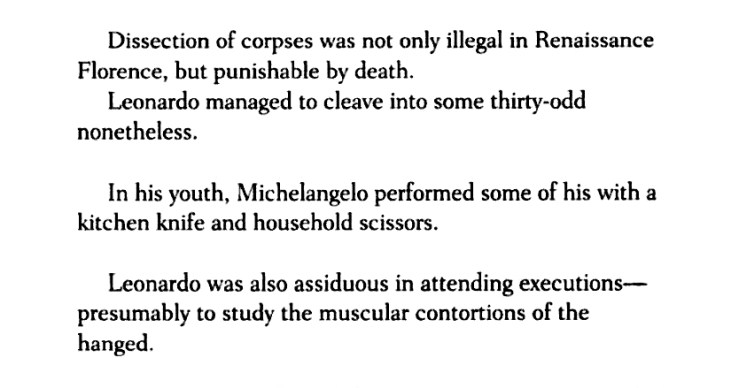
Dissection (David Markson)
Homework — Carl Larsson

Man Sitting on a Log — Karoly Ferenczy

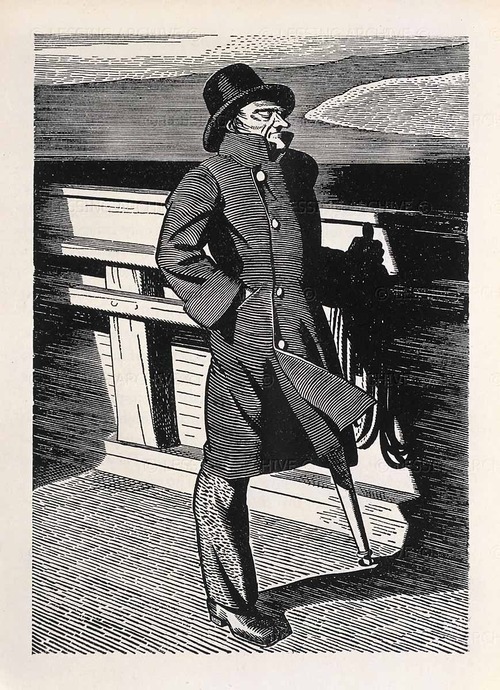
Ahab — Rockwell Kent
Teju Cole’s Every Day Is for the Thief (Book Acquired, 3.17.2014)

Teju Cole’s Open City is one of my favorite novels of recent years, so I was psyched when Every Day Is for the Thief (which is kinda sorta his latest—it was published nearly a decade ago in Nigeria) showed up in the mail earlier this week. I read the first fifty pages yesterday (about a third of this short book). Thief reads like a memoir-essay, its reportorial style engaged and critical but at times obliquely distant. Our unnamed narrator (surely an iteration of Cole himself) returns “home” to Lagos after fifteen years in New York. Interspersed are Cole’s black and white photographs (echoes of Sebald). Full review to come; for now, publisher Random Houses’ blurb:
A young Nigerian living in New York City goes home to Lagos for a short visit, finding a city both familiar and strange. In a city dense with story, the unnamed narrator moves through a mosaic of life, hoping to find inspiration for his own. He witnesses the “yahoo yahoo” diligently perpetrating email frauds from an Internet café, longs after a mysterious woman reading on a public bus who disembarks and disappears into a bookless crowd, and recalls the tragic fate of an eleven-year-old boy accused of stealing at a local market.
Along the way, the man reconnects with old friends, a former girlfriend, and extended family, taps into the energies of Lagos life—creative, malevolent, ambiguous—and slowly begins to reconcile the profound changes that have taken place in his country and the truth about himself.
In spare, precise prose that sees humanity everywhere, interwoven with original photos by the author, Every Day Is for the Thief—originally published in Nigeria in 2007—is a wholly original work of fiction. This revised and updated edition is the first version of this unique book to be made available outside Africa. You’ve never read a book like Every Day Is for the Thief because no one writes like Teju Cole.
Children in a Class — Nikolay Bogdanov-Belsky

 Biblioklept