Clifford Mead’s Thomas Pynchon: A Bibliography was published in 1989 by Dalkey. As far as I can tell, the book is out of print and has not been updated.
I checked out Thomas Pynchon: A Bibliography via interlibrary loan back in early March, 2020. My librarian borrowed it for me from the good librarians at the University of South Florida. I can’t really recall why I wanted it—probably not anything specific. I’ve used ILL to get a number of weird or rare items in the past, including a pristine copy of Samuel Chamberlain’s My Confessions (a major source for Cormac McCarthy’s Blood Meridian), and a handful of early stories by William Gaddis (I did not need to get my hands on this juvenalia).
I probably got the bibliography on Tuesday, March 10, 2020. I think that’s the date because I tweeted this photo from its appendix:
If I recall correctly, I had taken that Monday (March 9th) and the preceding Friday off work. My family and I went to Georgia’s coastal Golden Isles and stayed on a houseboat for a few nights. It was the end of my kids’ spring break, and I would have a week of work before my spring break started.
This—the family vacation week—was the first week of March and I was beginning to get pretty paranoid about COVID-19. But I’d been paranoid and tired and really just exhausted for four years straight by now.
I took a break from Mervyn Peake’s Gormenghast trilogy to read Charles Wright’s novel The Wig that weekend. I read it on a houseboat with a corny name on Jekyll Island. We rode bikes around the island and ate sea food, fried food. It was beautiful.
I came back to work, worried but happy to get the Pynchon bibliography, even if it only went to ’89, thus leaving out, like, the last three decades. That must have been, like I said, Tuesday, March 10th.
On Wednesday, March 11th, the NBA canceled their season and I knew what was up.
My department chair decorated our office suite with glittery shamrocks for the upcoming St. Patrick’s Day.
I filled a box with the books and binders and gear I figured I needed to teach from home after Spring Break. A colleague made a joke, something like a, Hey did you get fired with that box in your hands? joke.
(Maybe I’ll see him this fall?)
(Those St. Patrick’s Day decorations are still up, by the way, and, once again, out of season. Although I think they fit the mode of the day, the zeitgeist, the long tacky sparkling sad celebratory day.)
And you more or less know the rest, having lived it in your own first-person perspective.
For most of the year that passed I kept Thomas Pynchon: A Bilbiography with my textbooks. I reached out to my librarian around the time it was due, 10 May 2020 (my wife and I were supposed to be in Chicago then; we weren’t). My librarian said to keep the book in good condition.
In the meantime, I picked up some of the books that Thomas Pynchon had blurbed, often preferring his blurbs to the novels he blurbed.
I read some of his juvenalia again, like “Ye Legend of Sir Stupid and the Purple Knight”:
I looked online for bootleg editions of the material that showed up in Slow Learner. I read more of Slow Learner, leaving two tales…just to leave them, just to not have exhausted a…final supply?
(Someone wrote in to tell me that it was the “most shite” thing that I’ve ever done on the blog and to never do it again. Thanks guy! That felt good.)
And also,
I worried, fretted, washed, ranted, cried even at times, but
I never missed a meal and my family had a regular four square game going and Florida actually gave us real Spring weather, crisp and cool and sunny, and the trees bloomed and budded, and I figure in some ways I was as happy as I’ve ever been.
And the year passed, with its plague, its violent racism, its protests, all swelling into its ugly electioneering.
And then this Spring 2021 semester I went back in, setting my feet on campus for Tues and Thurs classes and the world seemed a bit more normal. We got a normal, boring president; a lot of us started to get the vaccine. Things felt…better? Like other folks, I looked forward to hanging out with all the folks I’d seen so little of in the last year.
I got my first vax jab a few weeks ago; I get my second this Friday. I look forward to hanging with “The Boys” (and “the girls,” and etc.)
At some point in the last year I shelved Thomas Pynchon: A Bibliography with the rest of the Pynchon books in the house. I just assumed that it was mine, that it was an artifact of the plague year. My covid acquired.
But last week my librarian let me know, Hey, USF wants that Pynchon book back. I held on to it a second week, revisiting it in parts, but mostly to write this here blog post, mostly to find another way to say, Hey, what a year, eh? I’ll drop it off with my librarian tomorrow, but I think it’ll make me feel a bit sad.
Margaret Lucas Cavendish, Duchess of Newcastle-upon-Tyne was born to a wealthy aristocratic family who took the royalist side in the English Civil War. She spent her teen years attending the exiled Queen Henrietta Maria as a handmaiden. She soon married William Cavendish, the Marquess of Newcastle (and a steadfast royalist), and lived with him in exile in Antwerp. During this time, she began writing and publishing strange volumes on various topics—science, fashion, language, wit, and the act of writing itself. Her eccentric writing mirrored her eccentric habits. Simultaneously shy and fame-hungry, often depressed or elated and manic, Cavendish earned and maintained a notorious reputation over her lifetime.
Danielle Dutton somehow condenses Cavendish’s starbright life into a slim 160 pages in her novel Margaret the First. This imaginative near-biography borrows from Cavendish’s own writings as well as an essay on Cavendish by Virginia Woolf. Woolf thought Cavendish a cautionary tale. In A Room of One’s Own, Woolf describes her as a brilliant but uneducated woman who “frittered her time away scribbling nonsense and plunging ever deeper into obscurity and folly.” Dutton captures that reputation early in the novel: “Mad Madge,” goes the cry among a crowd of onlookers at the novel’s outset (the crowd includes the diarist Samuel Pepys). However, Dutton is far more sympathetic toward Margaret, conjuring for us a natural composer. Consider these lines from Margaret the First’s opening paragraph:
She made the world her book, took a piece of coal and marked a blank white wall. Later, she made sixteen smaller books: untitled, sewn with yarn. Her girlhood heroes were Shakespeare, Ovid, Caesar. She wrote them in beside thinking-rocks and humming-shoes and her favorite sister, Catherine, who starred in all but five. Snow fell fast as she sat by the nursery fire; ink to paper, then she sewed. The last book told a tale of hasty gloom, teeming with many shades of green: emerald, viridian, a mossy black. In it we meet a miniature princess who lives in a seashell castle and sleeps in sheets woven from the eyelids of doves.
Dutton roped me in with “tale of hasty gloom,” but the images in that last sentence—sheets woven from the eyelids of doves!—propelled my reading on.
We see here Cavendish as a creator of both books and her own world. Dutton’s narrator notes Cavendish—or shall I use Margaret here?—Dutton’s narrator notes that our protagonist not only writes her books, but sews them. The image of creation as fashion—as literally fashioning objects and ideas—repeats throughout Margaret the First. Margaret tells her patient older husband William that “dressing is the poetry of women.” She finds near-epiphanic inspiration in a masquerade costume worn by Christina, Queen of Sweden, who dresses as an Amazon warrior, baring her breasts to the entire court. Later she wonders, “why must grammar be like a prison for the mind? Might not language be as a closet full of gowns? Of a generally similar cut, with a hole for the head and neck to pass, but filled with difference and a variety of trimmings so that we don’t grow bored?”
Critics of Cavendish attacked her spelling and grammar; Woolf declared her “crack-brained and bird-witted.” Dutton’s portrait though gives us something closer to Emily Dickinson or William Blake. Margaret’s an eccentric who turns her eccentricity into a strange new art that resisted grammar that would be “a prison for the mind.”
And yet Dutton is never too-beholden to her subject. We are never told that Margaret is a genius; rather, Dutton attunes us to Margaret’s own singular perceptions—we feel flashes of genius, but also feel Margaret’s frustrated inability to harness that genius into a form that seventeenth-century England can recognize. She is always at the margin of the circle, too eccentric to orbit neatly with the intellectual luminaries whom she encounters.
We also feel the tinges of Margaret’s melancholic mental instability. Alone in a carriage, she retreats into her mind’s eye:
I found myself in an unknown universe, whirling far into space. African servants, dogs in hats, platonic ideals, sparkling conversation, and ivy-coated quadrangles with womanizing captains, dueling earls, actors. I met Father Cyprien de Gamache, her majesty’s wily confessor; William, a poet, who claimed to be Shakespeare’s son; and a giggling dwarf called Jeffry, who’d been presented to the queen in a pie. I met the ladies-in-waiting, too, who hardly looked my way, busy as they were, bickering over who went where and when, who wore what and when, who fetched what and why, who said what and to whom, and who gave her the right to say that.
Tellingly, the cluttered images in Margaret’s fantasy dissolve into the too-banal reality of the grammar of manners: who can wear what, who can say what, and so on. To cop a phrase from Blake, those “mind-forg’d manacles” are hard to break. Indeed, mind-forg’d manacles tend to break those who resist them. “Much Madness is divinest Sense,” Emily Dickinson noted, but also pointed out that those who resist the grammar of manners are “straightway dangerous -/ And handled with a Chain.”
Margaret avoids the chain, and if the world is a bit too much for her to bear at time, she fashions it into Something Else. This is the joy of Margaret the First. Dutton could have crafted the tale as a tragedy, but instead she gives us something else—something rich, generative, imagistic, occasionally unsettling, and ultimately deeply endearing. Highly recommended.
Ahab has posed one question throughout the book: “Hast seen the White Whale?”
That is the only viewpoint that matters to him—a viewpoint that can point him toward vengeance.
He gets to answer his own question:
“There she blows!—there she blows! A hump like a snow-hill! It is Moby Dick!”
And then the chase begins.
III. Ahab demands of his lookouts whether or not they sighted Moby Dick first. Tashtego claims that he, “saw him almost that same instant, sir, that Captain Ahab did,” but Ahab denies this (much as Stubb takes credit for the first whale The Pequod sights much earlier in the novel).
Ahab is ever-dominant: “Not the same instant; not the same—no, the doubloon is mine, Fate reserved the doubloon for me. I only; none of ye could have raised the White Whale first.”
Ahab’s “I only” condenses his monomania to three syllables.
Ahab’s monomania turns his rhetoric into a series of repetitions through which he tunes himself to the rhythm of the whale:
“There she blows!—there she blows!—there she blows! There again!—there again!” he cried, in long-drawn, lingering, methodic tones, attuned to the gradual prolongings of the whale’s visible jets.
IV. Ahab and his mates set to their boats to chase the White Whale—only Starbuck remains, as previously commanded by Ahab. Omnipresent Ishmael, shows us Ahab seeing Moby Dick: “He saw the vast, involved wrinkles of the slightly projecting head beyond.” And then, in a remarkable passage, we get what I think is Ishmael seeing Moby Dick, or Ishmael seeing Moby Dick as he wished Ahab could see Moby Dick:
A gentle joyousness—a mighty mildness of repose in swiftness, invested the gliding whale. Not the white bull Jupiter swimming away with ravished Europa clinging to his graceful horns; his lovely, leering eyes sideways intent upon the maid; with smooth bewitching fleetness, rippling straight for the nuptial bower in Crete; not Jove, not that great majesty Supreme! did surpass the glorified White Whale as he so divinely swam.
The whale here is godlike. But remember that Ahab would strike the sun, would cast down the Titans.
V. Ahab and his men continue to hunt the godlike whale “through the serene tranquillities of the tropical sea”; Moby Dick ducks and dives, refusing them the sight of “the full terrors of his submerged trunk.”
Soon though, eagle-eyed Tashtego spies the sign of the whale’s re-emergence:
“The birds!—the birds!” cried Tashtego.
In long Indian file, as when herons take wing, the white birds were now all flying towards Ahab’s boat; and when within a few yards began fluttering over he water there, wheeling round and round, with joyous, expectant cries. Their vision was keener than man’s; Ahab could discover no sign in the sea.
Melville seems to underline a few points here—Tashtego raises a whale for the third time—here, by spying the herons, which our author notes travel in “Indian file” and by noting that this “Indian file” sounds the alarm for the whale. They can see more deeply than Ahab.
VI. But Ahab soon does see something, but only because it rises up to meet him from the ocean’s depths: “It was Moby Dick’s open mouth and scrolled jaw.”
But it’s just the first day of the chase in this novel of tripled trios. Ahab’s not done yet, even though “The glittering mouth yawned beneath the boat like an open-doored marble tomb.” There’s some foreshadowing for you!
VII. Ahab escapes on this first day, although his boat does not—Moby Dick chomps it to pieces. All sailors are saved too, although Ahab shows more concern for the harpoon he forged earlier aboard The Pequod (it’s saved too).
Moral Starbuck declares the business of the wrecked boat an ill omen, but Ahab won’t read the signs that way:
Omen? omen?—the dictionary! If the gods think to speak outright to man, they will honorably speak outright; not shake their heads, and give an old wives’ darkling hint.—Begone! Ye two are the opposite poles of one thing; Starbuck is Stubb reversed, and Stubb is Starbuck; and ye two are all mankind; and Ahab stands alone among the millions of the peopled earth, nor gods nor men his neighbors!
VIII. Ch. 134, “The Chase—Second Day.”
And so the second day.
It starts out with an enthusiastically-received mistake. The lookout calls out that he’s sighted Moby Dick, rousing the crew into a kind of mad fury; Ahab’s monomania inspirits them all:
The hand of Fate had snatched all their souls; and by the stirring perils of the previous day; the rack of the past night’s suspense; the fixed, unfearing, blind, reckless way in which their wild craft went plunging towards its flying mark; by all these things, their hearts were bowled along. The wind that made great bellies of their sails, and rushed the vessel on by arms invisible as irresistible; this seemed the symbol of that unseen agency which so enslaved them to the race.
“They were one man, not thirty,” notes Ishmael, in another satanic inversion of the earlier oversoul blending the men have experienced. We are now in the mode of blood, a reversal of “the very milk and sperm of kindness.”
IX. But Ahab chastises the men: “ye have been deceived; not Moby Dick casts one odd jet that way, and then disappears.” Ahab ascends the rigging himself, and quickly sights the White Whale again. “Aye, breach your last to the sun, Moby Dick!” he brags, setting out again in a restored boat (and again leaving Starbuck on The Pequod).
X. A complex battle ensues. All three harpooneers manage to lance Moby Dick, but “in his untraceable evolutions, the White Whale so crossed and recrossed, and in a thousand ways entangled the slack of the three lines now fast to him, that they foreshortened, and, of themselves, warped the devoted boats towards the planted irons in him.” The image evokes to me a kind of elegant wild writing. Moby Dick crossing and recrossing the lines, warping and weaving the material of which he is the unknowable center.
Moby Dick rewrites the violence Ahab seeks to wreak upon him. The men’s lances become “corkscrewed in the mazes of the line,” and Ahab’s only recourse is to edit. He takes a knife to the lines attached to his boat. But Ahab causes an unintended effect—although he’s freed from the whale, the other boats are not, and “the more involved boats of Stubb and Flask” are dashed…together like two rolling husks on a surf-beaten beach.”
XI. Moby Dick then destroys Ahab’s second boat. The particular paragraph is an astounding piece of rhetoric, a single sentence of 141 words, fourteen commas, seven em dashes, and four semicolons. And it begins with While—Melville tries to make his rhetoric do what film does, to situate his sentences as movement, sound, simultaneity. His goal is to set a scene impossible for an eye to take in and comprehend in a simple glance—the wreck of the boats, the struggle of Stubb, Flask, and their men—condensed perhaps most neatly in the phrase which occurs right in the middle of the paragraph—
—in that wild simultaneousness of a thousand concreted perils,—
(Those dashes do so much work, forcefully connecting and separating the elements of Melville’s tangled, disastrous paragraph of a sentence.)
XII. And well so what happened in that wild simultaneousness of a thousand concreted peril?
—Ahab’s yet unstricken boat seemed drawn up towards Heaven by invisible wires,—as, arrow-like, shooting perpendicularly from the sea, the White Whale dashed his broad forehead against its bottom, and sent it, turning over and over, into the air; till it fell again—gunwale downwards—and Ahab and his men struggled out from under it, like seals from a sea-side cave.
XIII. The men, including Ahab, are returned to The Pequod. But Ahab’s “ivory leg had been snapped off, leaving but one short sharp splinter.”
Ahab then musters the men and finds Fedallah missing; Stubb attests that the Parsee was dragged down in the tangles of Ahab’s lines. Ahab is the author of Fedallah’s death. He goes full King Lear:
My line! my line? Gone?—gone? What means that little word?—What death-knell rings in it, that old Ahab shakes as if he were the belfry. The harpoon, too!—toss over the litter there,—d’ye see it?—the forged iron, men, the white whale’s—no, no, no,—
(Etc.)
Ahab’s “line” here points in multiple directions—the concrete harpoon line, the genealogical futurity of his familial line; his “line” as an author.
XIV. Ahab’s mad monologue pushes Starbuck over the edge. “Great God! but for one single instant show thyself,” Starbuck implores, perhaps echoing Melville’s own metaphysical misgivings. “In Jesus’ name no more of this,” he implores, ending his own rejoining monologue by declaiming it, “Impiety and blasphemy to hunt him more!”
XV. Ahab’s ego overwhelms in the end though. He concedes that “of late” he’s felt “strangely moved” to Starbuck’s thinking, but then trips into his own fury:
Ahab is for ever Ahab, man. This whole act’s immutably decreed. ’Twas rehearsed by thee and me a billion years before this ocean rolled. Fool! I am the Fates’ lieutenant; I act under orders. Look thou, underling! that thou obeyest mine.—Stand round me, men. Ye see an old man cut down to the stump; leaning on a shivered lance; propped up on a lonely foot. ’Tis Ahab—his body’s part; but Ahab’s soul’s a centipede, that moves upon a hundred legs. I feel strained, half stranded, as ropes that tow dismasted frigates in a gale; and I may look so. But ere I break, ye’ll hear me crack; and till ye hear that, know that Ahab’s hawser tows his purpose yet. Believe ye, men, in the things called omens? Then laugh aloud, and cry encore! For ere they drown, drowning things will twice rise to the surface; then rise again, to sink for evermore. So with Moby Dick—two days he’s floated—tomorrow will be the third. Aye, men, he’ll rise once more,—but only to spout his last! D’ye feel brave men, brave?
In which Ahab’s hat is stolen by “one of those red-billed savage sea-hawks which so often fly incommodiously close round the manned mast-heads of whalemen in these latitudes,” and the crew reads it, almost to a man, as an ill omen.
At the chapter’s outset, our Ishmael is in a meta-textual mood, pushing the quest’s doom into the foreground. He tells us that “all other whaling waters [are] swept” — we are in the penultimate triplet chapters:
In this foreshadowing interval too, all humor, forced or natural, vanished. Stubb no more strove to raise a smile; Starbuck no more strove to check one. Alike, joy and sorrow, hope and fear, seemed ground to finest dust, and powdered, for the time, in the clamped mortar of Ahab’s iron soul.
III. Ahab and Fedallah (who has foretold the doom of the ship he crews on) both keep to the deck at all times. Ahab declares that he will take the nailed doubloon, omphalos of both ship and novel — “‘I will have the first sight of the whale myself,’—he said. ‘Aye! Ahab must have the doubloon.'” Fedallah is a silent impenetrable gaze: “his wan but wondrous eyes did plainly say—We two watchmen never rest.”
IV. Ahab, as I’ve contended so many times, is monocular reader. Our one-legged monomaniacal despot of a captain can only watch and read for his dread mission. Unlike diverse, large-hearted Ishmael, there is no diversity in Ahab’s gaze/reading. He reads for one purpose, and all signs are symbols portending the fulfillment of that purpose.
As the sea-hawk approaches, Ahab’s gaze is upon the sea, not heavenward. We learn that the sea-hawk,
darted a thousand feet straight up into the air; then spiralized downwards, and went eddying again round his head.
But with his gaze fixed upon the dim and distant horizon, Ahab seemed not to mark this wild bird; nor, indeed, would any one else have marked it much, it being no uncommon circumstance; only now almost the least heedful eye seemed to see some sort of cunning meaning in almost every sight.
The crew of The Pequod reads the event as the foreshadow of disaster, whether the spectacle is simply a dark omen—the leader’s crown revoked from upon high—or simply the physical reality of their captain losing his hat because his attention was focused in only one direction.
V. Ch. 131, “The Pequod Meets the Delight.”
In which The Pequod encounters its last meeting with another ship—and another Nantucket ship—a “most miserably misnamed” The Delight:
Upon the stranger’s shears were beheld the shattered, white ribs, and some few splintered planks, of what had once been a whale-boat; but you now saw through this wreck, as plainly as you see through the peeled, half-unhinged, and bleaching skeleton of a horse.
I mean, c’mon. White ribs, bleaching skeleton of a horse, etc. It’s really the seeing through in the previous paragraph I’m interested in. Our Ishmael attends the world with the perspective of a ghost who sees through the world’s wreck.
VI. Ahab repeats his famous question (for the last time):
“Hast seen the White Whale?”
“Look!” replied the hollow-cheeked captain from his taffrail; and with his trumpet he pointed to the wreck.
“Hast killed him?”
“The harpoon is not yet forged that ever will do that,” answered the other, sadly glancing upon a rounded hammock on the deck, whose gathered sides some noiseless sailors were busy in sewing together.
Ahab shows off the harpoon he forged with Perth but captain and crew of The Delight remain morosely unimpressed. They bury at sea the last of five sailors they lost in battle with Moby Dick—the other four bodies were lost in the fight.
Ahab turns away from the scene.
And yet—
As Ahab now glided from the dejected Delight, the strange life-buoy hanging at the Pequod’s stern came into conspicuous relief.
“Ha! yonder! look yonder, men!” cried a foreboding voice in her wake. “In vain, oh, ye strangers, ye fly our sad burial; ye but turn us your taffrail to show us your coffin!”
Again—it’s an overdetermined affair, this Moby-Dick.
Show us your coffin!
VII. Ch. 132, “The Symphony.”
The whole thing is about to collapse.
In which Starbuck almost convinces Ahab to change course and save the souls of The Pequod.
“The Symphony” is another sad, sad chapter. “It was a clear steel-blue day,” the chapter begins, and then unfolds in short descriptions of pacific beauty. We are reminded of the peaceful air about The Pequod—that the violent rage at the heart of the novel is carried there by men, by their chieftan Ahab. But the dumb world will not attend our own woes:
Oh, immortal infancy, and innocency of the azure! Invisible winged creatures that frolic all round us! Sweet childhood of air and sky! how oblivious were ye of old Ahab’s close-coiled woe!
Again, Ishmael portrays Ahab in a sympathetic cast.
VIII. Ahab monologues at Starbuck, a sympathetic ear. He laments the forty years he’s spent asea:
Oh, Starbuck! it is a mild, mild wind, and a mild looking sky. On such a day—very much such a sweetness as this—I struck my first whale—a boy-harpooneer of eighteen! Forty—forty—forty years ago!—ago! Forty years of continual whaling! forty years of privation, and peril, and storm-time! forty years on the pitiless sea! for forty years has Ahab forsaken the peaceful land, for forty years to make war on the horrors of the deep! Aye and yes, Starbuck, out of those forty years I have not spent three ashore.
Are these Ahab’s last rites? A sad confession before the crack of doom (with those mythic numbers foregrounded, forty and three)? I think so.
(And, as always—
How does Ishmael witness this dialogue?)
IX. But Ahab’s confession does not lead to redemption. Language carries him away, and as always the ineffable nearly overwhelms him—he contests the unnameable:
What is it, what nameless, inscrutable, unearthly thing is it; what cozening, hidden lord and master, and cruel, remorseless emperor commands me; that against all natural lovings and longings, I so keep pushing, and crowding, and jamming myself on all the time; recklessly making me ready to do what in my own proper, natural heart, I durst not so much as dare? Is Ahab, Ahab? Is it I, God, or who, that lifts this arm? But if the great sun move not of himself; but is as an errand-boy in heaven; nor one single star can revolve, but by some invisible power; how then can this one small heart beat; this one small brain think thoughts; unless God does that beating, does that thinking, does that living, and not I.
Ahab the philosopher is a thing of despair:
By heaven, man, we are turned round and round in this world, like yonder windlass, and Fate is the handspike. And all the time, lo! that smiling sky, and this unsounded sea!
Starbuck, “blanched to a corpse’s hue with despair,” steals away. But Fedallah remains at his unvacant post, eyes focused on the water.
Woman in the Plural is a newly-translated collection of poems and plays by Vítězslav Nezval. The new translation is by Ka (the volume also features art by Karel Teige).
In the summer of 1935, Vítězslav Nezval, already one of the most celebrated Czech poets of his generation, embarked on a period of manic creativity that would result in three volumes of poetry written and published in a two-year span (1935-37), mirrored by three volumes of memoir-like poetic prose. These collections would not only reshape Czech poetry, blending approaches developed by the French Surrealists with national cultural sensibilities and political concerns, taken together they are among the highest achievements of the interwar avant-garde. Woman in the Plural (1936), the first volume in this loose trilogy, adopted “objective chance” as its modus operandi (whereas the third and final volume, The Absolute Gravedigger (1937), was guided by the paranoiac-critical method).
Appearing in English translation for the first time, Woman in the Plural displays Nezval’s prodigious talents in a variety of forms, styles, and genres as he spins images of the female form like a zoetrope to create novel and hallucinatory ways of conceiving woman’s mythical, divine, and creative power. It is an eclectic collection that blends profound free verse, at times reading like a cascade of automatic writing, with pages from Nezval’s dream journal, an exuberant set of Surrealist exercises, and a full-length play of chance encounters with “a woman like any other,” all the while addressing the social and political uncertainties of the 1930s. Led off by Karel Teige’s original collages from the first edition, Woman in the Plural is a vibrant and volatile tour de force from one of the greatest European artists of the 20th century.
Another chapter composed as playwright’s drama—mostly dialogue, and a few spare stage directions.
The dialogue is between Ahab and the carpenter. The poor old man has been charged with the task of converting Queequeg’s coffin into a life-buoy (you will recall The Pequod lost both the life-buoy and the sailor it was thrown to save in the previous chapter).
Ahab’s back-and-forth with the carpenter highlight’s the captain’s careen into deeper madness. He’s alarmed by the carpenter’s ironic task:
Then tell me; art thou not an arrant, all-grasping, intermeddling, monopolising, heathenish old scamp, to be one day making legs, and the next day coffins to clap them in, and yet again life-buoys out of those same coffins? Thou art as unprincipled as the gods, and as much of a jack-of-all-trades.”
It’s another metatextual moment in Moby-Dick, where Ahab plays a critic, pointing out perhaps that Melville’s ironic foreshadowing here is overdetermined stuff. But the dialogue leads Ahab inward to monologue, and he tries to play out the greater meaning of the symbol, beyond plot-bound gimmickry. The phenomenal experience of hearing the carpenter’s work sends him into a philosophical reverie:
Rat-tat! So man’s seconds tick! Oh! how immaterial are all materials! What things real are there, but imponderable thoughts? Here now’s the very dreaded symbol of grim death, by a mere hap, made the expressive sign of the help and hope of most endangered life. A life-buoy of a coffin! Does it go further? Can it be that in some spiritual sense the coffin is, after all, but an immortality-preserver! I’ll think of that.
In the end though the coffin is a life-preserver—it saves Ishmael, and, in a sense, is an immortality-preserver, as it becomes the mechanism that sustains Ishmael’s infinite witnessing.
III. Ch. 128, “The Pequod Meets The Rachel.”
This is possibly the saddest chapter in Moby-Dick.
The Pequod meets The Rachel, also of Nantucket. It’s the penultimate ship they will meet in their soon-to-be-over voyage (the ironically named Delight is their last exchange).
The captain of The Rachel is able to affirm Ahab’s monomaniacal hailing, and then pose his own rejoinder:
“Hast seen the White Whale?”
“Aye, yesterday. Have ye seen a whale-boat adrift?”
The Rachel’s captain boards The Pequod. It turns out that one of the whaling boats of The Rachel set out after Moby Dick, yet never returned. We then learn his motivation for the curt gam:
The story told, the stranger Captain immediately went on to reveal his object in boarding the Pequod. He desired that ship to unite with his own in the search; by sailing over the sea some four or five miles apart, on parallel lines, and so sweeping a double horizon, as it were.
Callous Stubb suggests that the captain is anxious to get the boat’s crew back because “some one in that missing boat wore off that Captain’s best coat; mayhap, his watch.” Stubb shows a tenderer heart though when the truth is revealed: “My boy, my own boy is among them,” pleads the captain,” begging Ahab to charter The Pequod for two days.
Stubb—who I’ve thought in this reread the villain of the novel for his bullying humor—redeems himself here: “His son!” cried Stubb, “oh, it’s his son he’s lost! I take back the coat and watch—what says Ahab? We must save that boy.”
What says Ahab?
But first—what says the captain—referred to repeatedly as “the stranger” in this chapter:
“I will not go,” said the stranger, “till you say aye to me. Do to me as you would have me do to you in the like case.
The Gospel’s injunction is straightforward. We must treat others—particularly strangers, those othered-others, “the least of these,” in the NIV translation—as we wish to be treated.
And so well,
What says Ahab?
“Avast,” cried Ahab—“touch not a rope-yarn”; then in a voice that prolongingly moulded every word—“Captain Gardiner, I will not do it. Even now I lose time. Good-bye, good-bye. God bless ye, man, and may I forgive myself, but I must go.
Ahab hopes he can forgive himself. But the end of Matthew Ch. 25 is pretty clear (KJV this time).: “Verily I say unto you, Inasmuch as ye did it not to one of the least of these, ye did it not to me. And these shall go away into everlasting punishment.”
IV. Ch. 129, “The Cabin.”
Another chapter composed as playwright’s drama—mostly dialogue, and a few spare stage directions—and, like Ch. 127, a chapter that ends in a crazed monologue.
The chapter starts with Ahab telling Pip way too late, “Lad, lad, I tell thee thou must not follow Ahab now. The hour is coming when Ahab would not scare thee from him, yet would not have thee by him.” Ahab tells Pip that Pip is the cure for his malady, but that his “malady becomes [his] most desired health.” It’s a strange moment between two cursed persons—Ahab recognizes here the injunction in the Gospel of Matthew that he’s failed to meet in the previous chapter (and hey, I even forgot to point out that the captain of The Rachel is not even a stranger to Ahab—our monomaniac calls the man by name!)—but where was I? I think it’s a weird tender moment. Ahab recognizes Pip as a kind of son, and tells him to stay safe in his cabin. But he also seems to know that the entire ship is headed toward some kind of Big Death.
Ahab departs; Pip fills the cabin — and the end of the “The Cabin” — with his crazed voice. He’s already the vacant post that Ishmael will evoke in the novel’s epilogue. So let him speak:
Here he this instant stood; I stand in his air,—but I’m alone. Now were even poor Pip here I could endure it, but he’s missing. Pip! Pip! Ding, dong, ding! Who’s seen Pip? He must be up here; let’s try the door. What? neither lock, nor bolt, nor bar; and yet there’s no opening it. It must be the spell; he told me to stay here: Aye, and told me this screwed chair was mine. Here, then, I’ll seat me, against the transom, in the ship’s full middle, all her keel and her three masts before me. Here, our old sailors say, in their black seventy-fours great admirals sometimes sit at table, and lord it over rows of captains and lieutenants. Ha! what’s this? epaulets! epaulets! the epaulets all come crowding! Pass round the decanters; glad to see ye; fill up, monsieurs! What an odd feeling, now, when a black boy’s host to white men with gold lace upon their coats!—Monsieurs, have ye seen one Pip?—a little negro lad, five feet high, hang-dog look, and cowardly! Jumped from a whale-boat once;—seen him? No! Well then, fill up again, captains, and let’s drink shame upon all cowards! I name no names. Shame upon them! Put one foot upon the table. Shame upon all cowards.—Hist! above there, I hear ivory—Oh, master! master! I am indeed down-hearted when you walk over me. But here I’ll stay, though this stern strikes rocks; and they bulge through; and oysters come to join me.
“The Needle” is another one of Melville’s satanic reversals in Moby-Dick. Lightning from the tempest that The Pequod endured over the past few chapters has caused all compasses aboard the ship to be perfectly reversed. Needles fly in the exact opposite directions. What might have been up, in a certain sense, points downward.
Again, Ahab is a bad reader—or a reader whose monomania overrides his ability to comprehend other perspectives, other views, other directions.
III. And yet Ahab is a bold reader, one who shapes nature to his own direction (or will in anywise perish doing so):
“Men,” said he, steadily turning upon the crew, as the mate handed him the things he had demanded, “my men, the thunder turned old Ahab’s needles; but out of this bit of steel Ahab can make one of his own, that will point as true as any.”
Ahab sets about to magnetize a needle with the “steel head of the lance,” and the crew watches on in wonder and mild horror. Ishmael (Melville) notes that, “with fascinated eyes they awaited whatever magic might follow” — and then tellingly: “But Starbuck looked away.”
Starbuck’s attempt to see no evil reverberates through the crew who gaze at the new compass needle in turns at the end of the scene:
One after another they peered in, for nothing but their own eyes could persuade such ignorance as theirs, and one after another they slunk away.
In his fiery eyes of scorn and triumph, you then saw Ahab in all his fatal pride.
Slink away; perish still.
Moby-Dick illustration by Barry Moser
IV. Ch. 125, “The Log and Line.”
A somewhat extended episode, the mechanics of which I’m in no mood to summarize here. Suffice to say that “the log and line” — basically, a way of calculating the ship’s speed — “had but very seldom been in use” lately on The Pequod’s voyage. Ahab has found other ways to measure and to read the phenomenal world. But, thinking he’s closing in on the White Whale, he commands the “golden-hued Tahitian and the grizzly Manxman” to the task of log and line.
V. The Manxman declares the line “rotten,” a prescient analysis that reads The Pequod’s impending doom.
A mark of that rottenness evinces in Pip’s emergence. The crazed cabin boy alights on the deck, a rotten line in a book of glowing rotten lines. He contests his own identity. He’s a vacant post, a drowned sailor:
“Pip? whom call ye Pip? Pip jumped from the whale-boat. Pip’s missing. Let’s see now if ye haven’t fished him up here, fisherman. It drags hard; I guess he’s holding on. Jerk him, Tahiti! Jerk him off; we haul in no cowards here. Ho! there’s his arm just breaking water. A hatchet! a hatchet! cut it off—we haul in no cowards here. Captain Ahab! sir, sir! here’s Pip, trying to get on board again.”
VI. (I will leave the line Jerk him off in this oh-so-phallic novel alone, apart from noting it here in these parentheses.)
VII. “Peace, thou crazy loon,” cries the Manxman, trying to shoo him from the quarter-deck, but Ahab admonishes the older sailor and enters into conversation with the insane cabin boy:
“The greater idiot ever scolds the lesser,” muttered Ahab, advancing. “Hands off from that holiness! Where sayest thou Pip was, boy?
“Astern there, sir, astern! Lo! lo!”
“And who art thou, boy? I see not my reflection in the vacant pupils of thy eyes. Oh God! that man should be a thing for immortal souls to sieve through! Who art thou, boy?”
“Bell-boy, sir; ship’s-crier; ding, dong, ding! Pip! Pip! Pip! One hundred pounds of clay reward for Pip; five feet high—looks cowardly—quickest known by that! Ding, dong, ding! Who’s seen Pip the coward?”
“There can be no hearts above the snow-line. Oh, ye frozen heavens! look down here. Ye did beget this luckless child, and have abandoned him, ye creative libertines. Here, boy; Ahab’s cabin shall be Pip’s home henceforth, while Ahab lives. Thou touchest my inmost centre, boy; thou art tied to me by cords woven of my heart-strings. Come, let’s down.”
Pip then, and not Fedallah, is Ahab’s true squire. Poor child.
Moby-Dick illustration by Barry Moser
VIII. Ch. 126, “The Life-Buoy.”
“[D]etermined by Ahab’s level log and line; the Pequod held on her path towards the Equator.” On their way there,
sailing by a cluster of rocky islets…the watch…was startled by a cry so plaintively wild and unearthly—like half-articulated wailings of the ghosts of all Herod’s murdered Innocents—that one and all, they started from their reveries…
The wailing there again calls to me. I’ve probably stated ad nauseum in these riffs that Moby-Dick is a whaling book about wailing.
IX. Ishmael continues his ironic critique of the viewpoints of “pagans” and “civilized” folk:
The Christian or civilized part of the crew said it was mermaids, and shuddered; but the pagan harpooneers remained unappalled.
The pagan harpooneers remain unappalled because they are not in the thrall of superstitious ignorance.
X. The wailing is not lost souls or mermaids, we learn, but rather the crying of
some young seals that had lost their dams, or some dams that had lost their cubs, [who] must have risen nigh the ship and kept company with her, crying and sobbing with their human sort of wail.
Their human sort ofwail—a wailing, a hailing, an interpellation that the sailors can read.
XI. After this wailing episode, we learn that a lookout posted at the top of The Pequod drowns. The crew spies him, “a falling phantom in the air,” and throw out the titular life-buoy to recover him.
Neither returns.
XII. The life-buoy must be resurrected in a new form, though. However, “no cask of sufficient lightness could be found.” Fortunately (ultimately, for Ishmael), “by certain strange signs and inuendoes Queequeg hinted a hint concerning his coffin”
“A life-buoy of a coffin!” cried Starbuck, starting.
“Rather queer, that, I should say,” said Stubb.
“It will make a good enough one,” said Flask, “the carpenter here can arrange it easily.”
And so the carpenter does, despite the queerness of this job—making a life preserver of a coffin.
Hence Moby-Dick formalizes its theme of LIFE | DEATH in an overdetermined symbol, an abstract concrete thing our living ghosting narrator will cling to after the drama’s done, after the sweep of disaster vortexes all.
I. In this riff, Chapters 118 and 119 of Moby-Dick.
II. Ahab has already gone mad before The Pequod sets sail on this particular voyage, but Ch. 118, “The Quadrant,” feels like a tipping point where his madness spills a bit too outside of himself. Starbuck has already expressed his mortification for their revenge mission, but it’s not until the end of “The Quadrant” that he seems to fully comprehend the depth of Ahab’s madness:
“I have sat before the dense coal fire and watched it all aglow, full of its tormented flaming life; and I have seen it wane at last, down, down, to dumbest dust. Old man of oceans! of all this fiery life of thine, what will at length remain but one little heap of ashes!”
What prompts this strange, deathly, foreboding analogy? A monomaniacal monologue from Ahab, of course.
III. Starbuck—and physical foil to Starbuck’s metaphysical moralizing, Stubb—witness Ahab castigate his quadrant in a fury, trampling upon it “with his live and dead feet” alike.
Ahab’s anger comes down again to the limitations of reading, of knowing through the signs and symbols of the world. Gazing at “its numerous cabalistical contrivances,” he censures the device as a “Foolish toy! babies’ plaything of haughty Admirals, and Commodores, and Captains.”
For Ahab, this navigation tool does not measure up: “what after all canst thou do, but tell the poor, pitiful point, where thou thyself happenest to be on this wide planet, and the hand that holds thee: no! not one jot more!” He curses the “vain toy,” which can attest where he is, but cannot find him the object of his murderous desire, Moby Dick.
Moby-Dick illustration by Barry Moser
IV. Ch. 119, “The Candles.”
The titular candles here are the three masts of The Pequod, which, struck by lightning during a typhoon, catch on fire. Hence, Ahab’s ship doubles Ahab’s body, which has been afflicted with its own lightning scar.
The scene is bombastic, and Ahab attends it in a kind of prayer-like reverie. He delivers another monologue that indirectly echoes Starbuck’s undelivered admonition that Ahab might end “a heap of ashes”:
“Oh! thou clear spirit of clear fire, whom on these seas I as Persian once did worship, till in the sacramental act so burned by thee, that to this hour I bear the scar; I now know thee, thou clear spirit, and I now know that thy right worship is defiance. … In the midst of the personified impersonal, a personality stands here…Oh, thou clear spirit, of thy fire thou madest me, and like a true child of fire, I breathe it back to thee.”
Here, Melville—or is it Ishmael?—delivers stage directions:
[Sudden, repeated flashes of lightning; the nine flames leap lengthwise to thrice their previous height; Ahab, with the rest, closes his eyes, his right hand pressed hard upon them.]
V. Ahab at this point is full-on crazy. He directly addresses the lightning and fire, in which he finds a kind of power unconstrained by maps and charts, a force that no quadrant might locate. He vows to read the lightning, to find meaning by groping in blindness, a thing of ashes:
“I own thy speechless, placeless power; said I not so? Nor was it wrung from me; nor do I now drop these links. Thou canst blind; but I can then grope. Thou canst consume; but I can then be ashes. Take the homage of these poor eyes, and shutter-hands. I would not take it. The lightning flashes through my skull; mine eye-balls ache and ache; my whole beaten brain seems as beheaded, and rolling on some stunning ground.
Ahab continues to read the lightning with his eyes closed. He claims that he is darkness, the dark that affords the light its position through opposition, and goes so far as to claim the lightning as his father:
Oh, oh! Yet blindfold, yet will I talk to thee. Light though thou be, thou leapest out of darkness; but I am darkness leaping out of light, leaping out of thee! The javelins cease; open eyes; see, or not? There burn the flames! Oh, thou magnanimous! now I do glory in my genealogy. But thou art but my fiery father; my sweet mother, I know not.
But mother? Sweet mother, I know not: “Oh, cruel! what hast thou done with her?”
Again—Moby-Dick is a novel of orphans wailing.
And fathers? Well, they’re out there, in the natural phenomena, I guess—symbols are all Ahab needs to father him.
VI. Ahab’s series of satanic inversions continues. He envies the lightning’s “unbegotten…unbegun” singularity. He also evokes in his anti-prayer the “unsuffusing thing beyond thee, thou clear spirit, to whom all thy eternity is but time.” Ahab tries to read god through this “clear spirit”: “Through thee, thy flaming self, my scorched eyes do dimly see it” — but dimly here does so much work. Ahab is a failed transcendentalist.
VII. He reads in the fire another orphan, another outcast figuration of himself (and Ishmael, and the others who crew The Pequod):
Oh, thou foundling fire, thou hermit immemorial, thou too hast thy incommunicable riddle, thy unparticipated grief. Here again with haughty agony, I read my sire. Leap! leap up, and lick the sky! I leap with thee; I burn with thee; would fain be welded with thee; defyingly I worship thee!”
Ahab now dominates not just The Pequod, but the voice of the novel itself. He reads the lightning, worships the fire, and finds not solace but the confirmation of his vengeance in its clarifying spirit.
II. Rereading these chapters—particularly Ch. 110, “Queequeg in His Coffin”—put me in a melancholy mood, a strange dark mood that I remember from previous rereads. I’m not sure why, but there’s something about Moby-Dick’s turn into its final third that’s a specific kind of sad that’s both bitter and sweet, but ultimately depressive. Maybe it’s because I know the apocalypse that’s coming. Or maybe it’s because a certain fatigue sets in. It’s a long book. Or maybe it’s because Ishmael’s expansiveness begins to fragment here, splitting off into splinters that burn down or drown. There are moments of joy and levity, but Ahab’s blasted consciousness looms over the novel. His bleak but bombastic psyche contrasts strongly with hopeful Ishmael, ushering us back to “Loomings,” to his blasted hypos.
III. Ch. 109, “Ahab and Starbuck in the Cabin.”
Moby-Dick illustration by Barry Moser
In this chapter, Starbuck suggests to Ahab that The Pequod stop to fix some leaky oil barrels; Ahab wants to keep pursuing Moby Dick. Starbuck reminds him of his duty to the stockholders and owners of the ship, but Ahab is already quite mad, and pulls a gun on his second in command:
Ahab seized a loaded musket from the rack (forming part of most South-Sea-men’s cabin furniture), and pointing it towards Starbuck, exclaimed: “There is one God that is Lord over the earth, and one Captain that is lord over the Pequod.—On deck!”
Starbuck retreats, but still offers himself as First Mate. He is not one for mutiny, but seeks to help his maddened captain:
Thou hast outraged, not insulted me, sir; but for that I ask thee not to beware of Starbuck; thou wouldst but laugh; but let Ahab beware of Ahab; beware of thyself, old man.”
Despite his rage, Ahab finds “something” to Starbuck’s warning:
“He waxes brave, but nevertheless obeys; most careful bravery that!” murmured Ahab, as Starbuck disappeared. “What’s that he said—Ahab beware of Ahab—there’s something there!”
Here we might find Starbuck at his most powerful. He imprints his language into Ahab’s consciousness. But he smuggles his warning in through a rhetorical gesture that recapitulates Ahab as the great terror in this affair: Ahab beware. Of Ahab.
Ahab though capitulates to Starbuck here, and orders to the mending of the barrels—although our narrator (how is it that Ishmael inhabits the officer’s cabin?) warns that, “It were perhaps vain to surmise exactly why it was, that as respecting Starbuck, Ahab thus acted.”
IV. Ch. 110, “Queequeg in His Coffin.”
This chapter deserves more than I can give to it right now.
Basically, Queeg is pretty sure that he’ll die:
Poor Queequeg! …you should have stooped over the hatchway, and peered down upon him there; where, stripped to his woollen drawers, the tattooed savage was crawling about amid that dampness and slime, like a green spotted lizard at the bottom of a well
Ishmael finds the oversoul in Queequeg’s gaze:
And like circles on the water, which, as they grow fainter, expand; so his eyes seemed rounding and rounding, like the rings of Eternity. An awe that cannot be named would steal over you as you sat by the side of this waning savage, and saw as strange things in his face, as any beheld who were bystanders when Zoroaster died. For whatever is truly wondrous and fearful in man, never yet was put into words or books.
Ishamael tries to put that ineffable down in books.
V. Queequeg, feeling his death approach, calls the carpenter to build him to “canoe like those of Nantucket”—the kind in which Nantucketeers are buried at sea.
Both Pip and Starbuck attend Queeg’s dying (not-dying) hour; Pip sees the event as an echo of his own “death” earlier on the voyage, when he is abandoned at sea.
But then “Queequeg suddenly rallied,” and the crewmen about him
asked him, then, whether to live or die was a matter of his own sovereign will and pleasure. He answered, certainly. In a word, it was Queequeg’s conceit, that if a man made up his mind to live, mere sickness could not kill him: nothing but a whale, or a gale, or some violent, ungovernable, unintelligent destroyer of that sort.
There is some violent ungovernable unintelligent destroyer of that sort on the horizon.
VI. The chapter ends with Queequeg writing on his coffin:
Many spare hours he spent, in carving the lid with all manner of grotesque figures and drawings; and it seemed that hereby he was striving, in his rude way, to copy parts of the twisted tattooing on his body. And this tattooing had been the work of a departed prophet and seer of his island, who, by those hieroglyphic marks, had written out on his body a complete theory of the heavens and the earth, and a mystical treatise on the art of attaining truth; so that Queequeg in his own proper person was a riddle to unfold; a wondrous work in one volume; but whose mysteries not even himself could read, though his own live heart beat against them; and these mysteries were therefore destined in the end to moulder away with the living parchment whereon they were inscribed, and so be unsolved to the last.
The notation above is long, but I think it points to Melville’s central themes of reading and writing in Moby-Dick—this is a novel about the hieroglyphics of the body and the soul, the unreadable readable phenomenal world that set to ciphering daily.
VII. Ch. 111, “The Pacific.”
Another of Melville’s transitional chapters. We return to Ishamel’s bosomy-voice-bosom—but our narrator is, in Melvillian terms, not a touch untroubled: “were it not for other things, I could have greeted my dear Pacific with uncounted thanks.” Those other things? Well, we’ve filled the last few riffs with them.
For Ish, the Pacific is a pacifying terrifying entity: “There is, one knows not what sweet mystery about this sea, whose gently awful stirrings seem to speak of some hidden soul beneath; like those fabled undulations of the Ephesian sod over the buried Evangelist St. John.”
He compares it to a “Potters’ Fields of all four continents” populated by
millions of mixed shades and shadows, drowned dreams, somnambulisms, reveries; all that we call lives and souls, lie dreaming, dreaming, still; tossing like slumberers in their beds; the ever-rolling waves but made so by their restlessness.
Moby-Dick is not a novel about whales and whaling; Moby-Dick is a novel about ghosts and wailing.
VIII. Ish is intoxicated by the Pacific’s rhythms: “Lifted by those eternal swells, you needs must own the seductive god, bowing your head to Pan.”
Our Ishmael again calls all souls to his big bosom, his eternal ghostly swells. He’s a pantheistic mutherfucker.
IX. But, but,
But few thoughts of Pan stirred Ahab’s brain, as standing like an iron statue at his accustomed place beside the mizen rigging, with one nostril he unthinkingly snuffed the sugary musk from the Bashee isles (in whose sweet woods mild lovers must be walking), and with the other consciously inhaled the salt breath of the new found sea; that sea in which the hated White Whale must even then be swimming. Launched at length upon these almost final waters, and gliding towards the Japanese cruising-ground, the old man’s purpose intensified itself. His firm lips met like the lips of a vice; the Delta of his forehead’s veins swelled like overladen brooks; in his very sleep, his ringing cry ran through the vaulted hull, “Stern all! the White Whale spouts thick blood!”
And bloodlust and vengeance carries out over the pacified Pacific.
I. In this riff, Chapter 99 of Moby-Dick — “The Doubloon.”
II. Moby-Dick is a big big book stuffed with big big themes. One of those themes is perspective and interpretation, and Ch. 99, “The Doubloon,” showcases that theme, as various characters stop to inspect and reflect on the coin that Ahab hammered to the masthead back in Ch. 36, “The Quarter-Deck.” This gold piece is the prize for the first man to sight Moby Dick, and thus already symbolically overdetermined in the narrative. It becomes a thing that the sailors translate into ideas, for, as Ishmael points out (again prefiguring William Carlos Williams), “some certain significance lurks in all things, else all things are little worth, and the round world itself but an empty cipher, except to sell by the cartload.”
III. Here is Ishmael’s description (not interpretation) of the coin:
On its round border it bore the letters, REPUBLICA DEL ECUADOR: QUITO. So this bright coin came from a country planted in the middle of the world, and beneath the great equator, and named after it; and it had been cast midway up the Andes, in the unwaning clime that knows no autumn. Zoned by those letters you saw the likeness of three Andes’ summits; from one a flame; a tower on another; on the third a crowing cock; while arching over all was a segment of the partitioned zodiac, the signs all marked with their usual cabalistics, and the keystone sun entering the equinoctial point at Libra.
IV. Enter Ahab, pacing the quarter-deck, as he often does. On this particular morning, “turning to pass the doubloon, [Ahab] seemed to be newly attracted by the strange figures and inscriptions stamped on it, as though now for the first time beginning to interpret for himself in some monomaniac way whatever significance might lurk in them.”
V. Ishmael repeatedly describes Ahab as a “monomaniac.” The crippled captain focuses only on the hated whale. Ahab’s perspective is limited and constrained. Ahab sees and interprets in mono, unlike the whale, who, as Ishmael reminds us in Ch. 74, “The Sperm Whale’s Head—Contrasted View,” sees in stereo. The whale’s eyes are on either side of its head. Ish wonders if the whale “can at the same moment of time attentively examine two distinct prospects, one on one side of him, and the other in an exactly opposite direction.” The passage again recalls Keats’s notion of Negative Capability—to hold two possibly contrasting views in one’s consciousness “without any irritable reaching after fact and reason.”
VI. But Ahab holds only one vision, one mania. He interprets the doubloon (“not unobserved by others,” Ishmael double-negatively observedly informs us):
“There’s something ever egotistical in mountain-tops and towers, and all other grand and lofty things; look here,—three peaks as proud as Lucifer. The firm tower, that is Ahab; the volcano, that is Ahab; the courageous, the undaunted, and victorious fowl, that, too, is Ahab; all are Ahab; and this round gold is but the image of the rounder globe, which, like a magician’s glass, to each and every man in turn but mirrors back his own mysterious self.
In his monomania, Ahab sees himself in the coin. It’s a mirror for a man on a Luciferian quest.
VII. Perspective shifts then to Starbuck, who states, “He goes below; let me read,” as Ahab descends. Starbuck, the good Christian counterbalance to Ahab’s satanic awe—
VIII. —but look, wait. I think I have to stop here a moment and point out again, amid this riff on a chapter of perspective and seeing and being seen and interpreting and outright voyeurism—I feel the need to point out again that Our Dear Ishmael is an Omnipresent Voyeur, a first-person consciousness who attends and interprets the private thoughts of his fellows. How? How? But anyway—
IX. So perspective shifts then to Starbuck, who first interprets Ahab’s interpretation: “The old man seems to read Belshazzar’s awful writing.” Christian Starbuck here refers to Chapter Five of The Book of Daniel, the main message of which has come to us colloquially as The writing on the wall. But it’s really Starbuck who reads the impending doom—he reads Ahab reading the coin.
X. And Starbuck reading the coin:
A dark valley between three mighty, heaven-abiding peaks, that almost seem the Trinity, in some faint earthly symbol. So in this vale of Death, God girds us round; and over all our gloom, the sun of Righteousness still shines a beacon and a hope. If we bend down our eyes, the dark vale shows her mouldy soil; but if we lift them, the bright sun meets our glance half way, to cheer. Yet, oh, the great sun is no fixture; and if, at midnight, we would fain snatch some sweet solace from him, we gaze for him in vain! This coin speaks wisely, mildly, truly, but still sadly to me. I will quit it, lest Truth shake me falsely.
Again, he reads and interprets the sign through his own lens of wisdom, mildness, truth, and, ultimately, sadness. But he elects to “quit it” before he stares too long into its abyss.
XI. Cruel conniving sardonic Stubb then enters the scene, spying his captain and first mate. “I’d not look at it very long ere spending it,” he says of the doubloon, adding, “Humph! in my poor, insignificant opinion, I regard this as queer.” Stubb riffs a bit on the many gold coins he’s seen, complaining that it’s odd—queer—that anyone would take the time to inspect this one: “What then should there be in this doubloon of the Equator that is so killing wonderful?”
XII. Stubb decides to “read it once,” and immediately discerns, “signs and wonders truly.” He gives the following Zodiac reading, which I can’t help but share in full. In the reading, Stubb converts the ideas, the avatars, the signs, into things—people, places, events—life:
Look you, Doubloon, your zodiac here is the life of man in one round chapter; and now I’ll read it off, straight out of the book. Come, Almanack! To begin: there’s Aries, or the Ram—lecherous dog, he begets us; then, Taurus, or the Bull—he bumps us the first thing; then Gemini, or the Twins—that is, Virtue and Vice; we try to reach Virtue, when lo! comes Cancer the Crab, and drags us back; and here, going from Virtue, Leo, a roaring Lion, lies in the path—he gives a few fierce bites and surly dabs with his paw; we escape, and hail Virgo, the Virgin! that’s our first love; we marry and think to be happy for aye, when pop comes Libra, or the Scales—happiness weighed and found wanting; and while we are very sad about that, Lord! how we suddenly jump, as Scorpio, or the Scorpion, stings us in the rear; we are curing the wound, when whang come the arrows all round; Sagittarius, or the Archer, is amusing himself. As we pluck out the shafts, stand aside! here’s the battering-ram, Capricornus, or the Goat; full tilt, he comes rushing, and headlong we are tossed; when Aquarius, or the Water-bearer, pours out his whole deluge and drowns us; and to wind up with Pisces, or the Fishes, we sleep.
XIII. Stubb then plays stage manager, ushering in the next interpreter, Flask, and declares that he will hide behind the boilers to audit the scene unseen: “here comes little King-Post; dodge round the try-works, now, and let’s hear what he’ll have to say. There; he’s before it; he’ll out with something presently. So, so; he’s beginning.”
Flask’s interpretation of the thing is purely economic and transactional—or really, what I want to say, thing based: “I see nothing here, but a round thing made of gold, and whoever raises a certain whale, this round thing belongs to him.” He interprets its thingness in terms of other things: “It is worth sixteen dollars, that’s true; and at two cents the cigar, that’s nine hundred and sixty cigars.”
XIV. Melville-Ishmael-narrator-voyeur-Flask in this moment announces the next player: “But, avast; here comes our old Manxman.” The old Manxman (a “hearse-driver, he must have been, that is, before he took to the sea,” ominously foreshadows Flask) reads the doubloon: “If the White Whale be raised, it must be in a month and a day, when the sun stands in some one of these signs. I’ve studied signs, and know their marks.”
The Manxman underscores the chapter’s theme of textual interpretation: “There’s another rendering now; but still one text. All sorts of men in one kind of world, you see.”
XV. Stubb then announces the next interpreter: “Dodge again! here comes Queequeg—all tattooing—looks like the signs of the Zodiac himself. What says the Cannibal?”
Here, the narrative voyeurism remains at a distance—we do not get into Queeg’s consciousness. Instead, whiteman Stubb reports the scenario: “As I live he’s comparing notes; looking at his thigh bone; thinks the sun is in the thigh, or in the calf, or in the bowels, I suppose, as the old women talk Surgeon’s Astronomy in the back country. And by Jove, he’s found something there in the vicinity of his thigh—I guess it’s Sagittarius, or the Archer.”
The I guess there is key—Melville gives us Ishmael giving us Stubb eading the inscrutable zodiac-tattooed other, Queequeg, reading the doubloon, the central sign of the chapter, nailed to the phallic mast.
XVI. Stubb also delivers his interpretation of the otherly-othered Fedallah’s inspection of the coin: “But, aside again! here comes that ghost-devil, Fedallah; tail coiled out of sight as usual, oakum in the toes of his pumps as usual. What does he say, with that look of his? Ah, only makes a sign to the sign and bows himself; there is a sun on the coin—fire worshipper, depend upon it.”
He cannot read Fedallah, who “only makes a sign to the sign” — but that in itself is a reading.
XVII. And then:
Ho! more and more. This way comes Pip—poor boy! would he had died, or I; he’s half horrible to me. He too has been watching all of these interpreters—myself included—and look now, he comes to read, with that unearthly idiot face. Stand away again and hear him. Hark!
Recall now that Stubb is the author, or at least co-author, of Pip’s “idiot face.” He’s “half horrible” to Stubb because Stubb abandoned him.
And mad sane wonderful abject Pip delivers a grammar of interpretation:
“I look, you look, he looks; we look, ye look, they look.”
Pip traces the mantra three times—this is interpretation, this is reading:
“I look, you look, he looks; we look, ye look, they look.”
This is what Melville nails to the mast in this chapter (the nail is a ghost nail)—perspective, perspective, perspective.
In this chapter, The Pequod passes by “the long islands of Sumatra, Java, Bally, and Timor; which, with many others, form a vast mole, or rampart, lengthwise connecting Asia with Australia,” but never rows boats to a shore: “But how now? in this zoned quest, does Ahab touch no land? does his crew drink air? Surely, he will stop for water. Nay.” The Pequod is fully stocked for this particular revenge mission.
III. Anticipating what will come in this chapter, Ishmael informs us that,
Sperm Whales, instead of almost invariably sailing in small detached companies, as in former times, are now frequently met with in extensive herds, sometimes embracing so great a multitude, that it would almost seem as if numerous nations of them had sworn solemn league and covenant for mutual assistance and protection.
They soon come upon a great host of whales, which, “beheld through a blending atmosphere of bluish haze, showed like the thousand cheerful chimneys of some dense metropolis.”
IV. “The Grand Armada” plays out in the mode of one of Melville’s earlier romantic adventure. The stakes are heightened when a pirate ship of Malays (“these rascally Asiatics,” Ishmael sounds with a racist note) pursues The Pequod as The Pequod pursues pods upon pods of whales.
Moby-Dick illustration by Barry Moser
V. Ishmael, ever-large-hearted (despite his many faults), compares the whales to sheep, and then to the over-hunted buffalo of the American West, and then, finally, to humankind:
Had these Leviathans been but a flock of simple sheep, pursued over the pasture by three fierce wolves, they could not possibly have evinced such excessive dismay. But this occasional timidity is characteristic of almost all herding creatures. Though banding together in tens of thousands, the lion-maned buffaloes of the West have fled before a solitary horseman. Witness, too, all human beings, how when herded together in the sheepfold of a theatre’s pit, they will, at the slightest alarm of fire, rush helter-skelter for the outlets, crowding, trampling, jamming, and remorselessly dashing each other to death. Best, therefore, withhold any amazement at the strangely gallied whales before us, for there is no folly of the beasts of the earth which is not infinitely outdone by the madness of men.
The lines shift away from the chapter’s romantic tone, instead underlying the philosophical mode of Moby-Dick.
VI. But that adventurous mode returns—Ishmael’s boat—which is to say, Queequeg’s boat, which is to say, Starbuck’s boat—look, the boat the narrator’s in—a particular boat manages to lance two whales with something called a “drugg”:
All whaleboats carry certain curious contrivances, originally invented by the Nantucket Indians, called druggs. Two thick squares of wood of equal size are stoutly clenched together, so that they cross each other’s grain at right angles; a line of considerable length is then attached to the middle of this block, and the other end of the line being looped, it can in a moment be fastened to a harpoon.
A third drugg is unlucky though, striking a note of danger and foreshadowing the disaster at the novel’s conclusion:
But upon flinging the third, in the act of tossing overboard the clumsy wooden block, it caught under one of the seats of the boat, and in an instant tore it out and carried it away, dropping the oarsman in the boat’s bottom as the seat slid from under him. On both sides the sea came in at the wounded planks, but we stuffed two or three drawers and shirts in, and so stopped the leaks for the time.
VII. The scene shifts again. Queequeg’s “jerking harpoon drew out” (everything in this phallic novel is always jerking and pricking and penetrating) “and the towing whale sideways vanished.” Ishmael’s boat then “glided between two whales into the innermost heart of the shoal, as if from some mountain torrent we had slid into a serene valley lake.”
The scene that unfolds is one of the most tender in all of Moby-Dick. “Here the storms in the roaring glens between the outermost whales, were heard but not felt,” declares Ishmael. Remember, our narrator sets out to sea to assuage his homicidal, suicidal impulses. He still remembers the wolfish world in this moment of respite, but he does not feel it. He feels something else:
…we were now in that enchanted calm which they say lurks at the heart of every commotion. And still in the distracted distance we beheld the tumults of the outer concentric circles, and saw successive pods of whales, eight or ten in each, swiftly going round and round, like multiplied spans of horses in a ring; and so closely shoulder to shoulder, that a Titanic circus-rider might easily have over-arched the middle ones, and so have gone round on their backs.
VIII. The boat is walled in by the whales, but Ishmael is not fearful. The whales about them are gentle — “small tame cows and calves; the women and children of this routed host.”
Ish continues:
…these smaller whales—now and then visiting our becalmed boat from the margin of the lake—evinced a wondrous fearlessness and confidence, or else a still becharmed panic which it was impossible not to marvel at. Like household dogs they came snuffling round us, right up to our gunwales, and touching them; till it almost seemed that some spell had suddenly domesticated them. Queequeg patted their foreheads; Starbuck scratched their backs with his lance; but fearful of the consequences, for the time refrained from darting it.
Violence is suspended here. And again, Starbuck, Queequeg, and Ishmael are coded as riders of conscience wrapped up in Ahab’s bloody quest.
IX. The scene intensifies. Actually, intensifies is entirely the wrong verb here, although, to be clear, the episode develops with a particular intensity—but intense seems to suggest anxiety, which here is suspended (even for the briefest of moments), as Ishmael’s boat encounters a “still stranger world” of calm:
But far beneath this wondrous world upon the surface, another and still stranger world met our eyes as we gazed over the side. For, suspended in those watery vaults, floated the forms of the nursing mothers of the whales, and those that by their enormous girth seemed shortly to become mothers. The lake, as I have hinted, was to a considerable depth exceedingly transparent; and as human infants while suckling will calmly and fixedly gaze away from the breast, as if leading two different lives at the time; and while yet drawing mortal nourishment, be still spiritually feasting upon some unearthly reminiscence;—even so did the young of these whales seem looking up towards us, but not at us, as if we were but a bit of Gulfweed in their new-born sight.
X. Queequeg then explodes, believing a whale darted and fastened with a line to a boat: ““Line! line!…him fast! him fast!—Who line him! Who struck?—Two whale; one big, one little!””
The image is of a different tethering though: Queequeg has mistaken a mother and child for two apparent victims:
Starbuck saw long coils of the umbilical cord of Madame Leviathan, by which the young cub seemed still tethered to its dam. Not seldom in the rapid vicissitudes of the chase, this natural line, with the maternal end loose, becomes entangled with the hempen one, so that the cub is thereby trapped. Some of the subtlest secrets of the seas seemed divulged to us in this enchanted pond. We saw young Leviathan amours in the deep.
And yet even after his lovefest, our sailors, our whalemen, will not be above general slaughter.
XI. The episode, as I’ve stated above, is one of the few in Moby-Dick wherein Ishmael overcomes the intense negative feeling he bears for his own world, and instead merges into a kind of Emersonian over-soul. “The Grand Armada” anticipates the novel’s greatest melding moment, Ch. 94, “A Squeeze of the Hand.” I’ve been quoting too much in this riff, but I can’t help it. Here is Ishmael’s joy:
And thus, though surrounded by circle upon circle of consternations and affrights, did these inscrutable creatures at the centre freely and fearlessly indulge in all peaceful concernments; yea, serenely revelled in dalliance and delight. But even so, amid the tornadoed Atlantic of my being, do I myself still for ever centrally disport in mute calm; and while ponderous planets of unwaning woe revolve round me, deep down and deep inland there I still bathe me in eternal mildness of joy.
And let us end this chapter and this riff with a bath of “eternal mildness of joy,” skipping over any predation its final pages might yield.
S.D. Chrostowska’s collection of short (and often very short) fictions A Cage for Every Child is forthcoming this summer from Sublunary Editions. Here’s their blurb:
A hunter of giant worms is surprised by the sentience of their prey. A flower sprouting in the palm of a hand delivers bad news. In an unknown country, power is transferred in hyper-sensual ways.
Whether fantastic or seemingly mundane, the twenty-four stories united in A Cage for Every Child unfold as uncanny encounters and brief sojourns in parallel worlds. Told in S. D. Chrostowska’s slyly provocative style, each tale questions the stability of our reality and the meaning of our pursuits.
I’ve read a few of the shorter pieces in Cage and am digging it so far. Here’s “Parable of the Cave, Redux”:
I have also been reading things that are not Moby-Dick.
I have been reading emails.
I have been reading and very much enjoying Anakana Schofield’s novel Bina. I should have finished it by now—there’s just one remaining section—but I’ve been reading it exclusively in the bathtub. And I only take baths on Sunday. But I did not, unlike the narrator of Squeeze’s wonderful ditty “Up the Junction”, take a bath on Sunday. (After I get the weight of Moby-Dick off my conscience I will write a review.)
I have been reading student writing.
I have been reading more emails.
I have been rereading lots of (so-called) early American literature. I am teaching a course in early American literature for the first time in a long time, and I have read again, for the first time in a long time, stuff like A Short Account of the Destruction of the Indies by Bartolomé de Las Casas, and The Interesting Narrative of the Life of Olaudah Equiano; or, Gustavus Vassa, the African, Written by Himselfand A Narrative of the Captivity and Restoration of Mrs. Mary Rowlandson. America is founded in blood and bounding, violence and strange hope.
I have been reading Twitter.
I have been reading Reddit.
(I cannot remember the last book review I read.)
I have been reading bits of The Posthumous Works of Thomas Pilaster by Éric Chevillard (translated from the French by Chris Clarke) and I like it so far.
I have been reading more student writing.
I have been reading news articles, particularly English-language news articles from non-U.S. news organizations; particularly articles focused on U.S. politics.
I have been reading poetry on the internet, somewhat at random.
I have not been reading Ann Quin’s novel Passages—it just showed up the other day—but it will be the next novel I read (after Moby-Dick; after Bina), and I am very excited about it.
I have been reading Wikipedia articles, very much at random. (Is there a greater 21st-century novel?)
I have not been reading the audiobook recording of Cormac McCarthy’s novel Blood Meridian narrated by Richard Poe. I have been falling asleep to it every night for the past forty or so nights. I set an hour timer and either fall asleep in five, ten, twenty minutes or not at all. One night I listened to the novel’s final third. Some nights I wonder into it disoriented—Where are we? Other nights I’m thrilled at the particular episode we start with—too thrilled. I’m supposed to be asleep. Last night I listened to most of Ch. 8—the bit in the bar where Toadvine, Bathcat, and the kid go drink in a bar and are accosted by an old man who declares that he two is “Texas.” A guy gets stabbed in the shadows, but remains moaning. Where would he go? The chapter ends with the Apache attacking, but I don’t recall getting there. What the fuck is wrong with me that I find Blood Meridian a comforting soporific to send me to my slumbers?
A new edition of Ann Quin’s third novel Passages is out in a few days from indie juggernaut And Other Stories. The new edition (the first in nearly two decades) features a new introduction from Claire-Louise Bennett, whose book (novel?) Pond was a favorite of mine a few years back.
Ann Quin’s first novel Berg was one of the best books I read in 2019, and one of the best books I’ve read in years. In my review of the novel a few years back, I wrote,
Read the book. There’s nothing I can do in this review that approaches the feeling of reading Ann Quin’s Berg. I can make lame comparisons, saying that it reminds me of James Joyce’s Ulysses (in its evocations of loose consciousness), or David Lynch’s Blue Velvet (in its oedipal voyeuristic griminess), or Luis Buñuel’s The Exterminating Angel (for its surreal humor and dense claustrophobia). Or I can point out how ahead of her time Quin was, how Berg bridges modernism to postmodernism while simply not giving a fuck about silly terms like modernism and postmodernism.
I’m psyched to get into Passages.
Here’s And Other Stories’ blurb:
Ann Quin’s third novel Passages – an instant classic when published in 1969 – is perhaps her most harrowing investigation of the limits of identity and desire, as well as the possibilities of fiction. It is the story of a woman, accompanied by her lover, searching for her lost brother, who may have been a revolutionary, and who may have been tortured, imprisoned or killed. Roving a Mediterranean landscape, they live out their entangled existences, reluctant to give up, yet afraid of where their search will lead.
In ‘passages’ that alternate between the two protagonists’ perspectives, taking the form of diary excerpts, annotations and Burroughsian cut-ups, this fractured tale builds an intricate, musical system of theme and repetition. ‘All seasons passed through before the pattern formed, collected in parts.’
Erotic and terrifying by turns, Quin’s third novel allowed her writing freer rein than ever before, blazing a trail still being followed by such authors as Eimear McBride, Chris Kraus and Anna Burns. It stands as Quin’s most beguiling, poetic, and mysterious work.
I. In this riff: Chapters 58, 59, and 60 of Moby-Dick.
II. Ch. 58, “Brit.”
With all of Ishmael’s metaphysical flights into philosophy, as well as the intrigue of Ahab’s revenge quest, it can be easy to lose track of just where in the watery world the Pequod is. Ishmael gives us our bearings again in the opening of “Brit”:
Steering north-eastward from the Crozetts, we fell in with vast meadows of brit, the minute, yellow substance, upon which the Right Whale largely feeds. For leagues and leagues it undulated round us, so that we seemed to be sailing through boundless fields of ripe and golden wheat.
The image of “boundless fields of ripe and golden wheat” seems out of place in these antarctic climes. It ties the sea back to the land—ever a concern of Ishmael, who posits his reader as the “landsman” afloat with him in alien waters.
III. And yet Ishmael, despite his sympathies, occasionally condescends landlubbers. He suggest that “to landsmen in general, the native inhabitants of the seas have ever been regarded with emotions unspeakably unsocial and repelling,” which may be more or less true. Ish continues:
…we know the sea to be an everlasting terra incognita, so that Columbus sailed over numberless unknown worlds to discover his one superficial western one; though, by vast odds, the most terrific of all mortal disasters have immemorially and indiscriminately befallen tens and hundreds of thousands of those who have gone upon the waters; though but a moment’s consideration will teach, that however baby man may brag of his science and skill, and however much, in a flattering future, that science and skill may augment; yet for ever and for ever, to the crack of doom, the sea will insult and murder him, and pulverize the stateliest, stiffest frigate he can make; nevertheless, by the continual repetition of these very impressions, man has lost that sense of the full awfulness of the sea which aboriginally belongs to it.
Moby-Dick illustration by Barry Moser
III. Ishmael then evokes the infinite apocalypse of the seventh chapter of Genesis:
Yea, foolish mortals, Noah’s flood is not yet subsided; two thirds of the fair world it yet covers.
IV. Ch. 59, “Squid.”
Ishmael again situates us geographically. The Pequod is now near Java. There, they behold “The great live squid, which, they say, few whale-ships ever beheld, and returned to their ports to tell of it.” At first though, the crew believes that the “great white mass” is Moby Dick. Starbuck mutters that he would have preferred to meet and battle the White Whale than glimpse the giant squid, which is an ill omen to him.
Ishmael retreats from superstition and heads instead into scientific speculation:
Whatever superstitions the sperm whalemen in general have connected with the sight of this object, certain it is, that a glimpse of it being so very unusual, that circumstance has gone far to invest it with portentousness. So rarely is it beheld, that though one and all of them declare it to be the largest animated thing in the ocean, yet very few of them have any but the most vague ideas concerning its true nature and form; notwithstanding, they believe it to furnish to the sperm whale his only food. For though other species of whales find their food above water, and may be seen by man in the act of feeding, the spermaceti whale obtains his whole food in unknown zones below the surface; and only by inference is it that any one can tell of what, precisely, that food consists. At times, when closely pursued, he will disgorge what are supposed to be the detached arms of the squid; some of them thus exhibited exceeding twenty and thirty feet in length. They fancy that the monster to which these arms belonged ordinarily clings by them to the bed of the ocean; and that the sperm whale, unlike other species, is supplied with teeth in order to attack and tear it.
V. Ch. 60, “The Line.”
“The Line might be a good example of what turns many readers off in Moby-Dick. Ishmael riffs for a few pages on rope. Like, the qualities, textures, durability of different types of rope.
At the end though, our Ishmael turns the rope into a metaphor:
All men live enveloped in whale-lines. All are born with halters round their necks; but it is only when caught in the swift, sudden turn of death, that mortals realize the silent, subtle, ever-present perils of life. And if you be a philosopher, though seated in the whale-boat, you would not at heart feel one whit more of terror, than though seated before your evening fire with a poker, and not a harpoon, by your side.
I found two first-edition hardback Ursula K. Le Guin novels—my favorite Le Guins at that!—for next to nothing last week at my favorite local used bookstore.
The simple, elegant cover for Le Guin’s 1969 novel The Left Hand of Darkness was designed by Lena Fong Lueg. It employs an illustration by Jack Gaughan.
The jacket for 1974’s The Dispossessed was designed by Fred Winkowski.
In 2015, I undertook the project of reading (or in some cases rereading) Le Guin’s so-called Hainish novels. I wrote about those novels in a long post in January of 2016. Of the (maybe) eight novels in the Hainish cycle, The Left Hand of Darkness and The Dispossessed are easily the strongest (although I really loved the one-two punch of Planet of Exile (1966) and City of Illusions (1967)).
Here is what I wrote about The Left Hand of Darkness:
The Left Hand of Darkness is amazing. Perfect in its strange imperfections and crammed with fables and myths and misunderstandings, it is the apotheosis of Le Guin’s synthesis of adventure with philosophy. Darkness is about shadows and weight. About pulling weight—literally, figuratively. It’s also the story of an ice planet. (A stranger comes to the ice planet!). It’s a political thriller. It’s a sexual thriller. But the impression that lingers strongest: The Left Hand of Darkness is one of the better literary evocations of friendship (its precarious awful strange wonderful tenuous strength) that I’ve ever read.
And here is what I wrote about The Dispossessed:
The Dispossessed feels closer to Le Guin’s non-Hainish 1971 novel The Lathe of Heaven in some ways than it does to its so-called Hainish kin. Both novels formally (and spiritually) evoke yin and yang, opposition, conflict, stress, and, ultimately, synthesis. The Dispossessed is a riff on anarchy and stability, allegiance to one’s community and family weighed against personal vision and ecumenical dreams.
I also claimed that The Dispossessed is the best starting place for those new to Le Guin, but I think The Left Hand of Darkness is equally good, as are her Earthsea novels.
I. In this riff: Just one goddamn chapter, Ch. 36, “The Quarter-Deck.”
II. There’s too much in “The Quarter-Deck” — too many savory lines, too much foreshadowing, too much language language language — and by too much I mean Too much for me to parse here.
III. (I never intended for these riffs to provide insight into Moby-Dick, but I also was hoping that they wouldn’t just be a collection of greatest hits. Most of “The Quarter-Deck” is greatest hits material.)
IV. “The Quarter-Deck” begins in Melville’s Shakespearean mode:
“(Enter Ahab: Then, all.)”
Ahab takes the quarter-deck, the stage, the novel—his voice overwhelms.
V. The plot of this chapter is fairly simple: Ahab reveals to his crew that the true mission of The Pequod is not to hunt whales and harvest their oil, but rather to exact revenge on the great white whale Moby Dick, who took Ahab’s leg.
VI. Starbuck, first mate and second conscience (to Ishmael’s Captain Conscience—or maybe I mean Captain Consciousness)—Starbuck, the first mate of The Pequod is horrified:
“Vengeance on a dumb brute!” cried Starbuck, “that simply smote thee from blindest instinct! Madness! To be enraged with a dumb thing, Captain Ahab, seems blasphemous.”
VII. Ahab replies with some of the book’s greatest lines:
Hark ye yet again—the little lower layer. All visible objects, man, are but as pasteboard masks. But in each event—in the living act, the undoubted deed—there, some unknown but still reasoning thing puts forth the mouldings of its features from behind the unreasoning mask. If man will strike, strike through the mask!
Our half-mad captain wants pure contact with the ineffable, even if it means death.
He continues, delivering another classic zinger:
That inscrutable thing is chiefly what I hate; and be the white whale agent, or be the white whale principal, I will wreak that hate upon him. Talk not to me of blasphemy, man; I’d strike the sun if it insulted me.
And:
Who’s over me? Truth hath no confines.
VIII. Ahab worries that Starbuck’s conscience might override the crew. He calls for “the measure” of spirits to be poured, and passes a pewter chalice of alcohol around several times, having the steward refill it. He then supplies his own rhetorical intoxication, a performance that drives the crew into a frenzy that finds its dizzying fruition in Ch. 40, “Midnight, Forecastle.”
Ahab calls his three mates to him and they quail “before his strong, sustained, and mystic aspect.” He calls then his three harpooneers (twinning triplets) whom he commands to “draw the poles” — their lances, their phallic harpoons. He fills the “goblet end” of the harpoons with “the fiery waters from the pewter,” and has toasts the end of his Great Enemy—
Now, three to three, ye stand. Commend the murderous chalices! Bestow them, ye who are now made parties to this indissoluble league. Ha! Starbuck! but the deed is done! Yon ratifying sun now waits to sit upon it. Drink, ye harpooneers! drink and swear, ye men that man the deathful whaleboat’s bow—Death to Moby Dick! God hunt us all, if we do not hunt Moby Dick to his death!
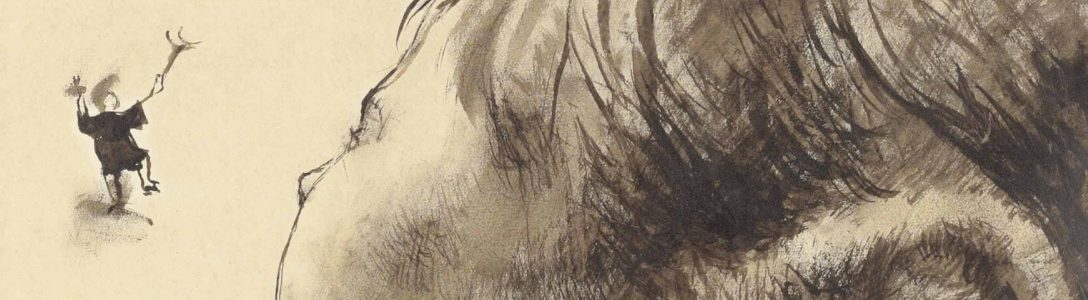

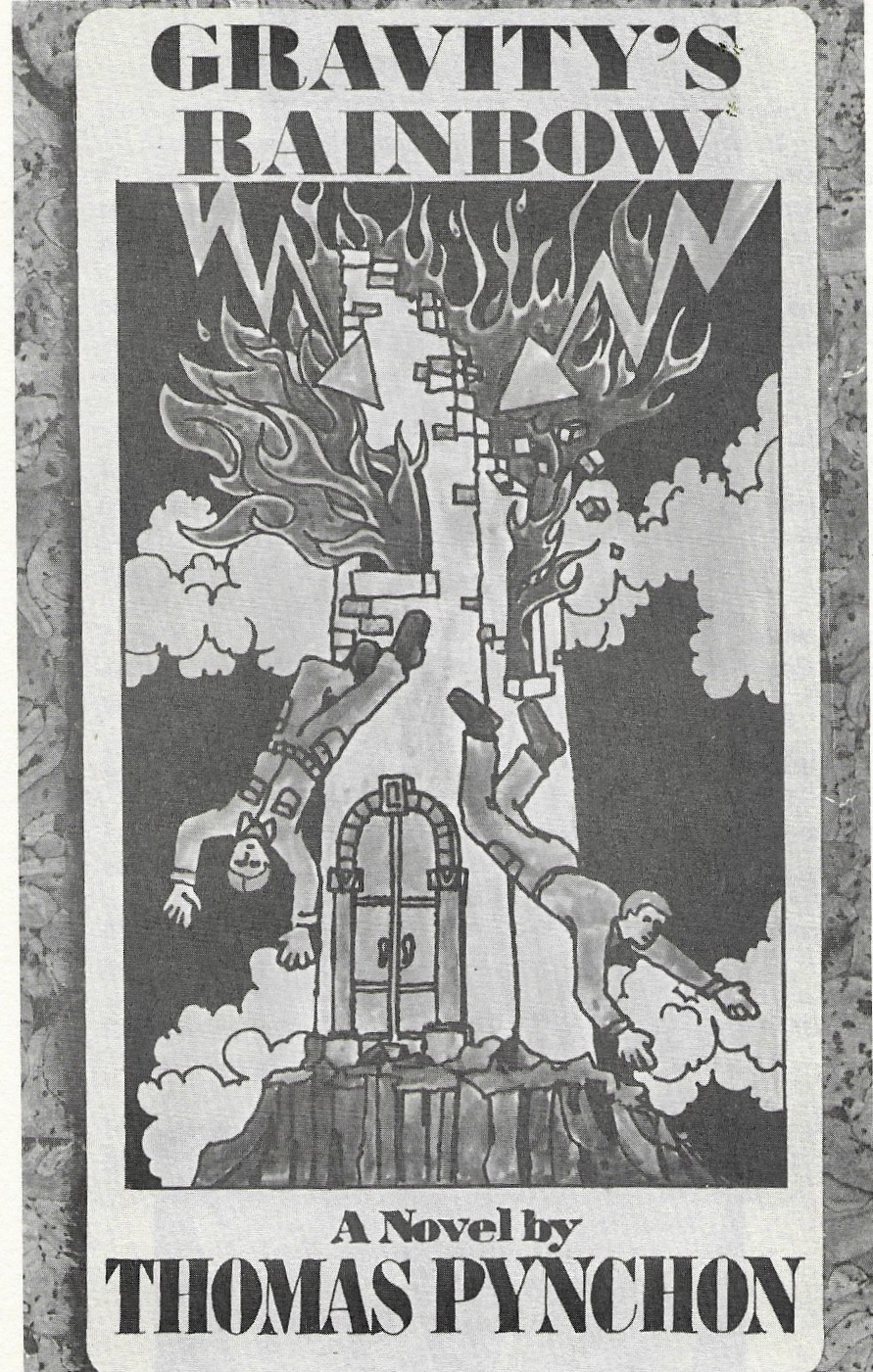
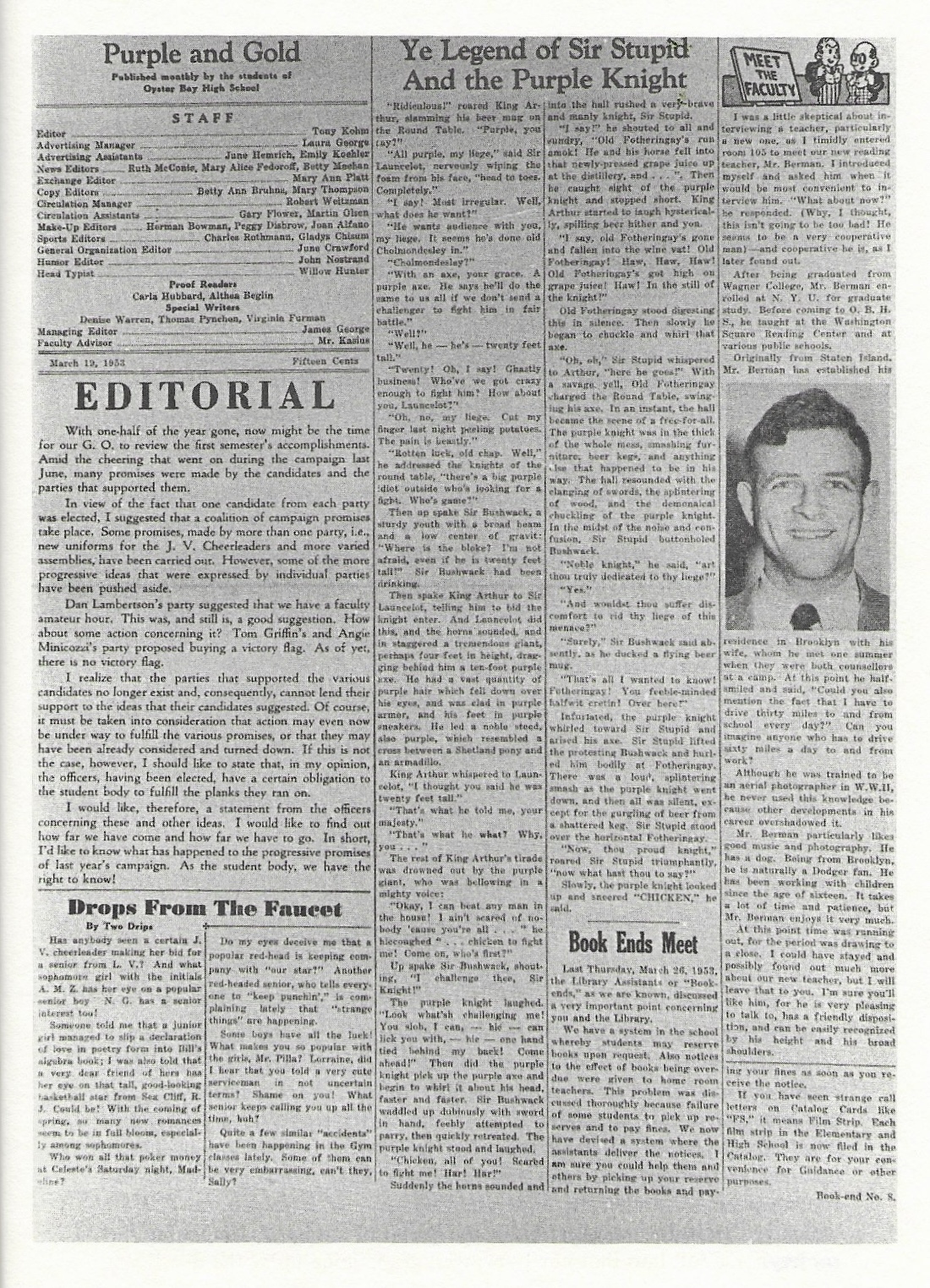


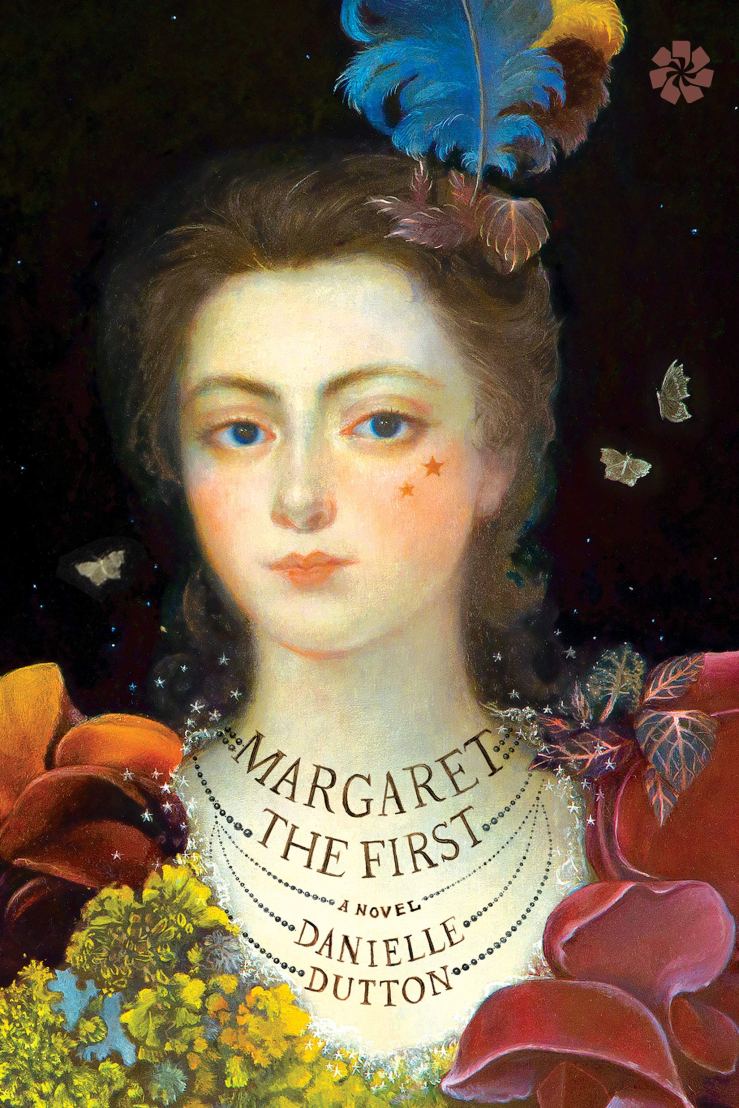

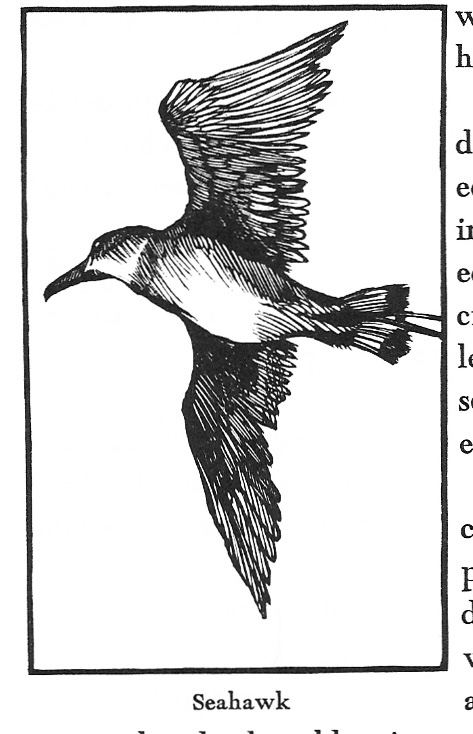


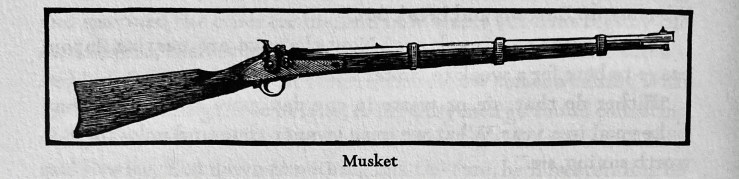

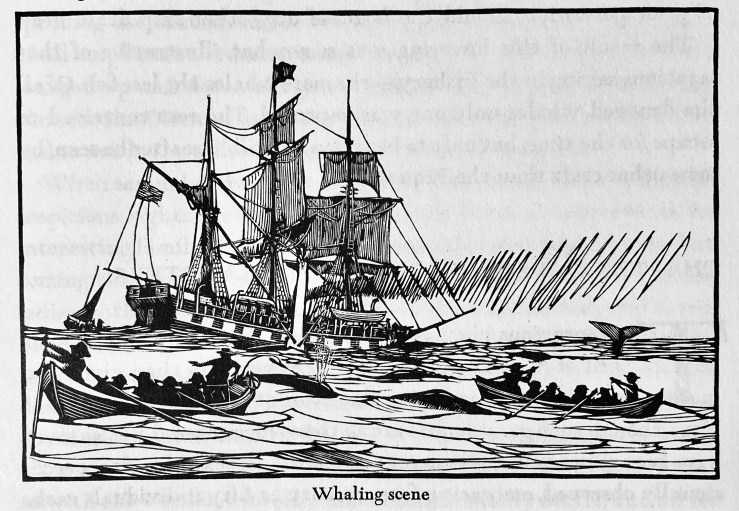

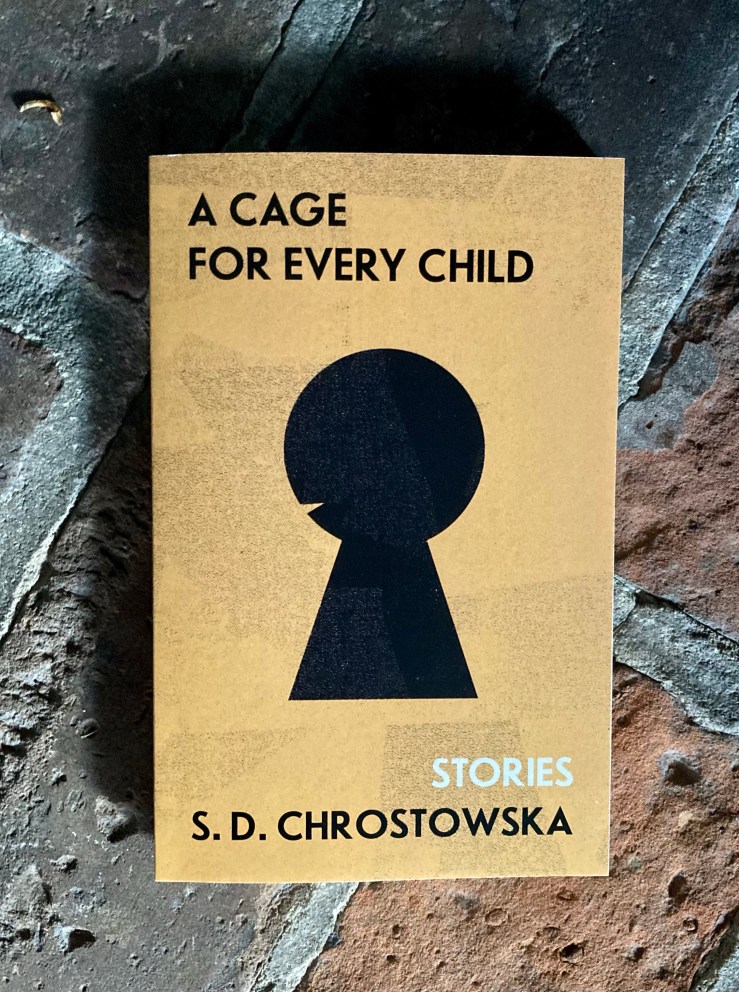
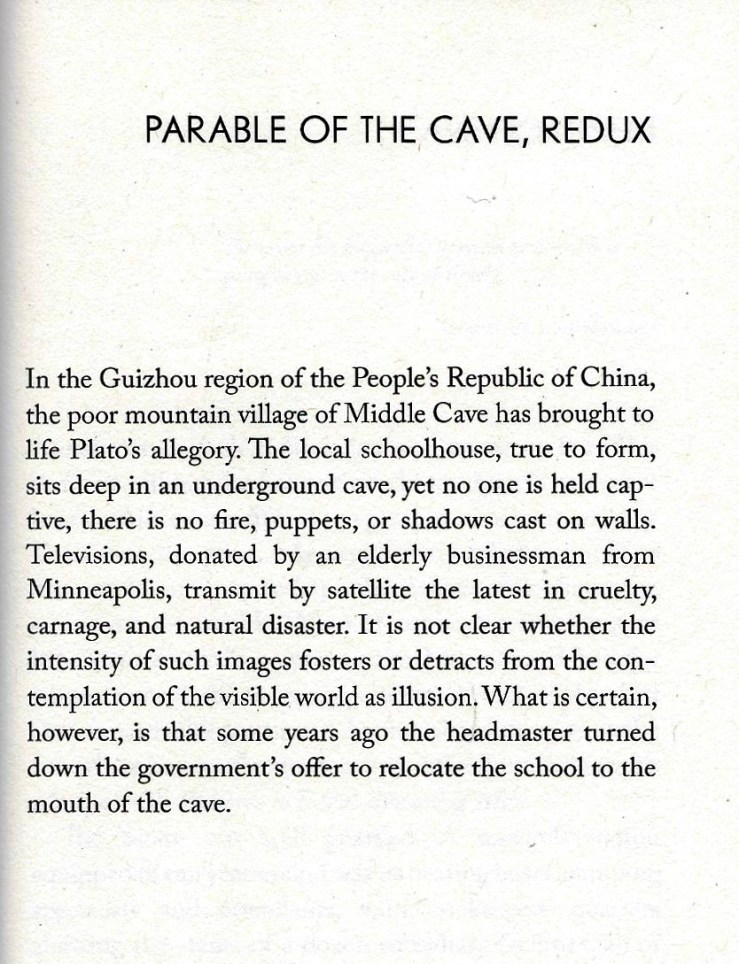

 A new edition of Ann Quin’s third novel Passages is out in a few days from indie juggernaut