The Reading Girl — Theodore Roussel

The Reading Girl 1886-7 by Théodore Roussel 1847-1926

A Riff on Lars Iyer’s Novel Exodus

l

I. Trilogy

Exodus is the third entry in a trilogy that Lars Iyer began with Spurious and Dogma.

What happens in Exodus?

Not much (but also maybe everything—like all sorts of philosophical investigations and intellectual adventure and despair and potential revolution and symbolic death, etc.).

If you’ve read Spurious and Dogma you’d expect this.

There is a quest though in Exodus, a quest that feels more visceral, more real, cuts closer to the bone than in the first two entries.

What is this quest?

Do our heroes W. and Lars vanquish despair? Figure out Kafka?

Do they save humanity (or at least the humanities department)?

Do they finally cast the One Ring into Mount Doom?

(They go on a lecture tour).

II. Quest

What is the connection between Kierkegaard and capitalism?: that’s our question, W. says. What does Kierkegaard tell us about the despair of capitalism?

And

‘The true and only virtue is to hate ourselves’, W. says, reading from his notebook.

And, perhaps more specifically

Of course, they’re going to close all humanities courses in British universities, W. says . . . They’re simply going to marketise education, W. says. They’re simply going to turn the university over to the free market. They’re going to submit philosophy to the forces of capitalism . . .

And

Imagine it! Two plastic cups of Plymouth Gin might usher in the reign of peace, W. says.

And

There are no jobs in philosophy — everyone knows that. No jobs in academia!

And etc.

III. The Call to Adventure

This is our last tour, W. says. He feels that strongly. Something’s going to happen. Something’s about to happen. . . Why does he feel such a sense of dread?

IV. The Road of Trials

Gin, Deleuze, Kafka, Kierkegaard, gin, Blade Runner, Guy Debord, postgraduate students, linguistic stupidity, anxiety over what Alan Badiou is doing right this very minute, gin, Gandhi, Marx, the blogosphere (so-called), Bartleby, Moses, God, logical-mathematical stupidity, the Talmud, gin, bodily-kinesthetic stupidity, cheap food, the Thames, Oxford, Rosenzweig, interpersonal stupidity, gin, Bela Tarr, Manchester, Wikipedia, gin, intrapersonal stupidity, Beckett, Gombrowicz, Middlesex, Weil, naturalistic stupidity, Abraham and Isaac, Old Europe, sports science students, moral stupidity, Solomon Maimon, gin, Plato (turning in his grave), public houses, existential stupidity, Kant, a friend from Taiwan, a plenary speaker, sartorial stupidity, gin, Krasznahorkai, blowing a great horn to have the horde come running (like that guy in Anchorman), a Dostoevskian innocence or a Grossmanian selflessness, religious stupidity, Master/Blaster as a metaphor for the mind-brain problem, Canadian laughter in the glittering light (etc.), Essex Postgraduates, gin, gin, gin, job security, painting-and-decorating stupidity, hangovers, posh people eating lunch in the sun, settling for cans of Stella from the trolley, philosophy of walking, gin, romantic stupidity, gin, culinary stupidity, gin, stupidity stupidity.

Revolution!

V. The Magic Flight

Alcohol makes people speak, that’s its greatness, W. says. It makes them religious, political, even as it shows them the impossibility of religion and the impossibility of politics. Drinking carries you through despair, W. says. Through it, and out beyond it, if you are prepared to keep drinking right all through the night.

VI. Apotheosis

W. dreams of the profound slumber from which we would rise reborn, ready for the morning, ready for work. He dreams of the great day that would follow our night of rest, and of the great ideas that would flash above us like diurnal stars.

How is it still alive in him, the belief that he might wake into genius?, W says. How is it that he still believes, despite everything, that he is a man of thought?

VII. Freedom to Live

Thought is the hangman, our hangman, W. says. Thought has its nooses ready just for us.

VIII. Cult Fiction

Judgment, evaluation, criticism: Exodus—the Spurious Trilogy, if that’s what we’ll call it—has reserved its own special place in the world of cult fiction. These novels (if they are in fact novels) perform their own deconstruction. They delineate metacognition. They frustrate. They are simultaneously sad and funny, and even a little bit scary, at least if you earn your bread by academicizin’.

They frustrate. Wait, do I repeat myself? Very well then, I repeat myself.

These novels dissect the problems of philosophy against the backdrop of late capitalism, but part of this dissection is also the covering up of the dissection: the fear, the failure, the despair, the doom. (Hence the anesthesia, the gin). So that the novels seem to be a series of references, contours, quirks, loops of dialog, declamations, insults . . . That the novels take their own central subject as the failure to mean, to communicate—and then perform these failures: deferral, delay, intellectual suspense. And that these suspensions replace the furniture and sets of the traditional novel, etc. Maybe I’m failing to mean. I’ve anesthetized myself a bit, I do admit.

I get it. I mean, that’s maybe what I mean, or hope to mean to say about these novels: That meaning is hard, that saying meaning doing thinking is hard; that thinking afteragainstbeyond other thinkers is hard, painful, produces despair, dread, etc. Maybe that’s why I like these novels. Because I think that maybe I get them even as I doubt that I do get them.

IX. An Idea

Publisher Melville House might consider putting all three of these books into one epic volume.

X. A Question

Do the eagles ever show up to fly W. and Lars out of Mordor?
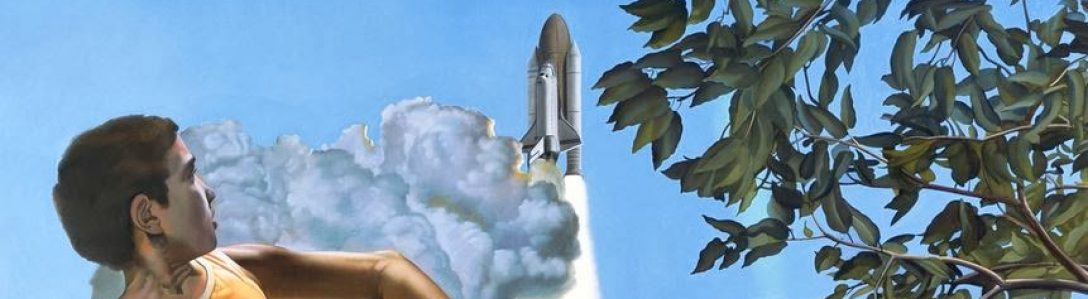
A Pupil of Green Girl’s School, Reading — Annie Margaret Bradley

Copyright Reading Museum Service / Supplied by The Public Catalogue Foundation

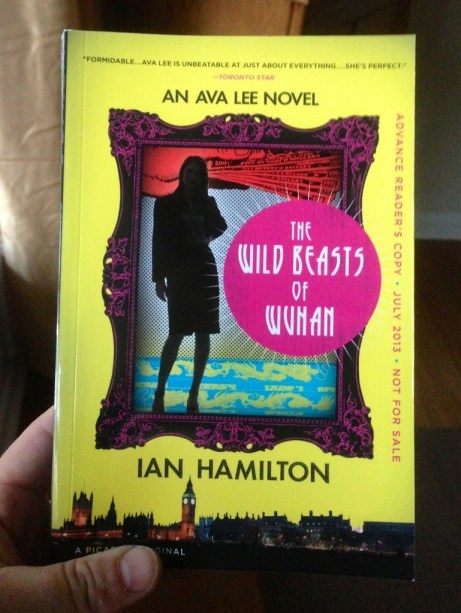
The Wild Beasts of Wuhan (Book Acquired, 3.21.2013)

20130322-135238.jpg

It took me a few minutes to figure out the title of Ian Hamilton’s latest Ava Lee novel, The Wild Beasts of Wuhan—something about the font I guess. The book is out this June from Picador. Blurb from Hamilton’s site:

In The Wild Beasts of Wuhan, Uncle and Ava are summoned by Wong Changxing, “The Emperor of Hubei” and one of the most powerful men in China, when he discovers that the Fauvist paintings he recently acquired are in fact forgeries.

Ava uncovers a ring of fraudulent art dealers and follows their twisted trail to Denmark, the Faroe Islands, Dublin, London, and New York. But the job is further complicated by Wong’s second wife, the cunning and seductive May Ling, who threatens to interfere in Ava’s investigation.

Will Ava find the perpetrators and get the Wongs’ money back? Or will May Ling get to them first…


Misshelved

20130323-123116.jpg

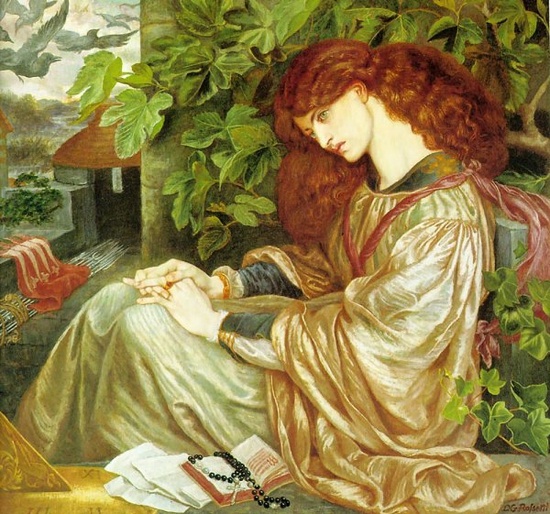
La Pia de’ Tolomei — Dante Gabriel Rossetti

1e562a1d6163fcb813dd68de136888a5

Marusia in the Library — David Burliuk

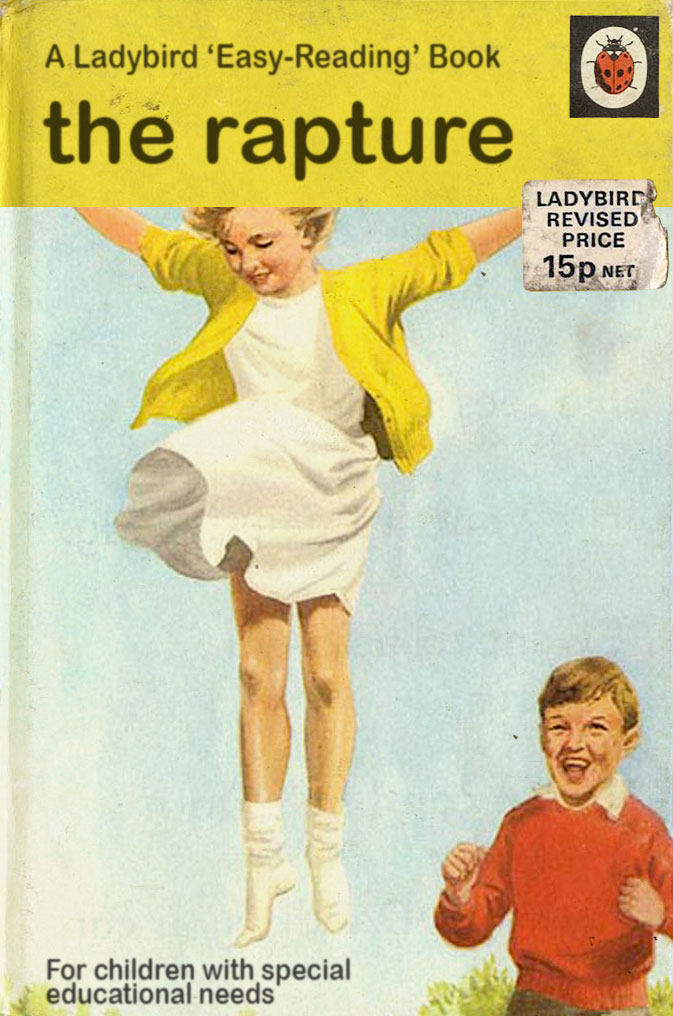
The Rapture — A Ladybird Easy-Reading Book for Children with Special Educational Needs

therapture

(From Scarfolk Council, a favorite new site).

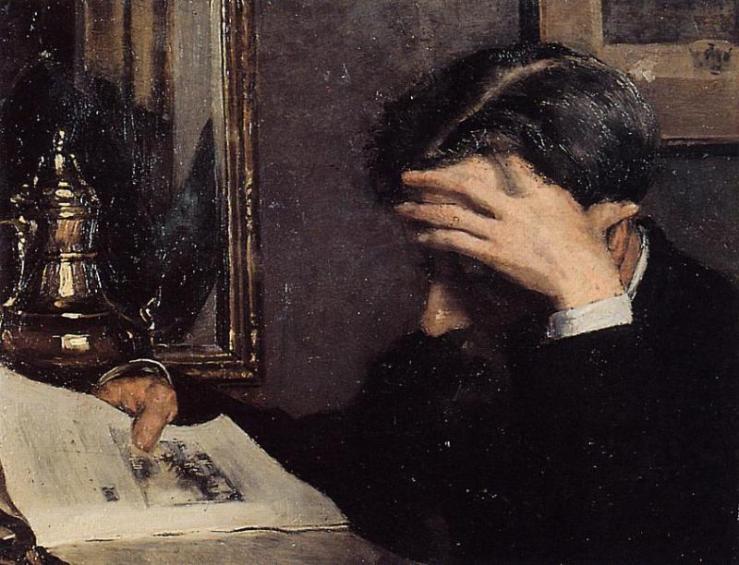
Man Reading — Georges Lemmen

man-reading

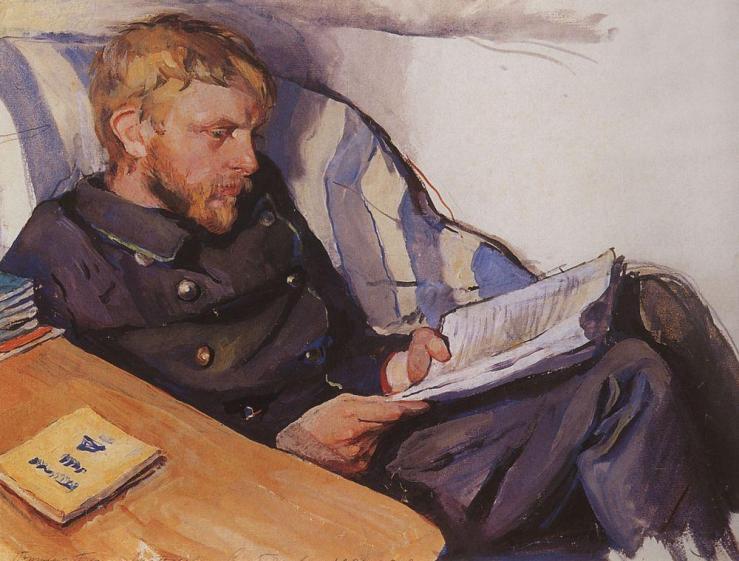
Portrait of Boris Serebryakov — Zinaida Serebriakova

portrait-of-boris-serebryakov-1908

Peanuts/Borges/mbv (Books and an LP Acquired, 3.19.2013)

20130319-175104.jpg

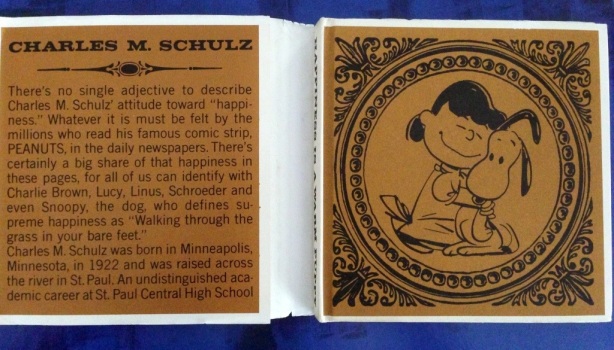
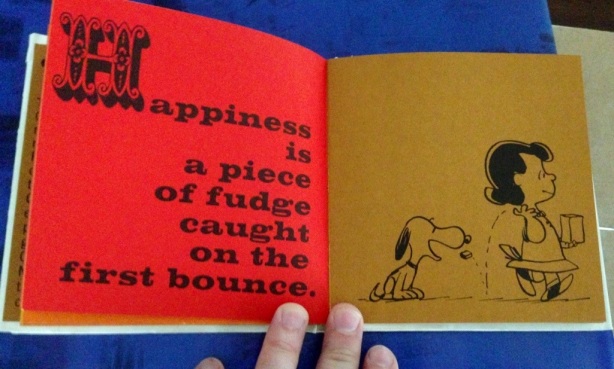
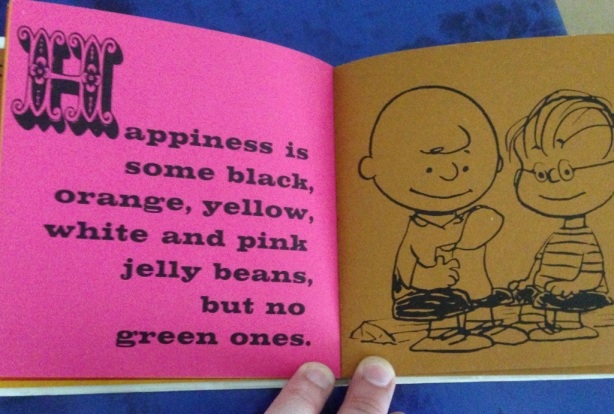
Found this hardback first edition of Charles M. Schulz’s Happiness Is a Warm Puppy, a kids book printed on heavy stock colored paper with bold litho images and letters. The cover is a bit rough but the book itself seems untouched. It’s a first edition from 1962.

20130319-175111.jpg

20130319-175122.jpg

20130319-175117.jpg

Also picked up this collection of short essays by Jorge Luis Borges:

20130319-175128.jpg

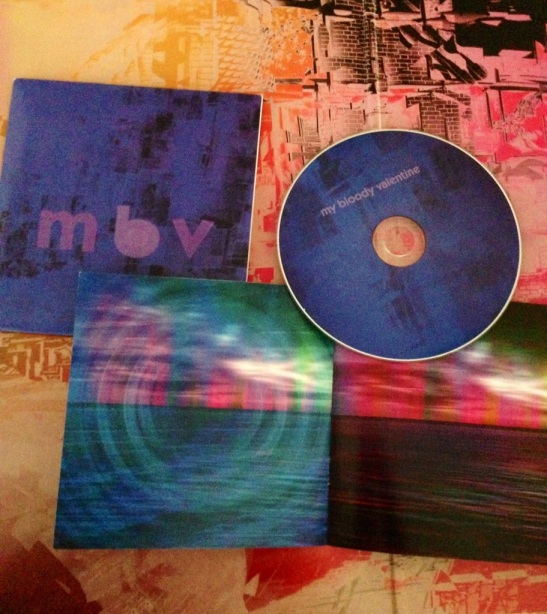
And came home to find the new My Bloody Valentine Record I bought six weeks ago (and likely paid too much for, including overseas shipping, but hey, I’ll shop smarter next time they put out an LP):

20130319-175134.jpg


“Bread and Butter Letter from a Chicago Gentleman” — F. Scott Fitgerald

Dear Marion,

I certainly enjoyed myself. The chow was all good, mostly, but the butter was rancid. The bed was hard but uncomfortable. The talk was over my head but there was some made sense—that part about my being a great guy for instance.
I got home sick at the stummuck but I do not blame you at all.
Will you tell the servents next time I like my soup hot and more of a sharp edge when they press my pants.
You said I only had to pay one buck for board but even that is too much when the service is not good. That black bean soup was rancid too, and mine had a beetle in it. Besides there wasn’t enough blankets and the only good one was stale like it had been used for a baby or something.
I liked all the people I met except that woman I had to slug at dinner. Tell her I hope she found her teeth in the tomato soup when they emptied it out. No gentleman should have done a thing like that but I cannot stand a warm stocking on my ankle under the table.
I’m sorry I shot the horse and dog but they kep me awake 1/2 the night and I come there for a rest. You will find a lot of cigar stubs in the refrigidaire as I did not know where to put them. I do not want them however so give them to one of the negro servants, you know the colored ones, not your uncle or aunt or anybody like that. The black ones.
I’ll tell you when I can come down again and we will have more of that fun in the dumb waiter—hey kid, you know? Only I’m sorry I left you between floors when I went to bed. I thot it would give you more time to cool off so you could get some sleep too.
All right kid and goodby and I know now you are not such a dumb cluck as you look like.

“Tick”

P.S. If you called that thing a cocktail then listerine is the Holy Grail.

From F. Scott Fitzgerald’s Notebooks.

Portrait of the Artist’s Daughter, Julie Manet, at Gorey — Berthe Morisot

portrait-of-the-artist-s-daughter-julie-manet-at-gorey

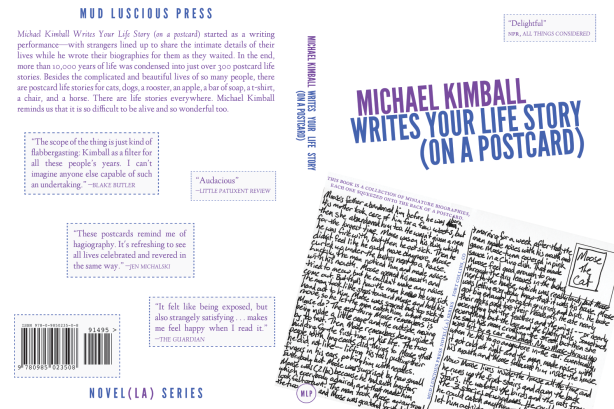
I Review Michael Kimball Writes Your Life Story (On a Postcard)

Kimball final cover copy

“I never expected strangers to tell me so much about themselves, so many things they have never told anybody else, but I found an unexpected intimacy in the postcard life story project,” writes Michael Kimball in the introduction to his new book, the aptly titled Michael Kimball Writes Your Life Story (On a Postcard). Kimball continues: “It tapped into something human and humane. I was continually amazed by what people told me.”

Kimball’s respect for the people whose stories he is telling comes through in his spare but descriptive prose, an economical rhetoric undoubtedly necessitated by the confines of his small canvasses. When I interviewed Kimball about the project, he told me:

There are difficult things at different stages of the process. The first difficult thing is asking the right questions for the particular participant. The second difficult thing is being representative when condensing what I’ve been told. The third difficult thing is writing small enough to squeeze six hundred words or so onto a single postcard.

Through that asking, condensing, and squeezing, Kimball distills his subject’s lives into compact but moving stories.

Michael Kimball Writes Your Life Story (On a Postcard) began as a performance piece at the Transmodern Performance Festival and then continued as a blog. Kimball eventually wrote over three hundred postcards; over fifty of these are collected in the new book. A not-insubstantial number of these are devoted to the biographies of contemporary writers, including folks like Tao Lin, Matt Bell, and Blake Butler:

By 4 years old, Blake was performing considered monologues, crazy dances, music videos, and both sides of talk shows. It’s all on video (his mother will show you, if you want). Despite these performances, Blake was a fat child by the 4th grade. He liked comic books and video games. By 10th grade, he weighed 250 pounds and felt disregarded. His bedroom walls were covered with pictures of women that he tore out of magazines at the grocery store and took home.

There’s also a first-person POV bio of Edgar Allan Poe, the last few paragraphs of which I can’t help sharing:

In 1831, my foster father and I had a terrible disagreement, after which I was court-martialed and kicked out of West Point. In 1834, my foster father died and did not leave me any of his money. To console myself, I married my 14-year-old cousin, Virginia Clemm.

For years, I published poems and stories and criticism, but it did not make me happy or money. In 1837, I was fired from a newspaper job for drinking. After that, I published a novel, but that didn’t help much either. Readers are sick. That’s why Virginia got tuberculosis and died in 1847. I was so lonely and so cold. I could not stop drinking.

It was 1849 when I stopped in Baltimore. I remember going down in the street, and, later, two hazy men taking me someplace white. I don’t remember dying, but I was glad I didn’t have to keep trying.

The mix of empathy and humor we see here resonates throughout the collection, whether Kimball is telling the life story of a U.S. President, or an ex-crack addict who met his wife at an all-you-can-eat buffet, or a rooster. Kimball handles his subjects with an intense honesty appropriate to the often tragic trajectory these tales take—even a piece like “Red Delicious Apple,” which takes metaphysical license of a sort, leads to a sad end:

The first thing Red Delicious Apple remembered was being a flower and the way the birds sounded in the trees. Later, Apple remembered the wind and losing his petals. Apple wanted to jump down after them, but stayed on the branch, in the tree. … Not long after that, Hand delivered Apple to the teeth. Apple could feel the teeth cutting through his skin and into his meat, what was left of his insides turning brown. Afterward, he sickened, softened. The last thing Apple remembered was the trashcan, the lid, the rotting darkness.

Or the fate of “Chair”:Chair thought, Wood and glue.

Chair thought, Next time, I’m letting go.
Chair cracked. He broke one of his legs and then his back.
Chair thought, That didn’t even hurt.

Update : Chair was thrown into a dumpster.

But perhaps I bring up “Chair” and “Red Delicious Apple” because their tragic contours are easier to allude to quickly than many of the biographies here, which often involve missing parents,  mental illness, and suicidal thoughts, all delivered in the spare, striking prose that the confines of Kimball’s project necessitate. The stories are sometimes shocking and sometimes sad and usually very moving. As the titular anonym of “G” suggests, “tragedy can be beautiful.”

Michael Kimball Writes Your Life Story (On a Postcard) is new from Mud Luscious Press.

Death of Orpheus — Albrecht Durer

Woman Reading — Teodoro Núñez Ureta

teodoro-nunez-ureta-la-lectura-1930

Alexander Serebryakov Reading a Book — Zinaida Serebriakova