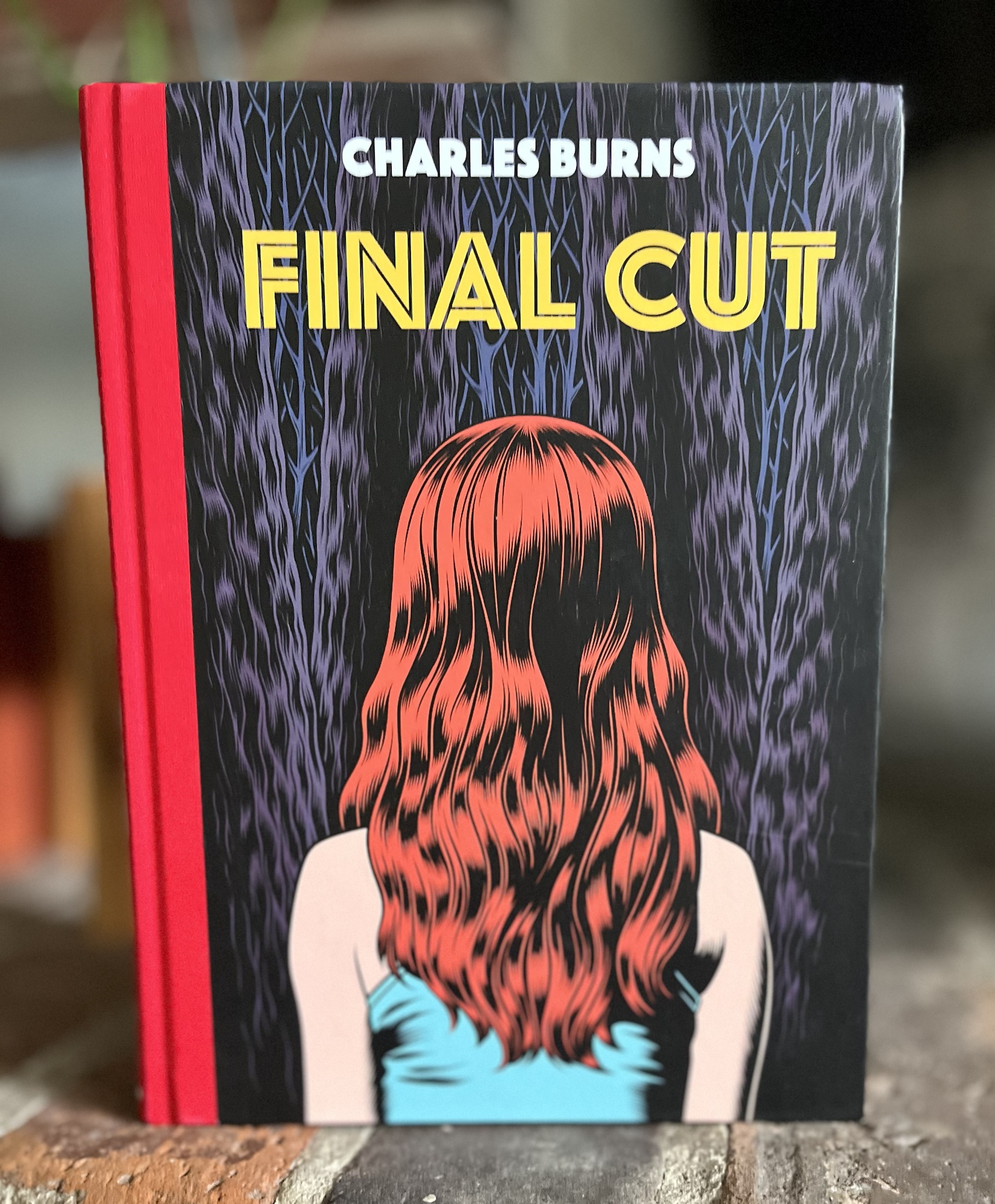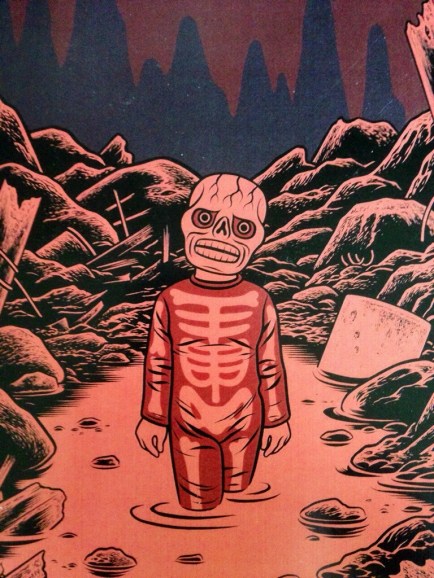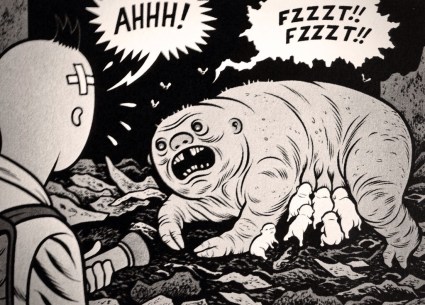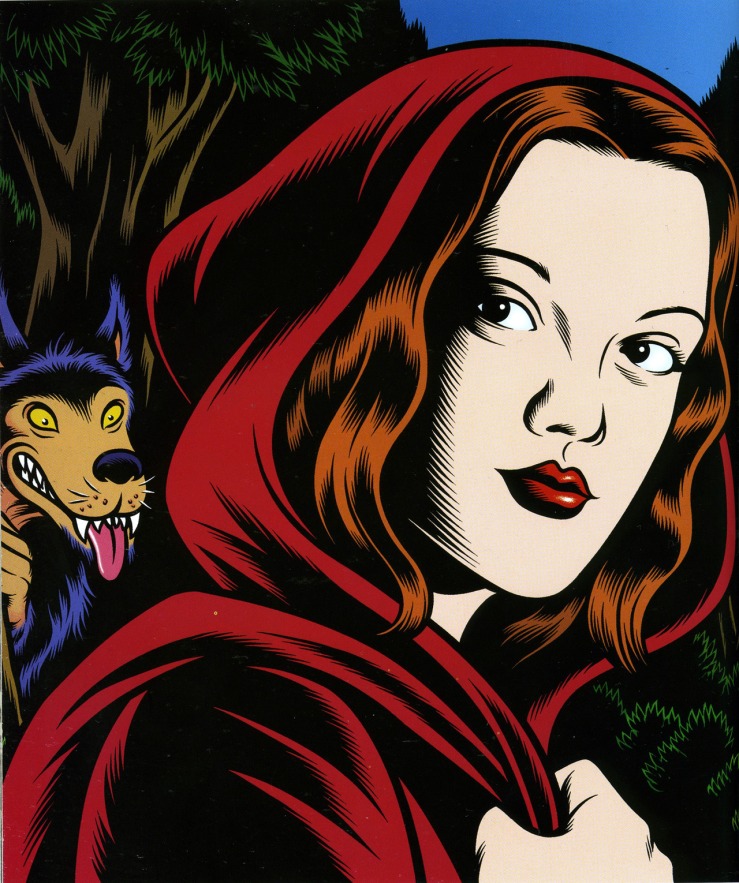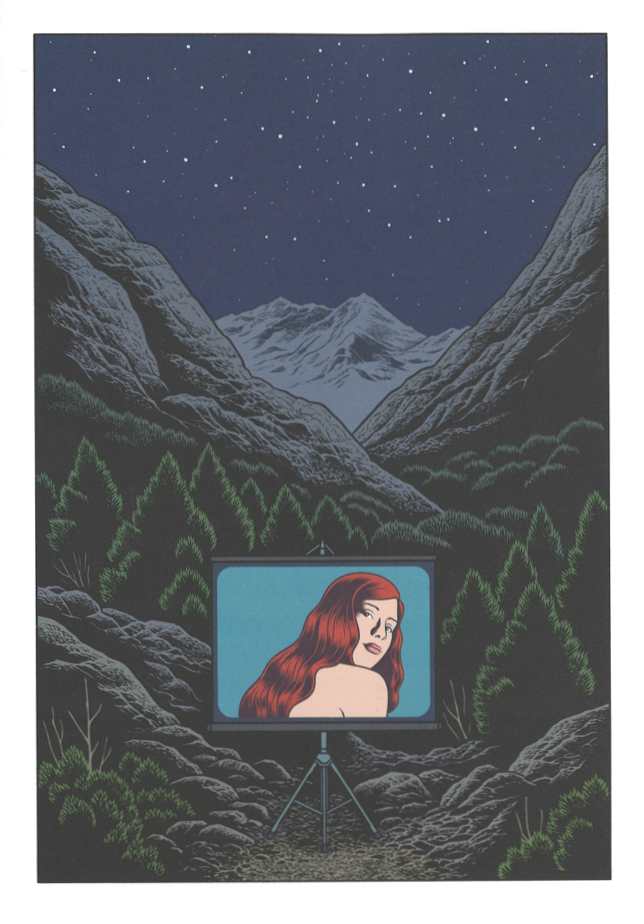
Charles Burns’ Final Cut explores the irreal reality of artistic ambition

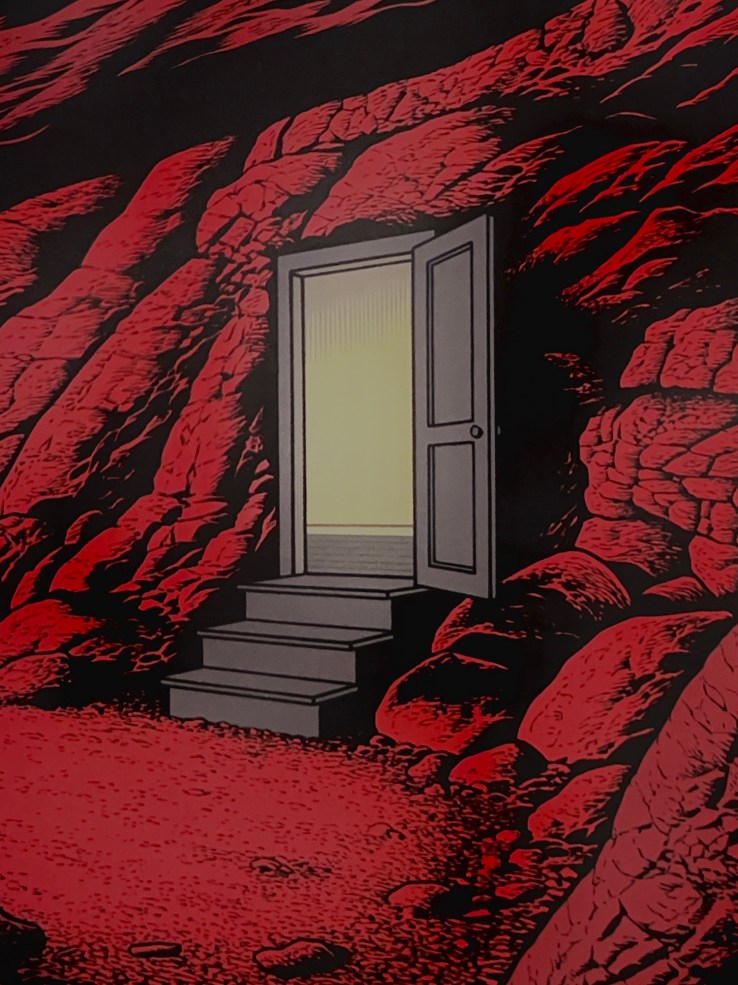
Charles Burns’ latest graphic novel Final Cut tells the story of Brian, an obsessive would-be auteur grappling with an unrealized film project. Brian hopes to assemble his film — also titled Final Cut — from footage he shoots with friends on a weekend camping trip, but the messiness of reality impinges the weird glories of his vibrant imagination. He cannot bring his vision to the screen. He cannot capture all the “fucked-up shit going on inside my head.”
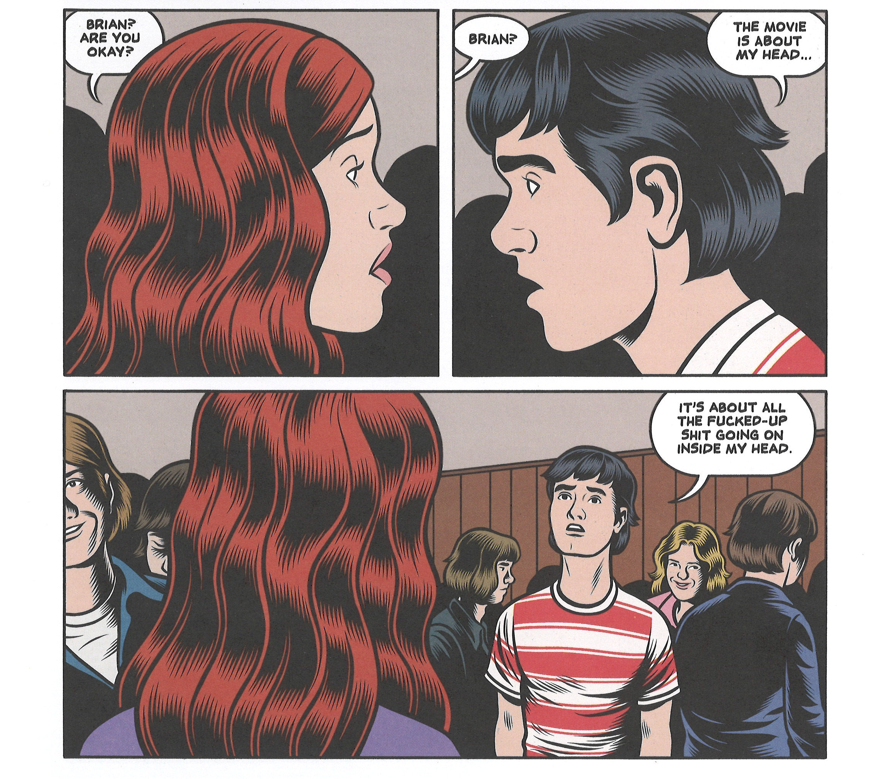
Capturing all the fucked-up shit going on inside my head is a neat encapsulation of the Artistic Problem in general. It’s not that Brian doesn’t try; if anything, he tries too hard. His best friend and erstwhile cameraman Chris is there to help him, along with his crush Laurie and their friend Tina—but ultimately, these are still kids at play. They indulge Brian’s artistic whims, but at a certain point they’d rather swim, drink, and smoke than shoot yet another scene they can’t comprehend.

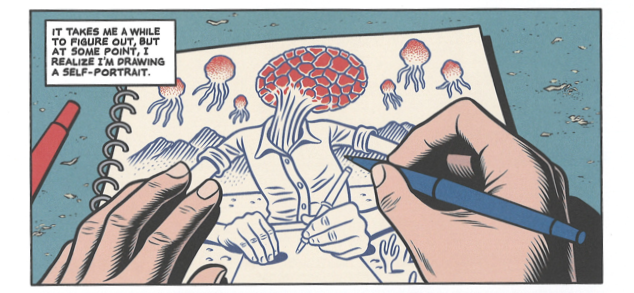
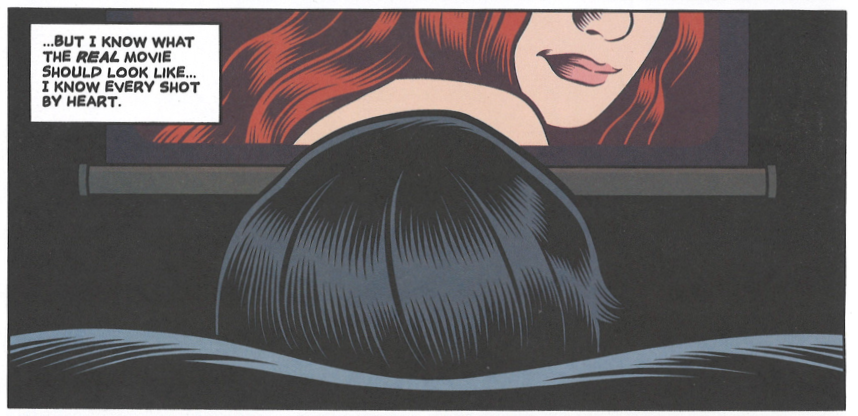
Eschewing straightforward narrative conventions, Final Cut unfolds in a blend of flashbacks, dreamscapes, and flights into Brian’s imagination. The book also gives over to Laurie’s consciousness, providing an essential ballast of realism to anchor Brian’s (and Burns’, I suppose) surrealism. Brian would have Laurie as his muse, trying to capture her in his sketchbook, in his film, and in the intense gaze of his mind’s eye. And while Laurie is fascinated by Brian’s visions, she doesn’t understand them.
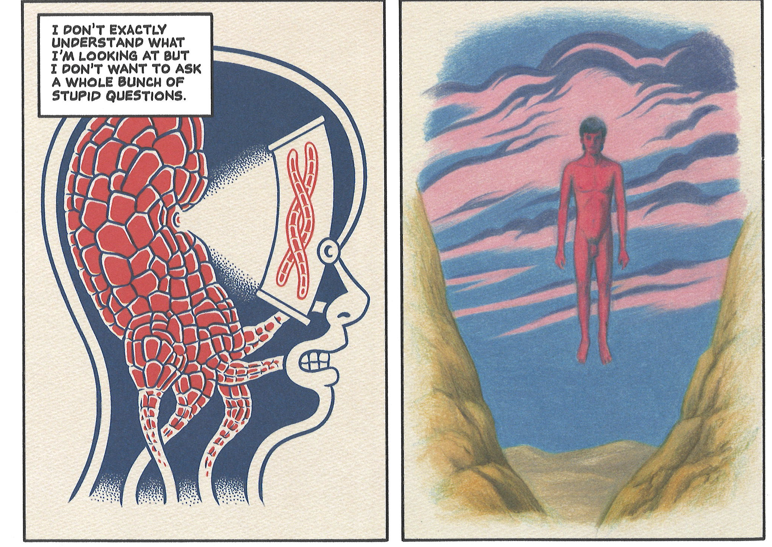
The last member of Brian’s would-be acting troupe is Tina, an earthy, funny gal who drinks a bit too much. She plays foil to Brian’s ambitions; her animated spirit punctures the seriousness of his film shoot. Again, these are just kids in the woods with a camera and camping gear.

And the film itself? Well, it’s about kids camping in the woods. And an alien invasion. And pod people.
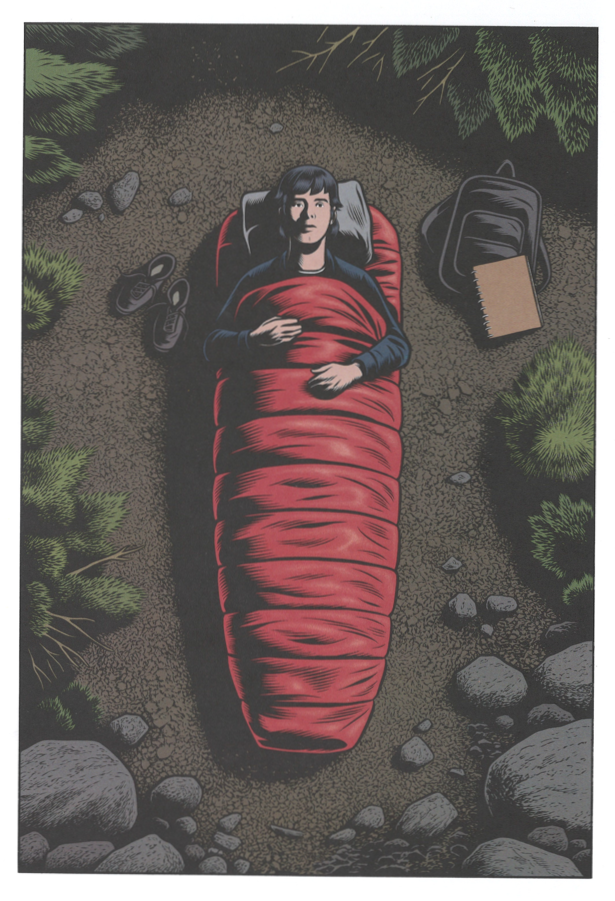
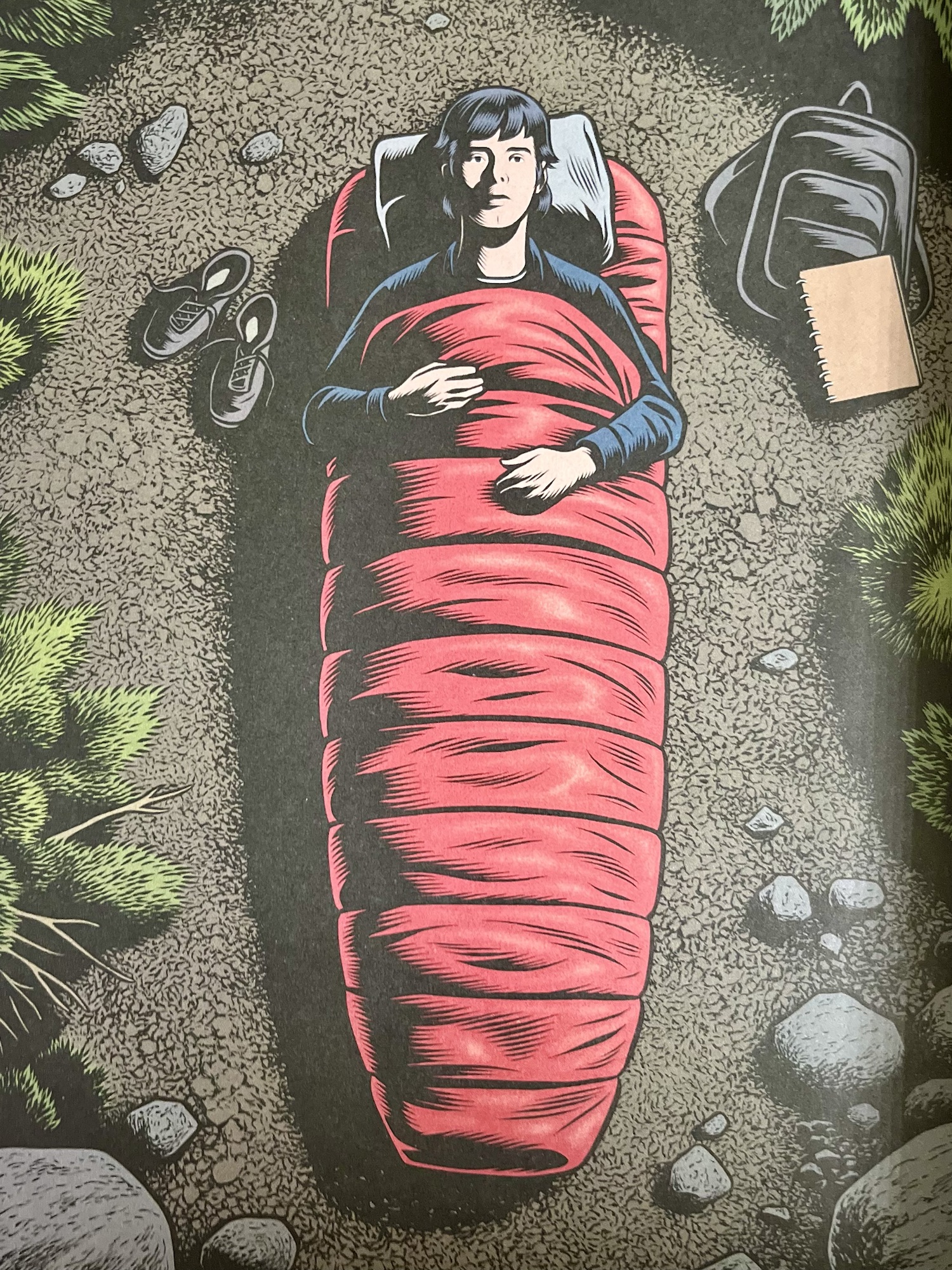
The pod-people motif dominates Final Cut. We get the teens in their larval sleeping bags, transformed into aliens in their cocoons (echoed again in Brian’s imagination and in his sketches). The motif looms larger: Can we really know who a person is? Could they be someone else entirely? Can we really ever know all the fucked-up shit going on inside their head?
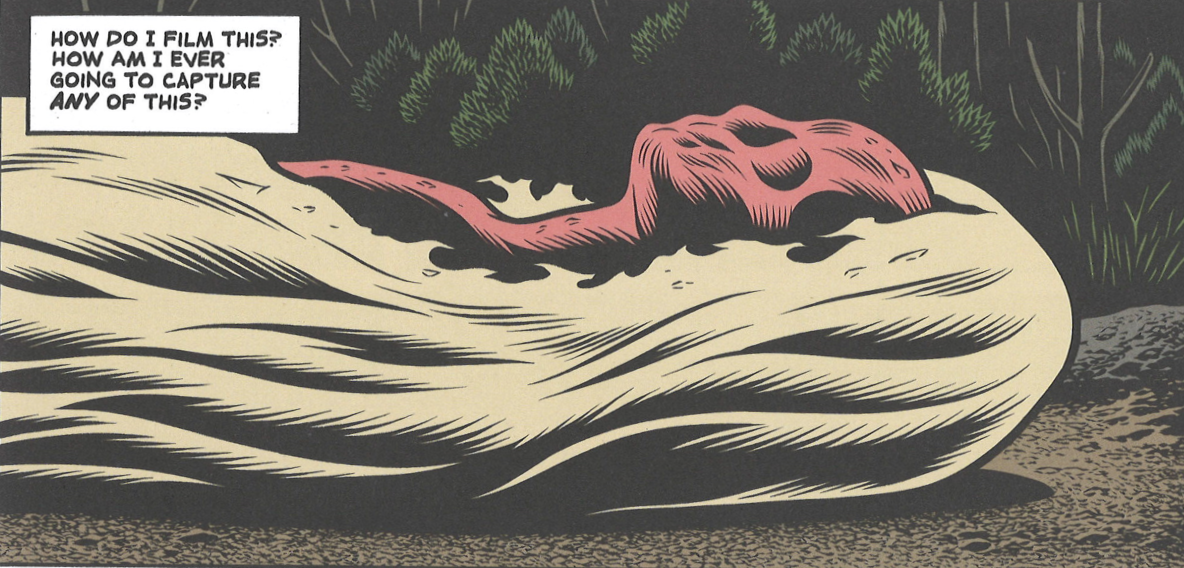
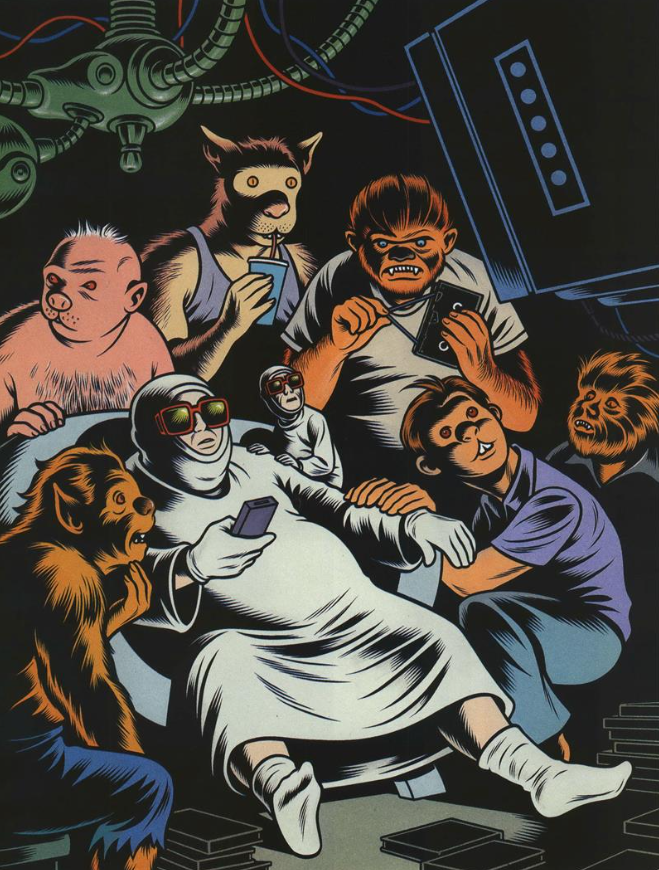
Indeed, Don Siegel’s 1956 film Invasion of the Body Snatchers is a major progenitor text for Final Cut. Brian even takes Laurie on a date to a screening of Invasion; he’s so mesmerized by the film that he weeps. Burns renders stills from the film in heavy chiaroscuro black and white, contrasting with the vibrant reds, maroons, and pinks that reverberate through the novel.

Burns recreates stills from another black and white film, Peter Bogdanovich’s 1971 coming-of-age heartbreaker The Last Picture Show. Again, Brian is obsessed with the film—or by the film, perhaps. In particular, he’s infatuated with Cybill Shepherd’s Jacy, whose character he imaginatively merges with his conception of Laurie.

While Invasion of the Body Snatchers is a science-fiction horror film, a deep sense of reality-soaked dread underpins it; The Last Picture Show is utterly real in its evocations of the emotional and physical lives of teenagers. Both films convey a maturity and balance of the fantastic with the real that Brian has not yet purchased via his own experiences, his own failures and heartbreaks. 
The maturity and balance that Brian can imagine but not execute in his Final Cut is precisely the maturity and balance that Burns achieves in his Final Cut. Simply put, Final Cut is the effort of a master performing at the heights of his power, rendered with inspired technical proficiency. It delivers on themes Burns has been exploring from the earliest days of his career.

There’s the paranoia and alienation of adolescence Burns crafted in Black Hole, here delivered in a more vibrant, cohesive, and frankly wiser book. There’s the hallucinatory trauma and repression he conveyed in the X’ed Out trilogy (collected a decade ago as Last Look, the title of which prefigures Final Cut). There’s also an absence of parental authority here, a trope that Burns has deployed since 1991’s Curse of the Molemen. (In Final Cut, Brian’s mentally-unstable mother is a dead-ringer for Mrs. Pinkster, the domestic abuse victim rescued by the child-hero of Curse of the Molemen). There’s all the sinister dread and awful beauty that anyone following Burns’ career would expect, synthesized into his most lucid exploration of the inherent problems of artistic expression.
Ultimately, in Final Cut Charles Burns crafts a portrait of the artist as a weird young man. Brian wrestles with the friction sparked from his vital imagination butting up against cold reality. His ambitious unfinished film mirrors his own incomplete journey as an artist, highlighting the clash between youthful creative fervor and the inevitable constraints of life, experience, and maturity. Burns’ themes of alienation and artistic ambition may be familiar, but Final Cut feels fresh and vibrant, the culmination of the artist’s own entanglements with the irreality of reality. Highly recommended.
Riff on some books I’m reading, have read, and should really review

Hurricane Milton passed far enough south last night to leave our city relatively untroubled. There were power outages here but not the expected flooding. Most of my anxiety was focused on my family in the Tampa Bay area, all of whom are safe; we’re just not sure about the material conditions of the things they left behind.

Milton seemed to suck the summer air out of Northeast Florida; when I got out of bed and went outside to investigate the loud THUNK that woke me up at four a.m., I was shocked at how cold the air felt. It was only about 66°, but all the humidity seemed gone, even in the cold sprinkling rain. (The THUNK was our portable basketball hoop toppling over.)

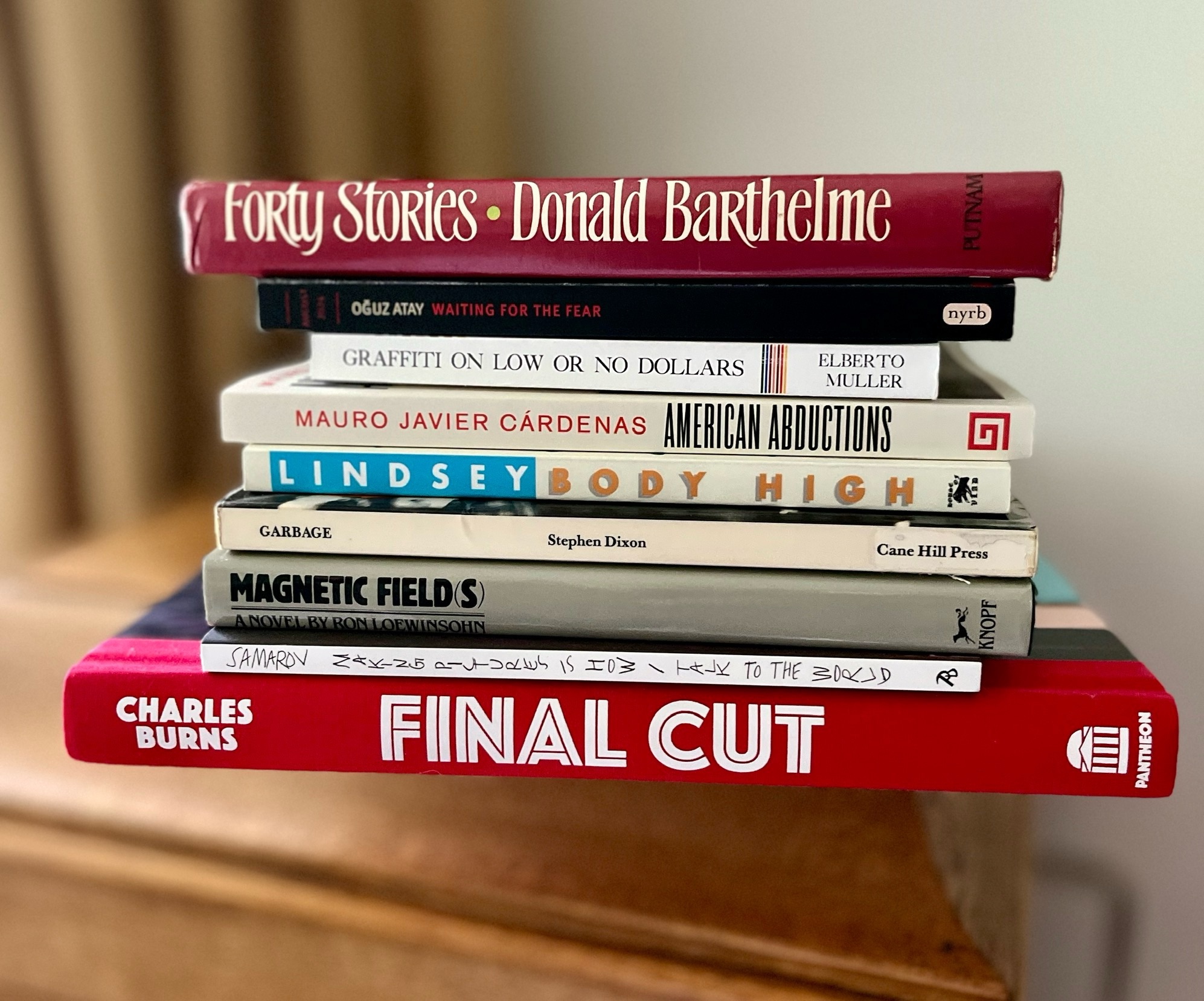
I thought I might try to knock out a review or a write-up of one of the many books I’ve finished that have stacked up as the summer has slowly transitioned to autumn. College classes have been canceled through to Tuesday. I have, ostensibly a “free” week; maybe some words, harder to cobble together for me these days, would come together, no? For the past few years I’ve focused more on reading literature with the attempt to suspend analysis in favor of, like, simply enjoying it. I realized I’d gotten into the habit of reading everything through the lens of this blog: What was I going to say about the book after reading it? I’ve been happier and read more sense freeing myself from the notion that I need to write about every fucking book I read. But the good books stack up (quite literally in a little place I have for such books); I find myself simply wanting to recommend, at some level, however facile, some of the stuff I’ve read. So forgive this lazy post, organized around a picture of a stack of books. From the top down:

Forty Stories, Donald Barthelme

A few years ago, I read Donald Barthelme’s collection Sixty Stories in reverse order. A few days ago, a commenter left me a short message on the final installment of that series of blogs: “Now do Forty Stories.” I think I have agreed–over the past week I’ve read stories forty through thirty-five in the collection. More to come.

Waiting for the Fear, Oğuz Atay; translation by Ralph Hubbell

A book of cramped, anxious stories. Atay, via Hubbell’s sticky translation, creates little worlds that seem a few reverberations off from reality. These are the kind of stories that one enjoys being allowed to leave, even if the protagonists are doomed to remain in the text (this is a compliment). Standouts include “Man in a White Overcoat,” “The Forgotten,” and “Letter to My Father.”

Graffiti on Low or No Dollars, Elberto Muller

Subtitled An Alternative Guide to Aesthetics and Grifting throughout the United States and Canada, Elberto Muller unfolds as a series of not-that-loosely connected vignettes, sketches, and fully-developed stories, each titled after the state or promise of their setting. The main character seems a loose approximation of Muller himself, a bohemian hobo hopping freights, scoring drugs, and working odd jobs—but mostly interacting with people. It kinda recalls Fuckhead at the end of Denis Johnson’s Jesus’ Son (a book Graffiti spiritually resembles) praising “All these weirdos, and me getting a little better every day right in the midst of them.” Muller’s storytelling chops are excellent—he’s economical, dry, sometimes sour, and most of all a gifted imagist.

American Abductions, Mauro Javier Cárdenas

If I were to tell you that Mauro Javier Cárdenas’s third novel is about Latin American families being separated by racist, government-mandated (and wholly fascist, really) mass deportations, you might think American Abductions is a dour, solemn read. And yes, Cárdenas conjures a horrifying dystopian surveillance in this novel, and yes, things are grim, but his labyrinthine layering of consciousnesses adds up to something more than just the novel’s horrific premise on its own. Like Bernhard, Krasznahorkao, and Sebald, Cárdenas uses the long sentence to great effect. Each chapter of American Abductions is a wieldy comma splice that terminates only when his chapter concludes—only each chapter sails into the next, or layers on it, really. It’s fugue-like, dreamlike, sometimes nightmarish. It’s also very funny. But most of all, it’s a fascinating exercise in consciousness and language—an attempt, perhaps, to borrow a phrase from one of its many characters, to make a grand “statement of missingnessness.”

Body High, Jon Lindsey

I liked Jon Lindsey’s debut Body High, a brief, even breezy drug novel that tries to do a bit too much too quickly, but is often very funny, gross, and abject. The narrator, who telegraphs his thoughts in short, clipped sentences (or fragments cobbled together) is a fuck-up whose main income derives from submitting to medical experiments. He dreams of scripting professional wrestling storylines though, perhaps one involving his almost-best friend/dealer/protector/enabler. When his underage-aunt shows up in his life, activating odd lusts, things get even more fucked up. Body High is at its best when it’s at its grimiest, and while it’s grimy, I wish it were grimier still.

Garbage, Stephen Dixon

I don’t know if Dixon’s Garbage is the best novel I’ve read so far this year, but it’s certainly the one that has most wrapped itself up in my brain pan, in my ear, throbbed a little behind my temple. The novel’s opening line sounds like an uninspired set up for a joke: “Two men come in and sit at the bar.” Everything that unfolds after is a brutal punchline, reminiscent of the Book of Job or pretty much any of Kafka’s major works. These two men come into Shaney’s bar—this is, or at least seems to be, NYC in the gritty seventies—and try to shake him down to switch up garbage collection services. A man of principle, Shaney rejects their “offer,” setting off an escalating nightmare, a world of shit, or, really, a world of garbage. I don’t think typing this description out does any justice to how engrossing and strange (and, strangely normalGarbage is. Dixon’s control of Shaney’s voice is precise and so utterly real that the effect is frankly cinematic, even though there are no spectacular pyrotechnics going on; hell, at times Dixon’s Shaney gives us only the barest visual details to a scene, and yet the book still throbs with uncanny lifeforce. I could’ve kept reading and reading and reading this short novel; it’s final line serves as the real ecstatic punchline. Fantastic stuff.

Magnetic Field(s), Ron Loewinsohn

I ate up Loewinshohn’s Magnetic Field(s) over a weekend. It’s a hypnotic triptych, a fugue, really, with phrases sliding across and through sections. We meet first a burglar breaking into a family’s home and learn that “Killing the animals was the hard”; then a composer, working with a filmmaker; then finally a novelist. Magnetic Field(s) posits crime and art as overlapping intimacies, and extends these intimacies through imagining another life as a taboo, too-intimate trespass.

Making Pictures Is How I Talk to the World, Dmitry Samarov

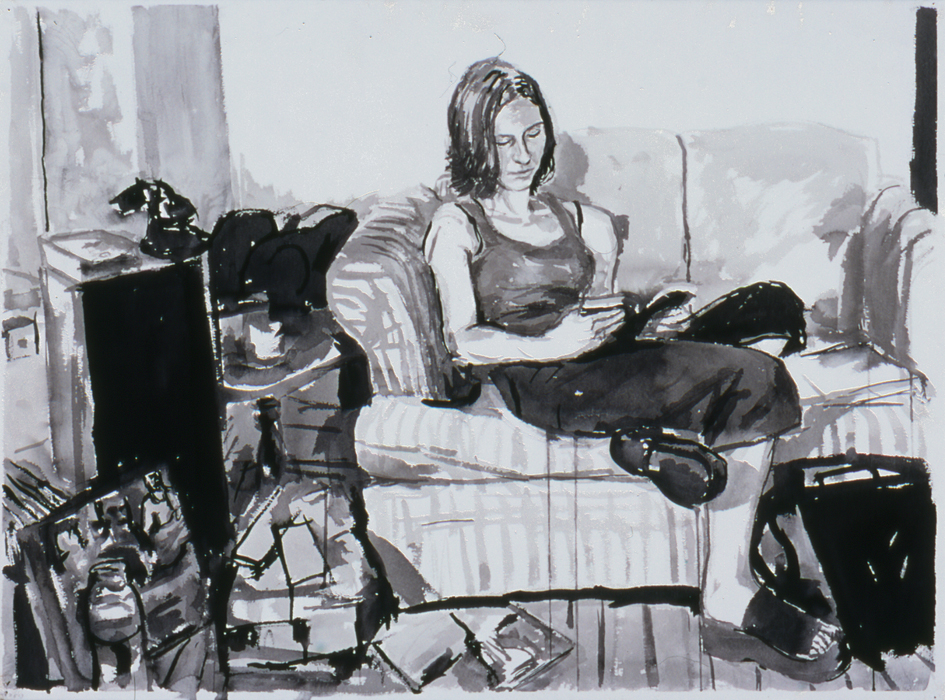
Making Pictures spans four decades of Samarov’s artistic career. Printed on high-quality color pages, the collection is thematically organized, showcasing Samarov’s different styles and genres. There are sketches, ink drawings, oils, charcoals, gouache, mixed media and more—but what most comes through is an intense narrativity. Samarov’s art is similar to his writing; there isn’t adornment so much as perspective. We get in Making Pictures a world of bars and coffee shops, cheap eateries and indie clubs. Samarov depicts his city Chicago with a thickness of life that is better seen than written about. Some of my favorite works include interiors of kitchens, portraits of women reading, and scribbly but energetic sketches of indie bands playing live. What I most appreciate about this collection though is that it showcases how outside of the so-called “art world” Samarov’s work is–and yet this is hardly the work of a so-called “outsider” artist. Samarov trained at the School of the Art Institute of Chicago, and yet through his career he has remained an independent, “not associated with an institution such as an art gallery, college, or museum,” as he writes in his book.

Beth, Dmitry Samarov, 2000

Final Cut, Charles Burns

I don’t know anything about Charles Burns’s upbringing, his youth, his personal life, and I don’t mean to speculate. However, it’s impossible not to approach Final Cut without pointing out that for several decades he’s been telling the same story over and over again—a sensitive, odd, artistic boy who is out of place even among others out of place. This is in no way a complaint—he tells the story with difference each time. And with more coherence. Final Cut is beautiful and sad and also weird enough to fit in neatly to Burns’s oeuvre. But it’s also more mature, a mature reflection on youth really, intense, still, but without the claustrophobia of Black Hole or the mania of his Last Look trilogy. There’s something melancholy here. It’s fitting that Burns employs the heartbreaking 1971 film The Last Picture Show as a significant motif in Final Cut.

Image from Final Cut, Charles Burns, 2024

Charles Burns’s Final Cut (Book acquired, 23 July 2024)

I’m excited about this one. Charles Burns’s novel Final Cut is out in late September. I’ll have a review around that time. For now, here’s publisher Pantheon’s blurb:

Untitled (The Island of Doctor Moreau) — Charles Burns

Charles Burns’ illustration for a Jan. 2000 Esquire article by Jeff Gordinier titled “The Best Movies You’ve Never Seen.”

Untitled (Illustration for Raw) — Charles Burns

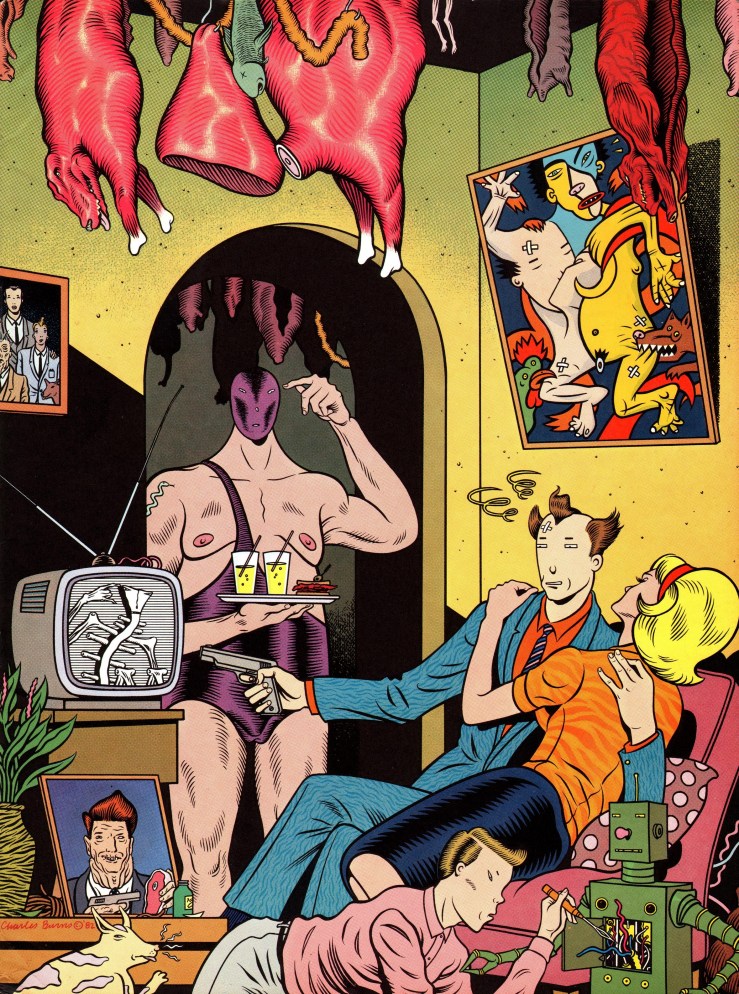
Illustration for Raw #4, 1982 by Charles Burns (b. 1955)

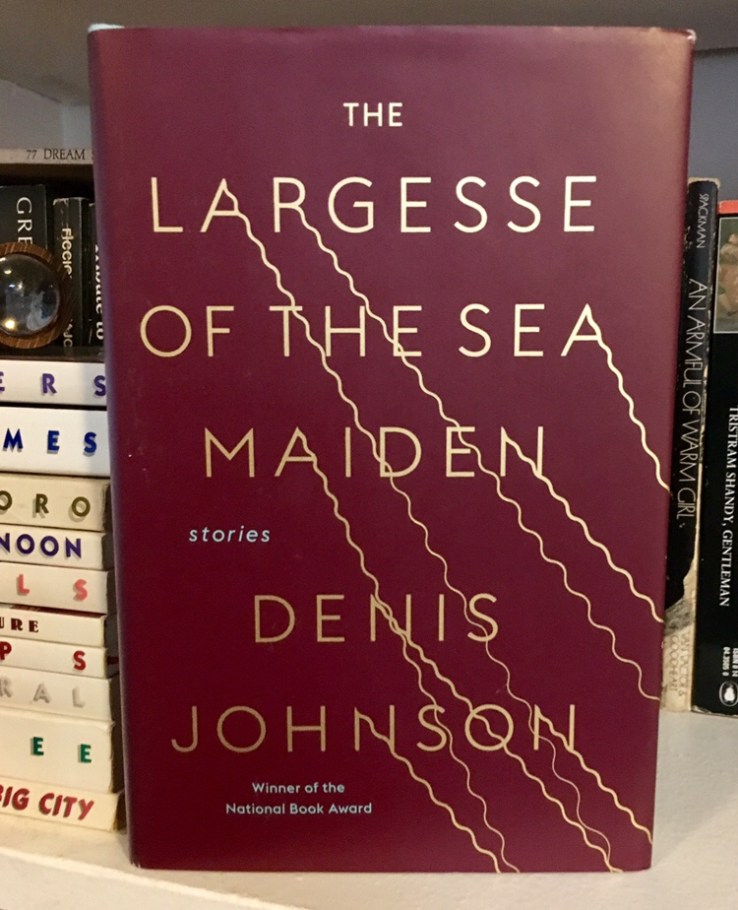
Denis Johnson’s The Largesse of the Sea Maiden (Book acquired, 27 June 2018)

img_0214

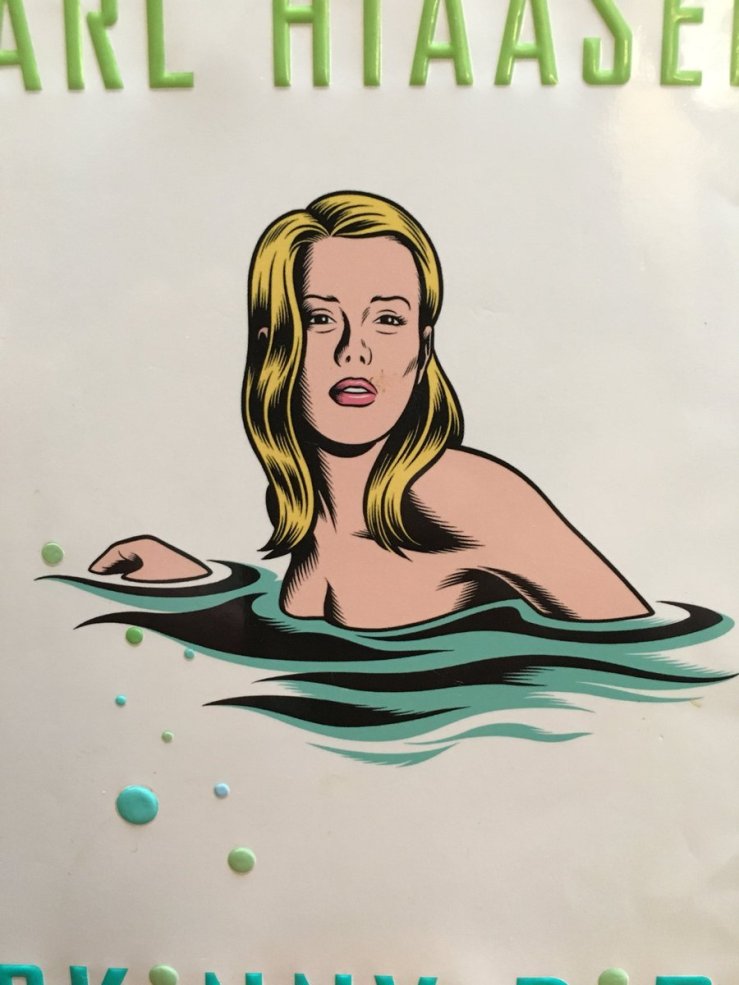
I had no intention of getting another book when I went to the bookstore yesterday. Swear. I had a few boxes of books my uncle gave me, and I was going to trade most of them in. Even this Carl Hiaasen novel that had a cool Charles Burns cover:

dguye4vuyaan9yq

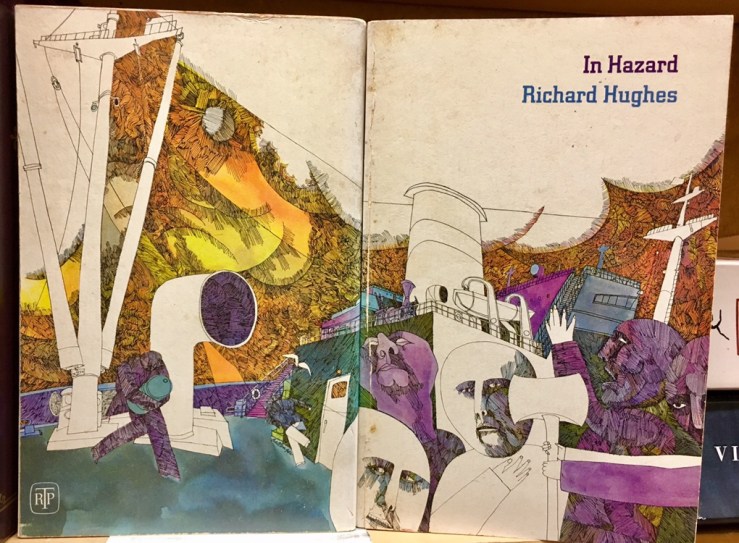
Anyway, I browsed the store a bit, killing half an hour before I had to pick my kids up, and I was tempted by a Richard Hughes’ novel called In Hazard simply because of its magnificent cover (here, I put two copies together—the back is on the left, the front is on the right):

img_0205

As an afterthought, I went through the new fiction section—something I hardly ever do—looking for Helen DeWitt’s new collection Some Trick, just to thumb through it. They didn’t have it, but they did have Denis Johnson’s posthumous collection The Largesse of the Sea Maiden (in hardback and for half price). I ended up reading the first little vignette in the first story in the collection, and then remembered that I’d read the story (the title track) a few years ago in The New Yorker. In particular I remembered the vignette called “Accomplices,” a near-perfect two-paragraph punch that features a Mardsen Hartley painting and too much bourbon. Here it is:

“Accomplices”

by

Denis Johnson


Another silence comes to mind. A couple of years ago, Elaine and I had dinner at the home of Miller Thomas, formerly the head of my agency in Manhattan. Right—he and his wife, Francesca, ended up out here, too, but considerably later than Elaine and I—once my boss, now a San Diego retiree. We finished two bottles of wine with dinner, maybe three bottles. After dinner, we had brandy. Before dinner, we had cocktails. We didn’t know one another particularly well, and maybe we used the liquor to rush past that fact. After the brandy, I started drinking Scotch, and Miller drank bourbon, and, although the weather was warm enough that the central air-conditioner was running, he pronounced it a cold night and lit a fire in his fireplace. It took only a squirt of fluid and the pop of a match to get an armload of sticks crackling and blazing, and then he laid on a couple of large chunks that he said were good, seasoned oak. “The capitalist at his forge,” Francesca said.

At one point we were standing in the light of the flames, I and Miller Thomas, seeing how many books each man could balance on his out-flung arms, Elaine and Francesca loading them onto our hands in a test of equilibrium that both of us failed repeatedly. It became a test of strength. I don’t know who won. We called for more and more books, and our women piled them on until most of Miller’s library lay around us on the floor. He had a small Marsden Hartley canvas mounted above the mantel, a crazy, mostly blue landscape done in oil, and I said that perhaps that wasn’t the place for a painting like this one, so near the smoke and heat, such an expensive painting. And the painting was masterful, too, from what I could see of it by dim lamps and firelight, amid books scattered all over the floor. . . . Miller took offense. He said he’d paid for this masterpiece, he owned it, he could put it where it suited him. He moved very near the flames and took down the painting and turned to us, holding it before him, and declared that he could even, if he wanted, throw it in the fire and leave it there. “Is it art? Sure. But listen,” he said, “art doesn’t own it. My name ain’t Art.” He held the canvas flat like a tray, landscape up, and tempted the flames with it, thrusting it in and out. . . . And the strange thing is that I’d heard a nearly identical story about Miller Thomas and his beloved Hartley landscape some years before, about an evening very similar to this one, the drinks and wine and brandy and more drinks, the rowdy conversation, the scattering of books, and, finally, Miller thrusting this painting toward the flames and calling it his own property, and threatening to burn it. On that previous night, his guests had talked him down from the heights, and he’d hung the painting back in its place, but on our night—why?—none of us found a way to object as he added his property to the fuel and turned his back and walked away. A black spot appeared on the canvas and spread out in a sort of smoking puddle that gave rise to tiny flames. Miller sat in a chair across the living room, by the flickering window, and observed from that distance with a drink in his hand. Not a word, not a move, from any of us. The wooden frame popped marvellously in the silence while the great painting cooked away, first black and twisted, soon gray and fluttering, and then the fire had it all.

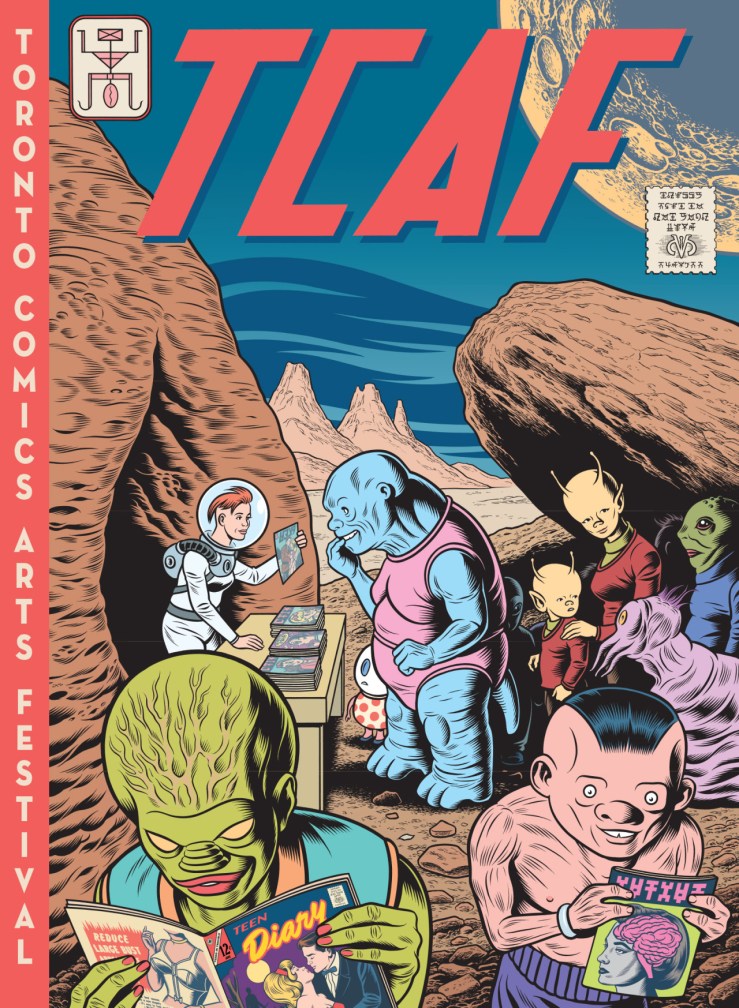
Charles Burns’s Toronto Comic Arts Festival Poster

tumblr_nkb79pJ4Ah1rp7p8xo1_1280

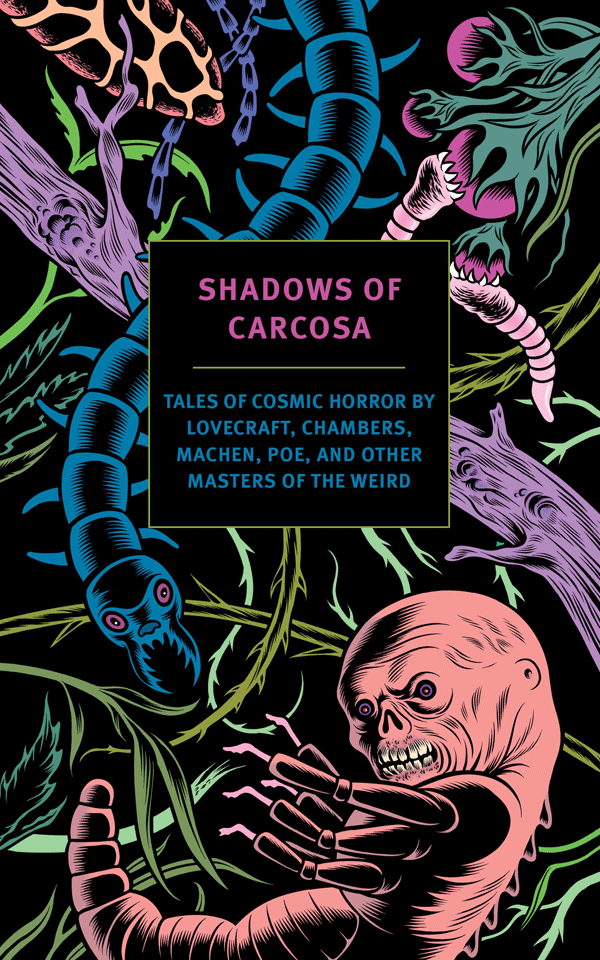
Charles Burns’s Shadows of Carcosa Cover

productimage-picture-shadows-of-carcosa-456

Charles Burns Narrates a Section of His Comic Big Baby

From the 1988 documentary Comic Book Confidential.

Had a surreal moment the other day while reading the Charles Burns’s collected Big Baby strips: I knew the dialogue, somehow, word for word—could actually hear it—but I couldn’t remember from where. I thought maybe Burns had, I don’t know, adapted it from an old movie or something. Anyway, a Google search later and I figured out that I knew it from Savvy Show Stoppers, an album by Shadowy Men on a Shadowy Planet. I owned the album, or, rather a taped version of the album, back in the early nineties—the song “Having an Average Weekend” was the theme for The Kids in the Hall—and the song—actually called “Big Baby”—was the last track—a CD bonus. It was actually written for the film, and that’s Charles Burns doing the vocals.

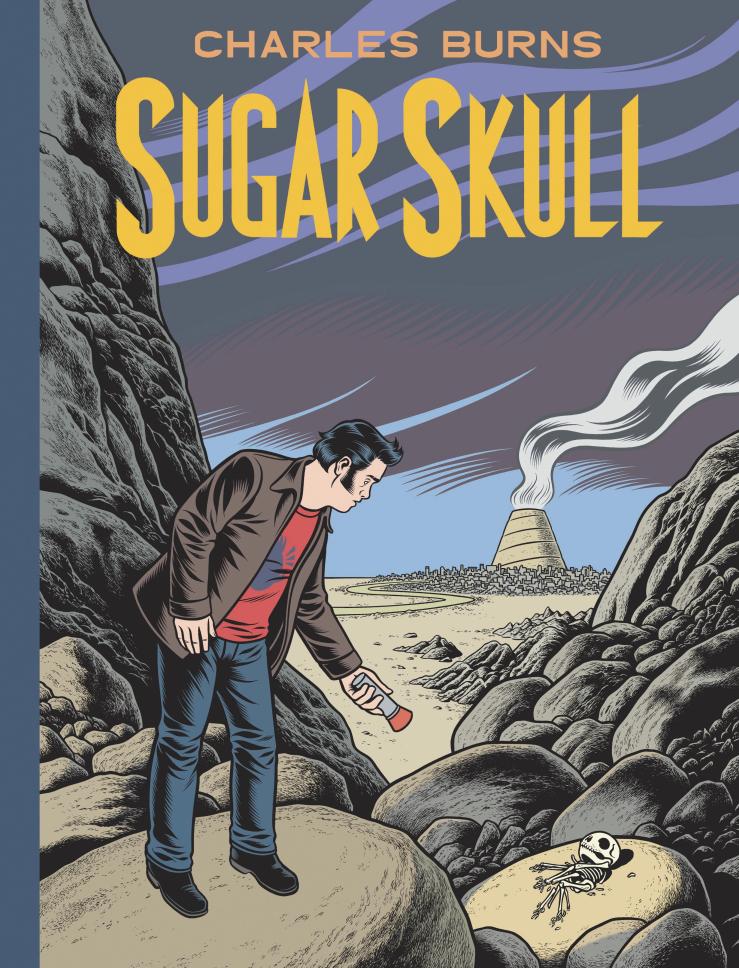
Charles Burns’s Sugar Skull Reviewed

978-0-307-90790-5

Sugar Skull concludes the trilogy that Charles Burns began four years ago with X’ed Out (I reviewed it here) and its 2012 follow-up The Hive (I reviewed it here).

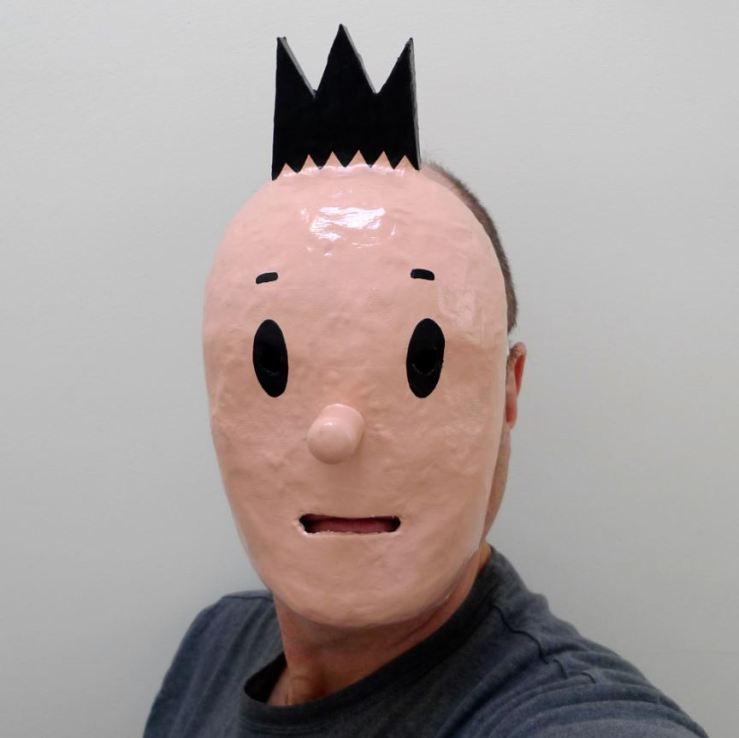
In X’ed Out, Burns introduces us to his protagonist Doug, a would-be art-punk poet whose Burroughsesque sound-collage performances are misunderstood by everyone but Sarah, a troubled artist whose photographs and installations reverberate with menacing violence. We first find Doug in the aftermath of an unnamed trauma involving Sarah and her tyrannical boyfriend—a trauma that Sugar Skull must and does answer to. The trauma transports Doug from his dead father’s office, where he’s been hiding and popping pills, into a fever-dreamscape reminiscent of William Burroughs’s Interzone. In this world, Doug becomes Nitnit, his own features transmuted to the Tintin mask he wears when performing his cut-ups.

The Hive takes Doug/Nitnit even deeper into Interzone, into its subterranean caverns, gaping like tumorous wombs, while simultaneously moving the “real” Doug forward and backward in time, through his doomed relationship with Sarah and into the fallout of their split, where Doug short circuits.

Sugar Skull completes this circuit, offering readers the complete picture—and an exit out of Interzone—even as it dooms Doug/Nitnit to repeat the past. We find here the traumatic violence of love, death, begetting, and denial.

burnsxedouthive

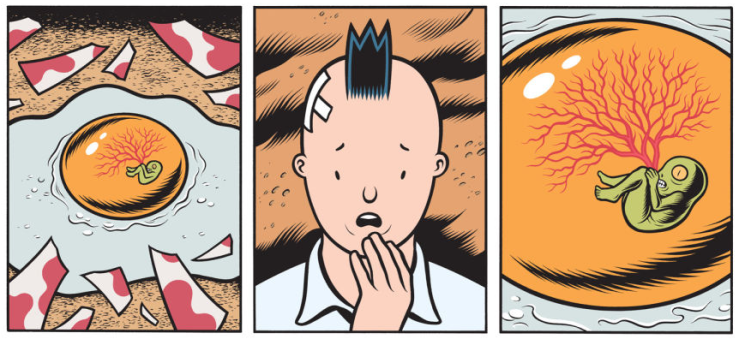
The trilogy’s development evinces in Burns’s rich cover art. X’ed Out shows us young, skinny Doug, his head bandaged, his haircut an echo of Tintin’s cowlick. Wrapped in his dead father’s purple robe and set against utter wreckage, young Doug regards a massive egg, itself a visual echo of Tintin cover. The cover of The Hive shows us an older, heavier Doug, lost and confused in the abject uterine labyrinth of the Hive. In the lower-right corner—the same space the egg occupies on the cover of X’ed Out—lurks one of Interzone’s mutable mutants. This figure repeats in the trilogy, an amorphous being who shifts from Nitnit’s aide and familiar, to a dog stranded in a flood, to a piglet in a jar, to a massive breed-sow, to, perhaps, Doug’s father—and then Doug himself.

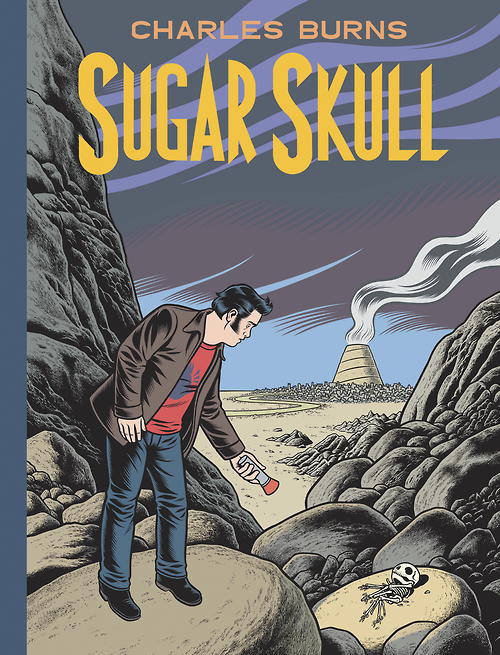
The figure opposite an older, fatter Doug on the cover of Sugar Skull condenses these roles into the emblem of death: it is at once the skeleton of the mutant, but also the frame of Doug’s dead father and the emblem of the symbolic infanticide at the core of the trilogy. And so we get the natural progression of life—from egg and embryo to a pink bundle of mobile cells to skeletal remains—set against an uncanny, chaotic backdrop.

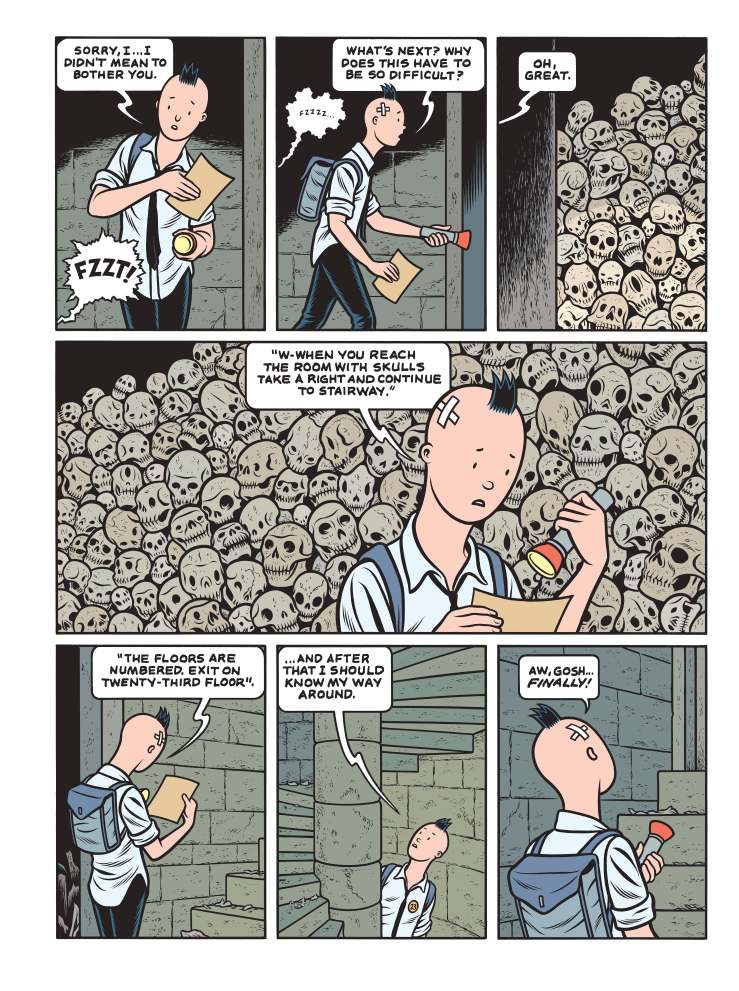
Throughout the trilogy, Burns forces reader and Doug alike to navigate that chaos. The first two volumes in the series propelled the reader (and Doug, of course) through different times, different realities, sifting through the awful wreckage for clues, for a pattern, for an answer that might explain poor Doug’s trauma. By the beginning of Sugar Skull, our hero is finally equipped with a map to guide him through the underworld:

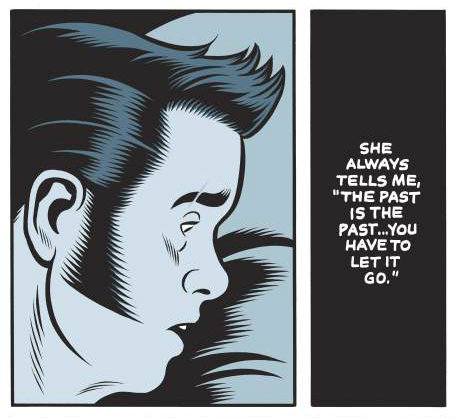
Page 10 from Burns_SUGAR SKULL“Why does this have to be so difficult?” our hero wonders. Because of repressed fear, anger, hurt—and failure. The real trauma, the secret trauma, of the trilogy is Doug’s radical failure. This failure keeps him up at night, both in waking sweat, but also in his Interzone, the fantasy world where the repressed returns, where his alter-ego Nitnit can play boy detective. And yet, as we see in Sugar Skull, Nitnit, dream warrior, is ultimately unequipped to right the wrongs of the past. He can only replay them in a dark, surreal space. The past is never dead. It’s not even past.
b a

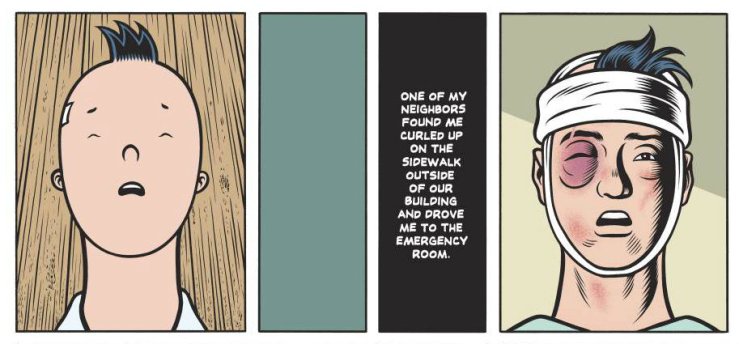
X’ed Out and The Hive point repeatedly to the specter of violence and infanticide, both through implication in the dialogue as well as intense imagery. Both novels ominously arrange events that could only lead to the head wound that our hero sustains before the trilogy begins—a head wound that may or may not be a primary cause of Doug’s excursions into irreality.

d

The infanticidal images that haunt the first two books pointed to a deeper mystery though, one beyond the physical violence Doug suffered. Those books hinted at abortion or miscarriage. But there are other ways to lose children.

Have I over shared the plot? Or am I hinting too vaguely? Reviewing my lines, it seems like I’ve said nothing at all, or perhaps dwelled on the first two books too much.

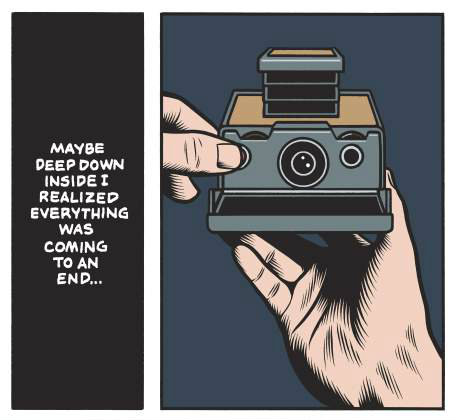
To simplify: Sugar Skull is sad and beautiful and strange and deeply human—this is not the tale of a doppelgänger’s adventures in wonderland, but rather the story of youth’s cowardice, of how we fail ourselves and others, how the versions of ourselves that we try to pin down—like Doug, who takes endless selfies with a Polaroid—are not nearly as stable as we might like them to be. Sugar Skull also explores how we cover over those instabilities and failures—I didn’t do those things; This isn’t happening to me.

c

The final moments of Sugar Skull enact a shock to stability, to sense of self. Burns fulfills a narrative promise to his readers, and to Doug—one that, if I’m honest, was not what I had predicted at all—and then sends Doug’s altered-ego Nitnit into the desert wilds. The last few pages of Sugar Skull seem to borrow as much from McCarthy’s Blood Meridian as they do from Hergés Tintin or William Burroughs.

And yet Doug passes through the wasteland to a refuge of sorts, the dream-double of two other settings that figure prominently in the trilogy, condensed into a place that is and is not. The setting mirrors Doug’s doomed double-consciousness, a consciousness condemned to repeat the same cycle, to respond again and again to the same terrifying call to nightmare-adventure.

I’ve neglected to comment on Burns’s wonderful art, mostly because I think it speaks for itself. His heavy inks and rich colors help unify the shift in styles that mark Doug’s movement between worlds. The trilogy would be worth the admission price alone just for the art, but Burns offers so much more with his storytelling. What’s perhaps most impressive is how thematically precise Burns’s images are—how panels, angles, shots, poses, gestures, and expressions repeat with difference from volume to volume. Burns uses these repeated images to subtly evoke his theme of cycles, doubles, and reiterations. In rereading we see again, recognize again—but from a different perspective.

And if Burns strands Doug/Nitnit in a loop of repetition, he also extends, perhaps, that same chance to his hero—to see again, but from a different perspective. If Sugar Skull forecloses the possibility of escape from the past, it doesn’t cut off a generative futurity. And as our protagonist awakes—again—to follow Inky into the strange wreckage of the past, many readers will feel prompted to follow the pair—again, and then again.

Sugar Skull is available now in hardback from Pantheon.


I was filling in the holes | Charles Burns discusses Tintin’s influence

cb

Charles Burns talked to The New Yorker about the influence Herge’s Tintin had on his X’ed Out trilogy:

The format of the three hardcovers is based on Tintin in its Franco-Belgian comics album format… Luckily, I had those books growing up. When I was five years old—I couldn’t even read yet—my Dad, who went to bookstores and libraries all the time, brought back one of those early Tintin books for me. It felt like the first book that was just my own…

Eventually, when they started being imported to the U.S., I found the British translations, but it took a long time. So as a kid looking at the books, I was filling in the holes, the missing pieces—kind of making up my own stories, I guess—looking at the back cover and seeing images that didn’t appear in the stories I knew. Now, the book I made—all three books—feels complete to me. I had a pretty firm idea of what the story was going to be when I started, but many things changed while I was working. In the end, all the pieces fit together the way I wanted, or as close as I could get. I feel like I’ve said everything I need to say.

I should have a review of Sugar Skull up next week (surprise: it’s good!—but I loved X’ed Out and The Hive, so).

Portrait of Charles Burns in the Style of Nitnit

burns

Reading The Secret of the Hive — Charles Burns

hive

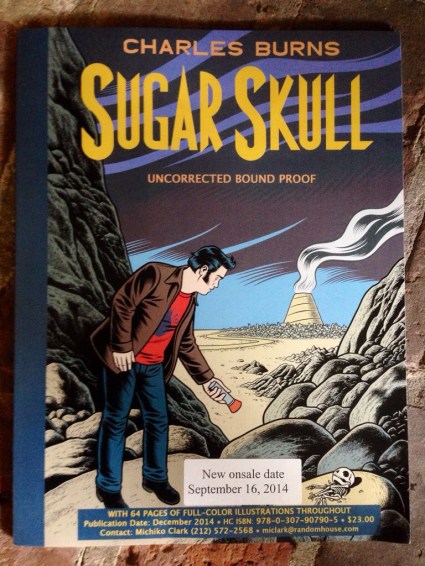
Charles Burns’s Sugar Skull (Book Acquired, 6.06.2014)


20140612-154238-56558886.jpg

Got a bound black and white proof of Sugar Skull, the final book in Charles Burns’s Tintin-punk-rock-Interzone trilogy. Out from the good people of Pantheon this September.

Back cover image:
20140612-154241-56561020.jpg

So I went back and reread X’ed Out and The Hive and then yeah I read Sugar Skull. I’m going to wait to read a finished color copy to do a full review but, good great weird stuff.

A tender moment:

20140612-154241-56561231.jpg

Sugar Skull Cover (Charles Burns)

burns

The final book in Charles Burns’s Tintin-punk-rock-Interzone trilogy will be published by Pantheon this September. Time to revisit X’ed Out and The Hive.

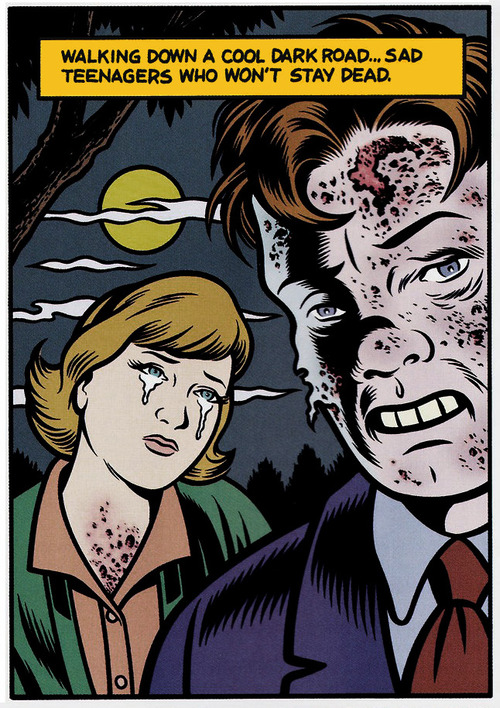
Sad Teenagers Who Won’t Stay Dead (Charles Burns)

burnny

Little Red Riding Hood — Charles Burns

burns