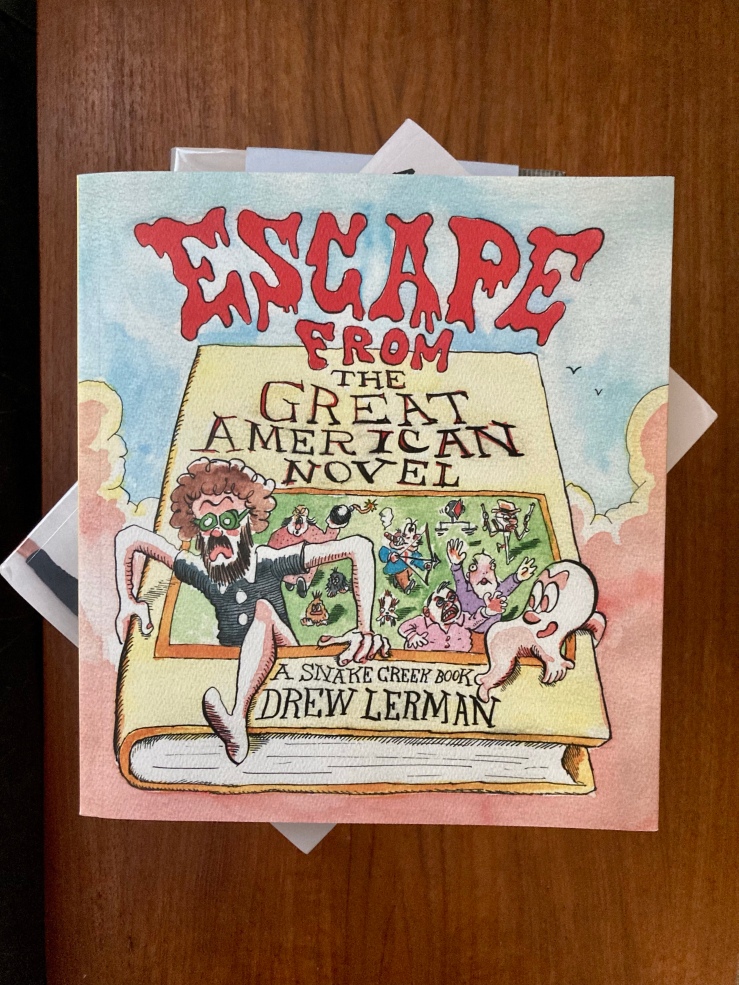
Drew Lerman’s comic strip Snake Creek takes us into the world of best pals Roy and Dav, weirdos among weirdos in Weirdest Florida. Their adventures and misadventures are both absurdly comic and zanily tragic, calling to mind George Herriman’s Krazy Kat strips and Samuel Beckett’s pessimism, Walt Kelly’s primeval Pogo and Robert Coover’s jivetalk, all rendered in kinetic black ink four-panel doses. I’ve been a big fan of the strip for a few years now, and Lerman’s latest collection Escape from the Great American Novel is his best work to date, a fun, messy, spirited send-up of the relationship between art, nature, and commerce.
Escape from the Great American Novel is a novel in just over 150 strips, spanning the end of August, 2019 through the beginning of August, 2021. If you reflect on those dates for a minute, you might recall that we squeezed in a lot of history there. Many of the (so-called) real-life tensions of that tumultuous time bubble up (and occasionally erupt) in the zany, myth-elastic world of Snake Creek.
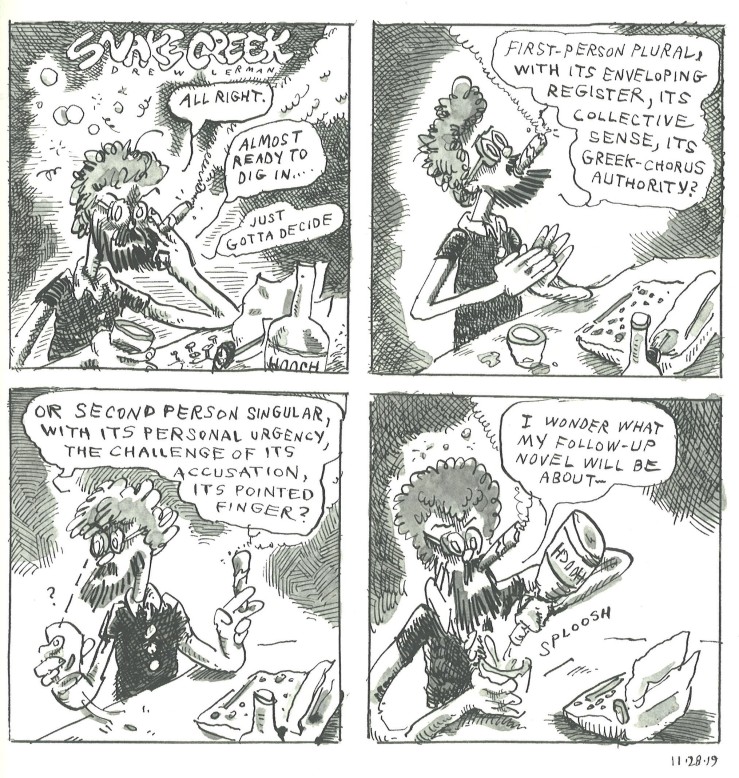
Things begin simply enough, with Dav seeking to reclaim his “status as a reader of books.” Our protagonist simply wants to dig in to fine literature, but news of approaching Hurricane Dorian blocks his book time. Lerman is a Miamian (a Floridian like myself), and although the world of Snake Creek reverberates with massive streaks of irreality, it is nevertheless also beholden to real-life forces of nature. Ever the slackers, Dav and Roy are ill-prepared for an impending Cat 5. Lerman lays out a comedic scene that might be familiar to anyone who’s tried to buy batteries and water and plywood at the last minute:
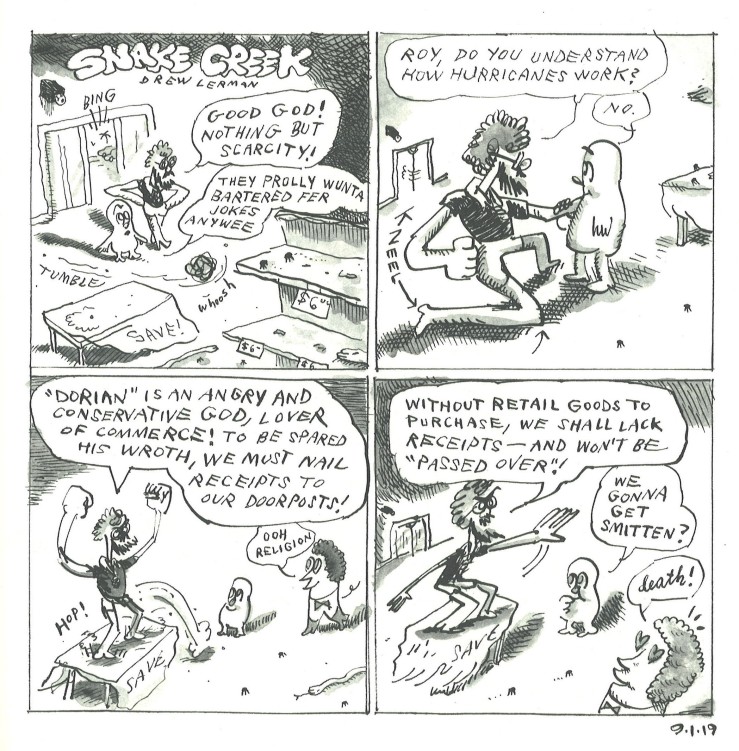
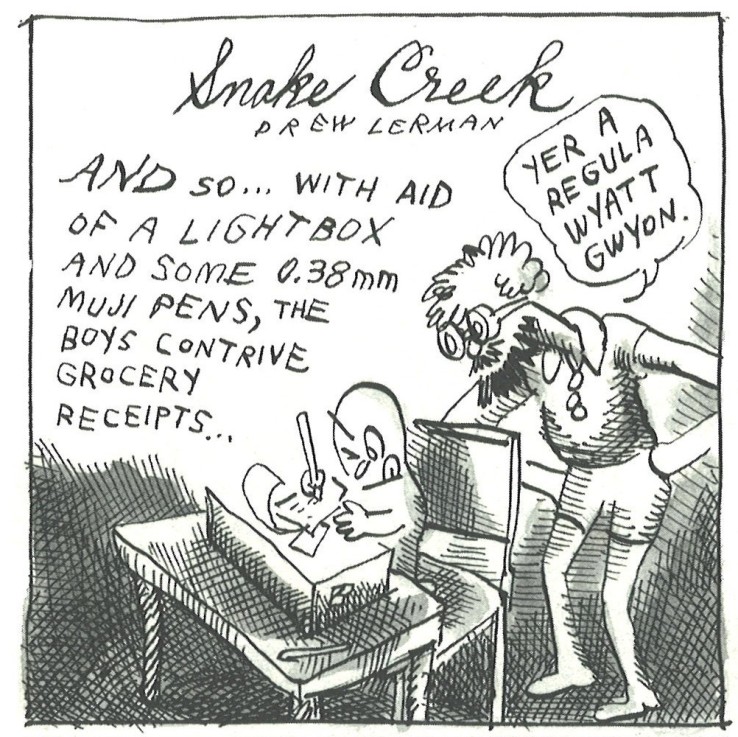
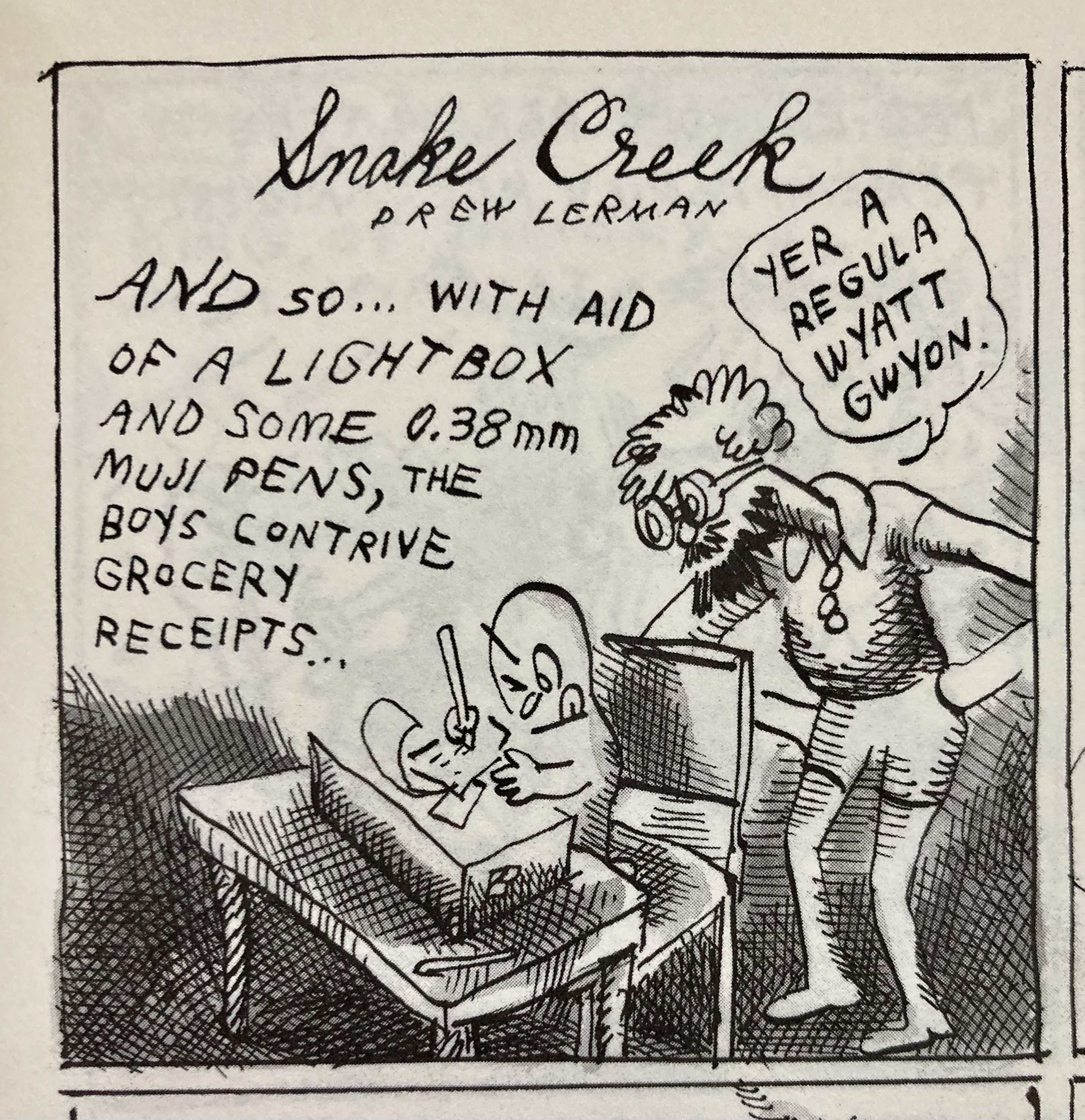
The early Dorian episodes of Escape usher in a critique of capitalism-as-religion, or capitalism-as-philosophy (as opposed to, say, the naked reality of exploitation both of people, animals, and natural resources). Short on capital or material, Dav and Roy concoct a plan to forge receipts, totems of capital that might ward off the angry Nature God Dorian. Lerman sneaks in a reference to the erstwhile hero of William Gaddis’s 1955 novel The Recognitions, the forger Wyatt Gwyon:
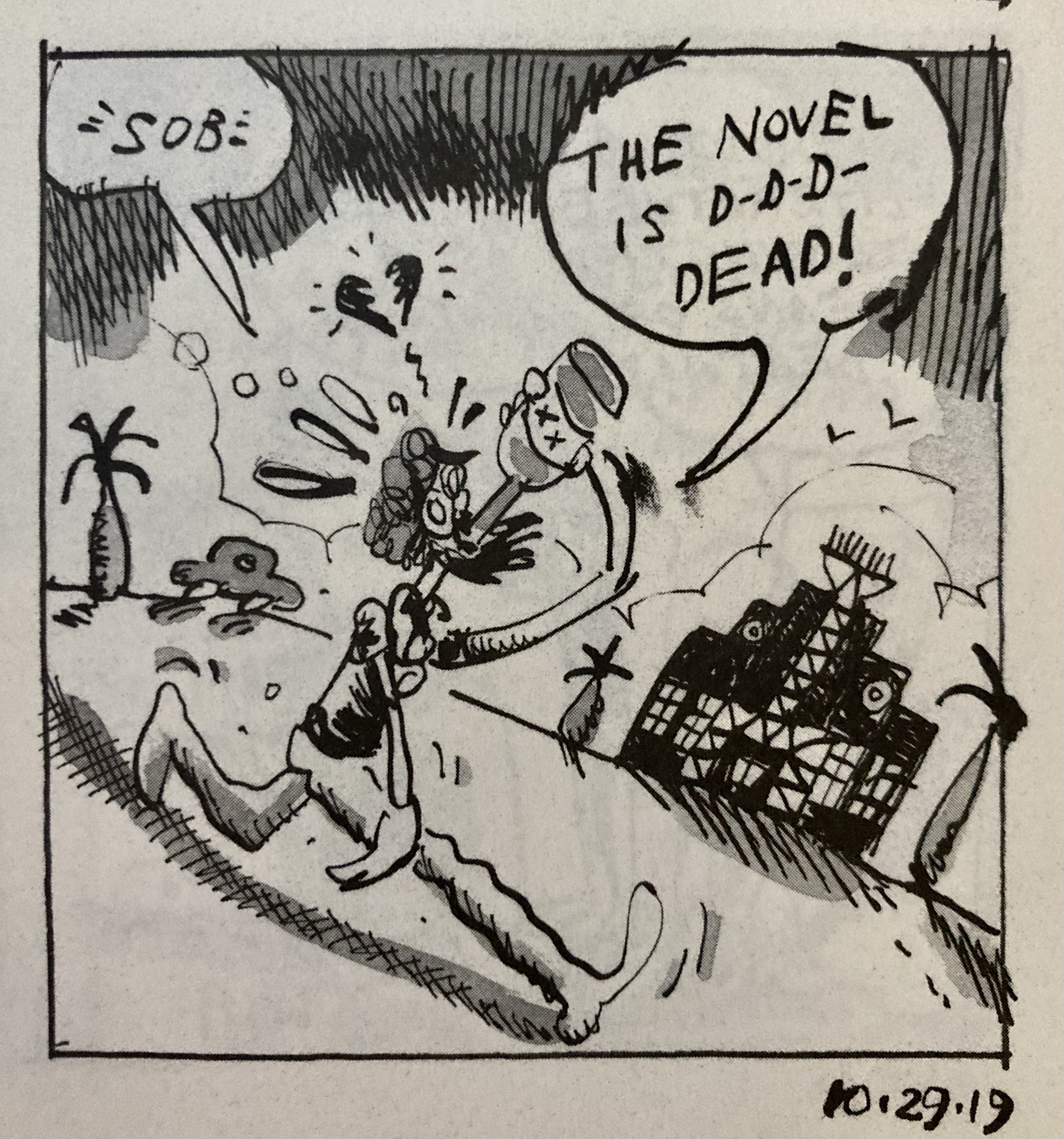
The storm passes, post-hurricane sobriety settles in, and Dav finds himself reflective: Just what is he doing with his life? And, maybe more to the point, what can he do to extend that life into immortality? His solution, immediately ridiculed by friend Roy, is to commit himself to writing The Great American Novel:
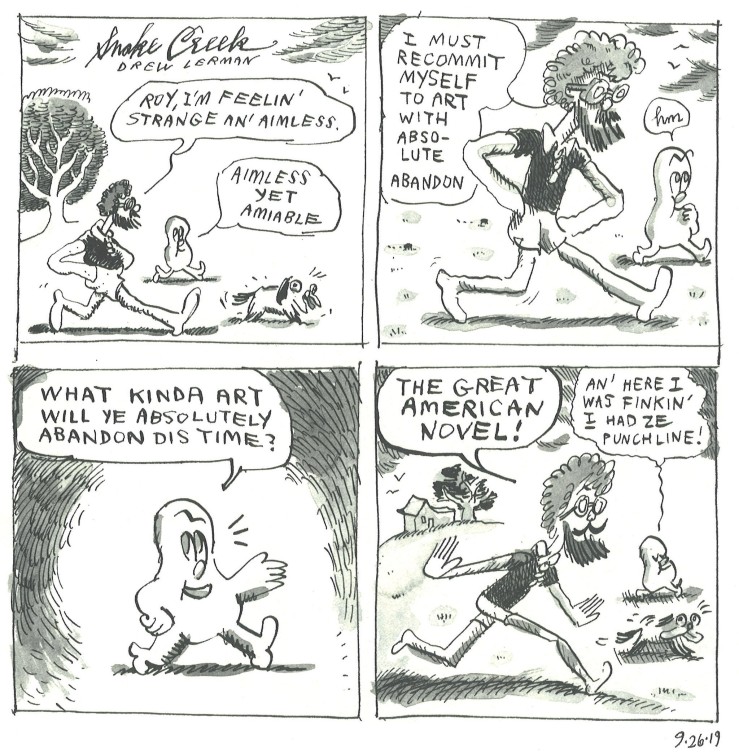
Dav’s quest takes a solipsistic turn. He plays the tortured artist, his ambition a block to his actual progress in writing The Great American Novel. Lerman satirizes the over-inflated but self-defeating ego of the artist who aspires to surpass all the great works came before him. While the pratfalls of a would-be tortured artist is not a particularly fresh subject matter, Lerman brings vitality to his depiction of Dav’s struggle against the anxiety of influence. If we enjoy mocking Dav, it’s because we understand and empathize with him. Who doesn’t want to contend with the greats?
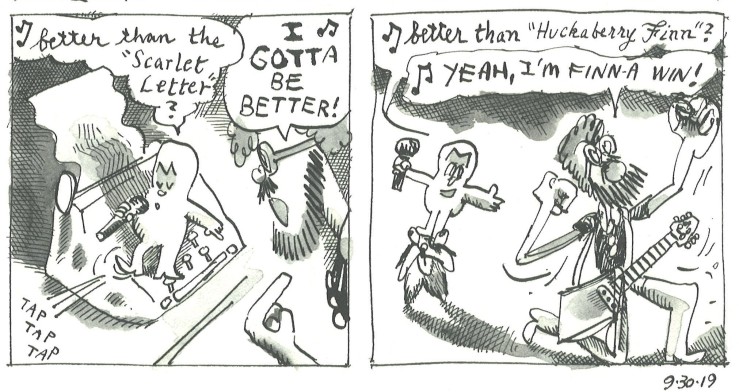
Dav’s quest also takes a turn away from his shenanigans with Roy. The pair’s riffing has always been the heart of Snake Creek, but Lerman keeps his partners apart for much of Escape. Dav’s dive into writing (or preparing to write, or preparing to prepare to write) distract him from Roy time. Initially, Dav chugs out reams of pages in the thrill of early enterprise. His ego swells, inflated by the grandeur of his illusions:
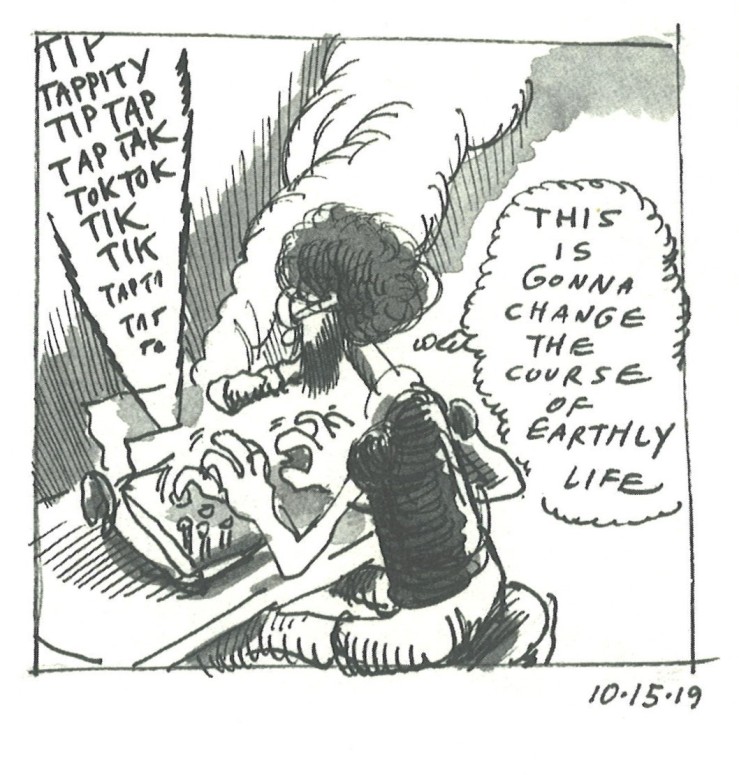
Only a few strips later, we find Dav’s illusions deflated. “S’all trash!” he declares over the mess of his nascent manuscript. Roy tries to help Dav. Snake Creek folk are all riled up over the plans of some “ollie garx” and the people are protesting. Roy rightfully recognizes potential inspiration here. He can bring his pal back to earth. “Sum sorter politicka thing” is happening, and that might be the inspirational grist Dav needs, right? But Dav rejects him: “I do not wish to know about anything that happened on this earth.” It might be hard to change the course of earthly life with that attitude. Instead of heeding Roy’s advice, Dav falls deeper into navel-gazing, imagining his future success, and generally doing anything except writing.
Dav’s dithering with the typewriter leaves Roy loose and “roving.” An amiable fellow, Roy soon takes up with two Russian oligarchs, Lev and Igor. This nefarious pair wishes to drill for oil in Snake Creek, destroying the weird paradise for profit. They plan to use charismatic, naïve Roy as their mouthpiece, a trusted liaison to the Creek community who can convince the locals on board to “drill baby drill.”
Lerman’s satire of these “ollie garx” and their relations with Roy is riddled with great gags. The oligarchs give Roy bald eagle eggs, which he proceeds to fry up to Dav’s dismay. They take him golfing and try to get him into Ayn Rand. They explain their anti-nature views—Mother Earth isn’t a caring mother but a devouring father who must, in oh-so Freudian terms, be eliminated. (Lerman, who always sneaks literary allusions into his strips, can’t resist referencing Faulkner’s As I Lay Dying during this exchange.) In one of my favorite exchanges in Escape, the oligarchs try to explain to Roy why his main talking point to convince the Snake Creek denizens to drill should be the promise of jobs: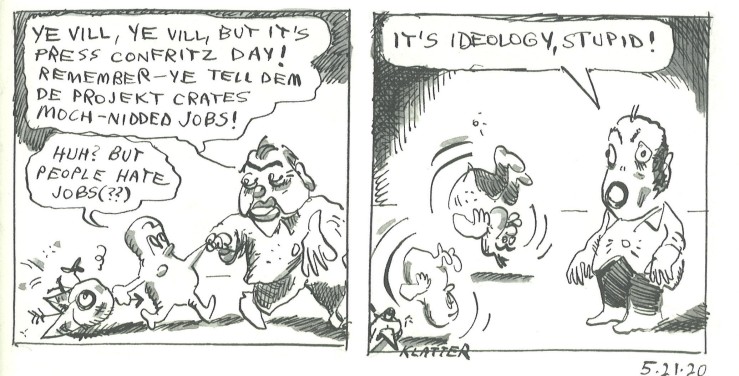
“But people hate jobs” — yes. And it is ideology, but you’re not stupid, reader, although the oligarchs might think you are. Their attempted seduction of sweet Roy plays out against Dav’s egotistical self-seduction into a fantasy of literary greatness in the twin threads of Escape from the Great American Novel. There are meditations on art, immortality, capitalism, and the role of our native environs. There are throwaway jokes on Harold Bloom and arguments over the better English translation of Camus’ L’Etranger. There are drones and fecal preoccupations and a nice ACAB reference; there are anarchist swamp folk and bombs! And there are puns. I hope you like puns.
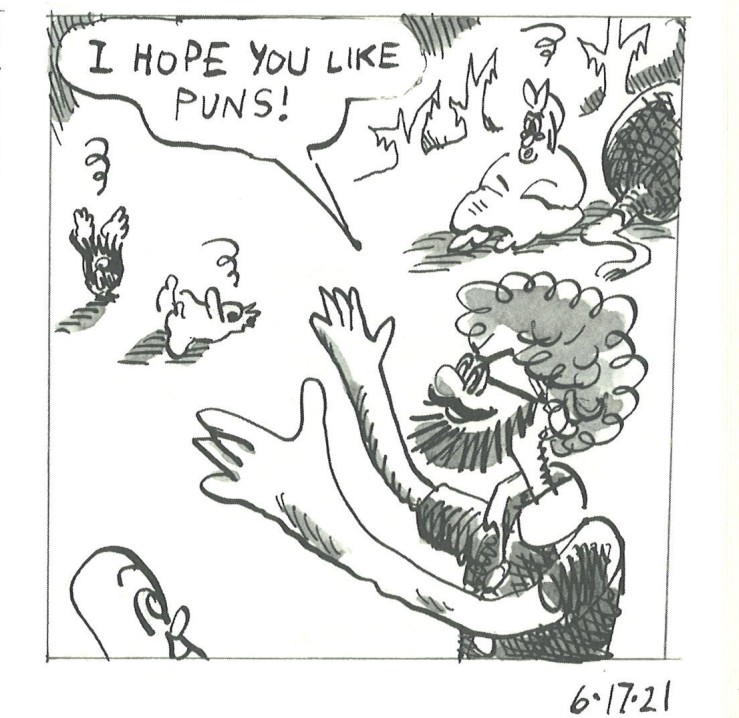
The strips collected in Escape from the Great American Novel span two years that often felt in “real time” like an eternity. Many of us were separated from friends and family over these months. Lerman’s gambit, intentional or otherwise, is to keep his central characters separated, which adds real tension to a comic novel that otherwise might be a loose collection of funny riffs. As I stated before, Roy and Dav are the heart of Snake Creek, so when Lerman finally reunites them the moment is not just cathartic, it’s literarily metaphysical. For all its sardonic jags, ribald japes, and erudite allusions, Escape from the Great American Novel is in the end a sweet, even heartwarming read (Dav and Roy would find a way to mock this sentiment, I’m sure). I loved it. Highly recommended.
Escape from the Great American Novel is available in print from Radiator Comics.




 The title track, “Chrysanthemum” is a surreal noir fantasia punctured by a cup of coffee, with daemon lover James Harris hovering menacingly in the background. It seems to reinterpret Shirley Jackson as does the aforementioned “The Tooth” — itself a revision of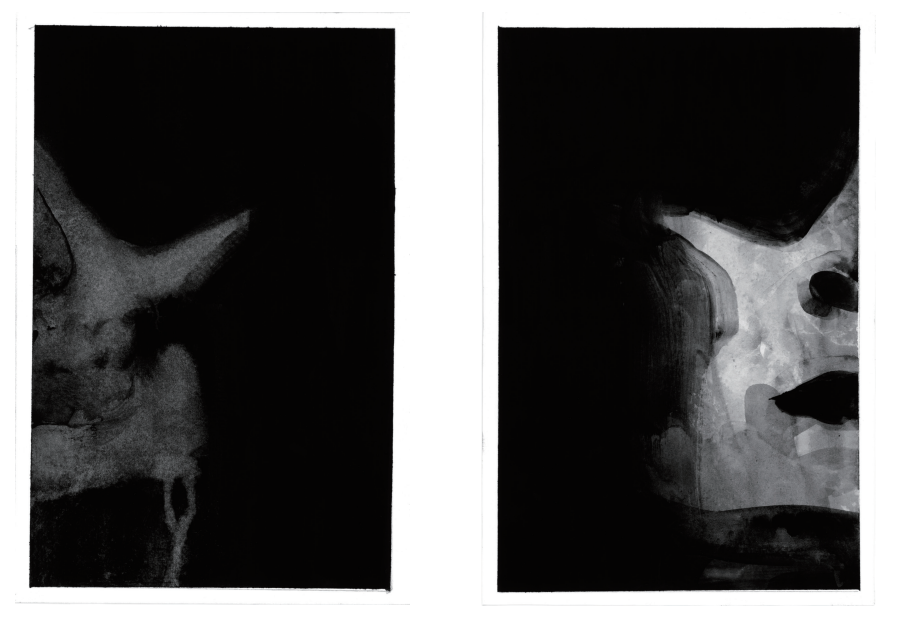
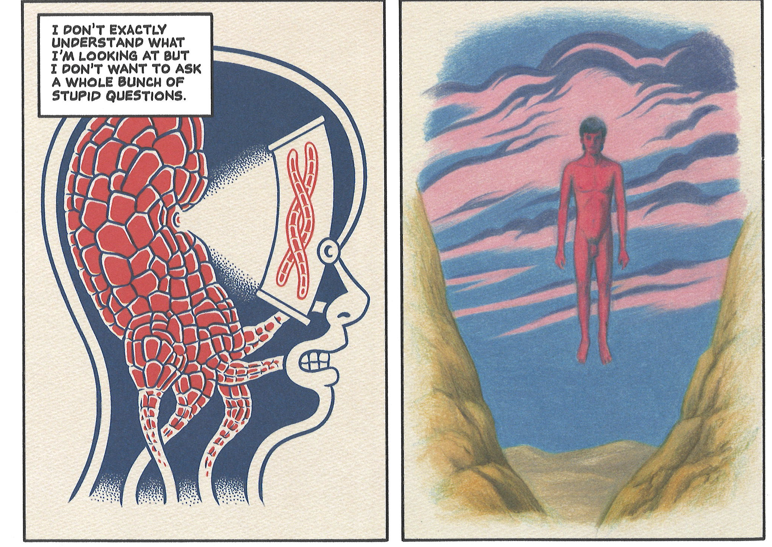
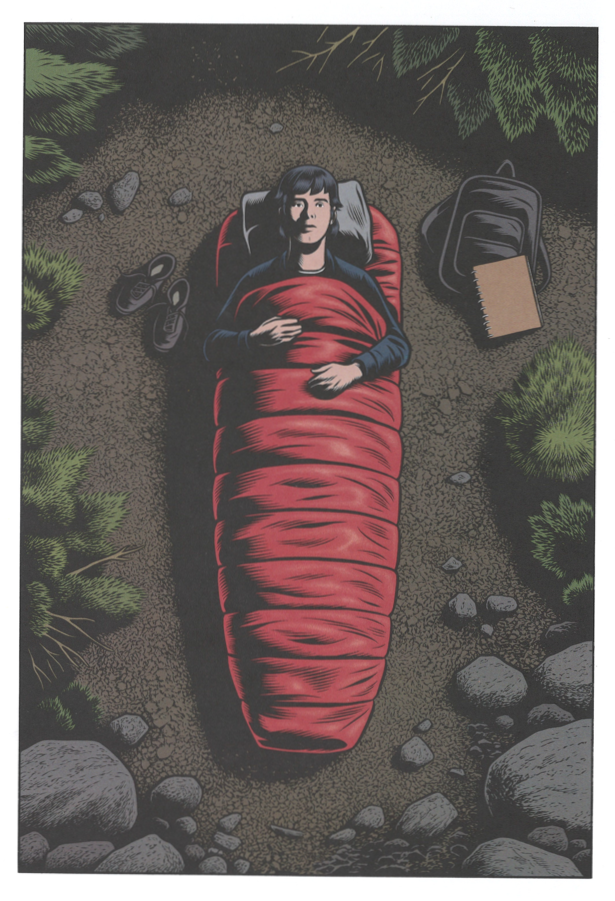
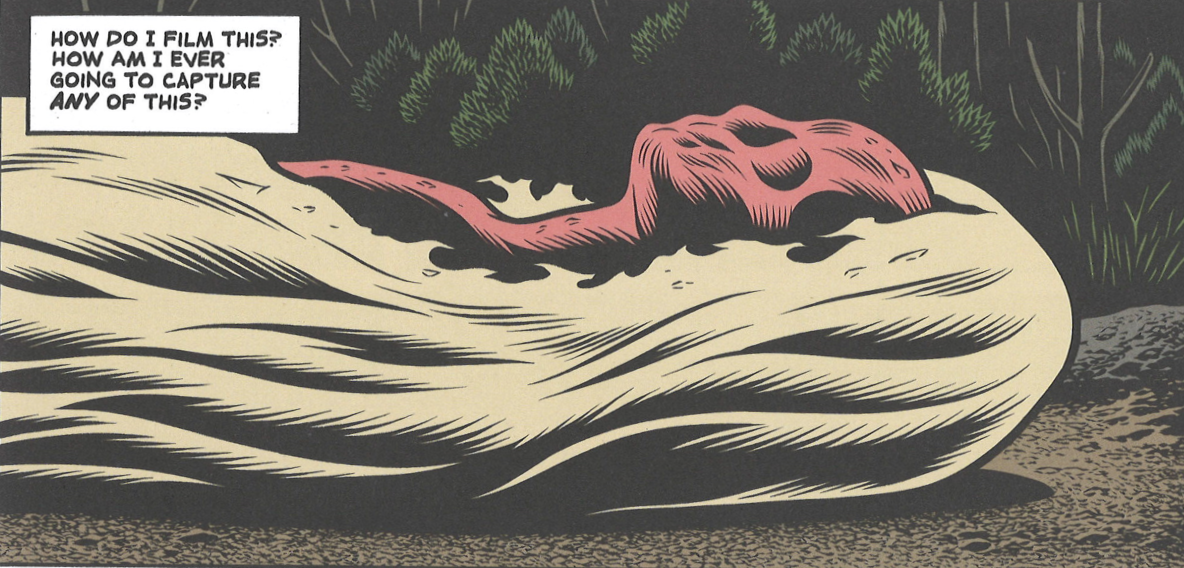
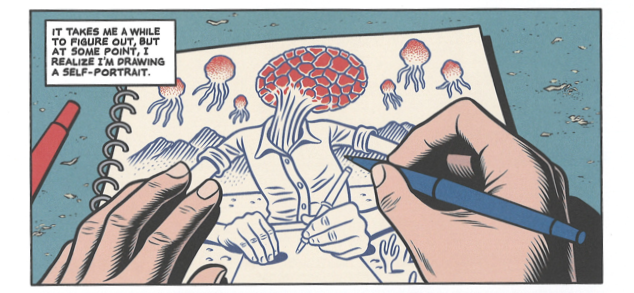
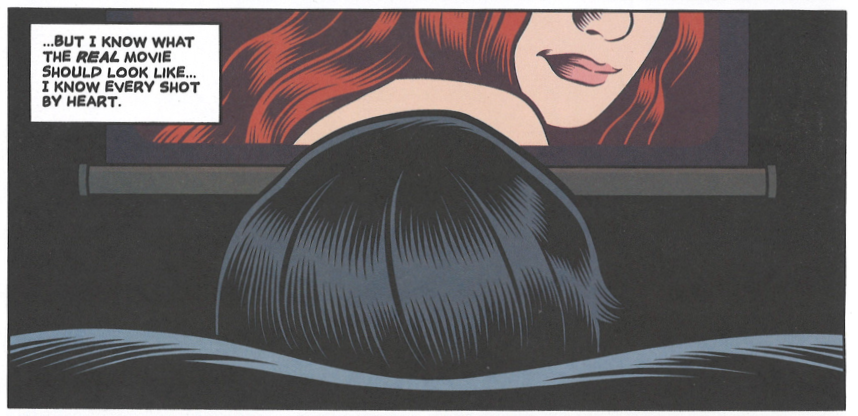
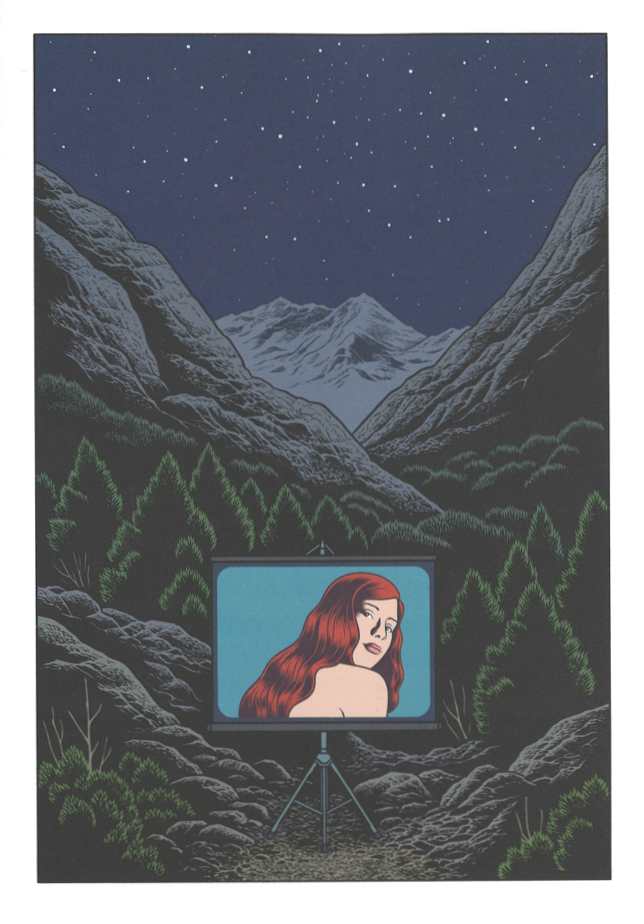 Charles Burns’ latest graphic novel Final Cut tells the story of Brian, an obsessive would-be auteur grappling with an unrealized film project. Brian hopes to assemble his film — also titled Final Cut — from footage he shoots with friends on a weekend camping trip, but the messiness of reality impinges the weird glories of his vibrant imagination. He cannot bring his vision to the screen. He cannot capture all the “fucked-up shit going on inside my head.”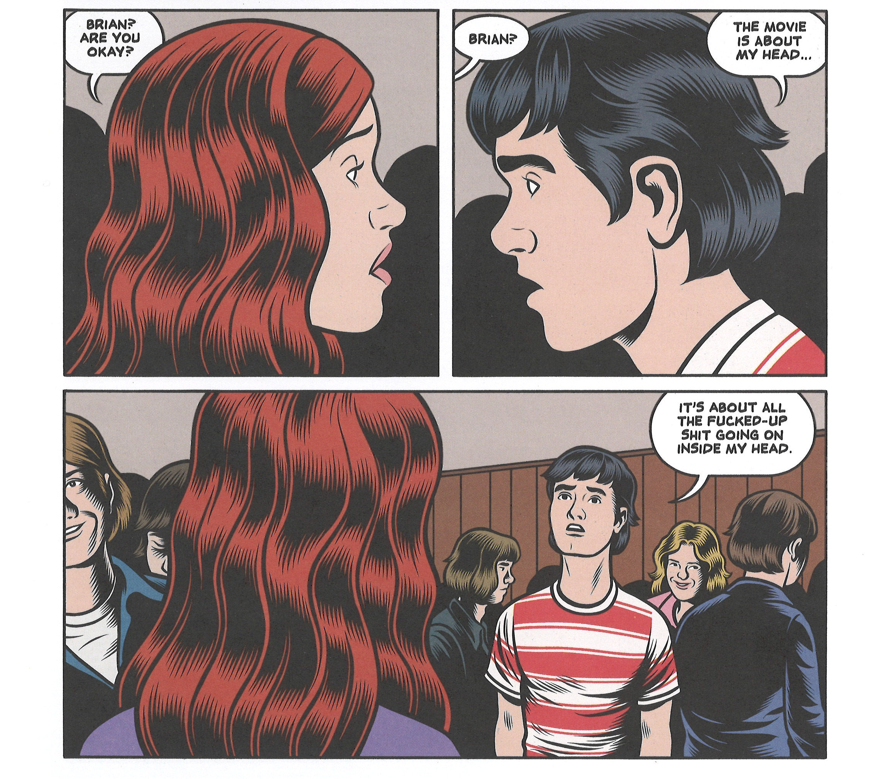
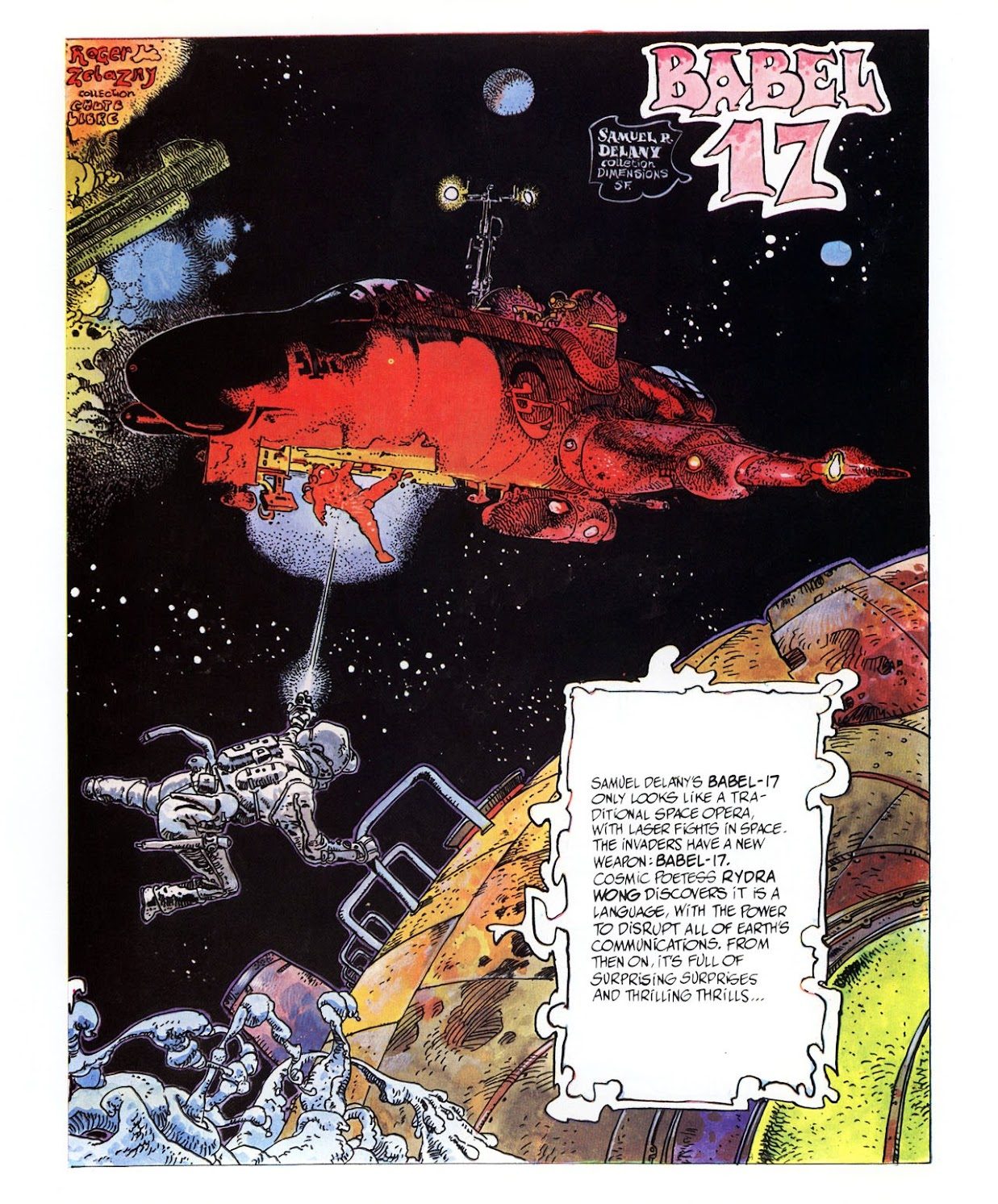
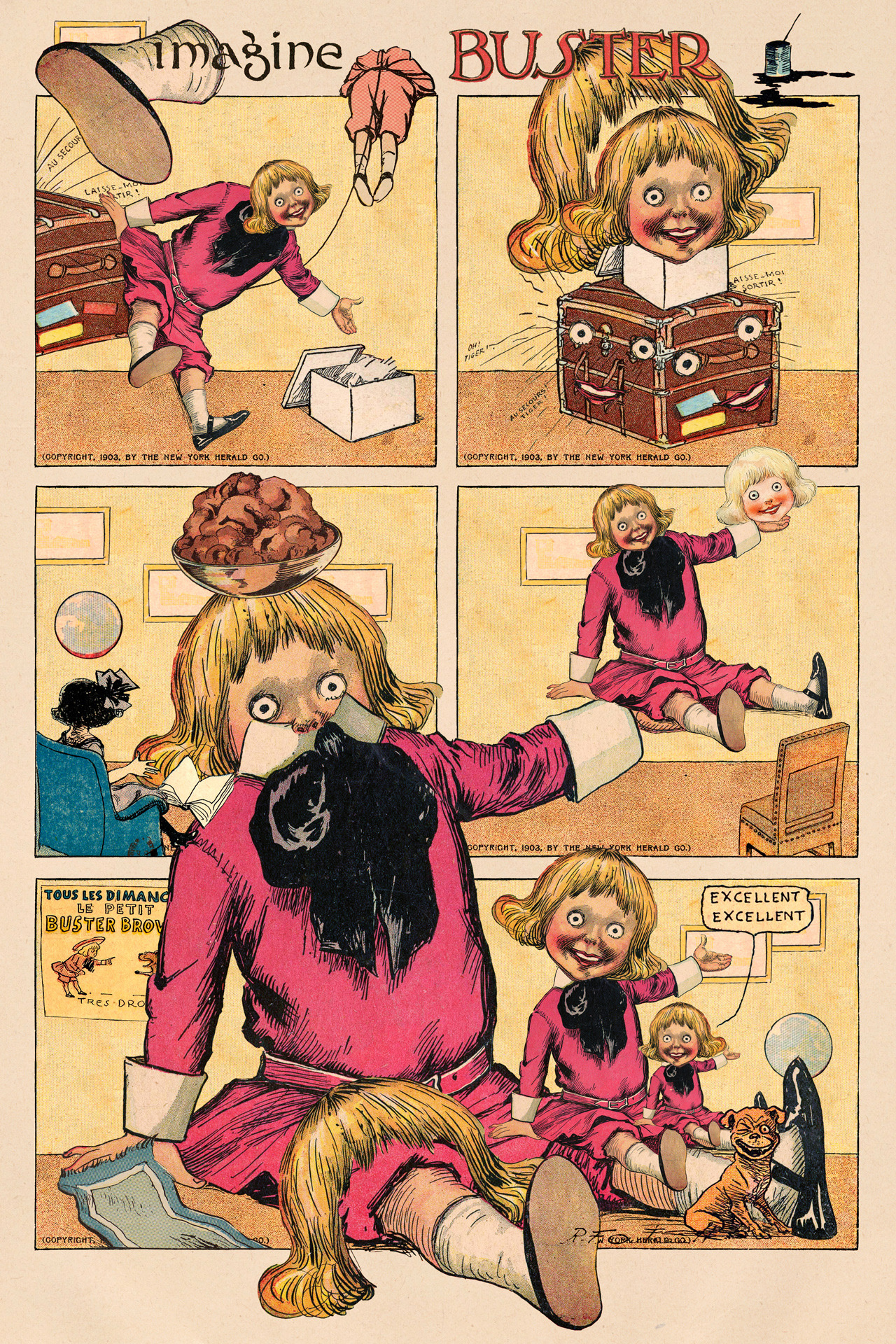

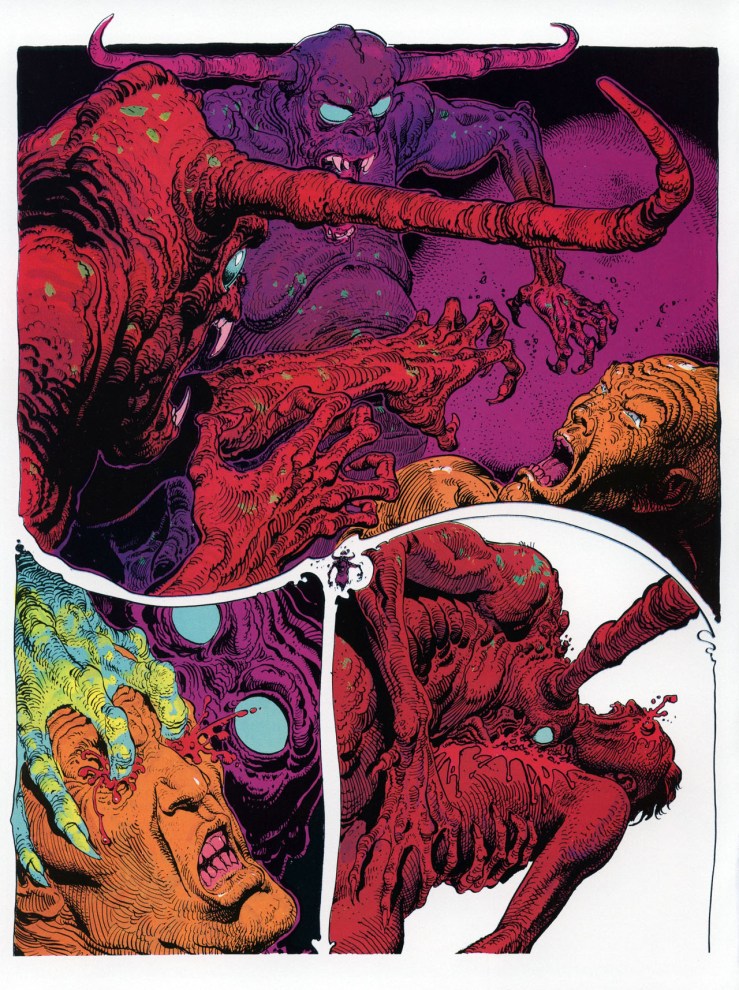 A page from Approaching Centauri by Moebius (Jean Giraud, 1938–2012)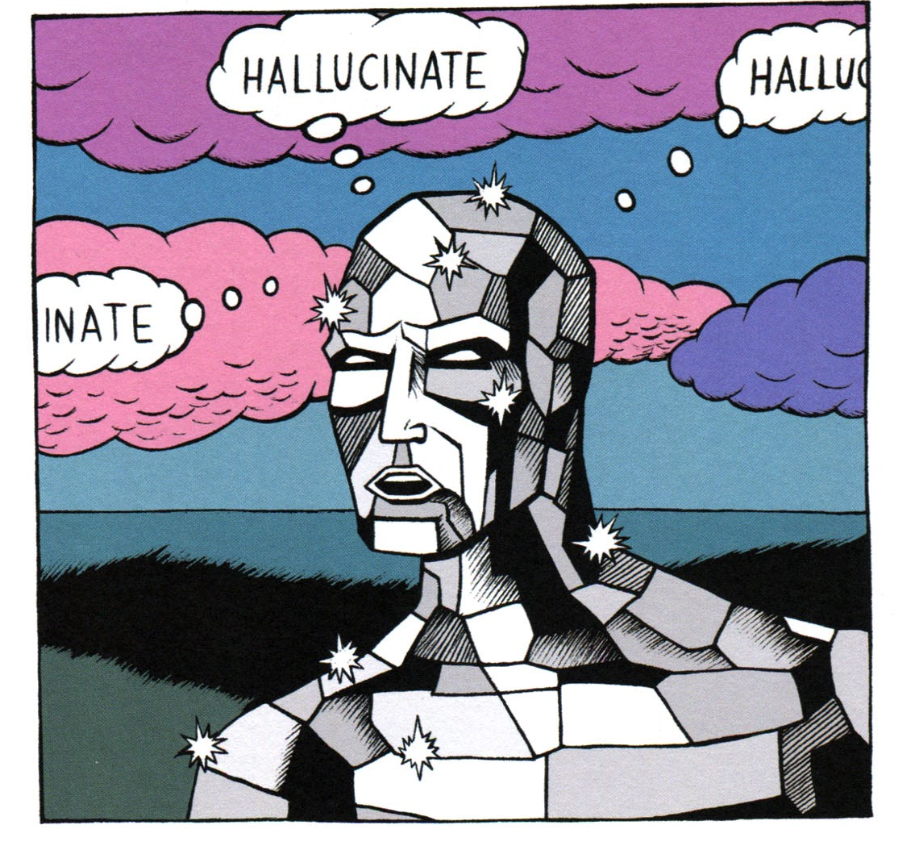
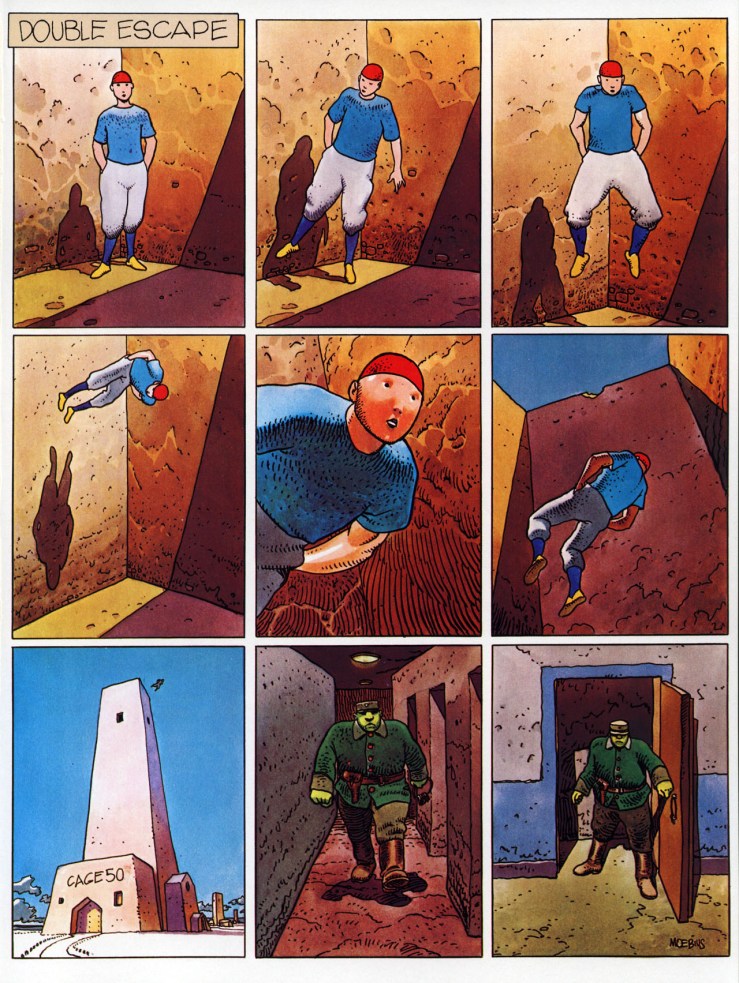
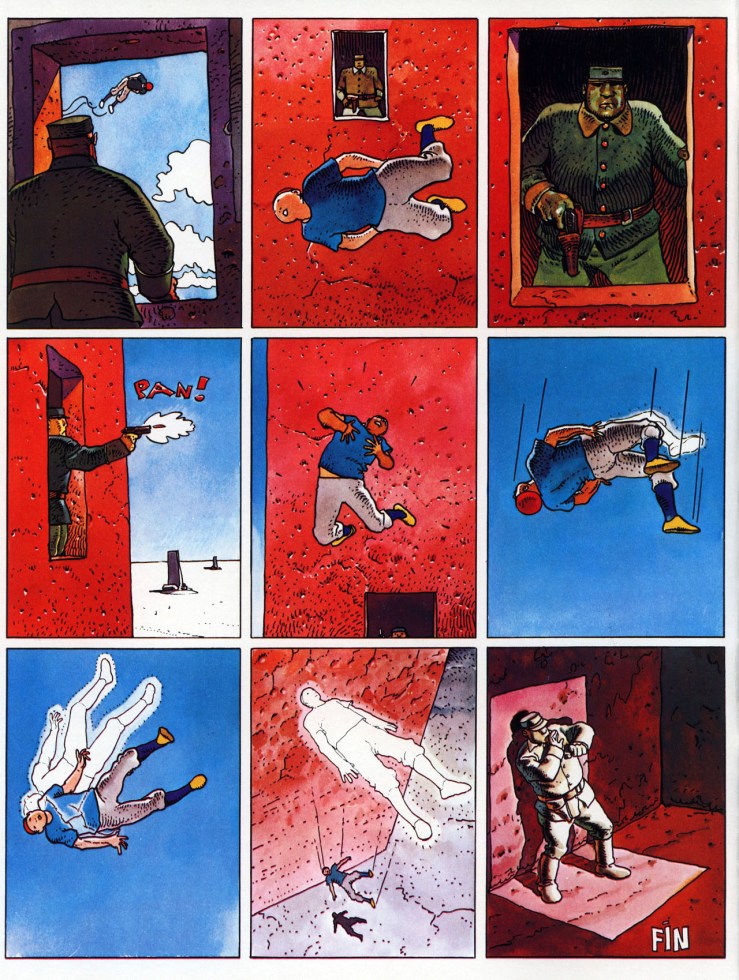




 Biblioklept