A Review of Sonic Life, Thurston Moore’s Rock n’ Roll Fantasia

Thurston’s Rock n’ Roll Fantasy

Thurston Moore’s memoir Sonic Life kicks off in 1963 with his older brother Gene bringing home a 45 of the Kingsmen’s “Louie Louie,” blowing open five-year-old Moore’s mind to the sonic possibilities of raw guitar power.

Moore describes the primal garage hit as the introduction to “a new current of electricity,” one that rewrites the “soundworld” of his earlier suburban life. Our narrator chases that current, finding it in its purest form in The Stooges’ “I Wanna Be Your Dog,” a pre-punk anthem Moore’s band Sonic Youth would cover on their first full-length album, 1983’s Confusion Is Sex. Sonic Youth would also play “I Wanna Be Your Dog” live throughout their career and eventually perform it with Moore’s hero Iggy Pop.

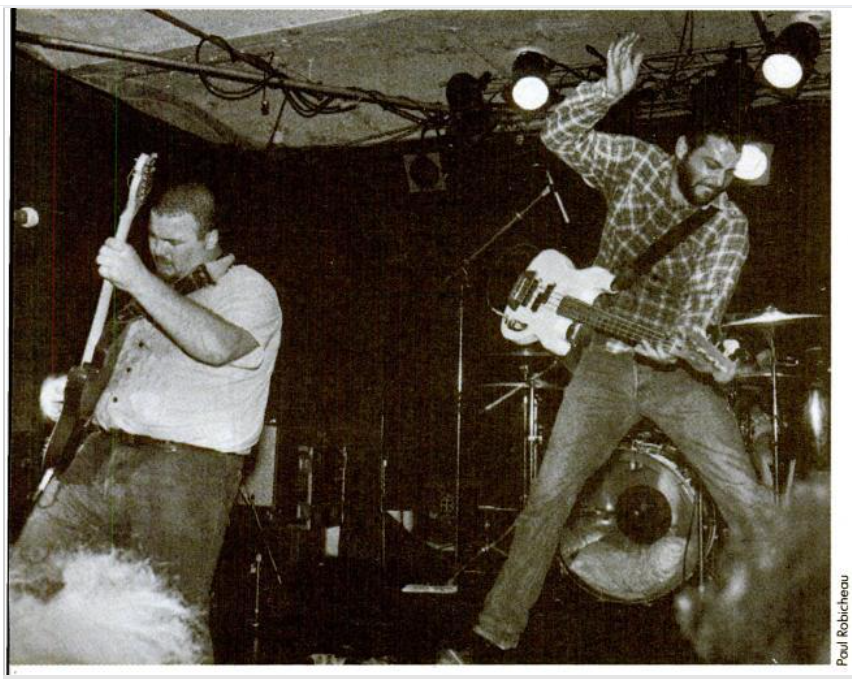
Moore meets many of his heroes in his Sonic Life. It’s a goddamn rock n’ roll fantasy, albeit a fantasy filtered through the gritty reality of punk, No Wave, and smelly indie rock touring vans.

Sure, Moore meets some of the biggies, especially late in the memoir, as Sonic Youth reaches their sonic majority. He chats with Paul McCartney, professing a preference for McCartney’s brother Mike McGear’s stuff to the Beatles. Sonic Youth gets to back David Bowie on “I’m Afraid of Americans.” (Bowie later coos to Moore’s toddler daughter Coco). Moore tours and records with Yoko Ono.

But Moore’s eyes star starrier for the rough luminaries of the New York seventies scene he thrust himself into: Patti Smith, Joey Ramone, Richard Hell, Alan Vega, Tom Verlaine, Lenny Kaye, et al. He’s just as hot for contemporaries like the Minutemen, Black Flag, and Dinosaur Jr., and maybe even hotter for the bands that took Sonic Youth’s squeal to heart, like Pavement, Royal Trux, and My Bloody Valentine.

Sonic Life is larded with people, vibrations, art, life, a love of the weird. Sonic Youth were always as important as curators of the underground, channeling it to seekers of the strange, as they were as a musical act, and Sonic Life is the literary summation of that career.

Thurston’s Literary Fantasy

Any fan who followed Sonic Youth closely, especially in their nineties heyday, would attest that Thurston Moore was the band’s loquacious mouthpiece, a bit of tall charmed ADHD in verbal action, chatting up the world. Sonic Life is liquid, loquacious, loving. Literary protopunk hero Patti Smith populates the pages from the earliest chapters through the last.

Moore also works his decades-long sightings and meetings of William S. Burroughs into the book. Moore first spies Burroughs in 1977 in NYC at a Patti Smith show; decades later the band gets to hang with him a bit. (It’s unclear if Burroughs registers any of this.)

Kathy Acker’s spirit occasionally pops up; it’s clear she was a hero to Moore and his band, but she ghosts them at a planned joint performance in Rotterdam in 1985. The band reads passages of Blood and Guts in High School between songs, tearing out the pages and destroying the book.

Longtime Sonic Youth fans will anticipate Moore’s prose. Seemingly-oblique psychedelic expressions explode, artful phrases dash into each other, ultimately cushioned carefully into a comfortable syntactic register. The effect is not unlike much of Sonic Youth’s post-Sister output, which by turns twisted avant-garde experimentation into pop sugar and deconstructed classic rock riffs into punk scuzz.

Moore’s punchy prose is best summed up in the titles of his 71 chapters, most of them cribbed from song titles and lyrics (including his own): “Flaming Telepaths,” “Mere Animal in a Pre-Fact Clamour,” “Ecstatic Stigmatic,” “Secret Knowledge of Backroads,” “Latex Gold,” etc. The chapter titles are wonderful clues, sometimes direct, sometimes cryptic, always evocative. The prose generally hurtles along, with Moore’s verbal tricks wedged into easy, flowing configurations, but some of the tricks get tired. Particularly, Moore is particularly fond of “Particularly” as a linking expression. Too, we find the book peopled by characters who “could only laugh” at whatever absurdity life has conjured. An editor might have attended these repetitions, but I’m not sure if Moore’s best stuff ever came about via the hands of an editor. The book is generally well-written.

Experimental New York, Seventies and No Wave

Sonic Life begins in 1963, blasting the Kingsmen’s “Louie Louie,” and ends in 2009 with Moore naming Sonic Youth’s last album The Eternal. There are moments outside of this neat chronology though. Discussing his family, Moore goes back a few generations, if only for a paragraph or two. He touches briefly on the dissolution of both Sonic Youth and his marriage to Kim Gordon in 2011. That’s not what the book’s about. Sonic Life compresses events before 1977 and events after 1994. The book is almost 500 pages long; Steve Shelley, who joined the band in 1985 and who most fans think of as “the drummer of Sonic Youth,” shows up around page 300. This isn’t a tour diary or a tell-all.

Instead, much of Moore’s narrative focuses on New York in the scummy seventies and early eighties. Dirt, crime, and drone rock rules. Glenn Branca, Teenage Jesus and the Jerks, the last days of Sid Vicious. Difficulty making even the cheapest rents. No phones, No Wave, and his first stolen guitar. Moore documents an interstitial period in NYC history. He arrives after punk’s (non-)glory daze, too young to partake, too old to really fit in with the emerging wave of hardcore. Along with Kim Gordon and Lee Ranaldo, Moore shapes the noise and grime and angles and raw hope into something new–Sonic Youth.

Kim Gordon

Kim Gordon is a huge part of Thurston Moore’s life and a huge part of Sonic Life. She’s not exactly Moore’s muse, but he clearly looks up to her, as he, tall boy, looks up to so many of the people who people this memoir. Moore is frank in his description of Gordon as an artistic and musical partner, one whom he sometimes clearly grated on and at other times found himself astounded by.

In Moore’s telling, Gordon often felt outside of the band. Moore relates that when the band (working with Mike Watt under the name Ciccone Youth) were putting together the noises that eventually became The White(y) Album, Gordon felt herself out of sync with the band. She went to a mall and recorded a video karaoke cover of Robert Palmer’s “Addicted to Love,” an artistic gesture that confounded and impressed Moore and the rest of the band, lending ironic license to their Pop Art leanings.

Fans looking for anything gossipy in Moore’s memoir about his marriage and divorce from Gordon won’t find it. His focus is on Gordon as an artist and musician. Indeed, much of duo’s communication was rooted in the actual songs they wrote and played. In one of the book’s stronger passages, Moore details creating a punk poster that appropriated the image of a naked young Latina from a calendar he’d found. He scrawled some would-be feminist slogans over the image and hung it in their house. Gordon didn’t say anything at the time. However, when the band rehearsed their new song “Flower” (which would appear on 1985’s Bad Moon Rising), Gordon began singing Moore’s slogans as lyrics: “Support the power of women / Use the power of man.” But Moore then added her own words:

There’s a new girl in your lifeLong red wavy hairGreen, green lips and purple eyesSkinny hips and big round breastsHanging on your wall

Moore ends the chapter by noting that “the two of us never talked about it outright, only through our songwriting. It wouldn’t be the last time that music was the mode of dialogue in our relationship.” Throughout Sonic Life, he heaps praise on his ex-wife as an artist, intellect, musician, and mother, but she ultimately remains a cipher–like the other members of Sonic Youth.

Lee Ranaldo

Moore credits Ranaldo as the better musician and guitar player throughout his memoir, but for the most part he’s a blip in a book of nearly five hundred pages. Maybe that was Ranaldo’s choice—maybe he asked his musical partner of three decades if it was okay to share certain stories and Ranaldo said No.

Richard Edson

Richard Edson was the first drummer of Sonic Youth. Moore credits him with suggesting “the music would be far more effective if there was some semblance of an arrangement, guitars locking into a rhythm so changes could be audibly established.” Moore seems to receive this basic concept of songwriting as a revelation.

Edson went on to star in Stranger Than Paradise and Do the Right Thing, although most people would probably recognize him from a bit part as one of the garage guys in Ferris Bueller’s Day Off. He also had a bit part in Desperately Seeking Susan, a film featuring Madonna.

Madonna

Madonna wasn’t in Sonic Youth, but she floated in the same circles (and even briefly dated Swans frontman Michael Gira).

Moore brings up Madonna more than Lee Ranaldo or Steve Shelley.

Bob Bert

Moore spends a paragraph or two of Sonic Life implicitly apologizing to Bob Bert, whom Sonic Youth as a whole treated pretty shabbily. They fired and rehired him a few times. He gets more air time than Richard Edson or Steve Shelley (but not as much as Madonna).

Steve Shelley

Steve Shelley’s drumming made Sonic Youth Sonic Youth. He continues to play and record with Thurston Moore, so maybe the lack of words on Shelley in Sonic Life was by way of Shelley’s own request.

Our Band Could Be Your Sonic Life

Michael Azerrad’s 2001 book Our Band Could Be Your Life devotes a skeptical chapter to Sonic Youth. The editorial position of that history of indie bands in the eighties seems to posit that Sonic Youth were art rock prima donnas who eventually yoked a bevy of underground bands into major label harnesses. Azerrad’s book is really about real-life social networks and overlaps and DIY—Black Flag, SST, The Minutemen, Dischord, seven inches and tapes, and touring! touring! touring! Sonic Life doesn’t exactly duplicate Azzerad’s indie serial, but it does further authenticate it.

Range Life

Michael Azerrad’s 2001 book Our Band Could Be Your Life, at least in my memory, tends to dwell on touring: stinky vans, unpaid gigs, hard lodging. Moore doesn’t elide this aspect of the band’s identity, but neither does he dwell on it. Moore focuses on the energies on the stage, calling the band a “sonic democracy” — and really, here, I take back what I said above. They are not ciphers but sonics, musicians making the vibrations come alive. What else could we want?

Einstein A Go-Go

Thurston Moore includes the Einstein a Go-Go in a very short list of “clubs that welcomed the underground scene into their chambers, each with [their] own distinct environment.”

Einstein’s was an all-ages club that existed from 1985 to 1997 in Jacksonville Beach, FL. You could go there and dance to wild music for like a five buck cover, and you could see all kinds of cool bands play for maybe eight or ten bucks. I was there pretty much every Friday and Saturday night between ’95-’97 (and sometimes just hung out outside and walked the beach if I didn’t have the cover). Kids wept when it closed. I got to move, leave for college, words that now, as I type them, seem so cruel.

Sonic Youth played Einstein’s with fIREHOSE in the fall of 1986. This performance left a weird little dent in the city that could be felt a decade later by bands who had seen (or at least claimed they had seen) Thurston, Watt, Kim. There were always the older kids who had seen the band, or they had heard about it from older kids who had seen the band…this was called “a scene.”

The Faircloth family who ran Einstein’s were great people. Bands didn’t want to come to Florida; still don’t, really. The Faircloths made sure the bands were comfortable, had good lodging, good food (fried chicken!), leading to a pipeline of bands coming through — 10,000 Maniacs, Flaming Lips, They Might Be Giants, Alex Chilton, Ween, Soundgarden, Mudhoney, Meat Puppets, Dinosaur Jr., Primus, The Replacements, Jane’s Addiction, Nirvana…

By the time I was old enough to go to the all-ages club, the major indie acts that had passed through had graduated to Bigger Times. But I got to see so many great second-wave indie bands: Archers of Loaf, Polvo, Sebadoh, Thinking Fellers Union Local 282, Luna, the Swirlies, Superchunk, and so many, many more.

My stupid high school band got to play there a few times too. We were too loud and used weird tunings on the cheap guitars that we kept swapping between songs in lieu of actual songwriting.

Better than that, at Einstein’s I got to dance to the music I wanted to dance to through an incredibly loud speaker system, including Sonic Youth “hits” like “Teenage Riot,” “100%,” and “Bull in the Heather.” Some of that feeling of fucked up dancing reverberates still in Sonic Life.

Punk Breaks, Major $$$, Nirvana, Ecstatic Peace

Where does it all go? Well, you know. Punk breaks. Nirvana breaks. Sonic Youth signs to a major label, opens for Neil Young, and later makes enough money touring on Lollapalooza to build their Echo Canyon studio on Murray Street. They start their own label, SYR, releasing some of their more avant-garde projects. Opportunities expand. All of their equipment gets stolen. Moore and Gordon have a kid and move to the burbs. They still keep an apartment in NYC; Gordon is there the morning of the September 11, 2001 attacks on the Twin Towers. A plane engine crashes on Murray Street; thankfully, Sonic Youth producer and bassist Jim O’Rourke escapes, though not unharrowed. O’Rourke leaves the band and is replaced by Pavement’s Mark Ibold. Sonic Youth releases their last studio record, The Eternal, on indie Matador, having fulfilled their contract with Geffen. Moore begins an affair with Eva Prinz, an editor at Rizzoli. In 2011 he and Gordon divorce and Sonic Youth is kaput. Moore and Prinz marry and start a poetry imprint, Ecstatic Peace Library. He claims to have found his own ecstatic peace.

Radical Compression

As I mentioned above, Moore’s memoir focuses on the late seventies and the eighties. He condenses the band’s last twenty years (and the last ten of their sixteen studio albums) into about 100 pages, just a fifth of the book. And that’s probably for the better; Sonic Youth, while not exactly overexposed, were pretty well documented in print and film and web by the onset of the mid-nineties.

The radical compression is wonderfully effective at times, giving the book a clipped, propulsive rhythm and allowing Moore’s humor to shine through. A standout is Ch. 66, “Latex Gold,” the first chapter of the book’s final sixth section. It begins in 1996 with a Pacific Rim tour with the Beastie Boys and Foo Fighters. Moore and Gordon have enlisted Thurston’s sweet mother Eleanor to help out with Coco (and see a bit of the world). She gets hurt in the mosh pit, trying to take photographs, and ends up wheelchair-bound, but ex-Germs, ex-Nirvana Foo Fighter Pat Smear takes up her cause, making sure she doesn’t get left behind when everyone heads to a flea market in Jakarta. A page later, the band plays Late Night with Conan O’Brien; a few paragraphs later, Moore is remixing Yoko Ono, then playing guitar with Patti Smith. Then the band is on The Simpsons: “It was the single mainstream cultural event that we’d find ourselves identified with across the world.” A paragraph later, Moore is seated on a couch between Lou Reed and Jim Carroll watching a rough cut of The Basketball Diaries. Moore praises DiCaprio’s performance; Reed describes the film as “Fucking terrible” and leaves immediately. On the next page, Moore is driving an aging, overweight, and likely insane John Fahey around a series of gigs in the northeast. Fahey greets Moore at his motel room door one morning, fully nude, Fahey’s cracked CDs strewn across the floor. Moore tells Fahey he could be selling the CDs at their gigs. Fahey offers Moore to take as many CDs he wants. By the end of the ten-page chapter, Sonic Youth are backing up David Bowie at the Thin White Duke’s Madison Square Garden birthday bash.

End Hits

I really loved reading Sonic Life. It’s not a perfectly-written or balanced book, but it feels real. Moore forges a fascinating tone, at times deeply apologetic, particularly to the best friend of his teenage years, Harold Paris, whom he eventually alienates to the point of a break up in the mid eighties. The memoir is filled with conciliatory gestures and admissions of punk snottiness, whether it’s Moore apologizing for a nasty music review he wrote in his one semester of college, conceding that his brattiness to mentor Glenn Branca was likely misplaced, or expressing regret at getting in Dee Snider’s face to flip the bird at a Twisted Sister concert. Moore doesn’t try to spin his divorce from Kim Gordon; his recollection of his affair with Eva Prinz is brief, blunt, and frankly loving. Perhaps the most fascinating example of his zen reflection in the memoir is his take on the 1999 theft of all of Sonic Youth’s musical equipment while on tour in California. The band relied on racks of guitars in alternate tunings for their sound; the theft struck me as devastating at the time. Moore affords the episode just a few spare paragraphs, concluding that although he would miss his Fender Jazzmaster, he “embraced the liberation of losing things, being stripped of attachments” — a chance to “reignite” their musical mission. What did Moore feel at the time though? He doesn’t tell us, but the outlook he provides suggests wisdom and emotional maturity.

Mixtape

I made a mixtape based on the chapter titles and content of Sonic Life. I enjoyed listening to the music as I read Moore’s memoir, revisiting old gems and hearing cuts I haven’t heard in ages, along with a few tracks and artists new to me. And that’s what I think Moore and Sonic Youth always did best—expand a taste of the weird and the noisy, share the sonic love.

 

Book Acquired, 10.29.2011

20111029-095743.jpg

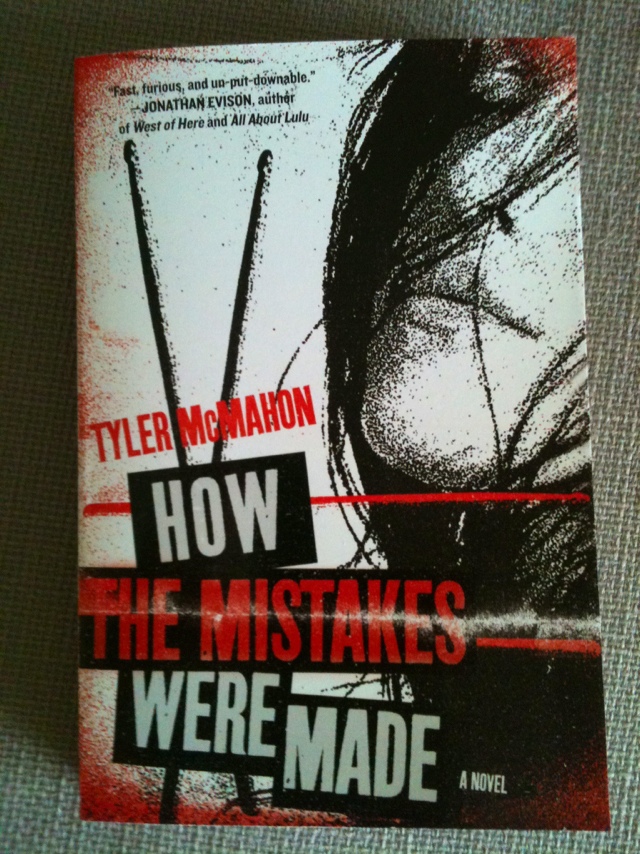
How the Mistakes Were Made, a novel by Tyler McMahon. Description from the author’s site

Laura Loss came of age in the hardcore punk scene of the 1980s, the jailbait bassist in her brother Anthony’s band. But a decade after tragedy destroyed Anthony and their iconic group, she finds herself serving coffee in Seattle.

While on a reluctant tour through Montana, she meets Sean and Nathan, two talented young musicians dying to leave their small mountain town. Nathan proves to be a charismatic songsmith. Sean has a neurological condition known as synesthesia, which makes him a genius on lead guitar. With Laura’s guidance, the three of them become the Mistakes—accidental standard-bearers for the burgeoning “Seattle Sound.”

As the band graduates from old vans and darkened bars to tour-buses and stadiums, there’s no time to wonder whether stardom is something they want—or can handle. At the height of their fame, the volatile bonds between the three explode in a toxic cloud of love and betrayal. The world blames Laura for the band’s demise. Hated by the fans she’s spent her life serving, she finally tells her side of how the Mistakes were made.

Book trailer—

Rock and Roll Will Save Your Life — Steve Almond

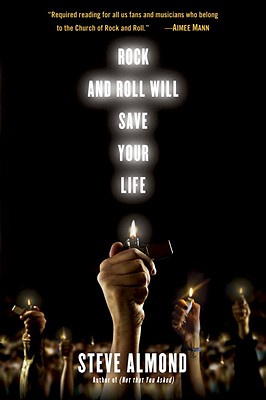
Rock and Roll Will Save Your Life, Steve Almond’s new memoir-via-music-journalism, is far fresher, funnier, and insightful than its dopey name or silly cover will attest. Not that Rock and Roll Will Save Your Life is a wholly terrible name (even presented in cruciform arrangement), or that the unironic waving of lighters in the air is an awfully hokey image–but both seem counter-intuitive to the playful, self-deprecating spirit of Almond’s book. I suppose that the publisher wants to highlight a rock-as-religion motif that kinda sorta exists in the book (further compounded by the pull-quote from Aimee Mann: “Required reading for all us fans and musicians who belong to the Church of Rock and Roll”). Almond’s book is, I suppose, about being religious about music–that is, about being fanatical, crazy, bonkers about music. He calls these people–he is Exhibit #1, of course–Drooling Fanatics, or DFs for short. Drooling Fanatics are

. . . wannabes, geeks, professional worshippers, the sort of guys and dolls who walk around with songs ringing in our ears at all hours, who acquire albums compulsively, who fall in love with one record per week minimum and cannot resist telling other people–people frankly not interested–what they should be listening to and why and forcing homemade compilations into their hands and then calling them to see what they thought of these compilations, in particular the syncopated handclaps on track fourteen.

You might know some Drooling Fanatics; I know many of them. In fact, I have some DF-tendencies myself that I manage to keep in check. It’s this keen sense of self-awareness–geek-awareness–that makes Almond’s memoir so charming and engaging, particularly when he’s recounting interviews and experiences with obscure also-rans like Nil Lara, Bob Schneider, and Joe Henry. Almond’s devotion to these lesser-known artists permeates his text. His Drooling Fanaticism makes a great case for their music and even as he rants that they didn’t gain the fame and superstardom they surely deserve, he also admits that part of the Drooling Fanatic’s love for his or her artist is the special love of knowing something the rest of the world doesn’t know. Not that Almond doesn’t have various run-ins with famous people. An interview with Dave Grohl leads to Almond’s epiphany near the end of the book that being a good father and husband, doing your job to the best of your ability, and engaging fully in your own life is more important than the illusion of fame or “artistic integrity.”

Yes, “epiphany” is right–Almond’s memoir manages to avoid most pitfalls of that genre, but it still follows a recognizable arc, right up to a moment of insight and maturation. Almond punctuates this loosely-chronological framework with lists that claim to take the piss out of rock critics (who notoriously love to make lists) but, are, of course, lists. They don’t add anything to the book and they will certainly date it, and Almond’s entire chapter of lists of rock star kid names is mildly amusing but ultimately distracting. Far more successful are the “Reluctant Exegesis” sections of the book, where Almond interprets the lyrics of swill like Toto’s “Africa” and Air Supply’s “All out of Love” (he finds shades of Heidegger in the latter). These tongue-in-cheek exercises show Almond’s humorous tone as well as his skill as a critic; they also fit neatly into his memoir, contributing to the narrative proper.

Almond’s book is refreshing, both as a memoir and as a form of rock criticism. Music critics and memoirists alike are far-too often self-serious, even solemn about their work. Almond’s memoir reveals that the coolness meant to exude from many modern music critics is really an overt symptom of Drooling Fanaticism, a pose meant to close (or at least reconcile) the gap between artist and reviewer. Almond fills that gap with heartfelt joy, and, best of all, he achieves the real job of any music critic–he makes you want to listen to the stuff he’s writing about for yourself. Recommended.

Rock and Roll Will Save Your Life is available April 13 from Random House.

At Mount Zoomer

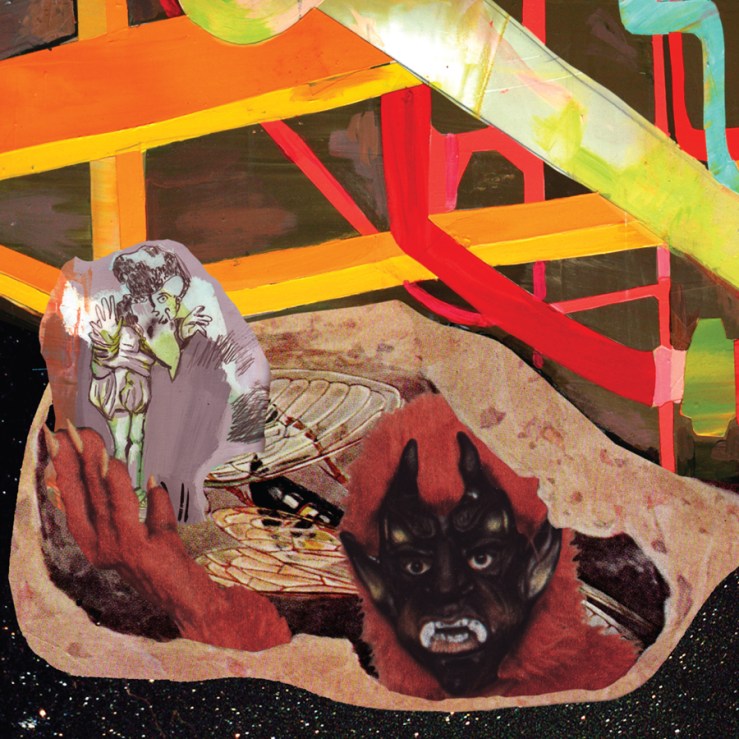
The first five seconds of “Soldier’s Grin,” the first track on At Mount Zoomer, Wolf Parade’s second LP, consist of a spindly synth and guitar duet that announces the program of the rest of the album: tight, lyrical, melodic prog-punk-pop that gets plenty of mileage out of old keyboards and crunchy guitars. This welding of synth with indie-rock guitar reflects the split songwriting duties of Wolf Parade. Like its predecessor, 2005’s Apologies to the Queen Mary, the new record is split almost evenly into songs written and sung by keyboardist Spencer Krug or guitarist Dan Boeckner. The slight stylistic differences between Boeckner’s and Krug’s songs are unified on Zoomer by drummer Arlen Thompson’s big, warm production. Songs like “Call it a Ritual” and “Bang Your Drum” propel on tense, jumpy punk rhythms before letting loose into brief moments of pop satisfaction–a formula that worked so well for the band on Queen Mary. The best moments of the record come though when they try something new. On longer songs like “Fine Young Cannibals” and epic album-closer “Kissing the Beehive” Wolf Parade play with trickier melodies and leave more open space in their music, letting the rhythms and melodies coalesce into tight, beautiful pockets that aren’t overwhelmed by big synths or vocal growls. That’s not to say there isn’t something sublime about thicker numbers like “The Grey Estates,” a keyboard-driven ditty that recalls The Cars, or “Language City,” a song that channels (if not flat out rips off) The Moody Blues’s “Your Wildest Dreams.” Still, there are a few missteps here: “California Dreamer” aims for motortik tension but falls instead into annoying territory, and the first half of Krug’s “An Animal in Your Care” is the worst in indulgent glam-emo. However, “Animal” picks up in its second half, evolving into a crisp stomping guitar and piano workout–but on an album with only nine songs, each one should be perfect. Ultimately, Zoomer won’t disappoint its intended audience. Wolf Parade make the best sort of indie rock comfort food, the kind that recalls the classic bands of the genre (Pixies, Sonic Youth) while also hearkening to the earlier days of college rock (Talking Heads, Television). Really, nothing here pushes boundaries–Wolf Parade’s biggest trick is making you forget that what you’re listening to is really as safe as milk.

At Mount Zoomer will be released June 17 from Sub Pop records.

SM and Pavement: Album Cover Retrospective

With the new Stephen Malkmus & Jicks album set to drop any day now, we thought we’d take a look at the history of SM’s ouvre via his past album covers.

slanted.jpg

Slanted and Enchanted (1992): Pavement’s first full length defines the so-called lo-fi indie rock sound: scrawling guitars that went to school on Sonic Youth’s Sister, ramshackle percussion (courtesy of original crazy-ass Gary Young), cryptic lyrics, and toneless melodies. The first album also sets the template for the Pavement aesthetic: notebook graffiti, polysemous symbols, postpunk DIY collage work, and lots of scribbling. Key tracks: “Summer Babe,” “In the Mouth a Desert,” “Trigger Cut.”

westing.jpg

Westing by Musket and Sextant (1993): The first Pavement record I bought. On tape! From Camelot Music. Because they didn’t have Slanted and Enchanted. The DIY cover is riddled with seemingly cryptic messages that are actually references to songs and albums that Pavement liked (e.g. “Maps and Legends” by REM). Westing takes the DIY look of Slanted to the next level, and helps to inform not just the way Pavement albums and singles will look for the next few years, but also seems to codify the indie rock look in general (see also: Sebadoh). Key tracks: “Box Elder,” “Forklift,” “Debris Slide.”

crooked.jpg

Crooked Rain, Crooked Rain (1994): This is the first album I remember anticipating coming out. “Luck on every finger”–more cryptology. Was the second song called “Ell Ess Two” or “Elevate Me Later,” or maybe it was “LS2”? Is that SM’s handwriting? An album about rock music. It didn’t leave my CD player for the next three years, and that is no exaggeration. Key tracks: The whole album is perfect. “Gold Soundz” works on any mixtape if you’re in a pinch though. My favorite track might be “Stop Breathin’,” which I think is about the Civil War. For years I thought that Pavement included the only bad track on Crooked Rain, “Hit the Plane Down,” as a kind of purposeful marring, like ancient artisans who included a flaw in their art so as not to displease the gods. Later I just realized that that was the Spiral Staircase track.
Continue reading “SM and Pavement: Album Cover Retrospective”

Follow Through

Feist on Leno, 5.8.07.

Feist on Leno

feist.jpg

For those of you who can stay up past eleven, lovely-voiced Leslie Feist is scheduled to perform tonight (5.8.07) on The Tonight Show with Jay Leno. For the rest of us, I’m sure Youtube will provide. If you’re not sure that you’re interested, check out the video for “1 2 3 4” here (WARNING! In all likelihood this song will get stuck in your head for the next few days).

Seven Great Books About Rock and Roll (In No Particular Order)

1. Crazy From the Heat by David Lee Roth

david-lee-roth.jpg

This book is as good as you want it to be and there is absolutely no doubt in my mind that David Lee Roth wrote every word of it (no ghostwriters here, pure Roth). I’m not even sure if there was an editor involved, actually. David Lee Roth takes the chronological approach, giving equal time to Van Halen’s earliest days, their 80s success, and his post-Van Halen, big band days. Particularly interesting is David’s illumination of some of the vocal techniques involved in the production of those early Van Halen records (hamburgers and marijuana cigarettes). This book is a treasured gift from a dear friend.

2. Jimi Hendrix’s Electric Ladyland by John Perry.

082641571701_aa240_sclzzzzzzz_.jpg

I read this in like two days. What a great book. Author John Perry was a young eyewitness to many of Jimi’s London gigs; most of the info here is culled from personal memories and observations, as well as discussions with all the people involved. Perry’s style is simple and always focused on the music. The book is divided into seven sections, including a thorough discussion of the instrumentation involved, a detailed track by track review of the album; even a section about the cover. Perry writes from a musician’s point of view, but the most interesting lines to me are about the initial reaction of the American critical press to Jimi Hendrix:

“Behind a whole raft of complaints about Hendrix’s undignified performance and his irritating failure to fit existing critical categories for black performers, lay the essential point that his songs mysteriously failed to punish the audience for being white. Hendrix didn’t play the wounded, angry black man, or the dignified bearer of oppression; he didn’t provide white critics with a handy receptacle for their guilt. They didn’t know quite what role he fulfilled.”

I got this for fifty cents at the Friends of the Library Sale.

3. Our Band Could Be Your Life by Michael Azerrad.

our-band.jpg

Your life is probably nothing like any of the sort-of-famous indie bands covered here, unless you basically live in a van. I’m actually not even really sure if this qualifies as a great book. This book is actually just “okay.” Chances are, if you’re a fan of Sonic Youth, Ian McKaye, Dinosaur Jr, or Hüsker Dü you probably know most of this stuff already, or at least the stuff that’s interesting. And if you’re a fan of Beat Happening, well, there you go. This book has a whole chapter on Beat Happening. Actually, if you’re really interested in the whole indie rock thing, 1991: The Year Punk Broke is a much better document. But here I go comparing apples to oranges. I bought Our Band Could Be Your Life at Barnes & Noble for like three or four dollars.

4. Chronicles, Volume 1 by Bob Dylan

180px-bob_dylan_chronicles_volume_1.jpg

It took me a long time to get through this. Let me clarify: I read this in large, fifty page chunks, put it down, picked it up again months later. Dylan’s style is discursive and rambling; he elliptically deconstructs his own myth, picking away at the bits of identity he picked off of other musicians and poets on his way to fame. The book never really gets to that fame–to be clear, it discusses the after-effects of Dylan’s fame in detail: the obsessive fans who showed up at his home unannounced, the bewildering pressure to deliver some kind of messianic answer, the expectations to deliver a specific kind of record–but Chronicles spends most of its pages tracing and retracing Dylan’s youth in Minnesota and his days sleeping on friends’ couches in New York City. Will the second and third volumes ever come out? Who knows with this guy. This book was given to me by my cousin for Christmas a few years ago.

*Also recommended: Anthony Scaduto’s biography Bob Dylan.

5 . Transformer by Victor Bockris

transfusa.jpg

Lou Reed is a weirdo, and Victor Bockris wants you to know about it. Starting with Reed’s Long Island youth (complete with electro-shock therapy), Bockris’s biography covers pretty much everything right up through the Velvet Underground’s early nineties reunion: Reeds early apprenticeship in the Brill Building, the nascent days of the VU (plenty of Warhol anecdotes, of course), punk rock, several doomed romances, his years living with a transvestite, his karate skills, his yoga skills, and his all-bran diet, and of course, the drugs. Oh the drugs. Also, Reed’s solo career is also examined (including plenty of material from guitar god Bob Quine). Bockris seems to feel Magic and Loss is something of a watershed moment in modern rock (anyone who accidentally bought this album knows otherwise).

Bockris’s book employs a bitchy, dishy tone, rife with catty comments from everyone whoever worked with Reed: apparently Lou was a total asshole. Bockris reprints some painful comments (e.g. Reed on Springsteen, 1975: “Isn’t Springsteen over the hill?”); the most awkward moment comes in the book’s appendix, in a transcript of a meeting Bockris arranged between Reed and William Burroughs. Bad idea (Reed can’t remember the name of “that book you published”–Naked Lunch). I can’t remember, but I think I got this for like three or four bucks at Barnes & Noble.

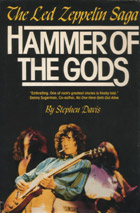
6. Hammer of the Gods by Stephen Davis

hammer_of_the_gods.jpg

“Here’s a red snapper for your red snapper!”

Intrigued? You should be! Burroughs makes a cameo here as well.

I don’t own this one. I read the good bits in high school though.

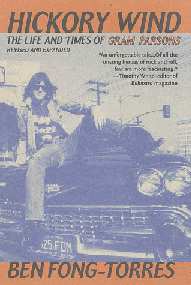
7. Hickory Wind: The Life and Times of Gram Parsons by Ben Fong-Torres

gparsons.jpg

Some jackass made a movie about Gram Parsons’ life a few years ago; I think Johnny Knoxville played Parsons. I didn’t see it, but I’m sure this book is way better. Rolling Stone alum Ben Fong-Torres clearly appreciates Parsons as not only the influential icon that he’s generally recognized as, but also as a truly gifted songwriter. Parsons’ early days in Winterhaven, Waycross, and Jacksonville (he attended the Bolles School) are scrutinized along with his brief stint at Harvard, his time in the Byrds and his days partying with the Rolling Stones in California hippy mansions. Also, another appearance by William Burroughs, who recommended a treatment to help kick the heroin. Parsons’ infamous death in the California desert is also put under the lens, right down to a time-line if I remember correctly. Good stuff. My uncle lent me this book, and yes, I returned it to him. So there.

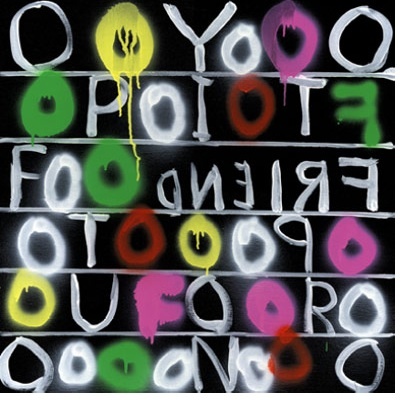
Deerhoof–Friend Opportunity

deerhoof.jpg

 AUDIOKLEPT SPECIAL EDITION: Deerhoof–Friend Opportunity (Kill Rock Stars; releases Jan 23, 2007)

Deerhoof are a kind of paradox–innovators working in a tradition–deconstructing the whole of modern music (as well as not-so-modern-music) with their voices, drums, guitars, and keyboards. With Friend Opportunity, the San Francisco band has distilled the buzz and clatter, the melody, muscle, and grace of their past few albums (2005’s The Runners Four, 2004’s The Milkman, 2003’s Apple O’) into a concise, nearly-perfect 36 minutes. The Runners Four topped a lot of year-end lists last year, but to me it was overlong and undercooked–plenty of good ideas that needed to be edited and refined. With Friend Opportunity, Deerhoof achieves a beautiful balance, reining in chaos and noise in favor of punchy rhythms and hooks that are sure to sink into your mind. Not to say that the vibrant anarchy of past albums has been in anyway discarded or even subdued–Deerhoof have simply gotten better at using chaos as a musical element, a means to an end, rather than an uncontrollable variable. Tracks like album opener “The Perfect Me” and “+81” establish pop ideals, cribbing from classic rock riffs, only to deny, deconstruct and then revive these ideals–all in under three minutes. “The Galaxist” is particularly sweet, opening with Faheyesque guitar picking and breathy melodies, and moving into a joyous beat that would make Fela Kuti proud. If the world had better musical taste, “Matchbook Seeks Maniac” would be on every radio station, the perfect slow dance for the Bizarro World prom. The brevity of these tracks is a plus: most of the tracks on Friend Opportunity lack the repetition common to pop music, moving through several ideas in under three minutes–ideas that stick in the head, causing a listener to hit repeat. The album closer, “Look Away,” is the only track to deviate from this method. Clocking in at over 11 minutes, “Look Away” comprises nearly a third of the album’s content, and will undoubtedly not stand repeated listens by some listeners. The track seems tailor-made for listeners who expect some noise from their Deerhoof, and those listeners won’t be disappointed. Nonetheless, even in an 11 minute anti-epic, Deerhoof controls the chaos and noise, resulting in some challenging and beautiful moments. Despite a 2007 release date, I consider Friend Opportunity one of the best albums of this year. I can’t wait to buy it.

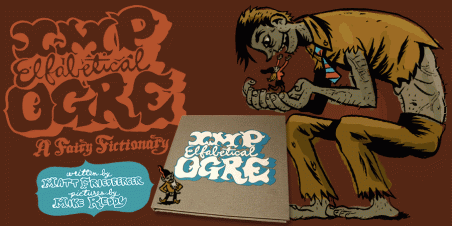
Imp Elfabetical Ogre

Imp Elfabetical Ogre is “A Fairy Fictionary” written by Matt Friedberger, chief songwriter/musician in my favorite working band, The Fiery Furnaces. Furnaces cover artist Mike Reddy illustrates some of Friedberger’s rhymes about ogres, pixies, elves, and gnomes.

opener21.gif

I’m not sure if this is an actual book or just an internet thing or what…it seems incomplete. The pun in the title, and the neologism “Fictionary” seem to suggest a larger, more comprehensive catalog of all things spritely. Just like the Furnaces’ lyrics, the words are highly alliterative and the tales are a little silly. Thanks to RP for sending me the link!

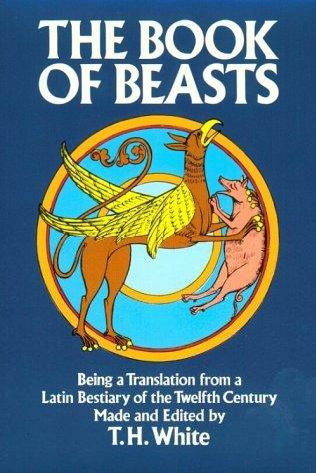
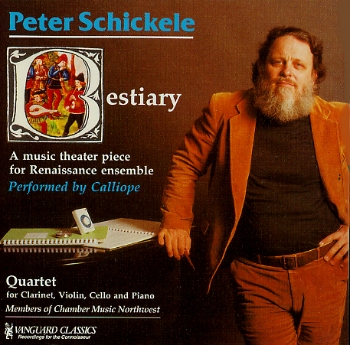
Other recommended bestiaries:

T.H. White? The Twelfth Century? Count me in!

n27697.jpg

This Peter Shickele (aka PDQ Bach) record looks fantastic, you must admit. Image links to tracklisting, performers, and even some free audio samples! You can also buy this record–on cassette or vinyl only–for a mere $8 (but act fast, “supplies are limited”).

bestiary.jpg

The Audioklept Special Edition

All the big indie records of 2006: One sentence reviews. Part One.

Bonnie ‘Prince’ Billy–The Letting Go: Who knew he had another record this good in him?

Neko Case–Fox Confessor Brings the Flood: “Star Witness” is the best song of 2006.

Destroyer–Destroyer’s Rubies: Dan Bejar is over the top and this record is gorgeous.

Thom Yorke–The Eraser: […] hmmm […] oh sorry, I must’ve dozed off there […] 

The Walkmen–A Hundred Miles Off: I recently heard “The Rat” in the background of an NCAA Football commercial–I enjoyed that more than anything on this record.

The Walkmen–Pussycats: Uhmmm…yeah…uhmmm, okay cool guys, you have your own studio, you can just do whatever you want I guess.

Beck–The Information: Beck’s a fucking scientologist.

Ghostface Killah–Fishscale: I’m supposed to love this, right?

Girl Talk–Night Ripper: This might be the year’s best album…

The Flaming Lips–At War With the Mystics: It seems like they will continue to make these types of records.

The Decemberists–The Crane Wife: This is overrated, boring crap.

The Hold Steady–Boys and Girls in America: …speaking of overrated, boring crap.

The Fiery Furnaces–Bitter Tea: Their prettiest album yet; not as good as Blueberry Boat but better than any record by any other band that came out this year.

Matthew Friedberger–Winter Women: Contains no fewer than four radio gems.

Matthew Friedberger–Holy Ghost Language School: I keep meaning to listen to it again.

Lambchop–Damaged: I’m too busy for this level of subtlety.

Lambchop–The Decline of Country & Western Civilization, Pt. 2: The Woodwind Years: Their title is too long–counts as review.

Mercury Rev–Essential Mercury Rev: Go out and buy the real “essential” Mercury Rev: Yerself is Steam, Bocces, and See You on the Other Side.

Gnarls Barkley–St. Elsewhere: We will all remember this album as fondly as we remember that Chumbawumba album, or possibly our EMF Greatest Hits CD. 

The Shins — Wincing The Night Away

AUDIOKLEPT (SPECIAL EDITION)

Not a book, but nonetheless obtained by extra-legal means. Piracy baby!

SubPop is set to drop The Shins’ third album Wincing The Night Away in January of 2007, but the thing leaked like a sieve this weekend. Similarly, Of Montreal’s album Hissing Fauna, Are You The Destroyer?, set for a January release, leaked over the last two weeks. I don’t understand why these labels delay releases so long after the record’s been mastered. It’s almost impossible these days to keep a record from leaking–although Thom Yorke managed to keep his solo record The Eraser from leaking right up until it was released.

On paper, The Shins are the type of band I would love to hate. They write tight pop songs with keen melodies and spare harmonies with frequent nods to classic 60s acts like The Kinks, The Beatles, The Zombies and The Beach Boys (unlike every other indie band made up of four white guys). They are name-dropped in the epitome of bad indie films, Zach Braff’s Garden State (Natalie Portman’s character declares them “life-changing”). They appeared in an episode of The Gilmore Girls as a band playing to a club full of improbably ecstatic springbreakers in Ft. Lauderdale.

Despite all of this, I like them quite a bit. Their songs are catchy in a good way. They certainly aren’t re-inventing the wheel, but if you’re going to listen to an indie rock band, you might as well listen to The Shins. All that said, I like their new album a lot, much better than their last Chutes Too Narrow actually, which I thought was too airy. Wincing evinces some growth in songwriting and arrangements, and on the whole the production is much fuller than the past two albums. Wincing features a more prominent use of atmospheric sounds. Synthesizers are utilized to greater advantage advantage with respect to both melodies and atmosphere, and the band even brings in what I believe to be a small string section one one song. They even play with vocal loops on this record.

I don’t know if this band will ever top their first record Oh, Inverted World, a record that somehow was simultaneously breezy and profound, and produced at least four songs that can never go wrong on a mixtape. I’ve listened to it a few times, but there doesn’t seem to be a “New Slang” or “Know Your Onion” on this album. Wincing however seems to work better as a whole album than The Shins’ previous efforts, and the stronger production and fuller arrangements will probably earn the group a broader fanbase.