“A Wish for Unconsciousness” — Thomas Hardy

“A Wish for Unconsciousness”

by

Thomas Hardy


If I could but abide
As a tablet on a wall,
Or a hillock daisy-pied,
Or a picture in a hall,
And as nothing else at all,
I should feel no doleful achings,
I should hear no judgment-call,
Have no evil dreams or wakings,
No uncouth or grisly care;
In a word, no cross to bear.

“After a Journey” — Thomas Hardy

“After a Journey”

by

Thomas Hardy


Hereto I come to view a voiceless ghost;
Whither, O whither will its whim now draw me?
Up the cliff, down, till I’m lonely, lost,
And the unseen waters’ ejaculations awe me.
Where you will next be there’s no knowing,
Facing round about me everywhere,
With your nut-coloured hair,
And gray eyes, and rose-flush coming and going.

Yes: I have re-entered your olden haunts at last;
Through the years, through the dead scenes I have tracked you;
What have you now found to say of our past—
Scanned across the dark space wherein I have lacked you?
Summer gave us sweets, but autumn wrought division?
Things were not lastly as firstly well
With us twain, you tell?
But all’s closed now, despite Time’s derision.

I see what you are doing: you are leading me on
To the spots we knew when we haunted here together,
The waterfall, above which the mist-bow shone
At the then fair hour in the then fair weather,
And the cave just under, with a voice still so hollow
That it seems to call out to me from forty years ago,
When you were all aglow,
And not the thin ghost that I now frailly follow!

Ignorant of what there is flitting here to see,
The waked birds preen and the seals flop lazily;
Soon you will have, Dear, to vanish from me,
For the stars close their shutters and the dawn whitens hazily.
Trust me, I mind not, though Life lours,
The bringing me here; nay, bring me here again!
I am just the same as when
Our days were a joy, and our paths through flowers.

Pentargan Bay.

“Identification Tags” — Tom Clark

“Identification Tags”

by

Tom Clark


Ghosts do wear sheets but not for sleeping.

Sometimes people die while still alive
and then come back to life
but only partially. You can read the signs
around the eyes, which get
a dusty look like burned out hundred watt bulbs.

When they pass one another on the streets
there is a soft noise, as of muslin touching.

A previously unpublished Dream Song by John Berryman

“The applause of the world comes to an empty heart”

by

John Berryman


The applause of the world comes to an empty heart,
sure the man is thinking now of something else,
something else, a fearless end
‘I have lost, of course, the fear of death’, BUT.
Messages enchant me, as from Ireland
I am an old middle-aged man about to do his best

love old men
The bartender did just call me ‘my friend’
I say the wonder is these busy caves
explored by men, & then by men, & then
by cold & dismal
engineers, are so costless

Deep in the angels let the good coat come
& I will wheedle home, who misséd you,
I can’t fix him. He’ll go down there apart,
that would be the wicked part of him that falls.
Henry has in Ireland no friend.
Alone, in the half-dark


Read five more previously-unpublished Dream Songs at Conjunctions. The poems are collected in the forthcoming volume Only Sing: 152 Uncollected Dream Songs, edited by Shane McCrae.


Bialik/Rilke (Two poetry collections acquired, 13 Sept. 2025)

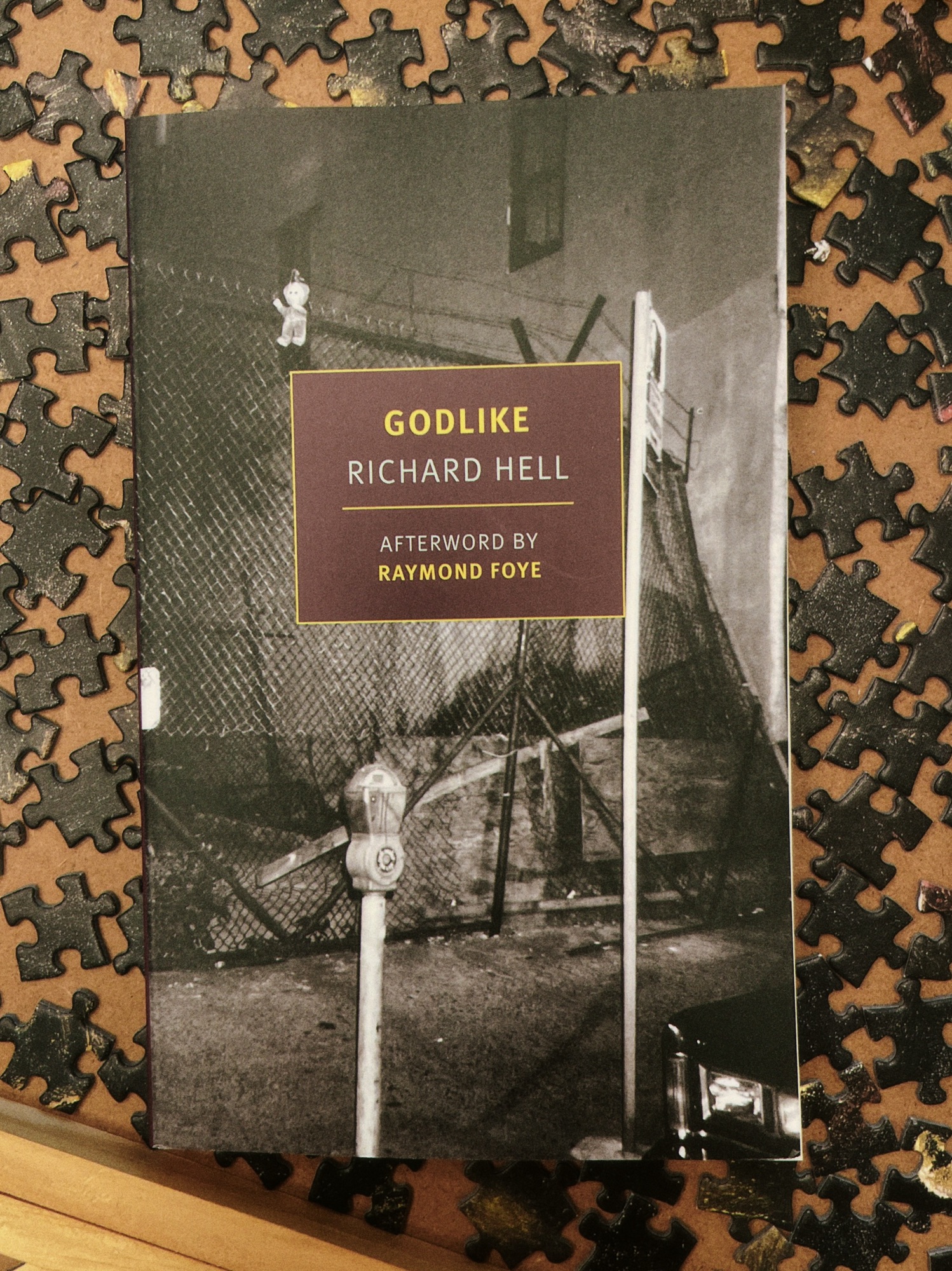
Two new collections from NYRB’s Poets imprint: On the Slaughter by Hayim Nahman Bialik, translated by Peter Cole, and Fifty Poems by Rainer Maria Rilke, translated by Geoffrey Lehmann. NYRB’s Bialik blurb:

Few poets in the history of Hebrew have possessed the power and prescience of Hayim Nahman Bialik. Born in 1873 in a small Ukrainian village, he spent his most productive years in Odessa and in his fifties made his way to British Mandatory Palestine. He died in Vienna in 1934. His body of work opened a path from the traditional Jewish world of Eastern Europe into a more expansive Jewish humanism. In a line that stretches back to the Bible and the Hebrew poetry of Muslim and Christian Spain, he stands out—in the words of Maxim Gorky—as “a modern Isaiah.” He remains to this day an iconic and shockingly relevant poet, essayist, and tutelary spirit.

Translated and introduced by MacArthur-winning poet Peter Cole, On the Slaughter presents Bialik for the first time in English as a masterful artist, someone far more politically and psychologically unsettling than his reputation as the national poet of the Jewish people might suggest. This compact collection offers readers a panoramic view of Bialik’s inner and outer landscapes—from his visionary “poems of wrath” that respond in startling fashion to the devastations of pogroms and revolutionary unrest to quietly sublime lyrics of longing and withering self-assessment. The volume also includes a sampling of slyly sophisticated verse for children, and a moving introduction that bridges Bialik’s moment and our own.

And “The Grown-up,” a poem from Rilke in Lehmann’s translation:

“The Grown-up”

All stood on her, all that has ever been
and was the world, and stood, its fears and grace,
as trees stand straight and rooted in one place, and solemn, like the memory of a race
or Ark of God, all-seeing and not seen.

She carried it; knowledge of who they are,
the flyers, those who flee, the distant ones,
the monsters and the awkward, diffident sons,
casually like a brimming water jar
on her calm head. Then in the midst of play,
preparing, changing slowly, cell by cell,
she did not sense the first white veil that fell
across her open face, bland as the day,

almost opaque, never to lift again.
And she forgot the answers she once knew,
leaving some vagueness she could not explain:
in you, the child who you have been, in you.

“Fladry” — Ed Skoog

“Fladry”

by

Ed Skoog


Fladry: a line of rope mounted along the top of a fence, from
which are suspended strips of fabric or colored flags that will flap
in a breeze, intended to deter wolves from crossing the fence-line.

USDA National Wildlife Research Center

I am weak and edible. Some human quality
stays weird, alien to the wild, outsiders,
bad sport with spooky habits not just fladry—
other enchantments against order, house paint,
yard art, border fences and the tunnels under borders,
the amen, the wedding ring, the flavored condom.
The wolves are back. I’ve seen them, seen the fladry
ranchers tie, red flags’ flutter to puzzle or annoy,
folk-work tendered back from wood-shadow,
more each year, abjured with clover.
What I like most about the first shot of bourbon
is how it feels like letting go of a grudge.
In the dream, I kill my friend and bury him
lime in the church basement between sump pump
and broken fireplace. On my knees I tile
red stone back to mosaic. Soldiers beat me up
and called me names in my own language,
this one, the one Whitman used to soothe
the dying, limbless, the bleeding, the infected.
Beat me with fists slight more stone
than the shape that holds this pencil.
A house is held together by shapes.
And yet in the ongoing negotiations between
the world where I hold my son and
famine, bombings, hate, prosperity—
two notes, octaves apart
attenuate what’s hidden inside your body
to the invisible. It might help remembering
shadows and not hours. Infinity
also has the contour of a children’s game.
Infants remember fladry, safe in the car seat grasping,
grasping. Some forces are enormous and move
against you, and when you pretend they aren’t
there, surge. Some swing on a hinge
which at night sounds like don’t look back,
don’t look back. Anyone can tie fladry.
See it out riding. I go out at French-horn dawn,
boots in mud, string fladry at intervals,
each tongue labeling the field, calling
beyond language. And if fladry bears
the conditions of a spell, redness of the flag,
the measure between them, it’s flapping
which charms the wolf away, for a term.
Warnings to keep the flock from the wolf’s belly.
Messages for ourselves. See it from there,
turn overall and plaid flannel; we would
tear our own fur to cross these lines.

“6/21” — Adrienne Rich

“Dogleg” — Kay Ryan

“Dogleg”

by

Kay Ryan


Birds' legs
do of course
all dogleg
giving them
that bounce.
But these are
not normal odds
around the house.
Only two of 
the dog's legs
dogleg and 
two of the cat's.
Fifty-fifty: that's
as bad as it 
gets usually,
despite the 
fear you feel
when life has
angled brutally.

“One Art” — Elizabeth Bishop

“One Art”

by

Elizabeth Bishop


The art of losing isn’t hard to master;
so many things seem filled with the intent
to be lost that their loss is no disaster.

Lose something every day. Accept the fluster
of lost door keys, the hour badly spent.
The art of losing isn’t hard to master.

Then practice losing farther, losing faster:
places, and names, and where it was you meant
to travel. None of these will bring disaster.

I lost my mother’s watch. And look! my last, or
next-to-last, of three loved houses went.
The art of losing isn’t hard to master.

I lost two cities, lovely ones. And, vaster,
some realms I owned, two rivers, a continent.
I miss them, but it wasn’t a disaster.

—Even losing you (the joking voice, a gesture
I love) I shan’t have lied. It’s evident
the art of losing’s not too hard to master
though it may look like (Write it!) like disaster.

“Two for the Road” — John Ashbery

“Two for the Road”

by

John Ashbery


Did you want it plain or frosted? (Plain vanilla or busted?)

I bet you’ve been writing again. She reached under her skirt. Why don’t you let a person see it? Naw, it’s no good. Just some chilblains that got lodged in my fingertips. Who said so? I’ll tell you if it’s any good or not, if you’ll stop covering it with your hand.

For Pete’s sake-

We had forgotten that it was noon, the hour when the ravens emerge from the door beside the huge clock face and march around it, then back inside to the showers. Oh, where were you going to say let’s perform it?

I thought it was evident from my liquor finish steel.

Oh right, you can certainly have your cocktail, it’s my shake, my fair shake. Dust-colored hydrangeas fell out of the pitcher onto the patio.

Darned if someone doesn’t like it this way and always knows it’s going to happen like this when it does. But let me read to you from my peaceful new story:

“Then the cinnamon tigers arose and there was peace for maybe a quarter of a century. But you know how things always turn out. The dust bowl slid in through the French doors. Maria? it said. Would you mind just coming over here and standing for a moment. Take my place. It’ll only be for a minute. I must go see how the lemmings are doing. And that is how she soiled herself and brought eternal night upon our shy little country.”

“God to Hungry Child” — Langston Hughes

“God to Hungry Child”

by

Langston Hughes


Hungry child,
I didn’t make this world for you.
You didn’t buy any stock in my railroad.
You didn’t invest in my corporation.
Where are your shares in standard oil?
I made the world for the rich
And the will-be-rich
And the have-always-been-rich.
Not for you,
Hungry child.

“Daily Reviewer-Haupt” — David Markson

We have the right to convey the fictive of any reality at all | Gil Orlovitz

We have the right to convey the fictive of any reality at all–and there is nothing that is not real—by any method we wish, and to have as our goal, if we so opt, only that we maintain the reader’s tension, the solitary indication, itself mercurial, of a work-of-art event.

Syntax being nothing more nor less than the codification of selected usages, we may alter syntax or reject it wholly.

We may compose the fictive in such a manner that the result is ambiguous, baffling and sometimes altogether impossible significantly to paraphrase-but so long as the piece seizes and holds the reader, a basic meaning, impossible to state in language as we know it, has been established, a meaning that belongs to a time series of seizing-and-holding.

The notion, we submit, of clarity, remains simply a notion, real enough, of course, under whatever category it is sub-sumed, but of no universal vigor, necessarily, nor marked by socalled objective truth; clarity is a notion identifying a particular social agreement in a one-to-one sense as to what construct evokes similarity of analysis.

Empirically all that is demonstrable is that we experience as creator or audience a series of perceptions. Now, if we set forth that demonstration in the fictive in such a fashion as to generate and sustain tension in the reader whether or not he is mystified by the significs, we have met the sole possible criterion.

We are not of course here in any way concerned with the alleged scalar values of a given fiction-the notion of value belongs to ad hominen pleaders usually involved in depressing or elevating a status for economic reasons—just as we cannot in any way be concerned with the alleged scalar values of the given reader. Fiction and reader are conjoined, and may not with any sense be disjunct if we are trying to penetrate the nature of the esthetic.

Such being the case, I believe we can with some innocence look at the choices of the contemporary avant-garde herein, and digest them according to our lights or chiaroscuras.

We need remember only how much more we usually discern if we take the trouble, to begin with, to clean our own canvasses-within reason.

—Gil Orlovitz


Gil Orlovitz’s introduction to The Award Avant-Garde Reader (1965).

“Football Weather” — Paul Carroll


“Football Weather”

by

Paul Carroll


As a kid I tried to coax its coming

By sleeping beneath light sheets

Weeks before

The funeral of the summer locusts in the yard;

Then when Granny peeled down the crucifix of

     flypaper that dangled from the ceiling of the

     kitchen

Magic wasn’t needed any longer

To fill the air with pigskins.   The air itself

Acrid, lambent, bright

As the robes of the Chinese gods inside their

     house of glass

In the Field Museum by the lake.

Even practice could be fun—

The way, say, even sepia photographs of old-time

     All Americans could be pirates’ gold

Like my favorite Bill Corbus, Stanford’s “Baby-

     Face Assassin” crouching at right guard, the

     last to play without a helmet on—

And the fun of testing muscles out 

Like new shoes; the odor of the locker room

     pungent

As the inside of a pumpkin;

And the sting of that wet towel twirled against

     bare butt by a genial, roaring Ziggy, Mt.

     Carmel’s All State tackle from Immaculate

     Conception Parish near the mills;

And then the victory, especially the close shaves,

     could feel

Like finally getting beneath a girl’s brassiere

She’ll let you keep

Unhooked for hours while you neck

Until the windshield of your Granddad’s Ford V-8

Becomes filled by a fog

Not even Fu Manchu could penetrate.   Jack,

Next football weather my son Luke will be in high

     school,

Bigger than I was and well-coordinated—but

Couldn’t care a plenary indulgence

If he ever lugs a pigskin down the turf

Or hits a long shot on the court.   At times, I wish he

     would.

So he might taste the happiness you knew

Snagging Chris Zoukis’ low pass to torpedo nine

     long yards to touchdown

And sink archrival Lawrence High

45 years ago come this Thanksgiving Day.   Still,

He has his own intensities

As wild as sports and writing were for us:

Luke’s the seventh Rolling Stone,

His electric guitar elegant and shiny black

As a quiet street at night

Glazed by rain and pumpkin frost.

“Proposal” — Denis Johnson

“Proposal”

by

Denis Johnson


The early inhabitants of this continent
passed through a valley of ice two miles deep
to get here, passed from creature to creature
eating them, throwing away the small bones
and fornicating under nameless stars
in a waste so cold that diseases couldn’t
live in it. Three hundred million
animals they slaughtered in the space of two centuries,
moving from the Bering isthmus to the core
of squalid Amazonian voodoo, one
murder at a time; and although in the modern hour
the churches’ mouths are smeared with us
and all manner of pleading goes up from our hearts,
I don’t think they thought the dark and terrible
swallowing gullet could be prayed to.
I don’t think they found the smell of baking
amid friends in a warm kitchen anything to be revered.
I think some of them had to chew the food
for the old ones after they’d lost all their teeth,
and that their expressions
were like those we see on the faces
of the victims of traffic accidents today.
I think they threw their spears with a sense of utter loss,
as if they, their weapons, and the enormous animals
they pursued were all going to disappear.
As we can see, they were right. And they were us.
That’s what makes it hard for me now to choose one thing
over all the others; and yet surrounded by the aroma
of this Mexican baking and flowery incense
with the kitchen as yellow as the middle
of the sun, telling your usually smart-mouthed
urchin child about the early inhabitants
of this continent who are dead, I figure
I’ll marry myself to you and take my chances,
stepping onto the rock
which is a whale, the ship which is about to set sail
and sink
in the danger that carries us like a mother.

April comes like an idiot, babbling and strewing flowers | Edna St. Vincent Millay

spring

“Five Dream Units” — David Berman

Five Dream Units:

1. Knock the frog

2. Kick it out

3. Push it through

4. Cranial amphibian

5. Forget the happening

6. Your head/furnace


From “Riot in the Eye” by David Berman