
 (Via).
Tag: Poetry
“A Thanksgiving Prayer” — William S. Burroughs
“To Bertholt Brecht” — William Meredith
“To Bertholt Brecht” by William Meredith—
I’ve heard that you said, when a scene you had revised
Still didn’t suit a man you used to know,
“But I am not Kafka!” What artist hasn’t sized
Himself in the dwindling lacquer row
Of chinese dolls that, with no loss of face,
Can be out back inside one another now
And only a fool quarrel about his place.
There are such ranks; and yet I quarrel with
Those who have put a price on mere despair,
Ranking a man as he can fetch up death
And senselessness, and finding you famous so.
You called your foe by name: a naive faith.
It is a naive disillusion, everywhere
Fudging the good and bad, we must call foe.
The truth is hidden as cunningly from one
Time as another; what they change is the decoys,
And it takes a wily man to use the gun.
I think you would not be fooled by our bully-boys
Who say, “As Brecht said, I live in an age of blood.”
You might stop with an oath their shrill, untimely noise:
Evil is nothing until it touches good.
“The Discharged Soldier” — William Wordsworth
“The Discharged Soldier” is William Wordsworth’s moving poem about the pain of a war veteran returning home.
No living thing appeared in earth or air,
And, save the flowing water’s peaceful voice,
Sound there was none–but, lo! an uncouth shape,
Shown by a sudden turning of the road,
So near that, slipping back into the shade
Of a thick hawthorn, I could mark him well,
Myself unseen. He was of stature tall,
A span above man’s common measure, tall,
Stiff, lank, and upright; a more meagre man
Was never seen before by night or day.
Long were his arms, pallid his hands; his mouth
Looked ghastly in the moonlight: from behind,
A mile-stone propped him; I could also ken
That he was clothed in military garb,
Though faded, yet entire. Companionless,
No dog attending, by no staff sustained,
He stood, and in his very dress appeared
A desolation, a simplicity,
To which the trappings of a gaudy world
Make a strange back-ground. From his lips, ere long,
Issued low muttered sounds, as if of pain
Or some uneasy thought; yet still his form
Kept the same awful steadiness–at his feet
His shadow lay, and moved not. From self-blame
Not wholly free, I watched him thus; at length
Subduing my heart’s specious cowardice,
I left the shady nook where I had stood
And hailed him. Slowly from his resting-place
He rose, and with a lean and wasted arm
In measured gesture lifted to his head
Returned my salutation; then resumed
His station as before; and when I asked
His history, the veteran, in reply,
Was neither slow nor eager; but, unmoved,
And with a quiet uncomplaining voice,
A stately air of mild indifference,
He told in few plain words a soldier’s tale–
That in the Tropic Islands he had served,
Whence he had landed scarcely three weeks past;
That on his landing he had been dismissed,
And now was travelling towards his native home.
This heard, I said, in pity, “Come with me.”
He stooped, and straightway from the ground took up
An oaken staff by me yet unobserved–
A staff which must have dropped from his slack hand
And lay till now neglected in the grass.
Though weak his step and cautious, he appeared
To travel without pain, and I beheld,
With an astonishment but ill suppressed,
His ghostly figure moving at my side;
Nor could I, while we journeyed thus, forbear
To turn from present hardships to the past,
And speak of war, battle, and pestilence,
Sprinkling this talk with questions, better spared,
On what he might himself have seen or felt.
He all the while was in demeanour calm,
Concise in answer; solemn and sublime
He might have seemed, but that in all he said
There was a strange half-absence, as of one
Knowing too well the importance of his theme,
But feeling it no longer. Our discourse
Soon ended, and together on we passed
In silence through a wood gloomy and still.
Up-turning, then, along an open field,
We reached a cottage. At the door I knocked,
And earnestly to charitable care
Commended him as a poor friendless man,
Belated and by sickness overcome.
Assured that now the traveller would repose
In comfort, I entreated that henceforth
He would not linger in the public ways,
But ask for timely furtherance and help
Such as his state required. At this reproof,
With the same ghastly mildness in his look,
He said, “My trust is in the God of Heaven,
And in the eye of him who passes me!”The cottage door was speedily unbarred,
And now the soldier touched his hat once more
With his lean hand, and in a faltering voice,
Whose tone bespake reviving interests
Till then unfelt, he thanked me; I returned
The farewell blessing of the patient man,
And so we parted. Back I cast a look,
And lingered near the door a little space,
Then sought with quiet heart my distant home.
“Self Portrait at Twenty Years” — Roberto Bolaño
“Self Portrait at Twenty Years,” a poem by Roberto Bolaño, from Laura Healy’s translation of The Romantic Dogs—
I set off, I took up the march and never knew
where it might take me. I went full of fear,
my stomach dropped, my head was buzzing:
I think it was the icy wind of the dead.
I don’t know. I set off, I thought it was a shame
to leave so soon, but at the same time
I heard that mysterious and convincing call.
You either listen or you don’t, and I listened
and almost burst out crying: a terrible sound,
born on the air and in the sea.
A sword and shield. And then,
despite the fear, I set off, I put my cheek
against death’s cheek.
And it was impossible to close my eyes and miss seeing
that strange spectacle, slow and strange,
though fixed in such a swift reality:
thousands of guys like me, baby-faced
or bearded, but Latin American, all of us,
brushing cheeks with death.
“Some Demon’s Mistress, Or the Demon’s Self” — From Keats’s Lamia
John Keats’s long poem Lamia (or “Lamia,” I suppose) is a fantastic supernatural romance narrative. Give it a read–like Twilight, only, y’know, good—
She was a gordian shape of dazzling hue,
Vermilion-spotted, golden, green, and blue;
Striped like a zebra, freckled like a pard,
Eyed like a peacock, and all crimson barr’d;
And full of silver moons, that, as she breathed,
Dissolv’d, or brighter shone, or interwreathed
Their lustres with the gloomier tapestries–
So rainbow-sided, touch’d with miseries,
She seem’d, at once, some penanced lady elf,
Some demon’s mistress, or the demon’s self.
Upon her crest she wore a wannish fire
Sprinkled with stars, like Ariadne’s tiar:
Her head was serpent, but ah, bitter-sweet!
She had a woman’s mouth with all its pearls complete:
And for her eyes: what could such eyes do there
But weep, and weep, that they were born so fair?
As Proserpine still weeps for her Sicilian air.
Her throat was serpent, but the words she spake
Came, as through bubbling honey, for Love’s sake,
And thus; while Hermes on his pinions lay,
Like a stoop’d falcon ere he takes his prey.
You can read the whole poem here.
Goethe’s Death Mask

John Keats’s Death Mask

“Ballad of Birmingham” — Dudley Randall
“Ballad of Birmingham” by Dudley Randall
(On the bombing of a church in Birmingham, Alabama, 1963)
“”Mother dear, may I go downtown
Instead of out to play,
And march the streets of Birmingham
In a Freedom March today?”
“No, baby, no, you may not go,
For the dogs are fierce and wild,
And clubs and hoses, guns and jails
Aren’t good for a little child.”
“But, mother, I won’t be alone.
Other children will go with me,
And march the streets of Birmingham
To make our country free.”
“No baby, no, you may not go
For I fear those guns will fire.
But you may go to church instead
And sing in the children’s choir.”
She has combed and brushed her night-dark hair,
And bathed rose petal sweet,
And drawn white gloves on her small brown hands,
And white shoes on her feet.
The mother smiled to know that her child
Was in the sacred place,
But that smile was the last smile
To come upon her face.
For when she heard the explosion,
Her eyes grew wet and wild.
She raced through the streets of Birmingham
Calling for her child.
She clawed through bits of glass and brick,
Then lifted out a shoe.
“O, here’s the shoe my baby wore,
But, baby, where are you?”
Learn more about the September 15th, 1963 terrorist attack in Birmingham, Alabama.
Walt Whitman’s Death Mask
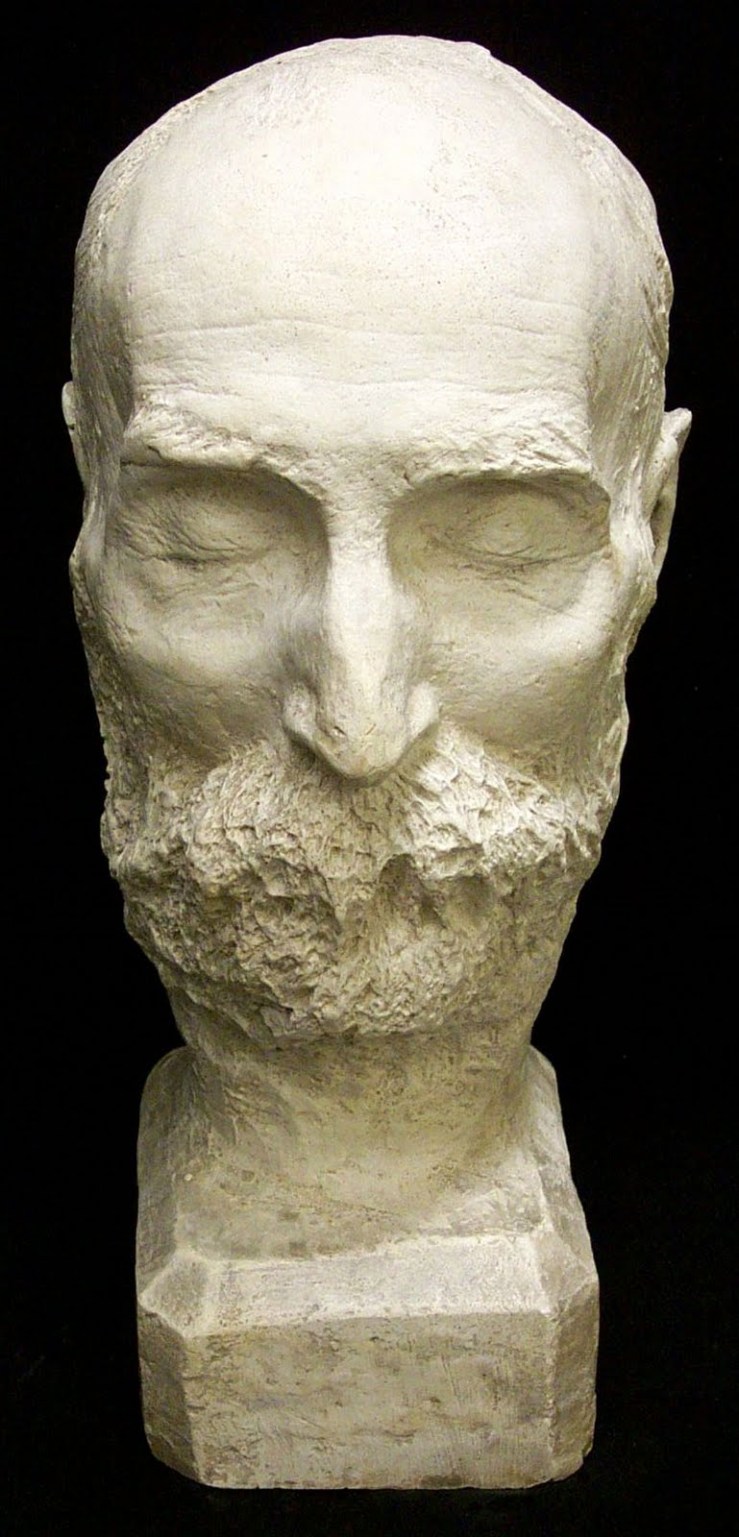
Read more about Walt Whitman’s death mask here. Read Whitman’s poem “Starting from Paumonak,” where he claims “I will show that nothing can happen more beautiful than death.”
Bill Murray Reads Emily Dickinson (and Other Poets)
Bill Murray reads poems by Billy Collins, Lorine Niedecker, and Emily Dickinson to the workers who built the Poets House literary center in museum. The applause after “I dwell in possibility” is golden.
“Two Views of a Cadaver Room” — Sylvia Plath
(1)
The day she visited the dissecting room
They had four men laid out, black as burnt turkey,
Already half unstrung. A vinegary fume
Of the death vats clung to them;
The white-smocked boys started working.
The head of his cadaver had caved in,
And she could scarcely make out anything In that rubble of skull plates and old leather.
A sallow piece of string held it together. In their jars the snail-nosed babies moon and glow.
He hands her the cut-out heart like a cracked heirloom.
(2)
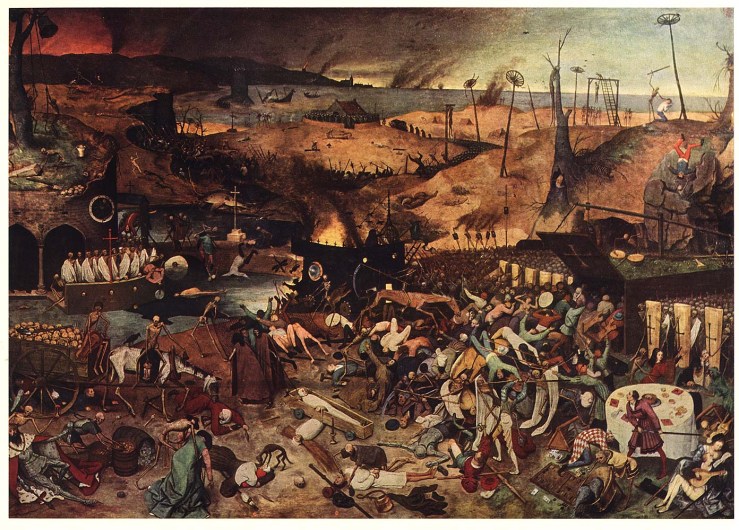
In Brueghel’s panorama of smoke and slaughter
Two people only are blind to the carrion army:
He, afloat in the sea of her blue satin
Skirts, sings in the direction Of her bare shoulder, while she bends,
Finger a leaflet of music, over him, Both of them deaf to the fiddle in the hands
Of the death’s-head shadowing their song.
These Flemish lovers flourish; not for long.
Yet desolation, stalled in paint, spares the little country
Foolish, delicate, in the lower right hand corner.

“Fast Anchor’d Eternal O Love!” — Walt Whitman
FAST-ANCHOR’D eternal O love! O woman I love!
O bride! O wife! more resistless than I can tell, the thought of
you!
Then separate, as disembodied or another born,
Ethereal, the last athletic reality, my consolation,
I ascend, I float in the regions of your love O man,
O sharer of my roving life.
Bright Star — Campion Does Keats

So I finally got around to watching Jane Campion’s Bright Star last night, a film that quietly studies the final years of Romantic poet John Keats and his relationship with Fanny Brawne. When Keats moves next door to the Brawnes, eldest daughter Fanny, a talented seamstress and flighty flirt, soon becomes intrigued by the poet. Keats, with his love for beauty and truth, represents a world of greater depth than the wits and dandies who usually attempt to court Brawne. Their relationship is, of course, doomed from the outset. Perpetually broke Keats doesn’t have the moolah or means to properly engage Brawne in marriage, but that doesn’t stop the pair from undertaking a furtive, pensive love affair, carried out in long walks on the heath and passionate letters. Oh, and Keats gets sick and dies at 25. That shouldn’t be a spoiler if you’ve studied your Romantics properly, now should it?
Both Abbie Cornish who plays Brawne and Ben Whishaw who plays Keats are excellent in their understatement and reserve, but the standout turn in the movie comes from actor Paul Schneider (from NBC’s Parks & Recreation) who plays Keats’s bankrolling friend Charles Armitage Brown. Brown is a lesser poet whose love and envy of Keats leads him to vex Brawne and Keats’s love at every turn, plaguing them with doubt, and that enemy of Romance, Reason. Schneider invests his character with a boorish charm that never veers into the rote tropes that afflict modern romance film. It’s emblematic of the Campion’s film in a way: Bright Star has every opportunity to devolve into a mundane exercise in doomed romance or a stuffy period piece, but under Campion’s delicate care it manages to match the depth of its subject matter.
Campion wrote the screenplay, presumably using letters from the principals as her primary source. She honors her viewers’ intelligence — far too rare these days — by never cobbling her plot together with easy exposition or forced narrative developments, and it’s that sense of history that lends the film authenticity. Cornish’s Brawne is a protagonist whose personality transformations read as real, and Whishaw’s Keats is never a cartoonish mystic or a moody caricature, but a fully-drawn human. Campion also has the good judgment to let her cinematography convey her story, letting gorgeous shots of the English countryside and cloistered chambers alike convey the mood and rhythm of her story. At times, Bright Star‘s beautiful camerawork recalls Terrence Malick, another director who allows film to “happen” to the viewer as an evocative experience rather than a spoon-feeding. Campion also shows considerable restraint with the film’s wonderful score, never allowing it to color a scene unduly when her actors can do a great job on their own. Bright Star avoids all of the pitfalls that might afflict a period piece, and does a far better job handling the subject of Romantic poetry than a movie has any right to. The film is hardly for everyone (sorry guys, no Jason Statham), but it’s very, very good. Recommended.
“little tree” — e.e. cummings

little tree
little silent Christmas tree
you are so little
you are more like a flower
who found you in the green forest
and were you very sorry to come away?
see i will comfort you
because you smell so sweetly
i will kiss your cool bark
and hug you safe and tight
just as your mother would,
only don’t be afraid
look the spangles
that sleep all the year in a dark box
dreaming of being taken out and allowed to shine,
the balls the chains red and gold the fluffy threads,
put up your little arms
and i’ll give them all to you to hold
every finger shall have its ring
and there won’t be a single place dark or unhappy
then when you’re quite dressed
you’ll stand in the window for everyone to see
and how they’ll stare!
oh but you’ll be very proud
and my little sister and i will take hands
and looking up at our beautiful tree
we’ll dance and sing
“Noel Noel”
Lucinella — Lore Segal
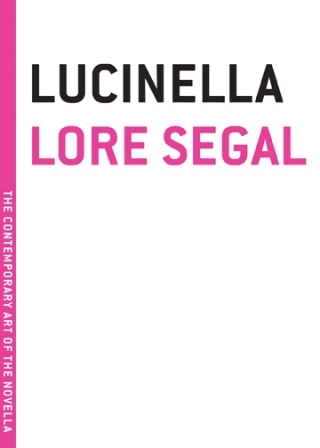
The story of a group of poets and critics in the late 60s/early 70s NYC should not be so fun or rewarding. From its first page, Lore Segal’s novella Lucinella invents itself as a scathing satire of writers and would-be writers. Segal’s book paradoxically reveres its subject matter, a back-biting and insular literati; and yet at the same time it exposes their solipsistic, narcissistic, cannibalistic shortcomings. These are not particularly generous people, but they are somehow endearing.
Lucinella takes first-person authority to tell the story–and boy does she take authority, bending reality, reason, and narrative cohesion to fit her whim. Lucinella is a poet (a minor poet, perhaps), and Lucinella is very much a poetic action, an act of creation in thirteen parts. The story begins with our (utra-)self-conscious heroine at the idyllic artists’ retreat Yaddo, where she’s ostensibly trying to compose a poem about a root cellar but really just having a grand ole time with a host of notable intellectuals, the poets and critics who will populate the book. “I will make up an eye here, borrow a nose or two there, and a mustache and something funny someone said and a pea-green sweater, so it’s no use your fitting you keys into my keyholes, to try and figure out who’s who,” Lucinella tells us. No worries, Lucinella, we had no idea who, if anyone, your Betterwheatling and Winterneet and Meyers were based on–heck, it took us a few pages to figure out that your Zeus was, um, y’know, that Zeus.
Segal’s (or Lucinella’s) inventions work within a hyperbolic schema set to slow burn. Describing a fellow poet of greater renown:
This Winterneet walking beside me has walked beside Roethke, breakfasted with Snodgrass and Jarrell–with Auden! Frost is his second cousin; he went to school with Pound, traveled all the way to Ireland once, to have tea with Yeats, and spent the weekend with the Matthew Arnolds. He remembers Keats threw up on his way from anatomy; Winterneet says he admires Wordsworth’s poetry, but couldn’t stand the man.
This is pretty much Lucinella‘s program: plausibly esoteric literary references running amok into sublimely surrealistic sketches. If you don’t like that, take your sense of humor to its doctor. Lucinella’s time at the haven of Yaddo is soon up, and she must return to the monster of Manhattan, where young poet William (despite his too-thin neck) shows up at her doorstep to fall in love and eventually marry her. The two attend every literary party, where they feel alternately bedazzled, thrilled, or–mostly–slighted. William, composer of a never-quite-finished epic about Margery Kempe, takes his snubs especially hard, even when he’s being celebrated (and published). We weren’t there, but it seems that Segal evokes her Manhattanite milieu with painterly (or perhaps cartoonly) accuracy. Really, the infighting intellectuals are reminiscent of poseurs and scenesters of any time and place. Lucinella and William go to parties, throw parties, complain about parties, and throw fits like children when they don’t get invited to parties. It’s all very real and very silly and very funny. In one (literally) fantastic set-piece (okay, the whole book might be a fantasy set-piece), Lucinella meets Old Lucinella and Young Lucinella at a party, giving her an(other) opportunity to critique herself. “There’s old Lucinella, the poet,” says one character. “She hasn’t written much in these last years. Used to be good in a minor way” comes the nonchalant reply. Young Lucinella fares no better, although she does manage an affair with William (don’t worry, Lucinella proper hooks up with Zeus in one of the book’s strangest flights of fancy).
The real seduction, as Lucinella points out at a party (of course), is her attempt to seduce her reader into a trenchant unreality that the poets and critics pretend is reality even as they bemoan the reality that their addiction to unreality is their main reality. Yeah. It’s all a bit surreal, and it all comes to a head quite pointedly twice in the novel. The first unmasking occurs at a symposium where the group holds forth on weighty matters – “Why Read?” – “Why Write?” – “Why Publish?” The house lights come up to reveal our fretting poets addressing an empty hall. Even in 1970, no one cares about reading and writing and publishing. And it’s not just the symposium–when Lucinella hosts a party for her pal Betterwheatling, who’s just published a collection of a criticism, she’s shocked to realize as the party dwindles that, not only has she not read his new book, she’s never read anything he’s written. But that’s not all: “I can tell, with the shock of a certitude, by the set of the line of Betterwheatling’s jaw, by the way his hair falls into his forehead, that Betterwheatling has never read a line I have written either and I flush with pain.” Betterwheatling’s punishment: “I’ll never invite him to another party!” Ahhh . . . the petulance. Oh, all the backstabbing and perceived slighting and posing and posturing leads up to an apocalyptic climax, complete with a proper de-invention of Lucinella. It’s all really great.
If Lucinella is light on plot–which we don’t really think it is, despite its slim build, light weight, and 150 or so pages–it’s big on ideas and even bigger on voice. Lucinella is kinda like that crazy art chick you knew in college who was always working on some project that never quite came to fruition, and her cohorts are just the sort of mad loonies you spend time alternately ducking calls from or hoping to run into at a party (depending on your mood). Her evocation of the youthful excitement and nascent romance of poetry reminds us of some of Roberto Bolaño‘s work, particularly the joyful jocularity of Garcia Madero’s section of The Savage Detectives (Segal’s volume is in no short supply of exclamations points). The book builds to a massive millennial climax, a hodgepodge of social consciousness movements and poetry and block party–a moveable feast of paranoia and art and possibility and good clean fun, and, more than anything else, the death-sentences we impose upon ourselves. But we’re overextending our review. Let’s just say that the book is great, and if you love books that both simultaneously mock and valorize the creative process, you’ll probably dig Lucinella’s metafictional tropes. Highly recommended.
Lucinella is in print again for the first time since the 1970s thanks to indie stronghold Melville House Publishing.
“The Old Flame” — Robert Lowell

Listening to Robert Lowell read his poem “The Old Flame” is way better than just reading it yourself. Really.
 Biblioklept