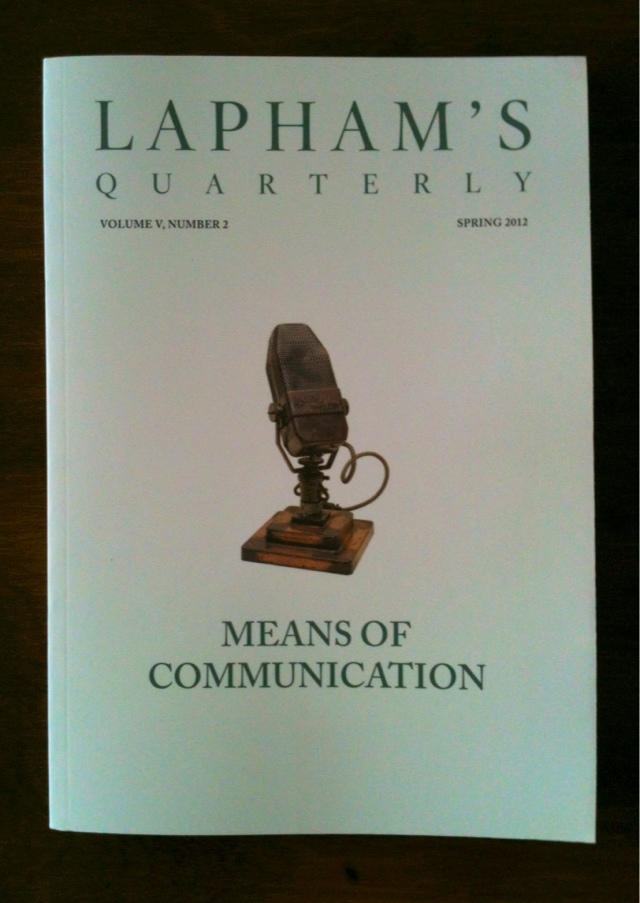
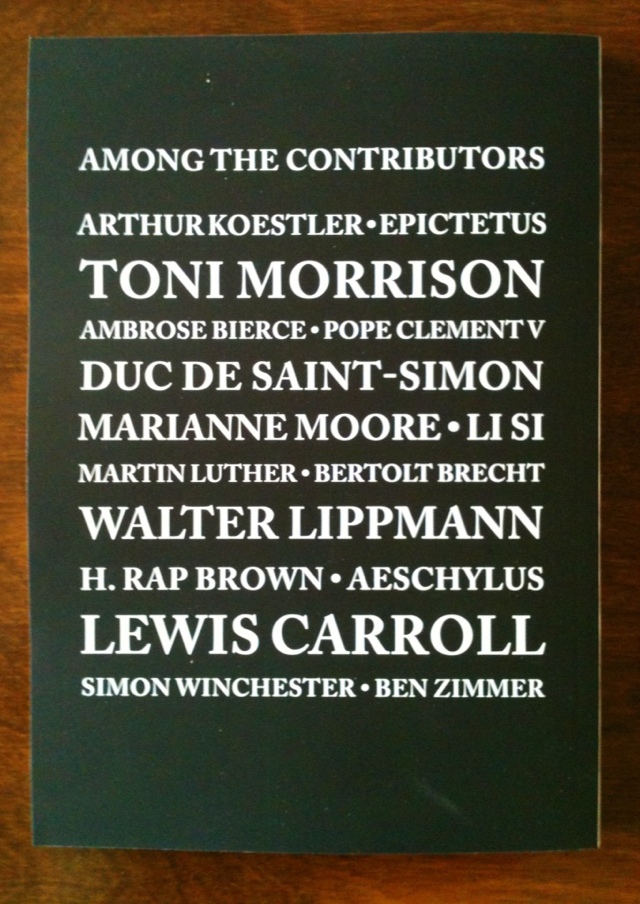
Book Acquired, 3.14.2012 (Lapham’s Quarterly, Spring 2012)

20120317-165618.jpg

20120317-165625.jpg

(Yes, I am enjoying my subscription).

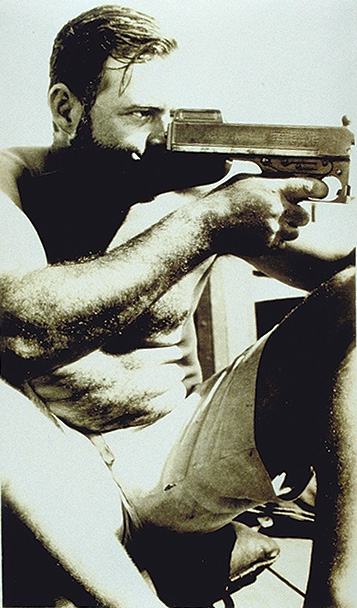
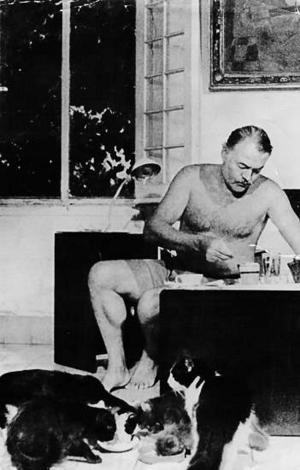
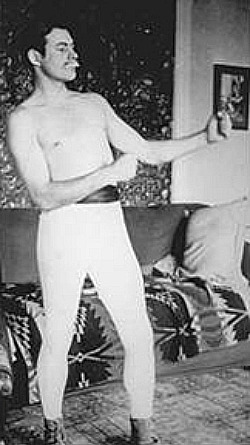
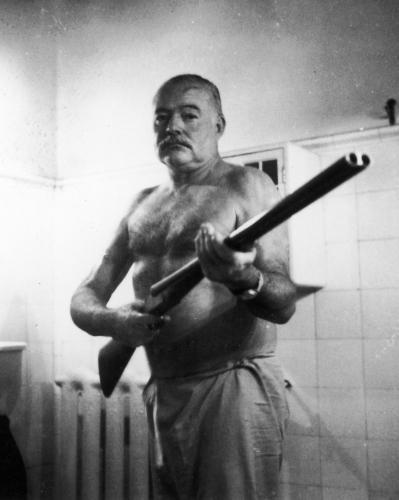
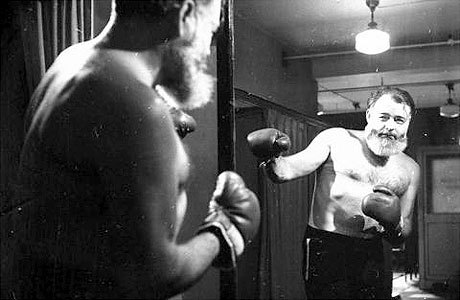
Topless Hemingway, Part VIII

Topless Hemingway, Part VII

Michel Houellebecq: “I Still Haven’t Made Up My Mind Whether Sex Is Good or Not”

Michel Houellebecq talks sex, frustration, and prostitution in his 2010 Paris Review interview:

INTERVIEWER

Of course, it was the numerous sex scenes that got you a lot of attention in the media.

HOUELLEBECQ

I’m not sure that there are such an unusual number of sex scenes in my novel.
I don’t think that’s what was shocking. What shocked people was that I
depicted sexual failure. I wrote about sexuality in a nonglorifying way. Most of all I described a basic reality: a person filled with sexual desire who can’t satisfy it. That’s what people don’t like to hear about. Sex is supposed to be positive. Showing frustrated sexual desire is obscene. But it’s also the truth. The real question is, Who is allowed to have sex? I don’t understand, for example, how teachers survive with all these alarming young girls. When women become sexual tourists, that is even more hidden, shameful, and taboo than when men do it. Just as, when a woman professor puts her hand on a student’s thigh, it’s even worse, even more unspeakable.

INTERVIEWER

A constant refrain in your novels is that sex and money are the dominant values of this world.

HOUELLEBECQ

It’s strange, I’m fifty years old and I still haven’t made up my mind whether sex is good or not. I have my doubts about money too. So it’s odd that I’m considered an ideological writer. It seems to me that I am mostly exposing my doubts. I do have certain convictions. For example, the fact that you can pay a girl, that I think is a good thing. Undeniably. An immense sign of progress.

INTERVIEWER

You mean prostitutes?

HOUELLEBECQ

Yes. I’m all for prostitution.

INTERVIEWER

Why?

HOUELLEBECQ

Because everybody wins. It doesn’t interest me personally, but I think it’s a good thing. A lot of British and Americans pay for it. They’re happy. The girls are happy. They make a lot of money.

INTERVIEWER

How do you know that the girls are happy?

HOUELLEBECQ

I talk to them. It’s very difficult because they don’t really speak English, but I talk to them.

INTERVIEWER

What about the more commonly held idea that these women are victims who are forced into these circumstances?

HOUELLEBECQ

It’s not true. Not in Thailand. It’s just stupid to have objections about it.

Topless Hemingway, Part VI

Henry Miller Interview (In a Swimming Pool)

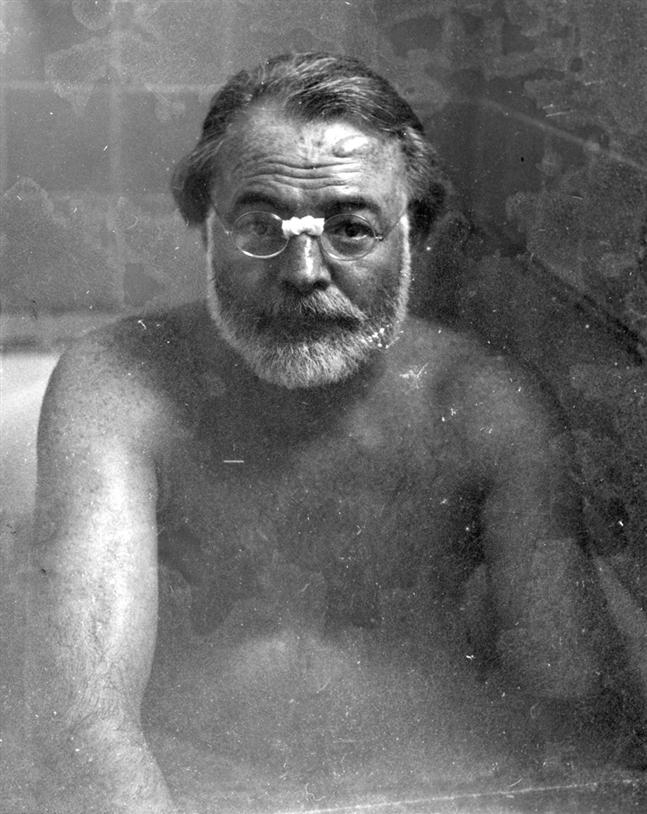
Topless Hemingway, Part V (Ernest Takes a Bath)

Topless Hemingway, Part IV

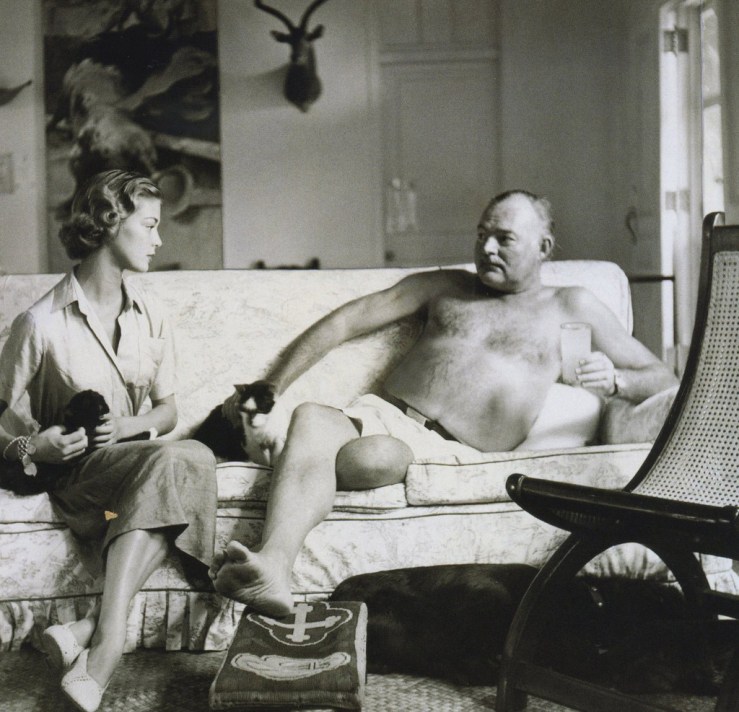
Pictured with Jean Patchett, Cuba, 1950

Edward Albee Talks About Carson McCullers (Video)

Topless Hemingway, Part III

Topless Hemingway, Part II

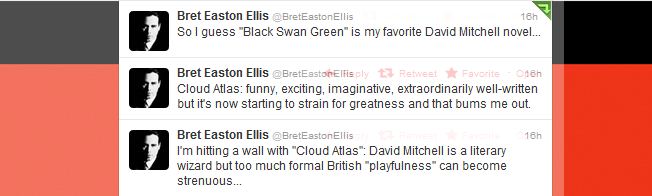
Bret Easton Ellis on David Mitchell’s Novel Cloud Atlas

Michel Houellebecq, Curmudgeonly Pain in the Ass

From Michel Houellebecq’s 2010 Paris Review interview:

INTERVIEWER

You’ve said that you are “an old Calvinist pain-in-the-ass.” What do you mean?

HOUELLEBECQ

I tend to think that good and evil exist and that the quantity in each of us is unchangeable. The moral character of people is set, fixed until death. This resembles the Calvinist notion of predestination, in which people are born saved or damned, without being able to do a thing about it. And I am a curmudgeonly pain in the ass because I refuse to diverge from the scientific method or to believe there is a truth beyond science.

“Nothing but Misery, Nothing but Monsters” — Henry Miller Walks Around New York, Talking About His Childhood

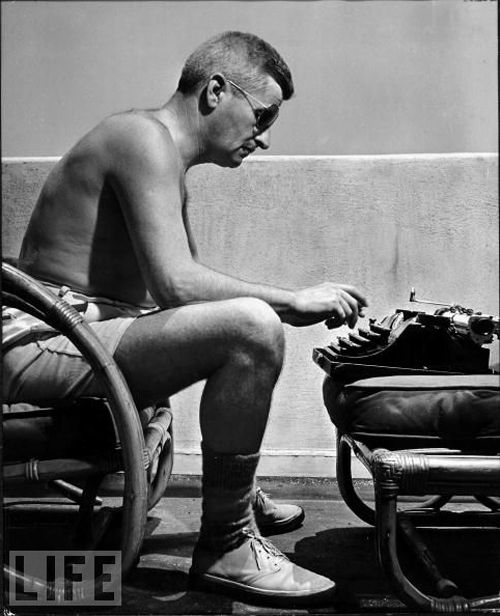
Topless Faulkner, Part II

(See also).

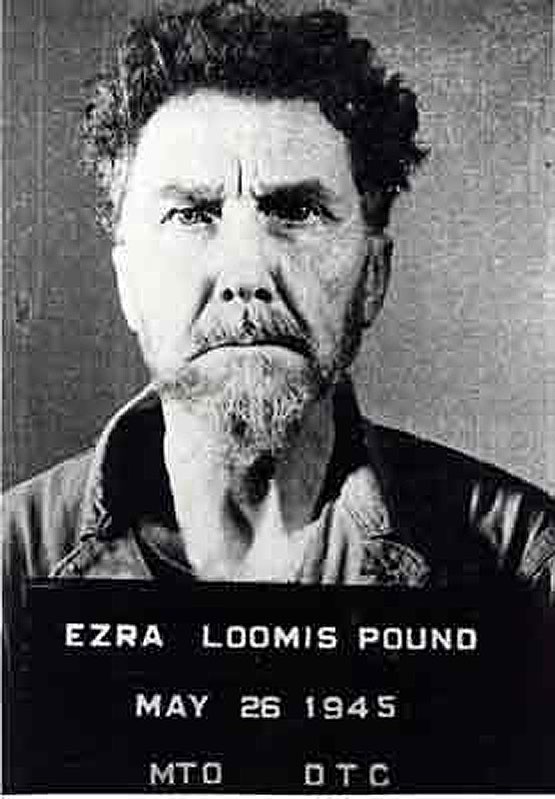
Ezra Pound’s Mugshot

From the Wikipedia entry “1945 in poetry”:

May 2, 1945, Ezra Pound was arrested by Italian partisans, and taken (according to Hugh Kenner) “to their HQ in Chiavari, where he was soon released as possessing no interest.” The next day, he turned himself in to U.S. forces. He was incarcerated in a United States Army detention camp outside Pisa, spending 25 days in an open cage before being given a tent. Here he appears to have suffered a nervous breakdown. While in the camp he drafted the Pisan Cantos, a section of the work in progress which marks a shift in Pound’s work, being a meditation on his own and Europe’s ruin and on his place in the natural world. The Pisan Cantos won the firstBollingen Prize from the Library of Congress in 1948.

The Obligatory Best of 2011 List(s)

Best Books I Read in 2011 That Were Published in 2011 (Or Close Enough to 2011)

MetaMaus, Art Spiegelman

The Avian Gospels, Adam Novy

Spurious, Lars Iyer

The Third Reich, Roberto Bolaño

Humiliation, Wayne Koestenbaum

The Pale King, David Foster Wallace

Between Parentheses, Roberto Bolaño

***

Best Books I Read in 2011 That Were Published Before 2011

The Elementary Particles, Michel Houellebecq

Wittgenstein’s Mistress, David Markson

Expelled from Eden: A William Vollmann Reader

Ray, Barry Hannah

Trans-Atlantyk, Witold Gombrowicz

The Garden of Eden, Ernest Hemingway

Light in August, William Faulkner

Hadji Murad, Leo Tolstoy

First Love and Other Sorrows, Harold Brodkey

Airships, Barry Hannah

Speedboat, Renata Adler

Under the Volcano, Malcolm Lowry

Vertigo, W.G. Sebald

***

Best Rereading

Candide, Voltaire

***

Best Audiobook of 2011

The Collected Fictions of Gordon Lish, read by Gordon Lish

***

Best Film of 2011

The Tree of Life

***

Most Charming Film of 2011

Midnight in Paris

***

Most Overhyped Book of 2011

The Art of Fielding, Chad Harbach

***

Best Book Cover of 2011 

***

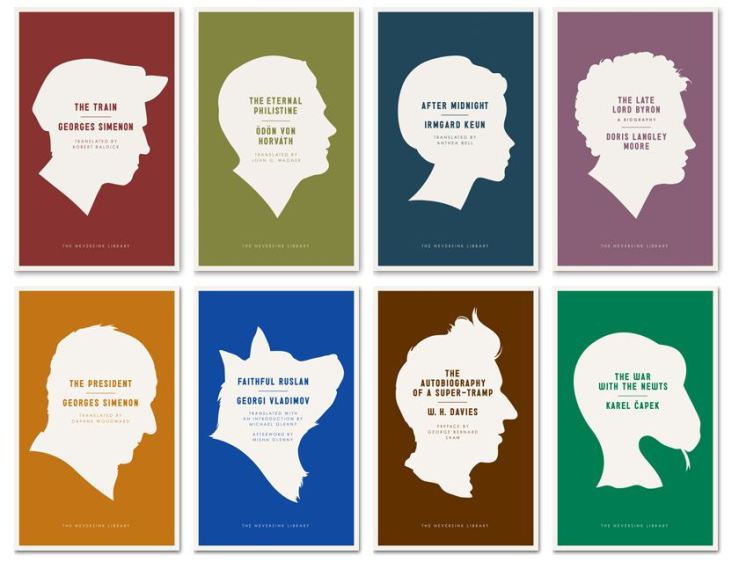
Best Book Series Design

Melville House’s Neversink Imprint
 

***

Weirdest (Yet Nevertheless Moving) Novel of 2011

How to Keep Your Volkswagen Alive, Chris Boucher

***

Book I Read in 2011 That Still Confounds and Haunts Me

The Kindly Ones, Jonathan Littell

***

Saddest Book I Read in 2011

Tie: Under the Volcano, Malcolm Lowry; The Stories of Breece D’J Pancake, Breece D’J Pancake

***

Best Essay (Print)

“Some Notes on Translation and on Madame Bovary,” Lydia Davis (The Paris Review)

***

Best Essay (Online)

“Nude in Your Hot Tub, Facing the Abyss (A Literary Manifesto After the End of Literature and Manifestos),”  Lars Iyer (White Review)

***

Worst Literary Trend of 2011

Tie: Lame “literary fiction” novels; Articles that link everything to David Foster Wallace

***

Best Literary Trend of 2011

Plagiarism!

***

Most Obvious Disclaimer

I did not read or see or hear every book or essay or audiobook or film or TV show or record or video that came out in 2011. Also, there are some days left in the year. These are all, just like, opinions man.