See the Trailer for Spielberg’s Adventures of Tintin

“Surreptitious Kissing” — Denis Johnson

“Surreptitious Kissing,” a poem by Denis Johnson

I want to say that
forgiveness keeps on

dividing, that hope
gives issue to hope,

and more, but of course I
am saying what is

said when in this dark
hallway one encounters

you, and paws and
assaults you—love

affairs, fast lies—and you
say it back and we

blunder deeper, as would
any pair of loosed

marionettes, any couple
of cadavers cut lately

from the scaffold,
in the secluded hallways

of whatever is
holding us up now.

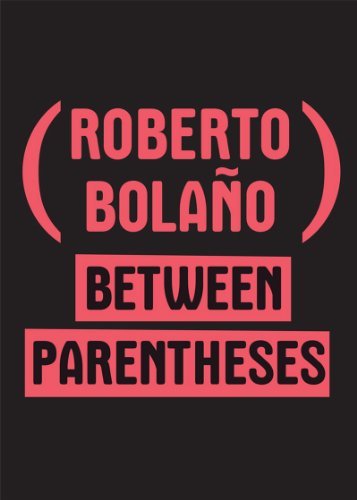
Between Parentheses — Roberto Bolaño

Between Parentheses (new from New Directions and deftly translated by Natasha Wimmer) collects over 400 pages of Roberto Bolaño’s essays, speeches, introductions, and newspaper columns, composed between 1998 and 2003, the year Bolaño died. The bulk of the book, as well as its title, comes from a column that Bolaño wrote for the Chilean newspaper Las Últimas Noticias. As one would expect, these pieces are relatively short, sometimes under 500 words, punctuated with a depth that belies their brevity. Bolaño writes about everything (or, everything worth writing about, I suppose), but, as those familiar will guess, literature is his main subject, whether he’s reviewing a Spanish-language translation of McCarthy’s Blood Meridian, comparing Kafka and Philip K. Dick, explaining his affection for William Burroughs, or discussing the merits of translating literature. If these samples tantalize you, let me go further: Bolaño writes about detective novels, Walter Mosley, Jonathan Swift, Jorge Luis Borges, magic, devils, memoirs, Gunter Grass, murder, troubadours, the Hell’s Angels, poetry, and more, more, more.

Despite its discursive topics, a unified tone inheres throughout Between Parentheses, a distinctly Bolañonian tone, at once grand and romantic (and Romantic) and profound and cynical and biting and flippant. In her blurb on the back of the book, Marcela Valdes (The Nation) declares that in Between Parentheses “we hear Bolaño’s real voice, the one he often disguised through the ventriloquism of his fiction.” This is perhaps a too-bold statement—I’m not sure if Bolaño can be said to have a “real voice”—instead, we find an author who’s constantly inventing and then reinventing, inflating and deflating, expanding and contracting.

And yet I think we’ll have to take Between Parentheses as Bolaño’s “real voice”—it’s perhaps the closest thing we’ll get to memoir or autobiography from the man (at least for now: his literary estate seems to be  in a constant state of excavation, so who knows). But Bolaño, ever the winking imp, is there to warn us against taking memoir at face value—

Of all books, memoirs are the most deceitful because the pretense in which they engage often goes undetected and their authors are usually only looking to justify themselves. Ostentation and memoirs tend to go together. Lies and memoirs get along swimmingly.

If Bolaño may occasionally employ invention in some of the passages here, it’s all to his credit, and all perhaps in the service of Higher Artistic Truth (whatever that means). He shares much of himself in Between Parentheses, especially in the book’s first section, “Three Insufferable Speeches,” (you may have already read “Literature and Exile”) and its second section, “Fragments of a Return to the Native Land,” detailing the writer’s return to Chile in 1998. These are indeed fragments, sketchy, pained moments where we glimpse Bolaño trying to process a difficult and emotional journey. The tone is at once comic, analytical, and depressive—familiar territory to Bolaño’s readers, I suppose. Besides its obvious appeal as a Bolaño memoir, “Fragments” is also fine travel literature, as is the later section “Scenes,” which comprises evocations of various locales, chief among them Bolaño’s adopted home Blanes. Several of the pieces in “Scenes” seem to extend into the realm of pure fiction; a few are narrated by speakers who are only partly-Bolaño (if such a construction can be said to exist). In any case, they are the book’s closest approximations of short fiction.

The book’s fifth section, “The Brave Librarian,” features one of the highlights (and longer pieces) of the volume, a preface for The Adventures of Huckleberry Finn called “Our Guide to the Abyss,” where Bolaño parses Twain and Melville, delving into American literature. I’m sure that for many this piece alone will be worth the price of admission. If you still need convincing, the book’s final section offers a treatise on book theft, advice on the art of writing short stories, a transcript of Bolaño’s last interview before his death, and more, more, more. “More, more, more” might be a simple way to summarize this book.

Between the Parentheses does little, ultimately, to explicate Roberto Bolaño. If anything, it helps to further confound those of us who’ve been puzzling out his fiction for the past few years. And thank God for that. I’ve written before about “the Bolañoverse,” about Bolaño’s labyrinthine genre-crossing intertextuality. Between Parentheses, despite its claims to reality or truth, is nevertheless a part of Bolaño’s maze, a maze by turns dark or illuminating, tragic or comic, and stark and enriching. Most of all, this maze is a strange joy to get lost in. Highly recommended.

Absence of Malick, Part One

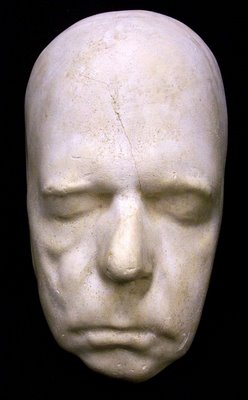
Osceola’s Death Mask

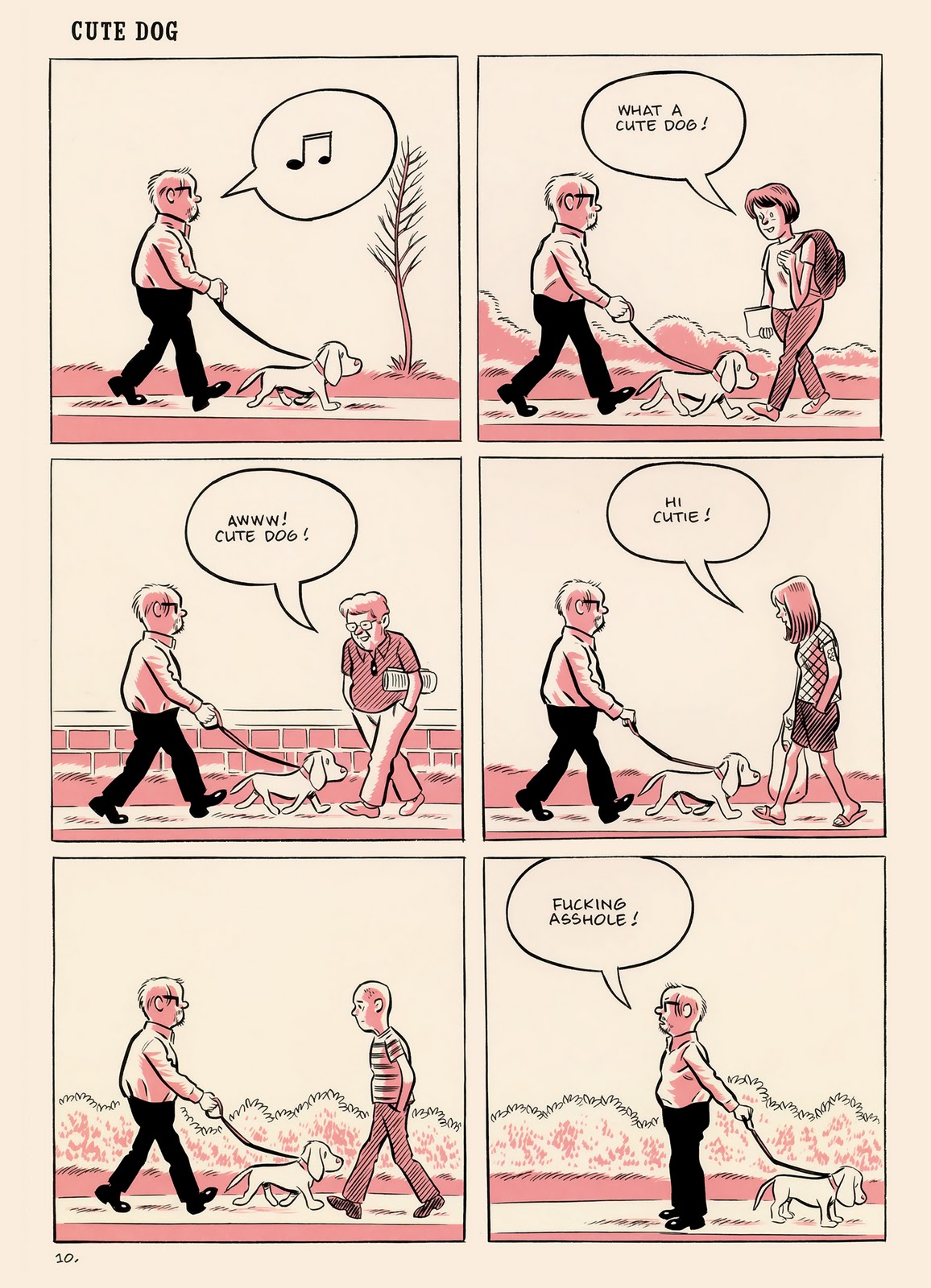
“Cute Dog” — Daniel Clowes

Read our review of Daniel Clowes’s Wilson, or buy the book from Drawn & Quarterly..

William Burroughs’s Advice to Young People

“Why Read the Classics?” — Italo Calvino

From Italo Calvino’s The Uses of Literature

  1. The classics are the books of which we usually hear people say, “I am rereading . . . ” and never “I am reading . . . “
  2. We use the words “classics” for books that are treasured by those who have read and loved them; but they are treasured no less by those who have the luck to read them for the first time in the best conditions to enjoy them
  3. The classics are books that exert a peculiar influence, both when they refuse to be eradicated from the mind and when they conceal themselves in the folds of memory, camouflaging themselves as the collective or individual unconscious.
  4. Every rereading of a classic is as much a voyage of discovery as the first reading.
  5. Every reading of a classic is in fact a rereading.
  6. A classic is a book that has never finished saying what it has to say.
  7. The classics are the books that come down to us bearing the traces of readings previous to ours, and bringing in their wake the traces they themselves have left on the culture or cultures they have passed through (or, more simply, on language and customs).
  8. A classic does not necessarily teach us anything we did not know before. In a classic we sometimes discover something we have always known (or thought we knew), but without knowing that this author said it first, or at least is associated with it in a special way. And this, too, is a surprise that gives much pleasure, such as we always gain from the discovery of an origin, a relationship, an affinity.
  9. The classics are books which, upon reading, we find even fresher, more unexpected, and more marvelous than we had thought from hearing about them.
  10. We use the word “classic” of a book that takes the form of an equivalent to the universe, on a level with the ancient talismans. With this definition we are approaching the idea of the “total book,” as Mallarmé conceived of it.
  11. Your classic author is the one you cannot feel indifferent to, who helps you to define yourself in relation to him, even in dispute with him.
  12. A classic is a book that comes before other classics; but anyone who has read the others first, and then reads this one, instantly recognizes its place in the family tree.
  13. A classic is something that tends to relegate the concerns of the moment to the status of background noise, but at the same time this background noise is something we cannot do without.
  14. A classic is something that persists as a background noise even when the most incompatible momentary concerns are in control of the situation.


Bill and Tony — A Short Film with William Burroughs

William Burroughs looks a little like Captain Picard in this one—

Will Ferrell on Raymond Carver

Will Ferrell talks to the AV Club about his new film, Everything Must Go, which is based on Raymond Carver’s short story “Why Don’t You Dance?” From the interview—

AVC: Your character in Everything Must Go is a persistent alcoholic who loses his job and his wife in one fell swoop, so the film could have been much darker than it is, especially considering the source. Raymond Carver isn’t known for being quirky and lighthearted.

WF: I probably shouldn’t admit, but I will, that I had never read Raymond Carver prior to this. When Dan gave me the short story, the collection it was in, I read it cover to cover, and I loved the starkness of his writing. But it’s true, it’s pretty dark and alcoholic. It just depends on your filter and where you’re coming from. You mentioned that it could be a lot darker. Other people have said to me, “Wow, this is really dark, especially for you to do.” I was fearful of the shot of the shaky hand reaching for the can, like, “That’s going to come off terrible.” A more skilled actor maybe could do it, but for me, and Dan agreed, we just made sure that everything was underplayed, if anything.

AVC: Actors often say that playing drunk is one of the hardest things to do, and the secret is acting like you’re trying not to look drunk. 

WF: Totally. I actually had a buddy of mine come over and film me getting drunk one night, just as an excuse to drink 18 beers, but also to see if there was anything I could glean from that.

“The Man Who Shouted Teresa” — Italo Calvino

“The Man Who Shouted Teresa,” a very short story by Italo Calvino. From Numbers in the Dark.

I stepped off the pavement, walked backwards a few paces looking up, and, from the middle of the street, brought my hands to my mouth to make a megaphone, and shouted toward the top stories of the block: “Teresa!”
My shadow took fright at the moon and huddled at my feet.
Someone walked by. Again I shouted: “Teresa!” The man came up to me and said: “If you do not shout louder she will not hear you. Let’s both try. So: count to three, on three we shout together.” And he said: “One, two, three.” And we both yelled, “Tereeeesaaa!”
A small group of friends passing by on their way back from the theater or the café saw us calling out. They said: “Come on, we will give you a shout too.” And they joined us in the middle of the street and the first man said one to three and then everybody together shouted, “Te-reee-saaa!”
Somebody else came by and joined us; a quarter of an hour later there were a whole bunch of us, twenty almost. And every now and then somebody new came along.
Organizing ourselves to give a good shout, all at the same time, was not easy. There was always someone who began before three or who went on too long, but in the end we were managing something fairly efficient. We agreed that the “Te” should be shouted low and long, the “re” high and long, the “sa” low and short. It sounded fine. Just a squabble every now and then when someone was off.
We were beginning to get it right when somebody, who, if his voice was anything to go by, must have had a very freckled face, asked: “But are you sure she is home?”
“No,” I said.
“That is bad,” another said. “Forgotten your key, have you?”
“Actually,” I said, “I have my key.”
“So,” they asked, “why dont you go on up?”
“I don’t live here,” I answered. “I live on the other side of town.”
“Well, then, excuse my curiosity,” the one with the freckled voice asked, “but who lives here?”
“I really wouldn’t know,” I said.
People were a bit upset about this.
“So, could you please explain,” somebody with a very toothy voice asked, “why you are down here calling out Teresa.”
“As far as I am concerned,” I said, “we can call out another name, or try somewhere else if you like.”
The others were a bit annoyed.
“I hope you were not playing a trick on us,” the freckled one asked suspiciously.
“What,” I said, resentfully, and I turned to the others for confirmation of my good faith. The others said nothing.
There was a moment of embarrassment.
“Look,” someone said good-naturedly, “why don’t we call Teresa one more time, then we go home.”
So we did it one more time. “One two three Teresa!” but it did not come out very well. Then people headed off for home, some one way, some another.
I had already turned into the square when I thought I heard a voice still calling: “Tee-reee-sa!”
Someone must have stayed on to shout. Someone stubborn.

Wilson — Daniel Clowes

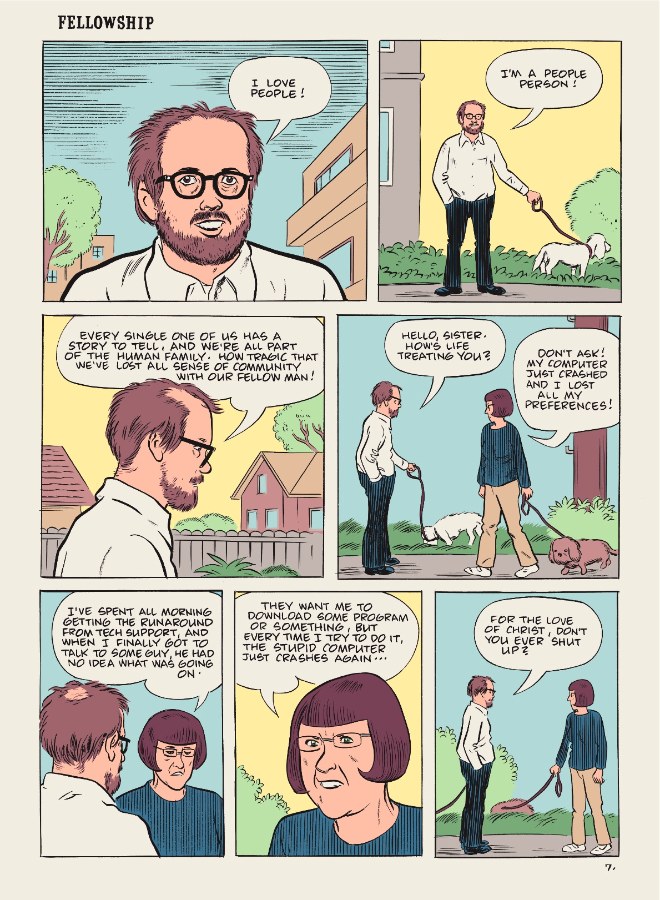
In the first line of the first panel of the first strip in Daniel Clowes’s graphic novel Wilson, the eponymous character, looking directly at the reader, claims, “I love people!” The statement is both ironic and strangely true. Our hero Wilson loves the idea of loving people, and goes about his daily business (walking his dog, drinking coffee, mailing boxes of shit to his former in-laws) in a way that maximizes human contact. With no real family of his own, Wilson reaches out to every person he passes by, addressing them as “brother” or “sister” in an embracing, Emersonian spirit. The problem is that, as much as he loves the idea of loving humanity, Wilson pretty much hates every person he meets. Here’s the opening episode—

Wilson comprises about 70 one-page episodes, each with six or seven panels, each essentially self-contained yet part of a loose plot. The episode above is indicative of the structure of each chapter: a build-up, a monologue, often delivered to disinterested stranger, and then an anti-punchline in which Wilson reveals the ironic cognitive dissonance at the core of his being. The effect can be hard to process, and Clowes’s acerbic humor is clearly not for everyone. Although Clowes uses a traditional Sunday comic page structure, his technique is unsettling: the humor is drawn not so much from the deflationary punchlines that end each chapter, but the overall disconnect between perception, desire, and reality that those punchlines reveal.

Clowes uses this method consistently throughout Wilson, but alternates styles and color palettes, moving from a classic-Clowes style familiar to anyone who’s read Eightball or Ghost World, to a bouncy, cartoony style (see: “Marriage”). The choice to change up the styles calls back, again, to the Sunday comic pages of yore; it also underscores Wilson’s unstable identity, as the narrative slips through gradations of more realistic to more cartoony representations. It is a consistent inconsistency.

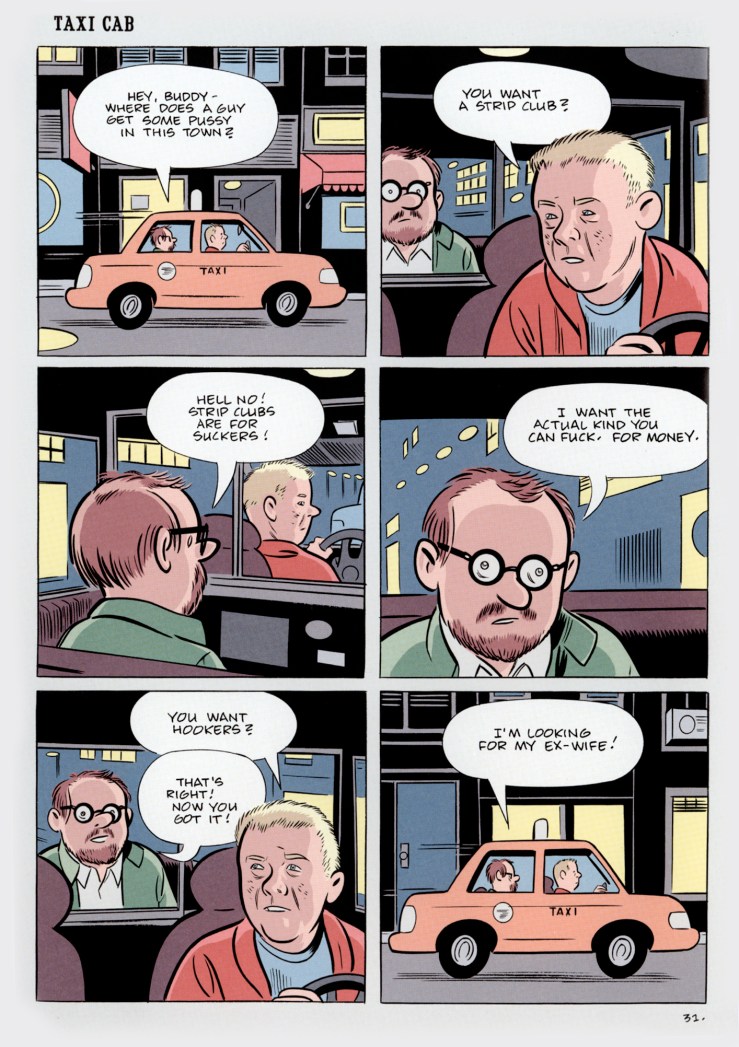
Surprisingly, Wilson has a cohesive plot. After the death of his father, Wilson seeks to reunite with his ex-wife, whom he believes to be a drug-addicted hooker. He also hopes to meet the child she was pregnant with when she left him—

Wilson does find his wife. And then he finds his teenage daughter. And then he kinda sorta kidnaps her, or at least doesn’t bother to return her to her adoptive parents. And then he goes to prison. But maybe I’m spoiling the plot now. In any case, Wilson’s adventures are hardly zany. They are poignant and sad and pathetic and cringe-worthy. Clowes is willing to punish his already-tortured protagonist, and yet there’s a payoff for pour Wilson. Throughout the graphic novel, Wilson yearns for human connection, yet is always disappointed by the humans around him who can never measure up to his ideals. Like any sociopath, Wilson lacks a meaningful emotional core; throughout the narrative he longs to experience an epiphany, staring at the ocean, for example, in the hopes illumination. He finally earns this epiphany near the close of his life. The moment is unexpectedly touching, and provides the kind of balance that proves Wilson a work of art and not merely a collection of funny strips. Recommended.

Wilson is available now from Drawn & Quarterly.

Aldous Huxley Talks About Drugs, TV, and Threats to American Freedom

Mike Wallace interviews Aldous Huxley (1958)—

\

Ezra Pound Weighs Chaucer and Shakespeare

Ezra Pound’s ABC of Reading, hardly short on strong opinions, contains a fantastic chapter on Chaucer, who Pound submits is superior in some ways to Shakespeare. A taste—

Sloth is the root of much bad opinion. It is at times difficult for the author to retain his speech within decorous bounds.

I once heard a man, how has some standing as writer and whom Mr. Yeats was wont to defend, assert that Chaucer’s language wasn’t English, and that one ought not to use it as basis of discussion, ETC. Such was the depth of London in 1910.

Anyone who is too lazy to master the comparatively small glossary necessary to understand Chaucer deserves to be shut out from the reading of good books for ever.

As to the relative merits of Chaucer and Shakespeare, English opinion has been bamboozled for centuries by a love of the stage, the glamour of the theatre, the love of bombastic rhetoric and of sentimentalizing over actors and actresses; these, plus the national laziness and unwillingness to make the least effort, have completely obscured values. People even read translations of Chaucer into a curious compost, which is not modern language but which uses a vocabulary comprehended of sapheads

Wat se the kennath

Chaucer had a deeper knowledge of life than Shakespeare.

Let the reader contradict that after reading both authors, if he chooses to do so.

Sir Walter Scott’s Death Mask

Five Favorite Fictional Mothers

Happy Mother’s Day! Sure, it’s a marketing scam, but we all love moms, right?

Fascinating moms populate literary fiction, and there’s no shortage of great baddies, evil stepmothers, and distant headcases in our favorite literature—but we thought we’d focus instead on some of the moms that seem to be, you know, really great moms.

(See also: Five Favorite Fictional Fathers, Five Favorite Fictional Sons (the daughters list is surely round the bend)).

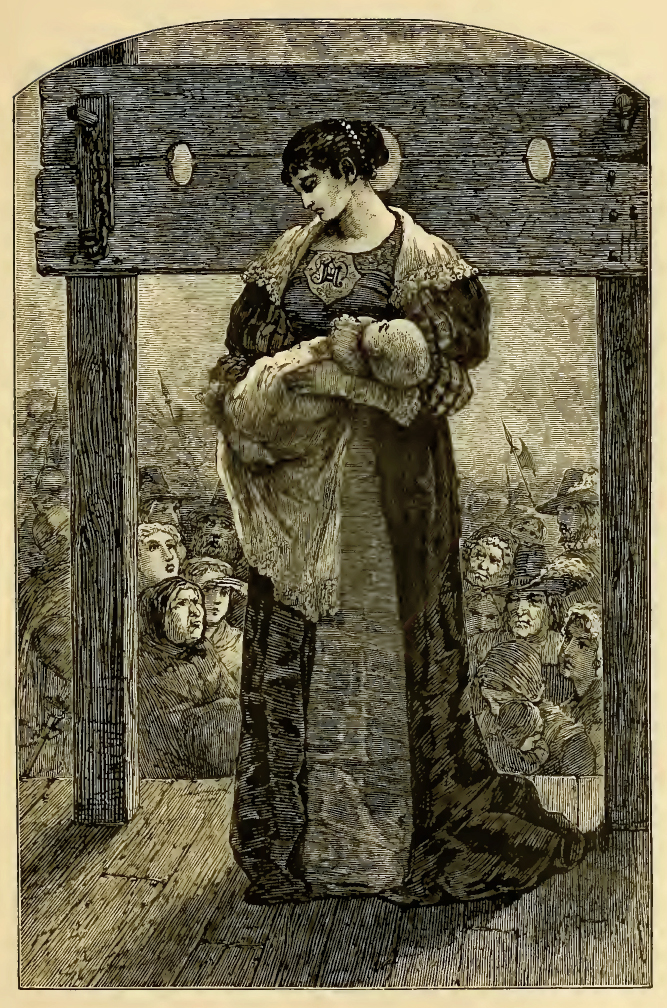
"Hester Prynne & Pearl before the stocks", an illustration by Mary Hallock Foote from an 1878 edition of The Scarlet Letter

1. Hester Prynne, The Scarlet Letter (Nathaniel Hawthorne)

Hester Prynne is a bundle of contradictions—sin and salvation, radical freedom and reactionary repression, hope and despair—all bound to a deeply patriarchal society that had to control women’s bodies at all turns. Fortunately, there’s no analog for the Puritans’ judgmental, shame-based behavior in our own society (har har). Hester and her daughter Pearl, living in a cottage outside of Boston, are outside the dominant social order. It’s a form of punishment that paradoxically frees the pair, allowing Pearl to grow into a kind of nature spirit—impish and willful, to be sure, but also artistic and able to express herself. Although Pearl is the human doubling of Hester’s titular letter, she’s ultimately no badge of shame, but rather a treasure in her mother’s eyes.

2. Penelope, The Odyssey (Homer et al.)

Patient Penelope weaving and unweaving her husband’s shroud—is she the faithful wife, waiting for Odysseus who’s having adventures asea? Or is she cunningly keeping her son safely alive from the predatory suitors who would certainly want to get him out of the way ASAP. Penelope is an extraordinary and ambiguous figure, but one thing is clear: she loves her son Telemachus.

3. Molly Bloom, Ulysses (James Joyce)

Speaking of Penelope . . . Molly might not be the most faithful wife, but damn if she isn’t a hot mama.

4. Ma Joad, The Grapes of Wrath (John Steinbeck)

Ma Joad never gets a first name in Grapes—she’s an elemental matriarchal force that keeps the family together against every kind of pain. The final scene of this novel is utterly amazing. When Rose of Sharon’s daughter dies in childbirth, Ma Joad directs the mother to nurse a man dying from hunger. All the while, a flood of epic proportions looms. Ma Joad’s determination to live transcends Darwinian impulses here; against the backdrop of infanticide, economic and social genocide, and natural disaster, she still directs her family to a loving, Emersonian course of action.

5. Grendel’s mother, Grendel (John Gardner)

In John Gardner’s fabulous retelling of the Beowulf saga from Grendel’s POV, we find a deeply alienated young man who, try as he might, cannot communicate with the plants and animals around him. Grendel should be a thing of nature, but he is a thinking thing, a thing with a conscience, a soul. He can understand men but they cannot understand him. In one of the book’s saddest conceits, Grendel cannot communicate through speech with his mother, who in many senses seems a creature apart from him. Gardner here dramatizes the radical alienation that all children must feel at some point for their mothers, an alterity grounded in the paradox that, hey, your mom gave birth to you—you came out of her, metaphorically, sure, but also, like, really. Even though Mama Grendel can’t speak to her son, she protects and lovingly cares for him, splitting a few skulls here and there in the process. Motherhood is tough.

Marshall McLuhan Talks Motherhood