Terry Gilliam Explains “Derivative” to a Child (by Dissing Roland Emmerich)

Hadji Murad — Leo Tolstoy

Like many readers of Leo Tolstoy’s final work, Hadji Murad, I read the novella based on Harold Bloom’s praise in his work The Western Canon, where he declares it “my personal touchstone for the sublime of prose fiction, to me the best story in the world, or at least the best I have ever read.” It wasn’t just Bloom’s praise that attracted me to Hadji Murad—I had just finished Jonathan Littell’s bizarre opus The Kindly Ones, which devotes a lengthy section to WWII’s Eastern front in the Caucus mountains; Littell’s chapter traces the fallout after decades of Russian incursions. Hadji Murad takes place in 1851 and 1852 as the Caucasian people resist the encroaching Russian Empire. Littell’s book piqued my curiosity about a part of the world that still seems strange and alien, a genuinely multicultural place that signals the traditional border of East and West.

I’ll also admit that I’ve never really read Tolstoy, and the prospect of beginning with a novella was intriguing.

Hadji Murad tells the story of the real-life Caucasian Avar general Hadji Murad who fought under Imam Shamil, the leader of the Muslim tribes of the Northern Caucuses; Shamil was Russia’s greatest foe. The story begins in media res as Hadji Murad and two of his lieutenants flee from Shamil’s camp. Because of a feud born from familial drama, Shamil decides that Hadji Murad must die. The Imam captures and imprisons the rebel’s family. Hadji Murad begins the process of going over to the Russians; he plans to defect and then head a Russian-backed army to defeat Shamil. This is the basic plot—I will spoil no more.

In his essay “Leo Tolstoy, Two Hussars” (collected in Why Read the Classics?), Italo Calvino suggests—

It is not easy to understand how Tolstoy constructs his narratives. What other fiction writers make explicit – symmetrical patterns, supporting structures, counterbalances, link sequences — all remain hidden in Tolstoy. But hidden does not mean non-existent: the impression Tolstoy conveys of transferring ‘life’ just as it is on to the page (‘life’, that mysterious entity to define which we have to start from the written page) is actually merely the result of his artistry, that is to say an artifice that is more sophisticated and complex than many others.

Although Calvino writes of Two Hussars, his remarks are equally true of Hadji Murad. Tolstoy’s radical realism at times so disorients that it becomes hard to pick up the themes of the novella. Tolstoy, the grand director, shifts the action from his hero Hadji Murad to train his camera on an apparently insignificant character—for example, Butler, a happy-go-lucky Russian soldier with a Romantic outlook and a gambling problem. Then Tolstoy might focus on Prince Vorontsov and his wife Maria, who command at the Russian fortress Vozdvizhenskaya. In a wonderful setpiece, Tolstoy shows us a state dinner bristling with gossip and mannered energy. In another section, Tolstoy lets his camera follow bulky Czar Nicholas I, a vain womanizer who cannot see how disconnected he is from his subjects. The Czar cannot fathom the visceral consequences of his decisions. Yet Tolstoy makes no effort to connect the bloodshed in a massacre of a Chechen village to the Czar’s ambivalence or the richness of the dinner party. These connections are left to the reader.

The novella is almost a puzzle: the chapters are distinct setpieces that the reader must connect in order to see a bigger picture. This analysis should not suggest, however, any murkiness or ambiguity in Tolstoy’s chapters (let alone sentences). Hadji Murad is lucid, clear, and very sober, even when it depicts violence, confusion, and drunkenness. As Calvino points out, Tolstoy’s art replicates the messiness of “real life” in a way that seems mimetically appropriate to “real life’s” complexity, and at the same time to allow the reader to intellectually engage the narrative. Calvino again—

That fullness of life which is so much praised in Tolstoy by experts on the author is in fact — in this tale as much as in the rest of his oeuvre — the acknowledgement of an absence. As in the most abstract of narrators, what counts in Tolstoy is what is not visible, not articulated, what could exist but does not.

Again, Hadji Murad should not be taken for a work of abstraction. It is crushingly literal and historically concrete. What Calvino refers to then is the abstraction of narrative construction, the apparent invisibility of motive and meaning. And this is why wise readers will enjoy Hadji Murad. It’s one of those texts that confronts its readers with a problem to puzzle out. It’s one of those books that one finishes, feels a little stunned—cheated even!—and then wakes up the next morning thinking about, possibly having dreamed about it that night. And what does one do then? Why, pick it up again of course. Highly recommended.

“I Don’t Usually Have Guests This Deep” — Werner Herzog Visits Stephen Colbert

Vodpod videos no longer available.

New in the Stack: Heinrich Böll, Vaclav & Lena, E.M. Forster, and Bob Mould

The stack overfloweth with new books—here are some of the more interesting ones:

Melville House continues reissuing Heinrich Böll’s books with the short novel The Train Was on Time (with a killer afterward by William Vollmann) and Irish Journal, an account of Böll’s travels in Ireland in the early 1950s. Compact, tense, and immediate, The Train Was on Time relates the journey of a young German infantryman traveling on a troop train to the Eastern Front. He realizes that the war is already lost, and that his trip is essentially the first step in a death sentence. Irish Journal is hardly so severe, yet it still bears the scars of WWII trauma. Like all the titles in The Essential Heinrich Böll, these books feature beautiful, elegant design.

Haley Tanner’s début novel Vaclav & Lena (new in hardback from The Dial Press) seems to pull off the tough act of balancing quirky romance and genuine depth. Tanner tells the tale of two Russian emigrés  who meet as kids in Brighton Beach. Verbose Vaclav dreams of becoming a magician; shy Lena soon becomes his assistant, finding comfort in his warm family—and his idealistic, romantic imagination. In a glowing review at The New York Times, Susannah Meadows writes—

Whimsical love stories are tough to pull off. But as in the film Eternal Sunshine of the Spotless Mind, vibrant characters, believable romance and dark undertones make for a moving tale. The book’s contrast between childhood fantasy and the grim world outside tamps down the cutesiness. It helps that Ms. Tanner is such a strong storyteller, and her distinctive voice — winsome without being dopey — engulfs you immediately.

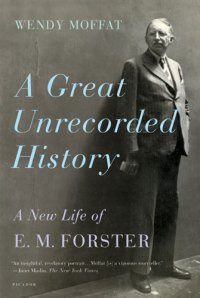
New in trade paperback from PicadorA Great Unrecorded HistoryWendy Moffat’s biography of E.M. Forster, examines the life of the great British writer through the lens of his homosexuality. Forster published five classic novels between 1905 and 1924, and even though he wrote biographies and essays until his death in 1970, he never released another novel in his lifetime. Maurice was published in 1971. The novel, which Forster composed over decades, relates a homosexual love affair; Forster was determined that, contrary to convention, the love story should not be a tragedy and should indeed have a happy ending. Part of Moffat’s project seems to be to make a case for Forster as a progenitor of queer writing. From her prologue—

Though he burned great bonfires of ephemera, Morgan [Forster’s middle name] carefully preserved the record of his gay life. Thousands of unpublished pages of letters, diaries, essays, and photographs tell the story of the life he hid from public view. Some of the pages are scattered in archives. Some have been coaxed out into the world from remarkable hiding places — a vast oak cupboard in a London sitting room, a shoebox humbly nestled among mouse turds in a New England barn. Many of Morgan’s surviving friends have told their stories for the first time. Only in 2008 were the final entries in his private diary, restricted from view since his death, opened to readers. All his long life Morgan lived in a world imprisoned by prejudice against homosexuals. He was sixteen when Oscar Wilde was sent to prison, and he died the year after the Stonewall riots.

Almost a century ago, Forster dedicated Maurice to “a happier year.” Perhaps that time is now.

Bob Mould began playing his strange brand of frenzied, fuzzy punk rock in Hüsker Dü less than a decade after Forster’s death, and while it would be ridiculous to suggest that his life as a gay man (and teen) was easy, his new autobiography See a Little Light reveals that it is possible to work through pain, confusion, and negative public attitudes to a positive place. Mould’s homosexuality was an open secret, but he still felt protective of his personal life. However, a 1994 Spin magazine article by Dennis Cooper (yes, that Dennis Cooper) outed Mould. I’ll let him tell this part of the story—

For years I had lived in a fearful yet protective state. My parents were in a small town where people didn’t accept or understand homosexuality. I didn’t want to cause any undue stress in their lives by coming out. I remembered what happened to my high school acquaintance who ended up slaughtered in the woods. My coming out might create a hardship on my brother’s kids too—Syracuse, New York, where he now lived, was not a progressive bastion.

I had looped all the different possible fallouts and fears in my mind, a big one being that for fifteen years I had gender-neutralized my work so that it would be all-inclusive; as a result, my music was highly personal, and yet it affected a lot of people, whether they were gay or straight. But my fear was that 90 percent of my audience would have the meaning of my songs ripped out from underneath them. A song that straight people related to, now they find out it’s about two guys? The flip side, or what I now know to be the upside, was that I had a large audience who might not have known about my homosexuality, were very attached to the work, and could now see that love and loss and hope are universal emotions that can’t be owned, controlled, or denied by law or religion.

See a Little Light is not just a document of Mould’s struggles with homosexual identity, but that element is obviously indivisible from the rest of his life, which he writes about in deeply personal detail (with the aid of Michael Azerrad, who documented Hüsker Dü in a chapter of his book Our Band Could Be Your Life). There’s also plenty here on the Minneapolis-St. Paul scene, the early post-hardcore indie scene, analyses of Hüsker Dü songs, a history of Mould’s second band Sugar, thoughts on guitars, and touring, touring, touring. I’m hardly an unbiased reader here—Hüsker Dü and Sugar songs soundtracked a hefty chunk of my teen years and early twenties—but See a Little Light offers an emotional depth and level of insight absent from most musical biographies. See a Little Light is new in hardback from Little, Brown.

“Life Is Absurd” — The Sopranos on Existentialism

“Home” — George Saunders

From “Home,” a new George Saunders story in The New Yorker—-

Like in the old days, I came out of the dry creek behind the house and did my little tap on the kitchen window.

“Get in here, you,” Ma said.

Inside were piles of newspapers on the stove and piles of magazines on the stairs and a big wad of hangers sticking out of the broken oven. All of that was as usual. New was: a water stain the shape of a cat head on the wall above the fridge and the old orange rug rolled up halfway.

“Still ain’t no beeping cleaning lady,” Ma said.

I looked at her funny.

“Beeping?” I said.

“Beep you,” she said. “They been on my case at work.”

It was true Ma had a pretty good potty mouth. And was working at a church now, so.

We stood there looking at each other.

Then some guy came tromping down the stairs: older than Ma even, in just boxers and hiking boots and a winter cap, long ponytail hanging out the back.

“Who’s this?” he said.

“My son,” Ma said shyly. “Mikey, this is Harris.”

“What’s your worst thing you ever did over there?” Harris said.

“What happened to Alberto?” I said.

“Alberto flew the coop,” Ma said.

“Alberto showed his ass,” Harris said.

“I hold nothing against that beeper,” Ma said.

“I hold a lot against that fucker,” Harris said. “Including he owes me ten bucks.”

“Harris ain’t dealing with his potty mouth,” Ma said.

“She’s only doing it because of work,” Harris explained.

“Harris don’t work,” Ma said.

“Well, if I did work, it wouldn’t be at a place that tells me how I can talk,” Harris said. “It would be at a place that lets me talk how I like. A place that accepts me for who I am. That’s the kind of place I’d be willing to work.”

“There ain’t many of that kind of place,” Ma said.

“Places that let me talk how I want?” Harris said. “Or places that accept me for who I am?”

“Places you’d be willing to work,” Ma said.

“How long’s he staying?” Harris said.

“Long as he wants,” Ma said.

“My house is your house,” Harris said to me.

“It ain’t your house,” Ma said.

“Give the kid some food at least,” Harris said.

“I will but it ain’t your idea,” Ma said, and shooed us out of the kitchen.

“Great lady,” Harris said. “Had my eyes on her for years. Then Alberto split. That I don’t get. You got a great lady in your life, the lady gets sick, you split?”

“Ma’s sick?” I said.

“She didn’t tell you?” he said.

He grimaced, made his hand into a fist, put it upside his head.

“Lump,” he said. “But you didn’t hear it from me.”

Ma was singing now in the kitchen.

“I hope you’re at least making bacon,” Harris called out. “A kid comes home deserves some frigging bacon.”

“Why not stay out of it?” Ma called back. “You just met him.”

“I love him like my own son,” Harris said.

“What a ridiculous statement,” Ma said. “You hate your son.”

“I hate both my sons,” Harris said.

“And you’d hate your daughter if you ever meet her,” Ma said.

Harris beamed, as if touched that Ma knew him well enough to know he would inevitably hate any child he fathered.

Ma came in with some bacon and eggs on a saucer.

“Might be a hair in it,” she said. “Lately it’s like I’m beeping shedding.”

“You are certainly welcome,” Harris said.

“You didn’t beeping do nothing!” Ma said. “Don’t take credit. Go in there and do the dishes. That would help.”

“I can’t do dishes and you know that,” Harris said. “On account of my rash.”

“He gets a rash from water,” Ma said. “Ask him why he can’t dry.”

“On account of my back,” Harris said.

“He’s the King of If,” Ma said. “What he ain’t is King of Actually Do.”

“Soon as he leaves I’ll show you what I’m king of,” Harris said.

“Oh, Harris, that is too much, that is truly disgusting,” Ma said.

Harris raised both hands over his head like: Winner and still champ.

“We’ll put you in your old room,” Ma said.

Beethoven’s Death Mask

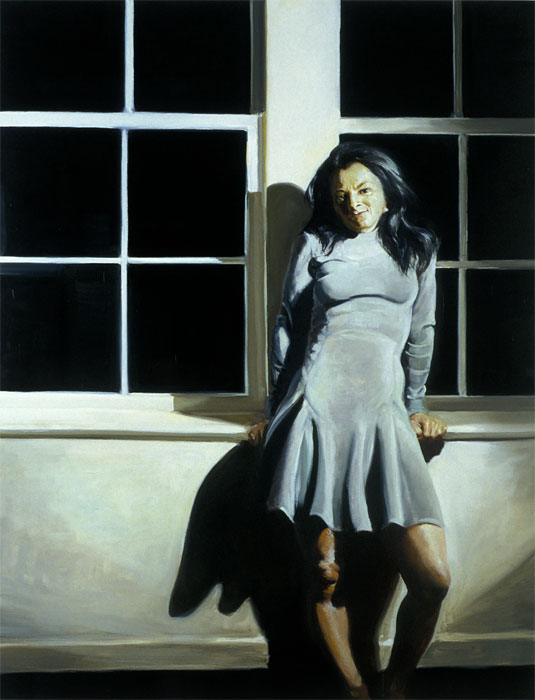
Mary — Eric Fischl

“It Is Easy to Separate the Historical from the Legendary” — A Passage from Erich Auerbach’s Mimesis

Erich Auerbach parses the structure of history and legend and points out why writing history is such a messy, challenging job. From “Odysseus’ Scar,” the first chapter of his epic work of literary criticism Mimesis

Homer remains within the legendary with all his material, whereas the material of the Old Testament comes closer and closer to history as the narrative proceeds; in the stories of David the historical report predominates. Here too, much that is legendary still remains, as for example the story of David and Goliath; but much—and the most essential—consists in things which the narrators knew from their own experience or from firsthand testimony. Now the difference between legend and history is in most cases easily perceived by a reasonably experienced reader. It is a difficult matter, requiring careful historical and philological training, to distinguish the true from the synthetic or the biased in a historical presentation; but it is easy to separate the historical from the legendary in general. Their structure is different. Even where the legendary does not immediately betray itself by elements of the miraculous, by the repetition of well-known standard motives, typical patterns and themes, through neglect of clear details of time and place, and the like, it is generally quickly recognizable by its composition. It runs far too smoothly. All cross-currents, all friction, all that is casual, secondary to the main events and themes, everything unresolved, truncated, and uncertain, which confuses the clear progress of the action and the simple orientation of the actors, has disappeared. The historical event which we witness, or learn from the testimony of those who witnessed it, runs much more variously, contradictorily, and confusedly; not until it has produced results in a definite domain are we able, with their help, to classify it to a certain extent; and how often the order to which we think we have attained becomes doubtful again, how often we ask ourselves if the data before us have not led us to a far too simple classification of the original events! Legend arranges its material in a simple and straightforward way; it detaches it from its contemporary historical context, so that the latter will not confuse it; it knows only clearly outlined men who act from few and simple motives and the continuity of whose feelings and actions remains uninterrupted. In the legends of martyrs, for example, a stiff-necked and fanatical persecutor stands over against an equally stiff-necked and fanatical victim; and a situation so complicated—that is to say, so real and historical—as that in which the “persecutor” Pliny finds himself in his celebrated letter to Trajan on the subject of the Christians, is unfit for legend. And that is still a comparatively simple case. Let the reader think of the history which we are ourselves witnessing; anyone who, for example, evaluates the behavior of individual men and groups of men at the time of the rise of National Socialism in Germany, or the behavior of individual peoples and states before and during the last war, will feel how difficult it is to represent historical themes in general, and how unfit they are for legend; the historical comprises a great number of contradictory motives in each individual, a hesitation and ambiguous groping on the part of groups; only seldom (as in the last war) does a more or less plain situation, comparatively simple to describe, arise, and even such a situation is subject to division below the surface, is indeed almost constantly in danger of losing its simplicity; and the motives of all the interested parties are so complex that the slogans of propaganda can be composed only through the crudest simplification—with the result that friend and foe alike can often employ the same ones. To write history is so difficult that most historians are forced to make concessions to the technique of legend.

Jonathan Franzen Is the Worst, Monkey Sex, and Other Highlights from the 2011 Moby Awards

Book folks gathered last night in Brooklyn to celebrate the best in worst in book trailers, as indie publisher Melville House handed out their second annual round of Moby Awards.  Gary Shteyngart and Tao Lin were on hand to sanctify the ceremony, along with a who’s-who of internet literati, including Laura Miller (Salon), Blake Butler (HTML Giant), Jason Boog (GalleyCat), Patrick Brown (GoodReads), Andy Hunter (Electric Literature), C. Max Magee (The Millions), Troy Patterson (Slate), and Dennis Johnson, founder of Melville House. From the press release—

The full list of recipients for this year’s award—a golden whale—is as follows:


Lifetime Achievement Award:

Ron Charles – Acceptance Speech


Grand Jury/We’re Giving You This Award Because Otherwise You’d Win Too Many Other Awards:
Super Sad True Love Story – Gary Shteyngart


Book Trailer As Stand Alone Art Object:

How Did You Get This Number? – Sloane Crosley


Best Big House:

Packing for Mars – Mary Roach


Worst Big House:

Savages – Don Winslow


Best Small House:

Tree of Codes – Jonathan Safran Foer


Worst Small / No House:

Pirates: The Midnight Passage – James R. Hannibal


Worst Performance by an Author:

Jonathan Franzen – Freedom


Most Celebtastic Performance

James Franco – Super Sad True Love Story


What Are We Doing To Our Children?

It’s A Book – Lane Smith


General Technical Excellence and Courageous Pursuit of Gloriousness:

Electric Literature


Most Monkey Sex:
Bonobo Handshake – Vanessa Woods


Worst Soundtrack:

GhostGirl


Most Angelic Angel Falling to Earth:
Torment – Lauren Kate


Most Conflicted

TCooper – Beaufort Diaries


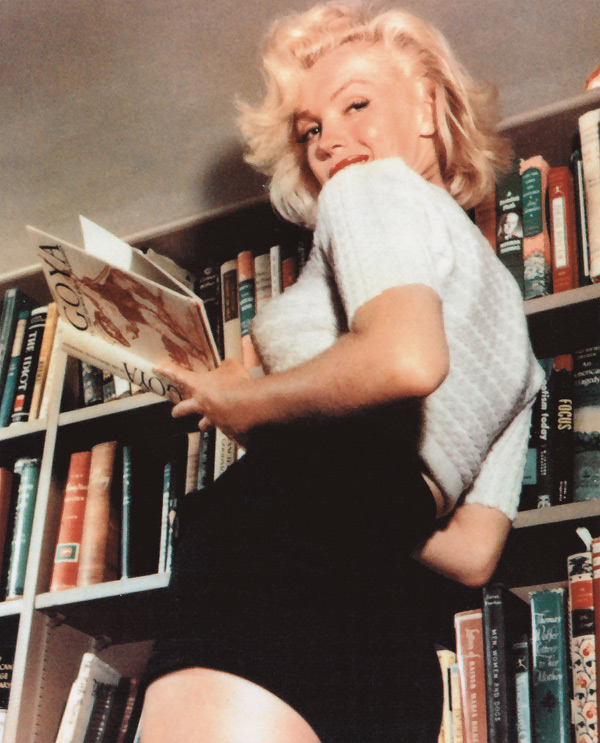
Marilyn Monroe’s Bookshelf


(Via Jacket Copy).

Lucian Freud: Portraits (2004 Documentary)

Lucian Freud: Portrait is an insightful 2004 documentary about the English painter, directed by Freud’s friend Jake Auerbach. Auerbach interviews Freud’s family, friends, and models to present an alternative narrative about the reclusive artist.

Continue reading “Lucian Freud: Portraits (2004 Documentary)”

“Poetry Is the Enchantment of Incest” — A Passage from Harold Bloom’s Manifesto for Antithetical Criticism

A passage from Harold Bloom’s “A Manifesto for Antithetical Criticism,” a chapter in his seminal study The Anxiety of Influence

 Every poem is a misinterpretation of a parent poem. A poem is not an overcoming of anxiety, but is that anxiety. Poets’ misinterpretations of poems are more drastic than critics’ misinterpretations or criticism, but this is only a difference in degree and not at all in kind. There are no interpretations but only misinterpretations, and so all criticism is prose poetry.

Critics are more or less valuable than other critics only (precisely) as poets are more or less valuable than other poets. For just as a poet must be found by the opening in a precursor poet, so must the critic. The difference is that a critic has more parents. His precursors are poets and critics. But – in truth – so are a poet’s precursors, often and more often as history lengthens.

Poetry is the anxiety of influence, is misprision, is a disciplined perverseness. Poetry is misunderstanding, misinterpretation, misalliance.

Poetry (Romance) is Family Romance. Poetry is the enchantment of incest, disciplined by resistance to that enchantment.

Influence is Influenza—an astral disease.

If influence were health, who could write a poem? Health is stasis.

Schizophrenia is bad poetry, for the schizophrenic has lost the strength of perverse, willful, misprision.

“Hemingway and Ourselves” — Italo Calvino

“Hemingway and Ourselves,” a 1954 essay by Italo Calvino, collected in Why Read the Classics?

Hemingway and Ourselves

There was a time when for me — and for many others, those who are more or less my contemporaries — Hemingway was a god. And they were good times, which I am happy to remember, without even a hint of that ironic indulgence with which we look back on youthful fashions and obsessions. They were serious times and we lived through them seriously and boldly and with purity of heart, and in Hemingway we could also have found pessimism, an individualistic detachment, a superficial involvement with extremely violent experiences: that was all there too in Hemingway, but either we could not see it in him or we had other things in our head, but the fact remains that the lesson we learnt from him was one of a capacity for openness and generosity, a practical commitment — as well as a technical and moral one – to the things that had to be done, a straightforward look, a rejection of self-contemplation or self-pity, a readiness to snatch a lesson for life, the worth of a person summed up in a brusque exchange, or a gesture. But soon we began to see his limitations, his flaws: his poetics, his style, to which I had been largely indebted in my first literary works, came to be seen as narrow, too prone to descending into mannerism. That life of his — and philosophy of life — of violent tourism began to fill me with distrust and even aversion and disgust. Today, however, ten years on, assessing the balance of my apprenticeship with Hemingway, I can close the account in the black. ‘You didn’t put one over on me, old man,’ I can say to him, indulging for the last time in his own style, ‘you did not make it, you never became a mauvais maitre.’ The aim of this discussion of Hemingway, in fact – now that he has won the Nobel Prize for Literature, a fact that means absolutely nothing, but which is as good an occasion as any other for putting down onpaper ideas that have been in my head for some time – is to try to define both what Hemingway meant for me, and what he is now, what moved me away from him and what I continue to find in his not others’ works.

Continue reading ““Hemingway and Ourselves” — Italo Calvino”

The Bookworm — Harman & Ising

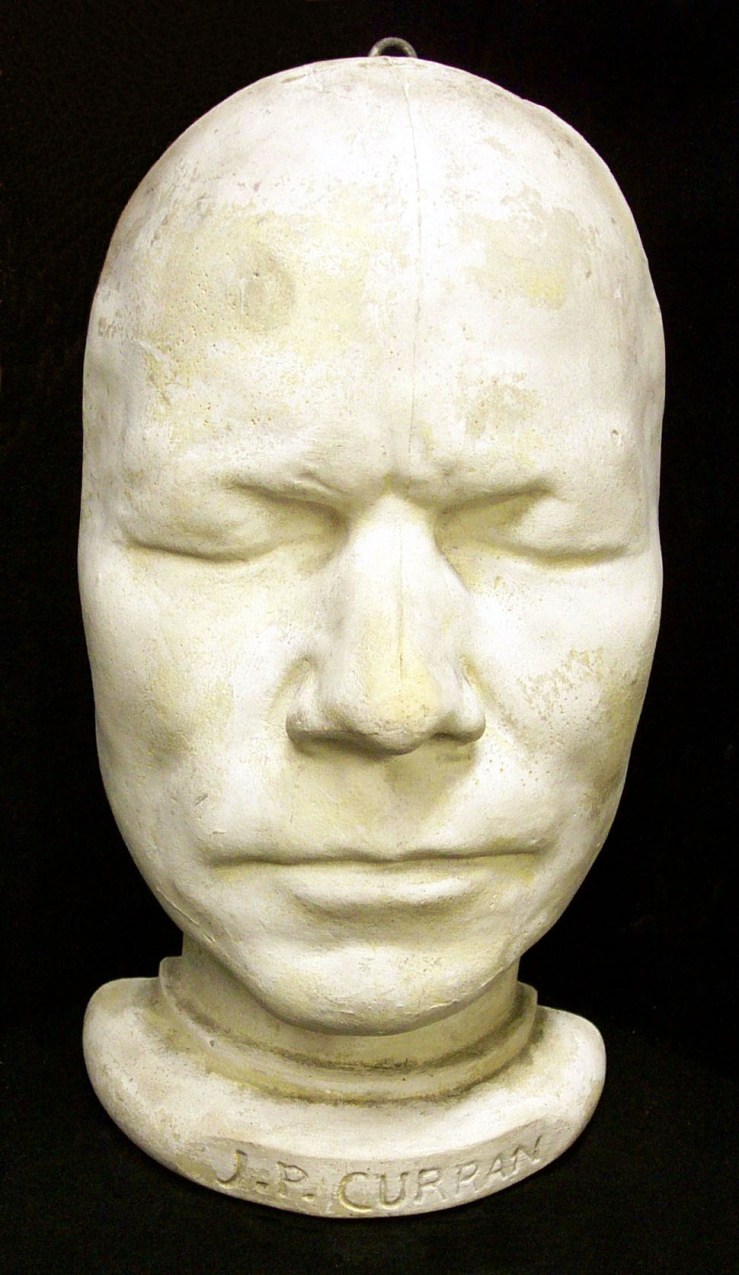
John Philpot Curran’s Death Mask

“She Was a Dynamite Girl and He Was an Aces Fellow” — A Passage from Renata Adler’s Speedboat

A passage from Renata Adler’s marvelous and strange novel Speedboat

She was a dynamite girl and he was an aces fellow. On the day he at last agreed by phone to marry her, the switchboard operators were overjoyed. For six months they had listened, in sympathy and indignation, to the tears, the threats, the partings and reconciliations. They were so unequivocally for the girl that only the purest professionalism kept them, at times, from breaking in. On the day Tim, after calls to his best friend, his firs wife, and his therapist, gave in at last, the oldest operator, who had been on the switchboard for twenty years, actually wept. The other two told the receptionist, at lunch. All four ladies had a drink, and then bought a card of slightly obscene felicitations. They had wavered toward the sentimental, but rejected it as basically unswinging. They did not sign the card. Tim and his girl, who had been breaking up once again on the day they received it (she was packing; they were in his apartment, were appalled. As a result of the card, and discussions of what to do about it—what it implied, who knew and who didn’t—they married.