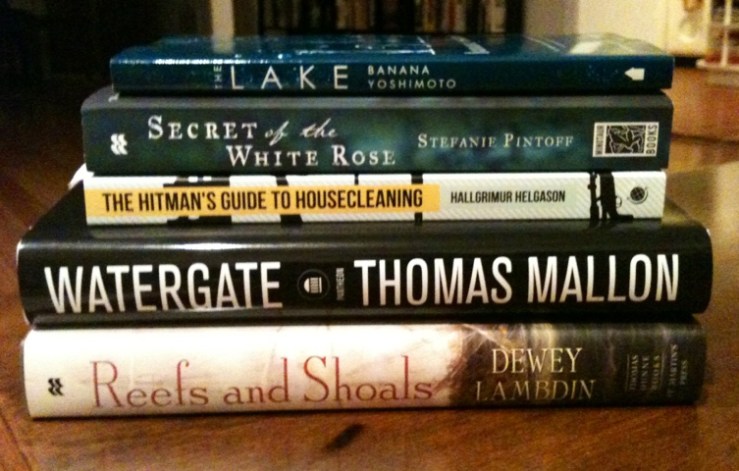
Books Acquired, 2.07.2012

20120208-151957.jpg

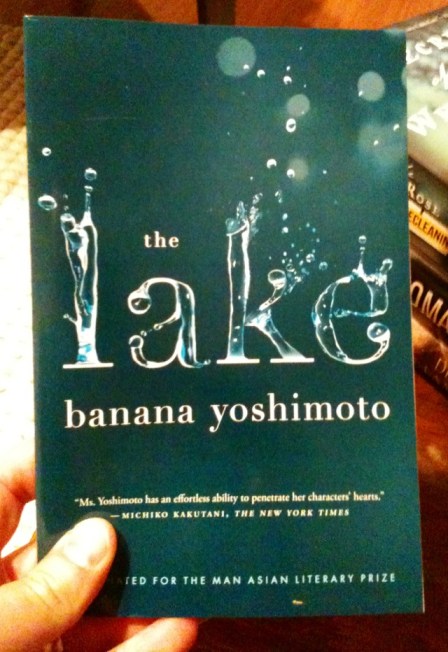
Large pile accrued yesterday although some of these were sent to the old abode. First: Lake by Banana Yoshimoto:

20120208-152021.jpg

Publisher Melville House’s description:

With its echoes of the infamous, real-life Aum Shinrikyo cult (the group that released poison gas in the Tokyo subway system), The Lake unfolds as the most powerful novel Banana Yoshimoto has written. And as the two young lovers overcome their troubled past to discover hope in the beautiful solitude of the lake in the country- side, it’s also one of her most moving.

20120208-152033.jpg

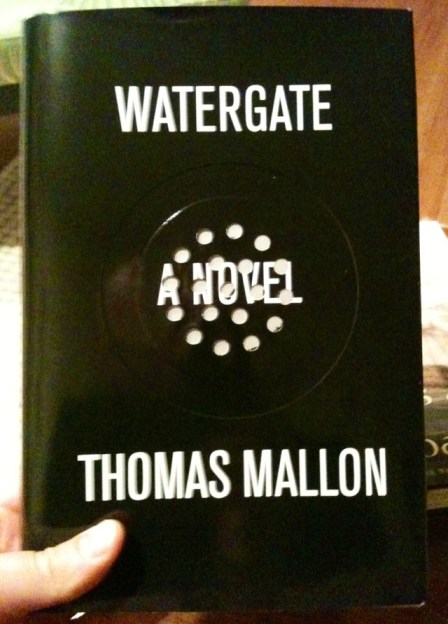
Thomas Mallon’s novelization of a scandal: Watergate. From the author’s website:

In Watergate: A Novel, Thomas Mallon conveys the drama and high comedy of the Nixon presidency through the urgent perspectives of seven characters we only thought we knew before now, moving readers from the private cabins of Camp David to the klieg lights of the Senate Caucus Room, from the District of Columbia Jail to the Dupont Circle mansion of Theodore Roosevelt’s sharp-tongued ninety-year-old daughter, and into the hive of the Watergate complex itself, home not only to the Democratic National Committee but also to the president’s attorney general, his recklessly loyal secretary, and the shadowy man from Mississippi who pays out hush money to the burglars. Mallon achieves with Watergate a scope and historical intimacy that surpasses even what he attained in his previous novels, as he turns a “third-rate burglary” into a tumultuous, first-rate entertainment.

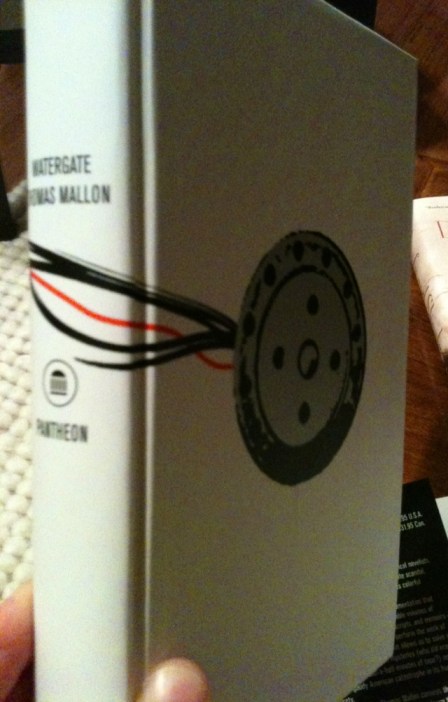
Watergate gets big points for its cover: the book jacket (oh, how I loathe them!) is punctuated with holes suggesting one of those antique things your grandfather called a telephone; strip away the jacket and there’s this (far lovelier) cover:

20120208-152041.jpg

20120208-152054.jpg

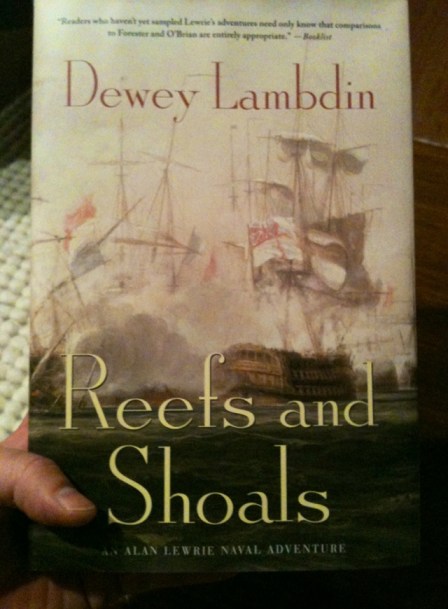
Reefs and Shoals, a naval adventure historical thing from Dewey Lambdin. From publisher Macmillan:

Pity poor Captain Alan Lewrie, Royal Navy! He’s been wind-muzzled for weeks in Portsmouth, snugly tucked into a warm shore bed with lovely, and loving, Lydia Stangbourne, a Viscount’s daughter, and beginning to enjoy indulging his idle streak, when Admiralty tears Lewrie away and order him to the Bahamas, into the teeth of ferocious winter storms. It’s enough to make a rakehell such as he weep and kick furniture!

20120208-152245.jpg

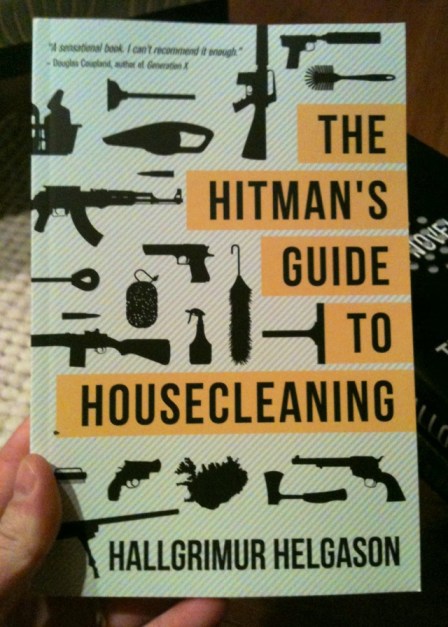
The Hitman’s Guide to Housecleaning by Hallgrimur Helagason, from, uh, Amazon’s publishing imprint:

Toxic, the hero of Hallgrimur Helgason’s The Hitman’s Guide to Housecleaning, had a record of 66 perfect kills. Then came the 67th–an undercover FBI agent–and suddenly he found himself in Iceland with a new identity. Oops. Avoid this kind of careless error by following Toxic’s handy tips.

1. Don’t miss the target. People tend to get a bit upset if they notice you’re trying to kill them.
2. Don’t waste a bullet. You have to think about the environment, too–you really shouldn’t add an unnecessary gunshot to an already noisy city.
3. Morning is for murder. Nobody expects a bullet for breakfast.
4. Don’t kill a priest. He who kills a man of the church will be killed by a church.
5. Don’t confuse killing and murder. Murder is for amateurs, killing is for the professionals.
6. If you have to take on another person’s identity, never let it be a priest. With that collar around your neck, your sex appeal is gone.
7. When you’re dating, don’t talk about your job–unless you’re overseas. Foreign girls are crazy about guys who kill Americans.
8. Embrace every new passport they give you. It’s always nice to get a new life now and then.
9. Don’t kill the wrong guy. Or you’ll end up in Iceland.
10. When in Iceland, stop the killing. There are so few of them.


Zissou Shoes

Book Acquired, 2.04.2012 — Cataclysm Baby

20120205-164712.jpg

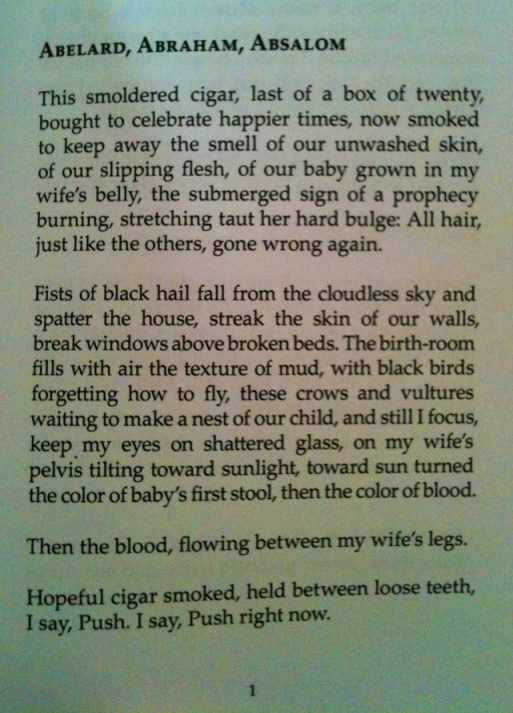
Okay, this one looks pretty cool—Cataclysm Baby by Matt Bell from indie Mud Luscious Press. More to come. Bell’s site describes the book as “twenty-six post-apocalyptic parenting stories, all narrated by fathers, each revealing some different family, some new end of the world.” First page:

20120205-164907.jpg

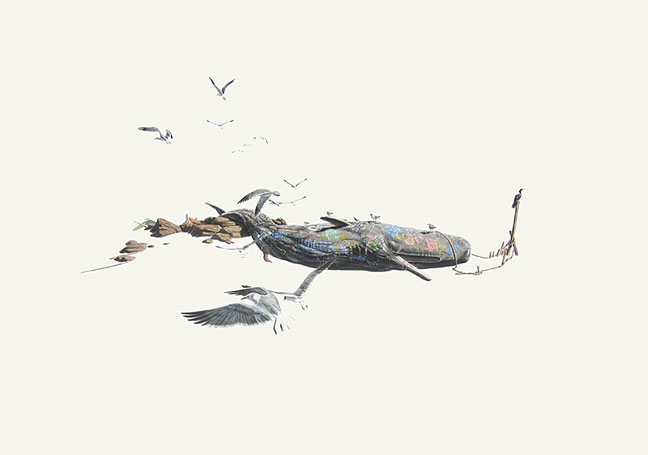
Flotsam — George Boorujy

(An Incomplete) List of Ridiculous Names in Charles Dickens Novels

Abel Garland

Abel Magwich

Adolphus Tetterby

Alfred Jingle

Affery Flintwinch

Anne Chickenstalker

Anthony Jeddler

Augustus Snodgrass

Barnaby Rudge

Bayham Badger

Bazzard

Bella Wilfer

Bentley Drummle

Betsy Prig

Betsy Quilp

Betsy Trotwood

Brownlow

Bucket

Bumble

Caroline “Caddy” Jellyby

Charity Pecksniff 

Clara Peggotty

Cleopatra Skewton

Clickett

Cornelia Blimber

Canon Crisparkle

Charles Cheeryble

Chevy Slyme

Clarence Barnacle

Clarriker

Creakle

Dick Datchery

Dick Swiveller

Dolge Orlick

Duff

Durdles

Ebenezer Scrooge

Elijah Pogram

Ephraim Flintwinch

Fanny Cleaver

Fanny Squeers

Flora Finching

Fagin

Fezziwig

Fledgeby “Fascination”

Grace Jeddler

Gaffer Hexam

General Cyrus Choke

Grewgious

Helena Landless

Henrietta Boffin

Henrietta Petowker

Ham Peggotty

Hannibal Chollop

Harold Skimpole

Herbert Pocket

Isabella Wardle

Jemima Bilberry

Jerry Cruncher

Job Trotter

John Peerybingle

Josiah Bounderby

Kit Nubbles

Kenge

Krook

Lavinia Wilfer

Lucretia Tox

Luke Honeythunder

Malta Bagnet

Mercy Pecksniff 

Martin Chuzzlewit

M’Choakumchild

Mealy Potatoes

Mould

Ninetta Crummles

Nadgett

Nathaniel Winkle

Neckett

Nemo

Newman Noggs

Noddy Boffin

Oliver Twist

Peg Sliderskew

Pet Meagles

Pleasant Riderhood

Polly Toodle

Paul Sweedlepipe

Perker

Phil Squod

Prince Turveydrop

Pumblechook

Quinion

Ruth Pinch

Redlaw

Rogue Riderhood

Sairey Gamp

Sissy Jupe

Sophronia Lammle

Susan Nipper

Sleary

Sloppy

Slurk

Smalweed

Smike

Snagsby

Snawley

Stryver

Tartar

Theophile Gabelle

Toots

Trabb

Tulkinghorn

Tungay

Tattycoram

Uriah Heap

Vholes

Vincent Crummles

Volumnia Dedlock

Wackford Squeers

Zephaniah Scadde


The Life of Charles Dickens (BBC)

“Words Ruin One’s Thoughts” — William Gaddis Quotes Thomas Bernhard

Late in his life, William Gaddis became a big fan of Thomas Bernhard who he quoted at length in a letter he sent to critic Gregory Comnes (that’s Gaddis’s handwriting). Via/more.

Book Acquired, 2.01.2012

20120205-164602.jpg

Haley Tanner’s acclaimed novel Vaclav & Lena is new in trade paperback (excellent cover on this one, by the bye). From Page Pulp’s review:

You could try to categorize this book as a love story or an immigrant story, but it is really simply a human story.  Like life itself, it can be sometimes funny, sometimes awkward (like the scene where Vaclav’s father walks in on him getting out the tub and makes a wrong assumption about what Vaclav was doing), sometimes happy, sometimes sad, and yes, sometimes incredibly dark.  It reflects the human experience so well, but never feels cliché.  Tanner’s prose has a simplicity that mimics the characters’ imperfect English.  She creates beauty with her words, but is never too flowery. This allows the story to shine through, unobscured. Her characters almost do not seem like characters; after awhile they start to feel wondrously real, like you could reach out and touch Lena’s messy black curls.  Tanner is adept at shaping both the story and the characters so that they feel realistic.

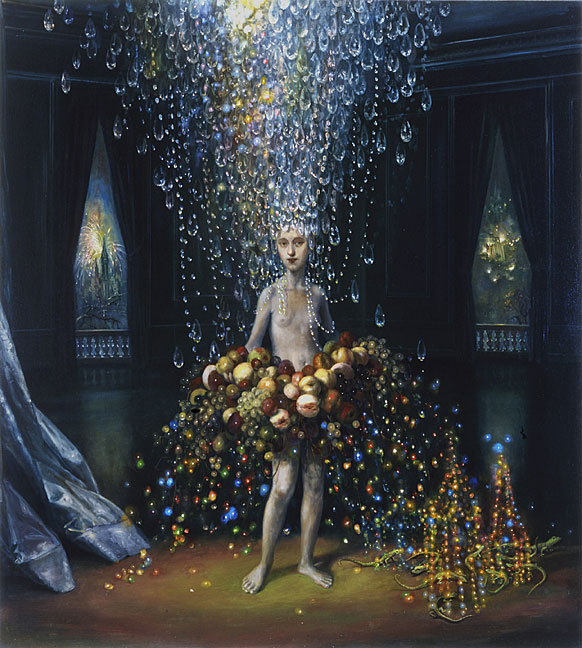
Self-Portrait as Gorgeous Tumor — Julie Heffernan

First Things First — Max Dalton (Kill Bill Wedding Invitation)

Love this poster by Max Dalton. (More/via).

Pilgrimage, A Short Documentary by Werner Herzog

From Wikipedia (final emphasis mine):

Pilgrimage is a 2001 documentary film by Werner Herzog. Accompanied only by music the film alternates between shots of pilgrims near the tomb of Saint Sergei in Sergiyev Posad, Russia and pilgrims at the Basilica of Guadalupe in Mexico. The score was composed by John Tavener and performed by the BBC Symphony Orchestra with vocal accompaniment by Parvin Cox and the Westminster Cathedral Choir. The film begins with an opening quote by Thomas à Kempis which is a fake quote invented by the filmmaker himself.

Book Acquired, 2.03.2012 — Edward St. Aubyn Edition

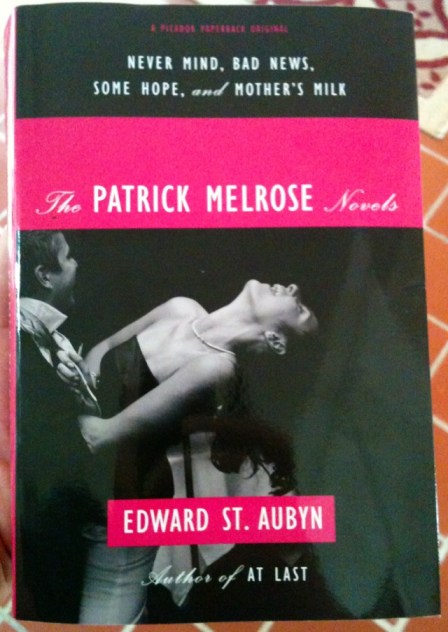
20120205-164456.jpg

Picador has put together all four of Edward St. Aubyn’s Patrick Melrose novels in anticipation of the final novel, At Last, which debuts later this month from FS&G. I haven’t read St. Aubyn’s stuff, which hasn’t been widely available in the US until now, but I do know that Open City put some of it out, and they put out stuff by heroes of mine like David Berman and Sam Lipsyte (who blurbs the book). Anyway, here’s a short description from Picador:

For more than twenty years, acclaimed author Edward St. Aubyn has chronicled the life of Patrick Melrose, painting an extraordinary portrait of the beleaguered and self-loathing world of privilege. This single volume collects the first four novels—Never Mind, Bad News,Some Hope, and Mother’s Milk, a Man Booker finalist—to coincide with the publication of At Last, the final installment of this unique novel cycle.

By turns harrowing and hilarious, these beautifully written novels dissect the English upper class as we follow Patrick Melrose’s story from child abuse to heroin addiction and recovery. Never Mind,the first novel, unfolds over a day and an evening at the family’s chateaux in the south of France, where the sadistic and terrifying figure of David Melrose dominates the lives of his five-year-old son, Patrick, and his rich and unhappy American mother, Eleanor. From abuse to addiction, the second novel, Bad News opens as the twenty-two-year-old Patrick sets off to collect his father’s ashes from New York, where he will spend a drug-crazed twenty-four hours. And back in England, the third novel, Some Hope, offers a sober and clean Patrick the possibility of recovery. The fourth novel, the Booker-shortlisted Mother’s Milk, returns to the family chateau, where Patrick, now married and a father himself, struggles with child rearing, adultery, his mother’s desire for assisted suicide, and the loss of the family home to a New Age foundation.

Edward St. Aubyn offers a window into a world of utter decadence, amorality, greed, snobbery, and cruelty—welcome to the declining British aristocracy.

I haven’t had much time to dip into this, even though it intrigues, because my wife immediately snapped it up. I had to go find it in her night stand to do this post. At the risk of mangling this completely though (and correct me if I’m wrong), it seems like a little bit like a contemporary Henry James shot through with Bret Easton Ellis (and maybe a touch of Downton Abbey). I will ask my wife to report.

Biblioklept Talks to Daniel Nayeri About Capturing Voice, Being a YA Gatekeeper, and Writing His Novella Quartet on an iPhone

Daniel Nayeri was born in Iran and spent a couple of years as a refugee before immigrating to Oklahoma at age eight with his family. He is the author of Straw House, Wood House, Brick House, Blow, a collection of four novellas; Kirkus called it, “Provocative and deeply satisfying,” Bookpage named it “a delightful amalgam of the high and the low, the silly and the sublime,”and the BCCB mentioned the “breathtakingly vivid word smithery” in its starred review.

In addition to his writing, Daniel is an editor of picture books, novels, and graphic novels at Houghton Mifflin Harcourt, an accomplished filmmaker, and a professional pastry chef.

Daniel was kind enough to talk to us about his work via email.

Biblioklept: Your book was composed entirely on an iPhone. Can you tell us a bit about that process? How did you start? How intentional was the process in the beginning? Did you use a specific program? Did you edit on the iPhone at all?

Daniel Nayeri: Several years ago, I was reading an article about the “cell phone novel” phenomenon in Japan. The tone of the article was basically, “check out this super popular thing in Japan that all the literary folks hate.” It described the authors as these quiet teen girls, and early-twenty-something women, who would dash off a few chapters on the subway and email them to a website service. The authors didn’t do themselves any favors by saying they disliked reading “real” books, and the critics didn’t do themselves any favors by flipping out and wondering out loud if this trend meant the “death of the author.”

For me, the fascinating tidbit came from a few comments that noted the possible effects of writing on a cell phone. Every undergrad discusses the interplay of form and content (Dickens’s serialized form, the oral iterations of the Iliad, etc). I got really excited about forcing my imagination to live in an incredibly small space. The Japanese authors discussed that when they moved to computers, their vocabulary became “richer” and their “sentences have also grown longer.” I wanted to see if I could push those boundaries out a little (maybe I’m the crazy person who tries to paint the Mona Lisa on an Etch-a-Sketch).

As for the program I used. I bought the first-gen iPhone, so I was using the notepad app that comes with the phone (without cut and paste). To edit, I got very tired of deleting sentences and retyping them three pages down, so I created a code system. For example, if I wanted to move a paragraph up by two pages, I would bracket off the section I wanted and place a symbol next to it. Then I would go up two pages and just place the same symbol. By the end of my editing, there would be pages of work that were nothing but symbols, connected with various prepositions.

Biblioklept: Did you always have the idea to write a quartet of novellas over different genres? How did the idea come about?

DN: I think in general, novels have gotten fatter. As an editor, my first pass on nearly every manuscript is to ask for major cuts. I’m actually kind of petulant about it. My position is that if a book isn’t going to be as good as Anna Karenina, then it probably shouldn’t be as long.

It’s a reactionary position to take, so I thought I would challenge myself with telling stories and building worlds as large and as complex as I could possibly make them, with the limitation of 35-45 thousand words. Obviously, I sort of cheated by connecting some of my thoughts and themes in a collection of four. Hypocrisy and petulance—that’s the sort of delightful company you’ll get if you find yourself working with me.

(Another reason was that I’m still young, and I’d like to learn a lot more before I start demanding the attention of readers for five hundred pages at a time).

Biblioklept: What challenges did you face when working in the variety of genres you worked in?

DN: Presenting four very different voices (to whatever extent one might think it succeeded) is the aspect of this project I am most proud of, actually. The nicest thing anyone has said about the book so far has been to say it is, “the literary equivalent of a singer with a four-octave range.”

To me, it represents the ability to assimilate—a quality any first-generation immigrant valorizes at one point or another. When I first came to the states, I quickly took up the Texas/Oklahoma speech patterns. I was a voracious cataloguer of idioms. When I moved to New York, I did the same. I picked up “kitchen Spanish” in my years as a pastry chef. I love local parlance. As a kid struggling with English, having a proficient knowledge of colloquial expressions represented mastery over the language.

So to me, genres and forms with heavy use of lingo (sports writing, noir, poetry) were the height literary achievement. It sounds backwards, but if you learned the queen’s English first, then you value Huckleberry Finn’s jargon highest of all.

Biblioklept:  Straw House, Wood House, Brick House, Blow is being marketed as a YA book. There’s been some debate in the past few years about a perceived sense of darkness or violence in YA. What place do dark or violent themes have in YA fiction?

DN: I almost never think about this as a writer. I almost never stop thinking about it in my capacity as an editor at Houghton Mifflin Harcourt. My personal interests keep me PG-13, generally. But geez, people send me some crazy-inappropriate material—even for general consumption. Lots of incest. Lots of racial hang-ups. Lots of creepy.

I believe strongly in an editor’s responsibility to put out well-written work (whether or not it’s politically or ethically aligned with one’s self). The old Voltaire quote -– “I disapprove of what you say, but will defend to the death your right to say it” –- has difficult implications for “gatekeepers” in any media.

But just because there is an ethical challenge to acquire broadly, doesn’t mean the public can’t resist-—meaning that the marketplace often creates pressure to move material toward the unobjectionable. When minors are involved, however, I would hope there are adults who will curate the material. I think the majority of adults agree that there is such a thing as “age appropriateness.” I think both sides of the argument are often concern-trolling-—one side saying kids shouldn’t hear the f-word, and the other side screaming censorship to the culling of anything short of snuff-porn.

The conversation seems to dance around a rating system (as with the MPAA for films, or the ESA for video games), but that has a ton of complications. I’m not sure what I think of a rating system, personally. I just think the discussion would be more interesting than making fun of people over Twitter.

Biblioklept:  What are you working on next?

DN: Straw House has four very western genres, so I’m working on another set of four stories, but this time in eastern genres. I’m from Iran and immigrated to Oklahoma, so collections about the East West interaction have always fascinated me (Rushdie wrote a great essay collection call East West).

There’s an Ibn Battuta travelogue, a 1001 Nights tale, a parable, etc. I’m about halfway finished.

Biblioklept: Have you ever stolen a book?

DN: I’ve never stolen from a retailer, but when I was in middle school, I volunteered at the local library. When I forgot to return books after a long time, the head librarian would let me go into the database and erase my fine, as well as the book itself. That’s how I got my first copy of The Fellowship of the Ring, a CD of Boston’s greatest hits, and a book on juggling. So basically what I’m saying is that I was pretty hardcore.
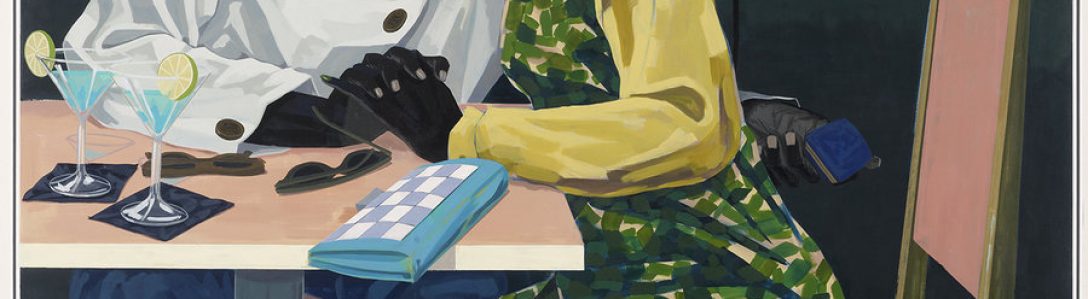
Hemingway Goes Topless

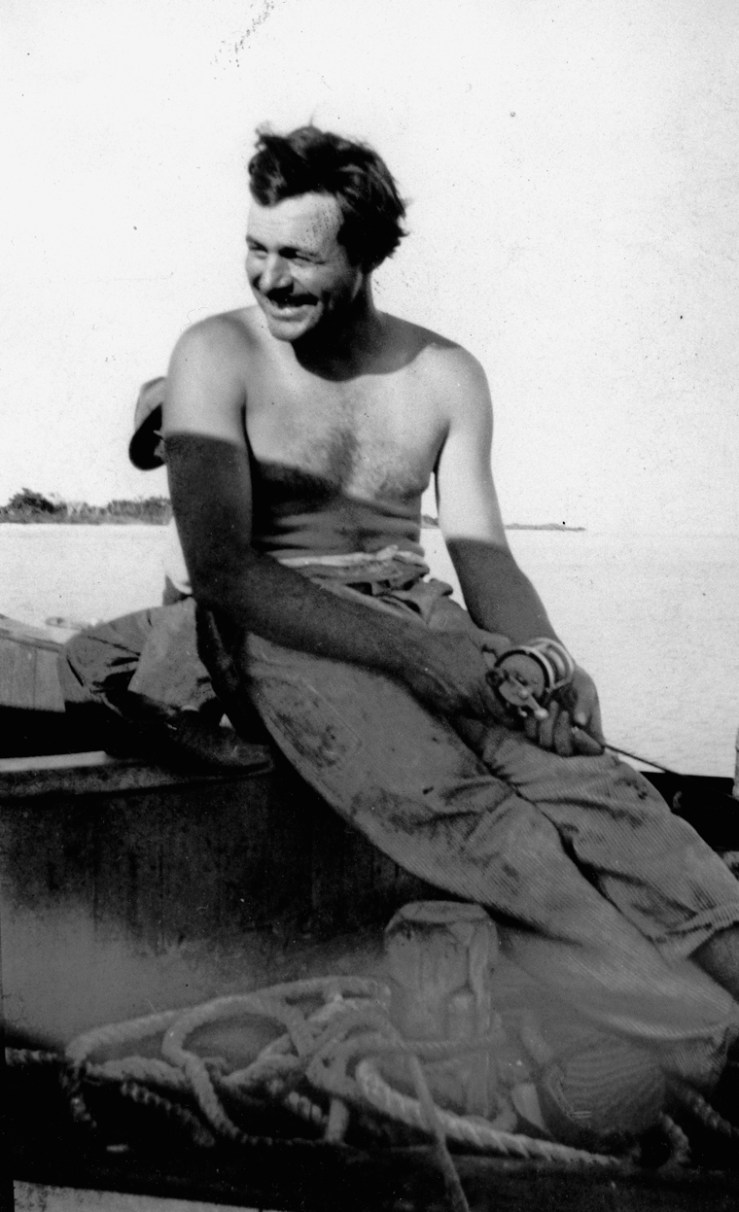
Ernest Hemingway fishing, Key West, 1928.

The Simpsons Play Football

Book Shelves #6, 2.05.2012

Book shelves series #6, sixth Sunday of 2012: In which we dig into the comix inside the book shelf we looked at last week.

20120205-102013.jpg

When I was 13, I sold a fairly large collection of superhero comic books and earned enough money to buy an electric guitar—a weird mutant by Fender called the Bullet—and a small practice amp. It was the early nineties, and Marvel was about to burst the comic book bubble big time by flooding the market with gimmicky covers, hologram cards, and other nonsense.

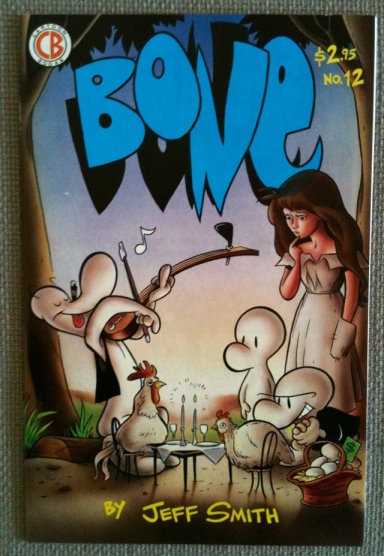
I continued to buy comics (or comix, if you prefer) over the years, although eventually economic concerns led me to just wait for graphic novel editions. Anyway, the book shelf above now contains most of the “underground” comix that I own. A few samples:

20120205-102552.jpg

20120205-102601.jpg

20120205-102611.jpg

Most of the comix in this unit though are issues of Dave Sim’s epic (and insane) series Cerebus. I bought issues of Cerebus intermittently for years at a time, usually getting frustrated and then waiting for the “phone book” graphic novel editions of the series. Sim, along with background artist Gerhard, produced 300 issues of Cerebus over 25 years. The issues from the early ’80s to the early ’90s are brilliant; eventually Sim cracked though and went on an insane, reactionary (and arguably deeply misogynistic) bent. He created his own religion, a mix of hardline Judaism, Islam, and Christianity, and the later books in the series suffered greatly, as the book detoured to chronicle projects that seemed far outside its original scope (including strange, long satires of Hemingway and Fitzgerald). Anyway, some issues:

20120205-102641.jpg

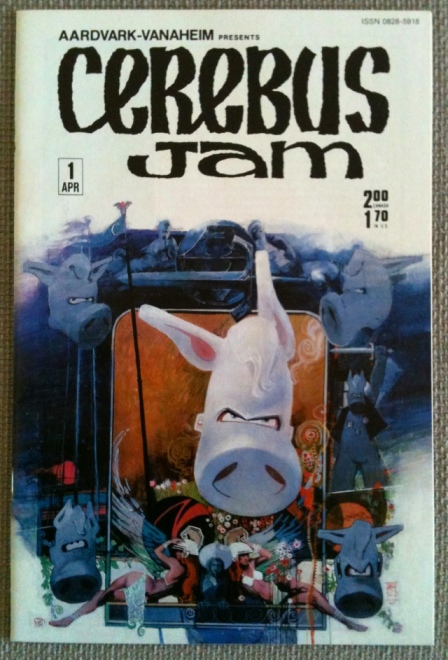
Cerebus Jam, a one-off collaboration with a cover by one of my favorite artists Bill Sienkiewicz (I still have his entire run on Marvel’s The New Mutants in a box somewhere):

20120205-102651.jpg

A panel from the issue’s collaboration with comic book legend Will Eisner, featuring his seminal character The Spirit:

20120205-102658.jpg

Gertrude Stein Talks American Football, American Indians

In a 1934 radio interview, Gertrude Stein talks American football:

INTERVIEWER: You saw the Yale-Dartmouth game a week ago Saturday didn’t you? Did you understand that in the American way or the football way or how?

STEIN: IN the American way. The thing that interested me was that the Modern American in his movements and his actions in a football game so resembled the red Indian dance and it proves that the physical country that made the one made the other and that the red Indian is still with us. They just put their heads down solemnly together and then double over, while on the sidelines the substitutes move in a jiggly way just like Indians. Then they all get down on all fours just like Indians.

INTERVIEWER: But those jiggles are just warming-up exercises.

STEIN: It doesn’t make any difference what they are doing it for, they are just doing it, like the way the Indian jiggles in the Indian dance and then there is that little brown ball they all bend down and worship.

INTERVIEWER: But the ideas in that is to get the ball across the goal line.

STEIN: But don’t you suppose I know that, and don’t you suppose the Indians had just as much reason and enjoyed their dancing just as much?