Watch The Straight Story, David Lynch’s Disney Film

Hunt — Franz Stuck

Infinite Map Depicts the Geography of David Foster Wallace’s Infinite Jest


A description of Infinite Map from artist/creator William Beutler’s site, Infinite Boston:

A geographic infographic poster depicting the “territorially reconfigured North America” of the novel and identifying 250 of the most interesting locations with a color-coded dot and corresponding footnote. As you can see from the acromegalic thumbnail above, the 24”x36” print includes four telescoping map insets: O.N.A.N.’s North America, Northeast U.S. & Canada, Greater Boston and Metro Boston. The red shading represents my own painstaking, overdetermined conclusions about the most probable outline of the Great Concavity. In the upper right corner is the Great Seal of O.N.A.N., based on the description from page 153, and the map labels throughout include sometimes-obscure references to the novel’s the text. This image is the principal result of a long-term collaboration between myself and the Los Angeles-based creative design agency JESS3, whose technical ability and patience with yrstruly knows no bounds.

Biblioklept will run an interview with Beutler about his graphic work with David Foster Wallace’s Infinite Jest next week.

Read “Clara,” a Short Story by Roberto Bolaño


“Clara,” a short story by Roberto Bolaño:

She had big breasts, slim legs, and blue eyes. That’s how I like to remember her. I don’t know why I fell madly in love with her, but I did, and at the start, I mean for the first days, the first hours, it all went fine; then Clara returned to the city where she lived, in the south of Spain (she’d been on vacation in Barcelona), and everything began to fall apart.

One night I dreamed of an angel: I walked into a huge, empty bar and saw him sitting in a corner with his elbows on the table and a cup of milky coffee in front of him. She’s the love of your life, he said, looking up at me, and the force of his gaze, the fire in his eyes, threw me right across the room. I started shouting, Waiter, waiter, then opened my eyes and escaped from that miserable dream. Other nights I didn’t dream of anyone, but I woke up in tears. Meanwhile, Clara and I were writing to each other. Her letters were brief. Hi, how are you, it’s raining, I love you, bye. At first, those letters scared me. It’s all over, I thought. Nevertheless, after inspecting them more carefully, I reached the conclusion that her epistolary concision was motivated by a desire to avoid grammatical errors. Clara was proud. She couldn’t write well, and she didn’t want to let it show, even if it meant hurting me by seeming cold.

(Read the rest at The New Yorker)


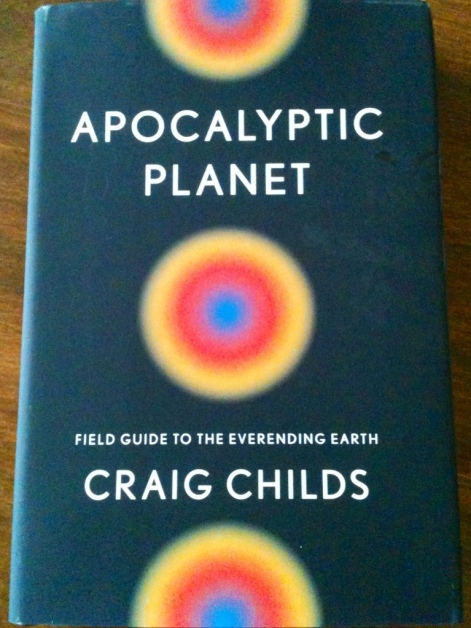
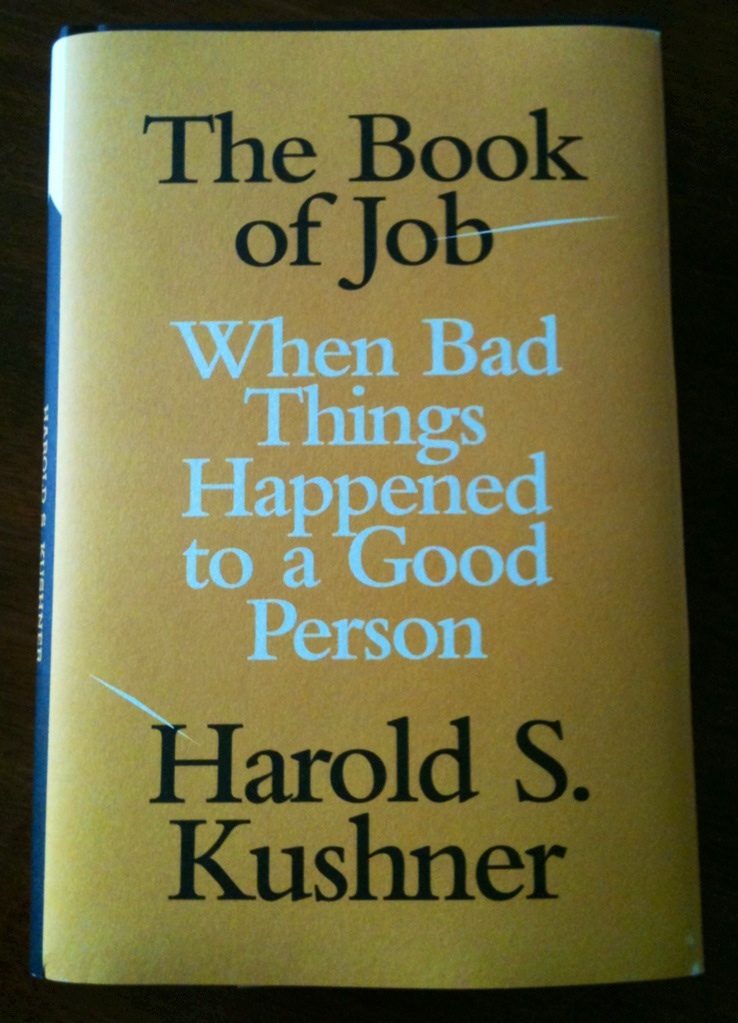
Apocalyptic Planet/The Book of Job: When Bad Things Happened to a Good Person (Books Acquired, 9.14.2012)

20120914-170929.jpg

Two new review copies from the good people at Pantheon.

First, Apocalyptic Planet, which looks pretty cool. Pub copy:

The earth has died many times, and it always comes back looking different. In an exhilarating, surprising exploration of our planet, Craig Childs takes readers on a firsthand journey through apocalypse, touching the truth behind the speculation.Apocalyptic Planet is a combination of science and adventure that reveals the ways in which our world is constantly moving toward its end and how we can change our place within the cycles and episodes that rule it.

In this riveting narrative, Childs makes clear that ours is not a stable planet, that it is prone to sudden, violent natural disasters and extremes of climate. Alternate futures, many not so pretty, are constantly waiting in the wings. Childs refutes the idea of an apocalyptic end to the earth and finds clues to its more inevitable end in some of the most physically challenging places on the globe. He travels from the deserts of Chile, the driest in the world, to the genetic wasteland of central Iowa to the site of the drowned land bridge of the Bering Sea, uncovering the micro-cataclysms that predict the macro: forthcoming ice ages, super-volcanoes, and the conclusion of planetary life cycles. Childs delivers a sensual feast in his descriptions of the natural world and a bounty of unequivocal science that provides us with an unprecedented understanding of our future.

I suppose I’m less enthusiastic about Harold Kushner’s take on The Book of Job

20120914-170918.jpg

Here’s the pub copy:

From one of our most trusted spiritual advisers, a thoughtful, illuminating guide to that most fascinating of biblical texts, the book of Job, and what it can teach us about living in a troubled world.

The story of Job is one of unjust things happening to a good man. Yet after losing everything, Job—though confused, angry, and questioning God—refuses to reject his faith, although he challenges some central aspects of it. Rabbi Harold S. Kushner examines the questions raised by Job’s experience, questions that have challenged wisdom seekers and worshippers for centuries. What kind of God permits such bad things to happen to good people? Why does God test loyal followers? Can a truly good God be all-powerful?

Rooted in the text, the critical tradition that surrounds it, and the author’s own profoundly moral thinking, Kushner’s study gives us the book of Job as a touchstone for our time. Taking lessons from historical and personal tragedy, Kushner teaches us about what can and cannot be controlled, about the power of faith when all seems dark, and about our ability to find God.

Rigorous and insightful yet deeply affecting, The Book of Job is balm for a distressed age—and Rabbi Kushner’s most important book since When Bad Things Happen to Good People.

Woman in Blue Reading a Letter — Johannes Vermeer

Has Man a Future? — Bertrand Russell Penguin Edition (Book Acquired, 9.14.2012)

20120914-170814.jpg

Unable to resist this1961 first edition Penguin of Russell’s essay for peace, Has Man a Future?

In a strange coincidence, I showed this 1959 clip of Russell to a few of my classes this week—I know others have shared it before, but it seems more relevant than ever:

See Chronos, a Beautiful Abstract Documentary by Ron Fricke

Who saw him die? / I, said the Fly

From Death and Burial of Poor Cock Robin by H.L. Stephens, 1865.

“The Kiss” — Kate Chopin


“The Kiss,” a short story by Kate Chopin—

It was still quite light out of doors, but inside with the curtains drawn and the smouldering fire sending out a dim, uncertain glow, the room was full of deep shadows.

Brantain sat in one of these shadows; it had overtaken him and he did not mind. The obscurity lent him courage to keep his eyes fastened as ardently as he liked upon the girl who sat in the firelight.

She was very handsome, with a certain fine, rich coloring that belongs to the healthy brune type. She was quite composed, as she idly stroked the satiny coat of the cat that lay curled in her lap, and she occasionally sent a slow glance into the shadow where her companion sat. They were talking low, of indifferent things which plainly were not the things that occupied their thoughts. She knew that he loved her—a frank, blustering fellow without guile enough to conceal his feelings, and no desire to do so. For two weeks past he had sought her society eagerly and persistently. She was confidently waiting for him to declare himself and she meant to accept him. The rather insignificant and unattractive Brantain was enormously rich; and she liked and required the entourage which wealth could give her.

During one of the pauses between their talk of the last tea and the next reception the door opened and a young man entered whom Brantain knew quite well. The girl turned her face toward him. A stride or two brought him to her side, and bending over her chair—before she could suspect his intention, for she did not realize that he had not seen her visitor—he pressed an ardent, lingering kiss upon her lips.

Brantain slowly arose; so did the girl arise, but quickly, and the newcomer stood between them, a little amusement and some defiance struggling with the confusion in his face.

“I believe,” stammered Brantain, “I see that I have stayed too long. I—I had no idea—that is, I must wish you good-by.” He was clutching his hat with both hands, and probably did not perceive that she was extending her hand to him, her presence of mind had not completely deserted her; but she could not have trusted herself to speak.

“Hang me if I saw him sitting there, Nattie! I know it’s deuced awkward for you. But I hope you’ll forgive me this once—this very first break. Why, what’s the matter?”

“Don’t touch me; don’t come near me,” she returned angrily. “What do you mean by entering the house without ringing?”

“I came in with your brother, as I often do,” he answered coldly, in self-justification. “We came in the side way. He went upstairs and I came in here hoping to find you. The explanation is simple enough and ought to satisfy you that the misadventure was unavoidable. But do say that you forgive me, Nathalie,” he entreated, softening.

“Forgive you! You don’t know what you are talking about. Let me pass. It depends upon—a good deal whether I ever forgive you.”

At that next reception which she and Brantain had been talking about she approached the young man with a delicious frankness of manner when she saw him there.

“Will you let me speak to you a moment or two, Mr. Brantain?” she asked with an engaging but perturbed smile. He seemed extremely unhappy; but when she took his arm and walked away with him, seeking a retired corner, a ray of hope mingled with the almost comical misery of his expression. She was apparently very outspoken.

“Perhaps I should not have sought this interview, Mr. Brantain; but—but, oh, I have been very uncomfortable, almost miserable since that little encounter the other afternoon. When I thought how you might have misinterpreted it, and believed things”—hope was plainly gaining the ascendancy over misery in Brantain’s round, guileless face—”Of course, I know it is nothing to you, but for my own sake I do want you to understand that Mr. Harvy is an intimate friend of long standing. Why, we have always been like cousins—like brother and sister, I may say. He is my brother’s most intimate associate and often fancies that he is entitled to the same privileges as the family. Oh, I know it is absurd, uncalled for, to tell you this; undignified even,” she was almost weeping, “but it makes so much difference to me what you think of—of me.” Her voice had grown very low and agitated. The misery had all disappeared from Brantain’s face.

“Then you do really care what I think, Miss Nathalie? May I call you Miss Nathalie?” They turned into a long, dim corridor that was lined on either side with tall, graceful plants. They walked slowly to the very end of it. When they turned to retrace their steps Brantain’s face was radiant and hers was triumphant.

Harvy was among the guests at the wedding; and he sought her out in a rare moment when she stood alone.

“Your husband,” he said, smiling, “has sent me over to kiss you.”

A quick blush suffused her face and round polished throat. “I suppose it’s natural for a man to feel and act generously on an occasion of this kind. He tells me he doesn’t want his marriage to interrupt wholly that pleasant intimacy which has existed between you and me. I don’t know what you’ve been telling him,” with an insolent smile, “but he has sent me here to kiss you.”

She felt like a chess player who, by the clever handling of his pieces, sees the game taking the course intended. Her eyes were bright and tender with a smile as they glanced up into his; and her lips looked hungry for the kiss which they invited.

“But, you know,” he went on quietly, “I didn’t tell him so, it would have seemed ungrateful, but I can tell you. I’ve stopped kissing women; it’s dangerous.”

Well, she had Brantain and his million left. A person can’t have everything in this world; and it was a little unreasonable of her to expect it.


Young Girl Reading — Pierre-Auguste Renoir

“To Love Somebody” (Live) — Nina Simone

Death — Jacek Malczewski

Little Dieter Needs to Fly — Werner Herzog

The Temptation of St. Anthony — Matthias Grünewald

“Little Is Known of the Life of Matthias Grünewald of Aschaffenburg” — W.G. Sebald

Little is known of the life of

Matthias Grünewald of Aschaffenburg.

The first account of the painter

In Joachim von Sandrart’s German Academy

of the year 1675 begins with the notice

that the author knows not one person living

who could provide a written or oral

testimony of that praiseworthy hand.

We may trust the report by Sandrart,

for a portrait in Würzburg museum

has preserved him, aged eighty-two,

wide awake and with eyes uncommonly clear.

Lightly in grey and black,

he writes, Mattheus had painted the outer

wings of an altarpiece made by Dürer

of Mary’s ascension in the

Preachers’ convent in Frankfurt and

thus had lived at around 1505.

Exceedingly strange was the transfiguration

of Christ on Mount Tabor

limned in watercolours, especially

one cloud of wondrous beauty, wherein

above the Apostles convulsed

with awe, Moses and Elijah appear,

a marvel surpassed.

Then in the Mainz cathedral

there had been three altar panels

with facing fronts and reverse

sides painted, one of them

showing a blind hermit who, as he crosses

the frozen Rhine river with a boy

to guide him, is assaulted by two murderers

and beaten to death. Anno 1631 or ’32,

this panel in the wild war of that era

had been taken away and sent off to Sweden

but by shipwreck beside many other

such pieces of art had perished

in the depths of the sea.

At Isenheim, Sandrart had not been,

but had heard of the altar-work there,

which, he writes, was so fashioned that

real life could scarce have been other

and where, it was said, a St. Anthony with

demons meticulously drawn was to be seen.

Except for a St. John with hands clasped

of which he, Sandrart, when at one time in Rome

he was counterfeiting the pope, had caught sight,

with certainty this was all that was not lost

of the work of Aschaffenburg

painter of whom, besides, he knew only

that most of the time he had

resided in Mainz, led a reclusive

melancholy life and been ill-married.

—W.G. Sebald. Chapter II of “…As Snow on the Alps.” From After Nature.

Portrait of Natasha Nesterova (On a Garden Bench) — Mikhail Nesterov