Book Shelves #20, 5.13.2012

1.4.  Things which aren’t books but are often met with in libraries

Photographs in gilded brass frames, small engravings, pen and ink drawings, dried flowers in stemmed glasses, matchbox-holders containing, or not, chemical matches (dangerous), lead soldiers, a photograph of Ernest Renan in his study at the College de France, postcards, dolls’ eyes, tins, packets of salt, pepper and mustard from Lufthansa, letter-scales, picture hooks, marbles, pipe-cleaners, scale models of vintage cars, multicoloured pebbles and gravel, ex-votos, springs.

 —From Georges Perec’s essay “The Art and Manner of Arranging One’s Books”
20120512-173054.jpg

Book shelves series #20, twentieth Sunday of 2012: In Which I Try to Prove I Am Not Just Phoning It In

Last week I was accused of “going through the motions” with this project, which accusation may or may not be true. I was out of town on vacation, and last week’s post was composed a few days ahead of time in a harried rush of end-of-the-semester grading + summer semester planning + packing + bad bad writer’s block.

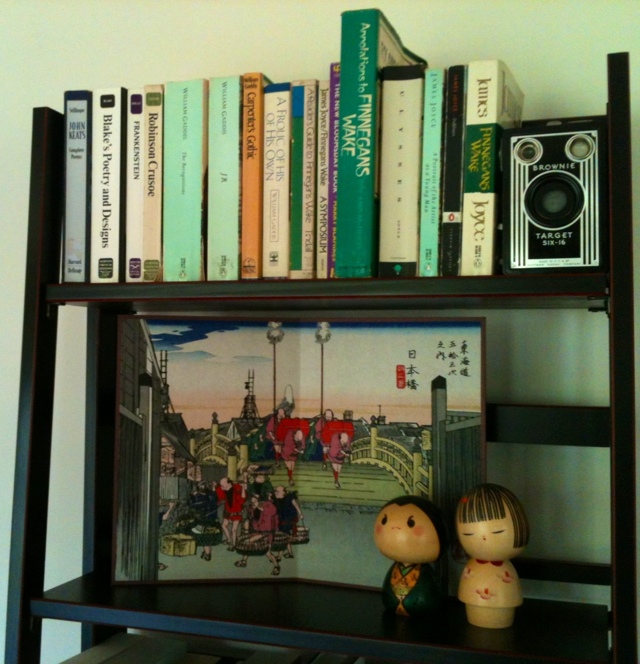
The shelf featured last week is the top shelf in the shot above.

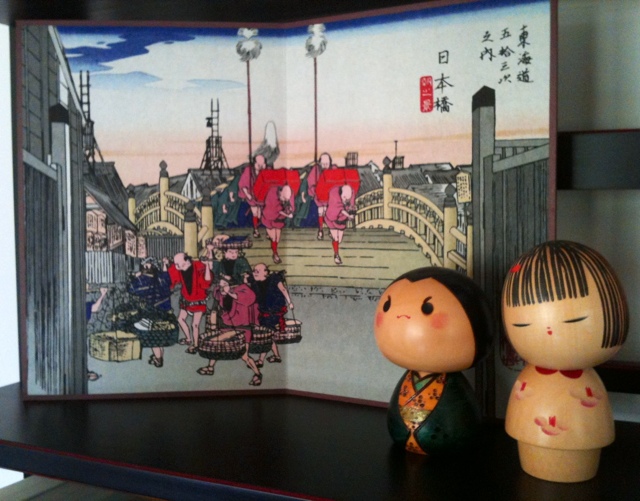
Here is a detail of the shelf below, which clearly features things which are not books:
20120512-173112.jpg

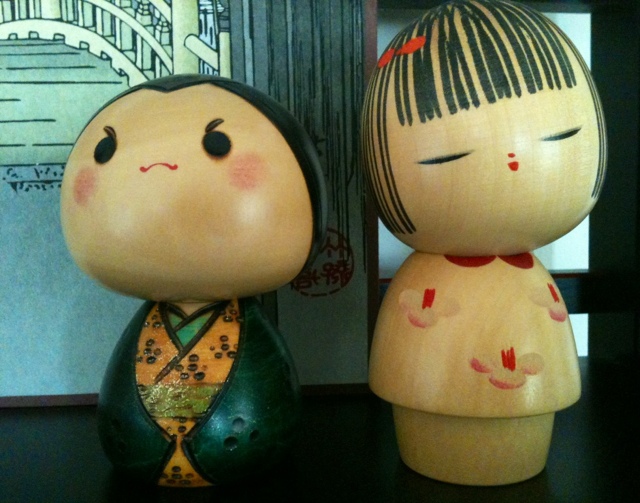
My wife and I—not actually married at the time, kids really—bought these kokeshi dolls when we were living in Japan. We lived in Tokyo, but I’m almost positive we bought these on a vacation in Kyoto. (Or maybe it was in Kamakura. Or I suppose it could have been in Tokyo).
20120512-173123.jpg

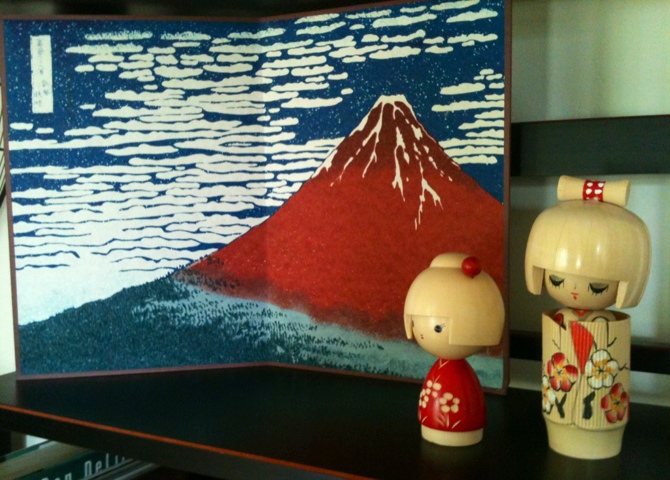
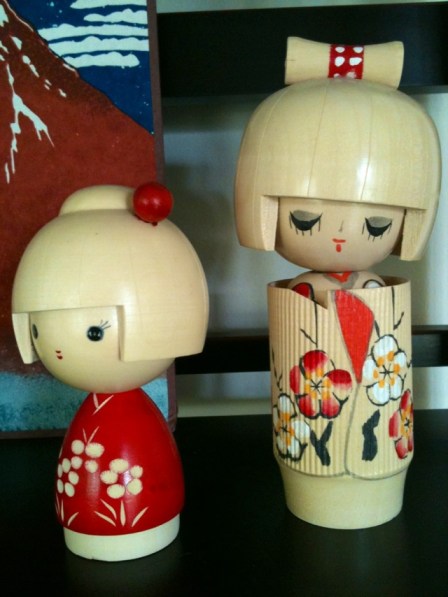
The screen in the background was a gift from a student, as was the screen in the shot below, a shelf that twins this one (if anyone cares at all, the shelf would be sequenced between shelves 10 and 11).
20120512-173142.jpg

20120512-173202.jpg

The Best Blurb I’ve Seen in Ages

20120512-174052.jpg

The back of Alasdair Gray’s 1982, Janine. I promptly secured the book.

Portrait of William Butler Yeats by His Father John Butler Yeats

Alejandro Jodorowsky’s The Holy Mountain (Full Film)

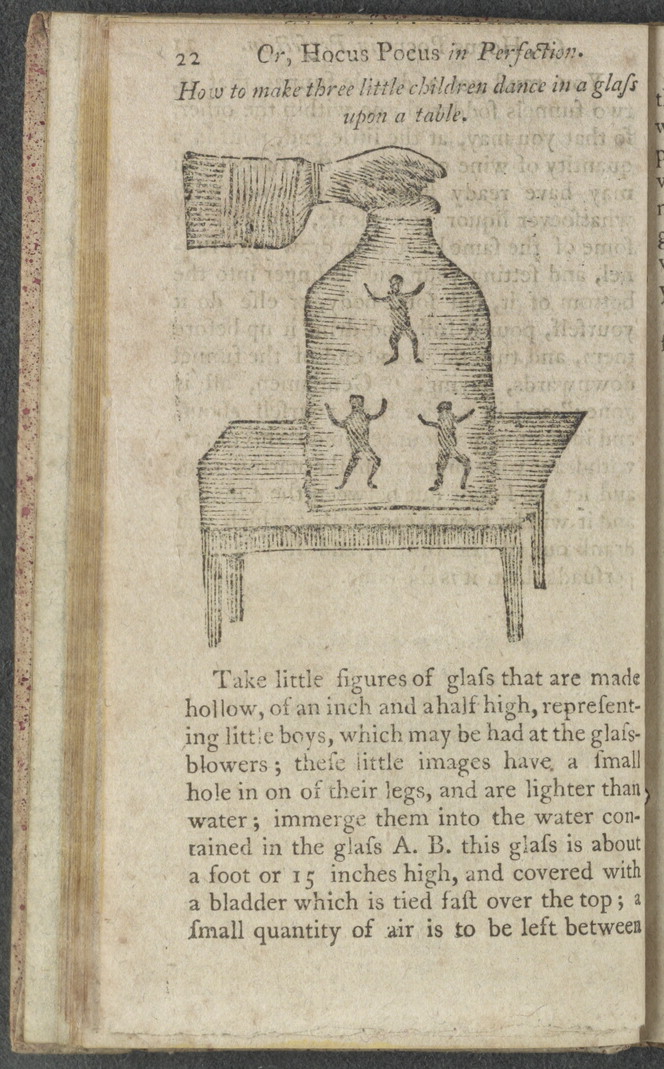
“How to make three little children dance in a glass upon a table”

From Hocus pocus, or The whole art of legerdemain, in perfection : by which the meanest capacity may perform the whole without the help of a teacher : together with the use of all the instruments belonging thereto : to which is now added abundance of new and rare inventions by Henry Dean

“cruelty. don’t talk to me about cruelty” — Lucille Clifton

A poem by Lucille Clifton—

cruelty. don’t talk to me about cruelty
or what i am capable of.

when i wanted the roaches dead i wanted them dead
and i killed them. i took a broom to their country

and smashed and sliced without warning
without stopping and i smiled all the time i was doing it.

it was a holocaust of roaches, bodies,
parts of bodies, red all over the ground.

i didn’t ask their names.
they had no names worth knowing.

now i watch myself whenever i enter a room.
i never know what i might do.

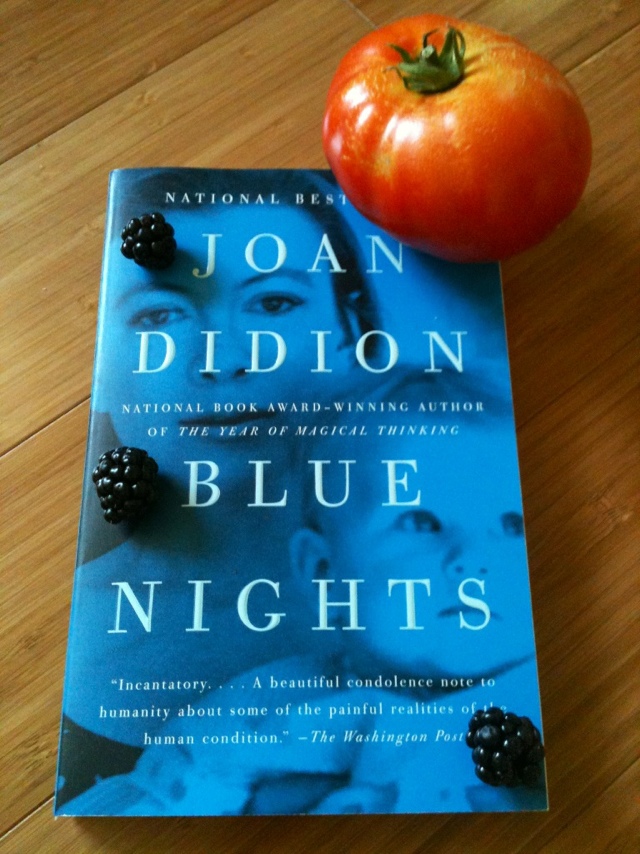
Didion with Tomato and Blackberries (Book Acquired, 5.11.2012)

20120511-144837.jpg

Joan Didion’s memoir about the death of her daughter is now in trade paperback from Vintage. These blackberries and this tomato were featured in an earlier “Books Acquired” post; they are among the first yield of my spring garden. I will eat them tonight.

From John Banville’s NYT review:

Somewhere in his published diaries the playwright Alan Bennett observes that when misfortune befalls a writer the effect of it is in a small but significant measure ameliorated by the fact that the experience, no matter how dire, can be turned into material, into something to write about. Thus Joan Didion, after her husband, John Gregory Dunne, died suddenly of a heart attack on Dec. 30, 2003, made out of her bereavement a remarkable book, “The Year of Magical Thinking,” which became an international success, speaking directly as it must have not only to those who themselves had been recently bereaved, but to hundreds of thousands of readers wishing to know what it feels like to lose a loved one, and how they might themselves prepare for the inevitable losses that life sooner or later will cause us all to suffer.

Now Didion has written a companion piece to that book.“Blue Nights” is an account of the death, in 2005, of her and Dunne’s adopted daughter, Quintana Roo, and more specifically, of Didion’s struggle, as a mother and a writer, to cope with this second assault upon her emotional and, indeed, physical resources.

Resurrection of the Flesh (Detail) — Luca Signorelli

“Gone Tomorrow” — Lambchop

Books Acquired, Some Time Over the Past Two Weeks

20120510-132200.jpg

Art Spiegelman Visits Maurice Sendak

“In the Dumps,” originally published in The New Yorker, is collected in Spiegelman’s latest MetaMaus.

Charles Dickens’s Walking Stick

(Via/about).

The Grain Sifters — Gustave Courbet

“The Chief Seat of Lycanthropy Was Arcadia”

It is to be observed that the chief seat of Lycanthropy was Arcadia, and it has been very plausibly suggested that the cause might he traced to the following circumstance:–The natives were a pastoral people, and would consequently suffer very severely from the attacks and depredations of wolves. They would naturally institute a sacrifice to obtain deliverance from this pest, and security for their flocks. This sacrifice consisted in the offering of a child, and it was instituted by Lycaon. From the circumstance of the sacrifice being human, and from the peculiarity of the name of its originator, rose the myth.

From Sabine Baring-Gould’s The Book of Were-Wolves (1865)

Henry Miller Reads (Film)

In the Desert — Gustave Guillaumet