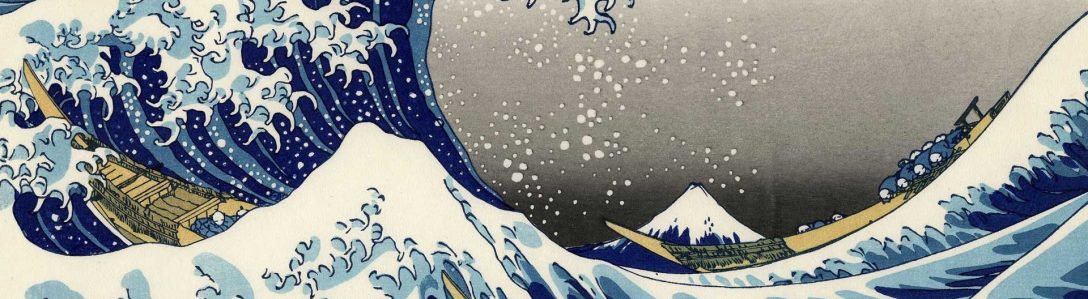
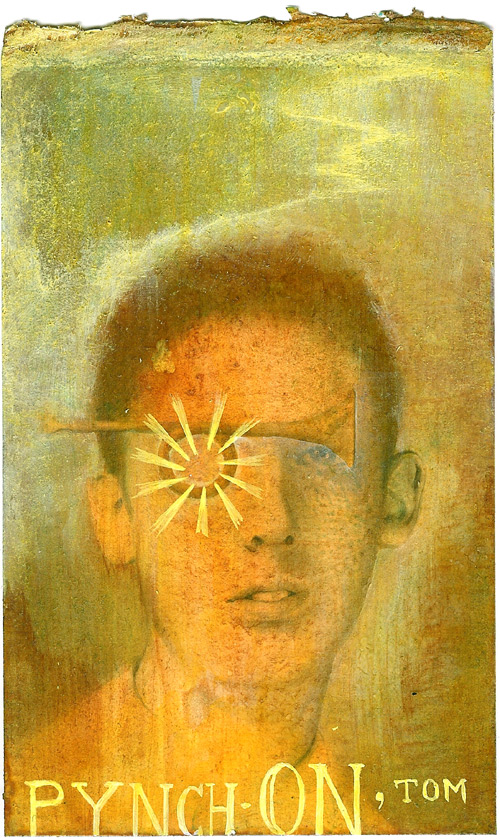
Thomas Pynchon Portrait — James Jean

James Jean does Thomas Pynchon. (Via Hey Oscar Wilde!).

“An Ideal Family” — Katherine Mansfield

“An Ideal Family” by Katherine Mansfield

That evening for the first time in his life, as he pressed through the swing door and descended the three broad steps to the pavement, old Mr. Neave felt he was too old for the spring. Spring—warm, eager, restless—was there, waiting for him in the golden light, ready in front of everybody to run up, to blow in his white beard, to drag sweetly on his arm. And he couldn’t meet her, no; he couldn’t square up once more and stride off, jaunty as a young man. He was tired and, although the late sun was still shining, curiously cold, with a numbed feeling all over. Quite suddenly he hadn’t the energy, he hadn’t the heart to stand this gaiety and bright movement any longer; it confused him. He wanted to stand still, to wave it away with his stick, to say, “Be off with you!” Suddenly it was a terrible effort to greet as usual—tipping his wide-awake with his stick—all the people whom he knew, the friends, acquaintances, shopkeepers, postmen, drivers. But the gay glance that went with the gesture, the kindly twinkle that seemed to say, “I’m a match and more for any of you”—that old Mr. Neave could not manage at all. He stumped along, lifting his knees high as if he were walking through air that had somehow grown heavy and solid like water. And the homeward-looking crowd hurried by, the trams clanked, the light carts clattered, the big swinging cabs bowled along with that reckless, defiant indifference that one knows only in dreams…

It had been a day like other days at the office. Nothing special had happened. Harold hadn’t come back from lunch until close on four. Where had he been? What had he been up to? He wasn’t going to let his father know. Old Mr. Neave had happened to be in the vestibule, saying good-bye to a caller, when Harold sauntered in, perfectly turned out as usual, cool, suave, smiling that peculiar little half-smile that women found so fascinating.

Ah, Harold was too handsome, too handsome by far; that had been the trouble all along. No man had a right to such eyes, such lashes, and such lips; it was uncanny. As for his mother, his sisters, and the servants, it was not too much to say they made a young god of him; they worshipped Harold, they forgave him everything; and he had needed some forgiving ever since the time when he was thirteen and he had stolen his mother’s purse, taken the money, and hidden the purse in the cook’s bedroom. Old Mr. Neave struck sharply with his stick upon the pavement edge. But it wasn’t only his family who spoiled Harold, he reflected, it was everybody; he had only to look and to smile, and down they went before him. So perhaps it wasn’t to be wondered at that he expected the office to carry on the tradition. H’m, h’m! But it couldn’t be done. No business—not even a successful, established, big paying concern—could be played with. A man had either to put his whole heart and soul into it, or it went all to pieces before his eyes… Continue reading ““An Ideal Family” — Katherine Mansfield”

The Rich Man from the Parable — Rembrandt

Entr’acte — René Clair (Score by Erik Satie)


Andy Warhol, Facing Left — Jamie Wyeth

Kinda Sorta Reading List of Novels from Ezra Pound

I have not written a good novel. I have not written a novel. I don’t expect to write any novels and shall not tell anyone else how to do it until I have.

If you want to study the novel, go, READ the best you can find. All I know about it, I have learned from reading:

Tom Jones, by Fielding.

Tristram Shandy and The Sentimental Journey by Sterne (and I don’t recommend anyone ELSE to try to do another Tristram Shandy).

The novels of Jane Austen and Trollope.

[Note: If you compare the realism of Trollope’s novels with the realism of Robert McAlmon’s stories you will get a fair idea of what a good novelists means by ‘construction’. Trollope depicts a scene or a person, and you can clearly see how he ‘leads up to an effect’.]


Continuing:

The novels of Henry James, AND especially the prefaces to his collected edition; which are the one extant great treatise on novel writing in English.

In French you can form a fairly good ideogram from:

Benjamin Constant’s Adolphe.

The first half of Stendhal’s Rouge et Noir and the first eighty pages of La Chartreuse de Parme.

Madame BovaryL’Education SentimentaleTrois Contes, and the unfinished Brouvard et Pecuchet of FLAUBERT, with Goncourt’s preface to Germinie Lacerteux.


After that you would do well to look at Madox Ford’s A Call.

When you have read Jame’s prefaces and twenty of his other novels, you would do well to read The Sacred Fount.

There for perhaps the first time since about 1300 a writer has been able to deal with a sort of content wherewith Cavalcanti has been ‘concerned’.

You can get a very brilliant cross-light via Donne. I mean the difference and nuances between psychology in Guido, abstract philosophic statement in Guido, the blend in Donne, and again psychology in Henry James, and in all of them the underlying concept of FORM, the structure of the whole work, including its parts.

This is a long way from an A B C. In fact it opens the vistas of post-graduate study.

From Ezra Pound’s ABC of Reading (New Directions).


RIP Ray Harryhausen

rh-medusa-clashofthetitans

RIP Ray Harryhausen, 1920-2013

Margaret Atwood Offers Three Reasons to Keep Physical Books

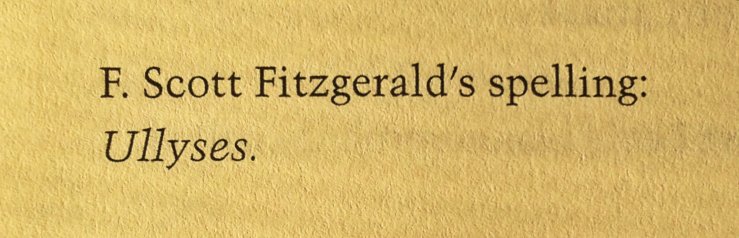
Ullyses

IMG_5709

Sunrise with Sea Monsters — William Turner

“A Free Man’s Worship” — Bertrand Russell

“A Free Man’s Worship” by Bertrand Russell

TO Dr. Faustus in his study Mephistopheles told the history of the Creation, saying:

“The endless praises of the choirs of angels had begun to grow wearisome; for, after all, did he not deserve their praise? Had he not given them endless joy? Would it not be more amusing to obtain undeserved praise, to be worshiped by beings whom he tortured? He smiled inwardly, and resolved that the great drama should be performed.

“For countless ages the hot nebula whirled aimlessly through space. At length it began to take shape, the central mass threw off planets, the planets cooled, boiling seas and burning mountains heaved and tossed, from black masses of cloud hot sheets of rain deluged the barely solid crust. And now the first germ of life grew in the depths of the ocean, and developed rapidly in the fructifying warmth into vast forest trees, huge ferns springing from the damp mould, sea monsters breeding, fighting, devouring, and passing away. And from the monsters, as the play unfolded itself, Man was born, with the power of thought, the knowledge of good and evil, and the cruel thirst for worship. And Man saw that all is passing in this mad, monstrous world, that all is struggling to snatch, at any cost, a few brief moments of life before Death’s inexorable decree. And Man said: ‘There is a hidden purpose, could we but fathom it, and the purpose is good; for we must reverence something, and in the visible world there is nothing worthy of reverence.’ And Man stood aside from the struggle, resolving that God intended harmony to come out of chaos by human efforts. And when he followed the instincts which God had transmitted to him from his ancestry of beasts of prey, he called it Sin, and asked God to forgive him. But he doubted whether he could be justly forgiven, until he invented a divine Plan by which God’s wrath was to have been appeased. And seeing the present was bad, he made it yet worse, that thereby the future might be better. And he gave God thanks for the strength that enabled him to forgo even the joys that were possible. And God smiled; and when he saw that Man had become perfect in renunciation and worship, he sent another sun through the sky, which crashed into Man’s sun; and all returned again to nebula.

“‘Yes,’ he murmured, ‘it was a good play; I will have it performed again.'” Continue reading ““A Free Man’s Worship” — Bertrand Russell”

St. Paul in Prison — Rembrandt

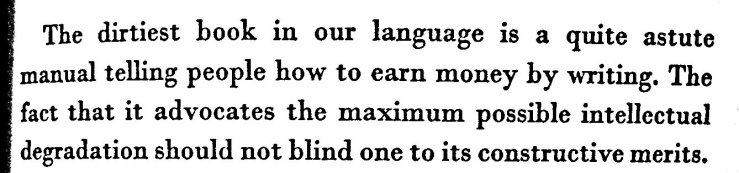
The dirtiest book (Ezra Pound)

20130506-200713

Iggy Pop Talks About Repo Man (And Kinda Sorta Wears a Shirt)

My Aunt Asleep Dreaming of Monsters — James Ensor

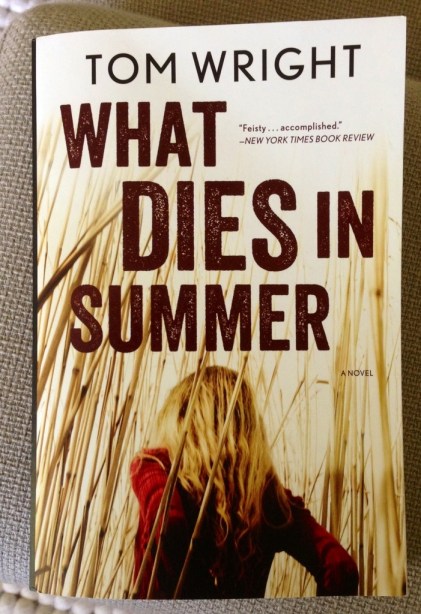
What Dies in Summer (Book Acquired, 5.02.2013)

20130505-185201.jpg

Tom Wright’s What Dies in Summer is new in trade paperback. Pub’s blurb:

A riveting Southern Gothic coming-of-age debut by major new talent.

“I did what I did, and that’s on me.” From that tantalizing first sentence, Tom Wright sweeps us up in a tale of lost innocence. Jim has a touch of the Sight. It’s nothing too spooky and generally useless, at least until the summer his cousin L.A. moves in with him and their grandmother. When Jim and L.A. discover the body of a girl, brutally raped and murdered in a field, an investigation begins that will put both their lives in danger. In the spirit of The Lovely Bones and The Little FriendWhat Dies in Summer is a novel that casts its spell on the very first page and leaves an indelible mark.

And the lede from Julie Myerson’s review last year in the NYT:

Why do teenagers make such ideal protagonists? Maybe it’s because they’re doing just what novels do: struggling to make sense of a troubling and imperfect world. And at first, Jim, called Biscuit, and L. A. (Lee Ann), the teenage cousins at the heart of Tom Wright’s feisty first novel, are ­exactly what you hope they’ll be: funny, frank, mouthy and more than a touch off kilter. Both are forced to live with their grandmother because their mothers aren’t up to the task of child rearing. Their homes are haunted by alcoholism and violence, but Gram takes a simple, affectionate, responsibility for them — though it’s almost inevitable that certain questions, if not the answers, will push their ugly way to the surface sooner or later.

Plagiarism

You pray to the gods? Let me grant your prayers.

It is the honourable characteristic of Poetry that its materials are to be found in every subject which can interest the human mind.

The evidence of this fact is to be sought, not in the writings of Critics, but in those of Poets themselves.

Criticism is a genre of literature or it does not exist.

To imagine is to misinterpret, which makes all poems antithetical to their precursors.

Who are your parents? Do you know?

The strength of any poem is the poems that it has managed to exclude.

The death of Patroclus, Iliad XVI:

Even as he spoke, the shadow of death came over him. His soul fled from his limbs and went down to the house of Hades, bemoaning its fate, leaving manhood and youth.

Every poem is a misinterpretation of a parent poem.

There is a voice inside of you
That whispers all day long.

New poems originate mainly from old poems.

Ivan Goncharov was essentially deranged in the last thirty years of his life.

And insisted that every word Turganev published had been stolen from him.

All unknowing you are the scourge of your own flesh and blood, the dead below the earth and the living here above, and the double lash of your mother and your father’s curse will whip you from this land one day, their footfall treading you down in terror, darkness shrouding your eyes that now can see the light!

The primary struggle of the young poet is against the old masters.

The father is perceived as an obstacle.

They fuck you up, your mum and dad.

The death of Hector, Iliad XXII:

Even as he spoke, the shadow of death came over him. His soul fled from his limbs and went down to the house of Hades, bemoaning its fate, leaving manhood and youth.

The ephebe must clear imaginative space for himself through a creative misreading of the strong poets of the past.

The old God, the Father, took second place; Christ, the Son, stood in His stead, just as in those dark times every son had longed to do.

Only strong poets can overcome this anxiety of influence.

Picasso: He was my one and only master. Cézanne! It was the same with all of us—he was like our father.

Lesser lights become derivative flatterers and never achieve poetic immortality for themselves.

No poem, not even Shakespeare or Milton or Chaucer, is ever strong enough to totally exclude every crucial precursor text or poem.

To you, your father should be as a god;
One that compos’d your beauties, yea, and one
To whom you are but as a form in wax
By him imprinted, and within his power
To leave the figure or disfigure it.

Mom and pop, they will fuck you up.

Under the wide and starry sky,

Dig the grave and let me lie.

Glad did I live and gladly die,

And I laid me down with a will.

Poetic misreading or misprison proper.

A corrective movement in his own poem. A swerve.

A breaking device, a movement towards discontinuity with the precursor.

But they were fucked up in their turn.

Sublime.

Counter-sublime.

How sharper than a serpent’s tooth it is
To have a thankless child.

The return of the dead.

As though the later poet himself had written the precursor’s characteristic work.

To imagine after a poet is to learn his own metaphors for his acts of reading.

A poem is not an overcoming of anxiety, but is that anxiety.

This be the verse you grave for me:

Here he lies where he longed to be.

Man hands on misery to man.

There are no interpretations but only misinterpretations.