The substance of Hawthorne is so dripping wet with the supernatural, the phantasmal, the mystical—so surcharged with adventures, from the deeper picturesque to the illusive fantastic, one unconsciously finds oneself thinking of him as a poet of greater imaginative impulse than Emerson or Thoreau. He was not a greater poet possibly than they—but a greater artist. Not only the character of his substance, but the care in his manner throws his workmanship, in contrast to theirs, into a kind of bas-relief. Like Poe he quite naturally and unconsciously reaches out over his subject to his reader. His mesmerism seeks to mesmerize us—beyond Zenobia’s sister. But he is too great an artist to show his hand “in getting his audience,” as Poe and Tschaikowsky occasionally do. His intellectual muscles are too strong to let him become over-influenced, as Ravel and Stravinsky seem to be by the morbidly fascinating—a kind of false beauty obtained by artistic monotony. However, we cannot but feel that he would weave his spell over us—as would the Grimms and Aesop. We feel as much under magic as the “Enchanted Frog.” This is part of the artist’s business. The effect is a part of his art-effort in its inception. Emerson’s substance and even his manner has little to do with a designed effect—his thunderbolts or delicate fragments are flashed out regardless—they may knock us down or just spatter us—it matters little to him—but Hawthorne is more considerate; that is, he is more artistic, as men say.
Hawthorne may be more noticeably indigenous or may have more local color, perhaps more national color than his Concord contemporaries. But the work of anyone who is somewhat more interested in psychology than in transcendental philosophy, will weave itself around individuals and their personalities. If the same anyone happens to live in Salem, his work is likely to be colored by the Salem wharves and Salem witches. If the same anyone happens to live in the “Old Manse” near the Concord Battle Bridge, he is likely “of a rainy day to betake himself to the huge garret,” the secrets of which he wonders at, “but is too reverent of their dust and cobwebs to disturb.” He is likely to “bow below the shriveled canvas of an old (Puritan) clergyman in wig and gown—the parish priest of a century ago—a friend of Whitefield.” He is likely to come under the spell of this reverend Ghost who haunts the “Manse” and as it rains and darkens and the sky glooms through the dusty attic windows, he is likely “to muse deeply and wonderingly upon the humiliating fact that the works of man’s intellect decay like those of his hands” … “that thought grows moldy,” and as the garret is in Massachusetts, the “thought” and the “mold” are likely to be quite native. When the same anyone puts his poetry into novels rather than essays, he is likely to have more to say about the life around him—about the inherited mystery of the town—than a poet of philosophy is. Continue reading ““Hawthorne” — Charles Ives”→
The strongest and strangest literature usually has to teach its reader how to read it, and, consequently, to read in a new way. Jason Schwartz’s new novella John the Posthumous is strong, strange literature, a terrifying prose-poem that seizes history and folklore, science and myth—entomology, etymology, gardening, the architecture of houses, the history of beds, embalming practices, marital law, biblical citations, murder, drowning, fires, knives, etc.—and distills it to a sustained, engrossing nightmare.
What is the book about? Was my list too choppy? Our unnamed, unnameable narrator tells us, late in the book: “Were this a medical, rather than a marital history—you might then excuse so conspicuous a series.” (His series, of course, is different from mine—or perhaps the same. John the Posthumous, as I’ll suggest later, is a series of displacements).
So, John the Posthumous is a marital history. There. That’s a summary, yes? Ah! But there’s conflict! Yes, this is a book about adultery, about cuckoldry! (“Cuckoldry, my proper topic . . .”). Adultery is threaded into the titles of the three sections Schwartz divides his novella into: “Hornbook” — “Housepost, Male Figure” — “Adulterium.” There’s something of a poem, or at least a poetic summary just there.
Do you sense my anxiety about writing about the book? Some need to deliver a summation? Perhaps I’m going about this wrong. How about a sustained passage of Schwartz’s beguiling prose. From the first book, the “Hornbook”:
The lake is named for the town, or for an animal, and is shaped like a blade.
Adulterium, as defined by the Julian Statute, circa 13 B.C., offers fewer charms, given the particulars of winter, not to mention various old-fashioned sentiments concerning execution. Mutilation, for its part, is more common—the adulterous wife, or adultera, to use the legal term, surrenders her ears or nose, and, on occasion, her fingers—with divorce following in short order. Some transcriptions neglect the stranger, or adulterer, in place of graves—a simple matter of manners, this, not withstanding the disquisition upon the marriage bed. Others relate ordinary household details—dismantling the chairs, and visiting the windows, and departing the courtyard.
A gentleman, remember, always averts his eyes.
Cuckold’s Point, near Brockwell, in London, is most notable for its gallows—the red sticks recall horns—and for the drowning of dogs.
Schwartz’s narrator’s sentences do not seem to flow logically into or out of each other. They seem to operate on their own dream/nightmare logic, as if the words of John the Posthumous were the concordance to some other book. The single line paragraph about the lake (source of its name not entirely determined; its shape best expressed in simile) shifts into a horrific legal history of adultery and then into Cuckold’s Point, a bend in the Thames that owes its name to a simile.
Simile is perhaps the dominant mode of John the Posthumous. Schwartz’s narrator condenses and expands and displaces his objects, his characters, his themes. Sentences sometimes seem to belong to other paragraphs, as if multiple discursive discussions wind through the book at once. Our narrator tells us that
The common wasp measures roughly two hundred hertz. This is well below the frequency of, say, a human scream. Anderson compares the sound of a dying beetle with the sound of a dying fly. (The names of the families escape me at the moment.) The common bee, absent its wings, is somewhat higher in pitch. (Carpenter bees would swarm the porch in August.) The true katydid says “Katy did” — or, according to Scudder, “she did.” The false katydid produces a different phrase altogether, something far more fretful. Wheeler concludes with the house ant and the rasp of a pantry door. Douglas prefers a hacksaw drawn across a tin can. (We found termites in the bedclothes one year.) A sixteenth note, poorly formed, may be said to resemble a pipe organ or a hornet. The children set their specimens on black pins.
Here, entomologists (note how Schwartz always pulls his language from his reading, his research) try to describe the language of insects. Interspersed we get images of mutilation and impalement (“The common bee, absent its wings”; “The children set their specimens on black pins”) along with interjections of insects infesting intimate domestic spaces (“We found termites in the bedclothes”). The passage also picks up the novella’s motif of sharp objects (“a hacksaw drawn across a tin can”). There’s something simultaneously banal and horrifying about the tone of this passage, its language a juxtaposition of scientific observation and cloudy personal recollections—all contrasted with “the frequency of, say, a human scream.”
Infestation, violence, and betrayal shudder throughout John the Posthumous, erupting in strange moments of deferral and transference: “When the horse becomes a house, furthermore, termites appear on the floor,” reads one bizarre line. “A woman says ‘dear’ or perhaps ‘door,’ and then two names—or perhaps only one,” we’re told. “Even the earliest primers compare the heart’s shape to a fist or to a hand waving goodbye,” the narrator points out.
At one point, the narrator laments: “how I regret these grisly, inexpert approximations.” In context, he’s working through a series of etymologies (linking shroud to groom and wishing that dagger had some connection to dowager), but the phrase—“grisly, inexpert approximations”—approaches describing the narrator’s program of deferral and displacement.
Etymology repeatedly allows the narrator (an approximation of; an attempt at) a basis of description:
The doorframe disappoints the wall, as the wall disappoints the door. The mullions divide the yard into nine portions. But portions—or, if you like, portion—is an unlovely word. Guest and host, for their part, issue from the same root—ghostis. Which means stranger, villain, enemy—though naturally I had believed it to mean ghost. And the figure in the corner, lower right, is neither my daughter nor her hat, but just a paper bag in the grass.
The passage is remarkable. We begin with the mundane but symbolically over-determined image of a doorframe, along with an equally mundane wall and door—all connected, bizarrely, with the verb disappoints, producing an uncanny effect. The mundane mullions that divide the yard reveal the perspective of our narrator. He is looking out. He seems to be trapped in a house, but the house is always displaced, shifting—it’s many houses. Portion leads him etymologically to ghostis (a root I’ve long been obsessed with), a word that condenses a series of oppositions—and, as the narrator points out, provides its own imaginary ghost. The final sentence shifts us again; it seems to belong to another paragraph. But perhaps not. Perhaps we continue to survey the wall, the door, the mullions—do we look out the window and see the figure that is not (and thus, in the realm of the narrator’s program of imaginative displacement, is, or rather, approximates) his daughter or her hat? Is it a photo on the wall? Both?
I’m tempted to keep on in this manner, pulling out passages from John the Posthumous and riffing on them, but maybe that’s a disservice to its potential readers, who I think should like to be assimilated by its strange strength on their own terms. Schwartz’s narrative doesn’t cohere so much as it enmeshes the reader, who must learn a new way of reading, of grasping (or releasing) his series of objects and histories and rumors and rituals.
The novelist and editor Gordon Lish (who has championed Schwartz) famously advised: “Don’t have stories; have sentences.” Great writing happens at the syntactic level, which cannot be separated from plot—the language is the plot. John the Posthumous embodies this aesthetic, creating its own idiom, composed from the real and the imaginary and the symbolic, an idiom that refuses to yield a straightforward calculus or grammar. The effect is wonderfully frustrating; the novel nags at the reader, confounds the reader, haunts the reader.
Haunt has its own strange etymology, likely deriving from the Old Norse heimta, “to return home,” through to Old French hanter, “to be familiar with,” popping up in Middle English haunten, “to use, to reside.” We can take it all the way back to the Proto-Indo-European root kei — “lie down, sleep, settle, hence home, friendly, dear.” Etymologically, all houses are therefore haunted—the series of houses (all different, all the same) in John the Posthumous especially so. This is a horror story, a haunted house story, a story larded with killers and connivers and adulterers. Another passage (I promise just to share this time and withhold remarks):
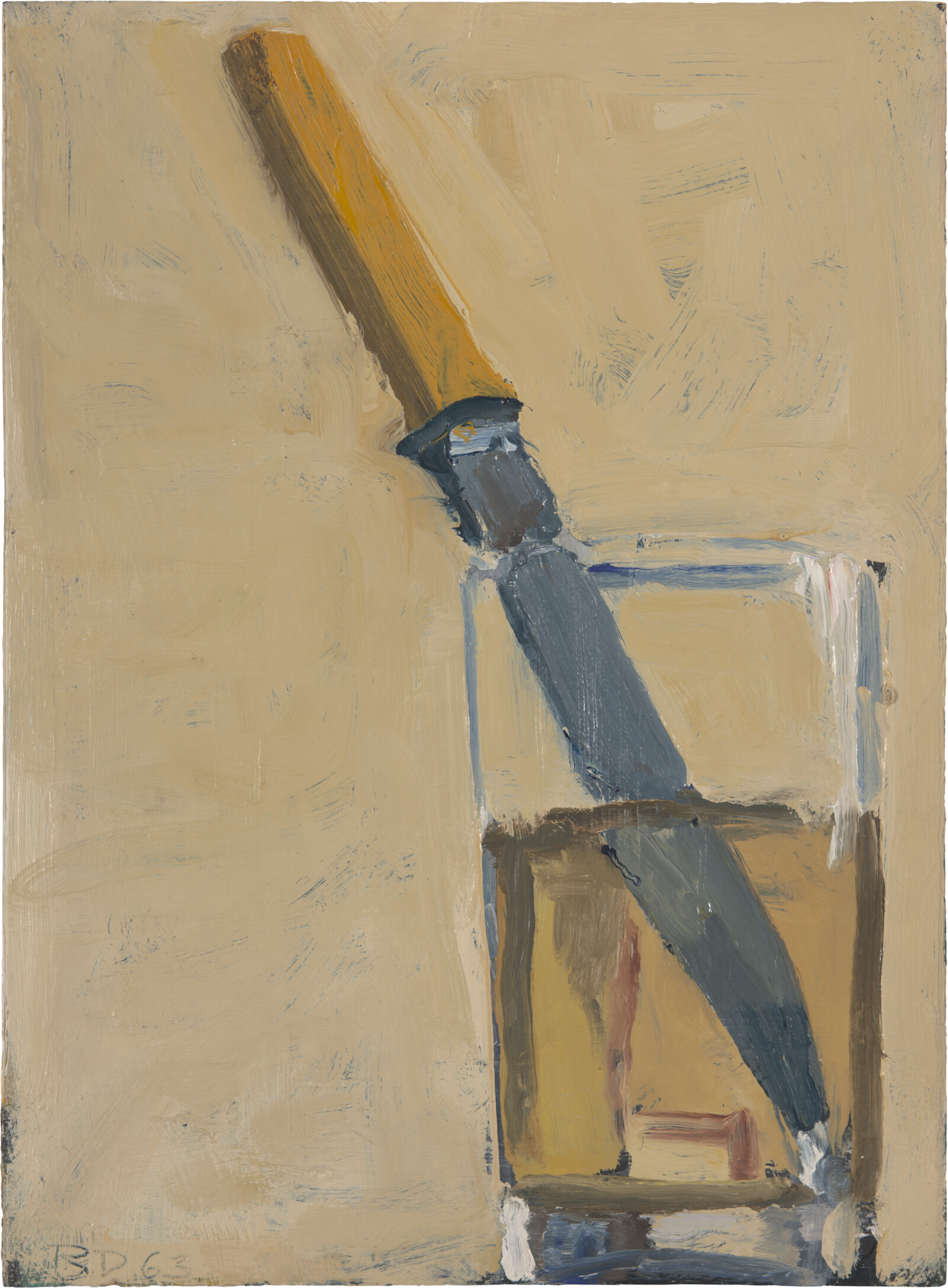
In the cellar: a pull saw and a hasp, a jack plane, a wrecking bar, and a claw hammer. A tin contains a cap screw and a razor blade. A jar contains the remains of a carpet beetle.
I dismantle the chairs and place all the parts in a crate. I station the broom beside the garden spade.
The killer in the cellar, in folklore, is discovered by a mute child. The prisoner in the cellar survives a fire or a storm—but is later mauled by wolves.
There were fleas last year, and squirrels the year before that.
I feel like I’ve offered enough of Schwartz’s uncanny prose here to appropriately intrigue or repel readers. The vision here is dark and the prose imposes an alterity that the reader must work through. This book is Not For Everyone, but it might be for you—I loved it. Haunting, frustrating, and disturbing, John the Posthumous is one of the best new books I’ve read this year.
It was a massive Federalist plantation, lazy and handsome among two-century oaks and palm trees. You could imagine FDR had just visited to cut a ribbon last week. I had heard throughout my life the curious rumor of a leper “colony” down in south Louisiana. This news reached me when I was a boy in Clinton, Mississippi, and one did not know quite what to do with it. Colony evoked folks lost in an exotic fastness. Leper of course was as bad as it got, poor devils. I had a sense of these creatures execrated and driven onto some isle in a vicious swamp. In that, my young imagination was not far wrong. Louisiana was alarming and peculiar anyway. There were plenty of Catholics, many seemed touched by at least mild cases of voodoo, and adults went public with their gaudiest dreams.
Nothing at the time was more peculiar to me than the armored mammal of Louisiana, the armadillo, which I had seen dead on the road as I traveled to relatives in Baton Rouge. It was a thing aggressively obsolete in animal history but still mucking its way along, its stupid ranks torn to flat bits by modern autos on pavement laid down through the bogs. I could not know how closely related these creatures were to the poor lepers themselves. Among animals, only armadillos have leprosy. Among mankind, nobody has suffered opprobrium for six thousand years like the leper. At Carville, where I finally got over forty years of mildly curious ignorance, I saw the doubloons from last year’s Mardi Gras at Carville were imprinted on one side with an armadillo. On the other was the Federalist infirmary building: Gillis W.Long Hansen’s Disease Center1921. Hansen was the Norwegian doctor who first isolated the leprosy bacillus in the late nineteenth century. In 1921 the state leprosarium was taken over by the Public Health Service.
Now it is the Service’s last remaining hospital. In that state of advanced idiocy that has made me a living sofar and may be the birthright of a Mississippi writer, I asked a therapist working with two Asian-American patients after their hand surgery if he was a flight surgeon, his uniform sonaval and all. He explained, as further did Captain Jim Birke, most formidable pedorthist, that the Public Health Service originated after the Revolutionary War as a naval medical branch. Thus the costume of the Surgeon General, which has baffled others too tactful to ask.
“WHAT is this opportunity?” Conger asked. “Go on. I’m interested.”
The room was silent; all faces were fixed on Conger—still in the drab prison uniform. The Speaker leaned forward slowly.
“Before you went to prison your trading business was paying well—all illegal—all very profitable. Now you have nothing, except the prospect of another six years in a cell.”
Conger scowled.
“There is a certain situation, very important to this Council, that requires your peculiar abilities. Also, it is a situation you might find interesting. You were a hunter, were you not? You’ve done a great deal of trapping, hiding in the bushes, waiting at night for the game? I imagine hunting must be a source of satisfaction to you, the chase, the stalking—”
Conger sighed. His lips twisted. “All right,” he said. “Leave that out. Get to the point. Who do you want me to kill?”
The Speaker smiled. “All in proper sequence,” he said softly.
THE car slid to a stop. It was night; there was no light anywhere along the street. Conger looked out. “Where are we? What is this place?”
The hand of the guard pressed into his arm. “Come. Through that door.”
Conger stepped down, onto the damp sidewalk. The guard came swiftly after him, and then the Speaker. Conger took a deep breath of the cold air. He studied the dim outline of the building rising up before them.
“I know this place. I’ve seen it before.” He squinted, his eyes growing accustomed to the dark. Suddenly he became alert. “This is—”
“Yes. The First Church.” The Speaker walked toward the steps. “We’re expected.”
“Expected? Here?”
“Yes.” The Speaker mounted the stairs. “You know we’re not allowed in their Churches, especially with guns!” He stopped. Two armed soldiers loomed up ahead, one on each side.
“All right?” The Speaker looked up at them. They nodded. The door of the Church was open. Conger could see other soldiers inside, standing about, young soldiers with large eyes, gazing at the ikons and holy images.
“I see,” he said.
“It was necessary,” the Speaker said. “As you know, we have been singularly unfortunate in the past in our relations with the First Church.”
Film footage of the first Bloomsday celebration (June 16, 1954)–a great find by Antoine Malette, who posted the video along with an account of the journey as told in Flann O’Brien: An Illustrated Biography. The film was shot by John Ryan, and shows an extremely inebriated Brian O’Nolan (aka Flann O’Brien) having to be helped around by pals Anthony Cronin and Patrick Kavanagh. We’re also treated to a scene of Kavanagh taking a piss with Joyce’s cousin Tom Joyce, a dentist who joined the merry band. (The scene will undoubtedly recall to you that marvelous moment in Ulysses when “first Stephen, then Bloom, in penumbra urinated“). The troupe didn’t quite finish their mission, getting sidetracked by booze and quarrels. Read the full account at Malette’s site.
The beginning of life is the beginning of an illusion to the effect that there is such a thing as free will and that there is such another thing as necessity – the recognition of the fact that there is an “I can” and an “I cannot,” an “I may” and an “I must.”
Life is not so much a riddle to be read as a Gordian knot that will get cut sooner or later.
Life is the distribution of an error – or errors.
Life is a superstition. But superstitions are not without their value. The snail’s shell is a superstition, slugs have no shells and thrive just as well. But a snail without a shell would not be a slug unless it had also the slug’s indifference to a shell.
Life is one long process of getting tired.
Life is the art of drawing sufficient conclusions from insufficient premises.
Life is eight parts cards and two parts play, the unseen world is made manifest to us in the play.
Life is like music, it must be composed by ear, feeling and instinct, not by rule. Nevertheless one had better know the rules, for they sometimes guide in doubtful cases – though not often.
‘My towers at last!’—
What meant the word
from what acknowledged circuit sprung
and in the heart and on the tongue
at sight of few familiar birds
when seaward his last sail unfurled
to leeward from the wheel once more
bloomed the pale crags of haunted shore
that once-more-visited notch of world:
and straight he knew as known before
the Logos in Leviathan’s roar
he deepest sounding with his lead
who all had fathomed all had said.
Much-loving hero—towers indeed
were those that overhung your log
with entries of typhoon and fog
and thunderstone for Adam’s breed:
man’s warm Sargasso Sea of faith
dislimned in light by luck or fate
you for mankind set sail by hate
and weathered it, and with it death.
And now at world’s end coasting late
in dolphined calms beyond the gate
which Hercules flung down, you come
to the grim rocks that nod you home.
Depth below depth this love of man:
among unnumbered and unknown
to mark and make his cryptic own
one landfall of all time began:
of all life’s hurts to treasure one
and hug it to the wounded breast,
in this to dedicate the rest,
all injuries received or done.
Your towers again but towers now blest
your haven in a shoreless west
o mariner of the human soul
who in the landmark notched the Pole
and in the Item loved the Whole.
Two very intriguing new titles from Reality Street: Ken Edwards’s Down with Beauty, and tapestry by Philip Terry.
Here’s the publisher’s blurb for Down with Beauty:
DOWN WITH BEAUTY explores, in a series of linked dialogues, dramatic monologues and short fictions, the themes of exile, the aftermath of war, paranoia, improvised music and nothingness. The collection is completed with the full text of NOSTALGIA FOR UNKNOWN CITIES, previously published separately. Some samples here, here and here – others will be revealed.
A very strange, scattered book—lovely.
Here’s Reality Street’s blurb for tapestry:
Taking as its starting point marginal images in the Bayeux Tapestry, which have been left largely unexplained by historians, Terry retells the story of the Norman Conquest from the point of view of the tapestry’s English embroiderers. Combining magic realism and Oulipian techniques, this is a tour de force of narrative and language.
By showing a language in flux,tapestry draws you into its world: that of the creation of the Bayeux tapestry (which, as we are reminded in the book by an exasperated narrator, isn’t a tapestry at all, but a work of embroidery) by a group of nuns in the late 11th century at a priory in Kent. …
Medieval works lend themselves to the picaresque, or multiple narration – think of The Decameròn or The Canterbury Tales. So while there is an overarching narrative, that of the commission and creation of the tapestry, work is paused while each nun tells a story related to her work. If you look at the tapestry, you will remember, or notice, that there are numerous extraneous designs along the borders that would appear to have nothing to do with the matter of the Norman usurpation. Terry has noticed, as have others, the Aesopian motifs that occur, and includes slender, playful versions, sometimes modernised, of Aesop’s fables himself. My favourite is one in which a lion, confronting Aesop, asks him to tell him a fable before the lion eats him. So Aesop says he was confronted by a lion who asked him to tell a fable … and so on; and eventually the lion gets bored and goes away.
Great to see some new stuff that’s, well, really new.








 Biblioklept
