Bookshelf — Jessica Rohrer

Bookshelf_2010_15x11 inches

The Sleepers — Gustave Courbet

Watch Children, A Short Film by Terrence Davies

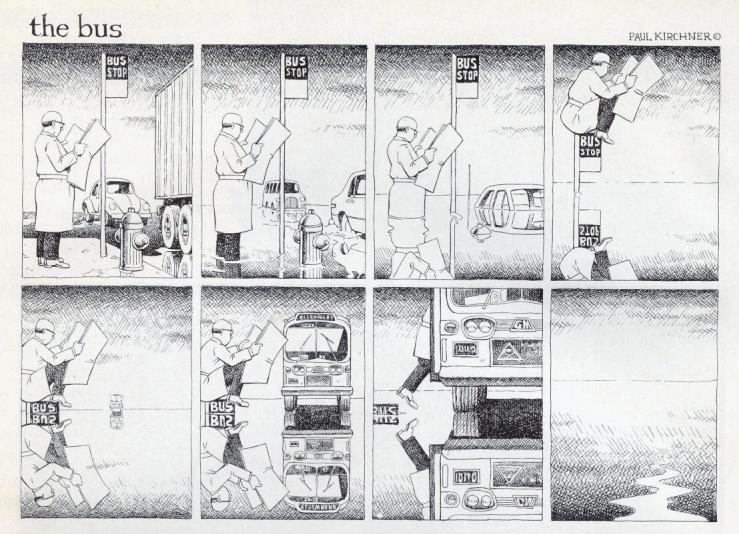
The Bus — Paul Kirchner

bus

Fable that will Foretell a Parable — Ged Quinn

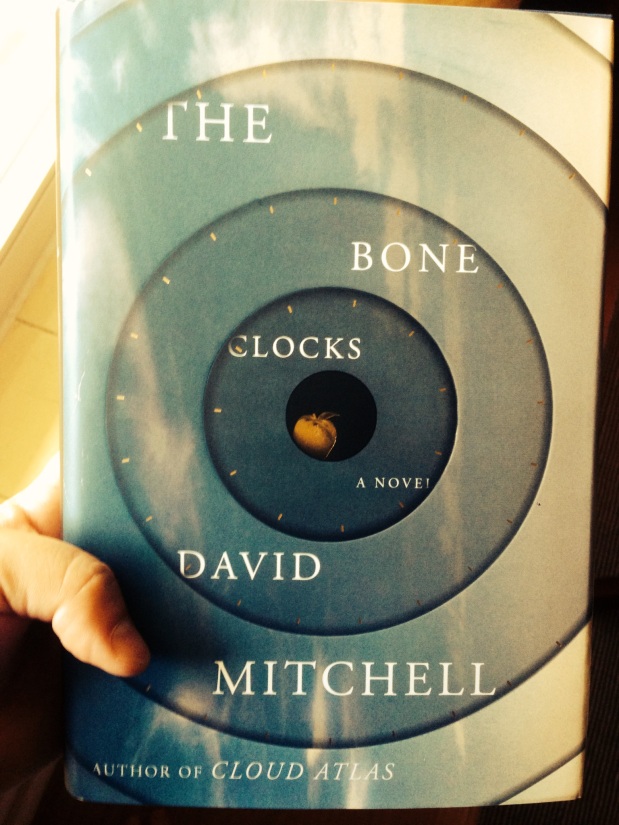
David Mitchell’s The Bone Clocks (Book Acquired, 8.19.2014)

IMG_3128

David Mitchell’s new novel The Bone Clocks showed up at Biblioklept World Headquarters earlier this week, but I’ve been busy with the start of the Fall semester and haven’t had a chance to get into it yet. Here’s publisher Random House’s blurb:

Following a terrible fight with her mother over her boyfriend, fifteen-year-old Holly Sykes slams the door on her family and her old life. But Holly is no typical teenage runaway: A sensitive child once contacted by voices she knew only as “the radio people,” Holly is a lightning rod for psychic phenomena. Now, as she wanders deeper into the English countryside, visions and coincidences reorder her reality until they assume the aura of a nightmare brought to life.

For Holly has caught the attention of a cabal of dangerous mystics—and their enemies. But her lost weekend is merely the prelude to a shocking disappearance that leaves her family irrevocably scarred. This unsolved mystery will echo through every decade of Holly’s life, affecting all the people Holly loves—even the ones who are not yet born.

A Cambridge scholarship boy grooming himself for wealth and influence, a conflicted father who feels alive only while reporting on the war in Iraq, a middle-aged writer mourning his exile from the bestseller list—all have a part to play in this surreal, invisible war on the margins of our world. From the medieval Swiss Alps to the nineteenth-century Australian bush, from a hotel in Shanghai to a Manhattan townhouse in the near future, their stories come together in moments of everyday grace and extraordinary wonder.

Rich with character and realms of possibility, The Bone Clocks is a kaleidoscopic novel that begs to be taken apart and put back together by a writer The Washington Post calls “the novelist who’s been showing us the future of fiction.”

An elegant conjurer of interconnected tales, a genre-bending daredevil, and a master prose stylist, David Mitchell has become one of the leading literary voices of his generation. His hypnotic new novel, The Bone Clocks, crackles with invention and wit and sheer storytelling pleasure—it is fiction at its most spellbinding.

Nathaniel Hawthorne Runs Into Ralph Waldo Emerson and Margaret Fuller in Sleepy Hollow (Note-Book Entry for August 22nd, 1842)

Monday, August 22d.

I took a walk through the woods yesterday afternoon, to Mr. Emerson’s, with a book which Margaret Fuller had left, after a call on Saturday eve. I missed the nearest way, and wandered into a very secluded portion of the forest; for forest it might justly be called, so dense and sombre was the shade of oaks and pines. Once I wandered into a tract so overgrown with bushes and underbrush that I could scarcely force a passage through. Nothing is more annoying than a walk of this kind, where one is tormented by an innumerable host of petty impediments. It incenses and depresses me at the same time. Always when I flounder into the midst of bushes, which cross and intertwine themselves about my legs, and brush my face, and seize hold of my clothes, with their multitudinous grip,–always, in such a difficulty, I feel as if it were almost as well to lie down and die in rage and despair as to go one step farther. It is laughable, after I have got out of the moil, to think how miserably it affected me for the moment; but I had better learn patience betimes, for there are many such bushy tracts in this vicinity, on the margins of meadows, and my walks will often lead me into them. Escaping from the bushes, I soon came to an open space among the woods,–a very lovely spot, with the tall old trees standing around as quietly as if no one had intruded there throughout the whole summer. A company of crows were holding their Sabbath on their summits. Apparently they felt themselves injured or insulted by my presence; for, with one consent, they began to Caw! caw! caw! and, launching themselves sullenly on the air, took flight to some securer solitude. Mine, probably, was the first human shape that they had seen all day long,–at least, if they had been stationary in that spot; but perhaps they had winged their way over miles and miles of country, had breakfasted on the summit of Graylock, and dined at the base of Wachusett, and were merely come to sup and sleep among the quiet woods of Concord. But it was my impression at the time, that they had sat still and silent on the tops of the trees all through the Sabbath day, and I felt like one who should unawares disturb an assembly of worshippers. A crow, however, has no real pretensions to religion, in spite of his gravity of mien and black attire. Crows are certainly thieves, and probably infidels. Nevertheless, their voices yesterday were in admirable accordance with the influences of the quiet, sunny, warm, yet autumnal afternoon. They were so far above my head that their loud clamor added to the quiet of the scene, instead of disturbing it. There was no other sound, except the song of the cricket, which is but an audible stillness; for, though it be very loud and heard afar, yet the mind does not take note of it as a sound, so entirely does it mingle and lose its individuality among the other characteristics of coming autumn. Alas for the summer! The grass is still verdant on the hills and in the valleys; the foliage of the trees is as dense as ever, and as green; the flowers are abundant along the margin of the river, and in the hedge-rows, and deep among the woods; the days, too, are as fervid as they were a month ago; and yet in every breath of wind and in every beam of sunshine there is an autumnal influence. I know not how to describe it. Methinks there is a sort of coolness amid all the heat, and a mildness in the brightest of the sunshine. A breeze cannot stir without thrilling me with the breath of autumn, and I behold its pensive glory in the far, golden gleams among the long shadows of the trees. The flowers, even the brightest of them,–the golden-rod and the gorgeous cardinals,–the most glorious flowers of the year,–have this gentle sadness amid their pomp. Pensive autumn is expressed in the glow of every one of them. I have felt this influence earlier in some years than in others. Sometimes autumn may be perceived even in the early days of July. There is no other feeling like that caused by this faint, doubtful, yet real perception, or rather prophecy, of the year’s decay, so deliciously sweet and sad at the same time.
Continue reading “Nathaniel Hawthorne Runs Into Ralph Waldo Emerson and Margaret Fuller in Sleepy Hollow (Note-Book Entry for August 22nd, 1842)”

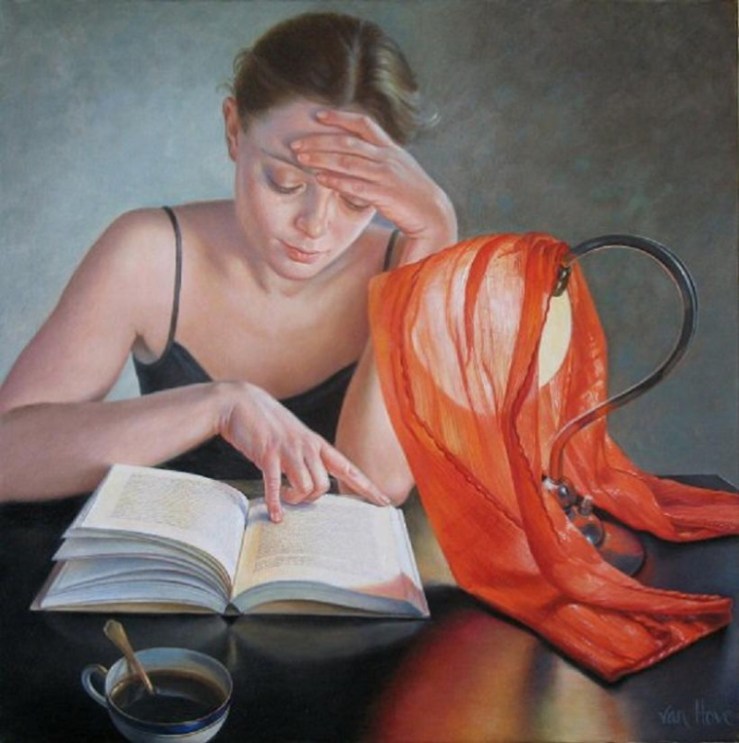
The Red Lamp — Francine van Hove

francine-van-hove2

Eve — Gustave Moreau

The American Poseur’s Journal | Doris Lessing’s The Golden Notebook

This section of Doris Lessing’s novel The Golden Notebook actually made me laugh aloud. She offers a wonderful parody of “a young American living on an allowance from his father who works in insurance”; the section recalls William Gaddis’s similar send-ups in The Recognitions (and again links the two novels together in my consciousness).

[The right side of the black notebook, under the heading Money, continued.]

Some months ago I got a letter from the Pomegranate Review, New Zealand, asking for a story. Wrote back, saying I did not write stories. They replied asking for ‘portions of your journals, if you keep them’. Replied saying I did not believe in publishing journals written for oneself. Amused myself composing imaginary journal, of the right tone for a literary review in a colony or the Dominions: circles isolated from the centres of culture will tolerate a far more solemn tone than the editors and their customers in let’s say London or Paris. (Though sometimes I wonder.) This journal is kept by a young American living on an allowance from his father who works in insurance. He has had three short stories published and has completed a third of a novel. He drinks rather too much, but not as much as he likes people to think; takes marihuana, but only when friends from the States visit him. He is full of contempt for that crude phenomenon, the United States of America.

April 16th. On the steps of the Louvre. Remembered Dora. That girl was in real trouble. I wonder if she has solved her problems. Must write to my father. The tone of his last letter hurt me. Must we be always isolated from each other? I am an artist – Mon Dieu!

April 17th. The Gare de Lyon. Thought of Lise. My God, and that was two years ago! What have I done with my life? Paris has stolen it … must re-read Proust.

April 18th. London. The Horseguards’ Parade. A writer is the conscience of the world. Thought of Marie. It is a writer’s duty to betray his wife, his country and his friend if it serves his art. Also his mistress.

April 18th. Outside Buckingham Palace. George Eliot is the rich man’s Gissing. Must write to my father. Only ninety dollars left. Will we ever speak the same language? Continue reading “The American Poseur’s Journal | Doris Lessing’s The Golden Notebook”

John Cassavetes’ Shadows (Full Film)

Proserpina Wetnurse — Agostino Arrivabene

“The Silence” — Michelangelo Antonioni

20140716-162722-59242226.jpg

The Temptation of St. Anthony — Felicien Rops

The Secret Player — René Magritte

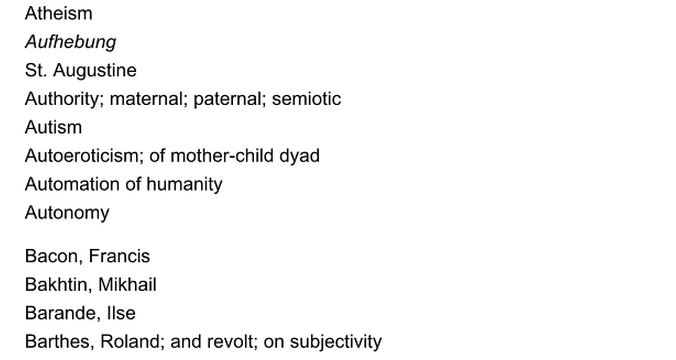
Index fragment

microfiction

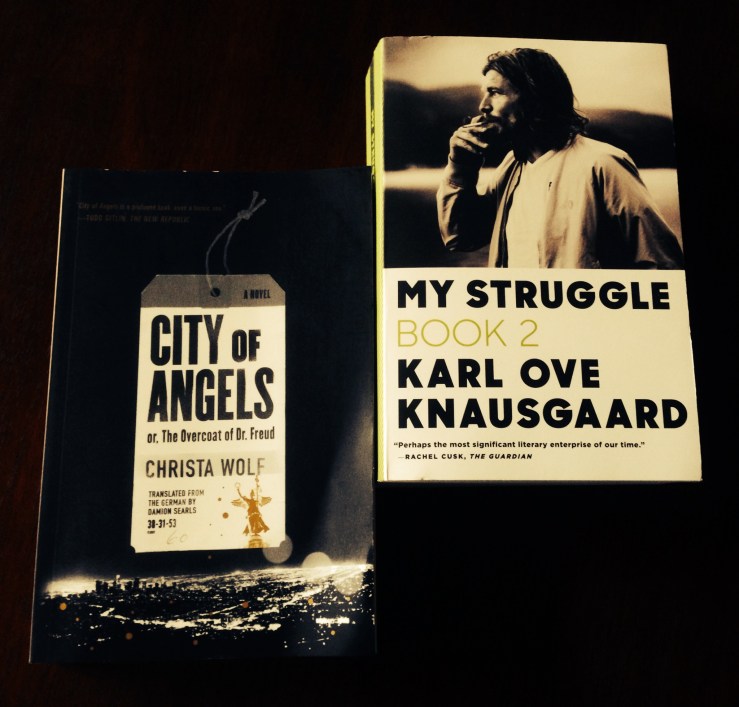
Karl Ove Knaussgard/Christa Wolf (Books Acquired, 8.11.2014)

IMG_3111

Came back to work for the fall semester and these were in my mailbox.

I like the older, zanier, less-austere FS&G paperback covers of the Knausgaard better.