Musical Duet Summary of Pynchon’s Mason & Dixon in Two Stanzas

IMG_4610

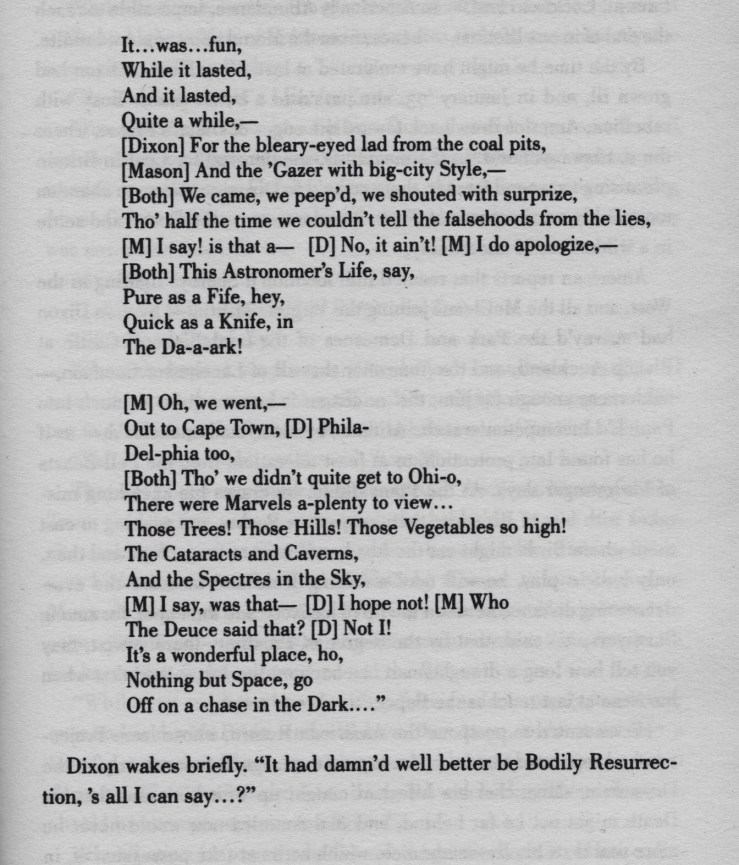
From Ch. 77 of Thomas Pynchon’s Mason & Dixon. I love the elision expressed in those dashes — “I say, was that–” — I say, was that a talking dog? I say, was that were-beaver? I say, was that a giant cannabis plant? I say, was that a Sino-Jesuit cabal? I say, was that the Lost Tribe of Israel? I say, was that the missing 11 days, and the Asiatick Pygmies who inhabit them? I say, was that a mechanical duck, looking for love? I say, was that an electric eel? I say, was that a recipe for catsup? I say, was that the first English pizza? I say, was that The Black Dog? I say, was that an iron bathtub? I say, was that a ridotto of inflamed debauchery? I say, was that a Masonic conspiracy? I say, was that the metaphysical wind? I say, was that a dead wife’s ghost? I say, was that a friendship? I say!

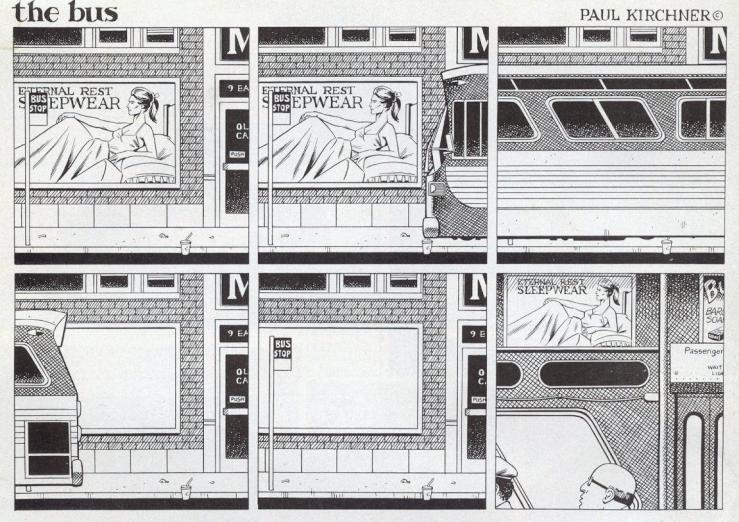
The Bus — Paul Kirchner

86k3dP3

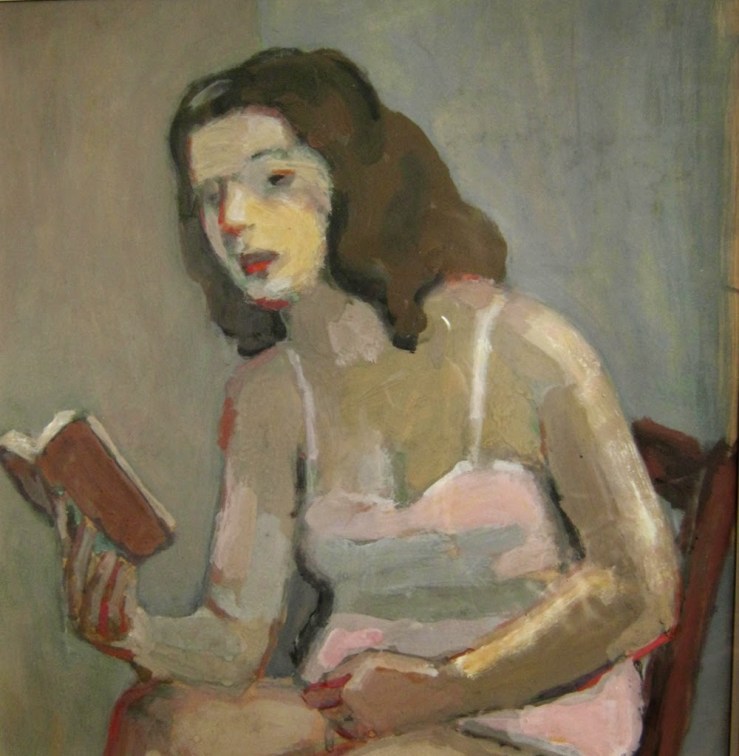
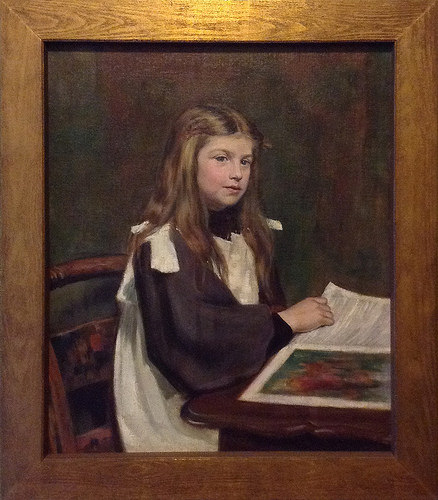
Young Woman Reading — Ossip Lubitch

Lubitch, Ossip 3

“All art constantly aspires towards the condition of music”

Thomas Pynchon’s Mason & Dixon (Third Riff: The Rabbi of Prague)

A. I’m a few chapters–three, precisely—from finishing Mason & Dixon. “Finishing” is not the right verb here, though—Pynchon’s novel is so rich, funny, strange, and energetic that I want to return to it immediately.

B. But I need to backtrack a bit, riff on one of my favorite episodes—Chapter 50.

C. (First riff and second riff for those inclined).

D. In Chapter 50,

’tis Dixon’s luck to discover The Rabbi of Prague, headquarters of a Kabbalistick Faith, in Correspondence with the Elect Cohens of Paris, whose private Salute they now greet Dixon with, the Fingers spread two and two, and the Thumb held away from them likewise, said to represent the Hebrew letter Shin and to signify, “Live long and prosper.”

Pynchon plays here on the reader’s initial understanding of the signal and phrase as a pop culture reference—


—but the goof isn’t merely postmodernist shtick—Pynchon is pointing to how the invisible manifests itself in signs and wonders, covert, cryptic, but perhaps—perhaps—decipherable.

E. (Maybe this needs clarification: The Rabbi of Prague is a tavern. I lost track of how many bars taverns pubs inns alehouses coffeehouses etc. show up in M&D). Continue reading “Thomas Pynchon’s Mason & Dixon (Third Riff: The Rabbi of Prague)”

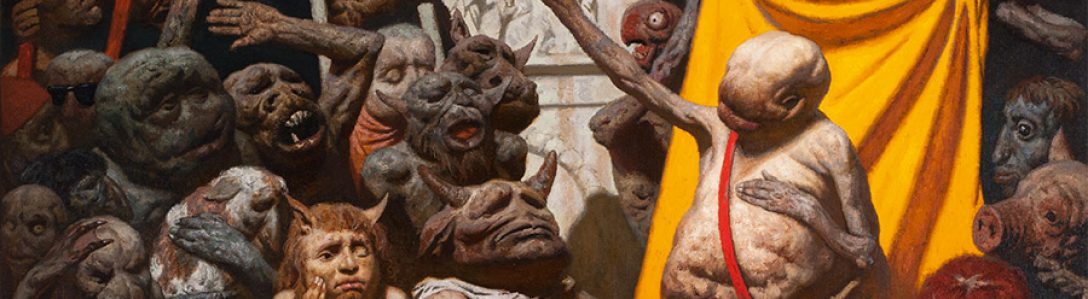
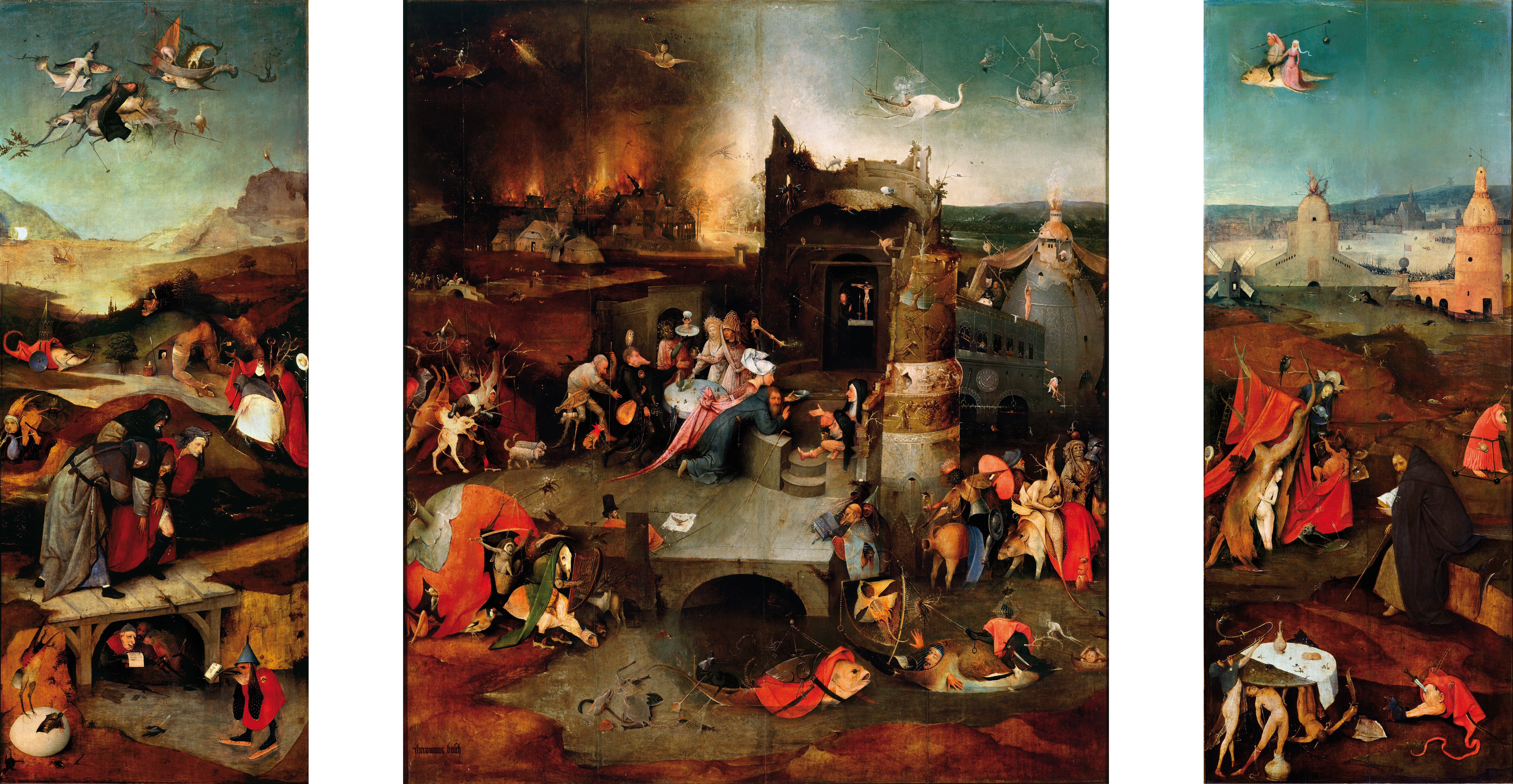
The Temptation of St. Anthony (Detail) — Hieronymus Bosch

13

Balestrini/Pasolini (Books acquired, 12.27.2014)

verso

So I picked up two ebooks from Verso today for less than a pint of beer. Ridiculous! The Unseen by Nanni Balestrini, and Pasolini’s unproduced screenplay St. Paul. All kinds of great stuff. I think my favorite thing about Verso’s ebooks is how straightforward they are to access—no weird third-party app or DRM issues.

Sarah Allen — Allen Butler Talcott

dhdchifd

A Troubled Soul — Ferdinand Hodler

“Fancy’s Show-Box” — Nathaniel Hawthorne

“Fancy’s Show-Box”

by

Nathaniel Hawthorne

What is guilt? A stain upon the soul. And it is a point of vast interest whether the soul may contract such stains in all their depth and flagrancy from deeds which may have been plotted and resolved upon, but which physically have never had existence. Must the fleshly hand and visible frame of man set its seal to the evil designs of the soul, in order to give them their entire validity against the sinner? Or, while none but crimes perpetrated are cognizable before an earthly tribunal, will guilty thoughts—of which guilty deeds are no more than shadows,—will these draw down the full weight of a condemning sentence in the supreme court of eternity? In the solitude of a midnight chamber or in a desert afar from men or in a church while the body is kneeling the soul may pollute itself even with those crimes which we are accustomed to deem altogether carnal. If this be true, it is a fearful truth.

Let us illustrate the subject by an imaginary example. A venerable gentleman—one Mr. Smith—who had long been regarded as a pattern of moral excellence was warming his aged blood with a glass or two of generous wine. His children being gone forth about their worldly business and his grandchildren at school, he sat alone in a deep luxurious arm-chair with his feet beneath a richly-carved mahogany table. Some old people have a dread of solitude, and when better company may not be had rejoice even to hear the quiet breathing of a babe asleep upon the carpet. But Mr. Smith, whose silver hair was the bright symbol of a life unstained except by such spots as are inseparable from human nature—he had no need of a babe to protect him by its purity, nor of a grown person to stand between him and his own soul. Nevertheless, either manhood must converse with age, or womanhood must soothe him with gentle cares, or infancy must sport around his chair, or his thoughts will stray into the misty region of the past and the old man be chill and sad. Wine will not always cheer him. Continue reading ““Fancy’s Show-Box” — Nathaniel Hawthorne”

The Dark Knight Returns (His Presents)

dkr

By  Marco d’Alfonso

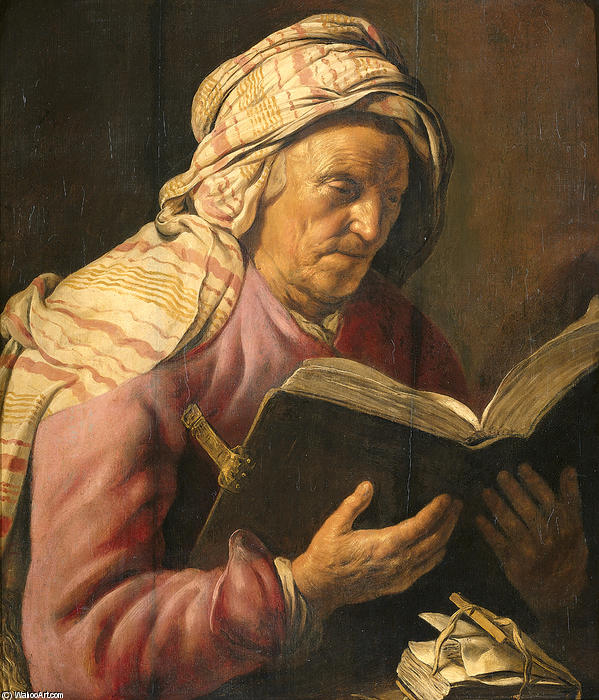
Old Woman Reading — Jan Lievens

Jan-Lievens-Reading-old-woman

Detail from The Mystical Nativity — Sandro Botticelli

b

“Merry Christmas” (Moby-Dick)

“Merry Christmas”

from Herman Melville’s Moby-Dick

At length, towards noon, upon the final dismissal of the ship’s riggers, and after the Pequod had been hauled out from the wharf, and after the ever-thoughtful Charity had come off in a whale-boat, with her last gift- a nightcap for Stubb, the second mate, her brother-in-law, and a spare Bible for the steward- after all this, the two Captains, Peleg and Bildad, issued from the cabin, and turning to the chief mate, Peleg said:

“Now, Mr. Starbuck, are you sure everything is right? Captain Ahab is all ready- just spoke to him- nothing more to be got from shore, eh? Well, call all hands, then. Muster ‘em aft here- blast ‘em!”

“No need of profane words, however great the hurry, Peleg,” said Bildad, “but away with thee, friend Starbuck, and do our bidding.”

How now! Here upon the very point of starting for the voyage, Captain Peleg and Captain Bildad were going it with a high hand on the quarter-deck, just as if they were to be joint-commanders at sea, as well as to all appearances in port. And, as for Captain Ahab, no sign of him was yet to be seen; only, they said he was in the cabin. But then, the idea was, that his presence was by no means necessary in getting the ship under weigh, and steering her well out to sea. Indeed, as that was not at all his proper business, but the pilot’s; and as he was not yet completely recovered- so they said- therefore, Captain Ahab stayed below. And all this seemed natural enough; especially as in the merchant service many captains never show themselves on deck for a considerable time after heaving up the anchor, but remain over the cabin table, having a farewell merry-making with their shore friends, before they quit the ship for good with the pilot.

But there was not much chance to think over the matter, for Captain Peleg was now all alive. He seemed to do most of the talking and commanding, and not Bildad.

“Aft here, ye sons of bachelors,” he cried, as the sailors lingered at the main-mast. “Mr. Starbuck, drive aft.”

“Strike the tent there!”- was the next order. As I hinted before, this whalebone marquee was never pitched except in port; and on board the Pequod, for thirty years, the order to strike the tent was well known to be the next thing to heaving up the anchor.

“Man the capstan! Blood and thunder!- jump!”- was the next command, and the crew sprang for the handspikes.

Now in getting under weigh, the station generally occupied by the pilot is the forward part of the ship. And here Bildad, who, with Peleg, be it known, in addition to his other officers, was one of the licensed pilots of the port- he being suspected to have got himself made a pilot in order to save the Nantucket pilot-fee to all the ships he was concerned in, for he never piloted any other craft- Bildad, I say, might now be seen actively engaged in looking over the bows for the approaching anchor, and at intervals singing what seemed a dismal stave of psalmody, to cheer the hands at the windlass, who roared forth some sort of chorus about the girls in Booble Alley, with hearty good will. Nevertheless, not three days previous, Bildad had told them that no profane songs would be allowed on board the Pequod, particularly in getting under weigh; and Charity, his sister, had placed a small choice copy of Watts in each seaman’s berth. Continue reading ““Merry Christmas” (Moby-Dick)”

Illustration to Milton’s On the Morning of Christ’s Nativity — William Blake

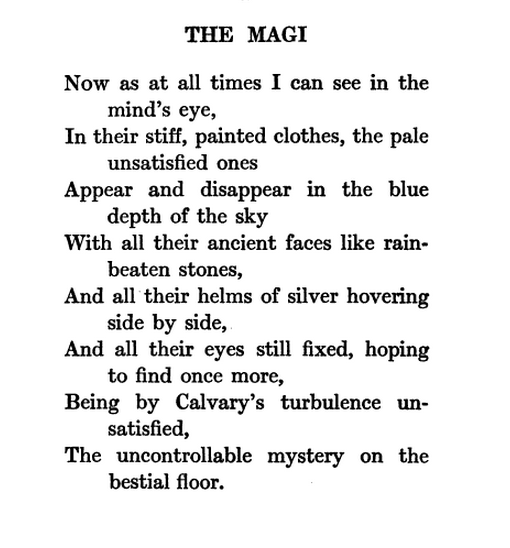
“The Magi” — William Butler Yeats

magi

Christmas Trio — Norman Rockwell