Hegel on Pooping from “The Philosophy of Nature”


The animal, because it behaves as actively different, in so doing becomes different within itself. In other words, because the animal is involved in a struggle with the outer world, its relation to the latter is untrue, since this outer world has already been transformed in principle (an sich) by the power of the animal lymph; the animal therefore in turning against this food, fails to recognize its own self. But the immediate result of this is simply that when the animal comes to itself and recognizes itself as this power, it is angry with itself for getting involved with external powers and it now turns against itself and its false opinion; but in doing so it throws off its outward-turned activity and returns into itself.


The dispossessed (From Richard Hofstadter’s essay “The Paranoid Style in American Politics”)

If, after our historically discontinuous examples of the paranoid style, we now take the long jump to the contemporary right wing, we find some rather important differences from the nineteenth-century movements. The spokesmen of those earlier movements felt that they stood for causes and personal types that were still in possession of their country—that they were fending off threats to a still established way of life. But the modern right wing…feels dispossessed: America has been largely taken away from them and their kind, though they are determined to try to repossess it and to prevent the final destructive act of subversion. The old American virtues have already been eaten away by cosmopolitans and intellectuals; the old competitive capitalism has been gradually undermined by socialistic and communistic schemers; the old national security and independence have been destroyed by treasonous plots, having as their most powerful agents not merely outsiders and foreigners as of old but major statesmen who are at the very centers of American power. Their predecessors had discovered conspiracies; the modern radical right finds conspiracy to be betrayal from on high.

From Richard Hofstadter’s 1964 essay “The Paranoid Style in American Politics.”

Retina

Bernard Sumner’s memoir, Chapter and Verse (Book acquired sometime in November of 2015)

IMG_0971

This afternoon, I finally got into Bernard Sumner’s memoir Chapter and Verse: New Order, Joy Division and Me. Actually, I obviously flicked through it when it showed up, looking at the glossy pictures, dabbling here and there (somehow read not one but two anecdotes about Seal (?)), and then reading the book’s first appendix, a transcript of a recording of Sumner’s hypnotizing Ian Curtis (excuse that mangled clause). The book has a U.S. Hardcover release from Thomas Dunne; their blurb:

Founding member and guitarist of Joy Division and the lead singer of New Order, Bernard Sumner has been famous over the years for his reticence. Until now . . .

An integral part of the Manchester, UK, music scene since the late 1970s, his is the definitive version of the events that created two of the most influential bands of all time.

Chapter and Verse includes a vivid and illuminating account of Bernard Sumner’s childhood, the early days of Joy Division, the band’s enormous critical and popular success, and the subsequent tragic death of Ian Curtis. Sumner describes the formation of New Order, takes us behind the scenes at the birth of classics such as “Blue Monday,” and gives his firsthand account of the ecstasy and the agony of the Haçienda days.

Sometimes moving, often hilarious, and occasionally completely out of control, this is a tale populated by some of the most colorful and creative characters in music history, such as Ian Curtis, Tony Wilson, Rob Gretton, and Martin Hannett. Others have told parts of the story, in film and book form. Now, for the first time, Bernard Sumner gives you chapter and verse.

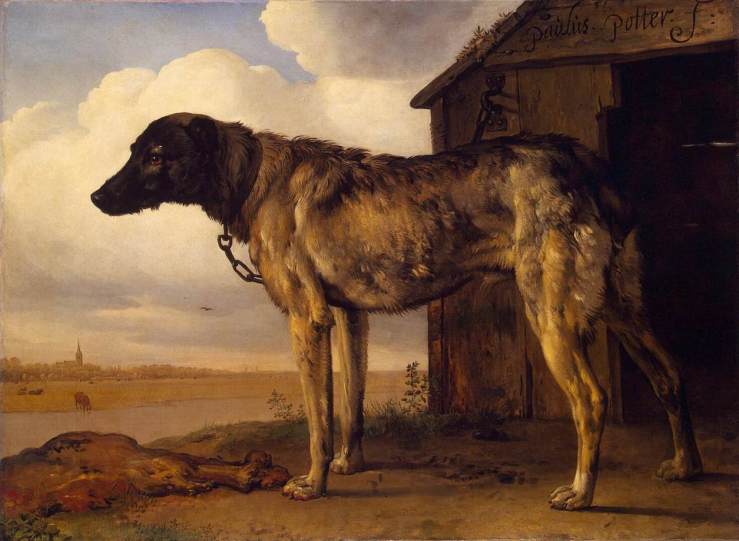
Wolf-Hound — Paulus Potter

wolfhoun.jpg

Around the Moon — Émile-Antoine Bayard and Alphonse de Neuville

tumblr_na6dmatLlu1rtynt1o1_1280.jpg

Three Books

IMG_0950

Speedboat by Renata Adler. 1988 trade paperback edition by Perennial Fiction Library (Harper & Row). No designer credited, but the cover illustration is by Steve Guarnaccia. A strange and funny (anti-)novel.

IMG_0953

The Uses of Literature by Italo Calvino (trans. Patrick Creagh). 1986 trade paperback by Harvest/HBJ. Design by Kaelin Chappell, with a cover illustration by Saul Steinberg. A book to never finish.


IMG_0951

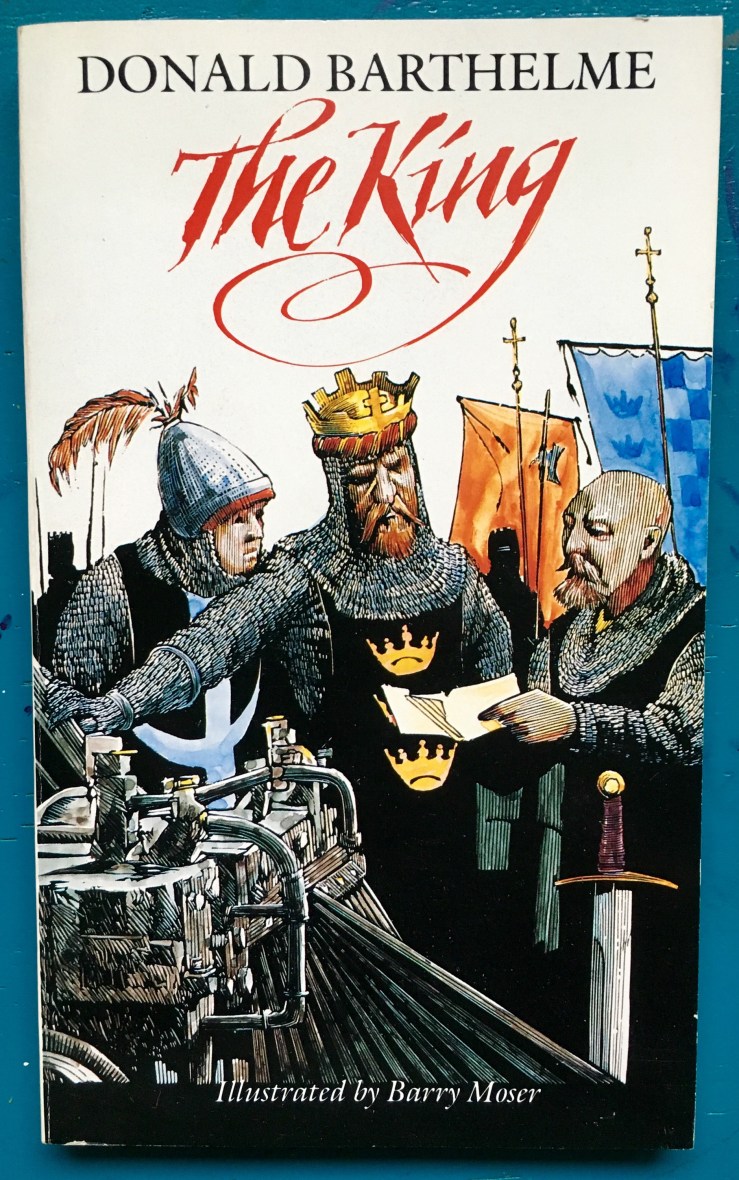
The King by Donald Barthelme. Features wood engravings by Barry Moser. 1990 trade paperback by Harper and Row. No designer credited, but surely Moser had a hand, no? This is the only Barthelme novel I haven’t read. Every time I pick it up I think, But then there will be no more. Fool. One can always reread.

The Temptation of St. Anthony — Lelio Orsi

10869701.jpg

Mariana in the Moated Grange — John Everett Millais

mariana-in-the-moated-grange-1851

You have to have an interest in the world to capture the sublime. I’m not interested in the world. (Gordon Lish)

Perpetual Motion — Rene Magritte

perpetual-motion-19351

On the Road with Robert Loggia (RIP)

Elegant bachelor

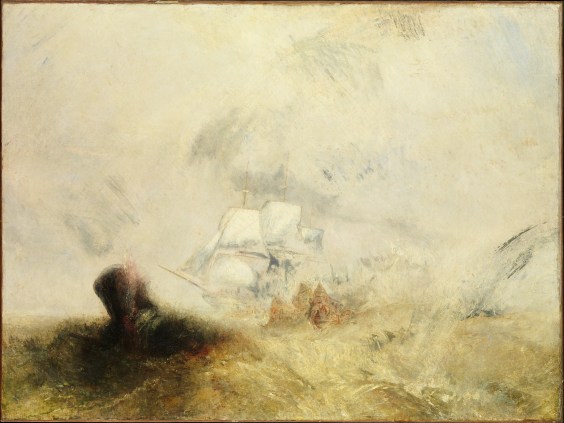
…it was here that Melville saw the work of JMW Turner

DP169567.jpg
Whalers, JMW Turner

It is clear from Melville’s journal, one of only two such surviving documents, that his mind was already playing with these ideas. Late at night, he “turned flukes” down Oxford Street as if he were being followed by a great whale, and thought he saw “blubber rooms” in the butcheries of the Fleet Market. And when he saw Queen Victoria riding past in a carriage, he joked that the young man sitting beside her was the Prince of Whales. London – which itself had only lately been a whaling port – was stirring up the ghosts of his past.

Perhaps most importantly, it was here that Melville saw the work of J M W Turner, a clear visual influence on his book-to-be. Turner had painted a series of whaling scenes for Elhanan Bicknell, whose British whaling company was based in the Elephant and Castle; parts of Moby-Dick would read like commentaries to those tempestuous, brutally poetic canvases, not least the painting that greets Ishmael at the Spouter-Inn, “a boggy, soggy, squitchy picture” of “a black mass . . . floating in a nameless yeast . . . an exasperated whale”. It is all the more intriguing to note how Melville’s Anglophilia was the yeast out of which this great American novel emerged – especially given that the book failed spectacularly in his homeland and it was left to British writers to recognise first its wilful, prophetic genius.

Read the rest of Philip Hoare’s essay “White Whale in the Big Smoke: How the Geography of London Inspired Moby-Dick” at the New Statesmen.