What the hell is Pynchon in Public Day?

image

Pynchon in Public Day is tomorrow, May 8th–that’s Pynchon’s birthday if you’re keeping score. (He’ll be 78 tomorrow. Last year I put together links for his auspicious 77th birthday).

For the past couple of years, I’ve seen the phrase Pynchon in Public pop up in my Twitter timeline, often as a hashtag. I had a (willfully) vague idea about what Pynchon in Public was all about–like, reading Pynchon publicly, posting the W.A.S.T.E. horn in public places, leaving books about. Making the secret sign. Etc.

But so and anyway: I’ve been reading or re-reading Pynchon more or less non-stop for the past two years, after diving for reasons I can’t recall into Against the Day, following that up with Mason & Dixon, and then going through The Crying of Lot 49 and Inherent Vice again. (In the deepest and most sincere spirit of my Pynchon-reading-experience, I abandoned Bleeding Edge twice during this time). I’m rereading Gravity’s Rainbow now after just having finished it (after years of false starts). Reading it again is like reading it for the first time, and as I progress (and sometimes retreat) through the Zone, I experience a sympathetic fragmentation, a scattering, a sense that the novel is consuming me. Another way of saying this is that Gravity’s Rainbow is a scary book, and all of Pynchon is scary in the sense that it’s all just one big book. It kinda sorta worms its way into the ear of one’s consciousness, wriggles (Ruggles?) behind the old brainpan, performs a paranoid song and dance routine. Other fun and games too.

Wait, what? Continue reading “What the hell is Pynchon in Public Day?”

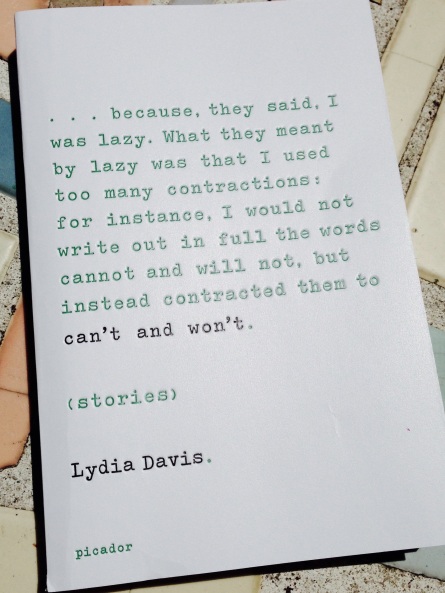
This is not a review of Lydia Davis’s Can’t and Won’t

This is the part of the not-review where I include a picture I took of the book to accompany the not-review:
image

This is the part of the not-review where I briefly restage Lydia Davis’s publishing history to provide some context for readers new to her work.

This is the part of the not-review where I submit that anyone already familiar with Lydia Davis’s short fiction is likely to already hold an opinion on it that won’t (but could) be changed by Can’t and Won’t.

This is the part of the not-review where I dither pointlessly over whether or not the stories in Can’t and Won’t are actually stories or something other than stories.

This is the part of the not-review where I state that I don’t care if the stories in Can’t and Won’t are actually stories or something other than stories.

This is the part of the not-review where I explain that I have found a certain precise aesthetic pleasure in most of Can’t and Won’t that radiates from the savory contradictory poles of identification and alienation.

This is the part of the not-review where I cite an example of identification with Davis’s narrator-persona-speaker:
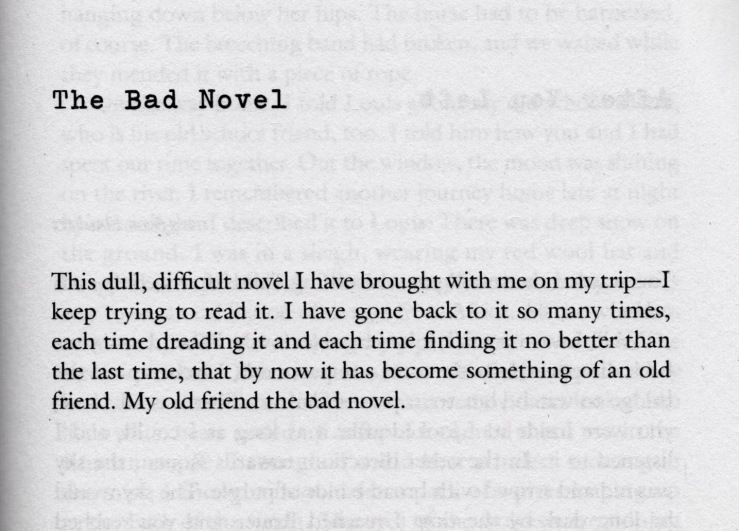
IMG_6074

This is the part of the not-review where I claim that I used scans of the text to preserve the look and feel of Lydia Davis’s prose on the page.

This is the part of the not-review where I say that some of my favorite moments in Can’t and Won’t are Davis’s expressions of frustrated boredom with literature (or do I mean publishing?), like in the longer piece “Not Interested.”

This is the part of the not-review where I point out that Davis’s speaker-narrator-persona expresses frustration with the act of writing itself:
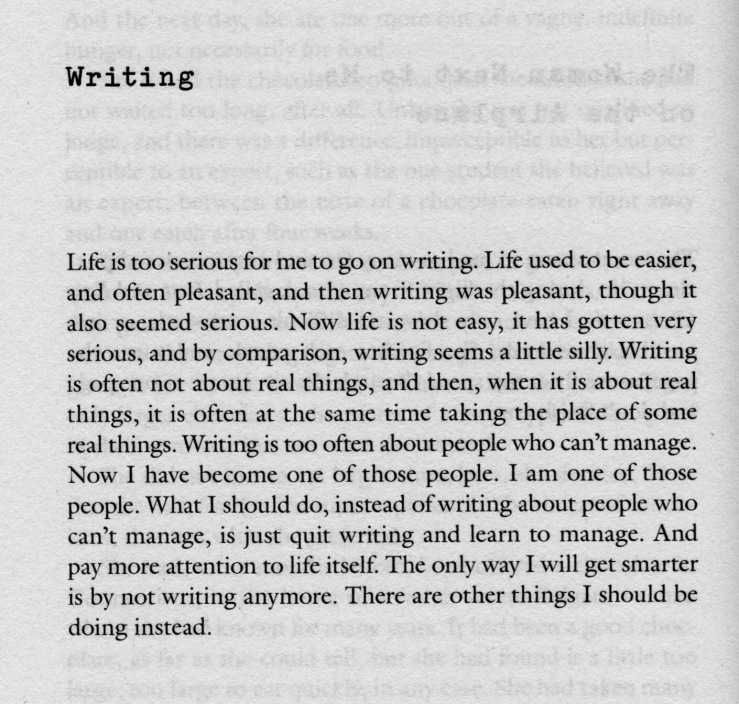
IMG_6072

This is the part of the not-review where I dither pointlessly over distinctions between Davis the author and Davis the persona-speaker-narrator.

This is the part of the not-review where I point out that (previous dithering and frustration-with-writing aside) writing itself is a major concern of Can’t and Won’t:
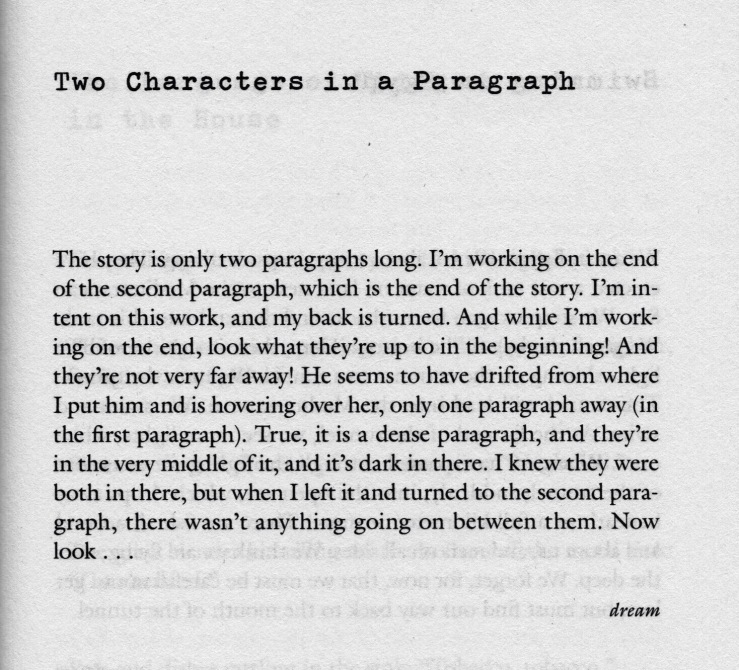
IMG_6070

This is the part of the not-review where I say that many of the stories in Can’t and Won’t are labeled dream, and I often found myself not really caring for these dreams (although I like the one above), but maybe I didn’t really care for the dreams because of their being tagged as dreams. (This is the part of the not-review where I point out that our eyes glaze over when anyone tells us their literal dreams).

This is the part of the not-review where I transition from stories tagged dream to stories tagged story from Flaubert, like this one:
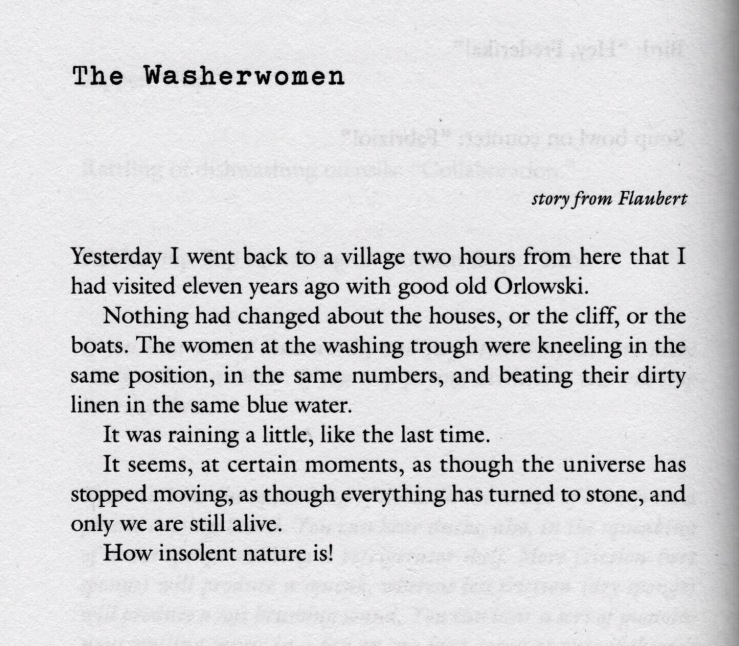
IMG_6076

This is the part of the not-review where I say how much I liked the stories from Flaubert stories in Can’t and Won’t.

This is the part of the not-review where I mention Davis’s translation work, but don’t admit that I didn’t make it past the first thirty pages of her Madame Bovary. 

This is the part of the not-review where I needlessly reference my review of The Collected Stories of Lydia Davis and point out that that collection is not so collected now.

This is the part of the not-review where I pointlessly dither over post-modernism, post-postmodernism, and Davis’s place in contemporary fiction. (This is the part of the not-review where I needlessly cram in the names of other authors, like Kafka and Walser and Bernhard and Markson and Adler and Miller &c.).

This is the part of the not-review where I claim that nothing I’ve written matters because Davis makes me laugh (this is also the part of the not-review where I use the adverb “ultimately,” a favorite crutch):
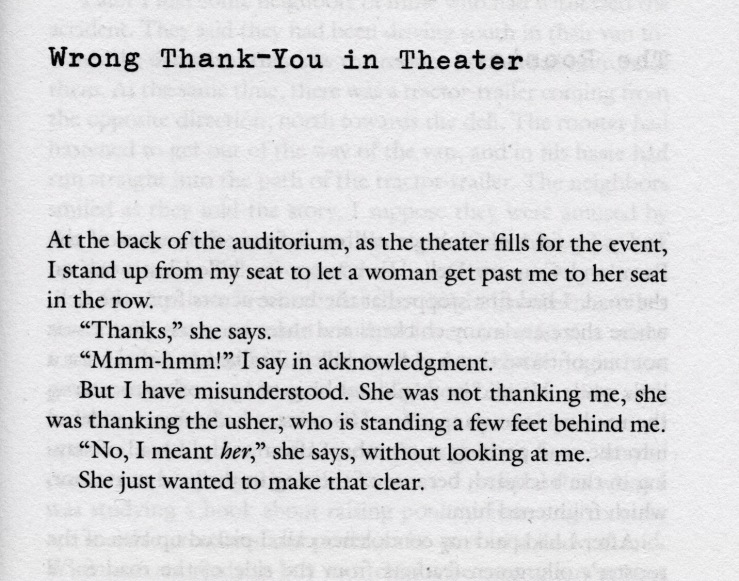
IMG_6077

This is the part of the not-review where I point out that Can’t and Won’t is not for everybody, but I very much enjoyed it.

This is the part of the not-review where I mention that the publisher is FS&G/Picador, and that the book is available in the usual formats.

The New Generation — Jan Toorop

The politics was all theatre, all just to keep the people distracted (Gravity’s Rainbow)

It means this War was never political at all, the politics was all theatre, all just to keep the people distracted… secretly, it was being dictated instead by the needs of technology… by a conspiracy between human beings and techniques, by something that needed the energy-burst of war, crying, “Money be damned, the very life of [insert name of Nation] is at stake,” but meaning, most likely, dawn is nearly here, I need my night’s blood, my funding, funding, ahh more, more… . The real crises were crises of allocation and priority, not among firms—it was only staged to look that way—but among the different Technologies, Plastics, Electronics, Aircraft, and their needs which are understood only by the ruling elite…

Yes but Technology only responds (how often this argument has been iterated, dogged and humorless as a Gaussian reduction, among the younger Schwarzkommando especially), “All very well to talk about having a monster by the tail, but do you think we’d’ve had the Rocket if someone, some specific somebody with a name and a penis hadn’t wanted to chuck a ton of Amatol 300 miles and blow up a block full of civilians? Go ahead, capitalize the T on technology, deify it if it’ll make you feel less responsible—but it puts you in with the neutered, brother, in with the eunuchs keeping the harem of our stolen Earth for the numb and joyless hardons of human sultans, human elite with no right at all to be where they are—”

We have to look for power sources here, and distribution networks we were never taught, routes of power our teachers never imagined, or were encouraged to avoid… we have to find meters whose scales are unknown in the world, draw our own schematics, getting feedback, making connections, reducing the error, trying to learn the real function… zeroing in on what incalculable plot? Up here, on the surface, coaltars, hydrogenation, synthesis were always phony, dummy functions to hide the real, the planetary mission yes perhaps centuries in the unrolling… this ruinous plant, waiting for its Kabbalists and new alchemists to discover the Key, teach the mysteries to others…

From page 521 of Thomas Pynchon’s novel Gravity’s Rainbow

“Population Explosion” — Archibald MacLeish

Screenshot 2015-05-07 at 8

Frida Kahlo’s painted body cast

9ee22765-9023-4452-8822-0f52b4417dd3-1357x2040

Via/more. About:

After her bus accident, Kahlo was in a full body cast for three months, and she remained in pain for the rest of her life. She painted her casts and corsets, turning them from medical equipment into artworks

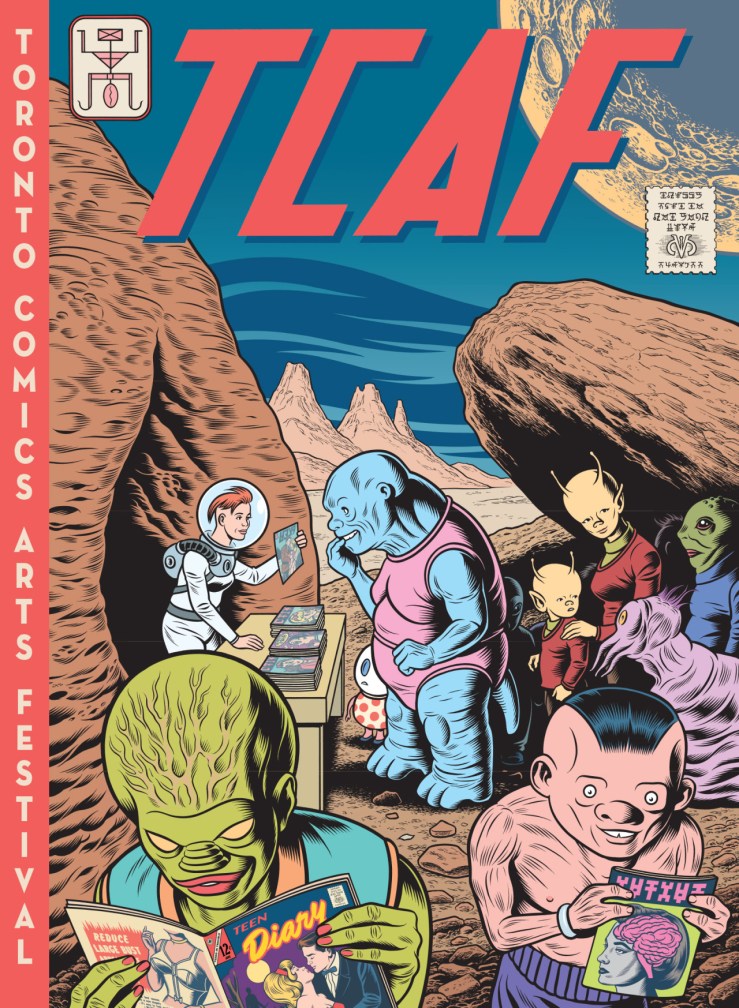
Charles Burns’s Toronto Comic Arts Festival Poster

tumblr_nkb79pJ4Ah1rp7p8xo1_1280

Orson Welles on making fun of Ernest Hemingway

“The Hunter Gracchus,” a short tale by Franz Kafka

“The Hunter Gracchus”

by

Franz Kafka

Two boys were sitting on the wall by the jetty playing dice. A man was reading a newspaper on the steps of a monument in the shadow of a hero wielding a sabre. A young girl was filling her tub with water at a fountain. A fruit seller was lying close to his produce and looking out to sea. Through the empty openings of the door and window of a bar two men could be seen drinking wine in the back. The landlord was sitting at a table in the front dozing. A small boat glided lightly into the small harbour, as if it were being carried over the water. A man in a blue jacket climbed out onto land and pulled the ropes through the rings. Behind the man from the boat, two other men in dark coats with silver buttons carried a bier, on which, under a large silk scarf with a floral pattern and fringe, a man was obviously lying.

No one bothered with the newcomers on the jetty, even when they set the bier down to wait for their helmsman, who was still working with the ropes. No one came up to them, no one asked them any questions, no one took a closer look at them.

The helmsman was further held up a little by a woman with disheveled hair, who now appeared on deck with a child at her breast. Then he came on, pointing to a yellowish two-story house which rose close by, directly on the left near the water. The bearers took up their load and carried it through the low door furnished with slender columns. A small boy opened a window, noticed immediately how the group was disappearing into the house, and quickly shut the window again. The door closed. It had been fashioned with care out of black oak wood. A flock of doves, which up to this point had been flying around the bell tower, came down in front of the house. The doves gathered before the door, as if their food was stored inside the house. One flew right up to the first floor and pecked at the window pane. They were brightly coloured, well cared for, lively animals. With a large sweep of her hand the woman on the boat threw some seeds towards them. They ate them up and then flew over to the woman. Continue reading ““The Hunter Gracchus,” a short tale by Franz Kafka”

Don’t Try This at Home (Book acquired, 4.30.2015)

IMG_6010

Angela Readman’s short story collection Don’t Try This at Home is new from And Other Stories. Their blurb:

A girl repeatedly chops her boyfriend in half but, while her ‘other half’ multiplies, she is still not satisfied. Love transforms a mother working down the chippie – into Elvis! An old witch takes in a young one and, despite her best, magical powers, can’t help revealing something of the real world to her apprentice. Beautiful, sharp and fearless, these stories breathe. Do Try This at Home.

In Angela Readman’s debut collection, each story packs its share of explosive material.  In every one, quirky new strategies for surviving troubled lives are revealed, often through a transformative touch of contemporary magic.

If Angela Carter were Readman’s fairy godmother, would that make David Lynch her wicked stepbrother? Don’t say you weren’t warned!


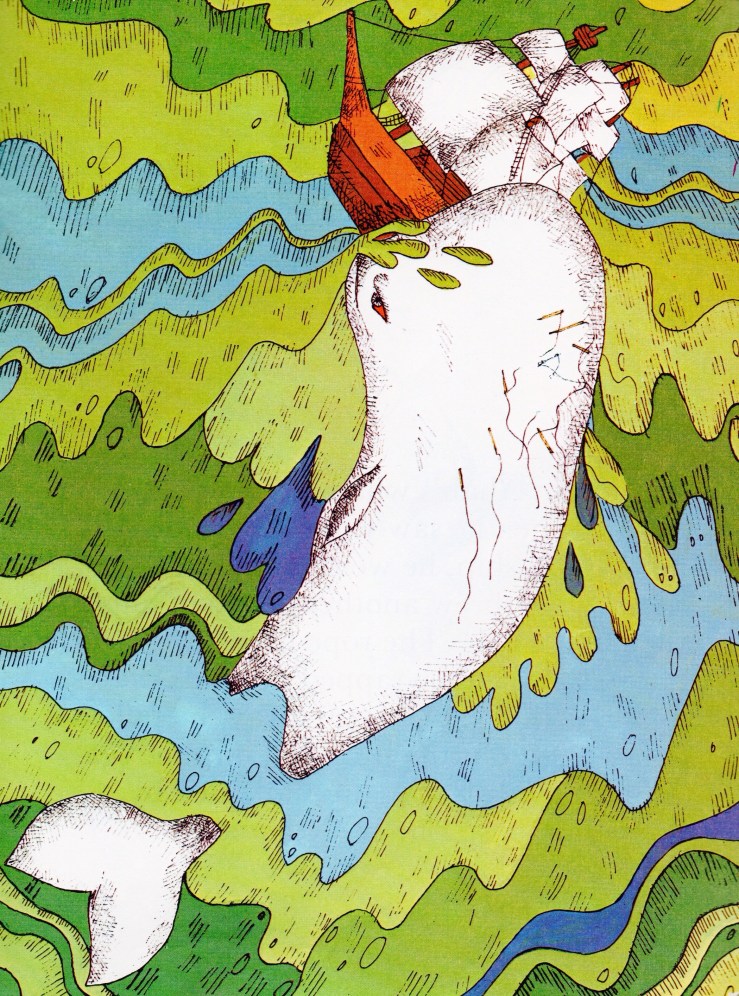
Moby Dick — Hieronimus Fromm

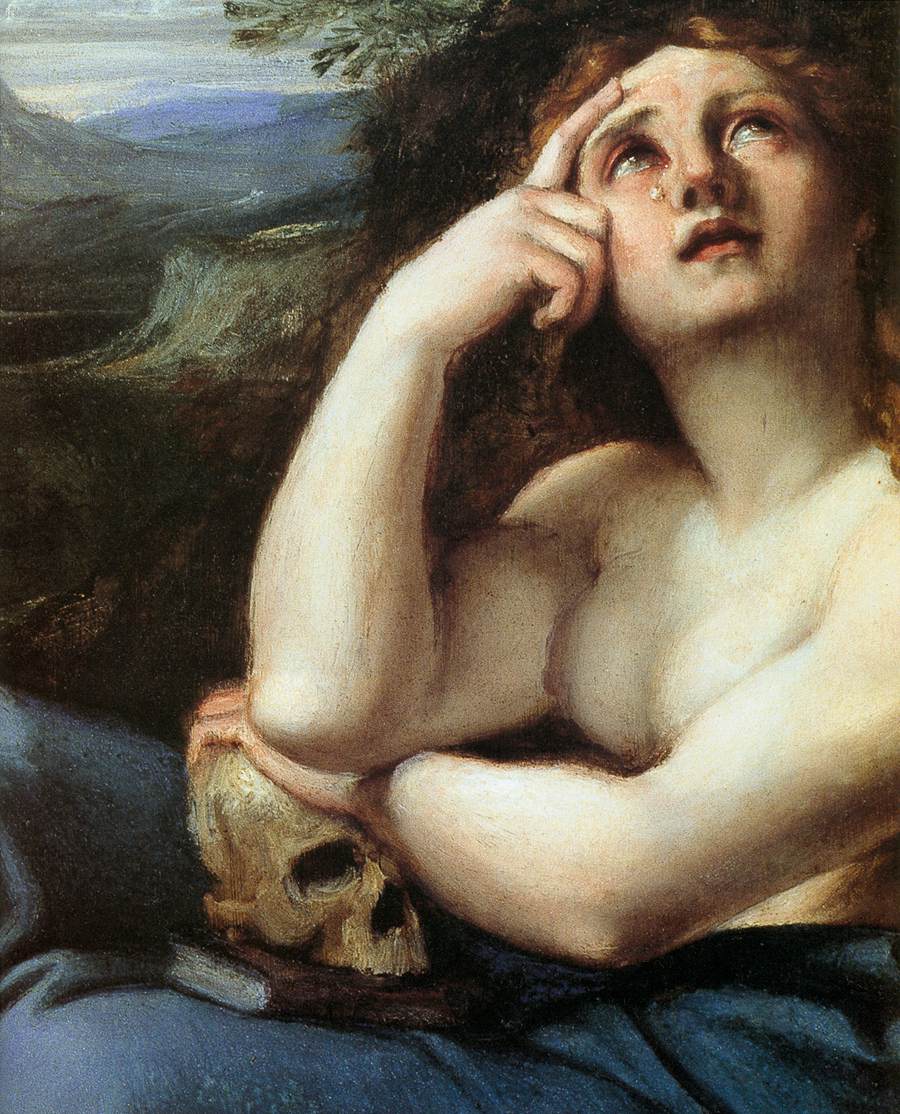
The Penitent Magdalen in a Landscape (Detail) — Annibale Carracci

agostinocarracci_thepenitentmagdaleninalandscape-detail

Orson Welles’ Sketch Book

Raconteur Orson Welles riffs on a number of subjects in these short commentaries, which originally aired on the BBC in 1955. Topics include earthquakes, curses, police work, negative reviews, Martians, magic, etc.

Tunnel — Winsor McCay

rarebit

“I think I could turn and live with animals” — Walt Whitman

Section 32 of Walt Whitman’s “Song of Myself”

***

I think I could turn and live with animals, they are so placid and self-contain’d;
I stand and look at them long and long.

They do not sweat and whine about their condition;
They do not lie awake in the dark and weep for their sins;
They do not make me sick discussing their duty to God;
Not one is dissatisfied—not one is demented with the mania of owning things;
Not one kneels to another, nor to his kind that lived thousands of years ago;
Not one is respectable or industrious over the whole earth.

So they show their relations to me, and I accept them;
They bring me tokens of myself—they evince them plainly in their possession.

I wonder where they get those tokens:
Did I pass that way huge times ago, and negligently drop them?
Myself moving forward then and now and forever,
Gathering and showing more always and with velocity,
Infinite and omnigenous, and the like of these among them;
Not too exclusive toward the reachers of my remembrancers;
Picking out here one that I love, and now go with him on brotherly terms.

A gigantic beauty of a stallion, fresh and responsive to my caresses,
Head high in the forehead, wide between the ears,
Limbs glossy and supple, tail dusting the ground,
Eyes full of sparkling wickedness—ears finely cut, flexibly moving.

His nostrils dilate, as my heels embrace him;
His well-built limbs tremble with pleasure, as we race around and return.

I but use you a moment, then I resign you, stallion;
Why do I need your paces, when I myself out-gallop them?
Even, as I stand or sit, passing faster than you.

Joseph Cornell — Duane Michals

9680Duane Michals