The Forever Watch (Book acquired some time in February, 2015)

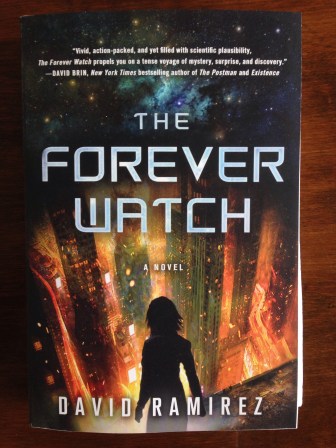
IMG_5281Can’t seem to keep up with the review copies lately.

David Ramirez’s The Forever Watch is new from St. Martin’s Griffin imprint. Their blurb:

An exciting new novel from a bold up-and-coming sci fi talent, The Forever Watchis so full of twists and surprises it’s impossible to put down.
All that is left of humanity is on a thousand-year journey to a new planet aboard one ship, The Noah, which is also carrying a dangerous serial killer…
As a City Planner on the Noah, Hana Dempsey is a gifted psychic, economist, hacker and bureaucrat and is considered “mission critical.” She is non-replaceable, important, essential, but after serving her mandatory Breeding Duty, the impregnation and birthing that all women are obligated to undergo, her life loses purpose as she privately mourns the child she will never be permitted to know.
When Policeman Leonard Barrens enlists her and her hacking skills in the unofficial investigation of his mentor’s violent death, Dempsey finds herself increasingly captivated by both the case and Barrens himself. According to Information Security, the missing man has simply “Retired,” nothing unusual. Together they follow the trail left by the mutilated remains. Their investigation takes them through lost dataspaces and deep into the uninhabited regions of the ship, where they discover that the answer may not be as simple as a serial killer after all.

What they do with that answer will determine the fate of all humanity in David Ramirez’s thrilling page turner.

A Perfect Vacuum — Jeremy Geddes

Jeremy-Geddes-Levine-Exhale-AM-1-1

Art is jealous (Van Gogh)

I know it is late, but I really must write you a few lines. You are not here and I miss you, though I feel as if we were not so very far from each other.

I have just decided to pay no further heed to my indisposition, or rather to all that is left of it. Enough time has been lost and I must not neglect my work. Therefore, whether I am well or not, I shall again draw regularly from morn till night. I do not want anybody to be able again to say of my work: “Ah, those are all old drawings!”

…In my opinion my hands have grown too delicate; but what can I do? I shall go out again, even if it cost me a good deal; for my chief concern is that I should not neglect my work any longer. Art is jealous; she will not allow illness to take precedence of her. And I give in to her.

…Men like myself really have no right to be ill. But you must understand what my attitude is to Art. In order to attain to real Art one must work both hard and long. The thing I have set my mind upon as the goal of all my efforts is devilish difficult, and yet I do not think that I am aiming too high. I will make drawings that will amaze some people.

In short I will bring it to such a pitch, that they will say of my work: “The man feels deeply and he is subtle withal”; in spite of my so-called coarseness, do you understand? maybe precisely on that account. At present it sounds presumptuous to speak in this way; but it is for this very reason that I wish to put vigour into my work.

For what am I in the eyes of most people? A nonentity, or an oddity, or a disagreeable man, some one who neither has nor ever will have any place in society—in short something less than the least.

Well, granting that this is so, I should like to show by my work what the heart of such a nonentity, of such an insignificant man, conceals.

This is my ambition which for all that is the outcome more of love than of resentment, more of a feeling of peaceful serenity than of passion. And even though I often have to contend with all kinds of difficulties, yet I feel within me a calm, pure harmony and music.

Art requires resolute and unremitting industry, as well as incessant observation. By resolute industry I mean, in the first place, constant industry, as also the power of maintaining one’s own point of view against the assertions of others.

Latterly I have had precious little intercourse with other painters and have not felt any the worse for it. One should not pay so much heed to the teaching of painters as to the teaching of Nature. I can understand better now than I did six months ago that Mauve should have been able to say: “Do not speak to me about Dupré; speak to me rather about the edge of your ditch, or things of that sort.” It certainly sounds strange, but it is absolutely right. A feeling for things in themselves, for reality, is much more important than a sense of the pictorial. It is more fruitful and animating.

In regard to the difference between ancient and modern Art, I should like to say that I think modern painters are perhaps greater thinkers.

Rembrandt and Ruysdael seem to us great and sublime, just as they did to their contemporaries; but there is something more personal and more intimate in the modern painter, which makes a stronger appeal to us.

I made another study of the little child’s cradle to-day, and have put in colour here and there. I trust I may yet be able to draw the little cradle a hundred times over resolutely.
From a letter Vincent van Gogh wrote to his brother. Translated by Anthony Ludovici and collected in The Letters of a Post-Impressionist, Being the Familiar Correspondence of Vincent Van Gogh.

Study of Helen — Gustave Moreau

The Mother Conspiracy (Gravity’s Rainbow)

Otto is earnestly explaining his views on the Mother Conspiracy. It’s not often a sympathetic girl will listen. The Mothers get together once a year, in secret, at these giant conventions, and exchange information. Recipes, games, key phrases to use on their children. “What did yours use to say when she wanted to make you feel guilty?”

“‘I’ve worked my fingers to the bone!’” sez the girl.

“Right! And she used to cook those horrible casseroles, w-with the potatoes, and onions—”

“And ham! Little pieces of ham—”

“You see, you see? That can’t be accidental! They have a contest, for Mother of the Year, breast-feeding, diaper-changing, they time them, casserole competitions, ja—then, toward the end, they actually begin to use the children. The State Prosecutor comes out on stage. ‘In a moment, Albrecht, we are going to bring your mother on. Here is a Luger, fully loaded. The State will guarantee you absolute immunity from prosecution. Do whatever you wish to do—anything at all. Good luck, my boy.’ The pistols are loaded with blanks, natürlich, but the unfortunate child does not know this. Only the mothers who get shot at qualify for the finals.

Here they bring in psychiatrists, and judges sit with stopwatches to see how quickly the children will crack. ‘Now then, Olga, wasn’t it nice of Mutti to break up your affair with that long-haired poet?’ ‘We understand your mother and you are, ah, quite close, Hermann. Remember the time she caught you masturbating into her glove? Eh?’ Hospital attendants stand by to drag the children off, drooling, screaming, having clonic convulsions. Finally there is only one Mother left on stage. They put the traditional flowered hat on her head, and hand her the orb and scepter, which in this case are a gilded pot roast and a whip, and the orchestra plays Tristan und Isolde.

From Thomas Pynchon’s novel Gravity’s Rainbow.

Christ’s Entry into Jerusalem – Stanley Spencer

A Conversation about Evan Dara’s Novel Flee (Part 2)

IMG_5657

[Context/editorial note: I’d been meaning to read Evan Dara’s latest novel Flee for a while, and when Biblioklept contributor Ryan Chang told me he’d be reading it as part of a contemporary literature class I decided to join him. This is the second part of a two-part discussion which took place over a few weeks of emails. We discuss the book’s conclusion, including what some people might think of as “spoilers.”

Read part one of our discussion of  Flee.

The tl;dr version of all of this: Both Ryan and I loved Flee, a 2013 novel about the citizens of a New England town who, uh, flee, for reasons never made entirely clear I claim that “Flee is maybe the best novel (so far, anyway) to aesthetically and philosophically address the economic collapse of ’08.” Ryan called it a book “for people who like books to fuck with them and then be their friend.” And I agree with him. — ET]

Ryan Chang: Right–Flee doesn’t prescribe a future, or at least an alternative future. “841” testifies to this. The A-burgian upstakers are no different from the new settlers, rejoicing in the bargains to be had in the town. Carol and Marcus quietly disappear (Spoiler alert). Flee is overall hesitant to prescribe, I think. In my previous e-mail, I was thinking out loud a bit, trying to see if something in the book was pointing to these spaces of the “nonidentical” as Adorno calls it; that Flee as an aesthetic object figures, in exactly what isn’t said, the suffocating presence that squeezes the life out of A-burg, could figure a moment of possibility in absence. Some kind of fracture that, even if it is a failure (as A-burg is, I think), is a temporary moment of reprieve from the administered life.

I’m not sure what the forms of Kimball’s “radical forgiveness” and “hospitality” would be, if he points to them — especially of the former. And is it only that the literary artists get to have all the fun of democracy? Exactly where does democratic critique happen off the page? I’m wondering because it seems that the form of popular critique — save from public protest and other distortions of space — are infected with exploitative capital, with ideology, unwittingly going along with the system that saves the banks before humanity. Additionally: to whom–or what–is forgiveness granted? Hospitality seems more tangible to me, but the phrases Yes? Who’s There? imply exclusion rather than inclusion to me. As if at the door of democracy, the speaker hesitates. Should not a radical affirmation continually say yes rather than no at the door? The questioning yes is skeptical. I wonder if a self-consciousness and -becoming out of administration is required. The molectular make-up of the present absence that suffocates A-Burg and, implicitly, whatever other small town, would have to be transposed, if you like, into another key. To mention Lerner again (briefly) — do you remember that scene in the book, with the first hurricane, the (eventually fictional) threat of Irene destroying the infrastructure as a moment when disparate communities — who would otherwise keep to themselves, much like the voices in Flee — begin convening? That was just a way of getting to the epigraph of the book: “Everything will be as it is now, just a little different.” Continue reading “A Conversation about Evan Dara’s Novel Flee (Part 2)”

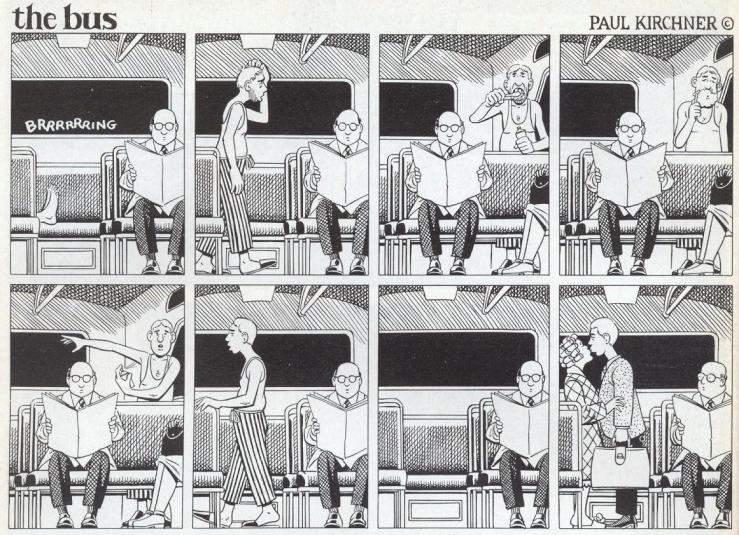
The Bus — Paul Kirchner

jMsHjMt - Imgur

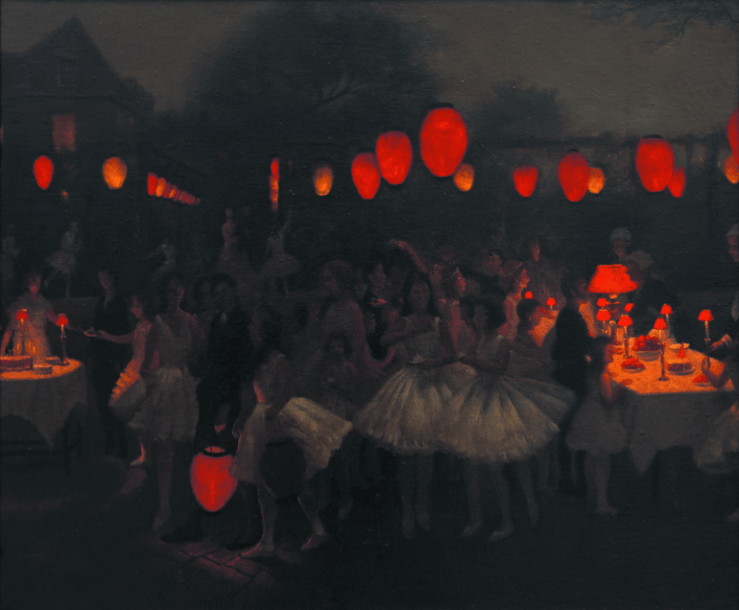
Study for The Birthday Party — Thomas Cooper Gotch

tumblr_nljtacnDMv1u4v8alo1_1280

“All art constantly aspires towards the condition of music”

Saint Jerome Reading a Letter – Georges de la Tour

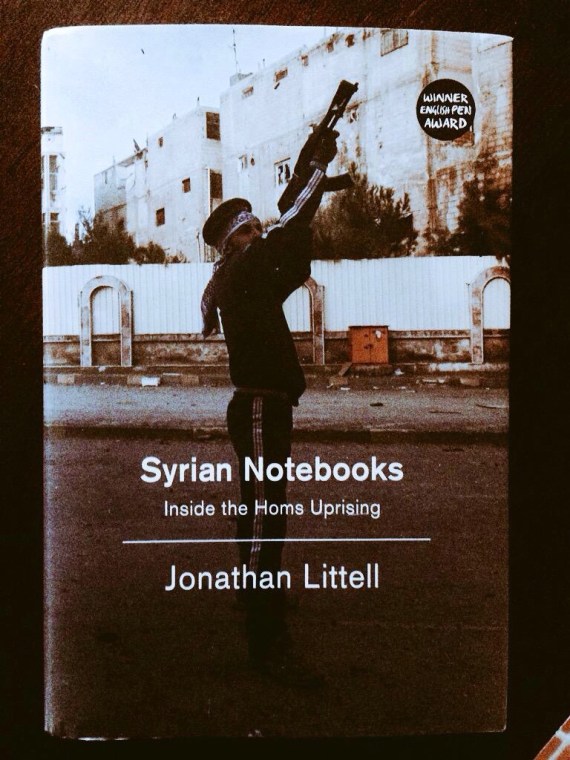
Jonathan Littell’s Syrian Notebooks (Book acquired, 3.23.2015)

Jonathan Littell’s Syrian Notebooks is new in English translation (by Charlotte Mandell) from indie Verso. This one seems like a big departure from The Kindly Ones (which, uh, it should be), which I loved hating that I loved. Verso’s blurb:

A blistering firsthand account of the conflict in Homs by the internationally acclaimed author of The Kindly Ones
“We fight for our religion, for our women, for our land, and lastly to save our skin. As for them, they’re only fighting to save their skin.”

In 2012, Jonathan Littell traveled to the heart of the Syrian uprising, smuggled in by the Free Syrian Army to the historic city of Homs. For three weeks, he watched as neighborhoods were bombed and innocent civilians murdered. His notes on what he saw on the ground speak directly of horrors that continue today in the ongoing civil war.

Amid the chaos, Littell bears witness to the lives and the hopes of freedom fighters, of families caught within the conflict, as well as of the doctors who attempt to save both innocents and combatants who come under fire. As government forces encircle the city, Littell charts the first stirrings of the fundamentalist movement that would soon hijack the revolution.

Littell’s notebooks were originally the raw material for the articles he wrote upon his return for the French daily Le Monde. Published nearly immediately afterward in France, Syrian Notebooks has come to form an incomparable close-up account of a war that still grips the Middle East—a classic of war reportage.


Read “The Dreadful Mucamas” by Lydia Davis

“The Dreadful Mucamas”

by

Lydia Davis

They are very rigid, stubborn women from Bolivia. They resist and sabotage whenever possible.

They came with the apartment. They were bargains because of Adela’s low IQ. She is a scatterbrain.

In the beginning, I said to them: I’m very happy that you can stay, and I am sure that we will get along very well.

This is an example of the problems we are having. It is a typical incident that has just taken place. I needed to cut a piece of thread and could not find my six-inch scissors. I accosted Adela and told her I could not find my scissors. She protested that she had not seen them. I went with her to the kitchen and asked Luisa if she would cut my thread. She asked me why I did not simply bite it off. I said I could not thread my needle if I bit it off. I asked her please to get some scissors and cut it off – now. She told Adela to look for the scissors of la Señora Brodie, and I followed her to the study to see where they were kept. She removed them from a box. At the same time I saw a long, untidy piece of twine attached to the box and asked her why she did not trim off the frayed end while she had the scissors. She shouted that it was impossible. The twine might be needed to tie up the box some time. I admit that I laughed. Then I took the scissors from her and cut it off myself. Adela shrieked. Her mother appeared behind her. I laughed again and now they both shrieked. Then they were quiet. Continue reading “Read “The Dreadful Mucamas” by Lydia Davis”

The Deer Milker — Toyohara Chikanobu

Anti-paranoia (Gravity’s Rainbow)

Rain drips, soaking into the floor, and Slothrop perceives that he is losing his mind. If there is something comforting—religious, if you want—about paranoia, there is still also anti-paranoia, where nothing is connected to anything, a condition not many of us can bear for long. Well right now Slothrop feels himself sliding onto the anti-paranoid part of his cycle, feels the whole city around him going back roofless, vulnerable, uncentered as he is, and only pasteboard images now of the Listening Enemy left between him and the wet sky.

Either They have put him here for a reason, or he’s just here. He isn’t sure that he wouldn’t, actually, rather have that reason…

From Thomas Pynchon’s novel Gravity’s Rainbow. The “pasteboard images” line recalls a favorite passage of Moby-Dick.

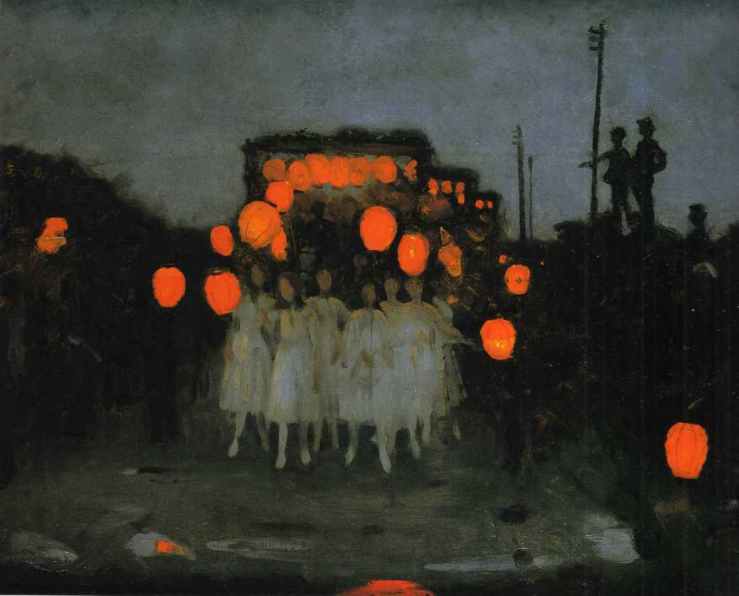
The Lantern Parade — Thomas Cooper Gotch

thomascoopergotchthelanternparade1

1000 Years of Popular Music — Richard Thompson (Film)