Crows visited us | Nathaniel Hawthorne’s journal entry for April 25, 1843

April 25th. Spring is advancing, sometimes with sunny days, and sometimes, as is the case now, with chill, moist, sullen ones. There is an influence in the season that makes it almost impossible for me to bring my mind down to literary employment; perhaps because several months’ pretty constant work has exhausted that species of energy,–perhaps because in spring it is more natural to labor actively than to think. But my impulse now is to be idle altogether,–to lie in the sun, or wander about and look at the revival of Nature from her death-like slumber, or to be borne down the current of the river in my boat. If I had wings, I would gladly fly; yet would prefer to be wafted along by a breeze, sometimes alighting on a patch of green grass, then gently whirled away to a still sunnier spot. . . . Oh, how blest should I be were there nothing to do! Then I would watch every inch and hair’s-breadth of the progress of the season; and not a leaf should put itself forth, in the vicinity of our old mansion, without my noting it. But now, with the burden of a continual task upon me, I have not freedom of mind to make such observations. I merely see what is going on in a very general way. The snow, which, two or three weeks ago, covered hill and valley, is now diminished to one or two solitary specks in the visible landscape; though doubtless there are still heaps of it in the shady places in the woods. There have been no violent rains to carry it off: it has diminished gradually, inch by inch, and day after day; and I observed, along the roadside, that the green blades of grass had sometimes sprouted on the very edge of the snowdrift the moment that the earth was uncovered.

The pastures and grass-fields have not yet a general effect of green; nor have they that cheerless brown tint which they wear in later autumn, when vegetation has entirely ceased. There is now a suspicion of verdure,–the faint shadow of it,–but not the warm reality. Sometimes, in a happy exposure,–there is one such tract across the river, the carefully cultivated mowing-field, in front of an old red homestead,–such patches of land wear a beautiful and tender green, which no other season will equal; because, let the grass be green as it may hereafter, it will not be so set off by surrounding barrenness. The trees in our orchard, and elsewhere, have as yet no leaves; yet to the most careless eye they appear full of life and vegetable blood. It seems as if, by one magic touch, they might instantaneously put forth all their foliage, and the wind, which now sighs through their naked branches, might all at once find itself impeded by innumerable leaves. This sudden development would be scarcely more wonderful than the gleam of verdure which often brightens, in a moment, as it were, along the slope of a bank or roadside. It is like a gleam of sunlight. Just now it was brown, like the rest of the scenery: look again, and there is an apparition of green grass. The Spring, no doubt, comes onward with fleeter footsteps, because Winter has lingered so long that, at best, she can hardly retrieve half the allotted term of her reign.

The river, this season, has encroached farther on the land than it has been known to do for twenty years past. It has formed along its course a succession of lakes, with a current through the midst. My boat has lain at the bottom of the orchard, in very convenient proximity to the house. It has borne me over stone fences; and, a few days ago, Ellery Channing and I passed through two rails into the great northern road, along which we paddled for some distance. The trees have a singular appearance in the midst of waters. The curtailment of their trunks quite destroys the proportions of the whole tree; and we become conscious of a regularity and propriety in the forms of Nature, by the effect of this abbreviation. The waters are now subsiding, but gradually. Islands become annexed to the mainland, and other islands emerge from the flood, and will soon, likewise, be connected with the continent. We have seen on a small scale the process of the deluge, and can now witness that of the reappearance of the earth.

Crows visited us long before the snow was off. They seem mostly to have departed now, or else to have betaken themselves to remote depths of the woods, which they haunt all summer long. Ducks came in great numbers, and many sportsmen went in pursuit of them along the river; but they also have disappeared. Gulls come up from seaward, and soar high overhead, flapping their broad wings in the upper sunshine. They are among the most picturesque birds that I am acquainted with; indeed, quite the most so, because the manner of their flight makes them almost stationary parts of the landscape. The imagination has time to rest upon them; they have not flitted away in a moment. You go up among the clouds, and lay hold of these soaring gulls, and repose with them upon the sustaining atmosphere. The smaller birds, –the birds that build their nests in our trees, and sing for us at morning-red,–I will not describe.. . But I must mention the great companies of blackbirds–more than the famous “four-and-twenty” who were baked in a pie–that congregate on the tops of contiguous trees, and vociferate with all the clamor of a turbulent political meeting. Politics must certainly be the subject of such a tumultuous debate; but still there is a melody in each individual utterance, and a harmony in the general effect. Mr. Thoreau tells me that these noisy assemblages consist of three different species of blackbirds; but I forget the other two. Robins have been long among us, and swallows have more recently arrived.

Nathaniel Hawthorne’s journal entry for April 25, 1843. From Passages from the American Note-Books.

Untitled — William Eggleston

24-eggleston_womenonsofa

Three (Purple) Books

img_2050

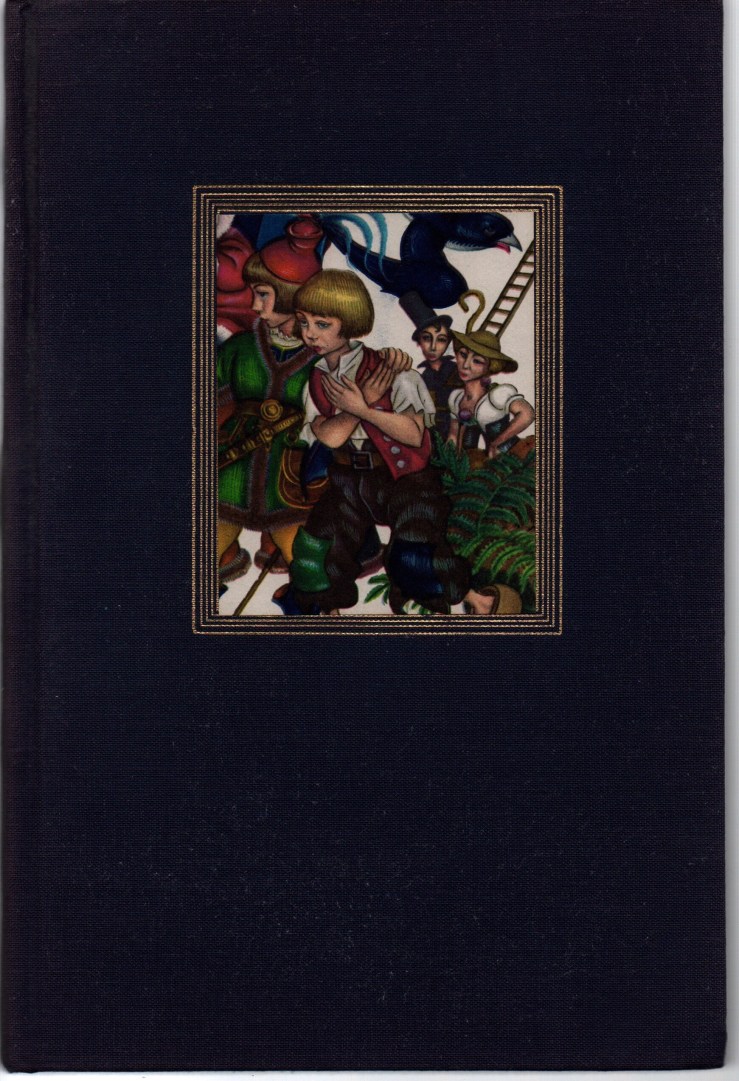
Andersen’s Fairy Tales translated by E.V. Lucas and H.B. Paull. Illustrations by Arthur Syzk. First edition cloth-bound hardback by Grosset & Dunlop, 1945. No designer credited, but the cover illustration is by Syzk. This was a gift from a former student.

img_2051

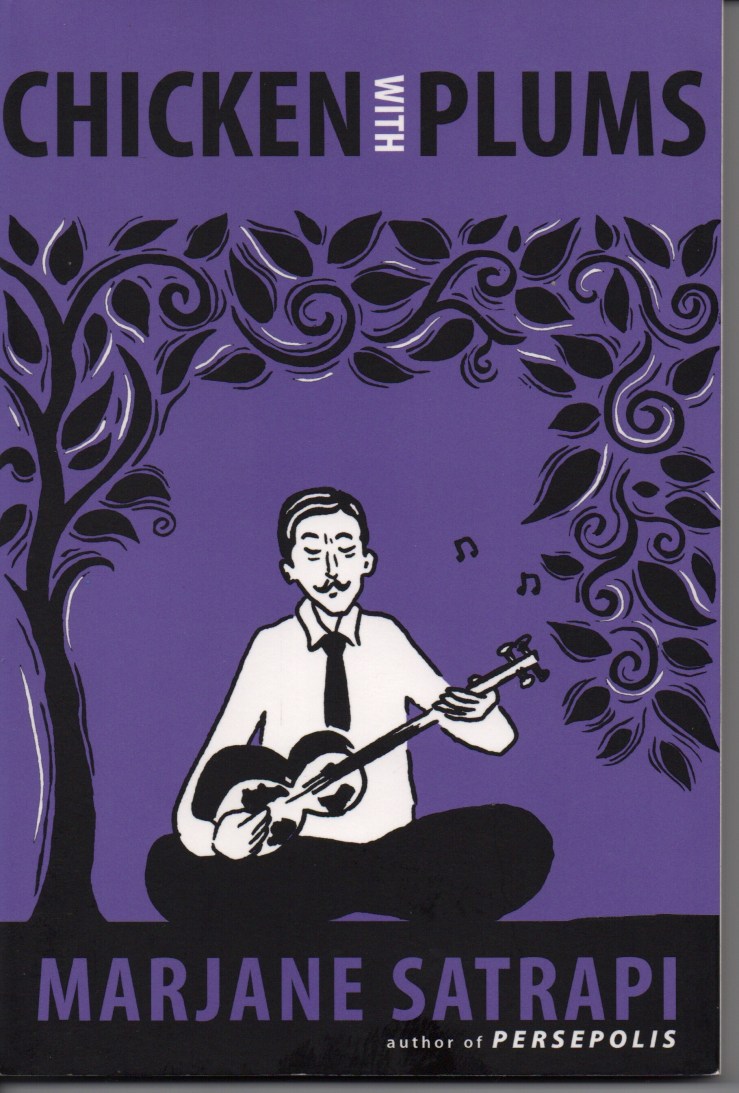
Chicken with Plums by Marjane Satrapi. English translation by Anjali Singh. First Pantheon paperback printing, 2009. Cover image by Satrapi; cover design credited to Brian Barth. I reviewed Plums some years back.

img_2052

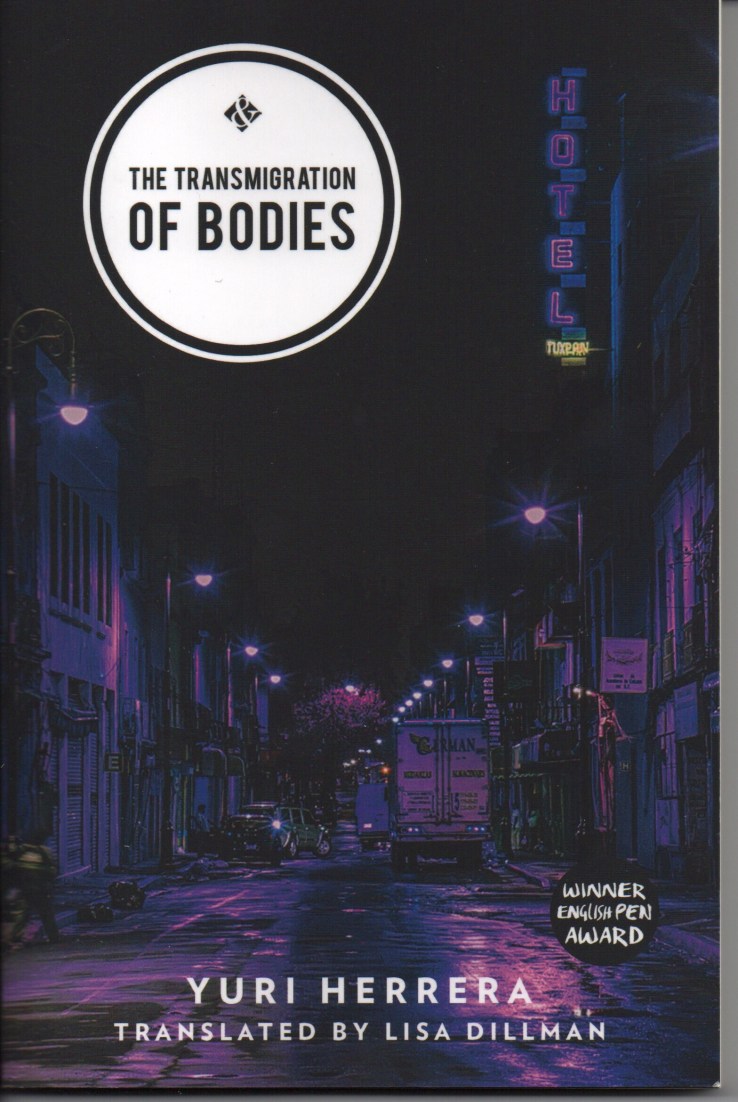
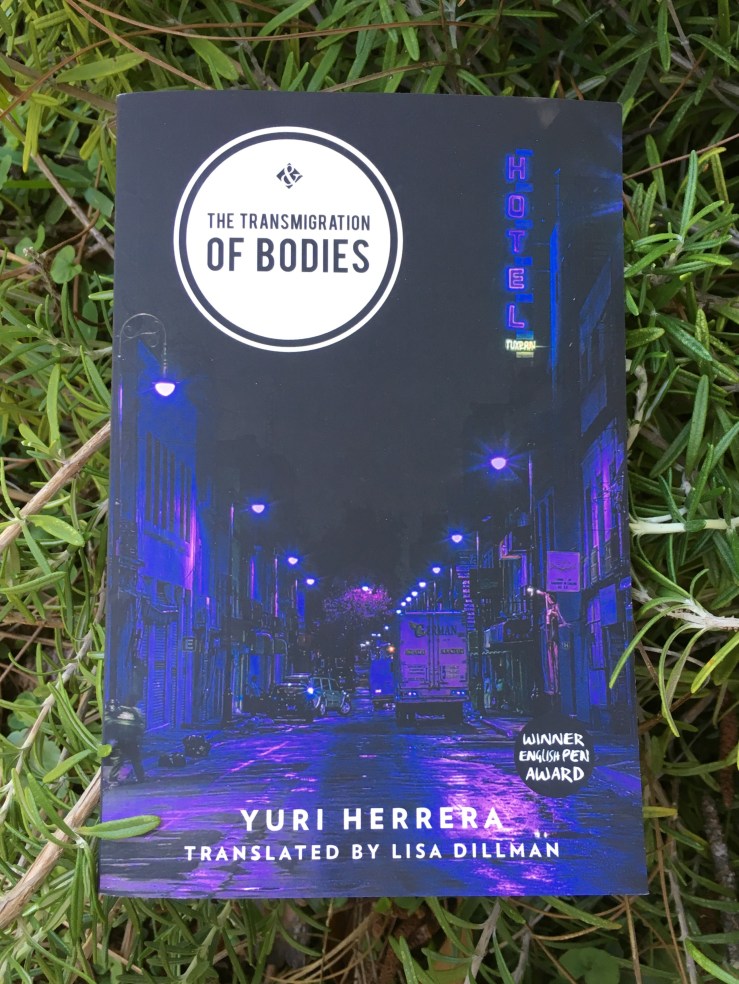
The Transmigration of Bodies by Yuri Herrera. English translation by Lisa Dillman. 2016 paperback by And Other Stories. Cover design by Hannah Naughton from an image credited to iivangm. I wrote a bit about Bodies here; full review next month closer to its publish date.

I finished Herrera’s novella The Transmigration of Bodies a few days before Prince died. The book’s neon purple cover seemed to glare at me from my coffee table when I returned home on the afternoon of April 21, 2016, stunned—yes, stunned is the right word—at learning of the death of one of my heroes. Not just stunned—but stunned at how stunned I was, how sad I felt, how awful and sick Prince’s unexpected, uncalled for, fucking cosmically unjust death was and is. —Wait, I didn’t sign on for this, you protest, eh, dear reader? —No, I didn’t ask for another remembrance or whatever this is, especially not from some blog dude who never knew the guy; look, Biblioklept, the internet’s seams are burstin’ with other, more interesting folks’ thoughts and memories on Prince, you don’t need to—Well I know but I need to. I loved Prince—I loved his music, sure, 1999 and Purple Rain in particular, every song of those records grooved into my mental ear, I can call them up at will—but I loved Prince as an artist, as the Artist, as an aesthetic—which is what I think we, the Big We, all mourn when we mourn Prince. I could go through litany of personal anecdotes about Prince—tell you in detail about first seeing the video for “When Doves Cry” as a child and just totally losing my shit; I could tell you about buying the Batman soundtrack on tape (one of my first album purchases); I could tell you about the summer and fall of 1991, when I was an impressionable twelve years strong, when MTV dared to air Prince’s video for “Gett Off”—I could tell you about how that video accelerated my puberty (I see you plug your ears, reader); I could tell you about discovering that Prince and I shared the same birthday (we are Gemini!) and I could tell you that I always thought about Prince on our birthday, even after I learned that he didn’t celebrate his birthday; I could tell you that my high school band made an album and we named it Prince (it sounded nothing like Prince; nothing sounded like Prince); I could tell you about the year 1999, when I was a junior in college, and how we wore the apocalyptic vinyl thin; I could tell you about djing at a small coffee shop and playing “I Would Die 4 U” five times in one night because I fucking love that song; I could tell you about pulling over the car, late at night, to cry while I listened to “Purple Rain”; I could tell you about dancing to Prince songs at my wedding, at other weddings; I could tell you about how sad I now feel that I never got to go to a Prince concert but how happy I am that I got to see a few on TV, got to see him play and dance and sing; I could tell you I could tell you I could tell you…but I won’t tell you. Maybe you know—maybe you have your own details, your own I could tell yous (forgive me my rhetorical conceits; sometimes it seems that they are all that licenses me to write)—I think you know, I think you have your own I could tell yous. Prince was a fucking genius and he shared that with us (sometimes he shared his genius with us by withholding it from us). Prince was his own genre, his own aesthetic, his own art. How wonderful to have lived on the planet at the same time that he did.

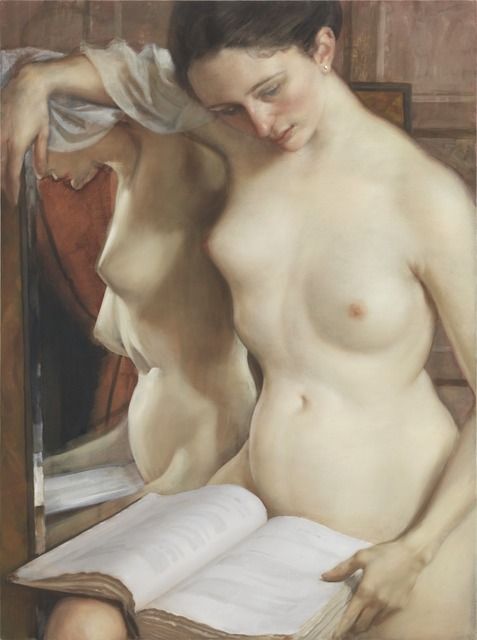
The Reader — John Currin

large

List with no name #56

  1. King Lear
  2. Henry IV, Part I/II
  3. The Tempest
  4. Othello
  5. A Midsummer Night’s Dream
  6. Hamlet
  7. Antony and Cleopatra
  8. Twelfth Night
  9. Much Ado about Nothing
  10. Macbeth

The Annunciation (Detail) — Jan van Eyck

annunc5

Our irreceptivity to a certain light (E.M. Cioran)

img_2047

From Anathemas and Admirations. Translated by Richard Howard.

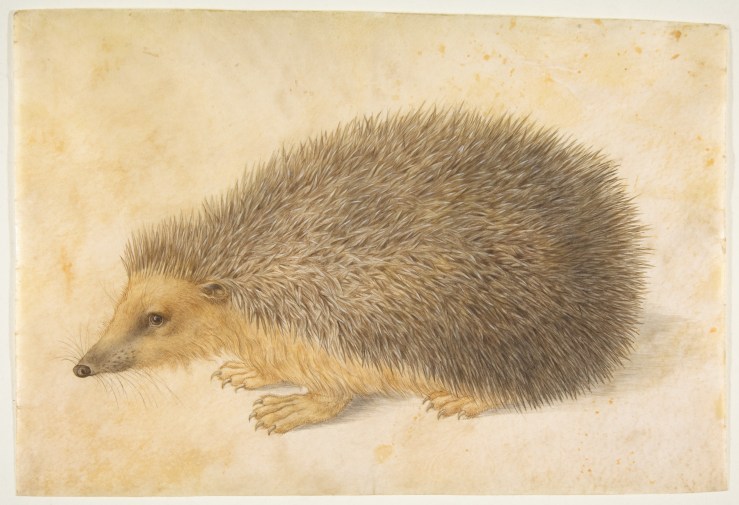
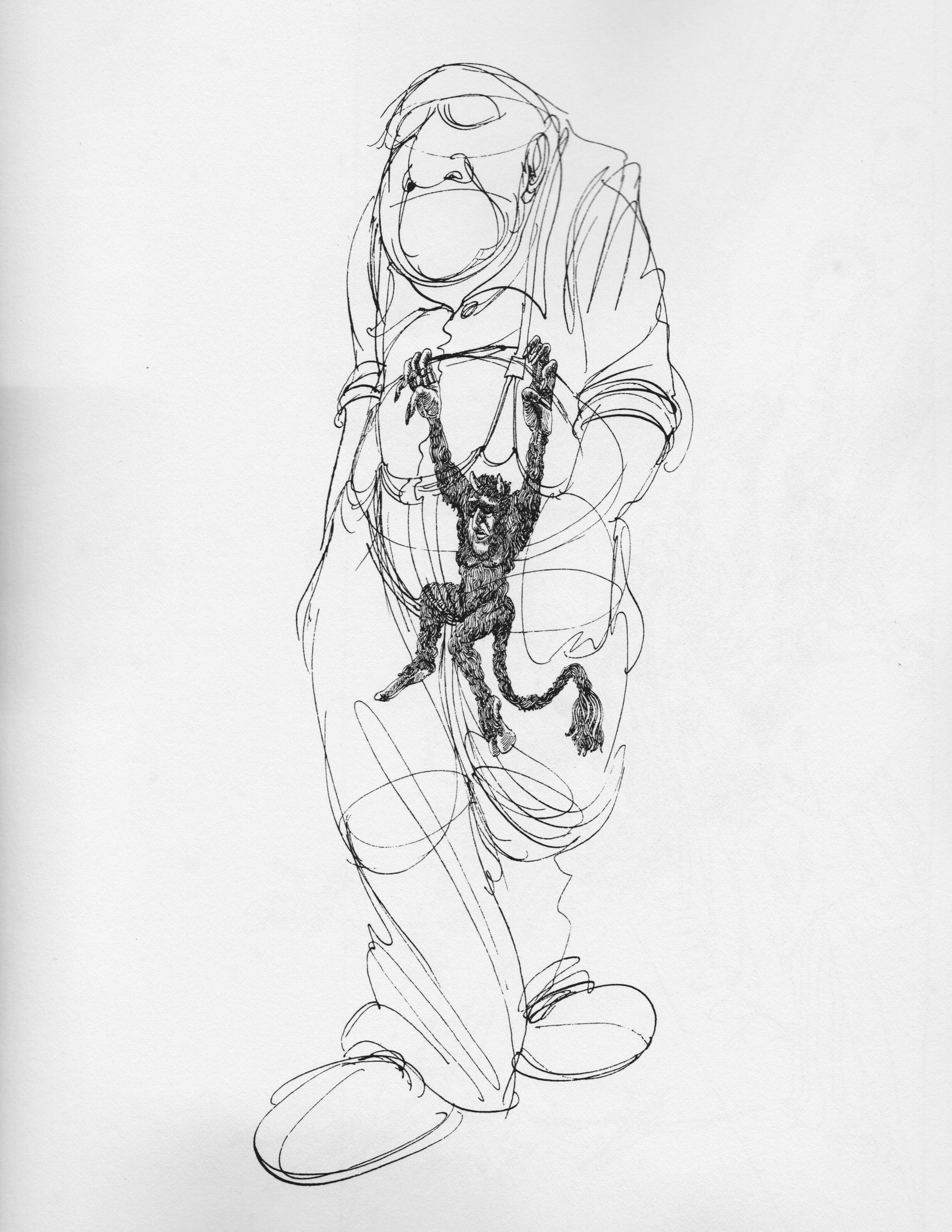
A Hedgehog — Hans Hoffmann

dp818387

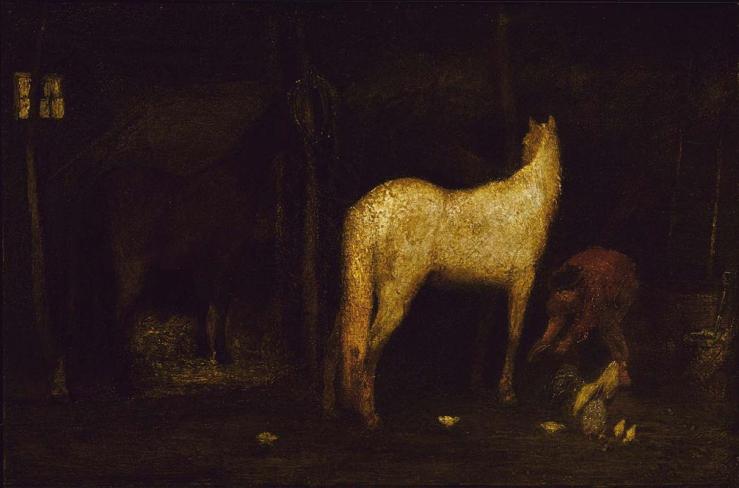
In the Stable — Albert Pinkham Ryder

in-the-stable-1900halfhd

William Gaddis: “The problem of writing with a message”

From Washington University’s marvelous Modern Literature Collection YouTube channel.

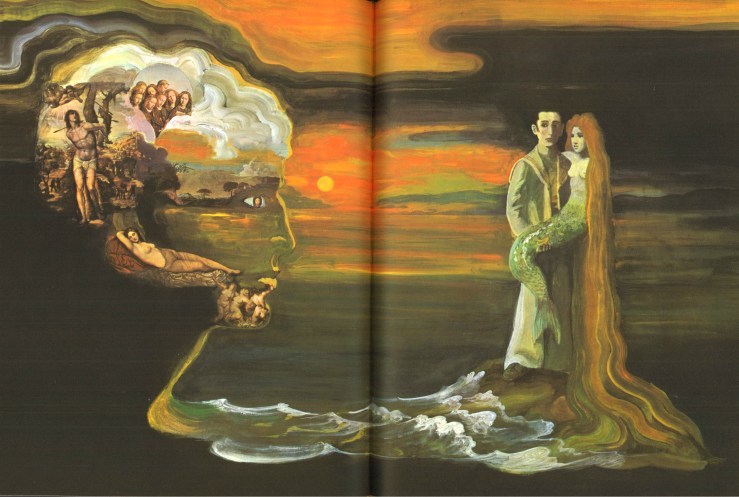
Illustration for Oscar Wilde’s “The Fisherman and His Soul” — James Hill

fisherman and his soul
James Hill’s illustration for “The Fisherman and His Soul” by Oscar Wilde. From The Short Stories of Oscar Wilde, Heritage Press, 1968. 

“The Fisherman and His Soul”

by

Oscar Wilde


Every evening the young Fisherman went out upon the sea, and threw his nets into the water.

When the wind blew from the land he caught nothing, or but little at best, for it was a bitter and black-winged wind, and rough waves rose up to meet it.  But when the wind blew to the shore, the fish came in from the deep, and swam into the meshes of his nets, and he took them to the market-place and sold them.

Every evening he went out upon the sea, and one evening the net was so heavy that hardly could he draw it into the boat.  And he laughed, and said to himself, ‘Surely I have caught all the fish that swim, or snared some dull monster that will be a marvel to men, or some thing of horror that the great Queen will desire,’ and putting forth all his strength, he tugged at the coarse ropes till, like lines of blue enamel round a vase of bronze, the long veins rose up on his arms.  He tugged at the thin ropes, and nearer and nearer came the circle of flat corks, and the net rose at last to the top of the water.

But no fish at all was in it, nor any monster or thing of horror, but only a little Mermaid lying fast asleep.

Her hair was as a wet fleece of gold, and each separate hair as a thread of fine gold in a cup of glass.  Her body was as white ivory, and her tail was of silver and pearl.  Silver and pearl was her tail, and the green weeds of the sea coiled round it; and like sea-shells were her ears, and her lips were like sea-coral.  The cold waves dashed over her cold breasts, and the salt glistened upon her eyelids.

So beautiful was she that when the young Fisherman saw her he was filled with wonder, and he put out his hand and drew the net close to him, and leaning over the side he clasped her in his arms.  And when he touched her, she gave a cry like a startled sea-gull, and woke, and looked at him in terror with her mauve-amethyst eyes, and struggled that she might escape.  But he held her tightly to him, and would not suffer her to depart.

And when she saw that she could in no way escape from him, she began to weep, and said, ‘I pray thee let me go, for I am the only daughter of a King, and my father is aged and alone.’

But the young Fisherman answered, ‘I will not let thee go save thou makest me a promise that whenever I call thee, thou wilt come and sing to me, for the fish delight to listen to the song of the Sea-folk, and so shall my nets be full.’

‘Wilt thou in very truth let me go, if I promise thee this?’ cried the Mermaid.

‘In very truth I will let thee go,’ said the young Fisherman.

So she made him the promise he desired, and sware it by the oath of the Sea-folk.  And he loosened his arms from about her, and she sank down into the water, trembling with a strange fear.

Read the rest of Wilde’s “The Fisherman and His Soul” at Project Gutenberg.

The Annunciation (Detail) — Jan van Eyck

annunc4

Untitled — Hans-Georg Rauch

img_2026

From HG Rauch’s En Masse (Collier, 1975).

A murder of the joyful young day | Nathaniel Hawthorne’s journal entry for April 19th, 1840

April 19th.–. . . What a beautiful day was yesterday! My spirit rebelled against being confined in my darksome dungeon at the Custom House. It seemed a sin,–a murder of the joyful young day,–a quenching of the sunshine. Nevertheless, there I was kept a prisoner till it was too late to fling myself on a gentle wind, and be blown away into the country. . . . When I shall be again free, I will enjoy all things with the fresh simplicity of a child of five years old. I shall grow young again, made all over anew. I will go forth and stand in a summer shower, and all the worldly dust that has collected on me shall be washed away at once, and my heart will be like a bank of fresh flowers for the weary to rest upon. . . .

6 P.M.–I went out to walk about an hour ago, and found it very pleasant, though there was a somewhat cool wind. I went round and across the Common, and stood on the highest point of it, where I could see miles and miles into the country. Blessed be God for this green tract, and the view which it affords, whereby we poor citizens may be put in mind, sometimes, that all his earth is not composed of blocks of brick houses, and of stone or wooden pavements. Blessed be God for the sky, too, though the smoke of the city may somewhat change its aspect,–but still it is better than if each street were covered over with a roof. There were a good many people walking on the mall,–mechanics apparently, and shopkeepers’ clerks, with their wives; and boys were rolling on the grass, and I would have liked to lie down and roll too.

From Passages from the American Note-Books. 
Yuri Herrera’s The Transmigration of Bodies (Book acquired, 4.16.2016; consumed 4.17.2016)

img_2013

I was a big fan of the last novella I read by Yuri Herrera, Signs Preceding the End of the World (also from publisher And Other Stories, and also translated by Lisa Dillman). So I was psyched when his newest offering (in English translation) The Transmigration of Bodies arrived at Biblioklept World Headquarters this weekend. I read the first half of Transmigration yesterday lying in the hammock, just enjoying the hell out of it. Herrera’s style condenses the mythic with the real; Transmigration begins with a surreal plague, flies buzzing over blood—or just some other filth?—and our (anti-)hero, a fixer who goes by The Redeemer. (Everyone in Transmigration gets a hardboiled name: The Dolphin, Three Times Blonde, Unruly, Neeyanderthal. Etc.). Anyway, the book isn’t out until July, so I’ll wait to do a full review until then, but here’s And Other Stories‘ blurb:

A plague has brought death to the city. Two feuding crime families with blood on their hands need our hard-boiled hero, The Redeemer, to broker peace. Both his instincts and the vacant streets warn him to stay indoors, but The Redeemer ventures out into the city’s underbelly to arrange for the exchange of the bodies they hold hostage.

Yuri Herrera’s novel is a response to the violence of contemporary Mexico. With echoes of Romeo and Juliet, Roberto Bolaño and Raymond Chandler, The Transmigration of Bodies is a noirish tragedy and a tribute to those bodies – loved, sanctified, lusted after, and defiled – that violent crime has touched.

Romeo and Juliet, Roberto Bolaño and Raymond Chandler” — yes, absolutely — and I would add Nicolas Winding Refn to that list. Herrera’s vivid neon noir is of a piece with Drive and Only God Forgives, and the grime here recalls his wonderful Pusher trilogy to me. I dig it.

Men Shall Know Nothing of This — Max Ernst

Men Shall Know Nothing of This 1923 by Max Ernst 1891-1976