Thomas Pynchon’s Banana Breakfast

At the beginning of Thomas Pynchon’s massive tome Gravitys Rainbow, Captain Geoffrey “Pirate” Prentice cooks up a bodacious banana breakfast for a bunch of hungover army officers—

Routine: plug in American blending machine won from some Yank last summer, some poker game, table stakes, B.O.Q. somewhere in the north, never remember now….Chop several bananas into pieces. Make coffee in urn. Get can of milk from cooler. Puree ‘nanas in milk. Lovely. I would coat all the booze-corroded stomachs of England. . . . Bit of marge, still smells all right, melt in the skillet. Peel more bananas, slice lengthwise. Marge sizzling, in go long slices. Light oven whoomp blow us all up someday oh, ha, ha, yes. Peeled whole bananas to go on broiler grill soon as it heats. Find marshmallows. . . .

Here’s how it all turns out–

With a clattering of chairs, upended shell cases, benches, and ottomans, Pirate’s mob gather at the shores of the great refectory table, a southern island well across a tropic or two from chill Corydon Throsp’s mediaeval fantasies, crowded now over the swirling dark grain of its walnut uplands with banana omelets, banana sandwiches, banana casseroles, mashed bananas molded into the shape of a British lion rampant, blended with eggs into batter for French toast, squeezed out a pastry nozzle across the quivering creamy reaches of a banana blancmange to spell out the words C’est magnifique, mais ce n’est pas la guerre (attributed to a French observer during the Charge of the Light Brigade) which Pirate has appropriated as his motto . . . tall cruets of pale banana syrup to pour oozing over banana waffles, a giant glazed crock where diced bananas have been fermenting since the summer with wild honey and muscat raisins, up out of which, this winter morning, one now dips foam mugsfull of banana mead . . . banana croissants and banana kreplach, and banana oatmeal and banana jam and banana bread, and bananas flamed in ancient brandy Pirate brought back last year from a cellar in the Pyrenees also containing a clandestine radio transmitter. . . .

James Joyce’s Burnt Kidney Breakfast

Another entry in our ongoing series of literary recipes to celebrate Thanksgiving.

Leopold Bloom, hero of James Joyce’s Ulysses likes kidneys for breakfast. In fact–

Mr Leopold Bloom ate with relish the inner organs of beasts and fowls. He liked thick giblet soup, nutty gizzards, a stuffed roast heart, liverslices fried with crustcrumbs, fried hencods’ roes. Most of all he liked grilled mutton kidneys which gave to his palate a fine tang of faintly scented urine.

Okay, so there’s not much to this recipe. First, you’ve gotta buy the kidney–

A kidney oozed bloodgouts on the willowpatterned dish: the last. He stood by the nextdoor girl at the counter. Would she buy it too, calling the items from a slip in her hand? Chapped: washingsoda. And a pound and a half of Denny’s sausages.

Then you cook it with some butter in a frying pan (don’t forget to share with the cat, and don’t forget the pepper)–

While he unwrapped the kidney the cat mewed hungrily against him. Give her too much meat she won’t mouse. Say they won’t eat pork. Kosher. Here. He let the bloodsmeared paper fall to her and dropped the kidney amid the sizzling butter sauce. Pepper. He sprinkled it through his fingers ringwise from the chipped eggcup.

Then take your lazy adulterous wife her breakfast that you’ve lovingly prepared for her (she’ll need her strength for later). Oh, and don’t forget about the kidney that’s still cooking for you (unless you’re making some kind of subconscious symbolic burnt offering or something)–

—There’s a smell of burn, she said. Did you leave anything on the fire?

—The kidney! he cried suddenly.

He fitted the book roughly into his inner pocket and, stubbing his toes against the broken commode, hurried out towards the smell, stepping hastily down the stairs with a flurried stork’s legs. Pungent smoke shot up in an angry jet from a side of the pan. By prodding a prong of the fork under the kidney he detached it and turned it turtle on its back. Only a little burnt. He tossed it off the pan on to a plate and let the scanty brown gravy trickle over it.

Enjoy with gravy, toast, and a cup of tea–

Cup of tea now. He sat down, cut and buttered a slice of the loaf. He shore away the burnt flesh and flung it to the cat. Then he put a forkful into his mouth, chewing with discernment the toothsome pliant meat. Done to a turn. A mouthful of tea. Then he cut away dies of bread, sopped one in the gravy and put it in his mouth. What was that about some young student and a picnic? He creased out the letter at his side, reading it slowly as he chewed, sopping another die of bread in the gravy and raising it to his mouth.

He sopped other dies of bread in the gravy and ate piece after piece of kidney.

Herman Melville’s Whale Steaks

In Chapter LXIV of Herman Melville’s Moby-Dick, Stubb, second mate of the Pequod, demands whale steaks for dinner. He’s not happy with how the cook has prepared the steaks though, complaining they are too tender and overdone — his taste is closer to the sharks who are making a racket outside the ship–

“Cook,” said Stubb, rapidly lifting a rather reddish morsel to his mouth, ” don’t you think this steak is rather overdone? You’ve been beating this steak too much, cook; it’s too tender. Don’t I always say that to be good, a whalesteak must be tough? There are those sharks now over the side, don’t you see they prefer it tough and rare? What a shindy they are kicking up! Cook, go and talk to ’em; tell ’em they are welcome to help themselves civilly, and in moderation, but they must keep quiet. Blast me, if I can hear my own voice. Away, cook, and deliver my message. Here, take this lantern,” snatching one from his sideboard; ” now, then, go and preach to ’em! “

Stubb then instructs the cook on the best way to prepare whale steaks, a process involving a hot live coal. Oh, and he likes his fins pickled and his flukes soused–

“Well then, cook, you see this whale-steak of yours was so very bad, that I have put it out of sight as soon as possible; you see that, don’t you? Well, for the future, when you cook another whale-steak for my private table here, the capstan, I’ll tell you what to do so as not to spoil it by overdoing. Hold the steak in one hand, and show a live coal to it with the other; that done, dish it; d’ye hear? And now to-morrow, cook, when we are cutting in the fish, be sure you stand by to get the tips of his fins; have them put in pickle. As for the ends of the flukes, have them soused, cook. There, now ye may go.”

Gordon Lish’s Chicken Soup Recipe

Get lost for two hours. Go read Jacques Derrida or the like, something to break your brain on and convince you that mind is nothing in the comfort department compared to the things of the spirit, which is what is going on in back in the kitchen. And down’t worry about setting a timer. The fevers sailing the ethers will call you back the instant you’re wanted.

From “Not Just Any Soup,” Gordon Lish’s recipe for chicken noodle soup, published in The New York Times in 1977.

Before you can get lost in Derrida (or the like) for a few hours, you’ve got to fill an 11″ by 5″ pot with three inches of water and inch of beer. Set the heat to low and add “scrubbed carrots…chopped chive, slivered celery, sliced onion, minced garlic, ground dill, paprika, Dijon mustard, pepper, salt, a dash of cinnamon.”

How much of each? Lish is unwilling to list amounts: “Amounts is for the insurance business…The heart with good posture doesn’t stoop to check amounts.”

Add the chicken (sans fat and skin), cover, lower to a simmer, and get lost for two hours.

After you’ve read Derrida (or the like) for two hours, add the noodles — “the slenderest money can buy” — and take another hour off. To kill the time, Lish prescribes Jack Gilberts’ Views of Jeopardy — “the last poems the English language needed”).

Once that hour’s passed, stir the mixture again, thoroughly: “Lid off, the eucharist rolled over in his languid waters so that the bottom shall be the top.” Put the lid back on and wait for eight hours. Lish advises using the time to think.

Huge thanks to David Winters for sharing the recipe with me; David found the piece as part of a great big important research thing he’s doing on Lish (he also interviewed Lish for the project, so we’ll have that to look forward to—but it’s not going to be in his new book, Infinite Fictions, new from Zero this January).

Roberto Bolaño’s Brussels Sprouts with Lemon

In Roberto Bolaño’s sprawling opus 2666 (specifically, in “The Part About Fate”), founding member of the Black Panthers/cookbook author Barry Seaman offers the following recipe during a lecture at a Detroit church–

The name of the recipe is: Brussels Sprouts with Lemon. Take note, please. Four servings calls for: two pounds of brussels sprouts, juice and zest of one lemon, one onion, one sprig of parsley, three tablespoons of butter, black pepper, and salt. You make it like so. One: Clean sprouts well and remove outer leaves. Finely chop onion and parsley. Two: In a pot of salted boiling water, cook sprouts for twenty minutes, or until tender. Then drain well and set aside. Three: Melt butter in frying pan and lightly sauté onion, add zest and juice of lemon and salt and pepper to taste. Four: Add brussels sprouts, toss with sauce, reheat for a few minutes, sprinkle with parsley, and serve with lemon wedges on the side. So good you’ll be licking your fingers, said Seaman. No cholesterol, good for the liver, good for the blood pressure, very healthy.

The Turkey — Pablo Picasso

w1siziisije2mzu2nsjdlfsiccisimnvbnzlcnqilcitcmvzaxplideznjz4mtm2nlx1mdazzsjdxq

The Turkey, 1936 by Pablo Picasso (1881–1973)

The Tower of Babel (detail) — Pieter Bruegel the Elder

Screenshot 2017-11-19 at 5.24.01 PM

The Tower of Babel (detail), 1563 by Pieter Bruegel the Elder (c. 1525-1530–1569)

Posted in Art

Figure — Odilon Redon

figure

Figure, 1876 by Odilon Redon (1840-1916)

“John Inglefied’s Thanksgiving,” a short story by Nathaniel Hawthorne

“John Inglefied’s Thanksgiving”

by

Nathaniel Hawthorne


On the evening of Thanksgiving day, John Inglefield, the blacksmith, sat in his elbow-chair, among those who had been keeping festival at his board. Being the central figure of the domestic circle, the fire threw its strongest light on his massive and sturdy frame, reddening his rough visage, so that it looked like the head of an iron statue, all aglow, from his own forge, and with its features rudely fashioned on his own anvil. At John Inglefield’s right hand was an empty chair. The other places round the hearth were filled by the members of the family, who all sat quietly, while, with a semblance of fantastic merriment, their shadows danced on the wall behind then. One of the group was John Inglefield’s son, who had been bred at college, and was now a student of theology at Andover. There was also a daughter of sixteen, whom nobody could look at without thinking of a rosebud almost blossomed. The only other person at the fireside was Robert Moore, formerly an apprentice of the blacksmith, but now his journeyman, and who seemed more like an own son of John Inglefield than did the pale and slender student.

Only these four had kept New England’s festival beneath that roof. The vacant chair at John Inglefield’s right hand was in memory of his wife, whom death had snatched from him since the previous Thanksgiving. With a feeling that few would have looked for in his rough nature, the bereaved husband had himself set the chair in its place next his own; and often did his eye glance thitherward, as if he deemed it possible that the cold grave might send back its tenant to the cheerful fireside, at least for that one evening. Thus did he cherish the grief that was dear to him. But there was another grief which he would fain have torn from his heart; or, since that could never be, have buried it too deep for others to behold, or for his own remembrance. Within the past year another member of his household had gone from him, but not to the grave. Yet they kept no vacant chair for her.

While John Inglefield and his family were sitting round the hearth with the shadows dancing behind them on the wall, the outer door was opened, and a light footstep came along the passage. The latch of the inner door was lifted by some familiar hand, and a young girl came in, wearing a cloak and hood, which she took off, and laid on the table beneath the looking-glass. Then, after gazing a moment at the fireside circle, she approached, and took the seat at John Inglefield’s right hand, as if it had been reserved on purpose for her.

“Here I am, at last, father,” said she. “You ate your Thanksgiving dinner without me, but I have come back to spend the evening with you.”

Yes, it was Prudence Inglefield. She wore the same neat and maidenly attire which she had been accustomed to put on when the household work was over for the day, and her hair was parted from her brow, in the simple and modest fashion that became her best of all. If her cheek might otherwise have been pale, yet the glow of the fire suffused it with a healthful bloom. If she had spent the many months of her absence in guilt and infamy, yet they seemed to have left no traces on her gentle aspect. She could not have looked less altered, had she merely stepped away from her father’s fireside for half an hour, and returned while the blaze was quivering upwards from the same brands that were burning at her departure. And to John Inglefield she was the very image of his buried wife, such as he remembered her on the first Thanksgiving which they had passed under their own roof. Therefore, though naturally a stern and rugged man, he could not speak unkindly to his sinful child, nor yet could he take her to his bosom.

“You are welcome home, Prudence,” said he, glancing sideways at her, and his voice faltered. “Your mother would have rejoiced to see you, but she has been gone from us these four months.”

“I know it, father, I know it,” replied Prudence, quickly. “And yet, when I first came in, my eyes were so dazzled by the firelight, that she seemed to be sitting in this very chair!”

By this time the other members of the family had begun to recover from their surprise, and became sensible that it was no ghost from the grave, nor vision of their vivid recollections, but Prudence, her own self. Her brother was the next that greeted her. He advanced and held out his hand affectionately, as a brother should; yet not entirely like a brother, for, with all his kindness, he was still a clergyman, and speaking to a child of sin.

“Sister Prudence,” said he, earnestly, “I rejoice that a merciful Providence hath turned your steps homeward, in time for me to bid you a last farewell. In a few weeks, sister, I am to sail as a missionary to the far islands of the Pacific. There is not one of these beloved faces that I shall ever hope to behold again on this earth. O, may I see all of them–yours and all–beyond the grave!”

A shadow flitted across the girl’s countenance.

“The grave is very dark, brother,” answered she, withdrawing her hand somewhat hastily from his grasp. “You must look your last at me by the light of this fire.”

While this was passing, the twin-girl-the rosebud that had grown on the same stem with the castaway–stood gazing at her sister, longing to fling herself upon her bosom, so that the tendrils of their hearts might intertwine again. At first she was restrained by mingled grief and shame, and by a dread that Prudence was too much changed to respond to her affection, or that her own purity would be felt as a reproach by the lost one. But, as she listened to the familiar voice, while the face grew more and more familiar, she forgot everything save that Prudence had come back. Springing forward, she would have clasped her in a close embrace. At that very instant, however, Prudence started from her chair, and held out both her hands, with a warning gesture.

“No, Mary,–no, my sister,” cried she, “do not you touch me. Your bosom must not be pressed to mine!”

Mary shuddered and stood still, for she felt that something darker than the grave was between Prudence and herself, though they seemed so near each other in the light of their father’s hearth, where they had grown up together. Meanwhile Prudence threw her eyes around the room, in search of one who had not yet bidden her welcome. He had withdrawn from his seat by the fireside, and was standing near the door, with his face averted, so that his features could be discerned only by the flickering shadow of the profile upon the wall. But Prudence called to him, in a cheerful and kindly tone:–

“Come, Robert,” said she, “won’t you shake hands with your old friend?”

Robert Moore held back for a moment, but affection struggled powerfully, and overcame his pride and resentment; he rushed towards Prudence, seized her hand, and pressed it to his bosom.

“There, there, Robert!” said she, smiling sadly, as she withdrew her hand, “you must not give me too warm a welcome.”

And now, having exchanged greetings with each member of the family, Prudence again seated herself in the chair at John Inglefield’s right hand. She was naturally a girl of quick and tender sensibilities, gladsome in her general mood, but with a bewitching pathos interfused among her merriest words and deeds. It was remarked of her, too, that she had a faculty, even from childhood, of throwing her own feelings, like a spell, over her companions. Such as she had been in her days of innocence, so did she appear this evening. Her friends, in the surprise and bewilderment of her return, almost forgot that she had ever left them, or that she had forfeited any of her claims to their affection. In the morning, perhaps, they might have looked at her with altered eyes, but by the Thanksgiving fireside they felt only that their own Prudence had come back to them, and were thankful. John Inglefleld’s rough visage brightened with the glow of his heart, as it grew warm and merry within him; once or twice, even, he laughed till the room rang again, yet seemed startled by the echo of his own mirth. The grave young minister became as frolicsome as a school-boy. Mary, too, the rosebud, forgot that her twin-blossom had ever been torn from the stem, and trampled in the dust. And as for Robert Moore, he gazed at Prudence with the bashful earnestness of love new-born, while she, with sweet maiden coquetry, half smiled upon and half discouraged him.

In short, it was one of those intervals when sorrow vanishes in its own depth of shadow, and joy starts forth in transitory brightness. When the clock struck eight, Prudence poured out her father’s customary draught of herb-tea, which had been steeping by the fireside ever since twilight.

“God bless you, child!” said John Inglefield, as he took the cup from her hand; “you have made your old father happy again. But we miss your mother sadly, Prudence, sadly. It seems as if she ought to be here now.”

“Now, father, or never,” replied Prudence.

It was now the hour for domestic worship. But while the family were making preparations for this duty, they suddenly perceived that Prudence had put on her cloak and hood, and was lifting the latch of the door.

“Prudence, Prudence! where are you going?” cried they all, with one voice.

As Prudence passed out of the door, she turned towards them, and flung back her hand with a gesture of farewell. But her face was so changed that they hardly recognized it. Sin and evil passions glowed through its comeliness, and wrought a horrible deformity; a smile gleamed in her eyes, as of triumphant mockery, at their surprise and grief.

“Daughter,” cried John Inglefield, between wrath and sorrow, “stay and be your father’s blessing, or take his curse with you!”

For an instant Prudence lingered and looked back into the fire-lighted room, while her countenance wore almost the expression as if she were struggling with a fiend, who had power to seize his victim even within the hallowed precincts of her father’s hearth. The fiend prevailed; and Prudence vanished into the outer darkness. When the family rushed to the door, they could see nothing, but heard the sound of wheels rattling over the frozen ground.

That same night, among the painted beauties at the theatre of a neighboring city, there was one whose dissolute mirth seemed inconsistent with any sympathy for pure affections, and for the joys and griefs which are hallowed by them. Yet this was Prudence Inglefield. Her visit to the Thanksgiving fireside was the realization of one of those waking dreams in which the guilty soul will sometimes stray back to its innocence. But Sin, alas! is careful of her bond-slaves; they hear her voice, perhaps, at the holiest moment, and are constrained to go whither she summons them. The same dark power that drew Prudence Inglefleld from her father’s hearth–the same in its nature, though heightened then to a dread necessity–would snatch a guilty soul from the gate of heaven, and make its sin and its punishment alike eternal.
 

Head of a Turkey Cock — JMW Turner

Head of a Turkey Cock 1815-20 by Joseph Mallord William Turner 1775-1851

Head of a Turkey Cock, 1820 by Joseph Mallord William Turner (1775–1851)

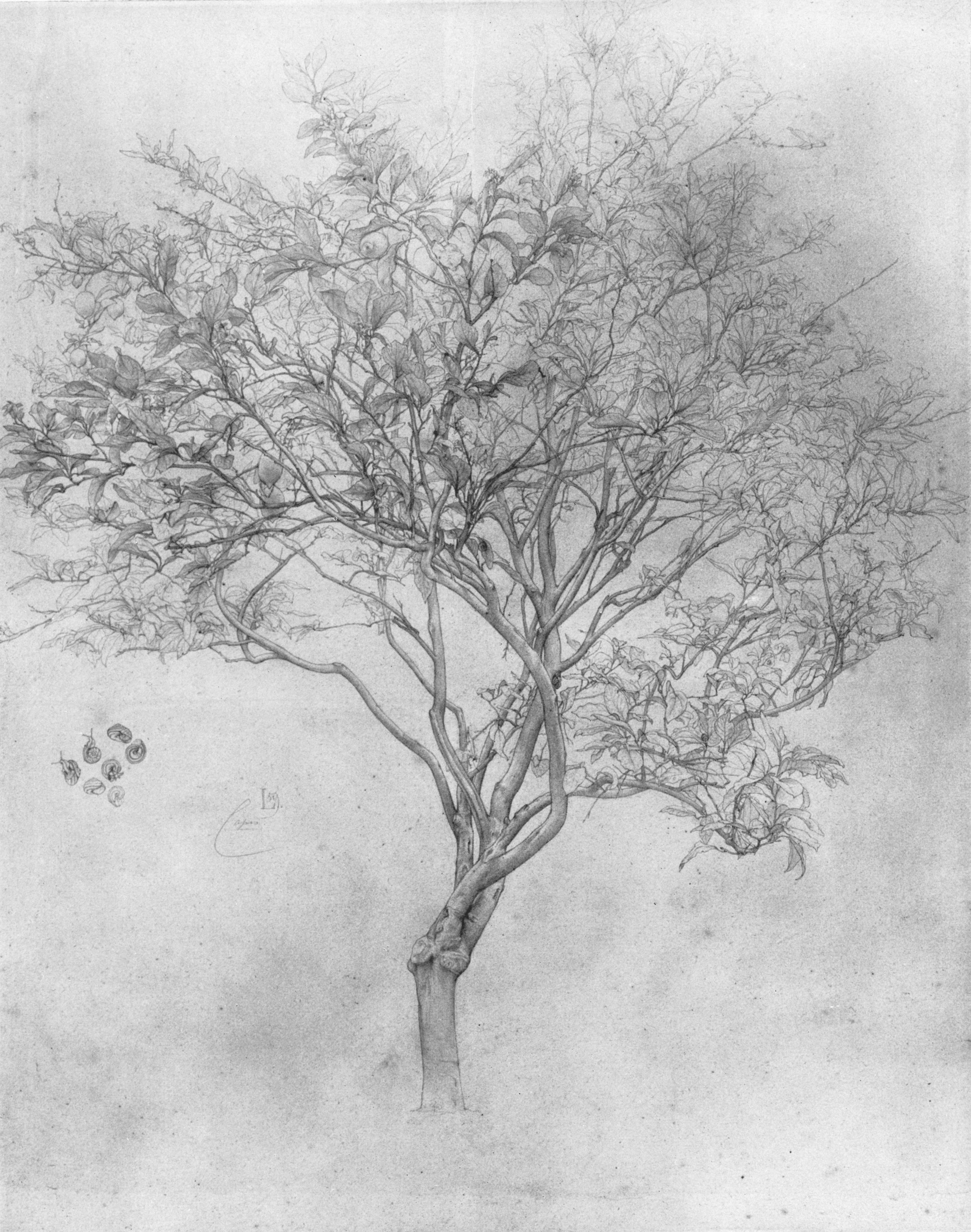
Study of a Lemon Tree — Frederic Leighton

leighton-study-of-a-lemon-tree

Study of a Lemon Tree, 1859 by Frederic Leighton (1830-1896)

The Tower of Babel (detail) — Pieter Bruegel the Elder

Screenshot 2017-11-19 at 5.20.31 PM.png

The Tower of Babel (detail), 1563 by Pieter Bruegel the Elder (c. 1525-1530–1569)

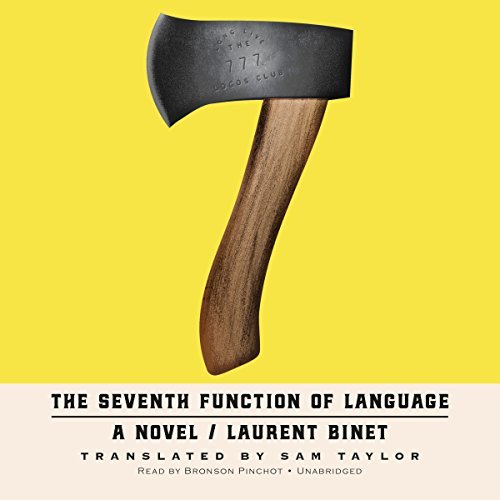
Not a review of Laurent Binet’s novel The Seventh Function of Language

411xfx2hll-_sl500_

I was a big a fan of Laurent Binet’s novel HHhH, so I was excited when I heard about his follow up, The Seventh Function of Language. I was especially excited when I learned that The Seventh Function took the death of Roland Barthes as its starting point and post-structuralism in general as its milieu. I audited the audiobook (translated by Sam Taylor and read with dry wry humor by Bronson Pinchot).

The audiobook is twelve hours. If it had been six hours I might have loved it. But twelve hours was a bit too much.

Wait. Sorry. What is the novel about though? you may ask. This is not a review and I am feeling lazy and not especially passionate about the book, so here is the publisher’s-blurb-as-summary:

Paris, 1980. The literary critic Roland Barthes dies – struck by a laundry van – after lunch with the presidential candidate François Mitterand. The world of letters mourns a tragic accident. But what if it wasn’t an accident at all? What if Barthes was murdered?

In The Seventh Function of Language, Laurent Binet spins a madcap secret history of the French intelligentsia, starring such luminaries as Jacques Derrida, Umberto Eco, Gilles Deleuze, Michel Foucault, and Julia Kristeva – as well as the hapless police detective Jacques Bayard, whose new case will plunge him into the depths of literary theory. Soon Bayard finds himself in search of a lost manuscript by the linguist Roman Jakobson on the mysterious “seventh function of language.”

Kristeva! Eco! Derrida! All my childhood heroes are here!

So of course, y’know, I was interested. And I’m sure that the twenty-year-old version of me would have flipped out over Binet’s pastiche of postmodern theory and detective pulp fiction. But almost-forty me found the whole thing exhausting, a shaggy dog detective story with patches of the whole continental-philosophy-vs-analytical-philosophy debate sewn in with loose stitches.

The initial intellectual rush of what amounts to a Tel Quel fan fiction/murder-mystery/political thriller hybrid begins to wear thin about halfway through. Binet is smart and he’s writing about smart people, but the cleverness on display becomes irksome, especially when he’s drawing his characters’ big philosophical ideas in the broadest of strokes (Julia Kristeva arrives at her concept of abjection after a floating film on a glass of milk makes her ill).

Binet loves to cram his characters into social situations where they can wax philosophical (in the thinnest possible sense of that verb wax). The Seventh Function is larded with chatty cocktail parties where Kristeva and Foucault can toss out zinger after zinger. One of the novel’s centerpieces, an academic conference at Cornell, serves as an excuse for Binet to riff large (but shallow) on language philosophy. He even brings Chomsky and Searle to the conference to take on Derrida et al. (Binet also squeezes in a postmodern orgy here, in which Detective Bayard has a threesome with Hélène Cixous and Judith Butler). Such scenes are funny but baggy, overlong, and often feel like an excuse for Binet to show how clever he is. (And don’t even get me started on the fact that the novel’s central protagonist worries that he might be a character in a novel).

Binet is more successful at channeling his characters’ intellects during the high-risk debates of a secret society called the Logos Club. The best of these debates showcase thought-in-action, as Binet’s characters deconstruct various topics. Still, as engaging as some elements of the Logos Club debates are, they drag on too long, and the Club’s connection to the political-thriller aspect of the plot is pretty tenuous.  Indeed, the novel is so loose that a minor character has to show up at the end and explain how all the elements connect for both the reader and detectives alike.

What’s probably most remarkable about The Seventh Function (despite the fact that it features a who’s-who of postmodern theory for its cast) is just how one-note the novel is. After all, it’s a mashup. As Anthony Domestico puts it in his (proper and insightful) review at The San Francisco Chronicle, “The novel is three parts Tom Clancy to two parts Theory SparkNotes to one part sex romp.” The Seventh Function of Language should be a lot more fun than it is.  And it is fun at times, but not enough fun to sustain, say, twelve hours of an audiobook or 359 pages in hardcover.

As HHhH showed, Binet is a talented author, and even though The Seventh Function didn’t work for me, I’m interested to see what he does next. It’s possible that The Seventh Function didn’t float my proverbial boat precisely because I’m the ideal audience for the novel. If anything, it made me want to reread Umberto Eco’s Foucault’s Pendulumbut The Seventh Function also reminded me that I read Eco’s semiotics-detective story as a much younger man—as a kid in my early twenties who probably would’ve loved Binet’s novel. So maybe I should leave well enough alone.


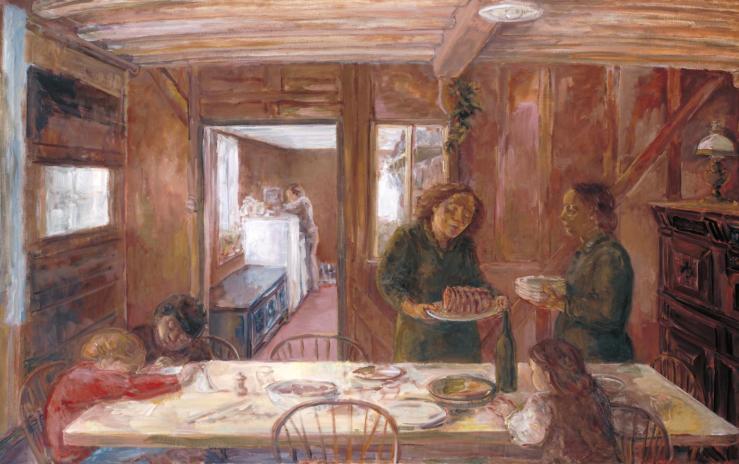
Sunday — John Lessore

Sunday 1985-9 by John Lessore born 1939

Sunday, 1989 by John Lessore (b. 1939)

Old Woman with Distaff — Bartolome Esteban Murillo

bartolome-esteban-murillo-old-woman-with-a-distaff1

Old Woman with Distaff, ca. 1642 by Bartolome Esteban Murillo (1617-1682)

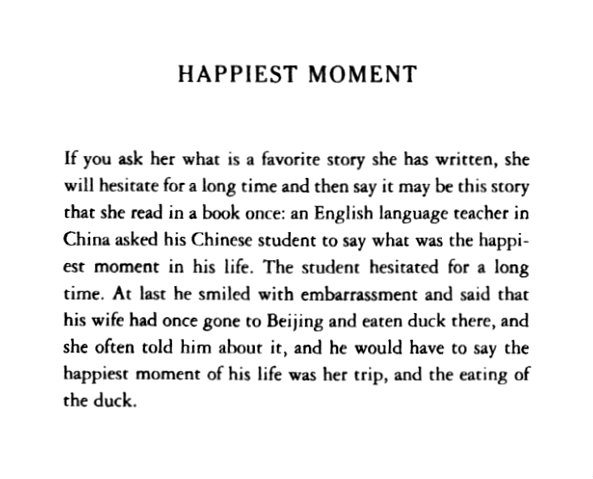
“Happiest Moment” — Lydia Davis

happiest

Circus Woman — Nakaji Yasui

img201705020138246090

Circus Woman, 1940 by Nakaji Yasui (1903-1942)