Steam Boiler with Bat — Carl Grossberg

tumblr_p6gwagb5lz1uphq9fo1_640

Steam Boiler with Bat, 1928 by Carl Grossberg (1894–1940)

“David Swan,” a short story by Nathaniel Hawthorne

“David Swan”

by

Nathaniel Hawthorne

from Twice-Told Tales


We can be but partially acquainted even with the events which actually influence our course through life and our final destiny. There are innumerable other events, if such they may be called, which come close upon us, yet pass away without actual results or even betraying their near approach by the reflection of any light or shadow across our minds. Could we know all the vicissitudes of our fortunes, life would be too full of hope and fear, exultation or disappointment, to afford us a single hour of true serenity. This idea may be illustrated by a page from the secret history of David Swan.

We have nothing to do with David until we find him, at the age of twenty, on the high road from his native place to the city of Boston, where his uncle, a small dealer in the grocery line, was to take him behind the counter. Be it enough to say that he was a native of New Hampshire, born of respectable parents, and had received an ordinary school education with a classic finish by a year at Gilmanton Academy. After journeying on foot from sunrise till nearly noon of a summer’s day, his weariness and the increasing heat determined him to sit down in the first convenient shade and await the coming up of the stage-coach. As if planted on purpose for him, there soon appeared a little tuft of maples with a delightful recess in the midst, and such a fresh bubbling spring that it seemed never to have sparkled for any wayfarer but David Swan. Virgin or not, he kissed it with his thirsty lips and then flung himself along the brink, pillowing his head upon some shirts and a pair of pantaloons tied up in a striped cotton handkerchief. The sunbeams could not reach him; the dust did not yet rise from the road after the heavy rain of yesterday, and his grassy lair suited the young man better than a bed of down. The spring murmured drowsily beside him; the branches waved dreamily across the blue sky overhead, and a deep sleep, perchance hiding dreams within its depths, fell upon David Swan. But we are to relate events which he did not dream of. Continue reading ““David Swan,” a short story by Nathaniel Hawthorne”

Penumbra — Lukifer Aurelius

28130715768_956b2e559c_o

Penumbra, 2017 by Lukifer Aurelius

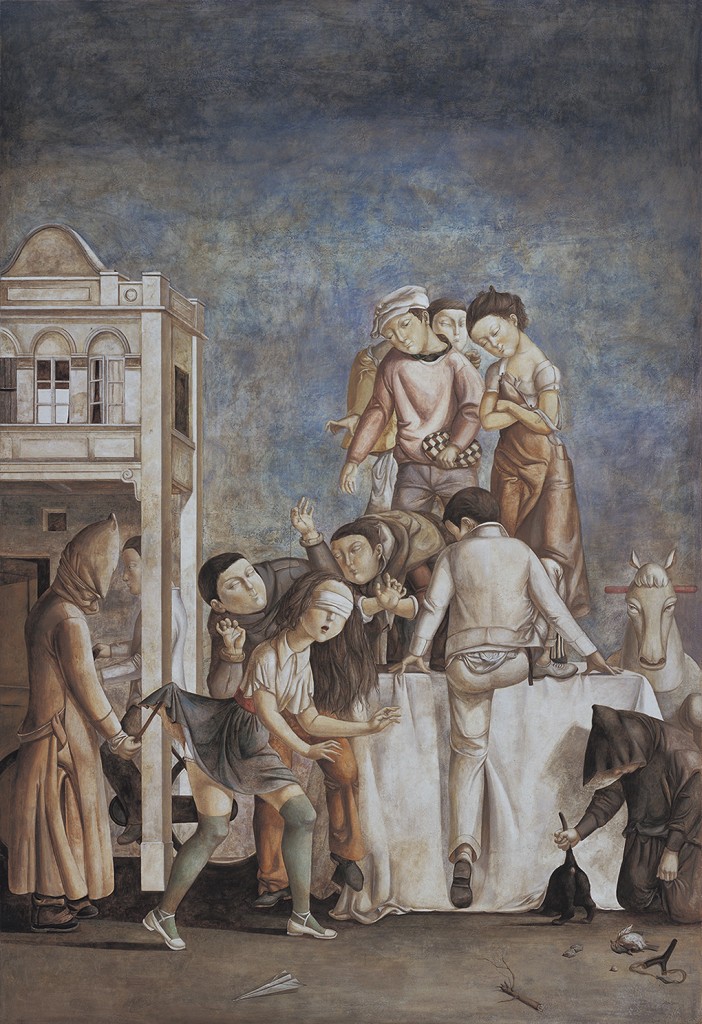
In Search of Lost Time — Xiao Guo Hui

04XGH2012InSearchOfLostTimeATributeToMarcelProust-702x1024

In Search of Lost Time, 2012 by Xiao Guo Hui (b. 1969)

Varo’s letters and dreams, four from Brooke-Rose, more Berlin, a signed Vollmann, and the art & arcana of D&D (Xmas books acquired, late December 2018)

img_2093

I neglected to do one of these dumb books acquired post for the books I got for xmas this year. I don’t really get a lot of books, believe it or not. One of my aunts gave me a gift certificate to Barnes & Noble. I used their (horrible, difficult-to-use) website to order three books:

Letters, Dreams & Other Writings by Remedios Varo (translated by Margaret Carson),

The Christine Brooke-Rose Omnibus: Four Novels by Christine Brooke-Rose, and

Evening in Paradise by Lucia Berlin.

I already wrote about these books a bit in a post on New Year’s Day. I’ve been trying to go through the Varo slowly, picking through a letter or dream a day or every other day. I started the “new” Berlin the other day, reading, or really rereading, the first track, “The Musical Vanity Boxes.” I had initially read the story in my copy of Homesick (Black Sparrow Press, 1991). You can read it here online, too. I still haven’t really done more than skim over the Brooke-Rose omnibus.

The most thoughtful book I received was from my wife’s parents, although really I guess it’s basically from my wife, who got it when she saw me slavering over it in a really cool bookstore on a recent trip to Asheville. It’s a first edition of The Ice-Shirt, signed by William T. Vollmann. This was the first Vollmann book I read, and although it might not be his best it remains my favorite.

img_2094

My parents gave me a Dungeons & Dragons coffee table book called Art & Arcana that has been a fun nostalgia trip. I recovered it from my son—who it seems it really belongs to, I guess, long enough to photograph it—and this pic below of Jeff Easley’s cover art for Unearthed Arcana, which was included in advertisements for the book in like every comic book I remember buying during the mideighties. Art & Arcana is a fun visual history of D&D—from what I can tell anyway. It turns out that it’s the boy’s, not mine. img_2095

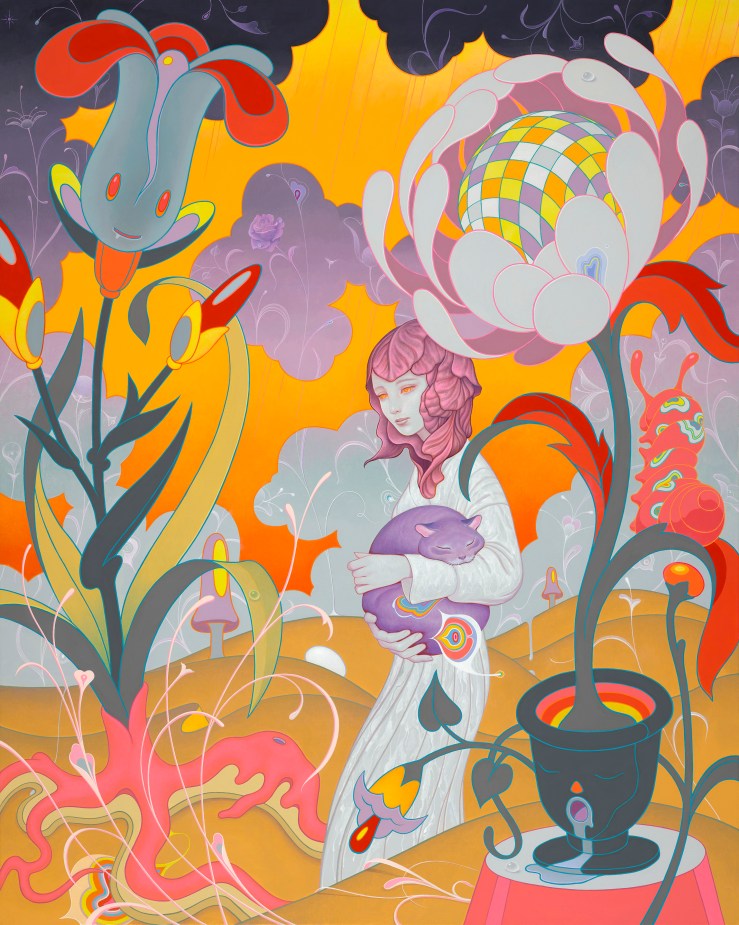
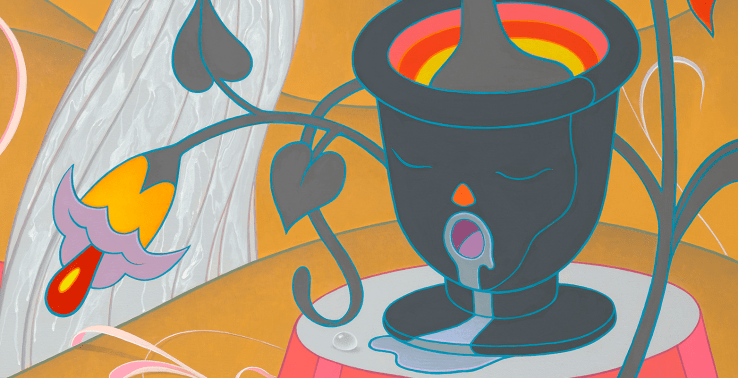
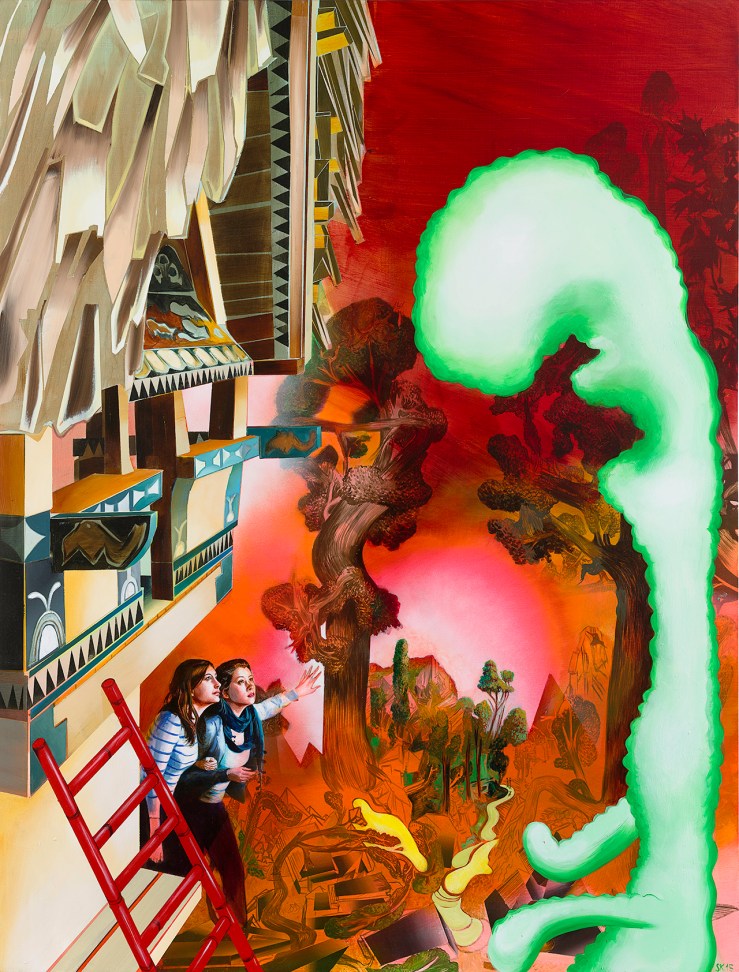
Schrödinger’s Kitten Rescue — James Jean

azimuth-cat-press

Schrödinger’s Kitten Rescue, 2018 by James Jean (b. 1979)

bcda

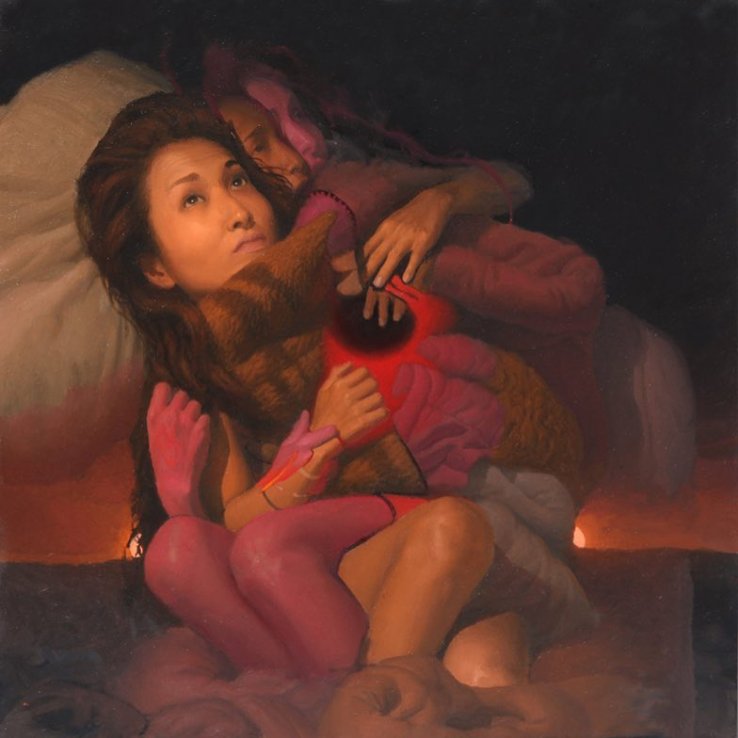
Hematophagus — Agostino Arrivabene

Ematofagi-

Hematophagus, 2014 by Agostino Arrivabene (b. 1967)

“Exhibit one: I HAVE BEEN HERE BEFORE” (Angela Carter)

img_1180

Exhibit One: I HAVE BEEN HERE BEFORE

The legs of a woman, raised and open as if ready to admit a lover, formed a curvilinear triumphal arch. The feet were decorated with spike-heeled, black leather pumps. This anatomical section, composed of pinkish wax dimpled at the knee, did not admit the possibility of the existence of a torso. A bristling pubic growth rose to form a kind of coat of arms above the circular proscenium it contained at either side but, although the hairs had been inserted one by one in order to achieve the maximal degree of verisimilitude, the overall effect was one of stunning artifice. The dark red and purple crenellations surrounding the vagina acted as a frame for a perfectly round hole through which the viewer glimpsed the moist, luxuriant landscape of the interior.

Here endlessly receded before one’s eyes a miniature but irresistible vista of semi-tropical forest where amazing fruits hung on the trees, while from the dappled and variegated chalices of enormous flowers the size of millstones, perfumes of such extraordinary potency that they had become visible to the eye exuded as soft, purple dew. Small, brilliant birds trilled silently on the branches; animals of exquisite shapes and colours, among them unicorns, giraffes and herbivorous lions, cropped up buttercups and daisies from the impossibly green grass; butterflies, dragonflies and innumerable jewelled insects fluttered, darted or scurried among the verdure so all was in constant movement and besides the very vegetation was continually transforming itself. As I watched, the pent-up force of the sweet juice within it burst open a persimmon and the split skin let out a flight of orange tawny singing birds. An elongated bud on the point of opening must have changed its mind for it turned into a strawberry instead of a waterlily. A fish sprang out of the river, became a white rabbit and bounded away.

It seemed that winter and rough winds would never touch these bright, oblivious regions or ripple the surface of the lucid river which wound a tranquil course down the central valley. The eye of the beholder followed the course of this river upwards towards the source, and so it saw, for the first time, after some moments of delighted looking, the misty battlements of a castle. The longer one looked at the dim outlines of this castle, the more sinister it grew, as though its granite viscera housed as many torture chambers as the Château of Silling.

From Angela Carter’s 1972 novel The Infernal Desire Machines of Doctor Hoffman.

Black Forest Tree — Susanne Kühn

SusanneKuehn-Black-Forest-Tree-2015

Black Forest Tree, 2015 by Susanne Kühn (b. 1969)

Two Japanese Wrestlers by a Sink — Lucian Freud

tumblr_my7sha6CEA1sd8q4zo1_1280

Two Japanese Wrestlers by a Sink, 1987 by Lucian Freud (1922-2011)

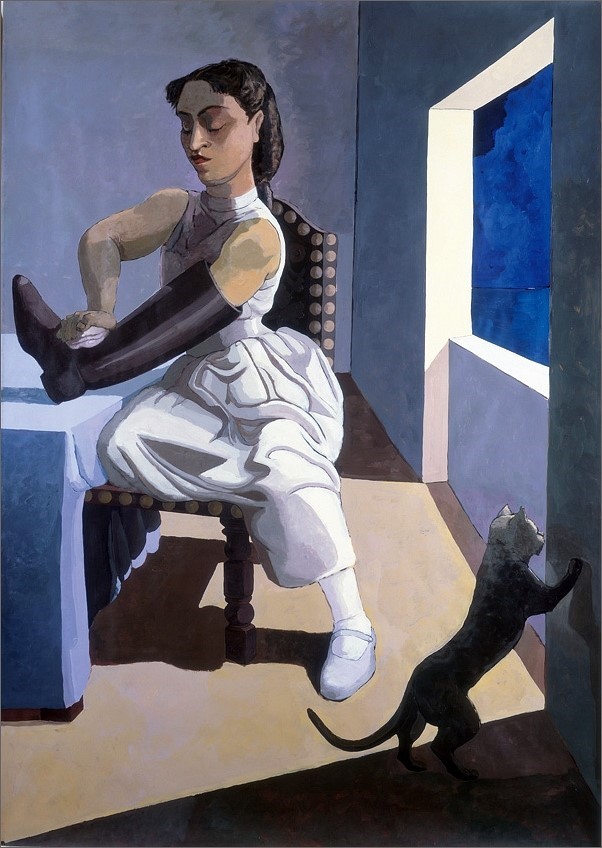
The Policeman’s Daughter — Paula Rego

1-1

The Policeman’s Daughter, 1987 by Paula Rego (b. 1935)

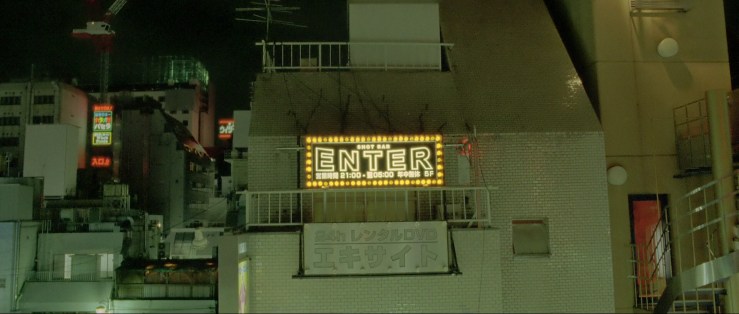
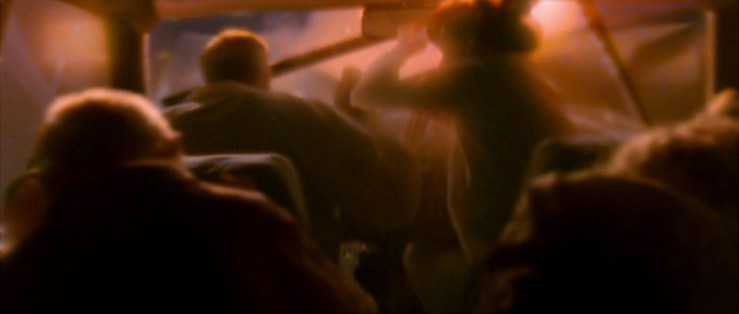
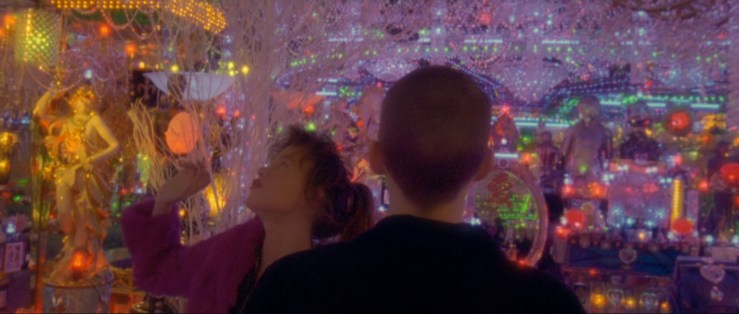
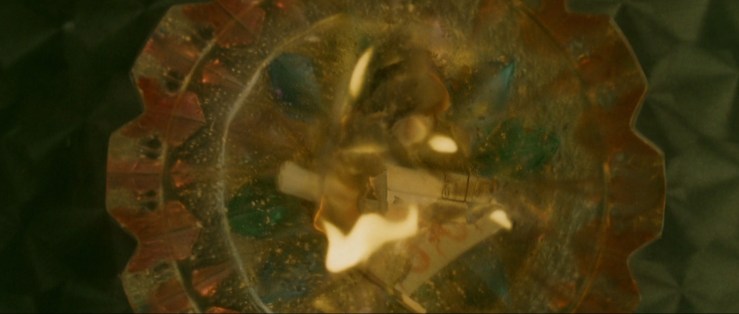
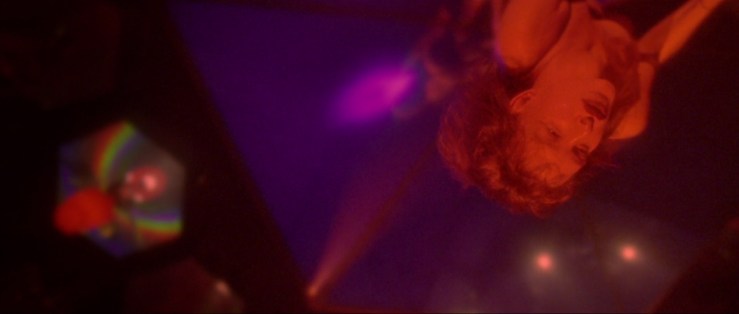
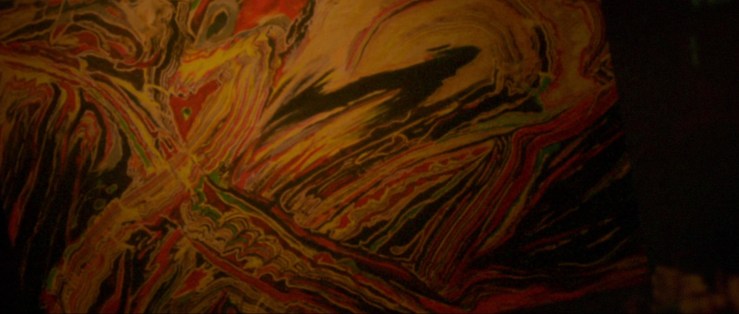
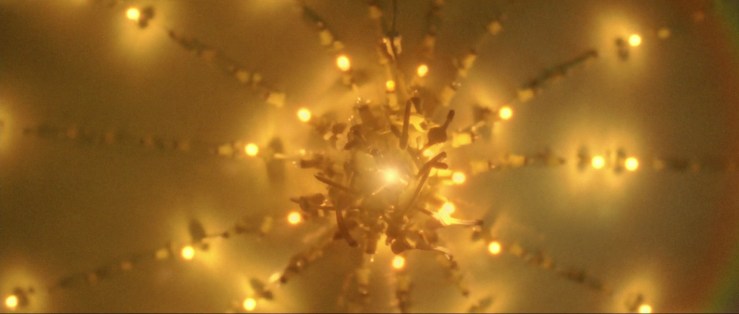
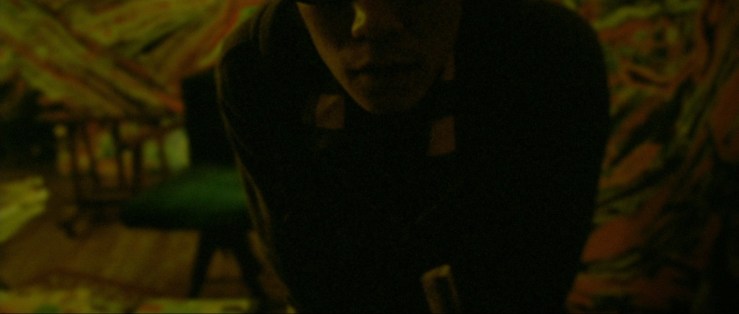
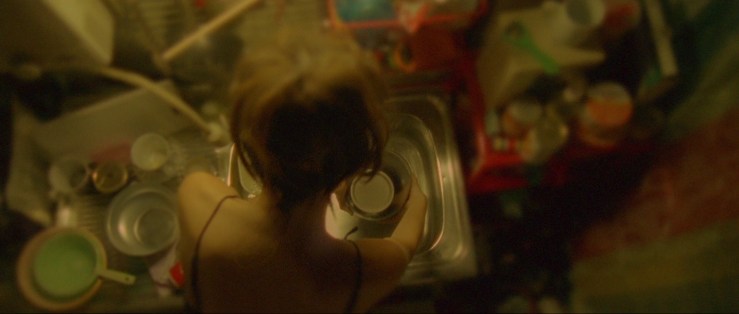
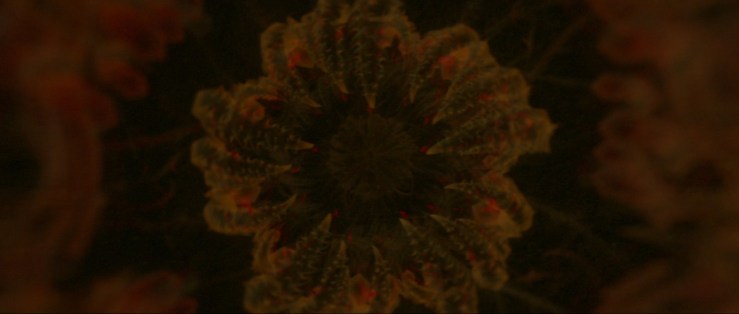
25 still frames from Gaspar Noé’s Enter the Void

123enter-the-void-10156789101112131415161718192021enter-the-void-463enter-the-void-46624enter-the-void-469

From Enter the Void, 2009. Directed by Gaspar Noé with cinematography by Benoît Debie. Via Screenmusings.

The Bibliophile — Jansson Stegner

jansson-stegner-1

The Bibliophile, 2017 by Jansson Stegner (b. 1972)

Blog about a metatextual moment at the end of William Gaddis’s novel The Recognitions

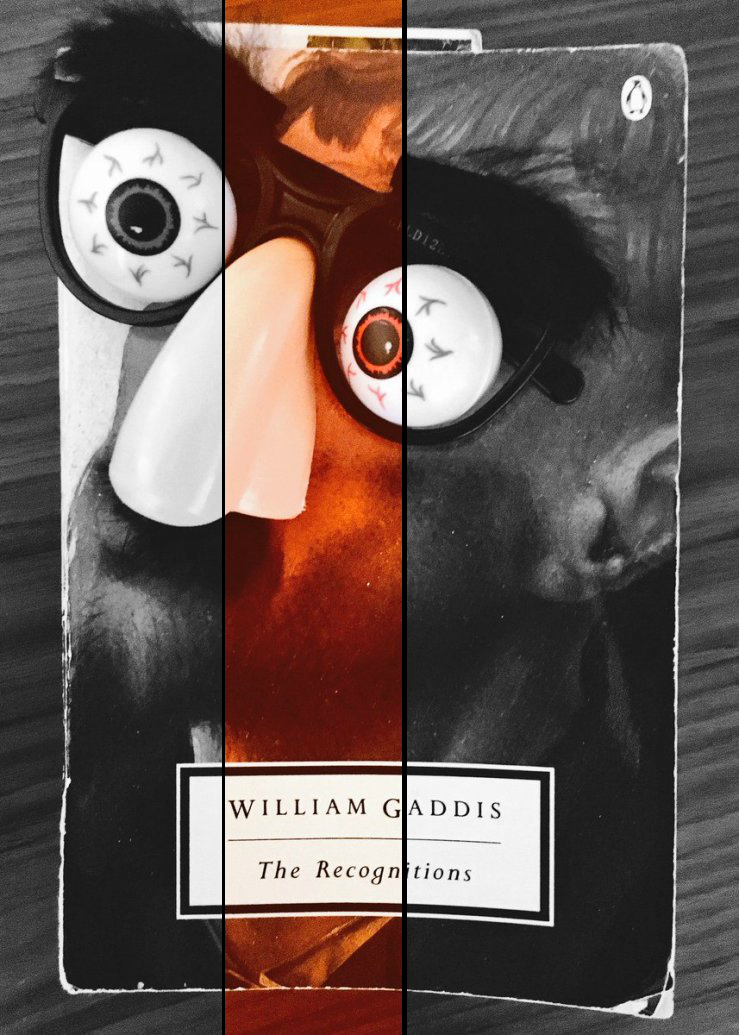
dqx3nv9u0aaq8m4

In the epilogue of his 1955 novel The Recognitions, William Gaddis checks in on the book’s enormous background cast, tying up loose ends, but also leaving many of the characters frayed, burned out, or destroyed. There’s a remarkable metatextual moment in this epilogue in which two minor characters are revealed to be carrying copies of a book that bears more than a passing resemblance to The Recognitions itself. These characters are both literary counterfeiters—Mr. Feddle, a faker who forges book jackets with his name in the author’s position and slips them over classic novels, and “the critic in the green wool shirt,” who doesn’t bother to read the books he reviews.

Meeting at a tailor’s shop, Feddle and the critic peer at each other, “fix[ing] the book the other was carrying with a look of myopic recognition.” The passage continues with the following acerbically ironic exchange:

—You reading that? both asked at once, withdrawing in surprise. —No. I’m just reviewing it, said the taller one, hunching back in his green wool shirt.

—A lousy twenty-five bucks. It’ll take me the whole evening tonight. You didn’t buy it, did you? Christ, at that price? Who the hell do they think’s going to pay that much just for a novel. Christ, I could have given it to you, all I need is the jacket blurb to write the review.

The exchange here accurately anticipates exactly how The Recognitions would be received by its contemporary critics—or “hacks,” as Jack Green repeatedly calls them in his infamous 1962 screed Fire the Bastards! For almost 80 pages, Green details the failures of the 55 critics who reviewed the book upon its release. Some of these major failures include—

failing to recognize the greatness of the book

failing to convey to the reader what the book is like, what its essential qualities are

counterfeiting this with stereotyped preconceptions—the standard cliches about a book that is “ambitious,” “erudite,” “long,” “negative,” etc

counterfeiting competence with inhuman jargon

Green’s repeated use of the word “counterfeit” not just here but throughout his tract demonstrates the essential realism of The Recognitions: Gaddis conceived how his novel of counterfeiters, poseurs, plagiarists, and hacks would be misread, misremembered, and misrecognized by counterfeiters, poseurs, plagiarists, and hacks. The green-wool-shirted critic’s declaration that all he needs “is the jacket blurb to write the view” transcends its original satirical contours—it is a prophecy that comes true.

This satirical metatextual prognostication finds fruition in the review of The Recognitions published in The Louisville Courier-Journal. In Fire the Bastards!, Green details how the reviewer plagiarized his review of The Recognitions from the novel’s jacket blurb. The metatextuality here is magical: Gaddis conjures the character of an unnamed counterfeiter critic who will (not-)review a book that appears to be The Recognitions itself; this character becomes real by (not-)reviewing the book in an unsigned review in The Louisville Courier-Journal that plagiarizes the book’s blurb.

But perhaps I’ve neglected to demonstrate that the book that Feddle the faker and the critic in the green wool shirt are both not reading is in fact a version of The Recognitions itself. Here is the next paragraph in the episode:

It was in fact quite a thick book. A pattern of bold elegance, the lettering on the dust1M5vpxx wrapper stood forth in stark configurations of red and black to intimate the origin of design. (For some crotchety reason there was no picture of the author looking pensive sucking a pipe, sans gêne with a cigarette, sang-froid with no necktie, plastered across the back.)
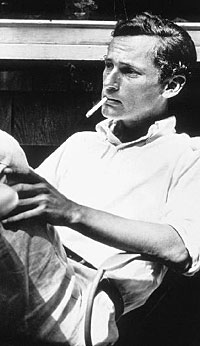
In his invaluable work A Reader’s Guide to William Gaddis’s The Recognitions, Steven Moore gives the following annotation to these lines:

 the description is of the first edition of R [The Recognitions]. Martin Dworkin’s photograph of Gaddis “sans gêne with a cigarette, sang-froid with no necktie” appeared in both the Time and Newsweek reviews.

Jack Green is more succinct in Fire the Bastards!: “the book the stubby
poet [Feddle] has is the recognitions [sic] itself.” And what is “the stubby poet” doing with such a bigass book? Reading it?

—Reading it? Christ no, what do you think I am? I just been having trouble sleeping, so my analyst told me to get a book and count the letters, so I just went in and asked them for the thickest book in the place and they sold me this damned thing, he muttered looking at the book with intimate dislike.

At least Feddle’s dislike is “intimate.” If he’d bothered to read it he might have gotten some weird alarming joy from this (meta)Recognitions. Or, even better, he might reread it—which is really the only way to read The Recognitions, I’m convinced, after my second full read. The book is more precise, more artfully constructed—more stuffed with motifs and symbols, doubled, tripled, quadrupled—than I had realized on first reading.

Jack Green made rereading The Recognitions a significant part of his life. He was an evangelist for the text, going so far as to take out a full page ad in The Village Voice in 1962 when the book was reprinted in paperback. His advertisement is five short paragraphs. The second paragraph is a proper, original blurb. The second paragraph is an argument for rereading. Here they are:

“The Recognitions” is a 956-page novel whose main theme is vanity or forgery—of Old Masters, $20 bills, slings, personality, everything. It is like a painting with a few primary figures presented in depth and an army of caricatures in the background. The main characters are unforgettable and, as is usually true, give the book most of its greatness. The minor characters, including the author himself who has a bit part, are very funny.

Like “Ulysses,” Gaddis’s book can be read the first time with enjoyment (my advice: don’t work at it) and then reread for years with increasing fascination. It has an intricate network of thousands of cross-references which give it a unique time-sense: as the connections are gradually recognized on rereading, the book appears to grow like a living being.

“Grow like a living being.” I think that’s about right.

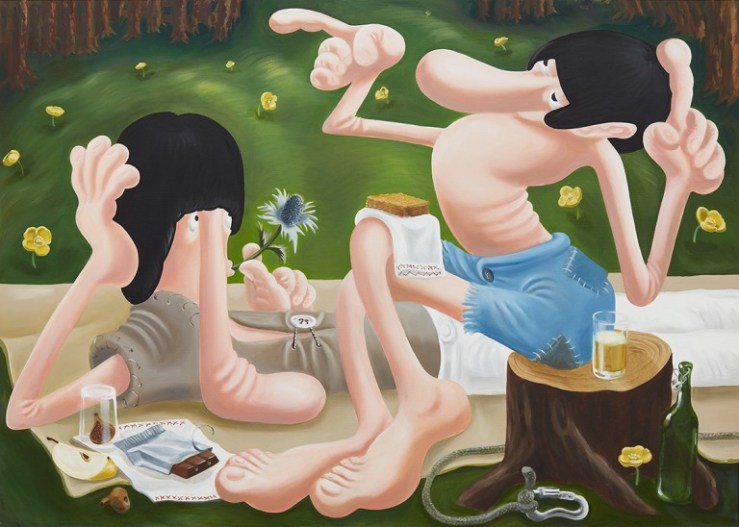
Beggar’s Banquet — Louise Bonnet

LB16.027_crop-768x548

Beggar’s Banquet, 2016 by Louise Bonnet (b. 1970)

A review of Hayao Miyazaki’s film Porco Rosso

porco-rosso

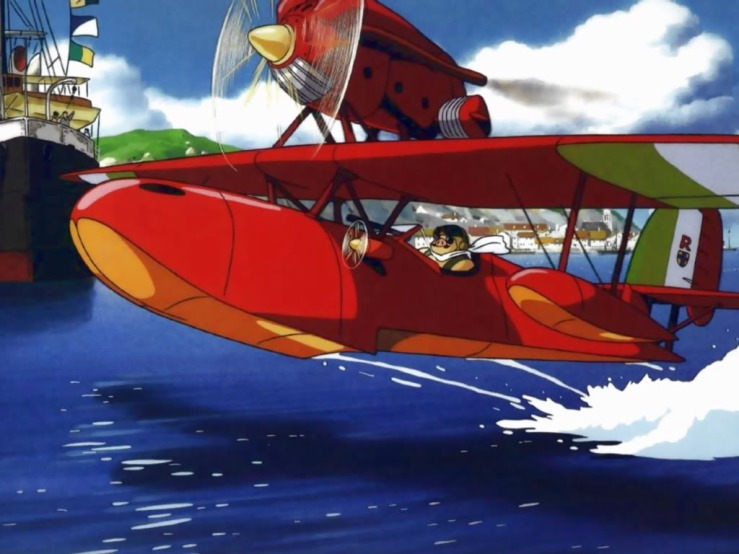
Hayao Miyazaki’s Porco Rosso (1992) is one of my favorite films, and I was able to see it this summer for the first time on the big screen thanks to Studio Ghibli Fest 2018. Although I’ve seen Porco Rosso maybe a dozen times, seeing its rich, deep, bold animation on an enormous screen felt like seeing it for the first time.

Porco Rosso takes place in and around various islands in the Adriatic Sea during the thin slice of years between the First and Second World Wars. Italy, like much of the world, is in the midst of a severe economic depression, and is slowly sliding into fascism. World War II is clearly on the horizon. Miyazaki pushes these problems to the margins of his film, conjuring instead a romanticized Mediterranean. However, this romantic space is always under the pressure of a coming disaster—fascism and a new war.

porcorosso5

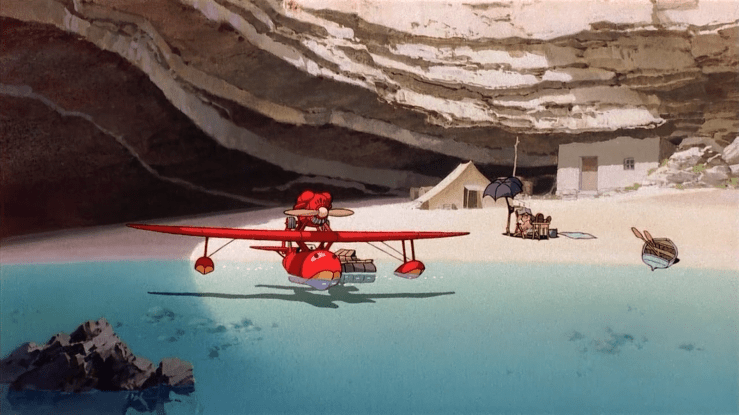
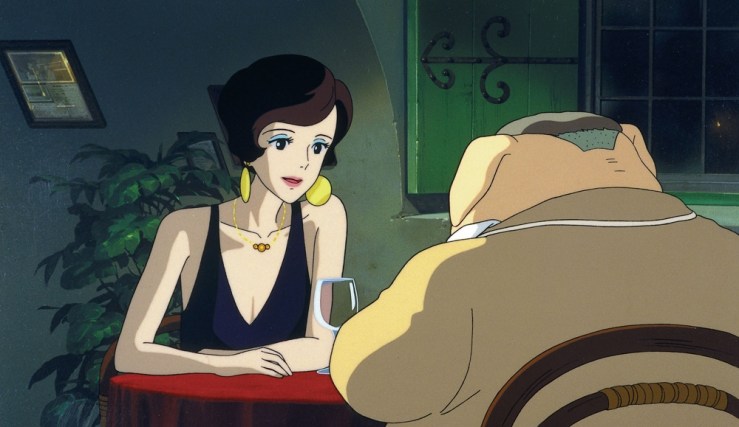
The hero of Porco Rosso is Marco Pagot (called Marco Rossolini in the American dub). Marco is an ex-military pilot, an aviation ace who fought with honor for the Italian air force in the Great War. He now spends his days drinking red wine and smoking cigarettes on a beautiful deserted island, occasionally taking jobs as a bounty hunter, retrieving hostages and other stolen goods from the nefarious and unwashed air pirates who plunder the ships of the Adriatic. Marco makes occasional concessions to civilization by taking a meal at the Hotel Adriano, a charming resort run by his oldest friend Gina. Gina is love with Marco and we come to realize Marco is in love with Gina, but he cannot come out and say this. Marco is a pig.

20130812-161255

Marco is literally a pig. He is the victim of a curse that the film never explicitly names or addresses, although a late scene late in which Marco essentially survives an attack that should have killed him—an event that gives him a dramatic glimpse of a heaven of pilots—may be a clue to the origins of Marco’s porcine curse. In any case, Marco’s pigman existence is the film’s only concession to the kind of mythical and magical fantasy that otherwise permeates Miyazaki’s canon (with the notable exception of The Wind Rises (2013), which in some ways is a sequel to Porco Rosso).

This isn’t to say that Porco Rosso isn’t a fantasy though. Miyazaki’s world of air pirates and bounty hunters, attractive hoteliers and hotshot engineers, and seaplanes dueling in a radiant sky, brims with an effervescent energy that counterbalances the grim specter of the Great War that preceded the film’s narrative action and the Second World War—and a Fascist Italy—that the narrative’s “real” time must eventually intersect. Ever the lone pig, Marco seeks to fly away from the social and historical forces that would constrain him.

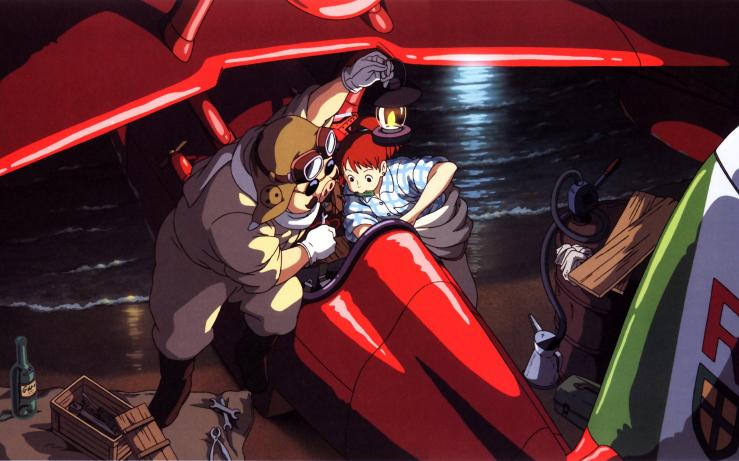
Unfortunately for Marco, luxurious isolation remains an impossibility. The air pirates hire a hotshot American to take out the damned Crimson Pig once and for all. Donald Curtis (hailing from Alabama in the Japanese version and Texas in the American) exemplifies American cockiness. His enormous jaw precedes the rest of his swaggering body, he falls in love at first sight with any beautiful woman he sees, and he’s brash and impetuous. He wants to transition to Hollywood and eventually become the President of the United States! Curtis shoots up Marco’s plane early in the film, but our porcine hero escapes to Milan, where he rebuilds his plane with the help of a whiskered mechanic named Piccolo and his charming granddaughter Fio. Fio redesigns the plane and eventually becomes Marco’s sidekick, traveling with him back to the Adriatic and helping him face Curtis and the air pirates.

2_porco_rosso

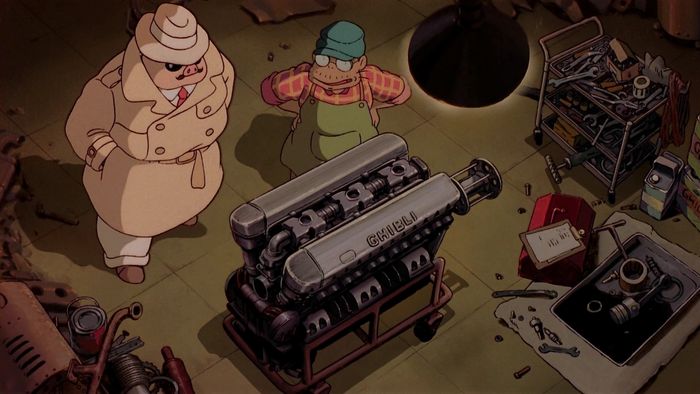
Fio, whose character design recalls Nausicaa of Nausicaä of the Valley of the Wind (1984), is another of Miyazaki’s prominent female protagonists. In some ways she is the secret hero of the film; she takes over the narration at the end, implicitly assuming Porco Rosso’s mantle. Fio has earned Marco’s trust after he is initially dubious of her ability because of her age and his sexism. Fio leads an all-female team of builders and engineers to recreate a superior version of Marco’s plane. This workshop sequence is one of the film’s finest. Miyazaki often foregrounds labor in his films, but Porco Rosso explicitly shows how a complex work—whether it’s a plane, or, y’know, a film—is never the singular work of a gifted genius, but rather the concentrated effort of a team. Miyazaki underscores the connection between the creative process of plane-building and film-making, stamping his studio’s name on Marco’s new engine. (Studio Ghibli was named after an Italian war plane, the Caproni Ca.309, which was nicknamed Ghibli—“Desert Wind”).

85268fc75512cda8cc331109c81ec95c

While in Milan, Marco realizes that the fascist secret police are after him. The Fascists in Porco Rosso (who want to conscript Marco—or take his plane) are far more ominous than Curtis. Curtis serves as an actual antagonist for Marco to face, and the fight between the two at the end of Porco Rosso, although violent, plays with a light comic touch. Miyazaki references the “gentlemen pilots” of World War I here. The Fascists, in contrast, are a spectral force lurking behind the narrative, threatening Marco’s individuality and autonomy. The film affirms itself as a comedy that resists encroaching fascism in a conclusion that sees Marco, Fio, Gina Curtis, the air pirates, and every other member of this strange Adriatic paradise working together to escape their approaching air force.

The film’s denouement is a retreat into the romantic Adriatic community, a kind of gauzy, rosy vision of an isolated paradise untouched by war or fascism. The fantasy reminds one of an island from some lost book of The Odyssey, a tranquil paradise unbothered by Trojans or Greeks. Marco—Porco—too feels like a figure from the margins of The Odyssey, a hero transfigured into a pig. The end of Porco Rosso refuses to give us a direct answer as to what happens to Porco. Does he regain his human form? Or, perhaps more importantly, is there a happy ending for Porco and Gina? The film offers a number of clues, some explicit and some implicit, but a first viewing may feel ambiguous for many viewers. However, subsequent viewings reveal a clearer picture as to what happens to Gina and Marco. Why the ambiguity then? Porco Rosso is (apart from The Wind Rises) the Miyazaki film with the strongest historicity. The historical reality of a looming World War II threatens to devour the romance of Gina and Porco—so Miyazaki and the inhabitants of his secret Adriatic world conspire to hide it. Lovely stuff.


[Ed. note–Biblioklept ran a version of this review in the summer of 2018].

Problems begin the moment we’re born (Hayao Miyazaki)

Happy birthday to Hayao Miyazaki. From The Kingdom of Dreams and Madness.