The Yiddish Policemen’s Union–Michael Chabon

chabon.jpg

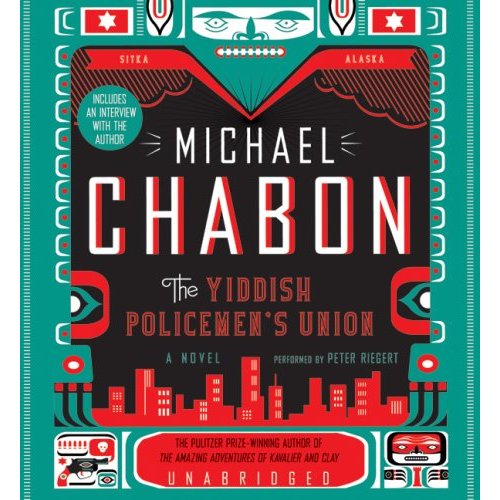
Yesterday afternoon, I finished listening to the audiobook version of Michael Chabon’s much heralded 2007 novel, The Yiddish Policemen’s Union, read quite competently by Peter Riegert.

I like audiobooks. They give me a chance to catch up with a lot of stuff that I otherwise wouldn’t have the time to read. Some people have a problem with audiobooks; apparently no one ever read a story to them. Or they’re just uptight. But that’s not what this is about. See, before I start picking at TYPU, I just want to preempt any Chabon fans saying: “Well, if you actually read the book, you would’ve liked it better.” No. I’m really good at listening to books on CD. Like, I can even make mental annotations. And I’ve enjoyed plenty of audiobooks in the past. This one, however? Nah.

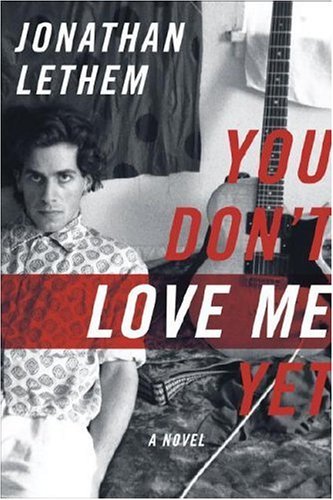
I’m sure that many of you out there are staunch defenders of Chabon, and I won’t deny that he’s a “literary” writer, and one who, like one of my faves Jonathan Lethem, uses genre tropes and styles to great rhetorical effect. That said: this “detective story” is a completely overwritten, self-conscious barrage of hyperboles that rarely engaged me; worst of all,  the book leads nowhere. In Chabon’s alternate reality, the Jewish diaspora continues into the Alaskan frontier. On the eve of the Yiddish settlement of Sitka’s Reversion–and the attendant displacement of the Jews–Detective Landsman investigates the murder of a young man, the son of an Orthodox gangster, who may or may not have been the messiah. There are all sorts of other problems, too, of course. Lots of problems=good writing, right?

In short, Chabon takes a cool premise–(what he believes to be) a Chandleresque detective story set in an alternate universe (à la PK Dicks’ The Man in the High Tower)–and crams in far too many tertiary plots, red herrings, and awkward symbols. Although Chabon’s prose is often funny and sometimes moving, in TYPU, his love for his own exaggerated metaphors and overstuffed similes distracts from the pacing and rhythm in what should be a gripping murder-mystery full of intrigue and suspense. Instead, I found TYPU to be clunky, and at times down right dull, but I kept listening: this book had gotten rave reviews, right? It was at the end of the book, when Chabon suddenly shifts perspective and lazily dumps an entire plot-essential back story on the reader, that I began to realize that this book was not the detective story it was claiming to be. No, the detective story was, like, a ruse, a trope, a form for Chabon to utilize in telling a story of Jewish identity, loss (infanticide lurks at the heart of this novel), and the metaphysical significance of chess. Chabon doesn’t really care about telling a good detective story (compare to Lethem’s lovelier and leaner Motherless Brooklyn, a detective novel that succeeds in telling a good mystery story and being all deep and shit). Instead, Chabon is happy to deadpan pseudophilosophy and use dippy conspiracy theories to help resolve his dangling plot threads. Not recommended.

We Who Are Not as Others–Daniel P. Mannix

we1.jpg

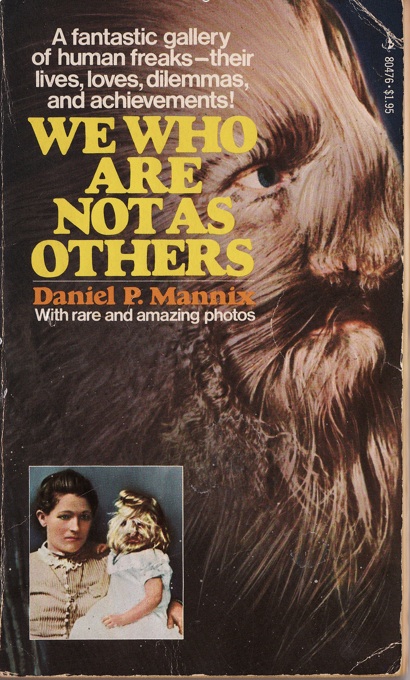
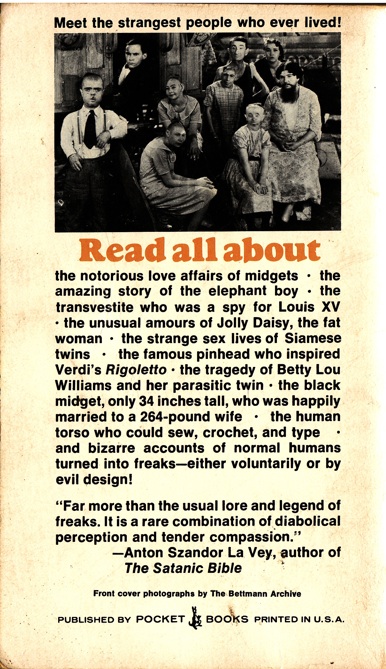
I’m not exactly sure if I stole Daniel P. Mannix’s immortal classic We Who Are Not as Others or if it was in a box of free books. I was in the eighth grade; it was the tail-end of a class trip to colonial Williamsburg, and I guess we had some time to kill, because they (they being the adults in charge) took us to a huge outdoor flea market. This was 1991 and Spike Lee’s Malcolm X had initiated a fad of wearing ball caps with a large solitary X emblazoned upon said cap. Some jokers at the flea market were selling hats emblazoned with a large solitary O, which the nimrod jocks in our class really thought was funny. They all bought the O hats; the counter-fad lasted about a fortnight after the Virginia trip. My love for We Who Are Not as Others, however, is immortal. My friend Tilford was rooting through a box of books: he claimed that the books were all free, although there was really nothing to indicate this. The mercenary setting of the flea market I now recall doesn’t seem to support Tilford’s assessment of the box. Nevertheless, we each wound up with a copy of We Who Are Not as Others. I read this book every year at some point. I implore you to read the back cover:

we2.jpg

Look, I can’t top that, and I’m not going to even try. The blurb is wholly accurate. Anton LaVey’s assessment (and the fact that the leader of the Church of Satan endorses the book also attests to its literary merit) is spot on: this is a tender, tender piece of literature. Although We Who Are Not as Others was withdrawn only a month after its initial 1976 publication, it was fortunately reprinted in 2000 by Juno books, and is still available.

we41.jpg

“[…] only one anus between them”–you must admire Mannix’s attention to detail. Good stuff.

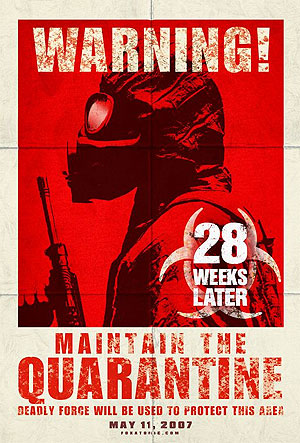
Mom and Pop are Zombies!–The Infanticidal Structure of 28 Weeks Later

As that most sacred of holidays, Halloween, draws closer, Biblioklept begins our annual celebration with a review of 28 Weeks Later, the sequel to future cult classic 28 Days Later. Look forward to all kinds of horror for the rest of the month!

28wks.jpg

At Sam Kimball’s talk at UNF last week, he put forth several ideas that would not be wholly unfamiliar to students and former students of his, or to anyone who’s read his book, The Infanticidal Logic of Evolution and Culture. Just a few of these ideas: cultural and biological evolution rests on an encoded infanticidal threat that no one wants to own up to, existence costs, and the ability of humans to smile represents a Darwinian miracle. The first two of these ideas provide an excellent lens from which to examine 28 Weeks Later; however, I’m not going to strain myself looking for smiles or hope in this awfully bleak, absolutely horrific movie.

It’s instructive to begin with a paraphrase of the infanticidal logic Kimball suggests underpins social order, and I think that can be done best by using Kimball’s own re-reading of the Oedipus story. The story of Oedipus, who outwits the Sphinx, kills his father, marries his mother, brings a plague to his city, and then stabs out his eyes, is–and here comes an understatement–a story foundational to psychoanalysis. In most readings, Oedipus is the tragically flawed hero who brings shame, disease, sin, and death to an entire society through his multiple transgressions. Kimball points out that most readings of this story focus on Oedipus’ relationship with his mother and father (sex and death), and that little attention is paid to the very beginning of the story. Recall now that the infant Oedipus is cast by his royal parents (metonymy for all parents), feet bound, into the wilderness to die, for fear that he will bring about chaos and death. The story is thus initiated in an infanticidal gesture, the willingness to kill a child for the good of the family, the tribe, the kingdom (see: Abraham and Isaac, Saturn gobbling his kids, Noah and flood, the crucifixion of Christ, etc. etc. etc.). Kimball sees structural infanticide as the blame for sin and corruption and death being put on the child; Oedipus is not the sinner in this reading, but the one who has been wronged from the beginning. Let’s see if we can’t apply some of this to a zombie flick. And, uh, a SPOILER WARNING is in order, I suppose (although I don’t think anything I’ll write can really spoil this film).

saturngoya450w20q.jpg

28 Weeks Later opens up with a last supper, the communion of a childless, makeshift family who’ve managed to avoid the infected zombies that plague Britain, spreading murder and chaos wherever they go. The communion is interrupted by a child who bangs on the door. After some indecision, he’s admitted by the wary adults, who ask him, of course, “What happened?” “My parents…they tried to kill me,” he answers. Within minutes of his arrival, the zombies are at the door, ready to spread their infection, annihilating the dinner party: the child, on the run from his infanticidal parents, brings disease and death to the community. Only Don (Robert Carlyle) escapes, and he does so by abandoning his wife, who clings to the newly arrived child.

Twenty-eight weeks later, the US military has quarantined part of London, and begun the repatriation of British citizens, including Don’s son and daughter, Andy and Tammy (played by the improbably named Mackintosh Muggle and Imogen Poots). Chief medical officer, Major Ross is deeply upset when she sees the children disembark the plane, declaring that the Green Zone the US military has established is not equipped for kids. Furthermore, she points out that they know little about the disease, and that kids might actually facilitate spreading it. Sure enough, Andy and Tammy run away from the Green Zone, heading back to their apartment, where they find Mom, who’s gone feral. Their Mom has some kind of genetic resistance to the effects of the disease (figured in her mismatched brown and blue eyes, a trait shared by Andy); she exhibits mild symptoms and is a carrier. This is discovered by Major Ross when the trio are forcibly returned to the Green Zone. Don, swamped in guilt, sneaks in to see his wife. He kisses her, immediately gets the disease, then goes on a murderous rampage. The US military, in a moment of shining brilliance, move all the non-military personnel to a locked basement. Don gets in nonetheless, the infection spreads like a dirty rumor, and the army begins killing everyone indiscriminately. Again, the children bring the infection to the community, and the entire society must pay with wholesale apocalyptic genocide, ultimately figured in the firebombing of the city.

28-wks-2.jpg

Andy and Tammy escape this fate when Major Ross and Sergeant Doyle, a kindly sniper, escort them out of the city. Ross and Doyle symbolize a set of “good parents,” in direct opposition to Don, a rampaging zombie who somehow singles out his children in particular. Just like the child at the beginning, the two are on the run from not just the patriarchal US army “protectorate,” now annihilating everything that moves, but also their own biological father. In the course of aiding the children’s escape, both Ross and Doyle meet grisly yet heroic ends. Believing that the children may carry a genetic clue to a vaccine for the virus, the “good parents” give their own lives to save the children. Still, the children are the cause of their death. Don eventually catches up with his kids and bites Andy, before he’s shot to death by Tammy. Andy, like his mom, doesn’t go nuts when he gets infected, but he’s still a carrier. Doyle’s buddy, helicopter pilot Flynn, transports the kids across the English Channel (that is, after making the tough decision not to just kill them). The movie ends with shots of rampaging zombies near the Eiffel Tower: a child has again carried infection, disease, and death to a once-pure, contained area, continental Europe.

28_3.jpg

Upon its theatrical release earlier this year, most critics focused on 28 Weeks Later as an allegory of US military involvement gone awry, a thinly-disguised critique of the Iraq invasion. And while many arguments could be made for this analysis, I think its important to realize that the actions of the US military in the film are not ultimately the cause of the apocalyptic genocide at its center; rather, the military responds appropriately to contain the very real threat of contagion, the risk of total death figured in the disease the zombies carry. The cost of continued existence here is the realization that everyone in the Green Zone must die. The movie invites us to see both the military and the zombies as the bad guys, but ultimately the movie blames the children for the downfall of mankind: the army is just trying save the rest of the world, making a calculated cost analysis (albeit, one measured in human lives); the zombies are, well, uh, mindless rampaging zombies–animals, running ids with teeth, but not really evil. No, it’s the kids here who bring about sin and shame, death and disease. The infanticidal structure of the film argues for the execution of children, those dirty little harbingers of contagion. Paradoxically, the film hides this gesture under the heroic self-sacrifice of the “good parents,” Ross and Doyle, who give up their lives to save the kids. The audience is invited to empathize and identify with Ross and Doyle, who reject both the patriarchal authoritarianism of the US military (despite the fact that they are both military officers) as well as the mindless entropy of zombism. In the end though, their self-sacrifice is pointless–Andy spreads disease into another “pure” area, putting the entire world at risk. Flynn should have executed the children, like he was supposed to. The movie thus acts as a warning against the dangers of sin and infection that are presented in the children, and in turn, 28 Weeks Later upholds patriarchal, sacrificial, infanticidal values.

In my ranting and raving and raging and rampaging, I forgot to point out that I enjoyed the movie very much: it was truly terribly awfully bloodily unceasingly horrific.

Dialogism–Michael Holquist

dialogism.jpg

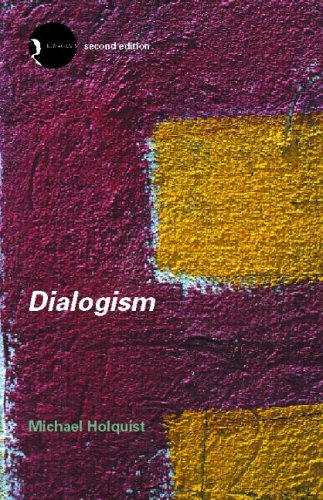
Michael Holquist’s Dialogism, a highly approachable introduction to the theory of Mikhail Bakhtin, is the most enjoyable book of literary theory I’ve wrapped my head around in quite a while. Bakhtin’s dialogism is–and I’m drastically paraphrasing here–a way of interpreting texts in terms of the way that they “speak” to other texts. In Bakhtinian dialogism, language exists in an endless play of call and response, of modulation and echo of all language that has come before and all language that is to come after. Written in short, concise bursts of information, Holquist’s Dialogism illuminates Bakhtin’s complex ideas; additionally, Holquist reads Bakhtin against heavyweights like Roman Jakobson, Kant, Saussure, and, uh, Albert Einstein. Most useful and enlightening of all are Holquist’s own dialogical readings, particularly his reading of Shelley’s Frankenstein. Dialogism is an essential introduction to an important philosopher, and, more importantly, a pretty good read.

25 Lines on Poetry

1. I do not like poetry.

2. I like folk songs, sea shanties, nursery rhymes, limericks, hymns, field hollers, riddles, epigrams, epigraphs, epitaphs, epithets, obituary notices, fortune cookie fortunes, square dance calls, confiscated notes, found diary entries, proverbs, anagrams, aphorisms, catcalls, insults, howls, air kisses, and handshakes, but I do not like poetry.

3. OK, maybe I like a poem or two. Or a poet or two.

4. I admit: I love the words of Walt Whitman. I unstop my throat to sing his praises. I lean and loafe at my ease with him. I laze it up.

5. Also, I admit: Emily Dickinson makes the good poems. Or made them (she is, I know, long dead). Her poems at first seem neat and tidy and even sparkly, but upon closer inspection bristle like riddles riddled with slant rhymes. Sex and death.

6. And, when I was younger: e.e. cummings (E.E. Cummings?). Later, I discovered that he was Not to be Taken Seriously as Serious Poet, Seriously.

7. But that was OK. Because I knew by then that I don’t like poetry.

8. I do like to read the occasional poem: William Carlos Williams, Langston Hughes, James Weldon Johnson, William Blake: all have written a verse or two worth pondering over for a few idle moments.

9. But I mistrust the reading of volumes of poetry.

10. I also mistrust contemporary poetry and contemporary poets (although I know very few poets, MFAs both of them, and they are very good people, but I don’t know where they get off calling themselves poets).

11. Rap lyrics are not poetry: I’m just saying.

12. I took a poetry class when I was in university. It was required. I didn’t enjoy it, not even a little. The only poem I remember liking even a little was Gerard Manley Hopkins’s “The Windhover.” I liked the alliteration, but I don’t remember what it was about. My teacher seemed to think it was a lesser poem and Hopkins was a lesser poet.

13. “Howl”–garbage? Garbage, am I right?

14. But then again, I didn’t care for On the Road.

15. I like to read a poem at random: perhaps in a periodical or a quarterly, sandwiched between factoids and graphics and fragments of narrative essay.

16. Poetry may or may not still be considered the highest art form: I think it is probably not considered the highest art form anymore: no one reads poetry anymore: not unless they have to: for school, y’know?

17. Ezra Pound and T.S. Eliot: Bob Dylan wrote about these guys: Bob Dylan: not a poet: Dylan Thomas: he wrote a poem or two I like: “Rage, rage against the dying of the light”: that’s a nice sentiment: a nice poem: but–

18. Ezra Pound and T.S. Eliot: hard to decipher: If I’m going to put that much effort into reading something, it’s going to be Derrida or Freud or James Joyce.

19. James Joyce: not much of a poet, strangely (maybe not strangely?) enough: not strangely, I’ve decided.

20. MFA programs now produce poets who write for an audience of other MFA poets. Meanwhile, school children sing the body electric and miss all the psychological subtlety of “The Raven.”

21. Poe: Poe is the Greatest American Writer Who Never Wrote a Great American Novel (maybe if he hadn’t died in the gutter at only 40…).

22. Poe: I like his poems, in small doses (like shots of syrupy night time cold medicine, thick and green).

23. You will now forget the awful simile above: we will all agree it was poorly written: a bad idea.

24. Also, let’s forget all about points 1-21 as well, and we might as well forget about point 23 to boot.

25. In fact, the whole post has been ridiculous and ridiculous: mea culpa.

Dubliners — James Joyce

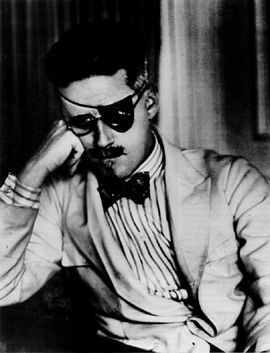
#1 Stunna James Joyce thinkin’ deep thoughts

James Joyce’s Dubliners was one of those books I read in college, shelved under “got it,” and moved on without a second thought. I just re-read (and then re-re-read) the collection again: there’s much, much more to this book than I remembered. Dubliners has always been overshadowed by Joyce’s later works, A Portrait of the Artist as a Young Man, Ulysses, and Finnegans Wake. A closer reading of these fifteen short stories–which effectively unite as a work of complex structure–reveals that many of the themes of the later masterpieces, as well as Joyce’s rhetorical technique, are prefigured in Dubliners. On the surface, the stories seem straightforward–at least in a modernist/realist sense–slice of life urban literature, stripped of romance. Indeed, Dubliners seems to take all of its characters at an ironic distance, treating the protagonists to a series of negative epiphanies. Joyce explores the literally vulgar language of commerce, rife with trite clichés and placeholders, to show how what is not said in customary discourse jars against what custom does permit. The greatest aspect of psychological realism (whatever that means) in Dubliners results from the conflation of voices at play in the stories. The characters imagine their identities in language, a language culled from equal parts Romantic poetry and Bible verses and street signs and post office directories. The intense self-consciousness revealed by the characters calls for a strange mix of empathy and loathing and ironic distancing and even embarrassment on the part of the reader. I think that this style, combined with the anti-epiphanies figured in each story, is something so thoroughly normal, even expected by the contemporary reader, that it becomes easy to overlook just how groundbreaking and prescient these stories were at the beginning of the twentieth century. If you’ve read these, take the time to re-read them. If you haven’t given Joyce a shot, this is the right place to start.

If you don’t have time to read all fifteen in the collection but still want the rhetorical gist, read: “The Sisters,” “Araby,” “An Encounter,” “Eveline,” “Two Gallants,” “A Little Cloud,” “A Painful Case,” and, of course, “The Dead.” Or, if you’re really pressed for time: “The Sisters” and “The Dead.” Have at it.

We Will Never Forget (And Neither Will You, Kids)

kirkspocksept11.jpg

So, I work at a high school, and every year, around September 11th, I get some kind of memo from my boss–the school’s principal–reminding the teachers to “talk to the kids about 9/11.” Each year I get roughly the same version of a 9/11 narrative from the kids. The following phrases are pulled from actual past narratives, and are chosen because they represent the basic thrust of most of the writings. Occasionally a narrative will be of some interest–maybe a kid from New York or D.C., or a particularly thoughtful or sensitive kid–but on the whole, the following is pretty standard:

“They turned on the TV. My teacher was crying. I didn’t know what was going on. I was in middle school [ed. note–in the past couple of years, depending on the grade I teach of course, the kids tend to be in elementary school–this years batch were about ten years old in 2001]. I was scared, but then I was happy because I got to go home. It didn’t really effect me. I didn’t really care. We should get school off every 9/11.”

The memo this year likened 9/11 to life-changing “I remember where I was when _____” events like the bombing of Pearl Harbor, the Apollo moon landing, the JFK assassination, and (no kidding) the 2004 World Championship of the Boston Red Sox.

On one hand, I have no problem with this: I will never forget where I was on the morning of 9/11 (asleep and hungover in my brother’s old bed in my parents’ house) or what I was doing (nothing; I was unemployed; I was supposed to move to Tokyo the following week) or how I felt (shocked and scared and weirded out and secretly selfishly ashamedly worried that my international plans were now in jeopardy). I add my own experiences parenthetically, because the are of no importance; still, the spectacular disaster of 9/11–no matter what your take on the whole thing is (how it happened and who did it and why it was done, etc.)–the spectacular disaster of 9/11 exists as an ideological construct demarcating a social shift: hence the term post-9/11 and all things post-9/11, etc. etc. etc.

And so well this is my problem: what are we doing when we mark the day to these children; specifically, what am I–a teacher–doing when I affirm the ideological significance of 9/11 to my students, despite the fact that they clearly–repeatedly–have no interest beyond self-interest in the whole thing (“We should get the day off school”)? This is not a rhetorical question; this is an earnest and most sincere question, one that I don’t have an answer for. My students display the same distanced ambivalence toward 9/11 that I might hold for, say, the U.S. exit from Saigon or the bombing of Pearl Harbor. It’s something that I’ve been told I should care about for a range of historical reasons beyond my personal control or personal range of power; somehow, it should inform my identity (“American”) and my ideology (“good American”). I accept these ideological markers as “historical facts” and neglect the margins of history in favor of a much easier story to follow.

I’m not railing against the “importance” of 9/11 or whether or not 9/11 is important: I go back to my question in the previous paragraph: what am I doing when I affirm the ideological significance of 9/11 to my students? Exactly what ideology is being affirmed? Why is 9/11 like the Apollo moon landing or the JFK assassination? By transitive property of its I-remember-where-I-wasness? Clearly this has to be a public where-I-wasness, a shared where-I-wasness; nobody is going around comparing 9/11 to the day they lost their virginity or the day their child was born (although undoubtedly people got laid for the first time and children were born on 9/11/01). But this need to make sure our children recognize 9/11 as an ideological marker cannot simply be rooted in a shared where-I-wasness, can it?

My gut feeling is that the post-9/11 ideology may seem vague and amorphous, and may seem to be as-yet-undefined and up for grabs and still under debate, but in reality, there are forces at work shaping this ideology: the grand spectacle of 9/11 insured a public where-I-wasness that has honestly marked me. Now that mark, that trace, is something that I am expected to re-mark on, to pass on, to send down into my students. Only I’m not sure exactly what the mark means, and their vacant eyes affirm what I think I fear: my personal experience of where-I-wasness is just a symptom of acute exposure to spectacle, and nothing these kids really care about. And should they care?

John Steinbeck: An Appreciation

I read John Steinbeck’s The Red Pony in the eighth grade and didn’t think much of it. I was more interested in Vonnegut and Kerouac and Kafka and HS Thompson at the time, all of whom seemed more substantial and just plain cooler. The boyhood adventures recounted in The Red Pony seemed hokey to me, and perhaps because of the title, I came to conflate Steinbeck’s novella with Marjorie Kinnan Rawlings’s Where the Red Fern Grows (ed. note: as gentle reader jd points out in the comments below, this is an error on Biblioklept’s part: it was actually Wilson Rawls who wrote Where the Red Fern Grows, Rawlings wrote The Yearling), which we also read that year, and which I also thought was interminably silly. Somehow, I managed to make it through both high school and college never reading anything by Steinbeck, and on the way, I also somehow managed to pick up the idea that he was an inferior or unimportant writer, unequal to Twain or Fitzgerald or Hemingway or Salinger, and certainly more boring than my beloved PK Dick and William Burroughs.

Fortunately, this ignorance was corrected the first year I started teaching high school. A more experienced teacher recommended that I read Of Mice and Men with my ninth graders. I probably wrinkled my nose at the idea (prejudiced as I was), but desperate to find a text that would engage them (as she swore up and down Of Mice and Men would), I gave it a shot.

The story of the child-like Lennie and his brother-keeper George hooked me from the first few paragraphs, and I, along with the students, became entranced, hooked on the book, unable to wait for the next day to read more. The next semester a new group of ninth graders and I worked our way through the book; a little more savvy now, I utilized Gary Sinise’s reading on audio book, possibly the best audio version of a book I’ve ever heard. He also directed and starred in a film version, with John Malkovich’s portrayal of mentally handicapped Lennie translating with realistic warmth and pathos. Sinise’s movie version is nearly perfect. By the fourth time I went through OMAM with the kids, I had introduced all kinds of different approaches to the text: gender readings, readings that focused on the disabled body, readings that troped against the book of Genesis and so on. I found that no matter how many times I read the text, I was never bored, and I always found something new in Steinbeck’s spare language. And it was–and is–Steinbeck’s measured and controlled prose that so impressed (impresses) me. Like Hemingway, Steinbeck eliminates everything extraneous, loading each word and sentence with significance; unlike Hemingway, Steinbeck’s writing shows a keen sensitivity toward persons besides macho white males.

I don’t teach ninth grade anymore, but I always slip a few Steinbeck readings into my AP Language and Composition course. Over the past few years, I’ve read a good deal of The Portable Steinbeck; if you want to boast a decent library of great American literature, this book is essential. Not only does it contain the whole of Of Mice and Men and The Red Pony, it also has carefully-chosen chapters from The Grapes of Wrath that manage to stand on their own (a testament to both editor Pascal Covici, Jr. as well as Steinbeck’s writing). Plus, look at that cover–very cool (I have a class set of these, and one student added a speech bubble to Steinbeck’s image with the text: “I’m a pimp”)

stein.jpg

What prompted this post? Well, I have one tenth-grade section right now–World Literature–and I usually introduce some of the themes I like to cover over the course of the year–colonialism, cultural clash, etc. (we’ll read Achebe’s Things Fall Apart next)–with Steinbeck’s novella The Pearl, a beautiful and sad book that is often overlooked as a lesser work, childhood fare like The Red Pony (admittedly a lesser work). This morning, starting a new reading (sixth? seventh?) with a group of young kids all engaged in a story they didn’t think they wanted to read, I realized that I wanted to say this: Steinbeck is great. Steinbeck is great and that’s something I had to find out from a bunch of kids. Steinbeck is great and I almost didn’t know it because my prejudice prompted me overlook him. Steinbeck is great and I want you to read him. Go for it. You can find a used copy of Of Mice and Men anywhere. It’s about a hundred pages long. If you read a chapter a night, you’ll be done in less than a week. Take the Biblioklept challenge. If you don’t like it, let me know.

INLAND EMPIRE–David Lynch

inland-empire.jpg

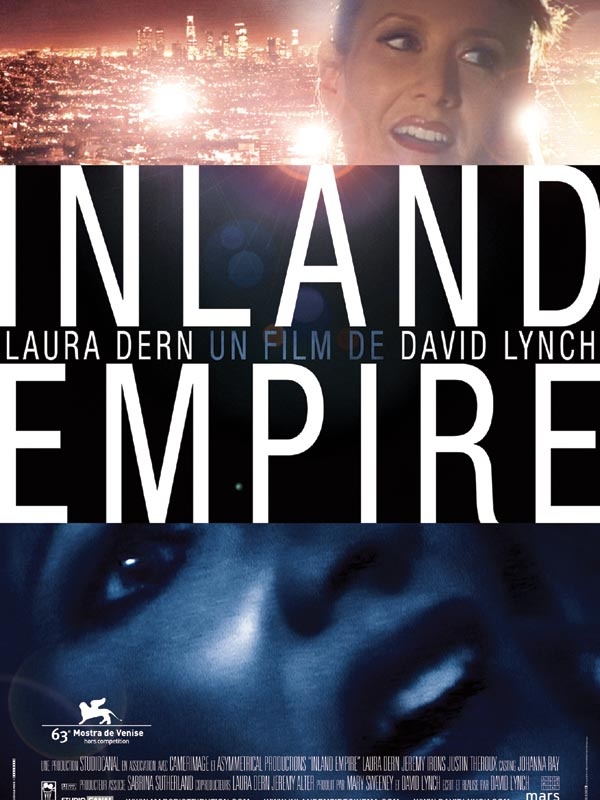
There’s so much going on in David Lynch’s INLAND EMPIRE that I’ll give you the quick review up front: if you like David Lynch films (I do), you’ll love this film (I did)–it’s arguably his most ambitious to date and belongs in the canon of great Lynch films along with Blue Velvet and Mulholland Dr. Get a hold of it and watch it right away. If you don’t like David Lynch films, you won’t like INLAND EMPIRE–but you already knew that, didn’t you?

Contrary to some of the internet rumors and poorly conceived reviews out there, INLAND EMPIRE actually does have a plot, complete with an honest-to-goodness resolution full of redemption and love. However, the fragmentary and elliptical nature of the film will no doubt confound anyone who tries to actively resist it: like Mulholland Dr. before it, this is one you need to just let happen to you. Attempts to impose your own system of narrative logic will probably result in headaches and frustration. You see, INLAND EMPIRE is really a time-travel movie, and time-travel movies–the good ones–are always resistant to narrative logic (see the Grandfather Paradox, etc.).

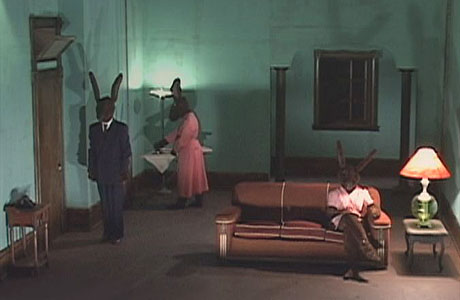
The story begins with a gypsy-witch’s curse: she visits actress Nikki Grace (played by Laura Dern who appears in almost every scene of the movie, and is truly fantastic) and warns her about the coveted film role she’s about to land. It turns out that the film, On High in Blue Tomorrows, is a remake of a Polish film called 49 that was never finished because the two leads were murdered. “If it was tomorrow,” the gypsy croaks, pointing across the room, “you would be sitting over there. Do you see?” And Nikki does see: the rest of the film may or may not be a vision prompted by the gypsy. However, my phrase “The story begins” at the beginning of this paragraph was not entirely accurate: before we even meet Dern’s character, we see a light projection and a phonograph needle, a weeping woman trapped in a room watching a chilling sitcom starring bunny people (INLAND EMPIRE thus gets to go on a special list of movies featuring scary rabbits, including favorites Donny Darko and Sexy Beast), and a strange scene with a Polish prostitute.

inland460.jpg

So there are plenty of frames to this frame-tale, and the narrative only continues inland as the movie progresses, exploring a multiplicity of spaces and times. Dern’s Nikki morphs into new and different characters–housewives and hookers–even as she passively stands on the wall, a frightened voyeur robbed of all agency. And in many ways this is the major theme of the movie: how to find agency and self-determination in a world where time and place–context–are the main components and constituents of identity. INLAND EMPIRE breaks down the lines between actors and prostitutes and really any other job, suggesting that perhaps we all have some identity as a whore, an identity thrust on us by location and time, an identity that we are always struggling against.

But this is really just one of many themes in the movie. The usual Lynch tropes are here: pop nostalgia with a sinister tinge, stilted dialog, lush red curtains, characters that seem of vital importance who never show up again, cryptic symbols that may or may not be symbols at all, etc. etc. etc. Despite its three hour running time, INLAND EMPIRE never lags or sags, in large part because so much weird stuff is going on, but also because in many ways this movie is a distillation of every other Lynch film: we get the murder mystery of Twin Peaks, the abuse-of-women theme inherent in Blue Velvet, the Wizard of Oz riffing from Wild at Heart, the voyeur-terror of Lost Highway, the Haunted Hollywood and doppelganger mindfuck of Mulholland Dr., and the general creepy weirdness that’s underscored every Lynch film since Eraserhead.

gross_lynch.jpg

INLAND EMPIRE is shot entirely on digital video, a format that Lynch swears is the future of cinema. I’m not sure about that–although his movie is a beautiful masterpiece of textured light and composition, not all directors are painters like Lynch; in someone else’s less-gifted hands this movie could’ve been, visually speaking, a muddled mess. Still, it seems for now Lynch is determined to continue shooting on DV.

A couple of days before I saw INLAND EMPIRE, I heard most of an interview with Lynch on NPR’s Talk of the Nation. Neil Conan asked him what the last great movie he saw in the theaters was, and, to my surprise, he said that it was The Bourne Ultimatum, a movie he touted as being “excellent” or “perfect” or something like that. At first this struck me as odd–Lynch going to see a pretty straightforward–albeit smart–action movie? But on further reflection there’s nothing odd about this. I think that Lynch sees his films not as outsider films or art films per se, but as something more akin to the Hollywood tradition–I’m sure he’s not deceived that his films are as accessible as the Bourne films, but I do believe that he is a pop artist (or Pop Artist, if you prefer)–he had a huge hit television show, didn’t he? And INLAND EMPIRE not only fits in with Lynch’s growing pop art legacy, it could be the masterpiece of his oeuvre. Let’s hope that that legacy continues to grow; INLAND EMPIRE suggests an artist in his prime who will continue making great films.

Michael Jordan, Quantifiable Data, The Pursuit of Excellence, and Public Education in America

I came of age (as the hackneyed phrase goes) in the nineties, a magical time when the Chicago Bulls ruled the world and Michael Jordan was the king of the universe. As a young kid, I didn’t really care about sports: I wasn’t very good at them and I didn’t really grow up in America, so my exposure and interest were limited on two fronts. But by 1991, my family had moved back to the States and I was suddenly aware of something very, very cool: there were these guys, the Bulls, who played like the best orchestra in the world. They were all awesome individually–Michael Jordan was basically God in Nikes, and there was this guy Scottie Pippen who was a star in his own right–but they also played as a real team. By the time the Bulls were going for their “threepeat” in the ’92 NBA season I–and just about every other kid in America–loved the Bulls. I didn’t really even care about basketball, to be honest–I liked it all right I guess, but what I really loved was to watch Jordan play. By the time I was headed to college, the Bulls were finishing up their second “threepeat,” and I knew for certain that I didn’t really care about basketball at all–just the Bulls and Jordan. I also knew that this was somehow lame or shameful, and it was also kind of sad. I only cared about seeing something really, really good. But who could blame me–especially after Jordan decided to come back after giving minor league baseball a shot, especially after game five of the ’97 championship, when Jordan, running a fever of over one hundred degrees, scored 38 points including a game-deciding three-pointer in the last minute. That’s pure magic; that’s divine spirit channeled. But why am I going on about this? You were probably there too, and if you weren’t, you know the mythology.

The point is that we love winners in America. We love to see someone excel at something, to do something better than anyone else, and do it harder, faster, longer, more, more, more. We don’t just want excellence, we want spectacular excellence (and conversely, devastating, soul-crushing failure). And we want excellence we can measure: points made, times beaten, wins racked up, championship victories accrued. We want to know for sure who won: we don’t like ties (soccer will never really take off in America). We want objective evidence to point to, so we can say plainly what is good and what is great and what is excellent and what is not: see, the numbers are right there.

This need for winners is, of course, not confined to the world of sports. Americans now seem to want to know who the winners in education are: they want test scores and school grades that objectively determine what a student knows or does not know. But the ability to think critically, rationally, logically, and creatively cannot truly be determined objectively. Education isn’t a basketball game, with points, and winners, and losers. When a basketball team is good, we know that they’re good because there is a system of rules that make the game a game (without the rules, there is no game). However, education is not a game, and treating it as such is unfair to young people in schools.

I am not making an argument that all kinds of testing be done away with, or that objective testing can’t provide a clear idea of the strengths and weaknesses of students and schools. The right kind of tests help assess deficiencies that can then be remedied. However, America is doing little right now to educate their children. Our educational model in this country goes back to the Industrial Revolution; we are behind the rest of the world in science education; we have abandoned the idea of teaching civic responsibility and bought in to the myth that to be American is to be a cannibal capitalist. There is clearly a gap between public expectations of public education and public support of public education. I don’t think that the average American comprehends the genuine literacy crisis that this country is faced with right now, but it’s real, it’s happening, and the results will be objectively measurable in the ever-growing gap between the rich and the poor in this country.

I’m on a rant now; sorry. I’ll try to be clearer: standardized tests like the Florida Comprehensive Assessment Test (FCAT) are a big waste of taxpayer money. They prove nothing and divert resources–money and educators’ time and energy–away from meaningful instruction and real learning. I’m not arguing that the test is too difficult–it’s not, and you certainly should be able to master such material in order to graduate high school–but the amount of stock the state has put into this test is ridiculous. It delimits creative and complex thought, limiting students to bubbling answers without recourse to explanation or rationale. Even the written response sections don’ t allow for real analytical assessment–students must literally think inside a tiny little box, and if their answer goes outside of the box, it will not be considered for grading. We need to abandon these types of tests and replace them with a meaningful, real-world based curriculum. We need to teach kids word processing, website design, standard office programs. Institute new hands-on science programs. Bring back shop, home ec, etc. But that’s not what’s happening: instead of curricula based on real-world needs, Florida continues to ask for objective data in place of real thinking, test scores instead of laboratories and practicums.

We all knew that Michael Jordan was great; we didn’t need the scoreboard to tell us. We didn’t need the MVP awards and National Championships and thousands of points he made to tell us. You could see it in his jump, in his tongue, in his eyes. It came out of the TV and you could feel it. MJ’s excellence was truly excellent because it transcended objective data: even a nerd like me could recognize it and honor it and hope to reach something close to it in some unknown way. We loved MJ because he represented an unquantifiable, nearly ineffable excellence; I believe that this excellence has a potential analog in the mind of any student in this country. But when we get hung up on things like points, scores, and grades, we not only send the wrong message, we also squander and misspend that potential.

Superbad:Supergood

superbad_bigposter.jpg

Superbad is really, really funny; funny like funny-from-beginning-to-end funny, funny like out-of-shape persons like myself will feel laughter fatigue after leaving the theater type funny. The film has been plenty hyped, and for good reason; it doesn’t disappoint. My tendency is to judge a film’s greatness on the last 30 minutes–plenty of films deliver a solid opening based on an interesting premise that eventually falls flat. Superbad resuscitates a hackneyed premise, injecting it with genuine heart and soul, plenty of jokes, and, magically, an ending that doesn’t make you go “meh.”

I won’t bother going over the details of the plot: it’s essentially the same as any other teen sex comedy (think Porky’s and American Pie). Heroes Michael Cera, Jonah Hill, and Christopher Mintz-Plasse shine as the freaks and geeks trying to score some booze in the hopes of getting laid, and SNL’s Bill Hader and screen writer Seth Rogan play two rotten cops who balance the young trio’s misguided attempts to navigate the adult world.

superbad1.jpg

Underneath the rough profanity and crass humor of Superbad is, of course, a tender spirit of love and comradery tempered by the requisite sense of loss that attends the ending of any era (in this case, the end of high school). Homosociality dominates the film in every aspect, figuring most strongly in the changing relationship between Evan (Michael Cera), who’s off to Dartmouth next year, and Seth (Jonah Hill) who’s bound for “State.” The homosocial undercurrent is most neatly summed up in the penis motif that runs through the film, although an especially tender scene between Evan and Seth near the end also stands out as a perfect evocation and identification of platonic male love. While other teen sex comedies fall into gay-panic jokes (American Pie again), Superbad presents homosociality as unthreatening, even when it falls out of the culturally normative balance. And by the end of the movie, Seth and Evan do manage to reach a culturally normative balance, sundering their codependency in order to try meaningful relationships with girls. It’s a happy ending.

Like American Grafitti, Fast Times at Ridgemont High and Dazed and Confused before it, Superbad is a teens-growing-up comedy that transcends its genre; undoubtedly it will be revered for years to come. Besides, it’s really fucking funny. Highly recommended.

How Bluegrass Music Destroyed My Life–John Fahey

dc124.gif

As astute reader Nicky Longlunch pointed out in a comment on my last post on 50 Great Guitarists, John Fahey was not only a fantastic guitarist, he was also a published author. Fahey wrote three books–1970’s Charley Patton, a biography of that great blues guitarist (out of print now unless you buy the Charley Patton box set); 2000’s How Bluegrass Music Destroyed My Life, a collection of mostly humorous anecdotes and stories; and the posthumously published Vampire Vultures, a collection of Fahey’s letters, limericks, and interviews. HBMDML and VV are both still in print from Drag City (you can also read a PDF extract from HBMDML there).

I remember enjoying How Bluegrass Music Destroyed My Life back when it was first published, when Mr. Longlunch was kind enough to let me borrow it (I returned it folks!). I recall it as being funny, insightful, and Bukowski-spare; I recall it also exhibiting the same raw pathos that Bukowski infused in his work, but with none of the vulgar meanness. The best parts of the book detail Fahey’s young years in Maryland. I can’t really remember much else. I’d love to read it again, but I can’t really shell out $20 for a paperback right now. And unfortunately, I can’t just borrow it from Longlunch again, because he is no longer in possession.

In his comment, Longlunch griped at me to “Focus!” and he’s right–this blog is supposed to be focused on stolen books, and, poor guy, his copy of HBMDML is (I’m guessing) somewhere in Texas. Or he’s just misplaced it for the past seven years. Or he’s lying about it being MIA because he doesn’t want to loan it out. Which is fair, I guess.

Before I leave, I should also point out that Fahey isn’t the only author I overlooked in yesterday’s post. For years now, Pete Townshend has been doing “research” for his as-yet-unpublished autobiography. So we have that to look forward to.

We’re Ready for You, Mr. Grodin

charles-grodin.jpg

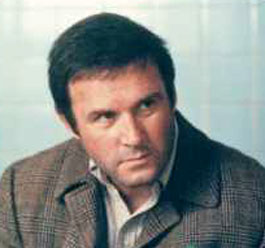
A post over at RP a few days back reminded me of a long-forgotten chestnut by Charles Grodin, We’re Ready for You, Mr. Grodin, a memoir of the curmudgeon’s odyssey through TV land’s myriad talk shows. For readers too young to recall, Charles Grodin used to go on late-night talk shows and play a misanthropic git, provoking David Letterman or Johnny Carson with mean-spirited jibes. Of course, it was all an act; a kind of toned-down Andy Kaufman bit, perhaps. He even had his own talk show for a couple of years on CNBC; it was pretty all right decent okay (I think he does the Andy Rooney bit on 60 Minutes II now, but I’m not really sure because I won’t watch anything on CBS except Sunday Morning).

Well so and anyway, I remember the book as being pretty good, but obviously this is the sort of thing for Grodin fans only (and I must admit I love Grodin–and not just the Grodin of Seems Like Old Times or Midnight Run, but also the Grodin of Beethoven’s 2nd (superior in many ways to the original) (Grodin also had a cameo in Rosemary’s Baby, you may recall–a film I had a mild obsession with in my college years)).Sadly, I lent this book out and it never came home (hey, come to think of it, I haven’t written about a stolen book in a really long time. Slackin’). I’m not sure who I gave it to, but I have a suspicion a funny-looking redheaded kid might be the culprit. Now if only Michael Keaton would write a book…

Exterminate All Rational Thought: Burroughs at the Movies

naked-lunch1.jpg

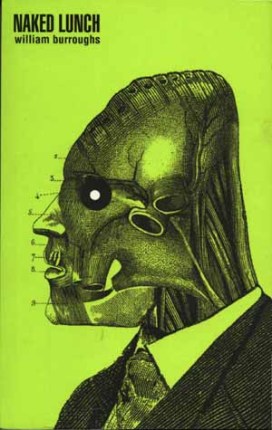
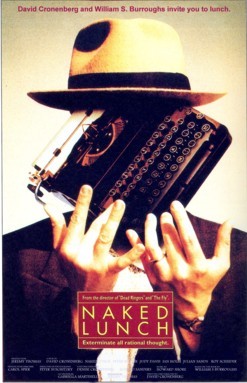
I love Naked Lunch. I love David Cronenberg. Theoretically, I should love David Cronenberg’s film adaptation of William Burrough’s psychosurreal classic. But hey, that’s rational thought for you, right? I didn’t love it in ’93 or ’94, the first time I saw it. Maybe I was too young. Maybe I just didn’t get it (but if that was the case then why did I love the book so much..?) So I watched it again as an undergrad; this was maybe ’99 or ’00. Nope. In fact, I remember thinking “Wow. This is actually pretty bad.” At that point, I was a big Cronenberg fan too. eXistenZ had just come out. eXistenZ is easily my favorite Cronenberg film, and a favorite film in general, and Naked Lunch didn’t hold up well against it or my re-reading of the Burrough’s book. But yet and still, ever the glutton for disappointment, I gave the Naked Lunch movie another shot this weekend, as part of the Biblioklept Summer of Cronenberg Film Festival. Guess what? It’s not a very good movie.

The fault of Cronenberg’s movie is not in failing to adapt the content of Burrough’s book, which is pretty much untranslatable as a narrative movie. Instead, Cronenberg attempts to weld some of the images of Naked Lunch–along with elements of other Burroughs novels such as Nova Express, The Soft Machine, and The Ticket that Exploded–into a cohesive thread using Burroughs’s biography as the overarching frame story. Burroughs’s life story is fascinating–the guy shot his wife in the head, for chrissakes–and lit junkies will love to see characters based on Kerouac and Ginsberg and Paul Bowles–but the end results simply don’t achieve or reflect the spirit of the novel. The bitter, caustic satire of Naked Lunch is almost wholly absent, replaced by wry one-liners from Peter Weller (who woodenly portrays Burroughs’s alter-ego, William Lee (an alter-ego who doesn’t appear in the novel of Naked Lunch at all, incidentally)). Cronenberg seems to underestimate his audience’s capacity for a nonlinear story, taking the loose collection of riffs, routines, and episodes that comprise Naked Lunch, and turning them into a pretty dull meditation on the nature of creativity and the suffering and alienation of the outsider-artist. Worst of all, the audience is asked to identify and sympathize with William Lee–again, this seems to be a negation of the original text.

naked_lunch.jpg

In the end, Cronenberg’s Naked Lunch is just another bad Cronenberg film (see also: his mish-mashed adaptation of J.G. Ballard’s Crash, his boring adaptation of Stephen King’s The Dead Zone). In Naked Lunch, we get the usual Cronenbergian tropes: mechanical objects that become hideously organic, bodily invasion, constant “is this real or is this a dream?” moments, and general dark creepiness. However, they simply don’t work here: Cronenberg is attempting Burroughs-icky resulting only in Cronenberg-icky. Cronenberg’s entire oeuvre is littered with flawed films, but I tend to enjoy them more for their flaws. This one was a no-go though, and I gave it three shots. But, in a way, I believe that Cronenberg deserved three viewings. You never know. Still, I doubt I’ll watch this one again.

If you haven’t seen a Cronenberg film, I suggest starting with Videodrome, A History of Violence, or eXistenZ. He also has a new movie coming out later this year, Eastern Promises starring Naomi Watts. If you haven’t read Burroughs, I suggest starting with Junkie or Queer (or just go ahead and jump into Naked Lunch).

I end with a far better review of Naked Lunch than I’ve provided here, courtesy of The Simpsons. Do you remember that episode where Bart makes a fake driver license (not the one where he’s awarded a real driver license courtesy Mayor Quimby)? And he takes Milhouse and Nelson and Martin on a road trip to the World’s Fair in Knoxville? Well, along the way the boys decide to sneak into an R-rated movie. They leave the theater disappointed; the shot reveals that they’ve just left Naked Lunch. Nelson remarks: “There’s at least two things wrong with that title.” I’ll leave it at that.

Journey into Mohawk Country–Van den Bogaert and O’Connor


mohawk.jpg

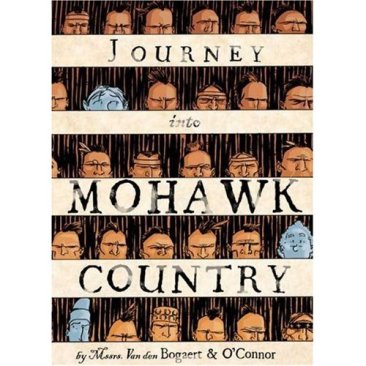
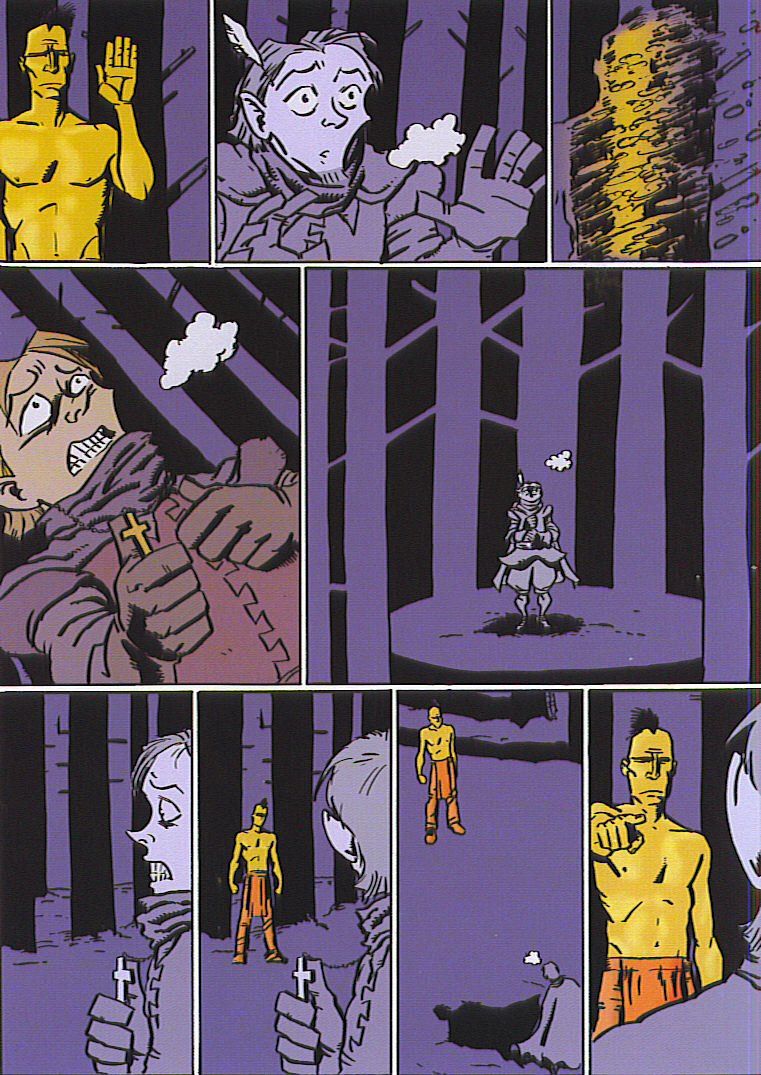
Journey into Mohawk Country is George O’Connor’s adaptation of Harmen Meyndertsz Van den Bogaert’s diary, an historical document detailing the young Dutch explorer’s 1634 journey out west of New Amsterdam to make contact with Indian villages for trade. O’Connor uses Van den Bogaert’s words verbatim, but his graphic novel format allows him extraordinary liberties with the journal’s account. Vague descriptions are literally fleshed out; O’Connor finds innuendo in even the simplest of Van den Bogaert’s entries, illustrating a between-the-lines reading of the Dutchman’s diary. O’Connor even manages to stick a strange epiphanic mystical revelation scene in there. The story itself is pretty simple: Van den Bogaert and his two companions head out into Mohawk country, meet and trade with Indians, eat bear, learn about some alien customs (including a sequence where some Indians show Van den Bogaert how to heal the sick by vomiting on them), and go back to Fort Orange. It’s really the little interpretive scenes around the text-proper, courtesy of O’Connor’s cartoony pictures, that make Journey into Mohawk Country such a pleasure to read. O’Connor’s work here illustrates the first-person narrative’s slippery claims on truth and the limited viability of a “true” historical account. Good stuff.

mohawk2.jpg

No Country for Old Men–Cormac McCarthy

no-country.jpg

Didn’t we write about No Country for Old Men a week or two ago? Yeah, but that was for the upcoming Coen brothers movie; this post is a review of the audiobook, and I’m not creative enough to think of a different title.

So we listened to the entirety of Cormac McCarthy’s No Country for Old Men over the course of two drives: from Jacksonville to St. Pete Beach and back. First off, as far as books-on-CD goes, this one was pretty good. Native Texan Tom Stechshulte manages to get all of the male characters spot on (the women in the novel sound kind of ridiculous though), and the action-filled plot, tight pacing, and simple sentences make for an easy-to-follow-while-driving listening experience (this is my number one criterion for an audiobook–you have to be able to follow the plot while navigating a road littered with truckers and asshole teenagers. F’r’instance, Faulkner’s short stories are almost impossible to follow in audiobook format).

Set in 1980, No Country for Old Men is the story of Llewellyn Moss, a Vietnam vet who stumbles across the aftermath of a drug deal gone bad and a suitcase with 2.4 million dollars in it. Of course, he takes the money and runs. Assassin Chigurh is hot on his heels to collect the drug money, leaving a bloody wake of murder and chaos. Sheriff Bell, a WWII vet who first-person narrates the beginning of each section of the book, is also on the case, trying to track down Llewellyn before he gets himself killed.

The first five discs (of seven) of the book were excellent–an exercise in genre fiction–the crime-suspense novel–that transcends the limits of the genre’s tropes. McCarthy’s spare prose moves at just the right pace, with just the right amount of “literary” interjection. However, the end of the novel morphs (evolves or devolves?) into a meditation on war and the changing nature of America and the American people. McCarthy’s symbols and metaphors seem heavy-handed and downright clunky at times, and in the end, the book becomes something of a reflection on personal failures and regrets, and how these personal failures add up to national failures.

Perhaps because I was driving, and because I had been so involved with characters over the course of five compact discs who suddenly disappeared in the narrative, I was disappointed in the end. Perhaps if I had read the book instead of listening to it on compact disc while driving, I would have found the ending more profound, or even enjoyable. Who knows–reading books vs. listening to them is probably a subject for another post. I do think that the Coen brothers will make a fantastic movie out of this story–potentially on par with Fargo. We’ll see.

Rescue Dawn–Werner Herzog

rescuedawn2.jpg

So my uncle and I went to see Rescue Dawn, the new Werner Herzog film. Rescue Dawn is the true story of Dieter Dengler (not a porn name), an Air Force pilot who crashed his plane during a mission over Laos in 1966. Dengler was captured, held as a POW, and tortured by his captors. Dengler organized and executed a daring escape, leading the other prisoners out of the camp. In 1997 Herzog made a documentary about Dengler’s story called Little Dieter Needs to Fly. I have not seen that film.

My expectations for Rescue Dawn were high–I love Herzog’s films, which mix high adventure with a sense of naturalistic realism and psychological surrealism–and I love Christian Bale, he of American Psycho fame, who plays Dengler. I suppose my expectations were too high, because Rescue Dawn wasn’t nearly as good as I thought it would be. My uncle was also slightly disappointed. It was by no means bad, but it wasn’t nearly as good as its reviews would make it seem; additionally, it’s practically a Hollywood action movie (complete with the big happy ending in front of an assembled audience of cheering extras)–something I wouldn’t have expected from Herzog. Bale is excellent though, as is co-star Steve Zahn, and the setting and pacing of the film make for an exciting afternoon. Then again, so does Missing in Action.

I may be going a little rough on Rescue Dawn–it’s better than 99% of the schlock out there, and in a summer crowded with franchise sequels, I think that moviegoers (i.e. people who go to the movies every week) should go check it out. Chalk my disappointment up to high expectations. Netflix addicted hermits like myself should probably just wait for the DVD.