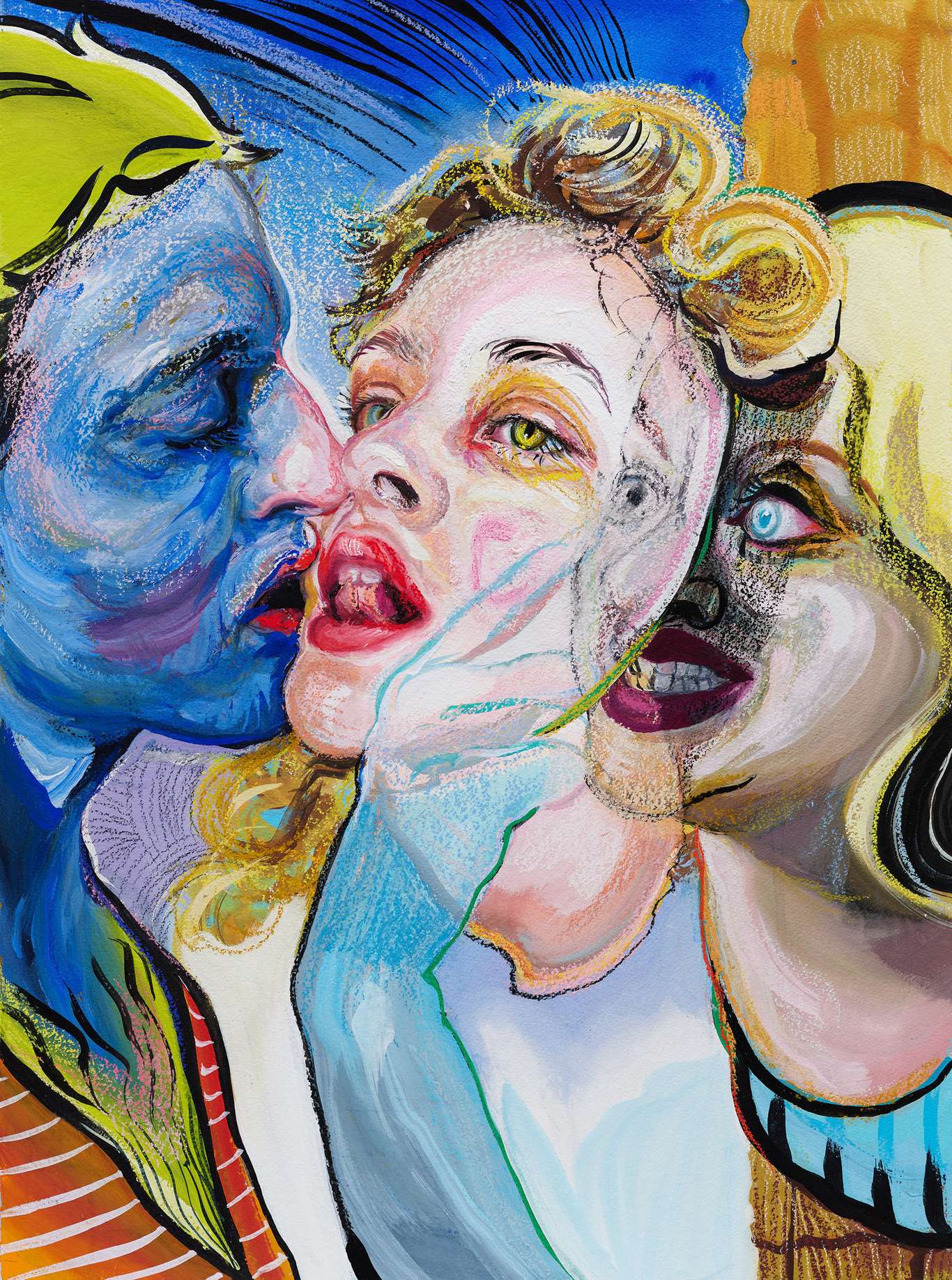
Fun! — Samplerman

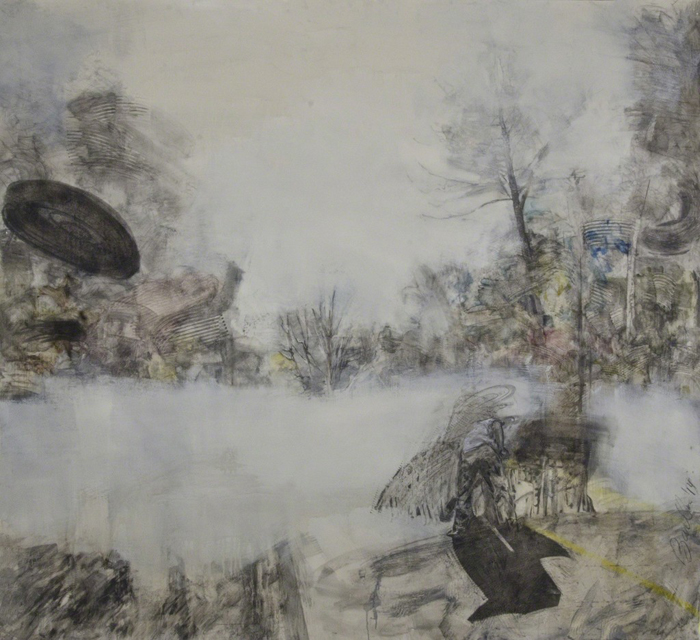
Fun!, 2021 by Samplerman (Yvan Guillo)

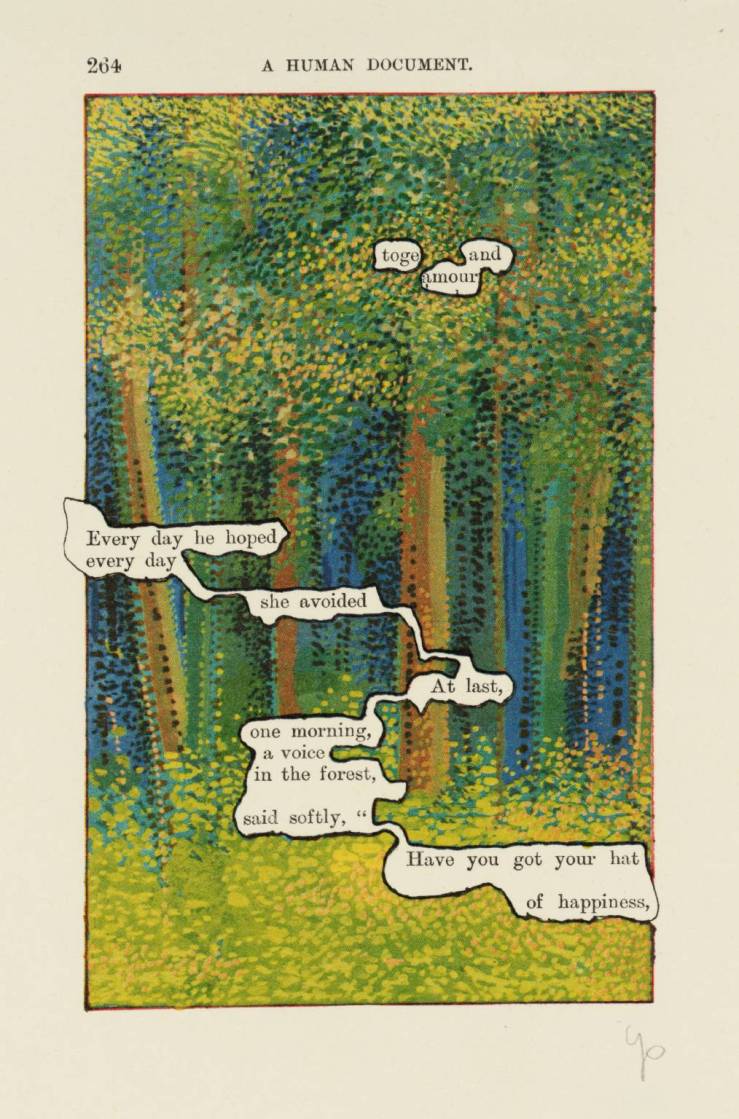
Untitled (A Human Document, 264) — Tom Philips

Untitled (From A Human Document, p. 264), 1970 by Tom Phillips (b. 1937)

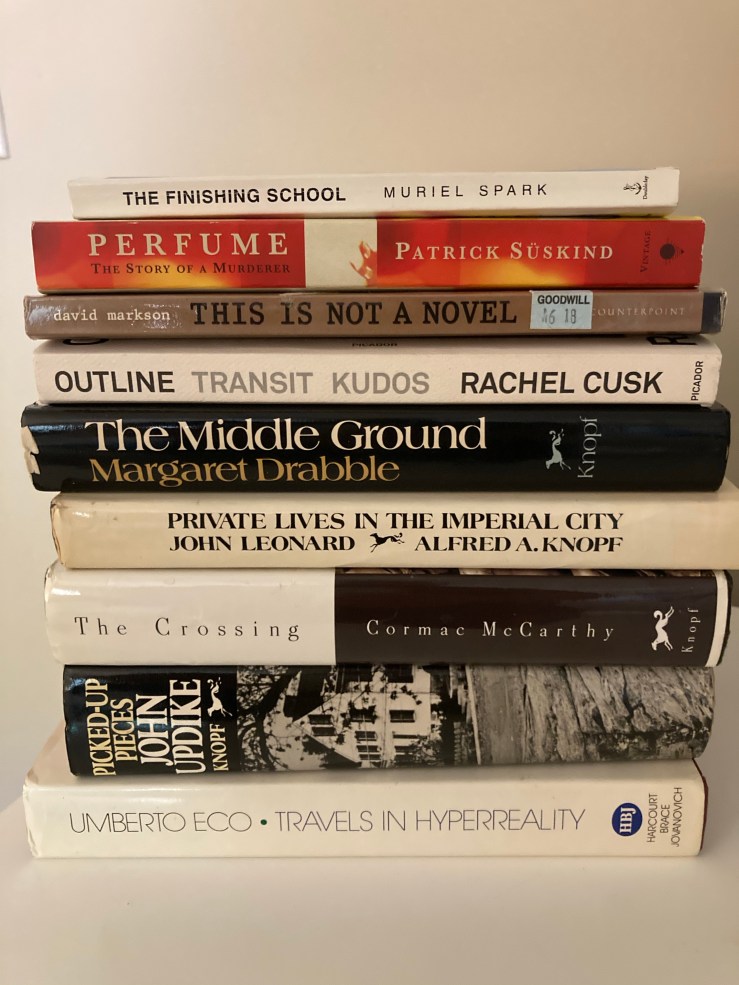
Books acquired, May Day 2021

Every year, within a week or two of Mother’s Day, our family likes to get a place in a proximal walkable beach town. Some place not too far a drive from our simple ranch home near the mighty northward-flowing St. Johns River, some place not too touristy, some place with nachos and beer and etc. St. Augustine Beach is a favorite and frequent spot, but this year we opted for St. Simons Island, a sea island off the Georgia coastline. We did not do a trip in 2020, for obvious reasons, but the wife and I have been fully vaccinated for weeks now, and we knew we’d be more or less outside for the entire weekend, so the fam drove an hour north. It was the first time we’d been out like this since March of 2020, when we stayed on a houseboat on Jekyll Island (the sea island immediately north of St. Simons). It was a nice, chill weekend—fried fish, golf carts, minigolf, the beach (with thousands of dead jellyfish to amuse the kids).

The Literary Guild of St. Simons was also having their annual spring sale–basically a Friends of the Library sale, if you know what that is. If you don’t: outdoors, lots of flat boxes of books, books, books. I ended up picking up more than I should have—I haven’t even done any of these stupid “books acquired” posts for the last three books that came in (including the lovely book I was reading this weekend, Rachel Eisendrath’s Gallery of Clouds)–but I have it on no small authority that these semi-annual Guild sales help fund most of the SSI library’s budget. (Also, as is often the case with these things, it was cheaper to add a book or two than not to.)

So: Top of stack to bottom:

The Finishing School, Muriel Spark. This is, I believe, the last novel Spark wrote. It came out in 2004; I read a bunch of her earlier stuff last year (and her early novel The Bachelors this March), but it was the mid-period novel Loitering with Intent that I thought the best. I’m not sure if this last novel has the best reputation, but Kakutani hated it, so maybe I’ll dig it. (Oh, and this edition is an ARC!)

Perfume: The Story of a Murderer, Patrick Suskind (trans. by John E. Woods). I loved the 2006 film adaptation. No idea if the book is any good, but the story is all kindsa fucked up.

This Is Not a Novel, David Markson. Look, I already own a copy. But I have a friend who doesn’t (I think).

Outline, Rachel Cusk. I think this is the first of these, right? Admittedly I avoided Cusk’s trilogy, which seemed overhyped (like Knausgaard, maybe?), but for a dollar I’ll give it a shot.

The Middle Ground, Margaret Drabble. A pristine first edition of a mid-period Drabble novel which is perhaps a take on Mrs. Dalloway. Drabble was nowhere on my radar until a few weeks ago when I read that the experimental British novelist B.S. Johnson included her on a list of (then) contemporary British writers he esteemed as writing “as though it mattered.”

Private Lives in the Imperial City, John Leonard. I mostly knew Leonard’s work as a reviewer for Harper’s—his column “New Books” was a go-to for me for a decade, and I wouldn’t presume to say I learned anything from him about writing book reviews (he would be horrified if he cared enough to be horrified), but I thought him an exemplary critic. But mostly fun to read. I didn’t even know about his New York Times column, “Private Lives,” which he wrote between 1977 and 1980. I had no idea what Private Lives was about—I just loved the spine (and then the great cover, featuring a Frank Stella painting)—but most of all I knew I wanted a book by John Leonard. I ended up spending a nice chunk of Saturday reading through the columns, which read like witty, snarky, intimate blog posts—stories about friends, relatives, exploits in New York and abroad. Leonard hates parties; Leonard hated Blow-Up; Leonard finds compassion for a loudmouth on a coast-to-coast flight. This might be the gem in the batch.

The Crossing, Cormac McCarthy. Hey. Look. I own it. But I don’t own it in first edition hardback, right? I recall it as my favorite of the so-called “Border Trilogy.”

Picked Up Pieces, John Updike. I’ve never been a big fan of Updike’s fiction, but I’ve always found something to admire in his criticism and nonfiction. He’s holding a turtle on the cover of this edition. The final section is called something like “One Big Interview,” and the last question asks him which animal he most admires, and he answers that it is the turtle.

I’m pretty sure that the Leonard and Updike (and probably the Drabble) all came from the same collection—there was basically a near-complete set of pristine first-editions of Updikes and John Cheevers, as well as a heavy dose of Philip Roths—all in impeccable condition, tidy jackets, no foxing, clearly read, but unmarked.

Travels in Hyperreality, Umberto Eco. There was also a first-edition of Foucault’s Pendulum in hardback, which I should’ve picked up instead.

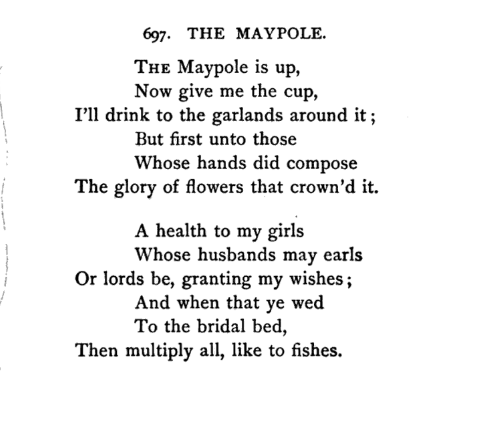
“The Maypole” — Robert Herrick

Screenshot 2018-05-01 at 2.24.10 PM

A review of Berg, Ann Quin’s grimy oedipal comedy of horrors

ann_quinn_berg_hi_rgb

Ann Quin’s 1964 novel Berg begins with one of the best opening lines I’ve ever read:

A man called Berg, who changed his name to Greb, came to a seaside town intending to kill his father…

This opening line encapsulates the plot of Berg, its terminal ellipses pointing to the radical indecision that propels the novel’s central oedipal conflict—will Berg do it? Can he actually kill his father?

The “seaside town” mentioned in the opening line is presumably Brighton, where Quin was born and died. Quin’s Brighton is hardly a holiday-goer’s paradise though. Grimy and seedy, claustrophobic and cold, it’s populated by carousers and vagabonds. There’s a raucous, sinister energy to Quin’s seaside setting; her Brighton is a combative hamlet pinned against the monstrous swelling sea.

While we sometimes find ourselves in this seaside town’s drunken dancehalls, shadowy train stations, or under grubby piers, most of Berg takes place in a dilapidated boarding house. Here, Alistair Berg (going by Greb) has taken a room adjacent the room his father Nathaniel lives in with his younger mistress Judith. Nathan and Judith’s apartment is a strange horror of antiques and taxidermy beasts. Berg’s apartment is full of the wigs and hair tonics he ostensibly sells for a living. It’s all wonderfully nauseating.

Through the thin wall between these two spaces, Berg hears his father and mistress fight and fuck. He attends both animal grunting and human speech, an imaginative voyeur, and is soon entangled in their lives, as neatly summarized in a letter to his mother Edith, the fourth major character who is never-present yet always-present in the novel. Writing to thank Edith for a food parcel she’s mailed him (Berg is a mama’s boy), he reports:

How are you? Everything here is fine. I’ve seen my father, but so far haven’t revealed who I really am (how Dickensian can one get, and what can I really put—that he’s been fucking another woman next door, and probably a dozen others besides over the past fifteen years, is about to go on tour with some friend in a Vaudeville show, trailing a dummy around, that he’s in love with a budgie…?) Somehow I think you’re better off without him, he seems a bit the worse for wear, not at all like the photograph, or even like the ones you already have of him, and he still hasn’t any money, as far as I can make out he’s sponging left right and centre.

After promising to return home in time for Christmas, Berg signs off with this ambiguous and oedipal ending: “Meanwhile—meanwhile—well I’m going to fuck her too…”

As the novel progresses, the relationships tangle into a Freudian field day: Berg and his father Nathaniel; Berg and his mother; Berg and Judith; Judith and Nathaniel; Nathaniel and Edith. Desire is a funny floating thing in Berg, which plays at times like a horror story and at times like a demented closet farce. As the narrative voice tells us at one point, “no one is without a fetish or two.”

Berg’s desire to kill his father is explored, although his rationale is muddy. Certainly, Edith, whose voice ventriloquizes Berg’s memory, helps spur Berg’s oedipal impulse: “There you see that’s your father who left us both,” she tells him as a boy, pointing to a photograph, adding, “you’ll have to do a lot to overcome him Aly before I die.” So much is loaded into that word overcome. Quin’s novel is precise in its ambiguities, evoking a feeling of consciousness in turmoil.

Berg’s turmoil is indeed the central thrust of the novel. He can’t decide to patricide. Berg works through the justifications for murder, ultimately trying to root out the impetus of his desire to kill his father. “Of course it’s ridiculous to think the whole thing is simply a vehicle for revenge, or even resentment—hardly can it be called personal, not now, indeed I have never felt so objective,” he tells himself at one point, sounding like one of Poe’s maniacs. Quin’s narrative affords him several opportunities to go through with the murder, but, in the novel’s first half anyway, he stalls. “Yes, that’s what it amounts to, decide rather than desire,” he proclaims.

Like Prince Hamlet, Berg is terribly indecisive, spending much of the novel vacillating between action and inaction, letting his consciousness fly through every imaginative possibility. Indeed, the main setting of Berg is not really Brighton or the boarding house, but Alistair Berg’s mind. And yet consciousness is his biggest curse: “Definitely the supreme action is to dispose of the mind, bring reality into something vital, felt, seen, even smelt. A man of action conquering all.” Later, he tells us that “The conscience only sets in when one is static,” coaxing himself toward action. Berg aspires to more than Eliot’s Prufrock. He desires to be more than an attendant lord to swell a progress, start a scene or two.

Indeed, Berg is author, director, and star in this drama of his own creation—he just has to finally follow the call to action. When he finally does snap the mental clapperboard, he comes into the possession—or at least believes he comes into the possession—of his own agency: “How separated from it all he felt, how unique too, no longer the understudy, but the central character as it were, in a play of his own making.”

Throughout Berg, Quin employs a free-indirect style that emphasizes her character’s shifting consciousness. Whatever “reality” Berg experiences is thoroughly mediated by memories of his mother’s voice and his own projections and fantasies. Consider the shift from “he” to “I” in these two sentences:

Half in the light he stood, a Pirandello hero in search of a scene that might project him from the shadow screen on to which he felt he had allowed himself to be thrown. If I could only discover whether cause and effect lie entirely in my power.

Perhaps his dramatic flair comes from his father, a vaudevillian ventriloquist whose most prized possession is a dummy. The dummy is the tragicomic symbol at the heart of Berg, a totem of the way that other voices might inhabit our mouths and drive our desires in bizarre directions. Berg, desirer of the power to cause and effect, often sees others around him as mere props. “She’s not unlike a display dummy really,” he thinks about Judith, who accuses him as someone who’s “always playing a part.” Hefting (what he believes to be) his father’s body, Berg, “aware of the rubbery texture of the flesh,” thinks, “ah well the old man had never been a flesh and blood character really.”

Berg is both victim and hero in a mental-play that he aspires to make real. Consider this wonderful passage that collapses Berg’s monomania, prefigurations of guilt, and dramatic impulses into a courtroom trial:

Alistair Berg, alias Greb, commercial traveller, seller of wigs, hair tonic, paranoiac paramour, do you plead guilty? Yes. Guilty of all things the human condition brings; guilty of being too committed; guilty of defending myself; of defrauding others; guilty of love; loving too much, or not enough; guilty of parochial actions, of universal wish-fulfilments; of conscious martyrdom; of unconscious masochism. Idle hours, fingers that meddle. Alistair Charles Humphrey Greb, alias Berg, you are condemned to life imprisonment until such time you may prove yourself worthy of death.

Berg’s guilt fantasies are bound up in a sense of persecution as well as his notion that he is the real hero of this (his) world, in his belief that he is above “the rest of the country’s cosy mice in their cages of respectability”:

A parasite living on an action I alone dared committing, how can they possibly convict, or even accuse one who’s faced reality, not only in myself, but the whole world, that world which had been rejected, denounced, leaving a space they hardly dared interpreting, let alone sentence.

Although Berg takes place primarily in Our Boy Berg’s consciousness, Quin leavens the fantasy with a hearty ballast of concrete reality. Consider this icky sexual encounter between Berg and Judith, which involves hair tonic and a nosy landlady:

Berg shrank back, bringing Judith with him, she taking the opportunity of pressing closer; sticky, the tonic now drying—gum from a tree—almost making it impossible for Berg to tear himself away. He felt Judith’s warmth, her soft wet tongue in his ear, soon she became intent on biting all available flesh between hairline and collar. But the landlady’s demanding voice made her stop. Berg sank back, while Judith squirmed above him. But as soon as the landlady seemed satisfied that no one was about and closed the door, Judith began licking his fingers. He pulled sharply away, until he lay flat on the floor, his head resting against something quite soft. Judith began wiping his clothes down with a large handkerchief that distinctly smelt of wet fur and hard-boiled sweets. He tried getting up, but she leaned over him, and in the half light he saw her lips curl almost—yes almost—he could swear in a sneer, a positive leer, or was he mistaken and it was only the lustful gaze of a frustrated woman? He jerked sideways. Judith fell right across the body.

Ah, yes — “the body” — well, does Berg carry out his patricide? Of course, in his imagination, a million times—but does his mental-play map onto reality? Do you need to know? Read the book.

Read the book. There’s nothing I can do in this review that approaches the feeling of reading Ann Quin’s Berg. I can make lame comparisons, saying that it reminds me of James Joyce’s Ulysses (in its evocations of loose consciousness), or David Lynch’s Blue Velvet (in its oedipal voyeuristic griminess), or Luis Buñuel’s The Exterminating Angel (for its surreal humor and dense claustrophobia). Or I can point out how ahead of her time Quin was, how Berg bridges modernism to postmodernism while simply not giving a fuck about silly terms like modernism and postmodernism. Or I can smuggle in big chunks of Quin’s prose, as I’ve sought to do, and which I’ll do again, like, here, in this big passage wherein our hero dreams:

Two white-foaming horses with female heads and hooves of fire, with strands of golden mane—honey cones—bore him across a silken screen of sky, over many islands that floated away, and became clouds, a landscape of snow stretching below, and above a canopy of gold. But a harsh voice needled him, pin-pricked his heart, and three drops of blood poured out, extended across the canopy. From this whirlpool a shape formed, then a massive head appeared, without eyes. He turned to the horses, but they were now toads, squat and squeaking, leaping into the hissing pool. The face grew, the mouth opened, swallowing everything, nearer and nearer, until he felt himself being sucked in, down, down and yet farther down, into quicksands of fire and blood, only the dark mass left, as though the very centre of the earth had been reached. The sun exploded between his eyes. He stood up, practically hurling the rug over his shoulder, and jogged towards the station.

Or I can repeat: Read the book.

Of course Berg is Not for Everyone. Its savage humor might get lost on a first read, which might make the intense pain that underwrites the novel difficult to bear. Its ambiguities necessitate that readers launch themselves into a place of radical unknowing—the same space Berg himself enters when he comes to a seaside town, intending to kill his father.

But I loved reading Berg; I loved its sticky, grimy sentences, its wriggly worms of consciousness. I wanted more, and I sought it out, picking up The Unmapped Country, a collection of unpublished Quin stuff edited by Jennifer Hodgson and published by And Other Stories, the indie press that reissued BergHodgson is also a guest on the Blacklisted Podcast episode that focuses on Berg. That episode offers a rallying ringing endorsement, if you need voices besides mine. The Blacklisted episode also features a reading of most of novelist Lee Rourke’s 2010 appreciation for Ann Quin’s Berg. (Rourke had championed online as early as 2007.) Rourke should be commended for being ahead of the curve on resurfacing a writer who feels wholly vital in our own time. He concludes his 2010 piece, “Berg should be read by everyone, if only to give us a glimpse of what the contemporary British novel could be like.” Read the book. 

Quin wrote three other novels before walking into the sea in 1973 and never coming back. Those novels are Three (1966), Passages (1969), and Tripticks (1972). I really hope that And Other Stories will reissue these in the near future. Until then: Read the book. 

[Ed. note—Biblioklept first published this review in the summer of 2019.]

Against the Day — David Bailin

Against the Day, 2014 by David Bailin

I Left My Heart in Tokyo — Audun Grimstad

I Left My Heart in Tokyo, 2015 by Audun Grimstad (b. 1985)

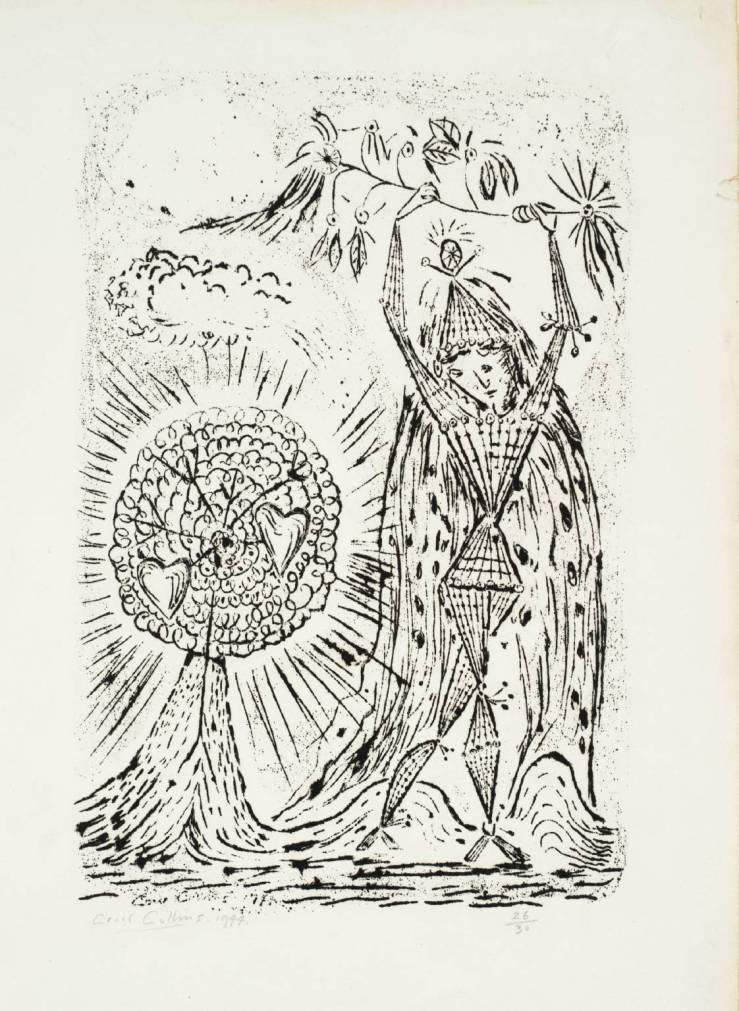
The Joy of the Fool — Cecil Collins

The Joy of the Fool, 1944 by Cecil Collins (1908-1989)

“Beware of Mara” — Thomas Pynchon

“Beware of Mara”

an excerpt from Thomas Pynchon’s novel V.


Then Mehemet told him of Mara.

“Another of your women.”
“Ha, ha. Indeed. Maltese for woman.”
“Of course.”

“She is—if you care for the word—a spirit, constrained to live in Xaghriet Mewwija. The inhabited plain; the peninsula whose tip is Valletta, her domain. She nursed the shipwrecked St. Paul—as Nausicaa and Odysseus—taught love to every invader from Phoenician to French. Perhaps even to the English, though the legend loses respectability after Napoleon. She was from all evidence a perfectly historical personage, like St. Agatha, another of the island’s minor saints.

“Now the Great Siege was after my time, but legend—one of them—says that she once had access to the entire island and the waters as far as the fishing banks off Lampedusa. The fishing fleets would always lie to there in the shape of a carob pod, her proper symbol. Early in your 1565, at any rate, two privateers, Giou and Romegas, captured a Turkish galleon belonging to the chief eunuch of the Imperial Seraglio. In retaliation Mara was taken prisoner on one of her jaunts to Lampedusa by the corsair Dragut, and brought back to Constantinople. Soon as the ship had passed the invisible circle centered at Xaghriet Mewwija with Lampedusa on the rim, she fell into a strange trance, from which neither caresses nor tortures could rouse her. At length, having lost their own figurehead in a collision with a Sicilian ragusy the week before, the Turks lashed Mara to the bowsprit and that was how she entered Constantinople: a living figurehead. On drawing near to that city, blinding yellow and dun under a clear sky, she was heard to awake and cry: ‘Lejl, hekk ikun.’ Night, so be it. The Turks thought she was raving. Or blind.

“They brought her to the serail, into the presence of the Sultan. Now she never was pictured as a raving beauty. She shows up as a number of goddesses, minor deities. Disguise is one of her attributes. But one curious thing about those images: jar ornaments, friezes, sculptures, no matter: she’s always tall, slim, small-breasted and bellied. No matter what the prevalent fashion in females, she remains constant. In her face is always a slight bow to the nose, a wide spacing of the eyes, which are small. No one you’d turn to watch on the street. But she was a teacher of love after all. Only pupils of love need be beautiful.

“She pleased the Sultan. Perhaps she made the effort. But was installed somehow as a concubine about the time La Vallette back on her island was blocking the creek between Senglea and St. Angelo with an iron chain and poisoning the springs in the Marsa plain with hemp and arsenic. Once in the seraglio she proceeded to raise hell. She’d always been attributed magical talents. Perhaps the carob pod—she’s often depicted holding one—had something to do with it. Wand, scepter. Perhaps too, some kind of fertility goddess—do I embarrass your Anglo-Saxon nerves?—though it is a quaint, hermaphrodite sort of deity.


“Soon—a matter of weeks—the Sultan noticed a certain coldness infecting each of his nightly companions; a reluctance, a lack of talent. Also a change in attitude among the eunuchs. Almost—how to say it—smug and keeping a bad secret of it. Nothing he could establish definitely; and so like most unreasonable men with suspicions he had certain girls and eunuchs tortured horribly. All protested innocence, showed honest fear to the last twist of the neck, the last upward thrust of the iron spike. And yet it progressed. Spies reported that shy concubines who had once paced with ladylike steps—limited by a slim chain between the ankles—and downcast eyes now smiled and flirted promiscuously with the eunuchs, and the eunuchs—horror!—flirted back. Girls left to themselves would suddenly leap on one another with fierce caresses; on occasion make loud abandoned love before the scandalized eyes of the Sultan’s agents.

Continue reading ““Beware of Mara” — Thomas Pynchon”

Into the Wild — Adam Miller

Into the Wild, 2013 by Adam Miller (b. 1979)

My Oscars: I give meaningless awards to films that I had never seen before 2020

This morning in my Twitter feed I saw that the 93rd Academy Awards will happen tonight. I realized that I could not name a single movie that was likely up for an award. Like many people who love films, I do not give a fuck about the Oscars, but am nevertheless aware of the buzz around certain films. This year though, I have no clue.

So I googled it. It turns out there are 56 films nominated for Oscars in the 93rd Academy Awards. I have seen three of them: OnwardSoul, and Borat Subsequent Moviefilm. None of the three are particularly memorable (apart from that one scene in the Borat film–you know, that scene with that guy).

The last year has been a weird one, to say the least. I’m pretty sure the last film I saw in a theater was Uncut Gems, way back in January of 2020. (I did see Beetlejuice at a drive-in last October.) Despite (or maybe because of) the glut of streaming options, I ended up watching almost no films that came out in 2020, including films by filmmakers I’m generally interested in, like Spike Lee and Charlie Kaufman.

Early in the pandemic, I rewatched a lot of old favorites. I’ve decided not to add any of them to My Oscars below. Instead, I’ve limited My Meaningless Awards to films that, for whatever reason, I hadn’t seen until 2020 (or early 2021). I followed the hierarchy that the Oscars follows, but led with their end point, best picture (you get the idea). I tossed out some categories that seem meaningless to me (like best foreign-language film), as well as the short film categories, which has always seemed a bit hard to define to me.

Anyway: Here are my stupid Oscars:


Best picture: Melancholia, directed by Lars von Trier (2011)

Best actor: Robert Pattinson, Good Time (2017)

Best actress: Renée Jeanne Falconett, The Passion of Joan of Arc (1928)

Best supporting actor: Elliott Gould, California Split (1974)

Best supporting actress: Lisa Eichorn, Cutter’s Way (1981)

Best directing: Jean-Luc Godard, Week-end (1967)

Best original screenplay: Bruce Robinson, Withnail and I (1987)

Best adapted screenplay: Ari Folman’s adaptation of The Futurological Congress by Stanisław Lem, The Congress (2013)

Best cinematography: Manuel Alberto Claro, Melancholia (2011)

Best production design: François de Lamothe, Le Samourai (1967)

Best editing: George Hively, Bringing Up Baby (1938)

Best original score: Daniel Lopatin, Uncut Gems (2019)

Best original song: “The Dead Don’t Die,” Sturgill Simpson, from The Dead Don’t Die (2019)

Best costume design: Antonio Castillo and Marcel Escoffier, Beauty and the Beast (1946)

Best makeup and hairstyling: Hagop Arakelian, Beauty and the Beast (1946)

Best visual effects: René Clément, Beauty and the Beast (1946)

Best animated feature film: Angel’s Egg, directed by Mamoru Oshii (1985)

Best documentary feature: Robby Müller: Living the Light, directed by Claire Pijman (2018)

Read back my youth

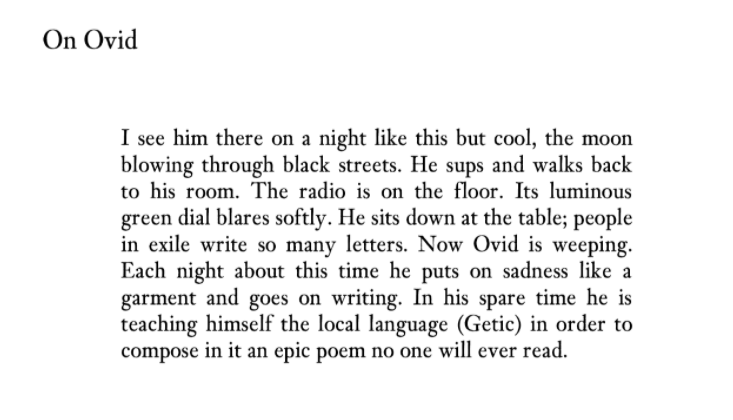
“On Ovid” — Anne Carson

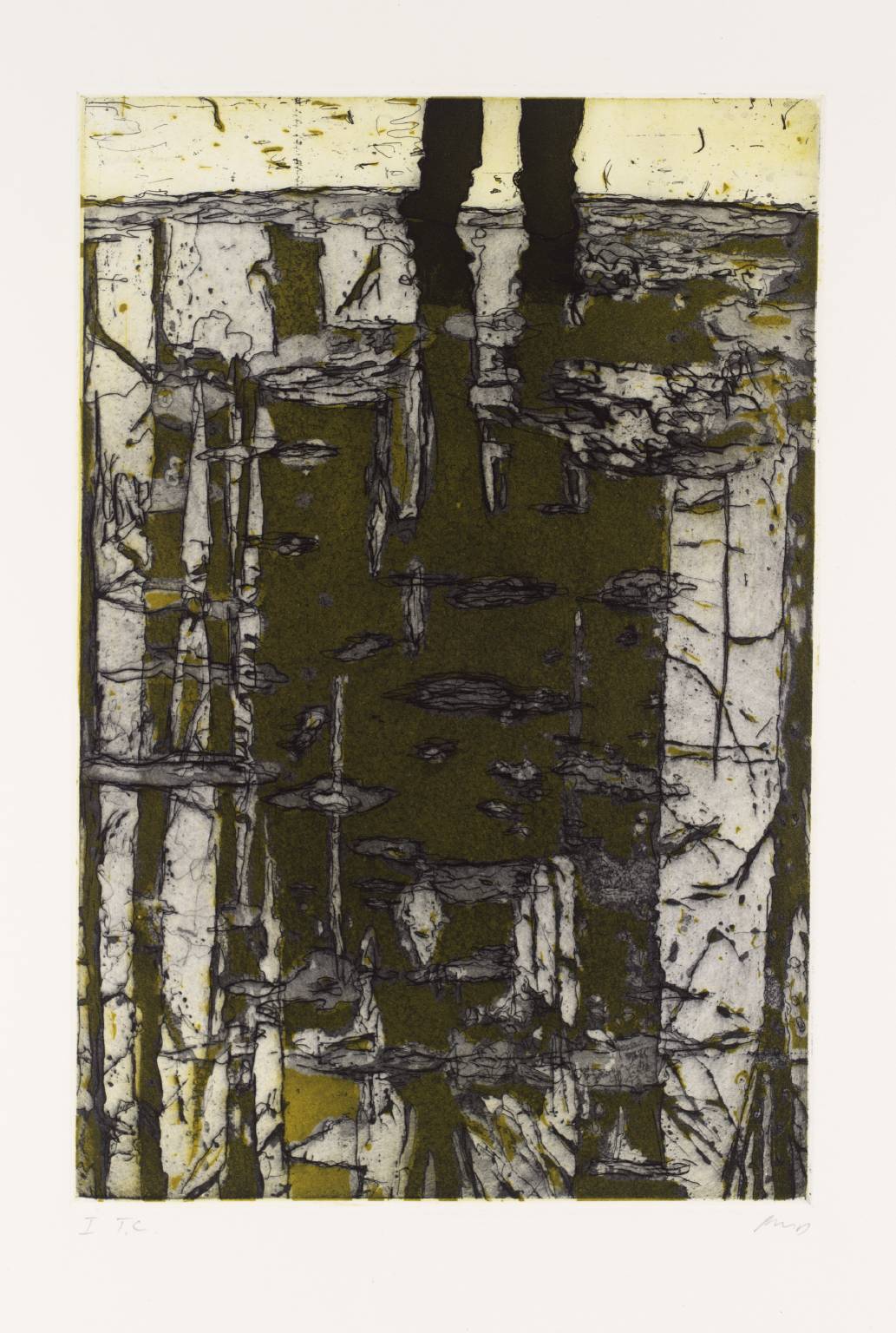
Reflection (What Does Your Soul Look Like?) — Peter Doig

Reflection (What Does Your Soul Look Like?), 1997 by Peter Doig (b. 1959)

There’s no magic words. Not even I love you is magic enough | A short riff on (a short riff from) Thomas Pynchon’s first novel V.


img_2194

McClintic Sphere, an innovative jazz saxophonist, and Paolo Majistral, the Maltese “girl [who] lived proper nouns” are two minor characters in Thomas Pynchon’s first novel, V. I will get back to them in a second.

But—

A novel crammed with minor characters (hundreds of them, I’d guess) V. pulsates with intersections, drive-bys, concordances and discordance. Characters crisscross and quick-change in ways that both parody and honor the authorial sleight-of-hand in play in V.

Pynchon repeatedly challenges his readers’ credulity–while its intersections are never as neat and tidy as its titular vee angle might suggest, V. is still a confusion of happenstance that both confounds and sanctifies coincidence, even as it ironizes those winds of fate.

The mode is necessarily postmodern. Pynchon repeatedly evokes Modernist poets by name—Pound and Eliot, especially—but it’s the immediate postwar (post, war, world, two) that he’s most concerned with in V. The novel critiques Modernist critiques (through a double lens of a critique of colonialism).

The great concern here is for the divergent angle of the second half of the twentieth century. As such, much of V. is a loving parody of the Beat scene (much more loving than Gaddis’s sustained attack on art poseurs in The Recognitions). In V., Pynchon creates a non-chorus in The Whole Sick Crew, an outcast cast of losers and would-bes and pseudointellectuals.

The Whole Sick Crew lards V.’s enormous, hard-to-follow cast. Two members of the nebulous Crew are

McClintic Sphere, an innovative jazz saxophonist, and Paolo Majistral, the Maltese “girl [who] lived proper nouns.”

And so–

There’s a marvelous moment about two-thirds of the way through V. where McClintic and Paolo, erstwhile lovers (Paolo in the guise of “Ruby” — everyone here is a quick change artist)—where McClintic and Paolo transcend the quick-changing and irony and and sensory-cloggingness of the modern condition. They drive upstate, talk straight—the plot details don’t matter here, just read:

Maybe the only peace undisturbed that night was McClintic’s and Paola’s. The little Triumph forged along up the Hudson, their own wind was cool, taking away whatever of Nueva York had clogged ears, nostrils, mouths.

She talked to him straight and McClintic kept cool.

And then our man McClintic comes to something close to an epiphany, although epiphanies are always hedged, suspicious, constrained in Pynchon—but I think there’s something real here. Earlier in the novel, McClintic feels concern for the postwar “cool,” for the feeling that the world might flip or flop again, go from zero to binary in a weird heartbeat (that binary code theme pulsates through the rest of Pynchon’s work to date). Makes sense for machines, maybe, but people aren’t, or shouldn’t be, machines.

McClintic’s epiphany is a pragmatic resolution, and I take it to be Pynchon’s cautionary thesis:

…there came to McClintic something it was time he got around to seeing: that the only way clear of the cool/crazy flipflop was obviously slow, frustrating and hard work. Love with your mouth shut, help without breaking your ass or publicizing it: keep cool, but care. He might have known, if he’d used any common sense. It didn’t come as a revelation, only something he’d as soon not’ve admitted.

The epiphany is bitter, and Pynchon’s narrator refuses its epiphanic value (“It didn’t come as a revelation”), even as the narrative acknowledges its intrinsic power. A few lines later, McClintic addresses the Real Work to Be Done in the World:

Nobody is going to step down from Heaven and square away Roony and his woman, or Alabama, or South Africa or us and Russia. There’s no magic words. Not even I love you is magic enough. Can you see Eisenhower telling Malenkov or Khrushchev that? Ho-ho.”

“Keep cool but care,” he said. Somebody had run over a skunk a ways back. The smell had followed them for miles. “If my mother was alive I would have her make a sampler with that on it.”

The highway stinks, sticks skunky to fleeing motion, gummed up in the nostalgic emblems we’d imaginatively credit to our loving forebears. The grist, grit, and horror of the big postwar world will cling to the present. Nobody’s stepping down from heaven, or Heaven and there are no magic words—but there is a kind of love, a loving with your mouth shut, a kind of radical, earnest, transcendent love that Pynchon evokes, soils, and sanctifies here.

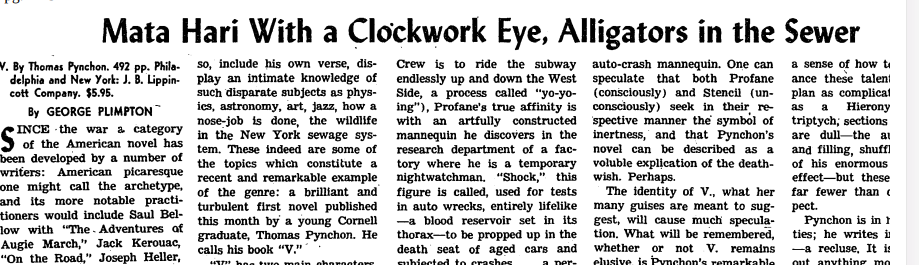
“Mata Hari with a Clockwork Eye, Alligators in the Sewer” | George Plimpton reviews Thomas Pynchon’s debut novel V.

George Plimpton’s review of Thomas Pynchon’s debut novel V. was first published in The New York Times on April 21, 1963 (hey! 58 years ago to the day, coincidentally) under the title “Mata Hari with a Clockwork Eye, Alligators in the Sewer.”

The NYT republished the piece on 6 Oct. 1996, under the title “The Whole Sick Crew.” It ran next to a 1969 review of Philip Roth’s Portnoy’s Complaint—with a big picture of Roth. No Pynchon pic, natch.

Plimpton’s review below:


“Mata Hari with a Clockwork Eye, Alligators in the Sewer”

(A review of Thomas Pynchon’s novel V.)

by

George Plimpton


Since the war a category of the American novel has been developed by a number of writers: American picaresque one might call the archetype, and its more notable practitioners would include Saul Bellow with ”The Adventures of Augie March,” Jack Kerouac, ”On the Road,” Joseph Heller, ”Catch-22,” Clancy Sigal, ”Going Away,” and Harry Matthews, who last fall produced a generally overlooked though brilliant novel entitled ”Conversions.” The genus is distinguished by what the word ”picaresque” implies — the doings of a character or characters completely removed from socio-political attachments, thus on the loose, and, above all, uncommitted.

Such novels are invariably lengthy, heavily populated with eccentrics, deviates, grotesques with funny names (so they can be remembered), and are usually composed of a series of bizarre adventures or episodes in which the central character is involved, then removed and flung abruptly into another. Very often a Quest is incorporated, which keeps the central character on the move.

For the author, the form of the picaresque is convenient: he can string together the short stories he has at hand (publishers are reluctant to publish short-story collections, which would suggest the genre is perhaps a type of compensation). Moreover — the well-made, the realistic not being his concern — the author can afford to take chances, to be excessive, even prolix, knowing that in a work of great length stretches of doubtful value can be excused. The author can tell his favorite jokes, throw in a song, indulge in a fantasy or so, include his own verse, display an intimate knowledge of such disparate subjects as physics, astronomy, art, jazz, how a nose-job is done, the wildlife in the New York sewage system. These indeed are some of the topics which constitute a recent and remarkable example of the genre: a brilliant and turbulent first novel published this month by a young Cornell graduate, Thomas Pynchon. He calls his book ”V.”

” V.” has two main characters. One of them is Benny Profane — on the loose in New York City following a Navy hitch and a spell as a road-laborer. Born in 1932, Profane is Depression-formed, and his function in the novel is to perfect his state of ”schlemihlhood” — that is to say being the victim, buffeted by circumstance and not caring to do much about it — resigned to being behind the 8-ball. Indeed, in one poolroom fracas the 8-ball rolls up to Profane, prostrate on the floor, and stares him in the eye. His friends are called the Whole Sick Crew, a fine collection of disaffected about whom one observer says ”there is not one you can point to and say is well.” Typical of them is the itinerant artist Slab, who calls himself a catatonic expressionist. Beset by a curious block he can only paint cheese danishes — Cheese Danish No. 56 is his subject at one stage of the book.

Set in contrast to Profane is a young adventurer named Stencil. He is active as opposed to passive, obsessed by a self-imposed duty which he follows, somewhat joylessly — a Quest to discover the identity of V., a woman’s initial which occurs in the journals of his father, a British Foreign Office man, drowned in a waterspout off Malta. The search for V., a puzzle slowly fitted together by a series of brilliant episodic flashbacks, provides the unifying device of the novel — a framework encompassing a considerable panorama of history and character. V., turning up first as a young girl in Cairo at the start of the century, reappears under various names and guises, invariably at times of strife and riot, in Florence, Paris, Malta, South Africa. Finally one finds her disguised as a Manichaean priest, trapped under a beam in a World War II bombing raid on Malta and being literally disassembled by a crowd of children.

The identity of V., what her many guises are meant to suggest, will cause much speculation. What will be remembered, whether or not V. remains elusive, is Pynchon’s remarkable ability — which includes a vigorous and imaginative style, a robust humor, a tremendous reservoir of information (one suspects that he could churn out a passable almanac in a fortnight’s time) and, above all, a sense of how to use and balance these talents. True, in a plan as complicated and varied as a Hieronymus Bosch triptych, sections turn up which are dull — the author backing and filling, shuffling the pieces of his enormous puzzle to no effect — but these stretches are far fewer than one might expect.

Pynchon is in his early twenties; he writes in Mexico City — a recluse. It is hard to find out anything more about him. At least there is at hand a testament — this first novel ”V.” — which suggests that no matter what his circumstances, or where he’s doing it, there is at work a young writer of staggering promise.


The Blue Bird I — Natalie Frank

The Blue Bird I, 2019 by Natalie Frank (b. 1980)


“The Blue Bird”

by

Madame d’Aulnoy

Translated from the French by

Andrew Lang


Once upon a time there lived a King who was immensely rich. He had broad lands, and sacks overflowing with gold and silver; but he did not care a bit for all his riches, because the Queen, his wife, was dead. He shut himself up in a little room and knocked his head against the walls for grief, until his courtiers were really afraid that he would hurt himself. So they hung feather-beds between the tapestry and the walls, and then he could go on knocking his head as long as it was any consolation to him without coming to much harm. All his subjects came to see him, and said whatever they thought would comfort him: some were grave, even gloomy with him; and some agreeable, even gay; but not one could make the least impression upon him. Indeed, he hardly seemed to hear what they said. At last came a lady who was wrapped in a black mantle, and seemed to be in the deepest grief. She wept and sobbed until even the King’s attention was attracted; and when she said that, far from coming to try and diminish his grief, she, who had just lost a good husband, was come to add her tears to his, since she knew what he must be feeling, the King redoubled his lamentations. Then he told the sorrowful lady long stories about the good qualities of his departed Queen, and she in her turn recounted all the virtues of her departed husband; and this passed the time so agreeably that the King quite forgot to thump his head against the feather-beds, and the lady did not need to wipe the tears from her great blue eyes as often as before. By degrees they came to talking about other things in which the King took an interest, and in a wonderfully short time the whole kingdom was astonished by the news that the King was married again to the sorrowful lady. Continue reading “The Blue Bird I — Natalie Frank”