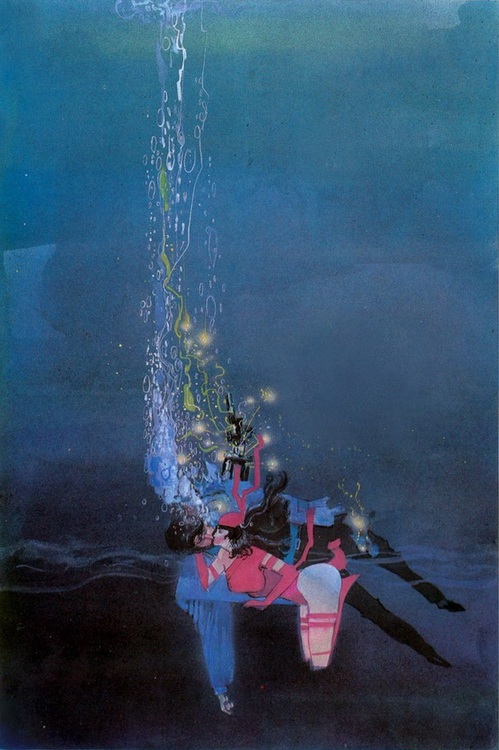
Elektra — Bill Sienkiewicz

elektra

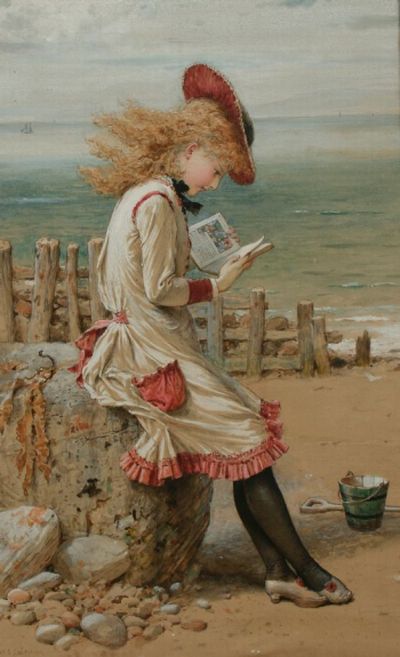
An Interesting Story — William Stephen Coleman

tumblr_m60hnfIpE11qjehcpo1_500

Idyll — Jacek Malczewski

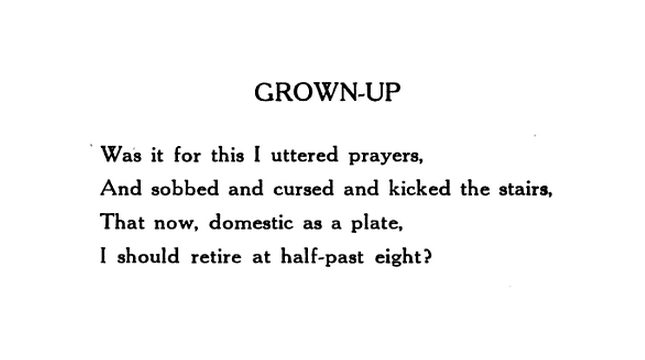
“Grown-Up” — Edna St. Vincent Millay

grown up

“All art constantly aspires towards the condition of music”

Mars and Venus Discovered by the Gods — Joachim Wtewael

William S. Burroughs looking serious, sad lover’s eyes, afternoon light in window (Photo by Ginsberg)

“Authors” — Voltaire

“Authors” — Voltaire

(From Philosophical Dictionary)

Author is a generic name which can, like the name of all other professions, signify good or bad, worthy of respect or ridicule, useful and agreeable, or trash for the wastepaper-basket.


We think that the author of a good work should refrain from three things—from putting his name, save very modestly, from the epistle dedicatory, and from the preface. Others should refrain from a fourth—that is, from writing.


Prefaces are another stumbling-block. “The ‘I,'” said Pascal, “is hateful.” Speak as little of yourself as possible; for you must know that the reader’s self-esteem is as great as yours. He will never forgive you for wanting to condemn him to have a good opinion of you. It is for your book to speak for you, if it comes to be read by the crowd.


If you want to be an author, if you want to write a book; reflect that it must be useful and new, or at least infinitely agreeable.


If an ignoramus, a pamphleteer, presumes to criticize without discrimination, you can confound him; but make rare mention of him, for fear of sullying your writings.


If you are attacked as regards your style, never reply; it is for your work alone to make answer.


Someone says you are ill, be content that you are well, without wanting to prove to the public that you are in perfect health. And above all remember that the public cares precious little whether you are well or ill.


A hundred authors make compilations in order to have bread, and twenty pamphleteers make excerpts from these compilations, or apology for them, or criticism and satire of them, also with the idea of having bread, because they have no other trade. All these persons go on Friday to the police lieutenant of Paris to ask permission to sell their rubbish. They have audience immediately after the strumpets who do not look at them because they know that these are underhand dealings.


Real authors are those who have succeeded in one of the real arts, in epic poetry, in tragedy or comedy, in history or philosophy, who have taught men or charmed them. The others of whom we have spoken are, among men of letters, what wasps are among birds.

The Princes in the Tower — Paul Delaroche

Vicious Circle — Jacek Malczewski

Volvox Olympia — Jeroen Hermkens

Portrait of James Joyce — Eduardo Arroyo

James Joyce Dies

James Joyce Dies; Wrote ‘Ulysses’

ZURICH, Switzerland, Monday, Jan 13- James Joyce, Irish author whose “Ulysses” was the center of one of the most bitter literary controversies of modern times, died in a hospital here early today despite the efforts of doctors to save him by blood transfusions. He would have been 59 years old Feb. 2.

Joyce underwent an intestinal operation Saturday afternoon at the Schwesternhaus von Rotenkreuz Hospital. For a time he appeared to be recovering. Only yesterday his son reported him to have been cheerful and apparently out of danger.

During the afternoon, however, the writer suffered a sudden relapse and sank rapidly. He died at 2:15 A.M. (8:15 P.M., Eastern standard time).

His wife and son were at the hospital when he died.

Hailed and Belittled by Critics

The status of James Joyce as a writer never could be determined in his lifetime. In the opinion of some critics, notably Edmund Wilson, he deserved to rank with the great innovators of literature as one whose influence upon other writers of his time was incalculable. On the other hand, there were critics like Max Eastman who gave him a place with Gertrude Stein and T.S. Eliot among the “Unintelligibles” and there was Professor Irving Babbitt of Harvard who dismissed his most widely read novel, “Ulysses,” as one which only could have been written “in an advanced stage of psychic disintegration.”

Originally published in 1922, “Ulysses” was not legally available in the United States until eleven years later, when United States Judge John Monro Woolsey handed down his famous decision to the effect that the book was not obscene. Hitherto the book had been smuggled in and sold at high prices by “bookleggers” and a violent critical battle had raged around it.

From James Joyce’s obituary in The New York Times (January 13, 1941). Read the rest.

James Joyce’s Death Mask

The Seeds and Fruit of English Poetry — Ford Madox Brown

Ecstasy — Lajos Gulacsy

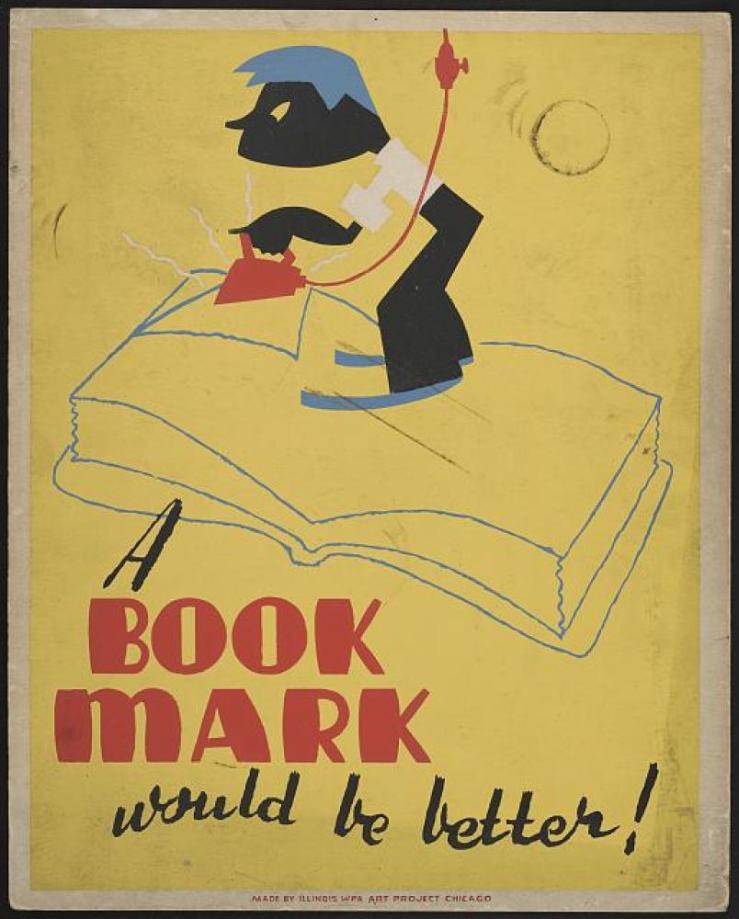
A Book Mark Would Be Better!

bookmark

(Via; via).