“Love” — Nancy Adams/Robin Hood

“Enjoyment and Non-enjoyment of Poisons”

41. Enjoyment and Non-enjoyment of Poisons. —The only decisive argument that has always deterred men from drinking a poison is not that it is deadly, but that it has an unpleasant taste

–Friedrich Nietzsche, Human, All Too Human, Part II.

Portrait of William Gaddis — Julian Schnabel

Bill Gaddis by Julian Schnabel, oil, plates and bondo on wood (1987)

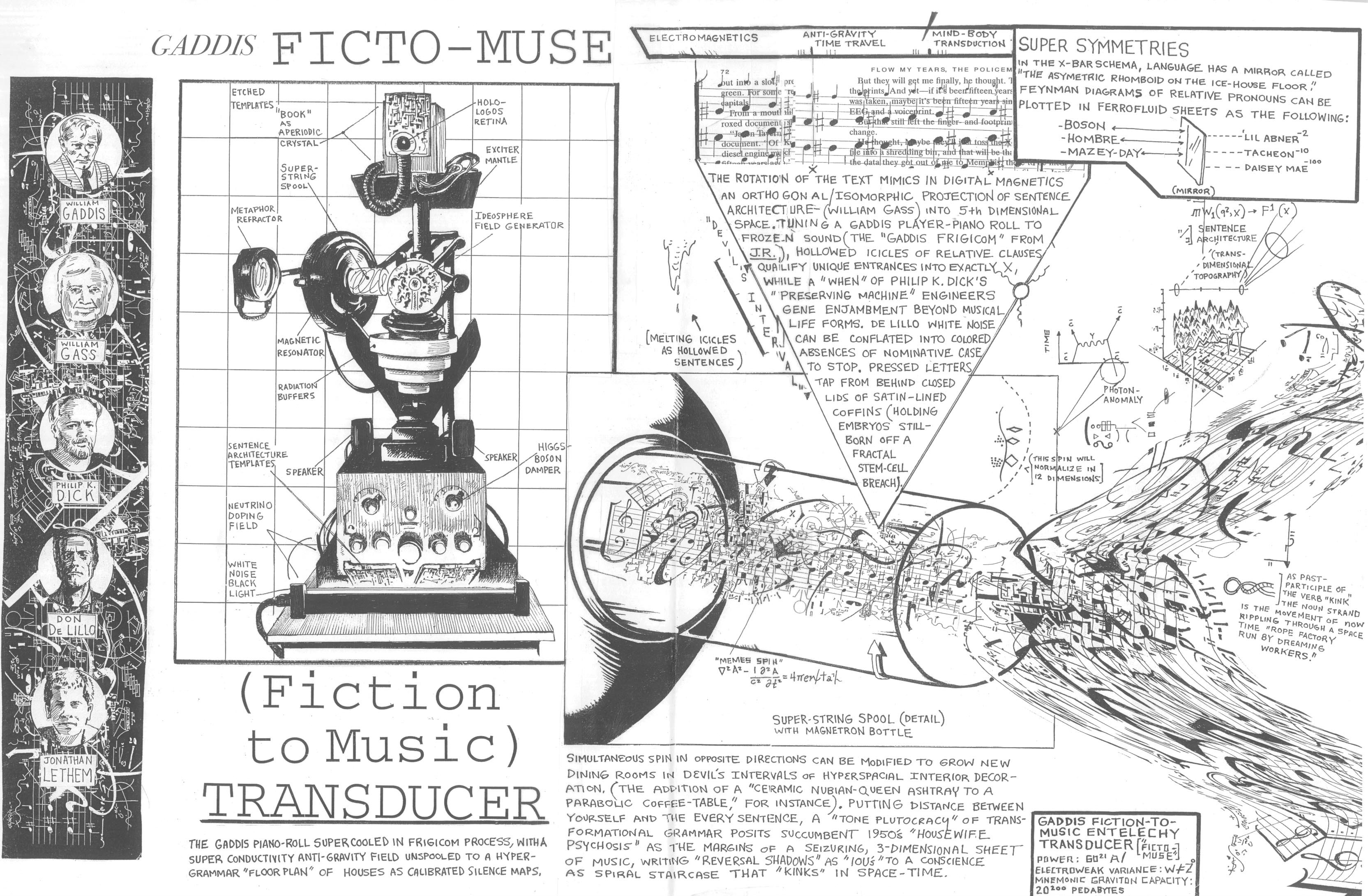
William Gaddis Fiction-to-Music Entelechy Transducer — Gregg Williard

“Gaddis Fiction-to-Music Entelechy Transducer” by Gregg Williard (More graphs/via).

“Up There in Orbit” (Permanent Vacation)

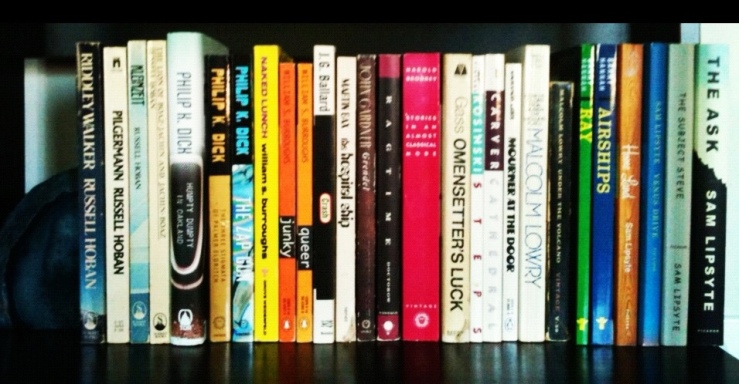
Book Shelves #13, 3.25.2012

20120325-104552.jpg

Book shelves series #13, thirteenth Sunday of 2012: Four by the late great Russell Hoban. A few Philip K. Dick volumes, although it’s worth pointing out that most of the good stuff I’ve owned by him has been loaned out and never returned and/or exists in ratty coverless mass market editions. PK Dick transitions to William Burroughs to JG Ballard (another writer who I used to own other books by before they were dispersed . . .). Martin Bax’s The Hospital Ship is a thoroughly obscure volume in a Ballardian/Burroughsian vein; it deserves a reprint. Gardner, Brodkey, Gass, Kosinski. I’ve owned Raymond Carver’s Cathedral since high school, or maybe freshman year of college. It’s all the Carver that any library needs. Lish comma Gordon. Two by Malcolm Lowry. Two by Barry Hannah. Four from Sam Lipsyte.

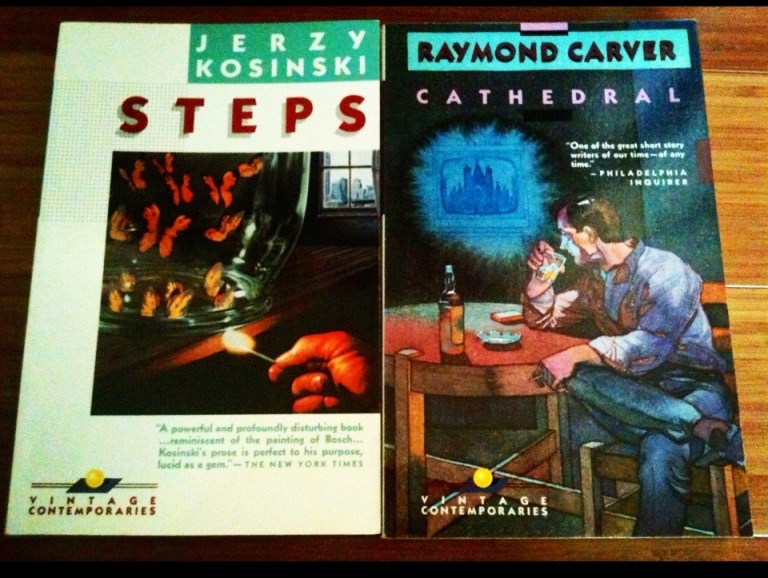
The Carver and Kosinski volumes are part of the 1980s Vintage Contemporaries line that all feature awful, hyper-literal covers. I have about a dozen such volumes and I’m planning a piece on them in the future. Observe:
20120325-104614.jpg

St. Jerome in the Wilderness — Albrecht Dürer

Paul Robeson Talks About Othello

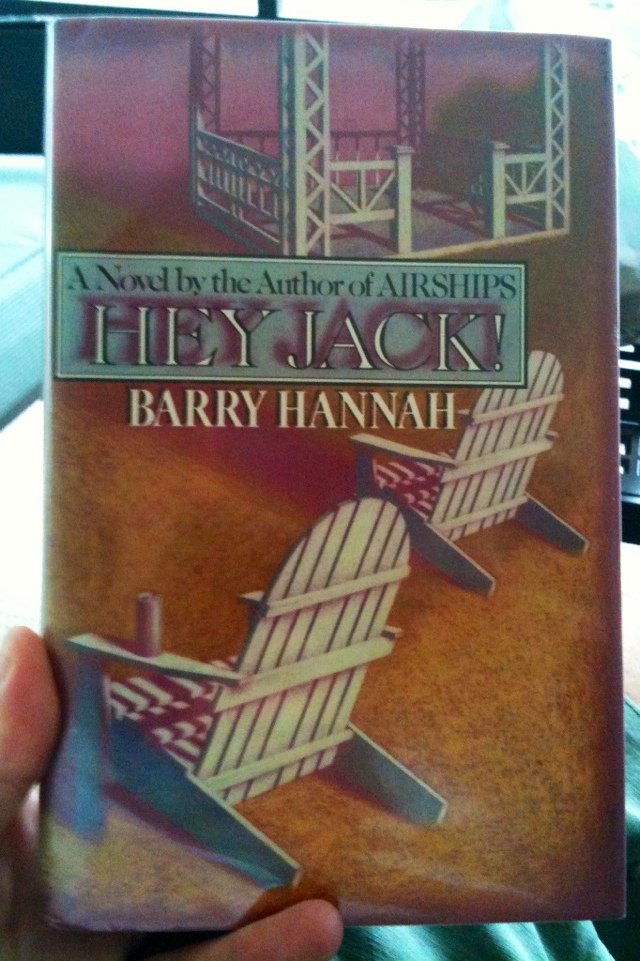
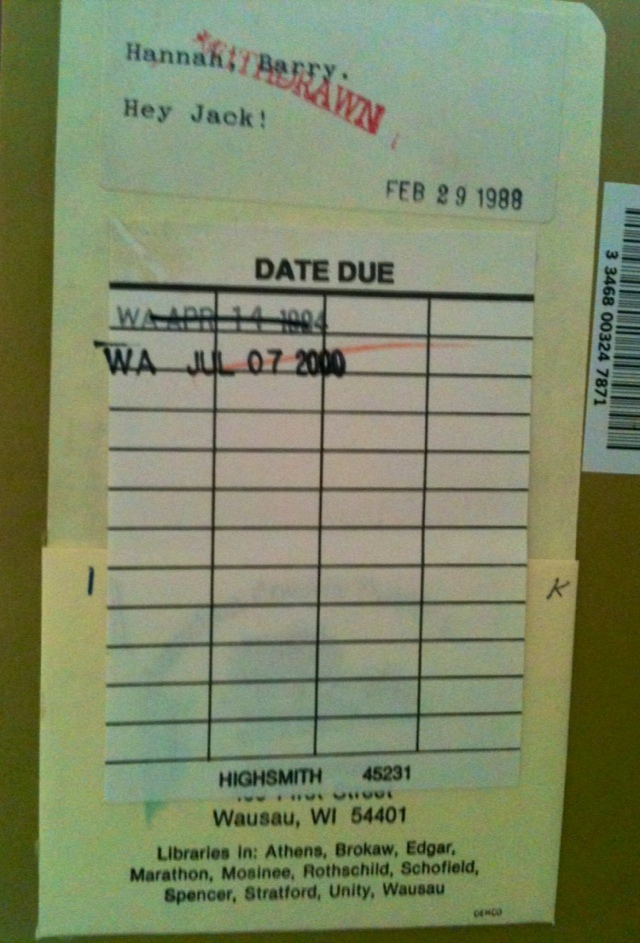
Barry Hannah’s Hey Jack! (Book Acquired, 3.23.2012; Or, Gee, Isn’t It Kinda Sad That This Ex-Library Book Was Checked Out Only Twice in 24 Years?)

20120324-143113.jpg

I bought Barry Hannah’s seventh book Hey Jack! over the internet after my favorite local bookstore told me it would be difficult or expensive for them to order. I bought a first edition hardback brokered by Amazon. It was an ex-library copy. It looks like no one ever read it, and it seems to have been checked out only twice in twenty-four years. A sad business.

I put some wear and tear on it today, reading it outside on my porch during a thunderstorm, using it as a beer coaster at one point, and then taking it into a salted bath where it got damp and curly. I read half of it. Hannah’s novel-in-vignettes is still ahead of its time. Who writes better sentences? (“Christ, the South has been pickled in the juice of its own image”).

20120324-143122.jpg

Tab. CXI (Strange Babies) — Albertus Seba

Robert Louis Stevenson: “The Most Influential Books, and the Truest in Their Influence, Are Works of Fiction”

From Robert Louis Stevenson’s essay “The Books Which Have Influenced Me”:

The most influential books, and the truest in their influence, are works of fiction. They do not pin the reader to a dogma, which he must afterwards discover to be inexact; they do not teach him a lesson, which he must afterwards unlearn. They repeat, they rearrange, they clarify the lessons of life; they disengage us from ourselves, they constrain us to the acquaintance of others; and they show us the web of experience, not as we can see it for ourselves, but with a singular change–that monstrous, consuming ego of ours being, for the nonce, struck out. To be so, they must be reasonably true to the human comedy; and any work that is so serves the turn of instruction. But the course of our education is answered best by those poems and romances where we breathe a magnanimous atmosphere of thought and meet generous and pious characters.

“I Put a Spell on You” (Stranger Than Paradise)

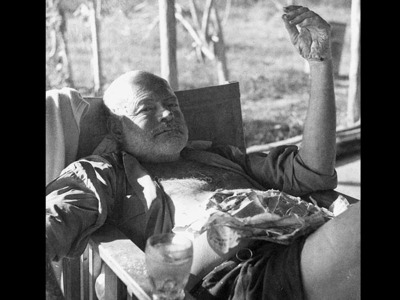
Topless Hemingway, Part IX

“Blue Moon” (Mystery Train)

William James on Walt Whitman: “He Is Aware Enough of Sin for a Swagger to Be Present in His Indifference Towards It”

William James on Walt Whitman; from The Varieties of Religious Experience (1902):

Walt Whitman owes his importance in literature to the systematic expulsion from his writings of all contractile elements. The only sentiments he allowed himself to express were of the expansive order; and he expressed these in the first person, not as your mere monstrously conceited individual might so express them, but vicariously for all men, so that a passionate and mystic ontological emotion suffuses his words, and ends by persuading the reader that men and women, life and death, and all things are divinely good Whitman is often spoken of as a “pagan.” The word nowadays means sometimes the mere natural animal man without a sense of sin; sometimes it means a Greek or Roman with his own peculiar religious consciousness. In neither of these senses does it fitly define this poet. He is more than your mere animal man who has not tasted of the tree of good and evil. He is aware enough of sin for a swagger to be present in his indifference towards it, a conscious pride in his freedom from flexions and contractions, which your genuine pagan in the first sense of the word would never show

Slavoj Žižek Uses Norman Bates’s House in Psycho to Illustrate Id, Ego, and Superego (Because Why Wouldn’t He?)

Hamlet and His Father’s Ghost — Henry Fuseli