Section 4, “Life of Sade” — Roland Barthes’ Short Biography of The Marquis de Sade

From Roland Barthes’ “Life of Sade,” a short biography of The Marquis de Sade. Translated from the French by Richard Miller.  Read the entire essay at Supervert. (or here over the next few days, parceled out over 22 sections)—

4. On Easter Sunday, 1768, at 9 A.M., on the Place des Victoires, accosting Rose Keller, a beggar (whom he was to whip several hours later in her house at Arcueil), the young Sade (twenty-eight years of age) was wearing a gray redingote, carrying a cane, a hunting knife — and a white muff. (Thus, at a time when the I.D. photograph was nonexistent, it is a paradox that the police report reveals the signifier in its description of the suspect’s clothing: such as this delicious white muff, an article obviously donned to satisfy the principle of tact which seems always to have presided over the Marquis’s sadistic activity — but not necessarily over that of sadists).
Section 3, “Life of Sade” — Roland Barthes’ Short Biography of The Marquis de Sade

From Roland Barthes’ “Life of Sade,” a short biography of The Marquis de Sade. Translated from the French by Richard Miller.  Read the entire essay at Supervert. (or here over the next few days, parceled out over 22 sections)—

3. In the spring of 1779, when Sade was imprisoned at Vincennes, he received a letter telling him that the orchard at La Coste was dazzling: cherry trees in bloom, apple trees, pear trees, hop bine, grapes, not to mention the burgeoning cypresses and oaks. For Sade, La Coste was a multiple, a total site; first, a Provençal site, the site of origin, of Return (throughout the first part of his life, Sade, although a fugitive, hunted, continued to return there, flouting prudence); next: an autarchic site, a miniature and total society over which he was the master, the unique source of his income, the site for study (his library was there), the site for theater (they acted comedies), and the site for debauchery (Sade had servants, young peasant girls, young secretaries, brought in for séances at which the Marquise was also present). If, therefore, Sade kept returning to La Coste after his restless travels, it was not for the elevated purpose of purification in the countryside that impels the gangster in The Asphalt Jungle to return to die at the gate to the farm where he was born; as always, it had a plural, super-determined, probably contradictory meaning.


David Foster Wallace Describes the Reading Process

Section 2, “Life of Sade” — Roland Barthes’ Short Biography of The Marquis de Sade

From Roland Barthes’ “Life of Sade,” a short biography of The Marquis de Sade. Translated from the French by Richard Miller.  Read the entire essay at Supervert. (or here over the next few days, parceled out over 22 sections)—

2. People living today in Saint-Germain-des-Prés must remember that they are living in a degenerate Sadian area. Sade was born in a room of the Hôtel de Condé, i.e., somewhere between the Rue Monsieur-le-Prince and the Rue de Condé; he was baptized in Saint-Sulpice; in 1777 he was arrested under a lettre de cachet at the Hôtel de Danemark, Rue Jacob (the very street where the French edition of this book is published), and from there brought to the prison dungeon at Vincennes.

Section 1, “Life of Sade” — Roland Barthes’ Short Biography of The Marquis de Sade

From Roland Barthes’ “Life of Sade,” a short biography of The Marquis de Sade. Translated from the French by Richard Miller.  Read the entire essay at Supervert. (or here over the next few days, parceled out over 22 sections)—

1. Etymological chain: Sade, Sado, Sadone, Sazo, Sauza (village of Saze). Again, lost in this lineage, the evil letter. In attaining the accursed name, brilliantly formulated (it has engendered a common noun), the letter that, as we say in French, zebras, fustigates, the z, has given way to the softest of dentals.


Watch Happily Drowning, A Short Film by Sebastian Sommer Based on Two Tao Lin Stories

Happily Drowning  a short film by Sebastian Sommer, based on the Tao Lin stories “Cancer” and “Robbers.” More on the film. Read the stories. I liked the short film more than the stories, but apples and oranges.

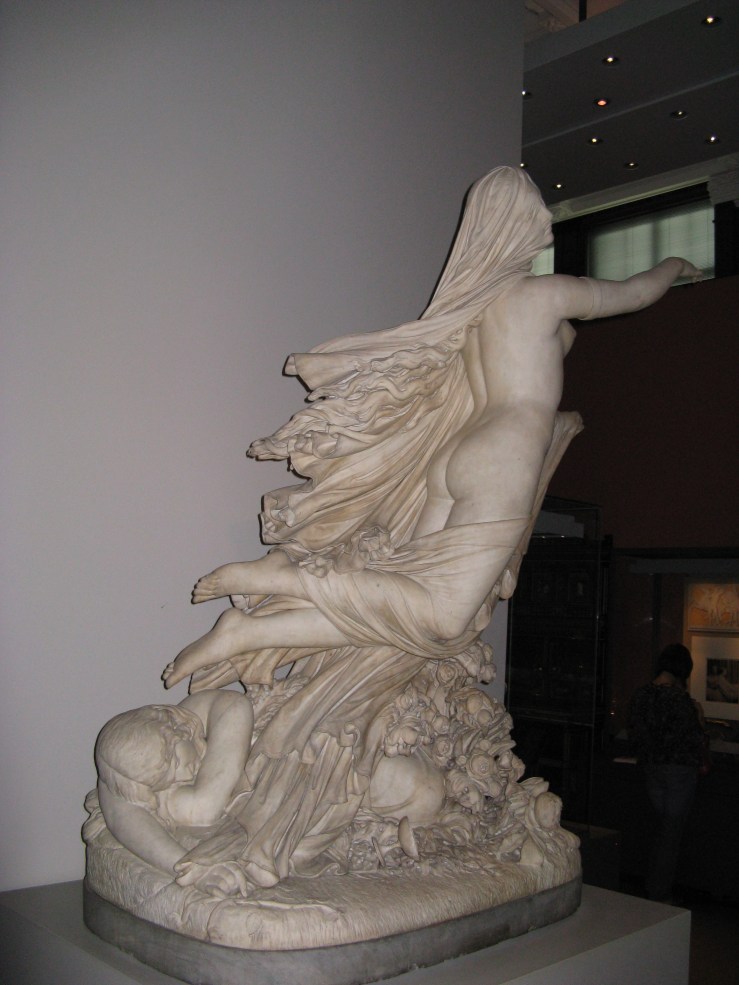
Motherhood — Raffaelle Monti

Derrida Speaks of Love (Or Not)

Book Acquired, 8.29.2011

20110829-021552.jpg

Got a finished copy of Chad Harbach’s (n+1) début novel The Art of Fielding today; the book comes out next week from Little, Brown & Company. Their description—

At Westish College, baseball star Henry Skrimshander seems destined for the big leagues until a routine throw goes disastrously off course. In the aftermath of his error, the fates of five people are upended. Henry’s life’s purpose is called into question. Guert Affenlight, the college’s president, has fallen helplessly, unexpectedly in love. Owen Glass, Henry’s gay roommate, becomes swept up in a dangerous affair. Mike Schwartz, the team captain, realizes he guides Henry’s career at the expense of his own. And Pella Affenlight, Guert’s daughter, returns to Westish to start a new life after an ill-fated marriage. As the season counts down to its climax, these five confront their deepest hopes, anxieties, and secrets, and help one another to find their true paths. Written with boundless intelligence, and filled with the tenderness of youth, The Art of Fielding is an expansive, warmhearted novel about ambition and its limits, about family and friendship and love, and about commitment—to oneself and to others.


Read “Town of Cats,” a Story by Haruki Murakami

Today, The New Yorker shares “Town of Cats,” a short story by Haruki Murakami. First paragraph—

At Koenji Station, Tengo boarded the Chuo Line inbound rapid-service train. The car was empty. He had nothing planned that day. Wherever he went and whatever he did (or didn’t do) was entirely up to him. It was ten o’clock on a windless summer morning, and the sun was beating down. The train passed Shinjuku, Yotsuya, Ochanomizu, and arrived at Tokyo Central Station, the end of the line. Everyone got off, and Tengo followed suit. Then he sat on a bench and gave some thought to where he should go. “I can go anywhere I decide to,” he told himself. “It looks as if it’s going to be a hot day. I could go to the seashore.” He raised his head and studied the platform guide.

At that point, he realized what he had been doing all along.

Fun fact: I used to live in Shin-Koenji, right near Koenji, and I took the Chuou to work every day.

Hark, a Vagrant! Does the Romantics

Kate Beaton is the best. 

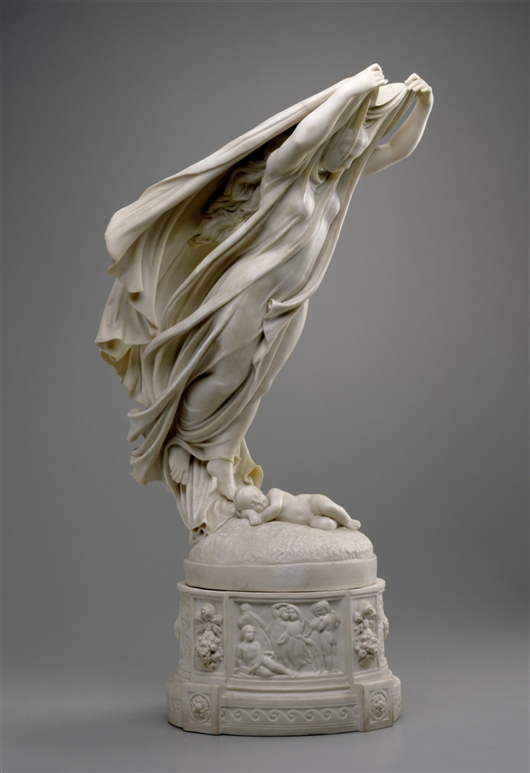
The Sleep of Sorrow and the Dream of Joy — Raffaelle Monti

Books Acquired, 8.28.11

20110828-082813.jpg

My mom brought over a bunch of stuff tonight including a collection of early ’70s Doonesbury strips in a four volume box set. I guess this was my dad’s? I’ve never understood a single Trudeau strip, ever, although I haven’t read one in years.

20110828-082821.jpg

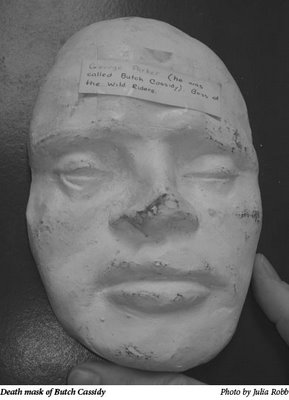
Butch Cassidy’s Death Mask

See the Trailer for The Rum Diary — Johnny Depp Plays Hunter S. Thompson (or at Least His Alter Ego) Again

Read our review of Hunter S. Thompson’s The Rum Diary.

Quentin Tarantino Talks About Being A Writer

Books Acquired, 8.26.11

20110826-045537.jpg

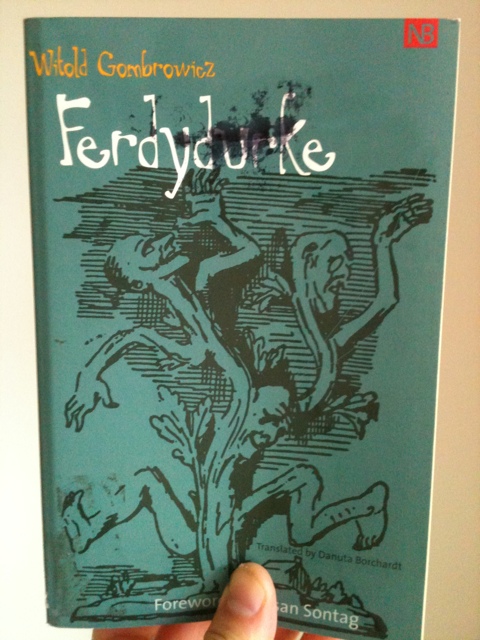
Double—or triple, really, Witold Gombrowicz grabs at the bookstore today. I love this cover for Ferdydurke (even the ink stain doesn’t really detract too much from its plain elegance). Intro is by Sontag! Should this be my next step after Trans-Atlantyk?

20110826-045545.jpg

Also picked up this Grove Press edition that collects both Cosmos and Pornografia. I’m not a fan of omnibus editions in general, but, hey, why pass up a chance to pick up a used copy of what is likely a not-so-easy-to-find book.