Omelette à la Alma | Phantom Thread riff


title2bcard

Rambling Preamble 

Phantom Thread (2017) is the eighth feature film by writer-director Paul Thomas Anderson. I have been a fan of Anderson’s work since I saw Boogie Nights (1997) in my freshman year of college, and have watched each of his subsequent films in the theater. The theater is the proper place to watch Anderson’s lush, luscious films, although they are also so strong as narratives that they hold up just fine on, say, a 19″ Toshiba television with a built-in VCR, which is how I repeatedly watched Blockbuster-remaindered cassettes of Boogie Nights and Magnolia (1999) circa 1998-2001. But again: The theater is the proper place to see an Anderson film, and Phantom Thread is exceptionally lovely on the big screen—one doesn’t so much watch it as imbibe it, or perhaps, in a reversal of that metaphor, sink into it. What I’m saying is: Watch Phantom Thread in the theater.

Is “Watch it in the theater” not enough in the way of argument, reader? Perhaps you want, like, details?

Here are some details I knew going in to the film (I generally try to avoid reviews and any press on any film I plan to see): The film was written and directed by Paul Thomas Anderson; the film stars Daniel Day-Lewis portraying a fashion designer; the film is set sometime in the 1950s.

My wife and I went to see the film yesterday afternoon and we loved it, then discussed it at length at dinner, and then again this morning over breakfast (perhaps prompted by “breakfast” itself, one of the film’s motifs). It’s a strange, beautiful, perplexing romantic comedy that will disarm and unsettle audiences. I can’t wait to see it again.
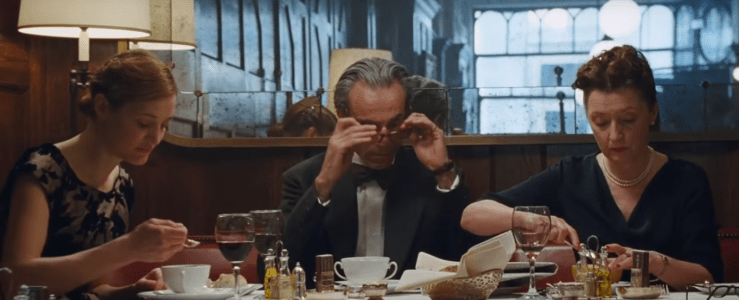

Screenshot 2018-02-04 at 3.27.03 PM

The Plot and the Major Characters

1950s. London and countryside environs. Reynolds Jeremiah Woodcock (Daniel Day-Lewis) is a famous fashion designer who dresses the highest of high in European society. He and his sister Cyril (Lesley Manville) run the House of Woodcock, following a precise, obsessive routine. At the film’s outset, Reynolds meets Alma (Vicky Krieps), a waitress in a countryside restaurant. He asks her to dinner that night, and from there the two enter into a strange relationship. The film’s trajectory explores the conflicts and confluences of that strange relationship, tracing how Reynolds’ and Alma’s romance intertwines with Cyril, business, design, and art. (Oh. And Reynolds’ and Cyril’s dead mother).


Cinematography, Score, Costume Design and Set Design

Gorgeous. Like I said, go see the film—the aesthetics are marvelous, rich, sumptuous. I’ve been writing about Paul Thomas Anderson as an auteur (and will continue to do so), but his production team is fantastic, and I think there’s an implicit argument in Phantom Thread itself against the whole auteur concept. (If you listen to or read interviews with Anderson, he will often use the pronoun “We” when discussing his work).


Screenshot 2018-02-04 at 3.26.09 PM

Phantom Thread’s Place in Paul Thomas Anderson’s Filmography

Phantom Thread might be Anderson’s “best” film to date: it is certainly one of the best-acted, best-shot, and best-directed, and its editing and pace move with a more precise rhythm than his looser and more sprawling films. I loved it, but it’s not necessarily my favorite Anderson film. If pressed to choose a favorite, I might point to the weird sprawl of Inherent Vice (2014) or the perfect imperfection of The Master (2012)—or just settle on There Will Be Blood (2007). Many Anderson fans point to Anderson’s shortest film, Punch-Drunk Love (2002) as his best.

In some ways, Phantom Thread has more in common with Punch-Drunk Love than his other films. They are both romantic comedies featuring emotionally-challenged leads who find their way to a strange resolution. In any case, Phantom Thread is an engaging character study focused on just a few intense personalities—like The MasterPunch-Drunk Love, or There Will Be Blood. It’s more focused in its vision than Boogie Nights or Magnolia, and more emotionally “true” than Anderson’s first feature, Hard Eight (1996). Those first three films seem to me particularly beholden to Martin Scorsese and Robert Altman, but Phantom Thread continues to show Anderson overcoming his anxiety of influence. (Although I’ll admit that I was occasionally reminded of Scorsese’s The Age of Innocence (1993) while watching Phantom Thread—probably because of the luxuriant imagery. And Daniel Day-Lewis. Anderson’s film is superior).


The Goddamn Movie Trailer


The discussion of the film that follows contains spoilers, including descriptions of the film’s ending 
Continue reading “Omelette à la Alma | Phantom Thread riff”

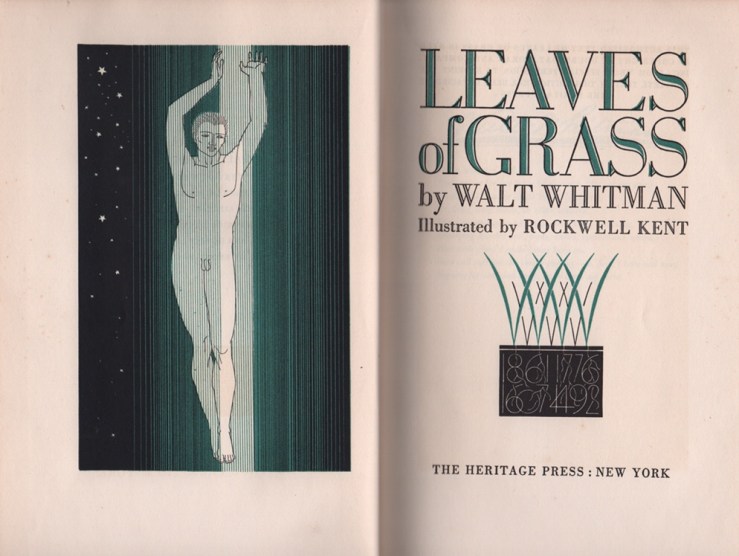
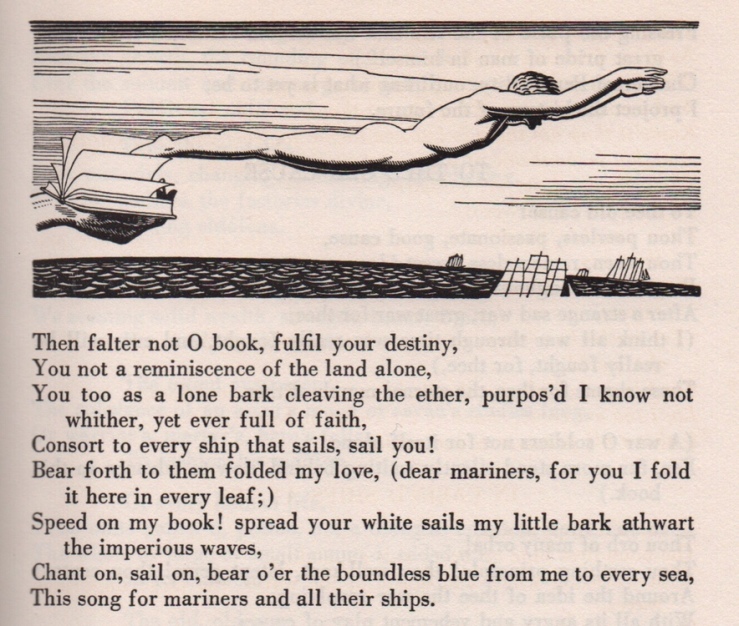
Then falter not O book

img_9015

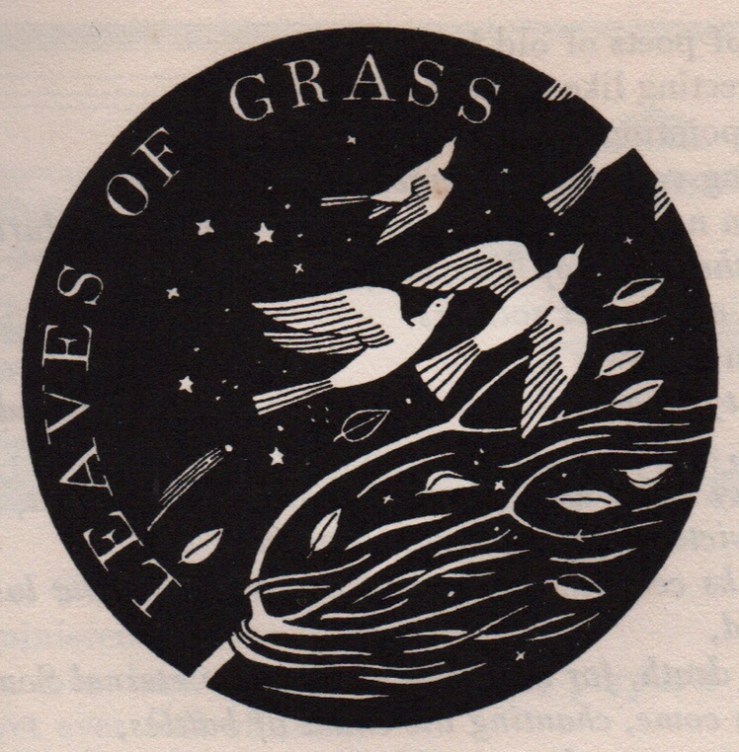
From the Heritage Press edition of Walt Whitman’s Leaves of Grass, illustrated by Rockwell Kent, 1936.

Walt Whitman’s Leaves of Grass, Illustrated by Rockwell Kent (Book acquired, 3 Feb. 2018)

img_9012

I couldn’t pass up on this illustrated Heritage Press copy of Leaves of Grass. I’m not sure of the exact date of publication, but this nice long post on the book suggests it was likely published in 1950 and designed in the mid-thirties.

img_9011

My daughter and I were browsing the poetry section of our favorite used bookshop—quite randomly actually—and she pulled this volume of Leaves of Grass downward like a lever, pretending it might open a secret passage. It didn’t open a secret passage, but when she pushed it back again, I saw Kent’s name on the spine. I love Kent’s work, and I’m a huge Whitman fan, and my copy of Leaves of Grass is literally falling apart. Plus only $10 and I had plenty of store credit…so…

img_9013

I’ll share some of the illustrations and verses over the next few months—a nice excuse to go through Leaves of Grass again.

img_9019

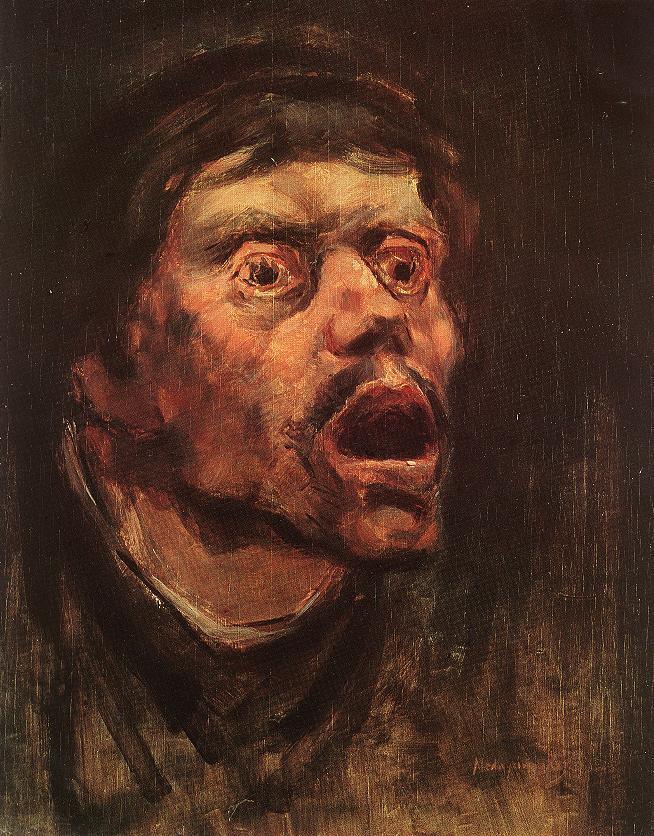
Head of a Tramp — Laszlo Mednyanszky

head-of-a-tramp-1896

Head of a Tramp, 1896 by Laszlo Mednyanszky (1852-1919)

Vignette — Kerry James Marshall

14-vignette

Vignette, 2003  by Kerry James Marshall (b. 1955)

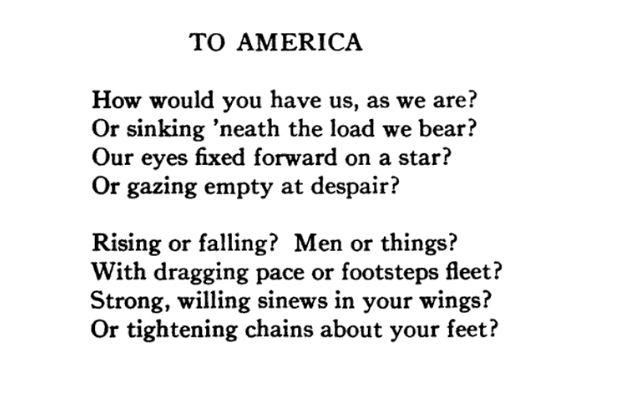
“To America” — James Weldon Johnson

a

Loyal Retainer: Final Chapter —  Mu Pan

kong_lee_seamless

Loyal Retainer: Final Chapter, 2018 by Mu Pan (b. 1976)


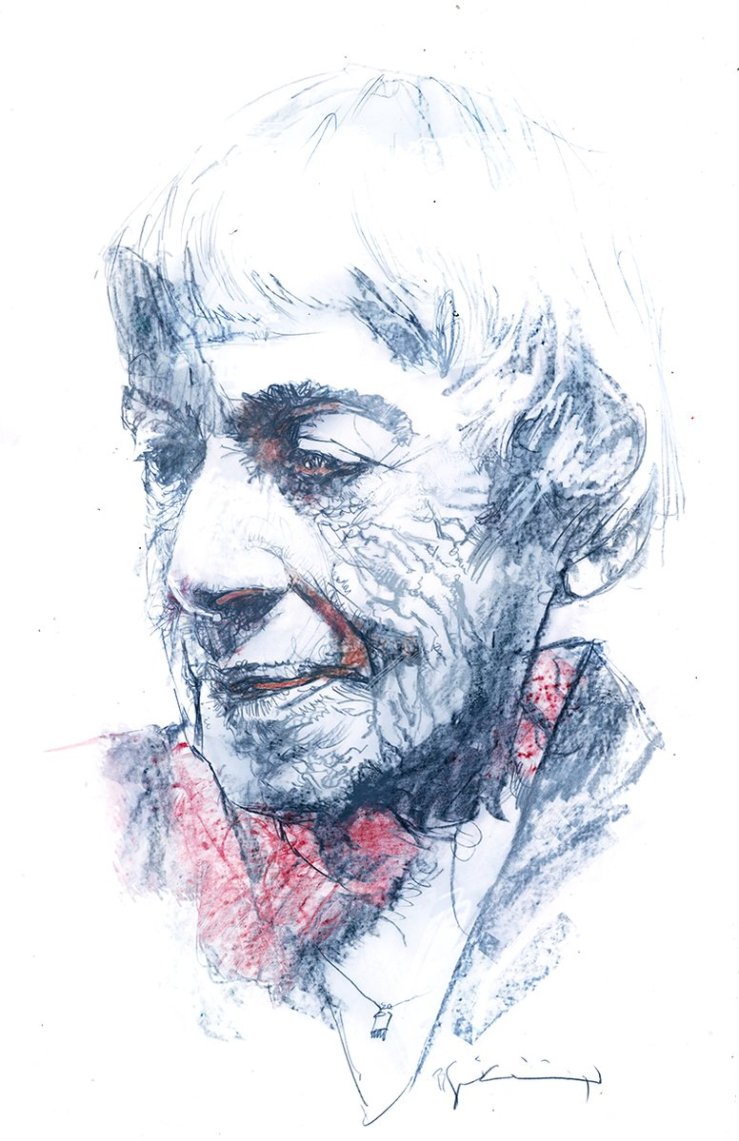
Portrait of Ursula K. Le Guin — Bill Sienkiewicz

duvls2lvwaanjbk

Portrait of Ursula K. Le Guin by Bill Sienkiewicz, via his Twitter

The Nipple I Never Knew — Katherine Kuharic

201520the20nipple20i20never20knew20281024x68129_0

The Nipple I Never Knew, 2015 by Katherine Kuharic (b. 1962)

Minnie Cunningham at the Old Bedford — Walter Richard Sickert

Minnie Cunningham at the Old Bedford 1892 by Walter Richard Sickert 1860-1942

Minnie Cunningham at the Old Bedford, 1892 by Walter Richard Sickert (1860–1942)

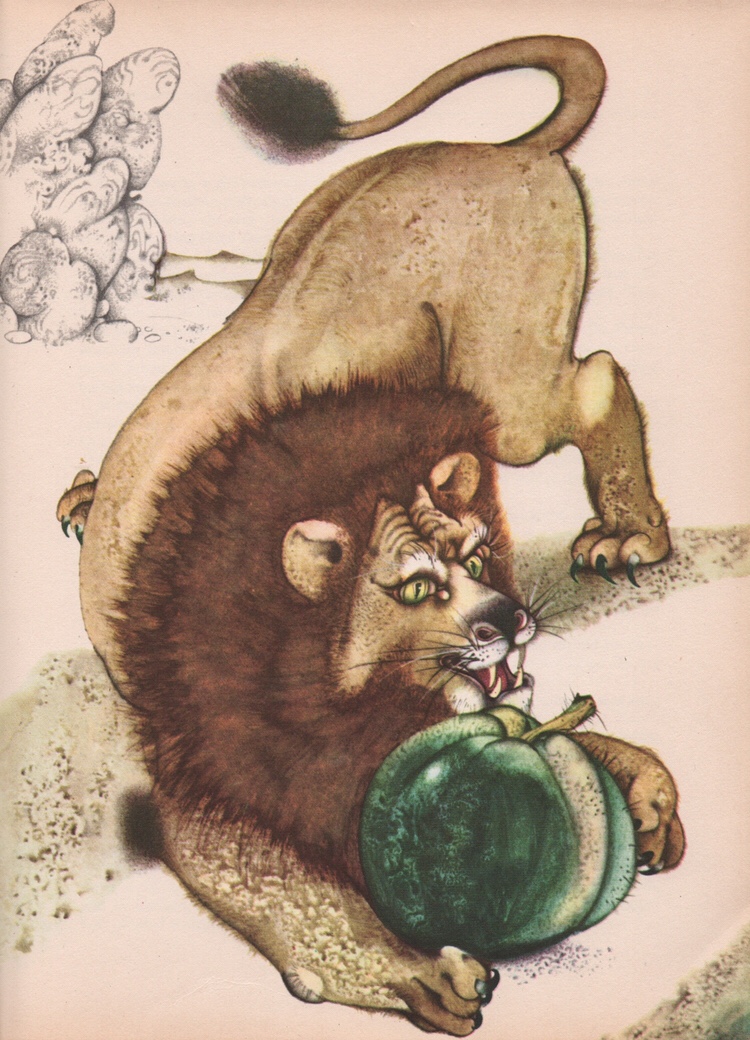
Luděk Maňásek’s illustration for “The Melon Child”

img_8996

Luděk Maňásek’s illustration for “The Melon Child.” From Jaroslav Tichý’s Persian Fairy Tales, Hamlyn, 1970. (English translations in the collection are by Jane Carruth).

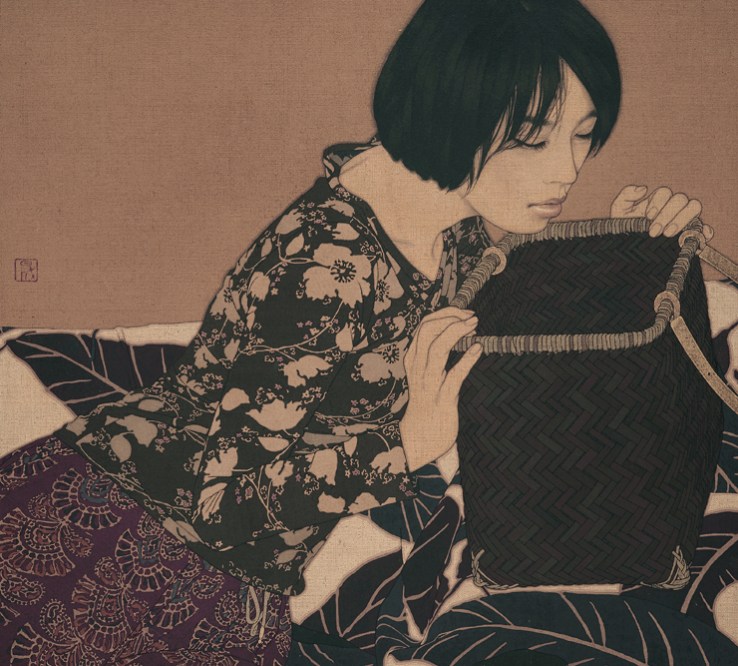
Peeping — Ikenaga Yasunari

126

「覗く・恵美子」(Peeping, Emiko) by Ikenaga Yasunari

The Last Jedi and the Anxiety of Influence

58f13f34dd0895d2098b4814-1888

Let me start by erasing my own anxieties about “reviewing” The Last Jedi (2017, dir. Rian Johnson). I saw it over a month ago in a packed theater with my wife and two young children. We loved it. I haven’t seen it since then, although I’d like to. Because I’ve only seen it once, this “review” will be far lighter on specific illustrating examples than it should be. Now, with some of those (writing) anxieties dispersed, if not exactly erased:

The Last Jedi strikes me as one of the best Star Wars films to date, of a piece with The Empire Strikes Back (1980, dir. Irvin Kershner) and Revenge of the Sith (2005, dir. George Lucas).

Not everyone agrees with me. Clearly, a lot of people hated Rian Johnson’s take on Star Wars. I won’t repeat the laundry list of gripes about The Last Jedi, but instead offer this: the numerous noisy denunciations of The Last Jedi can be rebutted via the terms, tropes, and tones of any of the previous films themselves. Put another way, anything “wrong” (tone choices, plot devices, casting, etc.) with The Last Jedi can be found to be “wrong” with any of the previous films. Furthermore, I don’t intend to directly rebut gripes about The Last Jedi here. Most attacks on the film simply amount to iterations of, “This film did not do what I wanted this film to do,” to which my reply would be, “Well, good.”

“Well, good” — the passionate reactions to The Last Jedi show the film’s power—both narratively and more importantly, aesthetically—to disturb a cultural sense of what the Star Wars franchise “is” or “is not.” In burning down much of the mythos (again, both narratively and aesthetically) of the films that preceded it, The Last Jedi opens up new space for the series to grow.

I enjoyed The Last Jedi’s most immediate predecessor,  The Force Awakens (2015, dir. J.J. Abrams), but was critical of its inability to generate anything truly new. Riffing on The Force Awakens, I wrote that the film “is a fun entertainment that achieves its goals, one of which is not to transcend the confines of its brand-mythos. . . [the film] takes Star Wars itself (as brand-mythos) as its central subject. The film is ‘about’ Star Wars.” And, more to the point:

Isn’t there a part of us…that wants something more than the feeling of (the feeling of) a Star Wars film? That wants something transcendent—something beyond that which we have felt and can name? Something that we don’t know that we want because we haven’t felt it before?

The Last Jedi transcends the narrative stasis of The Force Awakens. “Stasis” is probably not a fair word to describe TFA. Abrams’s film excited viewers, roused emotions, offered engaging new characters, and even killed off a classic character via the classic Star Wars trope of Oedipal anxiety erupting in violent rage. TFA’s stasis is the static-but-not-stagnant excitement of having expectations confirmed. In contrast, Rian Johnson’s The Last Jedi punctures viewer expectations at almost every opportunity, aesthetically restaging tropes familiar to the series but then spinning them out in new, unforeseen directions.

The Last Jedi echoes visual tropes from The Empire Strikes Back in particular. Indeed, many fans believed that Rian Johnson’s TLJ would (or even should) reinterpret Irvin Kershner and Lawrence Kasdan’s entry into the series, much as J.J. Abrams had restaged A New Hope (1977, dir. George Lucas) with The Force Awakens. Instead, Johnson pushes the Star Wars narrative into new territory, with an often playful (and sometimes absurd) glee that has clearly upset many fans.

Johnson’s (successful) attempt to reinvent Star Wars might best be understood in terms of what the literary critic Harold Bloom has called the anxiety of influence. Bloom uses the anxiety of influence to describe an artist’s intense unease with all strong precursors. To succeed, new artists must overcome their aesthetic progenitors. Bloom compares the anxiety of influence to the Oedipal complex. An artist has to symbolically kill what has come before in order to thrive.

An apt description of franchise filmmaking’s inherent anxiety of influence can be found in Dan Hassler-Forest’s essay “The Last Jedi: Saving Star Wars from Itself,”  published last year in the Los Angeles Review of Books:

An overwhelming anxiety of influence predictably permeates any new director’s attempt to elaborate on the world’s most famous entertainment franchise. In J. J. Abrams’s hands, this anxiety was clearly that of a fan-producer struggling to meet other fans’ expectations while also establishing a viable template for future installments. In doing so, his cinematic points of reference never seemed to extend far beyond the Spielberg-Lucas brand of Hollywood blockbusters that shaped his generation of geek directors, and he tried desperately to make up for what he lacks in auteurist vision with energy, self-deprecating humor, and generous doses of fan service.

But Rian Johnson is a filmmaker of an entirely different caliber. Just as Irvin Kershner and Lawrence Kasdan once added complexity, wit, and elegance to Lucas’s childish world of spaceships and laser swords, Johnson makes his whole film revolve around characters’ fear of repeating the past, and both the attraction and the risk of breaking away from tradition.

A break with any tradition, however, paradoxically confirms the power of that tradition. Johnson understands and clearly respects the Star Wars tradition. Despite what his detractors may believe, Johnson hasn’t erased or trampled upon the Star Wars mythos in The Last Jedi; rather, as the Modernist manifesto commanded, he’s made it new. Continue reading “The Last Jedi and the Anxiety of Influence”

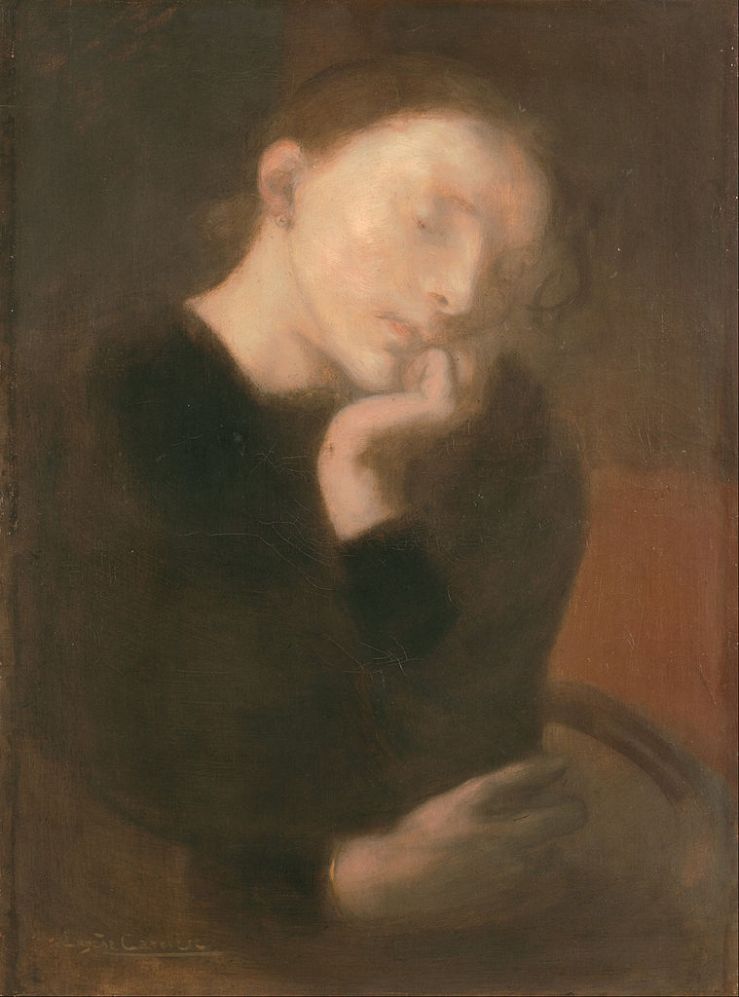
Meditation — Eugene Carriere

meditation-1890

Meditation, 1890 by Eugene Carriere (1849-1906)

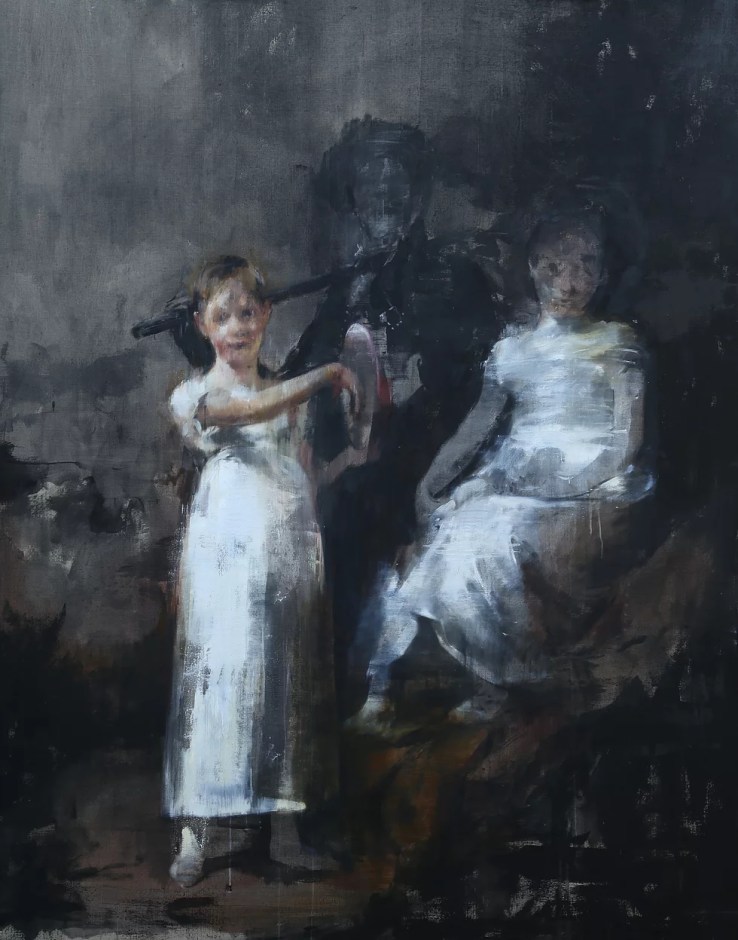
The Elphinston Children (After Sir Henry Raeburn) — Jake Wood-Evans

jwe

The Elphinston Children (After Sir Henry Raeburn), 2016 by Jake Wood-Evans (b. 1980)

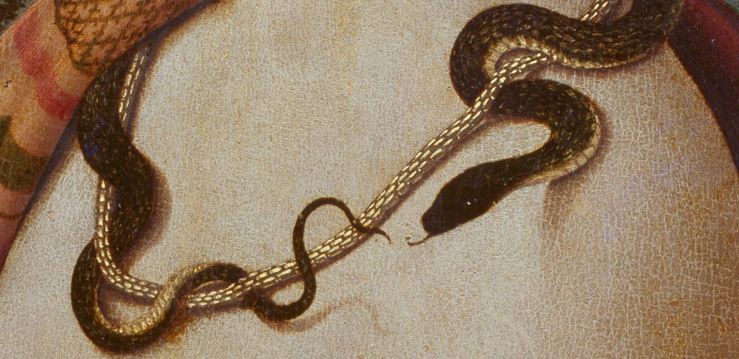
Portrait of Simonetta Vespucci — Piero di Cosimo

abcpiero_di_cosimo_-_portrait_de_femme_dit_de_simonetta_vespucci_-_google_art_project

Portrait of Simonetta Vespucci, c. 1480 by Piero di Cosimo (1462–1522)

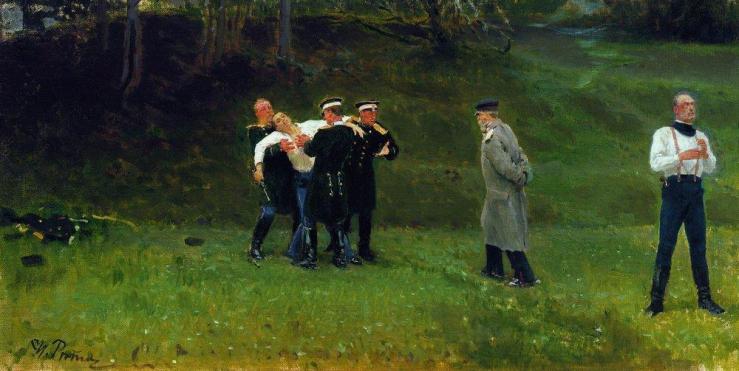
The Duel — Ilya Repin

the-duel-1897

The Duel, 1897 by Ilya Repin (1844-1930)