

Category: Art
Sunday Comics

Art by Simon Bisley from Batman-Judge Dredd: Judgment on Gotham. (1991, DC Comics; written by Alan Grant and John Wagner).
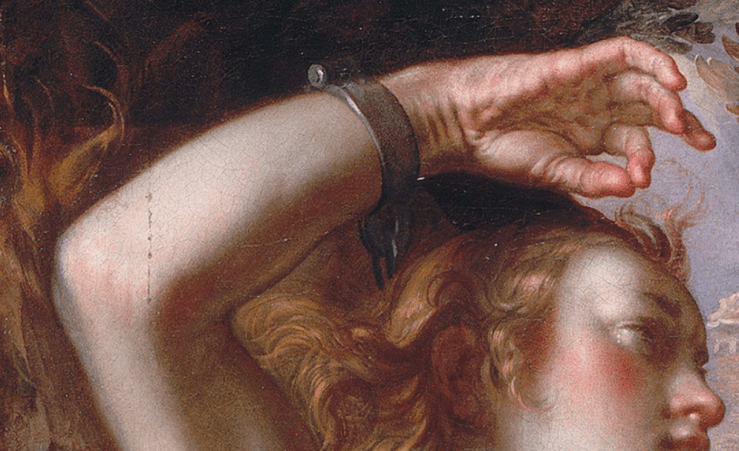
Perseus and Andromeda (detail) — Joachim Wtewael
The Studio Wall — Adolph von Menzel

Some books I’ll try to read in 2017 (Presented by The Good Intentions Paving Company)

I’m in the middle of Paul Bowles’s stories right now, and loving the weird sinister menace of it all. I’ll probably take a crack at some of his novels this year too (The Sheltering Sky next? I’ll need to pick them up).
Senges’s The Major Refutation is also on deck.
Not pictured, because it’s not out yet, is Leonora Carrington’s The Complete Stories (forthcoming in the spring from Dorothy); I’m really looking forward to this one. The NYRB is also publishing Carrington’s memoir Down Below, which looks really cool. I’ve only read the collection The Oval Lady (and that through samizdat means), so I’m happy to see Carrington’s words in print.

Also not pictured because its forthcoming (from Two Lines Press) is Atlantic Hotel by João Gilberto Noll (translated by Adam Morris). I’m anxious to read more from Noll after digging his novella Quiet Creature on the Corner.
Back to the stack in the picture: I loved Ishmael Reed’s Mumbo Jumbo and The Freelance Pallbearers (which strikes me as a really under-remarked upon novel), and I plan on getting to Yellow Back Radio Broke-Down at some point this year.
I’ve had a few false starts with Arno Schmidt’s The Egghead Republic, but maybe I can knock it out in a weekend.
I’ve taken multiple cracks at the novels by Gray, Murdoch, and Hawkes in the stack…so we’ll see.
I read Leon Forrest’s There Is a Tree More Ancient Than Eden in a blur; I’d like to reread it and the other Forrest novel I picked up last month, Two Wings to Veil My Face.
I’ve read enough Pynchon now to make a better effort with Vineland…but again, we’ll see (I’m actually kind of jonesing to reread Against the Day).
(And oh I didn’t make a list like this in 2016, but I was 4 for 8 in the one I did in 2015).
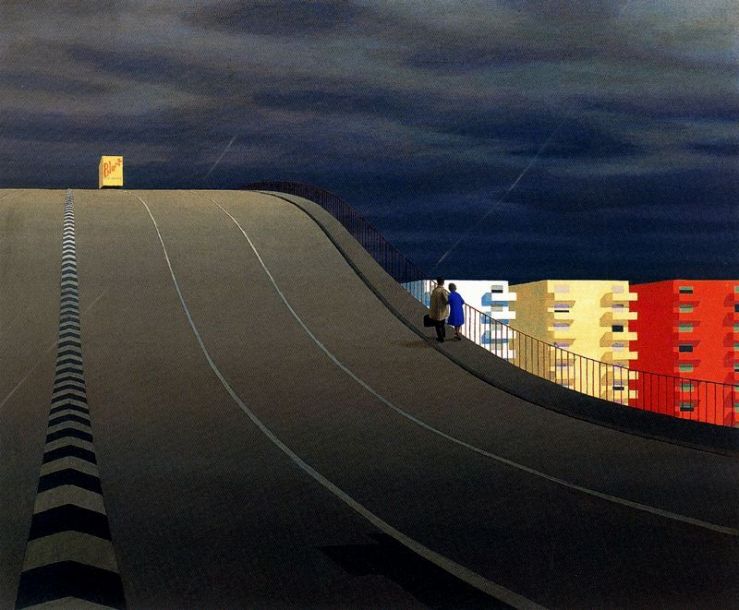
Approach to a City III — Jeffrey Smart
PK Dick’s Martian Time-Slip/Kafka regret (Books acquired and not acquired, 12.28.2016)


Two bucks.
Cover art by Darrell Sweet.
Here’s my riff on Philip K. Dick’s Martian Time-Slip.
I regret not picking up this edition of Kafka’s Amerika that same day:

I reviewed Schocken’s latest translation of Amerika (not the one above) on Biblioklept like over eight years ago. I still have the black hardback, but I’d maybe exchange it for this beauty.
P.S. — Lotta Hannerz

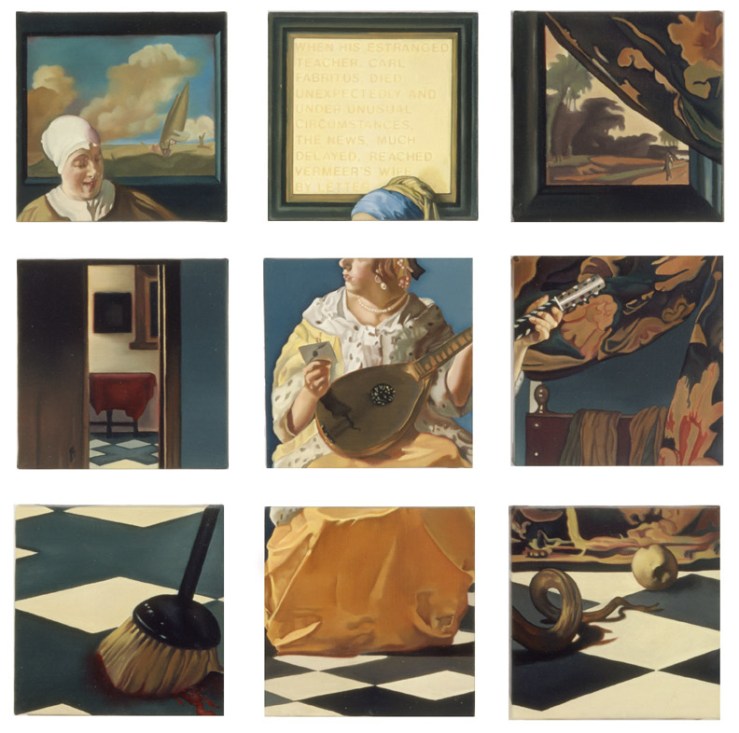
Vermeer’s Wife — Dotty Attie
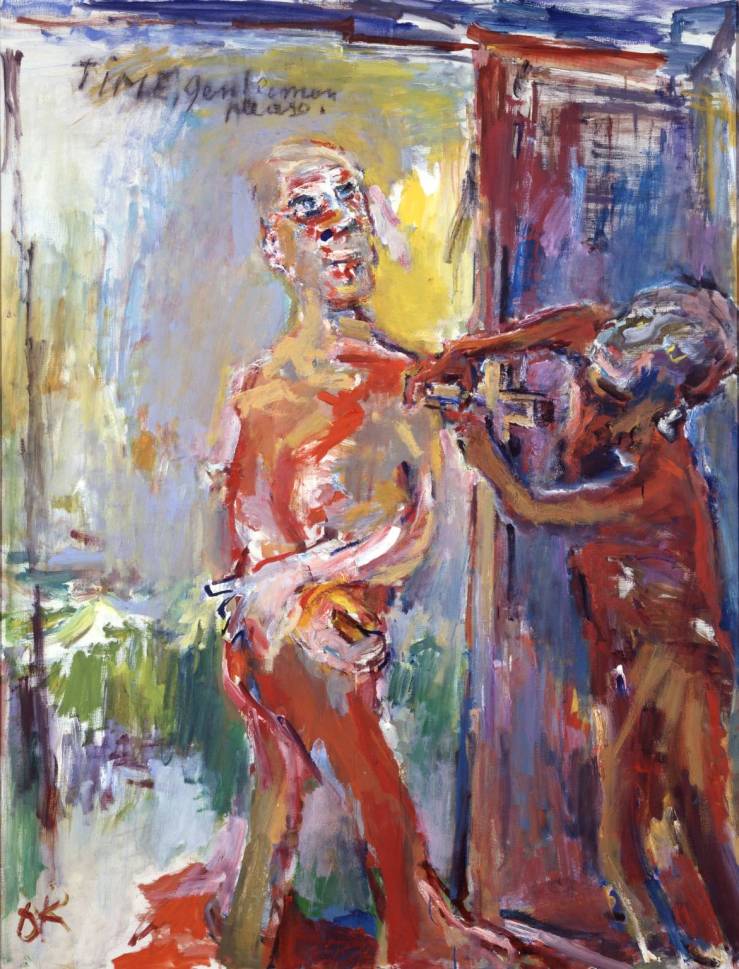
Time, Gentlemen Please — Oskar Kokoschka
Illuminated Shadows — Chronis Botsoglou

John Berger or The Art of Looking
John Berger or The Art of Looking is a documentary biography of the late John Berger. Directed by Cordelia Dvorák and released in November, 2016.
Without publicity capitalism could not survive (John Berger)

New Year’s Eve Fox-fires at the Changing Tree, Ōji — Utagawa Hiroshige

Three Books (or, My three favorite rereading experiences in 2016)
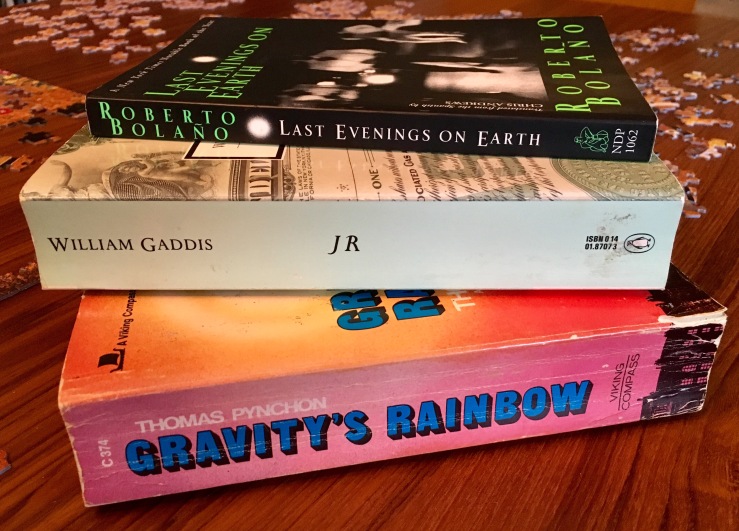
I prefer rereading to reading. Rereading an old favorite can often offer comfort. A week or so after the US presidential election, I picked up Roberto Bolaño’s Last Evenings on Earth and reread its fourteen stories over a few mornings and afternoons. I’m not sure why, but somehow Bolaño’s sinister vibes and dark humor worked to alleviate my own post-election dread in some small measure. “Life is mysterious and vulgar,” after all, as one of his narrators points out. (I reviewed the book seven years ago).
I’m not really sure what impelled me to reread William Gaddis’s great grand gargantuan novel J R in 2016, but I found the experience incredibly rewarding—richer, sadder, funnier, more bitter. Most of J R is composed as unattributed dialogue, so one of the great challenges for a first reading is simply figuring out who is speaking to whom; additional readings help flesh out the narrative’s colors and tone. I wrote about rereading J R, noting
Only a handful of novels are so perfectly simultaneously comic and tragic. Moby-Dick? Yes. Gravity’s Rainbow? Absolutely. (G R and J R, a duo published two years apart, spiritual twins, massive American novels that maybe America hardly deserves (or, rather: theses novels were/are totally the critique America deserves).
This little note offers me an easy bridge to the reread that dominated the second half of 2016, a slow read of Gravity’s Rainbow. I finally read Gravity’s Rainbow in full in 2015—and then immediately reread it. Which is sort of like, y’know, actually reading it. To put it plainly, the only way to read Gravity’s Rainbow is to read it twice. Reading it a third time was fascinating—not just in seeing all the stuff I’d missed, but also in experiencing the novel’s radical coherence, its sublime plotting, its real depth—and most of all, Pynchon’s prose. Critics and commenters tend to foreground Pynchon’s humor and themes, perhaps overlooking his prowess as a sentence-shaper. I also had fun annotating sections of the novel, a project I’ll be continuing next year, when I read Gravity’s Rainbow again.
A Camelia for Anima — Leonora Carrington

Sloth — James Ensor

 Biblioklept