The 2020 Tournament of Zeitgeisty Writers

Maybe you’re bored, maybe you’re stuck inside, missing NCAA March Madness, watching the world’s madness through a screen. Maybe this will be a diversion. (I’m hoping it’s a diversion for me.)

I came up with a list of 64 writers that have written novels or stories that either anticipate, reflect, or otherwise describe our zeitgeist. (I realize now that I’ve forgotten a bunch, but, hey.) After a certain point, there wasn’t much thought put into seeding the tournament.

I’ll be doing running polls on Twitter for the next few days, starting today, with brackets 1-4 launching today.

Here are the brackets for Round 1:

Screenshot 2020-03-22 at 2.54.02 PMScreenshot 2020-03-22 at 2.54.27 PMScreenshot 2020-03-22 at 2.54.44 PMScreenshot 2020-03-22 at 2.55.05 PM

“Herman Melville” — W.H. Auden

“Herman Melville”

by

W.H. Auden


Towards the end he sailed into an extraordinary mildness,
And anchored in his home and reached his wife
And rode within the harbour of her hand,
And went each morning to an office
As though his occupation were another island.

Goodness existed: that was the new knowledge.
His terror had to blow itself quite out
To let him see it; but it was the gale had blown him
Past the Cape Horn of sensible success
Which cries: “This rock is Eden. Shipwreck here.”

But deafened him with thunder and confused with lightning:
–The maniac hero hunting like a jewel
The rare ambiguous monster that had maimed his sex,
The unexplained survivor breaking off the nightmare–
All that was intricate and false; the truth was simple.

Evil is unspectacular and always human,
And shares our bed and eats at our own table,
And we are introduced to Goodness every day,
Even in drawing-rooms among a crowd of faults;
He has a name like Billy and is almost perfect,
But wears a stammer like a decoration:

And every time they meet the same thing has to happen;
It is the Evil that is helpless like a lover
And has to pick a quarrel and succeeds,
And both are openly destroyed before our eyes.

For now he was awake and knew
No one is ever spared except in dreams;
But there was something else the nightmare had distorted–
Even the punishment was human and a form of love:
The howling storm had been his father’s presence
And all the time he had been carried on his father’s breast.

Who now had set him gently down and left him.
He stood upon the narrow balcony and listened:
And all the stars above him sang as in his childhood
“All, all is vanity,” but it was not the same;
For now the words descended like the calm of mountains–
–Nathaniel had been shy because his love was selfish–
Reborn, he cried in exultation and surrender
“The Godhead is broken like bread. We are the pieces.”

And sat down at his desk and wrote a story.

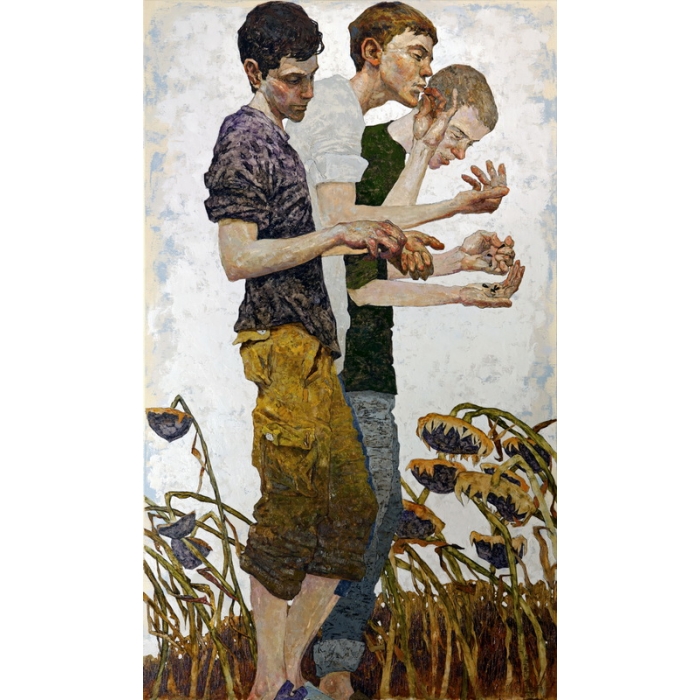
Wild Sunflowers — Denis Sarazhin 

wild-sunflowers

Wild Sunflowers, 2015 by Denis Sarazhin (b. 1982)

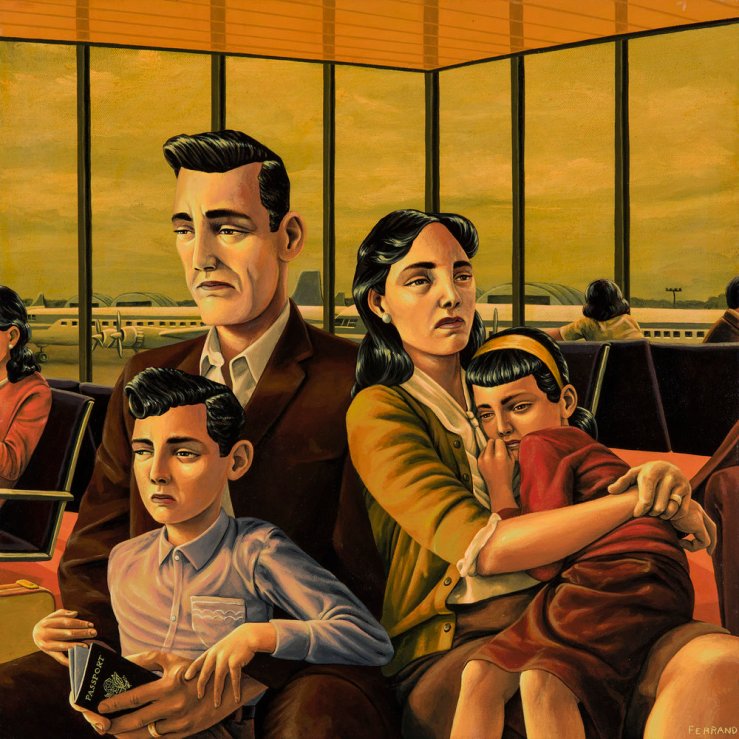
Who Are We Now? — Gregory Ferrand

whoarewenow

Who Are We Now?, 2017 by Gregory Ferrand (b. 1975)

D’Audieu — Jonathan Leaman

jonathan-leaman-de28099adieu-716x1024-1

D’Audieu, 2017 by Jonathan Leaman (b. 1954)

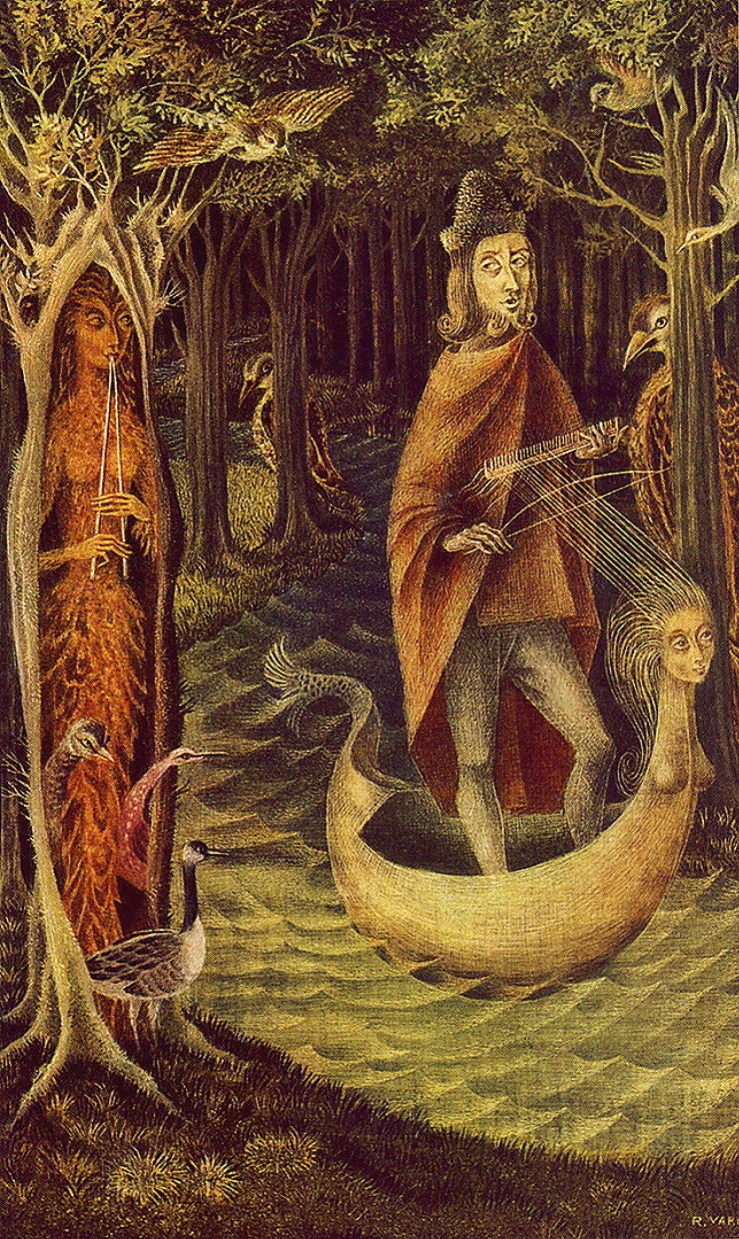
Troubadour — Remedios Varo

89871402x

Troubadour, 1959 by Remedios Varo (1908-1963)

Butterfly Stories — Falk Gernergross

Screenshot 2020-01-11 at 10.31.40 AM

Butterfly Stories, 2012 by Falk Gernergross (b. 1973)

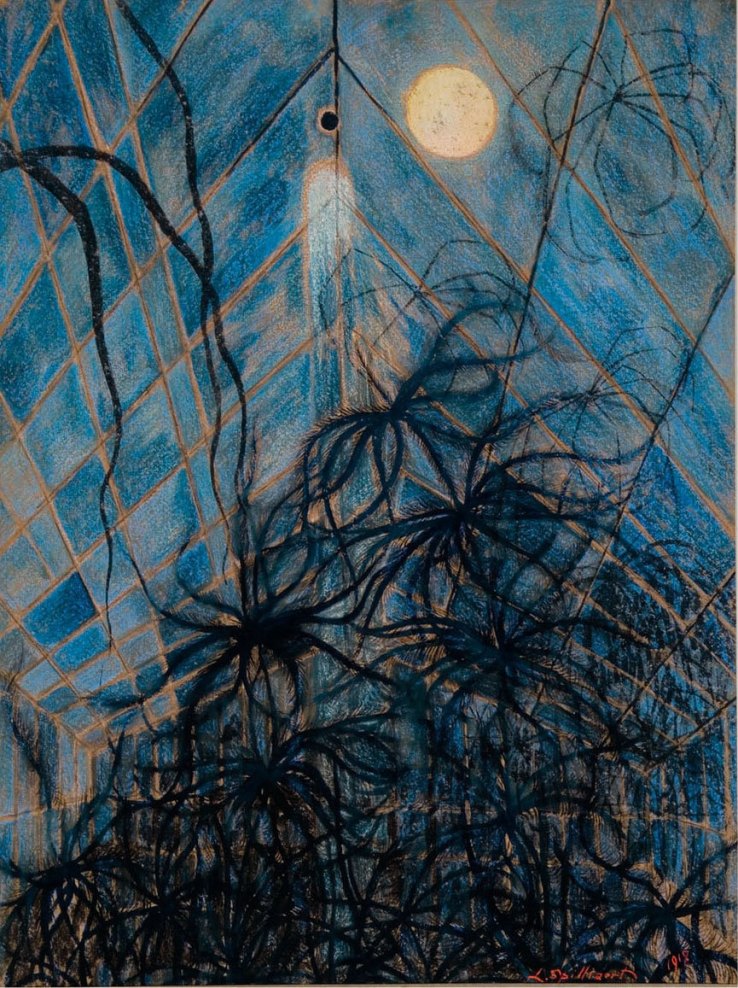
Hothouses I — Léon Spilliaert

xjony6jtvuqnxaphryqf

Hothouses I, 1917 by Léon Spilliaert (1881–1946)

Lytton Strachey. Verso: Crime and Punishment — Duncan Grant

Lytton Strachey. Verso: Crime and Punishment c.1909 by Duncan Grant 1885-1978

Lytton Strachey. Verso: Crime and Punishment, c. 1909 by Duncan Grant (1885–1978)

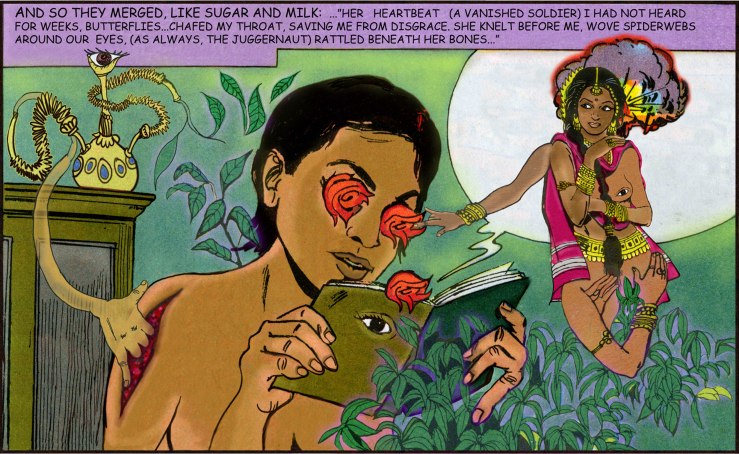
Sugar and Milk — Chitra Ganesh

11.-sugar-and-milk-26-x-41.5-trimmedcomp

Sugar and Milk, from Her Nuclear Waters by Chitra Ganesh (b. 1975)

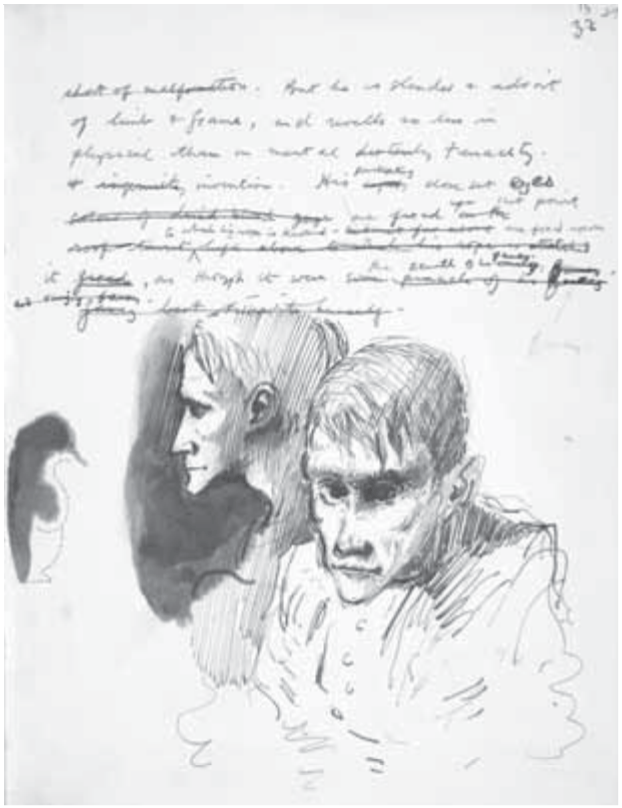
Two Studies for Steerpike — Mervyn Peake

steerpike

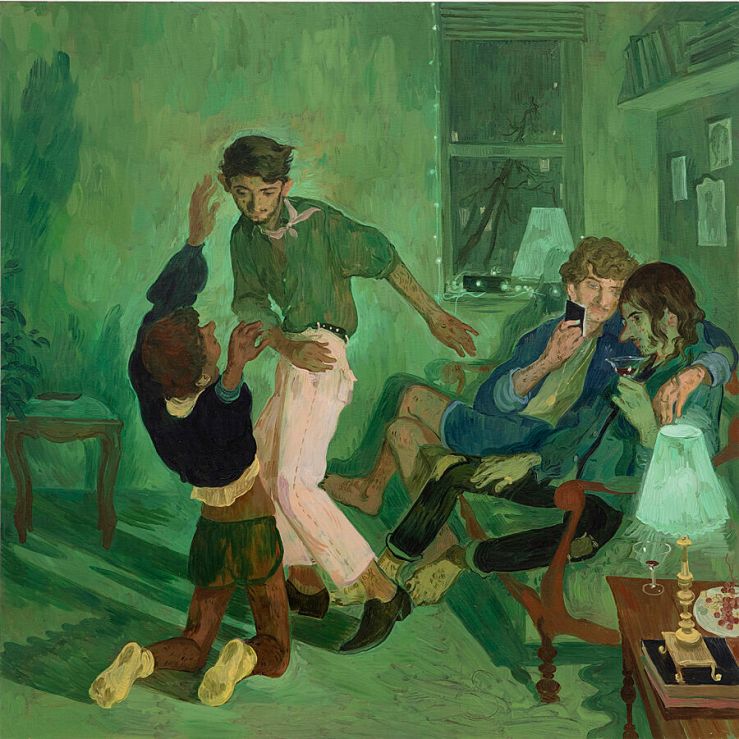
Four Friends — Salman Toor

large_four_friends_

Four Friends, 2019 by Salman Toor (b. 1983)

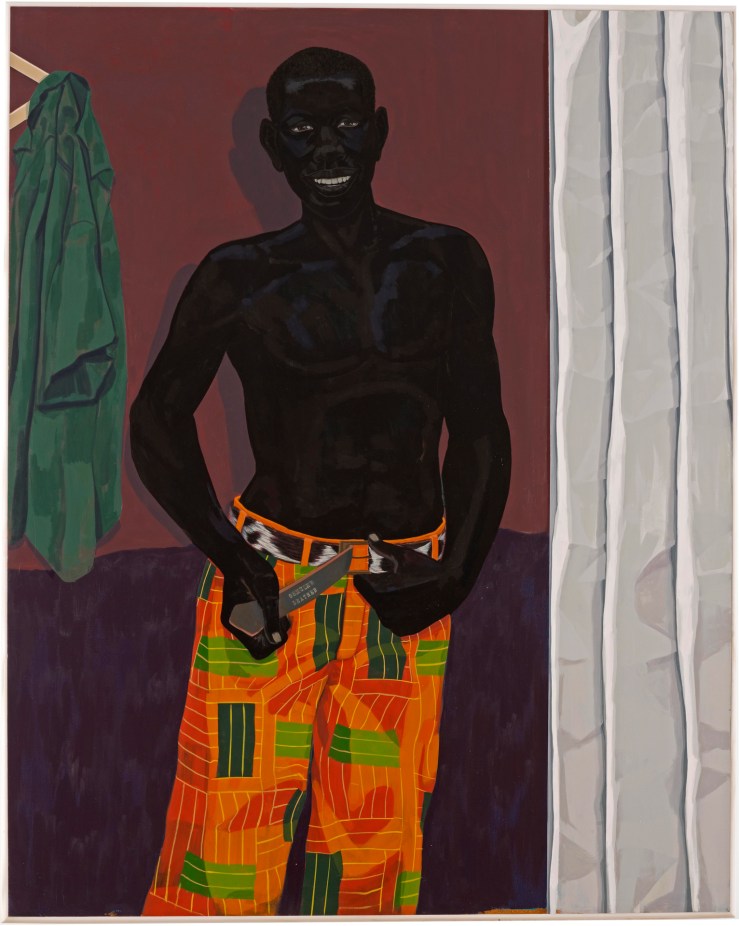
Untitled (Orange Pants) — Kerry James Marshall

marshall_orangepants

Untitled (Orange Pants), 2014 by Kerry James Marshall (b. 1955)

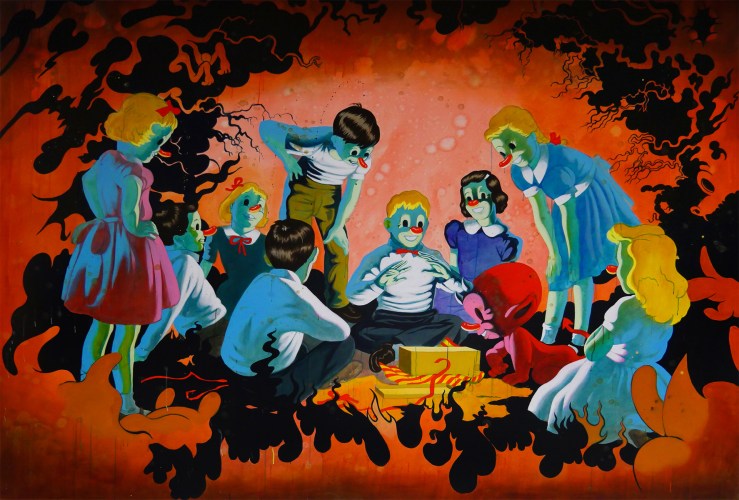
The Gift — Victor Castillo

victor-castillo-the-gift-low

The Gift, 2017 by Victor Castillo (b. 1973)

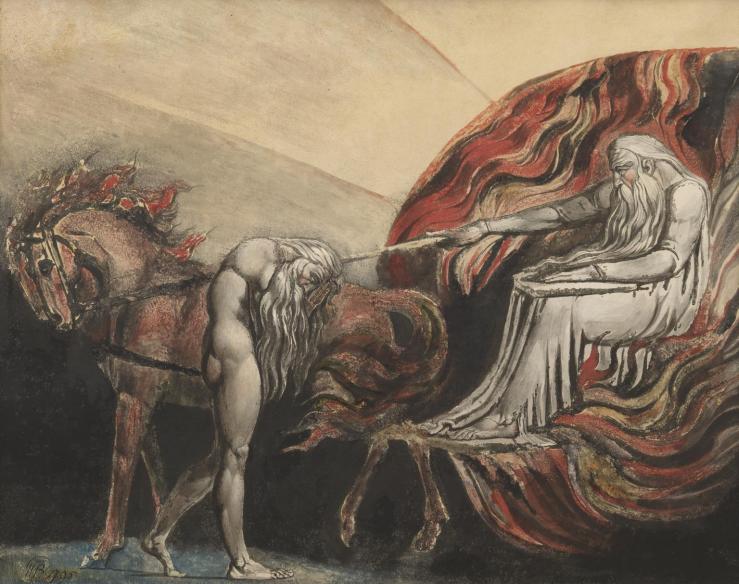
God Judging Adam — William Blake

God Judging Adam 1795 by William Blake 1757-1827

God Judging Adam, 1795 by William Blake (1757-1827)

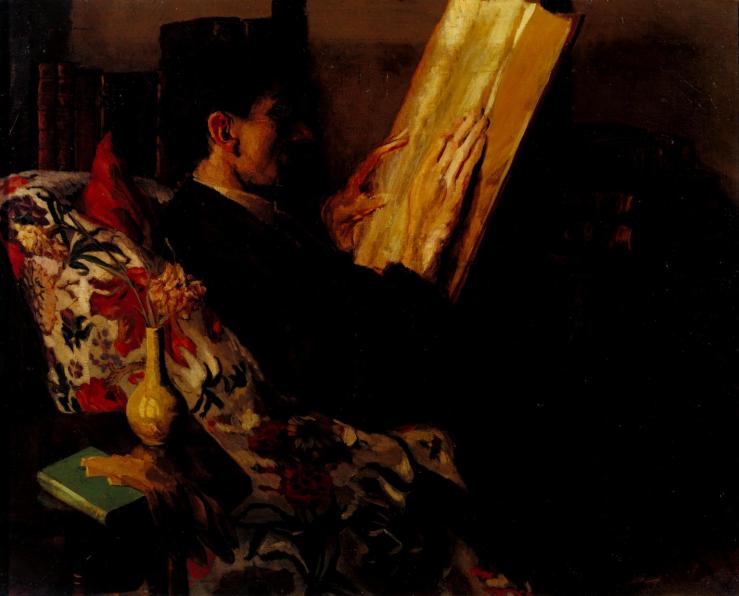
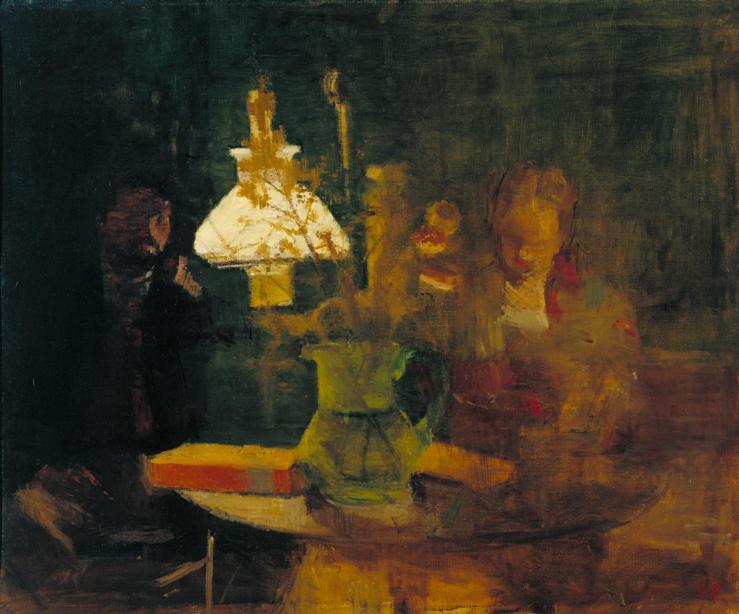
Lamplight — Victor Pasmore

Lamplight 1941 by Victor Pasmore 1908-1998

Lamplight, 1941 by Victor Pasmore (1908–1998)

Blog about some books acquired, 13 March 2020

img_5049

After one week of abstinence I drove the mile or so to the used bookstore I go to too often and browsed.

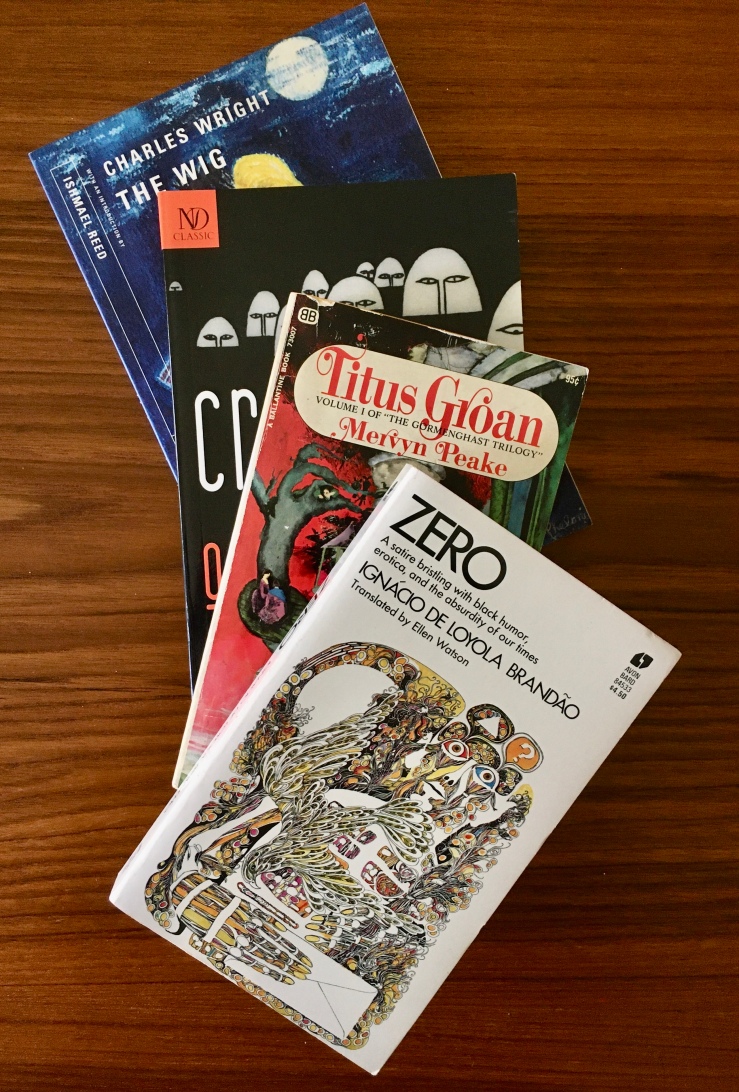
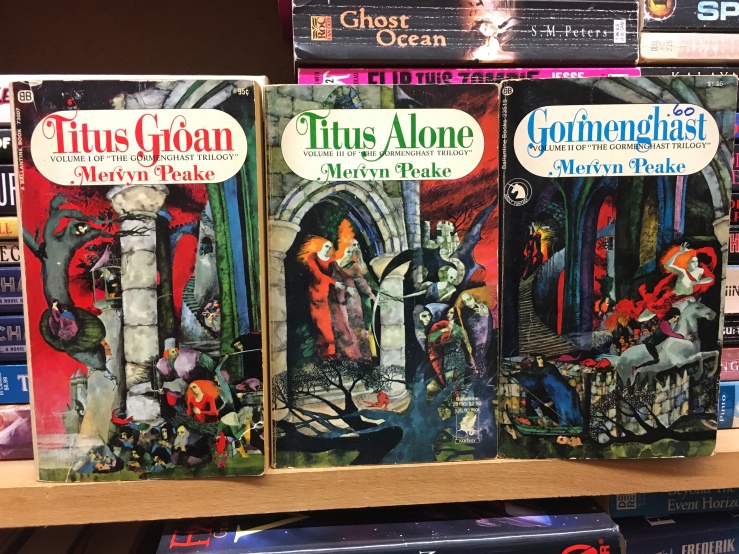
I was specifically looking for the other Gormenghast books by Mervyn Peake, the 1956 novella Boy in Darkness, and the unfinished Titus Awakes, completed by Peake’s wife Maeve after his death. I’m in the last few pages of Titus Alone, and I guess I don’t want to exit his proseworld just yet. Anyway, I went to this bookstore almost every week of February looking for Peake books with no luck after having picked up Gormenghast there on a lark a while back. I ended up buying the first and third of the Gormenghast trilogy online, because I couldn’t find them there, but today I found the complete trilogy in matching Ballantine editions. I did not find the other Gormenghast books though.
img_5048

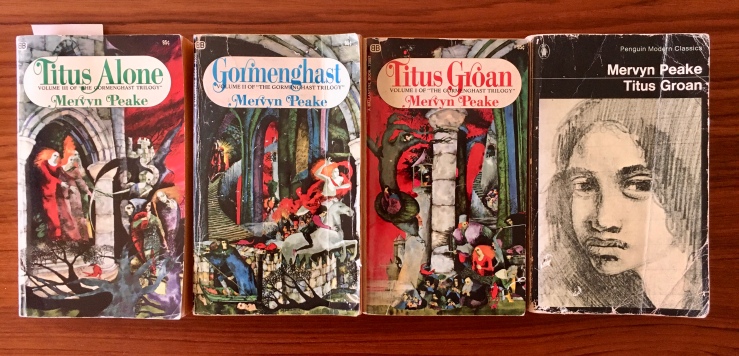
As much as I hated to break up the triplets pictured above, I picked up the Ballantine Titus Groan and adopted it to fit my other Ballantine editions. There is a specific student I have in mind whom I think will love the Penguin edition of Titus Groan I’ll give him next week (even though my dog bit it).
img_5050

I’m obviously a sucker for covers, as any one who’s followed this blog for a while probably knows, and the Ballantine covers are better, I think—the Penguin editions of Peake’s trilogy are great, but they shy away from the bizarre nature of the narratives, tilting toward respectability.

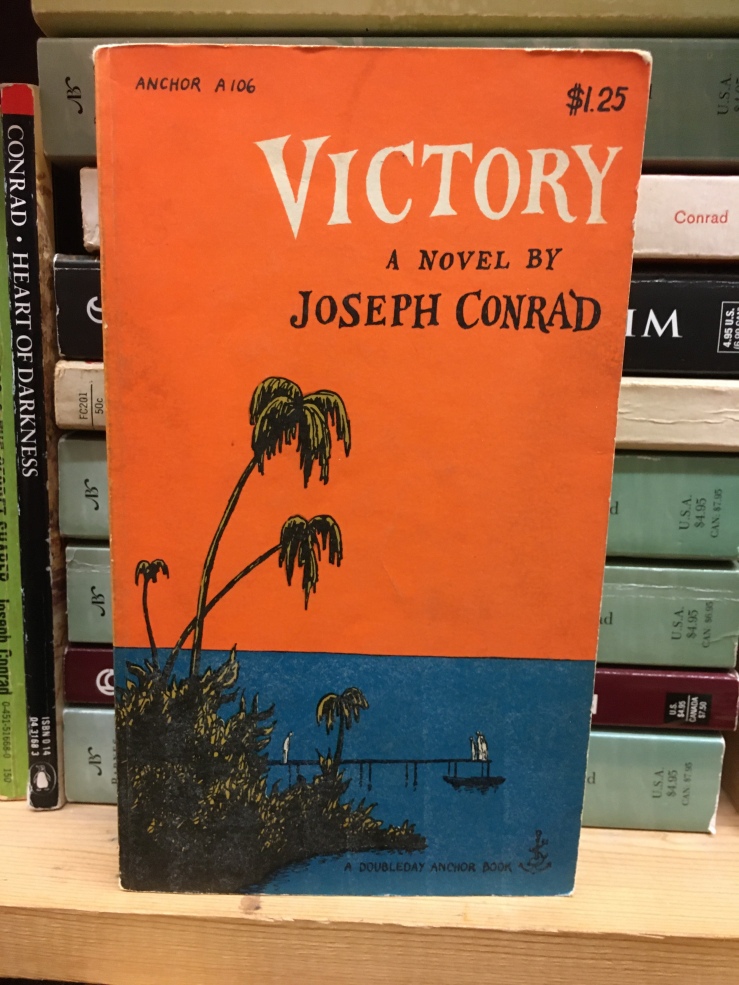
Indeed, I like browsing in large part because I like the aesthetics of books, particularly older books. I absolutely loved this Edward Gorey cover for a 1957 edition of Joseph Conrad’s Victory—but I settled for a picture. I mean, I doubt I’ll read lesser-known Conrad at this point. But I love the orange and the blue, and Gorey’s handlettering:
img_5045

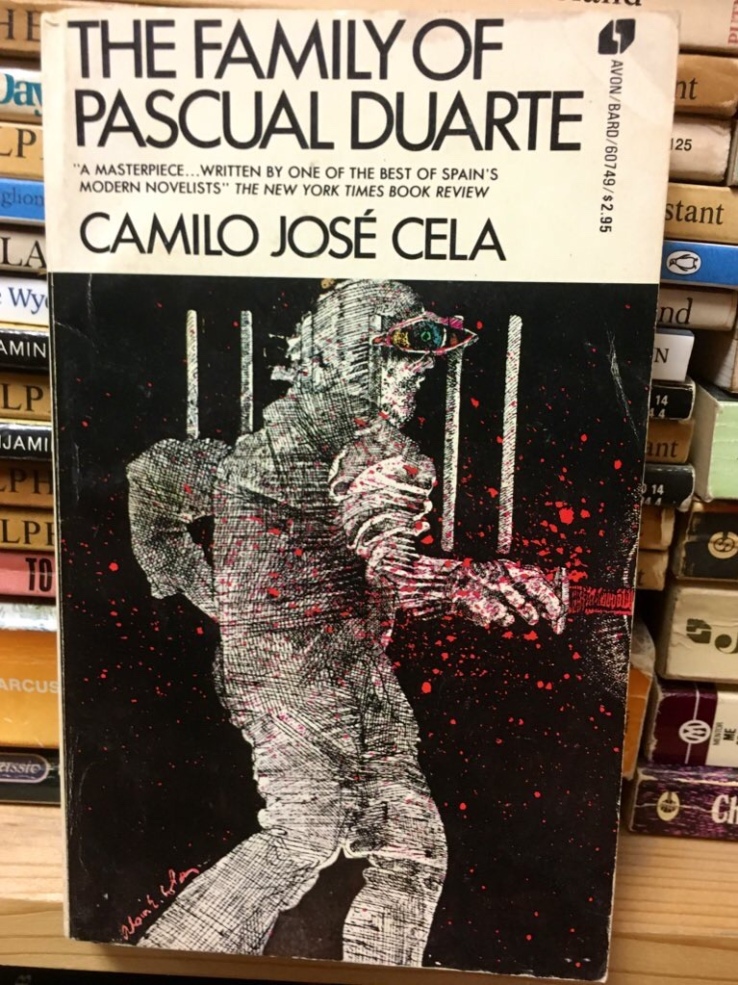
I often settle for just a snapshot of a beautiful cover, like this bizarre one for The Family of Pascual Duarte by Camilo José Cela. I didn’t pick it up a few weeks ago, but then wished I had.
img_5004

I had left it on the shelf like this, face outward. It wasn’t there today, and I wished that I had picked it up. Apparently it is brutal and was banned for a few years in its native Spain.

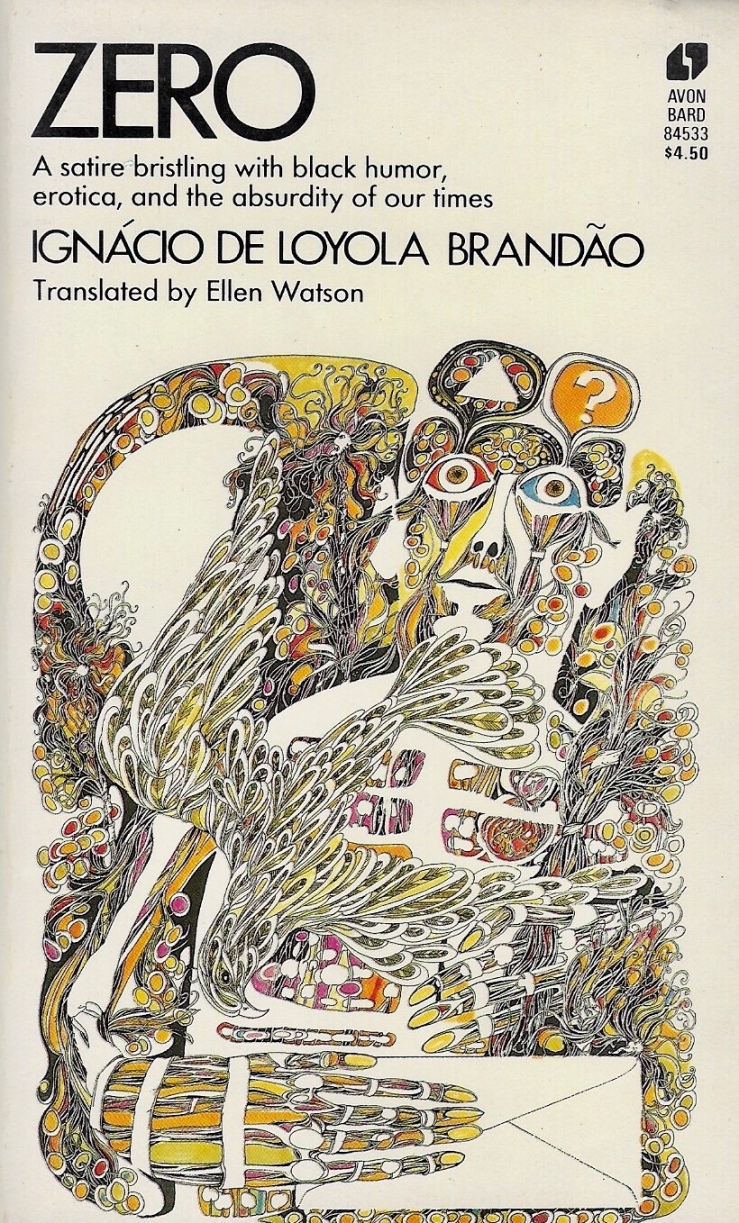
So well and anyway when I spied another Avon-Bard spine with a strange title I pulled it out, wowed at the cover, and dove in. Brazilian author Ignácio de Loyola Brandão’s Zero instantly struck a chord with me. The book is typographically all over the place, with text offset in boxes or laid out in columns. There are diagrams, enormous fonts, glypsh, citations, footnotes, etc. The book is a dystopian satire that seems to be written in its own idiom. The translation is by Ellen Watson. The wonderful cover art is uncredited (as far as I can tell).
2020-03-06_151902

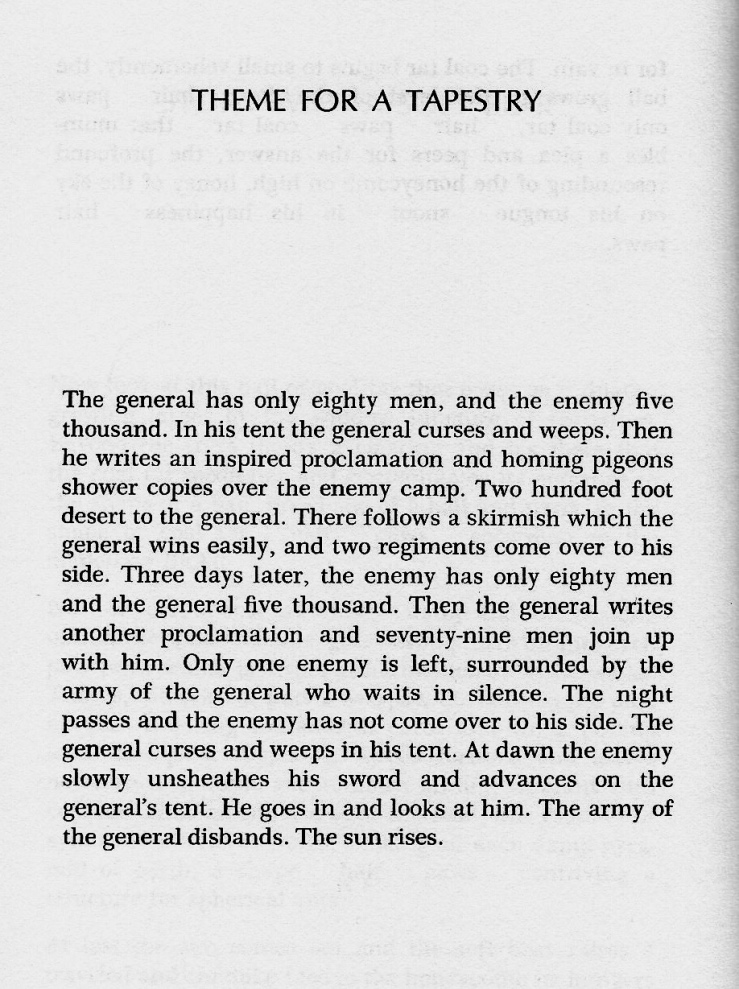
I’ve never been able to get through Julio Cortázar’s famous book Hopscotch (despite many attempts), but I liked the short stories by him that I’ve read. I’m also a sucker for anything supershort, so when I saw his collection Cronopios and Famas (translated by Paul Blackburn), I was intrigued. I love a book in slices and morsels that I can snack on for a while (I’m really digging Gary Lutz’s The Complete Gary Lutz for the same reason). Most of the stuff in here is under three pages; much of it is much shorter too, like “Theme for a Tapestry”:
2020-03-06_151902_5

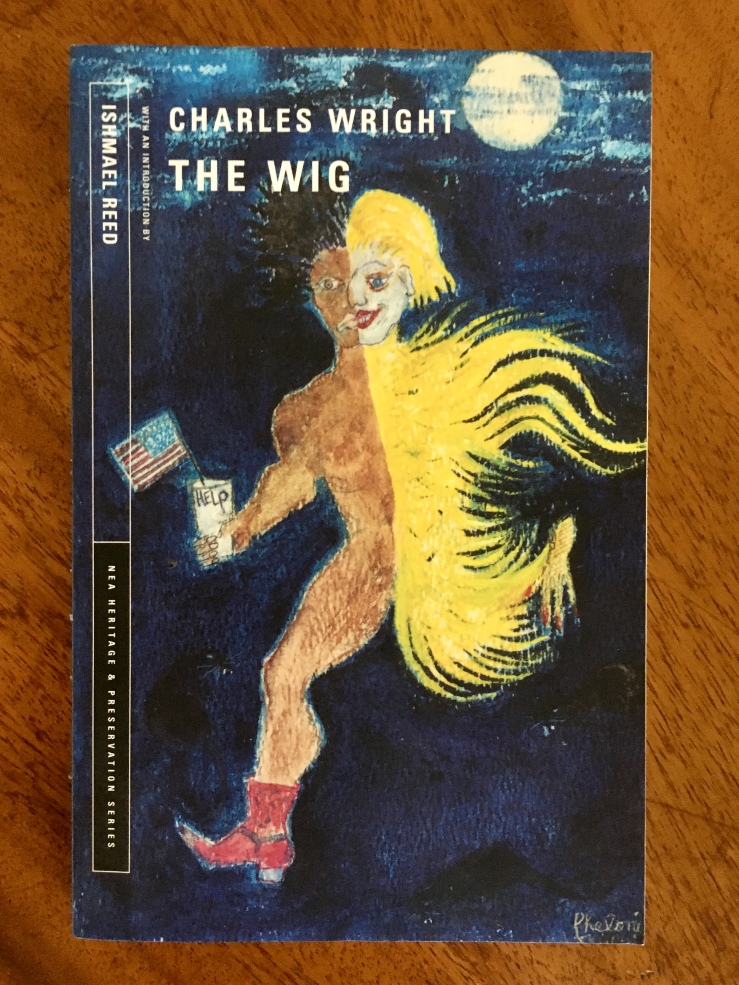
While scanning for anything by Rudolph Wurlitzer (no dice), I spied the spine of Charles Wright’s The Wig. Wright has been on my radar for a while now, mostly due to Ishmael Reed’s consistent endorsement of him (in both fiction and nonfiction alike), and when I pulled the volume to reveal its beautiful cover, I saw Reed’s name on the margin (and on the blurb on the back), and had to have it. The cover art is by Phelonise Willie; design by Scott di Giolamo:

img_5057