It’s October, and maybe you want some light heavy reading, something titillating but deep, sharp, maybe a little gross at times, always unnerving, right?
How about reading Angela Carter’s 1974 collection Fireworks?
Subtitled Nine Profane Pieces, the collection features nine profane pieces. Actually, I don’t think profane is the right adjective (although I’d always cede to Carter’s judgment in matters of diction). Many, no, most, of these stories approach the spiritual—albeit in a roundabout, okay, profane, manner. In the phallically-titled “Penetrating to the Heart of the Forest,” for example, Carter reimagines Adam and Eve in a new garden through a lens that ironizes both Rousseau’s notion of the noble savage as well as the European colonial project in general. There’s also some mild incest in the tale, to boot—so, okay, sure, profane.
The noun in Carter’s subtitle, pieces, is wholly accurate: the selections in Fireworks have a unified tone, but are disparate in form. There are fabulous thrillers here (“The Loves of Lady Purple,” the story of a puppet prostitute who sucks the life out of her ventriloquist master), morality tales (“Master,” a riff on the Great White Hunter with a figurative middle finger pointed in the general direction of Defoe’s Crusoe), and reminiscences that approach so-called autofiction (“A Souvenir of Japan” and “The Smile of Winter,” mementos of the years Carter lived in Japan). “Flesh and the Mirror” expands on Carter’s years in Japan, but swerves into Borgesian territory; “Reflections” goes straight through the Borgesian mirror into Burroughs world (William S., with just a touch of Edgar R.).
The strongest piece in the collection, at least in my estimation, is “The Executioner’s Beautiful Daughter,” which reads like a travelogue into incestuous abjection. “Here we are, high in the uplands,” our detached narrator begins, before offering up an anthropological catalog of life in that upland. The barest ghost of a plot clutches onto “The Executioner’s Beautiful Daughter,” and the piece is all the stronger for it. Instead, we get a cold, ugly study in cruelty and horror.
Readers new to Carter might prefer to start with her seminal 1979 collection The Bloody Chamber, a book whose inverted fairy tales eviscerate the adjective I used in the previous clause, that adjective seminal. The Bloody Chamber is great! (Check out “Wolf-Alice” for a taste.) (And while I’m hanging out in parentheses, I’ll point out that Burning Your Boats collects pretty much all of Carter’s short fiction.) But back to Fireworks—if the pieces here are not as refined and unified as the anti-fairy tales that comprise Carter’s more-celebrated collection The Bloody Chamber, they are all the more fascinating as studies in sadomasochism, alienation, and the emerging of a new literary consciousness. Great stuff.
Vladimir Sorokin’s novel Their Four Hearts (in English translation by Max Lawton) made me physically ill several times. To be clear, the previous statement is a form of praise. I finished it a few weeks ago and put it on a high shelf where no one in my family might come across it.
I picked up Their Four Hearts on the strength of the first Sorokin novel I read, Telluria, and the third, Blue Lard (both also in translation by Max Lawton). The kinetic energy of those novels evoked cinema in my mind’s eye—something akin to Alejandro Jodorowsky’s surreal Holy Mountain or Luis Buñuel’s comic masterpiece L’Age d’Or—narratives that engender their own new visual grammars. In Their Four Hearts, I again found a cinematic comparison, this time in Pier Paolo Pasolini’s study of depravity and cruelty, Salò, or the 120 Days of Sodom.
Like Salò, Sorokin’s Their Four Hearts explores seemingly every form of depravity in extreme detail. It is not for the faint of heart or stomach. (Sorokin’s potent language, in Lawton’s sharp translation, would eviscerate the cliches that precede this parenthetical aside.) Their Four Hearts is fairly short—200 pages, including over 30 pages of charcoal illustrations by Greg Klassen—but I had parcel it out over four distinct sittings. (After the second time I had to put it down because of nausea, I decided to avoid reading it close to mealtimes.)
Frontispiece for Their Four Hearts, Greg Klassen
Before I touch briefly on that depravity, it might be useful to interested readers to offer a gloss on the plot of Their Four Hearts. There is no recognizable plot. Or, rather, the plot hides behind the accumulation of violent, abject details, forever unavailable to a reader, no matter how keen a detective that reader might be. It is a cannibalizing plot, both literally and figuratively, stochastic, absurd, consuming its own horrific iterations.
But, like, what is it about?, hypothetical you might ask. In lieu of a list of depravities, let me cannibalize the back cover copy:
Their Four Hearts follows the violent and nonsensical missions carried out by a group of four characters who represent Socialist Realist archetypes: Seryozha, a naive and optimistic young boy; Olga, a dedicated female athlete; Shtaube, a wise old man; and Rebrov, a factory worker and a Stakhanovite embodying Soviet manhood. However, the degradation inflicted upon them is hardly a Socialist Realist trope. Are the acts of violence they carry out a more realistic vision of what the Soviet Union forced its “heroes” to live out? A corporealization and desacralization of self-sacrificing acts of Soviet heroism? How the Soviet Union truly looked if you were to strip away the ideological infrastructure? As we see in the long monologues Shtaube performs for his companions––some of which are scatological nonsense and some of which are accurate reproductions of Soviet language––Sorokin is interested in burrowing down to the libidinal impulses that fuel a totalitarian system and forcing the reader to take part in them in a way that isn’t entirely devoid of aesthetic pleasure.
Libidinal forces . . . totalitarian system . . . forcing the reader . . . aesthetic pleasure?
Aesthetic pleasure? Pleasure is doing a lot in that phrase, although I was admittedly alternately rapt by Their Four Hearts even while I was (quite literally) disgusted. I’ve read enough Sorokin to this point that I didn’t have to be forced into the surreal, jarring logic of the plot, finding instead deeply dark humor in it, where possible (although more often than not, horror without humor).
“Rebrov took a noose out of his pocket and put it around Alexandra Olegnova’s neck,” Greg Klassen
I have resisted turning this ostensible “review” into a catalog of the horrors Sorokin offers in Their Four Hearts. These horrors are all the more horrible for their sensory evocation set against their seemingly senseless (lack of) meaning. When the foursome, very early in the novel, drug and murder Seryozha’s parents, remove the glans from his father’s penis, and pop into the kid’s mouth to suck on, does that mean something exterior to the novel’s own aesthetics? That the quartet continues to trade the glans off, taking turns sucking on it throughout the novel—are we to plumb that for some kind of allegorical gloss? Or do we simply ride with it? Their Four Hearts confounds its readers, creating not only its own inventions of vocabulary, but its own grammar of storytelling.
Instead of my describing further the horrors of Their Four Hearts (murder, pedophilia, parricide, torture, mutilation, coprophagia, rape, cannibalism, etc. ), it might be more profitable for interested readers to inspect the illustrations by Greg Klassen I’ve included in this review. Reminiscent of George Grosz or Hans Bellmer, Klassen’s charcoals capture the tone and vibe of Their Four Hearts. They add to the text’s cinematic quality. (Publisher Dalkey Archive should have given Klassen the cover.)
“With only a few strokes, Schtaube opened up the maxillary sinus cavities in the corpse’s face,” Greg Klassen
By now you likely have a clear idea if Their Four Hearts is For You or Not For You. I found the experience of reading Sorokin’s novel paradoxically compelling and repellent. (One of the closest experiences I can compare reading it to was eating beef chitterlings at a Korean restaurant in Tokyo. The waitress brought the raw gray intestines to our table, where we grilled them ourselves over charcoal, dipping them in sauces. We ate three orders.)
“He skewered all of their hands on the first meter-long spoke,” Greg Klassen
Telluria and the forthcoming Blue Lard are much better starting places for those interested in Sorokin, but his translator Lawton suggested in an interview that,
…any new reader of Sorokin [should] immediately chase TELLURIA with THEIR FOUR HEARTS: those two combined give something like a complete picture of the master at work.
It’s a strange chaser, and it leaves a flavor unlike anything else I’ve ever tasted. Highly recommended.
The first time that I remember having intense derealization in my adult life was when I spent a few hours cleaning out a large spare closet in the house my wife and I were then living in.
This was about sixteen years ago, close to the birth of our first child, our daughter, and I was removing from the closet boxes of nostalgia: high school and college papers, paintings and sketches, patches, guitar pedals, old issues of MAD Magazine, punk zines, stereo wire, soon-to-be obsolete audiovisual cables, record sleeves without records, 3.5 inch floppy disks, memory cards from abandoned cameras, rolls of film, tennis balls, band t-shirts I’d never fit into again, heavy stereo equipment, and so on and etc.
I was removing all these old things to make space for new things, a pattern that I’ve followed ever since. And well anyway, not an hour into the process I began to get an odd dizziness, a feeling that none of this was real. I was not thinking about any of the objects but something about their accumulated physicality overruled my subjectivity. I recall having to turn off the record I was listening to, drinking a lot of cold water, and lying down. But the sensation kept on, like a low-grade psychotropic trip.
I experienced similar misadventures later in similar circumstances—reorganizing large bookshelves, moving offices, more stuff with closets. I also began to (rarely) experience full-blown anxiety attacks later in life, usually triggered by driving an automobile over a large bridge or on a complex highway, and the feelings of derealization I’d previously experienced were a part of those attacks, but they were also accompanied by feelings of dread and difficulty breathing. Those kinds of attacks are awful; the derealization thing is just trippy and weird. And it happened to me today while I was browsing for books. I’m not sure if it was the closeness of the aisles or the smell or a certain book or the mild change in weather that we had in north Florida today, where the throbbing humidity and scorching sun relaxed to a cloudy eighty. I think it was the screaming child who triggered it though, thrashing around on the ancient cut carpet, slapping the carpet, kicking her feet like a swimmer. Her mother and siblings walked away from her, walked into another aisle of this mazelike used bookstore, while I completely lost and never regained the name of the author I was searching for in the “T” section of Classics.
From there I leaned into the unreality and made a nice little trip of it, reminding myself that if I am a little bit crazy, that makes me a normal American. I too have microplastics in my blood! I too feel the stress of the appearance of unrelenting, non-stop change!
I picked up two books: Javier Marías’s Thus Bad Begins and Osvaldo Soriano’s A Funny Dirty Little War. I mostly knew Marías from his “La Zona Fantasma” columns in The Believer, and I have read only one book by Marías, Voyage Along the Horizon, which I scarcely remember. But I know Roberto Bolaño was a fan, so I’d always meant to return and try again. Today, I saw a hardback copy of Thus Bad Begins (translated by Margaret Jull Costa) propped lazily up against a hardback copy of Hilary Mantel’s novel Beyond Black. Mantel died yesterday; Marías died a dozen days ago; both books had strayed from their author’s placards, not unusual in this wonderful sprawling store. So I picked it up. It’s probably not the best starting place for Marías, right? I’ll try. I love the title; I am shallow.
The title on the spine attracted me to Osvaldo Soriano’s A Funny Dirty Little War (translated by Nick Caistor), the goofy, menacingly violent cover intrigued me and the Calvino blurb and first three pages sold me.
I don’t have a conclusion for this blog. I still feel a little outside of myself.
Vladimir Sorokin’s 2013 novel Telluria, in its first English translation thanks to the estimable talents of Max Lawton, is one of the best contemporary novels I’ve read in a long time. Telluria is a polyglossic satirical epic pieced together in vital miniatures. Its fifty sections are simultaneously discrete and porous, richly dense but also loose and funny. It teems with life and language, exploding notions of stable storytelling into a carnival of wild voices.
The world Sorokin conjures in Telluria is best experienced without map or gloss. My joy in reading the novel came from wandering through its fifty chapters and slowly building my own sense of this post-collapse world. You explore Telluria, finding footing after stumbling initially over the disorienting newness of a particular section. And just as you’ve tuned into the particular section’s frequency, you find yourself in a new chapter, a new idiom, a new voice. It’s a goddamn linguistic picaresque best enjoyed on its own terms, terms it refuses to spell out in simple exposition.
Telluria does not have a plot in the traditional sense, although its sum is greater than its parts. The fifty sections are not mere exercises in style, but rather a reflection of post-twentieth century consciousness: fractured, paranoid, hallucinatory, kaleidoscopic, chaotic, joyous, dystopian, utopian, ironic, earnest, strange…The reader who wanders through the fifty chapters will piece together a brave weird world where our contemporary nation states and political alliances have splintered into a cacophony of fiefdoms, city states, monarchies, republics, and so on. (There’s even a system of “enlightened theocratocommunofeudalism.”)
The needle that threads through it all is tellurium, a real (if earth-rare) element (as you’ll undoubtedly recall from your high-school chemistry class). In our world, tellurium is mostly employed in creating alloys for machines. In the world of Telluria, it is a drug that can take its user on a transcendental journeys, Those lucky enough to get their hands on a tellurium spike might find themselves transported into metaphysical spaces. Expert “carpenters” hammer tellurium nails into the heads of seekers, and these seekers go on to communicate with the dead, rampage fearlessly in battle, meet Christ in heaven, fly above mountaintops, or, in some cases, simply perish.
I should have by now offered a taste of the language in Telluria. A nice chunk of text set within the gum of context, no? But I don’t know how to do that effectively–Telluria is a dazzle of tongues. Offering a taste of just two or three of the sections would insufficient. It would amount to something like the parable of the blind men and the elephant.
Sorokin’s conceit in writing the thing was not to symbolically represent a particular historical period or something like that, but to give voice to difference itself. 50 voices and 50 differences. Because of that, my task was monomaniacal in its complexity: to follow Sorokin out into deep waters of difference and, like him, give birth to 50 absolutely unique voices…I had to be impenetrable where he was impenetrable, ungainly where he was ungainly, and senseless where he was senseless; anything less would have been a betrayal of what makes the book worth reading. As such, I appealed to Chaucer (for the centaur), Céline (for the bagmen), Turgenev translations (for the hunting), Faulkner and McCarthy (for the oral narratives about highly rural situations…), Ginsberg (for the “Howl” rip-off), Mervyn Peake (for the overripe fantasy-novel fun), and a great many others.
Telluria’s verbal carnival matches (and, really, engenders) seemingly endless imaginative invention on Sorokin’s part. We get dog-headed mutants engaged in philosophical discourse, “litluns” planning a revolution over the normies, the Carpenters of Western Europe hammering tellurium spikes into an army of Knights Templar who are about to set off on their thirteenth flying crusade against Islamic invaders. There are late-night, drug-fueled, multilingual bullshitting sessions, orgies, a princess who gets her kicks slumming it in disguise and fucking the serfs. There are lovers separated by thousands of miles, mutated horses larger than three-story houses, tourists in the USSR — the Ultra-Stalinist Soviet Socialist Republic. A centaur falls in love. Etc.
I copped out of citing any passages from Telluria above, protesting that it might offer an incomplete picture—and that’s true. But reviewing my notes, I think it’s worth sharing one passage at some length, a passage that I think both describes the milieu of the novel as well as approaches a kind of moral vision for the novel (with the strong caveat that any one distinct moral vision is necessarily exploded and ironized by the other voices that thread through the novel—as Lawton stated in our interview, Telluria is “an ode to difference….For Sorokin, the world is a million different textures, a million different languages, and no ONE can be said to triumph.”)
“We must not take anyone else’s karma upon ourselves, not even in small matters,” the brigadier continued. “Especially now in our renewed, post-war world. Take a look at the Eurasian continent: after the collapse of ideological, geopolitical, and technological utopias, it was finally plunged back into the blessèd and enlightened Middle Ages. The world returned to human scale. Nations found themselves. Man ceased to be the sum of the technology around him. Mass production is living out its final years. There aren’t two identical nails beaten into humanity’s head. Man regained a sense of the thing, started to eat healthy grub and ride horses again. Genetic engineering helps man to feel his true size. Man has regained faith in the transcendental. Regained his sense of time. We’re not rushing anywhere anymore. Most importantly–we understand that there can be no technological heaven on earth. And, and in broader terms, no heaven at all. Earth has been given to us as an island of overcoming. Everyone chooses what to overcome and how to overcome it. And they make that choice themselves!”
Sorokin’s post-collapse world doesn’t seem all that bad to me.
Telluria was my first encounter with Sorokin, and I think it makes a grand introduction. I’ve since read Day of the Oprichnik (translated by Jamey Gambrell) and Blue Lard (forthcoming next year from NYRB and also translated by Max Lawton). I’m currently reading Lawton’s translation of Their Four Hearts. While I think Blue Lard is the strongest of these titles (and I look forward to/dread reviewing it in the future), Telluria is an excellent introduction to Sorokin’s work, offering an engaging taste of his methods (all through Lawton’s lively translation). The book’s energy and imagination offer a nice counter to the dour dystopian narratives that abound these days.
Telluria is Not For Everyone. Readers interested in clear “worldbuilding” or plots that tie up all the loose ends will find themselves exasperated, as will readers who actively resist the linguistic playfulness of Lawton’s translation. Similarly, readers searching for a moral analogy for contemporary Russian politics and culture will find themselves straining to apply whatever mold they’ve already forged in their minds. Neither is this book particularly interested in the Americas or Western Europe. Sorokin’s province is the vast vacillating mass of Eurasia. In his 2012 book Russia: A Very Short History, Geoffrey Hosking notes “the arduous and challenging task of building a coherent polity on the flat open plains of northern Eurasia,” arguing that although Russia “has been a remarkable success story,” it is nevertheless a country “which had its own weaknesses programmed into it.” Hoskings continues: “[Russia] rested on a tacit compact between ruler, elites, and communities of ordinary people, renewed after periods of upheaval and crisis, yet never wholly harmonious, always subject to internal strains.” Telluria is an ecstatic and jarring exploration of those upheavals, those crises, those wonderful strains, a satire on the very notion of a coherent polity.
Ann Quin’s third novel Passages (1969) ostensibly tells the story of an unnamed woman and unnamed man traveling through an unnamed country in search of the woman’s brother, who may or may not be dead.
The adverb ostensibly is necessary in the previous sentence, because Passages does not actually tell that story—or it rather tells that story only glancingly, obliquely, and incompletely. Nevertheless, that is the apparent “plot” of Passages.
Quin is more interested in fractured/fracturing voices here. Passages pushes against the strictures of the traditional novel, eschewing character and plot development in favor of pure (and polluted) perceptions. There’s something schizophrenic about the voices in Passages. Interior monologues turn polyglossic or implode into elliptical fragments.
Quin repeatedly refuses to let her readers know where they stand. Indeed, we’re never quite sure of even the novel’s setting, which seems to be somewhere in the Mediterranean. It’s full of light and sea and sand and poverty, and the “political situation” is grim. (The woman’s brother’s disappearance may or may not have something to do with the region’s political instability.)
Passage’s content might be too slippery to stick to any traditional frame, but Quin employs a rhetorical conceit that teaches her reader how to read her novel. The book breaks into four unnamed chapters, each around twenty-five pages long. The first and third chapters find us loose in the woman’s stream of consciousness. The second and fourth chapters take the form of the man’s personal journal. These sections contain marginal annotations, which might be meant to represent actual physical annotations, or perhaps mental annotations–the man’s stream of consciousness while he rereads his journal.
Quin’s rhetorical strategy pays off, particularly in the book’s Sadean climax. This (literal) climax occurs at a carnivalesque party in a strange mansion on a small island. We see the events first through the woman’s perception, and then through the man’s. But I’ve gone too long without offering any representative language. Here’s a passage from the woman’s section, just a few paragraphs before the climax. To set the stage a bit, simply know that the woman plays voyeur to a bizarre threesome:
Mirrors faced each other. As the two turned, approached. Slower in movement in the centre, either side of him, turning back in the opposite direction to their first movement. Contours of their shadows indistinct. The first mirror reflected in the second. The second in the first. Images within images. Smaller than the last, one inside the other. She lay on the floor, wrists tied together. She bent back over the chair. He raised the whip, flung into space.
Later, the man’s perception of events at the party both clarify and cloud the woman’s account. As you can see in the excerpt above, the woman frequently refuses to qualify her pronouns in a way that might stabilize identities for her reader. Such obfuscation often happens in the course of a sentence or two:
I ran on, knowing I was being followed. She came to the edge, jumped into expanding blueness, ultra violet tilted as she went towards the beach. We walked in silence.
The woman’s I becomes a She and then merges into a We. The other half of that We is a He, the follower (“He later threw the bottle against the rocks”), but we soon realize that this He is not the male protagonist, but simply another He that the woman has taken as a one-time lover.
The woman frequently takes off somewhere to have sex with another man. At times the sex seems to be part of her quest to find her brother; other times it’s simply part of the novel’s dark, erotic tone. The man is undisturbed by his lover’s faithlessness. He is passive, depressive, and analytical, while she is manic and exuberant. Late in the novel he analyzes himself:
How many hours I waste lying in bed thinking about getting up. I see myself get up, go out, move, drink, eat, smile, turn, pay attention, talk, go up, go down. I am absent from that part, yet participating at the same time. A voyeur in all senses, in my actions, non-actions. What a delight it might be actually to get up without thinking, and then when dressed look back and still see myself curled up fast asleep under the blankets.
The man longs for a kind of split persona, an active agent to walk the world who can also gaze back at himself dormant, passive.
This motif of perception and observation echoes throughout Passages. Consider one of the man’s journal entries from early in the book:
Above, I used an image instead of text to give a sense of what the journal entries and their annotations look like. Here, the man’s annotation is a form of self-observation, self-analysis.
Other annotations dwell on describing myths or artifacts (often Greek or Talmudic). In a “December” entry, the man’s annotation is far lengthier than the text proper. The main entry reads:
I am on the verge of discovering my own demoniac possibilities and because of this I am conscious I am not alone with myself.
Again, we see the fracturing of identity, consciousness as ceaseless self-perception. The annotation is far more colorful in contrast:
An ancient tribe of the Kouretes were sorcerers and magicians. They invented statuary and discovered metals, and they were amphibious and of strange varieties of shape, some like demons, some like men, some like fishes, some like serpents, and some had no hands, some no feet, some had webs between their fingers like gees. They were blue-eyed and black-tailed. They perished struck down by the thunder of Zeus or by the arrows of Apollo.
Quin’s annotations dare her reader to make meaning—to put the fragments together in a way that might satisfy the traditional expectations we bring to a novel. But the meaning is always deferred, always slips away. Passages collapses notions of center and margin. As its title suggests, this is a novel about liminal people, liminal places.
The results are wonderfully frustrating. Passages is abject, even lurid at times, but also rich and even dazzling in moments, particularly in the woman’s chapters, which read like pure perception, untethered by traditional narrative expectations like causation, sequence, and chronology.
As such, Passages will not be every reader’s cup of tea. It lacks the sharp, grotesque humor of Quin’s first novel, Berg, and seems dead set at every angle to confound and even depress its readers. And yet there’s a wild possibility in Passages. In her introduction to the new edition of Passages recently published by And Other Stories, Claire-Louise Bennett tries to capture the feeling of reading Quin’s novel:
It’s difficult to describe — it’s almost like the omnipotent curiosity one burns with as an adolescent — sexual, solipsistic, melancholic, fierce, hungry, languorous — and without limit.
Bennett, whose anti-novel Pond bears the stamp of Quin’s influence, employs the right adjectives here. We could also add disorienting, challenging, abject and even distressing. While clearly influenced by Joyce and Beckett, Quin’s writing in Passages seems closer to William Burroughs’s ventriloquism and the hollowed-out alienation of Anna Kavan’s early work. Passages also points towards the writing of Kathy Acker, Alasdair Gray, and João Gilberto Noll, among others. But it’s ultimately its own weird thing, and half a century after its initial publication it still seems ahead of its time. Passages is clearly Not For Everyone but I loved it. Recommended.
[Ed. note: Biblioklept first published this review in May, 2021. Quin’s fourth and final novel, Tripticks, is being reissued this month by And Other Stories.]
Near the middle of Herman Melville’s 1855 novella Benito Cereno, our erstwhile protagonist Captain Amasa Delano encounters an old sailor tying a strange knot:
For intricacy, such a knot he had never seen in an American ship, nor indeed any other. The old man looked like an Egyptian priest, making Gordian knots for the temple of Ammon. The knot seemed a combination of double-bowline-knot, treble-crown-knot, back-handed-well-knot, knot-in-and-out-knot, and jamming-knot.
At last, puzzled to comprehend the meaning of such a knot, Captain Delano addressed the knotter:—
“What are you knotting there, my man?”
“The knot,” was the brief reply, without looking up.
“So it seems; but what is it for?”
“For some one else to undo,” muttered back the old man…
This knot serves as a metaphor for the text of Benito Cereno itself. We readers (along with our hapless surrogate Captain Delano) are the ones tasked with unknotting the text’s central mystery.
Part of the great pleasure of reading Benito Cereno for the first time rests in Melville’s slow-burning buildup to the eventual unknotting. I was fortunate enough to have been ignorant of the plot (and eventual revelation) of Benito Cereno when I first read it over a dozen or so years ago (although even then I cottoned on to what was really happening earlier than Captain Delano did). I read the novella again last week and marveled at Melville’s narrative control, enjoying it anew by seeing it anew.
Benito Cereno is a sharply-drawn tale about the limits of first-person consciousness and the cultural blinders we wear that prevent us from seeing what is right in front of us. The book subtly critiques the notion of a naturally-ordered morality in which every person has a right and fitting place, whether that be a place of power or a place of servitude. Melville shows the peril and folly of intrinsically believing in the absolute rightness of such a system. There is comfort in belief, but unquestioning belief makes us radically susceptible to being wrong. When we most believe ourselves right is often when we are the most blinded to the reality around us. We cannot see that we cannot see. And Benito Cereno is about how we see—about how we know what we know. Melville’s novella is also about how seeing entails not seeing, and, further, not seeing what we are not seeing—all that we do not know that we do not know. Melville makes his readers eventually see these unknown unknowns, and, remarkably, shows us that they were right before our eyes the entire time.
Forgive me—much of the previous paragraph is far too general. I want you to read Benito Cereno but I don’t want to spoil the plot. Let’s attempt summation without revelation: The novella is set in 1799 off the coast of Chile. Amasa Delano, captain of the American sealing vessel the Bachelor’s Delight, spies a ship floating adrift aimlessly, apparently in distress. Captain Delano boards one of his whale boats and heads to the San Dominick, a Spanish slaving ship, and quickly sees that the enslaved Africans on board dramatically outnumber the Spanish sailors. Delano offers aid to the San Dominick’s captain, Benito Cereno, who tells Delano that most of the Spanish crew perished in a fever (along with the “owner” of the slaves, Alexandro Aranda). Benito Cereno himself seems terribly ill and not entirely fit to command, so Delano waits aboard the San Dominick while his men fetch food and water from the Bachelor’s Delight. In the meantime, he tours the ship and talks with Benito Cereno and Cereno’s enslaved valet Babo.
Delano is frequently troubled by what he sees on the ship, but his good nature always affords him a natural and acceptable answer that assuages the sinister tension tingling in the background. Even though he’s troubled by the “half-lunatic Don Benito,” Delano’s “good-natured” sense of moral authority can explain away what he sees with his own eyes:
At last he began to laugh at his former forebodings; and laugh at the strange ship for, in its aspect, someway siding with them, as it were; and laugh, too, at the odd-looking blacks, particularly those old scissors-grinders, the Ashantees; and those bed-ridden old knitting women, the oakum-pickers; and almost at the dark Spaniard himself, the central hobgoblin of all.
For the rest, whatever in a serious way seemed enigmatical, was now good-naturedly explained away by the thought that, for the most part, the poor invalid scarcely knew what he was about…
These paragraphs not only summarize some of the images that give Delano pause, they also show Melville’s remarkable prose style, which follow’s Delano’s psychological state: laughing dismissal returns back to anxious image; anxious image gives way again to relieved certitude. All that is “enigmatical” in life can be “good-naturedly explained away.” And yet as the narrative progresses, good-natured explanations will fail to answer to visceral reality. Melville’s slow burn catches fire, burning away the veils of pretense.
The rest of this post (after the image) contains significant spoilers. I highly recommend Benito Cereno, which is reprinted in any number of Melville collections (I read it again in Rinehart’s Selected Tales and Poems), including The Piazza Tales (which you can download for free at Project Gutenberg). While I think that Benito Cereno has gained more recognition in recent years, it remains under-read compared to Melville’s more famous novellas Bartleby and Billy Budd. Those are great books too, but I’d argue that Benito Cereno, with its critique of white supremacy, is more timely than ever. Check it out. (Again, spoilers ahead).
Dashiel Carrera’s debut novel The Deer is puzzling, sometimes brilliant, and occasionally frustrating. Gloomy, surreal, and terse, The Deer is at its best when it’s at its most sinister—namely, on its first half, “Side A.” Taking a record album as its model, The Deer has two sides (A and B), each divided into titled Tracks (on side A) or Lessons (side B). This unusual structure results in a genuinely experimental novel, where some elements crackle with eerie verve and others fall flat. The result is a novel that simultaneously compels and baffles readers, while challenging their notions of what a novel can—or should—do.
“Side A” of The Deer follows a man who may or may not be quantum physicist Henry Haverford, who may or may not have been drunk when he may or may not have hit a deer with his automobile at the beginning of the story. Henry may or may not be going back to his parents’ home to bury his father. I could keep adding may or may not to pretty much everything else that happens in The Deer, which operates on its own nightmare logic. The name Schrödinger is invoked in the fourth paragraph. The Deer reads like an attempt to apply quantum superposition theory to a novel about family trauma.
The family trauma that resonates in the first half is dark and icky—dead dogs, dead deer, Henry’s aloof brother Arthur, their sinister father, a dying (dead) mother, and a mother-figure girlfriend. In the background murmurs jazz piano, messages from the International Space Station, baseball on the radio, and the stifling threat of the police force, which Henry Haverford’s father may or may not have been a member of.
Henry’s multiple encounters with the police, who are simultaneously local law enforcement officers as well as Kafkaesque Authorities — “the Force” — showcase some of the best writing in The Deer. An early run-in with the police at the grocery store unfolds with particularly menacing grace:
“What have you got there, Mr. Haverford?”
The cops sip their coffees and grin.
“Beets,” I say. “I’ve got to bring home some beets for
dinner.”
“We heard you were sick,” says one of the cops.
“You did?”
“Yes, we heard you’ve come down with something really awful.”
“Truly awful.”
“That you’ve been asking all sorts of strange questions.”
I frown. “Well, I’ve been remembering a few things here and there. It’s been a long time since I was home.”
“Yes, but very strange things, Mr. Haverford. You haven’t been thinking straight.”
I force a chuckle.
“Is that liquor in your bag?”
I fondle the cap and lean back. The sliding glass doors open. “Yes. It’s for Arthur.”
“Oh, Arthur.” The men exchange a smile.
“Yes—I should get back to him, actually.”
“Oh, of course, Mr. Haverford. We wouldn’t want to
keep Arthur waiting.”
“Thank you. Yes, I shouldn’t keep him waiting.” I turn.
“It’s just that—well—we’d like to have you come into
the station tomorrow. For a few questions.”
“Questions?”
The other man takes off his cap. “Just a routine follow-up, Mr. Haverford. I’m sure you understand.”
“Right. Sure.”
“Wonderful.” One of the cops glances at the other.
“Well, we must be off.” He grasps my forearm and smiles.
“Great to see you again, Mr. Haverford.”
I nod. “Right. Very good to see you too, Officer.”
When he goes to his first interrogation, things get even stranger, with the police asking Henry what they believe should be done with the dead deer. The interrogation culminates with an ominous line that shouldn’t feel like a threat, but nevertheless sounds like one:
“Am I free to go?”
“Yes,” says the man in the long grey coat. “But we’ll
have you back to see the fawn.”
From there, side A of The Deer edges further into a nightmare of superimpositions and displacements—Henry seems unstuck in time and reality, he’s a boy, a teen, a man, but also a deer, even a fawn, a victim. The situation climaxes in the final track on side A, “The Deer.” It’s another interrogation scene, far more intense, and by the end of it one senses that our Henry, like a character from a David Lynch film, has shifted identities by the time he’s left the room—although nothing is permanent or stable in the world Carrera’s constructed.
Side B continues exploring the may-or-may not themes of the first half, but in an entirely different setting. We move to a first-person narrator, a woman who cares for an ailing mother with her sister. They live in a vaguely post-apocalyptic world, with threats of marauding “riders,” illness, drought. Although the settings are radically different, Carrera takes pains to underscore the thematic line in his novel, invoking Schrödinger’s cat again:
Mother prepares another bowl. We eat slowly. The
kitchen light rocks back and forth. Sister leans back on the counter, popping bread in her mouth.
I read aloud to Mother. It is the Old Book, from the
Before Times. The title has long disintegrated.
I say, this is the story of a cat.
She nods slightly. Or maybe it is a rocking. Maybe her head was rocking, and I only thought it was a nod.
I say, the cat goes into a box.
I say, a man comes up to the box, and he leans down
next to it.
I say, the cat does not make a sound. Not even a scratch.
I say, the cat’s tail slowly curls around itself but the man does not know, because he cannot see the cat and the cat cannot see him.
I say, the man must decide if the cat exists.
At times the choppy, etiolated first-person voice of side B didn’t resonate as fully-realized in my ear, and I found some of the genre-bound descriptors (like “Before Times”) too on-the-nose in a book that is otherwise full of compelling obliquities. Other moments are stronger, like in the following passage, which again underscores the book’s theme of quantum superposition:
Read to me in the book how everything is shaking. Read to me how all the objects are composed of molecules and these molecules are fluid in structure. Read to me how all things twirl in recombination and the existence of objects is confirmed only through collective patterns of sensory perception. Read to me about how we must stay in sync, how these objects which we know to be real must be kept afloat by a rhythm of agreement, how this Earth which tilts so slowly pulls us all in the same direction. Read it to me again, Sister, because I can only feel the cool of the ink and the scratch of the parchment. Read it to me again, Sister, because I can only see the glimmers of this world.
It’s a remarkable paragraph, which feels both timely and timeless, for are we not always in a crisis of the “rhythm of agreement”?
Carrera studied writing under both Jason Schwartz and Evan Lavender-Smith, and the imprint of those writers, as well as the tree from which their own fiction might be said to extend, bears influence on The Deer. In his masterful John the Posthumous, Schwartz found sinister power in the vignette, in the cruel detail, which Carrera evokes in his novel as well. The Deer’s engagement with radical ambiguity also brings to mind Lavender-Smith’s novella Avatar, a study in untethered consciousness. Beyond that, Carrera branches from the Kafka tree, and The Deer will appeal to those who can hang in the surreal abject worlds of, say, João Gilberto Noll or Kōbō Abe or Anna Kavan or Hiroko Oyamada, without collapsing into goo. Good stuff.
I listened to Roberto Bolaño’s opus 2666 on audiobook (in English translation by Natasha Wimmer) over the last month,
I listened while I took long early walks in my neighborhood before the big sun burned me back home; I listened while I gardened; I listened while I undertook a list of summer chores that included painting the interior of the house.
I was listening to the book when our fire alarm gave alarum to an accidental fire in our kitchen, which I put out quickly (I was hearing but not listening to the book during this exercise). I was walking, listening to the audiobook of 2666 when I started getting texts from friends about the Supreme Court’s overturning Roe. I was walking, listening to the audiobook of 2666 when my neighbor waved me down, approached me, told me while crying (she was walking her dog) that her ex-husband, who I was very close to, loved, frankly, a kind man who I spent a few hours a week drinking wine and discussing x and y and z, but especially discussing literature and civics film and local raptors, this man, my friend, had died unexpectedly the previous morning. I turned the audiobook off, finished my walk, and drove four hours to the Gulf shore, a nice place I take every July 4th holiday with my extended family. I took a week off 2666.
I finished the 2666 audiobook yesterday. This audiobook is 39 hours and 15 minutes long. A different reader reads each of the novel’s five distinct parts. (The readers are John Lee, Armando Durán, G. Valmont Thomas, Scott Brick, and Grover Gardner.)
Should someone who hasn’t read 2666 before try it on audiobook first?
I have no idea.
(Try it and tell me.)
I don’t think it would have worked for me, an audiobook on the first go around, for a lot of reasons, but the main one is that there are so so so many voices in the novel, and not all of the five readers necessarily fully capture those voices. (G. Valmont Thomas and Grover Gardner do; Armando Durán gets close; John Lee fares well for the most part; Scott Brick tries too hard at times and not hard enough at others).
Some people are pretty good at auditing audiobooks; other people have a difficult time zoning in. Forty hours is a long time, and if I opened with a list of “I” statements, related to the book, it was because it felt like a sharp chunk of life passed as I listened to 2666. (Sorry.)
As for the actual novel, the story, the prose, whatever—it’s great. Just amazing. These are poor adjectives for a giant work. This was my fourth full trip through 2666, and it only confirms my impression that the novel is a labyrinthine masterpiece, sinister, brave, lurid, abject, often very funny, and stuffed with so much life and experience. I’ve written several “reviews” of the novel on this site over the years, if you want to be persuaded in greater detail. Probably the better of these riffs was a piece on intertextuality in the novel. There’s also my first review in early 2009 and one from my reread it in late 2009. I wrote about abjection and horror in 2666. At some point I wrote about werewolves and 2666 and argued that Dracula is a secret character in the book.
I probably also connected 2666 in some way to many, many other things while writing on this blog over the past thirteen years. I think it’s great, more than great, grand, gargantuan, giant stuff. I felt all sad and hollowed out when I got to the end yesterday, deflated, punctured, the final images of Archimboldi eating Neapolitan ice cream with a descendant of its creator, Fürst Pückler, kinda breaking my brain.
Put forty more hours in my ears.
If you follow this blog semi-regularly, you might’ve seen (and I hope read) excerpts I’ve posted from 2666 over the past few weeks. Something that initially caught me off guard, but that I soon came to predict, was that I would audit a section, and jot down notes, something like, Post this as an excerpt on the blog—and then it would turn out that I’d posted the same excerpt a decade ago.
I also remembered specific moments where I’d read some of the selections — on airplanes, or in hotel beds, or even on the beach of the Gulf, ten or eleven years ago over a July 4th vacation that wasn’t set against such a oh-wow-we’re-sliding-into-overt-authoritarian-oligarchy-dang backdrop. But also in blank or banal places, a black couch a now-dead cat clawed up, a chair my wife threatened to axe. Two different beds. And so much of what I audited the past month is blended into my experiences of the past month. (I will never ever forget that the moment when I found out about Roe, I was listening to a painful litany of misogynistic “jokes” told by a crooked cop to an audience of other cops in “The Part About the Crimes” — the section goes on and on, a little echo or prefiguration of the litany of rapes that formalize that particular section. I am looking for a way to use the word indelible here.)
(And while I’m in parentheses: Something I would have tuned out while reading 2666 that I certainly noticed while auditing it is how often Bolaño (and his translator Wimmer, of course) uses the phrase Around this time to begin a new paragraph.)
And so well anyway: A few remarks on the readers, translators all in their own right of the material:
John Lee reads “The Part About the Critics.” His posh British twang is well-suited to conveying the semi-serious/semi-ironic tone of this section, and if he sounds annoying as shit at times, that can be forgiven. Lee, who is often too arch, shows more restraint than in other audiobooks I’ve audited that he’s read.
Armando Durán reads “The Part About Amalfitano.” He’s perfect when conveying Amalfitano’s voice, as well as consciousness, but centers too closely to that consciousness. This is a very specific and petty criticism that is more about how I hear certain other voices in the novel. Great voice.
G. Valmont Thomas reads “The Part About Fate.” He inhabits the various voices the journalist Fate speaks to with aplomb, characterizing each voice with its own unique phrasing while staying true to the tone of the “Fate” section, which tip-toes to full-blown abject madness. My only gripe, and it’s not really even a gripe, is that he voices Fate himself as a total weirdo, a weirdo who simultaneously realizes he’s out of sync with everyone around him, but also doesn’t see to register that fact as a functioning human being might. Good interpretation, I guess, but still a bit of a bold choice.
Scott Brick reads “The Part About the Crimes.” Brick has the longest and arguably most-arduous section of 2666. I think the direction he takes (or the direction he was given) is a bit too intense — again this is a case of my own reading of the voices in the novel — I think the main narrative voice of “The Part About the Crimes” should be flat, affectless, reportorial, and that all drama and verve in that section should come from characters who ventriloquize the narrative — and Brick does a good job there.
Grover Gardner reads “The Part About Archimboldi” and I loved what he did, but I’m a big fan of his voice in general. And I love that particular section.
If I have quibbled with these voices it comes from a place of love—I loved getting to reread 2666 through their voices. And, like I said above, they are ultimately translators too of the work. So I’ll close with Bolaño himself on translation (via his 2666 translator, Natasha Wimmer, from his essay “Translation Is an Anvil,” collected in Between Parentheses):
How to recognize a work of art? How to separate it, even if just for a moment, from its critical apparatus, its exegetes, its tireless plagiarizers, its belittlers, its final lonely fate? Easy. Let it be translated. Let its translator be far from brilliant. Rip pages from it at random. Leave it lying in an attic. If after all of this a kid comes along and reads it, and after reading makes it his own, and is faithful to it (or unfaithful, whichever) and reinterprets it and accompanies it on its voyage to the edge, and both are enriched and the kid adds an ounce of value to its original value, then we have something before us, a machine or a book, capable of speaking to all human beings; not a plowed field but a mountain, not the image of a dark forest but the dark forest, not a flock of birds but the Nightingale.
A book should be like a lot of spit. But who would publish me? Who publishes a person who’s sort of soaking in pain, who can’t always walk, employed only pretty much in name?
Did writing exist in books anyway these days? I thought perhaps defensively. Maybe it didn’t.
Writing does exist in books these days, despite what Iris, the narrator of a book of writing that exists, a book by Caren Beilin entitled Revenge of the Scapegoat, thinks perhaps defensively.
Iris, who will later transform into Vivitrix Marigold, thinks these defensive thoughts after receiving a package from her estranged father. The package contains two letters her father wrote to her when she was a teenager and a play she began but never finished composing when she was 17. The play had a title though: Billy the Id.
And why does Iris need defensive thoughts to defend her against this offensive package? Well, it turns out she was the designated scapegoat of her family, the atavistic locus for her father’s animus and her terminally-ill mother’s helplessness.
Mom’s dead now and Iris has escaped to Philadelphia, where she’s an underemployed adjunct teaching creative writing to overworked kids. She’s been “re-parented by the crucial cosmos, if poorly,” living in a house her mother left to her “like a moldy letter, black botches all over, and all over the counters.” Her mother had bought the house as an escape plan for Iris and her brother, but she never escaped (“She died of staying”). Iris lives in the moldy old house with her alcoholic husband. He lies about being a recovering alcoholic (“He told me that microdosing heroin was helping him in his recovery”). It’s clear that the marriage is failing.
But this isn’t a marriage story. It’s not her husband’s unremarkable departure, but rather the arrival of the packaged writing, that sparks Iris’s transformation. This transformation occurs over four distinct sections.
The first section is mostly a dialogue between Iris and her friend Ray, who is transitioning between genders. Like Iris, Ray was the designated scapegoat of their family, and the pair bonds and shares their trauma at a coffee shop called Good Karma. There’s a zaniness to Scapegoat that frequently veers into absurd humor and even outright surrealism (as when, for example, Iris punctuates her conversation with this observation: “The sun was going down. Holograms of dead parrots flopped in the road,” which I take to be Beilin’s oblique approximation of the old chestnut, “Somewhere in the distance a dog barked”). But the zaniness in Scapegoat is never precious or cloying; rather, the verbal quirks and eccentric images are anchored in the concrete pain and real trauma that Iris is trying to process.
Inspired by her conversation with Ray, Iris offers them her house in exchange for their boxy old Subaru. Iris drives and drives and drives, out into the New England countryside, repeatedly playing the same cassingle, one “SCAR” by Vivitrix Marigold. The poor Subaru, which “had more than 700,000 miles” on it, eventually gives out, and Iris finds herself stranded “out in the middle of a New England nowhere” — but not a poor nowhere, “No, this was all richie rich.”
It’s in this second section that Iris transforms into Vivitrix, and the narrative becomes even more surreal. It begins with our hero outside of an obscure art museum called The mARTin. There is a heart-stepping cow, of old Nazi stock, stepping on her heart. From there things get even weirder, and it would be a shame to spoil more of the plot. I don’t actually care about plot too much, but a lot of wild stuff: a curator who may or may not have murdered her husband, cowherding, a patricidal pervert, kale marmalade made from bull semen, castration conversation, a queasy dinner party (with a forced table reading of Billy the Id!) and more.
There’s also a very cathartic end, which I wasn’t anticipating. But it was lovely.
Perhaps ultimately the plot of Revenge of the Scapegoat is about transforming trauma into art, but as I write this sentence out, it seems like something Iris would tell her students not to do in their writing. Iris scatters her writing advice into the narrative and then breaks it: “Do not italicize foreign words”; “I told students there could be no rain or scenes on benches”; “Don’t write about food in an inventive way”. And my favorite: “Don’t make adult women reconcile or admit anything in your writing.”
In addition to this metatextual conceit, Beilin also employs the strange rhetorical device of turning Iris’s poor arthritic feet into Bouvard and Pécuchet, characters from Flaubert’s unfinished satire Bouvardet Pécuchet. At one point the pair bicker over which kind of precious metal or gem a witch might prefer. They are the not-quite-chorus of Revenge of the Scapegoat.
Beilen also lards her tale with similes that wonderfully strain credulity. On the first page, Iris compares the vegan leather of shoes to “a liquid you would press from a hot tampon you are pulling now, by the lamplight, out of a toad’s omnibus of Anaïs Nin.” Iris will often then puncture the artifice of the simile with rough reality: “I was shaking in the grass like an Etch-a-Sketch a higher power was trying to erase wholesale. Fuck that. I stopped shaking.” Or consider the surreal swell and bathetic pop in this passage, where Iris (now Vivitrix) compares her first encounter with The mARTin museum to the narrator of Poe’s “The Fall of the House of Usher” seeing the titular house for the first time:
Like that narrator, that man, so too I, Vivitrix, first looked at the reflective water rather than at a real building, weird, so I first saw The mARTin upside down. Its pink door stretched tall on morning’s mandible, as though it were flocked in flamingo leather, a pink surpassing the high heat of “hot,” a flamingo ultravinegar spilled all over something like a primed bookcover of a welcome new monograph on someone like Sade, or Wilde, someone such as Rimbaud or O’Hara, or Keats, men with honorary vaginas who castrated by love and the system, Flaubert, Adorno or Baldwin. It was a very pink door.
I’ve shared a taste of Beilin’s prose at length, and while I think it’s representative of the novel’s style, it can’t replace the feeling of how her sentences flow and build and ebb and swell. Initially, some of the verbal tics in Scapegoat irritated me, but it was the kind of irritation that makes you want to keep reading. And, a few pages after the lovely strange passage I’ve quoted above, our hungry hungry hero declares, “I needed some beef like you wouldn’t beleef.”
I laughed out loud and that initial irritation resolved into something like love. Highly recommended.
Revenge of the Scapegoat is available now from Dorothy.
Hiroko Oyamada’s novel The Hole is a subtle, slim, slow-burn low-stakes horror story that tiptoes neatly between banality and surrealism. Our first-person narrator is Asahi, a young, recently-married woman. Asahi–or Asa, as she thinks of herself–is a part-time employee in a large city somewhere in Japan. She doesn’t really have any friends or hobbies, let alone any ambitions. When her husband Muneaki gets a job transfer to the countryside, Asa’s mother-in-law Tomiko offers the young couple the house next to hers, rent-free. The young couple’s economic situation means they can’t refuse, so they don’t. Asa’s only real acquaintance, a work buddy, remarks how lucky she is to be a housewife, but Asa is ambivalent.
That ambivalence radiates throughout The Hole. In David Boyd’s spare, direct translation, Oyamada pushes her hero into a stifling, stuffy, overheated summer. The skinny novel is an exercise in boredom-as-horror: Even before Asa arrives in her husband’s rural hometown, everything’s just a wee bit off. The cicadas vibrate at a different pitch; the locals seem to come from a different era; time seems to run backwards and forwards.
Without a car or job, Asa is essentially stranded, spending her days guilty over running the AC, and unable to communicate with her husband’s grandfather, who mutely gardens his hours away.
Her only cultural landmark is a 7-Eleven convenient store, where mother-in-law Tomiko sends her on an errand one day. The banal errand becomes a bizarre Carollonian quest—but a quest without a clear object. On her route to the convenience store (what could be more boring and inconvenient?) Asa spies a large, strange, dark-furred creature:
It had wide shoulders, slender and muscular thighs, but from the knees down, its legs were as thin as sticks. The animal was covered in black fur and had a long tail and rounded ears. Its ribs were showing, but its back was bulky, maybe with muscle or with fat.
Frantically following it, she falls into a hole that fits her nearly perfectly (like a proscribed role, or a coffin, or like, whatever):
As I tried to move, I realized how narrow the hole really was. The hole felt as though it was exactly my size – a trap made just for me. The bottom of the hole was covered with something dry, maybe dead grass or straw. Looking toward the river through a break in the grass, all I could see was white light.
A mysterious white-clad neighbor named Sera (who calls Asa “the bride”) pulls her out from the hole, and she makes her way to the 7-Eleven, where a gang of strange children block her mission. She also meets an oddball who later claims to be the white rabbit to her lost Alice. He claims to be an unacknowledged mystery brother-in-law who lives in a shed, having relinquished adult responsibility. There are centipedes and bug bites and other strange goings on—and Asa talks about absolutely none of it with her husband or mother-in-law.
The Hole captures the stifling omnipresence of loneliness. Asa is a sympathetic character, and while many of the details of her circumstance are particular to Japanese culture, the narrative resonates with the larger absurdities of contemporary life. Asahi’s loneliness burns all the more real for the novel’s surrealism. Her loneliness is the realest thing in The Hole, its presence never acknowledged because it cannot fully be named. The “loneliness” is more real than the quasi-mystical hole-digging creature that plagues the countryside, or the manic brother-in-law-who-lives-in-a-shed-in-the-backyard whom no one ever mentions. But unlike these surreal entities, Asa’s loneliness is never directly invoked.
The Hole will be somewhat familiar with anyone who’s climbed about in the Kafka tree. While Oyamada directly evokes Carroll’s Alice stories, her story is far less fanciful, its dire core obscured with a thin veneer of the banal. The Hole recalls the tone and mood of Kobo Abe’s The Woman in the Dunes, where the protagonist comes to be in an uncanny scenario that becomes uncannier by the moment. But Oyamada’s narrator doesn’t seem to demarcate the separation into unreality; rather, the novel absorbs its narrator into a new unreal-real reality.
The Hole is wonderfully dull at times, as it should be. It’s layered but brittle, with notes of a freshness just gone sour. It’s a quick, propulsive read—a thriller, even, perhaps—but its thrills culminate in sad ambiguity. Recommended.
Is David Shields’ new book The Last Interview indeed an “autobiography in question form, with the reader working to supply answers based on the questions that follow,” as Bret Easton Ellis’ blurb attests?
Is it “Brilliant,” as Bret Easton Ellis’ blurb attests?
(Is this the same David Shields who authored Reality Hunger?)
Does, as Chris Kraus’ blurb states, Shields remix and reimagine “2,000 of the most annoying questions he’s been asked during his forty-year writing life”?
Is it really an “operatic tragic sojourn across American cultural life” (Kraus)?
Does The Very Last Interview confirm “Shields as the most dangerously important American writer since William S. Burroughs,” as Kenneth Goldsmith claims in his blurb?
Is it actually “very funny,” as Sheila Heti’s blurb contends?
Should I flip it over and actually dig in?
Is that a Richard Diebenkorn painting adorning the cover?
Are there actually five more blurbs once one opens the book?
Does Shields organize this “remix: of questions he’s (supposedly) been asked into chapters with titles like “Process,” “Truth,” “Art,” “Failure,” “Criticism,” and “Suicide”?
Does Shields open each chapter with epigraphs?
Does he attribute the authors of the epigraphs?
Is there an epigraph from Nietzsche?
Why doesn’t he attribute any of the interviewers at any point in The Very Last Interview?
Does David Shields believe he is a genius?
Does he believe that his audience will find delight or joy or even a momentary reprieve from reading The Very Last Interview?
When Jonathan Lethem (whose blurb makes the inside but not the back cover) claims he “blasted through it in one night,” is it possible that by “night” he means a thin hour or two?
Is the book skinnier than its 150 pages might suggest?
Are there any bits of the book that are, as Heti blurbed, “Very, very funny”?
How about this trio?
“When we are not sure, we are alive” — are you sure this is something that Graham Green said?
Can you prove it?
Do you know what “JSTOR” stands for?
Does this little blip skate closer to mildly amusing as opposed to very very funny?
But is there a general undertone of contempt that radiates in Shields’ curation of questions?
What about these?
Do you share my contempt for Greenpoint hipsters who look and act cool but whose work is about as challenging as a Toblerone bar?
Did you every study with Gordon Lish?
What did he like about your bracelet-cum-watch?
(What would we get if we removed the hyphens from the phrase bracelet-cum-watch?)
Is it possible that David Shields overestimates how interesting he is?
Does he really want us to empathize at points, to provide answers for questions, such as the ones below?
What’s the matter with you?
No, seriously. What is your underlying impasse?
Why can’t you feel?
What’s buried beneath that seeming numbness?
Anything?
Is The Last Interview pretentious, solipsistic, shallow, bathetic, and also very readable?
One night I was in the dream jungle. It was not a dream, but a memory that jump up in my sleep to usurp it. And in the dream memory is a girl. See the girl.
These four sentences open Marlon James’s novel Moon Witch, Spider King, the not-exactly sequel to 2019’s Black Leopard, Red Wolf. That novel centered on Tracker and his quest to recover a missing child of enormous importance. Black Leopard, Red Wolf is a bizarre beast, a post-postmodern fantasy that queered its genre conventions and consistently contested the very notion that a story could ever be told straight. In it, Tracker segues between ever-shifting fellowships and nebulous nemeses–including the Moon Witch Sogolon, the protagonist of Moon Witch, Spider King.
Moon Witch, Spider King takes Sogolon as its viewpoint character, and the first seven chapters of this long, long novel (about a quarter of its 600ish pages) read far more straightforward than its predecessor. The narrative gambit of Black Leopard, Red Wolf is that Tracker, captured, is telling his story to an inquisitor—and that telling is a repeated deferral, teleporting through time and space (much like the “Ten and Nine Doors” that Tracker’s fellowship uses to teleport between city-states). Tracker does all he can do to tell any truth aslant. So far, James’s new novel follows a less demanding trajectory. The repeated invocation to “See the girl” follows our hero as her circumstances rise—although Sogolon experiences her rise in a picaresque, out-of-the-frying-pan-into-the-fire spirit.
We first find her an orphan of sort, a neglected witch-child more-or-less imprisoned in a termite hill by three cruel brothers, who blame her for killing their mother, who died birthing her. Sogolon even has to name herself. She escapes only to find herself in new peril, the house of Miss Azora. It’s a whorehouse, but Sogolon mixes potions to protect herself from its patrons–excepting one. The motif of male predation repeats in Moon Witch, as well as Sogolon’s resistance against those who would take her and take from her. In time, Sogolon finds herself into the house of a fallen aristocrat. Master Komwono may hold the title, but its Mistress Komwono who runs the show. Sogolon continues to spy and absorb, to play dumb, to use how others perceive her apparent weakness as an actual strength.
After Master Komwono dies under mysterious circumstances (take a guess!), Mistress Komwono is summoned back to the kingdom of Fasisi, from which she had previously been banished. A soldier named Keme is part of the caravan to bring the Komwono household to the capital, and Sogolon finds herself taken with the man. When they arrive at the palace, things take an even more sinister turn: the King is dying and his sister has disappeared (or been disapperead).
Here is where the plot machinations of Moon Witch truly kick in, shifting into a novel of political court intrigue. Mistress Komwono gives poor Sogolon to the princess of Fasisi, and she is drawn into all sorts of machinations. We begin to see the plotting of the Aesi (another of Tracker’s antagonists), whose Machiavellian moves are yet oblique to the young girl. In the meantime, witches are being burned, and Keme meets with his own fellowship (of griots and warriors and sentient lions) in a floating city. There’s a lot going on.
There’s a lot going on, but it’s a fun going on. See the girl, the narrator repeatedly intones, and James’s prose is marvelously vivid, setting strange scene after strange scene. And while the narrative voice, focused on Sogolon, is a removed third-person, I can’t help but now notice that the book opens with an I: “One night I was in the dream jungle”…who is this I, who so quickly disappears after a few sentences, replaced by the dream-memory incantation: See the girl.
(Parenthetically—while there are no Blood Meridian vibes so far to Moon Witch, Spider King, that incantation See the girl nevertheless seems to echo that McCarthy’s novel’s opening line, See the child (itself perhaps an echo of Melville’s Call me Ishmael.))
Anyway–I’m digging Moon Witch thus far. I’ve been auditing the audiobook (narrated by Bahni Turpin) and then rereading bits for clarification. So far, I think that anyone interested in what Marlon James is doing with this so-called Dark Star trilogy would be absolutely fine starting with this one. The line is straighter than Black Leopard, the thread is easier to follow, and it’s not necessary to know the contours or details of the plot of that “first” novel. But it still points to the wonderful queer weirdness of that novel. More to come.
Julio Cortázar’s story “Letters from Mom” is available in English for the first time thanks to translator Magdalena Edwards and the good folks at Sublunary Editions. First published in Cortázar’s 1959 collection Las armas secretas, “Letters from Mom” centers on Luis and his wife Laura, Argentinian expatriates living in Paris, where Luis works as a designer for an advertising agency.
The story begins with Luis receiving a letter from his mother. The event underscores one of Cortázar’s main themes: writing itself. Luis’s mother’s letters arrive from Buenos Aires as “an alteration of time, a harmless little scandal within the order of things that Luis had wanted and designed and achieved” for himself. Luis’s designed “order” is a self-exile which relies on his and Laura’s refusal to speak a certain name. His mother’s latest letter evokes the name, stirring emotions that Luis has sought to repress.
Indeed, Luis’s entire life is rooted in repression. His time in Paris is “a heap of probation, the ridicule of living like a word between parentheses, divorced from the main sentence which nevertheless always supports and explains.” The simile “like a word between parentheses” (which appears in the very first paragraph of the story) teaches us to read the tale that unfolds. It’s between parentheses that we learn the emotional and psychological truth at the root of Luis’s repression. And as the story reaches its climax, Cortázar’s free indirect style paradoxically finds its freest expression within parenthetical boundaries.
Like so many self-exiles, Luis wants to escape the past. His desires again invoke similes of writing: “If the past could be torn up and thrown away like the draft of a letter or a book. But it’s always there, staining the clean copy, and I think that’s the real future.” The stain arrives again and again through his mother’s letters, which repeatedly invoke — and look, I don’t want to spoil the story, so maybe stop reading this now, hey — Continue reading “Between parentheses | On Julio Cortázar’s “Letters from Mom””→
Ishmael Reed’s 1974 novel The Last Days of Louisiana Red is a sharp, zany satire of US culture at the end of the twentieth century. The novel, Reed’s fourth, is a sequel of sorts to Mumbo Jumbo (1972), and features that earlier novel’s protagonist, the Neo-HooDoo ghost detective Papa LaBas.
In Mumbo Jumbo, Reed gave us the story of an uptight secret society, the Wallflower Order, and their attempt to root out and eradicate “Jes’ Grew,” a psychic virus that spreads freedom and takes its form in arts like jazz and the jitterbug. The Last Days of Louisiana Red also employs a psychic virus to drive its plot, although this transmission is far deadlier. “Louisiana Red” is a poisonous mental disease that afflicts black people in the Americas, causing them to fall into a neo-slave mentality in which they act like “Crabs in the Barrel…Each crab trying to keep the other from reaching the top.”
The Last Days of Louisiana Red begins with Ed Yellings, “an american negro itinerant who popped into Berkeley during the age of Nat King Cole. People looked around one day and there he was.” Yellings is the West Coast counterpart to New-York-based Papa LeBas, a fellow Worker of Neo-HooDoo who fights against the secret forces of psychic slavery.
Sliding into the mythological motif that ripple through Louisiana Red, Reed writes,
When Osiris entered Egypt, cannibalism was in vogue. He stopped men from eating men. Thousands of years later when Ed Yellings entered Berkeley, there was a plague too, but not as savage. After centuries of learning how to be subtle, the scheming beast that is man had acquired the ability to cover up.
Yellings’ mission is to destroy the psychic cannibalism that afflicts his people. He gets to it, and earns “a reputation for being not only a Worker [of the voodoo arts] but a worker too.” Yellings’ working class bona fides helps solidify his sympathies and his mission:
Since he worked with workers, he gained a knowledge of the workers’ lot. He knew that their lives were bitter. He experienced their surliness, their downtroddenness, their spitefulness and the hatred they had for one another and for their wives and their kids. He saw them repeatedly go against their own best interests as they were swayed and bedazzled by modern subliminal techniques, manipulated by politicians and corporate tycoons, who posed as their friends while sapping their energy. Whose political campaigns amounted to: “Get the Nigger.”
As always, Reed’s diagnosis of late 20th-century American culture seems to belong, unfortunately, just as much to our own time, giving his novels a perhaps-unintended sheen of prescience. Reed’s work points to dystopia, even as his heroes work for freedom and justice. And yet Reed gives equal air time to the forces that oppress freedom and justice, forces that find expression in “Louisiana Red”:
Louisiana Red was the way they related to one another, oppressed one another, maimed and murdered one another., carving one another while above their heads, fifty thousand feet, billionaires few in custom-made jet planes equipped with saunas tennis courts swimming pools discotheques and meeting rooms decorated like a Merv Griffin Show set….
The miserable workers were anti-negro, anti-chicano, anti-puerto rican, anti-asian, anti-native american, had forgotten their guild oaths, disrespected craftsmanship; produced badly made cars and appliances and were stimulated by gangster-controlled entertainment; turned out worms in the tuna fish, spiders in the soup, inflamatory toys, tumorous chickens, d.d.t. in fish and the brand new condominium built on quicksand.
As a means to fight the culture of erosion, decay, and entropy, Yellings founds the Solid Gumbo Works. Here, he manufactures a gumbo—a spell, really—to combat “Louisiana Red.” In the process he manages to cure cancer, which pisses off a lot of big corporations, and pretty soon Yellings is murdered. Papa LeBas is sent in from New York to solve the case.
Papa LeBas runs into trouble pretty quickly, mostly by way of Yellings’ adult children: Wolf, Street, Sister, and the provocative and gifted Minnie, who leads a group of militants called the Moochers. Each of the children seem to embody an allegorical parallel to some aspect of the American counterculture of the late sixties and seventies, allowing Reed to mash up genres and skewer ideologies. There are a lot flavors in this gumbo: voodoo lore and California history bubble in the same pot as riffs on astrology and Cab Calloway’s hit “Minnie the Moocher.” Reed frequently compares and contrasts East with West, New York with California, underscoring the latter’s anxieties of influence about being the New World of the New World. Throughout the novel, we get routines on Amos & Andy, slapstick pastiches straight out of George Herriman’s Krazy Kat comix, hysterical nods to Kafka. Reed plays off early blaxploitation films like Sweet Sweetback’s Baadasssss Song and Superfly (not to mention Putney Swope), and synthesizes these tropes with kung fu imagery and neo-Nazi nostalgia garb. He turns Aunt Jemima into a loa at one point.
Reed’s prose ping-pongs between genres, skittering from pulp fiction noir to surrealist frenzies, from bizarre sex to raucous action, from political essaying to postmodernist mythologizing. Through these stylistic shifts, Reed satirizes a host of ideologies that feed into “Louisiana Red.” Aspects of the Berkeley youth movement, radical feminism, free love, and intellectual hucksterism all get skewered, but through an allegorical lens—Reed dares us, often explicitly (by way of a character named Chorus) to read Louisiana Red as an allegorical retelling of Sophocles’ Antigone.
This retelling is both tragic and comic though, premodern and postmodern, a carnival of varied voices. The chapters are short, the sentences sting, and the plot shuttles along, pivoting from episode to episode with manic picaresque glee. Reed’s narrator is always way out there in front of both the reader and the novel’s characters, hollering at us to keep up.
Ultimately, The Last Days of Louisiana Red is a bit of a shaggy dog. It’s not that it doesn’t have a climax—it does, it has lots of climaxes, some quite literal. And it’s not that the novel doesn’t have a point—it very much does. Rather, it’s that Reed employs his detective story as a frame for the larger argument he wants to make about American culture. Sure, Papa LaBas gets to the bottom of Yellings’ murder, but that’s not ultimately what the narrative is about.
When we get to the final chapter, we find LaBas, sitting alone “on a plain box” in the empty offices of the Solid Gumbo Works reflecting on the case in a way that, in short, sums up what The Last Days of Louisiana Red is about:
He thought of the eaters and the eaten of this parable on Gumbo…all ‘oppressed people’ who often, like Tod Browning ‘Freaks,’ have their own boot on their own neck. They exist to give the LaBases, Wolfs and Sisters of these groups the business, so as to prevent them from taking care of Business, Occupation, Work. They are the moochers who cooperate with their ‘oppression,’ for they have the mentality of the prey who thinks his destruction at the fangs of the killer is the natural order of things and colludes with his own death. The Workers exist to tell the ‘prey’ that they were meant to bring down killers three times their size, using the old morality as their guide: Voodoo, Confucianism, the ancient Egyptian inner duties, using the technique of camouflage, independent camouflages like the leopard shark, ruler of the seas for five million years. Doc John, ‘the black Cagliostro,’ rises again over the American scene. The Workers conjure and command the spirit of Doc John to walk the land.
So here, near the end of The Last Days of Louisiana Red, Papa LeBas—and Ishmael Reed, of course—conjures up the spirit of Doctor John, the voodoo healer who escaped slavery and brought knowledge of the hoodoo arts to his people. There’s a promise of hope and optimism here at the novel’s end, despite its many bitter flavors. But the passage cited above is not the final moments of Louisiana Red—no, the novel, ends, despite what I wrote about its being a shaggy dog story, with a marvelous punchline.
Ishmael Reed remains an underappreciated novelist whose early work seems as vital as ever. The Last Days of Louisiana Red is probably not the best starting place for him, but it’s a great novel to read right after Mumbo Jumbo, which is a great starting place to read Reed. In any case: Read Reed. Highly recommended.
[Ed. note–Biblioklept first published this review in March, 2019.]
Zora Neale Hurston’s 1931 book Barracoon: The Story of the Last “Black Cargo” has finally been published. The book is based on Hurston’s 1927 interviews with Cudjo Lewis, the last known survivor of the transatlantic slave trade. Barracoon went previously unpublished due in part to Hurston’s refusal to revise the prose into a “standard” English. Hurston wrote Barracoon in a phonetic approximation of Cudjo’s voice. While this vernacular style may pose (initial) challenges for many readers, it is the very soul of the book in that it transmits Cudjo’s story in his own voice, tone, and rhythm. Hurston used vernacular diction throughout her work, but Cudjo’s voice is singular; it bears a distinctly different sound than the characters of Their Eyes Were Watching God, Hurston’s most famous novel. It is hard to conceive a more compelling version of Barracoon than this one, the one Hurston refused to compromise, with its intense, vital orality.
What is Barracoon about? I shall liberally borrow my summary from the book’s introduction, penned by Hurston scholar and biographer Deborah G. Plant:
On December 14, 1927, Zora Neale Hurston took the 3:40 p.m. train from Penn Station, New York, to Mobile, to conduct a series of interviews with the last known surviving African of the last American slaver—the Clotilda. His name was Kossola, but he was called Cudjo Lewis. He was held as a slave for five and a half years in Plateau-Magazine Point, Alabama, from 1860 until Union soldiers told him he was free. Kossola lived out the rest of his life in Africatown (Plateau). Hurston’s trip south was a continuation of the field trip expedition she had initiated the previous year.
Oluale Kossola had survived capture at the hands of Dahomian warriors, the barracoons at Whydah (Ouidah), and the Middle Passage. He had been enslaved, he had lived through the Civil War and the largely un-Reconstructed South, and he had endured the rule of Jim Crow. He had experienced the dawn of a new millennium that included World War I and the Great Depression. Within the magnitude of world events swirled the momentous events of Kossola’s own personal world.
Zora Neale Hurston, as a cultural anthropologist, ethnographer, and folklorist, was eager to inquire into his experiences. “I want to know who you are,” she approached Kossola, “and how you came to be a slave; and to what part of Africa do you belong, and how you fared as a slave, and how you have managed as a free man?” Kossola absorbed her every question, then raised a tearful countenance. “Thankee Jesus! Somebody come ast about Cudjo! I want tellee somebody who I is, so maybe dey go in de Afficky soil some day and callee my name and somebody say, ‘Yeah, I know Kossula.’”
Those final sentences should give you a quick taste of Barracoon’s central rhetorical conceit. After her own introductory chapter (which details the historical circumstances of the Clotilda’s illegal journey to West Africa), Hurston lets Cudjo inspirit the text, telling his own story in his own voice. Hurston, who spent three months with Cudjo, initially interposes herself in the story, as we see early in the book’s first chapter:
“My grandpa, he a great man. I tellee you how he go.”
I was afraid that Cudjo might go off on a tangent, so I cut in with, “But Kossula, I want to hear about you and how you lived in Africa.”
He gave me a look full of scornful pity and asked, “Where is de house where de mouse is de leader? In de Affica soil I cain tellee you ’bout de son before I tellee you ’bout de father; and derefore, you unnerstand me, I cain talk about de man who is father (et te) till I tellee you bout de man who he father to him, (et, te, te, grandfather) now, dass right ain’ it?
This brief “cutting in” is one of the last moments in the narrative that Hurston attempts to steer Cudjo in a particular direction. Instead, she befriends the old man, bringing him watermelons, hams, peaches, and other treats. These little gifts serve to frame Cudjo’s narrative as he moves from one episode to the next. Otherwise, Hurston disappears into the background, an ear for Cudjo’s voice, a witness for his story.
Cudjo’s story is astounding. He describes life in his own West African village and the terrible slaughter of his people at the hands of “de people of Dahomey,” a tribe that eventually sells Cudjo and the other young people of his village to white men. Cudjo describes his early enslavement in Alabama, which took place in secret until the Civil War, and his eventual freedom from bondage. He tells Hurston about the founding of Africatown, a community of West Africans. He describes his life after capture and slavery—his marriage, his children, his near-fatal railroad accident. Cudjo’s life and his children’s lives were incredibly difficult. They were always othered:
“All de time de chillun growin’ de American folks dey picks at dem and tell de Afficky people dey kill folks and eatee de meat. Dey callee my chillun ig’nant savage and make out dey kin to monkey.
“Derefo’, you unnerstand me, my boys dey fight. Dey got to fight all de time. Me and dey mama doan lak to hear our chillun call savage. It hurtee dey feelings. Derefo’ dey fight. Dey fight hard. When dey whip de other boys, dey folks come to our house and tellee us, ‘Yo’ boys mighty bad, Cudjo. We ’fraid they goin’ kill somebody.”
Somehow most devastating in a narrative full of devastation are the deaths of Cudjo’s children. After his daughter dies in infancy, his namesake is killed by a sheriff, a scene that resonates with terrible pain in 2018:
Nine year we hurtee inside ’bout our baby. Den we git hurtee again. Somebody call hisself a deputy sheriff kill de baby boy now.
He say he de law, but he doan come ’rest him. If my boy done something wrong, it his place come ’rest him lak a man. If he mad wid my Cudjo ’bout something den he oughter come fight him face to face lak a man. He doan come ’rest him lak no sheriff and he doan come fight him lak no man.
Another of his sons is decapitated in a railroad accident. A third son, angry with the injustice of the world, simply disappears: “My boy gone. He ain’ in de house and he ain’ on de hill wid his mama. We both missee him. I doan know. Maybe dey kill my boy. It a hidden mystery.”
Cudjo, ever the survivor, went on to outlive his wife and all of his children. In her foreword to Barracoon, Alice Walker captures the pain and pathos of this remarkable position:
And then, the story of Cudjo Lewis’s life after Emancipation. His happiness with “freedom,” helping to create a community, a church, building his own house. His tender love for his wife, Seely, and their children. The horrible deaths that follow. We see a man so lonely for Africa, so lonely for his family, we are struck with the realization that he is naming something we ourselves work hard to avoid: how lonely we are too in this still foreign land: lonely for our true culture, our people, our singular connection to a specific understanding of the Universe. And that what we long for, as in Cudjo Lewis’s case, is gone forever. But we see something else: the nobility of a soul that has suffered to the point almost of erasure, and still it struggles to be whole, present, giving.
I cannot improve on Walker’s phrase here. Hurston brings that “nobility of soul” to life via Cudjo’s own rich language.
While Barracoon is of a piece with Hurston’s anthropological collections Mules and Men and Tell My Horse, it does not read like an autoethnography. It is rather a compelling first-person narrative. Hurston collecteed stories from Cudjo–fables, parables, games—but these are included as an appendix, a wise narrative choice as any attempt to integrate them into the main narrative would hardly be seamless. The appendix adds to the text’s richness without imposing on it, and links it to Hurston’s work as a folklorist.
I’ve noted some of the additional material already—Walker’s foreword, the appendix of folklore, as well as Plant’s introduction. Included also is an afterword by Plant that contextualizes Barracoon within Hurston’s academic career, a list of the original residents of Africatown, a glossary, a bibliography, and a lengthy compendium of endnotes. This editorial material frames the historic and academic importance of Barracoon, and will be of great interest to anyone who wishes to study the subject more. However, Cudjo’s narrative stands on its own as a sad, compelling, essential story. It’s amazing it took this long to reach a wider audience. Recommended.
[Ed. note–this review originally ran in May, 2018.]
Here are the first lines of Thulani Davis’s 1978 poem “Mecca Flats 1907”:
On this landscape
Like a thin air
Hard to breathe
Behind God’s back
I see the doors
I wanted to underline the line Behind God’s back—such an image! But the book itself is so pretty, lithe, lovely. Better to leave it unmarked?
The book is Nothing but the Music, a new collection of Thulani Davis’s poems. Its subtitle Documentaries from Nightclubs, Dance Halls, & a Tailor’s Shop in Dakar: 1974-1992 is a somewhat accurate description of the content here. These are poems about music—about Cecil Taylor and The Commodores and Thelonious Monk and Henry Threadgill and Bad Brains and more. “About” is not really the right word, and of course these poems are their own music; reading them aloud reveals a complexity of rhyme and rhythm that might be lost to the eye on the page.
But where was I—I wanted to underline the line Behind God’s back, but I didn’t. I didn’t even dogear the page. Instead, I went back to read Davis’s acknowledgements, a foreword by Jessica Hagedorn, and an introduction by Tobi Haslett. The material sets the stage and provides context for the poems that follow. Davis’s acknowledgments begin:
I have heard this music in a lot of clubs that no longer exist, opera houses in Italy that will stand another hundred years parks in Manhattan, Brooklyn, L.A., San Francisco, and Washington, DC as well as on Goree Island and in Harare, Zimbabwe. Some of it was in lofts in lower Manhattan now inhabited by millionaires, crowded bistros in Paris that are close, and legendary sites like Mandel Hall and the Apollo, radio studios, recording studios, and my many homes.
Acknowledging the weird times that have persisted (behind God’s back or otherwise), Davis touches on the COVID-19 lockdown that took the joy of live music from her—and then returned it in the strange form of “masked protesters massed in the streets singing ‘Lean on Me'” during the protests following the murder of George Floyd.
Poems in Nothing but the Music resonate with the protests against police violence and injustice we’ve seen this year. The speaker of “Back Stage Drama (For Miami)” (surely Davis herself?) repeats throughout the poem that “I was gonna talk about a race riot,” but the folks around her are absorbed in other, perhaps more minute affairs:
The speaker of the poem embeds a poetic plea, a poem-within-a-poem:
I said, ‘they’re mad, they’re on the the bottom going down/
stung by white justice in a white town
and then there’s other colored people
who don’t necessarily think they’re colored people
taking up the middle/leaving them the ground.’
But her would-be audience is weary:
I am still trying to talk about this race riot.
Minnie looked up and said, ‘We don’t have anywhere
to put any more dead.’
Snake put on his coat to leave, ‘We never did,
we never did.’
1992’s “It’s Time for the Rhythm Revue” takes for its erstwhile subject the riots that ensued after the acquittal of the LAPD officers who beat Rodney King. The subject is far more complex though—the speaker of the poem desires joy of course, not violence:
did they acquit somebody in LA?
will we burn it down on Saturday
or dance to the Rhythm Revue
the not too distant past
when we thought we’d live on?
Is God’s back turned—or do the protagonists just live behind it?:
…I clean my house
listening to songs from the past
times when no one asked anyone
if they’d seen a town burn
cause baby everybody had.
In Nothing but the Music, music is part and parcel of the world, entangled in the violence and injustice of it all, not a mere balm or solace but lifeforce itself, a point of resistance against it all. In “Side A (Sir Simpleton/Celebration), the first of two poems on Henry Threadgill’s 1979 album X-75, Vol. I, Davis’s narrator evokes
at the turning of the day
in these winters/in the city’s bottomless streets
it seems sometimes we live behind god’s back
we/the life blood
of forgotten places/unhallowed ground
sometimes in these valleys
turning the corner of canyons now filled with blinding light streams caught between this rock & a known hard place
sometimes in utter solitude
a chorale/a sweetness/makes us whole & never lost
And again there that line, a note from a previous jam—it seems sometimes we live behind god’s back—I’ll dogear it here, digitally, underline it in my little blog scrapbook.
I think seems is the right verb though, above. Does the star of “Lawn Chair on the Sidewalk” not remain in God’s gaze?
there’s a junkie sunning himself
under my front tree
that tree had to fight for life
on this Brooklyn street
disease got to its limbs
while still young
Typing the lines out, I wonder who I meant by star above.
Nothing but the Music is filled with stars. Here’s avant-piano great Cecil Taylor in “C.T. at the Five Spot”:
this is not about romance & dream
it’s about a terrible command performance of the facts
of time & space & air
In a synesthestic moment, the speaker merges her art with its subject:
the player plays/Mr. Taylor plays
delicate separate licks of poems
brushes in tones lighter & tighter/closer in space
In the end it’s one art:
I have heard this music
ever since I can remember/I have heard this music
There are plenty more famous musicians, of course, but more often than not minor players emerge with the greatest force. There’s the unknown hornplayer whose ecstatic playing inspired 1975’s “He Didn’t Give Up/He Was Taken.” In “Leaving Goree” there are the “two Bambara women…gold teeth gleaming” who “sit like mountains” and then explode in song.
Davis crafts here characters with deft economy. Here’s the aforementioned couple of “Back Stage Drama (For Miami)”:
Snake & Minnie
who love each other dearly
drink in different bars,
ride home in separate cars.
They like to kiss goodnight
with unexplored lips.
They go out of town
to see each other open.
Or the hero of 1982’s “Bad Brains, A Band”—
the idea that they think must scare people to death
the only person I ever met from southeast DC
was a genius who stabbed her boyfriend for sneaking up on her in the kitchen
she was tone deaf and had no ear for French
she once burned her partner in bid whist
for making a mistake
At the core of it all is Davis’s strong gliding voice, pure and clean, channeling miracle music and synthesizing it into new sounds. The speaker of “C.T. at the Five Spot” assessed Taylor’s performance as a work of physics, a transcendence beyond “romance & dream,” but the speaker of 1982’s “Zoom (The Commodores)” gets caught up in the aural romance of The Commodore’s pop magic:
zoom I love you
cause you won’t say no/cause you don’t want to go
cause it’s so cruel without love
give me the tacky grandeur of Atlantic City
on the Fourth of July
the corny promises of Motown
give me the romance & the Zoom.
I love those corny promises too. The romance and the zoom are not, at least in my estimation, behind God’s back, but rather, if you believe in that sort of thing, might be God’s special dream. Nothing but the Music cooks raw joy and raw pain into something sublime. I like poems best when they tell stories, and Davis is a storyteller. The poems here capture place and time, but most of all sound, sound, rhythm, and sound. Lovely stuff.
Cover art for Parable of the Sower by John Jude Palencar
Octavia Butler’s 1993 novel Parable of the Sower imagines what a radical affirmation of life might look like set against a backdrop of impending extinction. Set between 2024 and 2027, Parable of the Sower conjures a crumbling America. Hyperinflation abounds, infrastructure is falling apart, water is scarce, environmental collapse is imminent, and the social institutions that bind the nation have all but frayed.
When we first meet our narrator Lauren Olamina, she is one of the lucky few who has a life of moderate comfort, stability, and security. Lauren lives in a gated community in a sort of compound with her brothers, stepmother, and father, an academic/preacher. Lauren’s father is the ersatz leader of this community, He leads the neighborhood’s shooting practices, trains them in survival skills, and organizes a perimeter watch against the thieves and arsonists that constantly threaten their survival. He is the central role model for Lauren, who takes his lessons to heart. When the community finally fragments under an attack it can’t endure, Lauren is the only one of her family to survive. She even has the presence of mind to grab her bug-out bag.
After this initial staging of events, Parable of the Sower turns into a road novel. Lauren and two other survivors of the compound head north along the California freeways, slowly gathering followers. Lauren’s leadership drives the novel and inspires those around her. She offers her followers an alternative to the predation around them, a predation most strongly figured in the roving bands of arsonists that prey on travelers and communities alike. She offers her followers the prospect of belonging to a We—an interracial, inter-generational collective.
Lauren’s leadership capability derives from two strands. The first strand is the religion she is creating, an idea she calls “Earthseed.” The basic premise of Earthseed (one that the novel repeats ad nauseum) is that “God is Change.” Another tenet is that people are the seeds of the earth (like, uh, Earthseed—get it?). Lauren’s long-term vision is that humanity might seed a new planet. The post-WW2 dream of NASA and the futurity of exploration—a Manifest Destiny of the stars—glows in the background of Sower, and often points to a more interesting conclusion than the novel finally musters.
The second source of Lauren’s drive comes from a condition she suffers called hyperempathy or “sharing,” a mutation that’s the result of her birth-mother’s drug addiction during pregnancy. Simply put, when Lauren witnesses another person’s injury, she feels their pain. This affliction is a devastating weakness in a predatory, violent (non)society: for Lauren, self-defense entails self-harm. At the same time, Lauren’s hyperempathy is a strength—it makes her understand, at the most visceral level, the need for a community to work together in order to thrive in a world that seems to be dying.
Perhaps the greatest strength of Butler’s novel is that she shows her readers what Lauren can never quite see—namely that Lauren’s hyperempathy is a strength. Sower assumes the form of a journal, Lauren’s first-person recollections scrawled out in rare moments of respite from the terrors of the road. While her first-person perspective is generously broad (she seems to see a lot), she still never quite realizes that her hyperempathy contributes to her strength as a leader. Lauren’s hyperempathy necessitates imaginative forethought; it also entails a need to act decisively in times of crisis. And Parable of the Sower is all crisis, all the time.
Lauren’s journal style mixes the high with the low. She cribs the poetry of her Earthseed religion from the King James Version of the Bible, with often corny results. (I am pretty sure the corniness is unintentional). She’s also occasionally psychologically introspective, going through thought experiments to better understand those around her.
Despite its Earthseed flights into poetical musings and boldly-declared profundities, most of Lauren’s narrative is strangely mundane in its accounting of a slow apocalypse though. There are seemingly-endless lists of supplies to be bought or scavenged, survival chores to be checked off, and California roads to be traversed (sections of Parable of the Sower often reminded me more of the SNL recurring sketch “The Californians” than, say, Cormac McCarthy’s The Road). The bulk of Butler’s book hovers around disaster prepping, finding temporary shelter, and looting bodies, motifs that won’t seem strange to contemporary audiences reared on cable television and addicted to battle royale video games.
Lauren is 15 at the novel’s outset in 2024, yet she seems fully mature. If this was a coming-of-age novel, I missed it—Lauren, while far from perfect, is generally self-assured in her powers of decision making. At a quite literal level, she commands the narrative, propelling it forward without any of the wishy-washiness we might get from the narrator of, say, The Handmaid’s Tale. If Lauren second-guesses herself, she doesn’t bother to second-guess her second guesses. Butler seems to envision her rather as a hero-model for the coming disaster the novel anticipates. Much of Parable of the Sower reads like a checklist of What To Do After the End of Civilization.
The novel’s biggest weakness is that it can’t quite articulate just how bad things have gotten. Is this actually The End of Civilization? Butler paints a bleak picture. Drought is the new norm. Most Americans are illiterate. Work is hard to find. The roads are too dangerous to travel at night. Packs of feral dogs hunt down humans. Packs of feral children eat humans. Women live with the constant threat of rape. Overt racism is fully normalized. Company towns make a comeback, issuing scrip instead of currency, leading to indentured servitude. Water is a commodity to literally kill for, the police are essentially an organized gang, and a large portion of the population are addicted to a drug that makes setting fires better than sex. Murder is an open business, and there is no recourse to any established justice.
And at the same time that it evokes all of these apocalyptic images and themes, Butler’s novel points to tinges of normalcy—a presidential election carried out sans violence, the sense that a university system is still in play, various notations of different regulatory bodies. Parable of the Sower often reads like The Walking Dead or The Road, but then it might turn a weird corner to uncanny normalcy, where characters shop in a Walmart-like (if hyperbolized) superstore. As one character puts it,
Federal, state, and local governments still exist— in name at least— and sometimes they manage to do something more than collect taxes and send in the military. And the money is still good. That amazes me. However much more you need of it to buy anything these days, it is still accepted. That may be a hopeful sign— or perhaps it’s only more evidence of what I just said: We haven’t hit bottom yet.
Perhaps what I perceive here is simply Butler showing her narrator’s essential naivete, a naivete that doesn’t evince on the surface of the first-person narration. Lauren doesn’t know what she doesn’t know. She doesn’t fully understand how bad things have gotten because she doesn’t fully understand the potential in America that existed before her own life. But she does intuit how bad things are. Despite her intuition, she’s hopeful. This hope, and the despair that foregrounds it, evinces strongly in the final moments of the book. Lauren has finally made it to a kind of promised-land, a frontier-space where she can create a new life with a new love, a much-older man named Bankole. Bankole was a doctor in his old life, but now he’s a survivor. At the end of the novel, he mourns the American dream, the American we, and mourns that Lauren cannot mourn it with him:
He said nothing for a while. Then he stopped and put his hand on my shoulder to stop me. At first he only stood looking at me, almost studying my face. “You’re so young,” he said. “It seems almost criminal that you should be so young in these terrible times. I wish you could have known this country when it was still salvageable.”
“It might survive,” I said, “changed, but still itself.”
“No.” He drew me to his side and put one arm around me. “Human beings will survive of course. Some other countries will survive. Maybe they’ll absorb what’s left of us. Or maybe we’ll just break up into a lot of little states quarreling and fighting with each other over whatever crumbs are left. That’s almost happened now with states shutting themselves off from one another, treating state lines as national borders. As bright as you are, I don’t think you understand—I don’t think you can understand what we’ve lost. Perhaps that’s a blessing.”
Banokole’s summary of America in the late 2020s seems like a dire if hyperbolic prognostication of our current trajectory. More than a quarter century ago, Butler knew what was up. Butler also offered an answer to the problem in her mouthpiece Lauren, who replies to her (way-too-much older) lover Bankole, “We’ve got work to do.”
Parable of the Sower is not a particularly fun novel, although of course, it never intends to be. The dour tone is appropriate to its subject matter, I suppose, but that grim tone can become exhausting. The novel’s trajectory and moral vision keep it from falling into an exercise in nihilism or apocalypse porn, like, say, The Walking Dead. But like The Walking Dead, Butler’s novel often plods along. Maybe this is a rhetorical feature—maybe Butler intends her reader to feel just as weary and depressed as Lauren.
Parable of the Sower was published just a year after a superficially-similar novel, Neal Stephenson’s Snow Crash, which also presciently envisions a fragmenting America where like-groups seal themselves off from each other. In contrast though, Stephenson’s novel is zany and vibrant, a cartoon world devoid of any hyperempathy that might get in the way of anarchic fun. Over 25 years old now, many of the tropes in both Snow Crash and Parable of the Sower have so fully infiltrated our media—books and video games, films and television shows—that their initial vital strangeness is hard to detect.
The dystopian tropes of Parable of the Sower don’t feel particularly fresh in 2019, but the novel’s prescience still has an alarming bite. (Her sequel, Parable of the Talents, features a right-wing Presidential candidate who runs on the promise to “Make America great again”). Sower works best as an extended thought experiment on what might happen to society—to democracy in particular—when impending ecological collapse threatens our very existence. And Butler proposes a solution to the problems posed in her thought experiment: “We’ve got work to do.”
“We’ve got work to do” not only summarizes Parable of the Sower’s central message, it also describes current zeitgeist. Lauren would have been born in 2009; my daughter was born in 2007 and my son in 2010. She could be one of their classmates; she could be my own daughter. The novel’s vision of hyperempathy in the face of brutality and creeping fascism points back to that phrase — “We’ve got work to do” — which of course, requires a We. The we here is a radical affirmation, an echo even of the We the People that so boldly engendered a U.S. America. But Butler’s vision, conveyed through Lauren, is far more pluralistic and diverse than the We the framers evoked in the Preamble to the Constitution. Butler’s we names the namelessness of a coming society, a society that seems impossible and yet is possible, its possibility instantiated in the simple proof that it can be imagined. Parable of the Sower ultimately points toward the seeds of that imagining.
[Ed. note—Biblioklept first published this review in March of 2019.]

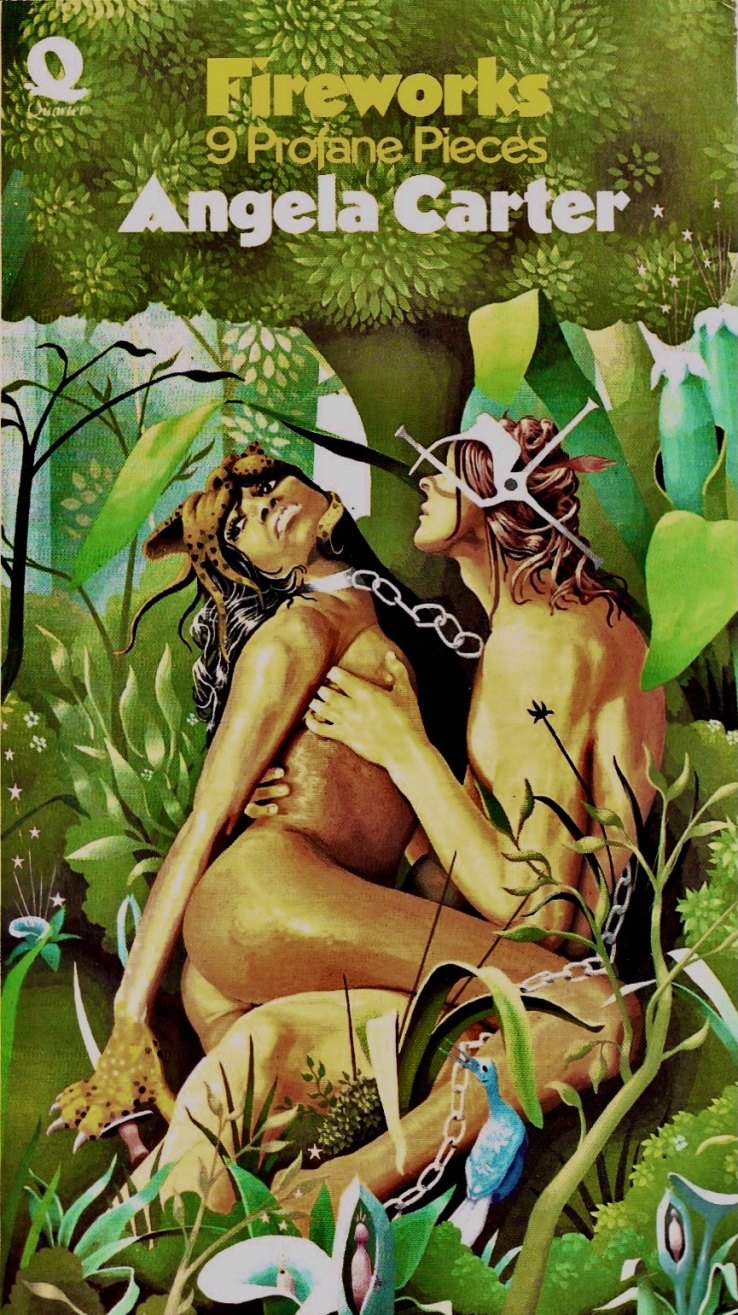

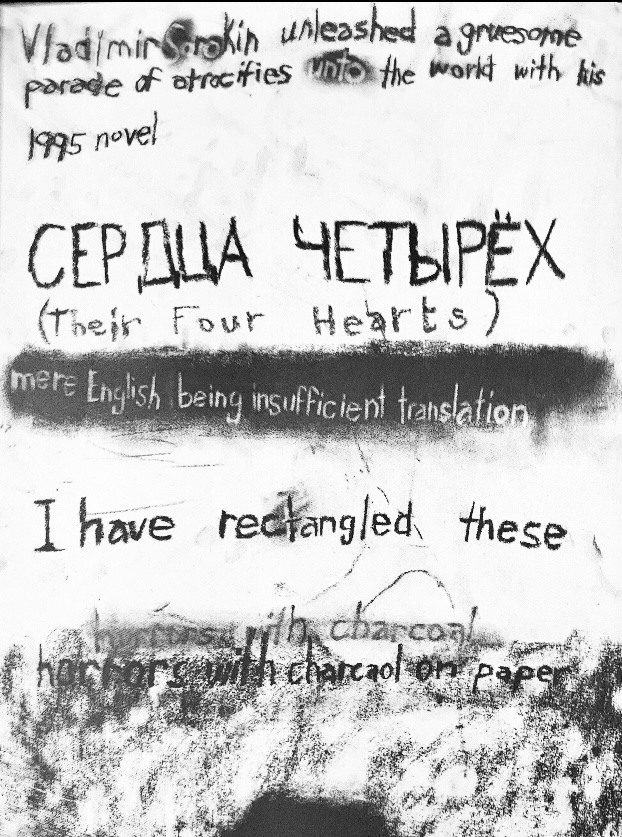

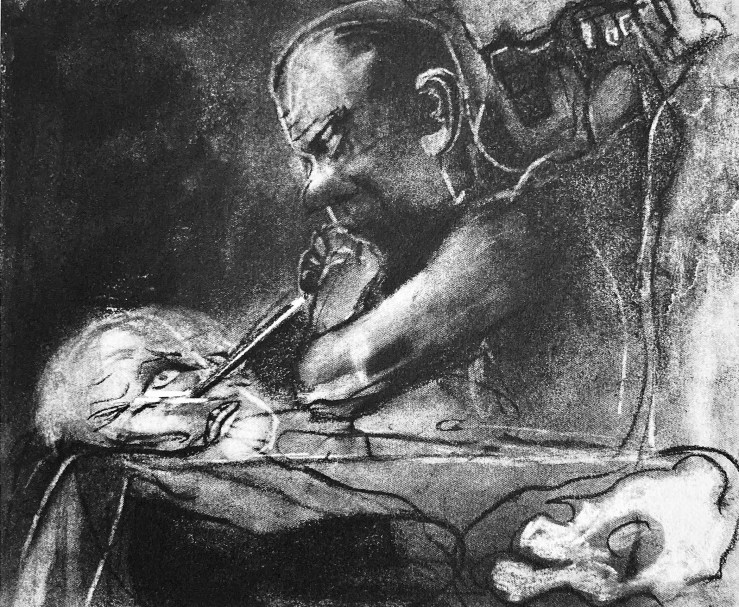
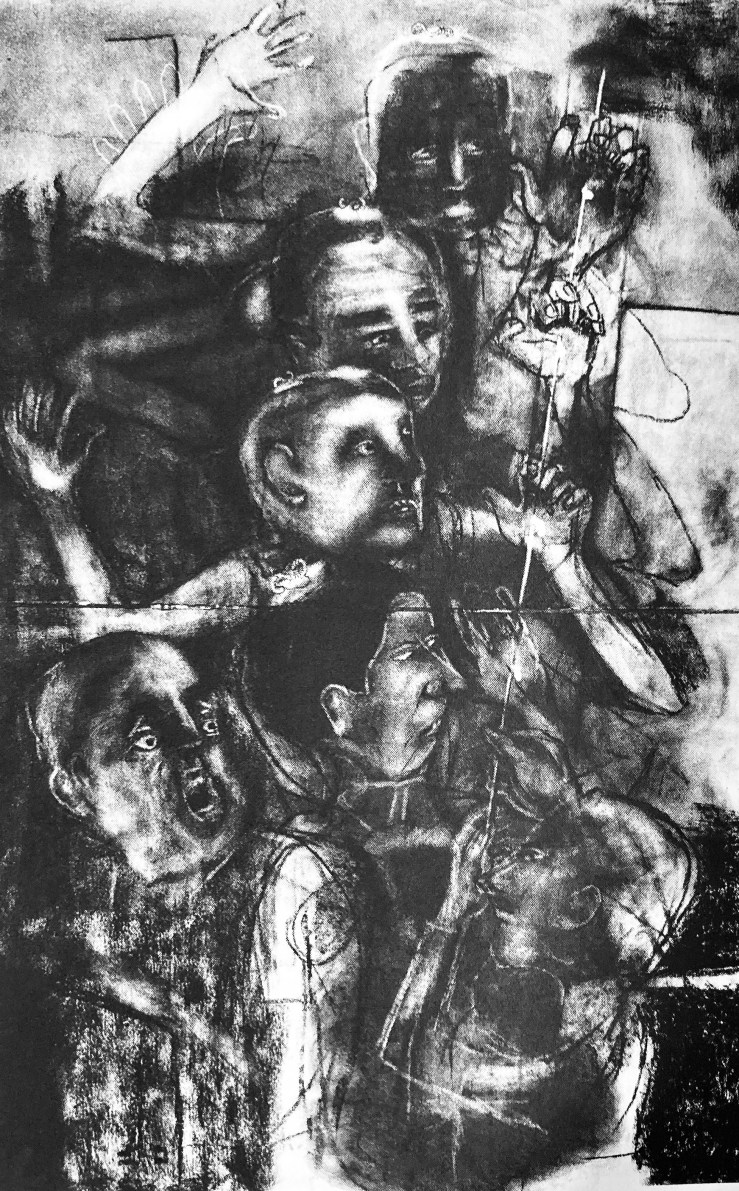




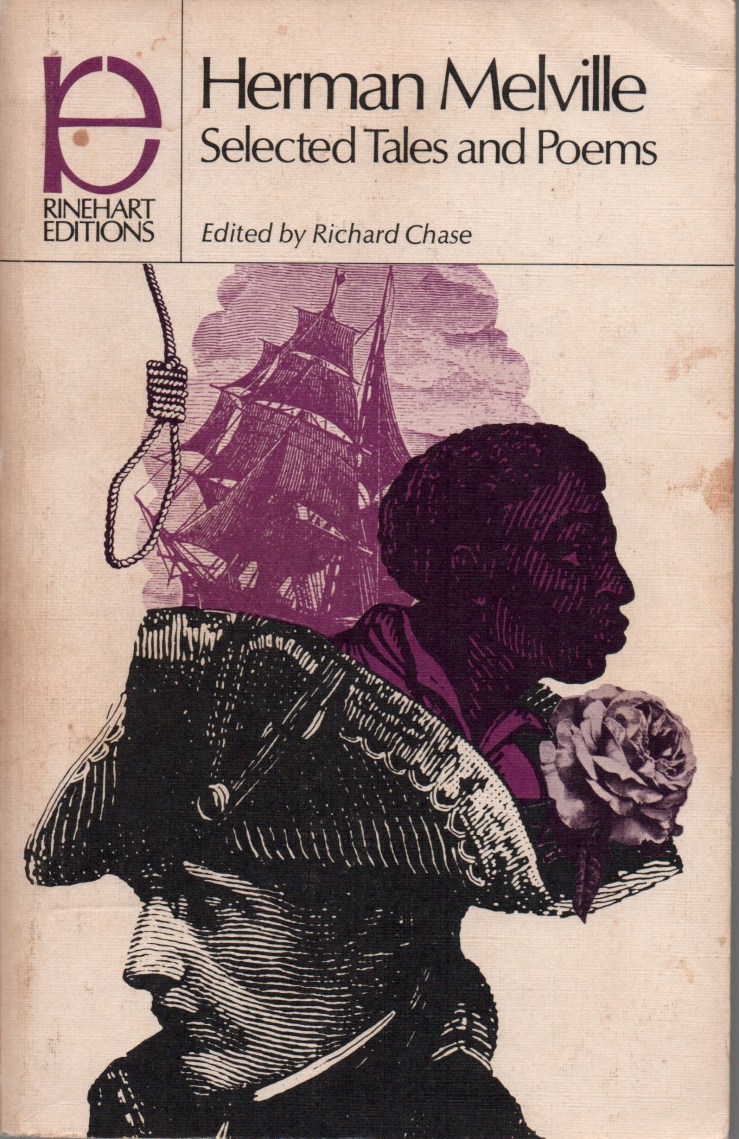



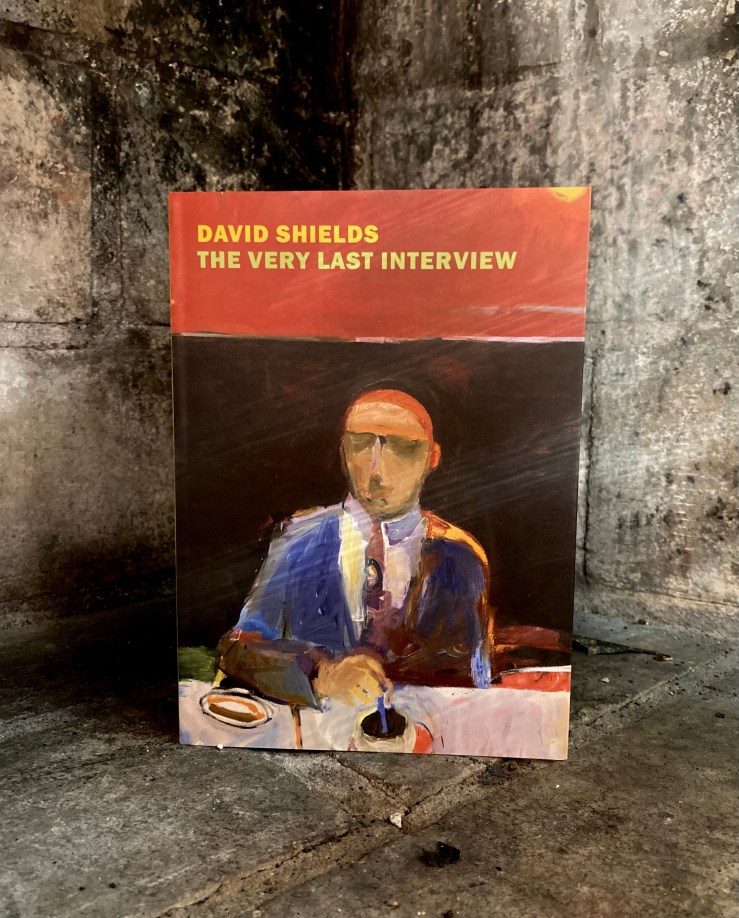

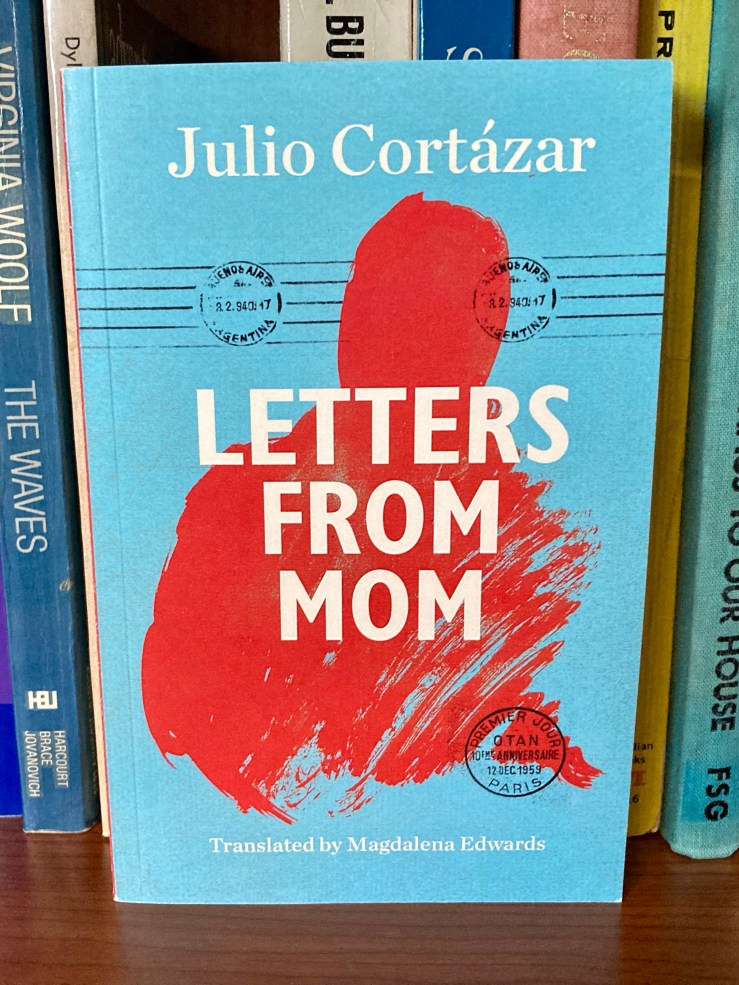


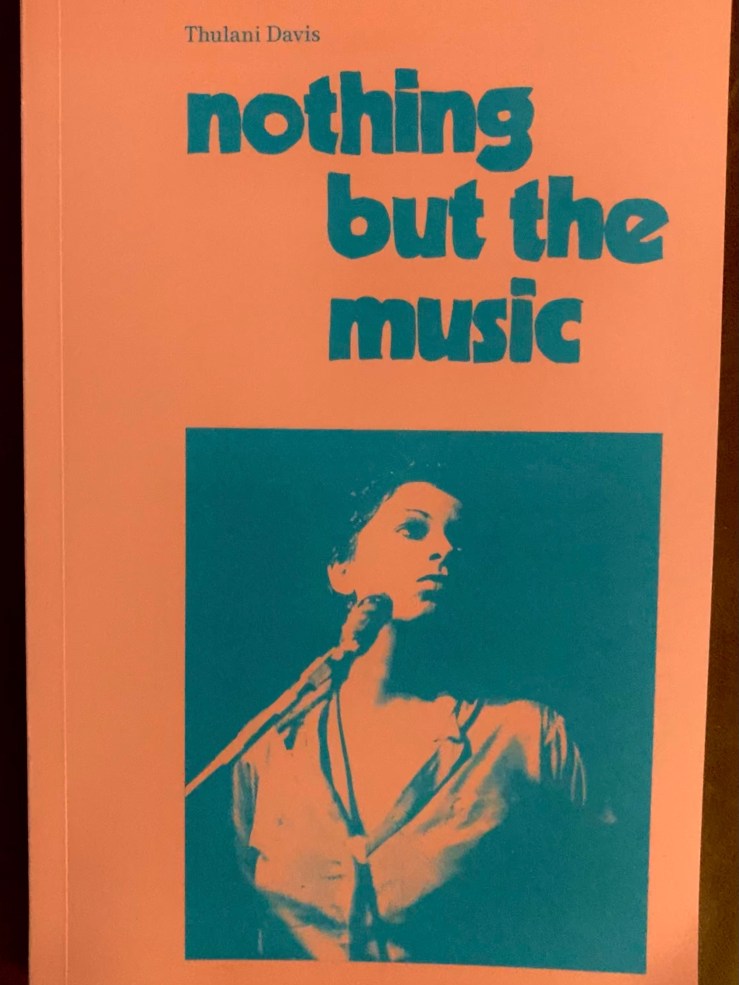

 Biblioklept