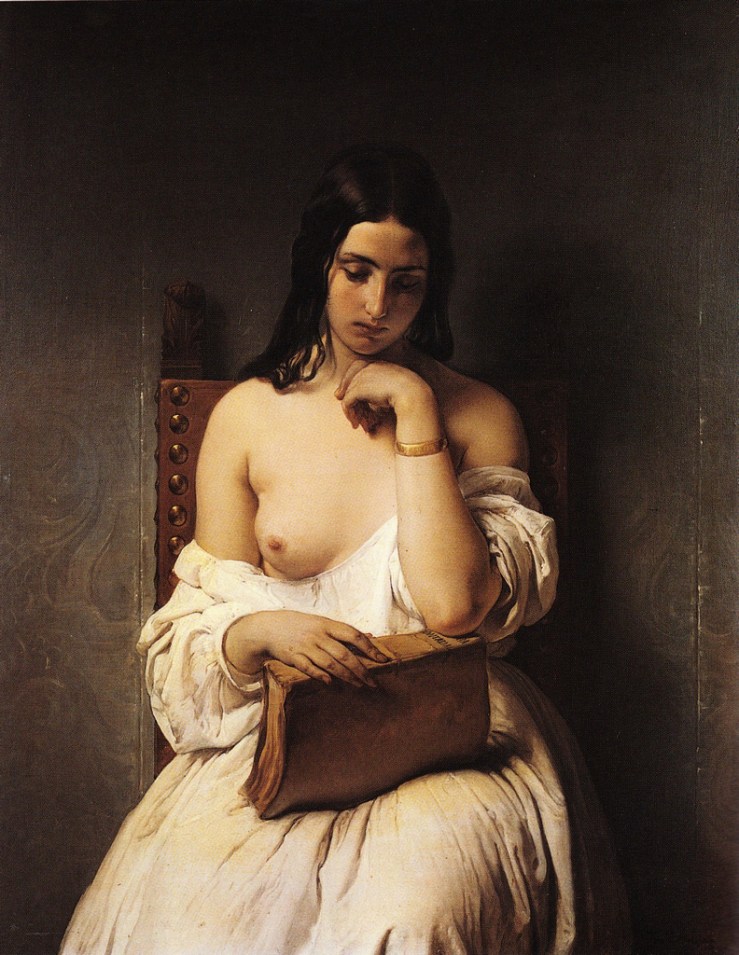
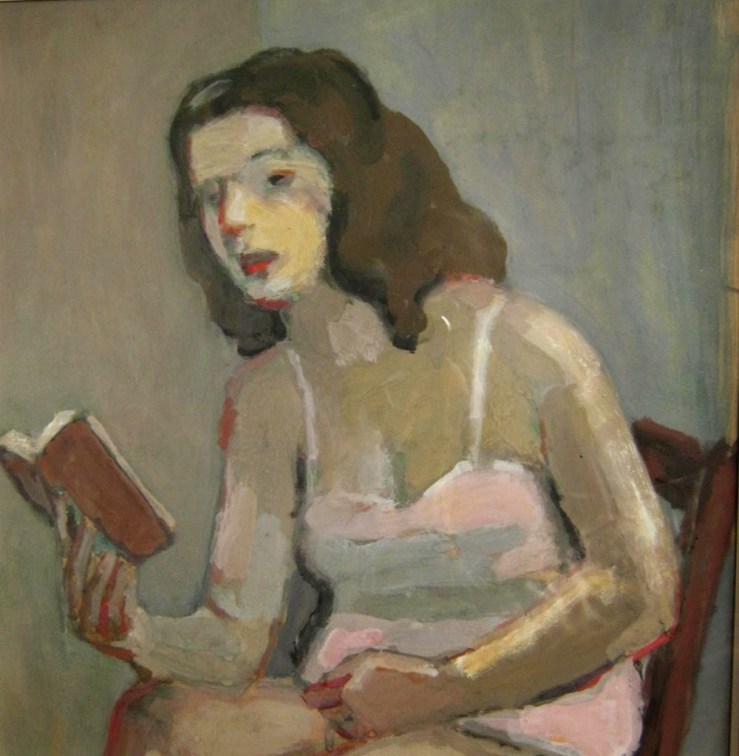
Woman Looking for a Passage — Pablo Gallo

don-t-pout-there-are-more-pages

“Language Is Such a Mess” — A Short Review of Lee Rourke’s Vulgar Things

What does Slavoj Zizek mean when he says that the Lacanian Symoblic carries the “stain of the Real”? During a talk I once saw him deliver, we watched a clip from David Lean’s Brief Encounter. The plot is as follows: disaffected middle-class wife Celia Johnson falls in love with one Dr. Alec Harvey, both unhappily married with children, both finding in each other a means of escape from their droll realities. They can’t avoid running into people from their shared social circles, forcing them to lie, ultimately delivering us to the final scene. At the train station,  the precipice of their final good-bye, Johnson and Harvey are interrupted not only by a nagging friend of the former, but the whistle of Harvey’s train, preventing a passionate farewell (note: they also have not consummated their affair).

The point is that there is a Symbolic laid over a Symbolic — the first are Johnson’s and Harvey’s individual marriages, the illusion that the ritual provides access to the Real of intimacy (the failure of this accomplishment is signed by the crushingly boring misery of their lives); the second are the lies that overlap the marriages, a futile attempt to circumvent the trap of middle-class marriage. The point to this point: Johnson’s friend, the whistle, and the progressive threat of discovery with each new lie are policemen of the Real. Even in the myth of love we are not truly connected; the stain of the Real interrupts to remind us that there is no signifier of the Real without the Symbolic.

9780007542512

Implicit in this construction is that there is no capital-T Truth, that the Symbolic always leaks the Real through its pores as it tries to envelop it. Such is the dilemma of Jon Michaels, the protagonist in Lee Rourke’s new novel Vulgar Things. Michaels, a mid-level editor at a small academic publisher, hungover from the funerary-celebratory bender of his recent sacking that shuttles against the wounds of a fresh divorce, is told by his perpetually unavailable brother Cal that their estranged Uncle Rey, lost to “‘wacky baccy and strange ways,'” has committed suicide in his caravan on Canvey Island, a tucked-away seatown in the Thames estuary in East London where people–mainly idealistic men–used to believe could restart their lives. Instead, it became a place to simply die.  “I’ve always understood, deep down, beneath the laughter,” Jon says during his first few steps on Canvey, “why the locals refer to it as the island, deep down it’s always made perfect sense to me: to feel dislocated, to feel lost and forgotten.”

It’s my disadvantage that I’m not English and know nothing about the UK’s geography, the cultural codes built into words like Southend or Queensway. To know, however vaguely, centuries of history through the mediation of businesses coming and going, hundreds-year-old buildings crammed up against new condos. The beaten bricks giving way to municipal sidewalk-grade cement. The phasing out of regional accents, the arrival of RP and other posh accents (this is the extent of my knowledge of the UK) to the grimace and chagrin of the locals, who know all the stories and histories of Canvey. Because Vulgar Things is a text built on and from the echoes of these stories, and of stories in general, the highways and throughways of mediation.

Vulgar Things‘s plot is far from compelling. Jon has to go clean out a dead uncle’s Caravan, becomes obsessed with a woman he sees on the pier, discovers something reality-shattering about himself and Rey. For the first fifty pages or so, I was struggling to find something in this limp plot, in Rourke’s signature flat prose (which is what got me jazzed on him in his last novel, The Canal). At first it seemed to be nothing; I was worried, but Rourke’s deliberately unremarkable and at times sophomoric prose points us to something else entirely: the desire to have desire, the desire for agency within a plot, and the inherent failure at attaining truth. In Canvey, “the sea and sky above [him], everything else behind [him, it] makes immediate sense, [his] being here, to help decipher things, to tie up all the loose ends of Uncle Rey’s life.”

Canvey is a space in which Jon is underneath the atmosphere, the systems of reality that fix Jon’s life in apathy: his overpriced London apartment, the dissatisfaction he found in his work, a failed marriage. The messy task of deciphering and reassembling Rey’s life through his papers loses Jon between temporalities. For here is a man surrendered to aimlessness, wanting anything that can fix him to a desire and thus a meaning and thus a truth. Jon’s and Rey’s wanderings collide wonderfully when, like a good mystery, Jon finds amidst the detritus of Rey’s life a manuscript titled Vulgar Things, a reassemblage of Petrarch’s sonnets, the only poet, according to Rey, who got anything right.  Rourke’s Vulgar Things becomes a palimpsest of Rey’s “Vulgar Things,” itself a palimpsest of Petrarch’s Rerum Vulgarium Fragmenta (Fragments of Common Things). The elevation of the banal is reflected in this mediation through the form of the book — the days of the week are built from ordinary phrases, seemingly forgetful perceptions: “such a long time”; “afternoon drinking”; “pointless”; “part of the furniture.” As if these are the forgettable shots in a film, the necessary moves that help get us from Point A to Point B. The limp conceit I mentioned above becomes a kind of mystery-thriller, not unlike the strange turns that Rourke’s last novel takes, when Jon becomes animated by Rey’s “Vulgar Things,” the secrets he points to in his strange video recordings. The startling coincidences of Laura throughout the three media (Petrarch, Rey and Jon).

Sort of unsure how to end this, much like how Jon is unsure how to integrate the revelations he has at the end of the book. He doesn’t keep anything; which is to say, we’re prevented an ending that Symbolically ties up the trajectories of desire that Vulgar Things elicits (perhaps solicits) from us. Again, this is much of the book’s thesis. We need language, but language is a medium, and these mediums are haunted by its linguistic and media forebears and continually fail at providing a truth beyond its Symbolic functions. Yet we are caught in desire, caught in language, and can do little else than to contend with that failure.

Odalisque with Striped Cushions — Francine van Hove

100807063355205340_thumb

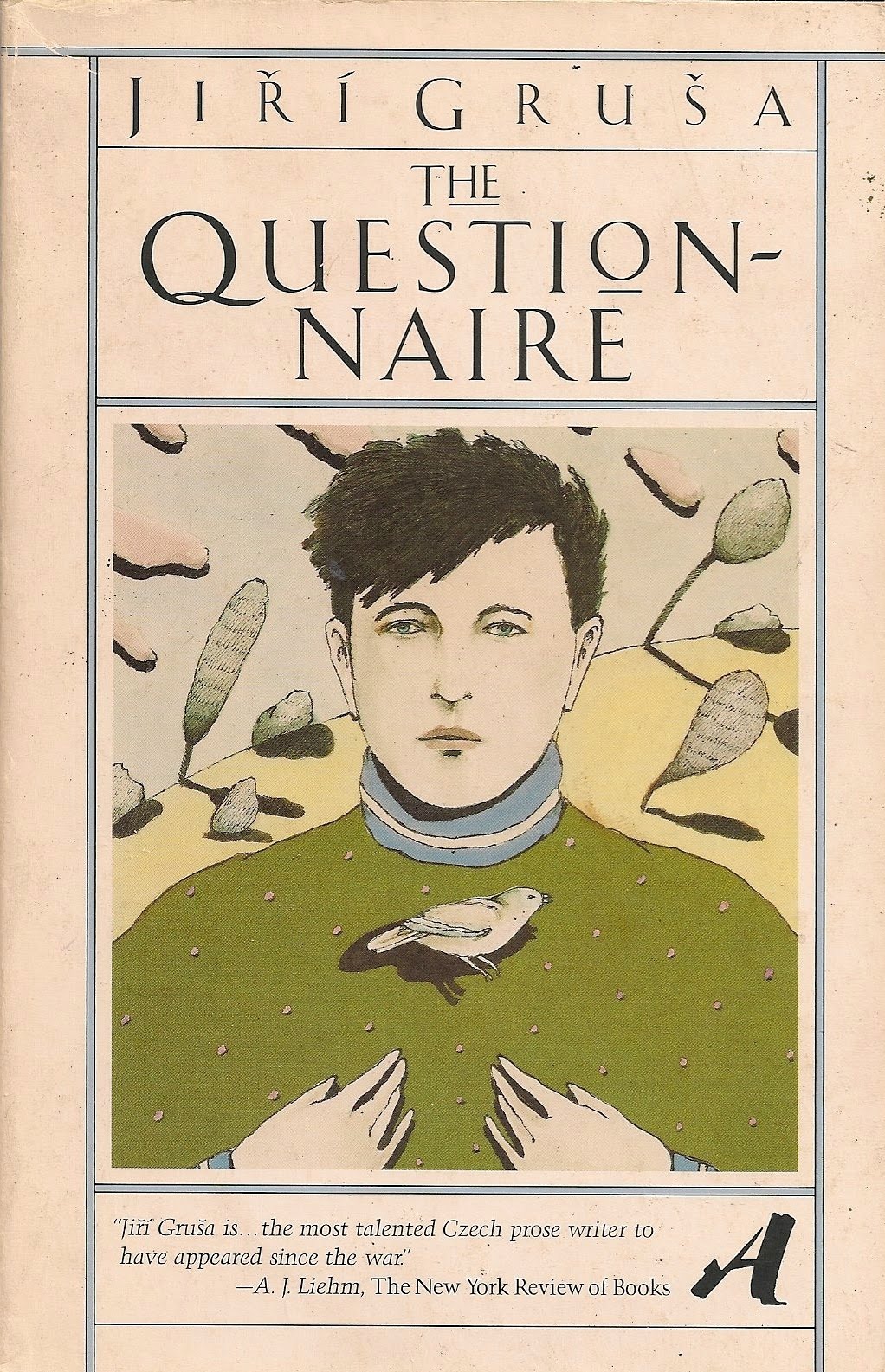
Jiří Gruša’s The Questionnaire

Questionnaire - Jiri Grusa

Designed by Keith Sheridan. This is the 1978 edition, from Aventura: the Vintage Library of Contemporary World Literature.

The Monkey’s Uncle — Todd Schorr

L_tschorr_themonkeysuncle

What I Believe — Paul Cadmus

PaulCadmus17_What I Believe_1947

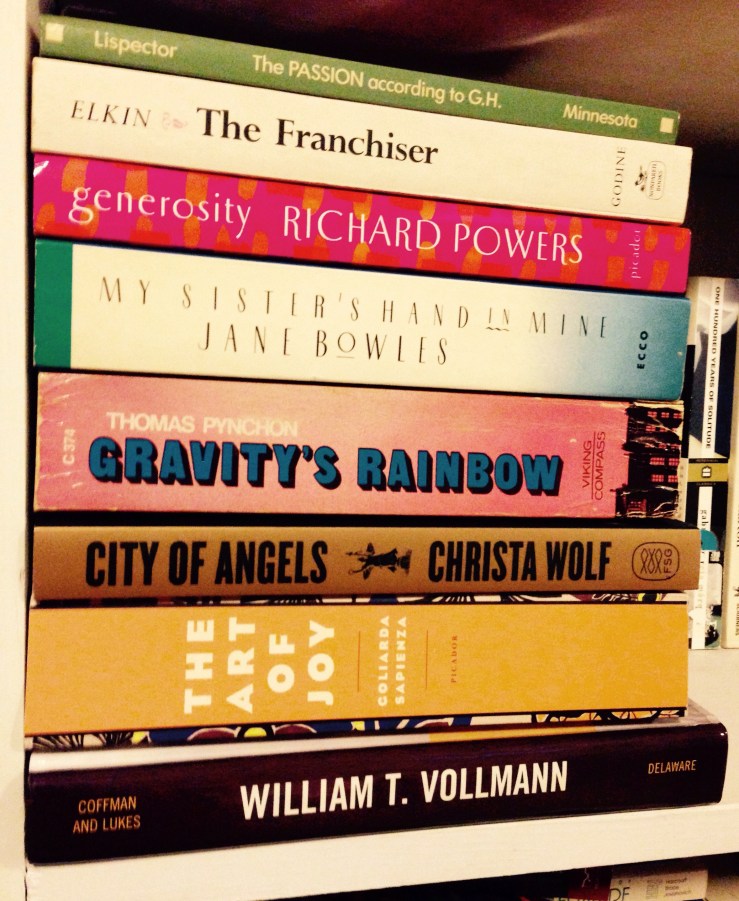
Good intentions reading list for early 2015

IMG_4791

Nude Study (Reading) — Kenyon Cox

A Scapegoat for Promiscuous Drunks, Friendly Calls, and Humbug Resolutions

mark-twain

From Mark Twain’s January 1st, 1863 column in the Territorial Enterprise:

Now is the accepted time to make your regular annual good resolutions. Next week you can begin paving hell with them as usual. Yesterday, everybody smoked his last cigar, took his last drink, and swore his last oath. To-day, we are a pious and exemplary community. Thirty days from now, we shall have cast our reformation to the winds and gone to cutting our ancient short comings considerably shorter than ever. We shall also reflect pleasantly upon how we did the same old thing last year about this time. However, go in, community. New Year’s is a harmless annual institution, of no particular use to anybody save as a scapegoat for promiscuous drunks, and friendly calls, and humbug resolutions, and we wish you to enjoy it with a looseness suited to the greatness of the occasion.

Shooting the Witches on New Year’s Eve (From Sir James George Frazer’s The Golden Bough)

On New Year’s Eve, which is Saint Sylvester’s Day, Bohemian lads, armed with guns, form themselves into circles and fire thrice into the air. This is called “Shooting the Witches” and is supposed to frighten the witches away. The last of the mystic twelve days is Epiphany or Twelfth Night, and it has been selected as a proper season for the expulsion of the powers of evil in various parts of Europe. Thus at Brunnen, on the Lake of Lucerne, boys go about in procession on Twelfth Night carrying torches and making a great noise with horns, bells, whips, and so forth to frighten away two female spirits of the wood, Strudeli and Strätteli. The people think that if they do not make enough noise, there will be little fruit that year. Again, in Labruguière, a canton of Southern France, on the eve of Twelfth Day the people run through the streets, jangling bells, clattering kettles, and doing everything to make a discordant noise. Then by the light of torches and blazing faggots they set up a prodigious hue and cry, an ear-splitting uproar, hoping thereby to chase all the wandering ghosts and devils from the town.

From Sir James George Frazer’s The Golden Bough.


Meditation — Francesco Hayez

francesco-hayez-meditation

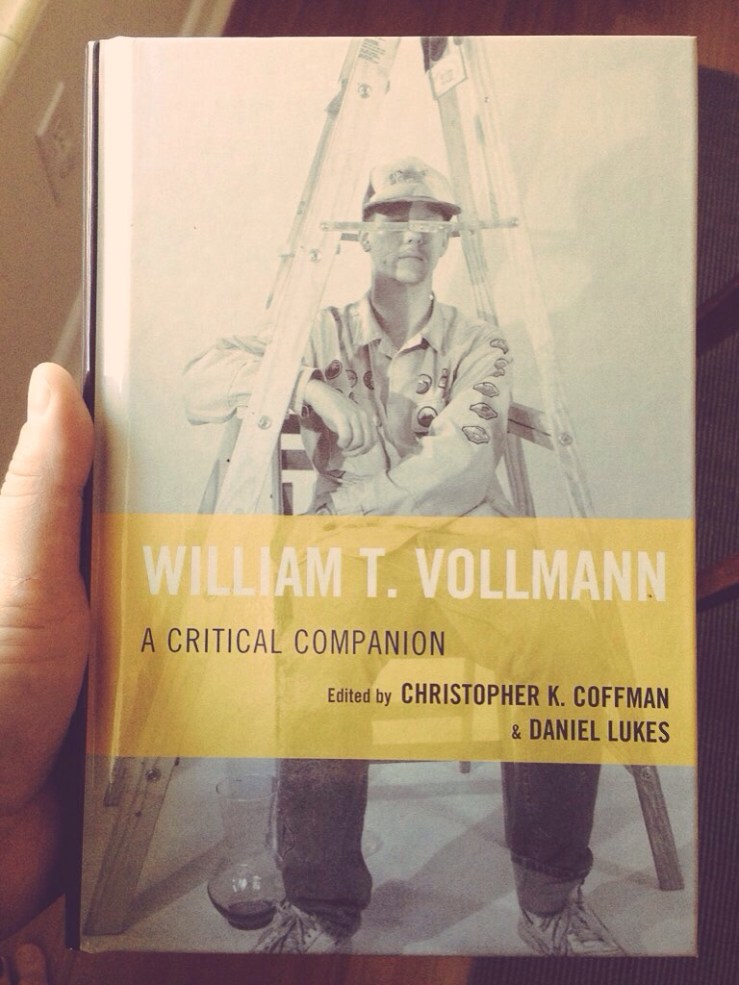
William T. Vollmann: A Critical Companion (Book acquired, 12.27.2014)

IMG_4592

William T. Vollmann: A Critical Companion is new from University of Delaware Press and editors Christopher K. Coffman and Daniel Lukes. Their blurb:

The essays in this collection make a case for regarding William T. Vollmann as the most ambitious, productive, and important living author in the US. His oeuvre includes not only outstanding work in numerous literary genres, but also global reportage, ethical treatises, paintings, photographs, and many other productions. His reputation as a daring traveler and his fascination with life on the margins have earned him an extra-literary renown unequaled in our time. Perhaps most importantly, his work is exceptional in relation to the literary moment. Vollmann is a member of a group of authors who are responding to the skeptical ironies of postmodernism with a reinvigoration of fiction’s affective possibilities and moral sensibilities, but he stands out even among this cohort for his prioritization of moral engagement, historical awareness, and geopolitical scope. Included in this book in addition to twelve scholarly critical essays are reflections on Vollmann by many of his peers, confidantes, and collaborators, including Jonathan Franzen, James Franco, and Michael Glawogger. With a preface by Larry McCaffery and an afterword by Michael Hemmingson, this book offers readings of most of Vollmann’s works, includes the first critical engagements with several key titles, and introduces a range of voices from international Vollmann scholarship.

The book (it’s beautiful, by the way) intersperses the more “academic” essays that comprise its bulk with shorter riffs, memoirs, and vignettes about Vollmann, or reading Vollmann (I wish Franzen would’ve devoted a few more lines in his piece “A Friendship” to describing the time he got to shoot Vollmann’s Tec 9, but it’s still a fascinating little piece). I read a few of these (Franco refers to our author as “Volhman” and then ends his “essay” with this parenthetical aside: “(Shit, I went back online, and I see that there is no ‘h’ in his name. Sorry, Billy.”)

I haven’t gotten into any of the the critical essays yet, but a scan over the book’s index and bibliography indicates a serious work of scholarship, while a cursory scan of a few of the more intriguing titles (“‘Strange Hungers’: William T. Vollmann’s Literary Performances of Abject Masculinity”; “The Ethics of the Archive and the William T. Vollmann Collection”; “Imperial Photography”) suggests a unified work with a tone decidedly divorced from stale academic language. More to come.

Tintin (Noël) — Hergé

tumblr_nh2dj8KJKF1rq3prxo1_1280

Selections from One-Star Amazon Reviews of Thomas Pynchon’s Mason & Dixon

[Ed. note: The following citations come from one-star Amazon reviews of Thomas Pynchon’s novel Mason & Dixon—which I loved. (See also: Chinua Achebe’s Things Fall Apart, Mary Shelley’s Frankenstein, Thomas Pynchon’s Gravity’s Rainbow, George Orwell’s 1984, Herman Melville’s Moby-Dick, James Joyce’s Ulysses and David Markson’s Wittgenstein’s Mistress). I’ve preserved the reviewers’ own styles of punctuation and spelling].

What crap.

A talking dog?

I made a mistake.

Dialogue that is meaningless?

But what is the point of this story?

Pynchon is simply messing around

I can’t believe I read the whole thing.

I guess there’s no accounting for taste.

Rarely have I anticipated a book so hungrily.

Lost me at the talking dog, and never recovered.

I’ve also seen Pynchon praised for his erudition.

You think a talking dog or mechanical duck is funny?

Supposedly it’s a literary adventure through the 18th century

George Washington smoking pot and getting the munchies?

I consider my myself a reader who relishes literary challenges.

I am a reader who enjoys being bluntly told what the author thinks

The only book I’ve ever read that was a complete waste of time !

just an endless series of unconnected and unrelated ramblings…

Yes, it was a different world back then, and people talked funny (to our ear).

The publisher should have left the trees to grow rather than putting this in print.

I had to finish it – but resorted to scanning the text for references to my 7th great grandfather.

Pynchon is like strolling through a garbage dump full of meaningless, forgotten pop culture relics.

Wow, I give up on Mr. Pynchon who apparently has some intergalactic literary insights well above my head.

Regretfully, I’ll need to wait for the english language translation before properly assessing this novel’s merits.

Thomas Pynchon surely must have been smoking something more powerful than plain tobacco when he wrote this debacle…

I admit to approaching this book with a great deal of reverence, along with guilt for never having attempted either “V” or “Gravity’s Rainbow.”

Mr.Pynchon may be considered one of today’s great writers by the cosmopolitan literati, but this provencial reader found his work to be a 773 page morass of archaic vernacular with no particular point.

I would like to assert, however, as one who has read quite deeply in English prose of the last 400 years, that the much-praised “18th-century English” is nothing like, being full of anachronisms and lapses of decorum.

Pynchon doesn’t descibe. He makes lists of objects, as if the acculation of things or people surrounding the characters is enough to create some semblance of reality, or alternate reality, or hyperreality or whatever.

I am in the vast minority, obviously, who “didn’t get it.” Some times I wonder if reviewers, too “didn’t get it” but were afraid to say so, because this conglomeration of words is just that – a pointless, incomprehensible waste of trees.

My Tedium never Ceases, yet have I only Dredged thru half of this Tome. My eyes grow Tir’d and my Thoughts grow more hateful towards this Author. History is barely Reveal’d and the style has Vex’d me thru and thru. Hemp smoking Franklin? Confus’d and Stupid Astronomers? Half the book not spent in the country of interest? Yet I plod on, making a use of this Fantastique tale, to knaw away at the Minutes spent in the loo. Wouldst it be quite the thing, if only the Paper t’was softer, I can then make of it a Cleansing Agent for my Posterior once Finished with each page.

It was evidently written for a limited audience–people who can actually read eighteenth century style prose and who still find jokes about “not inhaling” to be amusing.

Pynchon’s style is clotted, mannered, meretricious and UNpoetic in the extreme. Indeed, I think much of the book, in word and matter, is a stale exercise in collecting academic trivia and faddish modern-day truisms about the period.

To be sure, there is some real history reported, but there is also much nonsense and fakery–the first pizza, golems–and interminable, leaden dialogues that could never have taken place.

Really Pynchon was just showing off his “imagination” with endless derails, whimsical characters that didn’t figure into the story at all, and stupid jokes bathed in obscure jargon.

If you like rambling verbiage that not only obstructs but obliterates the point, you’ll love this author, whose neurotic word dribblings are gnosticed by critics to be visionary insights.

For all the scribblings in this book’s 800 some pages, 90% of it just feels like hot air lacking any real message or content.

One could read this book from front to back, back to front, or from the middle both ways and not be able to tell the difference..

I love sentimental literature but I couldn’t for the life of me see much connection between Pynchon’s writings and the major works of the 18th century.

I challenge any fan to give even one insight about life or the universe that they gleaned from Mason and Dixon..

Just because the gags are about the hollow earth theory does not make them any more than just gags.

The reader is presented with one choppy chapter after another, often with little or no context.

The book is a mess and sorely needed a large pair of scissors to trim out the inane chatter.

Thers’s an old phrase about good writing: show, don’t tell. Phynchon don’t show nothun’.

For years Pynchon has intrigued me as being one of the “bosses” of modern literature.

There’s no sense of place, no compelling plotline. The characterization is merely O.K.

Pynchon is all over the map willy nilly throwing out anything that diverts his attention.

In what way was this an homage, parody, or imitation of 18th century literature?

If Thomas Pynchon has a plot or a story line, he surely has hidden it very well..

To this day I do not know what the book was about and what was going on.

The overall scheme of the novel is stupid and amateurish.

Too hard to read for this master’s degree English teacher.

Hundreds of unrelated and disconnected characters too..

Some as ridiculous as a talking dog, and a robot duck…

This book is a waste of time and paper.

What is all this supposed to mean?

Honestly, this book is just annoying.

The first pizza made in England?

Clearly, the fault is mine.

Wicks Cherrycoke?

Big @#$%ing deal.

Young Woman Reading — Ossip Lubitch

Lubitch, Ossip 3

Thomas Pynchon’s Mason & Dixon (Third Riff: The Rabbi of Prague)

A. I’m a few chapters–three, precisely—from finishing Mason & Dixon. “Finishing” is not the right verb here, though—Pynchon’s novel is so rich, funny, strange, and energetic that I want to return to it immediately.

B. But I need to backtrack a bit, riff on one of my favorite episodes—Chapter 50.

C. (First riff and second riff for those inclined).

D. In Chapter 50,

’tis Dixon’s luck to discover The Rabbi of Prague, headquarters of a Kabbalistick Faith, in Correspondence with the Elect Cohens of Paris, whose private Salute they now greet Dixon with, the Fingers spread two and two, and the Thumb held away from them likewise, said to represent the Hebrew letter Shin and to signify, “Live long and prosper.”

Pynchon plays here on the reader’s initial understanding of the signal and phrase as a pop culture reference—


—but the goof isn’t merely postmodernist shtick—Pynchon is pointing to how the invisible manifests itself in signs and wonders, covert, cryptic, but perhaps—perhaps—decipherable.

E. (Maybe this needs clarification: The Rabbi of Prague is a tavern. I lost track of how many bars taverns pubs inns alehouses coffeehouses etc. show up in M&D). Continue reading “Thomas Pynchon’s Mason & Dixon (Third Riff: The Rabbi of Prague)” →

Balestrini/Pasolini (Books acquired, 12.27.2014)

verso

So I picked up two ebooks from Verso today for less than a pint of beer. Ridiculous! The Unseen by Nanni Balestrini, and Pasolini’s unproduced screenplay St. Paul. All kinds of great stuff. I think my favorite thing about Verso’s ebooks is how straightforward they are to access—no weird third-party app or DRM issues.