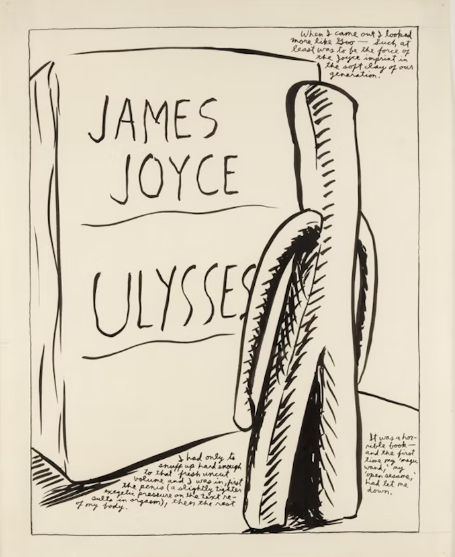
St. Patrick and the Druid, an episode from Finnegans Wake (with explication from Joseph Campbell)

On pages 611-613 of James Joyce’s Finnegans Wake, St. Patrick meets the archdruid Balkelly:

Tunc. Bymeby, bullocky vampas tappany bobs topside joss pidgin fella Balkelly, archdruid of islish chinchinjoss in the his heptachromatic sevenhued septicoloured roranyellgreenlindigan mantle finish he show along the his mister guest Patholic with alb belongahim the whose throat hum with of sametime all the his cassock groaner fellas of greysfriaryfamily he fast all time what time all him monkafellas with Same Patholic, quoniam, speeching, yeh not speeching noh man liberty is, he drink up words, scilicet, tomorrow till recover will not, all too many much illusiones through photoprismic velamina of hueful panepiphanal world spectacurum of Lord Joss, the of which zoantholitic furniture, from mineral through vegetal to animal, not appear to full up to-gether fallen man than under but one photoreflection of the several iridals gradationes of solar light, that one which that part of it (furnit of heupanepi world) had shown itself (part of fur of huepanwor) unable to absorbere, whereas for numpa one pura —— duxed seer in seventh degree of wisdom of Entis–Onton he savvy inside true inwardness of reality, the Ding hvad in idself id est, all objects (of panepiwor) allside showed themselves in trues coloribus resplendent with sextuple gloria of light actually re-tained, untisintus, inside them (obs of epiwo). Rumnant Patholic, stareotypopticus, no catch all that preachybook, utpiam, tomorrow recover thing even is not, bymeby vampsybobsy tap — panasbullocks topside joss pidginfella Bilkilly–Belkelly say pat — fella, ontesantes, twotime hemhaltshealing, with other words verbigratiagrading from murmurulentous till stridulocelerious in a hunghoranghoangoly tsinglontseng while his comprehen-durient, with diminishing claractinism, augumentationed himself in caloripeia to vision so throughsighty, you anxioust melan-cholic, High Thats Hight Uberking Leary his fiery grassbelong- head all show colour of sorrelwood herbgreen, again, nigger- blonker, of the his essixcoloured holmgrewnworsteds costume the his fellow saffron pettikilt look same hue of boiled spinasses,other thing, voluntary mutismuser, he not compyhandy the his golden twobreasttorc look justsamelike curlicabbis, moreafter, to pace negativisticists, verdant readyrainroof belongahim Exuber High Ober King Leary very dead, what he wish to say, spit of superexuberabundancy plenty laurel leaves, after that com-mander bulopent eyes of Most Highest Ardreetsar King same thing like thyme choppy upon parsley, alongsidethat, if please-sir, nos displace tauttung, sowlofabishospastored, enamel Indian gem in maledictive fingerfondler of High High Siresultan Em-peror all same like one fellow olive lentil, onthelongsidethat, by undesendas, kirikirikiring, violaceous warwon contusiones of facebuts of Highup Big Cockywocky Sublissimime Autocrat, for that with pure hueglut intensely saturated one, tinged uniformly, allaroundside upinandoutdown, very like you seecut chowchow of plentymuch sennacassia Hump cumps Ebblybally! Sukkot?

Punc. Bigseer, refrects the petty padre, whackling it out, a tumble to take, tripeness to call thing and to call if say is good while, you pore shiroskuro blackinwhitepaddynger, by thiswis aposterioprismically apatstrophied and paralogically periparo-lysed, celestial from principalest of Iro’s Irismans ruinboon pot before, (for beingtime monkblinkers timeblinged completamen-tarily murkblankered in their neutrolysis between the possible viriditude of the sager and the probable eruberuption of the saint), as My tappropinquish to Me wipenmeselps gnosegates a handcaughtscheaf of synthetic shammyrag to hims hers, seeming-such four three two agreement cause heart to be might, saving to Balenoarch (he kneeleths), to Great Balenoarch (he kneeleths down) to Greatest Great Balenoarch (he kneeleths down quite-somely), the sound salse sympol in a weedwayedwold of the firethere the sun in his halo cast. Onmen.

That was thing, bygotter, the thing, bogcotton, the very thing, begad! Even to uptoputty Bilkilly–Belkelly-Balkally. Who was for shouting down the shatton on the lamp of Jeeshees. Sweating on to stonker and throw his seven. As he shuck his thumping fore features apt the hoyhop of His Ards.

Thud.

Good safe firelamp! hailed the heliots. Goldselforelump! Halled they. Awed. Where thereon the skyfold high, trampa-trampatramp. Adie. Per ye comdoom doominoom noonstroom. Yeasome priestomes. Fullyhum toowhoom.


Continue reading “St. Patrick and the Druid, an episode from Finnegans Wake (with explication from Joseph Campbell)”

First riff: The Letters of William Gaddis, “Growing Up, 1930–1946”

The Letters of William Gaddis, ed. Steven Moore, NYRB, 2023

Chapter One: “Growing Up, 1930-1946”

Earliest letter:

To Edith Gaddis (mother), 9 Dec. 1930

Latest letter:

To Frances Henderson Diamond (early love interest), 13 March 1946

Synopsis, citations, and observations:

Most of the letters collected by Moore in this first section of Letters are addressed to Edith Gaddis, whom Moore appropriately describes as “the heroine of the first half of this book: his confidante, research assistant, financial benefactor, his everything.”

His everything clearly includes everything, but I would’ve thrown in the words earliest audience. The letters featured in this earliest chapter show only the barest germ of the writer into which Gaddis would evolve—but they do show a tenacious foundation for practice, one facilitated by a loving, motherly reader.

Here is the first letter in the volume:

Merricourt
Dec. 9, 1930

Dear Mother.

Our vacation is from Sat. Dec. 20. to January 4.
We are making scrapbooks and lots of things. We are learning about the Greek Gods.
I am making an airplane book.

With love
Billy

Little Billy is a few weeks shy of eight years old here, attending boarding school in Connecticut. He attended Merricourt from the time he was five—around the same time his mother Edith separated from his father, William T. Gaddis.

It’s clear why Moore would single out this particular letter for inclusion. The mechanical notion of “making” books, in particular books from scrap, recalls Jack Gibbs, hero of J R., who keeps scraps of newspapers and magazines in his pockets). Our boy was always a scissors-and-paste man.

The Letters gets through childhood and adolescence fairly quickly (a few scant pages) before we find 17-year old Bill sailing on the Caribbean on the SS Bacchus. There’s not much to the Caribbean adventure, but it does initiate an early theme of The Letters—young Bill goes on adventures, often getting in over his head, but also expanding his worldview. “A good part of the crew are colored but they’re okay too,” he writes to Mama Gaddis, a cringeworthy line, sure, but also one that underscores that Our Hero is a man of privilege.

A year later he’s at Harvard.

But not at Harvard for long!

This theme of attending and departing Harvard goes on a bit in the first part of Letters. (Gaddis never earned a degree). Young Bill fell ill his first semester (making him part of a famous fraternity of sick writers: Joyce, O’Connor, Kafka, Walser, Keats, Crane, Wharton, etc.),

What to do? Our Hero heads West, eventually landing in Arizona to recuperate.

Eastern Boy Gaddis’s Western Adventure is especially humorous against the backdrop of his literary oeuvre to come, particularly The Recognitions, which sardonically roasted poseurs (while simultaneously lifting up the efforts of counterfeiters who channel True Art). Our Boy decides to be a cowboy. In a letter to Mama Edith dated 17 Jan. 1942, he details his cowboy outfit:

I have gotten a pair of blue jeans ($1.39) and a flannel shirt (98¢) for this riding—expect to get another pair of jeans today—and later perhaps a pair of “frontier pants” and a gabardine shirt. No hat as yet as they do seem sort of “dudey”—but I can see that it too will become almost a necessity before too long.

The letter is part of an early genre that Gaddis hacked away at, if never perfecting: Mom, need money. 

It continues:

As for wanting anything else—well there are things down here that make me froth just to look at them!—belts such as I never dreamed of—rings—beautiful silver and leather work—but I figure I don’t need any of it now and will let it go until I’ve been around a bit more and seen more of these things that I’ve always known must exist somewhere!

We’ve all been twenty, all made questionable fashion choices, all wanted Beautiful Things We Could Not Afford. (Most of us have not had the misfortune to have our private letters published.)

Letters includes a photograph of Cowboy Bill, duded up in boots with horse. He did not give up the affect easily; in a later letter from the fall of 1942, when he’d returned to Harvard, he requested the following of Dear Mother:

Say when you get a chance could you start the following things on their way up here to make our room more habitable[:] the leopard skin on the lodge closet door—the spurs on the floor nearby—both of Smokey’s pictures—the small rug—both machetes and the little Mexican knife & sheath & chain to the right of the east hayloft windows (one machete is over hayloft door—the other on edge of balcony)—also any thing else you think might look intriguing on our wall—oh yes the steers’ horns—

Bill Gaddis spent much of the year bumming around the American West, getting to Los Angeles, Wyoming, and as far as east as St. Louis, where he meets a woman

hard of hearing—and her son Otto, who’s about 23—is sort of—simple. He went thru college—then started in at Harvard (!) and then cracked up it seems.

The first time I read The Recognitions, I found Otto a repugnant poseur of the worst stripe. Reading and rereading The Letters and Gaddis’s first novel, I find myself far more sympathetic.

The version of Young Gaddis we get from these early letters will resonate with anyone who’s held artistic ambitions. He’s callow, largely unread, generally ignorant of just how ignorant he is, charming, brave, and foolish. And while his reliance on his mama’s money transfers can occasionally irk, there’s a deep tenderness in his writing to her—for her. Again, almost every one of these letters are written to and for Edith.

William Thomas Gaddis Junior’s father and namesake hardly pops up in the discourse (at least in Moore’s edit), but a letter to Edith dated 26 Jan. 1942 is unusually detailed on the paternal topic:

And then as you say this slightly ironic setup—about my father. …As you said it has not been a great emotional problem for me, tho it does seem queer; you see I still feel a little like I must have when I said “I have no father; I never had a father!,” and since things have been as they have, I have never really missed one—honestly—and only now does it seem queer to me. All I know of fathers I have seen in other families, and in reading, and somehow thru the deep realization I have gained of their importance; of father-and-son relations; and families: not just petty little groups, but generations—a name and honour and all that goes with it—this feeling that I have gained from other channels without ever having missed its actual presence: somehow these are the only ties I feel I have with him.

Father-son relationships wrinkle queerly throughout Gaddis’s novel, always deferrals and deflections, whether Wyatt-Otto in The Recognitions or Bast-JR in J R or the King Lear tirade of Gaddis’s final letter to the world, Agapē Agape.

Gaddis returned to Harvard in the fall of 1942 (“devil to pay for eight months hence I guess”). He reads Nietzsche and Schopenhauer, or at least tells his mother he reads Nietzsche and Schopenhauer—but I believe him. Reading Nietzsche and Schopenhauer seems like a thing a young man might do. In a letter of December 1942, “so angry now am about to fly,” he complains of being recommended a history book that “turns out to be history of Communism and Socialism–Marxism–enough to make me actively ill.” A postscript lauds William Saroyan but worries that “G Stein is still a little beyond!” Our Lad has room to grow.

By the spring of 1943, Gaddis is working on the Harvard Lampoon. He would eventually become the President of the Lampoon (or, um, ‘Poon, as he writes his Mama). This project seems to entirely consume him, distracting him from his studies.

Gaddis was eventually kicked out of Harvard after an “incident” with the police (Our Boy was drunk and disorderly). The last few letters in the collection are bitter and a bit sad. Gaddis worked as a fact checker at The New Yorker for not-quite-a-year, with scant letters from this period appearing in Letters. There is a letter from a vacation to Montreal in the summer of 1945 that attests the following disillusionment:

Frankly the more I move along the more I find that every city is quite like the last one.

Not long after, Gaddis would start writing material that would wind up in The Recognitions.

NYRB 2023 updates to the Dalkey Archive’s 2013:

In addition to a smattering of letters to women who are not Edith Gaddis, NYRB’s new edition includes two new pictures–Gaddis’s Harvard 1944 yearbook picture and a professional head shot of Frances Henderson Diamond. There’s also this close-up of a photograph of children included in the Dalkey edition, clarifying which kid is Billy Gaddis.

Love Our Dude’s pipe!

Virginia Woolf’s Jacob’s Room, but just the punctation

” , ” , , ” . ” , ; ; , . ; ; . ‘ . . . . ; ; ; . ” … , ” . ” , ‘ ” ( , , , — — ) , ” ‘ ” — — ! . ” ? ” . ” ‘ . . . ” ” … , ” , , ” , , ‘ … . ” ‘ — — – , – . : : . , , . , ‘ , , – . ‘ , , , , , , . . . ” — — ! — — ! ” . ” , ” . , ; ; . ? ; ; , – . . — — — — ! – . . — — , — — . , , ‘ , , — — . ” — — ! — — ! ” . , , . ” — — , ” , , , , . ” — — , ” , , , ‘ . ” — — ! — — ! ” , . . , , , , , — — . ; — — . ” , ! ‘ … ” , , . . , , . , , . , , , . , , , ; , . . – , – — — ” , , ” — — . ! . . , , , , , , , , , . ( – ) , – , , , , . . . , , , . . . ” ! ! ” , . . . . . . . , , — — ‘ , , , . , – , . ” ! ” . , . ” ? , ! ! , . ‘ ? ! . , ” , ‘ . ‘ , . , , ‘ , . , . , . ‘ . , , – , – , . – ; , , , — — , , . . ‘ . ‘ . ; . ” , , , ” , ; ; , – , , . . , , , , . – ‘ . ; . . ” , ” . . ” ‘ , . ‘ , ” , , , , , , , . ‘ . . ” ? ” . ” ‘ , ” . ” , ‘ , ” , , , , , ‘ , , , , — — ? , , . . ” ! ” , . . . . ‘ ‘ . ; ; ‘ . . . ; – ; . ; ‘ . – – . , . , , . . . . . ” , ” . ” , . . , ” , ” . ” – ; ; . ” ‘ ? ” . ” ‘ , ” . . . ” , ‘ ? ” , . ” ‘ , ” . . ” ‘ . , , , . ” ” ‘ — — , ” , – . , – , . ” ? ” . , , . , , . , . – , . . . . . ” ? ” , . . . ” – , , ” . , ‘ , . . . , ; . . ; ‘ , . , , , , . ! , , ! , , . – . . . . . . . . ‘ — — , – . . ; . , . ; – . , , , , ; – . , , . ‘ . – . . . ‘ – ; – , ; , . ” . ” — — ” ” — — ” ” — — ” ‘ ” — — ” ‘ ! ” ” ‘ — — , . ” ” ‘ ‘ , ” . ” ‘ . ” ” — — . ” ” ; , . ” ( . . ) , , , , . – . ; , ; ; ; ; , ‘ , — — ? ? , — — , , ; — — , , , . , ‘ ‘ , , , , ‘ . ; ‘ . , ; ; , , , , , , – . ” , ” ; , , , , , , — — , . . , , ? , ‘ , . , ; , , , , , , , , , , ‘ , . ; , , , , ‘ — — . , . ” ‘ , ? ” . , ‘ , . ” ! ” . . – , , , . , , , . , , , . . . . , . , . . ; . . ; ; , , , . ; . ” ‘ , ” . . , , . , . , . ; , . — — , , . . , , . ‘ ; , , ; ; ; ; – ; . , , , . ; . ; ; – ; ; . ; ; . – . . . – . , , . . . , , ; . , , , , – , , ( ) , , . ; , . , ; ; . ; . . . . , , – , , , – , , , , , , , . ( ) . ‘ ; — — . ; — — ; — — ; ‘ — — ; . ? — — ‘ . , . ‘ . , ‘ , ! ‘ . – ; – ; . . — — . , ‘ ? . , ‘ ; , , , . ” , ” – , , ; ; ‘ . ” ‘ , . . , . . – ! – ! ” ” – ! – ! ” , , . , . ” ? ” . , . ” ? ” , . ” ‘ , ” . . ” ‘ — — , ‘ — — , ‘ . . , . ” ” , . ! ” , ‘ , . , , , . , , , , , — — — — , . , , , , . , , — — . ? . — — . . . . , . ” . , ? — — — — , — — ” . , . ” , – – — — — — ” ” . ” , . . . , – , – , , . . . ” ? ” , . ” ‘ ! ” , . ” ‘ . ‘ , ‘ . ‘ ! ” , . ‘ , . ” ! ” , . , , . ‘ , . – , – , . ‘ , ” , ” , , — — . , , — — . ” . , ” . — — ” ? ” , . , . ” … ” . . ” , ” , , , ; , ; . , ; , , , – , . – , ; ; , , . ‘ , , . : ” . ” . ‘ ( ) ; ( ) ; — — , , , — — , , , – , , . . ‘ — — , . , . . . ” , ” . , . , . , . , , ” . . ” . ; ; . , , . . . . ” , ” ( . ‘ , , ) . ” , ” . , , , , . , . – . . – ( ) . . . , , – . . . ; , . ‘ – . . . . . – . . . – . . , . ” . ” . , , . , , , , . . . . , . , , . ” ! ” . . , . , , , . , – . – . ‘ , — — , . . , . , , , . ; . . , . , , . , . , , . , . . , . ” ‘ , , ” , , ” ‘ – . ” . ‘ . , – — — , — — ‘ . . , – , . . ” , ” . , . , ” ‘ , , . . ” ; . , . — — ‘ . – , , , ‘ , – , ‘ – . ( ) , , , , . – — — ‘ — — , , – , . , . , . — — — — . ‘ — — — — . , — — . . . . , , ; ; , . . , . ; , . – , , – , . — — , . . , . . , , . , . , . . , . . – , . , , . . . . , , – , . . . . , , , , , . ” , ! ” . . ” – , . , ” . , . ‘ , , : ” – , . . ” . . . ? : ” , , ! ” . . , – , ; , , . , , – , , , , ‘ , . ‘ . , , , ‘ , . — — — — , , , , , … , , ; , , , ; , , ; ; , ; , , — — . , , , ” … … . ” , . ” . , , ” . – . , , , , . . ? . ” ” , ? ; , . , ” . . . , ” , , , , , , – , , . ” , ” . , , ” ‘ ‘ ‘ , ‘ ” … . , , , – . . ” , , ” . , – , ” ‘ … … … ” , , – – , , , , , , , . , – . . ; , , , — — . ” , ” , ” ‘ . . ” . . ” . … , … , , ” . . . , . ” , ” . ” . ” ” , ” , . ” , ” . , , ” , . ” ” , ” . ” ? ” . , . ” , , ” , . , , , . ” – , ” . , , . . , , , . – , – ‘ ( , ) . – , , . , . , . ; … . . ? — — . ( ) , ( ) , . . . , . , , , — — ! , , ! , , , ‘ . , … , … , , … — — — — . , . – — — . , . — — — — … . . . ‘ . ( ) : ” , ‘ ” ? : … . , , , — — — — , , , , , ? . , , . . , , — — , , . , ‘ – , , : ” ” ; . ” … ” , ; , . , – , , , – , – . . , , , , , , , . — — ‘ — — . . , ‘ , , , ? , ? , , , . , , , . . ; ; . , , , , , , . , , . — — – — — . ; , . – ; , , . … — — , , — — . , , . , ‘ ? – — — ; — — . — — , . , . ‘ — — ? , ( , , – ) , – . , — — , ; , – – . . , , , , , ( — — , ) , . — — , , , , , . . , , ‘ . . ‘ ; ; , , . ” , ” , . , , , – , . ” , ” . . ” . ? ” . ; , , , — — . . . . . . , , , , , . , . . , , — — . ” , ” . , , , , , , . , . , , , , , , , — — — — ” , , ? ” , . ” ‘ , , ” , . . . . , , . . , , , — — . , . . — — . , . . . . — — ? , – , , – ? ? ; , , . , , . ” , ” , ” . ” . – , . . ‘ . , . , . ; – — — — — . ” ‘ ‘ ! ” . , , . ” , , ! ” , . ” , ! ” ” ! ” , — — . ” , ” , – , — — — — , — — ! , , ? , , ? . . . — — . , , , . ; . . , , , — — — — ; ; ; ; ‘ ; — — ” , , ” . . . — — — — — — — — — — , , , , , , , — — , , , , , . , , , , , . , – . — — ; , , – . ‘ ; , , . , , , . , , ; ; , , , . . ” ‘ , ” . , . , , , , — — ‘ . , , , . ” – – – , ” , , , . ” – – – ! ” , . ” ‘ ‘ , ” . ” . ” . , . , – , , , … ” ‘ , ” . ” ‘ , ” ( , ) . ” , ” . ( . ) ” , ” , . ” ? ” . ‘ . ” ‘ , , ” . ” , , ‘ ! ” , , . ‘ . , , . ” … … ” . , . ; ; – . , . ‘ , , ‘ ; ; ; ‘ . , . ‘ , , . , . ; , , ; , – . . ‘ . ; ; , , ; ; — — , — — ” ? ” ; ; ‘ , , . , ; ; ; ; ; . , ‘ . , — — . , , , , ‘ . . , , – . , ; . – , . [ – ; , ] , , , , , , ; , . , , , ; , . ; . , ; ; ; . ‘ ; — — , , ; . , , , , ( ‘ , , ) , ! ! ” . ” ; . , , ; ; ; ; . . ‘ . , , , , – , , , , , , , . . ‘ , , , , , , , , , , , . — — . , . , , – , . , , ; ; . , , — — — — ‘ , . , ‘ , , . ” , . ‘ . , ‘ ? ” , , , , , ” ” — — , , , , ; , ; ; , ; . . ; — — — — , , , , . . , ‘ , , , , , , — — ‘ . . , , , , . , , , , ; , , , , . — — — — ? ” ? ” , , , , ‘ , , , , , , , , , , . . . , , , , : ” , ? ” — — , , ‘ . , , , . , . , , . , , , , ; , . , — — , , , , , . , , , , , ‘ , , — — . ” ‘ ‘ , ” , , . , , . . . ? – , , , , , , , , ; . ; . , . , , , , . . ? . , , , , ; , , ; ; , — — , , — — ; ; ; , , . : ” — — ! — — ! ” , , , , , , . . , – , ; , , ‘ . . — — , . , — — , , , , ; , , , , , . ? — — — — , ! ‘ . , , , , , , — — , , . , , , , — — , ; , , , , . , , , . ; , . . , – , ; , , , — — . , – , — — — — . . , . , , , . ? ? ? ? , — — , ; , . ‘ — — , , , , – . . . ; ; , – , , . , ? . . . ; ; , ( ) ; ; – ; ; , , , . , , , , , , , , , , . , – , ? ? ? , . . ” … … . ” ? , , ; . ” ” — — . , , , , . , , , , . ” . ” ‘ . . . ” , ” . , . , , . ” , , ” , ‘ . ; . , . . . — — , , , . , , , , , , ‘ . ‘ . . – . . . , , , . , , , , : ” — — — — – . ” ‘ , , – ? , , , . ! – – . , , , , , , , – , . , , . , ; . . , , , , . , ; ; — — . – . . , . , , , , , . . – – … . , . . , , . . . ; — — — — ? , ; – – ; , , , , . ; , , ; ; ; , , , ; . . , , , , , , , . , , — — ! . . , ; . , , , . , — — , , — — , , . , . , , , , , ; , , – , , , , . , , . , , . , , , . ; , , . , – . ? . . , . . . ‘ , , ‘ , ; . ( ) … . . ‘ . ‘ . ‘ , … . ‘ . ” … ” . . , , , ; . ; ; , , , . , , . ; . – . . ” ‘ , ” . . ” … ” . ; – . , , , , ? ” … ” . ” , ” , . ” . ” , , , , , — — , — — , , , , , – , , , ‘ , . ” , ” , ” . ” . ” ‘ ‘ ? ” . ” , ” . ” , ” . ” , ” . ” , ” . ” , ” , ” . ” ” ‘ ‘ , , ” . ” ‘ , ” . ” — — ‘ — — ” ” , , ” , . ” ‘ … ” . ” ‘ … ” ” ? ” . ” — — – , ” . ” ‘ , ” . ” ‘ , ” . ” , ” . ” ‘ . ” ” . ” ” ? ” . ; , , , . / * ” : ; ; , , ” * / . ” / * , ? ” * / . ; , , ; , , , . / * ” , , , ” * / . , ; ; . / * ” , ” * / , , , , . ‘ ; ; – – ‘ , ‘ , , . , – ; , , . . ; , , , . , . . . ‘ . , , , … , , . . ; . , . . . , , , – . ; ; , . , , , ‘ , , ‘ . . ” — — . ” ” , , . ” ‘ . , . . , . , – . , . , , . , , . ‘ , ‘ ‘ , . , . , , . , , . . , , , . , , , , , , . , , . . , , , , , , ‘ , . ‘ . , ‘ . , , . , . … . , . , – . , . , , , . , , . ‘ . . . ” . ? ” . , . , . . . ” , . , ” . , . ‘ . . . ” , ” . . ” … . , . ? ” – . , , . ; ; , , . . . . . . ( ; ) . . . . . . . ; . . . ; ; ” , ” . . ” ‘ — — ‘ , ” . . . . ‘ . ” , , ” ; ; . . , , . . ; ; , , ; . . . , . . . , , . . . ‘ . . , , , . , . , ; , ; , , , . . ; . . – ; , , . , , . ; – . . . . . , , , , , . – , , , — — — — — — — — . , , , . , , , , . , , – , . . , , , , , . – . . – ! , – . , , – , – – . ‘ . . . . , , , , . ” , , ! ” . , , ” , , ” ‘ , . . ‘ , . : ” , , . , ‘ ? … . ” , , – , . , , , – , . . . . ” , ? ” . ” . ‘ . ” . . ” , ” , ” … . ” , , . ” ? ” . ” . ” . . ” , ” , , . ” — — . . , . ” , . . ” , ” . . . , . ” , . , ” . ” . . ” ” — — , . , ” . ” ; , ” . ” , . . ” ” , ” . . ” ‘ , ” . ” … ” . ” , ” . , . . , , , ; , , , , . . ” , , ” . , ‘ . ” ? ” . ” ? , ” . . ” , . ‘ . ” ” ‘ . ” . . ‘ . , , : ” , , , … . ” ” , ” , . . . ” , ” . . – . ” , ” . ” , ” . , . ” … . ? ” – . ” , ” . ” , ” . ” , , ” . . ” , ! ‘ ! ” , . ” , ” , . . . ” ! ” . . ” ! ” . . , . ” … ” . ” ‘ … ” . ” , ” . ” , ” . ” , , , ” . ” . … ” . ” ‘ , ” . . . ” ‘ , ” . ” . ” ” ? ” . ” , ” . . ” , ; , ; , ; … ” . ” , ” . ” , ” . ‘ . ” ? ” , . ” ‘ — — ? ” . ” , , ” . . ” ? — — . ” ” , , ‘ , ” . ” , ‘ . ” ” ‘ , ” . ” , ” . ” ? ” , . ” ! ” . – . . . , , – . . . ” ; , ” . , . . ‘ , . ” , . , ” , , . . ” , ” . . , ; . ” , ” . . ” , ” . ” . ” ” , ” . . ” , ” , . ” – . ” ” … ” , … ” , , ” … , ” , ! ” . ” ? ” . ” , ” . , , . ” , . ” ; . . ” , ” … . ” ‘ … ” . ” , ” . , , . ” ‘ . ” ” ! ” , . ‘ . ” , ” . . ” ‘ — — ‘ ! ” . ” ‘ ! ” ” ‘ , ” , . . ” ! ” , . – , , , . ; . ” , ” , , , ‘ . ” , ” , . ” … ” , ” … . ” ” , ” , . ” … ” , ” , , ” , , . ” … … ” . . ” , , ” , . ” , ” , . ” , ‘ , ” . ” , , ” , ; . ” ‘ — — , ” , , . , , . , . ” ! ” . ” ? ” . ” , , ” . . ” , , , ” . , , – , . . , . ” – , ” . ” – , ” . ” – , ” . : ” – , . ! ” ” . ! ” . , . ” ! ” ” , , ” . . ” , ” , . ” , ” , , ” ‘ , ” , . , , – . ‘ , , , . ; . — — , ‘ — — ‘ , — — . , , , – , , . – . , , . ” , ; , — — , ! ” . ‘ . . . . ‘ . ‘ . . . ; , , , — — ” , ” ” . ” ; , , , — — . , ‘ , — — , . , , , , , . ‘ , , . , , , , … . ? . . , , . , ‘ ; ; . . . , , . — — . ‘ , , . ‘ , , . , ‘ , , , , , , , , … . , , . ‘ . ‘ , . ” ‘ ? , … . ‘ ‘ ? — — — — … . ? , ! ” — — — — … , , , , … , , ; . . ‘ , , ; ; . , ‘ , , ; , – , , , . . ; ; ; ; ; , . , , , , – , . ; . ; . , . , , , . , , , , ‘ , . , , , , ; . , , , , , . ” — — ‘ ” — — . — — , , , — — , , , , , , . – ‘ , , , , — — , — — , , , , ‘ , , , . . ; , , , . , , , , , , ; ; ; , . , , . , , – – – – — — , , , , . ” ? ? ? ” . ‘ . . . ; ‘ . . , . , ( ) , ; , — — , ( ) , . – , , , , – , . – , , ; , ; . , , ; . , ‘ , ; , ; … … , . , ; , , , . . . — — . — — ; ‘ ; , ; ; ? , ‘ , ‘ — — ‘ — — ; , , , . — — . ! , ; , : – ; . , – – , , . . ” ! ” . ” ‘ ! ” ; , . ” ; , ” , . . . ” ! ” , ; . , , , , , . , ; ; ; . . . , . — — , , , ; , , — — ‘ , , . . , , – . . . — — – — — . ( . ‘ , . , ) , , . , ; , ‘ , . . , – , … . ” ” — — . ” – . ” ” , ” , ” – . ” . , , : ” ” ( ) . ” ” … , , , , , , . ? – . ? ( ‘ ) . — — , . . ? ” , ” . ” . , , ‘ … ” . . . , ! ” , , , ” , , ” ‘ — — ‘ ” — — ? . , ‘ , , , , . . ‘ . , , ‘ , ” , ” , ‘ … . . ” , ” , : ” , . ” . . . ‘ ‘ , . ; ‘ . ; … . , , – . , . , . , . , , , . , — — , , , — — ? . . . ( ” ‘ – . ‘ . , . — — . — — . ” ) ” , , ? ” ( ” . — — — — ‘ . ” ) ” ‘ , . , … . ” ( ” . , , . ‘ . ‘ . ! ” ) . ” ? ” ( ” ‘ ? ” ) , – , ‘ . — — — — — — — — , – , , . , — — ; ; ; . — — , , ‘ , ‘ , , , ‘ . . , , , — — , , , ; ( ) ; . . ” , ” , ‘ , . ” , ‘ . ” . , , . ‘ . . — — ; ; — — . . ” ‘ . ‘ ! ” . ; . , ‘ . . . , – . . — — – . . , . . . , , , , , ; ; . ‘ , , – , – . , , , ; ; ; . ” , ” , , ” ‘ ! ” — — , ; , . – . ‘ ; , . , ” ” . – . , , , . . ” ‘ ! ” , , . , , , . . . ” , ” , , , ” . ” . . , , – . . ; , . ” , ” , ‘ – – , ” . ” — — , — — ‘ , ‘ ‘ , ( ‘ ) , ‘ . — — . — — ; ? , , . , ; ; , , . . . , , , , . ” , ” , ” . ” . , – , . . — — — — , , , , , , , , , , , , ; ; . . . , , ” , ” ; , , – … . . . . , , , ; ; . . . , , . ; – . , . — — , – , , , , ‘ , . ‘ , . , , , , . , ‘ ; , , . , , , ; , , . ? , : . , , ; , , ; . , , , . – . , ; ; ; ; , . . . ; ; ; ; ‘ , , ( ) , – . . , , . . , , ; ; . ‘ . . , , . . ( ) , — — — — ; , , , , , — — , . ; ; . , . ? . . , – ; — — , , , , , . . , , . . – . – . . . . , . . . , — — — — , . . , . , , , . , – , . . . . , , , , , . : ” ? … … . ‘ … . , . ” . ” . ‘ … . , ‘ ? … ” . ; . – ‘ , — — — — . ? , ‘ . ” ‘ — — … ” . ” ‘ ‘ , . ‘ . ” ; ; . ” , … ” . . ” – … … … … ! ” ! . . . . . — — ” , , ‘ . ! ? , ! ‘ , . . . ” . — — . , . . . . . – . . ” ‘ , ” . , , . ; ; . ? ? , ? ? . , , , , , . , . ; ; ‘ ; ‘ . ? — — . , . ! ‘ — — . , , – . , , , . . . , . , , , , , , – , , , , , , . ” ‘ , ” . . . . – . , . , , ; . . , . . ‘ , , , , ; ‘ , . , , . . , , – , – , , , ” ‘ , ” , , . . . – , . ; , . . . . , , . , , , . . ; ; . . , . ; ; ; — — . , , ; — — ‘ , , ‘ . . ‘ ; , , . . — — — — . . . . , , , . ‘ , ‘ , , . , , . . ; . , , , , , — — , , ‘ . ; , ? — — . . . ; , , . , . . , , – , – , . ‘ – , , , , . ‘ , , . , , , , , – , . . , , : / * ‘ , * / , , . ! , , , . ” , ” . , , — — . . . . ; , . ” , ” . ” , ” . . ” , ” . , , . . ” , ” , , ” ‘ . . , ” , . , , , , ” — — , . ” ” , ” . , ” . ! . ” ” ‘ ? ” , . ” … ? ” . , . ” … ” . . ” ‘ , ” . , ” . ‘ . . ” ” ! ” . ” , ” . . ” , ” . ” , ” . ” , ” , , ” . ” ” ? ” . . ” , ” . . ” . ! ” , . ” . . , . ? — — , — — , . . ! , . ! ” ” ‘ , ” . . ” , ” . ” , . , ‘ … . ” ” ‘ , ” . . ” , ” . ” … . . , . ” ” ? ” . . ” , ” . ” ? ” . . ” , ” . ” ? ” . . ” , ” . ” , ” . . ” ? ” . . ” … ” . ; . ; ; , . ” — — ” . . . , , , : ” ! ” ” ! ” . ” — — . ” ” , , ” . . ” . ” ” ? ” . ” — — ‘ … ” ” . , , ” . ” — — ! ” . ” ‘ , ? ” . ” . ” ” ? ” , . ” ? ” . ” , . ” ” ‘ , ” . ” , ” , . ” , . ‘ , . . ” ” ‘ , . , ” , . ” ‘ ? ” / * ” ? ? ? ” * / . , . ” , ” , , – . / * ” , ; . , ” * / . ” ! ” , ; ; . ” ? ” . ” , ” . ” ? ” ” . ” ” . . . . , . . … ” . ” ‘ . . ‘ ? , , — — , — — , , — — , , , — — . . , . , . — — , ” , . . ” ? ” . . ” . , ” . ” . ” ” , ” . . ” . , ? — — — — . . , ? ” . , , . , . ” ? ” . ” , . . , ” . . – . . , , , , , , ” . — — . . — — . — — . ” ” , ” . , . . – , , , , , , , . , , , , … . ” , ? ” … ” , . ” … , , ; – ; ‘ ; ; : ” — — — — — — , ” , , , , . , ; , , , , , , – , , . , ‘ , , — — ‘ , , . , , , , , ‘ , , , — — — — ‘ , ; ; , , . . ” , – ? ” ; ” ‘ , . . . , . , , ‘ , . ‘ . , , . , . . — — ” . . , , , ( , , ) , ‘ , ” , ” — — . . ; , . , , — — , , , – ‘ . . ” , ” , . ‘ ; ; ; ; . ; , , , , , ; . , , — — , — — ? — — , , , . ‘ . , , , , , , ; ; ; , , . ; , , , , – – . . – . ; , , . , , . – , , . , , , . , , , , , . , — — , , , , . . , , . — — , – , , , , , . , ; ; – — — ‘ . — — , , , — — ‘ ‘ . , , . , ‘ ; ; . , . , — — . , , , . . ” , , ‘ ? ? ; … . ” . . , … , – , ; ? , , — — ? ? . . . ” , ” , , , , ? , , ? , , – , , , , ? ; , , , — — ? — — . , . . . – . , , , – , ( ) , , , . ! ; , . . . . ; . ; . ; , ; , , . ‘ . — — . , , , , , . . . . — — ; — — — — . , , , – , . . , , , – , – , ( ) . ‘ . . . . , , , , . . ; ; ; ; . ; , ; , , , , . . . ‘ , ; — — , , ; — — , ; . ” ‘ ! ” , ‘ ? , . . , — — ‘ . , , . , . . . , . , . – . . … . . ; ; – ; ; ( , ) — — , , . ” — — , ” . , . ; . ? ” , ” . , , , , , , , , ‘ , ‘ ‘ , ( ) ‘ , , ; ; – , , , , — — . . . , . . ‘ , ( ) . . . – , . ; . . . ; . . . . . – . ‘ , , . . — — — — , . , ‘ ? . – . . , . . , , , . . – . – . , , . . , , . – . , — — . ; , , , . . – , , , , ‘ , . ; ; — — , . , , , – , — — ? . ? — — , ‘ . . . , . , , . ( ! . . . ‘ . ) . . . . , , , ; . ! , , . ‘ . , . , , . . . . — — . . , , ‘ . – ; , . — — . . . . . ‘ . . … . ‘ ‘ … . , , … . … . … . … . … . . … . . . . , , , . . . . . ( , ) , . , , ; ; , , . ( ) , ; . , , . ; . , . . ‘ . , ; . – , ; – – ; . , , . , , ‘ , . ” ? ” , . ” ‘ , , ” ‘ . , . . ” ” — — ” ” — — . , . — — . , , , , . , , , , . . ‘ , , , , , , . , , ; ; , , , , : ” ! ! ! ” – , , . . , , , , , , . ; , , , , ” , ” , , , , . , . . . , , , . , , , ; ; , – — — . . , , , . , ‘ , . . ; ; , ? , : : ” , ” , ” ” ” ” ” , ” ” . ” ; . ( , , ) . ” ” — — , , , — — – . ( ” ‘ , ” ) . ” , ” ; ” ” — — , . ” , ” , , , — — — — ; , , — — — — , . ” – ‘ , , ” , ; , , . . . ” , , ” , . , , , – , . – . — — , – . ” , ” , . ‘ , ‘ ? . , , , , , , ‘ , . . ” , ” , ” . ” , , , , . , , , . ‘ . ” , ” . . . . . . . ; ; . ; . ” , ” . , ‘ ; ; ; . ” , ” . ” , ” . ‘ ; ” , – — — ” ” – , ” , . ( , , ‘ ? ) ” ” — — ” ” — — ” , ” . , . ? . , ? , , , , , , – ( , ) , , , . , , – . ” ? ” . ” , ‘ — — . ” ” ‘ , ” , . ‘ , … . , . — — – . . , , , . , . ‘ , , , . . ” ‘ ‘ , ” . ” . ” ” ? ” . . ” – ? ” , – . ” , ” , . ” ‘ , ” . ” , ” . , . . . . ; ; . , , ( ) , , , . , . ” ” ‘ , . , – ; ; , . . ‘ ‘ . . , , – , ? , , — — , , . , . , ” , ‘ , ” , . — — ( ” ! ” ) , . ‘ , , ” , ” , . , ” — — . ” , . . , , , , , . — — , , ‘ . — — — — , , , , , , , . , — — ! . , , . . . . ‘ . — — — — ” , ” , ” ‘ ? ” ! , . , , , . . ? . . ; , ‘ . ‘ . . – ; , – . ? , — — — — . , . , . . . . ‘ . . . . . . , , , . . , , . – , , , , ( ) , ( ) . – . , , , . . . . — — , ! , , . . . . , , , ; , , , , . , , . ” ‘ , ” , . , . , . . — — , . , . . . . . . , , ; , , ; , . ‘ – ; – . . ; . . ( ‘ – ) ‘ , , . — — , , , . , , , — — . – . . . — — , , ‘ , . ; – . , . ; . . , , , . ; . – , , – , , — — , , , , . , . ‘ ‘ ; , , , , ; ; . , ; ; ; , ” ! ! ” ‘ . . . . , , ‘ , ‘ ; , ‘ . ; , , – , , ” ! ” , , , , . . , , , , ( ) , , , . . ‘ . ‘ ‘ , ‘ , , . , , , , , ; ; , , – , . , ; ; . , , , . ? ” ‘ . ” ” ? ” ” . ” , . . ‘ , , ‘ , ‘ , , , , : ” , , ‘ . ” … , . ‘ . , . , , , , . ; . , . ” ” , . , , , ‘ ‘ . , , , , . . – . , ( ; ) . ” ? ” , , , , , . ” , , , ” , , . . . ” , ” ( ) . , , , – , . – , ‘ , , ‘ . , , , , . — — , , … . . ‘ . , , , , , . ( ) . , – , . . , , . ; ; ; . , . . – ; – ; ; , , , . , . , , – – . . , – . , . . , , — — . . . , , ‘ . , . ; . , , , , , . , , , , , . . . . , . . . , , . ; . ‘ , , . – . ? ? , , , , . . . ; ; — — . , , , , , , , , , . . – . . ‘ . , . , . , . . , , , – , , , , ‘ , , , . , . , – , , , ‘ . . . , , , , . ‘ . , , . , . . ; . ; ; ; ; . . . , . ” , , — — , ‘ , ” , , , . , , , . . , , , , . . , , . ; . ; . . , , . – . ; , . , – , , , ; ; — — , , . . , – , , . . , , , , . , ; ; ; . , , , . . . . . . – . ” , ‘ , ” . , , , — — , , , . ‘ , , , , . . . , , . . . , , . , . ‘ . . . , . . . , , , , , , , , , . ” , , ” , . ” , ” . ” , ” . . . , – , : ” ! ” . , , . , , , ; ; ” ‘ , ” . . . , , , , , . . , , ( – , ) . , , , , – ; , — — , . . ” , ” , . ‘ , , , , ? , , , , , , . – . , . . — — , ; ; . . . . , , . . , , , . , , . . , , , . . . – . . . ; . ; . – . . . ‘ . , . , . . , , , . , . , — — ‘ — — – . , , , , ; — — , . ! , . . . . ” , , ‘ , ” ‘ . ” ‘ , ” , ; . ” , ” , ‘ . . ” , ! ” . , – . ” . . . . ” . ; . . . . , , . . ? , , , , – . ” ? ” . , . ” . . , ” . . . , , . , . , , ; ; ; ; . , , , , ? , . , , , , , , , . . . . — — . . . , , , , , . ” , . ” ” ‘ . — — ” , , , , , . ” , ” , – , – , , ” ‘ ‘ ” ; . ” ‘ ! ” . ” ‘ , , ” , – . — — ‘ ! ‘ , ‘ ? , ; , , – ” ? ” . ‘ . . . — — , – . — — , . , ‘ ‘ . . . ‘ — — ‘ , . . , , ; – ! . . ; . . , ; – , , — — , . ; ; , , ? ” , ” , . . ‘ , , — — . ( ) . . ‘ — — ; , , — — – , , – . . , , . . , . — — , – . , . – ; ; ‘ , , , ; . , , ; , , . . . ” , ” , – – . , ! . ; ; ( ) , – , , . , . , , , — — . . . . . ” ‘ ? ” . ” . ” – ; ; . ? ” , ” . – ? . ; ; ; . — — . ” ? ” . ” , ” . , , . . — — . . . . . , , . . . – . – , – – . . ; . – . . ? . . . , , , ( ) , — — . ” , ” . , ” – . ” ( , ; – ; , , ) , , , , , , , , . . – , , . , . . ( , ‘ , . ) ” ‘ , , ” , , , , . ” , , ? ” , , . , , . ” ? ” . ” , , ” . ” , ” . . ” ‘ , ” . ” ‘ . ‘ ” … . ” ‘ ‘ , ” . ” , ‘ . , ” . ” , , ” . ” . ‘ , . ‘ . . ‘ , ‘ ” , , – . ” , – ! ” . ” ‘ , ‘ ” , . ” , ” , . ” ? ” ” – , ” . ” , , ” . ” , ” . ” . . . ‘ ? , . , ‘ ? ” ” ‘ , , , ” , , , ‘ . ” ‘ , , ‘ ” , . ” – – … . , ” . ” ‘ . ” . , . ; , . ; ; ; . ” , , ” , ” ‘ ‘ . … ” … ” … . ‘ . . — — , . ” ” ‘ , ” , ” . , ‘ , . ” . ” ‘ , . ” . ” , ? ” . ” ‘ , ” , . ” , , ” , . ” ‘ , ” . ” ‘ ‘ , ” , . ” . ‘ . ‘ . ‘ … ” . ” , ” , . ” ‘ … ” , , , , . ” , ‘ . . . . . , … . ” . ” ‘ — — ‘ , ” . ” , ” . ” ‘ . ” . ” , . , . . , . . ‘ . . . — — ? ‘ . – , . ” ” ? ” . ” ? ‘ . , … . ” ” , ” . ” ‘ ? ” . ” , . ” ” … ” , . ” … ” ” , ‘ , ” . , . , ‘ . ” ! ! ” . ” ! ” , – . ” , ” , . , , . . . . – . , ! – , . , , ; ; ; – . , , – . . ” ? ” , . ; ; . ” ? ” , . ” , ” ; . , . – , , . ” ‘ , ” , . ” ‘ , ” , . ” . . — — … . ‘ ” ; . . ” ‘ , ” . ” ? … , , ‘ . — — ‘ ? — — ‘ . ‘ . — — … ” ” , ” , . ” ‘ . ” ” , ‘ , ” , . ” ‘ . ‘ . ” ” , ” . ” , ” . ” ‘ , ” , . ” ‘ . , . ” ” , . ‘ . , ? ” ” ‘ , ” . ” ! ” . ” . ” ” , , ” , ” ‘ . ” ” , ” . ” , ‘ . , . . . ” ” — — – ” . ” ‘ , ? , . . , — — ‘ . ” , , , ; . . . . ‘ . , , , , . — — . , , , ; , — — ; ; , , , , , ; ; , , . , , , ‘ . , , , , , , , . . , — — – ” ‘ , ” . , . ” … ” . , , , ” … . ” . . , ; ; . ” , ” . , , . , . ” , ” . . ” . ” . . ” ? ” . . ” , ” . . . ” , ” . , . ” ‘ , ” . ” , . ” ” , ” . . ” , , , ” . . . — — . ; . ” , ” . , . , , . , . ” ! ” . . . , . . – . . ; , , . . . . . , . . , ? . . , . , , , . ” , . , — — ” . . , ? . ‘ – ? . , , , ? . . – ” , ” , . , , ” , ” ” . ” , , , , . . , , , — — , . . , , . , , – . . , , , – . – , – . , , , . , . , , ” ! ” , ; , ; . . . . . , , . ” … , ” . , , ” . . ” ” , ” . . . . . . . . ‘ . , , , . , , — — ? ? , , . — — . , , . , . — — . ; – , . ‘ . . – , , . , . , , , , . , . , – , . . . . . , – – , . , , , , . , , . , ‘ . , , . — — — — . , . , . ” , ” . ” , ” , ” , ” . . , . — — . , , , , , , . . ; – . . — — . – , . , , — — , . . , . , . … . — — — — ‘ … . ” — — , ” , , — — , , , , . , , . ” ! ” , ” ! ” . – , . , ; ; ; ; ; ‘ ; ; ; . – ; . ? , , . , , , , , . ‘ ; — — — — . . . ( ) — — , , , , — — ; — — . . ; . — — , — — ; ” ” ; , , ; , , . , , . , , , ; ; . ” ‘ ‘ , ” . . . . . . – , — — — — , . , – , , , , , , . . . , , – , , , , . ” – , ” , . ” . ” , , . , , . . , , . — — , ? — — . , ‘ — — , , — — , . ; . ? , — — , , , , , – , . , , . , , , ” , ” . , ” ” ; . . , – , . ” , ” , ” . ” ” , , ” , . ” ‘ , ” , . , , , , , , , ‘ . ” , ” . ” . ” — — ‘ . , ‘ , , . . ‘ . — — ‘ , , , , ‘ . ‘ . , , , , , . — — , , ‘ , . . ” , ” , ” — — ” — — , . . ; ; , . ; — — , . , , ; , . ; ; ‘ ; . ; . . , — — — — ? — — — — ” , ” , , ” ‘ . ” , . ; ; ; — — — — , , , — — . . ” , ” . , ” — — — — . . , . , ” , , , . ” . ” — — — — , , , . ! . . . . . , , , , . , , . , , , . ; . ” , ” . . . , , , – . ” , ” . . ; ; ; . ; . ; . ” , ” . . ” , ; … ” ” , ” , . , . ; , , ; – – , — — , , , – , , — — , . ; . , , ; – , , , , . ” , ” , . . . ‘ . ” , ” . . ” , ” , . ( ” , , ” . ) . , ; . , , . , ( , ) , , ( , ) , . , , , . ” ! ” . ” ? ” , . ” , ” . ” . ” , , . . . ; . ( — — ‘ ? ) ‘ ; ; ( ) ? ” , ” , ” ” — — , , . , , – – , . . . . ” , ” , ” , ” . : ” . , , . ” , , , ” , ” . . . ; ; , , , . , , , , , . — — , , . ‘ . . . . , . , , , , — — ‘ . . . , , , , , , . . . , , , , , , , . ” , ” . , , . , , . , — — , , — — ! ! ! . ” , , ” , ‘ . ‘ , , , . ” , ” , ” . ” ” , ” . ” . ” ” , ” . , ‘ , , , , . – , , . ; . ” , ” . , . , . ” ‘ , ” , . ; , , , , ” ‘ . ” ; , , . ” ‘ , ” . ” ‘ – – ‘ ; … ” . . ; ; ; . ; ( , – , , , , , , , , – , ) , , . , , . ” ! ” ( ) . ” ! ” ( ) . ” … ! ” . , . , . ! ; . . ” , ” , , . . , . ; . . , . , , , , , ; , , ; , , . ; , , , ( ) ; , , . , , , , , , , , , . . , , , , , . . , — — , , , — — ; , , ( ) . , , , , ; , , , , . ” , , , ” , . ” , ” – . , . ; . . . , . . ” ‘ , ” . ” . ” ” ” , , — — — — — — ” ‘ — — — — ‘ — — , , , , ” — — , , , , , , , ‘ , . ; ; ; ; , , , , . ; , . . . ; ; . . ‘ , , , , , , . . ? . . . , , , . , ; ; ; . ( — — . ) . , , — — — — ; , , ‘ . . . ; ; , , — — ? . . ; . ! , , . , , , — — , , , , ; , . ” — — ! ” . . ” , ” , , . ( , ; . ) ” , ” , , . ( , , . ) , , , – . . , . , . , , , , , , . , , , , . . ; – ; , , , . — — ( . ) ‘ ; ; ‘ — — . ” ! ” , , , , , , ; ; . ” , ” , , ” ? — — ? ” , , , , , , , , , . , , , , , — — . ( . ) — — , , , , . ” , ” . , — — , , . , , . ; , ( ) ; ; , — — , ” , ” , ” . , . ” , — — ( , ) — — . . . . ” , ” , , , ” . . ” ” ? ” . ” ‘ . ” ” , — — . , ‘ . , ” , , . ? – ? . , , . , , . , , . . , ; , . , ‘ , . – . , — — , . ? , ( – ) ‘ , , ; , – , ‘ — — . ! , . , , — — . ‘ . . — — . ” … ” . ” , ” . , ” . ” , ‘ , . ” , , ” , ” — — . ” . — — , ‘ . ” ? ” . ” , , , ” . . ” ‘ . ” ” . ” ” , ? ” ” , ‘ . ‘ . . ” ” , . , ” . , , ” . ? , . ” . , , . — — — — – , , , , . , . ( , — — ) . ; ( ) . , , , , , , , – . , , , , , , . . , . , – ; , , – . . , , . ; . , , — — . ” ? ” , – , – . ” ? ” . . , , ; . , ( ) . ” ! ” , . , ” ! ” . . . . , . ‘ . , . ; ; . . . , , , . , . ” , ” . , . , — — — — , , , . — — . . . ” ? ” . ” , ” . , . ” , ” , . . . ” – , ” , , . . , , – : ” , — — ‘ ? , — — ? ” , , , , , , — — . , , . – , . ” , ” . ” . , … . … . … . ” ” , ” . ” . ” ” ‘ , ” . ” , ” . ” – . ” ” , ” , . . ” – , ” . ” ‘ – — — ? ” ” ? ” ” , ” . ” ? ” . ” . ” ” , ” . , , — — . ” , ” . ” — — . ? — — ! ‘ . . ” . ” ? ” . ” , ” . — — — — ? . ” ‘ , ” . ” — — . ‘ — — ! ” . ” … ” . ” , , ” . ” , ” , ” ? … . ” ” , ” . ” . ” . , . . . , . — — . ” , ” . ” . , ” . ” , ” . . ” , ” . ” . . ” . . ” , , ” . ” , … ” ” . ” ” ? ” . ” ! ” . . ; ; . , ; . , ; , . ” ‘ , , ” . ” — — , ” . ; — — . . , , . , , , . ‘ . ” , ” . ” . ? ” ( . ) . . . — — — — — — — — . . . . ; . , . – , . ‘ , , , , — — , ! — — . . . ; ? ; ; ? , ? , . ‘ – . ‘ . . , ( ) , – ; , , . . , , , ” ? ? ” ” ? ? ” , , – . , , ‘ : ” , ? ” — — ‘ . ” ? ? ” , ; ; , , – – . — — . . . , . , . , , , , . — — , , , — — . , , ; . ‘ , . ‘ . ‘ . , , . , – , — — , , . , , , – – , — — . , – , , , ? . ” , ” . , . – , . ( ) , , ” , ” , , , . . ( – ) , , . , , , . ; ; ; ; ; . — — — — , ; ; . ; ; ; ; . ; ; – . . , ; – ; – ; . – ; ; ; , , , , ‘ , ; ; ; . ” , ” . ; ; . , , . ” , ” . ; , , ; . ” , ” . ; , ; , ; ; , , . ” , ” . ” ” , , , , , , . ! ! ; ; ; , ? ” , ” . . , — — ; ; ( ) . ” ? ” . ” ? ” ” ‘ , ” . ” ‘ . , ” . ” ? ” ” , ” . , ; ‘ . ” ! ” . . . , , , , — — , ! — — , , ; ; ; ; . ‘ ? ‘ — — ‘ — — ‘ ? ? . , . — — — — , — — , ” ” — — . ” ! ” , . — — — — . , , , — — — — ” , ” ( ) . — — , . . — — , . , , ; , , , . ” , ” , . . ” , ” . ” — — – ” . . ” ‘ , ? ” . ” ‘ ? ” — — , , . , , . , . … , — — . ” ‘ , ” , ” . ” ? ? , , . ” ! ! ” ; . , , ; ; ‘ ; , — — ? — — . . . , , , . ; – . ” , ” ; . ” , ” , , , . ; . ‘ ; . ( ” ! ! ” . ) ” ‘ , ” . ” , ” . . ; ; , , . ” ‘ … ‘ ” . ” , . ! ! ” — — — — — — . ; . ” , ! , . ! ” , , , , , . ” – ! ” . – . ” – ! ” — — , , . , , , , , , . ; ; , , . ; ; – ; ; ; , , , . ‘ , , , , , , . , , . . . . . ‘ . , . ; ; ; ; , — — , , , ; , , . ; , , – , , . , , . ; ; , , . ; ; — — — — . , , . ; , , , ; . . . ” ‘ , ” , . ” . ” . , , , , , . ? , ( ) . ” , ” , ” . ” . . . ” ? ” , . ” , ” , – , ” . ” . ; , . ” ‘ , ” , . — — ? ” ! ” , – . ” , ” . ” ? ” ” , , ” – , . ” , , ” . ” . . . . ” – – , , , . , , , , ; . , . , ‘ , , . , , , ‘ , . . — — , , , – . ( ) , , , ; , , ; , , ( ) – , , , ; . ” ‘ , ” , , , — — ; , , , . ” . , ” . ” , ” , , . ” . ” . ” ? ” , . , , , . ; ; ; . ; , , – , , , , , , . , , , . ; — — ; ; ; ; ; , , . ; . – . ; ; ; ; ; ; . , ( ) , , , . , , , – , , , , – , . , , – . — — , – , – — — . , , ; , ; , , , , , , , , ; . , , , . , ; ; – ; , , , , , . , , – . , , . , , ; ; , , , , . ? , , . . , – , . , , . ” , ” . . ” ‘ ‘ , ” . ” . ” ; ; , , . ” , ” . , , ” … ” ” , ” – , ” . ” ” — — ” , ‘ , ” — — ? ” , , — — ” , ! ” . ; ; . ” ‘ , ” , , ; , , . , , . , , – , , – . – , ‘ . . , . – , . . , , , , . ” ! ” . , . ” ! ” . . ” ! , ” . . ” ‘ — — , ” , . . . ” ? ” . , . . , , ; , , , , , , , — — — — ( ) ; . ‘ . ; ; – ; ; , , . . – . – ; ; , , , . . . , – , , , , . , . . ” ? ” , , , . ” , ” . ” . ” , , , . , ; . ? ? ? . . . ” , ” . ” . . ? ? ” , ‘ . . , , . , ; ‘ . , – , . – . ” , ” . ‘ . . . … . , ; . – , . . ‘ . ‘ . , , , . . . ” ! ! ” , . . ” ! ” , . . ” , . ? ” ‘ .


Virginia Woolf’s Jacob’s Room, but just the punctuation.
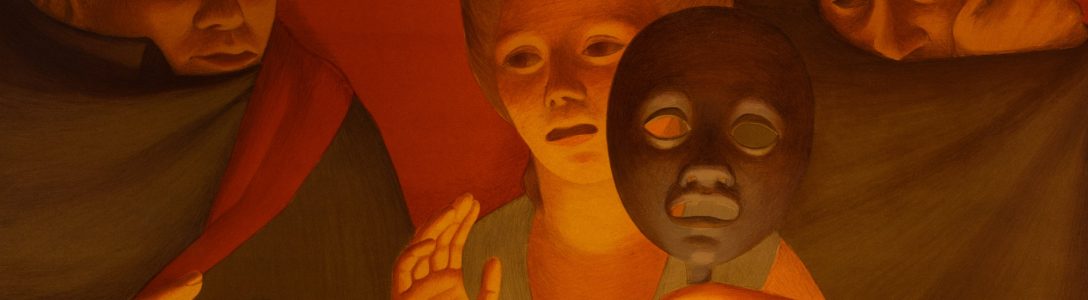
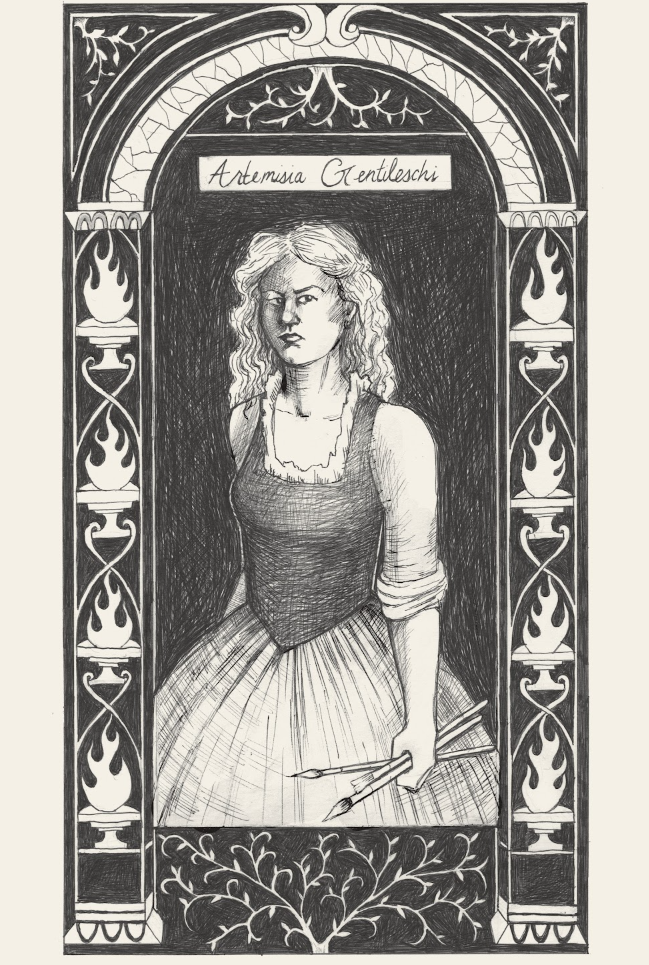
Portrait of Artemisia Gentileschi — Gina Siciliano

A portrait of the artist Artemisia Gentileschi by Gina Siciliano. From Siciliano’s brilliant biographyI Know What I Am: The Life and Times of Artemisia Gentileschi.

Gravity’s Rainbow annotations (so far)

img_4025

I’ll be adding to these and then doing more the next time (?!) I read Gravity’s Rainbow.*

Pages 82-83: The White Visitation, etc.

Page 103: Black Markets, King Kong, etc.

Pages 148-49: Preterite/Elect, Lurianic Kabbalah, Uncanny X-Men, etc.

Page 203: Rainbows, Fuck-yous, Plastic Man, etc.

Pages 204-05: Paper, mise en abyme, a silkenness of girls, etc.

Page 256: “Real America,” Hughes contra Whitman, BANZAI!, etc.

Pages 257-58: The War, nimbus clouds, Zoot Suit Riot!, etc.

Page 299: Tannhäuser, horny expectations, etc.

Page 364: Knights and fools, dendrites and axons, etc.

Pages 412-13:  Ouroboros, organic chemistry, tarot, etc.

Page 419: Innocence, experience, Wm Blake, Wagner’s Ring cycle, etc.

Page 539: Critical Mass, Weismann’s tarot reading, Rilke, hymns, etc.

[Ed. note–I published these links to my notes, riffs, and images connected to a re-reading of Gravity’s Rainbow back in November of 2016. Today marks the 50th anniversary of the publication of Pynchon’s great novel.]

This expedition to see Céline was organized in 1958 by Allen Ginsberg | William S. Burroughs

This expedition to see Céline was organized in 1958 by Allen Ginsberg who had got his address from someone. It is in Meudon, across the river from Paris proper. We finally found a bus that let us off in a shower of French transit directions: “Tout droit, Messieurs …” Walked for half a mile in this rundown suburban neighborhood, shabby villas with flaking stucco—it looked sort of like the outskirts of Los Angeles—and suddenly there’s this great cacophony of barking dogs. Big dogs, you could tell by the bark. “This must be it,” Allen said. Here’s Céline shouting at the dogs, and then he stepped into the driveway and motioned to us to come in. He seemed glad to see us and clearly we were expected. We sat down at a table in a paved courtyard behind a two-story building and his wife, who taught dancing—she had a dancing studio—brought coffee.

Céline looked exactly as you would expect him to look. He had on a dark suit, scarves and shawls wrapped around him, and the dogs, confined in a fenced-in area behind the villa, could be heard from time to time barking and howling. Allen asked if they ever killed anyone and Céline said, “Nooo. I just keep them for the noise.” Allen gave him some books, Howl and some poems by Gregory Corso and my book Junky. Céline glanced at the books without interest and laid them sort of definitively aside. Clearly he had no intention of wasting his time. He was sitting out there in Meudon. Céline thinks of himself as the greatest French writer, and no one’s paying any attention to him. So, you know, there’s somebody who wanted to come and see him. He had no conception of who we were.

Allen asked him what he thought of Beckett, Genet, Sartre, Simone de Beauvoir, Henri Michaux, just everybody he could think of. He waved this thin, blue-veined hand in dismissal: “Every year there is a new fish in the literary pond.

“It is nothing. It is nothing. It is nothing,” he said about all of them.

“Are you a good doctor?” Allen asked.

And he said: “Well … I am reasonable.”

Was he on good terms with the neighbors? Of course not.

“I take my dogs to the village because of the Jeeews. The postmaster destroys my letters. The druggist won’t fill my prescriptions.…” The barking dogs punctuated his words.

We walked right into a Céline novel. And he’s telling us what shits the Danes were. Then a story about being shipped out during the war: the ship was torpedoed and the passengers are hysterical so Céline lines them all up and gives each of them a big shot of morphine, and they all got sick and vomited all over the boat.

He waved goodbye from the driveway and the dogs were raging and jumping against the fence.

From With William Burroughs, by Victor Bockris. The speaker is, of course, Burroughs, prompted by a question from Bockris. It’s from the chapter entitled “Dinner with Nicolas Roeg, Lou Reed, Bockris-Wylie, and Gerard Malanga: New York 1978.” Roeg and Reed come off as total pricks.

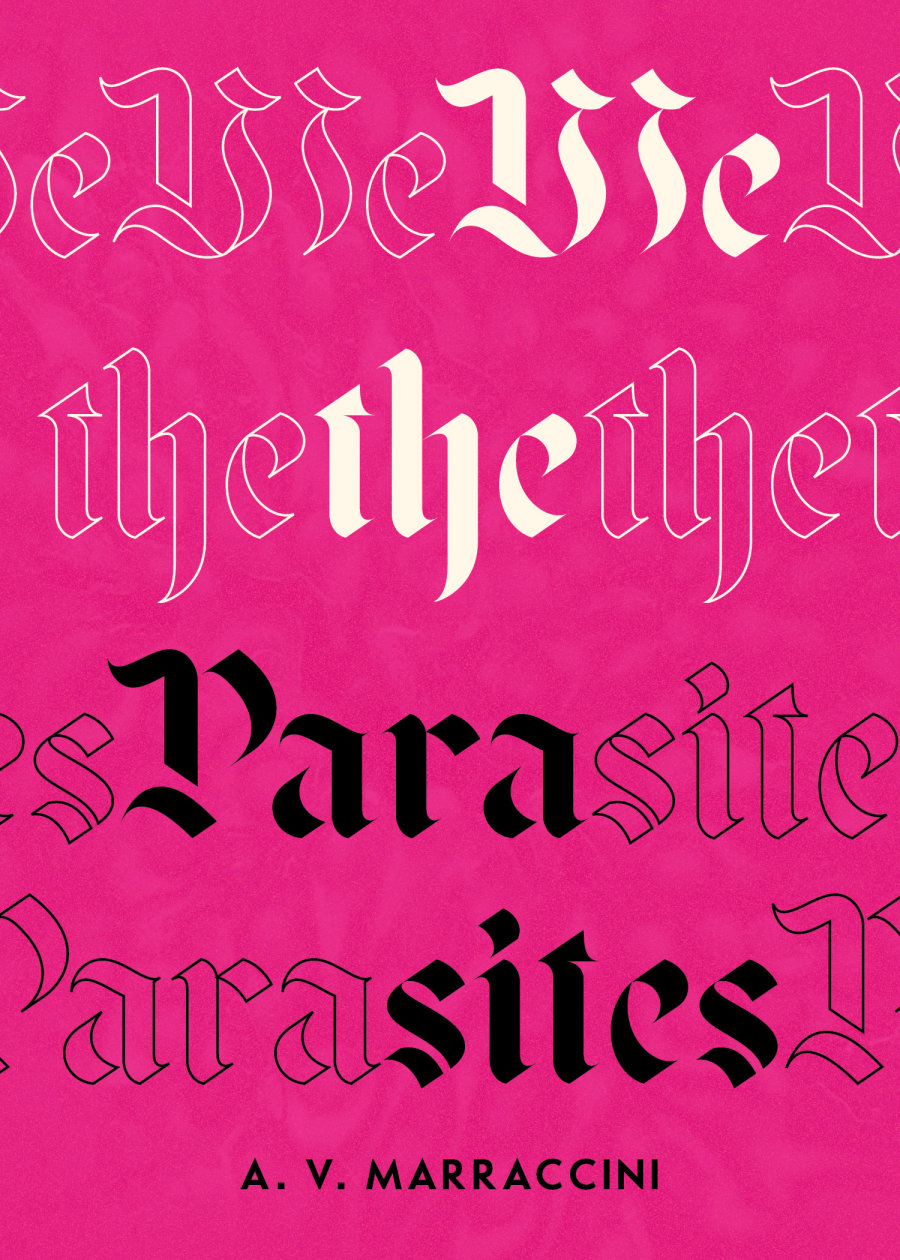
On A.V. Marraccini’s ekphrastic, discursive book We the Parasites

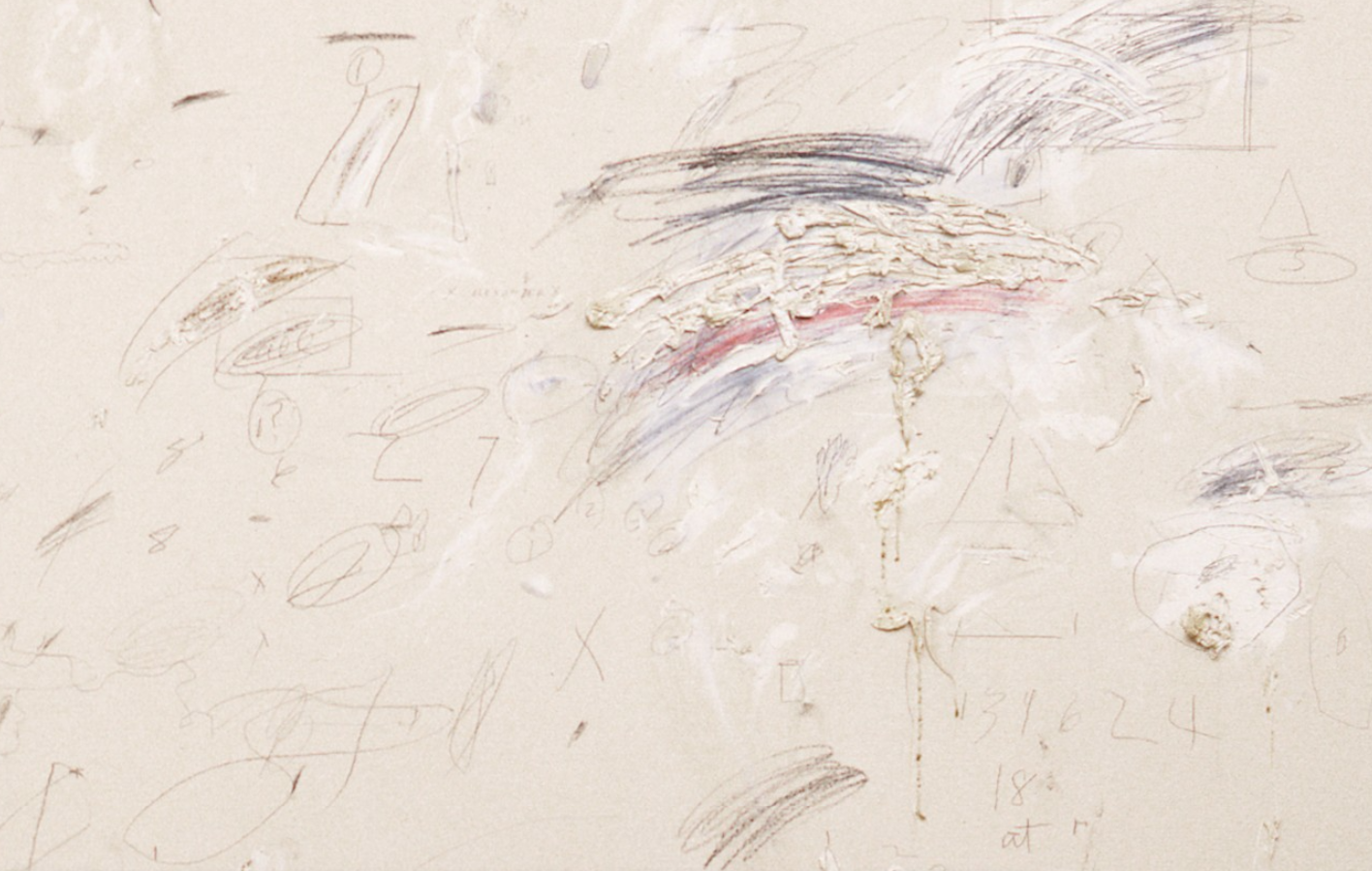
Detail from The Age of Alexander, 1959 by Cy Twombly

“The best and most skilled of parasites live, reproduce, and die, without their hosts ever really knowing, or at least being able to do anything about it,” declares A.V. Marraccini, early in her new book We the Parasites. “I’m not even a good parasite because painters or novelists can see me seeing them, drawing off their vital fluid, forming new and odd things in my dark-lobed ovarians, and then shoving them out, hastily and fitfully, into the world of papers and reviews.”

We the Parasites belongs in part to that “world of papers and reviews,” that world of criticism, but it also exists on the other side of any genre margin we might wish to impose. A.V. Marraccini’s book is generative, creative, fruitful, a hybrid that points to something beyond the lyric essay. It is stuffed with art and poetry and life; it is erudite and frequently fun; it is moody and sometimes melodramatic, but tonally consistent.

Marraccini’s central metaphor is that critics are parasites. This metaphor gives Marraccini space in which to wander: through history, through art. Through her own history and her present consciousness. She concocts a discursive ekphrasis that zigs and zags from the commensalism of figs and wasps to the paintings of Cy Twombly to John Updike’s novel 1963 The Centaur.

These nimble discursions are one of the primary joys in reading We the Parasites. Marraccini will offer a nice chunk of an H.D. poem before grafting an entire section of Cy Twombly’s Wikipedia page into her text. The particular section Marraccini excises details the so-called Phaedrus incident, in which “Cambodian-French artist Rindy Sam [was arrested] after she kissed one panel of Twombly’s triptych Phaedrus. The panel, an all-white canvas, was smudged by Sam’s red lipstick and she was tried in a court in Avignon for ‘voluntary degradation of a work of art.’ …The prosecution described the act as a ‘sort of cannibalism, or parasitism…'” Marraccini goes on to describe Twombly’s Phaedrus as “a sort of cannibalism or parasitism on Theocritus.”

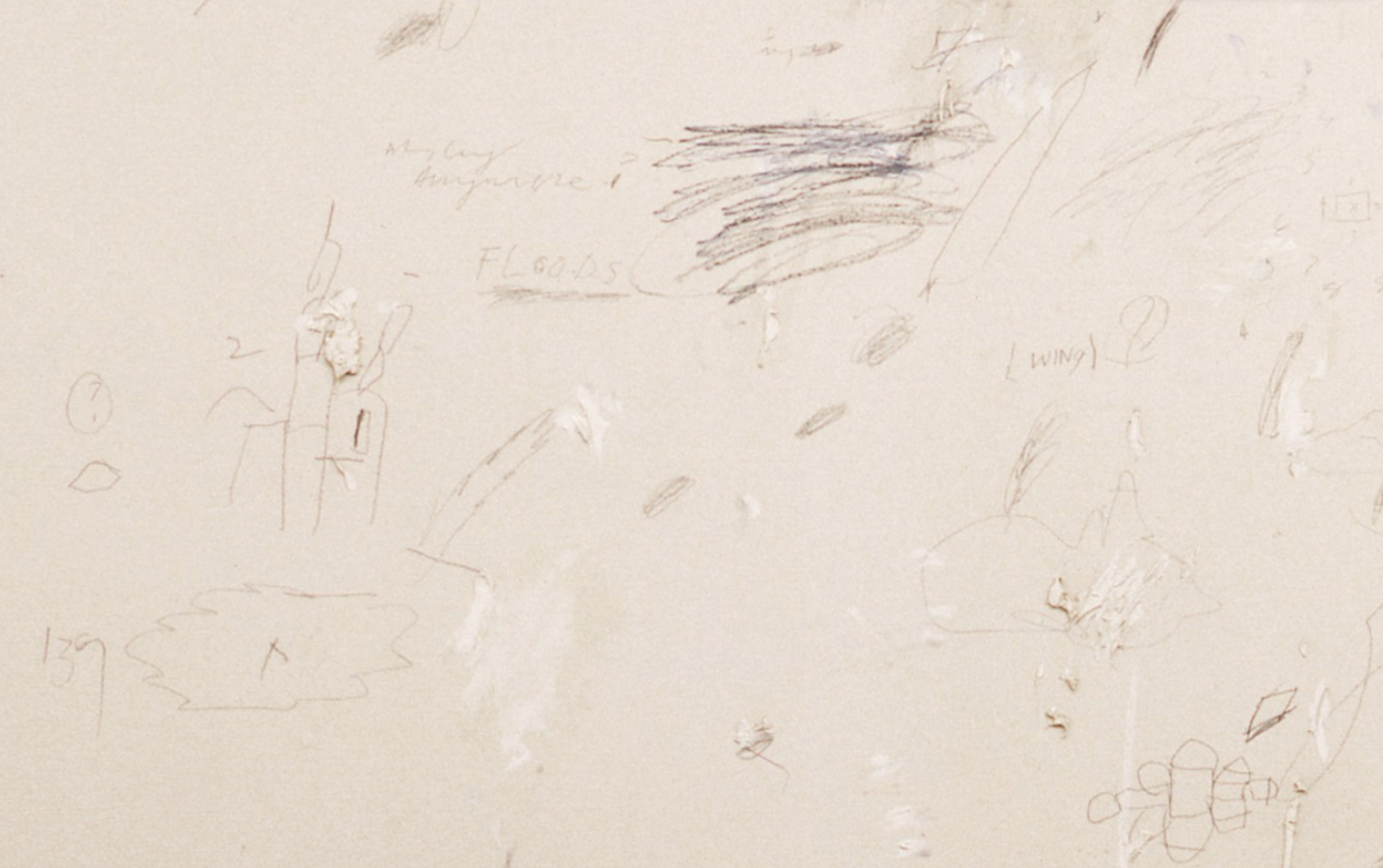
Apart from Marraccini herself, Cy Twombly strikes me as the major figure of We the Parasites. This statement is arguable, as others loom–Alexander the Great, Rainer Maria Rilke, the pseudonymous “Chiron,” one-time mentor to Marraccini who insists she read Updike’s novel The Centaur. But it’s Twombly whom Marraccini most frequently and successfully trains her ekphrastic powers on. Her multivalent reading of Twombly’s 1959 painting The Age of Alexander consumes the end of the book, and no wonder, for she attests that she sees the painting in her sleep, finding in its grafts a symbolic aesthetic language that approaches her own obsessions of parasitism:

Am I “over interpreting” this painting? Probably. It certainly meant nothing about wounds and fish louses to Cy Twombly. Were I writing an historical or academic argument I would have to care then, about the boundary conditions for believability, for perceived intent, and for context. Whatever this is, I’ve now called them off. I can say anything, which is nothing so much as dangerously overwhelming. I do this all the time to the whole world; see it as a layering of partially readable signs and portents, like some unlucky augur forever staring into the guts of sheep, the flightpath of certain birds. This often calls for melodrama, especially when the drama of the world as it really is doesn’t result in any kind of expected catharsis, Aristotelian or otherwise. I map myself onto whatever interpretation I’ve divined for that day, that hour, and then map myself back into the world again in another looping cycle.

Detail from The Age of Alexander, 1959 by Cy Twombly

While she never states it directly, Marraccini’s appreciation for Twombly’s paintings seems to come as an aesthetic reaction to their hybridity, their apparent incompleteness, their textual overdetermination. Many of Twombly’s paintings seem like studies, unfinished things that the viewer must complete with their own gaze. (Perhaps such thoughts or feelings went through Rindy Sam’s mind right before she kissed Phaedrus.) In a section of We the Parasites that has nothing to do with Twombly, she writes

Sometimes the study is better than the finished thing as it is here, suffused with longing. The provisionality of the study leaves room for it to be free. Right now, like time and the future, language is also provisional, so provisional and free that it feels like you might fall of something huge and intractable every time you write a sentence. There is danger here, with passion, the same frisson always but configured anew. No one is touching anyone’s strange body.

“No one is touching anyone’s strange body.” This is not some tortured metaphor, no. We the Parasites is a stealth plague memoir. 2020 and Covid-19 hang over the book, inverting its would-be-flânerie into flânerie for silent nights, cybernights, flânerie for necessary introversion. We stroll (or jog, or even run) along with Marraccini (a “3 a.m. cryptid”) and her private thoughts, late at night in dead quiet London. She scavenges with some foxes. She names the foxes. She thinks about Twombly; she thinks about an old love; she thinks about “Chiron.”

But We the People is not a straightforward Covid-19 memoir (it is not a straightforward anything)—its memoir intentions are largely aesthetic, often dwelling on Marraccini’s feelings of being an outsider in the Oxbridge world she now inhabits:

I’m a thief; a  thousand hundred generations of starving Sicilian farmers indenturing their backs to some steep, rocky crag, a thousand hundred shtetl girls married off young. I’m from a hot, flat suburb of a third-rate city near a swam and the sea, I’m nothing from nowhere to you. I’ve seen the seen the asphalt burble in the heat before a thunderstorm in the summer. Do you think that there are barbarians? That I am one? Well, barbar then.

(Oh, you’re also from Florida? I thought after reading these sentences.)

But I don’t think that Marraccini really would accept the mantle of barbarian. There’s a defensive hedging in some of We the Parasite’s erudition; there are times our author need not try so hard. The prose flows finer (or coarser, as necessary) when the hedges give way: “We always go back to Homer, or I do, the I who wants to be the authoritative we,” Marraccini admits. The next sentence highlights the anxiety inherent in the pretense of critical authority: “I have also always been late to Homer, that same belatedness that creeps up everywhere again.” The anxiety here echoes an early sentiment, one I believe plainly felt by anyone who has ever dared to write about art:

All the battles royale are decided…How do you look at the plain, the beach, the walls of the city, the oak trees and the cauldrons on the tripods over small fires—how do you look at it all and live with the fact that you are always after? Always, somehow, about to break into tenderness and despair?

And yet an abiding love and appreciation and a desire to communicate that love and appreciation overcomes this despair. Like any writer sensitive enough to attend to all the before that they have come after, Marraccini understands the risk and guts it takes to write. The critic may be a parasite, but the critic does not seek to remove art from the world—the critic seeks to enliven the art, to expand its lifeforce:

If I am greedy for, say, a novel, or Bruegel’s Fall of Icarus, or the piano sonatas of the Younger of the Scarlattis, I don’t take it from the world. Or I do, a version of it, and put it in my Simoneidean memory house which is perhaps also a private brothel. But the Bruegel is still there, the Scarlatti, the novel, to seduce other people, other critics. Parasites want their hosts to live so they can spread.

But We the Parasites isn’t exactly a work of sustained criticism, nor is it a lyric essay, nor a memoir. It grafts elements of those genres, in the spirit of works by authors like W.G. Sebald, S.D. Chrostowska, Claudine Rankine, Ben Lerner, and Maggie Nelson. I’ve tried to give enough of a sample of the prose and scope of Marraccini’s book here to let potential readers determine whether or not this is their cup of figs and wasps. I admired much in We the People, and even admired it when it irritated me. I look forward to seeing what Marraccini will do next. Recommended.

We the Parasites is new from Sublunary Editions.

All games aspire to the condition of war | From McCarthy’s Blood Meridian

The judge smiled. Men are born for games. Nothing else. Every child knows that play is nobler than work. He knows too that the worth or merit of a game is not inherent in the game itself but rather in the value of that which is put at hazard. Games of chance require a wager to have meaning at all. Games of sport involve the skill and strength of the opponents and the humiliation of defeat and the pride of victory are in themselves sufficient stake because they inhere in the worth of the principals and define them. But trial of chance or trial of worth all games aspire to the condition of war for here that which is wagered swallows up game, player, all.

Suppose two men at cards with nothing to wager save their lives. Who has not heard such a tale? A turn of the card. The whole universe for such a player has labored clanking to this moment which will tell if he is to die at that man’s hand or that man at his. What more certain validation of a man’s worth could there be? This enhancement of the game to its ultimate state admits no argument concerning the notion of fate. The selection of one man over another is a preference absolute and irrevocable and it is a dull man indeed who could reckon so profound a decision without agency or significance either one. In such games as have for their stake the annihilation of the defeated the decisions are quite clear. This man holding this particular arrangement of cards in his hand is thereby removed from existence. This is the nature of war, whose stake is at once the game and the authority and the justification. Seen so, war is the truest form of divination. It is the testing of one’s will and the will of another within that larger will which because it binds them is therefore forced to select. War is the ultimate game because war is at last a forcing of the unity of existence. War is god. Brown studied the judge.

You’re crazy Holden. Crazy at last.

The judge smiled.

From Chapter XVII of Cormac McCarthy’s novel Blood Meridian.

The tale of the enemy padrino | From Cormac McCarthy’s novel Cities of the Plain

Why would a man want an enemy for a padrino?

For the best of reasons. Or the worst. This man of whom we speak was a dying man when his lastborn came into the world. A son. His only son. So what did he do? He called upon that man who once had been a friend to him but now was his sworn enemy and he asked that man to be padrino to his son. The man refused of course. What? Are you mad? He must have been surprised. It had been years since last they spoke and their enemistad was a deep and bitter thing. Perhaps they had become enemies for the same reason they had once been friends. Which often happens in the world. But this man persisted. And he had the–how do you say–el naipe? En su manga.

The ace.

Yes. The ace up his sleeve. He told his enemy that he was dying. There was the naipe. Upon the table. The man could not refuse. All choosing was taken from his hands.

The blind man raised one hand into the smoky air in a thin upward slicing motion. Now comes the talk, he said. No end to it. Some say that the dying man wished to mend their friendship. Others that he had done this man some great injustice and wished to make amends before leaving this world forever. Others said other things. There is more than meets the eye. I say this: This man who was dying was not a man given to sentimentality. He also had lost friends to death. He was not a man given to illusions. He knew that those things we most desire to hold in our hearts are often taken from us while that which we would put away seems often by that very wish to become endowed with unsuspected powers of endurance. He knew how frail is the memory of loved ones. How we close our eyes and speak to them. How we long to hear their voices once again, and how those voices and those memories grow faint and faint until what was flesh and blood is no more than echo and shadow. In the end perhaps not even that.

He knew that our enemies by contrast seem always with us. The greater our hatred the more persistent the memory of them so that a truly terrible enemy becomes deathless. So that the man who has done you great injury or injustice makes himself a guest in your house forever. Perhaps only forgiveness can dislodge him.

Such then was this man’s thinking. If we may believe the best of him. To bind the padrino to his cause with the strongest bonds he knew. And there was more. For in this appointment he also posted the world as his sentinel. The duties of a friend would come under no great scrutiny. But an enemy? You can see how nicely he has caught him in the net he has contrived. For this enemy was in fact a man of conscience. A worthy enemy. And this enemy-padrino now must carry the dying man in his heart forever. Must suffer the eyes of the world eternally on him. Such a man can scarce be said to author any longer his own path.

The father dies as die he must. The enemy become padrino now becomes the father of the child. The world is watching. It stands in for the dead man. Who by his audacity has pressed it into his service. For the world does have a conscience, however men dispute it. And while that conscience may be thought of as the sum of consciences of men there is another view, which is that it may stand alone and each man’s share be but some small imperfect part of it. The man who died favored this view. As I do myself. Men may believe the world to be–what is the word? Voluble.

Fickle.

Fickle? I dont know. Voluble then. But the world is not voluble. The world is always the same. The man appointed the world as his witness that he might secure his enemy to his service. That this enemy would be faithful to his duties. That is what he did. Or that was my belief. At times I believe it yet.

How did it turn out?

Quite strangely.

The blind man reached for his glass. He drank and held the glass before him as if studying it and then he set it on the table before him once again.

Quite strangely. For the circumstance of his appointment came to elevate this man’s padrinazgo to the central role of his life. It brought out what was best in him. More than best. Virtues long neglected began almost at once to blossom forth. He abandoned every vice. He even began to attend Mass. His new office seemed to have called forth from the deepest parts of his character honor and loyalty and courage and devotion. What he gained can scarcely be put into words. Who would have foreseen such a thing?

What happened? said John Grady

The blind man smiled his pained blind smile. You smell the rat, he said.

Yes.

Quite so. It was no happy ending. Perhaps there is a moral to the tale. Perhaps not. I leave it to you.

What happened?

This man whose life was changed forever by the dying request of his enemy was ultimately ruined. The child became his life. More than his life. To say that he doted upon the child says nothing. And yet all turned out badly. Again, I believe that the intentions of the dying man were for the best. But there is another view. It would not be the first time that a father sacrificed a son.

The godchild grew up wild and restless. He became a criminal. A petty thief. A gambler. And other things. Finally, in the winter of nineteen and seven, in the town of Ojinaga, he killed a man. He was nineteen years of age. Close to your own, perhaps.

The same.

Yes. Perhaps this was his destiny. Perhaps no padrino could have saved him from himself. No father. The padrino squandered all he owned in bribes and fees. To no avail. Such a road once undertaken has no end and he died alone and poor. He was never bitter. He scarcely seemed even to consider whether he had been betrayed. He once had been a strong and even a ruthless man, but love makes men foolish. I speak as a victim myself. We are taken out of our own care and it then remains to be seen only if fate will show to us some share of mercy. Or little. Or none.

Men speak of blind destiny, a thing without scheme or purpose. But what sort of destiny is that? Each act in this world from which there can be no turning back has before it another, and it another yet. In a vast and endless net. Men imagine that the choices before them are theirs to make. But we are free to act only upon what is given. Choice is lost in the maze of generations and each act in that maze is itself an enslavement for it voids every alternative and binds one ever more tightly into the constraints that make a life. If the dead man could have forgiven his enemy for whatever wrong was done to him all would have been otherwise. Did the son set out to avenge his father? Did the dead man sacrifice his son? Our plans are predicated upon a future unknown to us. The world takes its form hourly by a weighing of things at hand, and while we may seek to puzzle out that form we have no way to do so. We have only God’s law, and the wisdom to follow it if we will.

The maestro leaned forward and composed his hands before him. The wineglass stood empty and he took it up. Those who cannot see, he said, must rely upon what has gone before. If I do not wish to appear so foolish as to drink from an empty glass I must remember whether I have drained it or not. This man who became padrino. I speak of him as if he died old but he did not. He was younger than I am now. I speak as if his conscience or the world’s eyes or both led him to such rigor in his duties. But those considerations quickly fell to nothing. It was for love of the child that he came to grief, if grief it was. What do you make of that?

I dont know.

Nor I. I only know that every act which has no heart will be found out in the end. Every gesture.

From Cormac McCarthy’s novel Cities of the Plain.

Blog about some recent reading

I finished A. V. Marraccini’s We the Parasites very very early Friday morning and then sneaked in two hours of sleep before a nine a.m. alarm. We the Parasites is a discursive  ekphrasis, its finest moments concentrated on Cy Twombly (and his historical painting The Age of Alexander in particular). Marraccini turns her lens also to John Updike’s novel The Centaur, Jean Genet, and pomegranates and wasps. 2020 and Covid-19 hang over the book, inverting its would-be-flânerie: It’s flânerie for silent nights, cybernights, flânerie for necessary introversion.

I’m about 100 pages into Cities of the Plain, the final book of Cormac McCarthy’s Border Trilogy. I read it maybe fifteen years ago and recall almost nothing about it other than McCarthy uniting the two heroes of the first two books, John Grady Cole and Billy Parham. So far, the novel is a far quicker read than the first two Border novels—more direct, more cinematic, less adolescent, its intensities tamped by experience. About thirty pages in, McCarthy devotes two entire pages to a description of changing a tire. It’s beautiful.

Nest in the Bones collects a career-spanning selection of Antonio Di Benedetto short stories (in translation by Martina Broner). I’ve been trying to read one or two a day. Many of the early stories are quite short, and Di Benedetto perhaps shows a bit too much debt to Kafka here, but the oddity of it all is wonderful.

It is true that William S. Burroughs was fond of dinners with famous and interesting people, and was totally fine with having a young, perhaps good looking Victor Bockris serve as a nexus and recorder for such events, events that have nothing to do with big-ell Literature. But my favorite thing here (as was the case with Allen Ginsberg’s nineties jaunt with Burroughs in the same vein, Don’t Hide the Madness), my favorite thing here is how Burroughs undercuts any pretension or redirects conversation to his own strange obsessions.

Seek some witness | A passage from Cormac McCarthy’s The Crossing

The black eyes all shifted to the leader of their small clan. He sat for a long time. It was very quiet. Out on the road one of the oxen began to piss loudly. Finally he shaped his mouth and said that he believed that fate had intervened in the matter for its own good reasons. He said that fate might enter into the affairs of men in order to contravene them or set them at naught but to say that fate could deny the true and uphold the false would seem to be a contradictory view of things. To speak of a will in the world that ran counter to one’s own was one thing. To speak of such a will that ran counter to the truth was quite another, for then all was rendered senseless. Billy then asked him if it was his notion that the false plane had been swept away by God in order to single out the true and the gypsy said that it was not. When Billy said that he had understood him to say that it was God who had ultimately made the decision concerning the two planes the gypsy said that he believed that to be so but he did not believe that by this act God had spoken to anyone. He said that he was not a superstitious man. The gypsies heard this out and then turned to Billy to see how he would respond. Billy said that it seemed to him that the freighters did not hold the identity of the airplane to be of any great consequence but the gitano only turned and studied him with those dark and troubled eyes. He said that it was indeed of consequence and that it was in fact the whole burden of their inquiry. From a certain perspective one might even hazard to say that the great trouble with the world was that that which survived was held in hard evidence as to past events. A false authority clung to what persisted, as if those artifacts of the past which had endured had done so by some act of their own will. Yet the witness could not survive the witnessing. In the world that came to be that which prevailed could never speak for that which perished but could only parade its own arrogance. It pretended symbol and summation of the vanished world but was neither. He said that in any case the past was little more than a dream and its force in the world greatly exaggerated. For the world was made new each day and it was only men’s clinging to its vanished husks that could make of that world one husk more.

La cascara no es la cosa, he said. It looked the same. But it was not.

Y la tercera historia? said Billy.

La tercera historia, said the gypsy, es esta. El existe en la historia de las historias. Es que ultimadamente la verdad no puede quedar en ningun otro lugar sino en el habla. He held his hands before him and looked at his palms. As if they may have been at some work not of his own doing. The past, he said, is always this argument between counterclaimants. Memories dim with age. There is no repository for our images. The loved ones who visit us in dreams are strangers. To even see aright is effort. We seek some witness but the world will not provide one. This is the third history. It is the history that each man makes alone out of what is left to him. Bits of wreckage. Some bones. The words of the dead. How make a world of this? How live in that world once made?

From Cormac McCarthy’s novel The Crossing. 

The wolf had crossed the international boundary line at about the point where it intersected the thirtieth minute of the one hundred and eighth meridian | A passage from Cormac McCarthy’s novel The Crossing

The wolf had crossed the international boundary line at about the point where it intersected the thirtieth minute of the one hundred and eighth meridian and she had crossed the old Nations road a mile north of the boundary and followed Whitewater Creek west up into the San Luis Mountains and crossed through the gap north to the Animas range and then crossed the Animas Valley and on into the Peloncillos as told. She carried a scabbedover wound on her hip where her mate had bitten her two weeks before somewhere in the mountains of Sonora. He’d bitten her because she would not leave him. Standing with one forefoot in the jaws of a steeltrap and snarling at her to drive her off where she lay just beyond the reach of the chain. She’d flattened her ears and whined and she would not leave. In the morning they came on horses. She watched from a slope a hundred yards away as he stood up to meet them.

She wandered the eastern slopes of the Sierra de la Madera for a week. Her ancestors had hunted camels and primitive toy horses on these grounds. She found little to eat. Most of the game was slaughtered out of the country. Most of the forest cut to feed the boilers of the stampmills at the mines. The wolves in that country had been killing cattle for a long time but the ignorance of the animals was a puzzle to them. The cows bellowing and bleeding and stumbling through the mountain meadows with their shovel feet and their confusion, bawling and floundering through the fences and dragging posts and wires behind. The ranchers said they brutalized the cattle in a way they did not the wild game. As if the cows evoked in them some anger. As if they were offended by some violation of an old order. Old ceremonies. Old protocols.

She crossed the Bavispe River and moved north. She was carrying her first litter and she had no way to know the trouble she was in. She was moving out of the country not because the game was gone but because the wolves were and she needed them. When she pulled down the veal calf in the snow at the head of Foster Draw in the Peloncillo Mountains of New Mexico she had eaten little but carrion for two weeks and she wore a haunted look and she’d found no trace of wolves at all. She ate and rested and ate again. She ate till her belly dragged and she did not go back. She would not return to a kill. She would not cross a road or a rail line in daylight. She would not cross under a wire fence twice in the same place. These were the new protocols. Strictures that had not existed before. Now they did.

She ranged west into Cochise County in the state of Arizona, across the south fork of Skeleton Creek and west to the head of Starvation Canyon and south to Hog Canyon Springs. Then east again to the high country between Clanton and Foster draws. At night she would go down onto the Animas Plains and drive the wild antelope, watching them flow and turn in the dust of their own passage where it rose like smoke off the basin floor, watching the precisely indexed articulation of their limbs and the rocking movements of their heads and the slow bunching and the slow extension of their running, looking for anything at all among them that would name to her her quarry.

At this season the does were already carrying calves and as they commonly aborted long before term the one least favored so twice she found these pale unborn still warm and gawking on the ground, milkblue and near translucent in the dawn like beings miscarried from another world entire. She ate even their bones where they lay blind and dying in the snow. Before sunrise she was off the plain and she would raise her muzzle where she stood on some low promontory or rock overlooking the valley and howl and howl again into that terrible silence. She might have left the country altogether if she had not come upon the scent of a wolf just below the high pass west of Black Point. She stopped as if she’d walked into a wall.

She circled the set for the better part of an hour sorting and indexing the varied scents and ordering their sequences in an effort to reconstruct the events that had taken place here. When she left she went down through the pass south following the tracks of the horses now thirty-six hours old.

By evening she’d found all eight of the sets and she was back at the gap of the mountain again where she circled the trap whining. Then she began to dig. She dug a hole alongside the trap until the caving dirt fell away to reveal the trap’s jaw. She stood looking at it. She dug again. When she left the set the trap was sitting naked on the ground with only a handful of dirt over the waxed paper covering the pan and when the boy and his father rode through the gap the following morning that was what they found.

From Cormac McCarthy’s novel The Crossing.

Best Books of 1973?

A conversation with a colleague in January of 2022 led to my blogging about the possible “Best Books of 1972.” The post was fun to research, so here’s a sequel of sorts: What were the best books from fifty years ago?

(I don’t have to do any research for a quick answer: Gravity’s Rainbow was the best novel of 1973.)

Just as in last year’s post, I’m mostly interested in novels here, or books of a novelistic/artistic scope.

Still, with that said, I’ll begin with commerce: What were the bestsellers of 1973? The New York Times bestsellers list for 1973 picks up where their ’72 list left off, with Richard Bach’s Jonathan Livingstone Seagull leading sales for the first 11 weeks (Bach’s novel was the bestseller of 1972 for half a year). Genre fiction from Frederick Forsyth, Jacqueline Susann, and Mary Stewart accounts for more than half the year. More notable bestsellers include Kurt Vonnegut’s Breakfast of Champions, Gore Vidal’s Burr, and Graham Greene’s The Honorary Consul. (Gravity’s Rainbow was not a chart topper.)

Critic John Leonard’s end of the year wrap up for the Times in 1973 is especially instructive. He leads with Gravity’s Rainbow, describing it as

…one of the longest, darkest, most difficult and most ambitious novels in years. Its technical and verbal resources bring to mind Melville, Faulkner and Nabokov and establish Pynchon’s imaginative continuity with the great modernist movement of the early years of this century. Gravity’s Rainbow is bone‐crushingly dense, compulsively elaborate, silly, obscene, funny, tragic, poetic, dull, inspired, horrific, cold and blasted.

Leonard also recommends Doris Lessing’s The Summer Before the Dark (“her most artful exploration of her major themes: the relation of self and society, intelligence and feeling, madness and health, and, above all, the role of modern woman”) and John Leonard Clive’s  Macaulay, the Shaping of the Historian.

Some notable titles that the editors of the NYT Book Review append to Leonard’s feature include Philip Roth’s The Great American Novel, Thomas McGuane’s Ninety‐Two in the Shade, and John Cheever’s The World of Apples. The editors also call out “disappointing efforts by Don DeLillo (Great Jones Street) and Marge Piercy (Small Changes).”

In addition to the essayistic feature, the Times also offered up an extensive list of notable titles. There are around 200 books on this list, which I’ve used to help generate my own list at the end of this post. (The most interesting entry I’d never heard of is The Exile of James Joyce by Helene Cixous 

Eudora Welty’s short novel The Optimist’s Daughter is not on the list because it was not published in 1973. It was published in 1972. But it won the Pulitzer for fiction in 1973.

Infamously, there was no Pulitzer Prize awarded for fiction in 1974, even though the jurists were unanimous in their recommendation that Thomas Pynchon win it for Gravity’s Rainbow. (Gravity’s Rainbow did win the 1974 National Book Award.)

The New York Times list also fails to include Patrick White’s novel The Eye of the Storm. White won the Nobel Prize in Literature in 1973.

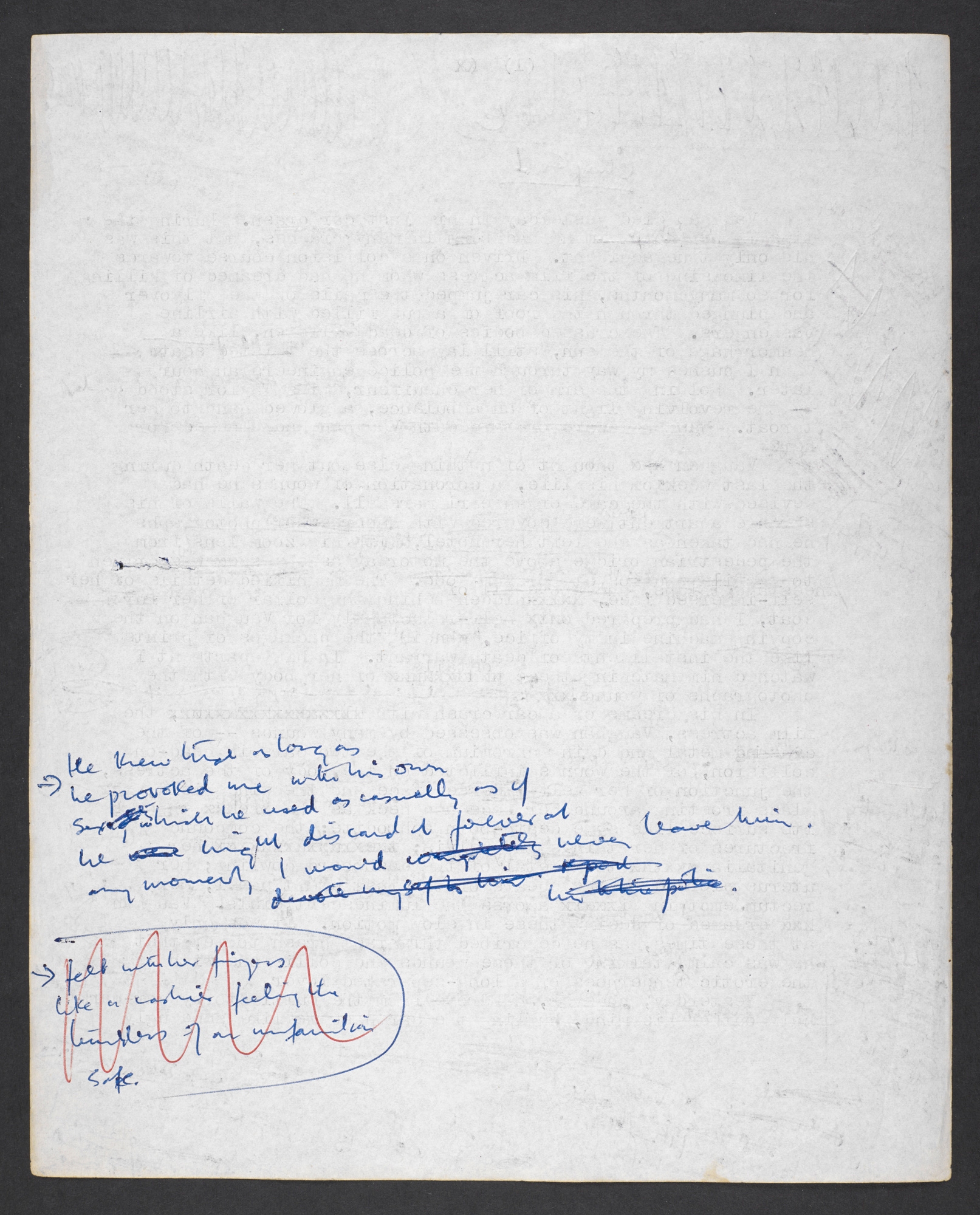
Neither does the NYT list include Alan Gardner’s Red Shift, J.G. Ballard’s Crash, Leon Forrest’s There Is a Tree More Ancient Than Eden, William Goldman’s The Princess Bride, B. S. Johnson’s Christie Malry’s Own Double-Entry, Anna Kavan’s Who Are You?, Clarice Lispector’s Água Viva, Jerzy Kosiński’s The Devil Tree, Cormac McCarthy’s Child of God, Toni Morrison’s Sula, Erica Jong’s Fear of Flying, Charles Bukowski’s South of No North, Harold Bloom’s The Anxiety of Influence, Madeleine L’Engle’s A Wind in the Door, Italo Calvino’s The Castle of Crossed Destinies, Susan Sontag’s On Photography, Peter Shaffer’s Equus, Kobo Abe’s The Box Man, Ursula K. Le Guin’s The Ones Who Walk Away from Omelas, Adrienne Rich’s Diving into the Wreck, E.M. Cioran’s The Trouble with Being Born or Thomas Rockwell’s juvenile classic How to Eat Fried Worms.

Here is my (almost certainly incomplete) list of the best books of 1973:

Água Viva, Clarice Lispector

The Anxiety of Influence, Harold Bloom

Breakfast of Champions, Kurt Vonnegut

Child of God,  Cormac McCarthy

Christie Malry’s Own Double-Entry, B. S. Johnson

Crash, J.G. Ballard

Fear and Loathing on the Campaign Trail, Hunter S. Thompson

Fear of Flying, Erica Jong

Gravity’s Rainbow, Thomas Pynchon

The Princess Bride, William Goldman

Red Shift, Alan Gardner

State of Grace, Joy Williams

Sula, Toni Morrison

There Is a Tree More Ancient Than Eden, Leon Forrest

Here is my short (complete) list:

Gravity’s Rainbow, Thomas Ruggles Pynchon

A few sentences on every book I read or reread in 2022


☉ indicates a reread.

☆ indicates an outstanding read.

In some cases, I’ve self-plagiarized some descriptions and evaluations from my old tweets and blog posts.


Red Shift, Alan Garner ☆

Three plots, three eras, one place: Roman-conquered England, English Civil War, contemporary (early seventies) England. Great read, reminded me a bit of Hoban’s Riddley Walker.

Tyll, Daniel Kehlmann, trans. Ross Benjamin

Tyll Ulenspiegel teaches himself to walk the tightrope and becomes the greatest jester of his age, bearing witness to the horrors of the Thirty Years’ War. Very funny, slightly cruel.

The Silentiary, Antonio di Benedetto, trans. Esther Allen

In my review, I wrote that “The Silentiary is ultimately a sad, though never dour, read” that “does not wax elegaic for a romanticized, quieter past” or “call to make peace with cacophony.” The cacophony is modernity, and Di Benedetto’s sad hero does all he can to resist it. (He fails.)

Critics, Monsters, Fanatics, and Other Literary Essays, Cynthia Ozick

Moments of sharp criticism marred by “old-man-yells-at-cloud” vibes. The thematic undercurrent of the collection is the anxiety of loss of influence.

Fever Dream, Samanta Schweblin, trans. Megan McDowell

I wanted to like this novel a lot more than I did.

Cities of the Red Night, William S. Burroughs ☉☆

Burroughs’ final trilogy was a highlight of 2022 for me. I read the first book when I was far too young to understand it (not that I “understand” it now so much as feel it). The trilogy as a whole is an underrated postmodern classic, eclipsed by Burroughs’ cult of personality and weird sixties stuff. The strange beautiful ending of Cities collapses narrative into a performative verbal utopia. Has another book so accurately captured the all-at-onceness of dreams and nightmares?

I sneaked a whole thing into a blog about the rumors that Burroughs used a ghostwriter in his later years to clean up his final trilogy.

The Soft Machine, William S. Burroughs ☉☆

A reread, a kind of quick chaser while I tried to secure the next book in Burroughs’ last trilogy.

Sir Gawain and the Green Knight, trans. Simon Armitage

I listened to the audiobook (which included the original text) and really enjoyed it. I had intended to take it in before watching the film The Green Knight, but then I forgot to watch the film. (I still haven’t seen it.)

Moon Witch, Spider King, Marlon James

I wrote a few posts about James’s follow up to his outstanding 2020 novel Black Leopard, Red Wolf. In the last post I wrote on the novel, I concluded with “More thoughts to come” and then I never blogged about it again. After the dazzle of its predecessor, Moon Witch was a (big) disappointment—but I’ll read the next installment.

Fidelity, Grace Paley

I don’t usually just sit down and read a whole book of poetry, but that’s what happened here. Checked it out from the library and it really stuck with me—playful, sad, focused on the end of life.

Don’t Hide the Madness, William S. Burroughs and Allen Ginsberg

A series of conversations between Allen Ginsberg and William S. Burroughs. Burroughs is getting pretty close to the end of his life here, and Ginsberg seems to want to get him to further cement a cultural legacy through a late oral autobiography. Burroughs repeatedly derails these attempts though, which is hilarious. Burroughs talks about whatever comes to mind (often his guns). Loved it

Two Slatterns and a King, Edna St. Vincent Millay

A short play. I don’t really remember it.

The Hole, Hiroko Oyamada, trans. David Boyd

From my review: “The Hole is wonderfully dull at times, as it should be. It’s layered but brittle, with notes of a freshness just gone sour. It’s a quick, propulsive read—a thriller, even, perhaps—but its thrills culminate in sad ambiguity.”

The Very Last Interview, David Shields

The Last Interview: pretentious, solipsistic, shallow, bathetic, and very readable. Hated it!

Augustus, John Williams ☆

Loved it. Fantastic stuff. A good friend recommended it and I read it, even though the premise seemed worked to death already. Nevermind—good writing is good writing.

Going to Meet the Man, James Baldwin

Not really sure how I’d only read two of the stories here before this year. Good stuff.

Harrow, Joy Williams ☆

Williams takes the “post-apocalyptic” quite literally–Harrow is about post-revelation, an uncovering, a delayed judgment from an idiot savant. It’s one of those books you immediately start again and see that what appeared to be baggy riffing was knotting so tight you couldn’t recognize it the first time through — the appropriate style for a novel that dramatizes Nietzsche’s eternal return as a mediation of preapocalyptic consciousness in a post-apocalyptic world.

Telluria, Vladimir Sorokin ☆

One of the best contemporary novels I’ve read in a long time. Telluria is a polyglossic satirical epic pieced together in vital miniatures. Its fifty sections are simultaneously discrete and porous, richly dense but also loose and funny. It teems with life and language, exploding notions of stable storytelling into a carnival of wild voices. Read it!

The Adding Machine, William S. Burroughs

A quick, lucid read and another stop-gap before I got a copy of The Place of Dead Roads.

The Place of Dead Roads, William S. Burroughs ☆

The strongest and strangest of Burroughs’ final trilogy.

The Western Lands, William S. Burroughs ☆

The weakest entry in the final trilogy; still great stuff and more electric than any contemporary sci-fi schlock out there.

Rip It Up, Kou Machida, trans. Daniel Joseph

A strange little chaser for the Burroughs trilogy, this Japanese novel is equally alienating and self-indulgent stuff, conjuring a desperate, stuffy world punctured by punkrock linguistic resistance.

The Trees, Percival Everett

A novel about racist lynchings shouldn’t really be this funny. The world of The Trees is simultaneously cartoonish and brutally realistic, its comedic overtures exploding into the awful, visceral immediacy of a history of racial violence that is not actually a history at all, but a lived reality.

A Short History of Russia, Mark Galeotti

I read this (and really enjoyed it) as I reread Sorokin’s Telluria.

Binti, Nnedi Okorafor

An interesting concept marred by awful prose. I was not the intended audience.

Revenge of the Scapegoat, Caren Beilin

I can’t encapsulate this zany, cruel novel into a pithy sentence or two. Read my review if you want me to justify my sentiment that this is an excellent book.

The Deer, Dashiel Carrera 

Carrera’s debut novel is sometimes brilliant, often frustrating, gloomy, surreal, and terse.

2666, Roberto Bolaño, trans. Natasha Wimmer ☉☆

My fourth full trip through 2666 was an audiobook this time. I’ll go through it again.

The Living End, Stanley Elkin

A perfect comedic chaser to the weight of 2666. The Living End, like the other novels I’ve read by Elkin, is probably best understood as a series of vaudevillian riffs—but those riffs add up to a wonderful metaphysical complaint here. Great stuff.

Prison Pit, Johnny Ryan

Abject violence and every manner of cruel depravity. Problematic! Mean! Funny stuff!

The Lonely Boxer, Michael Anthony Perri

A terse, dark (and often funny) boxing story packed with punchy sentences.

Blue Lard, Vladimir Sorokin, trans. Max Lawton ☆

I think Lawton’s translation of Blue Lard is out next year from NYRB, and I’ll wait until then to write more about it. If you were to ask me what my favorite book of 2022 is, I’d probably say, “Vladimir Sorokin’s Telluria,” but the truth is my favorite book of 2022 is Vladimir Sorokin’s Blue Lard—but that isn’t out yet.

Checkout 19, Claire-Louise Bennett ☆

I generally detest what might be termed autofiction unless it is particularly excellent, interesting, perceptive, and well-written: which proves that genre labels really don’t mean that much. Checkou 19 is particularly excellent, interesting, perceptive, and well-written, and I will continue to read whatever Bennett publishes.

Paradais, Fernanda Melchor, trans. Sophie Hughes

While Paradais is not as rich and full (and really, just long) as Melchor’s novel Hurricane Season, it’s cut from the same abject cloth. Two kids working towards becoming full-time alcoholics in an upscale development somewhere in Mexico ruin their lives. It’s a grimy glowing postmodern gothic, part of the Nothing Good Happens genre of what I think of as the Nothing Good Happens genre, reminiscent of Handke’s Funny Games, Bolaño’s myth crimes, and Nicolas Winding Refn’s neon romance terrors. Good stuff.

Minor Detail, Adania Shibli, trans. Elisabeth Jaquette

A short book in two distinct halves, extrapolating individual trauma onto the trauma of the Palestinian people as a whole. Another one I wanted to like more than I did.

Dull Margaret, Jim Broadbent and Dix

Actor Jim Broadbent made a graphic novel with the artist Dix based on Bruegel’s painting Dulle Griet—and it’s really good!

Their Four Hearts, Vladimir Sorokin, trans. Max Lawton

Vladimir Sorokin’s novel Their Four Hearts made me physically ill several times. To be clear, the previous statement is a form of praise.

Blood Meridian, Cormac McCarthy ☉☆

I read it or audiobook it at least once a year. I found myself falling asleep to the audiobook every night, picking it up in random places.

A Shock, Keith Ridgway ☆

The rondel of stories in A Shock coalesce into a novel that captures the weird energy of consciousness butting up against concrete reality. Standout story “The Sweat” ends with a three page monologue that begins “Happiness is lovely to come across.” Probably one of the best passages I read all year.

The Setting Sun, Osamu Dazai, trans. Donald Keene

Another book I wanted to like more than I actually did.

Players, Don DeLillo

DeLillo’s early novel reads like a dress rehearsal for the midperiod stuff (particularly The Names, Libra, and Mao II). A novel of boredom, transience, games and their players.

Fireworks, Angela Carter

If the pieces here are not as refined and unified as the anti-fairy tales that comprise Carter’s more-celebrated collection The Bloody Chamber, they are all the more fascinating as studies in sadomasochism, alienation, and the emerging of a new literary consciousness.

Tripticks, Ann Quin ☆

Quin’s fourth and final novel (in print again for the first time in two decades, thanks to And Other Stories) is a radical satire of America. It’s a road novel and an anti-road novel, elegant and messy, sexy and ugly, cruel and generous. The narrative plays out in a cartoonish, slapdash sequences of chases across the American West—the narrator is either chasing one of his ex-wives and her new lover, or is being chased by them. Flashbacks interject without transition or any other warning, treating us to grotesque cavalcade of characters, including the ex-wife’s father and mother (the father is a particularly wonderful satire of the American self-made noveau riche blowhard) and a sex cult leader. Quin also slices in lists that start somewhat orderly and then explode into hyperbole and/or bathos. The germ of Tripticks was first published in the J.G. Ballard and Martin Bax’s seminal journal Ambit as part of a contest. The gimmick was to write a story Under the Influence of Drugs. Quin won with her story, composed under the influence of the contraceptive pill.

My Phantoms, Gwendoline Riley

An unhappy novel about an unhappy family. Saw way too much of myself in this one.

Cardinal Numbers, Hob Broun ☆

I feel as if Cardinal Numbers were written specifically for me. Hob Broun’s shorts (not stories, not tales) are like an intersection of Barry Hannah and David Berman—funny, devastating, enigmatic, thoughtful. Cardinal Numbers is the best collection of short stories that no one has ever heard of.

The Spy Who Came in from the Cold, John le Carre ☆

Fun fun fun fun fun sad fun fun fun fun dark fun fun fun fun fun fun fun fun fun fun fun fun fun fun fun fun fun fun fun fun fun fun fun fun fun fun fun fun fun fun fun fun dark fun fun fun fun fun bit weird fun fun fun fun fun fun more fun fun fun fun

The Passenger, Cormac McCarthy ☆

I riffed a lot on McCarthy’s baggy opus and read exactly one review of it (Joy Williams’), but I was still attuned to enough chatter to get the impression that many people did not like The Passenger. My take is something like: The Passenger is McCarthy’s messy, sad, joyful synthesis of McCarthy’s oeuvre. If Suttree is his attempt to synthesize the American literature before it into something new (which it is), McCarthy’s last (?) big novel does the same—but for McCarthy’s books. I tried to get at that idea in some of my riffs on the book. But I’ll understand too if folks wanted Something Else from The Passenger. I loved it.

All the Pretty Horses, Cormac McCarthy ☉☆

I read it again for the first time in years as a kind of comedown from The Passenger as I waited for Stella Maris to drop. I’ll read the other Border Trilogy books next year.

First Love, Gwendoline Riley

A slim, spare, precise study of passive-aggressive cruelty, sublimated dreams, and lowered expectations. Pervading the novel is a general sense that one would prefer not to get stuck in a corner with any of these characters at a party, let alone end up living with one. I think Gwendoline Riley is a good writer but I don’t think I’ll read anymore Riley novels.

Hello America, J.G. Ballard

You’d think a novel where President Manson wants to make America great Again would feel more prescient, but Ballard’s so in love here with the sparkle and pop of Pop Art America that he fails to attend to the dirt, grease, and grime that make the machine run. A fun novel, but its contemporary currency is squashed not so much by historical reality as the weight of Ballard’s oeuvre before it.

Cinema Speculation, Quentin Tarantino

A messy book about a messy decade of filmmaking. Tarantino names a bajillion films in Cinema Speculation and makes me want to watch almost all of them. Some of his recommendations fall short of his praise (Joe) while others exceed it (Hi, Mom! and Rolling Thunder). This book almost reads like an elegy to moviegoing as a communal experience that will never come back.

Monsters, Barry Windsor-Smith ☆

When I was a kid, Barry Windsor-Smith’s Weapon X was a revelation to me, one which (perhaps ironically, as it was a Marvel comic book featuring mainstream comics’ most popular character) led me away from Marvel and DC comics into alternative stuff. When I saw Monsters on the shelf of my college library, I immediately checked it out, a little bit confused that I simply had never heard of something so big and beautiful. When I started the novel, I was a bit worried that it was simply a retooling of the Weapon X material (itself a retooling of Shelley’s Frankenstein)—but that isn’t the case. Sweeping, dense, sad, and occasionally unexpectedly funny, Monsters is Windsor-Smith’s masterpiece, a word I don’t use lightly.

Stella Maris, Cormac McCarthy

Above, I claimed that The Passenger is McCarthy’s self-synthesis of his own oeuvre. Stella Maris is the incestuous sibling of that novel, one that has to be read intertextually against it/with it—a call to read these last (?) works with/against the McCarthy novels that preceded them.

Dr. No, Percival Everett

While I was reading Stella Maris a second time, I started Everett’s Dr. No on audiobook. This was at the suggestion of Hoopla, the service my library uses. I knew that Dr. No was Everett’s new novel, and that was about it. I didn’t know that it was about a mathematician who studies nothing. It would be hard to overstate the overlap between Dr. No and Stella Maris (hell, the female protagonist in Everett’s novel is a topologist!), but they couldn’t be more tonally different. One of my favorite gags in Dr. No is the naming of characters—Everett gives characters names like “Stephanie Meyer,” “George Bush,” and “Otis Redding.” And while this initially seems like a (perhaps-lazy) postmodern joke, it ends up paying dividends in the novel’s central themes of nothing butting up against the prospect of naming nothing.

At the Doors and Other Stories, Boris Pilnyak, trans. Emily Laskin, Isaac Zisman, Louis Lozowick, Sofia Himmel, John Cournos

A lovely little book by a Russian author I’d never heard of. The title story “At the Doors” reminds me very much of “Mondaugen’s Story” in Pynchon’s V.—a strange mix of terror, grime, and zaniness that resists neat coherence. Good stuff!

The familiar story of virgin birth on December twenty-fifth, mutilation and resurrection | From William Gaddis’s The Recognitions

His father seemed less than ever interested in what passed around him, once assured Wyatt’s illness was done. Except for the Sunday sermon, public activities in the town concerned him less than ever. Like Pliny, retiring to his Laurentine villa when Saturnalia approached, the Reverend Gwyon avoided the bleak festivities of his congregation whenever they occurred, by retiring to his study. But his disinterest was no longer a dark mantle of preoccupation. A sort of hazardous assurance had taken its place. He approached his Sunday sermons with complaisant audacity, introducing, for instance, druidical reverence for the oak tree as divinely favored because so often singled out to be struck by lightning. Through all of this, even to the sermon on the Aurora Borealis, the Dark Day of May in 1790 whose night moon turned to blood, and the great falling of stars in November 1833, as signs of the Second Advent, Aunt May might well have noted the persistent non-appearance of what she, from that same pulpit, had been shown as the body of Christ. Certainly the present members of the Use-Me Society found many of his references “unnecessary.” It did not seem quite necessary, for instance, to note that Moses had been accused of witchcraft in the Koran; that the hundred thousand converts to Christianity in the first two or three centuries in Rome were “slaves and disreputable people,” that in a town on the Nile there were ten thousand “shaggy monks” and twice that number of “god- dedicated virgins”; that Charlemagne mass-baptized Saxons by driving them through a river being blessed upstream by his bishops, while Saint Olaf made his subjects choose between baptism and death. No soberly tolerated feast day came round, but that Reverend Gwyon managed to herald its grim observation by allusion to some pagan ceremony which sounded uncomfortably like having a good time. Still the gray faces kept peace, precarious though it might be. They had never been treated this way from the pulpit. True, many stirred with indignant discomfort after listening to the familiar story of virgin birth on December twenty-fifth, mutilation and resurrection, to find they had been attending, not Christ, but Bacchus, Osiris, Krishna, Buddha, Adonis, Marduk, Balder, Attis, Amphion, or Quetzalcoatl. They recalled the sad day the sun was darkened; but they did not remember the occasion as being the death of Julius Caesar. And many hurried home to closet themselves with their Bibles after the sermon on the Trinity, which proved to be Brahma, Vishnu, and Siva; as they did after the recital of the Immaculate Conception, where the seed entered in spiritual form, bringing forth, in virginal modesty, Romulus and Remus.

If the mild assuasive tones of the Reverend offended anywhere, it was the proprietary sense of his congregation; and with true Puritan fortitude they resisted any suggestion that their bloody sacraments might have known other voices and other rooms. They could hardly know that the Reverend’s powers of resistance were being taxed more heavily than their own, where he withstood the temptation to tell them details of the Last Supper at the Eleusinian Mysteries, the snake in the Garden of Eden, what early translators of the Bible chose to let the word ‘thigh’ stand for (where ancient Hebrews placed their hands when under oath), the symbolism of the Triune triangle and, in generative counterpart so distressing to early fathers of the Church, the origin of the Cross.

From William Gaddis’s novel The Recognitions.

The freed and missing passenger | Joy Williams on Cormac McCarthy’s latest novels, The Passenger and Stella Maris

At Harper’s, novelist Joy Williams has a nice long essay on Cormac McCarthy’s novels The Passenger and Stella Maris. Williams begins with a concern that I think is fundamental to reading these novels: How do they talk to each other?

Cormac McCarthy’s latest offering—in that word’s fundamentally spiritual sense—is The Passenger and its coda or addendum, Stella Maris. One is prompted to read The Passenger first (it came out in October) and Stella Maris second (it came out in December). If, however, you dare to test the trickster and begin with Stella Maris—a 189-page conversation between a psychiatrist and his patient—it will seriously trouble your perception of The Passenger. If you read the books in order, you might find Stella Maris (Latin for Star of the Sea, a psychiatric hospital in Black River Falls, Wisconsin) coldly underwhelming despite, or perhaps because of, the erudition of the twenty-one-year-old, debatably schizophrenic, suicidal math genius Alice Western.

Williams focuses heavily on Stella Maris at the outset of her essay, offering a stable timeline for the two novels. If you’ve read The Passenger and Stella Maris, you know that McCarthy withholds a linear, chronological plot. Williams’ plot-making though foregrounds something that’s easy to miss in a first-reading of The Passenger: Bobby is in a coma, officially brain dead after a racing accident. Williams writes that,

The invention of brain death serves the timeline of The Passenger well, and traversing this twisting line, tracing and retracing it, contesting it, surrendering to it, is one of the great and pleasurable challenges of these books. Is there a narrative line? The Kid thinks it’s important to locate one even if, as he says, it doesn’t hold up in court. As for McCarthy, plot has always been irrelevant to his purposes.

What are those purposes?

McCarthy is not interested in the psychology of character. He probably never has been. He’s interested in the horror of every living creature’s situation.

–and–

Cormac McCarthy is interested in . . . the unconscious and in the distaste for language the unconscious harbors and the mystery of the evolution of language, which chose only one species to evolve in. He’s interested in the preposterous acceptance that one thing—a sound that becomes a word—can refer to another thing, mean another thing, replacing the world bit by bit with what can be said about it.

–and–

. . . the overwhelming subject is the soul. Where can it be found? By what means does it travel? Is it frightened when we take leave of it? Can it find rest in the darkness? Animula vagula blandula. The soul. The freed and missing passenger.

I could continue to cherrypick at Williams’ essay, but will instead simply recommend you read it yourself. There’s all kinds of insights there—McCarthy’s weakness in portraying women; the homelessness motif of The Passenger; a brief cataloging of his oeuvre to date.

For me, the most interesting idea in Williams’ essay–which she never directly states–is that Bobby is actually brain dead and that the events in his chapters of The Passenger take place in his unconscious mind.

Williams’ essay was the first (and so far only) review of McCarthy’s latest novels that I’ve read. Thanks to BLCKDGRD for sending a scan of his physical copy my way last week.

OOPS! (William Gaddis)

wg

Another little nugget from Washington University’s Modern Literature collection. Their description:

The Freedom Forum calendar showing a quote concerning the Pulitzer Prize by William Gaddis on December 15, 1995. Includes autograph commentary by Gaddis.