Slow Decay | From William Blades’ The Enemies of Books

“Dust and Neglect”

from

William Blades’

The Enemies of Books 


DUST upon Books to any extent points to neglect, and neglect means more or less slow Decay.

A well-gilt top to a book is a great preventive against damage by dust, while to leave books with rough tops and unprotected is sure to produce stains and dirty margins.

In olden times, when few persons had private collections of books, the collegiate and corporate libraries were of great use to students. The librarians’ duties were then no sinecure, and there was little opportunity for dust to find a resting-place. The Nineteenth Century and the Steam Press ushered in a new era. By degrees the libraries which were unendowed fell behind the age, and were consequently neglected. No new works found their way in, and the obsolete old books were left uncared for and unvisited. I have seen many old libraries, the doors of which remained unopened from week’s end to week’s end; where you inhaled the dust of paper-decay with every breath, and could not take up a book without sneezing; where old boxes, full of older literature, served as preserves for the bookworm, without even an autumn “battue” to thin the breed. Occasionally these libraries were (I speak of thirty years ago) put even to vile uses, such as would have shocked all ideas of propriety could our ancestors have foreseen their fate.

I recall vividly a bright summer morning many years ago, when, in search of Caxtons, I entered the inner quadrangle of a certain wealthy College in one of our learned Universities. The buildings around were charming in their grey tones and shady nooks. They had a noble history, too, and their scholarly sons were (and are) not unworthy successors of their ancestral renown. The sun shone warmly, and most of the casements were open. From one came curling a whiff of tobacco; from another the hum of conversation; from a third the tones of a piano. A couple of undergraduates sauntered on the shady side, arm in arm, with broken caps and torn gowns—proud insignia of their last term. The grey stone walls were covered with ivy, except where an old dial with its antiquated Latin inscription kept count of the sun’s ascent. The chapel on one side, only distinguishable from the “rooms” by the shape of its windows, seemed to keep watch over the morality of the foundation, just as the dining-hall opposite, from whence issued a white-aproned cook, did of its worldly prosperity. As you trod the level pavement, you passed comfortable—nay, dainty—apartments, where lace curtains at the windows, antimacassars on the chairs, the silver biscuit-box and the thin-stemmed wine-glass moderated academic toils. Gilt-backed books on gilded shelf or table caught the eye, and as you turned your glance from the luxurious interiors to the well-shorn lawn in the Quad., with its classic fountain also gilded by sunbeams, the mental vision saw plainly written over the whole “The Union of Luxury and Learning.”

Continue reading “Slow Decay | From William Blades’ The Enemies of Books”

Americans love being conned (Ishmael Reed)

img_0548

It was Bo Shmo and the neo-social realist gang. They rode to this spot from their hideout in the hills. Bo Shmo leaned in his saddle and scowled at Loop, whom he considered a deliberate attempt to be obscure. A buffoon an outsider and frequenter of sideshows.

Bo Shmo was dynamic and charismatic as they say. He made a big reputation in the thirties, not having much originality, by learning to play Hoagland Howard Carmichael’s “Buttermilk Sky” backwards. He banged the piano and even introduced some novel variations such as sliding his rump across the black and whites for that certain effect.

People went for it. It was an all the newspapers. He traveled from coast to coast exhibiting his ass and everything was fine until the real Hoagland Howard Carmichael (the real one) showed up and went for Bo Shmo’s goat. He called him a lowdown patent thief and railed him out of town. You would think that finding themselves duped, the impostor’s fans would demand his hide. Not so, Americans love being conned if you can do it in a style that is both grand and entertaining. Consider P.T. Barnum’s success, Semple McPherson and other notables. A guy who rigs aluminum prices can get himself introduced by Georgie Jessel at 100 dollars a plate but stealing a can of beer can get you iced.

So sympathetic Americans sent funds to Bo Shmo which he used to build one huge neo-social realist Institution in the Mountains. Wagon trains of neo-social realist composers writers and painters could be seen winding up its path.

From Ishmael Reed’s 1969 novel Yellow Back Radio Broke-Down, which I am loving the hell out of.

How to Read James Joyce’s Ulysses (and Why You Should Avoid “How-to” Guides Like This One)

[Editorial note: What follows is an edit of a piece I first posted on June 16, 2010–Bloomsday. Today marks the 100th anniversary of the first publication of James Joyce’s masterpiece Ulysses. I tried to come up with something original, but I found I had nothing to say that I hadn’t already said here, which essentially amounts to, Read Ulysses. It’s not nearly as difficult as its reputation might suggest. And it’s really funny.]

James Joyce’s Ulysses is a celebrated and praised novel. However, the book’s reputation for density, erudition, and inscrutability still daunts many readers–leading to a glut of guidebooks, summaries, and annotations. Ironically, rather than inviting first-time readers to the text, the sheer volume of these guides to Ulysses can paradoxically repel. Their very existence seems predicated on an intense need, and although some of the guides out there can be helpful, others can get in the way. This need not be. Ulysses deserves its reputation as one the best books in the English language. It generously overflows with insight into the human experience, and it’s very, very funny. And, most importantly, anyone can read it.

Here are a few thoughts on how to read Ulysses, enumerated–because people like lists:

1. Ignore all guides, lists, maps, annotations, summaries, and lectures. You don’t need them; in fact, they could easily weigh down what should be a fun reading experience. Jump right into the text. Don’t worry about getting all the allusions or unpacking all the motifs.

Pretty soon though, you’ll get to the third chapter, known as “Proteus.” It’s admittedly hard to follow. You might want a guide at this point. Or you might just want to give up. (Of course, you might be a genius and totally get what Stephen is thinking about as he wanders the beach. Good for you). If frustration sets in, I suggest skipping the chapter and getting into the rich, earthy consciousness of the book’s hero, Leopold Bloom in chapter four, “Calypso.” It’s great stuff. You can always go back to chapter three later, of course. The real key, at least in my opinion, to reading (and enjoying) Ulysses is getting into Bloom’s head, matching his rhythm and pacing. Do that and you’re golden.

I’ve already advised you, gentle reader, not to follow any guides, so please, ignore the rest of my advice. Quit reading this post and start reading Ulysses.

For those who wish to continue–

2. Choose a suitable copy of the book. The Gabler edition will keep things neat and tidy and it features wide margins for all those clever game-changing annotations you’ll be taking. Several guides, including Harry Blamire’s The New Bloomsday Book align their annotation to the Gabler edition’s pagination.

3. Make a reading schedule and stick to it. The Gabler edition of Ulysses is nearly 700 pages long. That’s a long, long book–but you can read it in just a few weeks. There are eighteen episodes in Ulysses, some longer and more challenging than others, but reading one episode every two days should be no problem. If you can, try to read one episode in one sitting each day. As the book progresses, you’ll find yourself going back to previous chapters to find the figures, motifs, and traces that dance through the book.

4. So you’ve decided you need a guide. First, try to figure out what you want from the guide. Basic plot summary? Analysis? Explication? There’s plenty out there–too much really–so take the time to try to figure out what you want from a guide and then do some browsing and skimming before committing.

The most famous might be Stuart Gilbert’s James Joyce’s Ulysses, a dour book that manages to suck all the fun out of Joyce’s work. In a lecture on Ulysses, Vladimir Nabokov warned “against seeing in Leopold Bloom’s humdrum wanderings and minor adventures on a summer day in Dublin a close parody of the Odyssey,” noting that “it would be a complete waste of time to look for close parallels in every character and every scene in the book.” Nabokov scathingly continued: “One bore, a man called Stuart Gilbert, misled by a tongue-in-cheek list compiled by Joyce himself, found in every chapter the domination of one particular organ . . . but we shall ignore that dull nonsense too.” It’s perhaps too mean to call Gilbert’s guide “nonsense,” but it’s certainly dull. Harry Blamire’s The New Bloomsday Book is a line-by-line annotation that can be quite helpful when Joyce’s stream of consciousness gets a bit muddy; Blamire’s explications maintain a certain analytical neutrality, working mostly to connect the motifs of the book but letting the reader manage meaning. Don Gifford’s Ulysses Annotated is an encyclopedia of minutiae that will get in the way of any first time reader’s enjoyment of the book. Gifford’s notes are interesting but they can distract the reader from the text, and ultimately seem aimed at scholars and fanatics.

Most of the guidebooks I’ve seen for Ulysses share a common problem: they are obtrusive. I think that many readers who want some guidance or insight to aid their reading of Ulysses, rather than moving between books (what a chore!), should listen to some of the fantastic lectures on Joyce that are available. James Heffernan’s lectures for The Teaching Company provide a great overview of the book with some analysis; they are designed to be listened to in tandem with a reading of the book. The best explication I’ve heard though is a series of lectures by Joseph Campbell called Wings of Art. Fantastic stuff, and probably the only guide you really need. It’s unfortunately out of print, but you can find it easily via extralegal means on the internet. Speaking of the internet–there’s obviously a ton of stuff out there. I’ll withhold comment–if you found this post, you can find others, and have undoubtedly already seen many of the maps, schematics, and charts out there.

5. Another strategy: read, but listen to an audiobook as well. This will give you a chance to “reread” the novel. I highly, highly, highly recommend RTÉ’s 1982 full cast production. I reviewed it here some years back.

6. Keep reading. Reread. Add time to that reading schedule you made if you need to. But most of all, have fun. Skip around. If you’re excited about Molly’s famous monologue at the end of the book, go ahead and read it. Again, the point is to enjoy the experience. If you can trick a friend into reading it with you, so much the better. Have at it.

Next to Fire we must rank Water as the greatest destroyer of books | From William Blades’ The Enemies of Books

“Water”

from

William Blades’

The Enemies of Books 


NEXT to Fire we must rank Water in its two forms, liquid and vapour, as the greatest destroyer of books. Thousands of volumes have been actually drowned at Sea, and no more heard of them than of the Sailors to whose charge they were committed. D’Israeli narrates that, about the year 1700, Heer Hudde, an opulent burgomaster of Middleburgh, travelled for 30 years disguised as a mandarin, throughout the length and breadth of the Celestial Empire. Everywhere he collected books, and his extensive literary treasures were at length safely shipped for transmission to Europe, but, to the irreparable loss of his native country, they never reached their destination, the vessel having foundered in a storm.

In 1785 died the famous Maffei Pinelli, whose library was celebrated throughout the world. It had been collected by the Pinelli family for many generations and comprised an extraordinary number of Greek, Latin, and Italian works, many of them first editions, beautifully illuminated, together with numerous MSS. dating from the 11th to the 16th century. The whole library was sold by the Executors to Mr. Edwards, bookseller, of Pall Mall, who placed the volumes in three vessels for transport from Venice to London. Pursued by Corsairs, one of the vessels was captured, but the pirate, disgusted at not finding any treasure, threw all the books into the sea. The other two vessels escaped and delivered their freight safely, and in 1789-90 the books which had been so near destruction were sold at the great room in Conduit Street, for more than L9,000.

These pirates were more excusable than Mohammed II who, upon the capture of Constantinople in the 15th century, after giving up the devoted city to be sacked by his licentious soldiers, ordered the books in all the churches as well as the great library of the Emperor Constantine, containing 120,000 Manuscripts, to be thrown into the sea.

In the shape of rain, water has frequently caused irreparable injury. Positive wet is fortunately of rare occurrence in a library, but is very destructive when it does come, and, if long continued, the substance of the paper succumbs to the unhealthy influence and rots and rots until all fibre disappears, and the paper is reduced to a white decay which crumbles into powder when handled.

Few old libraries in England are now so thoroughly neglected as they were thirty years ago. The state of many of our Collegiate and Cathedral libraries was at that time simply appalling. I could mention many instances, one especially, where a window having been left broken for a long time, the ivy had pushed through and crept over a row of books, each of which was worth hundreds of pounds. In rainy weather the water was conducted, as by a pipe, along the tops of the books and soaked through the whole.

In another and smaller collection, the rain came straight on to a book-case through a sky-light, saturating continually the top shelf containing Caxtons and other early English books, one of which, although rotten, was sold soon after by permission of the Charity Commissioners for L200.

Germany, too, the very birth-place of Printing, allows similar destruction to go on unchecked, if the following letter, which appeared about a Year ago (1879) in the Academy has any truth in it:—

“For some time past the condition of the library at Wolfenbuttel has been most disgraceful. The building is in so unsafe a condition that portions of the walls and ceilings have fallen in, and the many treasures in Books and MSS. contained in it are exposed to damp and decay. An appeal has been issued that this valuable collection may not be allowed to perish for want of funds, and that it may also be now at length removed to Brunswick, since Wolfenbuttel is entirely deserted as an intellectual centre. No false sentimentality regarding the memory of its former custodians, Leibnitz and Lessing, should hinder this project. Lessing himself would have been the first to urge that the library and its utility should be considered above all things.”

The collection of books at Wolfenbuttel is simply magnificent, and I cannot but hope the above report was exaggerated. Were these books to be injured for the want of a small sum spent on the roof, it would be a lasting disgrace to the nation. There are so many genuine book-lovers in Fatherland that the commission of such a crime would seem incredible, did not bibliographical history teem with similar desecrations. (1)

 (1) This was written in 1879, since which time a new building has been
erected.

Water in the form of vapour is a great enemy of books, the damp attacking both outside and inside. Outside it fosters the growth of a white mould or fungus which vegetates upon the edges of the leaves, upon the sides and in the joints of the binding. It is easily wiped off, but not without leaving a plain mark, where the mould-spots have been. Under the microscope a mould-spot is seen to be a miniature forest of lovely trees, covered with a beautiful white foliage, upas trees whose roots are embedded in the leather and destroy its texture.

Inside the book, damp encourages the growth of those ugly brown spots which so often disfigure prints and “livres de luxe.” Especially it attacks books printed in the early part of this century, when paper-makers had just discovered that they could bleach their rags, and perfectly white paper, well pressed after printing, had become the fashion. This paper from the inefficient means used to neutralise the bleach, carried the seeds of decay in itself, and when exposed to any damp soon became discoloured with brown stains. Dr. Dibdin’s extravagant bibliographical works are mostly so injured; and although the Doctor’s bibliography is very incorrect, and his spun-out inanities and wearisome affectations often annoy one, yet his books are so beautifully illustrated, and he is so full of personal anecdote and chit chat, that it grieves the heart to see “foxey” stains common in his most superb works.

In a perfectly dry and warm library these spots would probably remain undeveloped, but many endowed as well as private libraries are not in daily use, and are often injured from a false idea that a hard frost and prolonged cold do no injury to a library so long as the weather is dry. The fact is that books should never be allowed to get really cold, for when a thaw comes and the weather sets in warm, the air, laden with damp, penetrates the inmost recesses, and working its way between the volumes and even between the leaves, deposits upon their cold surface its moisture. The best preventative of this is a warm atmosphere during the frost, sudden heating when the frost has gone being useless.

Our worst enemies are sometimes our real friends, and perhaps the best way of keeping libraries entirely free from damp is to circulate our enemy in the shape of hot water through pipes laid under the floor. The facilities now offered for heating such pipes from the outside are so great, the expense comparatively so small, and the direct gain in the expulsion of damp so decided, that where it can be accomplished without much trouble it is well worth the doing.

At the same time no system of heating should be allowed to supersede the open grate, which supplies a ventilation to the room as useful to the health of the books as to the health of the occupier. A coal fire is objectionable on many grounds. It is dangerous, dirty and dusty. On the other hand an asbestos fire, where the lumps are judiciously laid, gives all the warmth and ventilation of a common fire without any of its annoyances; and to any one who loves to be independent of servants, and to know that, however deeply he may sleep over his “copy,” his fire will not fail to keep awake, an asbestos stove is invaluable.

It is a mistake also to imagine that keeping the best bound volumes in a glass doored book-case is a preservative. The damp air will certainly penetrate, and as the absence of ventilation will assist the formation of mould, the books will be worse off than if they had been placed in open shelves. If security be desirable, by all means abolish the glass and place ornamental brass wire-work in its stead. Like the writers of old Cookery Books who stamped special receipts with the testimony of personal experience, I can say “probatum est.”

Best Books of 1972?

A conversation with a colleague this week led me on a not-entirely successful search for the “best” books of 1972.

The gist of the conversation is something like this: Asked about the “best” books that came out last year, I admitted I don’t read that much new fiction, so I had no idea.

I also said something cavalier along the lines of, It takes like half a century to know if a novel is important or not. (This is not a statement I entirely believe in.)

So what did folks in 1972 think the best books published that year were?

The first thing I did is check the bestsellers of fiction that year.

(I should be clear that I’m mostly interested in novels here, or books of a novelistic/artistic scope, whatever that means–so I didn’t really pursue nonfiction stuff that much here.)

The New York Time’s fiction bestsellers for 1972 is dominated by two novels: Herman Wouk’s The Winds of War (21 weeks) and Richard Bach’s Jonathan Livingstone Seagull (26 weeks). Fiction bestsellers are often (but not always) entertainments that we don’t expect to last over time, and while Wouk and Bach’s titles still get reprints every decade or so, they aren’t exactly Ulysses (published fifty years earlier in 1922).

So I looked for what titles the NYT critics deemed the best books of 1972. The contemporary NYT comes up with a list of ten titles each year (five fiction, five non-), but things were a little looser fifty years ago. In December of that year, the NYT offered just “Five Significant Books of 1972.”

This list is entirely nonfiction:

The Children of Pride: A True Story of Georgia and the Civil War, edited by Robert Manson Myers (“…a loving work of scholarship. From 6,000 letters written among several branches of a Southern family between 1854 and 1865, Robert Manson Myers has woven 1,200 of them into a massive and touching portrait of a bygone society.”)

The Master by Leon Edel (“With…the fifth and final volume of his biography of Henry James, Leon Edel brings to a close a literary labor of 20 years.”)

Fire in the Lake by Frances FitzGerald (“…the richest kind of contemporary history; it places political and military events in cultural perspective—something rarely done in the hundreds of books written about Vietnam during the last dozen years.”)

The Coming of Age by Simone de Beauvoir, translated by Patrick O’Brian (“…confronts a subject of universal private anguish and universal public silence…she has single‐handedly established a history of and a rhetoric for the process of aging.”)

A Theory of Justice by John Rawls (“…a magisterial exercise in ‘moral geometry.'”)

Rawls’s book is the only one I’ve heard of and de Beauvoir is the only other author whose name I recognize on the list (I did know that there was a ridiculously long multi-volume biography of Henry James). Beyond the list’s being all nonfiction (if there was a fiction version somewhere, I could not find it), it’s also remarkable how long each of the books is: the shortest is 491 pages; the longest is 1,845 pages. Those are long books!

I tried searching for other newspaper and magazine lists of best books of 1972 but came up short. If anyone has anything else to offer for contemporary thoughts on the best of ’72 (by which I mean, folks in ’72 on the best of ’72), I’m all virtual ears.

I then looked into what Goodreads had to say.

I have no idea how their list works, but Richard Adams’s Watership Down tops it. That book completely fucked me up as a kid, which is maybe why I didn’t press too hard when both of my children were reluctant to read it when I pressed it on them. I think it’s a classic though (oh, and it made The New York Times year-end list in 1974–I guess it didn’t get an American publication until then?).

I don’t really think Watership Down is a children’s book, but rounding out the top three on the Goodreads list are two classics of the genre: Arnold Lobel’s Frog and Toad Together and Judith Viorst’s Alexander and the Terrible Horrible No Good Very Bad Day. (Judy Blume’s Tales of a Fourth Grade Nothing comes in way too low at #44.)

And now, because I’m lazy, I will use the rest of the list to offer an incomplete, inconclusive, and ultimately unnecessary list of the best books of 1972. There are many books on the list I’m pilfering from I have not read (including ones by authors whose books I esteem, like Nabokov, Welty, DeLillo, and Atwood), and these books may deserve a spot, as might the many many books that have failed through no fault of their own to wind up under the right eyes, ears, hands.

A list:

Mumbo Jumbo, Ishmael Reed

Invisible Cities, Italo Calvino

The Infernal Desire Machines of Doctor Hoffman, Angela Carter

Watership Down, Richard Adams

The Farthest Shore, Ursula K. LeGuin

Ways of Seeing, John Berger

Roadside Picnic, Arkady Strugatsky and Boris Strugatsky

Chimera, John Barth

Augustus, John Williams

Sadness, Donald Barthelme

“Libraries Destroyed by Fire” | From William Blades’ The Enemies of Books

“Libraries Destroyed by Fire”

from

William Blades’

The Enemies of Books 


THERE are many of the forces of Nature which tend to injure Books; but among them all not one has been half so destructive as Fire. It would be tedious to write out a bare list only of the numerous libraries and bibliographical treasures which, in one way or another, have been seized by the Fire-king as his own. Chance conflagrations, fanatic incendiarism, judicial bonfires, and even household stoves have, time after time, thinned the treasures as well as the rubbish of past ages, until, probably, not one thousandth part of the books that have been are still extant. This destruction cannot, however, be reckoned as all loss; for had not the “cleansing fires” removed mountains of rubbish from our midst, strong destructive measures would have become a necessity from sheer want of space in which to store so many volumes.

Before the invention of Printing, books were comparatively scarce; and, knowing as we do, how very difficult it is, even after the steam-press has been working for half a century, to make a collection of half a million books, we are forced to receive with great incredulity the accounts in old writers of the wonderful extent of ancient libraries.

The historian Gibbon, very incredulous in many things, accepts without questioning the fables told upon this subject. No doubt the libraries of MSS. collected generation after generation by the Egyptian Ptolemies became, in the course of time, the most extensive ever then known; and were famous throughout the world for the costliness of their ornamentation, and importance of their untold contents. Two of these were at Alexandria, the larger of which was in the quarter called Bruchium. These volumes, like all manuscripts of those early ages, were written on sheets of parchment, having a wooden roller at each end so that the reader needed only to unroll a portion at a time. During Caesar’s Alexandrian War, B.C. 48, the larger collection was consumed by fire and again burnt by the Saracens in A.D. 640. An immense loss was inflicted upon mankind thereby; but when we are told of 700,000, or even 500,000 of such volumes being destroyed we instinctively feel that such numbers must be a great exaggeration. Equally incredulous must we be when we read of half a million volumes being burnt at Carthage some centuries later, and other similar accounts. Continue reading ““Libraries Destroyed by Fire” | From William Blades’ The Enemies of Books”

Two by Pessoa and Zak Smith’s Gravity’s Rainbow Illustrated (Books acquired last week and late last year)

Last week I finally got into a collection of Fernando Pessoa’s writing called Writings on Art and Poetical Theory. The books contains pieces that Pessoa composed in English, and is out next year from Contra Mundum Press. Their blurb:

Writings on Art and Poetical Theory contains a selection of Fernando Pessoa’s writings (or those of his heteronyms) on art and poetical theory, originally written in English. In Pessoa’s oeuvre one finds not only literary and fictional works but also a multiplicity of theoretical texts on the most diverse subjects concerning artistic movements, literature, and writers.

In this book, we witness Pessoa explore, through various heteronyms, general theories on poetics, the poetries of other heteronyms, the uses and abuses of criticism, and more. Also included are essays on sensationism (an aesthetic movement Pessoa dubs a new species of Weltanschauung), translation, and a brief history of English literature, which is comprised of fragments on Shakespeare, Milton, the British Romantics, Dickens, Wilde, and others, as well as additional material, such as Pessoa’s own poem Antinous.

This edition, prepared by Nuno Ribeiro and Cláudia Souza, allows us to have an overview of Pessoa’s writings on art and poetic theory — most of which are presented here for the first time to English readers —, thus opening the way for future studies on one of the most significant authors of Portuguese modernism.

Dabbling about in Writings reminded me that I’ve never made a stab at Pessoa’s monumental work, The Book of Disquiet. I picked up New Directions’ recent Complete Edition in translation by Margaret Jull Costa. I ended up reading a big chunk of it that night and have dipped into it all week and I’m not sure if I love it or hate it. It’s like the anti-Leaves of Grass, if that makes sense. It also seems like the kind of book to just pick up and read and random, which I’ve been doing since my initial fifty-page jog into it. In a short doses the fragments are lovely, poetic, aphoristic, but in longer dives the language becomes oppressive, the spirit draining and even venomous.

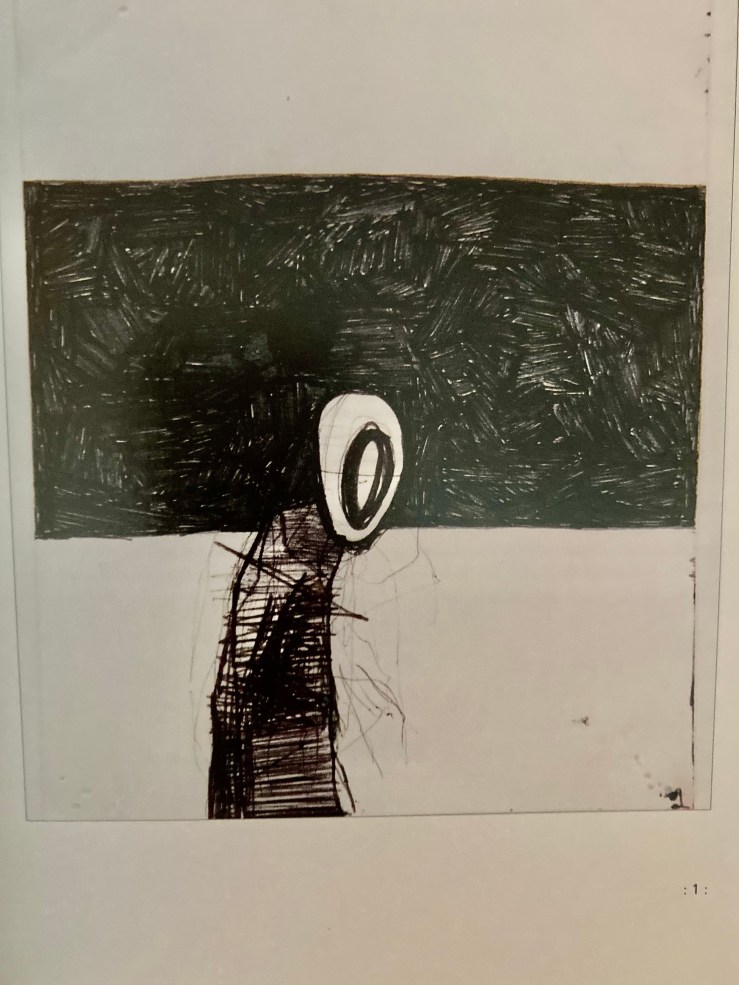
While I was at the bookstore I also spied a copy of Zak Smith’s Gravity’s Rainbow Illustrated. I’d found a used copy at this same story maybe ten years ago and thought twenty bucks was too much for it, and have regretted that decision for years now. Here’s the first page:

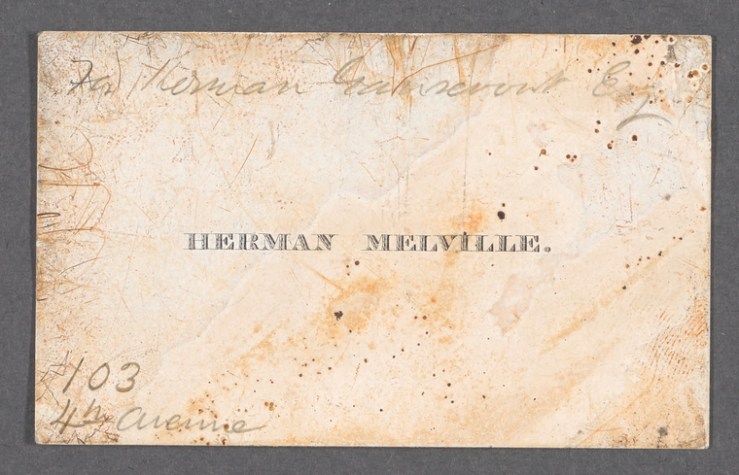
Herman Melville’s calling card

Italian biblioklept arrested by the FBI for stealing unpublished manuscripts

The New York Times and other sources have reported that “Filippo Bernardini, an Italian citizen who worked in publishing,” has been arrested by the FBI for fraud and identity theft. Bernandini stole numerous unpublished manuscripts over five years, mainly through email phishing scams. Bernandini’s motives have yet to surface. From the Times:

For years, the scheme has baffled people in the book world. Works by high-profile writers and celebrities like Margaret Atwood and Ethan Hawke have been targeted, but so have story collections and works by first-time authors. When manuscripts were successfully stolen, none of them seemed to show up on the black market or the dark web. Ransom demands never materialized. Indeed, the indictment details how Mr. Bernardini went about the scheme, but not why.

The New York Times first reported on the as-then-unknown biblioklept in late 2020.

I’m guessing Bernandini may have his own book deal pretty soon.

A (probably incomplete) list of books I read or reread in 2021


☉ indicates a reread.

☆ indicates an outstanding read.


The Real Cool Killers, Chester Himes ☆

The Bachelors, Muriel Spark

Bina, Anakana Schofield

Moby-Dick, Herman Melville ☉☆

Margaret the First, Danielle Dutton ☆

The Florida Keys, Joy Williams

Passages, Ann Quin☆

V., Thomas Pynchon ☉☆

Notes from Childhood, Norah Lange (trans. by Charlotte Whittle)

Albert Angelo, B.S. Johnson ☆

Trawl, B.S. Johnson

House Mother Normal, B.S. Johnson

Outline, Rachel Cusk

Perfume, Patrick Süskind (trans. by John E. Woods) ☆

The Unfortunates, B.S. Johnson

Sassafrass, Cypress, and Indigo, Ntozake Shange

The Final Revival of Opal & Nev, Dawnie Walton

Dope Rider: A Fistful of Delirium, Paul Kirchner

The Postman Always Rings Twice, James M. Cain ☆

By Night in Chile, Roberto Bolaño (trans. by Chris Andrews) ☉☆

Cowboy Graves, Roberto Bolaño (trans. by Natasha Wimmer)

Double Indemnity, James M. Cain

Invisible Cities, Italo Calvino (trans. by William Weaver)☉

If on a winter’s night a traveler…, Italo Calvino (trans. by William Weaver)☉

The Baron in the Trees, Italo Calvino (trans. by Archibald Colquhoun) ☉☆

Mister Boots, Carol Emshwiller

Permanent Earthquake, Evan Dara

The Woman in the Dunes, Kobo Abe (trans. by E. Dale Saunders)

The Slynx, Tatyana Tolstoya (trans. by Jamey Gambrell) ☆

The Shape of Content, Ben Shahn

Anecdotes, Heinrich von Kleist (trans. by Matthew Spencer)

Hurricane Season, Fernanda Melchor (trans. by Sophie Hughes) ☆

Sixty Stories, Donald Barthelme ☉☆

Hiding Man, Tracy Daugherty☉

Body Count, Francie Schwartz

The Old People, A.J. Perry

Carmen Dog, Carol Emshwiller ☆

Remain in Love, Chris Frantz

The Witchcraft of Salem Village, Shirley Jackson

In the Eye of the Wild, Nastassja Martin (trans. Sophie R. Lewis)

Rough Day, Ed Skoog

Letters from Mom, Julio Cortazar (trans. by Magdalena Edwards)

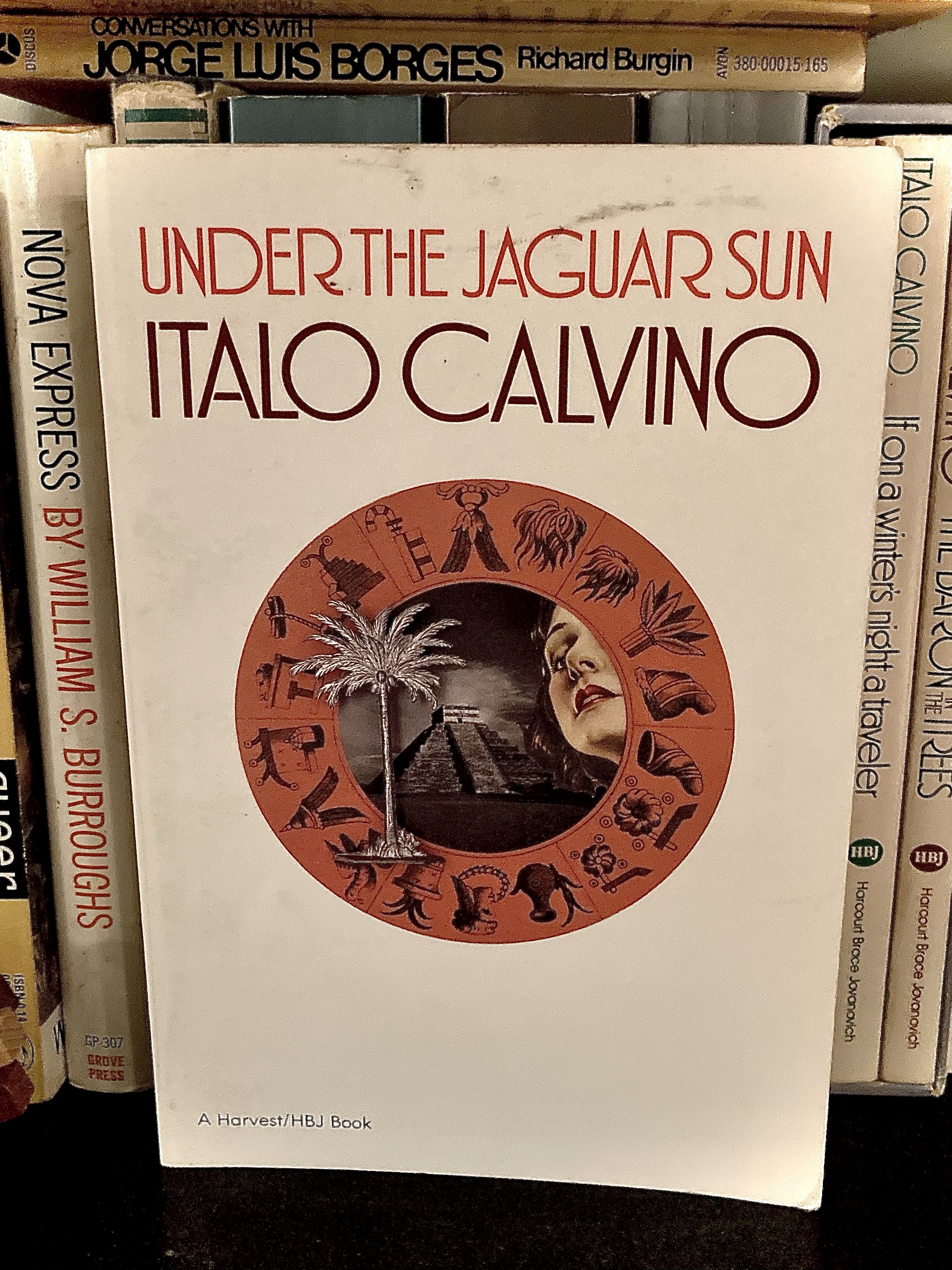
Under the Jaguar Sun, Italo Calvino (trans. by William Weaver)

The Nonexistant Knight, Italo Calvino (trans. by Archibald Colquhoun)

The Cloven Viscount, Italo Calvino (trans. by Archibald Colquhoun)

Don’t Let Me Be Lonely, Claudia Rankine

Blood Meridian, Cormac McCarthy ☉☆

A hat trick in a medicine show, a fevered dream | Blood Meridian

The question was then put as to whether there were on Mars or other planets in the void men or creatures like them. And at this, the judge who had returned to the fire and stood half naked and sweating, spoke and said that there were not and that there were no men anywhere in the universe save those upon the earth. All listened as he spoke; those who had turned to watch him and those who would not.

The truth about the world, he said, is that anything is possible. Had you not seen it all from birth and thereby bled it of its strangeness it would appear to you for what it is, a hat trick in a medicine show, a fevered dream, a trance bepopulate with chimeras having neither analogue nor precedent, an itinerant carnival, a migratory tentshow whose ultimate destination after many a pitch in many a mudded field is unspeakable and calamitous beyond reckoning.

The universe is no narrow thing and the order with it is not constrained by any latitude of its conception to repeat what exists in one part in any other part. Even in this world more things exist without our knowledge than with it and the order in creation which you see is that which you have put there, like a string in a maze, so that you shall not lose your way. For existence has its own order and that no man’s mind can compass, that mind itself being but a fact among others.

A passage from Cormac McCarthy’s Blood Meridian.


A Mason & Dixon Christmastide | Thomas Pynchon

They discharge the Hands and leave off for the Winter. At Christmastide, the Tavern down the Road from Harlands’ opens its doors, and soon ev’ryone has come inside. Candles beam ev’rywhere. The Surveyors, knowing this year they’ll soon again be heading off in different Directions into America, stand nodding at each other across a Punch-bowl as big as a Bathing-Tub. The Punch is a secret Receipt of the Landlord, including but not limited to peach brandy, locally distill’d Whiskey, and milk. A raft of long Icicles broken from the Eaves floats upon the pale contents of the great rustick Monteith. Everyone’s been exchanging gifts. Somewhere in the coming and going one of the Children is learning to play a metal whistle. Best gowns rustle along the board walls. Adults hold Babies aloft, exclaiming, “The little Sausage!” and pretending to eat them. There are popp’d Corn, green Tomato Mince Pies, pickl’d Oysters, Chestnut Soup, and Kidney Pudding. Mason gives Dixon a Hat, with a metallick Aqua Feather, which Dixon is wearing. Dixon gives Mason a Claret Jug of silver, crafted in Philadelphia. There are Conestoga Cigars for Mr. Harland and a Length of contraband Osnabrigs for Mrs. H. The Children get Sweets from a Philadelphia English-shop, both adults being drawn into prolong’d Negotiations with their Juniors, as to who shall have which of. Mrs. Harland comes over to embrace both Surveyors at once. “Thanks for simmering down this Year. I know it ain’t easy.”
“What a year, Lass,” sighs Dixon.
“Poh. Like eating a Bun,” declares Mason.”

The last paragraphs of Ch. 52 of Thomas Pynchon’s novel Mason & Dixon.

A Blood Meridian Christmas

Cormac McCarthy’s seminal anti-Western Blood Meridian isn’t exactly known for visions of peace on earth and good will to man. Still, there’s a strange scene in the book’s final third that subtly recalls (and somehow inverts) the Christmas story. The scene takes place at the end of Chapter 15. The Kid, erstwhile protagonist of Blood Meridian, has just reunited with the rampaging Glanton gang after getting lost in the desert and, in a vision-quest of sorts, has witnessed “a lone tree burning on the desert” (a scene I once argued was the novel’s moral core).

Glanton’s marauders, tired and hungry, find temporary refuge from the winter cold in the town of Santa Cruz where they are fed by Mexicans and then permitted to stay the night in a barn. McCarthy offers a date at the beginning of the chapter — December 5th — and it’s reasonable to assume, based on the narrative action, that the night the gang spends in the manger is probably Christmas Eve. Here is the scene, which picks up as the gang — “they” — are led into the manger by a boy–

The shed held a mare with a suckling colt and the boy would would have put her out but they called to him to leave her. They carried straw from a stall and pitched it down and he held the lamp for them while they spread their bedding. The barn smelled of clay and straw and manure and in the soiled yellow light of the lamp their breath rolled smoking through the cold. When they had arranged their blankets the boy lowered the lamp and stepped into the yard and pulled the door shut behind, leaving them in profound and absolute darkness.

No one moved. In that cold stable the shutting of the door may have evoked in some hearts other hostels and not of their choosing. The mare sniffed uneasily and the young colt stepped about. Then one by one they began to divest themselves of their outer clothes, the hide slickers and raw wool serapes and vests, and one by one they propagated about themselves a great crackling of sparks and each man was seen to wear a shroud of palest fire. Their arms aloft pulling at their clothes were luminous and each obscure soul was enveloped in audible shapes of light as if it had always been so. The mare at the far end of the stable snorted and shied at this luminosity in beings so endarkened and the little horse turned and hid his face in the web of his dam’s flank.

The “shroud of palest fire” made of sparks is a strange image that seems almost supernatural upon first reading. The phenomena that McCarthy is describing is simply visible static electricity, which is not uncommon in a cold, dry atmosphere–particularly if one is removing wool clothing. Still, the imagery invests the men with a kind of profound, bizarre significance that is not easily explainable. It is almost as if these savage men, naked in the dark, are forced to wear something of their soul on the outside. Tellingly, this spectacle upsets both the mare and her colt, substitutions for Mary and Christ child, which makes sense. After all, these brutes are not wise men.

[Ed. note–Biblioklept first ran a version of this post in 2010. I’m currently rereading Blood Meridian and the strange rare pockets of peace and goodness stand out to me more–the woman who tends the kid’s gunshot wound early in the novel, the cattle drovers who feed him and give him a Green River knife—and maybe even the weirdo hermit who offers him shelter. I’ll look for more moments of peace in all the violence.]

Christmas etymologies

A selection from

Christmas in Ritual and Tradition, Christian and Pagan (1912)

by

Clement A. Miles


The names given to the feast by different European peoples throw a certain amount of light on its history. Let us take five of them—ChristmasWeihnachtNoëlCalendas, and Yule—and see what they suggest.

I. The English Christmas and its Dutch equivalent Kerstmisse, plainly point to the ecclesiastical side of the festival; the German Weihnacht (sacred night) is vaguer, and might well be either pagan or Christian; in point of fact it seems to be Christian, since it does not appear till the year 1000, when the Faith was well established in Germany. Christmas and Weihnacht, then, may stand for the distinctively Christian festival, the history of which we may now briefly study. Continue reading “Christmas etymologies”

Darker sensations | A review of Italo Calvino’s Under the Jaguar Sun

I read Italo Calvino’s posthumous collection Under the Jaguar Sun over the past three days (in William Weaver’s 1988 translation). When I bought it last month I had no idea that it was a collection of stories (and not a novella), nor posthumous. I didn’t read the summary on the back. I just knew it was a thin Calvino I hadn’t read and I’ve been into thin reads lately. (I have two fat novels in translation staring me down from across the room as I write this. Their accusations linger.)

But Under the Jaguar Sun is posthumous, and it is a collection–a thin collection, sure, but the stories are strong. In her note at the end of the book, Esther Calvino offers the following:

In 1972 Calvino started writing a book about the five senses. At his death, in 1985, only three stories had been completed: “Under the Jaguar Sun,” “A King Listens,” and “The Name, the Nose.” Had he lived, this book would certainly have evolved into something quite different.

Esther Calvino suggests that Italo “would have provided a frame, as in If on a winter’s night a traveler, a frame that amounts to another novel, virtually a book in itself,” but concludes that the book should be read “simply as three stories written in different periods of his life.” That conclusion was the last thing I read in the book, which I think is fortunate–my reading wasn’t colored by a sense of lack, a sense of what could have been.

The first story, “Under the Jaguar Sun” (1982), is the strongest. The unnamed narrator and his companion Olivia (presumably his wife) are traveling through the state of Oaxaca in Mexico. They visit temples, soak in history, but mostly enjoy the food. “Under the Jaguar Sun” is the “taste” episode of Calvino’s would-be five senses novel, and at times the story reads like a gourmand’s travelogue. The couple, led by Olivia, seek newer, stranger flavors. Calvino’s narrator renders the gustatory titillation in fatty detail. Our boy gets his first taste of guac:

… we found guacamole, to be scooped up with crisp tortillas that snap into many shards and dip like spoons into the thick cream (the fat softness of the aguacate — the Mexican national fruit, known to the rest of the world under the distorted name of “avocado” — is accompanied and underlined by the angular dryness of the tortilla, which, for its part, can have many flavors, pretending to have none); then guajolote con mole poblano — that is, turkey with Puebla-style mole sauce, one of the noblest among the many moles, and most laborious (the preparation never takes less than two days), and most complicated, because it requires several different varieties of chile, as well as garlic, onion, cinnamon, cloves, pepper, cumin, coriander, and sesame, almonds, raisins, and peanuts, with a touch of chocolate; and finally quesa-dillas (another kind of tortilla, really, for which cheese is incorporated in the dough, garnished with ground meat and refried beans).

The real flavor the pair (again, led by Olivia) seems to truly hanker after though is, uh, human flesh. There’s a light parody of tourism happening in “Under the Jaguar Sun,” but the story’s core is cannibalism, victors and victims, the predatory past. Olivia repeatedly seeks to learn about “that flavor” — the flavor of humans sacrificed by Aztecs through ritual sacrifice. She even asks if the priests who oversaw the sacrifices left any recipes.

The cannibal motif slithers into the couple’s (perhaps-failing) relationship. The narrator imagines himself as a willing victim to his partner:

It was the sensation of her teeth in my flesh that I was imagining, and I could feel her tongue lift me against the roof of her mouth, enfold me in saliva, then thrust me under the tips of the canines. I sat there facing her, but at the same time it was as if a part of me, or all of me, were contained in her mouth, crunched, torn shred by shred. The situation was not entirely passive, since while I was being chewed by her I felt also that I was acting on her, transmitting sensations that spread from the taste buds through her whole body. I was the one who aroused her every vibration — it was a reciprocal and complete relationship, which involved us and overwhelmed us.

“Under the Jaguar Sun” is unusually dark for Calvino. The sinister pulse in the background and the enthralling unresolved mystery recall the work of one of Calvino’s descendents, Roberto Bolaño—or really any descendent of the Marquis de Sade.

The next story, “A King Listens” (1984) is also uncharacteristically dark for Calvino, although it is composed in the master’s standby, the second-person perspective. Here, the you is a king. Despite its shadowy contours, “A King Listens” finds Calvino in familiar territory, playing with semiotics:

A king is denoted by the fact that he is sitting on the throne, wearing the crown, holding the scepter. Now that these attributes are yours, you had better not be separated from them even for a moment.

That core anxiety—holding onto the attributes of rule, of the symbols and signs of kingness—form the backbone of the fevered plot. The You-King finds himself imperiled by the ever-present specter of a coup. And the ever-present threat of a coup is, of course, part and parcel of the kingness of being king.

“A King Listens” plays out like something out of Poe:

Your every attempt to get out of the cage is destined to fail: it is futile to seek yourself in a world that does not belong to you, that perhaps does not exist. For you there is only the palace, the great reechoing vaults, the sentries’ watches, the tanks that crunch the gravel, the hurried footsteps on the staircase which each time could be those announcing your end. These are the only signs through which the world speaks to you; do not let your attention stray from them even for an instant; the moment you are distracted, this space you have constructed around yourself to contain and watch over your fears will be rent, torn to pieces.

With its paranoid court intrigues and shadowy dream-logic, “A King Listens” reminded me very much of a sketch that might find its way into Mervyn Peake’s Gormenghast trilogy.

The last piece in Under the Jaguar Sun is “The Name, The Nose” is the shortest and earliest (1972). I imagine Calvino might have expanded (and improved on) it had he lived to see (taste smell feel hear) his five senses book to completion. The narrative trick behind the “The Name the Nose” is a fairly straightforward postmodern conceit: three narrators from different eras tell stories that are archetypically identical. Their stories are all versions of Cinderella, only told from the prince’s perspective. Oh, and that glass slipper is a very specific scent. We get a 17th. century French dandy, a 1960s rock star, and a caveman (had Calvino read William Golding’s The Inheritors?) all sniffing after a particular lady’s singular scent. Calvino’s conceit allows him to riff on anthropology and biology, and the conclusion seems to be that all of the manners, modes, and airs that we might put on doesn’t change the fact that we are beings who sense, who smell to survive and procreate. Our caveboy:

 Odor, that’s what each of us has that’s different from the others. The odor tells you immediately and certainly what you need to know. There are no words, there is no information more precise than what the nose receives.

The dark trajectory of each male pursuant is again Edgar Allan Poe territory, gothic ground. In the end, the odor that haunts them is death. (I wonder if Patrick Süskind read this story, which seems like a condensation of his novel Perfume.)

Under the Jaguar Sun is probably the darkest thing I’ve read by Calvino. The stories here suggest that human perception is inexorably linked to death and sex, and that attempts to turn those links into signs and symbols are survival mechanisms. There might not be a soul in this world. But perhaps the darker sensations here are really just senses evading signs, senses just sensing. The world is dark without sense; sensation illuminates darkness. That’s what Calvino has done here.

I don’t think this collection is the best introduction to Calvino for those interested (although I think anyone interested probably knows to start with If on a winter’s night a traveler or Invisible Cities—or, hey, listen to me, start with The Baron in the Trees). I think Under the Jaguar Sun does offer a different flavor, or scent, or tone to Calvino’s oeuvre, though, and I enjoyed my time in these tales.

F. Scott Fitzgerald’s turkey leftovers

From F. Scott Fitzgerald’s Notebooks

TURKEY REMAINS AND HOW TO INTER THEM WITH NUMEROUS SCARCE RECIPES
At this post holiday season the refrigerators of the nation are overstuffed with large masses of turkey, the sight of which is calculated to give an adult an attack of dizziness. It seems, therefore, an appropriate time to give the owners the benefit of my experience as an old gourmet, in using this surplus material. Some of the recipes have been in my family for generations. (This usually occurs when rigor mortis sets in.) They were collected over years, from old cook books, yellowed diaries of the Pilgrim Fathers, mail order catalogues, golfbags and trash cans. Not one but has been tried and proven—there are headstones all over America to testify to the fact.
Very well then: Here goes:

1. Turkey Cocktail
To one large turkey add one gallon of vermouth and a demijohn of angostura bitters. Shake.

2. Turkey at la Francais.
Take a large ripe turkey, prepare as for basting and stuff with old watches and chains and monkey meat. Proceed as with cottage-pudding.

3. Turkey and Water
Take one turkey and one pan of water. Heat the latter to the boiling point and then put in the refrigerator When it has jelled drown the turkey in it. Eat. In preparing this recipe it is best to have a few ham sandwiches around in case things go wrong.

4. Turkey Mongole
Take three butts of salami and a large turkey skeleton from which the feathers and natural stuffing have been removed. Lay them out on the table and call up some Mongole in the neighborhood to tell you how to proceed from there.

5. Turkey Mousee
Seed a large prone turkey, being careful to remove the bones, flesh, fins, gravy, etc. Blow up with a bicycle pump. Mount in becoming style and hang in the front hall.

6. Stolen Turkey
Walk quickly from the market and if accosted remark with a laugh that it had just flown into your arms and you hadn’t noticed it. Then drop the turkey with the white of one egg-well, anyhow, beat it.

7. Turkey a la Creme.
Prepare the creme a day in advance, or even a year in advance. Deluge the turkey with it and cook for six days over a blast furnace. Wrap in fly paper and serve.

8. Turkey Hash
This is the delight of all connoisseurs of the holiday beast, but few understand how really to prepare it. Like a lobster it must be plunged alive into boiling water, until it becomes bright red or purple or something, and then before the color fades, placed quickly in a washing machine and allowed to stew in its own gore as it is whirled around.
Only then is it ready for hash. To hash, take a large sharp tool like a nail-file or if none is handy, a bayonet will serve the purpose—and then get at it! Hash it well! Bind the remains with dental floss and serve.
And now we come to the true aristocrat of turkey dishes:

9. Feathered Turkey.
To prepare this a turkey is necessary and a one pounder cannon to compell anyone to eat it. Broil the feathers and stuff with sage brush, old clothes, almost anything you can dig up. Then sit down and simmer. The feathers are to be eaten like artichokes (and this is not to be confused with the old Roman custom of tickling the throat).

10. Turkey at la Maryland
Take a plump turkey to a barber’s and have him shaved, or if a female bird, given a facial and a water wave. Then before killing him stuff with with old newspapers and put him to roost. He can then be served hot or raw, usually with a thick gravy of mineral oil and rubbing alcohol. (Note: This recipe was given me by an old black mammy.)

11. Turkey Remnant
This is one of the most useful recipes for, though not, “chic”, it tells what to do with the turkey after the holiday, and extract the most value from it.
Take the remants, or if they have been consumed, take the various plates on which the turkey or its parts have rested and stew them for two hours in milk of magnesia. Stuff with moth-balls.

12. Turkey with Whiskey Sauce.
This recipe is for a party of four. Obtain a gallon of whiskey, and allow it to age for several hours. Then serve, allowing one quart for each guest.
The next day the turkey should be added, little by little, constantly stirring and basting.

13. For Weddings or Funerals. Obtain a gross of small white boxes such as are used for bride’s cake. Cut the turkey into small squares, roast, stuff, kill, boil, bake and allow to skewer. Now we are ready to begin. Fill each box with a quantity of soup stock and pile in a handy place. As the liquid elapses, the prepared turkey is added until the guests arrive. The boxes delicately tied with white ribbons are then placed in the handbags of the ladies, or in the men’s side pockets.

There I guess that’s enough turkey to talk. I hope I’ll never see or hear of another until—well, until next year.

Sassafrass’ Rice Casserole #36, a recipe from Ntozake Shange’s novel Sassafrass, Cypress & Indigo

Sassafrass’ Rice Casserole #36

1 1/2 cups medium grain brown rice

3 ounces pimentos

1 cup baby green peas

1/2 cup fresh walnuts


2/3 pound smoked cheddar cheese

1/2 cup condensed milk

Diced garlic to taste

Cayenne to taste


Cook rice as usual. In an eight-inch baking dish, layer rice, cheese, pimentos, walnuts, and peas. Spread garlic and cayenne as you see fit. Pour milk along side of dish so it cushions rice against the edge. Bake in oven 20-30 minutes, or until all the cheese melts and the top layer has a nice brown tinge.

–From Ntozake’s Shange’s novel Sassafrass, Cypress & Indigo.

Sassafrass’ homemade banner hangs above her stove: