
“Thrawn Janet” by Robert Louis Stevenson
The Reverend Murdoch Soulis was long minister of the moorland parish of Balweary, in the vale of Dule. A severe, bleak-faced old man, dreadful to his hearers, he dwelt in the last years of his life, without relative or servant or any human company, in the small and lonely manse under the Hanging Shaw. In spite of the iron composure of his features, his eye was wild, scared, and uncertain; and when he dwelt, in private admonitions, on the future of the impenitent, it seemed as if his eye pierced through the storms of time to the terrors of eternity. Many young persons, coming to prepare themselves against the season of the holy communion, were dreadfully affected by his talk. He had a sermon on I Pet. V. 8, “The devil as a roaring lion,” on the Sunday after every 17th of August, and he was accustomed to surpass himself upon that text both by the appalling nature of the matter and the terror of his bearing in the pulpit. The children were frightened into fits, and the old looked more than usually oracular, and were, all that day, full of those hints that Hamlet deprecated. The manse itself, where it stood by the water of Dule among some thick trees, with the Shaw overhanging it on the one side, and on the other many cold, moorish hilltops rising toward the sky, had begun, at a very early period of Mr. Soulis’s ministry, to be avoided in the dusk hours by all who valued themselves upon their prudence; and guidmen sitting at the clachan alehouse shook their heads together at the thought of passing late by that uncanny neighbourhood. There was one spot, to be more particular, which was regarded with especial awe. The manse stood between the highroad and the water of Dule, with a gable to each; its bank was toward the kirktown of Balweary, nearly half a mile away; in front of it, a bare garden, hedged with thorn, occupied the land between the river and the road. The house was two stories high, with two large rooms on each. It opened not directly on the garden, but on a causewayed path, or passage, giving on the road on the one hand, and closed on the other by the tall willows and elders that bordered on the stream. And it was this strip of causeway that enjoyed among the young parishioners of Balweary so infamous a reputation. The minister walked there often after dark, sometimes groaning aloud in the instancy of his unspoken prayers; and when he was from home, and the manse door was locked, the more daring school-boys ventured, with beating hearts, to “follow my leader” across that legendary spot.
This atmosphere of terror, surrounding, as it did, a man of God of spotless character and orthodoxy, was a common cause of wonder and subject of inquiry among the few strangers who were led by chance or business into that unknown, outlying country. But many even of the people of the parish were ignorant of the strange events which had marked the first year of Mr. Soulis’s ministrations; and among those who were better informed, some were naturally reticent, and others shy of that particular topic. Now and again, only, one of the older folk would warm into courage over his third tumbler, and recount the cause of the minister’s strange looks and solitary life. Continue reading ““Thrawn Janet” — Robert Louis Stevenson”

 A riveting, poignant satire of societal ills, with an added dose of fantasy, Every Boy Should Have a Man takes place in a post-human world where creatures called oafs keep humanlike “mans” as beloved pets. One day, a poor boy oaf brings home a man whom he hides under his bed in the hopes his parents won’t find out. When the man is discovered, the boy admits it is not his—but the boy is no delinquent. Despite the accusations being hurled at him, he’s telling the truth when he says he found the man aimlessly wandering in the bramble. Nevertheless, he must return the man to his rightful owner. But when the heartbroken boy comes home from school one afternoon, he finds wrapped up in red ribbon a female man with a note around her neck: Every boy should have a man. You’re a fine son. Love, Dad.
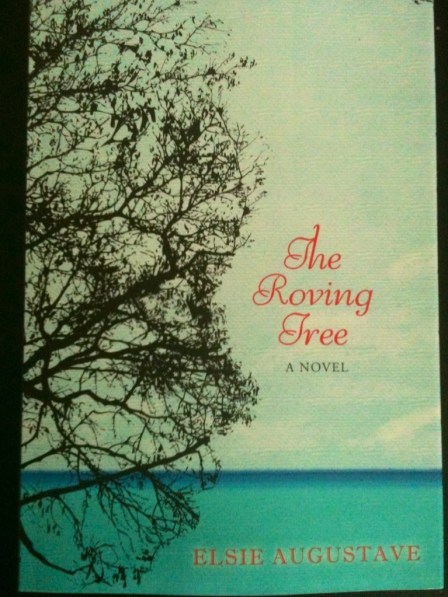 Elsie Augustave’s debut novel, The Roving Tree, explores multiple themes: separation and loss, rootlessness, the impact of class privilege and color consciousness, and the search for cultural identity. The central character, Iris Odys, is the offspring of Hagathe, a Haitian maid, and Brahami, a French-educated mulatto father who cares little about his child.
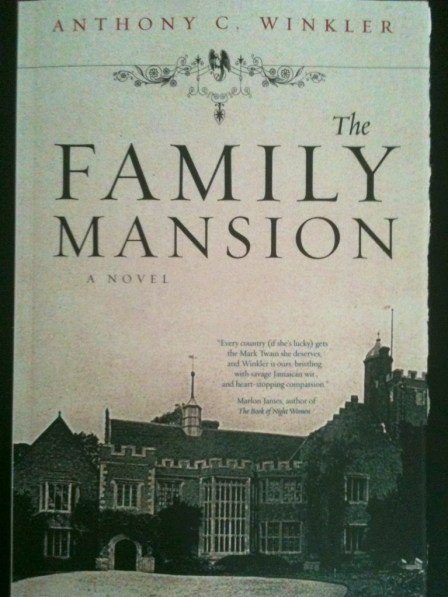 The Family Mansion is a historical novel that tells the story of Hartley Fudges, whose personal destiny unfolds against the backdrop of 19th-century British culture, a time when English society was based upon the strictest subordination and stratification of the classes. As the second son of a hereditary duke and his father’s favorite, Hartley, under different circumstances, might have inherited the inside track to his father’s estate and titles. But the English law of succession was rigidly dictated by the principle of male primogeniture, with all the property, assets, titles, and debts devolving to the firstborn son and his issue, leaving nothing for the other sons.









 Biblioklept