In which I read Playboy for the Thomas Pynchon article

A couple of days ago I posted a brief excerpt from Jules Siegel’s March 1977 Playboy profile “Who is Thomas Pynchon… And Why Did He Take Off With My Wife?” The excerpt came from an excerpt posted on the Pynchon-L forum, but most of the article had been removed at the (apparent) request by Siegel. Several folks sent me the whole article though (thanks!) and I read it.
Screenshot 2015-05-01 at 8.54.40 AM
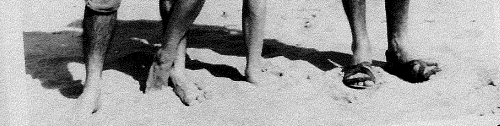
Some of these feet may or may not belong to Thomas Pynchon

Siegel was briefly a Cornell classmate of Pynchon’s in 1954, and they remained friends (in Siegel’s recollection) for at least two decades after. During this time, Siegel claims that Pynchon wrote him dozens of letters, which were ultimately sold at auction (along with much of Siegel’s property) to help pay for a hip replacement. Material from the letters soak into Siegel’s sketch of Pynchon’s progress, along with several stoned/drunken adventures that would not be out of place in V. or Mason & Dixon or Gravity’s Rainbow, or really, any person’s young life.

A competitive anxiety reverberates under the piece. “We were friends, maybe at some points best friends, very much alike in some important ways,” Siegel writes. “We were both writers,” he boldly writes. Siegel reminds us that “In Mortality and Mercy in Vienna, Pynchon’s first published short story, the protagonist is one Cleanth Siegel,” but protests he doesn’t see himself in that hero.

The competitive anxieties culminate in the big reveal that (spoiler!) Thomas Pynchon had an affair with Siegel’s second wife Chrissie. There’s probably a Freudian reading we can append to the details that Siegel offers about Pynchon’s sexual prowess: “He was a wonderful lover, sensitive and quick, with the ability to project a mood that turned the most ordinary surroundings into a scene out of a masterful film—the reeking industrial slum of Manhattan Beach would become as seen through the eye of Antonioni, for example.”

Or maybe these unsexy details are just a sign of Playboy’s editorial hand. Wedged gracelessly between ads for vibrators and nude greeting cards, Siegel’s lines often reek of 1970’s Playboy’s rhetorical house style, a kind of frank-but-(attempted)-sensual glossiness that contrasts heavily with Pynchon’s own sex writing. At times I found myself reading Siegel’s prose in one of Will Ferrell’s more pompous accents.

Even worse is the casual sexism of the piece—which again, may be attributable to Playboy’s editors. Siegel, on his first wife (sixteen when he married her): “She was so wonderful a lover, generous and easily aroused, but I was too callow then to appreciate her.” Of his second wife: “It is easy to underestimate her intelligence, but it is a mistake. She is obviously too pretty to be serious, conventional wisdom would have you believe.” Of one of Pynchon’s girlfriends: “Susan has red hair and is breathtakingly beautiful, with the voluptuous body of a showgirl. Like Chrissie, she is much brighter than she looks.”

More interesting, obviously, are the (supposedly) real-life details that inform Pynchon’s fiction. Siegel notes some of the contents of Pynchon’s Manhattan Beach apartment: “A built-in bookcase had rows of piggy banks on each shelf and there was a collection of books and magazines about pigs.” Pigs, of course, are a major motif of Gravity’s Rainbow. Another detail that seems to connect to GR: “On the desk, there was a rudimentary rocket made from one of those pencil-like erasers with coiled paper wrappers that you unzip to expose the rubber. It stood on a base twisted out of a paper clip.” Siegel lets us know that he knocked the rocket down. Pynchon puts it back together; Siegel knocks it down again.

(Parenthetically: Siegel’s evocation of Pynchon’s Manhattan Beach days fits neatly into my picture of Inherent Vice).

In accounting details of Pynchon’s alleged affair with his wife, Chrissie, Siegel shares the following:

Once, out on the freeway, she told him that we had all gone naked at the commune, he professed to find that incredible and dared her to take off her blouse right there. She did. A passing truck hooted its horn in lewd applause. He loved her Shirley Temple impersonations—On the Good Ship Lollipop sung and danced like a kid at a birthday party. They talked about running away together.

It is hardly possible here not to recall the episode early in Gravity’s Rainbow wherein Jessica Swanlake removes her blouse in the car on a dare from Roger Mexico. Is Siegel daring the reader to extrapolate further? Extrapolation, paranoid connections—isn’t this part of Pynchonian fun?

In that spirit, I’ll close with my favorite moment from the article.

“You know the W.A.S.T.E. horn in The Crying of Lot 49? The symbol of the secret message service? Every weirdo in the world is on my wave length. You cannot understand the kind of letters I get. Someone wrote to tell me that the very same horn was the symbol of a private mail system in medieval times. I checked it out at the library. It’s true. But I made it up myself before the book was ever published, before I ever got that letter.”

The lines are supposedly from Pynchon himself. Siegel even puts them in quotation marks—so they must be real, right?
“The Hedgehog, the Fox and His Seventy-Seven Brains”

image

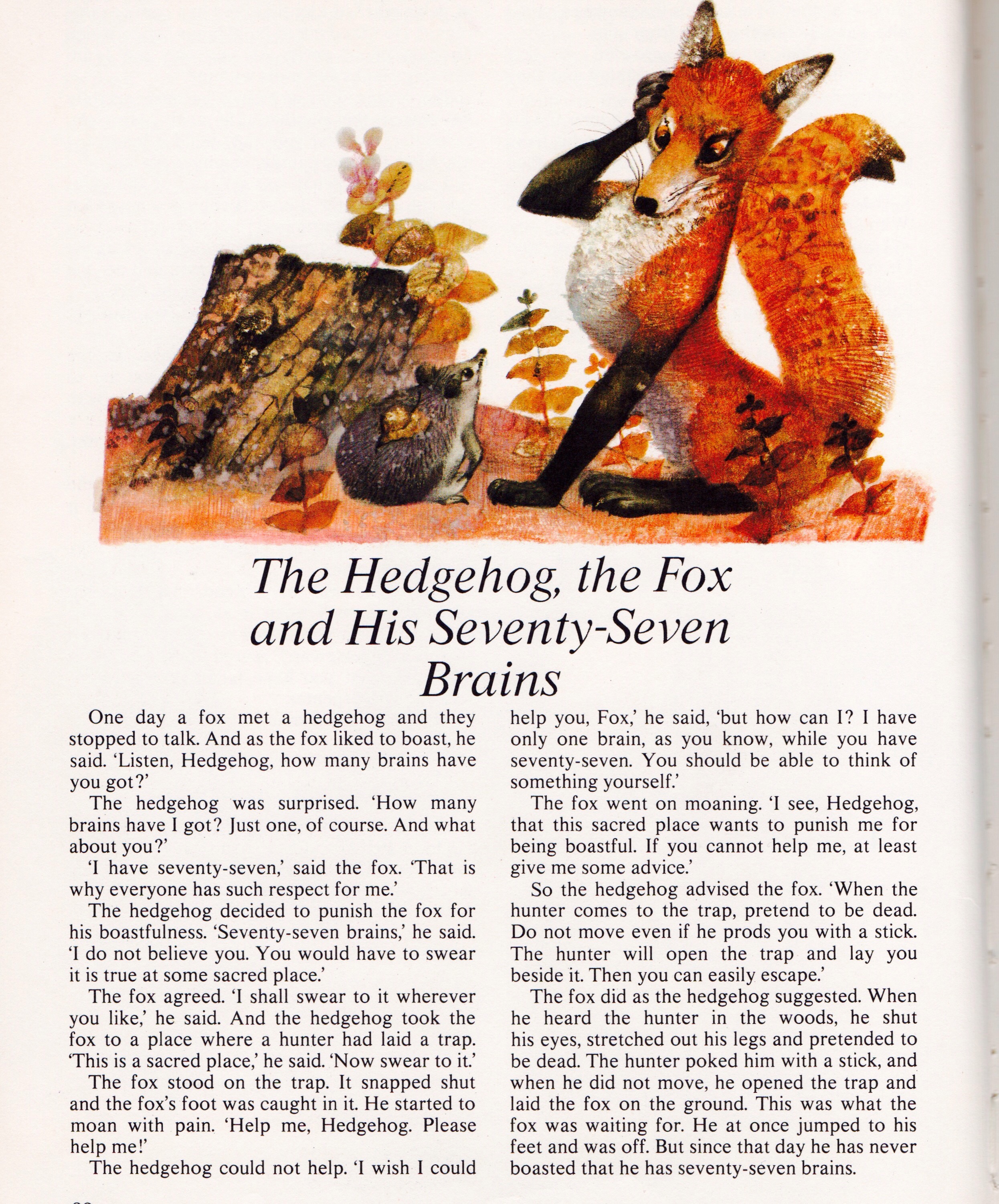
A Serbian fairy tale retold by Alena Benesova and translated into English by Ruth Shepherd. The marvelous illustration is by Karel Franta. From Animal Fairy Stories.


Kant’s coffee

At the beginning of the last year of his life, he fell into a custom of taking, immediately after dinner, a cup of coffee, especially on those days when it happened that I was of his party. And such was the importance that he attached to his little pleasure that he would even make a memorandum beforehand, in the blank paper book that I had given him, that on the next day I was to dine with him, and consequently “that there was to be coffee.” Sometimes in the interest of conversation, the coffee was forgotten, but not for long. He would remember and with the querulousness of old age and infirm health would demand that coffee be brought “upon the spot.” Arrangements had always been made in advance, however; the coffee was ground, and the water was boiling: and in the very moment the word was given, the servant shot in like an arrow and plunged the coffee into the water. All that remained, therefore, was to give it time to boil up. But this trifling delay seemed unendurable to Kant. If it were said, “Dear Professor, the coffee will be brought up in a moment,” he would say, “Will be! There’s the rub, that it only will be.” Then he would quiet himself with a stoical air, and say, “Well, one can die after all; it is but dying; and in the next world, thank God, there is no drinking of coffee and consequently no waiting for it.”

When at length the servant’s steps were heard upon the stairs, he would turn round to us, and joyfully call out: “Land, land! my dear friends, I see land.”

This anecdote of Thomas de Quincey’s is from William H. Ukers’s All About Coffee (1922). Ukers introduces the quote: “In his old age, Immanuel Kant, the great metaphysician, became extremely fond of coffee; and Thomas de Quincey relates a little incident showing Kant’s great eagerness for the after-dinner cup.”

Fredric Jameson (Book acquired, 4.23.2015)

image

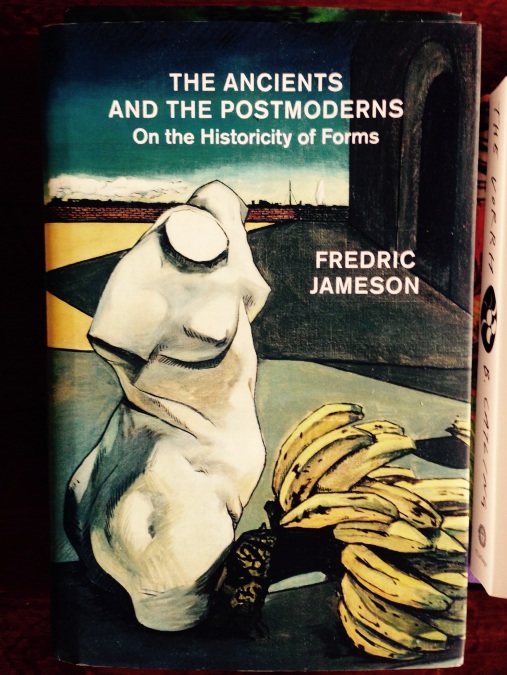
Fredric Jameson’s latest from Verso is The Ancients and the Postmoderns. Verso’s blurb:

High modernism is now as far from us as antiquity was for the Renaissance. Such is the premise of Fredric Jameson’s major new work in which modernist works, this time in painting (Rubens) and music (Wagner and Mahler), are pitted against late-modernist ones (in film) as well as a variety of postmodern experiments (from SF to The Wire, from “Eurotrash” in opera to Altman and East German literature): all of which attempt, in their different ways, to invent new forms to grasp a specific social totality. Throughout the historical periods, argues Jameson, the question of narrative persists through its multiple formal changes and metamorphoses.

Key and Hand — Tamara de Lempicka

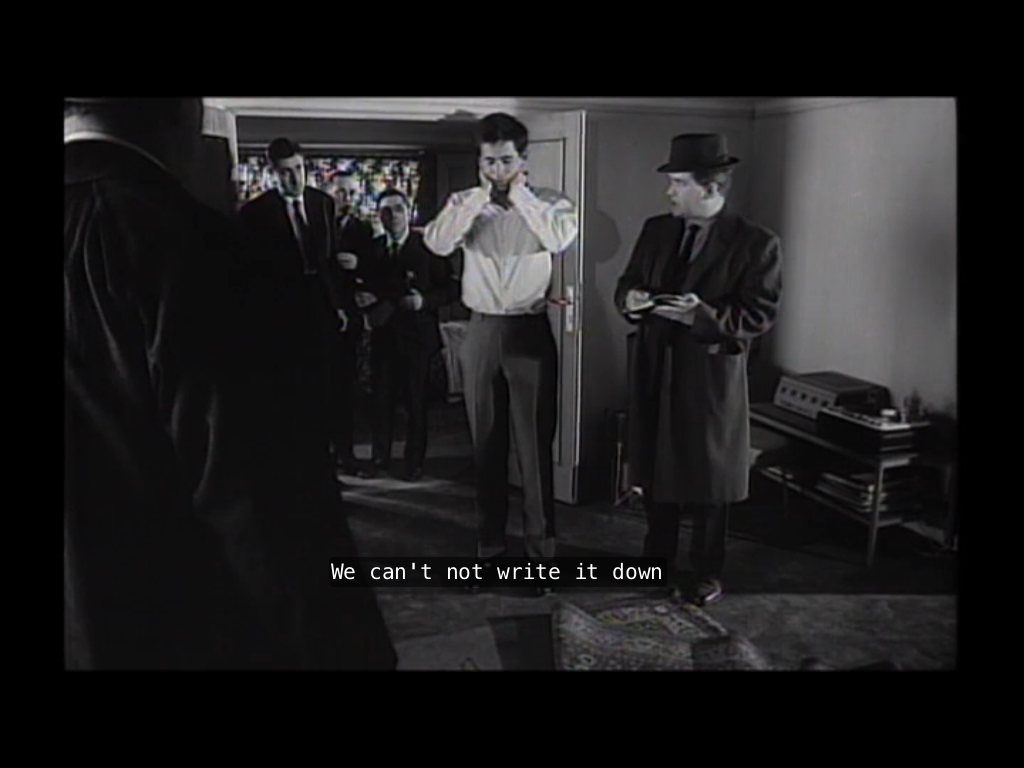
Can’t not write it down 


Selections from One-Star Amazon Reviews of Roberto Bolaño’s 2666

[Editorial note: Today is Roberto Bolaño’s birthday–he would’ve turned 62. The following citations come from one-star Amazon reviews of his masterpiece 2666. To be clear, I am a huge fan of 2666—I’ve written about it extensively on this site. But I never posted a review on Amazon. More one-star Amazon reviews.].

***

Awful.

Boring!

Nothing.

No Point.

No Story.

No characters.

This is not a story.

Felt it was too dark.

endless culs-de-sac

There is no premise

Numbing dumbness.

As a Literature major,

incoherent and rambling

Disconnected and tedious.

The joke is on me, I guess.

written in a type of journalese

this novel (if it can be called that)

an obtuse novel with no real point.

I would rather stick forks in my eyes

stilted, awkward, and difficult to read

I would prefer to be boiled alive in oil.

900 pages of words that mean nothing.

multiple pages are spent describing dreams

delivers little if any enjoyment to the reader.

900 pages of distinctly non-literary masochism

I hated the spewing of authors I’d never heard of.

The writing or words are geared towards intellectuals.

Imagine this: you’re dreaming a dream that never ends.

it’s one of those pretentious books for pretentious people

a sprawling, formless, utterly pretentious bloated drudge

bloated streams of consciousness which negate themselves

no subtle meassage that is worthy of discussion or thought

I can see how this might have been written by a very ill man.

boring, repetitive, pointless, misogynistic, indulgent blather

I’ve never experienced a book which was so devoid of reward.

little or no substance in terms of an overall message or theme

a pointless study of odd obsessions and the meaningless of life

On xx date, the body of xxx was found, mutilated in the dumps.

I spent most of my time looking up defintions to 100’s of words.

this book is a GRUESOME and HORRIFICALLY VIOLENT book.

Bolano could not care less what the general public thinks of his book

has little of note to say about the meaning of life or the human condition

I am hard pressed to believe that the other reviewers even read this book.

The largest section of the book is basically 300+ pages of autopsy reports.

You will read the words “vaginally and anally raped” over and over and over

This book would make a great table leg, coaster, or booster seat for a small child. Continue reading “Selections from One-Star Amazon Reviews of Roberto Bolaño’s 2666”

The Girl at the Desk — Kuzma Petrov-Vodkin

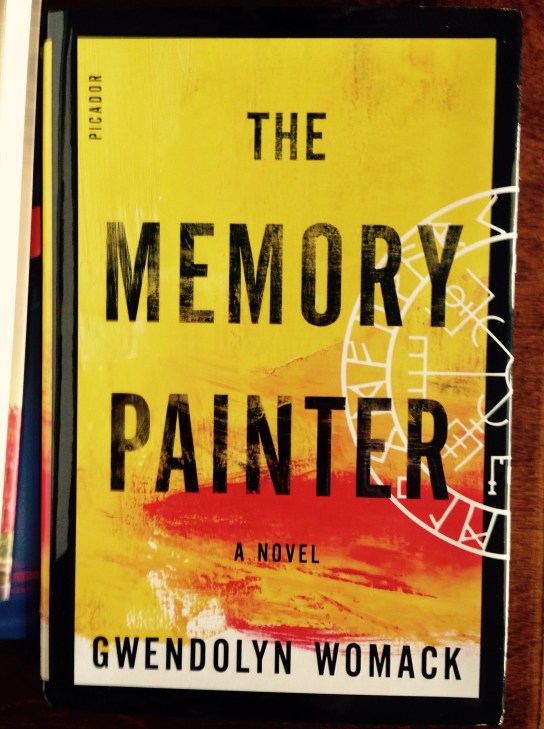
The Memory Painter (Book acquired, 4.17.2015)

image

Gwendolyn Womack’s novel The Memory Painter is new in hardback from Picador. Their blurb:

Bryan Pierce is an internationally famous artist whose paintings have dazzled the world. But there’s a secret to his success: Every canvas is inspired by an unusually vivid dream. When Bryan awakes, he possesses extraordinary new skills…like the ability to speak obscure languages and an inexplicable genius for chess. All his life, he has wondered if his dreams are recollections, if he is re-experiencing other people’s lives. Linz Jacobs is a brilliant neurogeneticist, absorbed in decoding the genes that help the brain make memories, until she is confronted with an exact rendering of a recurring nightmare at one of Bryan’s shows. She tracks down the elusive artist, and their meeting triggers Bryan’s most powerful dream yet: visions of a team of scientists who, on the verge of discovering a cure for Alzheimer’s, died in a lab explosion decades ago.As Bryan becomes obsessed with the mysterious circumstances surrounding the scientists’ deaths, his dreams begin to reveal what happened at the lab, as well as a deeper mystery that may lead all the way to ancient Egypt. Together, Bryan and Linz start to discern a pattern. But a deadly enemy watches their every move, and he will stop at nothing to ensure that the past stays buried.A taut thriller and a timeless love story spanning six continents and 10,000 years of history, The Memory Painterby Gwendolyn Womack is a riveting debut novel unlike any you’ve ever read.

Derek Pyle Discusses Waywords and Meansigns, an Unabridged Musical Adaptation of James Joyce’s Finnegans Wake

I recently talked to Derek Pyle about his project Waywords and Meansigns, which adapts James Joyce’s novel Finnegans Wake into a new musical audiobook. Derek worked for years as half of Jubilation Press. Printing the poems of Lawrence Ferlinghetti, Thich Nhat Hanh, and William Stafford, Derek’s letterpress work can be found in the special collections of the New York Public Library, Brown University, and the Book Club of California. Derek co-founded Waywords and Meansigns in 2014 and became the project’s primary director in 2015. While living part-time in Western Massachusetts, Derek produces Waywords and Meansigns in eastern Canada.

Robert Berry copy
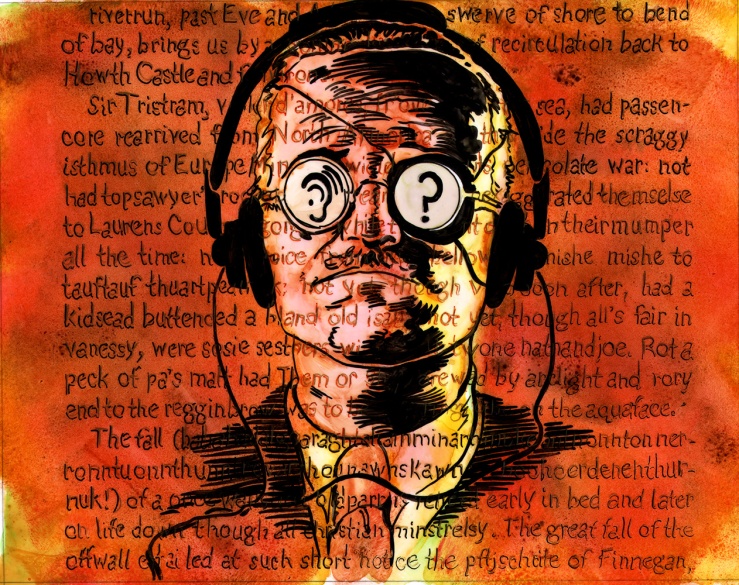
Image by Robert Berry

Biblioklept: What is Waywords and Meansigns?

Derek Pyle: Waywords and Meansigns is a collaborative music project recreating James Joyce’s Finnegans Wake. Seventeen different musicians from all around world have each taken a chapter of Finnegans Wake and set it to music, thereby creating an unabridged audio version of Finnegans Wake.

Finnegans Wake is an incredible book, but it’s notoriously difficult to read. One hope of the project is to create a version of the Wake that is accessible to newcomers — people can just listen to and enjoy the music. To maximize accessibility, we are distributing all the audio freely via our website. But the project does not only appeal to Wake newcomers — as we’ve seen so far, a lot of scholars and devoted readers are also finding Waywords and Meansigns an exciting way of interpreting and engaging with Joyce’s text.

Biblioklept: How did the project come about?

DP: In 2014 I organized a party to celebrate the 75th anniversary of the publication of Finnegans Wake. To celebrate we decided to listen to Patrick Healy’s audiobook recording of Finnegans Wake, which is 20-odd hours long. The party, as you can imagine, lasted all weekend — we actually listened to Johnny Cash’s unabridged reading of the New Testament that weekend too. There was very little sleep, and fair amount of absinthe.

A lot of people really rag on Healy’s recording, because it’s read at breakneck speed. I actually like it though — he creates a very visceral flood of experience, which is one way of reading, or interpreting, Finnegans Wake. But during the party I started wondering about other ways you could perform the text, and that’s when I came up with the idea of approaching musicians to create a new kind of audiobook.

As it turns out, a lot of people seemed to think my idea was a good one. We’ve had no shortage of musicians willing to contribute, including some really cool cats like Tim Carbone of Railroad Earth and bassist Mike Watt, who currently plays in Iggy Pop’s band The Stooges.

Biblioklept: Watt rules! I love the Minutemen and his solo stuff. He seems like a natural fit for this kind of project, as so much of his music is based around story telling. I imagine the musicians involved are composing the music themselves…are they also recording it themselves?

DP: Yeah, it’s very cool to have Watt on board. Turns out he’s a huge fan of Joyce — he recorded a track for Fire Records in 2008, for an album of various musicians turning the poems of Joyce’s Chamber Music into songs. Mary Lorson, of the bands Saint Low and Madder Rose, also played on that Fire Records album, and she’s collaborating with author Brian Hall for our project.

To answer your question, yes, all the musicians are recording their own chapters. Since we have contributors from all around the world — from Berlin to Amsterdam to British Columbia — it would be a logistical nightmare to figure out where and when to record everyone. Not to mention the cost of it. One of the really cool things, I think, about this project — for everyone, it’s a labor of love. No one is making a profit, off any of this. People are just doing it because they love Joyce, or they’re obsessed with Finnegans Wake, or it just seems like a fun challenge to think creatively in this unique way. Either way it’s a pursuit of passion. That’s why we will distribute all the audio freely. There’s this phrase in Finnegans Wake, “Here Comes Everybody!” We’re having fun with Finnegans Wake and everybody is invited to the party. Continue reading “Derek Pyle Discusses Waywords and Meansigns, an Unabridged Musical Adaptation of James Joyce’s Finnegans Wake”

St. Jerome in His Study — Workshop of Marinus van Reymerswaele

tumblr_lxafa5OzHE1r5569zo1_1280

Ronald Fraser’s Drought (Book acquired, like, maybe two weeks ago)

image

Between end of term papers and Gravity’s Rainbow, I’ve been a bit too busy to do more than glance at a lot of the review copies that have been coming in this month. But Ronald Fraser’s forthcoming novel Drought looks interesting.

Fraser, a British historian, was the founder of New Left Books, now Verso Books—publisher of Drought. Verso’s blurb:

A brilliant novel about memory, love, and the clash between the old world and the new, set in 1950s Spain
“He turned his back on the old man to mourn in silence this unnecessary death and his part in it; but the sight of the coffin brought anger instead …”

In 1957, burned-out journalist John leaves London to recover in the Andalusian haven of Benalamar. Here he finds a village that has not changed since the Civil War, but when a foreign businessman, Bob, comes with plans to develop the area, the community is sent into turmoil. As a time of drought threatens, Bob promises to build a reservoir but this has unforeseen consequences. When a local farmer, Miguel, commits suicide, John is sent off on an investigation that leads back into recent history, lost love, and civil war.

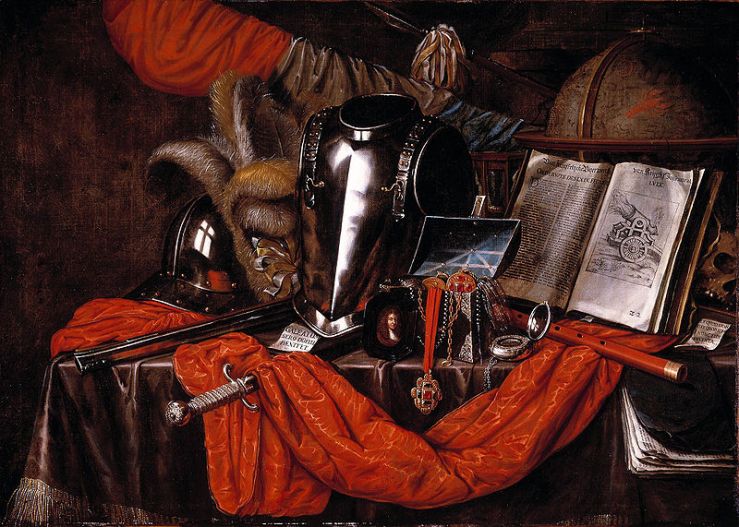
Vanitas — Edward Collier

tumblr_lx8fblsvpT1r5569zo1_1280

A good reader can, in a sort, nestle into Plato’s brain, and think from thence; but not into Shakespeare’s (Ralph Waldo Emerson)

Shakspeare is as much out of the category of eminent authors, as he is out of the crowd. He is inconceivably wise; the others, conceivably. A good reader can, in a sort, nestle into Plato’s brain, and think from thence; but not into Shakspeare’s. We are still out of doors. For executive faculty, for creation, Shakspeare is unique. No man can imagine it better. He was the farthest reach of subtlety compatible with an individual self,—the subtilest of authors, and only just within the possibility of authorship. With this wisdom of life, is the equal endowment of imaginative and of lyric power. He clothed the creatures of his legend with form and sentiments, as if they were people who had lived under his roof; and few real men have left such distinct characters as these fictions. And they spoke in language as sweet as it was fit. Yet his talents never seduced him into an ostentation, nor did he harp on one string. An omnipresent humanitycoördinates all his faculties. Give a man of talents a story to tell, and his partiality will presently appear. He has certain observations, opinions, topics, which have some accidental prominence, and which he disposes all to exhibit. He crams this part, and starves that other part, consulting not the fitness of the thing, but his fitness and strength. But Shakspeare has no peculiarity, no importunate topic; but all is duly given; no veins, no curiosities: no cow-painter, no bird-fancier, no mannerist is he: he has no discoverable egotism: the great he tells greatly; the small, subordinately. He is wise without emphasis or assertion; he is strong, as nature is strong, who lifts the land into mountain slopes without effort, and by the same rule as she floats a bubble in the air, and likes as well to do the one as the other. This makes that equality of power in farce, tragedy, narrative, and love-songs; a merit so incessant, that each reader is incredulous of the perception of other readers.

From Ralph Waldo Emerson’s essay “Shakspeare; Or, The Poet.” (And yes, he uses that two-e variant of Shakespeare’s name).

Ballet Class, the Dance Hall — Edgar Degas

A first riff on rereading Gravity’s Rainbow (and some thoughts on Weisenburger’s Companion)

I enjoy rereading more than reading. Returning to Moby-Dick2666, Ulysses, or Blood Meridian reveals so much more: More depth, more art, more structure, more precision, more humor, more pain, more more.

Thomas Pynchon’s novel Gravity’s Rainbow is all more. Rereading Gravity’s Rainbow is like reading it for the first time, or, rather, more precisely, that is how I am experiencing it now—with clarity—compelled as I was to immediately circle back through its loop again.

Gravity’s Rainbow’s cohesion hides (hides is not the right verb) under detritus, in the flux of objects and concepts that tangle and unravel throughout the text. Indeed, the novel’s themes seem to repeat (with difference, with opposition) in the lists and rants that lard it.

A simple, early example comes on page 18, where Teddy Bloat turns spying eyes over our hero Tyrone Slothrop’s desk, where “Things have fallen roughly into layers, over a base of bureaucratic smegma that sifts steadily to the bottom…” In A Gravity’s Rainbow Companion: Sources and Contexts for Pynchon’s Novel, Steven Weisenburger points out that “Among the list of objects on Slothrop’s desk are items, allusions, and brand names left in his wake throughout the novel.” Weisenburger proceeds to sift through these layers, pointing out connections, and offering (as always) helpful page numbers which attest how damn precise Pynchon’s novel is.

I picked up Weisenburger’s Companion on solicited recommendations from Twitter folk and readers of this blog, and I’ve found it unobtrusive and helpful so far. Weisenburger’s introductory essay is especially good, and foregrounds his intertextual approach to his Companion (he all but namechecks Mikhail Bakhtin: “Gravity’s Rainbow sets in motion ‘the Night’s Mad Carnvival’ (V133.38) of intertextual entertainments”; a few lines later, he describes the novel as a work of “encyclopedic heteroglossia”). Weisenburger also quickly helped to (re)confirm my sense that GR loops back into itself, its end cycling back to its beginning: “Gravity’s Rainbow is ‘heterocyclic’ (V249.26): rings are looped together in still larger, polymerized rings, looped together in the still larger cycling of its four parts.”

I’m about halfway through the second of those four parts, “Un Perm’ au Casino Hermann Goering,” but still playing catch-up with the Weisenburger. I sometimes skim—sometimes with undue pride (Hey I got that reference on my own, thanks anyway Dr. W), and sometimes, admittedly with a vague but cheerful boredom (Weisenburger has an occasional tendency to lay out Pynchon’s source texts in detailed detail).

The Companion is at its finest, in my estimation, when Weisenburger extrapolates from his sources and contexts into GR’s deepest themes, like here, where our introduction to Gottfried (a seemingly minor character) branches into etymology, mythology, and comparative religion:

image

(My favorite moment here is probably where Dr. W poses that question about Pynchon knowing Branston and Grimm, and then immediately answers it (in what I like to pretend is Robert Evans’s voice)).

While Weisenburger’s Companion often enlightens and clarifies, so does simply (or not so simply) rereading Gravity’s Rainbow enlighten and clarify the first reading. I’m thankful that I didn’t use Weisenburger’s book on my first full trip though GR. Sure, Companion hazards a number of plot spoilers, which I imagine would annoy many readers. But more significant to me is that using Weisenburger’s annotations as a first-timer’s guide through Pynchon’s detritus would have likely spoiled the aesthetic effect of that detritus. It would likely have spoiled some of the richness in the rereading that I’m enjoying so very much now.

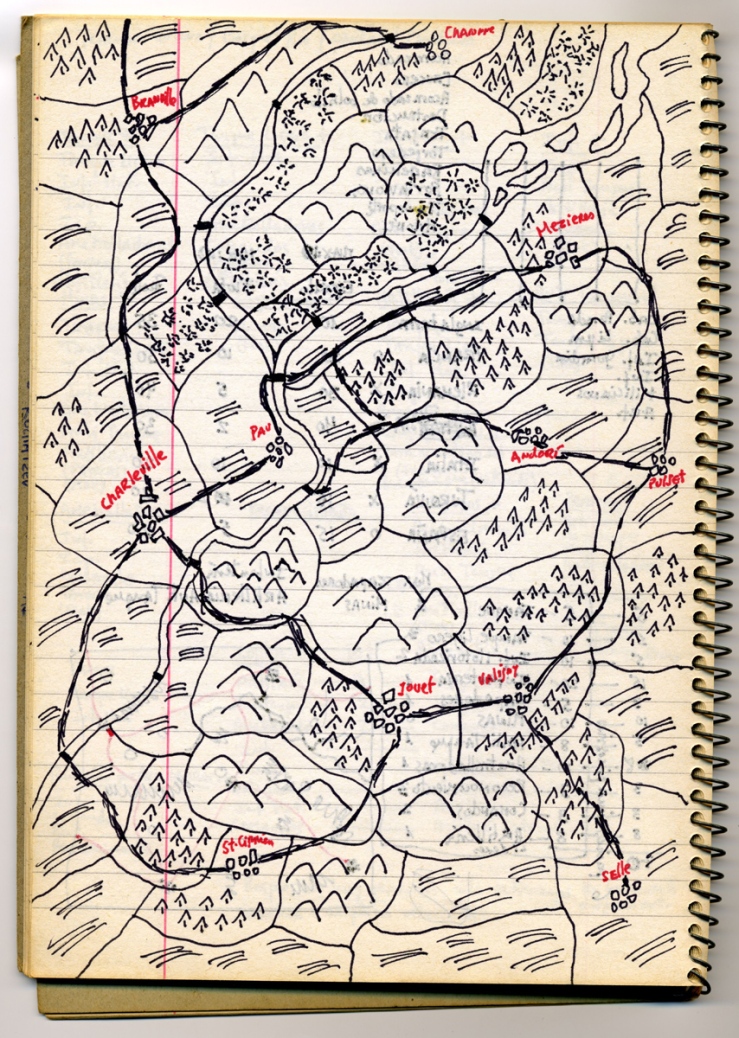
Roberto Bolaño’s manuscript map for his novel The Third Reich

1.424-Bolano095ok

(Via/more).