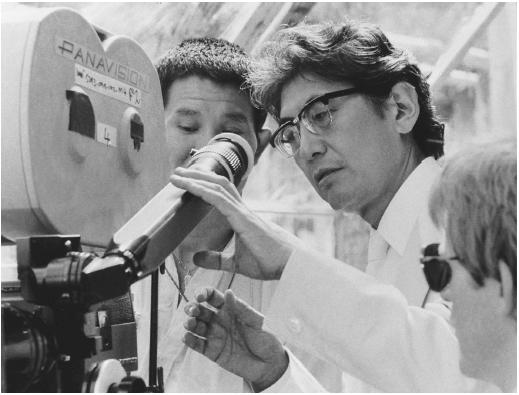
RIP Japanese filmmaker Nagisa Oshima, 1932-2013
Because of the age I was when I saw it, the 1988 film Willow has an unduly large place in my heart. I even got to see some of the sets as a child on a skiing vacation to the Remarkables, a mountain range near Queenstown, NZ.
So I was psyched to come across these early designs for the film by the Jean Giraud, the artist also known as Moebius. Full gallery at Tell Forward; a few samples below: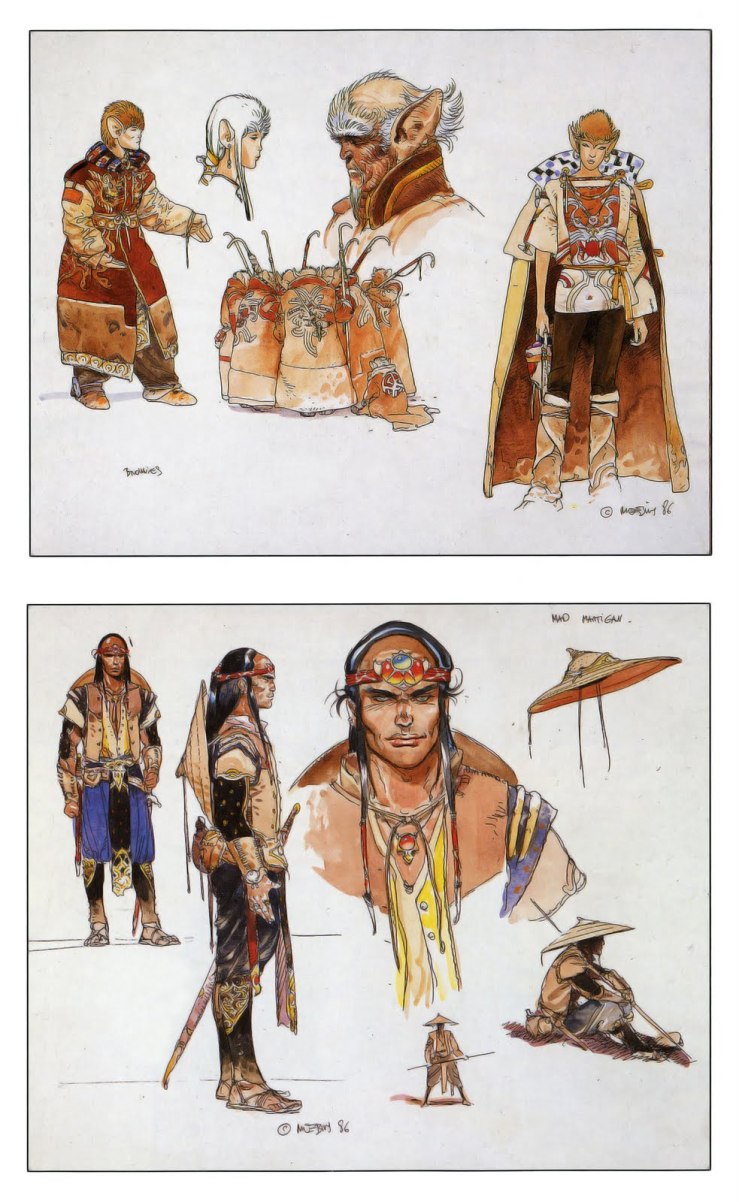
Critic/contrarian Armond White has released his 2012 “Better Than” list, where he uses one film to pick on another. Great stuff, even if you disagree. A few samples:
Sacrifice > The Master
Chen Kaige finds the roots of culture in patriarchal responsibility; P.T. Anderson loses culture’s meaning in anti-religious hysteria and high-art folly. Chen also featured superior acting by competing father figures You Ge and Xuegi Wang.Holy Motors > Cosmopolis
Leos Carax’s dreamy limousine kineticism shamed Cronenberg’s oft-entrancing limousine stage drama. Carax parked and bloomed. Cronenberg parked then harangued.Dark Horse > The Turin Horse
Todd Solondz’s modern soap opera steadily, comically bored into our self-deceptions, while Bela Tarr’s highbrow jape steadily bored us.The Lady > Lincoln
Luc Besson’s bio-pic examined Aung San Suu Kyi’s marital and political commitment, while Spielberg’s unholy marriage to Tony Kushner pushed the cult of personality. Aphorisms vs. Propaganda.Ghost Rider: Spirit of Vengeance, Taken 2 > Zero Dark Thirty
Neveldine-Taylor and Olivier Megaton revealed the post-9/11 zeitgeist in genre tropes, while Bigelow reduced the zeitgeist to an enigmatic comic strip, a “mission accomplished” delusion.A Thousand Words > Argo
Brian Robbins and Eddie Murphy dared the most personal Hollywood critique since Clifford Odets’ The Big Knife; Ben Affleck trivialized Hollywood accountability.
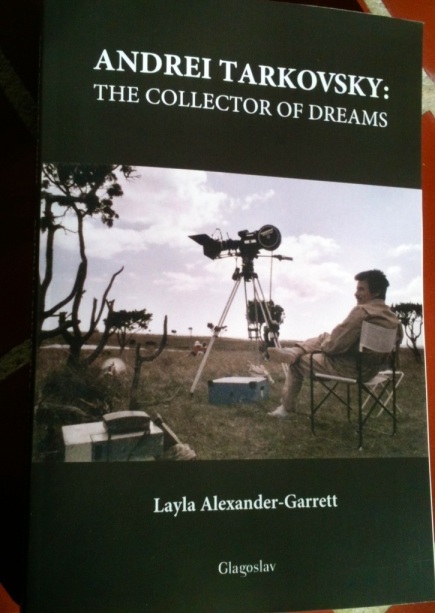
Layla Alexander-Garrett’s memoir Andrei Tarkovsky: The Collector of Dreams is new from Glagoslav. Their blurb:
The Sacrifice is Andrei Tarkovsky’s final masterpiece. The film was shot in Sweden, during the summer of 1985, while Tarkovsky was in exile; it turned out to be his final testament. Day after day, while the film was being made, Layla Alexander-Garrett – Tarkovsky’s on-site interpreter – kept a diary which forms the basis of her award-winning book Andrei Tarkovsky: The Collector Of Dreams. In this book the great director is portrayed as a real, living person: tormented, happy, inexhaustibly kind but at times harsh, unrelenting, conscience-stricken and artistically unfulfilled.
I’ve been riffling through it over the past few days. Alexander-Garrett describes her time with Tarkovsky in vivid detail—there’s a concrete richness to the book, and the author doesn’t try to psychoanalyze or interpret or otherwise interpose herself between the reader and the subject. More to come.
 Biblioklept