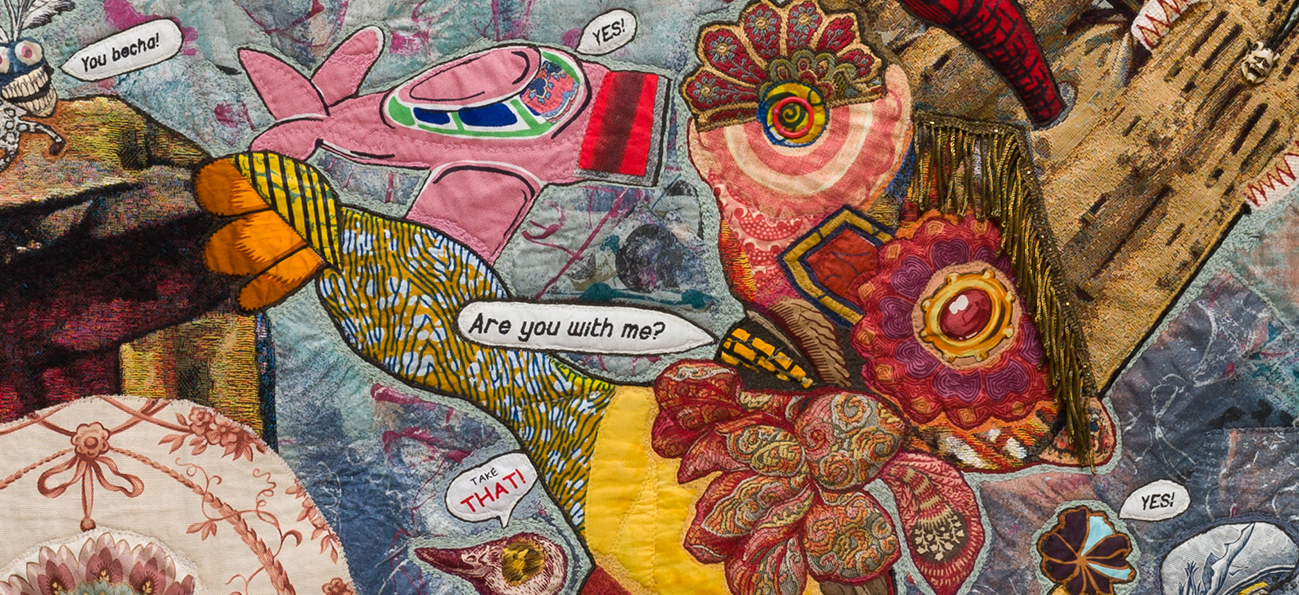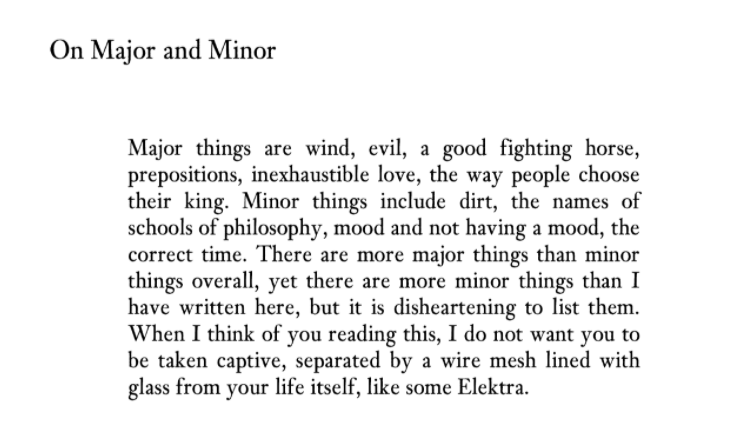
When he enters the territory of which Eutropia is the capital, the traveler sees not one city but many, of equal size and not unlike one another, scattered over a vast, rolling plateau. Eutropia is not one, but all these cities together; only one is inhabited at a time, the others are empty; and this process is carried out in rotation. Now I shall tell you how. On the day when Eutropia’s inhabitants feel the grip of weariness and no one can bear any longer his job, his relatives, his house and his life, debts, the people he must greet or who greet him, then the whole citizenry decides to move to the next city, which is there waiting for them, empty and good as new; there each will take up a new job, a different wife, will see another landscape on opening his window, and will spend his time with different pastimes, friends, gossip. So their life is renewed from move to move, among cities whose exposure or declivity or streams or winds make each site somehow different from the others. Since their society is ordered without great distinctions of wealth or authority, the passage from one function to another takes place almost without jolts; variety is guaranteed by the multiple assignments, so that in the span of a lifetime a man rarely returns to a job that had already been his.
Thus the city repeats its life, identical, shifting up and down on its empty chessboard. The inhabitants repeat the same scenes, with the actors changed ; they repeat the same speeches with variously combined accents; they open alternate mouths in identical yawns. Alone, among all the cities of the empire, Eutropia remains always the same. Mercury, god of the fickle, to whom the city is sacred, worked this ambiguous miracle.
From Invisible Cities by Italo Calvino; translation by William Weaver.
An economic summary (perhaps) of Ulysses. From “Ithaca”–
Compile the budget for 16 June 1904. DEBIT
1 Pork Kidney
1 Copy FREEMAN’S JOURNAL
1 Bath And Gratification
Tramfare
1 In Memoriam Patrick Dignam
2 Banbury cakes
1 Lunch
1 Renewal fee for book
1 Packet Notepaper and Envelopes
1 Dinner and Gratification
1 Postal Order and Stamp
Tramfare
1 Pig’s Foot
1 Sheep’s Trotter
1 Cake Fry’s Plain Chocolate
1 Square Soda Bread
1 Coffee and Bun
Loan (Stephen Dedalus) refunded
BALANCE
L. s. d.
0—0—3
0—0—1
0—1—6
0—0—1
0—5—0
0—0—1
0—0—7
0—1—0
0—0—2
0—2—0
0—2—8
0—0—1
0—0—4
0—0—3
0—0—1
0—0—4
0—0—4
1—7—0
0-17—5
2-19—3
CREDIT
Cash in hand
Commission recd. Freeman’s Journal
Loan (Stephen Dedalus)
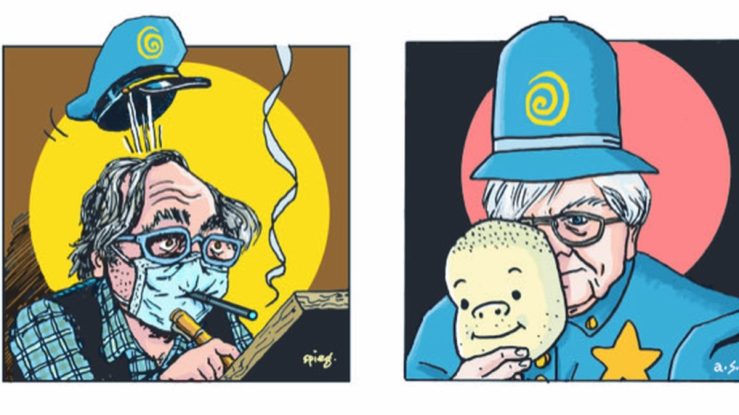
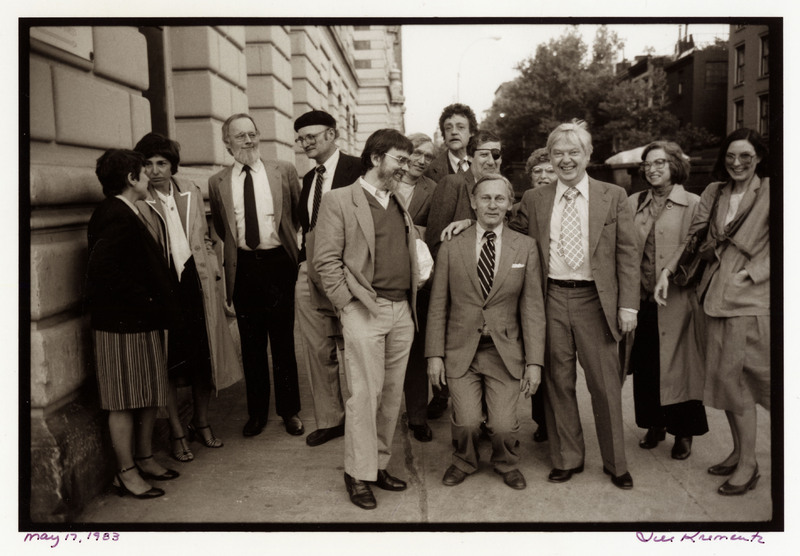
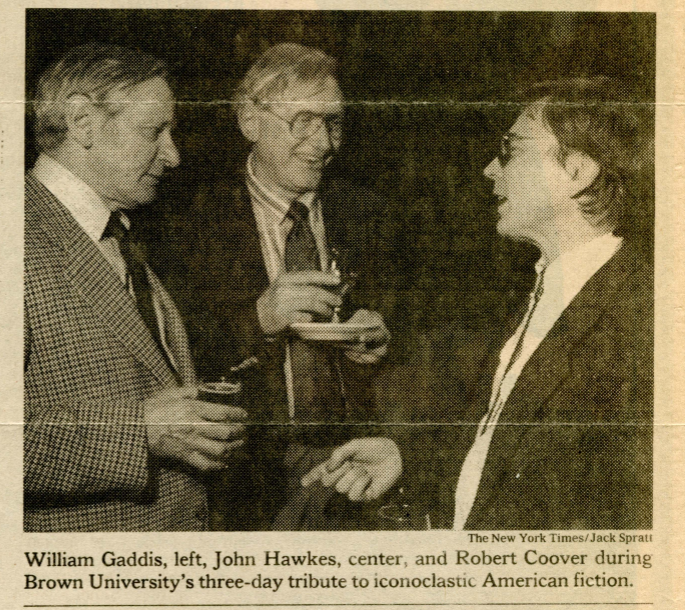
…though [Barthelme] tsked at the critical tendency to group certain writers against certain others ”as if we were football teams” – praising these as the true ”post-contemporaries” or whatever, and consigning those to some outer darkness of the passe – he freely acknowledged his admiration for such of his ”teammates,” in those critics’ view, as Robert Coover, Stanley Elkin, William Gaddis, William Gass, John Hawkes, Thomas Pynchon and Kurt Vonnegut, among others. A few springs ago, he and his wife, Marion, presided over a memorable Greenwich Village dinner party for most of these and their companions (together with his agent, Lynn Nesbit, whom Donald called ”the mother of postmodernism”). In 1988, on the occasion of John Hawkes’s academic retirement, Robert Coover impresarioed a more formal reunion of that team, complete with readings and symposia, at Brown University. Donald’s throat cancer had by then already announced itself – another, elsewhere, would be the death of him – but he gave one more of his perfectly antitheatrical virtuoso readings.
In a hallway I saw a sign with an arrow pointing the way, and I was struck by the thought that that inoffensive symbol had once been a thing of iron, an inexorable, mortal projectile that had penetrated the flesh of men and lions and clouded the sun of Thermopylae and bequeathed to Harald Sigurdson, for all time, six feet of English earth.
Several days later, someone showed me a photograph of a Magyar horseman; a coil of rope hung about his mount’s chest. I learned that the rope, which had once flown through the air and lassoed bulls in the pasture, was now just an insolent decoration on a rider’s Sunday riding gear.
In the cemetery on the Westside I saw a runic cross carved out of red marble; its arms splayed and widened toward the ends and it was bounded by a circle. That circumscribed and limited cross was a figure of the cross with unbound arms that is in turn the symbol of the gallows on which a god was tortured—that “vile machine” decried by Lucían of Samosata.
Cross, rope, and arrow: ancient implements of mankind, today reduced, or elevated, to symbols. I do not know why I marvel at them so, when there is nothing on earth that forgetfulness does not fade, memory alter, and when no one knows what sort of image the future may translate it into.
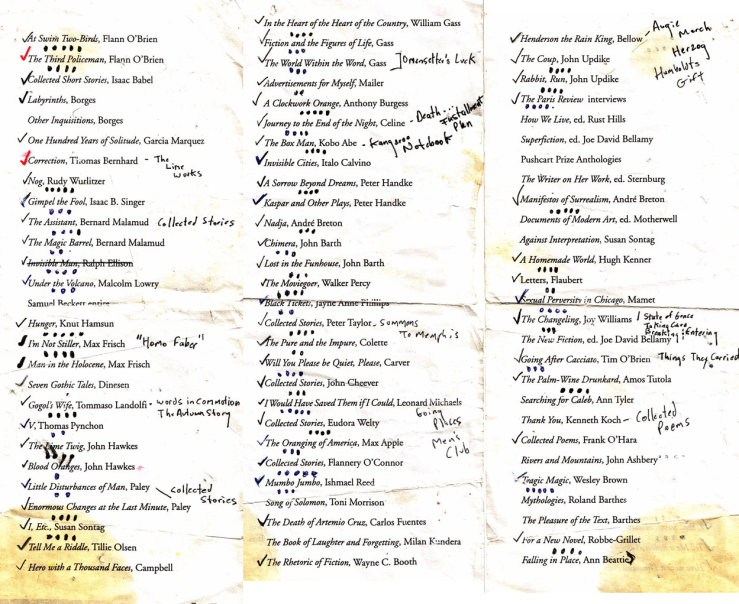
I have heard Donald referred to as essentially a writer of the American 1960’s. It may be true that his alloy of irrealism and its opposite is more evocative of that fermentatious decade, when European formalism had its belated flowering in North American writing, than of the relatively conservative decades since. But his literary precursors antedate the century, not to mention its 60’s, and are mostly non-American. ”How come you write the way you do?” a Johns Hopkins apprentice writer once asked him. ”Because Samuel Beckett already wrote the way he did,” Barthelme replied. He then produced for the seminar his ”short list”: five books he recommended to the attention of aspiring American fiction writers. No doubt the list changed from time to time; just then it consisted of Rabelais’s ”Gargantua and Pantagruel,” Laurence Sterne’s ”Tristram Shandy,” the stories of Heinrich von Kleist, Flaubert’s ”Bouvard and Pecuchet” and Flann O’Brien’s ”At Swim-Two-Birds” – a fair sample of the kind of nonlinear narration, sportive form and cohabitation of radical fantasy with quotidian detail that mark his own fiction. He readily admired other, more ”traditional” writers, but it is from the likes of these that he felt his genealogical descent.
‘Christie,’ I warned him, ‘it does not seem to me possible to take this novel much further. I’m sorry.’
‘Don’t be sorry,’ said Christie, in a kindly manner, ‘don’t be sorry. We don’t equate length with importance, do we ? And who wants long novels anyway ? Why spend all your spare time for a month reading a thousand-page novel when you can have a comparable aesthetic experience in the theatre or cinema in only one evening ? The writing of a long novel is in itself an anachronistic act : it was relevant only to a society and a set of social conditions which no longer exist.’
‘I’m glad you understand so readily,’ I said, relieved.
‘The novel should now try simply to be Funny, Brutalist, and Short,’ Christie epigrammatised.
‘I could hardly have expressed it better myself,’ I said, pleased, ‘I’ve put down all I have to say, or rather I will have done in another twenty-two pages, so surely. . . .”
‘So I do go on a little longer ?’ interrupted Christie.
‘Yes, Christie, you go on to the end,’ I assured him, and myself went on : ‘Surely no reader will wish me to invent anything further, surely he or she can extrapolate only too easily from what has gone before ?’
‘If there is a reader,’ said Christie. ‘Most people won’t read it.’
‘Politicians, policemen, some educators and many others treat “most people” as idiots.’
‘So writers may too ?’
‘On the contrary. “Most people” are right not to read novels today.’
‘You’ve said all this before.’
‘I’m very likely to say it again, too, since it’s true.’
A pause. Then suddenly Christie said :
‘Your work has been a continuous dialogue with form ?’
‘If you like,’ I replied diffidently.
‘Only one of the things it’s been,’ said Christie generously. ‘It’s something to aspire to, becoming a critic ! Though there are too many exclamation marks in this novel already.’
Another pause. One of the girls in what is ill-reputed to be a brothel opposite hung out the shirt of what might be her ponce. Christie smiled gently, turned back to me.
‘But I am to go on for a while ?’
‘Of course,’ I assured him again.
‘Until I have everything ?’
‘Yes, Christie, until you have everything.’
The excerpt above is the complete text of Ch. XXI of B.S. Johnson’s 1973 novel, Christie Marly’s Own Double-Entry. The title of the chapter is “In which Christie and I have it All Out; and which You may care to Miss Out.” The chapter begins with this epigraph:
. . . the novel, during its metamorphosis in respect of content and form, necessarily regards itself ironically. It denies itself in parodistic forms in order to be able to outgrow itself. Széll Zsuzsa
Válságés regény (p. 101) Akadémia (Hungary) 1970 transl. by Novák Gyorgy
This particular chapter might stand as a synecdoche of Christie Marly’s Own Double-Entry itself.
Ann Quin’s third novel Passages (1969) ostensibly tells the story of an unnamed woman and unnamed man traveling through an unnamed country in search of the woman’s brother, who may or may not be dead.
The adverb ostensibly is necessary in the previous sentence, because Passages does not actually tell that story—or it rather tells that story only glancingly, obliquely, and incompletely. Nevertheless, that is the apparent “plot” of Passages.
Quin is more interested in fractured/fracturing voices here. Passages pushes against the strictures of the traditional novel, eschewing character and plot development in favor of pure (and polluted) perceptions. There’s something schizophrenic about the voices in Passages. Interior monologues turn polyglossic or implode into elliptical fragments.
Quin repeatedly refuses to let her readers know where they stand. Indeed, we’re never quite sure of even the novel’s setting, which seems to be somewhere in the Mediterranean. It’s full of light and sea and sand and poverty, and the “political situation” is grim. (The woman’s brother’s disappearance may or may not have something to do with the region’s political instability.)
Passage’s content might be too slippery to stick to any traditional frame, but Quin employs a rhetorical conceit that teaches her reader how to read her novel. The book breaks into four unnamed chapters, each around twenty-five pages long. The first and third chapters find us loose in the woman’s stream of consciousness. The second and fourth chapters take the form of the man’s personal journal. These sections contain marginal annotations, which might be meant to represent actual physical annotations, or perhaps mental annotations–the man’s stream of consciousness while he rereads his journal.
Quin’s rhetorical strategy pays off, particularly in the book’s Sadean climax. This (literal) climax occurs at a carnivalesque party in a strange mansion on a small island. We see the events first through the woman’s perception, and then through the man’s. But I’ve gone too long without offering any representative language. Here’s a passage from the woman’s section, just a few paragraphs before the climax. To set the stage a bit, simply know that the woman plays voyeur to a bizarre threesome:
Mirrors faced each other. As the two turned, approached. Slower in movement in the centre, either side of him, turning back in the opposite direction to their first movement. Contours of their shadows indistinct. The first mirror reflected in the second. The second in the first. Images within images. Smaller than the last, one inside the other. She lay on the floor, wrists tied together. She bent back over the chair. He raised the whip, flung into space.
Later, the man’s perception of events at the party both clarify and cloud the woman’s account. As you can see in the excerpt above, the woman frequently refuses to qualify her pronouns in a way that might stabilize identities for her reader. Such obfuscation often happens in the course of a sentence or two:
I ran on, knowing I was being followed. She came to the edge, jumped into expanding blueness, ultra violet tilted as she went towards the beach. We walked in silence.
The woman’s I becomes a She and then merges into a We. The other half of that We is a He, the follower (“He later threw the bottle against the rocks”), but we soon realize that this He is not the male protagonist, but simply another He that the woman has taken as a one-time lover.
The woman frequently takes off somewhere to have sex with another man. At times the sex seems to be part of her quest to find her brother; other times it’s simply part of the novel’s dark, erotic tone. The man is undisturbed by his lover’s faithlessness. He is passive, depressive, and analytical, while she is manic and exuberant. Late in the novel he analyzes himself:
How many hours I waste lying in bed thinking about getting up. I see myself get up, go out, move, drink, eat, smile, turn, pay attention, talk, go up, go down. I am absent from that part, yet participating at the same time. A voyeur in all senses, in my actions, non-actions. What a delight it might be actually to get up without thinking, and then when dressed look back and still see myself curled up fast asleep under the blankets.
The man longs for a kind of split persona, an active agent to walk the world who can also gaze back at himself dormant, passive.
This motif of perception and observation echoes throughout Passages. Consider one of the man’s journal entries from early in the book:
Above, I used an image instead of text to give a sense of what the journal entries and their annotations look like. Here, the man’s annotation is a form of self-observation, self-analysis.
Other annotations dwell on describing myths or artifacts (often Greek or Talmudic). In a “December” entry, the man’s annotation is far lengthier than the text proper. The main entry reads:
I am on the verge of discovering my own demoniac possibilities and because of this I am conscious I am not alone with myself.
Again, we see the fracturing of identity, consciousness as ceaseless self-perception. The annotation is far more colorful in contrast:
An ancient tribe of the Kouretes were sorcerers and magicians. They invented statuary and discovered metals, and they were amphibious and of strange varieties of shape, some like demons, some like men, some like fishes, some like serpents, and some had no hands, some no feet, some had webs between their fingers like gees. They were blue-eyed and black-tailed. They perished struck down by the thunder of Zeus or by the arrows of Apollo.
Quin’s annotations dare her reader to make meaning—to put the fragments together in a way that might satisfy the traditional expectations we bring to a novel. But the meaning is always deferred, always slips away. Passages collapses notions of center and margin. As its title suggests, this is a novel about liminal people, liminal places.
The results are wonderfully frustrating. Passages is abject, even lurid at times, but also rich and even dazzling in moments, particularly in the woman’s chapters, which read like pure perception, untethered by traditional narrative expectations like causation, sequence, and chronology.
As such, Passages will not be every reader’s cup of tea. It lacks the sharp, grotesque humor of Quin’s first novel, Berg, and seems dead set at every angle to confound and even depress its readers. And yet there’s a wild possibility in Passages. In her introduction to the new edition of Passages recently published by And Other Stories, Claire-Louise Bennett tries to capture the feeling of reading Quin’s novel:
It’s difficult to describe — it’s almost like the omnipotent curiosity one burns with as an adolescent — sexual, solipsistic, melancholic, fierce, hungry, languorous — and without limit.
Bennett, whose anti-novel Pond bears the stamp of Quin’s influence, employs the right adjectives here. We could also add disorienting, challenging, abject and even distressing. While clearly influenced by Joyce and Beckett, Quin’s writing in Passages seems closer to William Burroughs’s ventriloquism and the hollowed-out alienation of Anna Kavan’s early work. Passages also points towards the writing of Kathy Acker, Alasdair Gray, and João Gilberto Noll, among others. But it’s ultimately its own weird thing, and half a century after its initial publication it still seems ahead of its time. Passages is clearly Not For Everyone but I loved it. Recommended.
George Plimpton’s review of Thomas Pynchon’s debut novel V. was first published in The New York Times on April 21, 1963 (hey! 58 years ago to the day, coincidentally) under the title “Mata Hari with a Clockwork Eye, Alligators in the Sewer.”
The NYT republished the piece on 6 Oct. 1996, under the title “The Whole Sick Crew.” It ran next to a 1969 review of Philip Roth’s Portnoy’s Complaint—with a big picture of Roth. No Pynchon pic, natch.
Plimpton’s review below:
“Mata Hari with a Clockwork Eye, Alligators in the Sewer”
(A review of Thomas Pynchon’s novel V.)
by
George Plimpton
Since the war a category of the American novel has been developed by a number of writers: American picaresque one might call the archetype, and its more notable practitioners would include Saul Bellow with ”The Adventures of Augie March,” Jack Kerouac, ”On the Road,” Joseph Heller, ”Catch-22,” Clancy Sigal, ”Going Away,” and Harry Matthews, who last fall produced a generally overlooked though brilliant novel entitled ”Conversions.” The genus is distinguished by what the word ”picaresque” implies — the doings of a character or characters completely removed from socio-political attachments, thus on the loose, and, above all, uncommitted.
Such novels are invariably lengthy, heavily populated with eccentrics, deviates, grotesques with funny names (so they can be remembered), and are usually composed of a series of bizarre adventures or episodes in which the central character is involved, then removed and flung abruptly into another. Very often a Quest is incorporated, which keeps the central character on the move.
For the author, the form of the picaresque is convenient: he can string together the short stories he has at hand (publishers are reluctant to publish short-story collections, which would suggest the genre is perhaps a type of compensation). Moreover — the well-made, the realistic not being his concern — the author can afford to take chances, to be excessive, even prolix, knowing that in a work of great length stretches of doubtful value can be excused. The author can tell his favorite jokes, throw in a song, indulge in a fantasy or so, include his own verse, display an intimate knowledge of such disparate subjects as physics, astronomy, art, jazz, how a nose-job is done, the wildlife in the New York sewage system. These indeed are some of the topics which constitute a recent and remarkable example of the genre: a brilliant and turbulent first novel published this month by a young Cornell graduate, Thomas Pynchon. He calls his book ”V.”
” V.” has two main characters. One of them is Benny Profane — on the loose in New York City following a Navy hitch and a spell as a road-laborer. Born in 1932, Profane is Depression-formed, and his function in the novel is to perfect his state of ”schlemihlhood” — that is to say being the victim, buffeted by circumstance and not caring to do much about it — resigned to being behind the 8-ball. Indeed, in one poolroom fracas the 8-ball rolls up to Profane, prostrate on the floor, and stares him in the eye. His friends are called the Whole Sick Crew, a fine collection of disaffected about whom one observer says ”there is not one you can point to and say is well.” Typical of them is the itinerant artist Slab, who calls himself a catatonic expressionist. Beset by a curious block he can only paint cheese danishes — Cheese Danish No. 56 is his subject at one stage of the book.
Set in contrast to Profane is a young adventurer named Stencil. He is active as opposed to passive, obsessed by a self-imposed duty which he follows, somewhat joylessly — a Quest to discover the identity of V., a woman’s initial which occurs in the journals of his father, a British Foreign Office man, drowned in a waterspout off Malta. The search for V., a puzzle slowly fitted together by a series of brilliant episodic flashbacks, provides the unifying device of the novel — a framework encompassing a considerable panorama of history and character. V., turning up first as a young girl in Cairo at the start of the century, reappears under various names and guises, invariably at times of strife and riot, in Florence, Paris, Malta, South Africa. Finally one finds her disguised as a Manichaean priest, trapped under a beam in a World War II bombing raid on Malta and being literally disassembled by a crowd of children.
The identity of V., what her many guises are meant to suggest, will cause much speculation. What will be remembered, whether or not V. remains elusive, is Pynchon’s remarkable ability — which includes a vigorous and imaginative style, a robust humor, a tremendous reservoir of information (one suspects that he could churn out a passable almanac in a fortnight’s time) and, above all, a sense of how to use and balance these talents. True, in a plan as complicated and varied as a Hieronymus Bosch triptych, sections turn up which are dull — the author backing and filling, shuffling the pieces of his enormous puzzle to no effect — but these stretches are far fewer than one might expect.
Pynchon is in his early twenties; he writes in Mexico City — a recluse. It is hard to find out anything more about him. At least there is at hand a testament — this first novel ”V.” — which suggests that no matter what his circumstances, or where he’s doing it, there is at work a young writer of staggering promise.
Perhaps history this century, thought Eigenvalue, is rippled with gathers in its fabric such that if we are situated, as Stencil seemed to be, at the bottom of a fold, it’s impossible to determine warp, woof or pattern anywhere else. By virtue, however, of existing in one gather it is assumed there are others, compartmented off into sinuous cycles each of which comes to assume greater importance than the weave itself and destroys any continuity. Thus it is that we are charmed by the funny-looking automobiles of the ’30s, the curious fashions of the ’20s, the peculiar moral habits of our grandparents. We produce and attend musical comedies about them and are conned into a false memory, a phony nostalgia about what they were. We are accordingly lost to any sense of a continuous tradition. Perhaps if we lived on a crest, things would be different. We could at least see.
The invention of the pattern often requires—among other tender elements, subject to the grotesqueries of decollation—a moonlight scene, the foreground inhabited by an animal, a black knot hanging from its throat. But when a bird, disinclined to die, is tied to a child’s collar, outside a schoolhouse, where we might otherwise find—hidden in a fire—a fragment of a jackal: well, this is just another cheerful little game, played in splendid weather. A boy’s face, they used to say, is just a grave atop a collar, the garment perhaps a shade darker than mouse gray, or so I gather from an adjacent phrase, in which the brother draws cloth across a wire.
Nor, perhaps, will it fail to be eventually perceived, that behind those forms and usages, as it were, he sometimes masked himself; incidentally making use of them for other and more private ends than they were legitimately intended to subserve. That certain sultanism of his brain, which had otherwise in a good degree remained unmanifested; through those forms that same sultanism became incarnate in an irresistible dictatorship. For be a man’s intellectual superiority what it will, it can never assume the practical, available supremacy over other men, without the aid of some sort of external arts and entrenchments, always, in themselves, more or less paltry and base. This it is, that for ever keeps God’s true princes of the Empire from the world’s hustings; and leaves the highest honors that this air can give, to those men who become famous more through their infinite inferiority to the choice hidden handful of the Divine Inert, than through their undoubted superiority over the dead level of the mass. Such large virtue lurks in these small things when extreme political superstitions invest them, that in some royal instances even to idiot imbecility they have imparted potency.
I. “A Bosom Friend” (Ch. 10) is another one of the remarkable key early chapters of Moby-Dick. It twins Ch. 4, “The Counterpane,” book-ending Ishmael’s Wild New Bedford Nights with Queequeg.
II. While Ishmael’s largehearted acceptance and quick love for Queequeg probably does not seem as eccentric to contemporary readers as it might have been to Melville’s 1851 audience, it’s nevertheless an enduring emblem of Moby-Dick’s expansive spirit.
“Better sleep with a sober cannibal than a drunken Christian,” Ish intones in Ch. 3; by Ch. 10, he admiringly attests that, “Queequeg was George Washington cannibalistically developed.” In a curt but not impolite dismissal of his own culture’s moral compass, Ish declares he’ll, “try a pagan friend…since Christian kindness has proved but hollow courtesy.” Like Huck Finn, another American prototype who wishes to escape into the wild, Ishmael will always value raw truth over empty artifice.
III. There are so many good lines in “A Bosom Friend,” but I think this must be my favorite:
…I began to be sensible of strange feelings. I felt a melting in me. No more my splintered heart and maddened hand were turned against the wolfish world.
Ishmael claims that Queequeg, a “soothing savage” has “redeemed” the world for him.
IV. It is more than possible (and so much has been written on M-D that I’m sure much has been made on the topic) that Ish (and Melville) has (have) taken what might be a complex and nuanced character in Queequeg and othered it into a flat projection screen.
Ishmael, who finds “no civilized hypocrisies and bland deceits” in Queeg, might be accused of turning his bosom friend into a romanticized avatar of Ish’s own desire for a noble “savage” unconstrained by the dictates of Christian morality. However, the events of the novel and its developed characterization of Queequeg do not merit such a facile reading (or is my estimation at this point).
V. Indeed—and to jump ahead, maybe—in Ch. 12, “Biographical,” we learn Queequeg’s origin story.
Queeg is a prince of “Rokovoko, an island far away to the West and South.”
Pause a moment, and look it up, seek it out.
(Wait! “It is not down in any map; true places never are.”)
Queequeg desires to travel the world in the hopes of advancing his culture, and, like so many folks in M-D, runs away to sea (to see). However, his time on whaleboats and in ports of the western world soon soon reveal to him that “it’s a wicked world in all meridians.”
Queequeg is always a linguistic outsider in M-D—and indeed, an outsider in general, an outsider among outsiders—but also a superhuman superhero, as the events of Ch. 13, “The Wheelbarrow,” show.
VII. I seem to be skipping around, so, fine, okay—
—in “The Wheelbarrow,” Ish and Queeg take a packet schooner from New Bedford to Nantucket, where they plan to join a whaling ship’s crew. On the schooner, one of the several “boobies and bumpkins” aboard mocks Queequeg. Queeg catches ahold of the redneck and tosses him playfully into the air, leaving him shaken but unhurt. Captain, crew, and passengers threaten the “devil” outsider, but chaos erupts when the main-sail’s boom sets loose due because of high winds. The boom knocks the redneck into the ocean. Others panic; Queeg calmly secures the spar dives into the ocean, and rescues his mocker: “The poor bumpkin was restored,” Ishmael remarks. He then tells us that “From that hour I clove to Queequeg like a barnacle; yea, till poor Queequeg took his last long dive,” foreshadowing that not all are to be resurrected in Moby-Dick.
VIII. (Or, alternately—all are to be resurrected in Moby-Dick, but only through Ishmael’s wailing tale.)
IX. But I have skipped around so much—back to Ch. 10, “A Bosom Friend.” In one of the more-remarked upon moments in the book, Ish and Queeg tie the knot after a good smoke:
…he pressed his forehead against mine, clasped me round the waist, and said that henceforth we were married; meaning, in his country’s phrase, that we were bosom friends; he would gladly die for me, if need should be. In a countryman, this sudden flame of friendship would have seemed far too premature, a thing to be much distrusted; but in this simple savage those old rules would not apply.
X. Ishmael then, through a kind of tortuous logic, describes why he, “a good Christian; born and bred in the bosom of the infallible Presbyterian Church,” “must turn idolator” and pray to Queeg’s pagan idol. It’s what God would want him to do, see? Ishmael’s logic is predicated on two simple principles:
–He is “to do to my fellow man what I would have my fellow man to do to me”
and
–“Queequeg is my fellow man”
For me, the remarkable part of Ishmael’s commitment to Queequeg isn’t the first Jesusian imperative to do unto others—it is, in other terms, to recognize the other as a fellow man.This recognition is the moral imperative of Moby-Dick.
XI. And then a sweet ending: “Thus, then, in our hearts’ honeymoon, lay I and Queequeg—a cosy, loving pair.”
XII. “Nightgown,” Ch. 11, is a short chapter where something remarkable and likely inexplicable occurs: Ishmael and Queequeg learn to communicate.
And not just communicate at the level of base transaction or simple need, but rather share philosophical and even aesthetic viewpoints, as born out in the details of Queequeg’s story in Ch. 12, “Biographical.” Again, we might criticize Ishmael as ventriloquizing Queequeg, painting his own broad romantic visions over the possibility of a complex and nuanced character that Melville can’t muster. But I ultimately believe—or at least, I believe up until now on this reread—that Ish and Queeg’s accelerated ability to communicate points to an aspirational transcendental horizon, post-culture, post-language.
XIII. “Nightgown” also has one of my favorite moments in Moby-Dick, a little riff by Ishmael that anticipates the deconstruction of oppositions we later locate in the work of late twentieth-century language theorists:
We felt very nice and snug, the more so since it was so chilly out of doors; indeed out of bed-clothes too, seeing that there was no fire in the room. The more so, I say, because truly to enjoy bodily warmth, some small part of you must be cold, for there is no quality in this world that is not what it is merely by contrast. Nothing exists in itself. If you flatter yourself that you are all over comfortable, and have been so a long time, then you cannot be said to be comfortable any more. But if, like Queequeg and me in the bed, the tip of your nose or the crown of your head be slightly chilled, why then, indeed, in the general consciousness you feel most delightfully and unmistakably warm.
XIV. (As a final note—I remembered this passage in Thanksgiving, 2020, after receiving a very sad text message from my aunt, who we would not be seeing that year, after having not seen her for July 4th—like so many other people feeling the smallbig losses of the year, of the absences of festival and visitation—but also feeling those traditions of festival and visitation so much dearer and warmer in their absence. Nothing exists in itself.)
Invented forms are very rare: a few sets of blocks, which appeal to the spirit of do-it-yourself, are the only ones which offer dynamic forms. As for the others, French toys always mean something, and this something is always entirely socialized, constituted by the myths or the techniques of modern adult life: the Army, Broadcasting, the Post Office, Medicine (miniature instrument-cases, operating theaters for dolls), School, Hair-Styling (driers for permanent-waving), the Air Force (Parachutists), Transport (trains, Citroens, Vedettes, Vespas, petrol-stations), Science (Martian toys).
The fact that French toys literally prefigure the world of adult functions obviously cannot but prepare the child to accept them all, by constituting for him, even before he can think about it, the alibi of a Nature which has at all times created soldiers, postmen and Vespas. Toys here reveal the list of all the things the adult does not find unusual: war, bureaucracy, ugliness, Martians, etc. It is not so much, in fact, the imitation which is the sign of an abdication, as its literalness: French toys are like a Jivaro head, in which one recognizes, shrunken to the size of an apple, the wrinkles and hair of an adult. There exist, for instance, dolls which urinate; they have an oesophagus, one gives them a bottle, they wet their nappies; soon, no doubt, milk will turn to water in their stomachs. This is meant to prepare the little girl for the causality of house-keeping, to ‘condition’ her to her future role as mother. However, faced with this world of faithful and complicated objects, the child can only identify himself as owner, as user, never as creator; he does not invent the world, he uses it: there are, prepared for him, actions without adventure, without wonder, without joy. He is turned into a little stay-at-home householder who does not even have to invent the mainsprings of adult causality; they are supplied to him ready-made: he has only to help himself, he is never allowed to discover anything from start to finish. The merest set of blocks, provided it is not too refined, implies a very different learning of the world: then, the child does not in any way create meaningful objects, it matters little to him whether they have an adult name; the actions he performs are not those of a user but those of a demiurge. He creates forms which walk, which roll, he creates life, not property: objects now act by themselves, they are no longer an inert and complicated material in the palm of his hand. But such toys are rather rare: French toys are usually based on imitation, they are meant to produce children who are users, not creators.
The bourgeois status of toys can be recognized not only in their forms, which are all functional, but also in their substances. Current toys are made of a graceless material, the product of chemistry, not of nature. Many are now moulded from complicated mixtures; the plastic material of which they are made has an appearance at once gross and hygienic, it destroys all the pleasure, the sweetness, the humanity of touch. A sign which fills one with consternation is the gradual disappearance of wood, in spite of its being an ideal material because of its firmness and its softness, and the natural warmth of its touch. Wood removes, from all the forms which it supports, the wounding quality of angles which are too sharp, the chemical coldness of metal. When the child handles it and knocks it, it neither vibrates nor grates, it has a sound at once muffled and sharp. It is a familiar and poetic substance, which does not sever the child from close contact with the tree, the table, the floor. Wood does not wound or break down; it does not shatter, it wears out, it can last a long time, live with the child, alter little by little the relations between the object and the hand. If it dies, it is in dwindling, not in swelling out like those mechanical toys which disappear behind the hernia of a broken spring. Wood makes essential objects, objects for all time. Yet there hardly remain any of these wooden toys from the Vosges, these fretwork farms with their animals, which were only possible, it is true, in the days of the craftsman. Henceforth, toys are chemical in substance and color; their very material introduces one to a coenaesthesis of use, not pleasure. These toys die in fact very quickly, and once dead, they have no posthumous life for the child.
From Mythologies by Roland Barthes, translated by Annette Lavers.
The original manuscript may be consulted in the library at the University of Leyden; it is in
Latin, but its occasional Hellenism justifies the conjecture that it may be a translation from the Greek. According to Leisegang, it dates from the fourth century of the Christian era; Gibbon mentions it, in passing, in one of his notes to the fifteenth chapter of The Decline and Fall.
These are the words of its anonymous author:
…The Sect was never large, but now its followers are few indeed. Their number decimated by sword and fire, they sleep by the side of the road or in the ruins spared them by war, as they are forbidden to build dwellings. They often go about naked. The events my pen describes are known to all men; my purpose here is to leave a record of that which has been given me to discover about their doctrine and their habits. I have engaged in long counsel with their masters, but I have not been able to convert them to Faith in Our Lord.
The first thing which drew my attention was the diversity of their opinion with respect to the dead. The most unschooled among them believe that they shall be buried by the spirits of those who have left this life; others, who do not cleave so tight to the letter, say that Jesus’ admonition Let the dead bury the dead condemns the showy vanity of our funerary rites.
The counsel to sell all that one owns and give it to the poor is strictly observed by all; the first recipients give what they receive to others, and these to yet others. This is sufficient explanation for their poverty and their nakedness, which likewise brings them closer to the paradisal state. Fervently they cite the words Consider the ravens: for they neither sow nor reap: which neither have storehouse nor barn: and God feedeth them: how much more are ye better than the fowls? The text forbids saving, for If God so clothe the grass, which is today in the field, and tomorrow is cast into the oven: how much more will he clothe you, O ye of little faith? And seek not what ye shall eat, or what ye shall drink, neither be ye of doubtful mind.
The prescription Whosoever looketh on a woman to lust after her hath committed adultery with her already in his heart is an unmistakable exhortation to purity. Still, many are the members of the Sect who teach that because there is no man under heaven who has not looked upon a woman to desire her, then we have all committed adultery. And since the desire is no less sinful than the act, the just may deliver themselves up without risk of hellfire to the exercise of the most unbridled lustfulness.
The Sect shuns churches; its teachers preach in the open, from a mountaintop or the top of a wall, or sometimes from a boat upturned upon the shore.
There has been persistent speculation as to the origins of the Sect’s name. One such conjecture would have it that the name gives us the number to which the body of the faithful has been reduced; this is ludicrous but prophetic, as the perverse doctrine of the Sect does indeed predestine it to extinction.
Another conjecture derives the name from the height of the Ark, which was thirty cubits; another, misrepresenting astronomy, claims that the name is taken from the number of nights within the lunar month; yet another, from the baptism of the Savior; another, from the age of Adam when he rose from the red dust. All are equally false. No less untruthful is the catalog of thirty divinities or thrones, of which, one is Abraxas, pictured with the head of a cock, the arms and torso of a man, and the coiled tail of a serpent. I know the Truth but I cannot plead the Truth. To me the priceless gift of giving word to it has not been granted. Let others, happier men than I, save the members of the Sect by the word. By word or by fire.
It is better to be killed than to kill oneself. I shall, therefore, limit myself to an account of the abominable heresy. The Word was made flesh so that He might be a man among men, so that men might bind Him to the Cross, and be redeemed by Him. He was born from the womb of a woman of the chosen people not simply that He might teach the gospel of Love but also that He might undergo that martyrdom.
It was needful that all be unforgettable. The death of a man by sword or hemlock was not sufficient to leave a wound on the imagination of mankind until the end of days. The Lord disposed that the events should inspire pathos. That is the explanation for the Last Supper, for Jesus’ words foretelling His deliverance up to the Romans, for the repeated sign to one of His disciples, for the blessing of the bread and wine, for Peter’s oaths, for the solitary vigil on Gethsemane, for the twelve men’s sleep, for the Son’s human plea, for the sweat that was like blood, for the swords, the betraying kiss, the Pilate who washed his hands of it, the flagellation, the jeers and derision, the thorns, the purple and the staff of cane, the vinegar with honey, the Tree upon the summit of the Hill, the promise to the good thief, the earth that shook, and the darkness that fell upon the land.
Divine mercy, to which I myself owe so many blessings, has allowed me to discover the true and secret reason for the Sect’s name. In Kerioth, where it is plausibly reputed to have arisen, there has survived a conventicle known as the Thirty Pieces of Silver. That was the Sect’s original name, and it provides us with the key. In the tragedy of the Cross (and I write this with all the reverence which is its due) there were those who acted knowingly and those who acted unknowingly; all were essential, all inevitable. Unknowing were the priests who delivered the pieces of silver; unknowing, too, was the mob that chose Barabbas; unknowing the Judean judge, the Romans who erected the Cross on which He was martyred and who drove the nails and cast the lots. Of knowing actors, there were but two: Judas and the Redeemer. Judas cast away the thirty coins that were the price of our souls’ salvation and immediately hanged himself. At that moment he was thirty-three years old, the age of the Son of Man. The Sect venerates the two equally, and absolves the others.
There is not one lone guilty man; there is no man that does not carry out, wittingly or not, the plan traced by the All-Wise. All mankind now shares in Glory.
My hand fails when I will it to write a further abomination. The initiates of the Sect, upon reaching a certain age, are mocked and crucified on the peak of a mountain, to follow the example of their masters.
This criminal violation of the Fifth Commandment should be met with the severity that human and divine laws have ever demanded. May the curses of the Firmament, may the hatred of angels …
The end of the manuscript has not been discovered.
Here are the first lines of Thulani Davis’s 1978 poem “Mecca Flats 1907”:
On this landscape
Like a thin air
Hard to breathe
Behind God’s back
I see the doors
I wanted to underline the line Behind God’s back—such an image! But the book itself is so pretty, lithe, lovely. Better to leave it unmarked?
The book is Nothing but the Music, a new collection of Thulani Davis’s poems. Its subtitle Documentaries from Nightclubs, Dance Halls, & a Tailor’s Shop in Dakar: 1974-1992 is a somewhat accurate description of the content here. These are poems about music—about Cecil Taylor and The Commodores and Thelonious Monk and Henry Threadgill and Bad Brains and more. “About” is not really the right word, and of course these poems are their own music; reading them aloud reveals a complexity of rhyme and rhythm that might be lost to the eye on the page.
But where was I—I wanted to underline the line Behind God’s back, but I didn’t. I didn’t even dogear the page. Instead, I went back to read Davis’s acknowledgements, a foreword by Jessica Hagedorn, and an introduction by Tobi Haslett. The material sets the stage and provides context for the poems that follow. Davis’s acknowledgments begin:
I have heard this music in a lot of clubs that no longer exist, opera houses in Italy that will stand another hundred years parks in Manhattan, Brooklyn, L.A., San Francisco, and Washington, DC as well as on Goree Island and in Harare, Zimbabwe. Some of it was in lofts in lower Manhattan now inhabited by millionaires, crowded bistros in Paris that are close, and legendary sites like Mandel Hall and the Apollo, radio studios, recording studios, and my many homes.
Acknowledging the weird times that have persisted (behind God’s back or otherwise), Davis touches on the COVID-19 lockdown that took the joy of live music from her—and then returned it in the strange form of “masked protesters massed in the streets singing ‘Lean on Me'” during the protests following the murder of George Floyd.
Poems in Nothing but the Music resonate with the protests against police violence and injustice we’ve seen this year. The speaker of “Back Stage Drama (For Miami)” (surely Davis herself?) repeats throughout the poem that “I was gonna talk about a race riot,” but the folks around her are absorbed in other, perhaps more minute affairs:
The speaker of the poem embeds a poetic plea, a poem-within-a-poem:
I said, ‘they’re mad, they’re on the the bottom going down/
stung by white justice in a white town
and then there’s other colored people
who don’t necessarily think they’re colored people
taking up the middle/leaving them the ground.’
But her would-be audience is weary:
I am still trying to talk about this race riot.
Minnie looked up and said, ‘We don’t have anywhere
to put any more dead.’
Snake put on his coat to leave, ‘We never did,
we never did.’
1992’s “It’s Time for the Rhythm Revue” takes for its erstwhile subject the riots that ensued after the acquittal of the LAPD officers who beat Rodney King. The subject is far more complex though—the speaker of the poem desires joy of course, not violence:
did they acquit somebody in LA?
will we burn it down on Saturday
or dance to the Rhythm Revue
the not too distant past
when we thought we’d live on?
Is God’s back turned—or do the protagonists just live behind it?:
…I clean my house
listening to songs from the past
times when no one asked anyone
if they’d seen a town burn
cause baby everybody had.
In Nothing but the Music, music is part and parcel of the world, entangled in the violence and injustice of it all, not a mere balm or solace but lifeforce itself, a point of resistance against it all. In “Side A (Sir Simpleton/Celebration), the first of two poems on Henry Threadgill’s 1979 album X-75, Vol. I, Davis’s narrator evokes
at the turning of the day
in these winters/in the city’s bottomless streets
it seems sometimes we live behind god’s back
we/the life blood
of forgotten places/unhallowed ground
sometimes in these valleys
turning the corner of canyons now filled with blinding light streams caught between this rock & a known hard place
sometimes in utter solitude
a chorale/a sweetness/makes us whole & never lost
And again there that line, a note from a previous jam—it seems sometimes we live behind god’s back—I’ll dogear it here, digitally, underline it in my little blog scrapbook.
I think seems is the right verb though, above. Does the star of “Lawn Chair on the Sidewalk” not remain in God’s gaze?
there’s a junkie sunning himself
under my front tree
that tree had to fight for life
on this Brooklyn street
disease got to its limbs
while still young
Typing the lines out, I wonder who I meant by star above.
Nothing but the Music is filled with stars. Here’s avant-piano great Cecil Taylor in “C.T. at the Five Spot”:
this is not about romance & dream
it’s about a terrible command performance of the facts
of time & space & air
In a synesthestic moment, the speaker merges her art with its subject:
the player plays/Mr. Taylor plays
delicate separate licks of poems
brushes in tones lighter & tighter/closer in space
In the end it’s one art:
I have heard this music
ever since I can remember/I have heard this music
There are plenty more famous musicians, of course, but more often than not minor players emerge with the greatest force. There’s the unknown hornplayer whose ecstatic playing inspired 1975’s “He Didn’t Give Up/He Was Taken.” In “Leaving Goree” there are the “two Bambara women…gold teeth gleaming” who “sit like mountains” and then explode in song.
Davis crafts here characters with deft economy. Here’s the aforementioned couple of “Back Stage Drama (For Miami)”:
Snake & Minnie
who love each other dearly
drink in different bars,
ride home in separate cars.
They like to kiss goodnight
with unexplored lips.
They go out of town
to see each other open.
Or the hero of 1982’s “Bad Brains, A Band”—
the idea that they think must scare people to death
the only person I ever met from southeast DC
was a genius who stabbed her boyfriend for sneaking up on her in the kitchen
she was tone deaf and had no ear for French
she once burned her partner in bid whist
for making a mistake
At the core of it all is Davis’s strong gliding voice, pure and clean, channeling miracle music and synthesizing it into new sounds. The speaker of “C.T. at the Five Spot” assessed Taylor’s performance as a work of physics, a transcendence beyond “romance & dream,” but the speaker of 1982’s “Zoom (The Commodores)” gets caught up in the aural romance of The Commodore’s pop magic:
zoom I love you
cause you won’t say no/cause you don’t want to go
cause it’s so cruel without love
give me the tacky grandeur of Atlantic City
on the Fourth of July
the corny promises of Motown
give me the romance & the Zoom.
I love those corny promises too. The romance and the zoom are not, at least in my estimation, behind God’s back, but rather, if you believe in that sort of thing, might be God’s special dream. Nothing but the Music cooks raw joy and raw pain into something sublime. I like poems best when they tell stories, and Davis is a storyteller. The poems here capture place and time, but most of all sound, sound, rhythm, and sound. Lovely stuff.