Worst Review Tactics

“It’s like [name of thing you love]only so much better!”

Has this ever happened to you? A friend or a “professional” reviewer of books, movies, records, etc. tries to sell you on some new thing by citing a comparison to something you love and then insulting that thing by telling you this new thing is aesthetically superior, the platonic ideal only glimpsed at by the thing you already love, exclaiming, “You should be so pumped to abandon that thing you already love in favor of this new thing that I am suddenly telling you is the more appropriate thing to admire!”

What’s funny about all this is that the reviewer/friend is really only trying to connect with you, to personalize their recommendation within a framework they know you will understand. But often, by going this route, they inadvertently demean your love for whatever the thing is, and what ends up happening (for me anyway) is the exact opposite response they were trying to get from me:

I end up hating this new thing.

The earliest example I can remember happened in college when I was on the phone with a dear friend when he asked (unfortunately):

“Have you heard this album Michigan by this guy Sufjan Stevens? It’s basically like Jim O’Rourke’s Eureka but the songwriting and arrangements are way better”

And on that day, at that moment, I gave birth to an infinite unquenchable hatred for Sufjan Stevens.

And why exactly did this happen? Because my discovery of Jim O’Rourke, (which had occurred a year or so before that conversation) was as close to a life-changing event as is possible with the consumption of art. Jim O’Rourke represents the nexus of so many wide-ranging creative ideas and disciplines, the perfect marriage of avant-garde and pop, melody and dissonance, improv and structure, (etc.) that I was obsessed with him to the point that he became a kind of index of creativity for me; I sought out every band or artist he had worked with; I read every interview with him published on the internet; I even kept a running Word doc where I copied and pasted the titles of any book or movie or album (or anything) that he mentioned liking.

 A brief list of a few of my favorite things I learned about via Jim O’Rourke:

John Fahey

Tony Conrad

Dusan Makavejev

Robert Downey Sr.

Derek Bailey

Faust

CAN

Whitehouse

Arthur Russell

Merzbow

Ray Russell

Bill Fay

Van Dyke Parks

Kevin Drumm

Masayuki Takayanagi

Otomo Yoshihde

Keiji Haino

Judy Sill

Curt Boetcher

Nic Roeg

Luc Ferrari

Robbie Basho

Robert Wyatt

Ivor Cutler

Smog

Scott Walker

And the list can go on and on. Basically this man is my hero. And my friend knew this when he called me; maybe he didn’t quite know the depth and breadth of my love, but he knew as much as I was able to communicate verbally. And he certainly knew that at the time Eureka was my favorite of Jim’s albums. (I’ve since decided that Insignificance is the superior of that era of Drag City albums, although I prefer his instrumental, electronic or improve records to the songwriting ones in general).

So what was my friend expecting me to do in response to his absurd claims? Drop all my built up love for the guy who has had the biggest influence on my creative life and suddenly take up with some dude whose name I couldn’t even pronounce yet? At his insistence I picked up Sufjan’s album and listened to a few songs, but all I was really doing was picking it apart, looking for all the ways it simply did not stack up to Eureka. Because of course, how could it stack up? That’s an impossible proposition considering the circumstance. I’m even willing to say that in a “blind taste test” situation it may be possible that 9 out of 10 listeners would prefer Sufbag Stevens to my Jim but I don’t care, I was and am so biased it’s not even worth pursuing.

So why am I thinking of all of this now?

Well the other day a dear, dear friend of mine wrote an article for NPR music where he outrageously overpraised an upcoming album by singer/composer Julia Holter—and it has been driving me nuts for the week or so since he posted it.

I should preface by saying that my friend’s taste in music is among the sharpest most well-rounded of anyone I know. I take his word on basically everything and there is a reason he has this NPR job: he is better informed about music than almost anyone and he can keenly articulate his thoughts. So when he writes about an album, I almost always give whatever it is a listen—and in most cases I wholeheartedly agree with him.

But in the first paragraph of this Julia Holter article, he pulls this shit on me, going straight for heart in the second sentence by referencing Scott Walker’s The Drift and Gaspar Noe’s film Enter The Void. My jaw dropped when he pulled those references; I may have spoken out loud to my wife, calling out to her in the other room, “Holy shit Lars just compared this girl to Enter the Void and Scott Walker!” Here’s Lars’s lede:

When the world is at the tip of anyone’s fingers, there’s little space for a true vanguard of sound. Think about it: When was the last time you heard or saw something entirely new? Experiences like Gaspar Noe’s film Enter the Void and Scott Walker’s album The Drift shook me to my core, and questioned my ideas of not only art, but also life itself. But trace the steps and you’ll find Ennio Morricone and Krzysztof Penderecki in Walker, or Kenneth Anger and 2001: A Space Odyssey in Noe.

One sentence further my heart was no longer the target; I felt that I had been kicked in the balls:

We’re a culture that recycles — no revelatory observation — but with Ekstasis, Julia Holter has created a radically new world from a crystalline Venn diagram of sound.

A “radically new world,” not recycled like Scott Walker or Gaspar Noe? So she’s more original than these mere recyclers? Well. Okay. I guess I’ll see about this.

And so with that attitude I approached the listening to Holter’s album, and I can’t shake the comparison, I can’t get past the bitterness, the sour taste in my mouth of having two of my favorite things evoked and then dismissed in favor of This Thing

I made it about halfway through Exstasis before I gave up. For all the grandstanding in the article, all I can hear is a younger Enya who is less interested in consonant melodies and who has probably seen Joanna Newsom live a few times–and even that description should sound cool to me! But it doesn’t. Lars’s overpraise acts as a numbing agent—sort of like when you eat pizza too soon out of the oven and it burns your tongue and you are doomed to taste less of the pizza for the rest of the meal, punished by the eagerness.

Am I crazy? Is this album really as good as Lars is claiming? I fear now I won’t ever be able to judge it accurately. All week I’ve been linking my friends to his article to try to gather responses from others to try to help me get a more holistic, less reactionary understanding of what is going on here. So maybe that’s why I was moved to write this article as well. Please tell me that I’m way off base and that Ekstasis is totally amazing or whatever. But if you harbor any love for Scott Walker or Gaspar Noé maybe just go ahead and avoid it.

“We Kind of Dipped Our Toes into Murder” — Pineapple Express Diner Scene (NSFW)

Terrence Malick’s Shooting Style

Shooting Terrence Malick’s Film Days of Heaven (A Discussion of Light)

A Model Toward Helping Children Read Better

“With a Little Sex in It” (From Sullivan’s Travels)

Some Stories That Wes Anderson Should Adapt

Last month, I kinda sorta reviewed the trailer for Moonrise Kingdom, the new film from Wes Anderson. Moonrise Kingdom has all the hallmarks  of an Anderson joint: an idealistically romantic protagonist who strives to fit the world to his skewed view of it; an overtly hermetic setting (crammed like a Russian nesting doll with even more hermetic settings); a fetish for staginess; a fetish for once useful objects that are now obsolete; the usual cast of characters; etc.

Anyway, one commenter on that post suggested that Anderson adapt V.C. Andrews’s lurid gothic incest romance Flowers in the Attic—and I couldn’t agree more. Andrews’s story grotesquely enshrines the hermetic world of forbidden love that Anderson repeatedly engages in (see the incestuous, or at least Oedipally-displaced romances of The Royal Tennenbaums and Rushmore). The Flowers suggestion (and another comment suggesting a DeLillo adaptation) got me to thinking about other stories I’d love to see Anderson take on.

(Those who hate to see a silly, ridiculous, fanboyish, and entirely hypothetical post should exit anon).

(Oh, and let’s get this one out of the way too: Matt Bucher has already linked Tennenbaums to David Foster Wallace’s Infinite Jest).

While Anderson has authored most of his own scripts (with cowriters like Owen Wilson or Roman Coppola), he showed he could do fine work with people’s stories on Roald Dahl’s The Fantastic Mr. Fox. I’d love to see him do something with Shel Silverstein or Edward Gorey as well, perhaps as a series of animated shorts of some kind. Like Dahl, Silverstein and Gorey deftly explore the dark undercurrent of childhood in a way that’s simultaneously charming and meaningful.

I’d probably be happy with any Wes Anderson superhero movie, but I’d love to see him do a big screen live action version of The New Mutants, a title that ran in the 1980s that focused on teens who were basically X-Men junior. Anderson would be right at home in Charles Xavier’s School for Gifted Youngsters, and the types of missions these teenagers took on were not nearly as intense as the X-Men’s, allowing for a smaller, more emotional film, than, say, Bryan Singer’s bombastic nonsense. Bill Murray for Professor X?

While I’m on big-budget franchise type characters: James Bond. A Bond film would give Anderson plenty of opportunity to play with design and style, as well as humor; Anderson also showed a sense for old-fashioned adventure and action in The Life Aquatic. Owen Wilson as Bond? (As a side note, I should point out that in general I’d love to see the Bond franchise branch out to a series of stylized one-offs, featuring different actors playing Bond, and  helmed by different directors like Spike Lee and Quentin Tarantino).

How about Twain’s The Adventures of Tom Sawyer (not Huck Finn, people)? Maybe as a mini-series on HBO?

Anderson has always been deeply entrenched in J.D. Salinger territory, and although he arguably already did so in Tennenbaums, a film that somehow organizes the lives of the Glass family would be pretty cool.

Harold Brodkey’s overlooked masterpiece First Love and Other Sorrows may be a collection of short stories, but they share a common theme that resonates with Anderson’s aesthetic. Brodkey’s decaying families (which all seem to share a misplaced sense of privilege) would be fertile ground for Anderson (and their midcentury settings would make for some snappy outfits).

Also: Heller’s Catch-22.

Maybe Anderson could highlight some of the humor in Bret Easton Ellis’s Less Than Zero. (Okay, maybe not, but I’d love to see what he’d do with that milieu. And speaking of that milieu—).

I’d love to see the failure that would be Anderson’s take on Fitzgerald’s The Great Gatsby (suggestion: use Jim Henson-style puppets).

And: A Nabokov biopic, preferably one that focuses on his lepidoptery. Could Bill Murray play Nabokov? This question is rhetorical.

Anderson’s films have been repeatedly criticized for their racial insensitivity, but in spite of this (or, perhaps, because of this), I’d like to see his take on Kipling’s The Jungle Book

Speaking of imperialism: Another Tintin film. And while he’s at it: Lil’ Orphan Annie.

Faulkner’s a bit too gritty, too dirty (not to mention too Southern) for Anderson, but he would probably do a great feature length adaptation of “A Rose for Emily.” Decay, incest, the crumbling of an old value system.

And: It’s about time someone made that Night Court movie, right? Okay, maybe not.

Other suggestions?

William S. Burroughs BBC Documentary

Pilgrimage, A Short Documentary by Werner Herzog

From Wikipedia (final emphasis mine):

Pilgrimage is a 2001 documentary film by Werner Herzog. Accompanied only by music the film alternates between shots of pilgrims near the tomb of Saint Sergei in Sergiyev Posad, Russia and pilgrims at the Basilica of Guadalupe in Mexico. The score was composed by John Tavener and performed by the BBC Symphony Orchestra with vocal accompaniment by Parvin Cox and the Westminster Cathedral Choir. The film begins with an opening quote by Thomas à Kempis which is a fake quote invented by the filmmaker himself.

Buckaroo Banzai’s Marvelous End Titles Tell You Everything You Need to Know About This Strange Film

I’m almost ashamed to admit that I hadn’t seen W.D. Richter’s slapdash madcap sci-fi send up The Adventures of Buckaroo Banzai Across the 8th Dimension until this summer. The film is so strange, so aggressively and willfully weird, that I don’t know how its cult vibes hadn’t enmeshed me earlier.

The film stars a deadpan Peter Weller as the titular Buckaroo, a neurosurgeon/rock star/superhero who, alongside his team/fellow bandmates, the Hong Kong Cavaliers, must stop the Red Lectroids from Planet 10. Or something like that.

The plot is a shambolic mess, sprawling out in bizarre directions. Buckaroo Banzai is never sure if it’s cyberpunk or Moonlighting or a winking jab at Flash Gordon or a riff on a rock movie. It’s enthralling and terrible at the same time.

But there’s no need to oversummarize here, when all one must needs do to get a feel for Buckaroo Banzai is watch its marvelous end title sequence. Go ahead, watch it:

There’s nothing I don’t love about these four minutes: The strutting! The skinny ties! Jeff Goldblum in furry chaps and a cowboy hat! Smokin’ hot Ellen Barkin! That little hop that Peter Weller does at 1:40! The promise of a sequel that never came! And that song! That jaunty joyful whistling slice of ’80s cheese! Love love love it!

Check Out Movie Critic Armond White’s 2011 Better-Than-List

Critic/contrarian Armond White’s 2011 Better-Than-List uses one movie to beat up on another. It’s grand reading—read it in full! A few choice snips:

Horse Movies Suck

So I hadn’t really put all the pieces together on this one until I found this wonderful article about Steven Spielberg’s stupid-looking new movie War Horse, basically paring the whole thing down as a gay metaphor. Hearing this Oscar-bait, bullshit family film cut down to size was bizarrely satisfying for me but I couldn’t understand why at first.

Or furthermore, why had I been so 100% dismissive of this entire movie from the moment I heard it announced like two whole years ago?

I mean Spielberg is undeniably a master filmmaker and is certainly responsible for two or three of the best American films ever made (The Terminal and Amistad obviously . . . oh, wait, I meant Indiana Jones and the Kingdom of The Crystal Skull and Jurassic Park: The Lost World . . . shit . . . I mean A.I. . . . oh never mind). And it’s not like this movie features dead-eyed, gross looking, CG-inflated cartoon characters, so what was driving my antipathy?

Then of course it hit me: Horse Movies suck.

Pretty much all of them. Horse Movies is maybe the worst genre in cinema history, with the possible exception of Poker Movies (but I’m still unpacking this, so I can get back to that). Why do I even know this though? How many Horse Movies can I even name?

Not that many: Black Stallion, Black Beauty, National Velvet (that was about horses right?), Seabiscuit, Secretariat, Wild Hearts Can’t Be Broken. And have I even seen any of these movies? Certainly not the two newer titles on that list, (those of the sub-subgenre: “Celebrity Horse Movie”) and I did somehow watch Wild Hearts Etc. with my wife at some point last year (it was an identical experience to my memory of watching it with my sister years prior; both times I’m pretty sure I was asked to leave the room by the end).

So what of the three old ones: Two Blacks and a Velvet? I have no idea what these movies are about, except that of course I do: they are about beautiful, powerful horses and the presumably young people who share a wordless bond with them. It is passionate. It is real. It is love. Pure and simple. I know this because all horse movies are about the same damn thing and also because I have some strange, unspeakable back-of-my-mind notion that somewhere in my childhood I was subject to abuses, of a cinematic kind, but apparently no less haunting, made to watch an endless stream of Horse Movies made for The Whole Family, because like every family in the suburban south mine loved horses.

Wait, no we didn’t. My Grandpa had been thrown from one as a child and suffers to this day from a fear of them that was passed down to me as a kind of darkly cautionary tale. “Don’t ever ride a horse,” he would tell me while I watched him fashion wooden swords for me out of scrap-wood from his garage workshop. As far as I know I have no memories of my father or mother riding or showing any interest in horses. So why of all movies did we gather around to watch Black Beauty on a Sunday night?

I have no idea.

All I do know is that I hated every minute of every one of those films. It isn’t something I think about very often, but reading that article sent me on quite a trip through the past. A past full of boring shitty memories of watching shitty Horse Movies.

War Horse looks like something I would have to watch with a babysitter when my parents had a party to go to or something. One of those times when they rent a movie for you as a surprise and you have that moment where maybe they are going to tell you it’s Bill & Ted’s Bogus Journey and then: nope, surprise War Horse. Have fun.

I should stop beating up on that movie though; it’s kind of unfair, especially since I haven’t seen it. I think I should attempt to focus instead on understanding why I hated/hate the Horse Movie genre. Obviously it all comes down to: taste in genre in any medium is so totally subjective it’s almost not worth attempting to understand or explain. Why some people have an endless appetite for reggae music and zombie movies is completely beyond me and obviously plenty of people would be equally baffled by my general enjoyment of free jazz and Space Horror (the genre of horror films that are all set in space, e.g. Leprechaun in Space and Event Horizon). So for me to say that all Horse Movies are in some ways the same is both obvious and redundant; of course they are, that’s what makes it a genre. All Boxing Movies are the same too, but I thought last year’s film The Fighter was totally amazing. So I will concede that there are people out there who just love all these Horse Movies that parents around world seem to jam down their kids throats year-after-year. These people want more more more. More horses! More shots of humans hugging horses and crying! I can only speculate what’s behind this reaction; if my own natural disinclination to theses films springs at least partly from an inherited fear of horses, then I must assume the opposite factor is at work in the hearts and minds of Horse Movie Lovers. These are people with a natural love of horses or people who perhaps have known the love of a good horse. (No laughing at that please. I am going to talk about Zoo later, but for now I still mean Innocent Love of horses).

So yeah, if you grew up around horses, or had your own horse, then I would bet that you get more out of Horse Movies than I do. If you’ve experienced this apparently near-mystical horse-human connection, then you are understandably going to be more affected by watching people like Tobey Maguire pretend to be having it as well. But as film genres go, some things are just more cinematic than others, and in my own subjective opinion certain things kind of automatically make for less engaging films. This is where the comparison to Poker Movies comes back. Poker Movies are really really really really really really really awful. Because poker itself is the most boring thing in the world to watch, unless of course you’re just WAY into poker, and if you are, you can spend hours watching those terrible celebrity poker tournaments because you can mentally project yourself into the game and sort of “play along” with them. Now, in most poker movies there is no actual poker going on, so the best you can hope for is that people who are way into poker will be entertained by just hearing their stupid familiar expressions — “Oh shit, he got two kings on the river” or whatever. Those of us who hate poker will be doubly bored because we have no intrinsic interest in the game, and we hate the terminology, (oh and you know that whole Poker Face thing? You know how in order to be good at poker you should be as blank and emotionless as possible? Yeah, you get it, watching actors act like they are playing poker means watching really expressive people NOT express anything for two hours).

So I’m taking the long way around here, but I think I just convinced myself that the Poker Movie is indeed The Worst Genre. Because while Poker and Love of Horses are both things that are totally un-cinematic, and interest in them in a movie is disproportionately dependent on the audience’s previous knowledge and/or experience (more so than say, boxing. It’s two dudes punching, easy to follow and grasp), at least Horse Movies have horses in them. Does it sound like I’m contradicting myself? See there are plenty of great, awesome, powerful, exciting movies that have horses in them, look at all Westerns, hell even Melancholia had some awesome horse sequences. Horses are beautiful animals and they look amazing up on the big screen, especially in slow motion. And horses as photographic subjects are wonderfully compelling, so it’s a very weird irony that movies featuring horses are great, but movies about horses bore me to tears.

Still: Someone should make a movie about a bunch of horses playing poker in slow motion. That would be the apex of both these genres. Throw some William Basinski music down for the score and I’d watch that all day long.

Hmm. I kind of feel like I completed my thought there, but I promised earlier to talk about Zoo, which is the notably huge exception to everything I have just said.  Zoo is the movie about the guys who have sex with horses and one of the guys dies because the horse-sex kills him. I wholly adore this movie and have watched it several times.

(And no, in case you are wondering there is not a bunch of graphic horse sex in the film; it’s a documentary made of voiceovers and sort of “unsolved mysteries style” re-enactments, none of which involve actual horse sex, with the exception of maybe two or three seconds of actual footage that appears very small in the frame, on a television set being watched by characters in the shot).

Why do I like this movie so much when I can’t stand all the other ones I mentioned? I think partly because it is more real and because it’s not a movie for kids, and also because it combines (an even more baffling) Love of Horses (these guys know the love of a good horse, right?) with my naturally felt fear of them. I think all of the kids movies about horses all feel like bullshit to me because they very obviously and rightly leave out all of the weird shit humans have going on with these animals. I mean, the sort of Freudian thing about little girls and horses is silly and cliché as any tired old “What does a cigar look like?” jokes your dad could come up with. We all know that there can be this weird sexual component to our interaction with horses, and if you’re at all like me you look at these things and see Giant Dangerous Animals, just as much as beautiful graceful creatures. So Zoo seems really vital to me as one of the only movies to really capitalize on all of that stuff, (I realize now that I have never seen Equus, doesn’t that have dark, sexual, horse stuff too?). And add all of this to the fact that Zoo is an exceptional story and a true story, so it’s that much more interesting. By exceptional I mean that it is precisely not the story of a normal kid who discovers a passionate connection with an animal. No, it’s the story about a group of guys who have sex with horses, and beyond that it focuses on the guy who died from it. So he’s a unique member of a unique group and this factor makes it interesting.

As a kid one is supposed to watch those horse movies and project one’s self into them, have a vicarious relationship with the black stallion for two hours, but because I was never all that interested in horses it didn’t work for me. I’m not looking to project myself into the story; Zoo works for me because the characters couldn’t be more different from me.

The true story aspect makes a difference too; take for instance The Horse Whisperer vs. Buck, (both terrible titles btw). I couldn’t be less interested in the Redford film, but the doc looked pretty fascinating. So I guess that’s the takeaway: When it comes to horses go documentary over narrative.

“Hair Rebels” (A Favorite Scene from a Favorite Film, if . . . .)

Slavoj Žižek on David Lynch’s Lost Highway

An Incomplete List of Stuff I Wish I’d Written About in 2011

Let me get this out of my system:

In no particular order a list of stuff I wished I’d written about in 2011:

1. Renata Adler’s amazing novel-in-vignettes Speedboat.

2. Wittgenstein’s Mistress by David Markson. End of the world cultural riffage. No raffage.

3. The Stories of Breece D’J Pancake: soul-crashing sad. [Not a typo].

4. Season two of Boardwalk Empire: The Oedipal complex as a plot arc hasn’t been done so well since The Sopranos. Most HBO shows seem to be about capitalism and law (see also: Deadwood, The Wire, The Sopranos).

5. That first episode of Luck. I love David Milch. Michael Mann seems imminently capable of filming things (although I think Heat is overrated, even though it has Val Kilmer, and he’s radness in the form of a lion in the form of a sea lion). The opening episode was dry like vermouth. But I will watch, because of Deadwood.

6. Hung. My wife and I are the only two people in America who liked Hung. Then it got canceled.

7. Captain America: All of the shots + set design in this film seem to have been straight up stolen from the Star Wars films—except the shots that were stolen from the Indiana Jones films. It’s funny in a way because Lucas (and Spielberg) were stealing from old serial films that were contemporaneous with the age that Captain America is meant to be set in. (And, oh, yeah, the movie was contrived bullshit).

8. I wish I’d reviewed How to Keep Your Volkswagen Alive by Chris Boucher. It was new and fresh and strange and deserved a good review from this blog, but it was very difficult to write about. I tried. It’s simultaneously sad, funny, too-experimental, but also rich and rewarding. An excellent flawed début.

9. The Trip: Steve Coogan and Rob Brydon take a trip through Northern England, eating at Michelin starred inns, creeping on the wild misty moors, referencing plenty of Romantic lit, and riffing—and backbiting—a lot. Comedy + tragedy done right. Lovely.

10. The Adventures of Buckaroo BanzaiAcross the 8th Dimension: Okay, frankly, I was ashamed to admit that I hadn’t seen it until this summer. Batshit insane interstellar hi-jinks. Rasta aliens. Buckaroo and his men are in a band! The ending credits sequence is the second best I’ve ever seen (after Lynch’s closing credits for INLAND EMPIRE).

11. The last Harry Potter movie. It was good. I’m glad they’re over though.

12. Baudolino by Umberto Eco, which I listened to on mp3 while refinishing a room in my new house. The first half was great—silly, bawdy, funny—but it unraveled into a sloppy mess by the end.

13. The Hunger Games by whoever wrote The Hunger Games, I think her name is Suzanne Collins, but Christ I’m not gonna waste any time checking: I listened to this audiobook working on the same room project that I worked on while listening to Baudolino. Look, I get that these books are for kids, and that they’re probably a sight better than Twilight, but sheesh, exposition exposition exposition. There’s nothing wrong with letting readers fill in the gaps (especially when your book is ripping off The Running Man + a dozen other books). Also, there’s a character in this book who I think is named after pita bread.

14.  A Canticle for Leibowitz by Walter M. Miller. Another audiobook that I listened to working on the aforementioned project—only this book is pure excellence, a post-apocalyptic examination of faith and meaning set against Big Nothing. The first third recalled Blood Meridian to me, although McCarthy’s book must have been composed 25 years after Miller’s.

15. I finally watched Party Down after all of my friends kept telling me, “You gotta watch Party Down!” Have you seen Party Down? You gotta watch Party Down!

16. Various short stories by Melville and Hawthorne: I read a lot of short pieces from these guys, mostly obscure, often half-baked stories that were still better than 99.9% of the contemporary stuff American writers are doing.

17. Uncreative Writing by Kenneth Goldsmith. Goldsmith is a hero: Ubuweb is magic. But a lot of Uncreative Writing just felt like an excuse for Goldsmith to share his favorite riffs on avant gardism from the classroom. And I know he’s probably a great and inspiring teacher, and I’m sure his Uncreative Writing class was gangbusters and meaningful for his students. Maybe it’s because I teach at a community college; maybe I’m conservative—I’m a fan of Dada; I get Walter Benjamin, blah blah blah. I just think we should cite sources still. Originality may be a fiction, but synthesis isn’t. Research and documentation are meaningful. Still, an entertaining book.

18. Music. Although most writing about music sucks.

19. Probably several dozen other books, movies, TV shows, etc. But there’s always 2012 to become overwhelmed by!

Happy New Year!

Reading The Tree of Life

I saw The Tree of Life four times in the theater this year. Few things made me happier than those experiences of sitting and soaking up that movie. Conversely, few things this year were as frustrating and draining as all the conversations I inevitably found myself in after the movie, where some asshole put me on the spot, demanding that, since I loved it, I was supposed to explain it to him or even somehow make him not hate it, or at least justify myself, as though I am a paid museum tour guide who must explain the importance of the Mona Lisa at the drop of a hat. But because I’m a sucker, and easily convinced to talk, I almost always took the bait and would stand there, in whatever bar or party and spend far longer than said asshole had really intended, earnestly trying to convey my personal enjoyment of this movie. It was all pretty useless in retrospect. I guess I can’t always know everyone’s intentions, but I’ll guess nine of ten times it was more like a worthless political discussion, as though someone walked up to me and said “I’ve voted Democrat for ten years, convince me to vote Republican in the next ten minutes.”

I’m winding up to something here.

So basically I saw the movie four times and talked about it for god knows how long, thought about it for at least twice that length, and I honestly do think I have come across a few things: call them “ideas” or “perspectives” that I actually think can help make the movie more enjoyable, or possibly more coherent, or something.

At the risk of sounds incredibly defensive (can you tell I’ve been in yelling matches about this already?) I will preface all of this by saying that obviously it is only my opinion. Terrence Malick has done us all a huge favor by completely staying out of the conversation about this or any of his films. I think this is a favor because it allows me to have my opinions without there being any definitive source out there to contradict it. The movie is only what is up there on screen and all my thoughts about it are basically derived only by the amount of time spent actually watching it. So I do not intend to speak for Terry or presume to know what he would say if I could ask him to verify all of my ideas or whatever. You get the point.

And there will be spoilers . . . I guess. Can you actually spoil this movie? Does anyone give a shit at this point? There are dinosaurs—oops! Sorry. Spoiled that Big Surprise. Anyhow, yeah I will be talking about key details from the plot, so be prepared for that.

The quickest, easiest thing I can tell you I learned about The Tree of Life by watching as many times as I did is that there is a simpler more coherent synopsis one could give the film that would sort of situate the story in a different way for most viewers. Just as a reference this is the official synopsis (from Apple trailers):

From Terrence Malick, the acclaimed director of such classic films as Badlands, Days of Heaven and The Thin Red Line, The Tree of Life is the impressionistic story of a Midwestern family in the 1950’s. The film follows the life journey of the eldest son, Jack, through the innocence of childhood to his disillusioned adult years as he tries to reconcile a complicated relationship with his father (Brad Pitt). Jack (played as an adult by Sean Penn) finds himself a lost soul in the modern world, seeking answers to the origins and meaning of life while questioning the existence of faith. Through Malick’s signature imagery, we see how both brute nature and spiritual grace shape not only our lives as individuals and families, but all life.

This sounds fine and all, if a little intimidating. If you saw the movie I imagine you saw all of that stuff in there. It was certainly “impressionistic” enough and I agree that Brad Pitt played the father. But in terms of setting up the viewer for the “story” I’m not sure this is as fast as it could be and it’s certainly not going to fend off any accusations of “pretension.”

Instead, try this one out:

“On the anniversary of his brother’s tragic death a man goes about his day flooded with memories of his childhood and thoughts about mortality and the afterlife.”

The images and characters in The Tree of Life exist simultaneously as both literal and symbolic elements in a complex narrative, and I’m not saying that the movie should be boiled down to something as simple as my one-sentence summary above—only that it can be. And that for all the people that so excessively badgered me about this movie “Not having a story,” here it is:
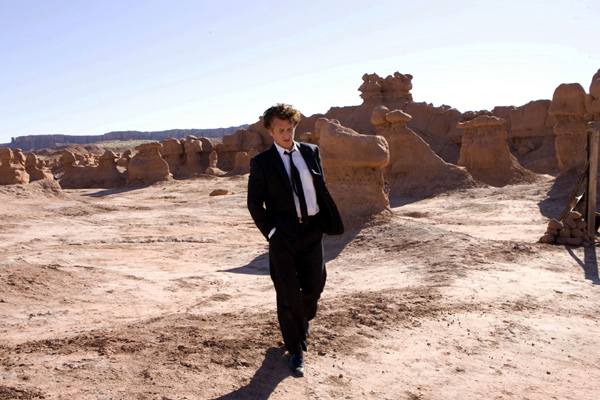
Jack (Sean Penn) wakes up. It’s a shitty day, the shittiest day of his whole year, every year: it’s the day his brother died (substitute this for: the day they found out he died, or for his brother’s birthday. The movie is obviously unclear and any of them could work). It’s been nearly twenty years since that tragic death but it hasn’t gotten any easier. His wife knows what day it is too and even though they’ve been having their problems recently, she can tell she should back off today and give him his space. So they spend that morning sort of avoiding each other, neither sure what to say and eventually Jack sits down to do the only overtly emotional action he ever brings himself to do on this day: he lights a candle in memory.

So he heads to work that morning with the weight of all this on his mind; it’s his own personal 9/11, the biggest single event that helped shaped his life. He loved his brother but their relationship was complicated. And Jack has a good memory. As the oldest of three boys Jack can remember what it was like to be the the sole recipient of his mother’s love. He experiences flashes of the conflicting happiness and subsequent jealousy after the birth of his first brother, and now,  as an adult man with his own life and his own problems and his own job, that memory makes him feel like an asshole.

He’s an architect at a major firm in Dallas and they just landed a big city contract to redesign the public transportation system or something and Jack is in charge of the whole thing. In fact, he’s got a lot of important meetings coming up and plenty to think about that doesn’t involve reliving the past. Because who wants to be dealing with fifty years of history when you’ve got work to do? Never mind your coworkers rattling on about their problems and the general chaos of the office, with so much going on it’s a wonder he can get anything done.

A little while later he’s about to head into an important meeting when his phone rings. If all the rest of it weren’t enough now here’s this: The Call. The one he gets every year on this day, the Low Point: His Father. The guy is pushing 80 at this point, living in that huge house there on the coast with plenty of money from the patents he eventually sold, eating at the country club with the rest of his pompous old friends but on this one day you’d think he was a monk wearing burlap and whipping himself. What does he get out of this? Every year he calls and every he says the same line,

“Do you know what day this is?”
“Yeah dad I know what day this is.”
“He was a good boy.”
“Yeah dad he was great.”
“Playing Bach on the guitar when he was eight years old, don’t see that everyday.”
“No I guess not.”

And on and on and on . . . why can’t he just focus on the good things he’s had in life? The guy has had a long career, a beautiful loving wife, and hell, it’s like he doesn’t have two sons still living! Christ, look at me? Am I not good enough? Look at everything I’ve done in life, everything I’ve accomplished, and yet if I had died at 19 would he mourn this much for me?

But in the meantime he has a meeting with the senior partners. He’s trying to be polite with his dad, and sensitive to the man’s pain but business is business. So he cuts him a little short.

“Dad I really want to talk to you but I really have to go.”
“Oh I see this isn’t important to you.”
“No dad it is, but I’ve got to go in a meeting right now.”

The secretary walks up to him and tells him that they are all waiting for him inside.

“Listen dad I gotta go.”

And there, he hangs up on him and goes into the meeting. Of course his mind is elsewhere. Like usual, talking to his dad has brought out all the worst thoughts in him. Even though in his daily life Jack tends to affect a calm, peaceful demeanor, talking to his father brings up some of the darker thoughts in his mind. He remembers all the pain and confusion of his childhood, the soaring emotions and chaos and frustration, the simultaneous guilt and innocence that everybody must feel at that age, right? I’m not alone right? I’m not the only one who thought about killing his father, I’m not the only one who hurt his brother on purpose, I’m not the only one who said horrible things to his mother, or who stole, or who lied . . .

So Jack sleepwalks through the rest of the day. He’s on autopilot, but for the most part his coworkers can’t even tell. Jack’s good at this; he’s had practice being a human. He’s learned to control the volatile emotions of his youth, the reactionary side of him; the side he associates with his father has been muted in his adulthood and he chooses every day to try to be more like his mother, to keep things to himself and attempt to be kind to people. Which is why for all his anger and frustration, as much as he doesn’t want to go there again, he calls his dad back and apologizes for his earlier behavior. He sucks it all up and takes a little more of the old man’s trademark passive-aggressive bullshit. “This guy never changes” Jack thinks to himself. But despite everything Jack loves his father and knows that in his own stubborn way his father loves him. So they say this to one another over the phone, they reconcile for now, as they’ve done so many times before, son forgiving father, father forgiving son.

And with what’s left of his day Jack thinks about all of this: about forgiveness, about redemption, about pain and suffering. About how he isn’t even unique in any of this, how he can spend his entire day completely consumed in himself and his own pain—but isn’t he just one person? Doesn’t everybody have this same experience every day in some way? Sure, this may be the anniversary of his brother’s death, but what significant day is it to any one of the other six billion people on this earth?

The entire planet had to be formed and every living organism had to evolve and change and grow over millions and millions of years to create the perfect set of circumstances that would put Jack in this very moment—but that’s true of everybody, any body. And somewhere in all of this there’s hope.

And just like that, it’s six o’clock. Where did all the time go? Jack steps out into the world again, in the middle the swirling chaos of life and is amazed by everything that can happen in a day, even if it’s all internal—and is there really any difference between the internal world and the external one anyway?

*    *    *

Wow, what a non-story that was. I can’t believe those characters were so one-dimensional. Sean Penn’s inclusion in the movie really was pointless, wasn’t it? Wouldn’t you rather have had his role cut out entirely? None of those images really fit together in any meaningful way did they? I mean each taken on its own may be pretty and all, but I for one would prefer it if the film coalesced into something more grounded and specific. Like I said before, I like stories in my movies, I don’t want just a random sequence of images.

Okay, obviously I am being a sarcastic asshole in that paragraph. But if you happened to be one of the people who said one of those sentences to me I hope that looking at the film through the perspective I outlined might aid you in getting over some of your issues.

Of course that is assuming you even want to get over your issues. Maybe you would rather persist in using this beautiful film as a punching bag for the rest of your life. I guess I can’t stop you there. But if you want to argue with me and tell me that my version of the movie is not what was up on-screen when you saw it, I will tell you that I didn’t see this version of the The Tree of Life the first time I saw it either. I didn’t quite see my version of it the second time, but by the time I finished it for the fourth time I swear to goodness that the “story” I told you above is exactly the “story” I saw and still do see in this film. And unlike some bullshit Christopher Nolan DVD special feature that “unlocks all the secrets of the film” I have no “objective” source to tell me I’m right or wrong—mine is only an interpretation, but I think it’s one that the film can support and certainly one that answers a lot of the criticism.

As a film-goer, I am more than happy to watch a random sequence of beautiful images (seeing Baraka projected in 70mm remains a favorite viewing experience for me). When I saw The Tree of Life the first time I was absolutely ecstatic with my experience and needed nothing more from the movie than what I got. It is no exaggeration to say that I could have watched a two-hour version of the creation of the universe section, with no dialogue or characters and still have been happy and moved. I don’t give two shits if there is a “story” in The Tree of Life. Which is partly why my early arguments about the film were so fruitless, imagine this conversation over and over:

Them: Why did you love the movie?
Me: Because it was beautiful.
Them: But it had no story.
Me: Maybe you’e right but I didn’t need one.
Them: But if it doesn’t have a story, then it must be a bad movie.
Me: I disagree with you. I thought it was great.
Them: Well I disagree with you because I hated it.

And because of these arguments, I was more surprised than anybody when I found my version of the “story.” It was something that occurred naturally, and I guess I want to stress again that I still think the movie supports layers of meaning, but when I think about the movie now it is almost entirely in these terms. The film doesn’t even seem abstract to me at this point. It’s kind of like Mulholland Dr. in that way, (although I think David Lynch did that film specifically as a mystery to be solved) where, once I figured out how the film works, I never quite see it as the random, crazy, seemingly unconnected series of scenes it appeared to be upon first viewing, (even though in the case of Mulholland Dr. as well, I was totally fine with that).

In some way I kind of resent that it all comes together so easily. I kind of like an endless montage of beautiful images with no story, (although hell even Koyannisqatsi and Baraka seem to each have a thesis; it’s not like the director grabbed clips with his eyes closed). There is a larger, more complex discussion to be had here about the human brain and pattern recognition and our basic, innate desire for Order instead of Chaos and how our brains will basically create order, even where there seems to be none, just basically so that we don’t go crazy.

Which when you think about it is sort of what my version of The Tree of Life is all about anyway. It’s just a day in the life of this one guy, and his desperately trying to come to terms with the chaos of his mind, to give it a structure and an emotional arc, some kind of resolution, if only to just get through it all.

And I do think we all do this. I think every day of our lives is more like The Tree of Life than it is to The Dark Knight. When your life appears to you as a fragmented mess of images and memories and music and sadness and glory and guilt and love, you just deal with it—what the hell else are you going to do? Like Jack, you get through your day and move on. But when you are confronted with that same chaos in the form of a movie, you have the freedom to just throw it away, toss it out of hand and never think twice about it. But allow me to suggest in all humility that there is  more to enjoy in The Tree of Life in subsequent viewings. Maybe you can find a different story than I did. Maybe even a better one.

The Best and Worst Film Titles of 2011

The Best Film Titles of 2011

The Tree of Life: Solid, evocative, stately.
Melancholia: Simple and meaningful, but also easy to remember.

Star Watching Dog: I have no idea what this movie is, but I love this as an idea or as an image, or as a plot for a film. It makes me want to find out which of those three it actually is. If I’m lucky it will be all three.

We Need to Talk About Kevin: This has the right kind of loaded evocation to it. It’s great as a long-but-not-too-long title.

Tyrannosaur: Awesome. One word with a huge amount of weight, probably the best title of the year except for the obvious problem that it probably confused people into thinking the film was about dinosaurs. But other than that it doesn’t get better than this.

Your Sister’s Sister: I don’t really know what this means. Is it wordplay? Is there plot relevance? It makes me want to know though.

Another Earth: A brilliant combination of two words that manages in three syllables to open up hours upon hours of thoughts and possibilities.

Outside Satan: I would compare to the previous entry. A great two words that sounds good and suggests a lot of weird things, many of which I can’t quite put my finger on. Definitely makes me want to see what happens in the movie.

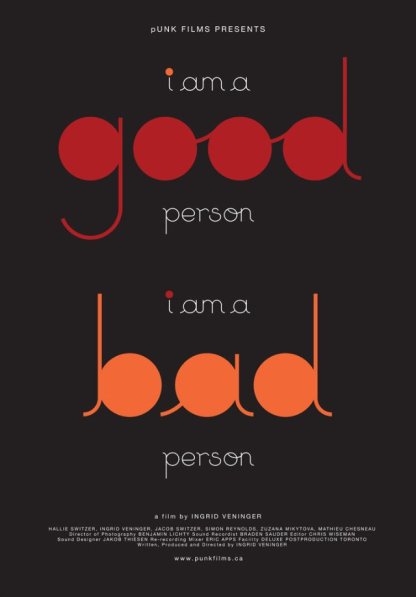
I Am A Good Person/I Am A Bad Person: Maybe it’s too long. And maybe it’s totally confusing. But I would watch something called this for sure.
The Rabbi’s Cat: Well it sounds like I know upfront two things I can expect to see. And I like both of these things.

The Catechism Cataclysm: Alliteration sucks. Here’s an exception that proves the rule.

Blackthorn: I would buy a cut of meat called Blackthorn, I would buy a bottle of wine called Blackthorn, I would vacation in a mountain city called Blackthorn, I would buy an album from a doom metal band called Blackthorn. Blackthorn would be a good word for many things. This time it is a movie.

Gingerdead Man 3: Saturday Night Cleaver: Double puns! Really? Okay fine, sure. It’s better than all the Air Bud titles combined.

Red State: Two evocative words, a sort of double-entendre but still easy to remember.

The Future: I would eat a burger called The Future, I would name my car The Future, I would name my dog The Future, I would love for my friends to give me the nickname The Future. So yeah I would watch a movie called The Future.

I Melt With You: Memorable and emotional, it tells me nothing about the film in any literal way, but it gives me some kind of sense of expectation.

Hobo With a Shotgun: Perfect. Truth in advertising; we’re all on the same page here.

***

The Worst Film Titles of 2011

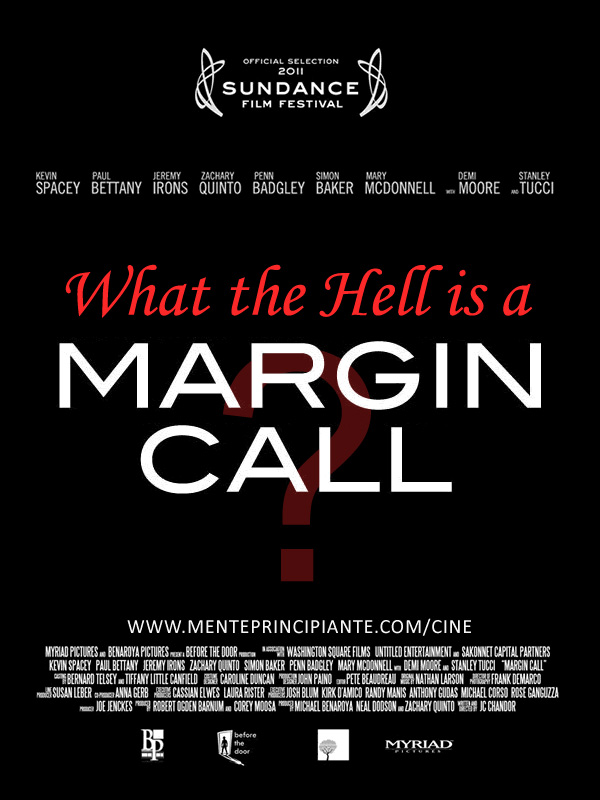
Margin Call: What the hell is a Margin Call? Why would I voluntarily pay for anything called Margin Call. It sounds like something your accountant would suggest, but that’s why you hire that guy: to deal with boring stuff like Margin Calls. I would rather be watching a good movie than worrying about a Margin Call. If there are two things, and one is called Tyrannosaur and the other is Margin Call, which do you think I will be buying?

Hugo: Hugo is a stupid little word and I don’t like saying it or hearing it.  The only thing worse is the original title, The Invention of Hugo Cabret. Gross. Cabret is far too close to Cabaret and Cabaret is least appealing noun I can think of.

Weekend: Wow, title your indie movie the same thing as a famous art film. Always a good idea when your only potential audience is the miniscule slice of people who know this. Watch for the director’s next small festival hit, sure to be called The 400 Blows.

The Brooklyn Brothers Beat The Best: Alliteration is the worst.

A Beautiful Belly: Further proof of the above sentiment, only this one is also gross sounding. The only way I can even imagine saying this out loud is if it was the humorous name of a menu item at the best BBQ joint in Atlanta or something.

The Skin I Live In: I blame the second-language aspect here, but something about this sentence is annoying.

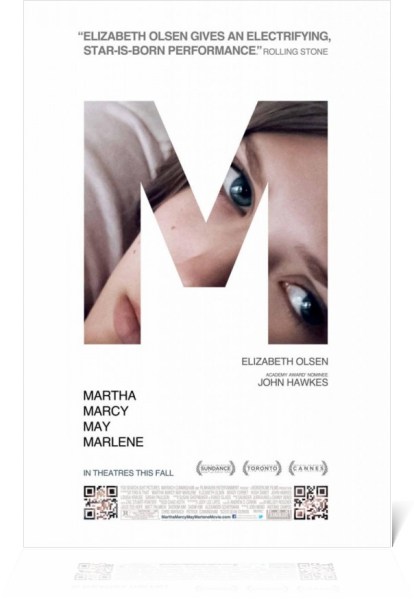
Martha Marcy May Marlene: AKA Marble-Mouthed Nonsense. I will concede that this one may be actually brilliant, as everyone who sees the film seems to universally love the title after the face. Still, there is definitely something idiotic about giving yr film a title no one can remember.
Crazy, Stupid, Love.: I hate seeing this written down, I hated typing it, I hate hearing it out loud and I can’t imagine speaking it. There is a weird kind of perfection here. Three words that are just fine on their own, but somehow in this order they make me want to die.

Take This Waltz: And shove it.

No One Killed Jessica: Oh well that’s a relief, you had me worried for a second there. I guess I can skip watching the movie altogether and go eat some lunch or something.

Water for Elephants: This sounds like part of some little piece of wisdom like “pearls before swine” or something, except that you think about it for five seconds and realize that it isn’t and that it’s just dumb sounding.

Twixt: This is one of those words that maybe girls under the age of 16 could get away with saying. Or like the name of new line of sexy dolls, like the new Bratz or something.

Soul Surfer: Soul Surfer sounds like the shittiest tattoo idea possible.

The Beaver: This immediately undercuts the notion that it can be at all serious by virtue of the obvious vulgar connotations. Unless of course the writer only chose the word “Beaver” because he thought it would be such a riot to see it written everywhere and to have serious actors say it a million times for two hours. So either way what we have here is totally ignorant or absurdly immature. Count me out either way.
Our Idiot Brother: If I wanted to watch a shitty ’90s sitcom I would have stayed home.

This Is Not A Movie: Yes it is.

Benjamin Sniddlegrass and the Cauldron of Penguins: This is so stupid that maybe it belongs on the “Best” list. Nah, maybe not.

Cowboys & Aliens: This and Hobo With a Shotgun are two sides of the same coin. This side is the shitty one that loses all the time.

I Am Number Four: The only way this could be worse is if it was I Am Number Two.

Green Lantern: The discussion surrounding this movie’s failure brought up a lot of valuable points: 1) Ryan Reynolds is The Worst, 2) The movie was a piece of shit and 3) Martin Campbell is not an auteur. But the big point I think everyone missed is that The Green Lantern is also just a stupid combination of three English words. I don’t care how long he’s been a comic book hero, please compare the title of this movie to the other famous DC tentpole franchises: Batman and Superman. And please analyze the various connotations involved in three titles: One is a man who is also a bat, alright cool. The other is a man who is super, yeah alright I bet he’s pretty tough. This is a lantern that is somehow green… is this meant to surprise or excite me? “No shit!? All my lanterns are blue, this guy must be AMAZING!” Even The Green Hornet is a better title because it has the word Hornet in it and everyone knows that Hornet is basically the coolest word in all of entomology, with the obvious exception of “Scorpion.” No movie with the word Lantern in the title will ever gross 500 million dollars, unless preceded by the words “Harry Potter” or “Twilight.” Lanterns suck and somehow this fact is known deep in the hearts of all Americans.


A Good Old Fashioned Orgy: The obvious sarcasm just tells me right away that this is insincere bullshit.

Straw Dogs: As the title for some weird VHS tape you find at the video store and rent on a lark only to be blown away by how gnarly and intense movies were allowed to be in the ’70s: Yes Straw Dogs is a great title, and it’s implacable weirdness somehow fully encapsulates everything strange an unnerving about that movie. But as the title for a contemporary product on the market for people who have no built-in context I can’t imagine anything worse. It might as well have been called Marble Lanterns, it would have done just as well.

Another Happy Day: Either the movie is actually about a succession of days that are happy, or it is very obviously the exact opposite. Both options annoy me and put me off for different reasons. They could have called it Are We Having Fun Yet? and it might have been a bigger hit, but that is equally stupid and probably taken already.



