Double Borges (Books Acquired, 9.13.2013)

20130917-155302.jpg

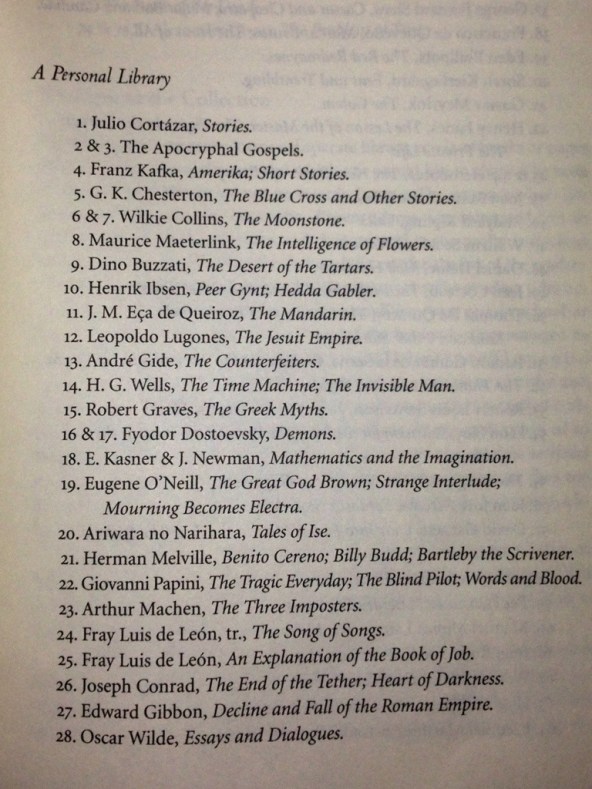
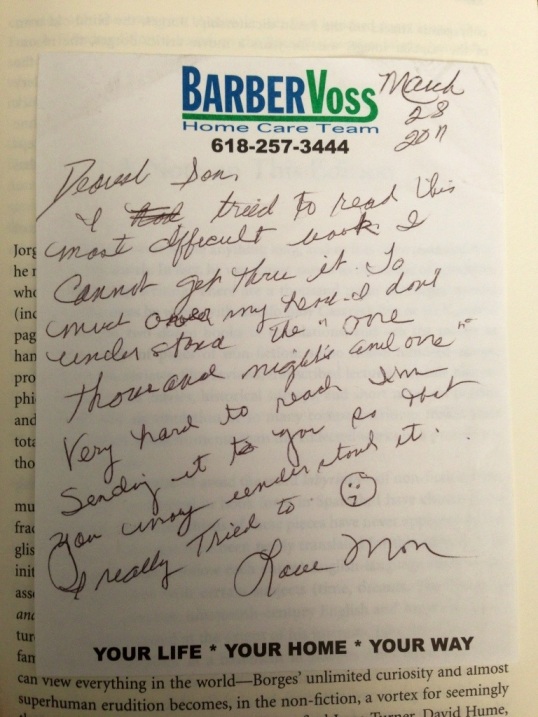
I was lucky enough this past Friday the 13th to pick up two Borges volumes, lovely twins with tactile covers, running over 500 pages each—they swallow a lot of Borges books I already own (although curiously leave out entire collections). I found a heartfelt note from mother to son in one the nonfiction collection, where she explains the difficulty she had with the book. I have my own Borges anxieties. Two from the collections: first, from the fiction and then the start of a list from the nonfiction.

20130917-160652.jpg

20130917-160659.jpg

“Bliss” (Donald Barthelme)

Bliss: A condition of extreme happiness, euphoria. The nakedness of young women, especially in pairs (that is to say, a plenitude), often produces bliss in the eye of the beholder, male or female. A delight, let us confess the fact, and that is why we are considering all of the different ways in which this delight maybe conceptualized, in the privacy of our studies, or in airport bars where the dry, thin drinks cost too much. There is not enough delight. Doubtless naked young women think the same sort of thoughts, in the privacy of their studies,or other sorts of thoughts obscure to us. Maybe they just sit there, in their studies studying their own beauty, the beauty of a naked thumb, a passionate, interestingly historied wrist …

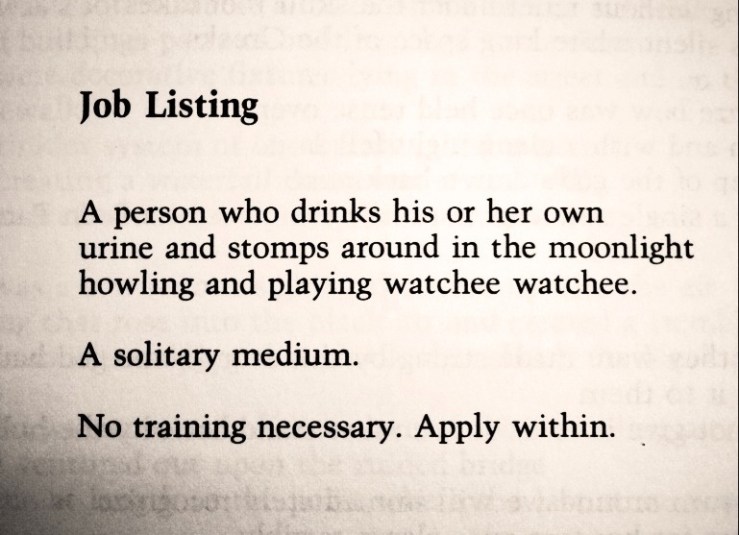
“Job Listing” — Tom Clark

20130916-184158.jpg

Recent Stuff I’ve Found in Books

20130916-172934.jpg

So this Friday, I bought two enormous fat thick Penguin volumes of Jorge Luis Borges in utterly pristine condition (fictions and non-). I own other books that cover some of the material here, but 1100+ pages of JLB is hard to pass up (especially used, especially when I have store credit).

And then today, I was made privy to this lovely Flickr set, “Things found in books,” and thought I’d play along.

So back to Borges: I was somewhat touched by this note (above) I found in the nonfiction collection: Mom sends the book to her son so he “may understand it,” “this most difficult book”; mom also reports it “very hard to read” and appends a frowny face.

20130916-172940.jpg

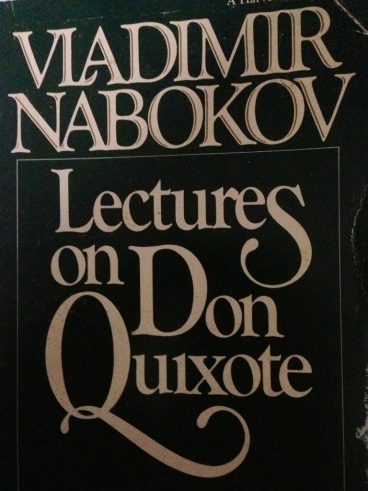
Maybe a week or two before, I found this lovely little wisp of paper:

20130916-172950

In Vlad Nabokov’s Lectures on Don Quixote:

20130916-172955.jpg

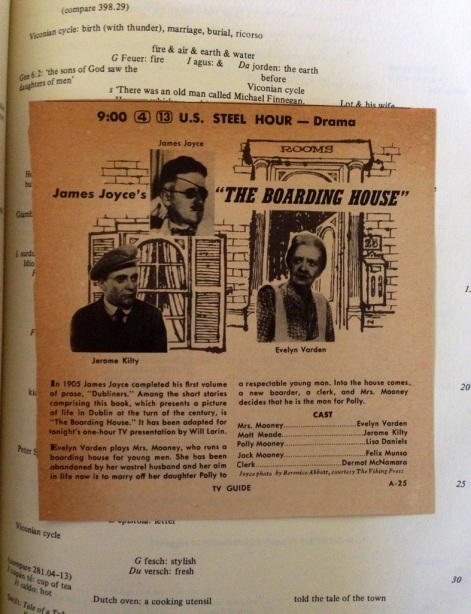
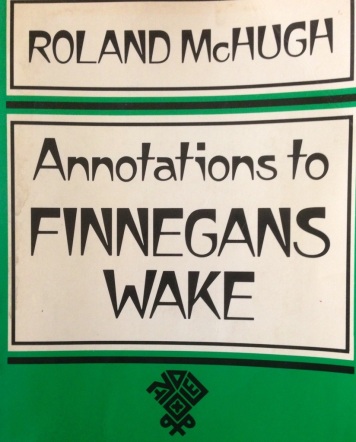
Which reminded me of this James Joyce clipping—not so recent, I’ll admit, but still carefully placed as a bookmark in a Finnegans Wake guide:

20130916-173003.jpg

Okay, annotations, more properly:

20130916-173008.jpg

Do most people leave stuff in books? I think most bibliophiles do. (Forgive the snobbish italics there. I’m sure there are bibliophiles who don’t, of course). I have a habit of never reusing a bookmark, so that when I pull out a volume there’s some little tag there that acts as a third point (along with the text and my addled brain) to help triangulate the reading experience (the concrete circumstances of the reading process, the where, the when, the how much, etc.).

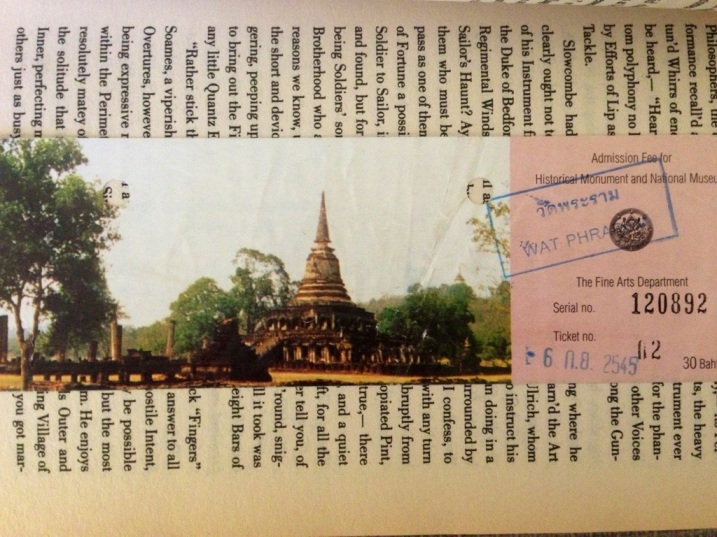
And so, after finishing Pynchon’s Against the Day a few weeks ago, I resolved to return to Mason & Dixon. Pulling out my copy,  where I found an entry ticket to Wat Phra Ram in Ayutthaya. I’m pretty sure I bought the book in Chiang Mai (after buying V. in Bangkok; books were the only thing I ever thought were expensive in Thailand).

20130916-173022.jpg

20130916-173026.jpg

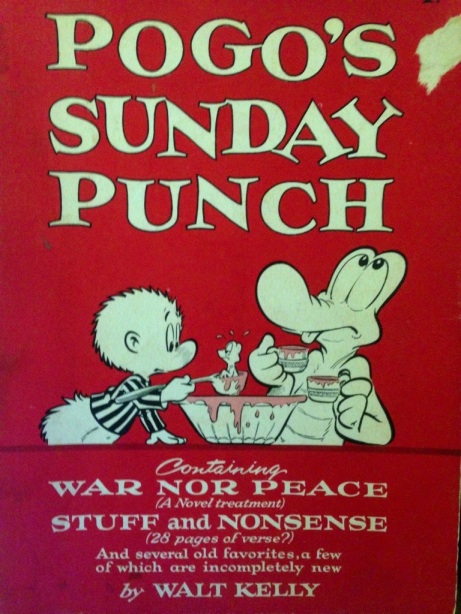
A few weeks ago my grandmother let me take one of my grandfather’s favorite books with me when I left her house, a Walt Kelly collection.

20130916-173054.jpg

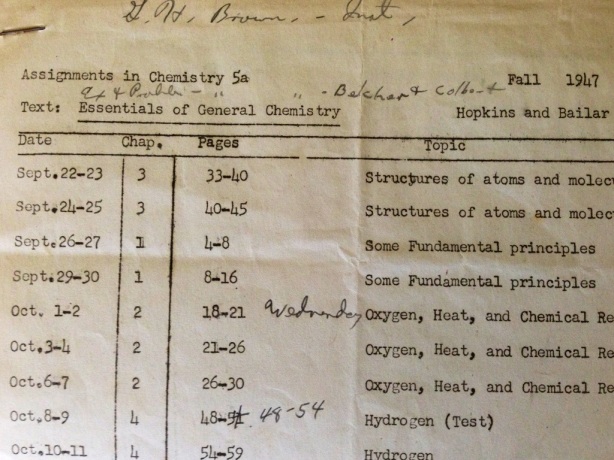
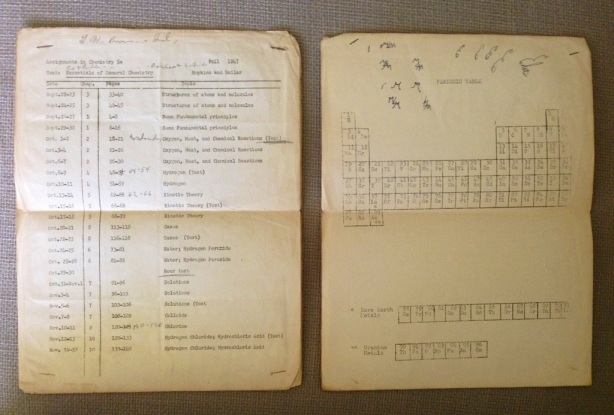
I was thrilled to find inside the Pogo volume the syllabus of my grandfather’s college chemistry class from the Fall of 1947:

20130916-173044.jpg

20130916-173038.jpg

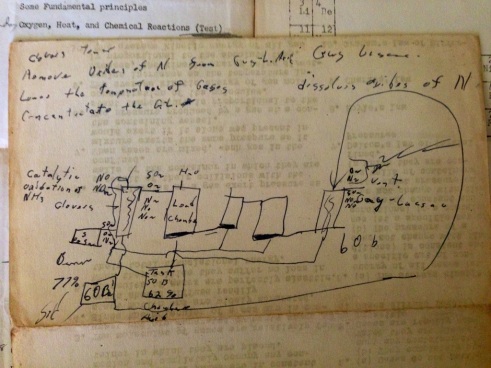
And some of his notes (cryptic to me, but endearing):

20130916-173048.jpg

I think the best part about finding my grandfather’s old syllabus tucked away into a book he loved is knowing that we shared a habit.

“The thingness of books” (From Chrostowska’s Novel Permission)

The thingness of books, especially of many books kept in a small space, stacked high without rhyme or reason, can become impressive. I worry about being oppressed by the books I own––quite different from being oppressed by the ownership of books. There are days when I am certainly very oppressed by the presence of so many books in such a small space. There is really no more room for me with them around, just as there is no room for more books with me around. Yet I keep introducing new books, and reintroducing books that have either fallen or been misplaced and have now been picked up or found, or those I have lent (both with relief at the extra space and with apprehension at never seen them again) and that have just been returned to me. So now: loads and loads of books everywhere, and the fear that they will all come falling down one moment as I am passing through (or edging through) or sitting or (worse) dozing in my armchair, and that I or (more so) that they might be injured in the fall. The idea of all those books tipping over or (even) a shelf detaching itself from the wall and crashing to the floor, is positively nerve-wracking. Every time a book is taken off the shelf, transposed or put back I feel I am pushing my luck. I have so far been unusually lucky in avoiding an avalanche of book matter. I do believe a little order goes a long way, and that the ordering of books and maintaining always some semblance of order are possibly the best way of obviating the clutter typical of book-laden apartments. One really cannot speak of a book collection without having taken stock and organized and subjected one’s books to a more or less logical and consistent access-and-retrieval system. And apartments where the number of books impedes one’s access to them and exceeds a sustainable human-to-book ratio, books attract a frightful degree of clutter in a category unto itself. If it were merely dust and cobwebs everything would still be manageable; but a book heaven that has not been whipped into shape invites its owner to let go of themselves, is an invitation to physical sloth, if not intellectual sloth and downright mental confusion (too many books in too much chaos too often proves deadly for a thinking brain). The typical flat where books predominate, hence a space dominated by books, sooner or later adapts to the physical dimensions of books and reconfigures itself to accommodate even more of them––that is, ceases to be a flat and becomes a library. The sole occupant of such a space is, properly speaking, sharing accommodation. Without realizing it, this inhabitant has already given up many of the advantages of living alone. For starters, there is the uncontrollable, self-begetting clutter. You can deceive yourself that you could straighten up any day, but the mess that comes with the preponderance of books is addictive and ineradicable. It takes considerable exertion of the will to alter this reality. Similarly you may claim to be free to move out any day, to leave the mass and cramped conditions behind, but the truth is only too material: you are not going anywhere as long as you hold on to this many books. There is finally, the sheer lack of space for independent thought. These towers of intellect are known for their diminishing effects. You feel dwarfed both physically and mentally, and when this inequality in stature becomes too great you are done for as an independent thinker. Intellectual inferiority won’t let you scale the shoulders of giants to see further than them.

–From Sylwia Chrostowska’s novel Permission.

Read Donald Barthelme’s Story “Robert Kennedy Saved from Drowning”

K at His Desk

He is neither abrupt with nor excessively kind to associates. Or he is both abrupt and kind. The telephone is, for him, a whip, a lash, but also a conduit for soothing words, a sink into which he can hurl gallons of syrup if it comes to that. He reads quickly, scratching brief comments (“Yes,” “No”) in corners of the paper. He slouches in the leather chair, looking about him with a slightly irritated air for new visitors, new difficulties. He spends his time sending and receiving messengers. “I spend my time sending and receiving messengers,” he says. “Some of these messages are important. Others are not.”

Described by Secretaries

A: “Quite frankly I think he forgets a lot of things. But the things he forgets are those which are inessential. I even think he might forget deliberately, to leave his mind free. He has the ability to get rid of unimportant details. And he does.” B: “Once when I was sick, I hadn’t heard from him, and I thought he had forgotten me. You know usually your boss will send flowers or something like that. I was in the hospital, and I was mighty blue. I was in a room with another girl, and her boss hadn’t sent her anything either. Then suddenly the door opened and there he was with the biggest bunch of yellow tulips I’d ever seen in my life. And the other girl’s boss was with him, and he had tulips too. They were standing there with all those tulips, smiling. ”

Behind the Bar

At a crowded party, he wanders behind the bar to make himself a Scotch and water. His hand is on the bottle of Scotch, his glass is waiting. The bartender, a small man in a beige uniform with gilt buttons, politely asks K. to return to the other side, the guests’ side, of the bar. “You let one behind here, they all be behind here,” the bartender says.

Read the rest of Donald Barthelme’s short story “Robert Kennedy Saved from Drowning.”


The O. Henry Prize Stories 2013 (Book Acquired, Sometime Last Week)

20130914-084712.jpg

Here are the table of contents for the 2013 O. Henry Prize Stories:

Your Duck Is My Duck, by DEBORAH EISENBERG
Sugarcane, by DEREK PALACIO
The Summer People, by KELLY LINK
Leaving Maverley, by ALICE MUNRO
White Carnations, by POLLY ROSENWAIKE
Sail, by TASH AW
Anecdotes, by ANN BEATTIE
Lay My Head, by L. ANNETTE BINDER
He Knew, by DONALD ANTRIM
The Visitor, by ASAKO SERIZAWA
Where Do You Go? by SAMAR FARAH FITZGERALD
Aphrodisiac, by RUTH PRAWER JHABVALA
Two Opinions, by JOAN SILBER
They Find the Drowned, by MELINDA MOUSTAKIS
The Mexican, by GEORGE MCCORMICK
Tiger, by NALINI JONES
Pérou, by LILY TUCK
Sinkhole, by JAMIE QUATRO
The History of Girls, by AYŞE PAPATYA BUCAK
The Particles, by ANDREA BARRETT

My favorite thing about the list is that I’ve only heard of a handful of the writers here. Read the introduction here.

Biblioklept’s Dictionary of Literary Terms

AFFECTIVE FALLACY

Avoid reading with emotions. Ignore any feelings you feel during reading—that’s not the point of literature.

BYRONIC HERO

Super-cool cool guy.

CANON

All the literature that’s fit to print. Declare it dead or meaningless or obsolete every few years. Revise as necessary.

DIARY

The private thoughts of an author, never intended for publication. Publish and disseminate widely after death.

ENLIGHTENMENT

A brief, optimistic mistake.

FRANKENSTEIN

Always point out that Frankenstein is the doctor’s name, not the monster’s. Argue that Percy Shelley’s edits were intrusive.

GOTHIC NOVEL

Wears black; smokes cloves.

HAIKU

A form of poetry grade school children are forced to write. Count the syllables.

INKHORN TERM

Linguistic aureation proliferated to adnichilate reader apperception.

JOUISSANCE

A nebulous, sticky French pun.

KITSCH

The sad process by which the consumerist trash capitalism necessitates colonizes an aesthetic perspective via defensive irony.

LIMERICK

The acme of excellence in poetry. Nantucket is a popular setting.

MEMOIR

A genre of literature often mistaken for truth by its audience.

NOVELLA

A novelist’s chance at perfection.

ORWELLIAN

A useful adjective. Misuse freely—especially if you only dimly recall the two or three things you ever read by George Orwell.

PHALLOGOCENTRISM

In the beginning there was the Word, and the Word was Phallus.

QUARTO

Bring up in any discussion of Shakespeare; watch the students’ eyes glaze over.

ROMAN A CLEF

A genre of literature often mistaken for fiction by its audience.

SOCRATIC IRONY

The tedious, drawn out process of questioning that Plato submits his characters to in order to get to his thesis.

THEME

A misunderstanding of the text in which all its words are distilled into a single cliché, guaranteeing that the text will not have to be reread.

UNCANNY

Pair with valley or X-Men.

VARIORUM

An annotated edition of a text with scholarly commentary intended to ruin any possible enjoyment on the reader’s part.

WELTANSCHAUUNG

A German word that students should use in term papers instead of “viewpoint” or “perspective.”

XANADU

Poorly received 1980 musical film about roller skating. Also the setting of a Coleridge poem.

YA

Abbreviation for “Young Adult,” a genre of books that people of all ages read and which serve as the basis for Hollywood film franchises.

ZARATHUSTRA

Dude who spake.

Read Kazuo Ishiguro’s Subtle and Unsettling Story “A Village After Dark”

There was a time when I could travel England for weeks on end and remain at my sharpest—when, if anything, the travelling gave me an edge. But now that I am older I become disoriented more easily. So it was that on arriving at the village just after dark I failed to find my bearings at all. I could hardly believe I was in the same village in which not so long ago I had lived and come to exercise such influence.

There was nothing I recognized, and I found myself walking forever around twisting, badly lit streets hemmed in on both sides by the little stone cottages characteristic of the area. The streets often became so narrow I could make no progress without my bag or my elbow scraping one rough wall or another. I persevered nevertheless, stumbling around in the darkness in the hope of coming upon the village square—where I could at least orient myself—or else of encountering one of the villagers. When after a while I had done neither, a weariness came over me, and I decided my best course was just to choose a cottage at random, knock on the door, and hope it would be opened by someone who remembered me.

I stopped by a particularly rickety-looking door, whose upper beam was so low that I could see I would have to crouch right down to enter. A dim light was leaking out around the door’s edges, and I could hear voices and laughter. I knocked loudly to insure that the occupants would hear me over their talk. But just then someone behind me said, “Hello.”

Read the rest of Kazuo Ishiguro’s story “A Village After Dark” at The New Yorker; you can also hear Ben Marcus read and discuss the story on The New Yorker’s fiction podcast.


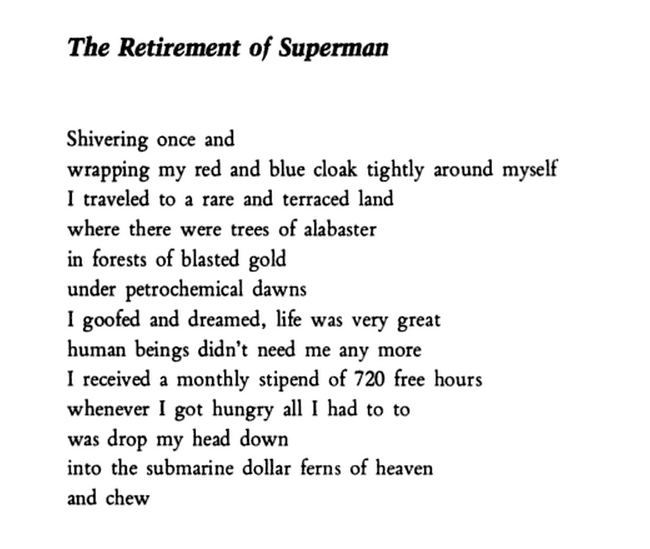
“The Retirement of Superman” — Tom Clark

Capture

Four Story Ideas from Nathaniel Hawthorne’s Note-Books

  1. A girl’s lover to be slain and buried in her flower-garden, and the earth levelled over him. That particular spot, which she happens to plant with some peculiar variety of flowers, produces them of admirable splendor, beauty, and perfume; and she delights, with an indescribable impulse, to wear them in her bosom, and scent her chamber with them. Thus the classic fantasy would be realized, of dead people transformed to flowers.
  2. Objects seen by a magic-lantern reversed. A street, or other location, might be presented, where there would be opportunity to bring forward all objects of worldly interest, and thus much pleasant satire might be the result.
  3. A missionary to the heathen in a great city, to describe his labors in the manner of a foreign mission.
  4. To show the effect of gratified revenge. As an instance, merely, suppose a woman sues her lover for breach of promise, and gets the money by instalments, through a long series of years. At last, when the miserable victim were utterly trodden down, the triumpher would have become a very devil of evil passions,–they having overgrown his whole nature; so that a far greater evil would have come upon himself than on his victim.

THRILLING NARRATIVES OF MUTINY, MURDER AND PIRACY, A WEIRD SERIES OF Tales of Shipwreck and Disaster, FROM THE EARLIEST PART OF THE CENTURY TO THE PRESENT TIME, WITH ACCOUNTS OF Providential Escapes AND HEART-RENDING FATALITIES.

Capture

“The conventional means of attaining the castle” (Donald Barthelme)

80. The conventional means of attaining the castle are as follows: “The eagle dug its sharp claws into the tender flesh of the youth, but he bore the pain without a sound, and seized the bird’s two feet with his hands. The creature in terror lifted him high up into the air and began to circle the castle. The youth held on bravely. He saw the glittering palace, which by the pale rays of the moon looked like a dim lamp; and he saw the windows and balconies of the castle tower. Drawing a small knife from his belt, he cut off both the eagle’s feet. The bird rose up in the air with a yelp, and the youth dropped lightly onto a broad balcony. At the same moment a door opened, and he saw a courtyard filled with flowers and trees, and there, the beautiful enchanted princess.” (The Yellow Fairy Book)

From Donald Barthelme’s short story “The Glass Mountain” (read it here).

National Day of Encouragement Reading List

Today, a dollar store calendar my grandmother gave me tells me, is National Day of Encouragement, which is totally a real thing. So here is a National Day of Encouragement Reading List, which is also totally a real thing. Much encouragement to you, citizens!

  1. King Lear, William Shakespeare
  2. Blood Meridian, Cormac McCarthy
  3. “Before the Law,” Franz Kafka
  4. Candide, Voltaire
  5. First Love and Other Sorrows, Harold Brodkey
  6. “Rappaccini’s Daughter,” Nathaniel Hawthorne
  7. Camp Concentration, Thomas Disch
  8. “The Lottery,” Shirley Jackson
  9. “The Raven,” Edgar Allan Poe
  10. The Awakening, Kate Chopin
  11. Things Fall Apart, Chinua Achebe
  12. The Bell Jar, Sylvia Plath
  13. Correction, Thomas Bernhard
  14. Butterfly Stories, William Vollmann
  15. “A Good Man Is Hard to Find,” Flannery O’Connor
  16. The Road, Cormac McCarthy
  17. 2666, Roberto Bolaño
  18. “The Fall of the House of Usher,” Edgar Allan Poe
  19. Wuthering Heights, Emily Brontë
  20. From Hell, Alan Moore & Eddie Campbell
  21. The Flame Alphabet, Ben Marcus
  22. The Painted Bird, Jerzy Kosinski
  23. Heart of Darkness, Joseph Conrad
  24. “The Wasteland,” T.S. Eliot
  25. Hamlet, William Shakespeare
  26. The Pearl, John Steinbeck
  27. Distant Star, Roberto Bolaño
  28. Notes from Underground,  Fyodor Dostoyevsky
  29. The Yearling, Marjorie Kinnan Rawlings
  30. The Kindly Ones, Jonathan Littell
  31. “The Life You Save May Be Your Own,” Flannery O’Connor
  32. Gargoyles, Thomas Bernhard
  33. The Plague, Albert Camus
  34. “The Yellow Wallpaper,” Charlotte Perkins Gilman
  35. Frankenstein, Mary Shelley
  36. Where the Red Fern Grows, Wilson Rawls
  37. A Farewell to Arms, Ernest Hemingway
  38. “Good Old Neon,” David Foster Wallace
  39. 1984, George Orwell
  40. Nausea, Jean-Paul Sartre

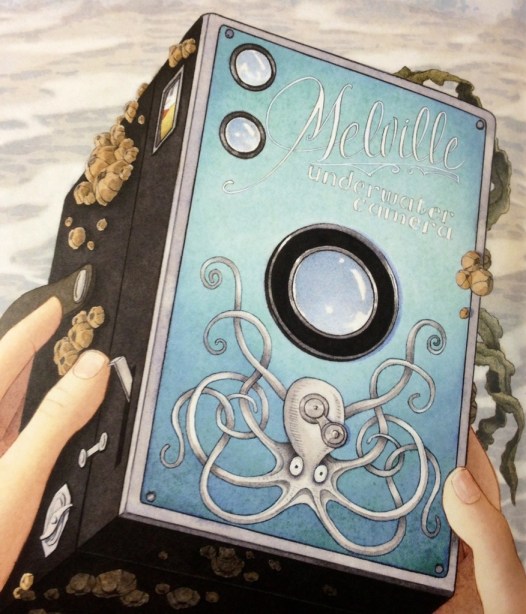
Melville Underwater Camera

20130912-114628.jpg

From David Wiesner’s marvelous wordless wonder book Flotsam.

“A Note on Realism” — Robert Louis Stevenson

“A Note on Realism” by Robert Louis Stevenson

Style is the invariable mark of any master; and for the student who does not aspire so high as to be numbered with the giants, it is still the one quality in which he may improve himself at will.  Passion, wisdom, creative force, the power of mystery or colour, are allotted in the hour of birth, and can be neither learned nor simulated.  But the just and dexterous use of what qualities we have, the proportion of one part to another and to the whole, the elision of the useless, the accentuation of the important, and the preservation of a uniform character from end to end—these, which taken together constitute technical perfection, are to some degree within the reach of industry and intellectual courage.  What to put in and what to leave out; whether some particular fact be organically necessary or purely ornamental; whether, if it be purely ornamental, it may not weaken or obscure the general design; and finally, whether, if we decide to use it, we should do so grossly and notably, or in some conventional disguise: are questions of plastic style continually rearising.  And the sphinx that patrols the highways of executive art has no more unanswerable riddle to propound.

In literature (from which I must draw my instances) the great change of the past century has been effected by the admission of detail.  It was inaugurated by the romantic Scott; and at length, by the semi-romantic Balzac and his more or less wholly unromantic followers, bound like a duty on the novelist.  For some time it signified and expressed a more ample contemplation of the conditions of man’s life; but it has recently (at least in France) fallen into a merely technical and decorative stage, which it is, perhaps, still too harsh to call survival.  With a movement of alarm, the wiser or more timid begin to fall a little back from these extremities; they begin to aspire after a more naked, narrative articulation; after the succinct, the dignified, and the poetic; and as a means to this, after a general lightening of this baggage of detail.  After Scott we beheld the starveling story—once, in the hands of Voltaire, as abstract as a parable—begin to be pampered upon facts.  The introduction of these details developed a particular ability of hand; and that ability, childishly indulged, has led to the works that now amaze us on a railway journey.  A man of the unquestionable force of M. Zola spends himself on technical successes.  To afford a popular flavour and attract the mob, he adds a steady current of what I may be allowed to call the rancid.  That is exciting to the moralist; but what more particularly interests the artist is this tendency of the extreme of detail, when followed as a principle, to degenerate into merefeux-de-joie of literary tricking.  The other day even M. Daudet was to be heard babbling of audible colours and visible sounds. Continue reading ““A Note on Realism” — Robert Louis Stevenson”

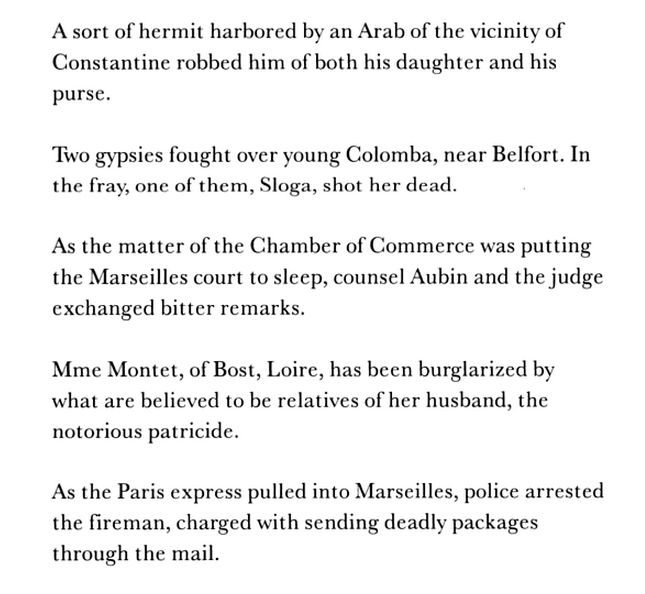
Five from Félix Fénéon

ffff