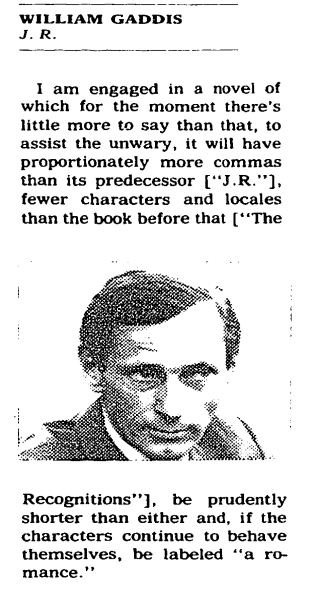
William Gaddis’s contribution to a 6 June 1982 New York Times article asking numerous authors what their next book will be. I suppose that Carpenter’s Gothic, being a Gothic, is a romance.
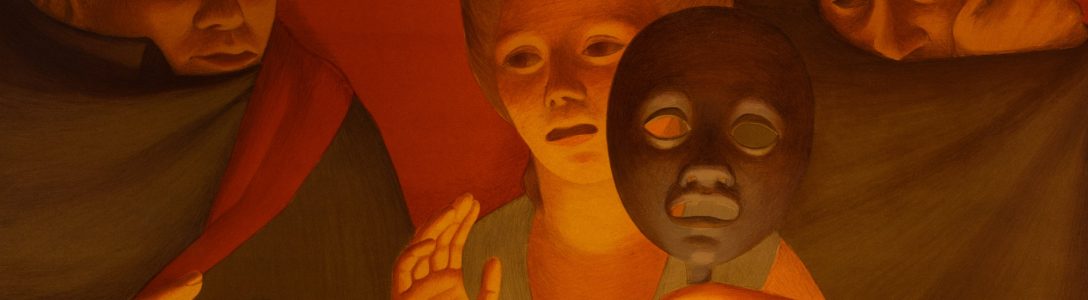
William Gaddis’s contribution to a 6 June 1982 New York Times article asking numerous authors what their next book will be. I suppose that Carpenter’s Gothic, being a Gothic, is a romance.
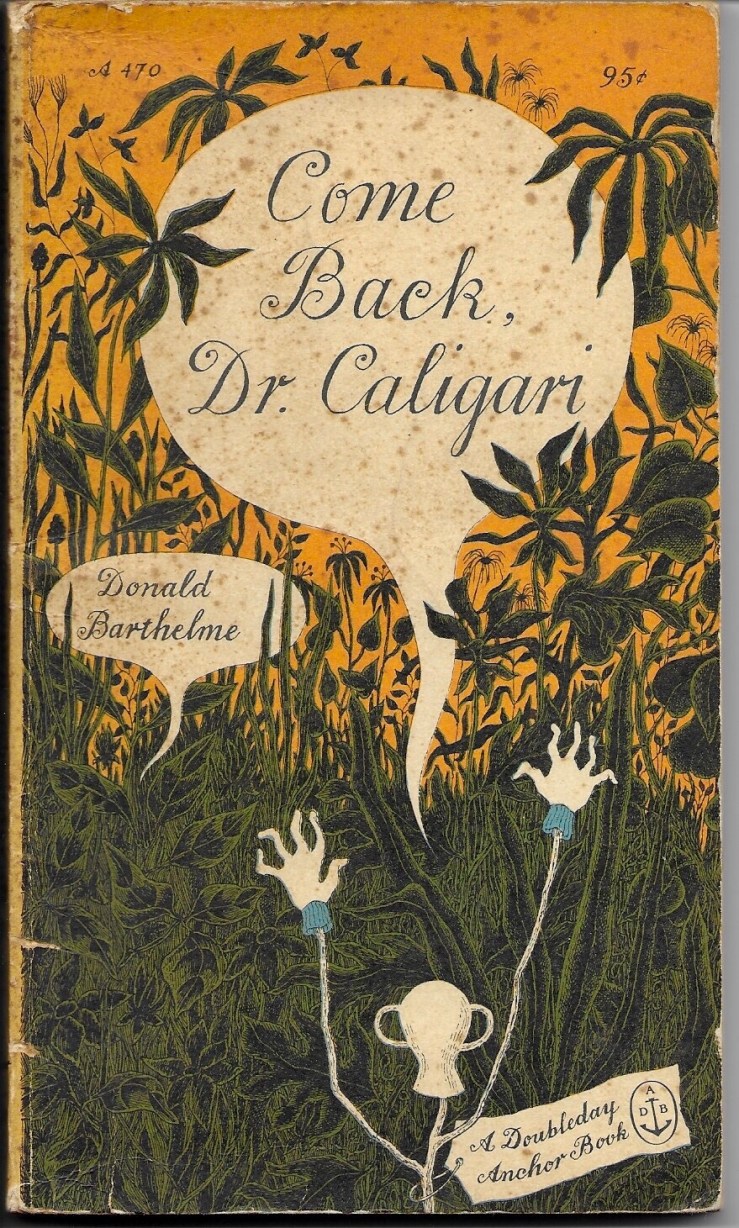
“The Piano Player”
by Donald Barthelme
from Come Back, Dr. Caligari (1964)
Outside his window five-year-old Priscilla Hess, square and squat as a mailbox (red sweater, blue lumpy corduroy pants), looked around poignantly for someone to wipe her overflowing nose. There was a butterfly locked inside that mailbox, surely; would it ever escape? Or was the quality of mailboxes stuck to her forever, like her parents, like her name? The sky was sunny and blue. A filet of green Silly Putty disappeared into fat Priscilla Hess and he turned to greet his wife who was crawling through the door and her hands and knees.
“Yes?” he said. “What now?”
“I’m ugly,” she said, sitting back on her haunches. “Our children are ugly.”
“Nonsense,” Brian said sharply. “They’re wonderful children. Wonderful and beautiful. Other people’s children are ugly, not our children. Now get up and go back out to the smokeroom. You’re supposed to be curing a ham.”
“The ham died,” she said. “I couldn’t cure it. I tried everything. You don’t love me any more. The penicillin was stale. I’m ugly and so are the children. It said to tell you goodbye.”
“It?”
“The ham,” she said. “Is one of our children named Ambrose? Somebody named Ambrose has been sending us telegrams. How many do we have now? Four? Five? Do you think they’re heterosexual?”
She made a moue and ran a hand through her artichoke hair. “The house is rusting away. Why did you want a steel house? Why did I think I wanted to live in Connecticut? I don’t know.”
“Get up,” he said softly, “get up, dearly beloved. Stand up and sing. Sing Parsifal.”
“I want a Triumph,” she said from the floor. “A TR-4. Everyone in Stamford, every single person, has one but me. If you gave me a TR-4 I’d put our ugly children in it and drive away. To Wellfleet. I’d take all the ugliness out of your life.”
“A green one?”
“A red one,” she said menacingly. “Red with red leather seats.”
“Aren’t you supposed to be chipping paint?” he asked. “I bought us an electric data processing system. An IBM.”
“I want to go to Wellfleet,” she said. “I want to talk to
Edmund Wilson and take him for a ride in my red TR-4. The children can dig clams. We have a lot to talk about, Bunny and me.”
“Why don’t you remove those shoulder pads?” Brian said kindly. “It’s too bad about the ham.”
“I loved that ham,” she said viciously. “When you galloped into the University of Texas on your roan Volvo, I thought you were going to be somebody. I gave you my hand. You put rings on it. Rings that my mother gave me. I thought you were going to be distinguished, like Bunny.”
He showed her his broad, shouldered back. “Everything is in flitters,” he said. “Play the piano, won’t you?”
“You always were afraid of my piano, she said. “My four or five children are afraid of the piano. You taught them to be afraid of it. The giraffe is on fire, but I don’t suppose you care.”
“What can we eat,” he asked, “with the ham gone?”
“There’s some Silly Putty in the deepfreeze,” she said tonelessly.
“Rain is falling,” he observed. “Rain or something.”
“When you graduated from the Wharton School of Business,” she said, “I thought at last! I thought now we can move to Stamford and have interesting neighbors. But they’re not interesting. The giraffe is interesting but he sleeps so much of the time. The mailbox is rather interesting. The man didn’t open it at 3:31 P.M. today. He was five minutes late. The government lied again.”
With a gesture of impatience, Brian turned on the light. The great burst of electricity illuminated her upturned tiny face. Eyes like snow peas, he thought. Tamar dancing. My name in the dictionary, in the back. The Law of Bilateral Good Fortune. Piano bread perhaps. A nibble of pain running through the Western World. Coriolanus.
“Oh God,” she said, from the floor. “Look at my knees.”
Brian looked. Her knees were blushing.
“It’s senseless, senseless,” she said. “I’ve been caulking the medicine chest. What for? I don’t know. You’ve got to give me more money. Ben is bleeding. Bessie wants to be an S.S. man. She’s reading The Rise and Fall. She’s identified with Himmler. Is that her name? Bessie?”
“Yes. Bessie.”
“What’s the other one’s name? The blond one?”
“Billy. Named after your father. Your Dad.”
“You’ve got to get me an air hammer. To clean the children’s teeth. What’s the name of that disease? They’ll all have it, every single one, if you don’t get me an air hammer.”
“And a compressor,” Brian said. “And a Pinetop Smith record. I remember.”
She lay on her back. The shoulder pads clattered against the terrazzo. Her number, 17, was written large on her chest. Her eyes were screwed tight shut. “Altman’s is having a sale,” she said, “Maybe
I should go in.”
“Listen,” he said. “Get up. Go into the grape arbor. I’ll trundle the piano out there. You’ve been chipping too much paint. ”
“You wouldn’t touch that piano,” she said. “Not in a million years.”
“You really think I’m afraid of it?”
“Not in a million years,” she said, “you phoney.”
“All right,” Brian said quietly. “All right.” He strode over to the piano. He took a good grip on its black varnishedness. He began to trundle it across the room, and, after a slight hesitation, it struck him dead.
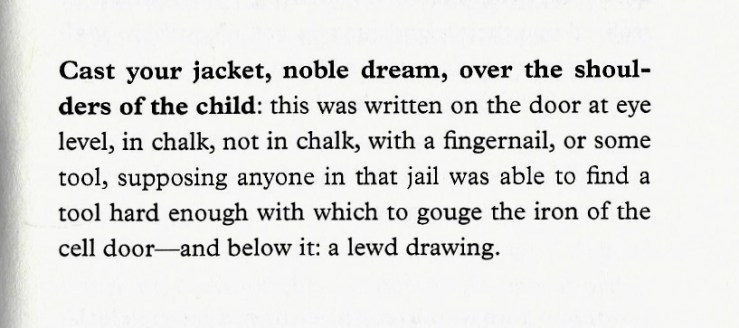
From Studies of Silhouettes by Pierre Senges. English translation by Jacob Siefring. Get it from Sublunary Editions.
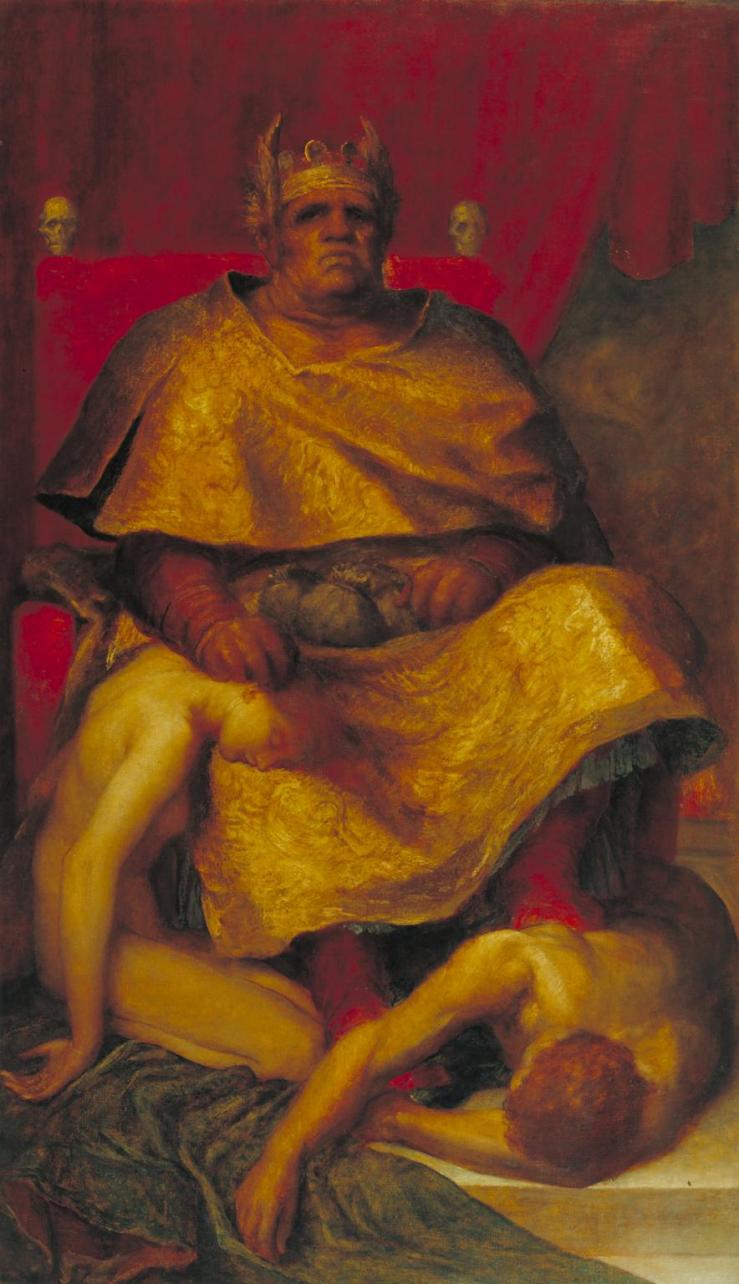
Mammon,1885 by George Frederic Watts (1817-1904)
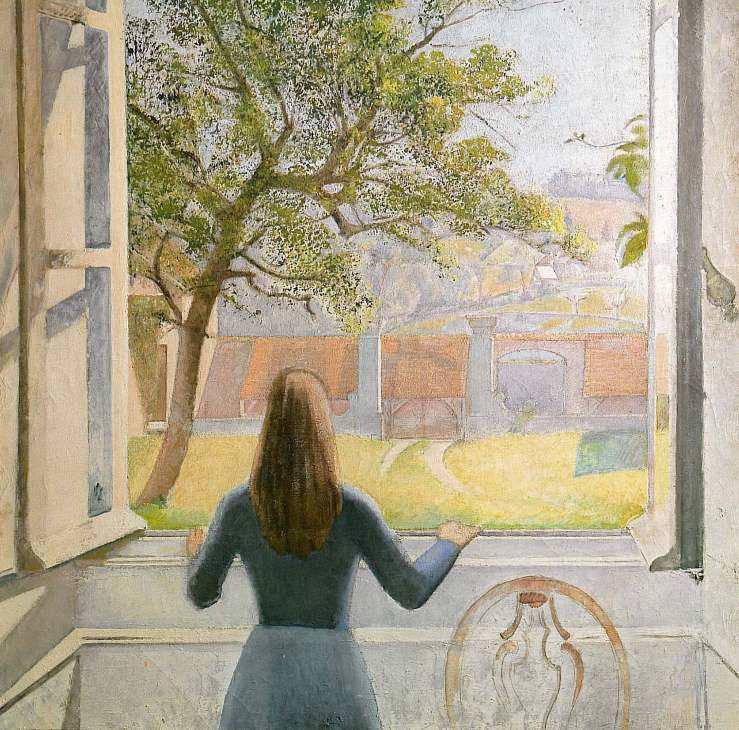
Girl at a Window, 1957 by Balthus (1908–2001)
“Glass of Water Encounter”
by
Terese Svoboda
She dances only in her necklace,
scotch-lit surely. He touches his glasses.
Nightie-less, dugs whipping, hair sprung,
some music inside, out, wet tongue
tip at her lip, no mere palsied shuffle,
both bony feet lifted, elbows awful.
Shakespeare’s banshee of wailing parts,
a woman with hair, a woman with warts.
He’s fixed to the floor. Dear Heloise:
do other presumed-sane mothers do this—
wait in the dark after the ball
to strip for their sons at the end of the hall?
A dream, insists his sister
but his first wife knows better.
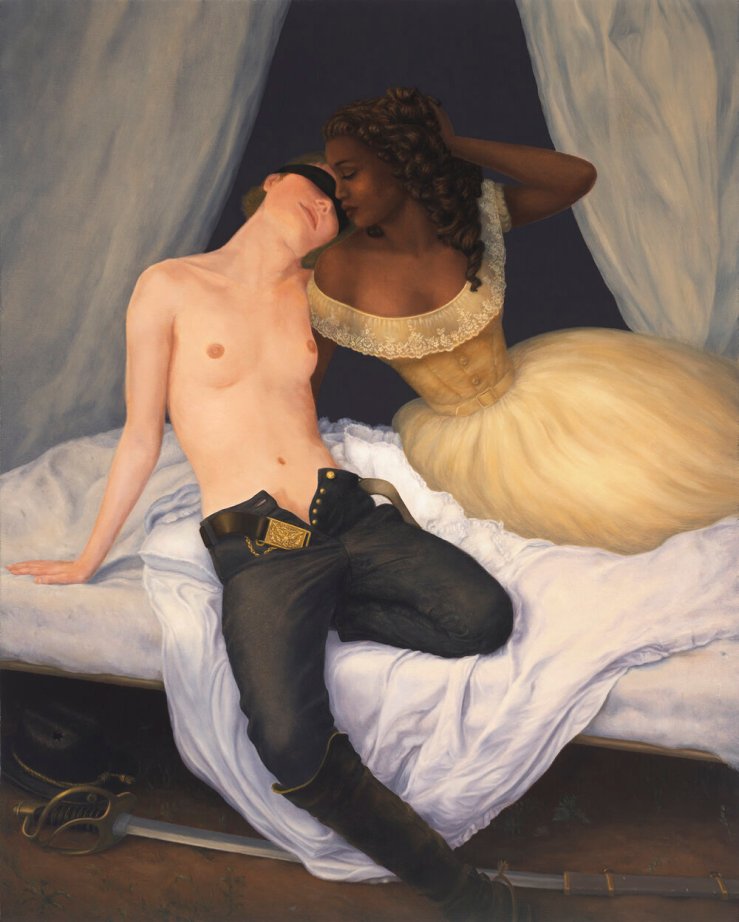
Arabella and the General, 2020 by Hilary Harkness (b. 1971)

A Man Who Suddenly Fell Over, 1952 by Michael Andrews (1928–1995)
Marc Chénetier: Wouldn’t you say that one of the reasons why the writer is of necessity very skeptical is that his or her trade consists of knowing how the idea of a truth can be built into a sentence? Therefore, the skepticism would derive from the awareness of the manipulations that are at work—
William Gass: The writer really doesn’t build the truth into the sentence, the reader does, especially if the sentence is well constructed. That was one of the things that Plato was worried about, because the poets were so persuasive, whereas the sentences of science, expressed in highly mathematical terms, are not the kind of soft bed that one wants to lie in. Rhetorical constructions have enormous seduction, but the writer doesn’t build the belief in it. What you build is something that has unity and emotional power that the reader, then, is liable to latch onto. A good writer should be able to make any point of view sound terrific. Shakespeare could do it, of course. Then that terrificness has nothing to do with the truth, it has to do with being terrific.
From a discussion on William Gaddis’s speech/essay “Old Foes with New Faces.”
Gaddis delivered the speech at the International Writers Center as part The Writer and Religion Conference at Washington University in St. Louis, Missouri, 23-26 Oct. 1994. The discussion held afterwards was moderated by Marc Chénetier and the panelists were Wayne Fields, William Gass, and Heide Ziegle (and Gaddis, of course).
The essay, discussion, as well as other essays and discussions are collected in The Writer and Religion, ed. by William H. Gass and Lorin Cuoco.
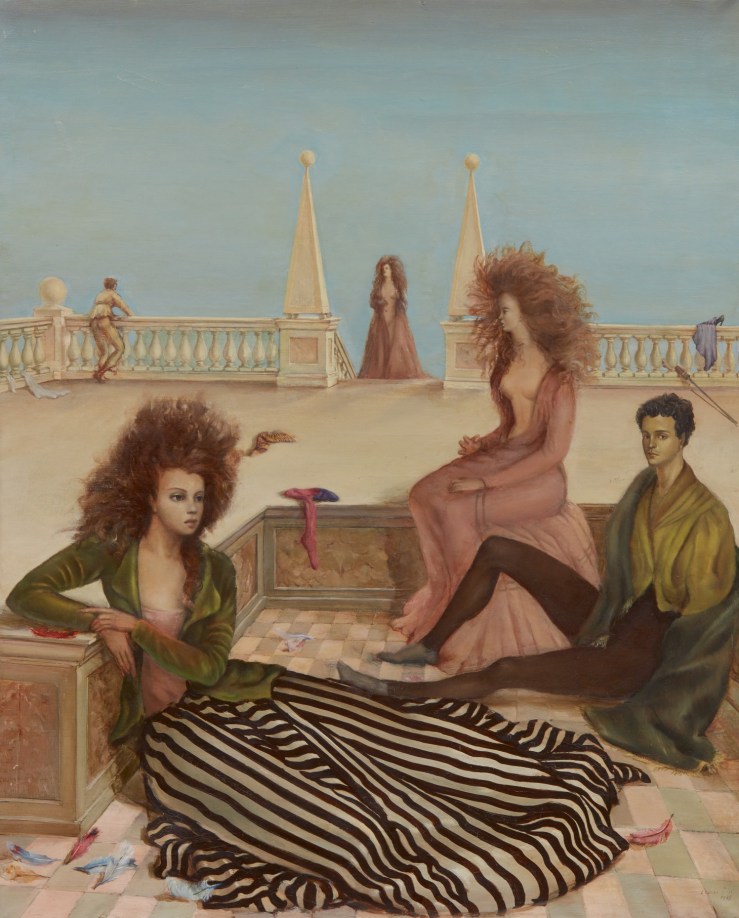
Figures on a Terrace, 1938 by Leonor Fini (1908–1996)
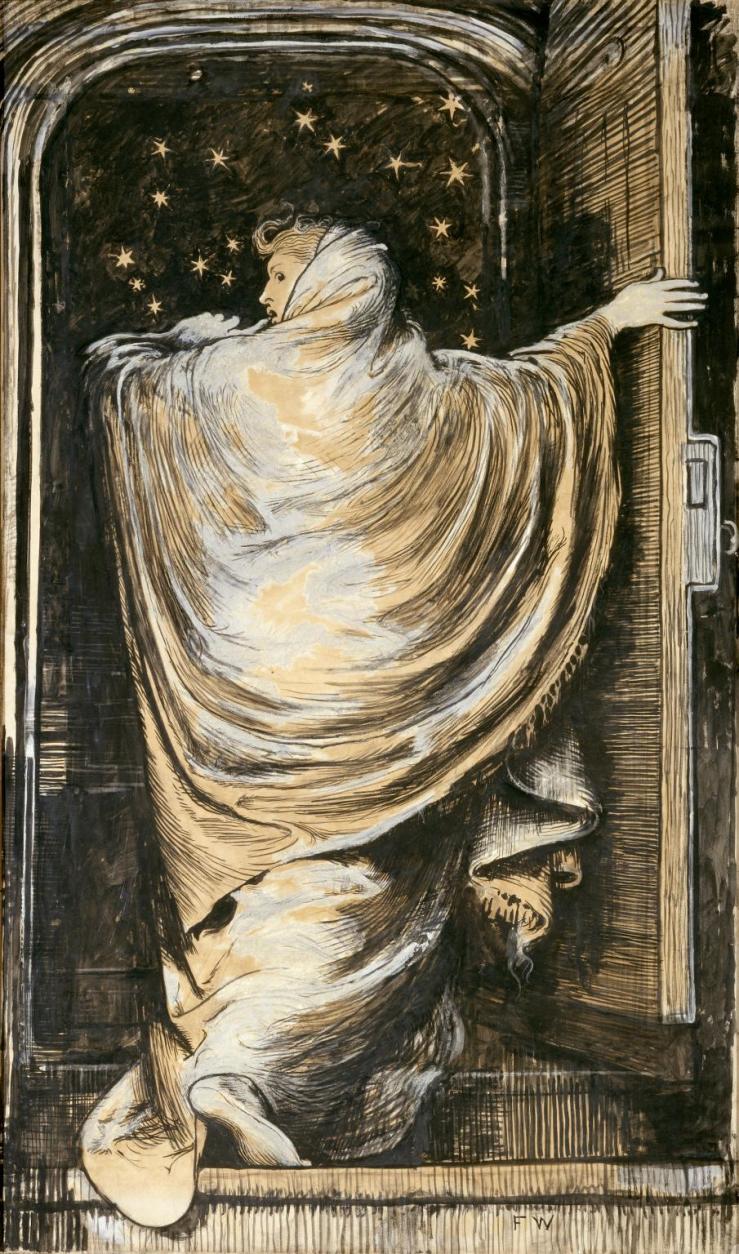
The Woman in White, 1871 by Frederick Walker (1840–1875)
The New York Times published “Authors’ Authors” on 5 Dec. 1976. The piece “asked a number of authors, ranging from Vladimir Nabokov to John Dean, to tell us the three books they most enjoyed this year and to say, in a sentence or two, why.”
There’s of course something silly and even gossipy about such articles, which fall far from literary criticism, of course. But, simultaneously, these kinds not-really-lists are fun. I came across the article looking for something else, and ended up reading it all. There are plenty of my favorite authors as well as notable authors who contributed to the piece: Ishmael Reed, William H. Gass, Eudora Welty, Maurice Sendak, Henry Miller, Joan Didion, and loads more. What’s most interesting to me are the “new” books many books include—I mean books published in (or around) 1976. Some I’ve never heard of, others are classics (of one fashion or another) and many are long long forgotten.
John Cheever’s answer opens the list with an appropriate warning:
I’ve always thought the response to these questionnaires cranky and pretentious and associated them with the darkest hours of Sunday. I mention this only to make it clear that you are free to throw my reply away.
He selects the only book by John Updike I’ve retained, Picked-Up Pieces, cites Richard Condon’s The Manchurian Candidate as an airplane read, and reflects on Daniel Deronda:
It may be a reflection on George Eliot’s refinement or my grossness but my most vivid recollection of this estimable classic is a scene where Deronda enthusiastically seizes the oar of a wherry. It seemed the only robust gesture in the book.
(I had to look up the word wherry.)
Cheever’s pick Updike is on the list, providing a bit of satire on the whole business:

I also found some of Nabokov’s response amusing, although I don’t think it was his intention. He gives us “the three books I read during the three summer months of 1976 while hospitalized in Lausanne”: Dante’s Inferno (“in Singleton’s splendid translation”, The Butterflies of North America by William H. Howe (natch), and his own book, The Original of Laura. Nabokov describes it as
The not quite finished manuscript of a novel which I had begun writing and reworking before my illness and which was completed in my mind: I must have gone through it some 50 times and in my diurnal delirium kept reading it aloud to a small dream audience in a walled garden. My audience consisted of peacocks, pigeons, my long dead parents, two cypresses, several young nurses crouching around, and a family doctor so old as to be almost invisible. Perhaps because of my stumblings and fits of coughing the story of my poor Laura had less success with my listeners than it will have, I hope, with intelligent reviewers when properly published.
Nabokov never finished The Original of Laura. A version of it was published in 2009.
Conservative commentator William F. Buckley picked books by John McPhee, Hugh Kenner, and Malcolm Muggeridge. Joyce Carol Oates liked Ted Hughes’s Season Songs. Despite having “has no taste for contemporary fiction,” Maurice Sendak recommends Leonard Michaels’ collection I Would Have Saved Them If I Could. Maxine Hong Kingston breaks the rule of three, adding Nabokov’s Ada to her trio. Philip Roth includes Bruno Schulz’s The Street of Crocodiles, which was part of a series of translations Roth “edited.” Robert Coles liked Walker Percy’s The Message in the Bottle. Lois Gould lists Anne Rice’s Interview with the Vampire, possibly one of the most enduringly popular books of 1976. Saul Bellow enjoyed Richard Yates’s The Easter Parade. Richard Yates enjoyed Larry McMurty’s Terms of Endearment. Nora Ephron loved Joan Didion’s A Book of Common Prayer. Joan Didion loved Renata Adler’s Speedboat. Cynthia Ozick gives only one title, Leon Edel’s biography of Henry James.
Henry Miller kept it short and sweet:

James Dickey loved something called Dreamthorp by Alexander Smith:
A book of gentle meditations on death in the remote English village: the quietest book of essays I know. To read it is like sinking under the leaves and views and grass of a gentle and caring cemetery and being profoundly glad to be there.
Eudora Welty sticks mostly to Virginia Woolf, recommending the second volume of Woolf’s letters (“Nothing in this book to get between the reader and the writer: Virginia Woolf in her own words, her own mind, speaking for herself”) as well as Mrs Dalloway’s Party. Welty also references Brewer’s Dictionary of Phrase and Fable, which I now must track down.
William H. Gass cites two bona fide postmodern classics and an oddity I’ve never heard of:
J R by William Gaddis. Perhaps the supreme masterpiece of acoustical collage. A real contribution to the art of fiction.
The Geek by Craig Nova. A hard, brilliantly visual novel which is equal in quality to early Hawkes. Few American writers have such a sensuous yet masterfully controlled style.
The Franchiser by Stanley Elkin. Elkin is a genius. I am happy he is also a friend. There are paragraphs in this book in which the language leaps from the page and flies away. The critics owe Elkin much bowing and scraping.
Ishmael Reed describes a book called Dangerous Music by by Jessica Tarahata Hagedorn, a writer I’d never heard of until now:
While the boys were drawing graffiti what were the girls doing? They were writing “Ditty Bop” books, black and white speckled composition books usually, full of gossip, desire, fashion, recipes, proverbs and boyfriends. Written in fire-engine red lipstick “Ditty Bop” books spell “cause” c-u‐z. Nikki Giovanni (“Gemini”) and Alison Mills (“Francisco”) have written classics of the genre. Now Jessica Hagedorn, who makes the S.F. rounds with her West Coast Gangster Choir, has penned the Latino‐Filipino version of the “Ditty Bop.” Reviewers describe “Ditty Bop” books as “sultry”; this one is that. It is a joyous, mean, mambo book blessed by the patron Saint of Latino‐Filipino Ditty Bops, Carmen Miranda.
He also recommends Shouting by by Joyce Carol Thomas, who, thankfully, is not Joyce Carol Oates.
Two authors picked up John Updike’s Picked-Up Pieces (Joyce Carol Oates and John Cheever).
Gabriel Garcia Marquez is cited three times on the list: twice for Autumn of the Patriarch (Lewis Thomas and Bernard Malamud) and once for One Hundred Years of Solitude (John Dean).
John Dean’s Blind Ambition shows up three times (Ishmael Reed, Bob Woodward, and Nikki Giovanni).
Somehow, Nikki Giovanni is the only writer to include Alex Haley’s Roots in a list.
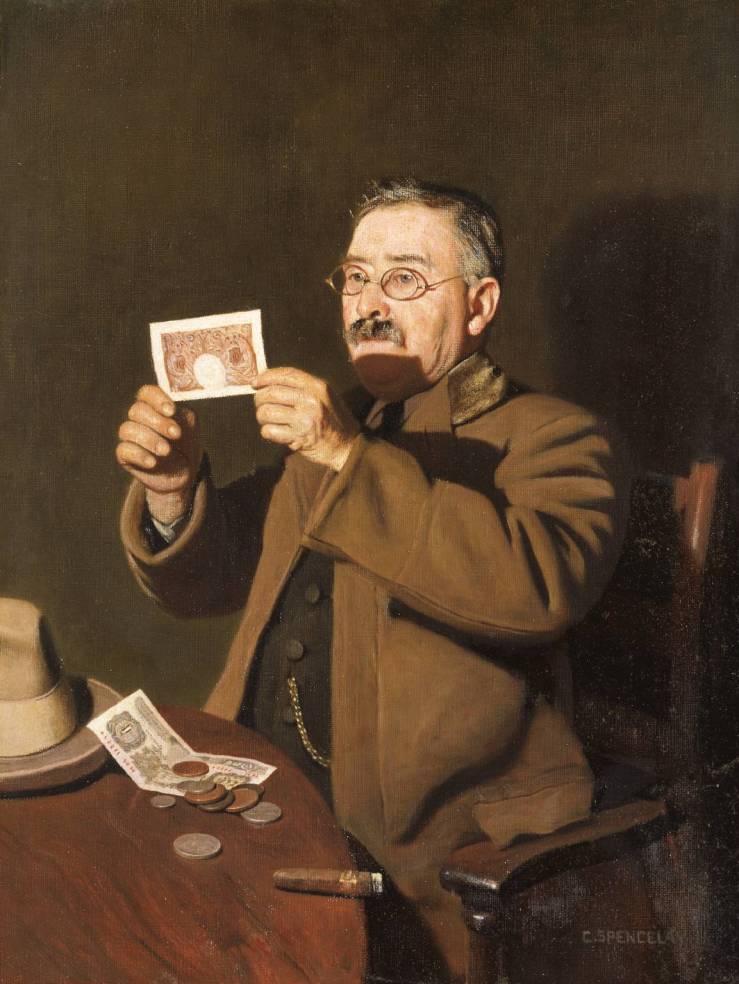
No Watermark, 1933 by Charles Spencelayh (1865–1958)
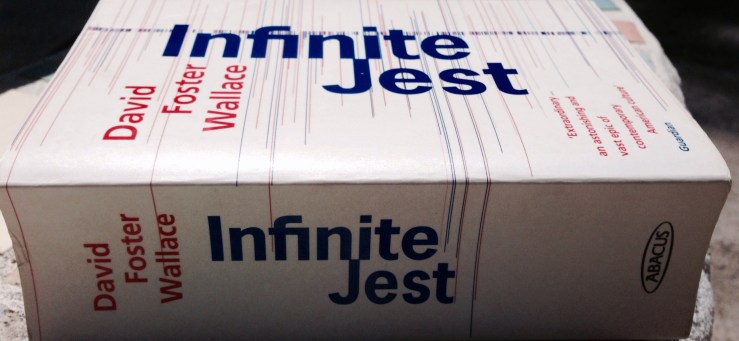
A note to readers new to Infinite Jest
David Foster Wallace’s 1996 novel Infinite Jest poses rhetorical, formal, and verbal challenges that will confound many readers new to the text. The abundance of (or excess of) guides and commentaries on the novel can perhaps have the adverse and unintentional consequence of making readers new to Infinite Jest believe that they can’t “get it” without help. Many of the online analyses and resources for Infinite Jest are created by and targeted to readers who have finished the novel or are rereading the novel. While I’ve read many insightful and enlightening commentaries on the novel over the years, my intuition remains that the superabundance of analysis may have the paradoxical effect of actually impeding readers new to the text. With this in mind, I’d suggest that first-time readers need only a dictionary and some patience.
Infinite Jest is very long but it’s not nearly as difficult as its reputation suggests. There is a compelling plot behind the erudite essaying and sesquipedalian vocabulary. That plot develops around three major strands which the reader must tie together, with both the aid of—and the challenge of—the novel’s discursive style. Those three major plot strands are the tragic saga of the Incandenzas (familial); the redemptive narrative of Ennet House Drug and Alcohol Recovery House, with Don Gately as the primary hero (socicultural); and the the schemes of the Québécois separatists (national/international/political). An addictive and thus deadly film called Infinite Jest links these three plots (through discursive and byzantine subplots).
Wallace often obscures the links between these plot strands, and many of the major plot connections have to be intuited or outright guessed. Furthermore, while there are clear, explicit connections between the plot strands made for the reader, Wallace seems to withhold explicating these connections until after the 200-page mark. Arguably, the real contours of the Big Plot come into (incomplete) focus in a discussion between Hal Incandenza and his brother Orin in pages 242-58. Getting to this scene is perhaps a demand on the patience of many readers. And, while the scene by no means telegraphs what happens in IJ, it nonetheless offers some promise that the set pieces, riffs, scenes, lists, and vignettes shall add up to Something Bigger.
Some of those earliest set pieces, riffs, scenes, lists, and vignettes function almost as rhetorical obstacles for a first-time reader. The novel’s opening scene, Hal Incandenza’s interview with the deans at the University of Arizona, is chronologically the last event in the narrative, and it dumps a lot of expository info on the reader. It also poses a number of questions or riddles about the plot to come, questions and riddles that frankly run the risk of the first-time reader’s forgetting through no fault of his own.
The second chapter of IJ is relatively short—just 10 pages—but it seems interminable, and it’s my guess that Wallace wanted to make his reader endure it the same way that the chapter’s protagonist–Erdedy, an ultimately very minor character—must endure the agonizing wait for a marijuana delivery. The chapter delivers the novel’s themes of ambivalence, desire, addiction, shame, entertainment, “fun,” and secrecy, both in its content and form. My guess is that this where a lot of new readers abandon the novel.
The reader who continues must then work through 30 more pages until meeting the novel’s heart, Don Gately, but by the time we’ve met him we might not trust just how much attention we need to pay him, because Wallace has shifted through so many other characters already. And then Gately doesn’t really show up again until like, 200 pages later.
In Infinite Jest, Wallace seems to suspend or delay introducing the reading rules that we’ve been trained to look for in contemporary novels. While I imagine this technique could frustrate first-time readers, I want to reiterate that this suspension or delay or digression is indeed a technique, a rhetorical tool Wallace employs to perform the novel’s themes about addiction and relief, patience and plateaus, gratitude and forgiveness.
Where is a fair place to abandon Infinite Jest?
I would urge first-time readers to stick with the novel at least until page 64, where they will be directed to end note 24, the filmography of J.O. Incandenza (I will not even discuss the idea of not reading the end notes. They are essential). Incandenza’s filmography helps to outline the plot’s themes and the themes’ plots—albeit obliquely. And readers who make it to the filmography and find nothing to compel them further into the text should feel okay about abandoning the book at that point.
What about a guide?
There are many, many guides and discussions to IJ online and elsewhere, as I noted above. Do you really need them? I don’t know—but my intuition is that you’d probably do fine without them. Maybe reread Hamlet’s monologue from the beginning of Act V, but don’t dwell too much on the relationship between entertainment and death. All you really need is a good dictionary. (And, by the way, IJ is an ideal read for an electronic device—the end notes are hyperlinked, and you can easily look up words as you read).
Still: Two online resources that might be useful are “Several More and Less Helpful Things for the Person Reading Infinite Jest,” which offers a glossary and a few other unobtrusive documents, and “Infinite Jest: A Scene-by-Scene Guide,” which is not a guide at all, but rather a brief series of synopses of each scene in the novel, organized by page number and year; my sense is that this guide would be helpful to readers attempting to delineate the novel’s nonlinear chronology—however, I’d advise against peeking ahead. After you read you may wish to search for a plot diagram of the novel, of which there are several. But I’d wait until after.
An incomplete list of motifs readers new to Infinite Jest may wish to attend to
The big advantage (and pleasure) of rereading Infinite Jest is that the rereader may come to understand the plot anew; IJ is richer and denser the second go around, its themes showing brighter as its formal construction clarifies. The rereader is free to attend to the imagery and motifs of the novel more intensely than a first-time reader, who must suss out a byzantine plot propelled by a plethora of characters.
Therefore, readers new to IJ may find it helpful to attend from the outset to some of the novel’s repeated images, words, and phrases. Tracking motifs will help to clarify not only the novel’s themes and “messages,” but also its plot. I’ve listed just a few of these motifs below, leaving out the obvious ones like entertainment, drugs, tennis (and, more generally, sports and games), and death. The list is in no way definitive or analytic, nor do I present it as an expert; rather, it’s my hope that this short list might help a reader or two get more out of a first reading.
Heads
Cages
Faces
Masks
Teeth
Cycles
Maps
Waste
Infants
Pain
Deformities
Subjects
Objects
One final note
Infinite Jest is a rhetorical/aesthetic experience, not a plot.
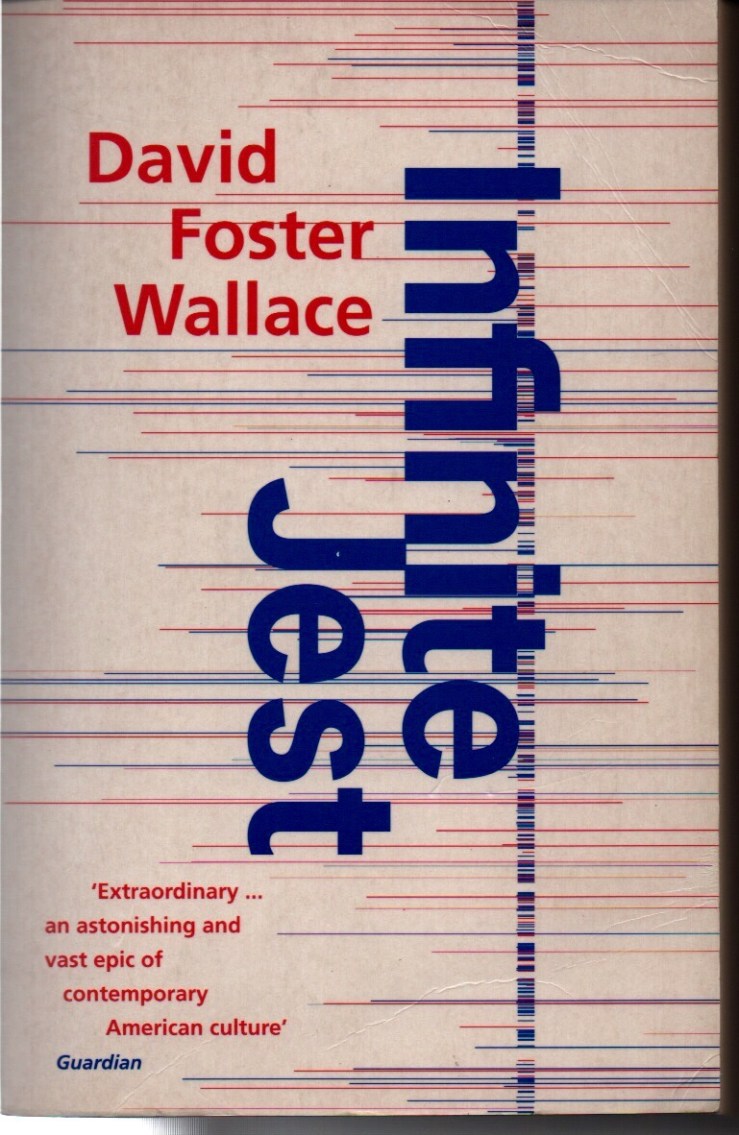
[Ed. note: Biblioklept first posted a version of this note in the summer of 2015. Infinite Jest remains underread by overtalkers].

The Cockcrow, 1946 by Leonora Carrington (1917–2011)

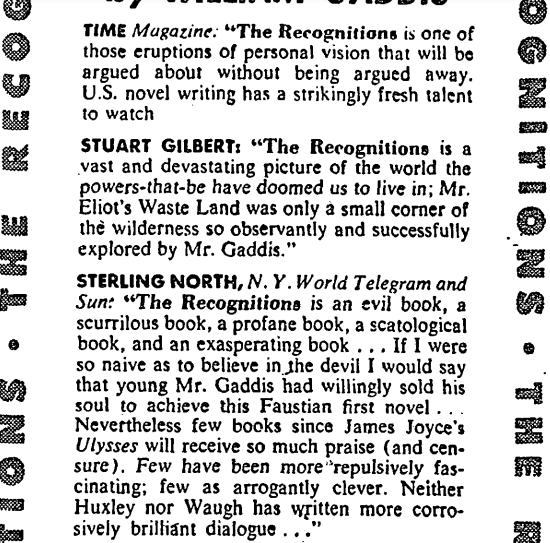
The above ad was published in The New York Times, 16 March 1955. Blurbs, bigger (Sterling North’s is my fave):

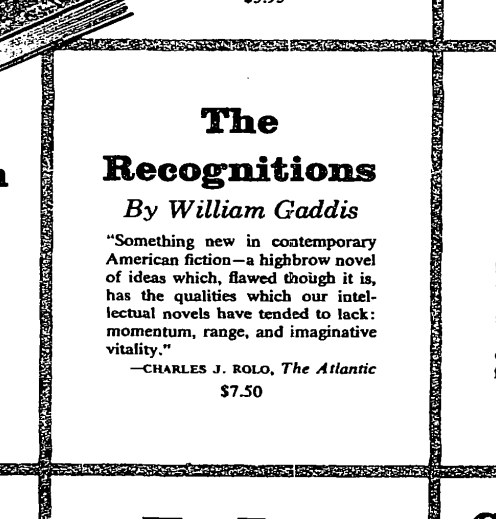
The second ad is from 1 May 1955, also in The New York Times:

I first came to know William Gaddis at a writers’ conference in the Soviet Union in 1985. I had heard that he was shy and averse to publicity, but I found that this reputation was based only on his belief that a writer’s life and personality should be as little as possible associated with his work. As a conferee, he was both eloquent and precise.
Perhaps the most amusing contrast in our group was between him and Allen Ginsberg. Allen, shaggy and bearded, chanted his verse in loud, emotional tones as he pounded a species of accordion that he always carried with him. Will, on the other hand, reserved and quiet, impeccably clad, with the patient composure of a man of the world and the piercing eye of a wit, spoke in measured tones of the small sales that the serious novelist might expect.
If Danielle Steele counted her sales in the millions while he had to make do with a few thousands, he said, it was because she wrote books and he wrote ‘”literature.” Asked for pointers as to future conferences, he glanced obliquely down the table at Allen and suggested that the novelists and poets be separated, so that the accordion would be heard only “down a long corridor, through a closed door.”
Gaddis, who is considered by some critics to be the nearest thing to Herman Melville that our century has produced, who is almost a cult figure among students of English, is nonetheless not well-known to the wider reading public. His first two novels, The Recognitions and JR, published 20 years apart, in 1955 and 1975, frightened off many readers by their length, erudition and supposed ”difficulty.” But this difficulty is much exaggerated by symbol and ambiguity hunters (“What can I do if people insist I’m cleverer than I think I am?” Gaddis asks with a shrug), and length and erudition become virtues when the stories are as interesting as his.
Gaddis has more to say to American readers today than any other novelist I can think of. Take just three fields in which his knowledge is significant: theology, painting and corporate finance. Then consider the space devoted by the press in the 1980’s to religious strife and revivalism, to art sales and art frauds, to stock-market chicanery and insider trading. Some critics have credited me as a novelist with a degree of familiarity in the last-named field, but I have treated it only in broad outlines and with a minimum of legal details. Gaddis could almost qualify as an expert witness in the trial of a malefactor.
From “Recognizing Gaddis,” a longish profile of William Gaddis by novelist (and lawyer) Louis Auchincloss. “Recognizing Gaddis” was published in the 15 Nov. 1987 issue of The New York Times.
 Biblioklept