Bats and Cats — Samplerman

25b8d7dff0f9b281ce0c3e1c9f1dfcc2a1b59519

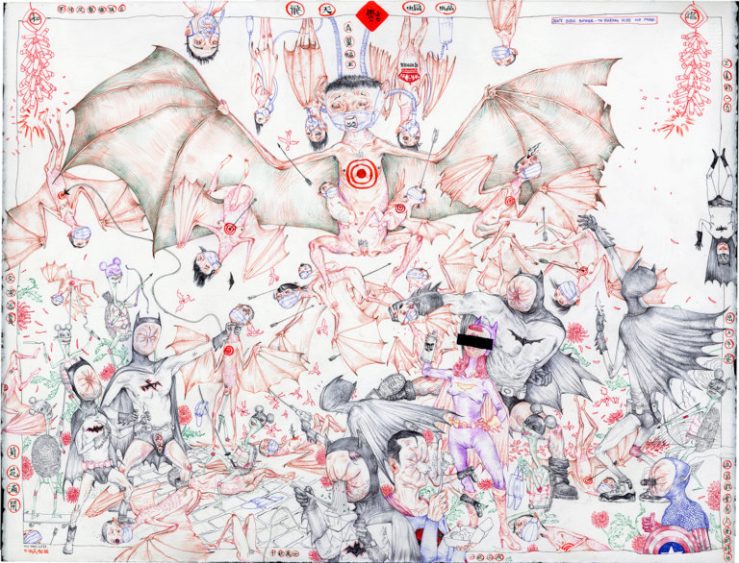
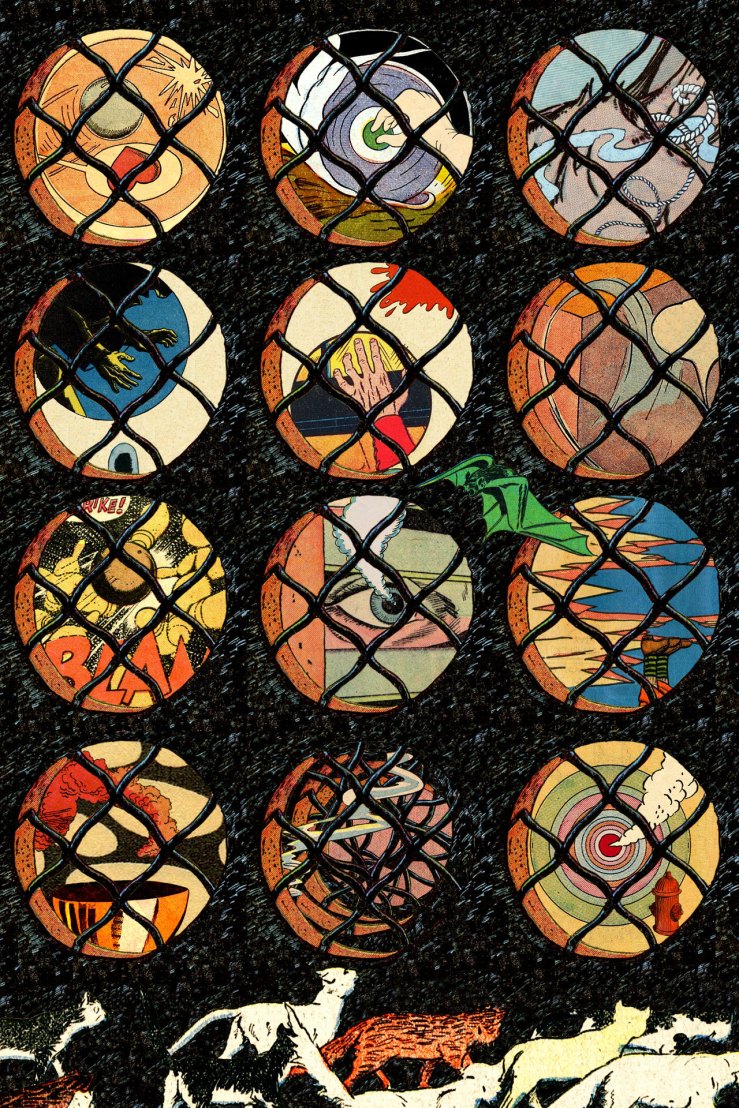
Bats and Cats, 2020 by Samplerman (Yvan Guillo)

King of the Green-winged Bat — Mu Pan

bat_3web-768x586-1

King of the Green-winged Bat, 2020 by Mu Pan (b. 1976)

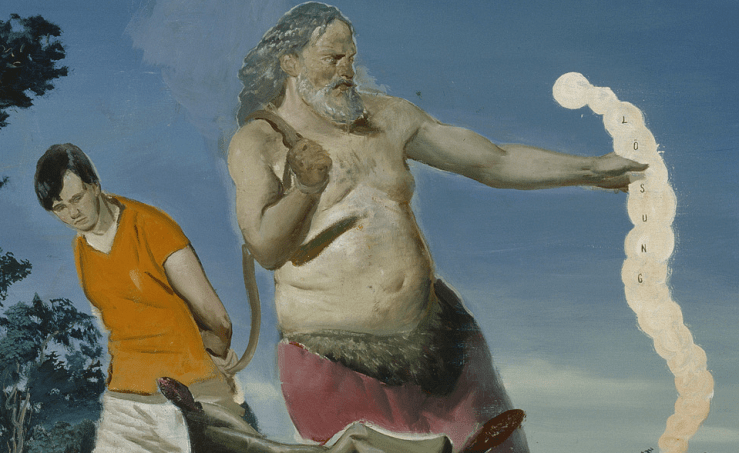
Lösung — Neo Rauch

2005-raune0068-1

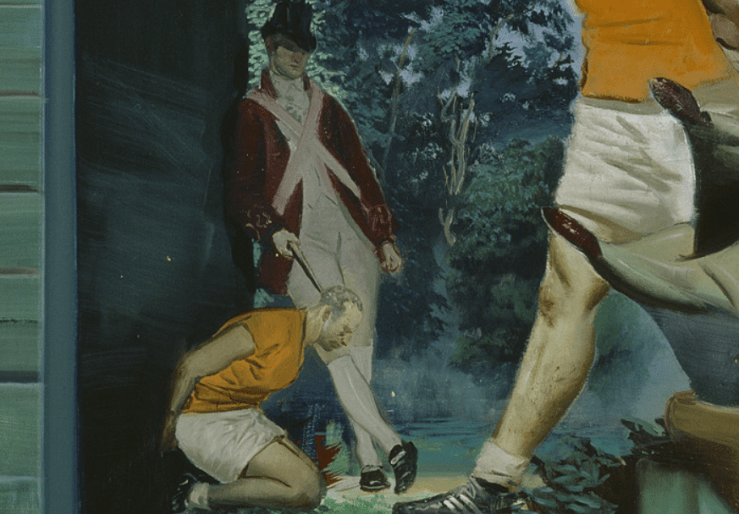
Screenshot 2020-04-14 at 3.05.40 PMScreenshot 2020-04-14 at 3.04.59 PMScreenshot 2020-04-14 at 3.04.32 PMScreenshot 2020-04-14 at 3.03.55 PM

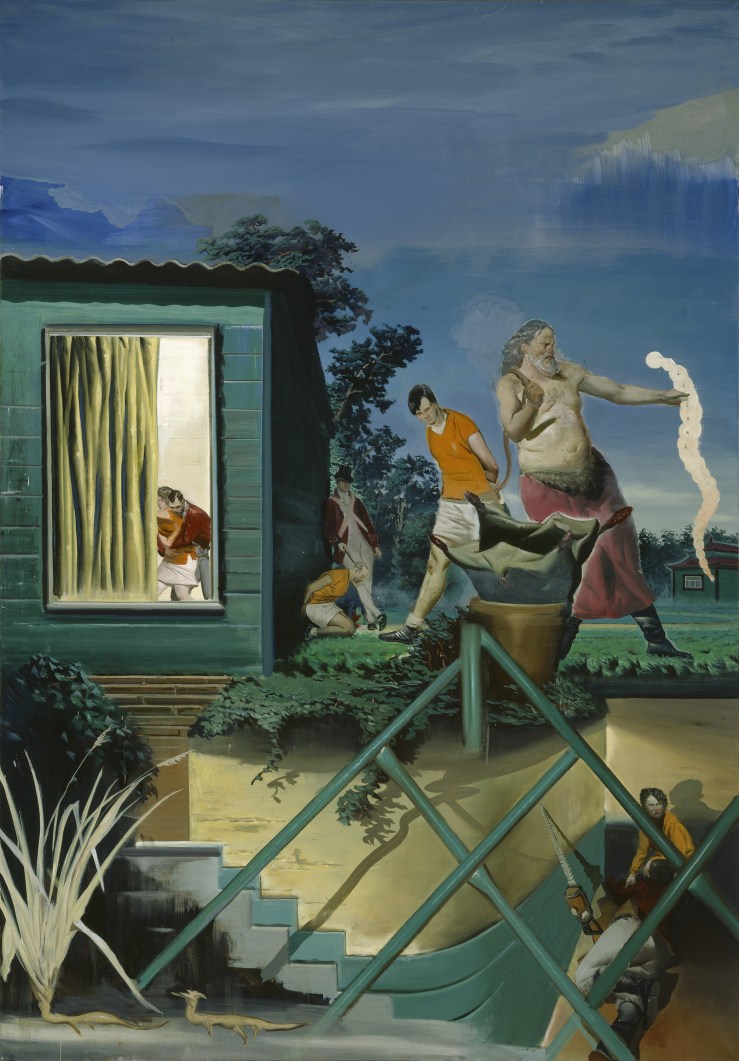
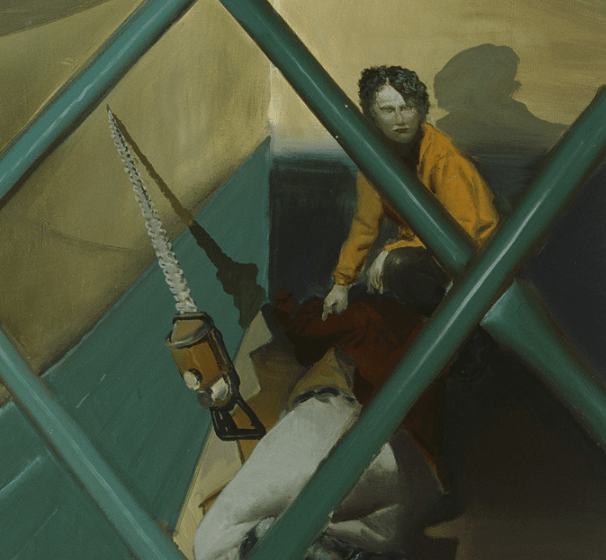
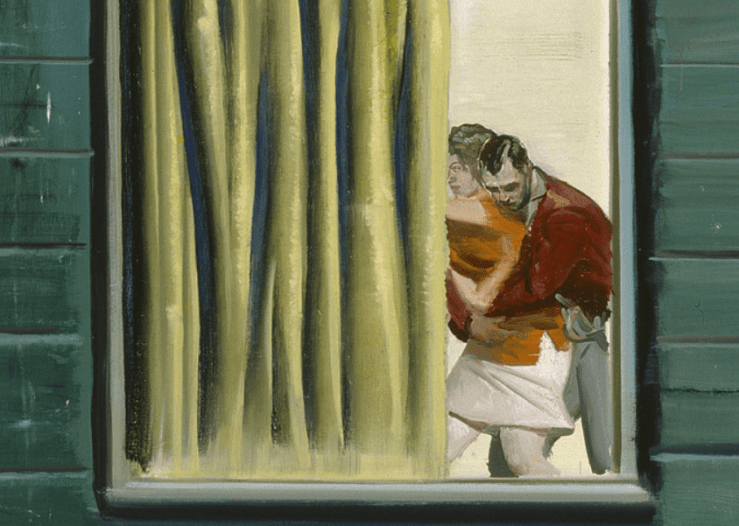
Lösung (Solution), 2005 by Neo Rauch (b. 1960)

“Short Talk on Vicuñas” — Anne Carson

“Short Talk on Vicuñas”

by

Anne Carson


A mythical animal, the vicuña fares well
in the volcanic regions of northern Peru.
Light thunders down on it, like Milton
at his daughters. Hear that?—they
are counting under their breath.
Think about style of life for a
moment. When you take up your
axe, listen. Hoofbeats. Wind.
It is they who make us at home
here, not the other way around.


More short talks by Anne Carson at BOMB.

“Avelino Arredondo” — Jorge Luis Borges

“Avelino Arredondo”

by

Jorge Luis Borges

translated by Andrew Hurley


The incident occurred in Montevideo in 1897.

Every Saturday the friends took the same table, off to one side, in the Café del Globo, like
the poor honest men they were, knowing they cannot invite their friends home, or perhaps escaping it. They were all from Montevideo; at first it had been hard to make friends with Arredondo, a man from the interior who didn’t allow confidences or ask questions. He was hardly more than twenty, a lean, dark-skinned young man, a bit on the short side, and perhaps a little clumsy. His face would have been anonymous had it not been rescued by his eyes, which were both sleepy and full of energy. He was a clerk in a dry goods store on Calle Buenos Aires, and he studied law in his spare time. When the others condemned the war that was ravaging the country and that the president (so general opinion believed) was waging for reprehensible reasons, Arredondo remained silent. He also remained silent when the others laughed at him and called him a tightwad.

A short time after the Battle of Cerros Blancos, Arredondo told his friends that they wouldn’t be seeing him for a while; he had to go to Mercedes. The news disturbed no one. Someone told him to watch out for Aparicio Saravia’s gang of gauchos; Arredondo smiled
and said he wasn’t afraid of the Whites. His interlocutor, who had joined the party, said nothing.

It was harder to say good-bye to Clara, his sweetheart. He did it with almost the same
words. He told her not to expect a letter, since he was going to be very, very busy. Clara, who was not in the habit of writing, accepted the condition without protest. The two young people loved each other very much.

Arredondo lived on the outskirts. He had a black servant woman with the same last name as his; her forebears had been slaves of the family back in the time of the Great War. She was a woman of absolute trustworthiness; Arredondo instructed her to tell anyone asking for him that he was away in the country.

He had picked up his last wages at the dry goods store.

He moved into a room at the back of the house, the room that opened onto the patio of packed earth.

The step was pointless, but it helped him begin that reclusion that his will imposed on him.

From the narrow iron bed in which he gradually recovered his habit of taking an afternoon siesta, he looked with some sadness upon an empty bookcase. He had sold all his books, even the volumes of the Introduction to Law. All he had kept was a Bible, which he had never read and never managed to finish.

He went through it page by page, sometimes with interest and some-times with boredom,
and he set himself the task of memorizing an occasional chapter of Exodus and the last of Ecclesiastes. He did not try to understand what he was reading. He was a freethinker, but he let not a night go by without repeating the Lord’s Prayer, as he’d promised his mother when he came to Montevideo—breaking that filial promise might bring bad luck.

He knew that his goal was the morning of August 25. He knew exactly how many days he
had to get through. Once he’d reached his goal, time would cease, or rather nothing that happened afterward would matter. He awaited the day like a man waiting for his joy and his liberation. He had stopped his watch so he wouldn’t always be looking at it, but every night, when he heard the dark, far-off sound of the twelve chimes, he would pull a page off the calendar and think One day less.

At first he tried to construct a routine. Drink some mate, smoke the black cigarettes he rolled, read and review a certain number of pages, try to chat a bit with Clementina when she brought his dinner on a tray, repeat and embellish a certain speech before he blew out the lamp. Talking with Clementina, a woman along in years, was not easy, because her memory had halted far from the city, back in the mundane life of the country.

Arredondo also had a chessboard on which he would play chaotic games that never managed to come to any end. A rook was missing; he would use a bullet or a coin in its place.

To pass the time, every morning Arredondo would clean his room with a rag and a big broom, even chasing down spiderwebs. The black woman didn’t like him to lower himself to such chores—not only because they fell within her purview but also because Arredondo didn’t really do them very well.

He would have liked to wake up when the sun was high, but the habit of getting up with
the dawn was stronger than his mere will. He missed his friends terribly, though he knew without bitterness that they didn’t miss him, given his impregnable reserve. One afternoon, one of them came around to ask after him but was met in the vestibule and turned away. The black woman didn’t know him; Arredondo never learned who it had been. An avid reader of the news, Arredondo found it hard to renounce those museums of ephemera. He was not a thinking man, or one much given to meditation.

His days and his nights were the same, but Sundays weighed on him.

In mid-July he surmised he’d been mistaken in parceling out his time, which bears us along one way or another anyway. At that point he allowed his imagination to wander through the wide countryside of his homeland, now bloody, through the rough fields of Santa Irene where he had once flown kites, to a certain stocky little piebald horse, surely dead by now, through the dust raised by the cattle when the drovers herded them in, to the exhausted stagecoach that arrived every month with its load of trinkets from Fray Bentos, through the bay of La Agraciada where the Thirty-three came ashore, to the Hervidero, through ragged mountains, wildernesses, and rivers, through the Cerro he had scaled to the lighthouse, thinking that on the two banks of the River Plate there was not another like it. From the Cerroon the bay he traveled once to the peak on the Uruguayan coat of arms, and he fell asleep.

Each night the sea breeze was cool, and good for sleeping. He never spent a sleepless night. He loved his sweetheart with all his soul, but he’d been told that a man shouldn’t think about women, especially when there were none to be had. Being in the country had accustomed him to chastity. As for the other matter… he tried to think as little as possible of the man he hated. The sound of the rain on the roof was company for him.

For the man in prison, or the blind man, time flows downstream as though down a slight decline. As he reached the midpoint of his reclusión, Arredondo more than once achieved that virtually timeless time. In the first patio there was a wellhead, and at the bottom, a cistern where a toad lived; it never occurred to Arredondo that it was the toad’s time, bordering on eternity, that he sought.

As the day grew near he began to be impatient again. One night he couldn’t bear it anymore, and he went out for a walk.

Everything seemed different, bigger. As he turned a corner, he saw a light and went into
the general store, where there was a bar. In order to justify being there, he called for a shot of cane brandy. Sitting and talking, their elbows on the wooden bar, were some soldiers. One of them said: “All of you know that it’s strictly outlawed to
give out any news about battles—formal orders against it.

Well, yesterday afternoon something happened to us that you boys are going to like.

Some barracks-mates of mine and I were walking along in front of the newspaper over there, La Razón. And we heard a voice inside that was breaking that order. We didn’t waste a second going in there, either.

The city room was as dark as pitch, but we gunned down that loose-lipped traitor that was talking.

When he finally shut up, we hunted around for him to drag him out by the heels, but we saw it was a machine!—a phonograph they call it, and it talks all by itself!”

Everyone laughed.

Arredondo had been listening intently.

“What do you think—pretty disappointing, eh, buddy?”

Arredondo said nothing. The uniformed man put his face very near Arredondo’s.

“I want to hear how loud you can yell Viva the President of our Country, Juan Idiarte
Borda!”

Arredondo did not disobey. Amid jeers and clapping he gained the door; in the street, he was hit by one last insult: “Nobody ever said cowards were stupid—or had much temper, either!” He had behaved like a coward, but he knew he wasn’t one. He returned slowly and deliberately to his house.

On August 25, Avelino Arredondo woke up at a little past nine. He thought first of Clara, and only later of what day it was. Good-bye to all this work of waiting — I’ve made it, he said to himself in relief. He shaved slowly, taking his time, and in the mirror he met the same face as always. He picked out a red tie and his best clothes. He had a late lunch. The gray sky threatened drizzle; he’d always pictured this day as radiant. He felt a touch of bitterness at leaving his damp room forever. In the vestibule he met the black woman, and he gave her the last pesos that were left. On the sign at the hardware store he saw some colored diamond shapes, and he realized it had been more than two months since he’d thought of them. He headed toward Calle Sarandi. It was a holiday, and very few people were about.

It was not yet three o’clock when he reached the Plaza Matriz. The Te Deum had been sung; a group of well-dressed men, military officers, and prelates was coming down the slow steps of the church. At first glance, the top hats (some still in their hands), the uniforms, the gold braid, the weapons, and the tunics might create the illusion that there were many of them; the truth was, there were no more than about thirty. Though Arredondo felt no fear, he did feel a kind of respect. He asked which of the men was the president.

“The one there walking beside the archbishop with the miter and staff,” he was told.

He took out his pistol and fired. Idiarte Borda took a few steps, fell forward to the ground, and said very clearly, “I’ve been killed.”

Arredondo gave himself up to the authorities.

“I am a Red and I’m proud to say so. I have killed the president, who betrayed and sullied our party. I left my friends and my sweetheart so they would not be dragged into this; I didn’t read the newspapers so that no one could say the newspapers incited me to do this. I alone am responsible for this act of justice. Now try me.”

This is how the events might have taken place, though perhaps in a more complex way; this is how I can dream they happened.

Woodland Scene — Edwin Dickinson

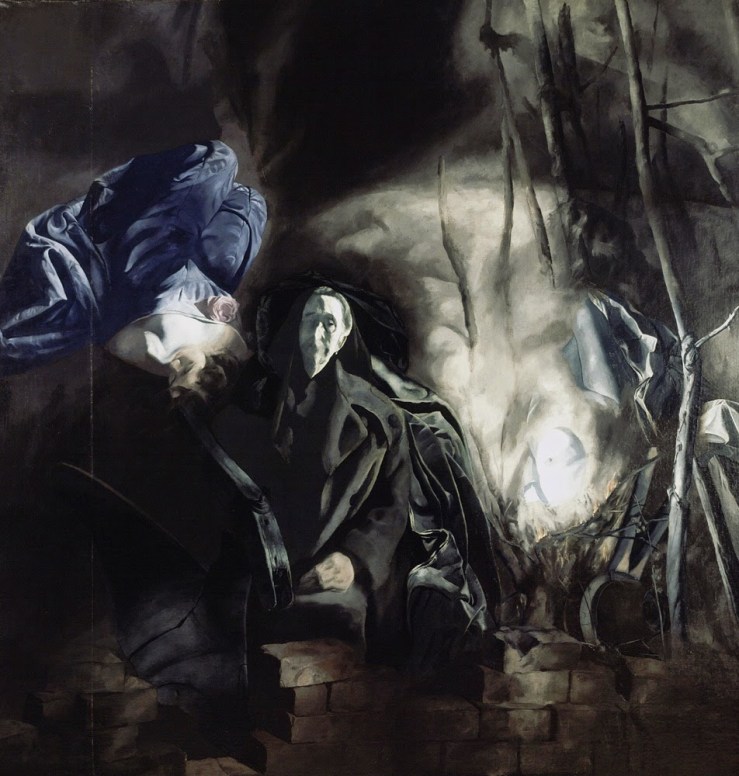
woodland2bscene2b-2b1929-35

Woodland Scene, 1935 by Edwin Dickinson (1891-1978)

We boarded a large cake of ice | Nathaniel Hawthorne’s journal entry, 11 April 1843

April 11th.–I meditated accordingly, but without any very wonderful result. Then at eight o’clock bothered myself till after nine with this eternal tale of Tieck. The forenoon was spent in scribbling; but at eleven o’clock my thoughts ceased to flow,–indeed, their current has been woefully interrupted all along,–so I threw down my pen, and set out on the daily journey to the village. Horrible walking! I wasted the customary hour at the Athenæum, and returned home, if home it may now be called. Till dinner-time I labored on Tieck’s tale, and resumed that agreeable employment after the banquet.

Just when I was on the point of choking with a huge German word, Molly announced Mr. Thoreau. He wished to take a row in the boat, for the last time, perhaps, before he leaves Concord. So we emptied the water out of her, and set forth on our voyage. She leaks, but not more than she did in the autumn. We rowed to the foot of the hill which borders the North Branch, and there landed, and climbed the moist and snowy hill-side for the sake of the prospect. Looking down the river, it might well have been mistaken for an arm of the sea, so broad is now its swollen tide; and I could have fancied that, beyond one other headland, the mighty ocean would outspread itself before the eye. On our return we boarded a large cake of ice, which was floating down the river, and were borne by it directly to our own landing-place, with the boat towing behind.

Parting with Mr. Thoreau, I spent half an hour in chopping wood, when Molly informed me that Mr. Emerson wished to see me. He had brought a letter of Ellery Channing, written in a style of very pleasant humor. This being read and discussed, together with a few other matters, he took his leave, since which I have been attending to my journalizing duty; and thus this record is brought down to the present moment.

Nathaniel Hawthorne’s journal entry, 11 April 1843. From  American Note-Books.

The Resurrection — Otto Dix

the-resurrection

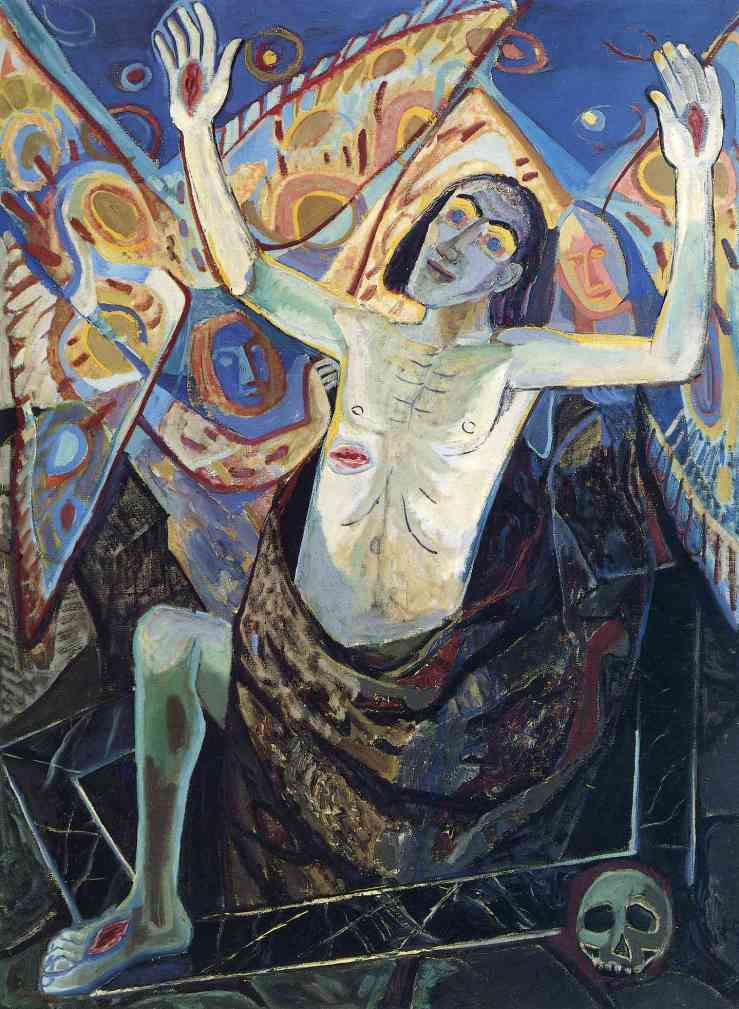
The Resurrection, 1949 by Otto Dix (1891-1969)

The Harrowing of Hell — Jacob van Swanenburg

jacob_van_swanenburg_-_the_harrowing_of_hell

Screenshot 2020-04-11 at 10.57.11 AMScreenshot 2020-04-11 at 10.57.02 AMScreenshot 2020-04-11 at 10.56.38 AM

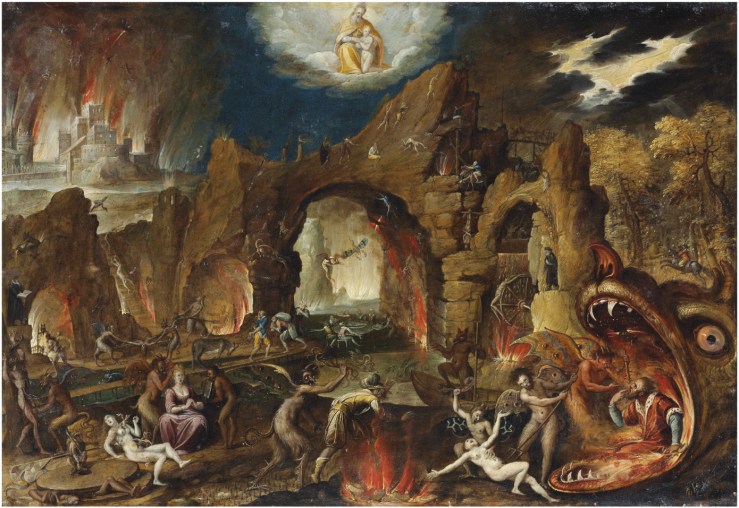
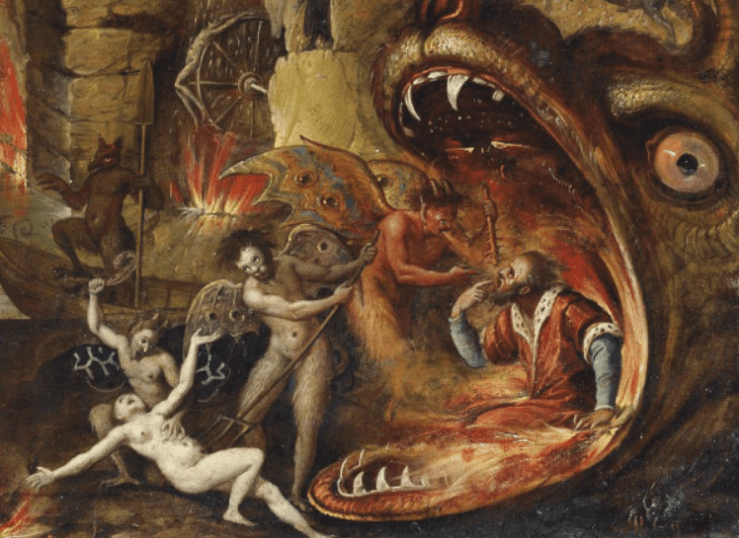
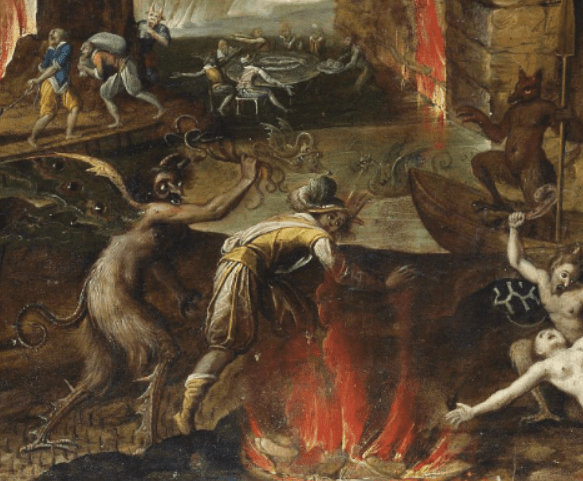
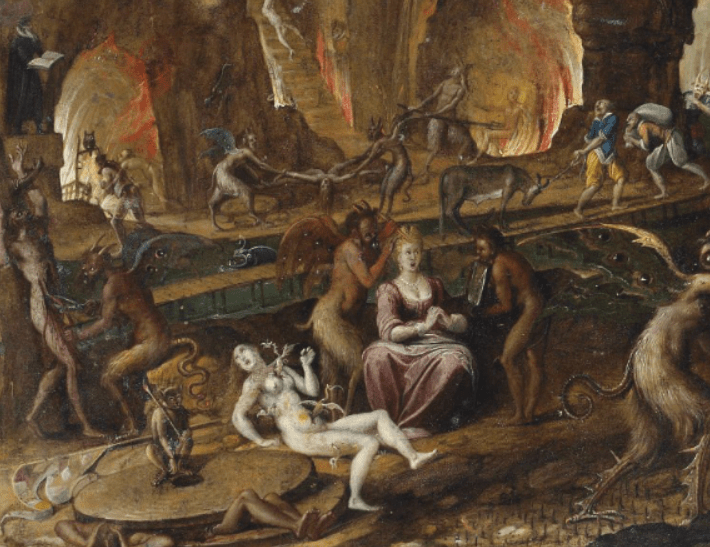
The Harrowing of Hell by Jacob van Swanenburg (1571-1638)

RIP Mort Drucker

drucker_madmovie

RIP Mort Drucker, 1929-2020

I grew up on MAD Magazine and always loved Mort Drucker (and Sergio Aragones) in particular. He frequently drew the film and television show parodies that I especially enjoyed as a kid. Even though I got to watch all kinds of films I probably shouldn’t have seen as a kid in the mid-eighties (where “parenting” was throwing all the kids in a spare room with a VHS copy of Robocop or Predator), I still attribute a large part of any film and television knowledge I have to the MAD parodies that Drucker drew.

Pilate Washing His Hands — Albrecht Dürer

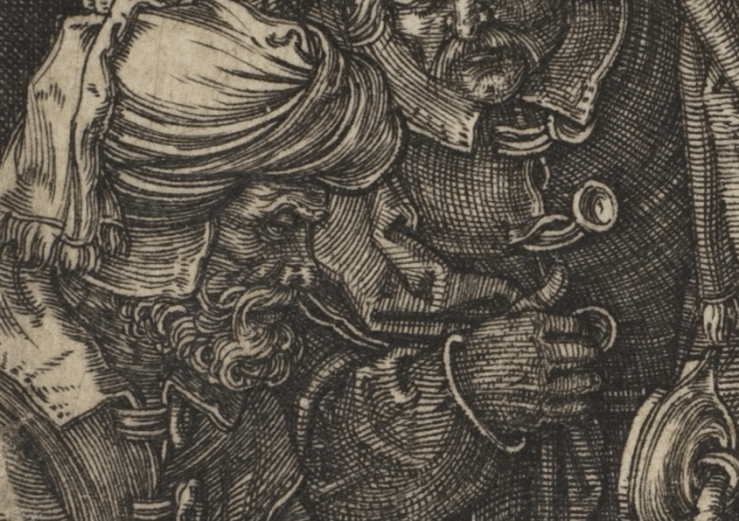
dp815574Screenshot 2020-04-10 at 2.22.58 PMScreenshot 2020-04-10 at 2.22.48 PMScreenshot 2020-04-10 at 2.07.49 PM

Pilate Washing His Hands, 1512 by Albrecht Dürer (1471–1528)

“Enough! enough! enough!” — Walt Whitman

Section 38 of Song of Myself

by

Walt Whitman


Enough! enough! enough!
Somehow I have been stunn’d. Stand back!
Give me a little time beyond my cuff’d head, slumbers, dreams, gaping,
I discover myself on the verge of a usual mistake.

That I could forget the mockers and insults!
That I could forget the trickling tears and the blows of the bludgeons and hammers!
That I could look with a separate look on my own crucifixion and bloody crowning.

I remember now,
I resume the overstaid fraction,
The grave of rock multiplies what has been confided to it, or to any graves,
Corpses rise, gashes heal, fastenings roll from me.

I troop forth replenish’d with supreme power, one of an average unending procession,
Inland and sea-coast we go, and pass all boundary lines,
Our swift ordinances on their way over the whole earth,
The blossoms we wear in our hats the growth of thousands of years.

Eleves, I salute you! come forward!
Continue your annotations, continue your questionings.

Judas Betrays Him — William Blake

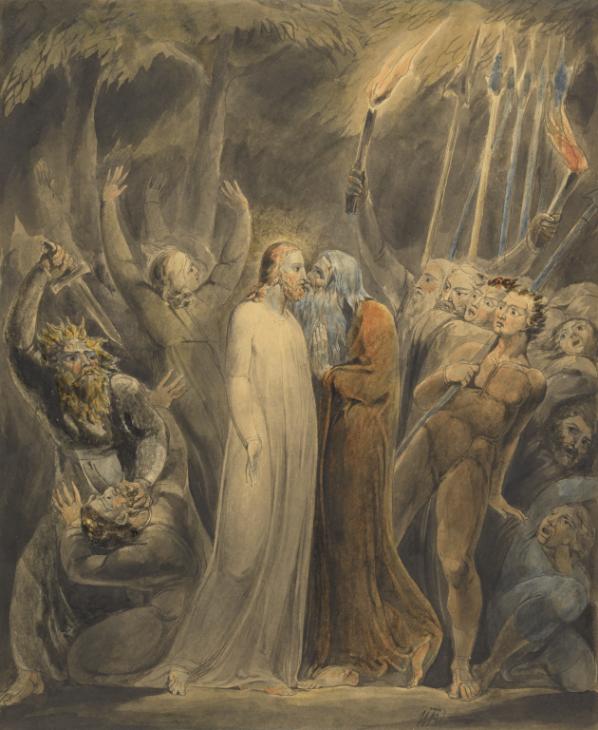
Judas Betrays Him c.1803-5 by William Blake 1757-1827

Judas Betrays Him, c. 1805 by William Blake (1757–1827)

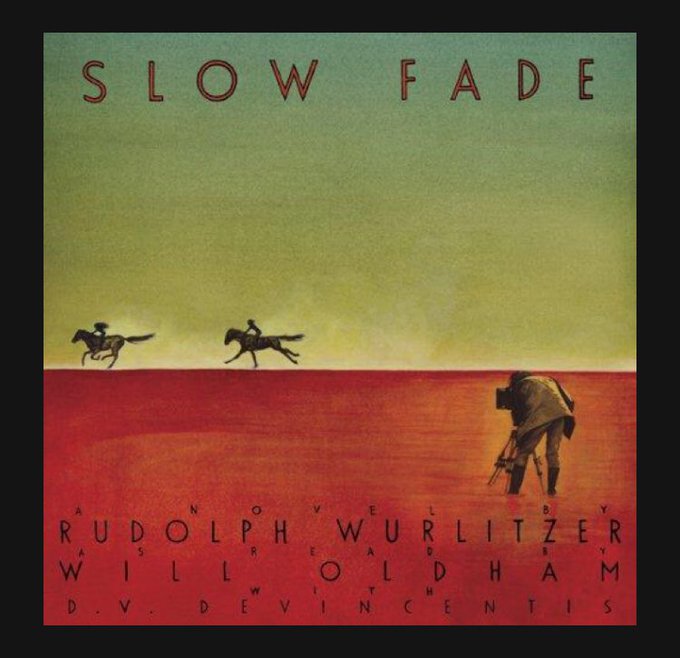
A lazy riff on Rudolph Wurlitzer’s novel Slow Fade, as read by Will Oldham (the novel, not the riff–this is an audiobook review)

EU81s2AWkAMdDcs (1)

So I just finished auditing Drag City’s audiobook version of Rudolph Wurlitzer’s 1984 novel Slow Fade. I finished on yet-another-walk-around-the-block, this time for the express reason of ending it. The novel is read by Will Oldham with actor D.V. DeVincentis (who perhaps unfairly got left out of the headline—but no offense to DeVincentis, he has not been a hero of mine since I was like fourteen).

I read Rudolph Wurlitzer’s first novel Nog a few weeks ago and didn’t really like it.

I read it because one of my heroes Thomas Pynchon blurbed it (do you sense a terrible propensity toward hero worship in me?). A bit of googling-it-up revealed that one of Wurlitzer’s later novels Slow Fade was reprinted by Drag City back in 2011, along with an audiobook version recorded by the singer/songwriter/actor/guy Will Oldham. This kind of shocked me—I’ve been a fan of Will Oldham and Drag City since 1994, when I and three other dudes pooled our money to order CDs, LPs, and 7″s from the fledgling label and tape the music for each other. (I got the Hey Drag City comp. I guess it must’ve been sophomore year of high school. I ended up using a line from “For the Mekons et. al.” by Will Oldham’s band Palace Brothers as my senior quote. (The quote was “If you can forget how to ride a book you have had a good teacher,” which I thought was like, super zen, but the yearbook staff fucked it up and rendered it as “If you can forget how to ride a book you have had a teacher.” My parents bought the yearbook declaring I would love to pore over it; I threw it away maybe 18 years ago and should’ve thrown it away years before that.))

Man! I’ve really gotten far without discussing the novel. Good for me. I started with the headline instead of the content, which seems a terrible thing to do to the reader. (Look, I’ve been drinking, which is not a good idea.)

Every one in Slow Fade is drinking (and drugging and fucking, and trying to get rock’n’rolling—but mostly they are despairing, grieving, blowing up what’s left of their lives.) The novel centers around a megalomaniac film director, Wesley Hardin, a kind of totemic holdover of Old Hollywood-into-New-Hollywood, a maker of rough Westerns likened to John Ford, Howard Hawks, and Sam Peckinpah. (Wurlitzer wrote the script for Peckinpah’s 1973 film Pat Garrett and Billy the Kid. Everything meaningful in this riff is probably parenthetical at this point.)

I marked the audiobook to quote from it but in the spirit of Wurlitzer’s novel and Our Uncertain Times I’m on my third tequila drink and I really can’t be bothered. He can turn a phrase or two or three, but there are some crutches in there, some clunkers. (And maybe some zappers: Okay—in the spirit of the parentheses doing the real work: Wurlitzer gives us the image of “a thin slice of moon that hung up in the sky like a whore’s earring,” a simile that is simultaneously terrible and great.)

Ah! But what is it about? you ask.

In the words of Hardin’s (much younger) wife Eveyln—

“It’s about a man and his wife looking for the man’s sister who has disappeared in India. So far they haven’t found her.

Well—okay—that’s actually Evelyn’s description of the screenplay that Wesley Hardin’s son Walker Hardin is writing with the opportunistic roadie/keyboardist/hustler AD Ballou (Assistant Director Balloo?), who gets shot in the eye with an arrow when he rides a stolen horse into Wesley Hardin’s current film at the beginning of Slow Fade. (Wesley and Walker both go on to blow up their lives after this moment, while AD saves his.)

In the meantime, opportunistic folk opportune around Wesley, who flames out in spectacular, globetrotting fashion. The novel plays out as a series of bad decisions, oedipal impulses, and drug-addled romps. Wesley’s treacherous cameraman Sidney tries to make his own film about the aging auteur’s implosion, leading to a postmodern film-within-a-film-within-a-film-script-within-a-novel structure that is hardly as cute as I might’ve just posited. There are heroes and villains, but mostly villains.

(Slow Fade mostly made me think of Orson Welles’ The Other Side of the Wind, Malcom Lowry’s Under the Volcano, and HBO’s Succession. My mental eye couldn’t decide if Wesley was Brian Cox or John Huston.)

Will Oldham’s narration is fantastic—honest and raw, unaffected but also acted with the achieved naturalism of a narrator who understands the novel and doesn’t need to ham it up. D.V. DeVincentis reads the sections of the novel that take the form of the film script that AD and Walker are writing, a production device that adds dynamism to the auditing experience.

I liked Slow Fade a lot more than Wurlitzer’s first novel Nog, which oozed with the abject excess of the sixties, always gazing inward. Slow Fade isn’t without its problems—the women have agency but are underwritten, and the sex scenes are at best plot points and at worst embarrassing. The novel seems a companion pieces to Pynchon’s Vineland, a riff on the failure of the Western SixtiesAnd also like NogSlow Fade reads like an encomium for the American Dream of the West. Here though, the Western dream of space, expansion, and destiny manifesting itself into the Hollywood dream seeks an Eastern outlet, a metaphysical escape hatch into India, Nepal, exotic enlightenment. But that’s all on the characters. Wurlitzer’s ultimate viewpoint sings far more cynical. Slow Fade depicts a world of opportunists trying to drape dreams over any dupe that steps in their general direction. The results are tragic, ugly, and cynical. Recommended.

Sorrow — Egon Schiele

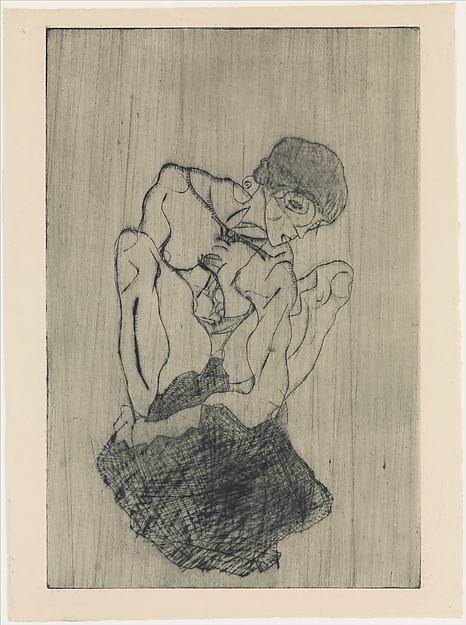
dp275007

Sorrow, 1914 by Egon Schiele (1890–1918)

Coggeshall Church, Essex — John Armstrong

Coggeshall Church, Essex 1940 by John Armstrong 1893-1973

Coggeshall Church, Essex, 1940 by John Armstrong (1893–1973)

RIP John Prine

RIP John Prine, 1946-2020