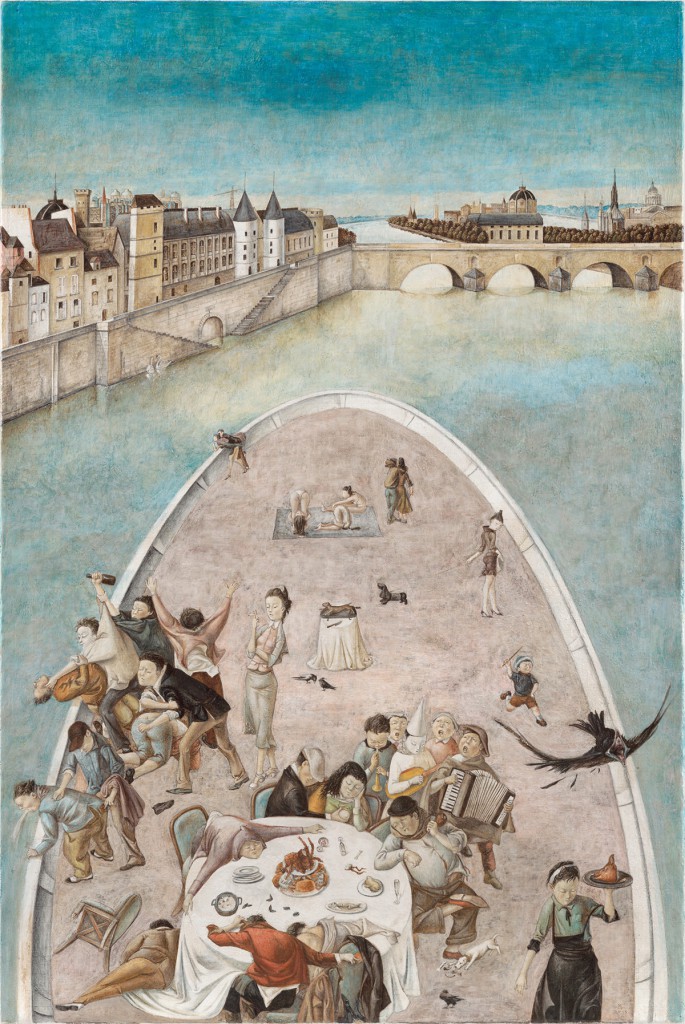
Feast — Gely Korzhev

image002

Feast, 1983 by Gely Korzhev (1925-2012)

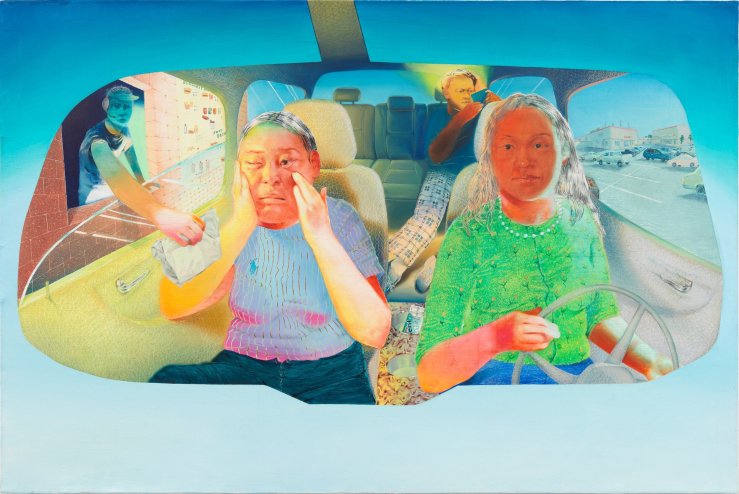
Drive Through — Sasha Gordon

drivethru

Drive Through, 2019 by Sasha Gordon (b. 1998)

Three Books

2020-04-05_1619032020-04-05_161903_1

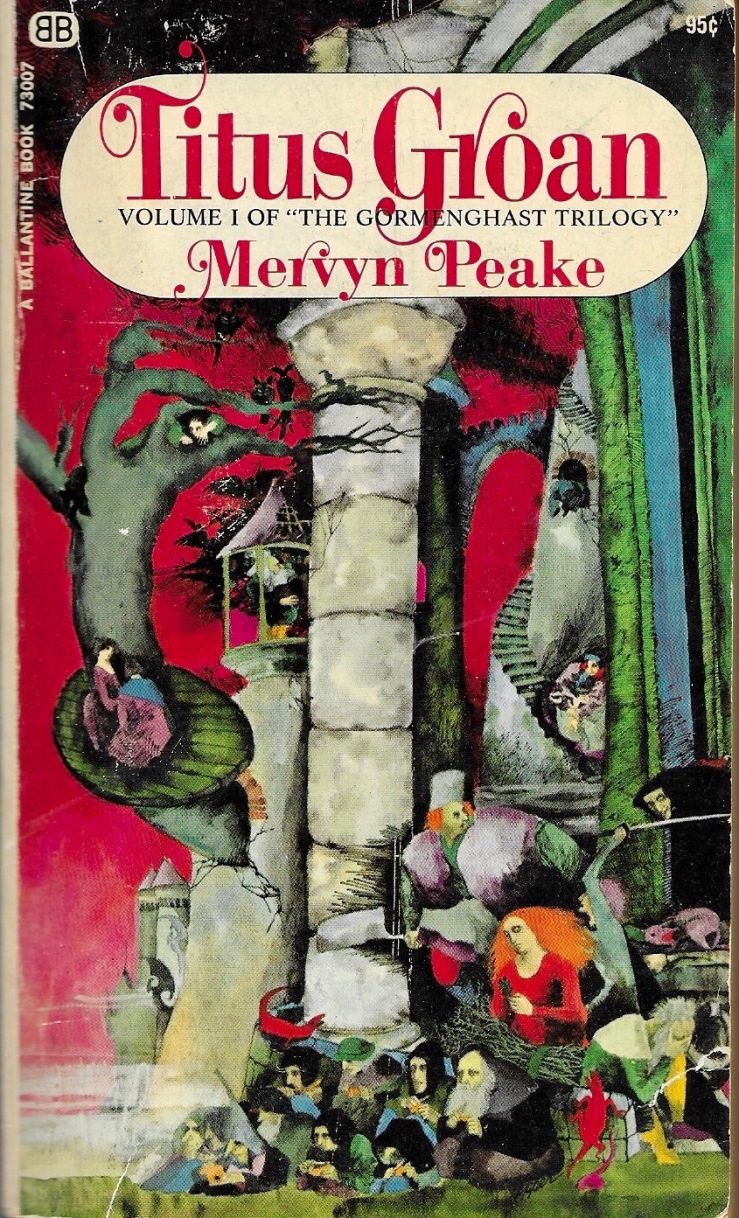
Titus Groan by Mervyn Peake. Mass-market paperback from Ballantine Books, 1968. Cover art by Bob Pepper (not credited); no designer credited.

The first of Mervyn Peake’s strange castle (and then not-castle trilogy (not really a trilogy, really)), Titus Groan is weird wonderful grotesque fun. Inspirited by the Machiavellian antagonist Steerpike, Titus Groan can be read as a critique of the empty rituals that underwrite modern life. It can also be read for pleasure alone.

2020-04-05_161903_22020-04-05_161903_3

Gormenghast by Mervyn Peake. Mass-market paperback from Ballantine Books, 1968. Cover art by Bob Pepper (not credited); no designer credited.

Probably the best novel in the trilogy, Gormenghast is notable for its psychological realism, surreal claustrophobia, and bursts of fantastical imagery. We finally get to know Titus, who is a mute infant in the first novel, and track his insolent war against tradition and Steerpike. The novel’s apocalyptic diluvian climax is amazing.

2020-04-05_161903_42020-04-05_161903_5

Titus Alone by Mervyn Peake. Mass-market paperback from Ballantine Books, 1968. Cover art by Bob Pepper (not credited); no designer credited.

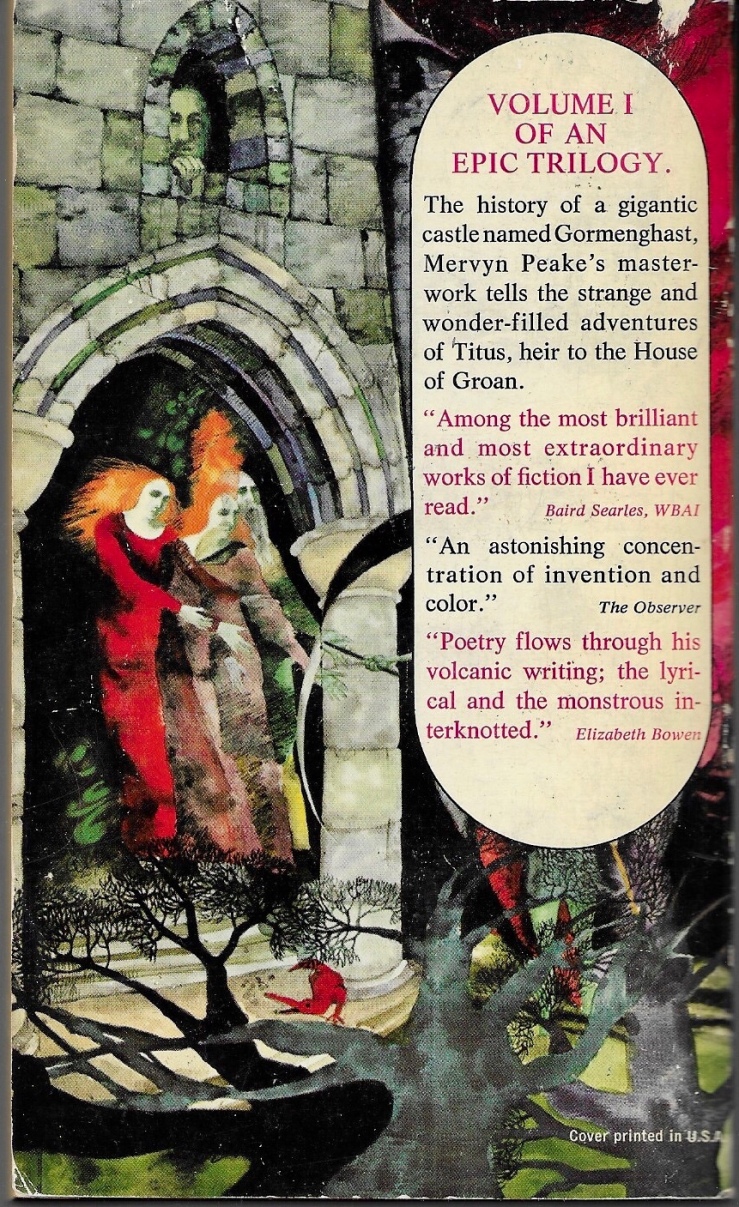
I don’t usually include back covers in these Three Books posts, but I just love the way that Bob Pepper’s back-covers segue into each other.

Is Titus Alone my favorite in the trilogy, or is it just the one I read last? I don’t know. It’s a kind of beautiful mess, an episodic, picaresque adventure the breaks all the apparent rules of the first two books. The rulebreaking is fitting though, given that Our Boy Titus (alone!) navigates the world outside of Gormenghast—a world that doesn’t seem to even understand that a Gormenghast exists (!)—Titus Alone is a scattershot epic. Shot-through with a heavy streak of Dickens, Titus Alone never slows down enough for readers to get their bearings. Or to get bored. There’s a melancholy undercurrent to the novel. Does Titus want to get back to his normal—to tradition and the meaningless lore and order that underwrote his castle existence? Or does he want to break quarantine?

Titus Escapes might have been a better title for Peake’s third book, and its spirit of escape and adventure seem more compelling and comforting to me now than they did a month ago when I read this book.

“Cool gales shall fan the glades” — Harry Mathews

“Cool gales shall fan the glades”

by

Harry Mathews


But how choose the appropriate sticking point to start at?
Who wants to write a poem without the letter e,
Especially for Thee, where the flourished vowel lends such panache to your carnet de bal
(OK, peons: pizzazz to your dance card)? The alphabet’s such a horn
Of plenty, why cork up its treasure? It hurts to think of “you” reduced to u
In stingy text messages, as if ideally expression should be limited to formulas like x ≠ y,

Where the respectable truth of tautology leaves ambiguous beauty standing by
Waiting to take off her clothes, if, that is, her percentage of body fat
Permits it (a statement implicitly unfair, as if beauty, to remain sublime, had to keep up
Lineaments already shaped by uninhibited divinity); implying, as well, fixated onlookers, i.e.,
Men and women kidding themselves that full-front-and-back nudity is the north
Star of delight rather than imagined nakedness, shudderingly draped like a fully rigged, fully laden ship without a drop to bail,

Its hidden cargoes guessed at — perhaps Samian wine (mad-
making!) — or fresh basil
Gently crushed by its own slight weight, reviving memories of delights once stumbled on as a boy,
Delights often wreathed with necessary pain, like the stout unforgiving thorns
That tear shirt and skin as we stretch for ripe blackberries, to be gulped down fast,
Sweeter than butter and marmalade, quenching our thirst better than sucked ice,
Making us almost drunk as we shriek with false contempt at each benighted ump

Who decides against our teams. What happened to those blissful fruits, honeydew, purple plum,
White raspberry, for stealing which from Mrs. Grossman’s stand I invented ingenious alibis
That she never believed (insulting, or what?)? Where are childhood’s innocent sweetnesses, like homemade rice
Pudding and mince pie? Or the delicious resistances of various foods — bony
Lobsters, chops with their succulent tiny interstices, corn sticking to the cob, or the grilled feast
Of brook trout I caught without too much fuss after kicking a 
resentful hornets’

Nest? And when carnality replaced appetite, I was communally pronounced the horniest
Ten-year-old around; and I hadn’t even seen you. But when I did, you became the plume
In the horse’s hat of my lust. I was thirteen when we first danced together. There weren’t many afters
But I cherish my plume. There weren’t any afters, nothing, just a gentle abseil I
Could not climb back up. I still wave my plume, or my horse does, as he canters nobly
Into next year, my eighty-fifth. I hasten to add that “this coyness, lady, were no crime”

If I didn’t, in spite of all, feel so grateful to you. All manner of mercis
Fill my throat, along with immortal memories, of which I must acknowledge the thorniest
To be your disappearance, whether you tanked in river water or were scorched by Zeus’s proximity (or some such baloney);
But your firm breasts, taut nipples, and bent thighs? No thorns. All you wanted was a loosened peplum,
So I still bear your plume, and your name will not die: not to be written here or read, but my voice shall sibilate
It so shrilly that unseeded babies hear me, and every hidden woodworm wake from its dream to fall forever from the rafters.

Drink Scotch whiskey all night long and watch Steely Dan talk about making Aja

Just spent the last hour listening to a Steely Dan mix while making pizza and trying not to let terror creep into my heart, and I thought I’d re-recommend this joyous documentary about the making of Aja. Everything that follows after the jump is a copypaste of an older post.


Even if you don’t like Steely Dan, this 1999 documentary about the making of their 1977 album Aja is fantastic. (The first segment of the YouTube vid might be blocked in your country; watch via this link if so).

First off, the Aja documentary is fucking hilarious—Walter Becker and Donald Fagen come across as the smartest, most venomous guys in the room—a wicked mixture of witty and cruel—-and watching them discuss each track, and each part of each track is fascinating (especially when they pick apart failed guitar solos). The film also features a marvelous supporting cast, including braggart percussionist Bernard Purdie (of “The Purdie Shuffle” fame), and poor old Michael McDonald, who struggled to nail his background parts on “Peg.” What might be most fascinating though is seeing how Fagen and Becker pieced the instrumental tracks of Aja together, bringing in different session musicians—entirely different bands—from day to day. And if you’re still not convinced, here’s a sample (of a sample):

Sous le Ciel — Xiao Guo Hui

5843-xiao-guo-hui-sous-le-ciel-2016-egg-tempera-36x24ifweb-685x1024-1

Sous le Ciel, 2016 by Xiao Guo Hui (b. 1969)

Reclining Man — Egon Schiele

5772c891d01

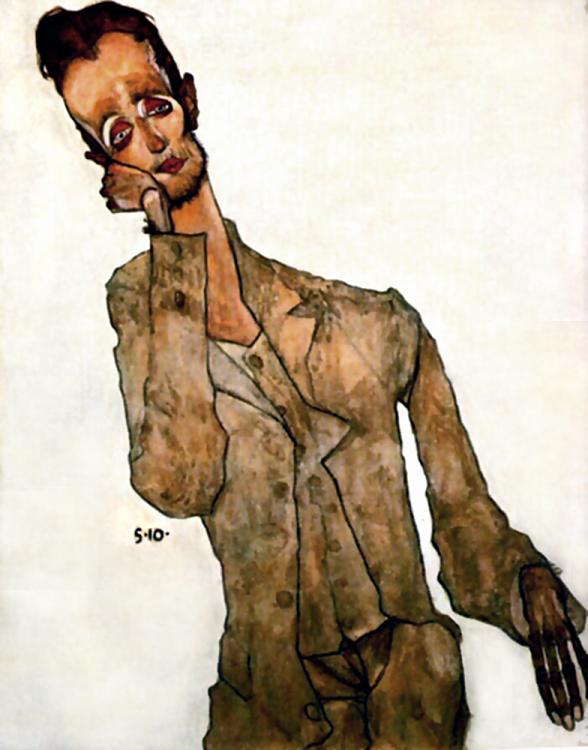
Reclining Man by Egon Schiele (1890-1918)

RIP Bill Withers

RIP Bill Withers, 1938-2020

Impossible to write traditional fiction (Leslie Fiedler)

I’ve just lived through, for instance, the granting of the National Book Award in fiction. It turned out to be impossible for me to persuade my fellow judges to consider seriously any work of literature which could be classified generically as science fiction. I have good news for you. One of the best writers of science fiction in the United States at the moment, which is to say one of the best writers of fiction in the U.S. at the present moment, Ursula LeGuin sneaked a prize as a writer of juveniles, an already ghettoized category that made it possible, and if you are juvenile to begin with, it doesn’t even matter if it is juvenile science fiction. But when Ursula LeGuin stood up, what she said was beautiful. In her acceptance speech, she said, “I hope this is felt as a prize not for juveniles but for science fiction, for all the fantasy literature.” The only way of rendering any sense of the reality of American life at the present moment is through fantasy. Our lives are indeed fantastic. It is not impossible to write fiction now. But it is impossible to write traditional fiction, the novel as high art, the novel as experimental art, the novel as avant-garde, the novel as realistic art. Only shock science fiction, fantasy, can render our lives.

From Leslie Fiedler’s 1973 address to the Third National Meeting of the Popular Culture Association. LeGuin won the 1973 National Book Award in the “Children’s” category for her excellent novel The Farthest Shore.

In-laws — David Bailin

in-laws

In-laws, 2018 by David Bailin

Thomas Pynchon beats J.G. Ballard to win the 2020 Tournament of Zeitgeisty Writers

2020-03-31_183554

Thomas Pynchon beat out J.G. Ballard, earning 61% of 337 votes of my totally-scientific and not-at-all arbitrary twitter poll to become the Champion of the 2020 Tournament of Zeitgeisty Writers. Mr. Pynchon’s trophy is at Biblioklept World Headquarters here in Florida. After this whole quarantine business is over I’m sure he’ll arrange to pick it up.

My gut feeling is that the people who follow me on twitter are skewed toward Pynchon more than Ballard. Either of the pair could have taken the prize and I’d have been happy.

FG2744-3-14a

J.G. Ballard described the late twentieth century as good as anyone, and anticipated almost every aspect of our zeitgeist. The dude not only understood the intersection of commerce and politics and sex and art, but he could convey it in wild (and wildly-entertaining, forgive the cliche) stories and novels of the blackest and bleakest humor. There are any number of great starting places for Ballard, but if you haven’t read him yet, I’d recommend High-Rise or Concrete Island before jumping into the more challenging Crash. Then: The Atrocity Exhibition, the earlier novels (1962’s The Drowned World is particularly prescient) and the early stories of Vermilion Sands. Actually, if you can get a hold of The Complete Short Stories of J.G. Ballard, go for it. (I riffed on reading all the stories back in 2014.) I don’t recommend starting with the later novels—Ballard’s descriptions are so prescient that there’s this weird drop off in quality when reality catches up to him. In the meantime, why not read “The Secret Autobiography of  J G B”? (It was composed in 1981 but published in 2009; it took autofiction a few decades to catch up with the Notorious JGB.) Ballard is great.

Thomas Pynchon’s novels are famously byzantine, shaggy, esoteric, and paranoid. He captures both the zaniness and the menace of our zeitgeist. His protagonists are often straight figures who go crooked, insiders pushed to the outside through maladventure and adventure alike. Pynchon places a premium on the underdog who resists the Them—the technocracy, the war machine, the military-industrial-entertainment complex. His most famous (and probably best) novel Gravity’s Rainbow is an indictment of war and capitalism; although it’s set in WW2, it also addresses itself, ultimately, to that war’s hangover and the Nixonian evil contemporary with its publication. Pynchon’s loose California trilogy—The Crying of Lot 49Vineland, and Inherent Vice—document, describe, and deconstruct the myth of the American cultural revolution of the 1960s. Pynchon’s “historical novels,” Mason & Dixon and Against the Day are probably my favorites. Both analyze American history as a series of strange mistakes, big blunders, and minor foibles. His longest (and strangely, most accessible) novel Against the Day is also his clearest attack on the nebulous Them who oppose freedom, progress, and, ultimately, love. The humor and intelligence of Pynchon’s writing often softens the core anger of his work, an anger directed at the invisible forces that cry out, to steal from the Dead Kennedys, “Give me convenience or give me death!” He is a national treasure and I hope he lives forever—which he will, through his works.

Finally: I hope that everyone who participated in this thing had (at least the tiniest of sliver of) fun. I don’t think pitting writers against each other has anything to do with literature. I missed college basketball in March, so this is what I did. It also helped me drift off into other places for a while. Ballard is gone but I would love to read his quarantine novel. And I’ll read anything else we get from Pynchon.

Peace to all.


The Cholmondeley Ladies

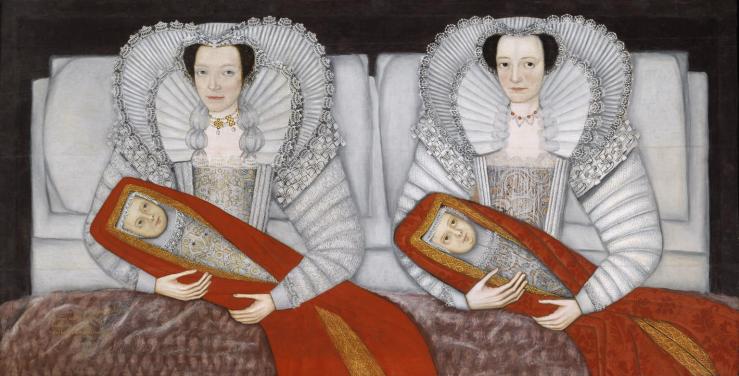
The Cholmondeley Ladies c.1600-10 by British School 17th century 1600-1699

The Cholmondeley Ladies, c.1600–10. Artist unidentified.

Thoughts on George Saunders’ new short story “Love Letter,” a thought experiment in dystopian ethics

George Saunders has a new short story called “Love Letter” in this week’s New Yorker. The story takes the form of a letter composed on “February 22, 202_” by an unnamed grandfather (“GPa”) to his grandson Robbie. After a salutation, the letter begins:

Got your e-mail, kid. Sorry for handwriting in reply. Not sure e-mailing is the best move, considering the topic, but, of course (you being nearly six foot now, your mother says?), that’s up to you, dear, although, you know: strange times.

The rest of the letter, mostly through hints and intimations, gives us a sketch of those “strange times”: namely, a future of our now in which Trump, after having won a second election, is succeeded by “the son” in a “total sham election.” These “strange times” are saturated in paranoia and marked by arrests for dissension, as well as the detainment of persons for reasons not always clearly stated.

Indeed, Robbie’s email to his grandfather was in request of help for his friend “J.,” who has been detained. The following paragraph shows Saunders’ method and gives an adequate overview of the story’s tone:

Where is J. now? Do you know? State facility or fed? That may matter. I expect “they” (loyalists) would (with the power of the courts now behind them) say that although J. is a citizen, she forfeited certain rights and privileges by declining to offer the requested info on G. & M. You may recall R. & K., friends of ours, who gave you, for your fifth (sixth?) birthday, that bronze Lincoln bank? They are loyalists, still in touch, and that is the sort of logic they follow. A guy over in Bremerton befriended a guy at the gym and they would go on runs together and so forth, and the first guy, after declining to comment on what he knew of his friend’s voting past, suddenly found he could no longer register his work vehicle (he was a florist, so this proved problematic). R. & K.’s take on this: a person is “no patriot” if he refuses to answer a “simple question” from his “own homeland government.”

There’s a lot here: the codified language (“‘they,'” “loyalists,” “certain rights and privileges,” “‘no patriot,'” etc.), the use of anonymizing initials in lieu of names, and plenty of imagistic details to flesh out the epistle (“Love Letter” is full of little details like “that bronze Lincoln bank,” a bid toward realism I suspect).

The grandfather’s use of initials is, of course, to help protect them if the letter were to fall into the hands of any “loyalists” who might cause further problems for J. and the other persons mentioned. He also insists that Robbie destroy the letter after reading it. (I find it interesting and somewhat inexplicable that he names Robbie.)

As I noted above, the impetus for the grandfather’s reply is his grandson’s request for help for J. “Love Letter” reads like a thought experiment in dystopian ethics, with the central questions of What to do? and How to do it? reverberating throughout. Through the accretion of details, the reader comes to realize that the grandfather was likely born sometime during the 1950s, is comfortably middle class, subscribes to left-leaning politics, and likely lives in California. We also come to find out that during the period when the “loyalists” ascended—our near now—the grandfather, preoccupied with his own life (work, hobbies, his “dental issues”), did next-to-nothing to protect democracy:

Seen in retrospect, yes: I have regrets. There was a certain critical period. I see that now.

He protests to his grandson that he tried things like calling and writing his senator, and donated money to “certain people running for office,” but these actions weren’t actiony enough. He also shares this bit of protest:

I beg you not to underestimate the power/danger of this moment. Perhaps I haven’t told you this yet: in the early days, I wrote two letters to the editor of the local rag, one overwrought, the other comic. Neither had any effect. Those who agreed with me agreed with me; those who did not remained unpersuaded.

In a typically-postmodern move, Saunders’ hero is a writer (of letters).

In some ways, it’s hard for me not to read too much into the details of the “two letters to…the local rag, one overwrought, the other comic.” Saunders’ last story for The New Yorker (“the local rag”?) was “Elliott Spencer,” a stylistically-bold tale about poor people who are reprogrammed and then deployed as paid political protesters. (Saunders admitted that the story was in part inspired by two men he saw arguing at a Trump rally in Phoenix.)

The year before that, The New Yorker published “Little St. Don.”

I thought “Little St. Don” was terrible.

In my evaluation of that story, I wrote,

“Little St. Don” exemplifies just how limited contemporary literature’s toolkit is when it comes to acutely skewering our zeitgeist. Trump’s rhetoric purposefully surpasses absurdity; indeed, Trump’s rhetoric is nihilistically absurd, the ur-huckster’s argot that distills over two centuries of American con-artist culture for a 21st-century mass media environment. Ahistorical and amoral, Trump’s rhetoric oozes outside the bounds of allegorical satire. His rhetoric is already kitsch, part and parcel of a self-ironizing aesthetic that is always only-joking-but-hey-not-really-joking. This rhetorical aesthetic is post-postmodern, and Saunders’ postmodern techniques in “Little St. Don” cannot lance it, deflate it, or expose it—Trump’s rhetoric is already exposed. Saunders here is simply describing it, repeating it, and reframing it within  preëxisting literary genres.

Mashing up these genres is a typical 20th-century postmodernist move, one that Saunders’ audience in The New Yorker could expect. Indeed, it seems that connecting with an audience is Saunders’ main concern. But he’s preaching to the choir. The story is like a mediocre cover band’s copy of a terrible greatest hits record. In his mash-up we already know all the tunes, all the rhythms, and all the tones. Hell, we even know the mash-up’s not-so-secret formula. Saunders simply confirms the emotional and intellectual gestures that  preëxist in his New Yorker audience. His story is there to assure us of our own moral rectitude.

I was taken then by the grandfather’s admission that his “comic” letter to “the local rag” had no effect: “Those who agreed with me agreed with me; those who did not remained unpersuaded.”

A moment later in “Love Letter” strikes me as another correction to the glib posturing of “Little St. Don”:

Every night, as we sat across from each other, doing those puzzles, from the TV in the next room blared this litany of things that had never before happened, that we could never have imagined happening, that were now happening, and the only response from the TV pundits was a wry, satirical smugness that assumed, as we assumed, that those things could and would soon be undone and that all would return to normal—that some adult or adults would arrive, as they had always arrived in the past, to set things right. It did not seem (and please destroy this letter after you have read it) that someone so clownish could disrupt something so noble and time-tested and seemingly strong, that had been with us literally every day of our lives.

It’s that “wry, satirical smugness” that stuck out to me, a smugness that’s part and parcel of the sense that “some adult or adults would arrive…to set things right.” Saunders is not only describing an attitude shared by millions of Americans, but also describing the implicit tone of his story “Little St. Don.”

Both “Elliott Spencer,” with its rhetorical innovations, and “Love Letter” serve as noticeable improvements on “Little St. Don” (if not correctives). “Love Letter” also feels like something new from Saunders—the dystopia is more subdued, less zany. Scarier. And as I write this, I realize it’s because the dystopia “Love Letter” evokes seems far too close to our own reality.

I claimed in my essay on “Little St. Don” that the story’s biggest failure was that

Saunders loves his reader too much. The story wants to make us feel comfortable now, comfortable, at minimum, in our own moral agency and our own moral righteousness. But comfort now will not do.

“Love Letter,” as the name clearly states, radiates with love—confused love, troubled love, love that wavers in concrete action but never in its abstracted purity. We feel both the grandfather’s love for his grandson as well as Saunders’ love for his reader. We also feel a deep, melancholy love for democracy, or at least the postwar democracy of the latter half of the twentieth century.

Saunders’ narrator is never critical of that twentieth-century democracy, let alone the predatory capitalism it eventually engendered. This is, after all, a letter to a grandson, not a polemic. Saunders, as he often does in so many of his stories, collapses the absurdity of the contemporary world into the personal problems of some hapless patriarch or other. The narrator’s compassion and love come through in “Love Letter,” but so does the narrator’s radical ambivalence to real action.

It might be possible to read the story as a critique of the narrator’s inaction, but any such reading would have to ultimately dismiss the sympathy and love with which Saunders’ crafts this grandfather. In short, it’s difficult to read “Love Letter” as a satire, the genre with which Saunders has been most closely identified.  Instead, “Love Letter” reads like a thought experiment with no real conclusion, no solid answer. Or, rather, the solution is there in the title: love. But is that enough?

Space Navigator Trying to Locate the Lizard Thief — Davor Gromilovic

space_navigators_trying_to_locate_the_lizard_thief_davor_gromilovic

Space Navigator Trying to Locate the Lizard Thief, 2020 by Davor Gromilovic (b. 1985)

Final Round: The 2020 Tournament of Zeitgeisty Writers)

zeitgeisty


What’s there to say?

We’ve hit the final round of the 2020 Tournament of Zeitgeisty Writers.

Top-seeded Aldous Huxley fell to number five seed J.G. Ballad in a match that was never close for a second.

The stranger and more divisive match, at least for my metaphorical money, was between Thomas Pynchon and Cormac McCarthy.

Pynchon’s comic zaniness beat out McCarthy’s wryer apocalypticism (or maybe just more people on Twitter dig Pynchon).

I hope everyone had dumb stupid distracting fun with all of this.


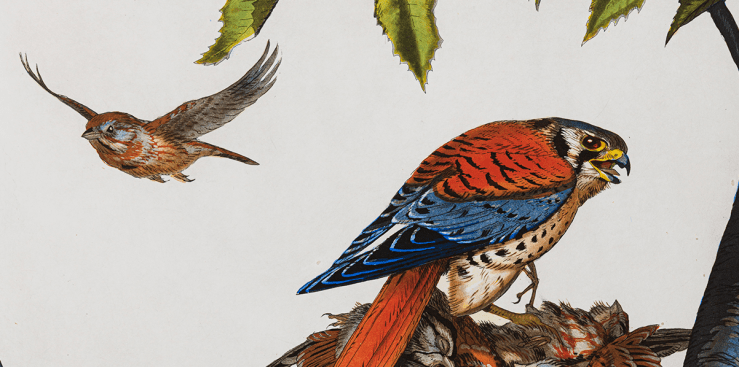
Killy — Walton Ford

killy-med-newScreenshot 2020-03-30 at 6.58.58 PMScreenshot 2020-03-30 at 6.58.41 PM

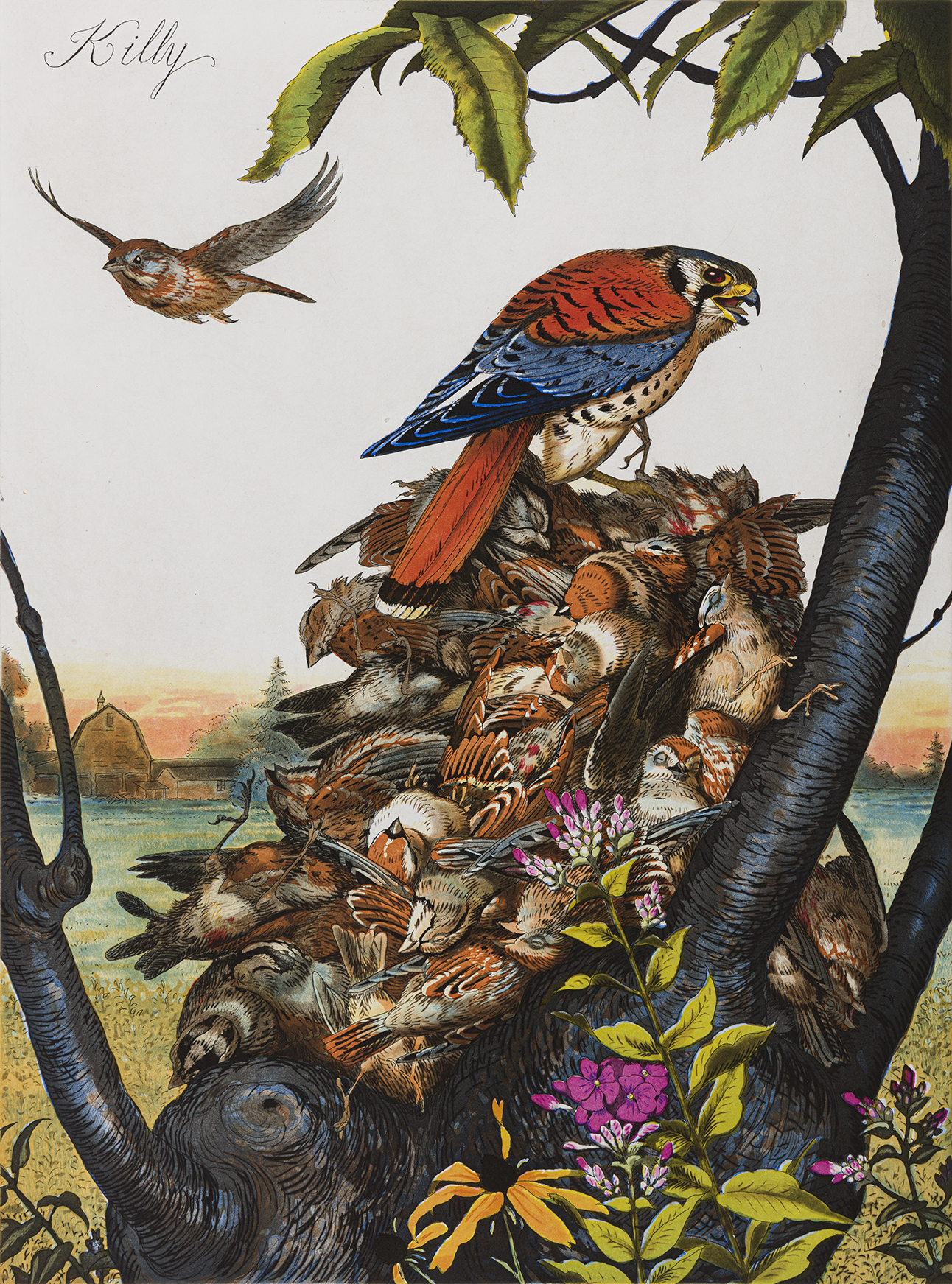
Killy, 2019 by Walton Ford (b. 1960)