“The Shape of the Sword,” a short story by Jorge Luis Borges

“The Shape of the Sword”

by

Jorge Luis Borges

Translated by Andrew Hurley


His face was traversed by a vengeful scar, an ashen and almost perfect arc that sliced from the temple on one side of his head to his cheek on the other. His true name does not matter; everyone in Tacuarembó called him “the Englishman at La Colorada.” The owner of the land, Cardoso, hadn’t wanted to sell it; I heard that the Englishman plied him with an argument no one could have foreseen—he told him the secret history of the scar. He had come from the border, from Rio Grande do Sul; there were those who said that over in Brazil he had been a smuggler. The fields had gone to grass, the water was bitter; to put things to right, the Englishman worked shoulder to shoulder with his peons. People say he was harsh to the point of cruelty, but scrupulously fair. They also say he liked his drink; once or twice a year he would shut himself up in the room in the belvedere, and two or three days later he would emerge as though from a battle or a spell of dizziness—
pale, shaking, befuddled, and as authoritarian as ever. I recall his glacial eyes, his lean energy, his gray mustache. He was standoffish; the fact is, his Spanish was rudimentary, and tainted with the accents of Brazil. Aside from the occasional business letter or pamphlet, he got no mail.

The last time I made a trip through the northern provinces, high water along the Caraguatá forced me to spend the night at La Colorada. Within a few minutes I thought I sensed that my showing up that way was somehow inopportune. I tried to ingratiate myself with the Englishman, and to do so I seized upon patriotism, that least discerning of passions. I remarked that a country with England’s spirit was invincible. My interlocutor nodded, but added with a smile that he wasn’t English—he was Irish, from Dungarvan. That said, he stopped, as though he had let slip a secret.

We went outside after dinner to have a look at the sky. The clouds had cleared away, but far off behind the sharp peaks, the southern sky, creviced and split with lightning, threatened another storm. Back in the dilapidated dining room, the peon who’d served dinner brought out a bottle of rum. We drank for a long time, in silence.

I am not sure what time it was when I realized that I was drunk; I don’t know what
inspiration or elation or boredom led me to remark on my host’s scar. His face froze; for several seconds I thought he was going to eject me from the house. But at last, his voice perfectly ordinary, he said to me:

“I will tell you the story of my scar under one condition—that no contempt or condemnation be withheld, no mitigation for any iniquity be pleaded.”

I agreed. This is the story he told, his English interspersed with Spanish, and even with Portuguese: In 1922, in one of the cities of Connaught, I was one of the many young men who were conspiring to win Ireland’s independence. Of my companions there, some are still living, working for peace; others, paradoxically, are fighting under English colours, at sea or in the desert; one, the best of us all, was shot at dawn in the courtyard of a prison, executed by men filled with dreams; others (and not the least fortunate, either) met their fate in the anonymous, virtually secret battles of the civil war. We were Republicans and Catholics; we were, I suspect, romantics. For us, Ireland was not just the Utopian future and the unbearable present; it was a bitter yet loving mythology, it was the circular towers and red bogs, it was the repudiation of Parnell, and it was the grand epics that sing the theft of bulls that were heroes in an earlier incarnation, and in other incarnations fish, and mountains. … One evening I shall never forget, there came to us a man, one of our own, from Munster—a man called John Vincent Moon.

He couldn’t have been more than twenty. He was thin yet slack-muscled, all at once—he gave the uncomfortable impression of being an invertebrate. He had studied, ardently and with some vanity, virtually every page of one of those Communist manuals; he would haul out his dialectical materialism to cut off any argument. There are infinite reasons a man may have for hating or loving another man; Moon reduced the history of the world to one sordid economic conflict. He declared that the Revolution was foreordained to triumph. I replied that only lost causes were of any interest to a gentleman…. Night had fallen; we pursued our crosspurposes in the hallway, down the stairs, then through the vague streets.

The verdicts Moon handed down impressed me considerably less than the sense of unappealable and absolute truth with which he issued them. The new comrade did not argue, he did not debate—he pronounced judgement, contemptuously and, to a degree, wrathfully. As we came to the last houses of the city that night, we were stupefied by the sudden sound of gunfire.

(Before this, or afterward, we skirted the blind wall of a factory or a gaol.) We turned down a dirt street; a soldier, huge in the glare, burst out of a torched cottage. He shouted at us to halt. I started walking faster; my comrade did not follow me. I turned around— John Vincent Moon was standing as motionless as a rabbit caught in one’s headlights eternalized, somehow, by terror. I ran back, floored the soldier with a single blow, shook Vincent Moon, cursed him, and ordered him to come with me. I had to take him by the arm; the passion of fear had stripped him of all will. But then we did run—we fled through the conflagration-riddled night. A burst of rifle fire came our way, and a bullet grazed Moon’s right shoulder; as we fled through the pine trees, a weak sob racked his breast.

In that autumn of 1922 I had gone more or less underground, and was living in General Berkeley’s country house. The general (whom I had never seen) was at that time posted to some administrative position or other out in Bengal; the house was less than a hundred years old but it was gloomy and dilapidated and filled with perplexing corridors and pointless antechambers. The museum-cabinet and huge library arrogated to themselves the entire lower floor—there were the controversial and incompatible books that are somehow the history of the nineteenth century; there were scimitars from Nishapur, in whose frozen crescents the wind and violence of battle seemed to be living on. We entered the house (I think I recall) through the rear. Moon, shaking, his mouth dry, mumbled that the events of the night had been “interesting”; I salved and bandaged him, then brought him a cup of tea. The wound was superficial. Suddenly, puzzled, he stammered:

“You took a terrible chance, coming back to save me like that.”

I told him it was nothing. (It was the habit of civil war that impelled me to act as I acted; besides, the imprisonment of a single one of us could imperil the entire cause.)

The next day, Moon had recovered his composure. He accepted a cigarette and subjected me to a harsh interrogation as to the “financial resources of our revolutionary party.” His questions were quite lucid; I told him (truthfully) that the situation was grave. Deep rumblings of gunfire troubled the peace of the south. I told Moon that our comrades were waiting for us. My overcoat and revolver were  up in my room; when I returned, I found Moon lying on the sofa, his eyes closed. He thought he had a fever; he pleaded a painful spasm in his shoulder.

It was then that I realized he was a hopeless coward. I clumsily told him to take care of himself, then left.

I was embarrassed by the man and his fear, shamed by him, as though I myself were the coward, not Vincent Moon. Whatsoever one man does, it is as though all men did it. That is why it is not unfair that a single act of disobedience in a garden should contaminate all humanity; that is why it is not unfair that a single Jew’s crucifixion should be enough to save it. Schopenhauer may have been right—I am other men, any man is all men, Shakespeare is somehow the wretched John Vincent Moon.

We spent nine days in the general’s great house. Of the agonies and the rays of light of that dark war I shall say nothing; my purpose is to tell the story of this scar that affronts me. In my memory, those nine days form a single day—except for the next to last, when our men  stormed a barracks and avenged, life for life, our sixteen comrades fallen to the machine guns at Elphin. I would slip out of the house about dawn, in the blurred confusion of first light. I would be back toward nightfall. My comrade would be waiting for me upstairs; his wound would not allow him to come down. When I look back, I see him with some book of strategy in his hand—F. N. Maude, or Clausewitz. “The weapon of preference for me,” he confessed to me one night, “is artillery.” He enquired into our plans; he enjoyed criticizing or re-thinking them. He was also much given to deploring “our woeful financial base”; dogmatically and sombrely he would prophesy the disastrous end. “C’est une affaire flambée,” he would mutter. To show that his physical cowardice was a matter of indifference to him, he made a great display of mental arrogance.

Thus passed, well or not so well, nine days.

On the tenth, the city fell once and forever into the hands of the Black and Tans. Highsitting, silent horsemen patrolled their beats; there was ash and smoke in the wind. I saw a dead body sprawled on one corner—yet that dead body is less vivid in my memory than the dummy that the soldiers endlessly practised their marksmanship on in the middle of the city square…. I had gone out when dawn was just streaking the sky; before noon, I was back. Moon was in the library, talking to someone; I realized from the tone of his voice that he was speaking on the telephone. Then I heard my name; then, that I’d be back at seven, and then, that I’d be arrested as I came across the lawn. My rational friend was rationally selling me out. I heard him demand certain guarantees of his own safety.

Here my story becomes confused and peters out a bit. I know that I chased the snitch through black corridors of nightmare and steep stairwells of vertigo. Moon knew the house well, every bit as well as I.

Once or twice I lost him, but I managed to corner him before the soldiers arrested me.

From one of the general’s suits of armor, I seized a scimitar, and with that steel crescent left a flourish on his face forever—a half-moon of blood. To you alone, Borges—you who are a stranger—I have made this confession.

Your contempt is perhaps not so painful.”

Here the narrator halted. I saw that his hands were trembling.

“And Moon?” I asked. “What became of Moon?”

“He was paid his Judas silver and he ran off to Brazil. That evening, in the city square, I saw a dummy shot by a firing squad of drunks.”

I waited vainly for the rest of the story. Finally, I asked him to go on.

A groan made his entire body shiver; he gestured, feebly, gently, toward the curving whitish scar.

“Do you not believe me?” he stammered. “Do you not see set upon my face the mark of my iniquity? I have told you the story this way so that you would hear it out. It was I who betrayed the man who saved me and gave me shelter—it is I who am Vincent Moon. Now, despise me.”


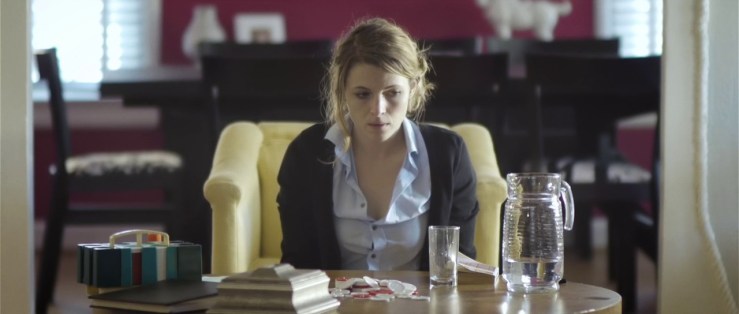
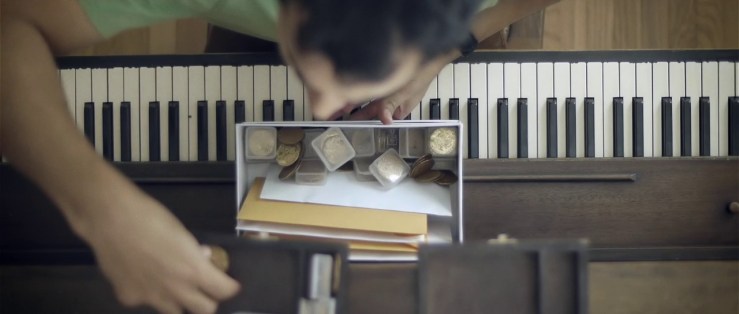
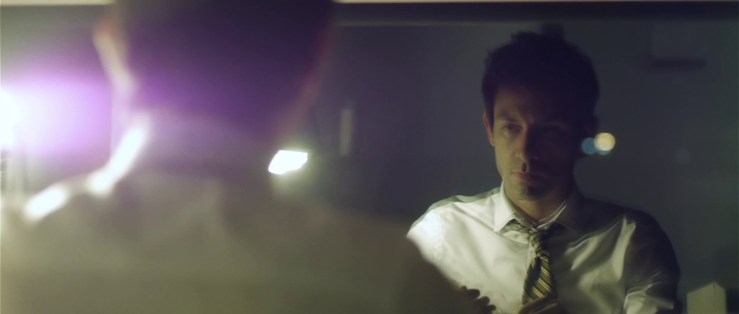
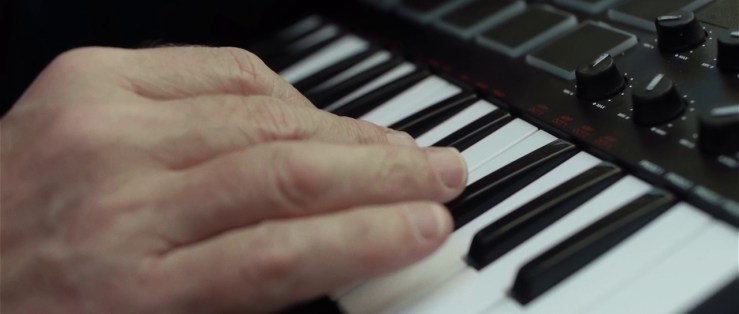
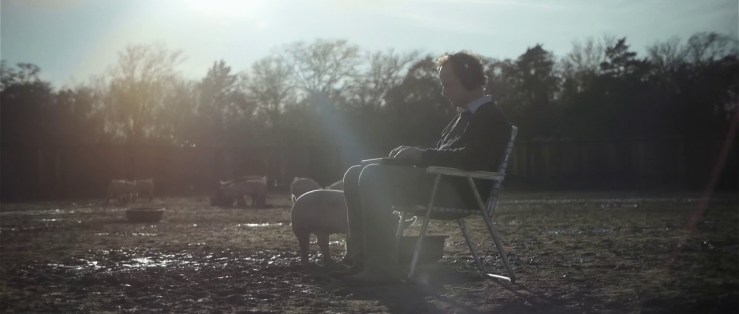
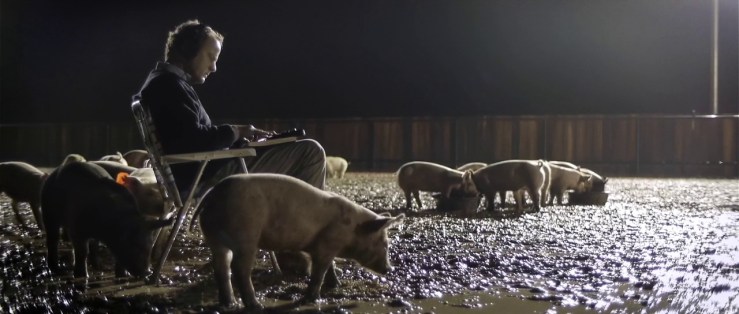
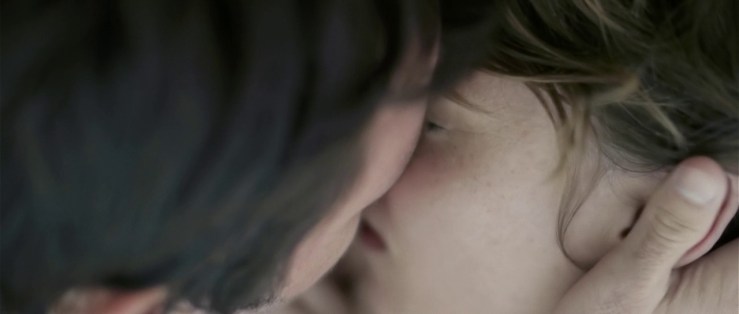
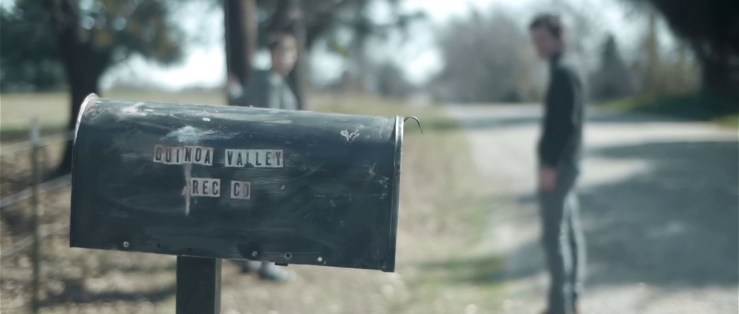
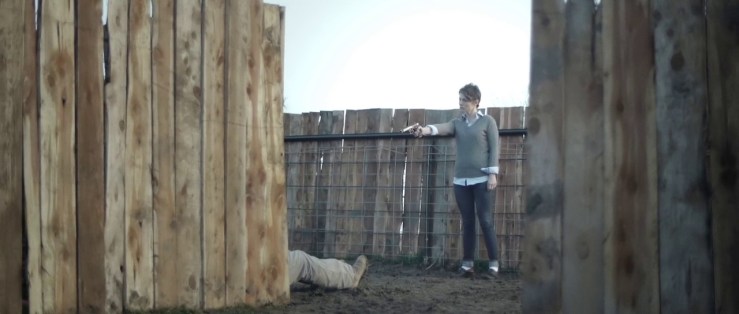
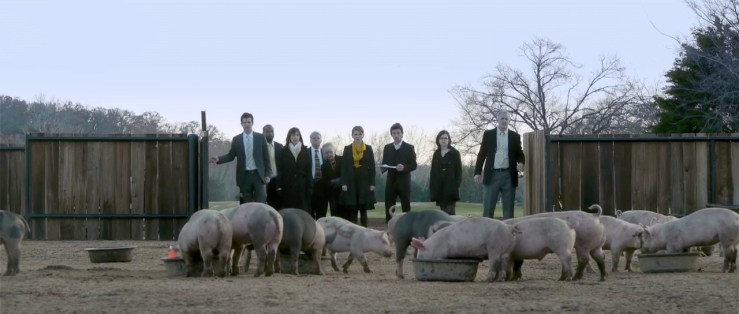
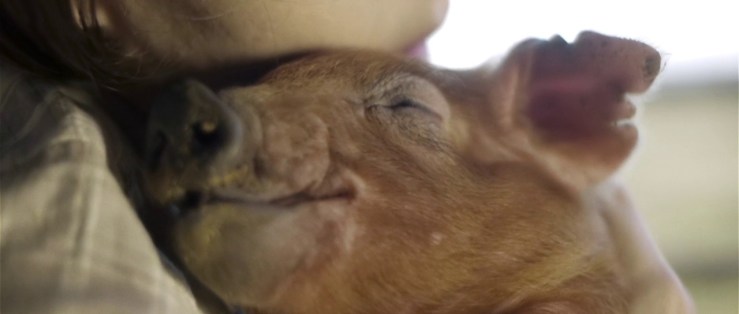
35 still frames from Shane Carruth’s Upstream Color

05 (1261)06 (1261)09 (1259)10 (1286)12 (1286)14 (1286)17 (1285)18 (1286)19 (1285)24 (1286)25 (1286)27 (1286)28 (1285)29 (1285)30 (1283)32 (1283)33 (1283)36 (1281)37 (1279)39 (1278)40 (1276)41 (1272)44 (1266)46 (1257)47 (1250)50 (1234)51 (1231)53 (1218)54 (1203)55 (1198)59 (1153)60 (1140)62 (1061)64 (956)65 (869)

From Upstream Color, 2013. Direction and cinematography by Shane Carruth. Via Film Grab.

Posted in Art

Miss Europe — Kent Monkman

109misseuropekentmonkman2016

Miss Europe, 2016 by Kent Monkman (b. 1965)

“Why I Might Go to the Next Football Game” — Denis Johnson

“Why I Might Go to the Next Football Game”

by

Denis Johnson


sometimes you know
things: once at a
birthday party a little

girl looked at her new party
gloves and said she
liked me, making suddenly the light much
brighter so that the very small

hairs shone above her lip. i felt
stuffed, like a swimming pool, with
words, like i knew something that was in
a great tangled knot. and when we sat

down i saw there were
tiny glistenings on her
legs, too. i knew
something for sure then. but it

was too big, or like the outside too
everywhere, or maybe
hiding inside, behind
the bicycles where i later

kissed her, not using my tongue. it was
too giant and thin to squirm
into, and be so well inside of, or
too well hidden to punch, and feel. a few

days later on the asphalt playground i
tackled her. she skinned her
elbow, and i even
punched her and felt her, felt

how soft the hairs were. i thought
that i would make a fine football-playing
poet, but now i know
it is better to be an old, breathing

man wrapped in a great coat in the stands, who
remains standing after each play, who knows
something, who rotates in his place
rasping over and over the thing

he knows: “whydidnhe pass? the other
end was wide open! the end
was wide open! the end was wide open . . . ”

This system’s well constructed

RIP Andy Gill

Ennui — Walter Sickert

Ennui c.1914 by Walter Richard Sickert 1860-1942

Ennui, c. 1914 by Walter Sickert (1860–1942)

Morning after the Flood — Mary Adshead

Morning after the Flood 1928 by Mary Adshead 1904-1995

Morning after the Flood, 1928 by Mary Adshead (1904–1995)

Seminar — Eric White

610772

Seminar, 2019 by Eric White (b. 1968)

“That nevertheless sky we all live below” | A review of Kyle Coma-Thompson and Tristan Foster’s 926 Years

926-years

926 Years is a collaboration between Kyle Coma-Thompson and Tristan Foster. The book consists of 22 stories, each a paragraph long, and each paragraph no longer than the front and back of a 4.5″ x 7″ page. Each story is titled after a character plus the character’s age (e.g. “Chaplain Blake, age 60”; “Sebastian, age 30”; “Marty Fantastic, age 81”). (I have not done the math to see if all the ages add up to 926.) Although the characters never meet in the book’s prose, key sentences suggest that they may be connected via the reader’s imagination.

Indeed, the blurb on the back of 926 Years describes the book as “twenty-two linked stories.” After reading it twice, I don’t see 926 Years so much as a collection of connected tales, but rather as a kind of successful experimental novel, a novel that subtly and reflexively signals back to its own collaborative origin. Coma-Thompson lives in Louisville, Kentucky and Foster lives in Sydney, New South Wales. They’ve never met in person. And yet they share a common language, of course, and other common cultural forces surely shape their prose. (Melville’s Ishmael refers to Australia as “That great America on the other side of the sphere” in Ch. 24 of Moby-Dick.)

The book’s prose offers a consistency to the apparently discontinuous narrative pieces that comprise 926 Years. My first assumption was that Coma-Thompson and Foster traded narratives, but as I read and re-read, the prose’s stylistic consistency struck me more as a work of synthesis, of two writers tuning to each other and humming a new frequency. The sentences of 926 Years are predominantly short, and often fall into fragmentation, or elide their grammatical subject. Here’s an example from “Shelley Valentine, age 34”:

A flare of sansho pepper on the tongue tip. Catch the tree at the right time of year and the fruit bursts, raining peppercorns down. Maybe like the season when pistachios open, the night snapping like broken locust song. Used for seasoning eel. Sansho leaves for garnishing fish. Clap it between the hands for aroma, make a wish, the finishing touch to the perfect soup. In Korea, the unripe fruit was used for fishing. Poisonous to the smallest ones. That was cheating wasn’t it? Or was pulling up the fish all that mattered?

Eventually we can attribute these fragmented thoughts to Shelley Valentine, now well out of her magic twenties, drinking sansho-peppered gin and tonics in a “New bar, same lost , of course.” She’ll leave alone.

The characters in 926 Years move between isolation and connection, between fragmentation and re-integration. Here’s Larry Hoavis (age 47, by the way), sitting in a lawn chair in his rural backyard:

Why does it feel lonely, sitting and watching? Nature in its subtle power and monotony, pre-Internet to the core, unconscious of its enormity. No one. No one knows he’s even here. The house at his back. Divorced. His ex elsewhere, how he loved her, hurt her, himself. Why’s it beautiful, why’s it comforting, that no one knows?

Hoavis’s lonely transcendental private (and tequila-tinged) reverie of disconnection reinforces 926 Years’ themes of interconnection coupled with disintegration. In one of my favorite tales, “Lew Wade Wiley, age 55,” we learn of the “Spoiled heir of the Prudential fortune” who collects other people’s lives. He has them brought to his Boston penthouse to offer

…their worst fears, desires, the messy embarrassments of their commonalities…these he worked into undead monotone prose, the diary of Lew Wade Wiley, and so lived fuller than anyone who’d opened a newspaper to read those advertisements, wrote to that listed address, knocked at his penthouse door.

The adjective “undead” above fits into a resurrection motif that floats through 926 Years, whether it be the lifeforce of currency or the proverbial powers of cats to cheat death. Sometimes the resurrection is a kind of inspiriting force, as one character, overwhelmed by aesthetic possibility that “knocked the air out of him” experiences: “It had reminded him of a moment in a childhood that wasn’t his.”

Elsewhere, we see resurrection at a genetic level, as in “Mrs. Anderson, age 67,” whose psychologist describes to her the “cherry blossom” experiment, the results of which suggest that fear and anxiety to specific aesthetic stimuli can be passed down from generation to generation.

Reincarnation becomes both figurative and literal in the case of the lounge star Marty Fantastic, “Eighty-one-year-old darling with ten faces (one for each lift)…The plague of identities—who to be tonight, Peggy Lee, Rod Stewart, Cole Porter, Journey?” The oldest (and penultimate) character in 926 Years, Marty reflects on his own death as he gazes at his audience: “The songs of their future–what about those? They lyrics set in stone, the melodies: unknown.” The lovely little couplet suggest a complex relationship of aesthetic substance and aesthetic spirit.

The final piece in 926 Years–well, I won’t spoil it, I’ll simply say it kept me thinking, made me happy in a strange, nervous way. It features the youngest character in the book, and it points clearly if subtly to the book’s affirmation of imaginative and aesthetic possibility as a kind of crucial lifeforce. I’ll close instead with something from the book’s third tale, a little moment early on when 926 Years clicked for me:

Much as the geese and other such birds at the beginning of winter months fly south towards more temperate climates, it’s the nature of human beings to move in unconscious arrow formation as well. They take turns, leading the pack. The burden of cutting resistance through the air, something they share. Others fly, you see, in the wake; and that is why they form a V. The wake makes for easy flying, particularly at the furthest, outermost edges. The ones in the rear work less, conserve strength, eventually make their way towards the top of the V, tip of the arrow, then when it’s time and the leader has tired, assume the vanguard position. It is written into them by instinct to share the effort, burrowing southwards through the sky; that nevertheless sky we all live below.

926 Years is available now from Sublunary Editions.

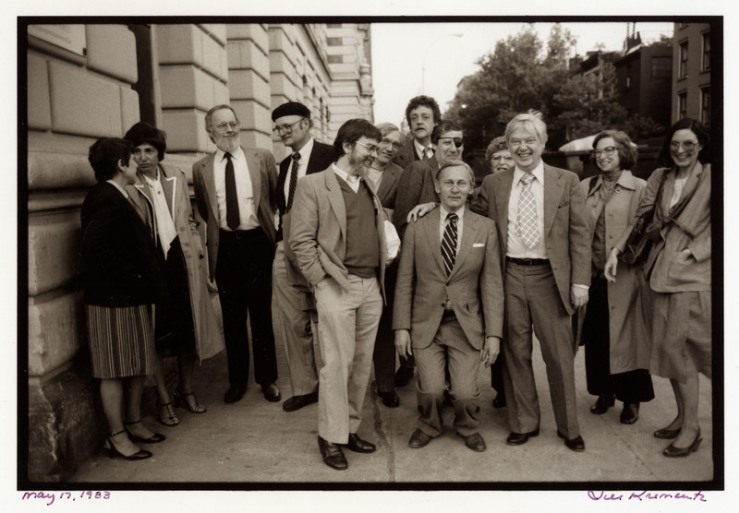
Photograph from “The Postmodernists Dinner” — Jill Krementz

1fa8c7cbf8dc977653f7750905725da4

Photograph from “The Postmodernists Dinner,” 1983 by Jill Krementz (b. 1940)

From the University of Houston’s collection of Barthelme’s papers. The entry’s description:

Left to right: unidentified, unidentified, Donald Barthelme, John Barth, Robert Coover (turned), unidentified, Kurt Vonnegut, Walter Abish (with patch), William Gaddis (squatting), unidentified, William Gass, unidentified, unidentified. In 1983, Barthelme arranged a “Postmodernists Dinner” for the group of writers who were often lumped together under the “postmodernist” label. The reclusive Thomas Pynchon declined the invitation.

It would be swell if anyone could identify the women in the photograph. [Ed. note–the woman to Walter Abish’s left (behind Gass) is the artist Cecile Abish, Walter’s wife. Thanks to Terry in the comments.]

In his 2009 Barthelme biography  Hiding Man, Tracy Daugherty offers the following recollection of the “Postmodernist Dinner” from novelist Walter Abish:

Around this time — in the spring of 1983 — “Donald had this idea to make a dinner in SoHo,” says Water Abish. “A major dinner for a group of writers, and he planned it very, very carefully. It was a strange event. Amusing and intriguing. He invited…well, that was the thing of it. The list. I was astounded that he consulted me but he called and said, ‘Should we invite so-and-so?’ Naturally, I did the only decent thing and said ‘Absolutely’ to everyone he mentioned. I pushed for Gaddis. Gass was there, and Coover and Hawkes, Vonnegut and his wife, Jill Krementz, who took photographs, I think. Don’s agent, Lynn Nesbit, was there. She was always very friendly. Susan Sontag was the only woman writer invited.

Daugherty continues:

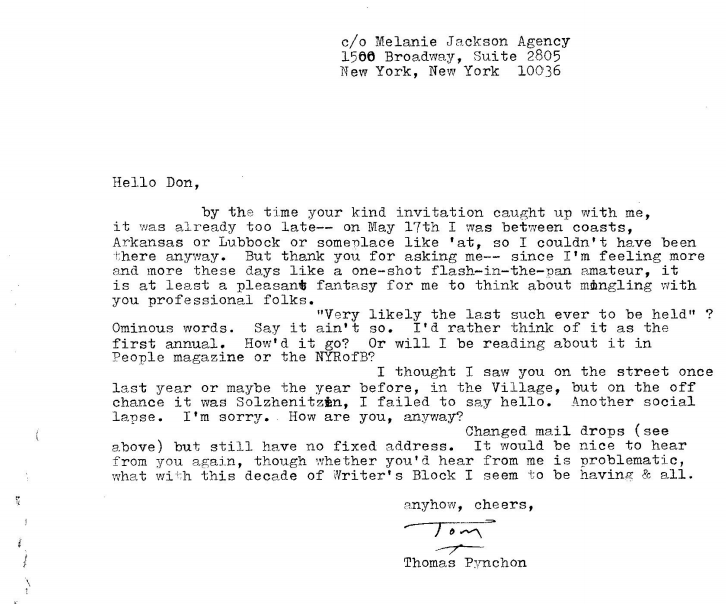
Pynchon couldn’t make it. He wrote Don to apologize. He said he was ‘between coasts, Arkansas or Lubbock or someplace like ‘at.”

Abish recollects that the meal was at a very expensive restaurant, prefix, and the writers had to pay their own way. There were about 21 attendees, and Barthelme was “Very, very dour.”

Here is Pynchon’s letter declining the invite (via Jessamyn West, both on Twitter and her wonderful Donald Barthelme appreciation page):

screenshot-2017-01-18-at-8-36-27-pm

I had never seen the photograph until today when Ethelmer shared it with me on Twitter. Thanks!

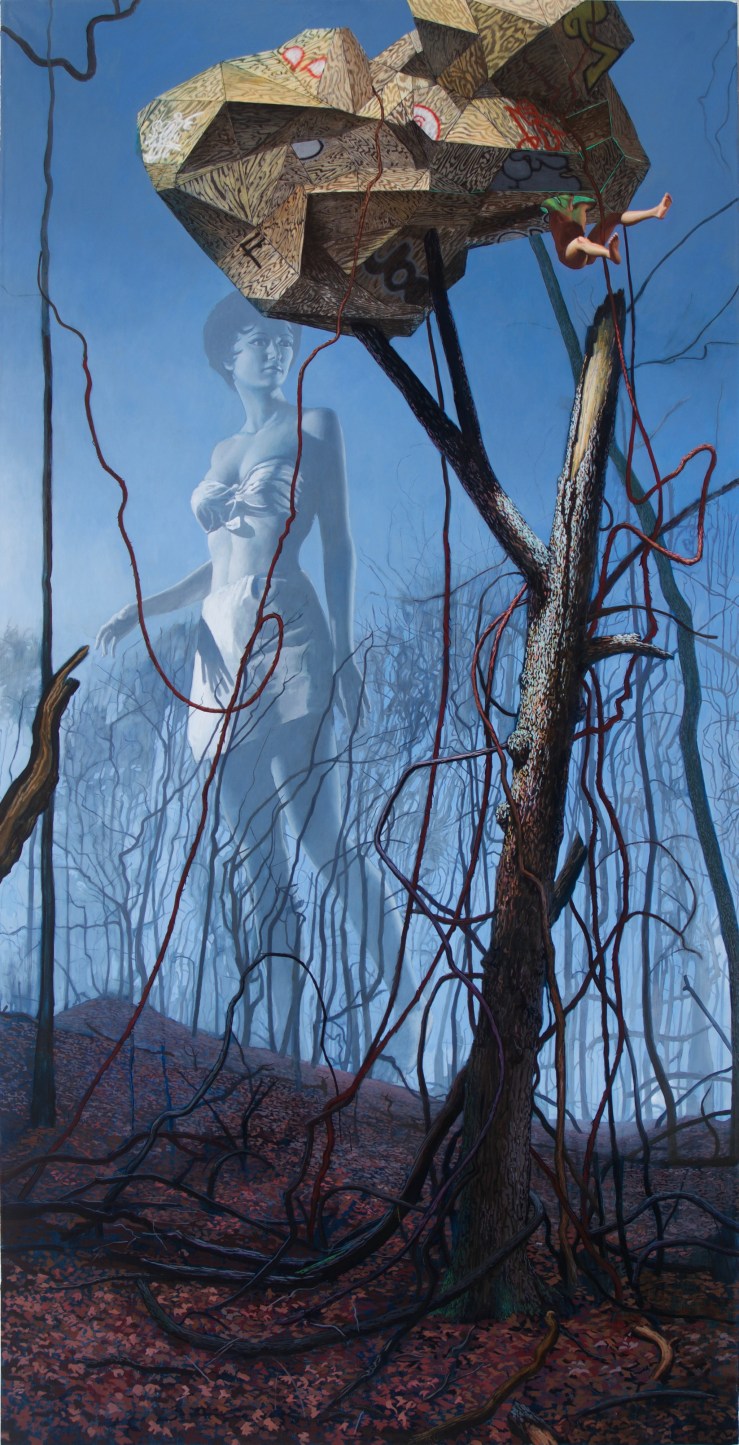
Colossus — John Jacobsmeyer

925918abc

Colossus, 2019 by John Jacobsmeyer (b. 1964)

Sallow/Fur — Anna Bjerger

bjerger6

Sallow/Fur, 2018 by Anna Bjerger (b. 1973)

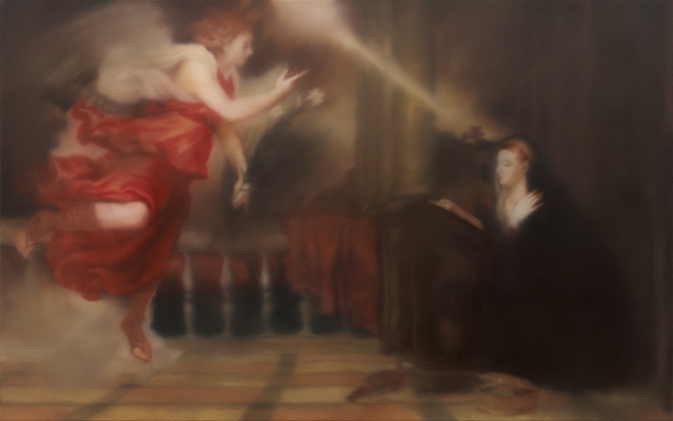
Annunciation after Titian — Gerhard Richter 

21994

Annunciation after Titian, 1973 by Gerhard Richter (b. 1932)

Dante — Audun Grimstad

image-asset

Dante, 2018 by Audun Grimstad


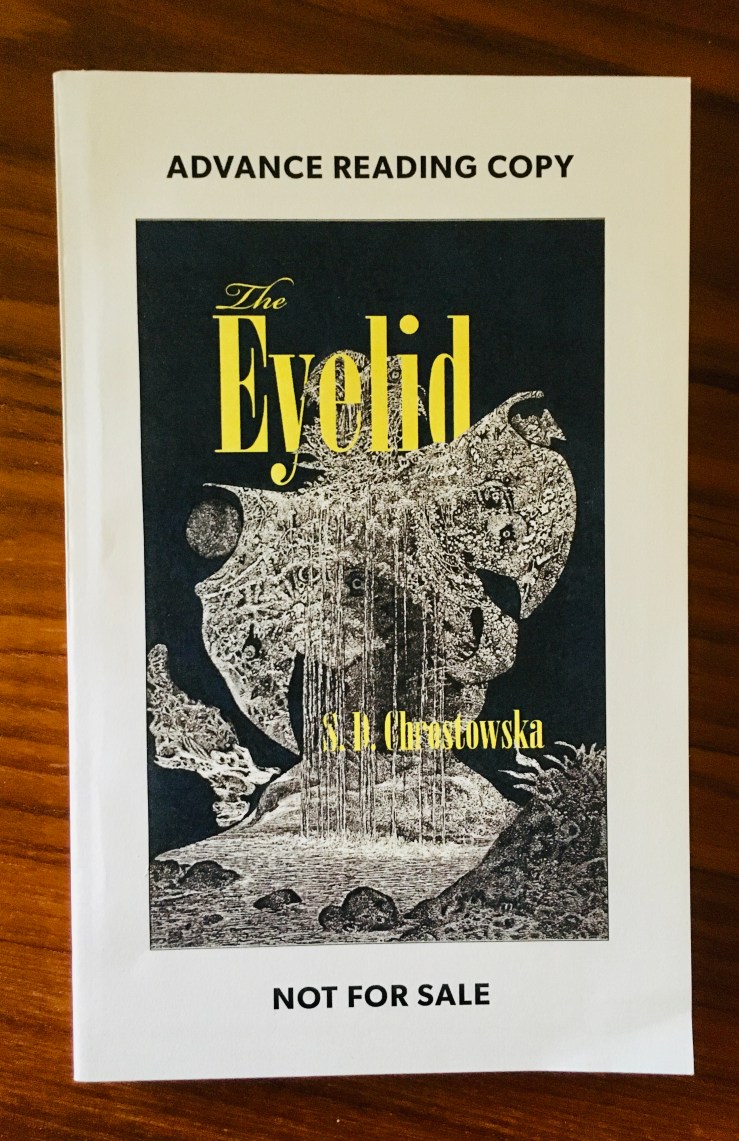
S.D. Chrostowska’s The Eyelid (Book acquired, 23 Dec. 2019)

img_4876

An AR copy of S.D. Chrostowska’s novel The Eyelid showed up at Biblioklept World Headquarters a few days before Xmas. I was inundated with books, both review copies and gifts and gifts to myself, but still excited—I think Chrostowska’s novel Permission is great. (I was lucky enough to interview Chrostowska about the novel, too.)

The book’s blurb points to a kind of sci-fi or dystopian plot that I wouldn’t necessarily have expected from Chrostowska (all the better):

In the near future, sleep has been banned. Our unnamed, dream-prone narrator finds himself following Chevauchet, a diplomat of Onirica, a foreign republic of dreams, to resist the prohibition. On a mission to combat the state-sponsored drugging of citizens with uppers for greater productivity, they traverse an eerie landscape in an everlasting autumn, able to see inside other people’s nightmares and dreams. As Comprehensive Illusion — a social media-like entity that hijacks creativity — overtakes the masses, Chevauchet, the old radical, weakens and disappears, leaving our narrator to take up Chevauchet’s dictum that “daydreaming is directly subversive” and forge ahead on his own.

In slippery, exhilarating and erudite prose, The Eyelid revels in the camaraderie of free thinking that can only happen on the lam, aiming to rescue a species that can no longer dream.

The Eyelid is forthcoming from Coach House Proof in April of this year.

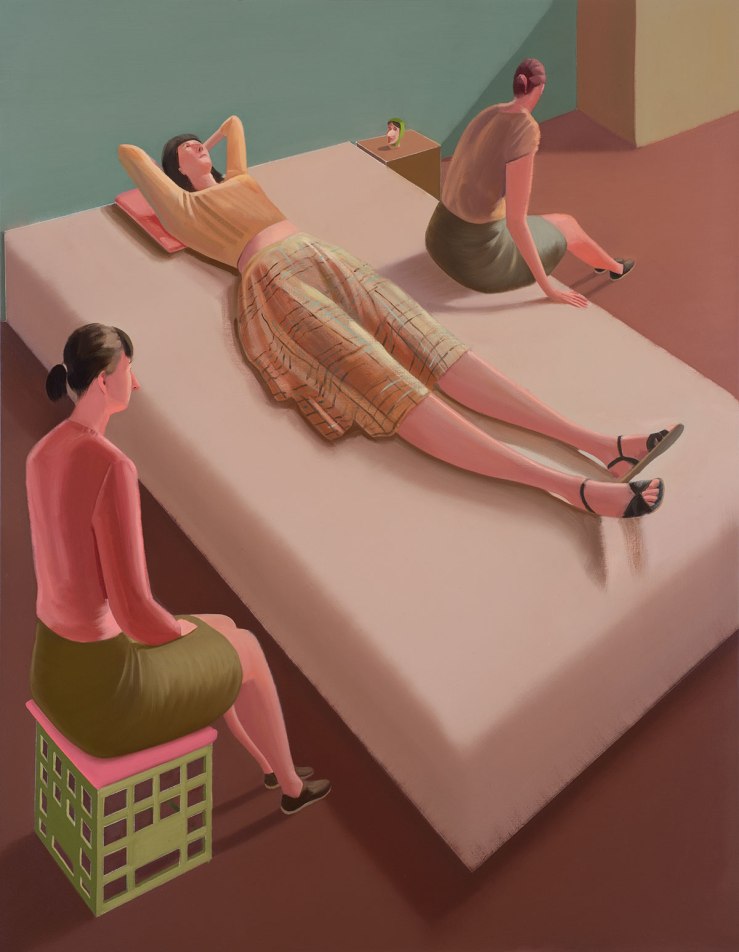
The Visit — Prudence Flint

the-visit

The Visit, 2018 by Prudence Flint (b. 1962)

The Gallien Girl — Frantisek Kupka

137973

The Gallien Girl, 1910 by Frantisek Kupka (1871-1957)